Conference rallies Christian women for culture-war battles

ALLEN (RNS)—“Welcome to the fight—the fight for truth, the fight for our Christian faith, the fight for our children, the fight for the nation,” commentator Allie Beth Stuckey said as she greeted 6,700 conservative Christian women assembled in a suburban Dallas arena.

Allie Beth Stuckey (Facebook profile photo)

Among Stuckey’s hundreds of thousands of social media followers, that fight often is waged in podcast recordings, comment sections, PTA meetings and local elections.

But the battle converged in a Dallas suburb Oct. 11 during Stuckey’s second annual “Share the Arrows” women’s conference, where throngs of Bible-wielding Christian women gathered at the Credit Union Texas Event Center in Allen.

Program personalities included online influencers, including Jinger Duggar Vuolo from the hit show “19 Kids and Counting” and homeschooling “momfluencer” Abbie Halberstadt.

Held just one month since the assassination of Charlie Kirk, the event also served as a rallying cry for women whose faith has been reignited by the death of the conservative political activist.

“There’s a new ache in all of our hearts since Charlie passed, and we’re just so excited to keep this fire burning. This is a great way to rekindle that in all of us,” Rachel Jonson, a 28-year-old mother from Corinth, near Denton, told RNS as she sat near the back of the arena, rocking the infant wrapped to her chest.

To these women, Kirk was an evangelist turned martyr who died for defending conservative beliefs about Scripture, family, abortion, gender and sexuality that they, too, hold sacred. In the weeks after Kirk’s passing, the conference saw a swell of more than 2,000 women purchase tickets.

Call to a ‘spiritual battle’

The conference aimed to equip these women to boldly enter the fray of the culture wars. Though Stuckey argues the battle is primarily about defending biblical truths, she says political engagement is a byproduct.

“This is a fight to which every single Christian is called, and it’s not fought on a physical battlefield or even only in the public square,” Stuckey said from the conference stage. “This is a spiritual battle that is waged in our homes and in our neighborhoods, at school, at your job.”

“Share the Arrows” women’s conference attendees line up before doors open early Saturday, Oct. 11, 2025, at the Credit Union of Texas Event Center in Allen. (RNS photo/Kathryn Post)

Nearly everyone who spoke with RNS said they were excited to be with likeminded women. Waiting in her seat before the event, Anna Tumulty, 40, from Springtown, said she brought her daughter Lily to the conference for her 16th birthday “to help prepare her for her future walk with Christ, and to prepare her to face the problems in today’s culture.”

Carolina Graver, 29, flew in from Alaska to see Stuckey in person. Listening to Stuckey’s hit podcast, “Relatable,” in 2020 inspired her to serve on her local city council, she said. Though she attended the conference alone, Graver said her fellow conferencegoers were an “extension” of her local faith community.

“I don’t know them, but they’re still in the same family of Christians as I am,” Graver said.

The “Share the Arrows” conference was designed with women like Graver in mind. Stuckey—best known for her sharp political, cultural and theological commentary and for her 2024 book Toxic Empathy: How Progressives Exploit Christian Compassion—told RNS the idea for the event was born in the wake of 2020, when many conservative women feared speaking their minds.

Speakers see attacks on values

Despite President Donald Trump’s 2024 election win, this year’s event wasn’t framed as a victory lap. The phrase “share the arrows” refers to the idea that when a conservative believer is attacked, likeminded Christians should rally around them.

Kirk’s assassination was cited repeatedly as evidence conservative views remain under threat.

“The pattern that we see of Christianity for the past 2,000 years, much to the disappointment of the tyrants that have tried to stop us, is that Christians tell the truth, Christians are persecuted, Christians multiply,” Stuckey said during the conference.

The values being targeted, according to the event speakers, include convictions about the dangers of “transgenderism” and queer identity, the belief that abortion is murder, and the upholding of traditional roles for men and women in marriage.

Satan was frequently described as the one slinging the “arrows,” though it was often fellow Christians, rather than the secular left, who were accused of distorting what the conference framed as objective biblical truths.
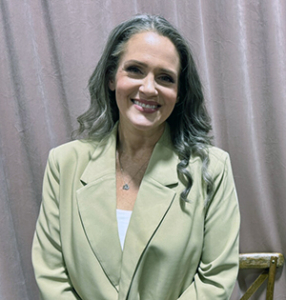
Alisa Childers (RNS Photo by Kathryn Post)

Alisa Childers, the former Christian musician turned author and apologist, condemned longtime NIH director and evangelical Francis Collins for supporting fetal tissue research, LGBTQ+ rights, DEI and “Darwinian evolution.”

Childers then received laughter and applause for calling out evangelical author Jen Hatmaker, who is also LGBTQ-affirming.

“We have groups of people that call themselves Christians, that will say: ‘Well, the Bible doesn’t really mean what we thought it meant for 2,000 years. Words don’t have objective meaning,’” Childers said during her talk.

Hillary Morgan Ferrer, founder of nonprofit Mama Bear Apologetics, described progressives not as enemies, but as captives.

“We have to realize that people have ideological Stockholm Syndrome, especially when it comes to the whole alphabet brigade, because they think these ideas are the things that give me purpose. They give me acceptance,” Ferrer said, in reference to the LGBTQ+ acronym.

Children’s Rights nonprofit founder Katy Faust noted that it’s possible to love gay people without compromising conservative convictions but also framed same-sex marriage as a justice issue that deprives children of a mother or father. She rejected no-fault divorce, IVF and surrogacy, saying these practices prioritize parental preferences over the rights of children.

Appeal to MAHA mothers

While cultural battles were a through-line of the conference, there were lighthearted moments, too. Speakers peppered their conversations with jokes about chicken coops and sourdough starters, and panels on motherhood and health doled out practical advice on how to control children’s access to social media and avoid processed foods.

The event’s sponsors—including a Texas-based, antibiotic-free meat company; a pro-life, chemical-free baby essentials brand; and a sustainable fashion brand—revealed a significant overlap with MAHA—Make America Healthy Again—mothers, or, as Childers put it, moms of the “crunchy” variety.

Stuckey told RNS “Share the Arrows” has a “pretty narrow” theology and politics, and unlike other Christian women’s conferences “who dabble in the social and racial justice,” Stuckey has “zero tolerance” for that.

Even with its narrow focus, Stuckey said: “This is probably one of the biggest Christian women’s conferences out there, too, and it’s only our second year. I do think that tells us a little bit about where Christian women are headed.”

In the wake of Kirk’s death, Stuckey has joined many conservative faith leaders in talking about the possibility of revival.

In her speech, Childers hinted at Stuckey’s role in that movement, describing Stuckey as “exactly like a female Charlie Kirk” who had “rallied together 6,500 Charlie Kirks to come together.”

Stuckey, though, insisted that Kirk was an anomaly.

“I and maybe 100 other people represent a sliver of what Charlie was,” Stuckey told RNS. “If I am part of the team that takes the baton of evangelizing and being an apologist for the faith in the conservative realm, I will be honored to take that.”



Franklin Graham quits financial accountability group

(RNS)—Franklin Graham, the president and CEO of two of the largest Christian ministries in the country, has quit his organizations’ membership in a financial accountability group that sets standards for evangelical nonprofits.

Graham, who leads Samaritan’s Purse and the Billy Graham Evangelistic Association, withdrew from the Evangelical Council for Financial Accountability over new standards the group had set for “leader care.”

The ECFA, which requires member nonprofits to have audited financial statements and to make those public, among other things, recently announced it was adding leadership integrity requirements to prevent the kind of abuse and scandals that have rocked so many Christian leadership ranks.

Just in the past year, Texas megachurch founder Robert Morris pleaded guilty to child abuse, Dallas megachurch pastor Tony Evans stepped back from leading his church due to undisclosed “sin,” and the Church of England’s Archbishop of Canterbury Justin Welby resigned over allegations that he failed to immediately report child abuse.

The new standard requires all ECFA member organizations to develop a care plan for their senior leader, one that would include regular communication with a board-led spiritual team and dedicated time for rest, retreats and physicals.

Outside ECFA’s area of expertise

In a letter to the ECFA’s president this past summer, Graham stated the new leader standards “puts ECFA into the role of trying to be the moral police of the evangelical world.”

“The Leader Care standard,” Graham wrote, “deals with personal spiritual maturity and behavior matters clearly outside the scope of ECFA’s expertise. While ECFA has proven to have expertise in matters of financial practices of nonprofit organizations, it does not offer its members expertise in developing ‘care plans’ for leaders.”

The withdrawal of Samaritan’s Purse and the Billy Graham Evangelistic Association represents the end of an era for the Graham family. Franklin Graham’s father, the late evangelist Billy Graham, was instrumental in founding the ECFA alongside the U.S. branch of World Vision, back in 1979.

The ECFA provides accreditation, or a seal of approval, to those organizations that adhere to its Seven Standards of Responsible Stewardship.

Those standards—maintaining a board with a majority of independent members, not compensating fundraisers on a percentage of money raised—are sought after by many of the leading Christian nonprofits—2,700 in total.

Members include the Salvation Army, the American Association of Christian Schools, Cru, Young Life and a host of large megachurches.

Standards endorsed by NEA and Christian colleges

The new “leader care” standards were endorsed by the presidents of the National Association of Evangelicals and the Council for Christian Colleges and Universities in addition to a raft of other nonprofit organizations and churches.

They will become a requirement for accreditation beginning Jan. 1, 2027.

“While we are disappointed that the leaders of BGEA and Samaritan’s Purse have decided to withdraw from ECFA, we honor their legacy,” ECFA President and CEO Michael Martin said in a statement. “We wish them well as they continue to pursue their missions.”

Neither Martin nor Graham was available for interviews.

Samaritan’s Purse, the humanitarian disaster relief organization based in Boone, N.C., posted net assets of $1.4 billion in a publicly available audit last year.

The BGEA no longer files an IRS Form 990, a public statement of its financial information, since it changed its tax status from a nonprofit to an “association of churches” in 2016. According to the MinistryWatch database, the BGEA, based in Charlotte, N.C., had annual revenue exceeding $224 million.

Mark DeMoss, a former PR executive, now retired, who represented Franklin Graham in the past, wrote an independent analysis of the new standards for the president of the ECFA last year, concluding the leader care standard will not achieve its desired result.

DeMoss said he “wholeheartedly” agreed a leader’s integrity is vital to an organization’s trustworthiness. But he cautioned the compliance standard was perfunctory and would not prevent moral failings among ministry leaders.

“The introduction of this Standard will set an expectation that can never be met,” DeMoss wrote. “No standard, particularly one as decidedly vague as this one, can prevent bad behavior.”

Theologian Scot McKnight, who has written about leadership, said he favored leadership standards in theory but said a care team should consist of trained spiritual directors.

“Evaluation of a living, spiritual dynamic needs to be done by a trained spiritual director, not board members who are often chosen by the senior leader and are often mesmerized by the senior leader,” McKnight wrote in an email.

Jake Lapp, vice president of member accountability, said in an email the ECFA’s 2025 membership retention rate is 97 percent, and 140 nonprofits and churches have submitted new applications for ECFA membership so far this year.


Study: Religion declining worldwide in predictable pattern

(RNS)—When it comes to going to church, a generational pattern is playing out in many households around the world.

Grandparents never miss Sunday service. Parents attend only on holidays. Children, who describe themselves as “spiritual but not religious,” rarely attend at all as adults.

A new study, published in August in the journal Nature Communications and conducted by researchers at the University of Lausanne, Oxford University and the Pew Research Center, sought to explain the ebbing of religiosity across generations.

Drawing on data from Pew, the World Values Survey and the European Values Study, the authors looked at secularization and religious change across more than 100 countries and major religious traditions.

“We hope this article is useful as a kind of grand narrative about what’s going on in the world, a model of how to see global religious change,” Conrad Hackett, one of the authors, told Religion News Service.

Sequence of decline across generations

The researchers describe a sequence in how religious life tends to decline across generations. First, participation in worship services drops. Next, people report that religion becomes less important in their lives. Finally, formal religious affiliation declines. They refer to this as the Participation–Importance–Belonging, or P-I-B, sequence.

“We’re capturing a story about institutional forms of religion. It’s an interesting measure, because it’s not about a specific belief, but their assessment of how much religion is shaping their decisions in their everyday life,” Hackett said.

According to the study, countries around the world can be placed at different points along this secular transition.

In much of Africa, religion remains a central part of daily life, with high levels of participation.

Countries across the Americas, Asia and Oceania often fall in the middle range, where public participation and personal importance are already slipping, though formal belonging has not yet declined to the same extent. The United States is also in this middle range, with gaps showing up across all three measures.

Europe stands out as being the furthest along this path: The European countries included in the study are in either the middle or later stages of the P-I-B sequence—with both historical trends and current data supporting this trajectory.

Generational gaps across religious traditions

The secular transition shows up across countries with Christian, Buddhist, Hindu and Muslim majorities. Although fewer Buddhist- and Hindu-majority countries are included in the data, early signs of the P-I-B sequence can still be observed in those contexts as well.

“We had questions that were tailored to the way people participate in religion in different traditions and parts of the world,” Hackett said. For example, in East Asia, people usually don’t go to a place of worship on a weekly basis.

“However, when we look at other kinds of belonging or participation, we still see generational gaps,” he said.

In Muslim-majority countries, the pattern appears to stall after the first two stages: Participation and importance may be dropping slightly, but people largely continue to identify with their religion.

The P-I-B sequence is most clearly visible in traditionally Christian countries, about which researchers had the most data among countries spanning the full range of the secular transition.

The authors, however, caution the study covers only a few decades and, in many regions, secularization is still in its early stages. They also note exceptions to the trend, including post-communist countries in Eastern Europe and Israel, where patterns of religious change diverge from the typical trajectory.

Part of a larger intellectual tradition

David Voas, a quantitative social scientist who developed the original secular transition theory, said the study helps to build a big-picture framework that explains global patterns.

“To me, as somebody who is interested in religious change internationally, this is a global phenomenon that cries out for some kind of general analysis and explanation,” he told RNS. 

Like the authors of the new study, Voas sees secularization as a component of modernization, which also includes the transition from agrarian to industrial and post-industrial societies.

“When you look at the global situation and see that decline is happening around the world—it’s not restricted to just Christian countries; it’s been going on everywhere for a very long time—you realize this is not just something that is going to change because there’s a political or cultural shift in one or two places,” he said.

While other scholars focus on what is happening in individual contexts, Voas argued it is equally important to study the bigger picture.

“It’s clear that religious decline is happening,” he said. “It’s not so clear why.”

More privatized expressions of faith

Harvard Divinity School professor Gina Zurlo, who studies Christianity around the world, said the P-I-B model has a familiar ring for modern Christians in the West.

“Attending religious services and engaging in other public practices is a commitment,” Zurlo said. “It requires time, energy, money, travel, leaving the house, gathering your kids, looking presentable, whatever. If you’re questioning faith in any way at all, why put in so much effort?”

But Zurlo suggested the result may be not necessarily a decline as much as making religion a more private affair.

“Our hyper-individualistic society has essentially granted people permission to be religious in their own way. They can pray, believe in God, read Scripture and engage in other spiritual practices completely on their own—without ever stepping foot in a house of worship—and still be considered a religious person.”

Other scholars also noted the story of religious adherence is more complex, pointing to cycles of change, cultural differences and new forms of spirituality that surveys and one global model may not capture.

No straight line trajectory toward secularization

Landon Schnabel, a professor at Cornell University who studies social change, inequality and religion, praised the study’s P-I-B model as “an important framework for understanding recent trends based on available survey data” but said it may not represent “longer-range cycles of religious change.”

Schnabel argued religious life doesn’t follow a straight line toward secularization.

“We see it as a pendulum swinging between institutions and individuals, conformity and rebellion, building up and tearing down, and structure and spirit,” he said.

He also points out people may be returning to forms of religion that aren’t contained in formal institutions.

“For most of our species’ existence, spiritual practices were more localized, fluid and integrated into daily cultural life,” he explained. “Spiritual practices were embedded within the religion of particular peoples and places.”

What looks like a decline, he suggested, may be a return to spiritual engagement that is “more personalized, syncretic and centered on individual authority rather than institutional power.”

Consider Africa and Latin America

Kyama Mugambi, a world Christianity professor at Yale Divinity School, warned against analyzing demographic data through a Western lens. Regions such as Africa and Latin America show different patterns of religious change, he said.

“Secularization, as construed in the study, is largely a Western construct,” Mugambi said. “Though it affects societies around the world, secularization will inevitably take different forms, shaped by the social, cultural and intellectual histories of the places it encounters.”

We should be cautious, Zurlo said, in assuming the end of religion everywhere in the world.

“The world is a furiously religious place and, in my estimation, it will continue to be for a long time,” she said. “Religion changes constantly as societies modernize, technology advances, women gain more decision-making power, and as people reinvent what it means to be religious in their specific time and place.”

While scholars debate whether modernization leads to secularization and religious decline, or simply to new forms of religiosity, there is broad agreement change is underway. The question is not if religion is shifting, but how to understand it.

For religious communities, the study may serve as a reminder they are not alone in seeing fewer people in the pews or less interest among younger generations. Whether those trends signal lasting decline or emerging forms of faith, the findings suggest religious life everywhere is being reshaped in ways demanding attention.


Support of Israel steady but generational shift likely

PRESCOTT VALLEY, Ariz. (BP)—Evangelicals in the United States are as supportive of Israel as they were four years ago, Infinity Concepts and Grey Matter found in their latest poll, but findings point to a possible generational shift.

The 49 percent of evangelicals who view Jews as God’s chosen people remains statistically unchanged from the 51 percent who said the same in 2021, said Ron Sellers, president of Grey Matter Research Consulting.

“Even with all of the various things and how much this has been in the news and how much people have spoken out against Israel and its actions, and for Israel, and all the anti-Semitic situations that have gone on worldwide, evangelical attitudes have been 100 percent constant, which truly was amazing and I think heartening,” Sellers said.

More spiritual than political

Evangelical support of Israel is more spiritual than political, researchers found, with 74 percent of evangelicals prioritizing spiritual support of the nation and people, compared to 60 percent who prioritized political support.

“It’s nice to see beliefs that don’t change with the news cycle,” Sellers said. “It’s nice to feel that important religious beliefs, whether you agree with them or hold those same beliefs or not, are not affected by who’s president, what’s … on CNN or Fox News or MSNBC, that the beliefs are staying constant.

“And I think that’s an incredibly important thing for evangelicals, and for evangelical leaders to note that their people are not just swaying with the wind.”

Difference among young evangelicals

A generational subset of the poll of 1,008 evangelical Protestants found 29 percent of evangelicals under age 35 believe Jews are God’s chosen people, and that cohort is more likely to embrace a replacement theology or express uncertainty.

“The difference between younger people and older people in the evangelical community is definitely statistically valid, statistically relevant,” Sellers said.

“In every way, younger evangelicals are less engaged with Israel, less supportive of Israel, less likely to see the Jews as God’s chosen people. And if those attitudes don’t change as they get older, long term, we’re looking at a very different environment on how Israel and the Jewish people are thought of within evangelical circles.”

When younger evangelicals don’t see Jews as God’s chosen people, they are less likely to prioritize Israel in their own spiritual lives, Sellers said.

“And we’ve seen other studies that look at this from a political perspective or a social perspective that show the same thing, that younger people are less likely to be supportive of Israel politically,” he said.

Avoid stereotypes

But evangelicals are not monolithic in their interpretation of what it means, in practical terms, for Israel to be God’s chosen people. Sellers cautions against stereotypes.

“There is a stereotype that evangelicals all are conservative, all are Republican, all voted for Trump, all support Israel, etc., and that’s absolutely not the truth,” Sellers said.

“Israel and the Jewish people are more likely than not to find support among evangelicals, but there are significant subsets who either are not supportive of Israel and the Jewish people, or they are generally supportive.”

However, he said, “They take pains to point out that that does not mean that that’s just a blanket support of anything that Israel might do militarily or politically,” although the poll at hand did not delve into political beliefs. “So, it’s not a cut-and-dried issue for many people.”

Blessing Israel and the Jewish people

Leaders can use the findings to understand that more evangelicals want to focus on a spiritual relationship with Israel, rather than political.

“A lot of times, what it means is placing a special emphasis on blessing Israel and the Jewish people,” Sellers said.

Evangelicals might practice their support in any number of ways, he said, perhaps praying for the peace of Jerusalem, opposing antisemitism, helping the Israeli Defense Forces defend its citizens, teaching Jewish people about the gospel, providing humanitarian relief, helping Holocaust survivors or engaging in other outreaches.

Looking at the numbers

By the numbers, 65 percent of evangelicals said they are interested in what the Bible teaches about Israel, 55 percent voiced interest in Bible prophecy, and 44 percent said they wanted to learn about the Jewish roots of Christianity.

Far fewer, 30 percent to 41 percent, voiced interest in how Israel is treated by the U.S. media, or the political relationship between Israel and the United States.

An overview of the findings of the study, “Crossroads of Belief: Evangelicals and the Jewish People,” is available here. The 2021 report, “The Jewish Connection: Evangelicals and Israel,” is available here.


Charlie Kirk’s AI resurrection reveals new era of digital grief

(RNS)—Megachurch pastor Jack Graham was in the middle of his Sunday message to Prestonwood Baptist Church in Plano when he paused to cue up an unusual sermon illustration.

After encouraging people to respond to the killing of conservative Christian activist Charlie Kirk by turning to God, he instructed the congregation to listen to a roughly minute-long audio clip of what sounded like Kirk delivering a short speech.

“Hear what Charlie is saying regarding what happened to him this past week,” Graham said.

As the clip, which encouraged listeners to “pick up your cross, and get back in the fight,” ended, the congregation burst into applause. A few seconds later, they rose to their feet in a standing ovation.

But the clip they listened to was not, in fact, Charlie Kirk from beyond the grave. As Graham made clear when he introduced the segment, the congregation was listening to a production generated entirely by artificial intelligence.

The clip, which has gone viral online, was a cloned version of Kirk’s voice delivering what appeared to be an AI-generated response from a chatbot that was asked what Kirk would say in the wake of his own death.

It’s unclear where the video originated, but at least two other large evangelical Protestant churches—Dream City Church in Arizona and Awaken Church, San Marcos in California—also played it during their services that day. Pastors at both churches made clear the clips were AI. Even so, the segment triggered applause each time.

AI-generated content floods social media

The message was part of a wave of AI-generated content that flooded social media in the wake of Kirk’s killing, with supporters and even Kirk’s former colleagues sharing images, videos and audio messages that featured the felled activist and that were made by artificial intelligence.

Amid outrage over Kirk’s killing and debate about his legacy, the surge, which has been most visible on social media platforms, showcased a new form of public mourning and remembrance—one in which the dead are grieved with hyperreal but entirely fictional reconstructions crafted in seconds by AI services.

Recent AI-generated content featuring Charlie Kirk’s image found on social media. (RNS illustration)

AI-generated images and videos of Kirk appeared within hours of his death, some growing in popularity over the next few days. Many featured religious themes, a byproduct of Kirk’s own personal and political shift toward evangelical Christianity near the end of his life.

Imagining Kirk in heaven was a common theme. In one clip, which has racked up hundreds of thousands of views on Facebook and X, Kirk stares into a camera as soft piano music plays.

“I’m Charlie. My faith cost me my life, but now I stand forever in glory,” the AI-generated Kirk says.

The fictional Kirk then introduces four historical Christian martyrs and saints—Paul, Stephen, Andrew and Peter. These, also AI-generated characters, briefly recount their own stories of martyrdom before the AI Kirk urges listeners to root themselves in a “Bible-believing church,” join in a “spiritual” battle and “overwhelm the world with Jesus.”

AI images of Kirk with Jesus, Lincoln and others

Other clips are shorter, but more direct. One depicts an AI-generated Kirk taking selfies in heaven with prominent Americans who were assassinated, such as Presidents Abraham Lincoln and John F. Kennedy, as well as Martin Luther King Jr. As the digital Kirk poses with the historical icons in a cloudy vista, “Knocking on Heaven’s Door” plays in the background.

Many AI-generated clips depict Kirk with Jesus Christ. One shows Kirk sitting in the same tent where he was shot and killed, but then suddenly leaping out of his chair and running up a staircase to a smiling Jesus.

Another features an AI-generated Kirk praying on a park bench as Scripture is flashed across the screen and “Come Jesus Come” by CeCe Winans plays in the background. Eventually, a radiant Jesus arrives, and the two embrace.

Yet another shows Jesus and Kirk, holding a Make America Great Again hat, walking toward the camera among the clouds.

“Welcome, my son,” Jesus says, embracing the AI Kirk. “Your work is done. Come rest.”

Some Kirk colleagues post AI-generated content

Apparent AI-generated images even have been used by Kirk’s former co-workers. Andrew Kolvet, who produced “The Charlie Kirk Show” and has hosted the program multiple times since Kirk’s killing, posted what appears to be an AI-generated image of Kirk alongside other assassinated Americans from U.S. history such as King and Lincoln, as well as Jesus Christ.

The image sparked criticism, with detractors noting that the real-life Kirk criticized King. Bernice King, one of Martin Luther King Jr.’s daughters, said of the image, “There are so many things wrong with this.”

Depictions of famous figures in heaven, or even in relationship with Jesus, are hardly unusual. But the particular utilization of AI to commemorate Kirk—with content flooding the internet within hours of his death—may be an outgrowth of the technology’s wide use among devotees of President Donald Trump.

Government accounts use AI-generated images

That includes the Trump administration itself. On several occasions, AI-generated images and memes have appeared on official government accounts.

As Charlie Warzel, who writes on technology and media, observed in The Atlantic in August, the “high-resolution, low-budget look of generative-AI images appears to be fusing with the meme-loving aesthetic of the MAGA movement.”

Warzel added: “At least in the fever swamps of social media, AI art is becoming MAGA-coded. The GOP is becoming the party of AI slop.”

Kirk, of course, was an avid Trump supporter who played a significant role in helping the president return to power, and some of the AI-generated content that proliferated after the activist’s death has been tied to conservative causes.

Many images, for instance, linked Kirk’s death to the stabbing of Iryna Zarutska, a Ukrainian refugee whose slaying on a bus in Charlotte, N.C., became a source of outrage for Kirk and other conservatives shortly before Kirk’s own assassination.

One widely shared image shows an AI-generated Kirk comforting Zarutska as she sits on the bus where she was killed, bleeding. At least one person created a video version of the image that features the hymn “How Great Thou Art.” A similar AI-generated video shows Kirk embracing Zarutska on the bus as they both flap newly grown angel wings.

Another AI-generated video pushed a pro-Israel message—a topic that has sparked division among conservatives, and which Kirk was reportedly trying to mitigate shortly before his death.

In the video, an AI-generated Kirk, adorned with angel wings and a white robe, speaks from heaven as he declares: “I’m in a better place now, but America and Israel will never be the same.”

The AI Kirk insists the United States and Israel both are based on “faith, on freedom, on family,” shortly before a bald eagle is shown landing on his head as he stands in front of Israeli and U.S. flags.

Creators frame content as catharsis

Despite their viral nature, it’s unclear precisely what role these virtually enhanced remembrances play in the lives of those who mourn Kirk’s death.

But social media boosters of the creations often frame them as a form of catharsis. On TikTok, influencer Taylor Diazmercado posted a short video of herself last week reacting to the AI-generated audio clip of Kirk—which she clearly labeled as such—that would be used in churches later.

As an entirely fabricated voice speaks lines Kirk never said in life, Diazmercado can be seen visibly weeping, frequently wiping away tears as she nods along in-between sobs.

Beneath the video, which had 123,000 likes as of Sept. 17, she added a short caption: “What a man.”


Only two-thirds of U.S. Christians believe all have sinned

GLENDALE, Ariz. (BP)—Only 66 percent of American Christians accept the biblical teaching that all have sinned, George Barna said in the latest release from the 2025 American Worldview Survey he oversees at Arizona Christian University.

Most Christians, 72 percent, also believe people are “basically good at heart” and “should not be pejoratively characterized as sinners,” Barna said, revealing confusion among Christians regarding the biblical concept of sin.

“Only 14 percent of self-described Christians hold a biblically consistent theology of sin,” Barna, director of research at ACU’s Cultural Research Center, said of the findings released in two parts Sept. 4 and Sept. 16.

“While most adults acknowledge that sin exists, many reject the truth that all have sinned and fall short before God. This misunderstanding strikes at the very heart of the gospel message.”

‘Blur the seriousness of sin’

Among the larger population, 52 percent believe everyone has sinned, Barna said, with more than 70 percent saying people should not be characterized as sinners because they are basically good at heart.

“And by believing people are ‘basically good at heart,’ the overwhelming majority of Americans (75 percent) blur the seriousness of sin,” Barna wrote of the findings. “In fact, the perspectives that most Americans have on sin are riddled with both logical and theological inconsistencies.”

The findings come from the second of those two waves of research in the 2025 American Worldview Survey conducted by the CRC among a national, demographically representative sample of 2,000 adults at least 18 years old.

Researchers examined trends in beliefs about God, truth, sin and salvation in hopes of understanding key aspects of American faith and providing insights to strengthen Americans’ biblical worldview. The second wave of research was conducted in May.

Among key findings:

  • 95 percent of self-identified Christians believe sin exists, 60 percent believe they are sinners, 66 percent believe everyone has sinned, and 72 percent believe people are basically good at heart.
  • 73 percent of Protestant churchgoers believe everyone is a sinner, compared to 57 percent of Catholics.
  • Among Protestants, 70 percent of mainline church attendees said they personally sin, followed by 69 percent of those attending independent or non-denominational Christian congregations, 61 percent of attendees of Evangelical churches, and 55 percent of adults attending charismatic or Pentecostal churches.
  • In the larger population, adult members of Gen Z (18- to 24-year-olds) are least likely to believe everyone sins, polling at 41 percent; followed by Millennials, 49 percent; Gen X, 53 percent; and Baby Boomers, 57 percent. In the larger population, 62 percent of Blacks believe everyone has sinned, followed by 51 percent of whites, 50 percent of Hispanics and 28 percent of Asians.

‘Harmful strategies’

“Taking refuge in the idea that other people have a sin problem, but they personally do not, or that sin is an outdated concept, are harmful strategies,” Barna said.

“Parents, pastors, and religious influencers have a vital responsibility to keep basic biblical truths before the Christian body, including the reality of sin and its repercussions.”

The church loses its power and authority when its understanding of and response to sin are not distinct from the culture, Barna said.

“As our nation is reeling from the tensions and sadness heightened by recent episodes of political violence, suicides, rampant crime, and other threats to our way of life and existence, the opportunity for the Church to restore sanity and security by unashamedly proclaiming the truths conveyed in the Bible is undeniable,” Barna said.

“The only question is who will be bold enough to steadfastly share God’s truths with a people who so desperately need his forgiveness and loving guidance.”


White church dedicates memorial to the enslaved

WASHINGTON (RNS)—A predominantly white church that sought to learn about its racial history has dedicated a memorial to the enslaved people who once worked on the building’s land in downtown Washington, D.C.

First Congregational United Church of Christ, which dates to 1865, dedicated six recently installed stained-glass panels, titled “Forever in the Path,” on Sept. 14.

A decade ago, the congregation began carefully studying its roots. Some members knew the church’s founders were abolitionists and helped support the creation of Howard University, a historically Black institution in Washington.

Accepted the challenge to look deeper

Renee K. Harrison (Courtesy photo)

But when congregants marked the church’s 150th anniversary in 2015, Howard University School of Divinity professor Renee K. Harrison, the preacher for that occasion, challenged them to look deeper into its history, including into the former slave owners from whom the land was purchased.

Now, Harrison, who wrote Black Hands, White House: Slave Labor and the Making of America, said the church’s years-long initiative to investigate and share that history is “highly unusual”—especially as a predominantly white congregation.

“I think the most important thing is that a Christian institution, a white Christian institution, decided to celebrate the people that work the land—both the celebration of those that were there and those that are there,” Harrison said in an interview days before the dedication ceremony.

Kelly Brown Douglas, canon theologian of the Washington National Cathedral, said the use of stained glass can serve multiple purposes now, as it did in medieval times when windows were not merely decorative but told biblical stories to illiterate people who could not read the Bible for themselves.

“It’s important that these people are finding ways to bring the Black story into a sacred space,” she said upon learning of the project at First Congregational UCC. “What it’s saying is that this story is God’s story, and God’s story is found in this story. And these people, like any other people, are sacred.”

Churches remove windows honoring Confederacy

Many predominantly Black churches have stained-glass windows that incorporate Black history. Other churches with predominantly white congregations in recent years have chosen to use new stained-glass artwork to depict modern aspects of Black history, while removing windows that highlighted the history of the Confederacy.

In 2021, the Cathedral of the Rockies, a predominantly white United Methodist church in Boise, Idaho, replaced a stained-glass window honoring Confederate Gen. Robert E. Lee with an image of Bishop Leontine T.C. Kelly, the first African American woman bishop elected in its denomination.

In 2023, the National Cathedral unveiled new stained-glass windows depicting racial justice protests that replaced panes honoring Lee and Confederate Gen. Stonewall Jackson.

Church discovered history of enslaved people

According to First Congregational United Church of Christ, which describes itself as one of the first racially integrated congregations in Washington, D.C., more than 40 people were enslaved by two families on its property, then a tobacco plantation, between 1750 and 1856.

In 2022, W. Antonio Austin, then a Howard doctoral student, researched the church’s history and in a report identified almost two dozen enslaved men, women and children who worked on the property owned by the Burnes family.

“Some of these individuals were enslaved by several generations of this family,” Austin wrote in his report, citing a document from the Maryland State Archives.

On All Souls Sunday in 2023, the church acknowledged the enslaved people, stating their names in a ceremony that featured candles, artifacts and blessings.

‘Sharing light and needing light’

In August, the stained-glass artwork, whose title evokes a portion of the last stanza of the Black national anthem “Lift Every Voice and Sing,” was installed. Jessica Valoris, a Washington-based artist who describes herself as being of “Black, Jewish and mixed ancestry,” has described the artwork as a means “to use commemoration as an invitation towards reparations, education, and communal reckoning.”

Harrison said the artist’s choice of stained-glass panels, which hang from a ceiling in front of clear windows, is fitting.

“In order for people to receive it, it has to be told with light,” Harrison said. “I think that there’s something about the sacredness of a story sharing light and needing light.”

Valoris’ written description reads: “Glass, both strong and fragile, represents the fragmentation created by systems of slavery, and also the repair that happens through our work of tending to the broken places.”

One of the panels is dedicated to Sal, an enslaved girl.

“Sal, a 9-year-old girl, was the first documented person enslaved by the Burnes family in 1750,” writes Valoris in an explanation of her artwork. “She is noted for her potential ‘increase.’ The panel depicts a mother and child, imagining Sal, reconnected to her loved ones.”

Another panel portrays Betty, an enslaved person documented in Austin’s report for being persistent in advocating for her needs and those of others who had been forced to work on the land.

Renewed covenant to ‘seek justice’

Senior Minister Amanda Hendler-Voss. (Photo courtesy of First Congregational United Church of Christ)

Amanda Hendler-Voss, senior minister of First Congregational UCC, viewed her church’s stained-glass dedication as a timely action.

“We speak this truth in a time when our nation’s president weaponizes political power to whitewash our history of slavery and Jim Crow by distorting the stories of triumph over adversity, silencing the songs of resistance, and punishing institutions that foster diversity, equity and inclusion,” she said.

“‘Forever in the Path’ calls us to renew our covenant to seek justice, love mercy and walk humbly with our God.”

The stained-glass artwork, which hangs near the entrance of the church, also helps declare the contemporary building is, in fact, a house of worship.

“Because our building is modern, people often fail to recognize that a church lives within our space, and we have been trying to be more intentional in announcing to the public our presence as a church; the stained glass is visible from the outside and helps signify that we are a church, albeit a modern one,” Hendler-Voss told Religion News Service in an email.

Douglas, who is also a visiting theology professor at Harvard Divinity School, helped guide the National Cathedral’s process that led to its new stained-glass windows. She said the story First Congregational UCC is telling represents a process of reparations similar to that occurring in the Episcopal Diocese of Washington and among white churches in particular in that diocese, as well as in other regional Christian organizations and denominations.

“Anytime you say reparations, people think of money, but it’s about more than that,” she said. “It’s about planting the seed for a future so that we don’t find ourselves back in a predicament of having to talk about reparations. And one of the ways in which you do that is you change the narrative, and you expand the narrative.”


Slim majority backs physician-assisted suicide

BRENTWOOD, Tenn.—Half of Americans believe a terminally ill person should be able to ask a doctor for help in ending their life. Legal approval has outpaced the growth in public support.

 A Lifeway Research study of U.S. adults finds 51 percent think it is morally acceptable for a person facing a painful terminal disease to ask for a physician’s aid in taking his or her life.

 “Half of Americans seek their own comfort and their own way even in their death, but that doesn’t mean they don’t think twice about the morality of physician-assisted suicide,” said Scott McConnell, executive director of Lifeway Research.

“Only 1 in 5 Americans strongly agree such a decision is morally acceptable. Others are less sure.”

Oregon passed the first “Death with Dignity” law allowing physician-assisted suicide in 1997. Currently, the practice is legal in 12 U.S. jurisdictions: California, Colorado, Delaware, the District of Columbia, Hawaii, Montana, Maine, New Jersey, New Mexico, Oregon, Vermont and Washington.

 While 51 percent of Americans agree with the morality of physician-assisted suicide, just 21 percent strongly agree. Another third (32 percent) disagree, and 17 percent aren’t sure, according to Lifeway Research.

 In a 2016 Lifeway Research study, 67 percent said the practice was morally acceptable, while 33 percent disagreed. In that previous survey, however, respondents were not given the option of saying they weren’t sure.

 Additionally, 77 percent of Americans said they believed suicide was an epidemic in a 2021 Lifeway Research study.

Few, however, felt comfortable making moral or eternal judgments about those who took their own lives. Just 38 percent said those who die by suicide are selfish, and 23 percent said they believe those who do so automatically go to hell.

“Americans base their criteria for morality on different things. Those who see the Bible’s teaching as having authority in their lives are the least likely to say physician-assisted suicide is morally acceptable,” McConnell said. “They take seriously that God breathes life and holds the keys to death.”

The latest Gallup study finds a similar 53 percent of Americans believe doctor-assisted suicide is morally acceptable, while 40 percent believe it is morally wrong. Support for the practice in Gallup’s annual study has remained near 50 percent since it began asking about the practice in 2001.

Demographic and generational differences

 In the most recent Lifeway Research study, the youngest and oldest Americans are among the most likely to support physician-assisted suicide. Those 18-34 (56 percent) and 65 or older (54 percent) are more likely than those 50-64 (45 percent) to see the practice as morally acceptable. Men are also more likely to agree than women (54 percent v. 49 percent).

 U.S. adults in the West are more likely than those in the South to support it (57 percent v. 49 percent). This reflects the legal realities of the two regions. Half of the states where physician-assisted suicide is legal are in the West, while none are in the South.

Religious beliefs and practices also contribute to the likelihood that a person backs the practice. The religiously unaffiliated (63 percent) and Catholics (59 percent) are more likely to be supportive than Protestants (42 percent) or those from non-Christian religions (42 percent).

Additionally, Americans who strongly agree evangelical theological beliefs are less likely than those without such beliefs to back physician-assisted suicide (40 percent v. 55 percent).

Impact of church attendance

Church attendance impacts the likelihood that someone will support the practice, but not in a predictable way.

Those on the two extremes—adults who attend more than once a week (58 percent) and adults who rarely or never attend (58 percent)—are more likely than those who attend about once a week (40 percent) and those who attend once or twice a month or only on religious holidays (44 percent) to say they believe physician-assisted suicide is morally acceptable.

Most Americans (55 percent) believe physicians should be able to assist terminally ill patients in ending their lives, including a quarter (25 percent) who strongly agree. Around 3 in 10 (31 percent) disagree, and 14 percent aren’t sure.

“Physician-assisted suicide has at least two parties facing a moral question—the one taking their own life and the physician who helps. Barely a majority of Americans say it is morally acceptable to take your own life, with slightly more saying a doctor can help,” McConnell said.

 Again, men are more likely than women to agree (58 percent v. 52 percent), and those in the West are more likely than residents of the South (58 percent v. 51 percent).

 The religiously unaffiliated (65 percent) and Catholics (61 percent) are also more likely than Protestants (49 percent) and those from non-Christian religions (43 percent) to think physicians should be able to assist with the suicide of terminally ill patients.

Americans with evangelical beliefs are less likely than those without those beliefs to back physicians assisting with suicides (39 percent v. 60 percent).

Less time at religious services often means more support for physicians’ ability to participate. Those who rarely or never attend religious services (60 percent) and those who attend once or twice a month or only on religious holidays (55 percent) are more likely than those who attend about once a week (45 percent) to agree. Additionally, those who rarely or never attend are the least likely to disagree (22 percent).

 The online survey was conducted Aug. 14-30, 2024, using a national pre-recruited panel. Analysts used quotas and slight weights to balance gender, age, region, ethnicity, education, religion and evangelical beliefs to reflect the population more accurately. The completed sample is 1,200 surveys. The sample provides 95 percent confidence that the sampling error from the panel does not exceed plus or minus 3.3 percent. This margin of error accounts for the effect of weighting. Margins of error are higher in sub-groups.


Gen Z and Millennials top in church attendance

BOULDER, Colo. (BP)—For the first time in decades, Gen Z and Millennials are attending church more frequently than older adults, Barna and Gloo reported Sept. 3 from its latest State of the Church research.

However, despite the rise, the average Christian still only attends church 1.6 time per month, or twice every five weeks, researchers said.

“We were able to analyze our data in a fresh way to show what many pastors feel—that even really regular churchgoers do not attend that often. Among all churched adults, we found that they attend, on average, 1.6 times per month, or roughly two out of every five weekends,” Barna Vice President of Research Daniel Copeland said.

“This new analysis of the tracking data helps us better understand the frustrations pastors feel when they are trying to build momentum for their congregations, such as series-based preaching and mobilizing volunteers.”

Younger generations are attending church nearly twice as often as they did five years ago, researchers said, with Gen Z and Millennials averaging 1.9 and 1.8 weekends a month, respectively, in the first half of 2025.


Elders and Boomers both averaged 1.4 times a month in attendance January through July, researchers said, noting Elders’ drop from 2.3 times monthly in 2000, and Boomers’ decline from twice monthly. Gen X has remained steady, averaging1.6 times monthly.

Attendance for younger Christians is the highest it has been since they reached adulthood and became old enough to be included in Barna’s tracking, researchers noted.

“The fact that young people are showing up more frequently than before is not a typical trend,” Copeland said. “It’s typically older adults who are the most loyal churchgoers.

“This data represents good news for church leaders and adds to the picture that spiritual renewal is shaping Gen Z and Millennials today.”

Congregational life ‘more frayed and less gray’

The increase in attendance has not signaled an increase in devoted disciples, Barna Group CEO David Kinnaman said, but it gives pastors opportunities to create paths for spiritual mentoring that can help deepen the faith of younger generations.

“The significant drop-off among older generations shows that the fabric of congregational life is changing. It’s more frayed and less gray than it was a decade ago,” Kinnaman said.

“The influx of new generations represents a massive opportunity for congregational leaders, but this renewed interest must be stewarded well.”

Kinnaman noted the challenge of “shaping hearts and minds to live out their faith beyond church participation.”

Researchers advised churches to develop discipleship strategies that acknowledge and account for attendance that is less than half of all Sundays, recommending digital tools, church apps for texting, small groups and online resources for spiritual growth.

In uncovering these findings, researchers said they focused on adult Christians who attended church the past six months, highlighting the behavior of people already engaged in church life.

The 2025 State of the Church is based on online and telephone interviews within nationwide random samples of 132,030 adults conducted over 25 years through July. These studies are conducted utilizing quota sampling to represent all U.S. adults by age, gender, race, ethnicity, region, education and income, researchers said. The data also includes 5,580 online interviews collected January through July with quota sampling.

Regarding Gen Z, researchers only began tracking their churchgoing in 2017 and 2018, when the group born as early as 1990 reached adulthood. Data collected likely mirrored the attendance of the youths’ parents, researchers said.


Study: Women ministers resist misogyny with mentors

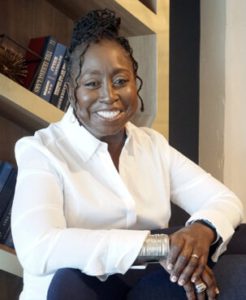
(RNS)—With a total of six decades of ministry between them, Liz Ríos and Liz Mosbo VerHage were not surprised to learn that the vast majority of women ministers have faced misogyny.

But their new report, “Empowering Resilient Women Ministers: Unveiling the Fuel to Serve Amidst Misogyny,” revealed what helped keep their colleagues in the ministry.

Across ages, races and denominations, women cited pursuing the call they believe they’ve received from God, supportive networks and perseverance as top contributors to their success.

The research by Ríos and VerHage, both ministers and scholars, revealed 87 percent of the 610 women they surveyed said they experienced misogyny, defined as “discrimination, prejudice, objectification, or violence based on your gender,” in their ministry context. Forty-seven percent said they experience such discrimination regularly.

Liz Ríos

“Some of the women that have made space for them, that took their hand and said: ‘Hey, I’m going to invest in you. I’m going to show you the ropes, so that you don’t have to go through some things’ … has also helped them in their resiliency,” said Ríos, a former Assemblies of God minister now affiliated with the Christian Church (Disciples of Christ) who is the founder of The Passion Center, an online faith community and training center.

The report, funded by Louisville Institute, indicated the kinds of discrimination women face in ministry include gender bias, limited opportunities for leadership and adverse expectations related to work/family balance.

Some respondents said that, as a result, they formed their own ministries when they didn’t feel accepted in their own denominations and communities.

“I had to create a new table and plant my own church, because no existing system would allow me to lead at the highest level,” one said, according to the report.

Women find support from other women

VerHage, who is ordained in the Evangelical Covenant Church and serves as senior pastor of the nondenominational LaSalle Street Church in Chicago, said women depend on themselves and other women for encouragement to stick with their commitments to ministry.

Liz Mosbo VerHage

“The ways that they most strongly persevered included finding other supportive women, either in mentorships or cohorts or community groups, and then also developing their own sense of passion and call,” VerHage said. “One thing that really surprised me was only 2 percent of women named that a male colleague had been helpful to them.’’

Their report’s executive summary noted women of color faced both gender and racial inequities and “often also had a harder time leading in churches than they did in secular settings.”

The researchers said their personal experiences also reflect a pattern of women ministers independently pursuing their own paths when traditional ones were not available, or creating new spaces such as building conferences and small groups where women can learn from each other as they seek ministry leadership roles.

Ríos, who is Afro-Puerto Rican, founded Passion2Plant, an egalitarian organization that supports people of color starting new churches. VerHage, who is white, started a women’s leadership conference in the Evangelical Covenant Church to discuss advocacy, justice and the intersection of gender and race.

When Ríos and VerHage delved into their findings in focus groups and one-on-one interviews with a few dozen of the respondents, they learned more about the dynamics of support and barriers.

Some women spoke of being left out of male-dominated spaces where ministry plans were discussed. Others spoke of competitive tensions among women ministers in the same age group as they sought limited roles, even as senior women were more helpful in supporting them in their careers than men.

Role models matter

The study noted role models can counterbalance isolation and lack of information women deal with in ministerial leadership, including helping determine how much they should get paid for an honorarium or how many hours they should be expected to work in a full-time job.

“We need direct and honest information and mentors who tell us exactly how to have the conversations—what to charge, what is the pay scale, how to rest and how to lead without burning out,” one respondent said, according to the report.

The most helpful mentors have certain traits—often being women of an older generation who have healed from some of the wounds of discrimination they’ve suffered—to help younger women advance, the research found.

In contrast, though, Ríos said a regional minister recalled in a one-on-one interview “that it was another woman who told her that women should just be seen and not heard.”

The researchers noted that the study comes at a time when leadership roles for women are being questioned in U.S. politics and in religious circles, including by the Southern Baptist Convention.

At SBC annual meetings the last two years, a constitutional amendment barring any church with a female pastor from the convention narrowly failed to reach the required two-thirds majority threshold of approval.

Three years ago, Southern Baptists—the nation’s largest Protestant denomination and one that 4 percent of study respondents indicated they identified with—affirmed the expulsion of two churches that employed women pastors.

Importance of self-care

While mentoring and training were among the factors that helped build resilience among the women who were studied, many also cited self-care, like visiting a spa or attending a retreat, and spiritual disciplines, such as prayer and journaling, as means of addressing burnout and forging resistance.

Eighty percent of the women studied were between the ages of 25 and 44, and more than 70 percent were from the East or West coasts.

The denominations they represented include the Evangelical Covenant Church, Assemblies of God, Christian Church (Disciples of Christ), Presbyterian Church (USA) and National Baptist Convention (USA).

The majority were midcareer, with 57 percent serving five to 15 years, 25 percent serving fewer than five years, 16 percent in ministry 25 to 30 years and 2 percent serving more than 30 years.

Their racial/ethnic breakdown was 47 percent white, 44 percent Black/African American, 6 percent Hispanic/Latina and 3 percent Asian, Pacific Islander, Indigenous or multiracial. They also represented a range of ministerial credentials—39 percent ordained, 38 percent certified and 23 percent licensed.

Recommendations for change

Ríos and VerHage said they hope their findings will lead to intentional efforts toward improving how church leaders relate to women ministers, and how they structure their churches and organizations.

VerHage said examples of improvement could include men helping ensure women are in the room where decisions are made, and women having more gathering places to “affirm we’re walking a harder road.”

Ríos recalled another respondent whose words stuck with her: “She actually said that ‘If we don’t formalize structures, they will become patriarchal by default.’ You have to be intentional. If not, it’s just going to— by default —just be what it always has been.”

Among their recommendations, the scholars suggested churches and other religious organizations increase transparency about salaries and benefits, hire women to preach and teach, train men and white women about biases and encourage teaching about the voices of women in the Bible.

“The data and voices we heard from are clear — women are no longer waiting for permission but are already preaching, planting, leading, and shaping the future,” they wrote in the conclusion of the executive summary.

“The real question is whether our institutions will recognize and honor that leadership, or continue to reinforce systems that silence it.”


Bible Society funds grants to boost Gen Z Bible use

(RNS)—Could artificial intelligence or short TV episodes help young adults engage more with the Bible?

The American Bible Society has issued first-time grants to four Christian higher education institutions to encourage innovation in getting young adults more interested in Scripture.

At Los Angeles Pacific University, the recipient of a $15,000 grant, scholars will research the effects of a “Bible Engagement Assistant” that builds on “Spark,” an AI course assistant the online university already uses in its classes. The new technological tool will be used by students in the Bible courses of the university.

“It’s to just increase that frequency interacting with biblical text, prompting them with really good questions to reflect on Scripture and how it influences their life,” said Belén McDaniel, grant manager at the nondenominational university with about 2,800 students.

All four of the winners, chosen from a pool of 16 applicants, are affiliated with the Council for Christian Colleges and Universities, a consortium of evangelical schools.

Introducing biblical concepts

Three faculty members at MidAmerica Nazarene University in Olathe, Kan., won a $10,000 grant for their proposed TV show, “Beyond the Bible.”

“Overall readership of the Bible has gone down, but at the same time, knowledge about biblical concepts has actually gone up through shows like ‘The Chosen’ being one of the most popular shows on the planet,” said Aaron Bohn, a filmmaker and associate professor of digital communication at the Church of the Nazarene-affiliated school with about 1,500 students.

He said the grant covers the first three episodes of the short-form show, which will be available on YouTube. Aiming to be both educational and entertaining, the show will feature students introducing biblical concepts and acting them out in sketches with puppets and other characters.

“I can see how these scripts could easily help this age group, the ‘Movable Middle,’ to kind of contextualize the Bible within their lives,” said Addison Lucchi, a MidAmerica Nazarene English professor.

Engaging the ‘Movable Middle’

The Movable Middle is a term the American Bible Society uses to describe those who fit neither their “scripture engaged” category nor their “Bible disengaged” category.

Student Missions BlogThe society’s “State of the Bible USA” 2025 report showed Generation Z ranked lowest among today’s generations in terms of Bible usage. Just 36 percent of Gen Z adults were Bible users this year, compared with 41 percent of the total population.

But its findings also showed a slight increase in Scripture engagement among this youngest group of adults—from 11 percent in 2024 to 15 percent in 2025.

The research, completed in collaboration with the National Opinion Research Center at the University of Chicago, defined Bible users as “individuals who interact with the Bible on their own at least three times a year.”

The American Bible Society considers engagement to be “far more robust,” including frequency of reading the Bible, as well as other measures of the Bible’s influence on the lives of individuals.

Interacting with Scripture

The other two schools that received grants are Dallas Theological Seminary, which plans to study best practices for young adults in different church networks, and Houghton University, which intends to use Lectio Divina, a Scripture-focused prayer practice, to help foster deeper interactions with the Bible.

A team of faculty at Houghton, in western New York, received a grant of $7,335 after they proposed focusing on Lectio Divina. The ancient practice involves reading, meditation and contemplation of the application of Scripture and will be used primarily by volunteers among first-year students taking a required biblical literature course.

Lectio Divina will provide a structured form of scriptural study for students who may have been churchgoers but are unfamiliar with Bible stories and Scripture passages, said Amanda Zambrano, grant writer and director of advancement communications at Houghton, which also includes students of no faith.

“For many of our students, this is going to be their first experience in interacting with Scripture on their own, in their own context,” she said of the school that is affiliated with the Wesleyan Church and has about 900 residential undergraduates.

The American Bible Society and the grantees hope the grant-funded work will serve as models for other schools and ministries.

“We believe this investment will uncover innovative and replicable ways to connect a generation searching for hope and meaning with the answers waiting for them in the life-changing word of God,” said Jennifer Holloran, president and CEO of American Bible Society.

Final reports are expected to be presented at a symposium next May or June, “where completed innovation project teams will report their results and will consult with teams working on new projects,” said John Plake, chief innovation officer at American Bible Society.


Gallup poll reveals Americans’ views on moral issues

NASHVILLE (BP)—Americans don’t see much wrong with using birth control or getting a divorce, but few support extramarital affairs or human cloning.

The latest poll results from Gallup spell out what activities U.S. adults view as morally acceptable and which ones are seen as immoral.

Most Americans believe birth control (90 percent), divorce (75 percent), sex between an unmarried man and woman (68 percent), having a baby outside of marriage (67 percent), gay or lesbian relations (64 percent), gambling (63 percent), human embryonic stem cell research (63 percent), buying or wearing animal fur clothing (61 percent), the death penalty (56 percent), and doctor-assisted suicide (53 percent) are morally acceptable.

U.S. adults are more divided on abortion (49 percent morally acceptable versus 40 percent morally wrong) and medical testing on animals (47 percent morally acceptable versus 47 percent morally wrong).

Fewer Americans say sex between teenagers (41 percent), changing one’s gender (40 percent), pornography (35 percent), cloning animals (34 percent), polygamy (21 percent), suicide (21 percent), cloning humans (8 percent), and married men and women having an affair (8 percent) are morally acceptable choices.

Generally more permissive

The moral views of Americans are not static, however. Many have shifted over the more than 20 years Gallup has conducted this poll. Mostly, Americans have grown more permissive.

Only medical testing on animals has seen a sustained, significant decline in the percentage of adults who view it as morally acceptable. In 2001, 65 percent of Americans said it was morally acceptable. Now, just 47 percent support it.

The percentage of those who view the death penalty as morally acceptable also has dropped, but the dip has been smaller and less sustained over the past three decades—63 percent in 2001 to 56 percent in 2025.

Support for changing one’s gender also fell this year, but it only has been asked in the past four years. In 2021, 46 percent believed it was morally acceptable. In 2025, 40 percent still agree. A 2016 Lifeway Research study of Americans found only 35 percent believed it was morally wrong for an individual to identify with a gender different than the sex they were born.

A 2021 Lifeway Research study of U.S. Protestant pastors found 72 percent say it’s morally wrong to identify with a gender different from your birth sex, and 77 percent say it’s morally wrong to change the gender you were born with through surgery or taking hormones.

On the other hand, Gallup found numerous activities have become more socially acceptable in America since 2001, including divorce (59 percent to 75 percent), sex between an unmarried man and woman (53 percent to 68 percent), gay or lesbian relations (40 percent to 64 percent), and suicide (13 percent to 21 percent).

Other activities were first asked about more recently, but they have also seen growth. Since 2002, support for both having a baby outside of marriage (45 percent in 2002 to 67 percent in 2025) and medical research using stem cells obtained from human embryos (52 percent in 2002 to 63 percent in 2005) has increased.

The percentage of Americans who believe polygamy is morally acceptable has tripled since 2003—from 7 percent to 21 percent. More people are also accepting of sex between teenagers (32 percent in 2013 to 41 percent in 2025).

Some approval ratings remain stable

Other activities have had more stable levels of approval since Gallup first asked. Since 2012, birth control has only wavered plus or minus two points from 90 percent.

Buying and wearing clothing made from animal fur has stayed near 60 percent. Gambling has stayed mostly in the 60s. Support for the death penalty has been around 60 percent.

Approval of doctor-assisted suicide has stayed around 50 percent. Those who approve of pornography have hovered somewhere around 30 percent to 40 percent.

The percentage who support cloning animals has stayed mostly in the 30s, while cloning humans and married men and women having an affair have hovered around 10 percent.

Abortion has been more volatile than the other issues. Those who find it morally acceptable have stayed mostly in the 40s, but it has fluctuated from anywhere between 36 percent and 54 percent over the past two decades.

Generational differences noted

Younger adults, ages 18-34, are often more permissive than their elders. Around 3 in 10 (31 percent) say polygamy is acceptable, compared to 10 percent of those 55 and older.

Most (55 percent) are OK with changing one’s gender, while just 35 percent of older Americans support the practice.

Americans under 35 also are more supportive of gay or lesbian relations, abortion, sex between an unmarried man and woman, sex between teenagers, pornography, buying or wearing animal fur clothing, cloning animals, cloning humans, having a baby outside of marriage, divorce, suicide, gambling, doctor-assisted suicide and the death penalty.

Meanwhile, they are less in favor than those 55 and older of human embryonic stem cell research, birth control, married men and women having an affair, and medical testing on animals.