Early depictions of biblical heroines Jael and Deborah found
July 18, 2022
WASHINGTON (RNS)—The earliest known depiction of biblical heroines Jael and Deborah was discovered at an ancient synagogue in Israel, the University of North Carolina at Chapel Hill announced.
A rendering of one figure driving a stake through the head of a military general was the initial clue that led the team to identify the figures, according to project director Jodi Magness.
“This is extremely rare,” said Magness, an archaeologist and religion professor at UNC-Chapel Hill. “I don’t know of any other ancient depictions of these heroines.”
The nearly 1,600-year-old mosaics were uncovered by a team of students and specialists as part of The Huqoq Excavation Project, which resumed its 10th season of excavations this summer at a synagogue in the ancient Jewish village of Huqoq in Lower Galilee.
Mosaics were first discovered at the site in 2012, and Magness said the synagogue, which dates to the late fourth or early fifth century, is “unusually large and richly decorated.” In addition to its extensive, relatively well-preserved mosaics, the site is adorned with wall paintings and carved architecture.
The fourth chapter of the Book of Judges tells the story of Deborah, a judge and prophet who conquered the Canaanite army alongside Israelite general Barak. After the victory, the passage says, the Canaanite commander Sisera fled to the tent of Jael, where she drove a tent peg into his temple and killed him.
The newly discovered mosaic panels depicting the heroines are made of local cut stone from Galilee and were found on the floor on the south end of the synagogue’s west aisle. The mosaic is divided into three sections, one with Deborah seated under a palm tree looking at Barak, a second with what appears to be Sisera seated and a third with Jael hammering a peg into a bleeding Sisera.
Magness said it’s impossible to know why this rare image was included but noted that additional mosaics depicting events from the Book of Judges, including renderings of Sampson, are on the south end of the synagogue’s east aisle.
According to the UNC-Chapel Hill press release, the events surrounding Jael and Deborah might have taken place in the same geographical region as Huqoq, providing at least one possible reason for the mosaic.
“The value of our discoveries, the value of archaeology, is that it helps fill in the gaps in our information about, in this case, Jews and Judaism in this particular period,” Magness explained. “It shows that there was a very rich and diverse range of views among Jews.”
Magness said rabbinic literature doesn’t include descriptions about figure decoration in synagogues—so the world would never know about these visual embellishments without archaeology.
“Judaism was dynamic through late antiquity. Never was Judaism monolithic,” said Magness. “There’s always been a wide range of Jewish practices, and I think that’s partly what we see.”
These groundbreaking mosaics have been removed from the synagogue for conservation, but Magness hopes to return soon to make additional discoveries. The Huqoq Excavation Project, sponsored by UNC-Chapel Hill, Austin College, Baylor University, Brigham Young University and the University of Toronto, paused in 2020 and 2021 due to the pandemic and is scheduled to resume next summer.
Churches adjust as inflation impacts ministry costs
July 18, 2022
NASHVILLE (BP)—The weekday preschool ministry at Englewood Baptist Church in Rocky Mount, N.C., feeds about 60 children a day, a number that doubles in the fall.
Food costs have always been a part of such ministries, but it’s just one of several areas where inflation has commanded more attention.
Financial giving has remained on par, but the church struggles to keep up with the current costs of ministry, said Senior Pastor Chris Aiken.
For instance, Englewood has been looking for a worship pastor more than a year. The current housing market has made it more challenging to meet candidates’ needs. Travel costs also must be considered for outreach and mission trips. On July 11, gasoline in the Rocky Mount area averaged $4.15 a gallon, according to GasBuddy.
“These are just the circumstances we find ourselves in,” Aiken said. “We’re not going to slow visits or pastoral care, though. If it costs more to go on missions, we’re still going to find a way to do it.”
He’s quick to point out that you can’t get lost in stressing over what might be considered First World problems. Friends of his serving in South Asia churches, Aiken said, are dealing with much weightier issues than whether or not to buy a new whiteboard for a classroom.
Recession? Maybe not such a bad thing
The unofficial marker for a recession is two consecutive quarters of negative GDP growth, which the United States hit last week.
Some economists cite various factors in saying the country hasn’t technically hit a recession. But for Americans facing decades-high inflation and record gas prices impacting grocery bills, it certainly feels like one.
David Spika, chief investment officer for GuideStone Financial Resources, said although recessions are viewed negatively, they serve a purpose in putting the economy closer to where it should be.
“In our current situation. a recession—assuming it’s not a significant and deep one—would be the best-case scenario, because it’s the only way to reduce inflation to a manageable level,” he said.
Southern Baptists are not immune to a recession’s impact. According to research conducted by former SBC Executive Committee CFO Bill Townes, the sharpest decreases in Cooperative Program giving came during the Great Depression and the recession that occurred in the early 1970s.
Cooperative Program giving fell by 19.57 percent in 1932 and then again by 22.09 percent in 1933. In 1972, giving witnessed a 21.4 percent drop.
The Great Recession that began in 2008 was the longest economic contraction since the Great Depression and led to a worldwide economic crisis. It also served as a marker for a pattern of decreased giving to the Cooperative Program, as the annual amount fell nine of the next 12 years.
Probably won’t last long
Government stimulus checks issued during the COVID pandemic gave consumers cash on hand, which alongside a turn toward digital tithing helped church budgets to this day. However, it also laid the groundwork for the current inflation crisis.
“The employment market is strong, and people are in a good position to retain their jobs, but inflation is really taking a significant bite out of incomes,” Spika said. “It’s going to have an impact to some degree.”
History provides a good indicator that the current economic climate won’t last long.
“Since 1946, the stock market has never had a negative return in the 12 months following a midterm election,” he said. “There’s always volatility going into the midterms and the market, on average, declines 19 percent sometime during that year. We were down 20 percent.
“We’ll get a more balanced government through this upheaval. Nobody wants to pay $5 for a gallon of gas and not be able to afford a house or groceries.”
Churches often view abuse as moral failing, not predatory act
July 18, 2022
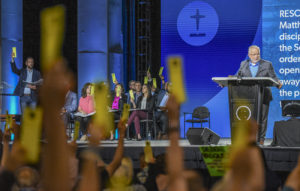
WASHINGTON (RNS)—At their annual meeting last month in Anaheim, Calif., Southern Baptists passed a series of reforms to address sexual abuse in the nation’s largest Protestant denomination.
Messengers vote on an amendment to a resolution at the SBC annual meeting, “On Lament and Repentance for Sexual Abuse.” (BP Photo by Karen McCutcheon)
Messengers also passed a resolution calling on states to make pastoral sexual misconduct a crime. Such misconduct is “a clear abuse of authority and trust,” the resolution states, similar to the trust placed in doctors, teachers, therapists and other helping professionals.
Since many states prohibit sexual relationships between those helping professionals and their patients or clients, they should also treat sexual relationships between pastors and members of their flocks as crimes, not simply a moral failing, according to the resolution.
Getting local churches to embrace that idea may be difficult.
Many still have a hard time seeing sexual misconduct by pastors as abusive. Particularly when the one abused is an adult, Baptists and other faith groups often view the survivor as the tempter—a sinner who led a holy man astray—rather than as a church member in need of care. Meanwhile, the fallen pastor is just another sinner who needs Jesus, said Andrew Hébert, pastor of Paramount Baptist Church in Amarillo.
“There’s been an assumption that this is a brother who needs to be restored, rather than realizing this is a wolf who’s trying to attack the sheep,” said Hébert. “The sheep need to be protected.”
Hébert was a member of the Southern Baptist Convention’s sex abuse task force, whose work helped lead to the reforms passed this summer. He said Southern Baptists often treated pastoral misconduct as a “moral failing” or an affair between consenting adults.
“I think today, we’ve come to know that actually is an abusive situation,” he said.
Some remain skeptical
Not all Southern Baptist leaders agree. A recent report by Guidepost Solutions, which found SBC leaders had mistreated abuse survivors and downplayed the issue of abuse for decades, has come under fire for describing sexual misconduct as abuse.
Mark Coppenger, a former SBC seminary president, dismissed that report as overblown during the annual meeting in June and in a follow-up interview. He particularly was skeptical of the story of Jen Lyell, a former SBC publishing executive who reported long-term abuse by a former seminary professor.
Jennifer Lyell
The Guidepost report criticized SBC leaders for describing the abuse as an immoral relationship—something they later apologized for. The SBC’s Executive Committee also reached a settlement with Lyell.
“I do think the Jennifer Lyell thing is really sketchy,” Coppenger said.
A number of SBC pastors have also shared a recent article from a conservative outlet, The Daily Wire, critical of Lyell and Guidepost. The article questioned claims that Lyell had reported her abuse to police. However, Maj. Mark Timperman of the Jeffersontown, Ky., Police Department told Religion News Service Lyell had reported the abuse but declined to press charges.
In a statement posted in response to The Daily Wire story, Lyell said she had provided documentation of the abuse allegations to the SBC’s Executive Committee, and several church leaders corroborated those allegations.
In February, California pastor Rolland Slade, then-chair of the Executive Committee, read an apology to Lyell during one of the committee’s meetings, while also announcing the two sides had reached a resolution.
“The SBC Executive Committee acknowledges its failures to Ms. Lyell, including the unintentional harm created by its failure to report Ms. Lyell’s allegations of nonconsensual sexual abuse were investigated and unequivocally corroborated by the SBC entities with authority over Ms. Lyell and her abuser,” he said.
Need to recognize power dynamics
A recent message by Georgia pastor Mike Stone, a former SBC presidential candidate, addressed sexual misconduct involving “seemingly consenting adults.” In it, Stone said a pastor who engages in “immorality” has abused their authority and has more culpability.
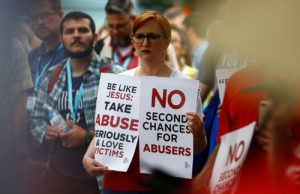
A woman holds signs about abuse during a rally outside the annual meeting of the Southern Baptist Convention at the Birmingham-Jefferson Convention Complex on June 11, 2019, in Birmingham, Ala. (RNS photo by Butch Dill)
“But if a grown, competent woman willingly and voluntarily engages with immorality with the pastor or a staff member,” he said, “she is a grown woman who has engaged in fornication and needs to be called to repent.”
David Pooler, a professor of social work at Baylor University, disagrees with that framing. Pooler, who has studied clergy misconduct, said no one wants to redefine sin. Instead, he said, he and other experts want to define clergy misconduct more accurately.
Calling clergy misconduct an affair or moral failing misses the power dynamics at play, he said. Most helping professions have codes of conduct in place to protect the public from those who would misuse their trust.
“The guiding principle for any helping profession is the person with more power is always responsible,” he said.
Pooler said churches often turn against adult survivors of abuse rather than helping them—seeing them as threats to the church rather than beloved members of the community. It’s easier to do that than to believe a revered church leader could have acted in abusive ways.
Pooler contrasted that approach with a familiar passage in the Gospel of John, where a woman accused of adultery is brought to Jesus by a crowd that wants to stone her. Jesus protects her instead, disbanding the angry crowd with a few words: “Let any one of you who is without sin be the first to throw a stone at her.”
That story should be an example of how church leaders can protect survivors from those who would harm them, said Pooler. But instead, he said, the focus becomes avoiding scandal or blaming the victim.
Often, abusers will pressure their victims to keep quiet, telling them that revealing what has happened will injure the church or their ministry. Churches often repeat that message to adult survivors—urging them not to harm “the man of God.”
Not limited to Southern Baptists
That kind of approach happens in other faith communities as well. Sara Larson, executive director of Awake Milwaukee, a nonprofit started by lay Catholics that provides community and support for survivors of abuse, echoed similar experiences among those she serves.
This summer Awake has hosted drop-in gatherings for adult survivors, where they can connect with one another and find a listening ear. That can be healing for survivors, who are often alienated from their faith communities.
“For many people who are abused as adults, the first barrier they have to overcome is often an internal sense of shame and guilt,” she said. “Often there’s been a lot of spiritual manipulation that has brought them to a place where they think it’s their fault. And they feel a lot of shame around that.”
Before helping start Awake, Larson had worked in Catholic parish ministry, running programs like vacation Bible school and mom’s groups. She was familiar with the safety protocols the church has put in place to protect children. But until she read stories about Theodore McCarrick, a former cardinal credibly accused of abusing seminarians, she had not realized adults could be at risk when those in spiritual authority use their influence to pressure or manipulate them.
“It’s very clear that these are situations in which we can’t talk about consent,” she said. “As if you can ever consent to a sexual relationship with someone who has heard your confession, or is serving as a spiritual director or is giving you marriage counseling.”
Larson said adult survivors of abuse often are met with disbelief and shame from both church leaders and their fellow laypeople, for “leading a holy man astray.” Even if they are believed, all the focus shifts to the accused spiritual leader and how to deal with that person, leaving survivors forgotten.
At Awake, she said, the focus is on supporting survivors, walking with them and listening to their stories. Larson draws inspiration from 1 Corinthians, which describes the church as a body, where if “one part suffers all the parts suffer with it.”
“How can we become a church that when one person is suffering the whole body notices and cares and rushes to support them?” she said.
Lawsuit against McLean Bible and David Platt dismissed
July 18, 2022
WASHINGTON (RNS)—A yearlong legal battle over a contested election at a prominent Washington, D.C.-area church appears to be over for now.
On June 24, a judge in Fairfax County, Va., dismissed a lawsuit filed by dissident members of McLean Bible Church who sought to overturn the results of an election for church leaders, known as elders.
Those members argued that church leaders, including Senior Pastor David Platt, a best-selling author and former president of the Southern Baptist Convention’s International Mission Board, had violated the church’s constitution.
The suit was dismissed with prejudice, meaning the plaintiff cannot refile the same claim again in that court.
“I know that many churches across America have faced and are facing similar challenges during these days, and it is vitally important that we move past division and live out John 13:35, demonstrating love for one another and love for a world in need of Jesus,” Platt said in a statement June 27.
Rick Boyer, attorney for the plaintiffs in the lawsuit, said his clients plan to appeal.
Unrest in the congregation
The dispute at McLean centered around a failed June 30, 2021, election. The church’s constitution requires that new elders receive 75 percent approval—and for the first time in McLean’s history, a new group of elders failed to reach that margin
The election came amid simmering unrest at the church, where political polarization in the wider culture seeped into the congregation—the larger “woke war” in the evangelical world.
A group of critics that runs a Facebook group called “Save McLean Bible Church” claimed church leaders had substituted critical race theory and social justice for biblical teaching. Rumors had begun to circulate around the church that Platt and other leaders planned to sell a church building to a local Muslim congregation for a mosque.
COVID-19 also played a role. Some church members who had been attending online, rather than in person, claimed their ballots had been disqualified.
Following the first failed election, a second election was held in early July 2021, this one where members had to sign their ballots—which critics said violated the church practice of using secret ballots. In that election, the elders were approved, which led dissident members to file a suit.
This past spring, hoping to resolve the dispute, McLean leaders decided to discard the results of the July 2021 elder election. They organized a new election for elders in mid-June 2022, using secret ballots. All active members were allowed to vote.
The plaintiffs in the lawsuit objected, saying anyone who joined the church after the June 2021 election should not be allowed to vote.
All six elders on the ballot received at least 86 percent approval.
Wade Burnett, a pastor on McLean’s leadership team, said the congregation decided to move forward together in a difficult time. He told Religion News Service the church believes it will prevail if there is an appeal.
“Every time this lawsuit has been filed or amended or refiled, it has resulted in a dismissal,” he said. “We believe the same thing would happen on appeal in this matter, as our church has now voted and re-voted in ways that are crystal clear. We want to move forward in unity, and we do not believe any appellate court would restrict us from doing that.”
Gallup Poll: Americans’ belief in God at low level
July 18, 2022
WASHINGTON (RNS)—Belief in God has been one of the strongest, most reliable markers of the persistence of American religiosity over the years. But a new Gallup Poll suggests that may be changing.
In the latest Gallup Poll, belief in God dipped to 81 percent, down 6 percentage points from 2017, and the lowest since Gallup first asked the question in 1944.
Even at 81 percent, Americans’ belief in God remains robust, at least in comparison with Europe, where only 26 percent said they believed in the God of the Bible, and an additional 36 percent believe in a higher power, according to a 2018 Pew poll.
Throughout the post-World War II era, an overwhelming 98 percent of U.S. adults said they believed in God. That began to fall in 2011, when 92 percent of Americans said they believed in God and, in 2013, went down again to 87 percent.
The latest decline may be part of the larger growth in the number of Americans who are unaffiliated or say they have no religion in particular. About 29 percent of Americans are religious “nones”—people who describe themselves as atheists, agnostics or “nothing in particular” when asked about their religious identity.
“Belief is typically the last thing to go,” said Ryan Burge, assistant professor of political science at Eastern Illinois University. “They stop attending, they stop affiliating and then they stop believing.”
The Gallup survey showed belief in God has fallen most among younger Americans. Only 68 percent of adults ages 18-29 said they believed in God, compared with 87 percent of Americans age 65 or older.
The poll also found belief in God is higher among married people (compared with those who are not married), women (as opposed to men) and those who did not go to college (versus college graduates).
But perhaps the most striking differences were in political ideology. Belief in God is correlated more closely with conservatism in the U.S., and as that gap widens it may be a contributor to growing polarization. The poll found that 72 percent of self-identified Democrats said they believed in God, compared with 92 percent of Republicans (with independents in between at 81 percent).
In recent years there has been a rise in the number of Americans who acknowledge being Christian nationalists—those who believe Christian and American identities should be fused.
“It could be that the increase in the number of atheists is a direct result of Christian nationalism,” said Ryan Cragun, a sociologist at the University of Tampa who studies the nonreligious. “They seem to be dominating the rhetoric. I wouldn’t be surprised if there is legitimately backlash against it and people saying, ‘You know what? I’m an atheist.’”
Christian shooting survivor urges more than thoughts, prayers
July 18, 2022
WASHINGTON (RNS)—When she heard about the shooting at Robb Elementary School in Uvalde, a flood of memories swept over Taylor Schumann.
Taylor Schumann
How she hid in a closet as a gunman walked into the satellite campus of New River Community College in Christiansburg, Va., where she was working at the front desk, just inside the entrance.
How the gunman, a student she didn’t know, fired through the door of the closet where she hid, ripping apart her left hand. Shrapnel lodged in her eye and chest.
How she couldn’t reach out to her family to let them know she’d survived and how helpless that made her feel—and how helpless the students and teachers at Robb Elementary also must have felt as a gunman opened fire in their school, too.
Schumann felt the pain and the fear and the helplessness all over again when she heard about the 19 children and two adults shot to death May 24 in Uvalde. She has relived that trauma when she heard about each of the mass shootings across the United States that have grabbed headlines since she was shot in 2013.
“Experiencing a shooting, in whatever way someone might, never leaves you,” she said. “Whenever I hear about a shooting, especially one that takes place at a school, I’m immediately brought back to the room where I was hiding. I recall the pain I felt, the fear that took hold of me, and I can’t help but feel it all over again for the people experiencing this recent shooting. It’s a visceral response.”
After several surgeries and a year of occupational therapy, Schumann now has partial use of her hand.
She worries about how to explain her scars to her son, now nearly old enough to go to school —or how to tell him school shootings are no less likely now than they were nine years ago when she was injured.
Schumann’s book, When Thoughts and Prayers Aren’t Enough: A Shooting Survivor’s Journey Into the Realities of Gun Violence, published last year by InterVarsity Press, describes her experience and how it impacted both her Christian faith and her views on gun reform.
“God has been good to bring me healing and restoration in the years since I was shot, but it will never leave me,” she said. “And as hard as that is, I am thankful that the pain still feels that real. As long as this keeps happening in America, I hope to never become numb to it.”
In an email exchange with Religion News Service, the author shared why it’s so difficult to talk about gun reform—and so important, especially for her fellow Christians.
This interview has been edited for length and clarity.
How did the shooting impact your faith?
My relationship with God changed a lot after the shooting, but not in the ways some people assume. I never stopped believing, and I never stopped praying, begging him for healing, asking him why.
But until that point my life had been relatively quiet and easy. I had experienced hurt and hardship like anyone else, but the God I knew was still the God of mostly good times. I never had to become so intimately close to the God who bottles my tears and binds my wounds. After the shooting, I had to confront God with a lot of questions and doubts and fears.
And he met me in every single one. I learned that God is still God when the healing doesn’t come, when the nightmares don’t go away and the prayers are answered in ways you didn’t ask for.
What can be done to make sure something like this never happens again?
When we look at research about school shootings, we find that in most cases the shooter gets the gun from their own home or the home of someone they know. In about half these cases the gun wasn’t stored safely. Yet most states have no laws requiring safe storage. Every step you put between a gun and someone else reduces the risk of harm and death. This tells us that simple safe storage laws could mean a shooting never happens.
We also know that in a lot of cases the shooter shows warning signs. This is why we need red flag laws, or extreme risk protection orders, in every single state. We tell people to say something if they see something. Offering a way for people to contact law enforcement when they notice something can make a huge difference. Other measures, like closing loopholes and enacting waiting periods, could also reduce shootings.
Your book’s title says thoughts and prayers aren’t enough. What role do they play?
I believe in the power of prayer deeply, and that’s why it offends me so much when it’s used as simply a soundbite. I think when we pray about gun violence, we are not always open to hearing what God has to say. Are we really willing to be used to reduce gun violence? If God’s answer to our prayers requires personal sacrifice, are we willing to hear that? I’m not so sure we are.
Prayer should be where we start, not where we finish. If we were praying genuine prayers about gun violence we would see a lot more genuine action.
You wrote, “Most painful of all was the realization that those who turned away, who remained silent, were the ones I most expected to see on the front lines.” Why did you expect your fellow Christians to rally around this issue?
We are called as Christians to care for the oppressed and the hurting and to seek justice in ways that are true to the word of God, even when it comes at personal sacrifice. For years, I had watched, and been part of, the pro-life movement, and saw people call for laws to protect life. To me, gun violence should be no different.
Gun violence is taking so many lives every single year, with 40,000 deaths on average—40,000 image bearers of Christ taken from this earth in acts of violence. It was and is hard for me to understand why this issue hasn’t been taken up as a banner pro-life issue for Christians.
I think the political fault lines stop many people from truly getting involved, and we need to deal with that. We need to recognize other ways to care for victims and their families: community care support, financial giving, violence prevention. There are a lot of ways to care about gun violence beyond politics—though politics has not held Christians back from getting involved in other issues, so that says a lot about what we are willing to stand up for and what we aren’t.
Why is this so hard to talk about? What are we talking about when we talk about gun reform?
Talking about gun reform is like talking about religion or abortion. You’re rarely just talking about the issue on the surface. You’re most likely talking to someone who has long-held opinions about guns that make up a portion of who they are. Likely those beliefs go back generations and are deeply ingrained in family traditions, and we’re asking them to reconsider or reevaluate part of who they are. That’s not easy.
It wasn’t easy for me either. When we are asked to reconsider something we have believed for a long time, it feels like we’re peeling up part of our own skin to look underneath. It can feel like if we do that, the whole thread of who we are might unravel. When we engage in these conversations without considering someone’s background, culture, traditions, we’re not engaging in good faith, because whether we like it or not, that stuff does matter.
So when we talk about gun reform, we need to talk about it in a way that invites all of us in, to bring with us our histories and our knowledge, and not discount someone else’s experience.
What would you say to Christians who have different views on gun reform?
I like to remind people that gun violence is too important an issue to cling to beliefs simply because we always have. It is scary to interrogate our beliefs and wonder if we might be wrong, if we might need to change our minds. It is never my intention to shame anyone into changing their minds, but instead to offer an alternative way to think about gun reform.
Americans see the right to bear weapons as an ultimate freedom. In reality, true freedom might just be a result of laying down our personal desires and “rights” for the good of our neighbors. If you take the time to listen to the research about guns and listen to stories from survivors and don’t change your mind, I have a lot of respect for you. If you’re unwilling to do that, I would ask why you’re so resistant.
What would you share with survivors of these most recent shootings?
For the survivors living in the aftermath of these recent shootings, I want you to know you’re not alone, and your suffering and experience will never be forgotten. There are thousands of us who have been through what you’re going through and hold you in our hearts every day. So in the dark of night, when you feel alone and forgotten, please remember that we will never forget.
McLean leaders hope election will resolve lawsuit
July 18, 2022
WASHINGTON (RNS)—Leaders of a prominent Washington, D.C.-area congregation hope to end an ongoing conflict by redoing a contested church election.
That election is the subject of a lawsuit pending in Virginia state court. Several current and former members claim McLean Bible Church leaders failed to follow the church’s constitution during an election for church elders in July 2021.
Church leaders have fought the lawsuit in court. Now they hope to render the suit moot.
“We have an opportunity to resolve conflict in our church biblically and peacefully and move forward together as a united church, bringing hope to our city and to the nations,” Pastor David Platt told church members in a video announcing the resolution plan.
Platt was president of the Southern Baptist Convention’s International Mission Board from 2014 to 2017.
Part culture war, part polity skirmish
The conflict over the McLean election is part culture war, part battle over bylaws, fueled by political polarization and the broader evangelical “woke wars,” combined with a recent pastoral transition and a global pandemic.
Last summer, McLean Bible held a routine church meeting to elect three new elders for the Northern Virginia congregation. Those elders needed at least 75 percent of the vote to be approved.
But the vote failed, a first in the church’s history.
The failed vote took place during a time of conflict at the church, with critics claiming Platt, a bestselling author, had replaced Bible teaching with critical race theory and liberal social justice. Many church members had also taken to watching services online during the COVID-19 pandemic rather than attending in person—making it difficult to defuse tensions.
Platt blamed a conspiracy for the failed election.
“A small group of people, inside and outside this church, coordinated a divisive effort to use disinformation in order to persuade others to vote these men down as part of a broader effort to take control of this church,” he said in a sermon last year.
The elders were approved in a follow-up election, which was held under new rules. Those rules required church members to show identification and to fill out a ballot with their name on it. Some church members, who had been labeled as inactive, had to cast provisional ballots while their status was reviewed.
Resolution plan to be considered
Under the resolution plan, which must be approved this week by the congregation, the church would redo last summer’s election, using secret ballots. A neutral observer would oversee the election and count the votes. All active members, including anyone who was a member at the beginning of the pandemic and claims to still be a member, would be allowed to vote.
If the elder election fails, the church has 90 days to select and approve replacement elders. If they are unable to do so, the church elders—including Platt—would face a vote of confidence.
The proposal to redo the election is not a settlement, Wade Burnett, a pastor at McLean, told Religion News Service. Instead, he described it as an effort to resolve the conflict internally, rather than relying on the courts to referee the dispute.
He said the proposal would give plaintiffs almost everything they have asked for.
“This remedy, if approved by the church, essentially renders the lawsuit moot,” he said in an email. “The plaintiffs will receive a revote with essentially all of the relief they are requesting from the court.”
Who can vote?
One sticking point is over who can vote in the election.
Rick Boyer, the plaintiffs’ lawyer, said his clients have rejected the church’s proposal and plan to go ahead with the lawsuit. The proposal has also been criticized in a Facebook group called “Save McLean Bible Church,” which has about 850 followers online.
Boyer, a conservative lawyer known for his support of “Vexit”—a plan for some Virginia communities to defect to West Virginia—said the church’s plan allows hundreds of new members, who joined McLean in the past year, to vote.
Instead, Boyer told RNS plaintiffs want to exclude new members who joined the church after July 2021.
“You can’t come in after an election is over and bring in a whole bunch of people who have no right to vote in that election, then redo the election,” he said. “They’re inviting us into a rigged game and the whole reason we’re in court is because we’re trying to undo a rigged game.”
Burnett said several hundred people have joined the church in the past year and they would be able to vote in elections. He also said the church has hired an outside observer with no previous ties to the church to oversee the election if the proposal is approved by the congregation.
Burnett said church leaders believe they followed the church’s constitution during last year’s vote, but they are willing to redo the election to bring the conflict to an end. He said he and other McLean leaders still are open to meeting with the plaintiffs in order to resolve the dispute outside the courts.
He admitted there are risks in the proposal. Church members could reject the plan outright, or they could decide to vote in new leaders, rather than the present elders. The church’s constitution, he said, also sets a high bar for consensus—one that may be difficult to achieve.
“It’s hard to get 75 percent of people to agree on anything these days,” he said.
During a congregation meeting May 18, Burnett highlighted a passage from the New Testament Book of 1 Corinthians, which criticizes early Christians who took each other to court. He called the legal conflict “a black eye for the bride of Christ and a mark against our testimony to the world around us.”
“The thing that I wish was different is that we could have talked together as brothers and sisters in Christ,” he told RNS. “I wish that would have been true before the lawsuit was filed, after the lawsuit was filed. I wish it was true today.”
Inflation hits church ministries across income levels
July 18, 2022
DALLAS (BP)—In the low-income South Dallas community Cornerstone Baptist Church serves, inflation has led some members to choose between keeping gas in their tanks or driving to church.
Pastor Chris Simmons of Cornerstone Baptist Church in Dallas greets workers at The Kitchen before opening the ministry’s doors to serve the homeless. (File Photo / David Clanton)
“Giving is down, because people now have to decide whether they’re going to give or get gas to get to church,” Senior Pastor Chris Simmons said. “It is not only impacting giving. It’s also impacting attendance, because people don’t have the gas money, and they’re trying to ration gas. Some people have gone back to online, for no other reason than the gas.
“There’s a tendency for others who might be in a higher income bracket to have a little wiggle room when it comes to inflation, but I think this has impacted even those individuals because it has gone on so much longer than anticipated and the inflation rates are so much higher than they would have budgeted for.”
In the more affluent Riverside, Calif., the national inflation rate of 8.5 percent is challenging attendees at Orangecrest Community Church to sacrifice to support the construction project the church launched just before the COVID-19 pandemic hit in 2020.
“Prioritizing Christ’s mission comes at a cost,” Senior Pastor Josh De La Rosa said. “Because of inflation, our building costs went up by 11 percent. Giving is slightly behind last year’s giving to date. We’re about 0.5 percent behind last year’s giving, after quarter one. But typically we see about 7 percent year-over-year increase in giving.
“This is a slight church slowdown. It could be inflation, but also it could be we’re coming out of our first capital campaign. … Overall, I would say, I don’t really see a slowing down.”
Inflation doesn’t impact all prices evenly. Gasoline, housing costs and certain foods in particular have risen beyond the average inflation rate.
“It’s important to consider that some products are growing more expensive than inflation,” said David Spika, chief investment officer of GuideStone Financial Resources of the Southern Baptist Convention. “Supply chain issues can make some items harder to come by, which drives up demand. That, in turn, increases prices more.
“It’s safe to say it is impacting churches in the same way it is small businesses, charities and consumers at large. It’s more expensive to fill up the gas tank to take the church van to camp,” Spika said. “It’s more expensive to get the air conditioner fixed or buy supplies. More people need financial assistance than ever before. It’s a cause for action for the Federal Reserve.”
On average, an 8.5 percent inflation rate means the dollar is worth nearly 9 cents less than a year ago.
Ministries creatively cut costs
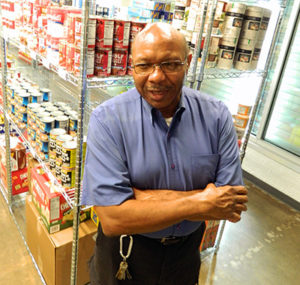
Pastor Chris Simmons of Cornerstone Baptist Church in Dallas sees the Southpoint Community Market not only as a means to community development, but also as an opportunity for gospel witness. (Photo / Ken Camp)
But Simmons said an elderly member of Cornerstone Baptist Church saw her monthly rent increase from $1100 to $1500, and home values of some members have increased between 30 percent and 50 percent, thereby driving up property taxes.
“We serve in a very low-income community,” Simmons said. “So there is not any ‘fat’ in our parishioners’ budget to begin with.”
Cornerstone—which operates many community outreach ministries, including food, clothing and other essentials, medical care and laundry for the homeless—continues to serve by accessing savings, creatively cutting costs and forgoing staff salary increases.
Instead of meatloaf, the church is serving more spaghetti and stew in its free meals. Instead of name brands, generic products are sought. The church watches for sales. Its longstanding educational outreach through Shalom Finance is teaching members to streamline budgets and be more financially astute. Property owners faced with higher taxes are learning to challenge property rate assessments and benefit from all discount programs available.
The feeding program designed to serve the homeless is attracting others who might get a meal to supplement their food budget, with attendance at the soup kitchen increasing 15 percent to 18 percent since January, Simmons said. At the church’s baby boutique store, those receiving diapers increased from an average of 975 a month to 1,367 in March.
“It’s gotten really challenging,” he said. “We’ve tried to be creative in mitigating all of these challenging times to really stretch those dollars, realizing that the need is even greater than it was before. We all have got to make sacrifices to get through this. It is really across the board impacting congregants and community. It’s a very, very difficult time.”
At Orangecrest, where the average membership age is the early 30s, the rise in housing costs is especially challenging, particularly for those trying to buy homes. Those who have remained as faithful ministry supporters are committed to the sacrifices involved, De La Rosa said.
The church, which De La Rosa describes as portable, launched a two-year capital campaign in February 2020 to establish its first church campus on a 5.3-acre site. The first phase, purchasing and renovating a facility, was estimated to cost $1.8 million, with the second phase including constructing an auditorium estimated to cost more than $5 million.
“We exceeded our pledged amounts over that campaign over two years, actual sacrificial giving through the pandemic,” he said. “And we saw an increase in our general giving in that time as well. … Our people just have this steady commitment to sacrifice to see us plant our roots here.”
Observing community outreach month in May, the church is supporting four nonprofit organizations, including a pregnancy support center assisting mothers considering abortion. Inflation has created more opportunities to reach people in need, who feel more pressure to survive.
“We actually have seen an increase in outreach effectiveness right now,” he said. Community outreach has driven attendance that exceeds 600 on average, with the 818 attendance at Easter the highest in the church’s 15-year history.
“Its’ challenging young families to get creative on how they steward and spend, how they save, and, I think, even how they prioritize giving and generosity to just sort of live on that faith edge, trusting the Lord rather than what we can see,” De La Rosa said.
¿Qué te da gozo? Comunidad fortalecida por hacer preguntas inesperadas
July 18, 2022
Cuando las familias o los individuos se enfrentan a la imposibilidad de pagar el alquiler, la hipoteca o los servicios públicos —una situación que enfrentan millones de hogares estadounidenses a raíz de la pandemia— a menudo se les pide que completen extensos formularios para determinar su elegibilidad para recibir asistencia financiera.
Los solicitantes completan los detalles sobre los ingresos del hogar y el historial de pagos y proporcionan los documentos de gastos, facturas y pagos anteriores.
Sin embargo, los residentes de un vecindario del centro de la ciudad de Indianápolis que completan un papeleo similar para la organización sin fines de lucro The Learning Tree (El Árbol del Aprendizaje), se encuentran con al menos algunas diferencias probablemente inesperadas. Por un lado, el formulario consta de una sola página en lugar de tres o cuatro. Y luego encuentran dos preguntas inusuales al final, en una sección titulada “Háblame de ti”, donde dice simplemente: “¿En qué eres bueno?” y “¿Qué les trae alegría a ti y a tu familia?”.
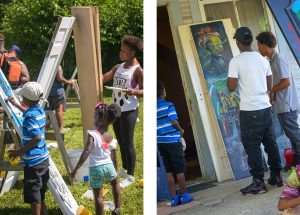
Los residentes embellecen varias puertas para alegrar el vecindario. Fotos de Wildstyle Paschall.
Ese tipo de preguntas están en el corazón de la misión de The Learning Tree, una organización que busca mejorar la calidad de vida de las personas, las comunidades, las escuelas y las empresas, utilizando un modelo llamado «desarrollo comunitario basado en ganancias», o ABCD por sus siglas en inglés.
En lugar de ver los vecindarios de bajos ingresos como áreas que requieren ayuda externa —donaciones— para prosperar, el equipo de The Learning Tree busca formas de explorar y aprovechar los dones de los residentes para apoyar a sus vecinos en las comunidades de Riverside, United Northwest y Clifton Place. Todos estos tienen un ingreso familiar promedio más bajo que en la mayoría de los vecindarios de Indianápolis.
“Hay personas en los vecindarios, especialmente en los vecindarios negros y latinos, cuyos talentos no se han aprovechado”, dijo De’Amon Harges, creador de The Learning Tree y residente del área a la que sirve la organización.
“Todas las personas que están en nuestro círculo tienen la responsabilidad de ser testigos de dónde está obrando Dios, particularmente las personas en lugares de bajos ingresos que son ignoradas, cuyos dones y talentos no se ven”, dijo. “Necesitamos encontrar esos dones para que puedan utilizarse de manera que construyan la comunidad, la economía y el deleite mutuo”.
La interacción de Harges con los residentes, principalmente las conversaciones uno a uno mientras camina por los vecindarios, conducen regularmente a proyectos. Los jardineros proporcionan productos para una comunidad designada como “desierto alimentario” (por su falta de alimentos nutritivos). Poetas, narradores y fotógrafos documentan historias sobre sus vecinos. Los artistas embellecen el vecindario con su trabajo y los empresarios asesoran a la juventud local.
Harges ha estado inmerso en este tipo de trabajo entre vecinos durante casi 20 años, desde que fue elegido para convertirse en «oyente itinerante» para la Iglesia Metodista Unida de Broadway, una congregación urbana en Indianápolis. Reconociendo el don de Harges para hacer conexiones y desarrollar amistades, el reverendo Mike Mather le pidió que recorriera la comunidad circundante para hablar con las personas individualmente. El objetivo era que la gente aprendiera más sobre los dones que tenía para compartir en lugar de centrarse en sus necesidades y lo que andaba mal en el vecindario, ya fueran las altas tasas de delincuencia, la creciente cantidad de edificios desocupados o el vandalismo.
El vicealcalde de Indianápolis, Jeff Bennett, quien ha estado familiarizado con el trabajo de Harges durante más de 15 años, dijo que el enfoque basado en las relaciones para la construcción de comunidades tiene numerosas ventajas.
“En el desarrollo de una comunidad hay más que solo dólares que entran y salen”, dijo Bennett. “Se puede tener tanto impacto, o más, a nivel humano a través de la construcción de relaciones. Muy a menudo, en el gobierno podemos ser demasiado verticales. Diseñamos y financiamos programas que creemos que las comunidades quieren o necesitan, sin escuchar lo que un vecindario dice que podría usar para dirigir su propio futuro”.
“Ahí es donde una organización como The Learning Tree hace tan buen trabajo”, dijo Bennett. “Pueden llegar al corazón de la preocupación de un vecindario de manera mucho más rápida y completa que otras organizaciones que se dedican al desarrollo comunitario”.
DESARROLLO COMUNITARIO BASADO EN RELACIONES
Amanda Wolf, quien supervisa el trabajo organizativo y administrativo de The Learning Tree, a menudo se une a Harges y otros socios de Learning Tree mientras caminan por su vecindario. Durante una de esas caminatas, en el 2018, comenzaron a hablar con varios jóvenes que estaban realizando trucos en bicicleta.
“De’Amon les preguntó qué les gustaría ver en su vecindario y cómo les gustaría pasar los veranos”, dijo ella.
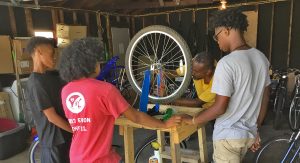
Un voluntario ayuda a los niños locales a aprender a reparar y construir bicicletas. Foto cortesía de Amanda Wolf.
Esa conversación en particular condujo al desarrollo de una tienda de bicicletas en el garaje de Wolf, con el apoyo del Departamento de Policía de Indianápolis, que donó 50 bicicletas,. Un vecino con experiencia en la reparación de bicicletas capacitó a los jóvenes en cómo arreglar, limpiar y vender las bicicletas.
“Lo que he aprendido a lo largo de los años es que algunas veces realmente no hay ninguna necesidad excepto la necesidad de ser visto”, dijo Wolf. “Principalmente, lo que hemos hecho a lo largo de los años es descubrir los dones que ya están en nuestra comunidad, para que la gente los conozca. Cuanto más podamos hacer eso, mejor será para nuestras comunidades. Necesitamos que todos sepan qué diamante tenemos aquí”.
Han surgido otros proyectos como resultado de tales conversaciones: convertir puertas desechadas en obras de arte, cubrir casas tapiadas con fotografías ampliadas de los residentes, participar en un proyecto de embellecimiento del vecindario.
Harges señaló que el proyecto de embellecimiento fue un gran ejemplo de cómo desafiar la forma en que los funcionarios y las organizaciones de la ciudad suelen pensar en ayudar a los vecindarios empobrecidos.
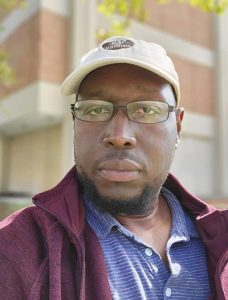
Wildstyle Paschall
“Había subvenciones para embellecer vecindarios como el nuestro con arte”, dijo. “Probablemente había 150.000 dólares sobre la mesa para pagarle a alguien externo para que hiciera el trabajo. Mi vecino Wildstyle hizo una lista de 45 artistas en un radio de cuatro cuadras alrededor de donde vivimos. Terminamos obteniendo esa subvención, poniendo ese dinero en manos de personas con talento aquí mismo en el vecindario”.
Si bien la gente de afuera puede sentirse desafiada por las percepciones negativas de la vida en un vecindario de bajos ingresos, los propios residentes también pueden verse desafiados por estas personas. Ese fue el caso de Wildstyle Paschall, ilustrador de The Learning Tree desde el 2015.
Paschall, quien también es productor musical, fotógrafo, activista y autor, recuerda la primera vez que tuvo una conversación con Harges. Después de enterarse del trabajo que Harges estaba haciendo en su comunidad, así como de sus experiencias de consultoría en el extranjero y a nivel nacional, Paschall tuvo un momento de incredulidad.
“Pensé: ‘¿Por qué sigues en este vecindario?’ Aquí hay un tipo que vive en la misma calle que yo y ha hecho todas estas cosas y ha estado en todos estos lugares diferentes”, dijo Paschall. “Soy conciente de que él no es la única persona en el vecindario que ha estado presente y ha hecho algunas cosas, pero eso fue una especie de punto ciego”.
Paschall dijo que esa conversación le hizo darse cuenta de lo fácil que es percibir a los vecindarios de bajos ingresos, incluido el suyo, como lugares de puras pérdidas.
“Es fácil alimentar esa mentalidad de que los residentes no tienen nada que ofrecer”, dijo Paschall. “Es fácil descartar esencialmente a todos los que están empobrecidos. Todo el mundo tiene la capacidad de estar haciendo grandes cosas, y muchas veces están haciendo cosas asombrosas. Simplemente no estamos viendo eso en los demás, incluso en nuestros propios vecindarios”.
Los residentes se conectan en el porche de De’Amon Harges en la zona urbana de Indianápolis. Foto cortesía de Amanda Wolf.
Tysha Ahmad, propietaria de Mother Love’s Garden (Jardín Amor de Madre), se encontraba entre un grupo de vecinos que tomaron la iniciativa de cubrir necesidades luego del cierre simultáneo de supermercados en varios vecindarios cercanos. Decidió retirarse de su trabajo en la industria de seguros para convertirse en agricultora urbana y así apoyar una cooperativa que sigue de cerca el modelo ABCD.
“Aquellos que tienen los medios pagan más por una bolsa, lo que ayuda a cubrir los costos de aquellos que no necesariamente tienen los medios, incluidos los adultos mayores y los que están en [los programas de asistencia] SNAP o EBT”, dijo Ahmad, quien se reunió con miembros de The Learning Tree mientras trabajaba en uno de los jardines de su vecindario.
Después de esa interacción, The Learning Tree ha apoyado su empresa de agricultura urbana, que ahora organiza regularmente un campamento de verano de cinco semanas en el vecindario para enseñar a los jóvenes sobre horticultura, carreras en agricultura y los beneficios para la salud de las verduras y frutas.
ENTRE LOS VECINDARIOS
Como señaló Paschall, los esfuerzos de The Learning Tree modelan el ministerio de Jesús de alguna manera. “Él andaba por las calles. Estableció el estándar de caminar, hablar con la gente y formar esa comunidad”, dijo.
Un evento organizado por The Learning Tree sirve como foro para que los artistas locales destaquen su trabajo. Foto de Wildstyle Paschall.
Con demasiada frecuencia, dijo Harges, las personas con buenas intenciones niegan a otros la oportunidad de usar sus dones, principalmente al enfocarse exclusivamente en las necesidades de aquellos a quienes quieren servir.
“Lo único que les preguntan es: ‘¿Qué ayuda necesita?’, ‘¿A qué lugar donde entregan comida quiere ir?’ o ‘¿Cómo podemos arreglar nosotros lo que hemos descubierto?’”, dijo. “La mayoría de las personas, cuando hablas con ellos, tienen sueños o quieren contribuir a algo. La necesidad de ser necesitado está en todos lados. Incluso en nuestras congregaciones, se nos pierde de vista el hecho de que, cuando solo nosotros somos los que damos, hay otras personas que necesitan sentirse útiles”.
Harges cita uno de sus textos bíblicos favoritos, 2 Reyes 4:1-7, en el que el profeta Eliseo le dice a una viuda pobre que pague sus deudas yendo a sus vecinos y pidiéndoles cántaros prestados. No dijo: “Ve al tesorero del pueblo o al banco de alimentos”. Dijo: “Ve con tus vecinos”.
Las congregaciones, grupos o individuos interesados en adoptar un enfoque ABCD deben comenzar explorando sus propios dones y luego encontrar personas con las que puedan trabajar para implementar esas prácticas de afirmación mutua de los dones, dijo Harges.
Como organización sin fines de lucro, The Learning Tree no ha buscado muchas subvenciones aparte de algunas pequeñas para ayudar a administrar la tienda de bicicletas de verano para jóvenes, dijo Wolf. La mayor parte de su trabajo, incluidos los pagos de los gerentes que ejecutan los programas, se financia con un 20% de los ingresos generados por su trabajo de consultoría, dijo. La Fundación de la Comunidad de Indiana Central también apoya el trabajo itinerante de la organización sin fines de lucro a través de una asociación que se enfoca en un proyecto de “embajador de la comunidad”.
El vicealcalde Bennett dijo que las iglesias están en una posición ideal para tener este mismo tipo de impacto.
“Los miembros y no miembros de la iglesia, incluidos los residentes, tienen su propio capital social. Es fácil para nosotros quedar atrapados en lo que no tenemos”, dijo Bennett. “Las iglesias están en una posición única para ver lo que tiene su comunidad… Ustedes tienen tanta riqueza, tanta experiencia y tanta capacidad en áreas imprevistas”.
Esfuerzos como el de The Learning Tree pueden conducir a una nueva forma de pensar sobre lo que debería considerarse un vecindario saludable. “Un vecindario saludable no es un vecindario rico”, dijo Bennett, “sino uno conectado.
Preguntas para considerar:
¿Cómo brindas oportunidades para hablar sobre lo que trae alegría a las personas?
¿Qué estás haciendo para descubrir dones y talentos en tu comunidad?
Cuando sirves a los que te rodean, ¿te estás enfocando en las necesidades o en los dones?
¿Qué prácticas de afirmación de los dones ya están presentes en tu trabajo?
Religious Americans hold complicated views on abortion
July 18, 2022
WASHINGTON (RNS)—For the last 50 years, abortion has been one of the most contentious issues in American political life, fueling mass protests, political machinations and even the rise of Donald Trump, who promised to deliver Supreme Court justices who would overturn Roe v. Wade.
But as Roe’s future is in doubt—according to a leaked draft of a Supreme Court decision—religious Americans have a surprising consensus on the issue.
Most believe abortion should be legal. Most believe there are times when it should not be. And no matter what their views, religious Americans are willing to help friends or family who choose abortion.
Tricia Bruce, a sociologist and researcher affiliated with the University of Notre Dame’s Center for the Study of Religion and Society, says some Americans practice “discordant benevolence” when it comes to abortion.
Though they may believe abortion is immoral and should be restricted, they are also willing to help a friend who chooses to end their pregnancy. This can range from giving emotional support or helping arrange for an abortion to providing financial help.
Polling numbers obscure complexity
Bruce said public polling about American beliefs on issues surrounding abortion sometimes misses the real people who hold those views. Those people, she has argued, often have a series of sincerely held values—such as believing human life begins at conception—and believing they need to stand by their friends.
“Sometimes we take a shorthand approach by using statistics to represent people’s views, and we forget that behind those views is a lot of complexity,” she told Religion News Service in an interview.
In 2019, Bruce and a team of colleagues conducted more than 200 face-to-face interviews with people from six states—California, Colorado, Indiana, North Dakota, Tennessee and Pennsylvania—about the issue of abortion. Each interview lasted more than an hour and was designed to get a deeper view of how Americans see the issue of abortion.
A report based on those interviews found that for many people, abortion is personal as well as political. About a quarter of the females interviewed had had an abortion, while three-quarters of interviewees knew someone who’d had an abortion.
Willing to support a friend who chooses abortion
Among them was a 58-year-old woman who believes life begins at conception and opposes abortion but also drove a friend to a clinic to get an abortion.
Some people would call that hypocritical, Bruce said. Instead, she sees it as being human and trying to do their best in a difficult situation.
Data from the 2018 General Social Survey shows Americans from a wide range of faiths say they would be willing to help a close family member or friend who has decided to have an abortion.
Half of evangelicals (53 percent), for example, say they would help arrange a ride or childcare for a friend or family member who was having an abortion, while more than a third (38 percent) would help pay for travel costs. Many nones (the religiously unaffiliated), people from non-Christian faiths, Catholics and Mainline Christians as well as many Black Protestants would do so as well.
Nones (42 percent), people of non-Christian faiths (44 percent) and Mainline Christians (36 percent) would be more likely to help pay for the abortion than Catholics (28 percent) or Black Protestants (22 percent), while evangelicals (12 percent) would be less likely.
Almost all faith groups say they would provide emotional support—from 93 percent of nones to 81 percent of evangelicals.
Providing emotional support could also mean trying to talk someone out of having an abortion and offering them support to choose a different option, Bruce said.
“They may deeply believe the best form of help they can give is to talk their friend out of the abortion or to say things like, ‘I will adopt the baby’ or ‘I’ll find someone who can help you’ or ‘I’ll give you money to raise the child,’” she said.
Not taking the issue lightly
In the interviews, almost no one took the issue of abortion lightly. Those who had abortions told researchers it had been a difficult experience. They did not regret it, but it was not trivial.
“It’s not Tylenol,” one of the interviewees told researchers.
Researchers also found people wanted to talk about ways to prevent abortion—better sex education, access to birth control, addressing economic inequality and providing more support for struggling families. Abortion, she said, was seen as the last option.
“None of the Americans we interviewed talked about abortion as a desirable good. Views range in terms of abortion’s preferred availability, justification or need, but Americans do not uphold abortion as a happy event or something they want more of,” according to the report.
The possibility the Supreme Court may overturn Roe comes after decades of falling abortion rates.
In 1973, the year Roe v. Wade was decided, 616,000 abortions were reported to the CDC by medical facilities. The figure increased to 1.43 million in the 1990s, before steadily dropping to 612,719 in 2017, with a slight uptick to 625,346 in 2019. Data from the Guttmacher Institute also shows abortion in the United States has been in decline for decades.
If Roe is overturned, state legislatures, rather than the federal government, will play a major role in future regulation of abortion. Some states, like Texas and Tennessee, have already passed so-called trigger laws that would go into effect immediately if Roe v. Wade is overturned and would ban most abortions.
Those laws most likely would be commonplace in Bible Belt states, which are controlled by Republicans, many of whom are evangelical Christians and 74 percent of whom say abortion should be illegal in most or all cases, according to Pew Research Center. Less restrictive laws would likely be passed in states controlled by Democrats, where evangelical Christians are less prominent.
Only 1 in 5 white evangelicals (21 percent) say abortion should be illegal in all circumstances. That’s higher than other faith groups, such as Catholics (10 percent) or Black Protestants (6 percent), but still well short of a majority.
SBC abolitionist position out of step with most
However, the largest Protestant denomination in the United States, the 14 million-member Southern Baptist Convention, passed a resolution at its 2021 annual meeting calling for the abolition of abortion. That resolution calls Roe v. Wade an “iniquitous decision” that “deprived the innocent of their rights, and usurped God.”
SBC messengers stated “unequivocally that abortion is murder, and we reject any position that allows for any exceptions to the legal protection of our preborn neighbors, compromises God’s holy standard of justice, or promotes any God-hating partiality.”
That resolution’s call for complete abolition conflicts with public polling data, which found evangelicals and religious Americans agree abortion should be legal in at least some circumstances.
The majority of nones, white non-evangelical Protestants, Black Protestants and Catholics say abortion should be legal if a woman’s health or life is threatened. Half of white evangelicals agree (51 percent).
Most of those major religious traditions say abortion should be legal in cases of rape, from 87 percent of nones to 66 percent of Black Catholics. Only 40 percent of white evangelicals agree.
Americans of all backgrounds are more open to restricting abortions later in pregnancy.
“Among men and women, Republicans and Democrats, and Christians and religious ‘nones,’ who do not take absolutist positions about abortion on either side of the debate, the prevailing view is that the stage of the pregnancy should be a factor in determining whether abortion should be legal,” according to the Pew report.
Still, politics plays a significant role in how Americans view abortion. More than half of Republicans say abortions should be mostly (47 percent) or always (13 percent) illegal, according to Pew Research. By contrast, most Democrats say abortion should be mostly (50 percent) or always (30 percent) legal.
Support for abortion rights strong among some
Data from the 2021 Cooperative Election Study and other sources have also found widespread support for abortion rights among many religious Americans.
Atheists (90 percent), Hindus (88 percent), agnostics (84 percent), Buddhists (87 percent) and Jews (74 percent) and those with no particular religion (73 percent) were most likely to support always allowing a woman the choice of obtaining an abortion, according to the Cooperative Election Study.
White evangelicals (26 percent) and Mormons (39 percent) were less likely to do so. Muslims (66 percent), mainline Christians (58 percent) and white Catholics (50 percent) were more split.
Among Christians, those who attend church services more frequently are more likely to want to see a ban on abortion. That includes about half of white evangelicals (56 percent), non-white evangelicals (50 percent), non-white Catholics (54 percent) and white Catholics (59 percent).
Ryan Burge, assistant professor of political science at Eastern Illinois University, said the data shows little support among religious Americans for a total ban on abortion. There is support, he said, for some limits, such as waiting periods, mandatory ultrasounds and banning late-term abortions.
While many religious Americans believe abortion is immoral, they do think it should be legal. And they are often driven more by practicality than ideology, said Burge.
“The average American takes the old Bill Clinton position—abortion should be safe, legal and rare,” he said.
Burge also said many churches—especially large churches—don’t talk much about abortion. That’s in part, he said, because Americans don’t want to talk about abortion. No matter what position church leaders take, someone will be upset.
“It is such a divisive issue,” he said. “In the vast majority of religious contexts, there is no value in bringing it up.”
Ahead of the Trend is a collaborative effort between Religion News Service and the Association of Religion Data Archives made possible through the support of the John Templeton Foundation.
American white evangelicals hold minority view on abortion
July 18, 2022
WASHINGTON (RNS)—Several polls in recent days have shown a majority of Americans think abortion should be legal, and a new Pew Research survey is no exception.
The large survey of 11,044 Americans, released May 6, shows 61 percent of respondents said abortion should be legal in most or all cases—little changed from 1995 when 60 percent said the same.
But contrary to what many may assume, those opposed to abortion are not necessarily all religious. In fact, the country’s many religious groups have wide-ranging opinions on the legality of abortion.
The only religious group that overwhelmingly opposes abortion is white evangelicals, 73 percent of whom say abortion should be illegal. Many white evangelicals celebrated when a leaked draft opinion showed a majority of Supreme Court justices are ready to overturn Roe v. Wade and eliminate women’s right to abortion. The actual ruling is expected in June.
White evangelicals also are far more likely than other religious groups to say life begins at conception, the survey found. An overwhelming number of white evangelicals—86 percent—said the assertion that the fetus is a person with rights reflects their beliefs “extremely well” or “somewhat well.”
Black Protestants and white evangelicals differ
But other Christian groups, including Black Protestants, are far more supportive of abortion rights. Among Black Protestants, only 23 percent said abortion should be illegal most or all of the time; 66 percent said they thought abortion should be legal in all or most cases.
On the question of when life begins, Black Protestants stood out from white evangelicals, too. Only 38 percent of Black Protestants said human life begins at conception.
“They’re both highly religious groups,” said Besheer Mohamed, a senior researcher at Pew Research referring to white evangelicals and Black Protestants. “But their views on abortion are very different.”
But perhaps the biggest misconception about religious groups is the widely held view that Catholics universally oppose abortion rights.
While the Catholic Church consistently has opposed all forms of abortion—and the U.S. bishops have made it a defining teaching of the church—the Pew survey shows 56 percent of Catholics say abortion should be legal in all or most cases. Only 44 percent of Catholics said they were “extremely” confident that life begins at conception.
“The bishops have been trying to convince their own people and have failed,” said Thomas Reese, a Jesuit priest and senior analyst for Religion News Service. “Catholics don’t listen to the bishops.”
Religious “nones”—U.S. adults who describe themselves, religiously, as atheists, agnostics or “nothing in particular”—were most supportive of legal abortion. Eight-in-10 “nones” said abortion should be legal in all or most cases. Atheists, a small subgroup among the “nones,” were the only group where a majority said abortion should be legal in all cases, no exceptions.
Majority of Jews and Muslims favor legal abortions
The Pew survey did not break down religion for minority faiths, such as Jews and Muslims. But a new study issued May 5 from the Institute for Social Policy and Understanding finds 75 percent of American Jews and 56 percent of American Muslims believe abortion should remain legal.
The survey, conducted among 2,159 respondents (807 of whom were Muslim), asked a similar question to Pew: Do you think abortion should be legal in all cases, legal in most cases, illegal in most cases or illegal in all cases?
The survey found younger Muslims were more likely than Muslims aged 50 and older to believe abortion should be legal in all cases.
“The wider society may think Muslims are less supportive of legalized abortion, but that’s clearly not the case from this data,” said Meira Neggaz, executive director of the Institute for Social Policy and Understanding.
That said, among all religious groups, as among all Americans, few took an absolutist view on the legality of abortion. Even those most opposed to abortion said there are some cases when abortion should be legal, and even those most supportive of legal abortion said there are times when abortion should not be allowed.
“One commonality across these groups is that sizable numbers in all of them see the issue of abortion in shades of gray,” the Pew survey found.
For example, a majority of all religious groups, including white evangelicals, said abortion should be legal if the pregnancy threatens the life or health of the woman. And all religious groups, including 56 percent of white evangelicals, said that how long a woman has been pregnant should matter in determining when abortion should be legal.
Americans broadly are more likely to favor restrictions on abortion later in pregnancy than earlier in pregnancy.
The Pew survey had a 1.5 percentage point margin of error for the entire study.
Lifespan of worship music short and getting shorter
July 18, 2022
WASHINGTON (RNS)—The most popular worship song in churches these days is “Build My Life,” from Bethel Music, the megachurch-based worship music hit machine based in Northern California.
Sitting at No. 1 on the top 100 worship song chart from Christian Copyright Licensing International, which licenses worship music, “Build My Life,” first released in 2016, is an outlier in worship music, where hit songs are here today and gone tomorrow.
Mike Tapper
A new study—“Worship at the Speed of Sound” from Southern Wesleyan University professor Mike Tapper and colleagues—found the lifespan of a hit worship song has declined dramatically in recent years.
In the mid-1990s, a popular song like “Refiner’s Fire,” or “In Secret” had a lifespan of about a dozen years, rising for four to five years before hitting a slow decline. Two decades later, that lifespan has dropped down to three to four years, with songs like “Even So Come” or “Here as in Heaven” rising rapidly, then disappearing, according to the study, based on 32 years of CCLI data.
In an interview, Tapper said he and his colleagues, including Marc Jolicoeur, a worship pastor from New Brunswick, Canada, had been seeing the increased pace and churn rate of new music and wanted to quantify it. Tapper, chair of the religion division at Southwestern Wesleyan, already had been studying the lyrics of worship songs when he got ahold of the CCLI data.
Tapper said the pace of new music, driven by technology, which allows new songs to be distributed far and wide quickly, has played a role in the declining lifespan of songs. So has the high quality of songs being produced, he said, which gives church leaders an overwhelming number of options.
“It is hard to say ‘no’ to great songs,” he said.
Walking a fine line
Tapper and his team are trying to walk a fine line. They’re glad people are writing worship songs and are eager to sing God’s praises. But they worry about the unintended consequences of turning worship music into a disposable commodity—something Tapper says reflects the influence of the broader culture on churches.
While some songs buck the trend—like “In Christ Alone,” which turns 20 this year, or “10,000 Reasons,” which is still going strong after a decade—many songs disappear.
“It really does seem that we are on a rampage in terms of the quest for novelty kind of in our broader culture,” he said. “And evangelical churches are keen on reflecting that culture.”
Chris Walker, pastor of worship and arts at Covenant Life Church in Grand Haven, Mich., also suspects the churn of worship music reflects the way Americans consume media in general, where “everything is immediate and has a short shelf life.”
Chris Walker
“They feed the algorithm because they are part of the cycle,” he said. “I could see that in churches that are always singing new songs and seeing what sticks. That’s not a bad thing.”
Walker’s church, which is part of the Christian Reformed Church, uses mostly contemporary songs during worship, but they mix it up with some hymns. They take what he called a “slower church” approach to worship and are not in a rush to use the newest songs.
A few times a year, Walker will put together a playlist of songs and send them to the team that helps plan worship at Covenant Life. That list will include brand-new songs but could also feature older songs people want to bring back. So, it might take six months or more for a new song to make its way into worship, he said.
Recently, the church brought back two older songs for Palm Sunday. Both were popularized by Chris Tomlin, one of the nation’s most influential worship leaders, two decades ago: “You Are My King” and “We Fall Down.” And both really connected with the congregation. The song choices bucked church music trends, said Walker.
“In a lot of churches, a song has to be either 300 years old—or it has to be three days old,” he said. “The middle ground is purgatory.”
Fear of missing out
Will Bishop, a former church worship leader and now assistant professor of worship leadership at Mississippi College, said his students often feel anxious and worried they are missing out on the next big thing in worship music. They essentially have “FOMO”—the fear of missing out—when it comes to worship songs, he said.
Bishop said he tries to remind aspiring worship leaders not to overwhelm the people in their churches with new music.
“We want to move on to the next shiny thing, but our people can only absorb new songs so fast,” he said.
When Bishop began leading worship, he had access to a hymnal and then to lists of new worship songs from publishers. Now he has endless options, with more coming each day.
“Spotify is the new hymnal,” he said.
Steven Guthrie, a former church musician turned theology professor at Belmont University in Nashville, wonders if the decline of hymnals plays a role in the pace of new worship music. In the past, he said, church musicians had hymnals filled with hundreds of songs for every occasion in a church’s life at their fingertips. Now, as many churches have abandoned hymnals, musicians are trying to fill that void.
While new songs are important, said Guthrie, there are some downsides. Songs can create community, he said, something that takes time and is hard to do when songs disappear so quickly. Songs are also no longer passed down from parents and grandparents to younger generations—and there isn’t time for a song to work its way into people’s hearts, he said.
When his mother was dying, Guthrie said, he and his sisters stood for hours at her bedside, singing one hymn after another that they had memorized—all songs their mom knew.
“Sometimes I think, ‘What are my kids going to sing by my bedside?’” he mused.




 After several surgeries and a year of occupational therapy, Schumann now has partial use of her hand.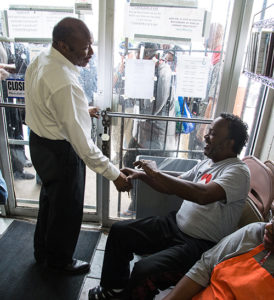


 While some songs buck the trend—like “In Christ Alone,” which turns 20 this year, or “10,000 Reasons,” which is still going strong after a decade—many songs disappear.