Did faith fall off a cliff during COVID? Not necessarily

WASHINGTON (RNS)—When the COVID-19 pandemic hit, many Americans lost the habit of churchgoing after almost every church in the country closed down in-person services and shifted online.

Did some of them give up on God? Sociologists like Michael Hout want to know.

Hout, a professor of sociology at New York University, long has tracked the decline of organized religion in America. So, he was interested to see several indicators of what he called “intense religion” declined in the 2021 General Social Survey.

In that survey, fewer Americans than in 2016 said they take the Bible literally, pray frequently or have a strong religious affiliation. Even as church attendance consistently had been dropping off over the past decades, those more personal measures of faith had previously held steady or showed only slight decline.

“Then they fell off a cliff,” said Hout in a video interview.

Questions changes in survey format

In a new, yet-to-be-published study, Hout and colleagues Landon Schnabel from Cornell University and Sean Bock from Harvard, raise questions about the rapid decline in those measures during the pandemic, which they argue may be more due to changes in how the General Social Survey was administered rather than a sign of religious decline.

Founded in 1972 at the University of Chicago’s National Opinion Research Center, the General Social Survey, conducted every two years, has long been considered a gold standard for national surveys, in part because it has been administered in person rather than online or over the phone.

When the pandemic made in-person surveys unworkable, the General Social Survey switched to a hybrid approach, with most participants answering questions online, while others took the survey over the phone. Researchers also asked some of the participants in the 2016 and 2018 surveys to take part in the 2020 survey, which was published in 2021.

Hout and his colleagues compared past participants who agreed to retake the survey with those who did not and found that fewer “intensely religious” people retook the survey.

For example, they wrote, 36 percent of those who took part in the 2016 survey said they took the Bible literally. That dropped to 25 percent among those who completed the follow-up. They also found those who did not take the follow-up survey were more distrustful of institutions and more disconnected from civic society and the internet than those who did.

As a result, the change in survey format led to fewer religious people participating in the 2021 survey, which Hout believes skewed some of the results on religion.

That’s unfortunate, he said, especially at a time when the religious landscape in the United States is changing.

“If you want to measure change, don’t change how you measure it,” he said. “In this moment of great change, we changed how we measure it.”

Next survey will provide clearer picture

Hout said the 2022 General Social Survey data will give a clearer picture of how religion in the United States changed over the pandemic. And he hopes the General Social Survey will remain an in-person survey in the future, though he admitted doing in-person surveys is costly and difficult.

Overall, Hout said, surveys have become more difficult in recent years because of larger changes in American culture. In the past, he said, surveys offered ordinary people a way to comment on larger trends in the culture. Now, he said, social media allows everyone to speak their mind. And people are more skeptical about talking to strangers.

“Before the internet, one of the things that kept GSS and other survey response rates really high was the fact that people said, ‘Oh yeah, I’d love to get a few things off my chest,’” he said. “Now they have a lot of other options that they control much more of.”

A spokesman for the General Social Survey did not respond to a request for comment about changes in methodology.

Ryan Burge, assistant professor of political science at Eastern Illinois University and author of “The Nones,” believes a move online is inevitable for the survey. Burge, who often writes about religion and survey data, said most other major surveys, including those from Pew Research and the Cooperative Congressional Election Study, now have embraced online panels.

Burge believes online surveys give a more accurate view of religion in America than in-person interviews, in part because people are less likely to lie to a computer about their faith.

Being religious, he said, is still seen as a social good for many Americans. That leads to the so-called halo effect, where people overestimate how religious they are because they want to make a good impression on the surveyor.

Burge argues previous General Social Survey surveys have undercounted the number of Americans who are considered nones—those who have no religion. The 2021 survey, he said, gave a result more in line with other surveys, showing about 30 percent of Americans would be considered nones.

“People are more honest when they are looking at a web browser,” he said.

There are losses in the move from in-person to online surveys, Burge said. There is more nuance in an in-person interview, as people can give an answer that’s not on the survey. And not everyone understands all the denominational categories on surveys, he said, and might not know where they fit in an online survey.

Hout said that while organized religion in the United States is likely to continue to decline, much of the decline is among so-called Christians and Easter Christians, who only occasionally attend services.

That has led to what he called “all or nothing” approaches to religion—where people show up all the time and believe intensely, or they give up on religion. And people remain spiritual, even if they don’t identify with a particular faith.

“Atheism is not what’s happening,” Hout said. “If we think of organized religion as a conjoined thing, the quarrel is with the organized part, not the religion.”

Ahead of the Trend is a collaborative effort between Religion News Service and the Association of Religion Data Archives made possible through the support of the John Templeton Foundation.


Apologists urge former Ravi Zacharias leaders to repent

HOUSTON (BP)—A statement released Nov. 9 by a group of Christian apologists says three former members of Ravi Zacharias’ inner circle “are not fit to be in ministry and leadership positions” because of their response to the late apologist’s sexual misconduct.

The “Statement Regarding RZIM Senior Leadership Team Members Michael Ramsden, Sarah (Davis) Phillips and Abdu Murray” says the three former executives of Ravi Zacharias International Ministries “have not displayed a godly sorrow nor demonstrated the fruit consistent with repentance for their actions,” nor have they “specifically owned their actions or expressed remorse to those they hurt.”

For that reason, the apologists say, “We will not partner with them or endorse their work until the fruit consistent with genuine repentance is evident in their lives.”

The statement was released at risenjesus.com, the apologetics ministry website of Mike Licona, an associate professor of theology at Houston Christian University, formerly Houston Baptist University. Licona and his wife, Debbie, are co-signers of the statement.

Other signers are Paul Copan, professor of philosophy and ethics at Palm Beach Atlantic University; William Lane Craig, professor of philosophy at Houston Christian University and research professor of philosophy at Biola University’s Talbot School of Theology; and Sean McDowell, associate professor in the Christian apologetics program at Biola University’s Talbot School of Theology and co-host of the Think Biblically podcast.

The statement summarizes the “types of abuse and deception that were representative of RZIM’s organizational culture,” including harassment of several employees who raised questions when allegations about Zacharias’ sexual misconduct surfaced.

Two investigations determined the veracity of the allegations against Zacharias, who died in May 2020. The first by Atlanta law firm Miller and Martin confirmed the sexual misconduct. The second by Guidepost Solutions found RZIM leaders overlooked Zacharias’ misconduct for years and used ministry funds to try to cover up the accusations and discredit his accusers.

Because there is no apologetics governing board, the co-signers of the statement say they felt a “spiritual and moral obligation” to make an inquiry into the evidence surrounding the Zacharias situation and the mistreatment of former RZIM employees by the named individuals, all of whom have either moved on to other apologetics ministries or expressed their intent to do so.

The inquiry involved about 1,000 hours of research and interviews of 25 people, along with a review of “copious amounts of supporting documentation” and consultation with experts of abuse and institutional response to abuse, according to the statement.

As a result of their investigation, the apologists call on Ramsden, Murray and Phillips to “seek counseling with someone skilled in the area of spiritual abuse, and move forward in genuine repentance.”

Murray, former senior vice president of RZIM, currently is connected to Embrace the Truth, an apologetics website. Christianity Today reported in 2021 that Phillips, a daughter of Zacharias who served RZIM as CEO under the name Sarah Davis (she has since remarried) was forming a new apologetics ministry called Encounter. It is unclear whether Ramsden, who served as president of RZIM, currently is connected to any ministry organization.

If you are or have been a victim of sexual abuse or suspect sexual abuse by a pastor, staff member or member of a Southern Baptist church or entity, please reach out for help at 202-864-5578 or SBChotline@guidepostsolutions.com. All calls are confidential.

Carrie Brown McWhorter is content editor for The Alabama Baptist.


Scripture-engaged give more, gain greater hope

PHILADELPHIA (BP)—Scripture-engaged Americans give more to churches and charities than others, reaping more hope and purpose through the process, the American Bible Society said in its 2022 State of the Bible report.

Americans considered Scripture-engaged gave $145 billion to charity in 2021, including church tithes and offering, or $2,907 per household, the report said, compared to $924 per household among those described as Bible disengaged.

“People who give the most to charity flourish more and have more hope and purpose,” the American Bible Society stated Nov. 10 in releasing the latest chapter of the 2022 State of the Bible.

“Our data reveal a substantial correlation between charitable giving and our measures of human flourishing and hope. One of the six aspects of the Human Flourishing Index, ‘Meaning and Purpose,’ has an especially strong connection.”

The American Bible Society determines Scripture engagement based on a set of questions gauging how often a person reads the Bible and how Scripture impacts their choices.

“These people seem to follow the guidance of James 1:22 (NIV): ‘Do not merely listen to the word.… Do what it says,’” the report stated.

“The Bible teaches us to give, so it’s no surprise to find high levels of giving among people who read and follow Scripture. But there’s more to it than simple obedience. Transformation is at the heart of the biblical message. We receive grace, and so we show grace. We love because God first loved us.

“When we encounter a loving and giving God in the Bible on a regular basis, it only makes sense that we become more loving and giving in response.”

Does giving reap hope and flourishing, or do hope and flourishing spur generosity?

“Perhaps both are true,” the report states. “These findings might suggest that people find a sense of meaning by giving to a worthy cause. Or perhaps people give to support causes that fit the purpose they already have. Taken together, these correlations indicate that people live well when they give well, and vice versa.”

Generational trends

Scripture-engaged people give most of their charity to churches, giving 13 times as much as the Bible disengaged, but also outpace the Bible disengaged in giving to non-church charities. The Scripture engaged gave 62 percent more than the Bible disengaged to non-church charities, the report found.

The elderly, those 76 and older, gave to charity more often than younger generations in 2021. Half the members of Generation Z, ages 18-25, contribute to charity, compared to 84 percent of the elderly.

“We can attribute this pattern partly to economics. Many Gen Z adults aren’t earning their own money yet, or they’re at the bottom of the pay scale,” the report stated.

“But Gen X currently has the highest income of any group, and yet they are less likely to give than the two older generations. Is this a matter of disposable income, or is there a cultural commitment to philanthropy that’s stronger in the older groups?”

Those who were ages 42-57 in 2021 were included in Gen X.

Among other findings, people tend to give more to charities in their local communities than internationally, the report said.

American Bible Society researchers collaborated with the University of Chicago’s National Opinion Research Center to survey a nationally representative group of American adults on topics related to the Bible, faith and the church. The study conducted online via telephone produced 2,598 responses from a representative sample of adults 18 and older in all 50 states and Washington D.C.


Churches open but still recovering from pandemic losses

NASHVILLE, Tenn.—Almost all churches in the United States are holding in-person services again, but some pre-pandemic churchgoers still haven’t returned.

In August 2022, about 100 percent of surveyed U.S. Protestant pastors say their churches met in person, according to a Lifeway Research study.

This continues the increases from the past two years of churches holding physical gatherings. In August 2021, 98 percent of churches gathered in person, after 75 percent reported the same in July 2020.

“While there are a handful of exceptions, we can definitively say that churches in the U.S. have reopened,” said Scott McConnell, executive director of Lifeway Research. “While masks began to rapidly disappear in many settings in 2022, churchgoers have not reappeared quite as fast.”

Attendance adjustment

Despite churches returning to pre-pandemic levels of holding in-person services, not all churchgoers have followed suit. On average, U.S. Protestant churches report current attendance at 85 percent of their typical Sunday morning crowds in January 2020, prior to the COVID-19 outbreak.

Despite falling below a full return, this marks the highest attendance levels in more than two years. In September 2020, the average church reported 63 percent of their pre-pandemic in-person attendance. Last August, the percentage climbed to 73 percent, before rising another 12 percentage points this year.

In February 2021, 91 percent of U.S. Protestant churchgoers told Lifeway Research that once COVID-19 was no longer an active threat, they planned to attend worship services at their church at least as much as they did prior to the pandemic.

Earlier this year, 34 percent of Christians said they attended a worship service four times a month or more before COVID, according to an additional Lifeway Research study. In April 2022, 26 percent said they currently attend that often. Slightly more than a third of Christians (36 percent) said they attended less than once a month before the pandemic. This year, that jumped to 43 percent.

“While some pre-COVID churchgoers have not returned to church at all, much of the decline in attendance is from people who are attending less often,” McConnell said.

Areas of growth

While most U.S. Protestant churches still haven’t fully recovered pre-pandemic attendance levels, more congregations than before have now reached those numbers or even grown.

In September 2020, almost twice as many congregations reported being below 50 percent of their January 2020 attendance as said they were at least at 90 percent (29 percent vs. 15 percent).

Now, less than 1 in 10 congregations (8 percent) is still below half of their pre-COVID attendance numbers. Today, more than a third (35 percent) report at least 90 percent attendance, including almost 1 in 6 pastors (17 percent) who say their congregation has grown since January 2020.

Most churches continue to be in the middle range—above 50 percent of their pre-pandemic attendance but below 90 percent. A quarter of churches (26 percent) say their attendance is more than 50 percent but less than 70 percent, while 31 percent report a congregation of 70 percent to less than 90 percent what it was prior to COVID-19.

“As has been the case since COVID began, different churches are having different experiences,” McConnell said. “More than a third are at 90 percent or more of pre-pandemic attendance. More than a third are stuck with less than 70 percent of their people back on a typical Sunday. And just under a third are in between 70 percent and less than 90 percent attending.”

Older pastors are less likely to report their church growing in attendance since the pandemic began. Around 1 in 6 pastors 65 and older (16 percent) say their congregations increased attendance since January 2020 compared to 25 percent of pastors aged 45-55 and 33 percent of pastors 18-44.

Those in the Midwest (26 percent) and South (25 percent) are more likely to say they’ve grown compared to those in the Northeast (14 percent).

Evangelical pastors (29 percent) are almost twice as likely as mainline pastors (16 percent) to report pandemic attendance growth.

Pentecostal (33 percent) and Baptist (28 percent) pastors are more likely to say they’ve grown since January 2020 than those at Presbyterian/Reformed (14 percent), Lutheran (13 percent), Restorationist Movement (10 percent) or Methodist (8 percent) churches.

Non-denominational pastors are among the most likely to report growth (30 percent) but also the most likely to say their church is still less than 30 percent of pre-COVID attendance (14 percent).

Fewer churches reach 100 in attendance

The failure of churches to recapture all their pre-COVID churchgoers means even fewer churches reach 100 in attendance on a typical weekend. Now, 2 in 3 U.S. Protestant churches (68 percent) have congregations of fewer than 100 people, including 31 percent who have fewer than 50. A quarter of churches (24 percent) fall into the 100-249 range, while 8 percent of congregations host 250 people or more each week.

Almost half of the oldest pastors are leading the smallest congregations. Pastors 65 and older (47 percent) are most likely to be leading churches with fewer than 50 on a typical weekend. Mainline pastors (38 percent) are more likely than evangelical pastors (26 percent) to be leading congregations of fewer than 50.

Denominationally, the smallest churches are more likely to be Presbyterian/Reformed (50 percent) or Methodist (42 percent) than Pentecostal (27 percent) or Baptist (22 percent). The smallest congregations are also most likely to be in the Northeast (45 percent).

Still, the smallest congregations are among those most likely to have recovered to pre-COVID levels. Those who reported attendance of fewer than 50 in January 2020 (49 percent) are more likely to currently say they are at 90 percent or greater of those pre-pandemic levels than those with 50 to 99 (34 percent) and 100 to 249 (28 percent) in pre-pandemic attendance.

The phone survey was conducted Sept. 6-30, 2022. The calling list was a stratified random sample, drawn from a list of all Protestant churches. Each interview was conducted with the senior pastor, minister or priest at the church. Responses were weighted by region and church size to reflect the population more accurately. The completed sample is 1,000 surveys, providing 95 percent confidence the sampling error does not exceed plus or minus 3.2 percent. Margins of error are higher in sub-groups.


New Billy Graham archive opens in North Carolina

WASHINGTON (RNS)—In the twilight of his 99 years, Billy Graham met with Duke Divinity School historian Grant Wacker, who was writing a biography of the famous evangelist.

Graham leaned over at one point and, according to Wacker, asked him, “‘Do you think the archives at Wheaton are well run?’”

I said: ‘Yeah. They are,’” Wacker told RNS. “He said, ‘That’s good.’”

History was on Graham’s mind. Conscious that his legacy after his death would depend on how future generations saw his work, he saw the need to preserve and maintain the record of it.

On Nov. 7, the birthday of the late evangelist, a new archive opened nearly 800 miles south of Wheaton College, in Charlotte, N.C., Graham’s birthplace.

The Billy Graham Archive and Research Center opened in Charlotte, N.C. (Photo courtesy of the Billy Graham Evangelistic Association)

The 30,000-square-foot state-of-the-art research center brings together videos, cassettes, films, newspaper clippings, sermon notes, correspondence and a lifetime of memorabilia from Graham’s career, which began with a sermon at a Florida Baptist church in 1937.

A year after Graham’s death in 2018, the Billy Graham Evangelistic Association announced it was moving the archive from the highly regarded Billy Graham Center Archives at Wheaton, Graham’s alma mater. For the intervening three years the archival materials have not been available to researchers.

The new two-story building, constructed with the latest preservation standards and environmental controls, cost $13 million. It unites all of Graham’s records—not only from the Wheaton archive but from Minneapolis, where he started his formal ministry, and from Montreat, N.C., where Graham and his wife lived for decades in a log-cabin-like home.

The archive houses audio-visual records on the first floor and papers, including sermons, correspondence and memorabilia, on the second. The building is located across the road from the Billy Graham Library, the barn-shaped museum on 20 landscaped acres where visitors can trace Graham’s journey through multimedia presentations and interactive kiosks.

‘Robust and well-organized’ archive

“Franklin Graham committed resources to make sure it’s a robust and well-organized authentic archive center,” said David Bruce, executive director of the archive, speaking of Graham’s son and successor, who is now president and CEO of the Billy Graham Evangelistic Association.

Bruce, who spent 25 years at Billy Graham’s side as his executive assistant, is joined at the archive by 13 others hired to staff the archive, among them eight full-time employees.

Unlike the library, the archive is not open to the public. Researchers must schedule a visit through the website.

When the BGEA announced it was moving the archive from Wheaton to Charlotte, many scholars feared the move was a bid by Franklin Graham to control his father’s legacy and possibly deny access to the archival materials to scholars and others who don’t share his views on conservative political and theological agendas.

Bruce denied that and said all researchers were welcome.

“Dusty records don’t serve any purpose,” he said.

Encourage evangelism

But he also said the main purpose of the archives is to further Graham’s ministry.

“While we’re open to everybody, our key market is people wanting to learn what God has done and can do in the future that might encourage a young man or woman to take up the same task: a proclamation of evangelism,” he said.

Graham’s archive in Wheaton was visited by more than 19,000 scholars, journalists and other researchers during its nearly 40 years there.

The Charlotte archive also will be a crucial stop for many academics.

Graham is important not only to future evangelists but to scholars of all fields, including scholars of American politics, said Heath Carter, professor of American Christianity at Princeton Theological Seminary.

“There’s wider interest in evangelicalism and an acknowledgment that the trajectory of white evangelicalism in the mid- to late-20th century had really significant implications for American politics,” Carter said. “He was a key figure in a movement that would become a strong base of support for the likes of Donald Trump.”

Graham’s views on race and gender and his international reach are also being reexamined.

The first researcher to visit the archives will be a Ph.D. student at Southwestern Baptist Theological Seminary in Fort Worth, who is studying Graham’s reach to the former Soviet bloc, Bruce said.


Tim Keller: Many Christians afraid to admit they’re wrong

WASHINGTON (RNS)—Author and pastor Tim Keller begins his new book with a warning about forgiveness gone wrong.

Keller cites a famous parable found in the Gospel of Matthew, where a king forgives one of his servants, who owes a fortune and can’t repay. Rather than be grateful, the servant turns around and has one of his co-workers, who owed him a pittance, tossed in jail.

When the king finds out, he is furious and revokes his initial forgiveness.

“We should not miss the confrontational nature of this parable,” Keller writes in Forgive: Why Should I and How Can I? “Jesus’ parable about forgiveness is not a feel-good story about people receiving God’s forgiveness and then eagerly spreading the love to others. Rather, it is a story about a man asking for forgiveness and then being utterly unchanged when he got it.”

Experiencing a forgiveness crisis

The new book comes at a time when Americans are experiencing a forgiveness crisis, Keller argues, in part because the idea of forgiveness has often been misused, especially in religious circles. At times, he writes, survivors of abuse have been pressured to forgive those abusers and just move on. Or forgiveness is used to cover up the truth about the harm people have done to others.

“People have used forgiveness as a way of destroying the truth,” Keller said.

The longtime pastor in New York City, whose books have sold more than 3 million copies, believes forgiveness is not possible without truth. He links the term forgiveness with the idea of “repentance,” which he says has fallen out of fashion.

That term, he told Religion News Service in an interview, means being truthful about our shortcomings and misconduct.

“The word repent means asking for forgiveness,” he said. “If you don’t think you’ve done anything wrong, you have not repented.”

Keller, who retired as pastor of Redeemer Presbyterian Church in 2017, has remained active in recent years despite being treated for pancreatic cancer. He is currently undergoing immunotherapy, which he said has shrunk some of his tumors.

“It has given me more time,” he said.

Known for his conservative but nonconfrontational approach to ministry, Keller has come under fire in recent months by those who say his “winsome” approach to engaging with culture no longer works in such a polarized time.

Keller told Religion News Service he finds such criticism puzzling. As an evangelical pastor in New York, he said, his views were often in conflict with the broader culture. But that was not going to stop him from acting like a Christian.

“This was never the neutral territory,” he said. “We always had opposition.”

In 2017, Princeton Theological Seminary announced plans to give Keller the Kuyper Prize for Excellence in Reformed Theology and Public Witness but later reversed course due to concerns about Keller’s views on women in ministry and LGBT rights.

Early on in the book, Keller quotes the late Desmond Tutu, the South African cleric; the late author bell hooks; and former New York Times columnist, now Atlantic columnist Elizabeth Bruenig about the importance of forgiveness and the need to balance justice with recognizing the humanity of those who do harm.

Forgiveness and compassion linked

The quote from hooks, taken from a conversation with poet Maya Angelou, makes that point in a forceful way.

“For me,” hooks said, “forgiveness and compassion are always linked: How do we hold people accountable for their wrongdoing and yet at the same time remain in touch with their humanity enough to believe in the capacity to be transformed?”

In the book, Keller lays out why forgiveness is needed and outlines a step-by-step approach to how forgiveness can be granted in a healthy way—both on a societal level and in the mundane, day-to-day conflicts most people experience.

In an interview, Keller admitted that in the past, he’s struggled with granting forgiveness.

Early in his marriage, Keller said, he at times withheld forgiveness from his wife, even if she said she was sorry for doing something. Doing that, he said, gave him a sense of superiority but also allowed him to hold on to the sense he had been wronged. That led to struggles in their marriage—something they had to work through.

Withholding forgiveness can give people a sense of power over others, he argues.

“If you are out to punish someone,” he said, “you make it really hard for them to ask for forgiveness.”

‘Willing the good of the wrongdoer’

For Keller, one of the key aspects of forgiveness is what he calls “willing the good of the wrongdoer.” The idea is drawn from the command of Jesus that his followers love their enemies.

“A secret to overcoming evil is to see it as something distinct from the evildoer,” he writes. “Our true enemy is the evil in the person and we want it defeated in him or her.”

Keller worries that in our polarized and highly litigious society, forgiveness is seen as weak or unwise. He also wonders if the fear of being canceled has made people unwilling to admit when they have done something wrong.

“People are just afraid to come right out and say, I really need you to forgive me,” he said. “They’re just afraid to do it.”

As a pastor, Keller argues reconciliation is the long-term goal of forgiveness. Forgiveness can open the door to restored relationships if those who have done harm are willing to make amends for their actions.

He also warns that forgiveness does not mean there are no consequences for misconduct. In particular, he said, a pastor or church leader who is guilty of misconduct can be forgiven, but may lose the right to ever be placed in spiritual authority again.

Keller also stressed that after forgiveness, trust has to be earned.

“I actually don’t think that if somebody has forgiven me, that means they have to trust me,” he said. “Forgiven people are not necessarily automatically restored exactly where they were. You have to have time to rebuild trust in people. And you need to recognize that and not resent it if they don’t trust you right away.”


Churchgoers prefer congregation that shares their politics

NASHVILLE, Tenn.—As churchgoers head to the polls for midterm elections, most expect the rest of their congregation to vote the same way they do.

Half of U.S. Protestant churchgoers (50 percent) say they’d prefer to attend a church where people share their political views, and 55 percent believe that to be the case at their congregation already, according to a study from Lifeway Research.

“Studies have shown that voting patterns and political affiliation correlate with the type of church and amount of church involvement someone has,” said Scott McConnell, executive director of Lifeway Research.

“But when asked if churchgoers want political similarity to flow back into their church relationships, this is desirable for only half of churchgoers.”

Preference

While 50 percent of churchgoers prefer a politically homogenous congregation, 41 percent disagree, and 10 percent aren’t sure. Overall, the percentage of those looking to attend a church where people share their voting preferences is similar to a 2017 Lifeway Research study, when 46 percent said the same.

However, more churchgoers are adamant about worshipping alongside their political peers. Around 1 in 5 (19 percent) now strongly agree they prefer to attend a church where people share their political views, up from 12 percent in 2017.

“While almost 1 in 5 churchgoers are adamant that they want to attend church with those who share their political views, there are just as many who strongly disagree with that perspective,” McConnell said.

“The 23 percent who strongly disagree are clearly saying the source of unity they have with others in their church has nothing to do with partisanship.”

Younger churchgoers are more likely than older ones to prefer sharing a pew with someone of the same politics. Almost 3 in 5 of those under 50 (57 percent) want a congregation with people who share their political views, compared to 47 percent of those 50 to 65 and 41 percent of those 65 and older.

Ethnicity and education also play a role. White (54 percent) and African American (53 percent) churchgoers are more likely to want a church with shared politics than Hispanic churchgoers (25 percent). Those who are high school graduates or less (44 percent) are among the least likely.

Denominationally, Methodist (88 percent) and Restorationist movement (80 percent) churchgoers are more likely to say they want their congregations to have a common political perspective than Baptists (47 percent), Presbyterian/Reformed (47 percent), Lutherans (38 percent) and those who attend a non-denominational church (38 percent).

Churchgoers with evangelical beliefs (44 percent) are less likely than churchgoers who don’t strongly agree with core evangelical theology statements (54 percent) to say they prefer a church where people share their political opinions.

Despite their preferences, churchgoers may stick around even if the rest of the congregation doesn’t share their views. Another 2017 Lifeway Research study found only 9 percent of Protestant churchgoers said they would consider changing churches over political views.

Political perception

Regardless of their preferences, most churchgoers believe they’re among their political tribe when at church. More than half (55 percent) of U.S. Protestant churchgoers say their political views match those of most people at their church. Fewer than a quarter disagree (23 percent) or aren’t sure (22 percent).

Just as more churchgoers strongly prefer a congregation of similar politics today, more churchgoers also strongly believe they are a part of such a congregation. In 2017, 51 percent felt their church was politically homogenous, with 11 percent strongly agreeing. Today, 21 percent strongly agree.

Additionally, fewer churchgoers are seemingly unsure about the political opinions of their fellow congregation members. In 2017, 30 percent said they weren’t sure if their political views matched those of most others at the church. That dropped to 22 percent in 2022.

 “If one looks at the culture today, you might assume that most churches have been arguing over politics as well. While it appears more churchgoers notice the political views of other attendees, only 28 percent of pastors agree (14 percent strongly) that their church has experienced significant conflict in the last year,” McConnell said.

“Those who want political continuity may simply want a respite from political strife at church, and others may want to move together in political action.”

For many groups, their perception of their church matches their preferences. Older churchgoers, those 65 and older, are the least likely to think most people in their church share their politics (46 percent) and the most likely to say they aren’t sure (32 percent).

African American (60 percent) and white (58 percent) churchgoers are also among the most likely to agree.

Denominational differences

Denominationally, Methodists (89 percent) and those a part of a Restorationist movement church (76 percent) believe most of the fellow churchgoers share their political views.

Churchgoers who don’t qualify as evangelical by belief are just as likely to say they prefer to worship in a church that shared their politics (54 percent) as they are to believe that is the case (53 percent).

Churchgoers with evangelical beliefs, however, are different. They’re more likely to believe they belong to a congregation that predominantly agrees with them politically (59 percent) than they are to say that’s what they’d prefer (44 percent).

The online survey was conducted Sept. 19-29 using a national pre-recruited panel. Respondents were screened to include those who identified as Protestant/non-denominational and attend religious services at least once a month. Quotas and slight weights were used to balance gender, age, region, ethnicity, education and religion to reflect the population more accurately.

The completed sample is 1,002 surveys, providing 95 percent confidence that the sampling error from the panel does not exceed plus or minus 3.3 percent. This margin of error accounts for the effect of weighting. Margins of error are higher in sub-groups.


Steven Curtis Chapman bares soul in video testimony

PLANO (BP)—Halfway between Possum Trot and Monkey’s Eyebrow, Ky., Steven Curtis Chapman grew up hearing his father intervene with prayer when family discord arose.

“I remember as a little boy hearing my dad pray prayers like: ‘God, I don’t know how to be a good father or a good husband ‘cause I didn’t have a dad in my life. But you’re my Father now, and will you please teach me how to do that?’

“And so, as a little guy, I got to see the change that Jesus would make in a heart, and in a life in my own dad and my mom, and my whole family,” Chapman said. “It didn’t fix everything. … We were still a mess. But there was this hope.”

Chapman shares a snippet of his journey in the latest “I Am Second” short film, a series of video testimonies featuring a diversity of Christian celebrities produced by a Plano-based ministry.

His testimony comes just weeks after the Oct. 14 release of “Still,” his latest album in a decades-long career distinguishing him as the most-awarded artist in Christian music history.

Describing himself as a “fixer,” his testimony also comes 14 years after a personal family tragedy he couldn’t fix, the accidental death of his 5-year-old daughter Maria Sue, hit by an SUV driven by Chapman’s own teenage son on a roadway in front of the family’s Franklin, Tenn., home.

“It’s been 14 years of a journey with my family of grief and questions and confusion and anger and: ‘God are we going to survive this? How are we going to survive this?’” Chapman said in the video.

“For a guy who’s a fixer, to ultimately face the most unfixable thing you could ever imagine as a parent, as a husband: How am I going to lead my family through this, knowing that most marriages and families don’t survive the loss of a child, because grief and that kind of grief is so devastating?”

‘Mountains and Valleys’

Maria Sue’s death happened at one of the highest moments in Chapman’s life in May 2008. Just hours previously, Chapman celebrated his oldest daughter Emily’s engagement. The family was planning to celebrate his son Caleb’s high school graduation. “Mountains and Valleys” is the video’s title.

He speaks of mountaintops beyond anything he “could have ever imagined” and “very, very, very deep valleys, deeper” than he “ever could have imagined.”

“Really, my songs have just been kind of tearing pages out of my journal of my life and saying: ‘This is what I’m learning. This is what I’m struggling with,’” Chapman said. “Taking three steps forward, I take two steps back, some days 20 steps back. And I’m going to talk to you about that journey as honestly and as vulnerably as I can.”

Steven Curtis Chapman

Chapman’s songs include 49 No. 1 singles and have won him five Grammys and 59 Gospel Music Association Dove Awards. He’s sold 11 million albums, including 10 gold or platinum works. But his admirers view him as relatable.

“We feel like when you sing, it might not be the greatest voice that makes us stop in our tracks, or whatever,” he said many have told him, “but you kind of feel like a friend just sitting down in the car beside me, just telling me your story and encouraging me in my journey.”

He describes adoption as one of the most amazing parts of his journey with wife Mary Beth, offering challenges and blessings as they navigated life with three biological and three adopted children.

“So many ways I’ve wrestled and had to say, ‘OK, God, I don’t get this,’” Chapman said. “And yet, in all of this journey, the more I understand about who God is, the more I learn is that he says: ‘Bring all of it to me. I already know it anyway. I’m God. I already know you’re angry. I already know you’re confused. I already know all of that. Will you just come to me? And will you trust me?’”

He is strengthened by the fact that God knows everything.

“We only see a little part of the story,” he said. “And that’s what we have held onto. That’s what I have held onto, as a dad, as a husband, as a follower of Jesus. The story is not over yet, that I only see this little part.

“But the promises of God that there’s a day coming when he’s going to wipe every tear from our eyes. He’s going to make all the things that are broken whole again, and he’s not going to waste any part of our story.”


Faith groups say US gone astray, disagree about how

WASHINGTON (RNS)—Three-quarters of Americans say the country is heading in the wrong direction, and the majority of many religious groups agree with that sentiment, a new report shows. But they don’t all agree on what, exactly, has gone wrong.

The 2022 American Values Survey by Public Religion Research Institute finds religious Americans hold generally negative views of the state of the country, ranging from 93 percent of white evangelical Protestants to 59 percent of Black Protestants.

“Though most Americans favor moving forward, a sizable minority yearn for a country reminiscent of the 1950s, embrace the idea that God created America to be a new promised land for European Christians, view newcomers as a threat to American culture, and believe that society has become too soft and feminine,” the 60-page report states.

“This minority is composed primarily of self-identified Republicans, white evangelical Protestants, and white Americans without a college degree.”

PRRI President Robert P. Jones, who discussed the survey Oct. 27 at Washington’s Brookings Institution, said the results are striking to him despite his spending years studying U.S. cultural and political patterns.
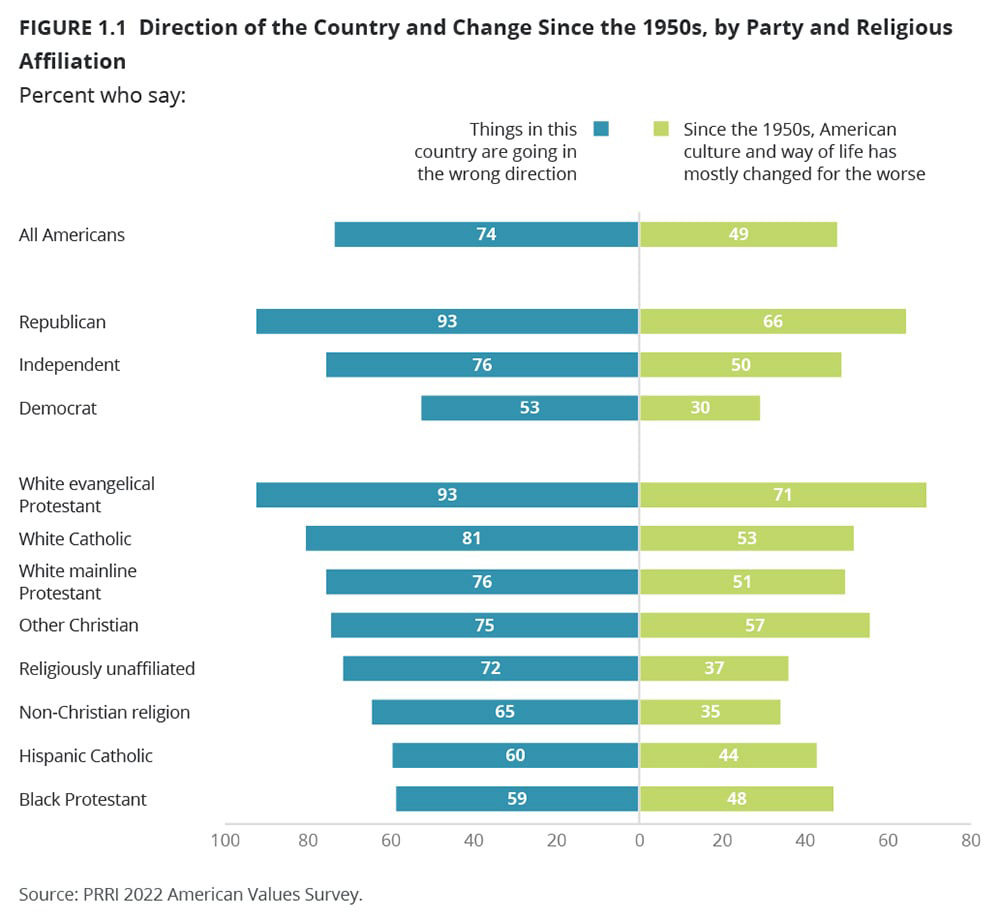
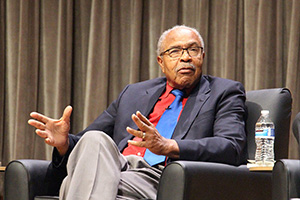
“I’m still continually struck by how by party, by race, by religion, we are in many ways factions and worlds apart,” he said. “We have the two political parties, essentially, defending different histories, living in different realities, and even promoting two essentially incompatible views of America’s future.”

PRRI’s survey addressed questions of race, sexuality, abortion and immigration, as well as sentiments about the country’s origins.

About a third (31 percent) of Americans agree with the statement: “God intended America to be a new promised land where European Christians could create a society that could be an example to the rest of the world.”

Those surveyed who said they believe God intended America to be a new promised land for European Christians are more than twice as likely as those who disagree to say true American patriots may have to resort to violence (32 percent vs. 14 percent).

Half of white evangelical Protestants agree, while smaller percentages of other religious groups do: 37 percent of white mainline Protestants, 36 percent of white Catholics, 32 percent of Hispanic Catholics, 22 percent of Black Protestants and non-Christian religious Americans and 16 percent of the religiously unaffiliated.

Americans are split about whether immigrants to the United States are a threatening (40 percent) or a strengthening factor for society (55 percent), with white Christian subgroups significantly more likely than others in the country to side with the idea that newcomers from other countries are a threat.

White evangelical Protestants, at 51 percent, are the only faith group where a majority say immigrants are “invading our country and replacing our cultural and ethnic background.”

By far among religious groups, white evangelical Protestants (61 percent) also agree “society as a whole has become too soft and feminine.” Americans in general are split on this notion, with 42 percent agreeing and 53 percent disagreeing.

The survey found the Supreme Court’s ruling in Dobbs v. Jackson Women’s Health Organization decision is a significant motivator to vote in the midterm elections. That ruling overturned Roe v. Wade, which in 1973 determined abortion was a constitutional right.

Some 50 percent of white evangelical Protestants, Black Protestants and white Catholics said they were more likely to vote after the ruling in June, as did 48 percent of religiously unaffiliated Americans, 47 percent of non-Christian religious Americans and 45 percent of white mainline Protestants.

A distinct minority across the board—from 35 percent of white evangelicals to 9 percent of the religiously unaffiliated—support laws that would make it illegal to cross state lines to obtain an abortion in a state where the procedure is permitted.

People with different religious affiliations varied in what they considered top priorities for midterm voting, but majorities of many faith categories cited “the health of our democracy” as being critical to their vote.

A majority of Americans planning to head to the polls (57 percent) listed the health of our democracy and increasing costs of housing and other everyday expenses as critical issues for their vote.

The research found disparate views among religious Americans about racial and LGBTQ issues.

Asked if “generations of slavery and discrimination have created conditions that make it difficult for Black Americans to work their way out of the lower class,” white Christians were significantly less likely to agree, while majorities of Black Protestants, religiously unaffiliated Americans, non-Christian religious Americans and Hispanic Catholics agreed.

Most white evangelical Protestants, Black Protestants, other Christians, white Catholics and white mainline Protestants say there are only two genders (female and male), compared with smaller percentages of Hispanic Catholics, religiously unaffiliated Americans and religious non-Christians.

The survey was based on a representative sample of 2,523 adults in all 50 U.S. states and was conducted online from Sept 1-11. It has an overall margin of error of plus or minus 2.3 percentage points.


Eyewitness urges Christians to remember Emmett Till

WHEATON, Ill. (RNS)—Wheeler Parker Jr. still remembers clearly the moment as a teenager he thought he was going to die.

Parker was 16 years old, visiting family in Mississippi, when he woke in the early morning hours to the sound of voices in the house. Moments later, the door to his bedroom opened and a man pointed a flashlight and a pistol in his face.

He shut his eyes tight, but the shot never came.

The man moved on to the next bedroom and the next before finding and kidnapping his cousin, Emmett Till.

It was the last time he saw his best friend alive, Parker, now in his 80s, told a packed concert hall Oct. 25 at Wheaton College, the evangelical flagship school in the Chicago suburbs.

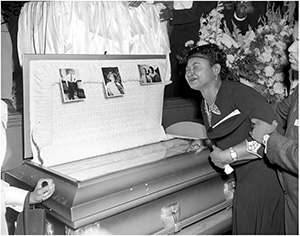
Mamie Till-Mobley weeps at her son’s funeral on Sept. 6, 1955, in Chicago. (Chicago Sun-Times/AP Photo)

What happened next—Till’s brutal murder and his mother’s decision to allow an open casket at the 14-year-old victim’s funeral, so the country could see what had been done to her son—shone a light on racial violence in the United States and became a catalyst for the civil rights movement.

“A picture’s worth a thousand words. That picture made a statement. It went throughout the world, all over the world, and it still speaks,” Parker said of the photographs of Till in his casket, taken by David Jackson and first published in Jet magazine.

The story of Till continues to resonate because it “provides us with a lens to understand racial conflict in our own moment,” said Theon Hill, associate professor of communications at Wheaton College and primary organizer and moderator of Tuesday’s event, “Remembering Emmett Till: A Conversation on Race, Nation and Faith.”

“When we see George Floyd killed right in front of us due to the officer’s knee,” said Hill, “when we see Breonna Taylor’s death, when we see Ahmaud Arbery, we’re trying to make sense of what’s happening, and Till’s death, as tragic as it will always be, provides us with a grammar to understand this is what’s happening and this is how you might respond in your moment.”

Till’s death has enduring relevance

The enduring relevance of Till’s death is apparent in the Emmett Till Antilynching Act, making lynching a federal hate crime and signed in March by President Joe Biden, nearly 70 years after Till’s murder.

It’s also borne out in the critical acclaim for a new film, Till, centering on Till’s mother, Mamie Till-Mobley, and her fight for justice for her son. In January, Parker will publish his recollections of his cousin, A Few Days Full of Trouble: Revelations on the Journey to Justice for My Cousin and Best Friend, Emmett Till.

Wheeler Parker Jr. speaks during the “Remembering Emmett Till: A Conversation on Race, Nation and Faith” event at Wheaton College. (RNS photo by Emily McFarlan Miller)

It was 30 years before anybody asked Parker for his account of what had happened over the handful of days in 1955 he and his cousin, who lived in Chicago, spent in Mississippi visiting family, according to Parker, the last surviving witness to Till’s abduction.

In Parker’s account, Till is a jokester, the boy next door he accompanied fishing, picnicking and on other trips. When his cousin found out he was planning to take the train down South to visit his grandfather, he insisted on going too.

“If you didn’t live in Mississippi at that time or experience what it was like, you have no idea what it was like,” Parker said.

He had lived in the South until he was 7 and knew “what you had to do to stay alive and what could happen to you,” he said.

Till didn’t.

When the younger boy whistled in the presence of a white woman outside a store, Parker said, the cousins left in a hurry. He worried what could happen in a place and time when a Black man couldn’t so much as look at a white woman, he said.

Life-changing event

But days passed, and they’d nearly forgotten about the incident. Then came the moment Parker heard voices in his grandfather’s home at about 2:30 a.m. on a Sunday morning, asking about the boys from Chicago.

“Sunday morning should be the safest place on earth for a young man in his house—on Sunday morning, waiting to go to church,” he said.

Shaking and sure he was about to die, he prayed, “God, if you just let me live, I’m going to get my life together.”

That Monday, he returned to Chicago alone, his life changed “completely,” said Parker, now pastor and district superintendent of the Argo Temple Church of God in Christ in Summit, Ill.

What happened to Till changed the country, too.

Dave Tell, author of the 2019 book Remembering Emmett Till, told the audience at Wheaton he had become invested in civil rights because of Till’s story.

“The Till story prompted a new generation to stand up for justice, and I think the good news of the night is that the Till story—Reverend Parker’s story—is still motivating a new generation,” Tell said.

It’s a story, he said, the United States needs to hear today more than ever. Considering the stories of Floyd and others against the backdrop of Till’s murder, it’s hard to minimize their killings as “a problem of a bad apple or bad cop,” he said.

Church has a role in telling the story

And the church has a role to play in sharing that story, both Tell and Parker agreed.

The biblical Book of Genesis tells the story of Abel, murdered by his brother Cain, Tell pointed out. In the story, God says Abel’s blood cries out to him from the ground, where Cain tried to bury what he did.

Tell asked: If God demands that voices that have been buried be brought to light as part of the work of justice and healing, shouldn’t the church?

“We’ve got to keep the legacy going—got to keep the story going—and not with animosity,” Parker added.

“Just tell the story. It’s history. It’s real. Tell what happened.”


Evangelicals ask: Deconstruction or reconstruction?

OAK PARK, Ill. (RNS)—A conference about the future of the nation’s largest religious tradition began with a bit of honesty.

Joel Lawrence

“Nobody knows exactly what an evangelical is,” said Joel Lawrence, executive director of the Center for Pastor Theologians, at the opening of the Reconstructing Evangelicalism conference Oct. 24.

The conference, which drew about 400 pastors and other church leaders to Calvary Memorial Church in the Chicago suburbs, was inspired by a recent trend among evangelicals and other Protestants to “deconstruct” the faith they grew up with. Deconstruction refers to examining core beliefs and often rejecting the conservative politics, sexism and racial divides evangelicalism has come to be known for.

The question “What is an evangelical?” led to a spirited, thoughtful and sometimes pointed conversation during the conference’s opening panel about the movement’s flaws and how to mend them.

For much of the American public, the word evangelical is synonymous with MAGA-style politics, Doug Sweeney, dean of Beeson Divinity School in Birmingham, Ala., acknowledged.

“That would not be one of my favorite characteristics,” said Sweeney, who argued that “evangelical” should be tied more to theology than politics.

Kristen Du Mez

In a plenary address, historian Kristin Kobes Du Mez of Calvin University in Grand Rapids, Mich., defined evangelicalism as a political and consumer culture. She said she has long wondered if the more important thing to ask is, “Who is not an evangelical?”

“Who gets to decide that?” she asked.

Elizabeth Conde-Frazier, academic dean of Esperanza College in Philadelphia, said the theological gatekeeping among evangelicals is often “quite ruthless.” Evangelical Christians from Latin America or other parts of the church outside the United States, she said, are largely ignored by American evangelical pastors.

“Why don’t you know their names?” she asked the pastors at the conference. “Why don’t you quote them in your sermons?”

Conde-Frazier asserted any reconstruction of evangelicalism must include a more robust understanding of human sinfulness. While evangelicals often focus on personal sin, they tend to miss the way that power can be misused by sinful church leaders or movements.

“Sin turns into a monster when you have power,” she said.

Can the ‘evangelical’ label be rescued?

Malcolm Foley directs the Black church studies program at Baylor University’s Truett Theological Seminary in Waco. (Baylor University Photo)

Malcolm Foley, who directs the Black church studies program at Baylor University’s Truett Theological Seminary in Waco, advocated for an activist form of evangelicalism, one that combines evangelism with social action.

“That is the only evangelicalism that I think is worthy of talking about,” he said.

At the same time, Foley was skeptical that the word “evangelical” could be saved or reconstructed.

“The work and energy that we would be investing in reclaiming that term could also be used in loving our neighbors,” he said. “Instead of needing to reclaim the term, just be gospel people. Be people who are going to invest in deep spiritual, economic and physical solidarity as the church.

“They can call you whatever they want. If you are living a life that is bearing witness to the kingdom of God, I don’t care what you call me.”

Sweeney countered that he was not willing to give up on evangelicalism yet. A self-described “evangelical Lutheran” and a member of a group called Lutheran Congregations in Mission for Christ, Sweeney summoned a picture of the cross-denominational movement that evangelicalism aspires to be and that he said he hoped to remain part of.

Still, if evangelicalism is to be reconstructed, various panelists said, it has to be done with humility. Some evangelicals, several panelists said, see their movement as the last hope for Christianity in the world—an idea the panelists rejected.

Impact of consumer culture

In an interview before her address, Du Mez said many of the pastors at the conference want to be faithful to their beliefs and lead their congregations well—but outside cultural forces make that difficult.

“It is a hard time to be a pastor,” said Du Mez, author of Jesus and John Wayne: How White Evangelicals Corrupted a Faith and Fractured a Nation.

Du Mez’s view of evangelicalism as a consumer culture is based on observation of churches that grow by giving people what they want, which of late has included hot-button conservative politics and culture-war rhetoric. Leaders who try to address racism, sexism or other social justice issues get pushback from inside the church and from social media.

She pointed to evangelicals like Beth Moore, a popular Bible teacher who became unwelcome in the Southern Baptist Convention, the nation’s largest evangelical group, for calling out sexism and abuse in the nation’s largest Protestant denomination.

“If you step out of line, you will be punished,” Du Mez said.

Many pastors are good-hearted and have a clear grasp of theology, she said. But they often lack an understanding of the broader cultural factors affecting the country and their churches.

“One of my favorite virtues is the virtue of wisdom or prudence—understanding of how the world works,” she said. “So that when you are pursuing your goals, you are doing so in a way that will bear the fruit. Because if you don’t understand properly how the world works, yeah, then good luck trying to live faithfully trying to bring positive change.”

Lawrence said the conference is meant to spark respectful conversations about Christianity, its challenges and the possibility for change.

“It’s not good for any of us if we are not having these conversations,” he said.


Pastors seek to shape how members respond to Halloween

NASHVILLE, Tenn.—As millions of Americans celebrate Halloween, many Protestant pastors in the United States are encouraging their church members to respond to the holiday in specific ways.

Volunteers photograph costumed children at a fall festival at First Baptist Church in Cedar Hill. (File Photo)

More than 7 in 10 (71 percent) pastors say they encourage church members to invite friends or neighbors to church events on or near Halloween, such as a fall festival or trunk-or-treat, according to a Lifeway Research study.

Nearly 3 in 5 (58 percent) pastors say they want church members to build relationships with neighbors who trick-or-treat. And 1 in 3 (34 percent) pastors encourage church members to hand out gospel tracts to trick-or-treaters.

More than 3 in 4 (78 percent) Americans plan to celebrate Halloween this year, according to a Numerator survey. But not all pastors want their church members to take part.

Lifeway Research found about 1 in 8 (13 percent) say they encourage people in their congregations to avoid Halloween completely. Others don’t try to push their congregations in any direction regarding the holiday, with 8 percent of pastors saying they don’t encourage their church members to do any of these things.

“Few pastors simply ignore the fact that so many Americans participate in Halloween celebrations,” said Scott McConnell, executive director of Lifeway Research. “Most pastors focus on the social nature of these celebrations, encouraging their congregations to engage with others outside their church.”

Growing encouragement to engage

Compared to 2016, pastors are more likely to seek to influence their church members’ engagement in Halloween festivities this year. And the largest increase is in handing out gospel tracts. Whereas 26 percent of pastors encouraged their church members to hand out gospel tracts to trick-or-treaters in 2016, this year, 1 in 3 (34 percent) pastors are doing the same.

But pastors are also more likely to encourage their congregations to engage in the holiday in other ways. In 2016, 67 percent of pastors encouraged their church members to invite friends or neighbors to church events. This year, 71 percent of pastors are encouraging the same.

Pastors also are more likely to encourage church members to build relationships with neighbors who trick-or-treat this year (58 percent) than in 2016 (52 percent). As churches continue to recover from the impact of COVID, many may be trying to reconnect with their members and communities and see Halloween as an ideal opportunity for this engagement.

While some pastors are more likely to encourage their churches to engage in Halloween this year, a minority are more likely to encourage church members to avoid the holiday completely. While 8 percent of pastors encouraged their church members to avoid Halloween in 2016, 13 percent are doing the same this year.

Pastors more outspoken

No matter their take on Halloween, pastors are holding to their stances more firmly and are more likely to vocalize those ideas for their congregations.

“Whether it comes from a desire to reconnect with their community after the pandemic prevented much of this or from deepened convictions about the holiday itself, pastors appear more resolute in their convictions around Halloween,” McConnell said.

Fewer pastors are refraining from influencing their church members’ engagement with Halloween at all. Whereas 12 percent of pastors said they were not encouraging their church members in any of these ways in 2016, 8 percent of pastors say the same today.

This year, even more pastors view Halloween as an opportunity to engage neighbors in at least some capacity.

Younger pastors are more likely to encourage their congregations to engage in Halloween by inviting friends and neighbors to church events or by building relationships with neighbors who trick-or-treat. Pastors ages 18-44 and 45-54 are among the most likely to encourage members to build relationships with neighbors (66 percent and 63 percent, respectively) and to invite neighbors to church events (78 percent and 79 percent, respectively).

Older pastors are more likely to encourage their churches to hand out gospel tracts to trick-or-treaters. Those 55-64 (38 percent) and older than 65 (37 percent) are among the most likely to encourage church members to give out tracts.

“The majority of even the smallest churches offer church events this time of year and encourage their members to invite people from the community,” McConnell said. “In a society that is increasingly distant and divided, most pastors see opportunities within the interactions that take place around Halloween.”

Regional and demographic differences

Other factors also indicate a pastor’s likelihood of encouraging engagement with the holiday. White pastors are among the most likely to encourage their congregations to build relationships with neighbors (61 percent) and invite neighbors to church events (73 percent).

Pastors in the South are also among the most likely to encourage church members to hand out gospel tracts (38 percent) and to invite neighbors to church events (75 percent).

Evangelical pastors (42 percent) are more likely than mainline pastors (28 percent) to encourage members to hand out gospel tracts. And Baptists are the most likely to encourage the same (58 percent).

Pastors older than 65 are among the most likely to encourage their churches to avoid Halloween completely (20 percent) and are the most likely not to encourage their churches to respond to the holiday in any of these ways (14 percent).

African American pastors are also among the most likely to encourage their church members to avoid the holiday (32 percent) or not encourage their congregations in any direction regarding the holiday (19 percent).

In terms of church size, pastors of churches with fewer than 50 in attendance are among the most likely to encourage their congregations to avoid Halloween completely (16 percent).

The phone survey of Protestant pastors was conducted by Lifeway Research Sept. 6-29, 2022. Analysts weighted responses by region and church size to reflect the population more accurately. The completed sample is 1,000 surveys, providing 95 percent confidence the sampling error does not exceed plus or minus 3.2 percent. Margins of error are higher in sub-groups.