Economic squeeze produces a new kind of seminarian

NEWTON, Mass. (RNS)—When Newton artist Paula Rendino needed fresh inspiration, she sought her muse in an unlikely place—seminary.

Art school would have been “too boring,” Rendino explained. She yearned to bring fresh depth to her work by pondering spiritual themes.

Now she does exactly that alongside dozens of ministers-in-training at Andover Newton Theological School.

“In seminary, you’re looking at philosophy, ethics or poetry and taking the time to really think about something,” Rendino said. “That’s so important, because we live in a time where everything is fast, people write in short sentences. (They) don’t take the time to think about things.”

Seminaries are not just for clergy anymore. Diane Ruark, who graduated from Andover Newton Theological School in Massachusetts with a degree in theological research, is creating a mandala for her “spiritual practices” class. (RNS Photo)

As theological schools cope with intense financial stress, they’re getting a much-needed boost from unconventional students such as Rendino. Enrollments are rising in several corners of theological education as people with no interest in pulpit ministry come to regard the training as a powerful career enhancer.

Schools of varied stripes are noting increases:

• After 20 years without a net increase, enrollment at 118 Bible colleges climbed 1 percent in 2008 and 3 percent in 2009, according to Ralph Enlow, president of the Association for Biblical Higher Education.

• Iliff School of Theology, a United Methodist school in Denver, enrolled 102 new students this year. That’s up from 77 last year and almost twice as many as in an average year (53).

• The Episcopal Seminary of the Southwest in Austin enrolled 60 new students in 2009. That’s up more than 100 percent from 27 in 2008.

• At the Boston College School of Theology and Ministry, new student enrollment is up 23 percent—from 125 in 2008 to 154 in 2009—as classes add more Catholic laywomen and laymen with no plans for ordination.

Several factors help account for enrollment increases. The tough job market, admissions officers say, has inspired some to pursue their long-held interests in theology and related subjects. Programs such as the Fund for Theological Education’s Undergraduate Fellowship is encouraging more undergraduates to pursue advanced theological training.

And seminaries have ramped up their recruitment efforts to draw from a nontraditional base of potential applicants.

“Our big push is recruiting folks who want to be social entrepreneurs and advocate for social change,” said Iliff Director of Admissions David Worley.

Perhaps most significant has been a growing interest in what theological education has to offer. In the San Francisco Bay Area, for example, declining interest in the traditional Master of Divinity degree has been offset by a 20 percent increase over the past year in students pursuing other degrees at the Graduate Theological Union’s nine schools.

“More people see this as an entrepreneurial venture,” said Dean Arthur Holder. “They’re saying: ‘I want to start something. I want to start a new kind of church, a virtual religious community that meets online, or an urban retreat center. …’ They’re not expecting the denomination or church organization to do this for them. They want to get the training, the skills and the knowledge (so that) they can create it as they go along.”

Tammie Denyse of Sacramento, Calif., ranks among those giving theological schools hope for the future. She’s founding director of Carrie’s Touch, an advocacy and support organization for women affected by breast cancer. Because cancer-related conversations often turn spiritual, she feels a need to deepen her theological understanding in order to be as effective as possible.

“Now that I know more, I’m able to reach people who say they haven’t talked to God in 20 years,” Denyse said.

National enrollment data aren’t yet available from the Association of Theological Schools, but officials are hopeful a new trend has begun. Total enrollments at ATS schools dropped 4 percent between 2006 and 2008, marking the first consecutive-year decline in more than 20 years.

If enrollments turn out to be climbing nationwide, such a development would represent good news on what has been a bleak landscape. A fall 2008 ATS report found “financial stress” at 39 percent of its 175 schools that have no university affiliation. Among contributing factors were shrinking endowments and declining enrollments prior to 2009.

For schools that rely on tuition as their primary source of revenue, rising enrollments provide important tool for covering costs.

But hard-hit schools will need more than enrollment increases in order to overcome their financial challenges, according to Anthony Ruger, senior research fellow at the Center for the Study of Theological Education at Auburn Theological Seminary.

“Usually when a school is struggling financially, enrollment is only part of the answer,” Ruger said. “They need gifts and careful management of their endowments, as well as expenditure reductions.”


Germans’ mega Passion play is back, and Jews are watching

OBERAMMERGAU, Germany (RNS)—With its focus on the last days of Jesus’ life, a Passion play should, by its nature, arouse passions. But in Oberammergau, the world’s most famous Passion play keeps stirring the wrong kind.

As it has almost every 10 years since 1634, this Bavarian town is putting the final touches on the Oberammergau Passion Play, keeping up its end of a divine compact after residents survived the bubonic plague amidst the Thirty Years War.

The Oberammergau Passion Play in southern Germany, seen here in its most recent production in 2000, attracts hundreds of thousands of pilgrims during its summer run.

And, as has become almost routine in recent decades, plans for the play—particularly the choice of words in the script—are causing heartburn among some of the world’s Jewish leaders.

“It is possible to have a Passion play without the Jews as villains, but I have never seen one,” said James Rudin, the American Jewish Committee’s senior interreligious adviser.

The disagreement resurfaced when the play’s creative team officially presented the script to the archbishop of Munich. They noted to the media that two Jewish organizations had reviewed the script.

That much is true—some German Jewish groups have praised organizers for their attempts to strip some of the more blatant anti-Jewish lines from the script. But Jewish groups in the United States complain they’ve only been able to look at the script, not suggest changes.

The AJC and the Anti-Defamation League, in a joint statement, said they’ve spearheaded the “decades-long process of removing anti-Jewish elements” from the Oberammergau production for one main reason: “Passion plays have perpetuated anti-Jewish sentiment through caricatures and stereotypes of Jews and selective texts.”

But there’s another reason. Oberammergau is one of the few remaining Passion plays and, by far, one of the largest. The play, which clocks in at well over four hours, will be staged five times a week, from May through October, in a theater that holds 4,700.

The spectacle attracts hundreds of thousands of visitors to the picturesque village during its five-month run every 10 years. Nearly half of the town’s 5,200 residents participate in one way or another.

The production transforms the tiny village into a major tourist destination. Only locals may act in the show, and many male actors shun razors for a year or more to lend their beards a more authentic look.

With the enthusiasm, the history and the numbers, Oberammergau is no ordinary Passion play, Rudin said.

“You come pre-prepared (knowing) that this is something significant. Therefore, what you see on the stage is significant,” said Rudin. “It has a great potential to transmit toxic images.”

Director Christian Stueckl and dramatist Otto Huber have made changes since they took over the production in the 1980s, making sure, for example, that Jesus is referred to as a rabbi, and removing some anti-Jewish references about a blood curse against the Jews.

Some, including Rudin, think there’s room for still more changes, but others aren’t so sure.

James Shapiro, an English professor at Columbia University who has written about Oberammergau, says the directors and actors can’t make too many more changes without straying too far from the original material. The blood curse—“His blood be on us and our children”—comes straight from the Gospel of Matthew.

“It’s not a flattering portrayal of the role of the Jews in the death of Jesus,” he said.

Stueckl, the director, argues that there are major changes in his productions compared to earlier versions.

“It is actually an inter-Jewish story,” he said, taking a break from rehearsals. He compared Jesus’ actions against the Jewish authorities to “a young Catholic opposing the pope.”

With that in mind, he said his first production focused on portraying Jesus as more of a revolutionary. Subsequent productions have aimed for a more nuanced Jesus, and Stueckl added more scenes this year because, he said, “I wanted to write more about Jesus.”

For their part, locals say the massive undertaking is their attempt at presenting faith as they understand it. For many of the amateur actors, the experience is equal parts religious and dramatic.

Frederik Mayet, one of the two men playing Jesus, said his motivation partly was based on tradition, but also because of the religious questions it forces him to confront.

“Interacting with Jesus, the character, you learn whole new factors. You have the opportunity … to really interact with Jesus,” he said.

Huber, the dramatist, agreed, noting that crews obsess over details in a bid to present Jewish life accurately, but also to create a meaningful spiritual experience for the audience—many of whom will not understand the German-language dialogue.

“In Oberammergau, there is a very clever combination between, on one hand meditation, and drama,” he said.


Author worries online communities are hurting real ones

PORTLAND, Ore. (RNS)—When it comes to Facebook, Jesse Rice sees an immensely popular social networking site that’s great for sharing photos and keeping in touch with friends.

He also sees something that encourages attitudes and behaviors that don’t work as well in real life.

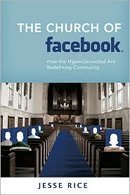
Jesse Rice, author of The Church of Facebook: How the Hyperconnected Are Redefining Community, warns that the new social media can encourage attitudes and behaviors that don’t work as well in real life.

Rice, 37, is the author of The Church of Facebook: How the Hyperconnected Are Redefining Community. A former worship leader an evangelical megachurch in California, he has degrees in organizational communication and counseling/psychology and—just as important to his readers—a sense of humor.

On a video he uploaded to YouTube, he explains his credentials for writing the book. “I can look at various parts of an organization, at the flow of communication back and forth within the independent structure, and I can identify all the ways that it’s your parents’ fault,” he quips.

And “I have an actual Facebook account with well over 100 friends.”

Yes, he acknowledges some people have 6 million fans on a Facebook fan page.

“But, back off, Vin Diesel,” he snarls. “It is possible to be too fast and too furious.”

Actually, being too fast to judge others and too furious to write a well-considered post are two ways Facebook thwarts meaningful community, according to Rice, who argues that online social media redefines the term altogether.

“Our definition of community has shifted,” he said. “Now it’s a continuum, with 10 being your best friend and 1 being people you just sort of bump into online. But it’s all community.”

Facebook has its bashers, especially in Christian circles. While some believers say they find genuine community online, others insist face-to-face interaction is essential to a life of faith. Some users find satisfaction in building and sharing their profiles, but others worry that Facebook breeds an all-about-me attitude and is eroding the capacity to listen and empathize.

Don Pape of David C. Cook, a Colorado publisher of Christian books, was looking to help curious pastors and parents who aren’t on Facebook learn more about it. Another writer suggested Pape take a look at Rice’s manuscript. “I was hooked from the beginning,” the publisher said.

In broad strokes and funny asides, Rice creates a context for Facebook and connects it to Christian experience. It’s too early to tell how the book will do, Pape says, but sales have surpassed 5,000 copies, and the publisher’s preparing a second printing.

Rice, who admits he had an early crush on Facebook, said he and the social networking site are just living together now, although he expects the relationship to last. Launched in 2004, Facebook has more than 350 million users, and more are joining all the time.

“Facebook has become part of our lives,” he said. “And we’re just beginning to learn how to be human in it.

“Online, we have power over how we express ourselves. You can take the time to choose your words carefully, edit your responses, PhotoShop a picture until you get it just right. Real conversations, real relationships don’t allow that. They include awkward silences.”

Rice has seen people give up on “embodied relationships” because they feel freer on Facebook.

“People do argue that there’s a richness to relationships online,” he says. But it could be that they don’t know what they’re missing. “We don’t feel that hunger anymore.”

Rice figures most of his readers—he also blogs at http://churchoffacebook.com—are pastors and parents wondering how Facebook fits into the lives of people they care about.

{youtube}Ln8iGjDqoiA{/youtube}

In a little more than 200 pages, Rice recounts the brief history of Facebook and compares it to other technological achievements that have transformed modern life. Air conditioning, for example, changed where and how Americans lived, ate, worked and spent their leisure time. Facebook shows signs of doing the same.

But Rice draws on his counseling experience to argue that prolonged hyperconnectivity shortens attention spans; that fear of missing out tethers people to technology and undermines their sense of control; that creating a Facebook profile turns some people into celebrities and their friends into an entourage or audience.

Rice is sparing in his Christian references, lest he alienate non-Christian readers. But he uses the New Testament story of Jesus asking a Samaritan woman at the well for a drink of water.

Jesus approaches the woman with “intentionality, humility and authenticity,” Rice said. Those qualities transform an ordinary encounter into a life-changing experience, he insists.

While he still has concerns, Rice said Facebook in many ways is just the latest version of an age-old concern.

“Whatever technology that’s in front of us always challenges us,” he said. “Our parents thought we listened to the radio too much.”


Faith Digest

Sour economy pushes offerings down. One year after a majority of Americans said they hoped the economy wouldn’t affect their church giving, three in 10 Americans now say they are putting less in the offering plate, a Barna Group study shows. Compared to a similar study Barna conducted at the end of 2008, the percentage of Americans who have reduced their donations has increased by a staggering 45 percent. Almost one-quarter of church donors cut their contributions by at least 20 percent. The Barna study was based on telephone interviews in January and early February with a nationwide sample of 1,008 adults; it has a margin of error of plus or minus 3.2 percentage points. A year ago, a separate survey of U.S. donors by Cygnus Applied Research found more than half of actively religious donors planned to give the same or more to charitable causes in 2009 as the year before. In addition, that survey also found 43 percent of actively religious respondents remained “seriously committed” to giving in the face of economic uncertainty, compared to 23 percent of those who were not religious at all.

Bible Belt lives up to its reputation. At 68 percent, Mississippi had the highest percentage of weekly church-goers in 2009, a new Gallup Poll showed. Vermont remained the least church-going state, with only 23 percent regularly attending. The top and bottom rankings remained unchanged from last year. Out of the top 10 states, nine are in the South. Utah’s large Mormon population boosts it to the top as well, making it the odd state in the West. States in the West and all of New England were among the least church-going. In addition to Mississippi and Utah, the most church-going states are South Carolina, Louisiana, Tennessee, Arkansas, North Carolina, Georgia and Texas. The lowest church-attending states were reported in New Hampshire, Maine, Massachusetts, Rhode Island, Connecticut, Nevada, Hawaii, Oregon, Alaska and Washington. The poll’s margin of error is plus or minus 1 percentage point. Nationally, 41.6 percent of Americans reported attending church at least once a week in 2009.

Anglican archbishop laments ‘chaos’ over women, gays. Archbishop of Canterbury Rowan Williams warned Anglican clergy that their debate about female and gay bishops is causing “chaos” that must be resolved if the Church of England is to be unified. Williams pleaded with the General Synod—the church’s parliament—to start listening to each other and stop pursuing a “zero-sum, self-congratulating” course. Otherwise, he said, “the present effect is chaos.” The archbishop added, in an apparent reference to the Episcopal Church, that “certain decisions made by some provinces impact so heavily on the conscience and mission of others that fellowship is strained or shattered and trust destroyed.” In December, the Episcopal Church, which is the U.S. branch of the Anglican Communion, elected an open lesbian as an assistant bishop in Los Angeles. The 2004 consecration of an openly gay priest as bishop of New Hampshire has caused deep dissent within the Anglican Communion.

–Compiled from Religion News Service


‘A time to be born, a time to die’

Is a church’s death inevitable? Who can give congregations permission to die? Should church members feel guilty for closing their facility’s doors?

Peter Bush, author of In Dying We are Born: The Challenge and the Hope for Congregations, believes every church must “be prepared to die” because each will die in one of two ways. Each church must die to “deeply held understandings of life and the purpose of the congregation” or it will close its doors.

Congregations are organisms, subject to an organism’s lifecycle—birth, development, plateau and aging—and that cycle is inevitable, Bob Dale, author of To Dream Again, Seeds for the Future and Cultivating Perennial Churches, believes.

“Living things don’t live forever, but there are some living things that last a long, long time,” he said.

Les Robinson, vice president of interim ministry resources for the Center for Congregational Health, also sees the cycle of life. “Churches are human institutions. Why shouldn’t they complete the same cycle?” he asked.

Some point out the Bible reveals the pattern, as well. A kernel of wheat must die before it can produce a plant and new seeds, according to John 12:24. The verse usually is interpreted in the light of Jesus’ death. But the verse has broader application, Bush believes.

“We have tended to read that as an individual … but I also think it applies to the corporate body,” Bush said. “The pattern of dying and rising is continual.”

Even churches important to the early Christians faced death, Glenn Akins, associate executive director for the Baptist General Association of Virginia, said. The seven churches in the New Testament book of Revelation no longer exist, he pointed out.

Causes of death

What causes a church to die? Akins believes lack of leadership and denial of decline contribute to a church’s demise. “When multiple people are involved, the church doesn’t have to die. But without adequate leadership, without wise decisions, it will die,” he said.

Change—or failure to keep pace with it—can be the major factor in church deaths.

“Churches are birthed because of a need,” noted Jim Hill, executive director of the Baptist General Convention of Missouri. “On the frontier, churches were birthed as communities sprang up. But some of those communities are gone, and that’s not the fault of the church.”

Communities often change complexion and cultural makeup. Differences in the ways cultural and age groups define the community concept also determine the type of church that will survive.

“Many churches were started with a sense of neighborhood … a geographical community,” Akins said. “The hitch is with all the cultural changes going on, we don’t find it that way anymore. … Those (churches) that are ‘parish-based’ and have never changed their ministry model will not make it.”

Closure or revitalization

What indicators might signal a church should close or rethink its ministry? What questions might congregations ask themselves as they face change?

Churches most frequently use traditional indicators—membership numbers and weekly receipts—to determine success. Congregations should begin to ask hard questions as soon as they recognize decline, Hill insisted.

Robinson agreed that those traditional markers catch churches’ attention. “Money, membership and attendance are usually what get our attention first. Those are the practical things,” he said.

But the more abstract aspects of church life often determine whether a church should close. “We must be very clear about our mission and our vision … who we are at this place, at this time, at this moment in history,” Robinson said.

Clarity of identity is critical, he believes, emphasizing that today’s congregations can’t hang onto the vision they had in the 1950s and ’60s. “We can’t fulfill that,” he said.

“Sometimes churches lose their identity or their clarity. Churches need to ask themselves on a regular basis to keep their identity clear. That doesn’t automatically eliminate the struggle with the practical, but it helps the congregation be able to look at their future.”

A church’s identity can be expressed in its mission, Dale said. A vibrant understanding of mission can help a congregation determine whether it should close or find a new way to move forward.

“One question churches might ask: Is our sense of calling, our sense of mission still alive in this place?” the author said.

Hill also believes congregations must focus on mission first. “Perhaps the most critical questions are: Are there people who need to be reached, and who are not being reached? Can we adapt our ministry to those who are not being reached? Can we build ministry that will help us respond to needs?” he said.

Morale is important as well, Dale noted. Churches often will do what their members “believe they can do,” he said.

Closing with hope

Members and even denominations often view church closure as failure. Baptists do not have a system in place to help churches prepare to close. “We need to do better at helping churches recognize new possibilities or to help them close,” Robinson said.

Celebration can mitigate guilt and help the congregation recognize the church’s contribution to God’s kingdom.

“Find a time of storytelling. Sharing is the way to celebrate, to look at the ministry as having done what God called us to do,” Robinson added. “That’s success, not failure.”

Hill agreed celebration can help heal, especially if it is followed by rebirth. “Celebrate the ministry, conclude it, and then focus on birthing a church where a new one is needed,” he said.

“Bodies die, but the body of Christ doesn’t,” Dale stressed. “It may wane in one place but will rise up in another.”


Turnaround churches: Can Baptists learn from Anglicans?

If turning around a declining church were easy, more declining churches would be reversing course.

And if Christians in the United States think turning around a church is difficult, think of trying it in the Church of England, where tradition reaches back hundreds of years and hierarchical structure often hamstrings changes local congregations want to make.

But Bob and Mary Hopkins believe fresh expressions—a term they prefer over “revitalizing a congregation”—can come even to Anglican churches in the United Kingdom.

Although they began—and continue—as church planters in urban settings with Anglican Church Planting Initiatives, from 1998 to 2005, the Hopkins served on the leadership team of St. Thomas’ Church in Sheffield, which grew to 1,500 in attendance, primarily reaching young adults with emerging culture interests.

They acknowledge cultural differences between the United Kingdom and the United States, but they emphasize that differences favor American churches. According to the Hopkins, culture in the United Kingdom is more influenced by secular atheism and is further into an era being called post-Christendom. The Brits have fewer megachurches and a greater percentage of smaller congregations. In addition, their congregations are attended by older people—average age 61—with fewer financial resources.

Because of their success, the pair has been asked by the Archbishop of Canterbury to serve on the Fresh Expressions team charged with bringing new vitality and energetic ministry to Anglican churches.

Although not everyone accepts their belief that churches in decline should not feel guilty, Bob and Mary Hopkins teach churches to begin by rejecting the belief that they have failed. Shying away from terms like “traditional churches” that often have negative connotations, they prefer the term “inherited churches” to describe churches that have been around for years.

“It isn’t good or bad,” Bob Hopkins said. “It simply describes what is. This is the church that has come down to us.”

But fresh expressions of church life require more than just a name change. In the past, they insist, the church’s approach has been attractional—inviting people to come to church.

Some churches have transitioned to an engaged approach that says, “We’ll go out and engage people and bring them back to the church.”

The couple believes more transition is needed—an emerging approach that says, “We’ll go out and stay engaged with people in our culture and see what new expressions of being the church arise.”

What characterizes an emerging approach?

“First and above all,” Bob Hopkins said, “we’ve got to stop starting with the church.” Instead, he insists, start with the nonchurched in their social contexts.

The couple believes, based on their relatively recent successes, the inherited church must be willing, able and even eager to initiate changes designed with specific interest groups in mind. They foresee churches for young adults, adults with young children, network churches, community initiative churches, alternative worship churches, school-based student churches and even work-based churches.

These churches may or may not worship on Sundays. They may or may not have paid staff. They may be smaller, worship in cafes, or around tables or in homes as cells. They may even be intentional conventional church plants, but Bob and Mary Hopkins believe the church must take the teaching of Christ to its world rather than expect the world to come to it.

Neither can the church in the future expect the world to reflect its values and teachings. The world is becoming increasingly worldly. In such a context the attractional church has little chance of surviving, they believe.

They do, however, see a future for what they call “mixed economy” churches that affirm what they have inherited from the past while transitioning into churches having a mission to the non-churched.

While at St. Thomas in Sheffield, Bob helped begin a discipleship process called Lifeshapes which has become international in scope. They believe that staid, passive, all-but-dead Anglican churches can find fresh expressions in which to life out their faith.

The new churches may not resemble the old, cathedral-based models, they insist, but those churches will be authentic and biblical. They believe tired old American churches can find fresh expressions, as well.

For additional information visit their website at www.acpi.org.uk.


For churches, how much risk really is too much?

LAFAYETTE, Ga. (RNS)—For Travis Hutchinson, the life of a pastor in a small-town Georgia church is about preaching the gospel, ministering to the needy and, increasingly, figuring out how to handle an ever-growing list of risks.

Some new risks are real and demand vigilance, said Hutchinson, pastor of Highlands Presbyterian Church in LaFayette, Ga. For example, conducting a criminal background check on everyone who works with children has become a necessity.

Other risks are more remote, he says. Still, vendors stoke anxiety about everything from shooting sprees to federal audits.

Pastor Barry Diamond (foreground) and Ryan Lezinski of The Village church in Las Vegas work on bathroom improvements at Casa Hogar Sion Orphanage during a mission trip to Tijuana, Mexico. The Village takes risks, such as bringing members to Tijuana despite drug-related violence there, but it also carries insurance. (RNS PHOTO/Courtesy of The Village church)

“I get lots and lots of stuff that just seems like fear mongering, and apparently that’s taken hold in some places,” Hutchinson said. “One of the things we have to do as a congregation is ask ourselves: How much of our time is (risk management) eating up? And how much time are we spending doing what God wants us to do?”

In the wake of the Catholic Church’s clergy sexual abuse crises and several church shooting incidents in recent years, risk has become a hot topic for churches. The National Association of Church Business Administration last year convened 30 first-time regional workshops to raise risk awareness among the 85 percent of churches it says are vulnerable because they don’t have a professional administrator.

“Risk management is a huge issue in the church right now,” NACBA Deputy Chief Executive Officer Phillip Martin said. “It carries everything from child protection issues … to the issue of security as it relates to guns, protection of pastors, staff and congregants.”

This year, GuideOne Insurance is responding to rising demand from churches by rolling out new types of coverage, such as insurance against income loss caused by a church intruder.

For some church leaders, raising risk awareness and taking steps to prevent disasters is a matter of faithfulness. Tom Danklefsen, executive pastor of Grove City United Methodist Church in Grove City, Ohio, coaches pastors of small and mid-sized churches on a range of risk issues, from protecting a church’s tax-exempt status to thwarting the efforts of pickpockets during worship services.

“We’re managing God’s resources, and we want to do that well,” Danklefsen said. “We have to do due diligence. (Using safeguards) frees us to do better ministry. We don’t have to worry, ‘Well, gosh, is this guy a criminal?’ We know the background” because the church does background checks on employees and volunteers who work with children or the elderly.

But some say churches can become so concerned with minimizing risk they forget how take risks appropriate to Christian discipleship.

Theologian Scott Bader-Saye worries, for instance, that churches preoccupied with institutional safety may become unwelcoming toward poor people because embracing them could pose hazards to their bottom lines.

“We’re seeing faithfulness being reduced to good business management,” said Bader-Saye, a professor of moral theology at Seminary of the Southwest in Austin. “There are things more important than being safe. Those things involve loving God, loving neighbor, pursuing the good. … If we teach our children that our fundamental objective is safety and security, then we don’t prepare them to take the kind of risks they need to take to be disciples and to have joyful and fulfilling lives.”

In the ministry trenches, pastors sometimes are working out principles to help them distinguish between risks to mitigate and risks worth taking.

For instance, Highlands Pres-byterian Church offers worship space and humanitarian aid to immigrants, whether they’re legal citizens or not.

Highland elders have taken heat for such displays of hospitality; one elder had a brick thrown through a window at his home. But they willingly keep taking such risks, Hutchinson said.

“The question being lost in today’s risk management is: What are we willing to lose for the sake of the gospel?” Hutchinson said.

In Las Vegas, a nondenominational church known as The Village makes a point of taking risks to show God’s love for people in need. For example, rampant drug-related violence in Tijuana, Mexico, didn’t deter 25 church members from traveling there in November for a weekend effort to renovate an orphanage.

“The basic model (of church in America) has been: We’ve got this safe place for you … we’ll look after your teenagers, we’ll provide all these programs, (and) you can be kind of insulated from the world around you,” said The Village Pastor Barry Diamond. “I think that’s the very opposite of what Jesus wants.”

Looking forward, Bader-Saye hopes churches will invest as much effort in discerning which risks are worth taking as they now put into being safe. At present, he observes, that isn’t happening often enough.

“Churches haven’t asked the more basic question about what kind of risks should we be taking, and what kind of risks should we be resisting?” Bader-Saye said. “It’s not in the end a question of taking risks and or not taking risks, but recognizing that there are proper risks to take.”


When churches die, can they live again?

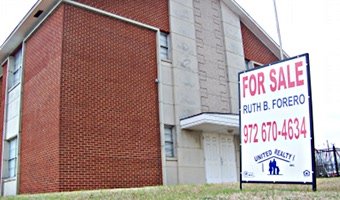
One sees them occasionally. Abandoned church buildings in rural areas stand in mute witness of changing times. In urban areas, big brick structures, once crowded with eager worshipers, now house restaurants, community centers or even nightclubs.

Sometimes churches die. Like individuals, some may reach the end of a long and fruitful life and pass away with a sense of triumph. Others may die from years of self-destructive choices.

Every denomination in the United States has scores of churches that expect to die within a decade. No one can prevent the cultural shifts that leave behind churches unable or unwilling to adapt.

Weakened, vulnerable and sometimes paralyzed by uncertainty, membership dwindles until death seems inevitable.

Some leaders failed to prepare churches for the cultural change occurring in their midst. Other churches lacked the know-how or the resources necessary to change. Some churches simply refused to change.

Whatever the reasons for decline, once church members believe they lack the resources and energy necessary to affect a turnaround, recovery becomes almost impossible and they focus solely on survival. Unable to accept impending death as an option, church members sometimes seek someone or something to blame.

Phil Rodgerson, retired from the Virginia Baptist Mission Board, has identified classic options churches often consider when facing their own demise. Unfortunately, 58 percent of the time, the church chooses to remain and do nothing—an approach that almost guarantees an inglorious end.

Experts insist a healthier, theologically appropriate approach is to celebrate the life the church has known, consider its options and prepare for a death that honors Christ and leaves a kingdom legacy. When a church completes its mission and dies, members will mourn, but they also will celebrate the church’s ministry successes.

If 42 percent of declining churches want their ministries to survive, what can they do?

Let old dreams die and envision something new.

Born in 1907 to reach a thriving, new community in south Richmond, Va., Weatherford Memorial Baptist Church had declined terribly. By 2000, the surrounding area had changed, but the church had not. Finally, the few members who gathered weekly realized they could not continue.

“We saw what was happening, but we didn’t want to acknowledge it. We were in denial,” lamented Ruth Guill, a former member.

In 2005, Pastor Ricky Hurst, assisted by Glenn Akins, assistant executive director of the Virginia Baptist Mission Board, led Weatherford to embrace an extraordinary dream. Despite offers from other churches to buy their property, the congregation voted to give its $2 million facility to St. Paul’s Baptist Church, a rapidly growing African-American congregation in another part of the city. Weatherford’s gift enabled St. Paul’s to minister at a second site. In the three years since Weatherford Memorial became St. Paul’s South, attendance has grown to over 500.

The desire for a lasting legacy also led Weatherford Memorial to establish an endowment for mission purposes by the Richmond Baptist Association and the Virginia Baptist Mission Board.

Remain but develop a community consciousness that creates ministry opportunities.

Like many other urban congregations, First Baptist Church of Clarendon, now called simply The Church at Clarendon, experienced stagnation and decline. In the past 30 years, resident membership dropped steadily from 871 to 236. Worship attendance, however, has begun to climb again as the congregation has embraced a new vision.

Located in a suburb of Washington, D.C., Clarendon’s property values soared making it nearly impossible for mid-level professionals to live where they worked. Firefighters, police officers, teachers and nurses increasingly had to commute long distances to work because they could not afford nearby housing. Church member Ellen Bartlett reports The Church at Clarendon decided to leverage the value of its property, tear down its aged facilities except for the main entrance and steeple, and build a 10-story structure. The church will occupy the two bottom floors while the upper eight stories will provide affordable apartments with rent based on income levels.

Change as the community changes.

Bon Air Baptist, a growing congregation in Richmond, chose to use its size and strength to change as the community changes. Toward that end, Pastor Travis Collins is leading the congregation to reflect the racial and cultural makeup of the communities around its primary campus on Buford Road and its three other locations.

Remain at a central location while establishing other sites for worship and ministry.

Pastor Bob Sizemore led Fairview Baptist, located in an older section of Fredericksburg, Va., to establish Fairview at River Club. The River Club site, led by Dee Whitten, has grown to an average attendance of 550.

Remain, but share the use of facilities.

Akins of the Virginia Baptist Mission Board points out that although shared use often has a community ministry component, the motivation most often is financial. For that reason, this option postpones rather than prevents further decline.

Refocus.

Exercising invention and adaptability, some churches change the type of ministry they offer—shifting from a neighborhood church to a specialized ministry, for example.

Relocate.

Anytime a church moves, it requires church members to abandon a sacred place. Rarely can churches relocate without experiencing disunity, Akins noted.

Merge with another congregation.

Congregational mergers often create one slightly larger, weak church from two smaller, weak churches, Akins asserted.

Re-church.

The established church “goes out of business” then reopens after reorganizing and retraining. The obvious difficulty, observes Akins, is that many of the people remain the same, taking the same assumptions that failed before into the new church.

Fair Park Baptist in Alexandria, Va., could see the end approaching and chose to become a different kind of church.

To avoid the attitudes and practices that led them to decline, the church turned over decision-making to a group of trustees who brought expertise from outside the congregation. The trustees constituted the Convergence Church, specializing in ministry to Alexandria’s sizeable arts community. Led by Lisa Hawkins and a leadership team she put together, the new church is gaining numbers and vitality.

Another version of this option occurs when a church gives itself to a stronger, larger church whose members fill key leadership positions. This approach can change the DNA of the new church.

Simply disband.

Akins challenges churches to engage in ongoing assessment of their success within their cultural settings. He points out that every church faces many internal and external circumstances beyond its control. Church members die or move away. Businesses shut down, neighborhoods change and buildings age.

But churches can control the way they live out their faith, their worship styles and their responses to circumstances that lie beyond their control.


Nearly half of Americans admit to anti-Muslim bias

WASHINGTON (RNS)—Close to half of Americans admit to harboring prejudice against Muslims and negative feelings about Islam, a new study from the Gallup Center for Muslim Studies shows.

The level of anti-Muslim prejudice—43 percent of Americans admitted feeling at least “a little”—is more than twice as high as Americans’ reported feelings toward Buddhists, Christians and Jews.

Fifty-three percent of respondents said their view of Islam was “not too favorable” or “not favorable at all,” according to a 32-page Religious Perceptions in America report.

About 3,500 Muslims gathered last September at the foot of the U.S. Capitol for a first-ever “Islam on Capitol Hill” prayer rally. A recent study shows nearly half of Americans harbor prejudice against Muslims. (RNS PHOTO/Nick Kirkpatrick)

“It was interesting to note that Americans admit no more prejudice against Buddhists and Jews than they do against Christians,” said Dalia Mogahed, director of the Washington-based center. “So, this isn’t just simply a problem against minority religions. There is a somewhat unique issue with Muslims in particular.”

The report also seemed to debunk the conventional wisdom that greater exposure of individual Muslims can be an antidote to anti-Muslim prejudice. Researchers found personally knowing a Muslim may “soften extreme prejudice,” but it can’t eliminate bias altogether.

“It suggests that you can know a Muslim but if you have a negative opinion of the faith as a whole because of media exposure, you can perhaps explain that this one friend of yours is an exception,” said Mogahed.

The study drew on media studies that have found prominent television news coverage of Islam tends to be negative and focuses on extremism. That, in turn, fuels anti-Muslim prejudice, Mogahed said.

“The default state for Americans is not having prejudice,” Mogahed said. “Americans really have to learn prejudice by being inundated by negative information.”

Perhaps more concerning is that the 43 percent of self-professed prejudice is likely “an underestimation,” Mogahed said, because people are hesitant to admit it. If the real number actually is higher, that’s “even more alarming,” she said.

Mogahed, who focuses on interfaith dialogue as a member of the White House’s Advisory Council on Faith-based and Neighborhood Partnerships, said she hopes the findings will influence future bridge-building efforts between people of different faiths.

One key finding is that people who are extremely prejudiced against Jews are very likely to hold the same views of Muslims.

“There are more and more parallels between the typical things that are said against Jews and those said against Muslims,” she said, “including conspiracy theories that Muslims are trying to take over the nation and the world, that they’re taking over Europe.”

The report showed a disparity between Americans’ perceived views of Muslims about gender equality and findings by Gallup researchers who studied populations in majority-Muslim countries.

While just 16 percent of Americans think Muslims around the world believe men and women should have equal rights, majorities of respondents in predominantly Muslim countries—including 85 percent of Saudi Arabians—think so.

“By presenting more accurate, representative information … some of the perceptions can be better informed,” Mogahed said.

In general, researchers found Americans are quite ignorant of non-Christian faiths. While 63 percent had very little or no knowledge of Islam, 72 percent said they had very little or no knowledge of Buddhism, and half of Americans said they had very little or no knowledge of Judaism.

The Gallup World Religion Survey, which was used as a base for most of the report’s findings, was conducted in October and November 2009 by phone of a random national sample of 1,002 adults; it has an overall margin of error of plus or minus 3.4 percentage points.


Analysis: What does the Bible say about lending practices?

The dramatic increase of payday lender storefronts in Texas has left some Christians wondering how to respond. What does Scripture say about high interest rates? Can the church offer solutions?

“Payday loans perpetuate American poverty,” said Bill Tillman, T. B. Maston Professor of Christian Ethics at Logsdon School of Theology in Abilene. “If we take Christianity seriously, we are not in this world to make all we can, but we’re in this world to serve others. The authenticity of our relationship to God is dependent on how we treat other people.”

Payday loans are small-dollar loans with high service fees and interest rates that offer instant cash with no credit check. These loans, usually $300 to $500, are secured with a personal checking account and a service fee. Often, borrowers pay $20 or more for every $100 borrowed. If the loan is not paid in full within two to three weeks, then the borrower can pay another service fee and roll over the loan.

A recent survey conducted by Texas Appleseed, an advocacy group for low- income families, found most payday loan borrowers roll over loans at least once, and several people roll them over multiple times.

With this model, payday lenders profit from a cycle of debt. Most payday loan borrowers in the survey earned an income of $30,000 or less and used the loan for recurring expenses of basic needs like rent, utilities and food. While the Texas Finance Code sets some restrictions on small-dollar loans, many payday lenders operate as consumer service organizations avoiding licensing and regulation by the Office of Consumer Credit Commissioner.

Christians can look to the Bible for instruction regarding unethical business practices and financial systems, biblical scholars note. Several references to charging interest appear in the Old Testament. Exodus 22:25 of the Covenant Code and Leviticus 25:36 of the Holiness Code—the two central instructions for forming community—both urge Israel not to extract interest from the poor. Later, this instruction is confirmed in Psalm 15:5 in reference to worship practices and Proverbs 22:7 in the wisdom literature.

Prohibition of interest to the poor is consistent with the great prophetic emphasis on social justice, especially seen in Amos 2:6-16.

It is difficult to compare ancient society to our capitalist, egalitarian society, said James Nogalski, professor of Old Testament at Baylor University. Still, he sees how certain thematic ideas regarding righteous and just living can be applied to Christians’ lives. A righteous person, as described in Psalm 15:5, does not charge too much interest or make a profit at the expense of someone who is in need.

In ancient society, it was not uncommon for lenders to collect 40 percent, 50 percent or more interest, and some even took children as slaves, but such practices ultimately were considered too much.

Furthermore, people who oppress the poor through exorbitant interest rates and other practices are called unjust.

“There is clearly a point where all the literature agrees,” Nogalski said. “When lenders take back more than is justified and oppress the poor, the prophets in particular offer powerful words of judgment.”

The modern debate today is over the point where interest rates become too high in our society, Nogalski explained. When we take more than is justified, especially from those least able to pay, we are in danger of living like the unrighteous or unjust against whom the prophets and the psalmists rail, he said.

The Old Testament is concerned with forming a community in covenant with the living God, said Bill Bellinger, chair of the religion department at Baylor University. The biblical witness summarizes God’s instruction in terms of loving God with all we are and have and loving our neighbor. 

“Extracting interest, especially high interest, from the poor is decidedly not a neighborly practice,” Bellinger said.  The Bible calls the community of faith to a life that lifts up the poor, and thus, the community of faith is called to bear witness to practices that bring justice and hope to the poor. 

“The usury of payday and car title loans are in direct conflict with these goals,” he said. 

The New Testament also talks about financial systems and treatment of the poor. Jesus summed up the Old Testament witness with his command to love God and love our neighbor explained Dennis Tucker, associate dean of Truett Theological Seminary.

“Loving a neighbor means keeping someone from being victimized,” he said.

Many times we think of loving our neighbor as an overt act, but it also includes seeking justice, he explained. Jesus spoke against systems that dehumanized people like in the case of the adulterous woman in John 8.

“As Christians, we need to critique systems that oppress the poor,” Tucker said. “But we also need to be a part of the answer.”

The early church in Acts 2 actively sought answers to problems by meeting people’s needs itself rather than relying on political structures. Likewise, there is a movement in churches today to reach out to the needs of their immediate communities. Churches are discovering new ways to help raise questions and find solutions at home.

Tillman encourages Christians to offer their business skills to help those people caught in the cycle of debt from payday loans. Christians and churches can offer financial education or help to develop alternative small-dollar loan products. Tillman explains that Jesus’ good news was socially relevant; it actually saved lives.

“To be socially relevant in our day, churches must remember the nature of Jesus’ gospel,” he said.

The church should respond proactively to the harmful practices of payday loans, said Joe Trull, editor of Christian Ethics Today.

“Churches can teach basic economic principals, helping people to make the most out of their money,” said Trull, formerly an ethics professor at New Orleans Baptist Theological Seminary.

“Many people who use payday loans use them because their parents used them,” he observed. Churches can teach about financial practices that will keep people from using payday loans.

“We do this kind of thing for young married couples. Why don’t we do it for the poor?”


Amy Wiles is a student at Austin Presbyterian Theological Seminary and plans to graduate with her Master of Divinity degree in May 2011. Before entering seminary, she taught music in public schools five years, after completing her undergraduate degree at Baylor University. She is serving a public policy research internship jointly sponsored by the Christian Life Commission and the Baptist Standard, made possible by a grant from the Christ is Our Salvation Foundation of Waco.


Faith Digest: Tebow ad confusing

Tebow ad confused viewers. Focus on the Family’s Super Bowl ad featuring star quarterback Tim Tebow may have gotten a lot of press but left many viewers with confusion regarding the commercial’s meaning and sponsor, according to the Barna Group. According to a poll based on 1,001 telephone interviews, including the night of the Super Bowl, when asked to describe the main message of the commercial, one in five viewers could not venture a guess; 38 percent described it as an anti-abortion; and 19 percent said it was about being “pro-family” or “expressing that family is important.” The Barna poll had a margin of error of plus or minus 3.2 percentage points.

Obama advisers split on tricky church-state issues. The 25-member council advising the White House on faith-based issues has voted on two contentious issues for religious charities that receive government funds. By a 13-12 vote, the council members said the government should require houses of worship to form separate corporations in order to receive direct federal funding for social services. When asked whether the government should permit charities to offer social services in rooms containing religious art, symbols, messages or Scripture, 16 said yes, two said no, and seven said they should be permitted if no other space is available. Melissa Rogers, chair of the President’s Advisory Council on Faith-based & Neighborhood Partnerships, said the votes will be included in a forthcoming report for President Obama.

Want to make friends? Bars beat churches, survey says. Americans say bars are better places than church to meet new friends, according to a new survey. Restaurants, bars or pubs attract 18 percent of Americans as a place to meet people, while churches draw 16 percent and online venues like Facebook pull 11 percent, said the survey released in late January by Group Publishing, a nondenominational Protestant publishing house in Colorado. The online survey polled nearly 800 respondents, more than three-quarters of whom identified themselves as Christians, and has a plus or minus error rate of 4 percentage points.

Monks’ high-powered wine packs a punch. A small band of Benedictine monks in the south of England has come under fire for producing a fortified wine that critics describe as the “scourge of Scotland” for its high alcohol content. Officially known as “Buckfast tonic wine” but nicknamed “commotion motion” or “wreck the hoose juice” by devotees in Britain’s far north, the wine is turned out at Buckfast Abbey, a monastery in the Devonshire hills of southwest England. But “Buckie” has become a national favorite brew in Scotland—doubtless in part because it contains about 15 percent alcohol by volume. In other words, it packs a punch, as the police report. In one Scottish police constabulary, in Strathclyde, “Buckie” has been mentioned in some 5,000 crime reports, one of every 10 of them involving violence, over the past three years. Police Superintendent Bob Hamilton said, “I think it’s clear from the figures that there is an association there.”


Building Green, Being Green

WASHINGTON (ABP)—It’s not easy building green. But churches that take the call to wise environmental stewardship seriously have a wide variety of options—from simply changing light bulbs to elaborate new construction projects certified as environmentally friendly.

The key, experts in the field of congregations and green design insist, is figuring out what’s appropriate for the church’s ministry context—and then taking advantage of the many resources available to guide the greening process.

Discerning how green to go

For churches considering how to become greener, “Discernment sometimes ends up being a challenge, because so much can be done or should be done,” said Cassandra Carmichael, director of eco-justice programs for the National Council of Churches. “Even if they are just looking at the bottom line and want to do energy-efficiency stuff from a fiscal standpoint, they often have challenges coming up with the capital at the beginning—especially if they’re in a disadvantaged area.”

Most churches face those two challenges when making a decision to become greener—the vast variety of options and then the resources to accomplish their goals, Carmichael said.

“One is that they get so overwhelmed with all they need to do or want to do, they don’t know where to start. We try to help them get past that,” she said. “You get bombarded with all the options that you have to make your church building greener and build a more energy-efficient building.”

Carmichael’s program offers a guide for congregations specifically entering into green-building projects, as well as a separate guide for practical ways that churches can become more environmentally friendly short of a new building project.

Starting simply

The simplest ways to green a church’s facility can make congregations not only better environmental stewards, but also better stewards of their own finances.

“Some of the best low-cost, high-return improvements are compact fluorescent bulbs, LED exit signs, occupancy-sensor controls for lighting, programmable thermostats for heating/ air conditioning, yearly or ‘pre-season’ maintenance or ‘tune-up’ of HVAC systems,” said Jerry Lawson, national manager of the federal Energy Star Small Business and Congregations Network, in an e-mail interview.

“If the church is replacing a piece of equipment anyway, it is incrementally very inexpensive—sometimes no cost increase—to buy Energy Star-labeled products and equipment over non-Energy Star.”

The Energy Star program is an Environmental Protection Agency initiative creating energy-efficiency standards that generally are 20 to 30 percent higher than federal law requires for a variety of consumer products—including household and industrial appliances. Lawson’s network provides resources to congregations and small businesses to improve their energy efficiency. Among them is a guide that shows congregations how to make existing facilities more energy efficient.

The efficiency savings can put to good use, Lawson said.

“Many green efforts—especially energy efficiency—can save (a) significant amount of money that church members have pledged for the mission, only to have it go to pay for utilities,” he said. “Energy savings can be repurposed for the ministry of the congregation, and most congregations can cost effectively reduce energy bills (via increasing efficiency) by 25 to 30 percent.”

And, Lawson added, churches can educate their members to be more effective stewards of energy in their personal lives—which could, itself, have an effect on the church’s bottom line.

“A step further is that the church can help educate members that they can also cut energy costs by about 30 percent in their homes and their businesses, which could help people in their personal finances and enhance their ability to tithe,” he said.

He also noted some steps to increase efficiency could save on costs in ways beyond the simple utility bills.

“Certain green actions, such as replacing inefficient lighting with efficient, can actually save on personnel and maintenance costs due to the much longer life of efficient lighting, and HVAC tune-ups can help the equipment last years longer.”

Beyond increasing energy efficiency

Beyond simple retrofits, greening your church’s facility or building a green-friendly new building or campus becomes more complicated—and requires careful consideration of a church’s ministry context, resources and commitment to go to extraordinary lengths to embrace its call to environmental stewardship.

The 2,500-seat worship center and classroom addition for Crosspoint Community Church in Katy, near Houston, that currently is under construction utilizes sustainable design features. (IMAGE/Courtesy of Merriman Holt Architects)

“As building becomes more driven by sustainable design, it may change the way we define beauty. A beautiful building may be one that looks like it is sensitive to its environment,” said Bill Merriman of Merriman Holt Architects in Houston.

Merriman’s firm recently worked on its first LEED-certified church building project—St. Paul’s United Methodist Church in Houston.

LEED is an acronym for Leadership in Energy and Environmental Design, an initiative of the U.S. Green Building Council. The certification program provides an internationally recognized set of standards for green buildings.

“The church had a great interest in doing a LEED-certified building. It reflected the will of the congregation,” he said, noting the decision was based more on ethical principles than cost savings.

“There was a natural sense that it’s the right thing to do—to be a good steward of the environment God made.”

Green building levels of commitment

Keelan Kaiser is chair of the architecture department at Judson University, an American Baptist school in the Chicago suburb of Elgin, Ill. Judson is the only evangelical Christian school in the United States to offer a fully accredited professional program in architecture. And the program focuses on green design—so much so that it, along with the school’s art and design programs, recently moved into a LEED gold-certified building.

“At Judson, the whole reason we’re interested in environmental stewardship is because buildings consume about 50 percent of the energy in America,” he said.

There are, Kaiser said, four basic steps to creating “a truly green building, and the first is to reduce the loads, or requirements, for energy-consuming equipment.”

That can involve reducing the amount of sun a building built in a climate with hot summers gets to reduce the energy load required to cool the building. Or it could mean maximizing the use of natural light in a facility in order to save on electricity costs.

“The second step is designing very high-efficiency mechanical systems”—such as higher-efficiency heating, cooling and lighting systems—including installing thrifty plumbing systems and water fixtures.

“The third step is providing renewable energy on site,” Kaiser said. That can include solar panels, hydroelectric generators and even windmills. For example, a church in a place like the flat, windy Midwest could place wind turbines atop the tall roof of a sanctuary to take advantage of greater average wind velocities at such heights.

The fourth step in greening a facility, he said, “is to purchase green power off-site—to purchase a portion of your electrical consumption from what’s called green-power sources.”

Many utility systems offer—usually at what Kaiser described as “a slight upcharge”—an option to purchase power that comes from sources greener than coal-burning plants or other high-carbon sources.

Building green wisely

Houston architect Merriman cautioned against “over-promising practical results” in terms of cost savings on utility bills when retrofitting or building a whole new green facility. While energy-efficient heating and air mechanical systems do produce monthly savings in utilities, the initial outlay for a high-performing mechanical system can be costly.

Early on, he recommended, the architect a church enlists when embarking on a green building or renovation program—together with others on the building team—should develop a feasibility study to help the congregation make informed decisions. The team would look at how the building is used and how often particular sections of the facility are utilized each week.

“Communication is all-important so there are no disappointments,” he said.

A life-cycle analysis of any mechanical heating and cooling system also provides vitally important information, he added. If the “payback” on a high-performance system is 15 years, a church might need to reconsider. But if the system paid for itself in terms of utility savings over five or six years, that might be worth consideration.

The unique setting of each church and the composition of its membership also must be considered. For instance, he noted, bicycle racks might be a positive, environmentally friendly addition to some facilities but completely impractical elsewhere.

Efficient use of space

Judson’s Kaiser said churches might make their first step in embarking on a green building plan a re-visioning of how they use their facilities—of how they operate as a congregation.

“Green buildings are the result of green operations,” he said. “You can’t operate a building efficiently if you’re not operating your programs efficiently.”

For example, traditional churches are, simply, inefficient buildings to begin with.

“One of the problems with buildings, of course, is that you want them occupied as much as possible in order to justify its existence, so from a green-building standpoint, a church is a difficult building type,” Kaiser said. “It’s not that you can’t do it, but it’s a building that’s only occupied a small percentage of the day and week.”

The NCC’s Carmichael said some churches have taken their commitment to environmentalism so seriously that they have decided to maximize their facilities’ efficiency by sharing with other congregations—and other alterations to the way they use their space.

“It’s more energy efficient to share a building than having two separate buildings,” she said. She noted one church in Wisconsin that not only shared its building, but also used its space for things like opening gardens to raise produce for the homeless and neighbors to mowing their lawn “with a lawnmower that’s run off of used vegetable oil.”

“They’ve taken the approach of not just the building itself and let’s look at the facility, but they’ve taken it a step further and tried to incorporate those practices into the life of the church.”

Above all, the choices a church makes when it comes to greening its facility come down to its view of its ministry priorities, Energy Star’s Lawson said.

“I believe the most powerful consideration (in greening a church) is the scriptural guidance on stewardship. We are called to be stewards of creation—to prevent pollution and conserve natural resources for future generations,” he said.

“Greening/stewardship efforts can be important and educational ways for the youth group and all members to contribute to the life of the church and community.”