Liberty & justice for all

Since colonial days, each new generation of Americans has had to face new challenges to religious freedom.

From dissenters like Roger Williams fighting established state churches to perceived threats to the Protestant establishment posed by Catholic immigration in the 19th and early 20th centuries to the culture wars over religion that ensued from Supreme Court decisions on school prayer and evolution to the post-9/11 fear of Islam, new issues and controversies arise that touch on that most distinctive of American—and Baptist—principles.

As the United States enters the second decade of the 21st century, some experts in religious freedom predict challenges coming to the fore likely will cluster around a handful of new issues.

One, they said, is maintaining respect for religious freedom and expression amid ever-increasing pluralism, including the rising proportion of Americans who identify with no particular religious faith, as well as the rise in Islam.

A second is emerging conflicts between individuals’ or groups’ religious teachings and prevailing mores on issues like contraception, stem-cell research or gay rights.

Another, the experts said, is increasing aggressiveness by evangelical Christians who feel a need to fight back against what they perceive as a bias against Christianity in the culture, particularly in public education.

“The seculars versus the religiously orthodox still looks like the key fault line to me,” said Chip Lupu, a First Amendment expert and professor at George Washington University Law School.

“The big fights won’t be about funding. No big new school-funding initiatives are likely to take place. The fights will be about abortion—rising in unpopularity, but the Supreme Court unlikely in the near future to overturn Roe (v. Wade, the 1973 decision that legalized abortion nationwide); and gay rights, rising in popularity, but marriage rights remain blocked by a … (Defense of Marriage Act) at the federal level and in many states.”

Increasing pluralism

Ever-rising percentages of Americans who practice neither Judaism nor Christianity—even in parts of the country that, historically, have had a high degree of religious homogeneity—will continue to present new challenges on local, regional and national levels.

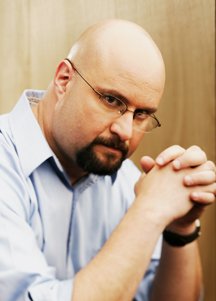
Charles Haynes

Charles Haynes, director of the Newseum’s Religious Freedom Education Project in Washington, said he thinks, “The rising tide of Islamophobia will create serious problems for American Muslims in the coming years.”

Bob Tuttle, Lupu’s colleague at George Washington University Law School and a fellow church-state expert, said conflicts fueled by fear of Islam will arise over relatively mundane matters—including the rights of Muslims, Sikhs and other religious minorities who often have distinctive patterns of dress or distinctive religious rituals to express their faith in public places. But, Tuttle added, there also will continue to be more general “concerns about discrimination based on perceived links with anti-American groups” for Muslims.

When conscience and society conflict

A related set of challenges, the experts said, will flow from conflicts between the right of an individual or group to hold a religious belief—about the acceptability of homosexuality, for instance—and decisions by voters, legislatures and courts that conflict with that belief.

Same-sex marriage, the experts said, is a prime example.

As societal acceptance of homosexuality increases and legal protections for gays at all levels of government follow, Haynes said, “Collisions between religious liberty claims and non-discrimination laws will increase, especially as gay marriage is legalized in more states.”

Chip Lupu

For instance, what happens when a state legalizes same-sex marriage and gay couples ask justices of the peace to marry them, but some government servants decide their consciences won’t allow them to preside over such ceremonies? Whose rights—the conscience rights of the civil servant or the civil rights of the couple—will prevail?

“The gay-rights movement will indeed generate demand for exemptions—wedding industry providers, some public employees,” Lupu said. “Similarly, abortion and contraception will produce issues of conscientious exemptions for health-care workers.

“These kinds of exemption claims give liberals fits, because liberals tend to favor exemptions generally, but not these particular ones. There will also be issues of free speech in schools for those who oppose gay rights.”

Culture war without end

When it comes to maintaining the other side of the religious-liberty coin—church-state separation—Tuttle and Lupu said the intensity of religious culture-war skirmishes may increase as evangelical Christians feel more besieged, and secularists or religious minorities feel more empowered.

“For nonestablishment issues—much more about the culture wars than religious liberty—I’d think of two things,” Tuttle said.

Bob Tuttle

“One, public displays of religious images and messages—both defenders and opponents are getting more assertive, and the (Supreme) Court may be poised for a doctrine-changing decision—perhaps one that explicitly permits a much wider range of government-sponsored religion. 

“Two, increasingly aggressive efforts to inject evangelicalism into public schools—typically framed in language about overcoming discrimination against Christianity, but usually taking the form of dominance in officially sponsored practices.”

Lupu referred to a recent, highly publicized move by a conservative Christian majority on the Texas State Board of Education to assert what they view as a conservative corrective to the state’s standards for social-studies curricula.

“The Texas schoolbook wars may spill over elsewhere,” he said. “I’d like to say that schools should educate children about these issues, but that education will be politicized in many places.”

Can churches help?

Both Tuttle and Lupu said congregations can play a role in increasing awareness of religious liberty to help prevent such conflicts from flaming into divisive, nasty public battles.

“Congregations can help people to learn respect for the diversity of religious expressions—not implying their equal truth, but equal respect for all people, and recognizing the constitutive importance of religion in people’s lives,” said Tuttle, who is an active Lutheran layman who also serves as legal counsel to the Washington Synod of the Evangelical Lutheran Church in America.

Tuttle said churches also can help teach “respect for the limited jurisdiction of the state over religion, rather than making religion a legitimate tool of the state.”

Lupu agreed congregations can play a vital role in educating about religious freedom, as well as simple civility.

“Teaching and demanding respect for those with whom you disagree are both so important,” he said.


What should churches and ministries know about employment law?

One characteristic of the robust religious freedom Americans enjoy is that the government doesn’t control the church nor the church the government. But that doesn’t mean churches are lawless zones.

While houses of worship and other nonprofit religious organizations often are granted some exceptions and exemptions to legal standards that apply to other corporate entities, they still must follow legal standards in many areas. Employment laws seem to be among the most confusing for churches—especially those that deal with workplace discrimination.

When it comes to employment law, maintaining church-state separation becomes a delicate balance between preventing the state from interfering in church polity and governance while still protecting workers.

Employers, including churches, are subject to the Civil Rights Act of 1964, which prohibits discrimination on several protected bases, such as age, race, gender and national origin.

For example, in March, a U.S. District Court ruled against Greenforest Community Baptist Church in Decatur, Ga., on two cases, ruling the church had discriminated against two women on the basis of their gender. A teacher was fired and a teaching job offer withdrawn because both women involved had become pregnant.

Title VII of the Civil Rights Act protects workers from being discriminated against on the basis of religion. And there are two exceptions.

Religious exception

The religious exception allows churches and other religious organizations to employ only workers who are members of their faith tradition. In other words, they can discriminate on the basis of religion. Baptist congregations can require their employees to be Baptists.

The original law only applied to positions and activities considered strictly religious. But in 1972, Congress expanded the exception to include all of a religious organization’s activities. Although in the past Baptist churches were allowed to hire only Baptist preachers and ministers, now they also are permitted to hire only Baptist secretaries, custodians and other workers.

The law also applies to a religious organization’s related businesses, including religious schools. In the Corporation of the Presiding Bishop of the Church of Jesus Christ of Latter Day Saints v. Amos case in 1986, the Supreme Court upheld a church’s right to refuse to hire anyone outside its religion, even for jobs not religious in nature.

And church workers still often are confused. In May, lawguru.com—one of several websites that provide general answers to legal questions at no cost—posted a church secretary’s question about possible reprimand or job loss because she worships elsewhere. Even though neither membership nor participation was required when she was hired, an attorney responded, the church is within its rights to require it now.

Ministerial exception

The courts seem divided on the second Title VII exception—the ministerial exception—that applies to church employees who perform religious functions. The exception provides religious organizations, including churches, immunity from all Title VII claims—including nonreligious ones—by ministerial employees. McClure v. Salvation Army, the case that birthed the exception, found any governmental interference would intrude on church administration and governance.

The Equal Employment Opportunity Commission defines religion in broad terms and applies the exception to church employees whose “primary duties consist of engaging in church governance, supervising a religious order or conducting religious ritual, worship or instruction.”

The courts have interpreted the law and the ministerial definition in nearly opposing ways. Sometimes the courts have decided the definition did not apply. A North Carolina United Methodist district unsuccessfully argued that the ministerial exception should apply to a church minister accused of sexual harassment.

But some courts have ruled the First Amendment covers all hiring, firing and discipline of ministers because doctrine and practice guides what a church ultimately determines. A Florida appellate court refused to hear a church member’s negligent hiring and supervision claim against a church for a minister’s sexual misconduct. The court decided evaluating the church’s decision not to fire the minister would be unconstitutional.

Sometimes the exception applies to other laws. For example, the 5th U.S. Circuit Court of Appeals rejected a music director’s claim under the Americans with Disabilities Act, siding with the church’s argument that the music director fit the law’s definition as a minister.

The courts also have defined “minister” differently. Even though religious organizations have had difficulty in convincing courts that teachers should be included in the exception, some can be defined as a “minister,” depending upon the subject matter they teach. Last year, a Catholic school in Wisconsin downsized. One teacher filed suit, claiming age discrimination. But among its reasons for siding with the school, the court noted the instructor, who taught religion classes, could be defined as a “minister.”

But two 5th Circuit Court cases involving professors in two Baptist institutions were handled differently. Mississippi College lost a case because it couldn’t satisfy the court that its professors or administrative staffers were ministers.

Yet in a different case, Southwestern Baptist Theological Seminary professors were accepted as ministers because the court found they provide religious instruction to future ministers and act as “intermediaries” between those future ministers and the Southern Baptist Convention.

Hollyn Hollman, general counsel for the Baptist Joint Committee for Religious Liberty, pointed out the courts deal with the issue on a case-by-case basis because “factual distinctions matter and religion and gender are not treated the same in all circumstances.”

Seek legal assistance

Unfortunately, there is no one-stop place for churches to find answers to many employment legal questions. Church administrative professionals consider Richard Hammar’s four-volume Pastor, Church & Law as the best place to start.

Hammar, a Springfield, Mo.-based attorney and certified public accountant, also offers help online at churchlawtoday.com. The website primarily deals with tax and safety issues.

Church consultant Dan Garland of LifeWay Consulting said he generally directs churches to Hammar’s books first.

“Although the material is pretty technical …, I think a personnel committee can read and understand it,” he said.

The Texas Baptist Christian Life Commission provides a “Keeping Your Church Out of Court” resource. The notebook contains forms a church can use to answer legal questions, to create job applications and screen personnel policies. It also offers advice on how a church can conduct its affairs under state and national laws and do so in a manner that provides some legal insulation from lawsuits.

The EEOC and the U.S. Department of Labor offer information and forms on their websites, as well.


When church-state separation bumps up against doing justice

Religious liberty is a Baptist birthright, and one of the tradition’s most distinctive principles. But challenges to maintaining religious liberty come from all directions—including the dilemma of whether Baptist social-service agencies should accept government funds to perform their ministries.

Many Baptists with a strong commitment to religious liberty and church-state separation believe any entity that accepts government dollars becomes beholden to the state, and its ability to act is shackled by the restrictions that accompany those funds. But when the government depends on private entities—including those motivated by faith—to carry out its responsibility to “promote the general welfare,” some Baptists insist human needs trump concerns about potential entanglement between the state and religion.

Two categories

Religious social-service providers fall into two broad categories—“for-pay” providers that receive government money and “no-pay” providers that do not. For example, among Texas Baptist-related institutions that provide foster care for children, Buckner Children & Family Services and Baptist Child & Family Services are for-pay providers. Texas Baptist Children’s Home is a no-pay provider, but its sister STARRY entity is a for-pay provider.

The Missouri Baptist Children’s Home, meanwhile, accepts government funds.

But South Texas Children’s Home Ministries accepts no state or federal funds. In 1952, donor Laura Boothe, founding administrator Jess Lunsford and the initial board of directors agreed two principles would govern the children’s home—no debt would be incurred and no state money would be used to do God’s work.

“Those two principles have served the children’s home well over the past 58 years, and they continue to be a guide and a commitment of the boards, the staff and the key constituents to this very day,” said Todd Roberson, president and chief executive officer of South Texas Children’s Home Ministries.

“Our belief, and the belief of those who walked these roads before us, is that this is God’s ministry. God moved in the heart of a widow woman to give this place out in the brush country of South Texas to care for children and families. He has called and guided staff to serve in this ministry. He has sent the children and families that need help to us over the years. And he has moved faithfully in the hearts of thousands of individuals, churches, foundations and businesses to financially support the work of the home all along the way.

“If this isn’t God’s ministry supported by his provision, then any other organization can operate a children’s home and solicit government funds to run it.”

Stepping in for government

However, some other Baptist-related social service agencies note, the government doesn’t operate children’s homes. It depends on other entities—many of them faith-based—to meet that need.

“Buckner made the decision many years ago to accept children into our care who come to us from Child Protective Services and elders dependent on income from the government. For these people we serve, state funding is their only means of support and of receiving the care they need,” said Albert Reyes, president of Buckner International.

“We focus on the needs of the person we’re serving more than the source of their financial support. Often, the children who need Buckner the most are the children served by CPS and consequently, Buckner. The same is true for the single mothers we serve in our family transitional living ministries, such as Buckner Family Place. These are mothers whose primary source of livelihood is from the government.

“It would be callous at best for Buckner to turn away these mothers and their children because their income is from a government-subsidized program. It’s much the same as a faith-based university accepting tuition from a student who receives a Pell Grant or some other government assistance to attend the school.”

Buckner accepts government funds, but from the agency’s perspective, the money benefits the people Buckner serves, not the institution itself.

“The money we receive is a per-diem that goes to the care of the children and families in our programs,” Reyes said. “In reality, Buckner subsidizes the state, because the level of funding we receive from the state does not fully cover the costs we incur.”

Residents living in Buckner Retirement Services communities also receive the benefits of government funding through Social Security, Medicare and Medicaid, he added.

Similarly, Missouri Baptist Children’s Home Vice President Russell Martin noted his agency has contracts with the state, and the state pays the Baptist entity for certain services provided to children in state custody.

“For years, we did not have contracts with the State of Missouri. However, because of the higher demand for serving children with more intense needs, the board decided to sign certain contracts with the state,” Martin said.

Federal pressure

Under the Children at Heart Ministries umbrella, Texas Baptist Children’s Home in Round Rock and two of its sister entities—Miracle Farm and Gracewood—do not have any contracts with the state or federal government. But another Children at Heart program, STARRY, has government contracts and reimbursement revenue.

“Historically, our agency has partnered with the welfare departments of the State of Texas,” Jerry Bradley, president of Children at Heart Ministries, explained. “Early in the 1970s, Texas Baptist Children’s Home began an emergency shelter for the state caseworkers to use as a safe place for abused and neglected children. That was a great relationship with few strings.

“In the 1990s, the state began to respond to federal pressure about contract language and monitoring, which created some difficult contract language for Texas Baptist Children’s Home. The board did not want to agree to a contract for the placement of children in Texas Baptist Children’s Home residential care and agreed to enter into a no-cost contract in order to keep stability for state children in care at the time.”

The children’s home lost about $50,000 in revenue due to that decision, he recalled.

After Children at Heart Ministries was formed and its four program areas were constituted as separate nonprofit corporations, emergency-shelter operations were moved to STARRY, and Texas Baptist Children’s Home kept a no-cost residential contract with the state that still continues, Bradley said. STARRY has contracts for prevention counseling, emergency shelter, foster care and a runaway program.

Hiring practices

Government funding has not adversely affected Buckner’s hiring practices, Reyes noted.

“We have never felt obliged by the government to hire anyone; however, we do comply with the Office of Federal Contracts Compliance Programs. That means that we use a variety of channels to search for qualified candidates for open positions,” he said.

“We feel confident that Buckner has the ability to hire individuals who fit our culture and who are dedicated to our mission.”

Likewise, Missouri Baptist Children’s Home maintains its practice of hiring only Christians, and the agency provides religious services at all its locations, Martin said.

“We have, to date, had no restrictions placed on us,” he said.

STARRY, the Children at Heart entity that has for-pay government contracts, must meet a variety of contractual requirements, Bradley noted.

“Thus far, as a faith-based agency, STARRY has had no limits placed on faith activities and hiring, but that is always an area of concern in this regulatory environment,” he said.

“Through a membership with the Evangelical Council for Financial Accountability, we have become aware of the lawsuit that World Vision, as a faith-based ministry, has against the federal government related to the use of federal funding. That decision and other proposed regulations could impact Title VII (of the 1964 Civil Rights Act) exemptions and even the mission of faith-based programs. These are days of vigilance as we watch for any potential regulatory change that could impact our mission and vision.”

Risks too great?

Leaders at South Texas Children’s Home believe the risks of entanglement with the state are too great, and they reject any government funds.

“We have always wanted to avoid any dependence on the vagaries of state or local governments, including budget shortfalls resulting in cancellation of programs midstream,” said John W. Weber Jr., chairman of the South Texas Children’s Home Ministries board of directors. “In addition, there is the basic issue of not wanting any interference with the Christ-based programs that are our foundation.”

The children’s home does not want its ministries driven by government funding, nor does it want the state setting its priorities, Roberson added.

“It is our desire to be able to provide ministry to children and families as God opens the door rather than as Uncle Sam opens your or my wallet to fund government programming,” he said.

“It is of utmost importance at South Texas Children’s Home Ministries that we are able to share our faith in Jesus Christ with the children and families we serve through our various ministries.”

Christian faith permeates every aspect of the services the children’s home provides, from prayer before meals and devotionals in cottages to involvement of youth in mission projects, he noted.

“For South Texas Children’s Home Ministries, we would rather let God motivate and move people to help fund what we do than to be subject to the wind and the rules of government funding,” Roberson said. 


Faith Digest

Bread for the World chief honored. The president of a Christian anti-hunger lobbying group won the premier award for fighting world hunger. Secretary of State Hillary Rodham Clinton awarded the World Food Prize to Bread for the World President David Beckmann at the State Department. Beckmann, an economist and ordained Lutheran minister, shared the $250,000 prize with Jo Luck, president of Heifer International. The World Food Prize Foundation recognizes individuals “who have advanced human development by improving the quality, quantity or availability of food in the world,” according to the foundation’s website. Bread for the World focuses its work on nutrition programs, development assistance and political advocacy. The organization works with Christian churches to advocate for hunger causes on Capitol Hill and within their congregations.

‘Hats off’ no courtesy to female bishop. Episcopal Presiding Bishop Katharine Jefferts Schori was told not to wear her miter—a tall, triangular hat symbolizing her rank in church hierarchy—during church services in London recently. Lambeth Palace, Archbishop of Canterbury Rowan Williams’ London headquarters and home, issued instruction to Jefferts Schori not to wear her miter when she presided at a service at nearby Southwark Cathedral, Episcopal News Service reported. She also was pressured to provide evidence of her ordination—the “ecclesiastical equivalent of a background check,” quipped a church historian—before traveling to London, according to the denominational news service. Jefferts Schori is the first and only woman in the 500-year history of Anglicanism elected to lead a national church. A spokeswoman for the Episcopal Church said she had no comment on the matter. Williams has not commented publicly, either.

Muslims slam Supreme Court decision. Muslim and civil rights groups are criticizing a U.S. Supreme Court decision that upholds a federal law prohibiting “material support” for accused terrorist groups. The law, which the Supreme Court upheld in a 6-3 decision, prohibits not only providing cash and weapons to terrorist groups, but also training in how to hold elections and peacefully resolve conflict. Critics say the law—which exempts medicine and religious materials—is vague and has implications for Muslim charities and individual donors who want to fulfill their religious duty to aid the poor. Civil rights groups, including the American Civil Liberties Union, argued the law violated the First Amendment right of free speech. Government prosecutors say the law, adopted in 1996 and strengthened after 9/11 as part of the Patriot Act, has been vital in fighting terrorism, and has helped them convict more than 70 defendants for violating the “material support” provision. The case, Holder v. Humanitarian Law Project, drew interest from several religious organizations. Former President Jimmy Carter and the Chicago-based Christian Peacemakers Teams joined a friend-of-the-court brief in support of the plaintiffs, while the Anti-Defamation League and the Jewish Institute for National Security joined briefs supporting the government.

Compiled from Religion News Service


Private libraries scramble to rescue endangered books

SALEM, Mass. (RNS)—Inside a locked reading room atop a staircase at the Salem Athenaeum, hundreds of theological books—including some nearly 500 years old—once again are stirring up debate.

It’s not the subject matter that’s contentious this time, since most modern-day readers have little interest in centuries-old treatises. At issue now is how to save these religious texts—and others kept in cash-strapped private libraries—from the ravages of time.

A 1564 biblical commentary by Protestant reformer John Calvin and collections of 18th-century sermons require delicate handling, as threads peek through thin, brittle bindings.

Jean Marie Procious, director of the Salem Athenaeum in Salem, Mass., holds an old book in danger of deteriorating if the library does not get adequate funding for preservation. (RNS PHOTO/Bryce Vickmark)

At New York’s General Society of Mechanics and Tradesmen, librarian Melanie James says: “A lot of the religious books haven’t been touched (in preservation efforts). They’re kind of falling apart.”

At the Portsmouth Athenaeum in Portsmouth, N.H., centuries-old books on holy topics cry out for repair in a bindery, but the library can only afford to mend a few books—and not necessarily theological ones—each year, according to research librarian Carolyn Marvin.

For some custodians, preservation means the expensive prospect of building climate-controlled environments, where temperature, humidity and lighting are set to optimal conditions for extending shelf life. One such project at the Boston Athenaeum in the early 1990s cost about $33 million.

At the Salem Athenaeum, only books and pamphlets with high appraisal values are kept in a small, climate-controlled vault. The rest, said Francie King, president of the Salem Athenaeum’s board of trustees, face a bleak destiny.

“They’re going to turn to dust,” King said. “We just can’t afford to do what it takes to preserve them, unless someone were to give us millions.”

Others fear, however, that calls for help could backfire and hasten the destruction of old books, especially those that aren’t ultra-rare.

Michael Suarez, a Jesuit priest who directs the Rare Book School at the University of Virginia, says old book collections sometimes have been destroyed because custodians figured they were doomed to crumble and that the content was likely being digitized somewhere.

“Alarmist language (about books crumbling has) led to the destruction of hundreds of thousands of newspapers and books from the 19th century in particular,” Suarez said. “It’s a myth that these things will crumble into dust just by sitting on the shelf … It’s a myth that small libraries have a need for millions and millions of dollars that they can’t possibly get.”

America has only 16 private, membership libraries, where borrowing is restricted to dues-paying members. Still, they contain a disproportionate number of the nation’s theological treasures. That’s because these institutions commonly date to the 18th and 19th centuries, when they ranked among the top collectors of books and filled shelves with theological writings of the day.

Librarians at private libraries note that books published more than 150 years ago have at least one advantage against the elements: They’re printed on fabric-based paper, which is more durable than today’s paper made from wood.

Libraries can preserve most old books by taking simple, money-saving steps, such as keeping heat turned down in book stacks and avoiding exposure to direct sunlight, Suarez said.

Today, librarians disagree about the urgency of preservation efforts. James, from the New York library, sees no great rush to raise funds to save religious texts, in part because they’re not frequently read, and they’re not central to her institution’s mission.

“A lot of the really old ones (in our collection) have been digitized,” James said. “They’re out of copyright, so it’s just a matter of finding a copy and digitizing it.”

Yet Suarez cautioned that what gets digitized might not be the best available copy of a book. Books convey more meaning than mere words on a page, he added. How they’re packaged and marked up by readers long ago also add to a reader’s understanding.

Another issue: Will digital books forever be accessible? Maybe not, some say.

“Archives and libraries are full of things that you can’t get a reader for anymore, such as old cassettes and old film,” said Jean Marie Procious, director of the Salem Athenaeum. “You might have it there, but you can’t access it. That is always a concern with digitizing. … Whereas with a book, you’re always going to be able to read it.”

Suarez warns against assuming older theological works won’t be of interest in years to come.

“We cannot know what the needs of future scholars, or historians 500 years from now, will be,” Suarez said. “And we are the custodians of the cultural heritage that was given to us.”


Supreme Court ruling on gun ownership could affect churches

WASHINGTON (ABP) — A landmark U.S. Supreme Court ruling June 28 that possessing a handgun is a constitutional right is expected to unleash a wave of new lawsuits, including challenges to state laws that forbid carrying of concealed weapons in church.

Two years after ruling the Second Amendment protects the rights of individuals to own guns for protection while striking down a handgun ban in Washington, D.C., the high court voted 5-4 to overturn lower-court rulings that had upheld similar prohibitions on gun ownership in Chicago and Oak Park, Ill, as constitutional.

The court rejected arguments by the cities that the Second Amendment applies only to the federal government, holding the constitutional right to bear and keep arms “fully applicable to the states.”

Writing for the majority, Associate Justice Samuel Alito said the ruling striking down laws enacted to protect residents from “the loss of property and injury or death from firearms” does not mean that state and local governments cannot regulate firearms in ways like prohibiting gun ownership by felons and the mentally ill.

Alito did, however, recognize gun ownership as a fundamental right, rejecting arguments by gun-control supporters that the Second Amendment’s primary intent was to prevent the national government from disarming a citizens’ militia.

“This decision makes absolutely clear that the Second Amendment protects the God-given right of self-defense for all law-abiding Americans, period,” said Chris Cox, chief lobbying for the National Rifle Association.

NRA Executive Vice President Wayne LaPierre called it “a landmark decision” and pledged to “work to ensure this constitutional victory is not transformed into a practical defeat by activist judges, defiant city councils or cynical politicians who seek to pervert, reverse or nullify the Supreme Court’s McDonald decision through Byzantine labyrinths of restrictions and regulations that render the Second Amendment inaccessible, unaffordable or otherwise impossible to experience in a practical, reasonable way.”

John Monroe, attorney for the gun-rights group GeorgiaCarry.org, told the Atlanta Journal-Constitution his group would look for “the lowest-hanging fruit” — provisions most vulnerable to attack — in a gun bill signed into law June 8 by Gov. Sonny Perdue. The new Georgia law lists specific places where guns are prohibited. They include churches, temples and mosques.

Currently 48 states allow citizens to carry concealed weapons either with or without a permit, but most don’t allow guns in places where large crowds or children are gathered or in “sensitive” locations like bars, government buildings and sporting events.

Ten states — Arkansas, Georgia, Kansas, Louisiana, Michigan, MissouriNebraska, North Dakota, Texas and Wyoming — specifically bar concealed-weapon permit owners from carrying their weapons into a church or other house of worship.

South Carolina prohibits guns in a “church or other established religious sanctuary” unless permission is obtained from the appropriate church official or governing body. 

In Utah, people who get licenses to carry concealed weapons can carry them in a church unless a “No Guns” notice is posted at the door or the church registers with the state as a no-guns site.

Virginia prohibits taking a firearm to a place of worship “without good and sufficient reason.”

While controversial, rare but high-profile incidents– like a 2007 church shooting that killed two and injured three at New Life Church in Colorado Springs; a July 2008 attack by a gunman to killed two and wounded six at a Unitarian Universalist Church in Knoxville, Tenn., and the murder of a Southern Baptist preacher shot down in his pulpit in Maryville, Ill., during a worship service in 2009 — have prompted some state lawmakers to view guns in church as a necessary evil.

On June 15 the Louisiana Senate resurrected a bill killed a week earlier in a committee that would allow congregants to carry weapons on church property as part of a security force.

Lawmakers in Kansas are trying to remove restrictions in a concealed weapons law adopted in 2006. Kansas voters will decide this fall whether to amend the state Constitution to include a right to bear arms.

Ohioans for Concealed Carry have petitioned lawmakers in their state to eliminate restrictions on carrying concealed weapons in church.

Chicago Mayor Richard Daley moved quickly after the Supreme Court decision, calling the city council to meet in special session July 2 to get a new gun ordinance on the books in anticipation that the city’s 28-year-old handgun ban will be struck down by an appellate court. Observers expect the new ordinance to limit each resident to one handgun and prohibit gun stores from operating in Chicago.

“We can expect two things as a result of today’s decision by the U.S. Supreme Court in McDonald v. Chicago,” Paul Helmke, president of the Brady Center and Brady Campaign to Prevent Gun Violence, said June 28. “The gun lobby and gun criminals will use it to try to strike down gun laws, and those legal challenges will continue to fail.”


–Bob Allen is senior writer for Associated Baptist Press.


Liberty University demotes seminary president

LYNCHBURG, Va. (ABP) — Liberty University has demoted the president of its theological seminary after investigating claims that he exaggerated or fabricated parts of his testimony about converting from militant Islam to Christianity.

Trustees of the school begun by Jerry Falwell issued a statement June 25 saying Ergun Caner made "factual statements that are self-contradictory" and that he would step down as dean of Liberty Baptist Theological Seminary when his contract expires June 30. The statement said Caner was offered and accepted a contract allowing him to remain on the faculty as a professor for the next academic year.

Ergun Caner, demoted as president of Liberty Baptist Theological Seminary in Lynchburg, Va. (RNS PHOTO/Courtesy Ergun Caner)

Trustees said they accepted Caner's basic testimony of growing up a Muslim before converting to Christianity as a teenager but "found discrepancies related to matters such as dates, names and places of residence."

Liberty officials originally defended Caner, dean of the theology school since 2005, against blogs questioning written descriptions of his academic credentials and recorded testimonies about being trained as a jihadist terrorist while growing up in Turkey.

After media outlets including Christianity Today, Associated Baptist Press and the Lynchburg News-Advance ran stories showing that Caner in fact grew up in Ohio the son of a divorced Muslim father and Lutheran mother, the university announced May 10 that a committee would conduct a formal review.

The June 25 statement said Caner apologized for "discrepancies and misstatements that led to this review." A school official told the Lynchburg newspaper that Liberty would not be making any additional comments or giving interviews at present.

Caner, 43, has not commented about the investigation since a Feb. 25 statement admitting to "pulpit mistakes" but insisting "I have never intentionally misled anyone."

Questions about Caner's veracity surfaced publicly after Mohammad Khan, a 22-year-old Muslim college student in London, produced and posted 17 You Tube videos labeling Caner one of several charlatans claiming to be former Muslims and misrepresenting Islam to audiences after 9/11.

Later, James White, director of Alpha and Omega Ministries, a Christian apologetics organization based in Phoenix, started blogging doubts about claims by Caner that he debated Muslims.

Southern Baptist blogs including FBC Jax Watchdog and Ministry of Reconciliation got involved about time that Caner accused the International Mission Board of the Southern Baptist Convention of using deception to witness to Muslims on the mission field.

"I just can't imagine that type of lying, and that's exactly what I call it," Caner said in a February podcast interview criticizing a method used to engage Muslims in conversations that critics say downplays important differences between Christianity and Islam. "So you're saying [IMB President] Jerry Rankin lies?" he continued. "That's exactly what I'm saying."

Caner later apologized for calling Rankin a liar, saying he "became an idiot" and "stepped over the line" in extending his criticism of the method to casting "aspersion on a brother."

Liberty is not formally tied with the Southern Baptist Convention, but former SBC presidents Bailey Smith, Jerry Vines, James Merritt, Jack Graham and Johnny Hunt serve on its board of trustees. Other Southern Baptist trustees include Ronnie Floyd, who recently chaired a Great Commission Task Force that studied the denomination's effectiveness, and Doyle Chauncey, founding executive director of the Southern Baptist Conservatives of Virginia, which supports Liberty University as a ministry partner.

Caner, the author of books including Unveiling Islam: An Insider's Look at Muslim Life and Beliefs, which he co-wrote in 2002 with his brother, Emir, president of the Georgia Baptist Convention-affiliated Truett-McConnell College, has been quoted in Baptist and secular media as an expert on Islam.

He has preached at prominent SBC churches including Prestonwood Baptist Church in Plano, Texas, and First Baptist Church of Jacksonville, Fla., where archived recordings preserve sermons he preached claiming he came to America to do what the 9/11 terrorists did before being saved from a martyr's death by accepting Christ.

"Jesus strapped a cross on his back so I wouldn't have to strap a bomb on mine," Caner said in a sermon at the SBC pastor's conference in 2004.


–Bob Allen is senior writer for Associated Baptist Press.

Previous stories:

Liberty U. to investigate alleged untruths by seminary president

Liberty U. backs seminary president amid charges of misrepresentation


Critics say Caner isn’t only ex-Muslim with dubious past

WASHINGTON (RNS)—Liberty University is expected to release a report soon on whether Ergun Caner, president of the school’s Baptist Theological Seminary, fabricated or exaggerated his life story as a former Muslim extremist rescued by Jesus.

Caner is no ordinary ex-Muslim. His story has made him a favorite in conservative Christian circles, and many credit the charismatic preacher with helping boost enrollment at the school founded by the late Jerry Falwell.

Ergun Caner, president of Liberty Baptist Theological Seminary in Lynchburg, Va., is facing an investigation by school officials on charges that he exaggerated or fabricated parts of his background as a Muslim convert to Christianity.  (RNS PHOTO/Courtesy Ergun Caner)

At the same time, Caner has become the poster boy for critics who say he’s just the latest charlatan in a line of supposedly ex-Muslim terrorists who have found an audience among some Christian fundamentalists seeking to attack Islam.

Most worrisome, the critics say, is that the self-styled former terrorists have been welcomed as “experts” on Islam and terrorism by religious institutions, universities, media outlets, members of Congress and even the military.

“These guys are to real terrorists what a squirt gun is to an AK-47,” said Mikey Weinstein, president of the Military Religious Freedom Foundation, who has battled claims of religious discrimination at the U.S. Air Force Academy in Colorado Springs, Colo.

“But this is not a joke. This is a national security threat.”

Caner, 43, repeatedly has claimed to have been raised as a Muslim extremist in Turkey but moved to Ohio as a teenager in 1978 and converted to Christianity.

“Until I was 15 years old, I was in the Islamic youth jihad,” he said in a November 2001 sermon at the First Baptist Church in Jacksonville, Fla. “I was trained to do that which was done on 11 September, as were thousands of youth.”

In 2002, he wrote Inside Islam: An Insider’s Look at Muslim Life and Beliefs, with his brother Emir, president of Truett-McConnell College, a Baptist school in Cleveland, Ga.

In recent months, however, skeptical bloggers, such as London-based Mohammad Khan of FakeExMuslims.com, and Oklahoma-based Debbie Kaufman of the Ministry of Reconciliation blog, began unearthing documents and statements by Caner contradicting his own claims.

The Caner brothers’ own book, for example, states they were born in Sweden, not Turkey, and spent most of their time with their non-Muslim mother, not their Muslim father, after the parents divorced in the U.S.

Records indicate the family arrived in the U.S. in 1974, four years earlier than Ergun Caner has claimed.

So far, Caner and Liberty officials have declined comment.

Chancellor Jerry Falwell Jr., in a terse May 10 statement, said only that “in light of the fact that several newspapers have raised questions, we felt it necessary to initiate a formal inquiry.”

Other terrorists-turned-Christians have invited scrutiny as well, including U.S. citizens Walid Shoebat, author of Why We Want To Kill You, and Kamal Saleem, who has worked for Focus on the Family, and recently wrote The Blood of Lambs. Like Caner’s book, their books purport to be insider explorations of radical Islam.

Shoebat, who has said “Islam is the devil,” claims to have been recruited by the Palestine Liberation Organization as a teenager. In 1977, he has said, he threw a bomb on the roof of the Bethlehem branch of an Israeli bank. The bank, however, has no record of the incident, which never was reported by Israeli news outlets.

When asked by The Jerusalem Post in 2008 why there were no records, Shoebat surmised that the incident was not serious enough to merit news coverage. Yet four years earlier, he told Britain’s Sunday Telegraph: “I was terribly relieved when I heard on the news later that evening that no one had been hurt or killed by my bomb.”

On his website, Saleem claims to have carried out terror missions in Israel, fought with Afghan Mujahedeen against the Soviets, and came to the U.S. hoping to wage jihad against America. He also once claimed on the site that he was descended from the “grand wazir of Islam,” until skeptics pointed out that it was a nonsensical term, akin to calling someone the “governor of Christianity.”

Skeptics point out Shoebat and Saleem claim to have carried out their terrorist activities in the 1960s and 1970s, long before modern Islamic radicalism emerged in the 1980s. They also question why, if their terror claims are true, they’ve been able to retain their U.S. citizenship.

Ibrahim Hooper, spokesman for the Council on American-Islamic Relations, said Caner, Shoebat, Saleem and others like them belong to an “industry” that is often perpetuated by some fundamentalist Christians.

“The people that are doing this do it to make money, or get converts, or to get some personal benefit,” Hooper said.

Muslims and non-Muslims alike are troubled that these alleged former terrorists have been welcomed as experts. They have appeared on CNN and Fox News and spoken at Harvard Law School. In 2008, they were featured speakers at a terrorism conference sponsored by the U.S. Air Force Academy, the findings of which were to be distributed across the Pentagon and Capitol Hill.

With the U.S. engaged in active combat in the heart of the Islamic world, Weinstein believes Christian fundamentalists in the U.S. military are actively promoting terrorists-turned-Christians—with potentially deadly consequences.

“These guys are spewing Islamophobic hatred, and the Pentagon laps it up. This is the kind of prejudice and bigotry that can lead to genocide,” said Weinstein.

Despite the evidence against them, Hooper believes these people will continue to be welcomed by some institutions because they preach what some audiences want to hear.

“As long as you attack Islam and demonize Muslims, you’re going to get a platform,” he said. “It doesn’t matter if your facts and background are wrong.”


Baptists view growing Hispanic population as opportunity

NASHVILLE, Tenn. (ABP)—The Census Bureau reports the Hispanic population in the United States has more than doubled in the last 20 years, from 22 million in 1990 to a projected 47 million in 2010. In 40 years, experts project that one American in four will be Hispanic.

Students from Primera Iglesia Bautista in Fort Worth worship during the second general session at Congreso, an annual event for Hispanic teens and young adults sponsored by the Baptist General Convention of Texas. (PHOTOS/Kaitlin Chapman/Texas Baptist Communications)

While that alarms many white Americans who fear losing the privileges that come with being part of a dominant culture, many evangelical Christians view it as a mission field.

The Southern Baptist Convention leads all denominations in starting new churches, more than 100 each month. A major focus of the SBC North American Mission Board is reaching Hispanics.

Nine out of 10 Southern Baptist congregations are predominantly Anglo. Hispanics are the predominant ethnic group in about 3 percent of the convention’s churches, but the number is growing.

In the decade between 1994 and 2003, the number of Hispanic Southern Baptist congregations grew from 1,561 to 2,711.

Ed Stetzer, director of SBC-affiliated LifeWay Research, recently said 66 percent of all new congregations added to the SBC since 1998 were ethnic or African-American.

“The majority of the new churches are not Anglo,” Stetzer told the Tennessean in January. “You look across the spectrum, and the Christian influence in the Southern Hemisphere is well represented here, and it’s the leading edge of Christianity. Latino churches are now planting Latino churches.”

Even among predominantly white Southern Baptist congregations, more than one in four —27 percent—have adult participants who are Hispanic.

This growing Latino presence sheds light on the normally socially conservative SBC’s surprisingly moderate stance on immigration.

More than 7,000 students and leaders attended Congreso at Baylor University this year.

In 2006 the convention passed a resolution calling on Christians to care for the needs of immigrants “regardless of their racial or ethnic background, country of origin, or legal status.”

It urged churches to encourage undocumented immigrants toward the path of legal status or citizenship and called on all Southern Baptists “to make the most of the tremendous opportunity for evangelism” among the immigrant population “to the end that these individuals might become both legal residents of the United States and loyal citizens of the kingdom of God.”

Richard Land of the SBC Ethics & Religious Liberty Commission—usually aligned with the Religious Right on issues like abortion, homosexuality and pornography—has shown up alongside liberal Democrats like the late Sen. Edward Kennedy and Sen. Charles Schumer to call for comprehensive immigration reform.

“It should be remembered that most of these undocumented workers who have broken the law by coming here illegally and thus should be penalized, did come here in order to work, whereas most of our home-grown criminals break the laws in order to avoid work,” Land said on his weekly radio program May 15.

Land supports immigration legislation that secures America’s borders, enforces existing laws including hiring of undocumented workers and provides an earned pathway to legal status or citizenship for the estimated 12 million foreigners living in the United States illegally.

Land’s compassion for the foreigner is both spiritual and pragmatic. With America becoming 1 percent more Hispanic each year, Republicans must adapt to demographic realities and address the perception that immigration reform is a Democratic issue.

“Hispanics are hard-wired to be like us on sanctity of life, marriage and issues of faith,” Land recently told CNN. “I’m concerned about being perceived as being unwelcoming to them.”

This concerns Cuban-born Miguel De La Torre, who teaches social ethics at Iliff School of Theology and is an outspoken advocate for comprehensive immigration reform.

He called it “highly opportunistic as well as paternalistic” to support immigration reform for political reasons, but he said any religious denomination that ignores the growing Latino population “does so at their own peril.”

De La Torre, an ordained Baptist minister who earned his Master of Divinity degree at Southern Baptist Theological Seminary, said he sees little evidence that the nation’s second-largest faith group is serious about including Hispanics as equal partners.

“My question would be: ‘How many Hispanics, how many Latinos, are trustees at seminaries? How many have key leadership positions in the SBC?’” he said.

De La Torre said those questions would clarify whether Southern Baptists speak about immigration with sincerity of if they are “just looking at how it is going to help the SBC.”

Stetzer agreed that while Southern Baptists have done well in planting churches among non-Anglos, they have done a poor job of mainstreaming them into convention life.

“As I see it, we have to find ways to move from planting to leadership partnership,” Stetzer said. “The SBC has a choice—we can increasingly reach, embrace and elevate to leadership new faces from our increasingly non-Anglo nation or become colonies of whites in the new multicultural American milieu.

“Southern Baptists are on the cutting edge of foreign missions but are too often unengaged with peoples next door. We need to do both.”


National Cathedral considers selling rare treasures

WASHINGTON (RNS)—Facing a reduced budget and a third round of layoffs, officials at Washington National Cathedral are considering disposing of priceless treasures—including a trove of rare books—no longer considered part of its central mission.

The cathedral has begun tentative talks with Washington’s Folger Shakespeare Library as it reorients itself as an Episcopal congregation, tourist landmark and promoter of interfaith dialogue.

Altar guild volunteers Cathie Jones (left) and Barbara McKinney (right) arrange flowers for services at the National Cathedral. (RNS PHOTO/David Jolkovski)

The cathedral’s rare book library, dating to 1964, no longer can be considered a core function in the current economic climate, said Kathleen Cox, the cathedral’s chief operating officer.

“In tough times, you start having to pull away so you can make sure that worship continues,” she said. “So once that happens, you have to make sure that you are doing the best by those assets.”

Cox emphasized the discussions are preliminary and it would be premature to say if items would be sold or loaned.

“What would be an ideal situation is to find … through a partnership someone that might take on the responsibility of conserving and maintaining the books and then having them accessible to the public in some way,” she said. “This has to be consistent with any of the donor restrictions or intents.”

Stephen Enniss, Folger’s librarian, said the two institutions long have worked together, with Folger’s conservators advising cathedral staff on maintenance of the rare book collection.

“The two institutions have also had preliminary discussions about the long-term care of this historically important collection and how it might be made more accessible to researchers,” Enniss said.

Some tomes in the cathedral’s 8,000-volume rare books collection definitely will stay, Cox said, including the Prince Henry Bible, a first edition of the King James Bible printed in London in 1611 that belonged to Henry, the prince of Wales and the king’s eldest son.

The uncertain future of the rare assets—valued in the millions—comes amid a staff shake-up in which six employees were laid off. The cathedral has cut its staff from 170 to 70 since 2008, in large part because the cathedral outsourced its gift shop and discontinued residential courses at the Cathedral College.

Among the employees who lost their jobs in the latest round were the cathedral’s chief conservator, John Runkle, and its chief liturgist, Carol Wade.

Runkle, who will leave at the end of June, said he doesn’t view his departure as endangering the preservation of the iconic building.

“You just have to prioritize the efforts going forward,” he said. “It may slow things down, but I don’t think it will cancel or take off the table any efforts going forward in the future.”

Cathedral officials de-scribe the 2011 budget of $12.9 million, a 12 percent decrease from the previous year’s budget, as a “conservative” move, even as contributions increased by 14 percent from the last fiscal year.

Although he could not estimate individual worth of the cathedral’s rare items, Runkle said the collection includes a wide array of Bibles and prayer books.

“It ranges from hand-written Bibles before the printing press came into existence to a Bible that was given to the cathedral by Queen Elizabeth when she visited in the 1990s,” he said. The landmark building, which had 385,000 visitors in the last year and receives no funding from either the federal government or the national Episcopal Church, often does not receive funding for the maintenance of donated items, Cox said.

“Any kind of revenue that might be generated” through the transfer of rare items would be used for preservation and maintenance of the cathedral and its assets, she said.


Evangelicals push “€˜theology of sex,”€™ emphasize abortion reduction

WASHINGTON (RNS)—The National Association of Evangelicals has launched an initiative to reduce abortions by promoting a “theology of sex” for churches and pledging to find common ground with opponents on abortion.

“There’s a sense that, whatever our laws are, abortion is a problem because of the underlying issues of how we treat sex,” said Galen Carey, NEA director of government affairs.

NAE leaders have concluded churches are not doing a good job teaching about sex and marriage and should address the high percentage of cohabiting unmarried young adults—including many evangelicals.

“Addressing that subject will do a lot, we think, to reduce the number of unplanned pregnancies and the number of abortions,” Carey said.

A Gallup poll commissioned by the NAE found 90 percent of evangelicals consider “hormonal contraceptives” to be morally acceptable, and three-quarters consider abortion and unmarried sex to be morally wrong.

Less than a third—30 percent—think national religious leaders are doing a good or very good job at addressing the issue of abortion.

NAE officials have planned nationwide forums to promote dialogue about abortion reduction. Carey hopes they will include academics, counselors, teachers and representatives of pregnancy resource centers.

“These conversations should build on our shared concerns for human dignity, protecting children and promoting healthy families and communities,” the NAE stated in a resolution.

Its new 24-page “Theology of Sex” booklet declares, “Yes, sex is good!” within the context of heterosexual marriage. “Sex is a responsible act only in a relationship in which the couple is willing to care for any children that can come from that union,” it states.


Faith Digest

Doctors alleged to have experimented on detainees. The National Religious Campaign Against Torture wants the government to investigate claims that doctors and medical professionals performed unethical experiments on detainees in CIA custody during the Bush administration. The group voiced their concerns over a report from the Physicians for Human Rights, “Experiments in Torture: Evidence of Human Subject Research and Experimentation in the Enhanced Interrogation Program.” According to the report, following the 9/11 terrorist attacks, doctors were asked to analyze and improve enhanced interrogation techniques like waterboarding, forced nudity, sleep deprivation and prolonged isolation.

Pope calls for peace in Middle East. Pope Benedict XVI called for an “urgent international effort” to bring peace to the Middle East, especially for the region’s dwindling Christian population, in a Mass at the end of a three-day visit to Cyprus. Quoting from a working paper prepared for a summit of Middle East bishops in Rome in October, he predicted the continued Israeli occupation of Palestinian territories and the rise of “political Islam” would lead to greater violence. The 46-page document details threats posed by fundamentalist Christians who use biblical texts “to justify Israel’s occupation of Palestine, making the position of Christian Arabs an even more sensitive issue.” It also said the rise of “political Islam” in Arab, Turkish and Iranian societies and its extremist rhetoric are “clearly a threat to everyone, Christians and Muslims alike,” adding “the key to harmonious living between Christians and Muslims is to recognize religious freedom and human rights.”

Foursquare Church picks next president. Glenn Burris Jr. has been chosen as the next president of the International Church of the Foursquare Gospel after serving as interim president since last year. Burris, who previously served in the vice presidential post of general supervisor, was elected during the recent annual meeting of the Pentecostal denomination in Atlanta. He officially begins his new position Oct. 1. He succeeds Jack Hayford, a former megachurch pastor and longtime hymn composer, who decided in 2009 not to seek a second five-year term as president. The Foursquare Church includes about 8.7 million members and 66,000 churches worldwide.

Episcopalians lose posts on Anglican committees. The Episcopal Church has been removed from Anglican committees that engage in dialogue with other Christians and consider doctrinal issues the latest fallout from the church’s consecration of a lesbian bishop. Kenneth Kearon, secretary general of the Anglican Communion, outlined the demotions in a recently published letter. Mary Douglas Glasspool is the second openly gay bishop in the Episcopal Church, after Gene Robinson of New Hampshire, who was consecrated in 2003. After Robinson’s consecration, member churches in the international Anglican Communion were asked to abide by three moratoria—no more gay bishops, no official blessings for same-sex unions and no interfering in each other’s provinces.

–Compiled from Religion News Service