Ground Zero controversy part of rise in anti-Islamic sentiment, experts say

WASHINGTON (ABP) — The most recent prominent spat in the United States over building a new Islamic facility — the so-called “Ground Zero mosque” in New York — is indicative of a broader movement that is becoming increasingly suspicious of accommodating Islam as any other faith would be under the First Amendment, according to religious-liberty experts.

“Since the 9/11 attacks, some religious and political leaders have taken advantage of the general fear of Islam and Muslims to launch an attack on Islam itself as an evil ideology that teaches hate and violence,” said Charles Haynes, director of the Newseum’s Religious Freedom Education Project.

Charles Haynes

Haynes noted that some conservative U.S. Christian leaders “have fueled the movement to turn the ‘war on terrorism’ into a ‘war on Islam.’” He added, noting that leaders of anti-Islamic groups have been “speaking at Tea Party meetings and whipping up fear and anger.”

On July 3, New York City’s Landmarks Preservation Commission voted, 9-0, not to provide historic-significance protection to a building that an Islamic group wants to raze to construct a 13-story facility called the Community Center at Park51 that would house an interfaith-dialogue program called Cordoba House.

A Muslim-led group called the Cordoba Initiative has long had plans to create the facility and establish the program — named after the Spanish city where Christians, Jews and Muslims lived together peacefully during the Middle Ages — two blocks north of the northern edge of the former World Trade Center site.

It would contain facilities including an auditorium, a restaurant, art-exhibit space, a swimming pool and a mosque that would be open to the public.

“We believe that Park51 will become a landmark in New York City’s cultural, social and educational life, a community center to promote the American values we all aspire towards and to realize a better city for all,” said Feisal Abdul Rauf, the Cordoba Initiative’s chairman, in a statement posted on the group’s website after the commission’s vote.

But vocal opposition to what many opponents labeled the “Ground Zero mosque” developed and gained national attention in the weeks prior to the vote. Former Republican vice-presidential nominee Sarah Palin, in a July 18 note since removed from her Twitter feed, asked “peaceful Muslims” to “refudiate” the center. And, in a separate post, Palin said, “Ground Zero mosque is UNNECESSARY provocation; it stabs hearts. Pls reject it in interest of healing.”

Melissa Rogers

Melissa Rogers

Former House Speaker (and Baptist-turned-Catholic) Newt Gingrich — who, like Palin, is widely expected to contend for the GOP presidential nomination in 2012 — upped the ante with a July 21 statement posted on his website.

“There should be no mosque near Ground Zero in New York so long as there are no churches or synagogues in Saudi Arabia. The time for double standards that allow Islamists to behave aggressively toward us while they demand our weakness and submission is over,” Gingrich said. “America is experiencing an Islamist cultural-political offensive designed to undermine and destroy our civilization. Sadly, too many of our elites are the willing apologists for those who would destroy them if they could.”

And, in a July 22 post on the Washington Post/Newsweek On Faith blog, Richard Land of the Southern Baptist Convention’s Ethics and Religious Liberty Commission came out against the Park51/Cordoba House project.

“As a Baptist who believes in religious freedom and separation of church and state, I strongly support religious communities' right to have places of worship within reasonable distance of where they live,” he said. “However, no religious community has an absolute right to have a place of worship wherever they choose, regardless of the community's objections.”

“I believe that putting a mosque at Ground Zero … is unacceptable,” Land continued. “The persons who committed that atrocity did so in the name of their understanding of Islam. Even though the vast majority of Muslims reject that ideology and condemned their actions on Sept. 11, 2001, it still remains a fact that the people who perpetrated the 9/11 attack were Muslims and proclaimed they were doing what they were doing in the name of Islam. Given that fact, I believe that it is inappropriate for a mosque to be at Ground Zero, and for Muslims to insist that they have the right to have a mosque there is counterproductive to the spirit of reconciliation and healing that we all seek.”

But Wake Forest Divinity School professor Melissa Rogers, in an Aug. 4 analysis for the Brookings Institution, said that it would be counterproductive to deny such a symbolic project.

“If Americans rebuff high-profile efforts by Muslims who condemn terrorism to reclaim their faith, we effectively give the 9/11 hijackers and their ilk a monopoly on the symbols and institutions of Islam. This would provide violent extremists with a powerful recruiting tool, and it would be deeply unfair to the vast majority of Muslims who practice their faith in peace,” she wrote.

Rogers, a former Baptist Joint Committee for Religious Liberty general counsel, added: “In the face of enormous pressure to do otherwise, city officials held fast to the principle that the government must apply the same standards to all faiths, a linchpin of the American tradition of religious liberty. Adherence to this principle has helped us to make peace and build solidarity in a nation where a stunning array of religions are practiced, often with great fervor, and frequently side-by-side. Contrary to Newt Gingrich’s suggestions, honoring this standard of religious freedom has not made us ‘weak’ or ‘submissive.’ It has made us strong.”

The Newseum’s Haynes agreed that halting construction of the center would do more to harm Land’s “spirit of reconciliation and healing” than help it.

“If Muslims were barred from building an Islamic center two blocks from Ground Zero, it would send a message that Islam is responsible for the terrorist attacks — a message that Al Qaeda and Islamophobes have been trying to send for years,” he said. “And it would also say that the Muslims in the United States do not have full religious freedom. We are, I hope, better than that.”

The controversy is the most highly publicized of several recent flare-ups over the construction of new mosques or Islamic community centers in locations from California to Brooklyn to Murfreesboro, Tenn.

Rogers, in a separate statement to Associated Baptist Press, said Baptists should especially work to protect the rights of religious groups disfavored by majorities in their communities.

"Baptists have always been in the forefront in the defense of religious liberty for all, and we have sometimes been a persecuted minority," she said. "As anti-mosque protests flare in some communities across our nation, we must assert a strong and civil voice in support of the equal right of free exercise of all faiths."


–Robert Marus is managing editor and Washington bureau chief for Associated Baptist Press.



Novelist Rice claims she’s committed to Christ but leaving Christianity

WASHINGTON (RNS)—Former vampire novelist Anne Rice says she’s leaving Christianity again because she no longer wants to be identified with such a “quarrelsome, hostile, disputatious, and deservedly infamous group.”

Born and raised a Catholic, Rice left the church but returned after a 30-year absence in 1998. Best known for Interview With the Vampire and other racy vampire fiction, she later turned to spiritual writing, including a Christ the Lord series on Jesus’ life and a well-received spiritual memoir, Called Out of Darkness .

Anne Rice

But Rice wrote July 29 she has has “quit being a Christian,” although she insists she remains “committed to Christ.”

“I quit being a Christian. I’m out,” she wrote on her Facebook page, in sections that were confirmed by her publisher. “In the name of Christ, I refuse to be anti-gay. I refuse to be anti-feminist. I refuse to be anti-artificial birth control. I refuse to be anti-Democrat.”

Rice, 68, wrote that she has “tried” and “failed” to remain a Christian, but her conscience won’t allow her to remain in good faith.

“My conversion from a pessimistic atheist … to an optimistic believer in a universe created and sustained by a loving God is crucial to me. But following Christ does not mean following his followers,” she said.

In a 2008 interview, Rice said she experienced “grief on the edge of despair” when she first lost her faith, and described her vampire novels as “a journey through atheism back to God.”

After reconnecting with her faith, she said she was moved by God to write the Christ the Lord novels. In 2002, she said she “consecrated her writing entirely to Christ, vowing to write for him or about him.”

“When my faith was given back to me by God, redemption became a part of the world in which I lived,” she said in a 2005 interview. “And I wasn’t going to write any more books where that wasn’t the case.”


Faith & Fitness: Exercise good, but only in moderation

NEW YORK (ABP) — The sixth chapter of First Corinthians describes the body as “a temple of the Holy Spirit.” For many Christians that means what they do with their body matters to God, including physical fitness. A few, however, caution that too much focus on “temple care” can become a sin.

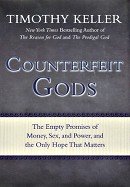
In his book Counterfeit Gods: The Empty Promises of Money, Sex, and Power and the Only Hope that Matters, author Tim Keller defines an idol as “anything more important to you than God, anything that absorbs your heart and imagination more than God, anything you seek to give you what only God can give.”

That includes even things normally thought of as good, like exercise.

While it’s easy to think about idols as statues in a temple somewhere, Keller, pastor of Redeemer Presbyterian in New York City, says idols are everywhere. “Anything can serve as a counterfeit god, especially the good things in life,” he says.

Keller defines a counterfeit god as “anything so central and essential to your life that, should you lose it, your life would feel hardly worth living.”

Pastor Mike Higgins of Redemption Fellowship, a conservative African-Amer-ican church in Fayette County, Ga., aligned with the Presbyterian Church in America, says he has dealt with idols of exercise and physical appearance many years.

The problem began for Higgins when he felt shame after failing an Army physical fitness test in the late 1970s. “I have been running ever since,” he wrote in a recent blog. He never failed another test and usually scored the maximum, but it never was good enough, and he never enjoyed it.

“A lot of my marathon training was motivated out of the fear of dropping out of a race, and so I found myself overdoing it and only by God’s grace not seriously injuring myself,” he said. “I still work out consistently; however, as a result of understanding how my heart functions, I am not controlled by physical fitness—although it is very tempting.”

M.S. Bhatia, a psychiatrist in India, says about 1 percent of the population suffers what he calls “exercise addiction.” Among athletes like elite runners, competitive weightlifters, endurance athletes and obsessive gym-goers, he believes the percentage is even higher.

In an article in the Delhi Psychiatry Journal, Bhatia described the compulsion as physical activity that “significantly interferes with important activities, occurs at inappropriate times or in inappropriate settings or when the individual continues to exercise despite injury or other medical complications.”

Scientific studies have shown that when taken to extremes, physical activity can develop into addictive-like behavior. Committed runners often report feelings of euphoria nicknamed “runner’s high.” Over time they increase the distance to achieve feelings of well-being, similar to increasing tolerance related to substance abuse. Like addiction, exercise compulsion can cause difficulties in social interaction and when suppressed, elicit feelings like depression, irritability and anxiety.

In a study published last August in the American Psychological Association journal Behavioral Neuroscience, Tufts University professor Robin Kanarek found similarities in rat studies between withdrawal from excessive running and morphine.

Doctors in recent years have recognized a new eating disorder called “exercise bulimia.” Bulimia nervosa is an illness where people binge by eating very large amounts of food and then use inappropriate means to rid their bodies of the food by vomiting, laxatives or water pills in order to prevent gaining weight.

“Individuals are overly concerned with weight and body image,” Debra Wood, a registered nurse with Baptist Health Systems in Jackson, Miss., said in an article on the group’s website. “In some, excessive exercise or fasting may replace or supplement purging.”

Experts say exercise bulimia particularly is threatening because it is so hard to diagnose.

“You can’t tell from the behavior necessarily whether this is an exercise bulimic or a regular exerciser,” Dr. Charles Murkofsky with the Program for Managing Eating Disorders told CNN in 1996. “You really need to know what a person is thinking and what is motivating them.”

One problem is that doctors constantly preach exercise is good, because it lowers the risk of certain diseases and improves cardiovascular health. “They’ve been told all their lives that exercise is good for them, and they’re doing a lot of it, so that must be even better,” nutritionist Sondra Kronberg told CNN.

Heidi Fingar, a former fitness instructor turned wellness and lifestyle coach in Hilton Head, S.C., describes her own struggle with exercise bulimia in a new book, God is in Your Full-Length Mirror.

In a recent story in the Beaufort Gazette, Fingar recalled binging on gallons of ice cream, and then exercising up to 15 hours a week to compensate. At the height of her addiction, she was up and running at 5 a.m., teaching two to three exercise classes a day and running triathlons and half marathons.

That was until she decided to turn her desire for a Hollywood figure over to God. By cutting back to moderate exercise and improving her diet, she says she is now smaller than when she constantly dieted, fasted and over-trained.

“My message is that God has the answers for every struggle that life throws us, including the struggle with food,” Fingar said of the book.

The key is getting into a relationship with God and learning what causes you to overeat, she said.

“If you don’t change a person’s attitudes and beliefs, you won’t change for good,” Fingar said. “The last thing we have got to triumph over in order to lead clean lives, to live before God, is overeating. I look at overeating as the final frontier.”


Should churches allow sex offenders in pews?

WASHINGTON (RNS)—“All are welcome” is a common phrase on many a church sign and website. But what happens when a convicted sex offender takes those words literally?

Church officials and legal advocates are grappling with how—and if—people who’ve been convicted of sex crimes should be included in congregations, especially when children are present.

Earlier this summer, a lawyer argued in the New Hampshire Supreme Court for a convicted sex offender who wants to attend a Jehovah’s Witnesses congregation with a chaperone.

Madison Shockley, pastor of Pilgrim United Church of Christ in Carlsbad, Calif., publicly grappled with whether to accept a convicted sex offender as a member three years ago. (RNS PHOTO/Courtesy Madison Shockley)

“What we argued is that the right to worship is a fundamental right, and the state can only burden it if it has compelling interest to do so, and then only in a way that is narrowly constructed,” said Barbara Keshen, an attorney with the New Hampshire Civil Liberties Union who represented Jonathan Perfetto, who pleaded guilty in 2002 to 61 counts of possessing child pornography.

A few weeks ago, the Seventh-day Adventist Church added language to its manual saying sexual abuse perpetrators can be restored to membership only if they do not have unsupervised contact with children and are not “in a position that would encourage vulnerable individuals to trust them implicitly.”

Garrett Caldwell, a spokesman for the denomination, said the new wording in the global guidelines tries to strike a balance between protecting congregants and supporting the religious freedom of abusers in “a manifestation of God’s grace.”

A Georgia law took effect July 1 that permits convicted sex offenders to volunteer in churches if they are isolated from children. Permitted activities include singing in the choir and taking part in Bible studies and bake sales.

Madison Shockley, pastor of Pilgrim United Church of Christ in Carlsbad, Calif., whose church publicly grappled with whether to accept a convicted sex offender three years ago, said he hears from churches several times a month seeking advice on how to handle such situations.

“The key lesson for churches is this: The policy, however it winds up, must be a consensus of the congregation,” Shockley said. “I talked to so many pastors who decided they’re going to make the decision because they know what’s theologically and spiritually right—and that’s absolutely the wrong thing to do.”

Shockley’s church soon will commission a minister to address prevention of child sex abuse; the church also distributes a 20-page policy on protecting children and dealing with sex offenders.

Shockley declined to say how the church handled its admission of a known abuser in 2007, citing the congregation’s limited disclosure policy.

Beyond the thorny legal questions, theologians also find there often are no easy answers to the quandary of protecting children and providing worship to saints and sinners alike.

“My own theology of forgiveness is not that it’s a blanket statement: ‘You are forgiven; go and sin no more,’” said Joretta Marshall, professor of pastoral theology at Texas Christian University’s Brite Divinity School. “Part of what we have to do is create accountability structures because damage has been done.”

Sometimes, legal and religious experts say, crimes are so severe convicted offenders must lose their right to worship.

New Hampshire Assistant Attorney General Nicholas Cort argued in court documents that Perfetto should not be permitted to change the conditions of his probation to attend a Manchester congregation because “restricting the defendant’s access to minors was an appropriate means of advancing the goals of probation—rehabilitation and public safety.”

Barbara Dorris, outreach director of Survivors Network of those Abused by Priests, said it may be possible for convicted offenders to attend worship if “proper safeguards are in place,” but offenders “forfeit many rights when you commit this kind of a felony.”

In other cases, the wording of laws has made it difficult for offenders who want to worship to be able to attend church legally.

In North Carolina, attorney Glenn Gerding is representing James Nichols, a convicted sex offender who is contesting a state statute that made it illegal for him to be within 300 feet of a church’s nursery. He was arrested in a church parking lot after a service.

In Georgia, the Atlanta-based Southern Center for Human Rights successfully argued for the removal of a legal provision that would have prevented registered sex offenders from volunteering at church functions, said Sara Totonchi, executive director of the center.

Experts say churches need to abide by state laws and be prepared to handle the possible presence of sex offenders, which could mean ministering to them outside the church building.

Steve Vann, co-founder of Keeping Kids Safe Ministries in Ashland City, Tenn., said children’s safety must be paramount, but giving convicted abusers social support could help reduce additional offenses.

“We talk about covenant partners,” he said, using his ministry’s phrase for chaperones. “They’re not just there to watch what the person does. They’re there to assist the person in spiritual growth.”

Andrew J. Schmutzer, a professor at Moody Bible Institute in Chicago, is editing a book called The Long Journey Home, which includes essays from theologians and ethicists about how churches can both address sexual abuse and predators.

“The churches are on the cusp of trying to figure out what they can do,” he said, “without scaring the public and without breach of confidentiality.”


Physical and spiritual exercise meet in NIA, divinity student says

NASHVILLE, Tenn. (ABP) — Claire McKeever, a Baylor University graduate studying for the ministry at Vanderbilt Divinity School, preaches that worship isn’t just for the soul.

Claire McKeever leads a Nia dance session at Glendale Baptist Church in Nashville, Tenn.

McKeever teaches NIA, Neuromuscular Integrative Action, at the Green Hills YMCA in Nashville, Tenn. Proponents of NIA view it as a mind/body/spirit exercise experience that combines yoga, martial arts and dance. This summer, as part of her assignment as a Cooperative Baptist Fellowship intern, she was invited to teach a series of NIA classes at Glendale Baptist Church in Nashville.

“It’s really been interesting being in divinity school and doing ministry and having NIA a really big part of that,” McKeever said.

McKeever learned about NIA from a massage therapist who recommended it as exercise while treating her for a shoulder injury. McKeever, who came from a dance background, tried it and knew immediately she had found a home.

“I really enjoyed exercising, and my body felt so good afterward,” she said. Now it is an important part not only of her physical fitness, but also her spirituality and theology.

“A lot of the work I do is on body theology,” she said, “what our bodies look like in worship and how they are present and how they are alive.”

“I’m really interested in how movement heals us, when we’ve gone through not only traumatic things with our bodies but also death and loss; how we move together,” McKeever said.

Her theological interest in NIA began with a study about dance in the Bible. The fitness aspect developed through her work with the sustainable-food movement, where she thought about how people treat their bodies by what they put into them. “Especially at churches, where we have the big potlucks,” she explained.

{youtube}V0LAxZDct1E{/youtube}

NIA was founded in 1983 by Debbie Rosas Stewart and Carlos AyaRosas, fitness pioneers credited with introducing mind-body exercise techniques that paved the way for popularity of later trends like yoga and Pilates.

“NIA is sort of a complement to yoga,” McKeever said. “It’s like yoga where you get stretched out,” with moves drawn from a total of nine fitness disciplines including tae kwon do, tai chi and jazz and modern dance. It is used around the world in gyms and fitness clubs, spas, martial arts and dance centers and in treatment of problems like drug and alcohol addiction, with victims of sexual abuse and for cardiac rehabilitation.

McKeever said it’s an important part of her own well-being physically, mentally and spiritually.

“I would say I’m a more open person for having NIA I my life,” she said. “Now I know I need two things to be a good pastor and a good minister, and that is to dance NIA and to go to counseling regularly.”


Poverty-medicine clinic preaches the gospel of fitness

MEMPHIS, Tenn. (ABP)—Fitness can, literally, be a life-and-death issue for people in underprivileged communities. So a Christian medical ministry in one of the nation’s poorest big cities is preaching the gospel of fitness through local churches.

Participants in the Church Health Center Congregational Health Promoters program receive crucial health information.

Minister and physician Scott Morris founded the Church Health Center in 1987 as a ministry to the uninsured poor in Memphis, Tenn.—the urban hub of the poverty-ridden Delta region of western Tennessee, northwestern Mississippi and eastern Arkansas. He quickly discovered that, to improve the area’s health outcomes, he’d need to start with its health inputs.

“Dr. Morris found that many of the people who were coming to our clinic … had issues that were preventable or manageable,” said Sheridan Smotherman, the Church Health Center’s supervisor for congregational health ministries. “And he, being a United Methodist preacher, felt that the church would be the best place to start.”

Many diseases with life-threatening consequences—heart disease, diabetes, hypertension—are brought on or made worse by poor diet and lack of exercise. Such conditions are more prevalent in low-income communities—particularly in heavily African-American areas such as the Delta.

Morris knew churches in such communities often are the best means for educating people in ways that bring about behavioral changes. So, he turned to the church, creating the Church Health Center Congregational Health Promoters program shortly after founding the clinic.

The Church Health Center has a corps of about 600 health promoters in congregations throughout the metropolitan area.

“Dr. Morris had spent some time in Africa and was inspired by the village health worker, a respected person in the village who was often asked to give advice about health matters,” said Butch Odom, the center’s director of faith-community outreach. “The basic idea of training congregational health promoters is to find those men and women in congregations here in Memphis and train them to be good resources of health and wellness information, to detect problems people may be having and then be helpful in referring them to area agencies that can offer assistance.”

Today, according to Smotherman, the Church Health Center has a corps of about 600 health promoters in congregations throughout the metropolitan area. The promoters begin with an eight-week training session that provides a broad array of information designed to improve health outcomes.

“We talk about a lot of generic … concerns like nutrition,” Smotherman said. “We talk about hypertension—how to manage and prevent hypertension. We talk about taking medication correctly; everybody at some time in their lives has taken medication. We talk about diabetes, because it is a disparity in this area. We talk about prenatal and well-baby care. We talk about mental and emotional health.”

Butch Odom

Sheridan Smotherman

The promoters also are trained in how to connect those in their congregations with community resources that can help them—such as government and private programs to help them gain access to health care they otherwise wouldn’t have.

Promoters also are offered continuing-education courses a couple of times a year.

In addition to the practical training, Smotherman said: “We also have a spiritual component to it. We offer spiritual reflection, so they’re able to see it as a ministry rather than just an organization or an auxiliary of their congregation.”

The spiritual component fits naturally with the Church Health Center’s mission, which views caring for physical health as a biblical imperative for the church, Smotherman said.

“I really believe that the church has a lot of strength. So any time you need to get any information out, the best place to go is the church,” she said. “And we, of course, believe that healing is part of the ministry of the church, and the mission of the Church Health Center is helping the church to reclaim its biblical commitment to our bodies and our spirits. So we help congregations to see the connection between faith and health.”

Just as the clinic part of the center’s ministry has expanded to thousands of patients in the 23 years since its founding, so has the wellness facet. In addition to multiple programs geared toward promoting congregational health, the organization also operates a comprehensive, 80,000-square-foot fitness center in a facility that was once a health club for employees of Memphis’ Baptist Hospital.

{youtube}GmzVzsn9Mic{/youtube}

Besides exercise equipment and instruction, the facility also offers nutrition and cooking classes. Membership dues are on a sliding scale based on income and family size.

Exercise experts from the center also sometimes offer classes at local churches, such as courses on walking. But, Smotherman said, the congregational-health-promoter programming emphasizes education. “People need to know why they need to walk, and then they need to know when is the best time to walk, how is the best way to walk,” she said.

Bringing health education directly to Memphis’ churches has produced many success stories, Smotherman said. But one hits very close to home for her.

“I’d been working with breast cancer awareness, and the mammography van was going to community churches,” She said. “So, I decided, well, I’ll take it to my church.

“My mother was 78 years old; she hadn’t had a mammogram since she was 75. She just felt she didn’t need it anymore.”

Smotherman said that, since the mobile unit was coming to her own church, she’d go ahead and get a mammogram. And it revealed she had cancer. It was caught early enough that a mastectomy prevented worse problems.

Smotherman’s mother now is 82 and helps educate other women about breast-cancer awareness.

“Had it (the mammography van) not come to the church, she would not be here,” Smotherman said.


Warnings about sex, violence come to Christian movies

ST. LOUIS (RNS)—To get to the movie section at Lifeway Christian Store in Bridgeton, Mo., customers pass by shelves of books, CDs and greeting cards. The rack of Christian DVDs isn’t huge, but it’s twice as big as it was a year ago and “growing all the time,” manager Francine Evans said.

Some of the Christian titles these days, she said, tackle “touchy subjects” such as drugs, domestic violence or abortion.

“These are movies that deal with issues that real people deal with,” Evans said. “Sometimes that’s what’s necessary to reach people for God. But the seals are needed. They’re a good idea.”

Miriam Davis of Siloam Springs, Ark., sets up the DaySpring Cards, Inc., booth at the International Christian Retailer Show in St. Louis, where filmmakers unveiled a new ratings system for Christian-themed DVDs. (RNS PHOTO/Dawn Majors/The St. Louis Post-Dispatch)

The seals Evans describes are part of a new system developed by the Grand Rapids, Mich.-based Dove Foundation to gauge the Christian values in films that contain sex, violence and drugs.

For 20 years, the Dove Foundation has placed a blue “dove” seal on any DVD it considered family-friendly, from “Star Wars” to “Toy Story.”

A new purple “Faith-Based” seal warns of raw images or language in otherwise Christian-themed movies, and a new gold “Faith-Friendly” seal indicates a Christian-themed movie that’s safe for a family audience.

The new seals premiered at the recent International Christian Retailers Show.

Book and music purchases represent a significant portion of the stores’ annual $4.6 billion market. As music sales increasingly go digital, retailers are expanding their DVD offerings to recapture those sales, said Curtis Riskey, executive director of the CBA, formerly Christian Booksellers Association.

In 2009, Christian retail sales of music declined by 1 percent from 2008, but Christian retail sales of videos increased by 26 percent, according to the Christian Music Trade Association and Nielsen Christian SoundScan.

By contrast, general market stores’ sales of all music decreased by more than 10 percent, and video sales decreased by 23 percent. The growth of the Christian DVD market means retailers need guidance for their customers.

“A consumer looks to Christian retail to find family-friendly entertainment,” Riskey said. “The ratings system helps identify for the Christian consumer the kinds of things they can expect in a movie.”

To caution parents that some Christian films also can contain un-Christian behavior or situations, the Dove Foundation’s new “Faith-Based” seal will carry letters indicating the offending content: “V” for violence, “D” for drugs and alcohol, “S” for sex, etc.

{youtube}R4B6kLiLRak{/youtube}

“It’s the retailers that really want there to be a rating system to help them serve their customers,” said Bobby Downes, a Christian producer, whose latest movie, Like Dandelion Dust, with Mira Sorvino, will be in theaters this fall.

“If a pastor walks into a Christian bookstore and wants a movie he can show to his entire church, the current rating system doesn’t help him make that determination.”

The Dove Foundation’s new gold “Faith-Friendly” seal will alert consumers that a movie is not only family-friendly, but also contains a Christian message. DVDs of movies such as The Blind Side and The Chronicles of Narnia series will receive the foundation’s gold seal on their packaging.

While the foundation’s purple “Faith-Based” seal will register as a caution for parents, those in the film industry say they’re not worried it will have a chilling effect on Christian writers and directors concerned about DVD sales.

Dave Austin, vice president of sales and marketing for the Bridgestone Group, which distributes Christian films, said the “Faith-Based” seal actually is “a positive step for filmmakers.”

“As a distributor, if we look at a film that’s not approved by Dove at all, we might ask for it to be edited slightly to get that Dove approval,” he said.

The success of Christian films in recent years has inspired a new generation of Christian auteurs who have introduced variety into the Christian film market.

Fans of Christian movies can now choose between squeaky-clean evangelistic efforts like Sherwood Films’ Fireproof, about a firefighter’s marriage, and Facing the Giants, about a football coach’s trust in God, and grittier fare, like this year’s To Save a Life, about teen depression, suicide and bullying; and Preacher’s Kid, about domestic violence.

Austin said the new rating system was “a positive step for the consumer.” He and Downes were part of a team of industry experts who helped Dove come up with the system.

“With some parents, when there’s not gratuitous violence or sex, they’re still comfortable with their 13-year-old seeing some rough subject matter,” he said. “Others aren’t. If every family had identical tolerances, then a system like this wouldn’t be necessary, but there’s a wide range out there.”


Faith Digest: Methodists study healthy churches

United Methodists have paid big bucks to find out the key to being a healthy church. The church recently concluded a study of more than 32,000 Methodist congregations across North America, seeking the key factors affecting vital congregations. Working with New York-based Towers Watson consultants, researchers constructed a “vitality index” to measure each church. The report identified four key areas that fuel vitality: small groups and programs; worship services that mix traditional and contemporary styles with an emphasis on relevant sermons; pastors who work hard on mentorship and cultivation of the laity; and an emphasis on effective lay leadership. These four factors “are consistent regardless of church size, predominant ethnicity and jurisdiction,” the study concluded.

Muslims launch survey. Muslim-American organizations have launched what they say will be the most comprehensive survey of mosques in the United States in a decade. The survey will provide figures for the number of U.S. mosques and the number of Muslims associated with those mosques, and attempt to ascertain the status of women in mosques. In addition, new questions will focus on radicalization and whether it is considered a growing problem in Muslim communities. The Council on American-Islamic Relations, the Islamic Society of North America and six other Muslim groups are sponsoring the survey. Researchers counted 1,900 mosques in a preliminary survey two years ago and intend to call leaders of 600 mosques with questions between July and September. Final results are expected next February.

Presbyterian assembly drops ban on gay ministers. At its general assembly in Minneapolis, the Presbyterian Church (USA) voted to lift a ban on partnered gay clergy. The resolution, which passed by a 373-323 vote, strips any mention of sexuality from ordination requirements. For the fourth time in nearly a dozen years, the denomination’s 173 regional presbyteries now must decide whether to ratify the general assembly’s vote to allow partnered gays to serve as elders, deacons and pastors. Although similar measures have failed at the presbytery level each time, in the most recent round of voting that ended last year, gay ordination fell just nine votes short of the simple majority needed for passage.

Vatican in the red again. The Vatican recorded a $5.2 million deficit for 2009 as investment in communication and building upgrades offset revenues from donations, according to new figures from the Holy See. The third consecutive deficit also was attributed to a decline in the property market and the global stock market, where the Vatican has significant investment in bonds and shares. The negative result—$314.7 million in revenue against $319.9 million in expenses—came despite an increase in donations from Catholics worldwide. The statement said the bulk of the Holy See’s costs were spent on Pope Benedict XVI’s activities and security, its telecommunications system, restoring monuments and treasure troves, and media projects such as Vatican Radio.

–Compiled from Religion News Service


Do all dogs go to heaven? New books seem to think so

WASHINGTON (RNS)—About 170 million cats and dogs in the United States have found a place in the homes of American pet owners, according to the 2009-2010 National Pet Owners Survey. Probably most of them also have found a place in their owners’ hearts. And many whose pets have died have wondered if their beloved animal companions will be waiting for them in heaven.

Three recent books try to answer the question, and they affirm a special relationship between humans and animals—one that does not end with death.

Author Ptolemy Tompkins tracks the history of the relationship between humans and animals in The Divine Life of Animals. Tompkins looks to the ancient past for the best models of animal-human interaction.

“Pre-modern cultures … were apparently able to see animals as undying spirits dressed, for the moment, in mortal bodies,” he writes. The idea is to recover that “new-yet-old vision” that “will allow us to see (animals) as the genuine soul-beings they are and always have been.”

The Bible isn’t much help in answering the question of whether animals go to heaven, says Laura Hobgood-Oster, professor of religion at Southwestern University in Georgetown. But she maintains the question of animal souls was not always an issue for Christian theology, Hobgood-Oster asserts in her upcoming book, The Friends We Keep.

“It seems that the question of animals and the soul was much more plausible … in Christian history up almost until the Enlightenment or up into the Reformation,” she said in an interview. Hobgood-Oster doesn’t accept the idea that only humans can possess a soul.

“In the last 20 or 30 years, I believe we’ve seen these questions raised anew,” she said—questions that challenge “the traditional theology about humans being the only ones who matter, or humans as the only ones with souls.”

And if humans aren’t the only ones with souls, they’re probably not the only ones in heaven, she said. “There does not seem to be any indication (in Scripture) … that there is a special human exclusion” in heaven, Hobgood-Oster said.

Reluctance to the idea of animals in heaven persists in some Christian circles. Last year, Franciscan Friar Jack Wintz published the book, Will I See My Dog in Heaven? This year, he answered his own question with a new book, I Will See You in Heaven.

Taking inspiration from St. Francis of Assisi, Wintz presents biblical evidence for the inclusion of animals in heaven. In the book of Genesis, he writes, both humans and animals live in peaceful harmony—“a wonderful and insightful glimpse of the paradise that is to come,” Wintz writes.

“It makes sense to me, therefore, that the same loving Creator who arranged for these animals … to enjoy happiness in the original Garden would not want to exclude them from the final paradise,” he writes.

He also found inspiration from the New Testament, insisting, “The gospel message will have a saving impact upon the whole family of creation, and not simply on the human family.”


Abortion strains religious-government aid coalition

WASHINGTON (RNS)—It took Hanna Klaus four years and $1.6 million in federal funding, but she and her team have preached abstinence to more than 23,000 African teenagers.

It’s the only way to curb the AIDS epidemic that’s sweeping that continent, said Klaus, executive director of Teen Star, based just outside Washington in Bethesda, Md.

“I don’t know why people think they have to have a medical response to a behavioral problem,” said Klaus, a gynecologist and a Roman Catholic nun. “Behavioral problems should be treated behaviorally. The easiest thing in the world is to wait (to have sex) until you get married, and marry a virgin.”

A Samaritan’s Purse project in East Africa used money from the President’s Plan for Emergency AIDS Relief (PEPFAR) to teach abstinence and HIV/AIDS education. Some faith-based relief groups worry the Obama administration is focusing too heavily on abortion rights in international assistance projects. (RNS PHOTO/Steve Starr/Samaritan’s Purse)

Klaus and other abstinence advocates say their approach, favored by conservative policy makers, has fallen out of favor with the Obama administration. Now, Klaus said, her organization isn’t eligible for the same grants she once received because she doesn’t promote condom use and because she’ll never promote abortion.

Foreign aid officials say federal programs abroad continue to emphasize abstinence and fidelity along with contraception, but conservatives worry the Obama administration is leaning toward abortion-friendly policies.

If the two sides can’t find common ground, analysts say, poor Africans who benefit from the U.S. government’s multi-billion-dollar AIDS relief strategy could lose out.

“The foreign development coalition is very fragile, and this is a debate that could break it beyond repair,” said Michael Gerson, a former speechwriter for President George W. Bush and advocate of AIDS relief in Africa, at a recent foreign aid conference held at the evangelical Wheaton College outside Chicago.

Bush’s five-year, $18 billion President’s Emergency Plan for AIDS Relief—PEPFAR—introduced in 2003, provided HIV testing for 33 million people and anti-retroviral drugs to nearly 1.5 million Africans. The program saved an estimated 3.2 million years of adult life, according to federal documents.

The program earned a $48 billion, five-year extension in 2008, but not without a fight. A handful of conservative lawmakers complained the reauthorization was too expensive and also worried the money would be used to promote abortion.

The re-authorization was ap-proved, but now conservatives worry the consensus that emerged in 2003 and again in 2008—a combination of abstinence education and condom distribution—is edging toward promoting abortion.

Secretary of State Hillary Clinton told Canadian reporters this spring that maternal health goes hand-in-hand with “reproductive health.”

“And reproductive health in-cludes contraception and family planning and access to legal, safe abortion,” Clinton said during a news conference with G8 foreign ministers.

Clinton’s “abortion grenade,” as Gerson called it, threatens to upend support for the program from both Republicans and religious groups committed to overseas development but abhor abortion.

“It’s a shame that the current administration and the majority party seem intent on using every opportunity they get to promote abortion,” said Sen. Richard Burr, R-N.C., who was among those who opposed PEPFAR’s reauthorization.

Burr said he’ll oppose any legislation that in-cludes an abortion provision, even within “life-saving programs such as PEPFAR.”

Heated words and threats of pulled support are nothing new, said Michael Lindsay, a Rice University professor and author of Faith in the Halls of Power.

“What we’re seeing is political posturing that’s been going on for 25 years,” ever since President Reagan decided that federal foreign aid would not be used to promote abortion, Lindsay said.

Reagan’s announcement, known as the Mexico City Policy, became a political ping pong ball when President Clinton rescinded it in 1993, and when Bush re-instated it in 2001, and Obama removed it once again in 2009.

“It’s become a symbolic move made by Republicans or Democrats as a way of signaling their allegiance in terms of their respective bases of support,” Lindsay said.

Too many anti-abortion activists think “abortion” when they hear the phrase “family planning,” said Susan Cohen of the Guttmacher Institute.

“Family planning is not abortion, and abortion is not a part of the U.S. Global Health Initiative,” Cohen said. “Family planning is essential, and it makes a difference in saving people’s lives, both in preventing HIV and making sure women are pregnant at intervals that are safe for them and safe for their newborns.”

If family planning isn’t a part of AIDS relief and health programs, she said, poor Africans will die.

But Clinton’s remarks, along with what they view as an increasingly pro-abortion administration, have so rattled conservatives that they’re prepared to pull their support for global health programs, even if it means people will die from a lack of antiretroviral drugs, condoms and other tools that already have saved countless lives.

“Things are on very shaky ground,” said Tom McClusky of the Washington-based Family Research Council, a conservative advocacy group. For many Americans, McClusky said, abortion is a deal-breaker, and Congress listens to their opinions.


Rick Warren hospitalized with eye injury

LAKE FOREST, Calif. (ABP) — Southern Baptist mega-church pastor and Purpose Driven Life author Rick Warren was recovering at home July 22 after being hospitalized overnight with eye injuries he suffered while gardening.

A spokesperson for Warren said the 56-year-old pastor, who relaxes by horticulture and gardening, was pruning shrubs Monday at his home. His plants include firestick, a succulent with a sap that can cause skin irritation and temporary blindness if it comes into contact with the skin or eyes.

Rick Warren

Rick Warren

Kristin Cole of A. Larry Ross Communications said Warren was wearing gloves, but still got some sap on his hands when he removed his gloves that was transferred to his eyes.

Warren sent out a Twitter message Tuesday morning that circulated quickly: "My eyes were severely burned by a toxic poison. Hospitalized Mon[day]. Excruciating pain. Now home. Pray my sight loss is restored."

Cole said the pain was so severe that when Warren's wife, Kay, came outside to check on him, he could not tell her what happened to him. She called 911, and he was taken by ambulance to Mission Hospital in Mission Viejo, Calif., near his home.

He was treated by an eye specialist, kept overnight and fitted with protective contact lenses like those used with patients following LASIK surgery.

"He didn't fully lose eyesight," Cole said. "He had some temporary vision loss because there was some damage to the cornea."

"While there is still discomfort, the doctor expects a full 100-percent recovery," she said.

Cole said Warren has been on a writing schedule working on fall curriculum for Saddleback Community Church and is not part on a preaching schedule, so he will have some time to recover.

Warren tweeted again Tuesday assuring followers "I a NOT blind" and thanking them for their prayers. "May God use this pain for His Glory," Warren wrote, citing Romans 8:28.


–Bob Allen is senior writer for Associated Baptist Press.


Planting churches that take root takes right processes, people

Christ’s Great Commission—to share the gospel with people of every language, nationality and culture—calls Christians to find ways to penetrate unreached areas.

Planting new churches in places where none exists, or in specific cultural contexts, can result in changed lives and the expansion of God’s kingdom.

Planting as process

The sheer number of possible interest, age, language and specialized groups means the potential for thousands of models that could be used when starting a new congregation. That’s why the Baptist General Convention of Texas uses a process with specific expectations but with enough flexibility to adapt to each new work’s context.

“The philosophy that drives church planting is that churches start churches. We have truly gone back to that philosophy,” said Paul Atkinson, Texas Baptists’ director of church starting.

That approach requires every individual who wants to plant a church to find a congregation—not a network or a group of churches—but a church willing to sponsor it. Networks and groups of churches can partner with the new start, but the church planter must have one primary sponsor.

Atkinson sees two types of church planters—those who have a vision or a passion for a particular people group and those who have a planting style and look for a group to reach with that style. Regardless of approach, each planter is required to find his or her primary sponsor before beginning a new work with BGCT assistance.

“It’s kind of his first test. If he can’t find one, he’s not going to be able to lead laypeople … and the church is not going to make it,” Atkinson said. “Who we’re really partnering with is the sponsor church. It’s the hardest line we hold.”

The primary sponsor signs a church-planting covenant and is the one responsible for that church start, Atkinson said. A sponsor representative also must attend each strategic planning session.

The sponsor must sign off on all major transitions, such as when a church calls a pastor or other staff member. In the case of a planter of a different nationality, the sponsoring church must hold the immigration papers and is responsible to know the planter’s legal status.

Planting as individuals

The Baptist General Convention of Missouri also stresses the churches-starting-churches process but generally sees more individuals who feel called to begin a new congregation.

“I think churches starting churches is the healthiest way—a church or a cluster of churches starting another church,” noted Owen Taylor, BGCM church planting team leader.

Sometimes a group of people who live in an unchurched area will see the need and feel led to plant a church there, he added.

“But we’re seeing more individuals who say, ‘I want to be a church planter,’” Taylor said. “Even if a church starts the new church, … it still comes down to seeing an individual who acts and who is the leader.”

Planting as matrix

The Baptist General Association of Virginia relies on a matrix or combination of approaches to plant new churches, depending upon context. “Church planting is a means to an end—to impact spiritual lostness,” explained Wayne Faison with Virginia Baptists.

“It is the most effective evangelism strategy in whatever expression,” he added. “Our idea is: What is its (the specific approach’s) effect on spiritual lostness.”

The team works with the church planter and the new work’s partners to understand the area’s needs and the underlying passion for a specific new start.

“We try not to think of it as church planting … but more as launching,” Faison said. “It is not for us to come in as a mothering church … but to figure out how can we get the dream to become reality … launching it out and expanding it.”

The term “church planting” conjures up agricultural images to which many people might not relate, Faison said. While everyone involved in starting a new church understands the hard work involved, his team prefers to use “church launching.”

“We think of it in terms of the Fourth of July,” he added.

The Virginia Baptist convention provides coaching for every planter, association or church that wants to start a new work and assessments of church planters and spouses. The team recruits church starters for unreached areas of the state and provides a variety of training.

Planting as partnership

The Cooperative Baptist Fellowship focuses on partnership—with a state CBF body, a local church and a core group with an identified leader. “We believe that church planting is part of a missional expression of what it means to be church,” said Bo Prosser, coordinator for congregational formation.

“It takes all of us to nurture and grow a new work. We partner with these groups, sharing mentoring roles, sharing responsibilities for support and pooling our resources.”

Partnership encourages churches to participate in God’s mission, CBF’s understanding of being “missional.”

“We believe God calls churches to start churches. We believe CBF’s role is to partner with churches to help them catch this vision,” Prosser added.

Planting as discipleship

The Southern Baptist Convention’s North American Mission Board offers materials and assistance to set up church planting centers in areas or regions to help create “environments where multiple disciples are intentionally selected, developed and sent to make disciples which results in new churches,” according to its website, Church Planting Village.

NAMB stresses building relationships and generally works through its state conventions and NAMB-appointed missionaries for its church planting efforts.

Its process may evolve as changes are implemented under recommendations made by the SBC’s Great Commission Resurgence task force and adopted at the convention’s annual meeting in June. One of those changes may allow the convention’s International Mission Board to minister to international people groups residing in the United States.