Duvall talks faith on film, except his own

THE PLAINS, Va. (RNS)—Amid the rolling hills of Northern Virginia, actor Robert Duvall lives in a rural hamlet not unlike the on-screen settings where he has immersed himself in Southern culture.

It is, his wife says, “the last station before heaven,” even if Duvall’s cast of fallen characters might never make it all the way.
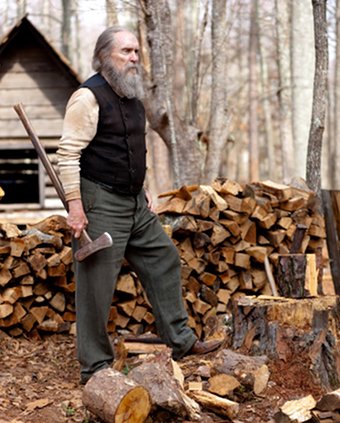
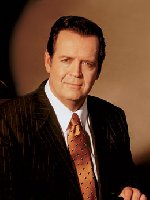
Actor Robert Duvall plays Tennessee hermit Felix Bush in the new film, Get Low. (RNS PHOTO/Courtesy Sony Pictures Classics)

His characters often are touched by faith, from washed-up country singer Mac Sledge in Tender Mercies to a hermit in his summer release, Get Low.

And then there was Euliss “Sonny” Dewey, a Texas preacher on the run from the law and his own foibles in the The Apostle, which Duvall wrote and directed.

“You don’t have to agree with everything that these people believe in, but you want to try to portray them as accurately as possible … without dictating or putting judgments on it,” Duvall said in an interview on the farm where he’s lived for 15 years.

Down an unpaved road and surrounded by a silo, a barn and vast farmland, Duvall is almost as secluded as Felix Bush, the mysterious man he plays in Get Low. Bush, a Tennessee recluse, seeks the help of ministers to speak at a “funeral party” where he plans to reveal a deeply held secret before he dies.

“I guess maybe he needed that reinforcement of someone who was kind of an ally or believed him, kind of like soul brothers in a way,” Duvall said.

The 79-year-old actor said characters like Bush, as well as Sledge and Dewey, deserve time on the movie screen—with all their flaws and complexities—to reflect the rich spiritual and cultural stew of Southern culture.

“They should be shown, should be seen, should be portrayed but … with contradictions,” he said, noting that even peace-loving Jesus chased moneychangers out of the temple with a whip.

It’s the kind of portrayal that isn’t often seen in Hollywood, said Craig Detweiler, director of the Center for Entertainment, Media and Culture at Pepperdine University in Malibu, Calif.

“By dignifying seemingly common people, he’s also elevating and humanizing Christian faith in profound ways,” said Detweiler. “Hollywood producers may ignore the flyover district between Los Angeles and New York, but Duvall is very rooted or drawn to that kind of land and place.”

Already known for his roles in classic films like The Godfather and To Kill a Mockingbird, Duvall became a researcher as he developed plans for The Apostle, the 1997 film that earned him a best-actor nomination. He already had taken home an Oscar for his portrayal of Sledge, in 1984.

He fondly recalls spending more than a dozen years traversing the country, visiting churches, picking up the signature cadences of black preachers and recruiting non-actors for the film. The spark of the project, he said, was a visit to a church in Hughes, Ark., the real-life home of a fictional character he was portraying in an off-Broadway play.

{youtube}4nET8Dmc4Ac{/youtube}

“I said, ‘Wow, I’ve never seen this,’” he said of the little white clapboard Pentecostal church with a woman in the pulpit and a man on the guitar. “Someday, I want to put this on film.”

When he couldn’t get funders for the movie, Duvall ponied up $5 million of his own. In his tour of churches, he was moved—a “wonderful feeling,” he said—by the choir of New York’s Abyssinian Baptist Church, and recruited extras for Dewey’s One Way Road to Heaven Holiness Temple at a meeting of the Church of God in Christ.

“You don’t have to totally believe in what you see, but you can’t patronize it,” he said. “I put real people—the real preachers, real people from the congregations, in my movie to give it a sense of truth. That was a truth gauge.”

William Blizek, founding editor of the Journal of Religion and Film, said Duvall’s use of real religious people and actual words from preachers showed the actor’s interest in accuracy without turning them into “saintly characters that could do no wrong.”

“In The Apostle, it was of special concern to him to try to get this right,” said Blizek.

“He thought other movies had sort of mocked this kind of fundamentalist evangelical, what he calls the Holiness Church,” he said.

Like Bush in Get Low, the characters he played in The Apostle and Tender Mercies sought redemption or forgiveness. But Duvall said the greatest crime of the runaway preacher in The Apostle was one of passion, not premeditation.

“He killed a man out of the moment, he didn’t premeditate it, like King David did in the Psalms,” Duvall said. “Am I right? Every time I read the Psalms—which are beautiful—I think of that. … Yeah, what Sonny did wasn’t as bad as that.”

Duvall, who spent so much time delving into the faiths of the men he played on screen, is more reticent about his own.

“My own faith is a very personal thing,” he said. “So, I just don’t talk about it.”


Outside financial monitoring less common in Bible Belt companies

WASHINGTON (RNS)—Companies in the Bible Belt are less likely to be sued for accounting fraud or to practice aggressive financial reporting, a study indicates.

Research by Mays Business School at Texas A&M University found companies headquartered in counties with high levels of churchgoing tend to use religion as a self-regulating mechanism in the absence of more formal external monitoring.

The study is not the first to examine fraud in the context of religion, but the A&M researchers are the first to use Gallup data in their analysis.

Gallup surveys show the top Bible Belt states where residents indicated religion is important in their daily lives are Mississippi (86 percent), Alabama (84 percent) and Tennessee (79 percent). Texas came in 13th with 72 percent.

The financial study examined shareholder lawsuits related to accounting malfeasance and other crimes. Overall, the study found a 49 percent decrease in the odds that a firm headquartered in a “religious” county will be sued for wrongful accounting.

The study is a measure of an overall accounting approach among firms of various sizes in the Bible Belt, not a means for predicting mega-frauds such as those at Enron Corp., which was based in Texas.

“We would view them more as anomalies,” researcher Nathan Sharp said. “What we focused on was smaller, systemic aggressive accounting occurring as almost a part of doing business.”

The study focused on how companies in areas of high levels of religion approached accounting.

“On average, when you hold everything constant, accounting practices are less aggressive in areas with high religiosity,” he said.

Sharp noted he is not sure to what degree investors will use the study’s findings when it comes to deciding where to risk their money.

The study also found Bible Belt firms scored lower on measures of corporate social responsibility, including support for the community and diversity initiatives.

But researchers believe corporate leaders in religious counties likely feel that role is best filled by religious groups and support those efforts through a church or organization rather than through the company.


Faith Digest

Jordan too polluted for baptisms? Concerns about pollution and water quality have prompted an environmental advocacy group to call for banning baptisms in the lower Jordan River, where the Bible says Jesus was baptized by John the Baptist. Israeli authorities insist tests done on the water of the lower Jordan River show the popular site for baptismal ceremonies at Qasr el Yahud on the West Bank meets health ministry standards. But Gidon Bromberg, the Israeli director of EcoPeace/Friends of the Earth Middle East, said the ceremonies should not take place until pollutants are removed from the water. His group says the river suffers from “severe mismanagement,” including diversion of 98 percent of its fresh water to Israel, Syria and Jordan, as well as discharge of untreated sewage and agricultural run-off.

Want quality health care? Check into a church-run hospital. Church-run health care systems in the United States are more efficient and provide higher quality care than their secular counterparts, according to a new Thomson Reuters study. The study looked at 255 health care systems and found that church-owned systems are “significantly more likely to provide higher quality care and efficiency” than both investor-owned and secular nonprofit health systems. “Our data suggest that the leadership teams … of health systems owned by churches may be the most active in aligning quality goals and monitoring achievement across the system,” the report stated. The performance measures included mortality rates, the number of medical complications, readmission rates, lengths of stay, profitability and other factors.

Prayer binds black couples. The adage “couples who pray together stay together” may be true, especially for African-Americans, a new study shows. The survey of religion, race and relationships found African-Americans attend church more as couples compared to members of other racial and ethnic groups. Four in 10 African-American respondents said they attended services regularly as a couple, according to a study published in the August issue of the Journal of Marriage and Family. In comparison, 31 percent of Mexicans or Mexican-Americans, and 29 percent of whites, said they regularly shared a pew. In addition to worshipping together, African-Americans were found to be more likely than non-Hispanic whites to participate in prayer and Scripture studies at home. “Without prayer, black couples would be doing significantly worse than white couples,” said W. Bradford Wilcox, a co-author of the study and the director of the National Marriage Project at the University of Virginia. “The vitality of African-Americans’ religious lives gives them an advantage over other Americans when it comes to relationships.” The study, based on responses to the 2006 National Survey of Religion and Family Life, does have limitations, scholars cautioned. For example, the responses to the survey came from one partner’s report on the quality of their relationship and the extent of their religious involvement.

Compiled from Religion News Service


Fight over N.Y. mosque becomes a partisan wedge issue

WASHINGTON (RNS)—What started as a local zoning debate about an Islamic center near Ground Zero morphed into a fight over religious expression, and now it has turned into an election-year political brawl.

Caught in the middle of the rancorous partisan fight are American Muslims, whose own voices have been drowned out by politicians on both the left and the right.

Melissa Rogers

“In a fundamental sense, this is not a conversation about Muslims,” said Omid Safi, professor of Islamic studies at the University of North Carolina at Chapel Hill. “This is a conversation in which the Muslims are being used as the football with which to play the game of competing visions of America.”

President Obama waded into the debate Aug. 13 when he hailed America’s “unshakeable” commitment to religious freedom during a White House dinner to mark the Muslim holy month of Ramadan.

“As a citizen, and as president, I believe that Muslims have the same right to practice their religion as everyone else in this country,” Obama said. “And that includes the right to build a place of worship and a community center on private property in lower Manhattan, in accordance with local laws and ordinances.”

Perhaps sensing the political storm clouds gathering, Obama said the following day he would not “comment on the wisdom” of whether to build near Ground Zero, which the night before he had called “hallowed ground.”

Republicans pounced. Sen. John Cornyn, the Texas Republican responsible for adding GOP Senate seats in the November elections, said Obama “seems to be disconnected from the mainstream of America” and called his remarks “unwise.” The top Republican in the House, Minority Leader John Boehner, called them “deeply troubling.”

Rep. Jerrold Nadler, the New York Democrat whose district includes the site of the proposed Cordoba House in lower Manhattan, fired back on CNN’s “State of the Union.”

“It is only insensitive if you regard Islam as the culprit as opposed to al-Qaida as the culprit,” Nadler said Sunday. “We were not attacked by all Muslims.”

GOP luminaries like former vice presidential nominee Sarah Palin and former House Speaker Newt Gingrich have already promised to make the issue one for the voting booths in November, with Gingrich telling The New York Times that Obama was “pandering to radical Islam.”

According to a recent CNN/Opinion Research Corp. poll, 54 percent of Democrats and 82 percent of Republicans oppose the New York mosque project. The Christian Broadcasting Network’s David Brody predicted the issue will have legs in 2010 and beyond.

“This situation all by itself has the potential to make President Obama a one-term president,” he wrote on his “Brody File” blog. “This latest mosque move may be the fatal blow.”

Shahed Amanullah, founder of altmuslim.com, a popular Muslim website, agreed the fight could influence some voters this fall—“people are still going to be drunk on this issue,” he said—but probably not beyond that.

“We’re definitely far enough from 2012 where the dust will have settled,” Amanullah predicted.

Lost in the debate, Amanullah said, is the interfaith bridge-building the Cordoba House once hoped to foster, in part because of anti-Muslim vitriol that he said is worse than immediately after 9/11.

“The people that are being ostracized, I think, right now are the people that are in the middle, who feel that Muslims belong in America but have misgivings” about the center, he said. “Those people are … caught in the crossfire because the opposition is being led by people who, in my personal opinion, really don’t believe that Muslims belong in America.”

Also forgotten, Safi said, is the fact that the proposed building near Ground Zero is not just a mosque, but a community center that would include a swimming pool and a wedding hall in addition to a place for prayer.

“It’s as American as megachurches,” he said. “It’s as American as Jewish community centers.”

Melissa Rogers, an expert on church-state relations who has praised New York officials for supporting “a linchpin of the American tradition of religious liberty,” said the overall debate could send the wrong message to Muslims, both at home and abroad.

A planned protest at a Florida church to burn copies of the Quran on the 9/11 anniversary can only make things worse, she said.

“I do think that there’s a real danger that Muslims receive the message that they are second-class citizens and that their rights have an asterisk beside them, if you will,” said Rogers, director of Wake Forest University Divinity School’s Center for Religion and Public Affairs.

Rogers hopes grassroots Americans, including religious leaders, can help lead the discussion above the political fray.

“Americans have an important role in this debate,” she said. “It goes to our core values, and we should talk about it, and we should definitely try to bring more light than heat to the issue, no matter what the politicians are doing.”


Analysis: Mosque decision leaves religious pluralism status unclear

WASHINGTON (ABP) — One thing is settled in the controversy over building an Islamic cultural center near the former World Trade Center site in New York: There is no legal impediment to the facility rising there.

Charles Haynes

But, say experts in law, religious liberty and Islam, the strong emotions and rhetoric nonetheless surrounding the project suggest Islam’s role in the United States may be the latest battle front in an increasingly diverse society’s culture wars.

“This discussion masks a kind of ugly and angry reaction or backlash against Muslims in America and Muslim institutions, and I don’t think enough attention is given to that, in my view,” said Charles Haynes, director of the Religious Freedom Education Project at the Newseum in Washington. “The real issue is … are we as a country going to ensure that everyone is going to be protected to go out and practice their faith freely not only without governmental interference, but also without fear of intimidation by people who are attacking their faith?”

Makings of a media firestorm

Several political leaders — most notably potential 2012 Republican presidential candidates Newt Gingrich and Sarah Palin — have repeatedly attacked attempts to build a 13-story Islamic cultural center called Park51 about two blocks from the edge of the former World Trade Center site near the southern tip of Manhattan.

Gingrich has roundly attacked the center as an affront to American values. In a July 21 statement, he said:  “There should be no mosque near Ground Zero in New York so long as there are no churches or synagogues in Saudi Arabia. The time for double standards that allow Islamists to behave aggressively toward us while they demand our weakness and submission is over.”

Opposition first surfaced from a group of relatives 9/11 victims. Other groups for 9/11 victims and survivors have publicly supported the initiative. But Park51’s sponsors — a nonprofit, called the Cordoba Initiative with a stated goal to promote “understanding across minds and borders” — had the unequivocal backing of a broad group of New York political and religious leaders, chief among them Mayor Michael Boomberg (R).

The project gained all the necessary approvals from local authorities and strong support from representative bodies of local residents. Polls show a majority of Manhattan residents approve of the project.

Still, national polls show around two-thirds of Americans are opposed to the idea. Ongoing media attention to the controversy compelled President Obama to defend the center’s constitutional right to exist in remarks at an Aug. 13 White House dinner marking the  beginning of the Islamic holy month of Ramadan.

A question of religious freedom?

But some religious and political leaders have questioned that right — including Richard Land, president of the Southern Baptist Convention’s Ethics and Religious Liberty Commission.,

Richard Land

“I respectfully disagree with the president,” Land said in Aug. 14 remarks on his radio show, “Richard Land Live.”

Land cited a 1997 Supreme Court decision, City of Boerne v. Flores, that upheld the ability of city officials in Boerne, Texas, to block a Catholic church from expanding its building because of historic-preservation laws.

“The people of America have a right to say that this place, Ground Zero, has been made sacred by the enormity of the sacrifice of the 3,000 people who died there, such that we have to treat it differently than we would anyplace else," he said.

But Land’s organization opposed the Boerne ruling at the time as too restrictive of religious freedom. In fact Land, in 1998 congressional testimony for a bill to remedy some of the decision’s effects, called it “one of the worst decisions rendered by the Supreme Court in its long history.”

Chip Lupu

Chip Lupu, a church-state expert and professor at George Washington University Law School, said Land’s citation of the Boerne decision in the Park51 case is misguided, at best.

“Nobody has the freedom to open a church or a synagogue or a mosque wherever you feel like,” he said. “But you say if this is a place where a religious center, a house of worship can go, then you absolutely cannot discriminate between faiths.”

Several churches already exist even closer to Ground Zero than the Park51 location. And the neighborhood has been home to another mosque, Masjid Manhattan, for 40 years.

Other motivations for opposition

Lupu said Land’s opposition is likely based not on legal principle but political expediency.

“He’s just being phony, and he knows it. He has a political constituency — a religious-political constituency — that’s conservative Christian, that has some anti-Muslim feelings and he’s just playing it,” he said.

The Newseum’s Haynes said he was annoyed by Land’s position.

“It bothers me when religious leaders are splitting hairs about court decisions when they should be simply saying religious freedom is a right for everyone and there’s no question about it,” he said. “For Land to at one time condemn the Supreme Court [on Boerne] … and when it involves Muslims to suddenly say the court got it right, or that Muslims in New York don’t have the full free-exercise right to build where they want, is very disappointing.”

Haynes said the Park51 case is just the most publicized and symbolic example of a growing national debate over Islam.

He noted other recent protests over building mosques and Islamic centers in cities across the country — such as in Temecula, Calif.; and Murfreesboro, Tenn.

“If we listen to what is actually being said at these meetings and read the signs that are being waved, I think that’s the real question here," he said.  "The real problem here is that the debate about the mosque near Ground Zero has, to me, uncovered a growing Islamophobia around the country.”

Growing anti-Islam rhetoric

Ibrahim Hooper

Ibrahim Hooper, communications director for the Council on American-Islamic Relations, said he’s seen a definite spike in anti-Islam rhetoric in the United States in recent months.

“You really cannot turn on a radio anywhere in America today to talk radio and not hear within an hour the most vicious kind of anti-Muslim polemic I have ever heard,” he said. “You’d think that Islam made people into just subhuman animals, that we’re engaged in cannibalism. There really is no limit now to the vilification of Islam.”

Hooper noted that there had been recent violent incidents against two mosques — an attempted bombing in Florida and an arson attack in Texas — that weren’t widely reported in the national media.

“The ones who are opposed to this center are the hard-core Islamophobes who are exploiting the legitimate emotions generated by the 9/11 terrorist attacks to promote their own agenda,” he said.

The story of pluralism in America

Lupu contended that, on one level, opposition to mosques being constructed is a story that’s as old — and common — as religious pluralism in the United States.

A sign at a July protest against a mosque expansion project in Murfreesboro, Tenn.

“From one slant they were [due to] Islamophobia,” He said. “From another slant they’re something that’s very typical about American land-use problems and minority religion — that is to say, you don’t have to look very far to find people who don’t want Mormon temples in their community.”

The difference, according to Haynes, is that the nexus between Americans’ general ignorance about Islam and the feelings of fear inspired by acts of terrorism committed in the name of Islam inspires widespread doubts about the goodwill of Muslims and Islamic institutions.

“If we’d only been able to take religion more seriously in our public schools, we could help many Americans at least to have a better understating of Islam and therefore not be so easily swept up in the anti-Islam rhetoric and the distortions that are being spread about Islam itself,” he said.

“Many Americans don’t know much about Islam, and so they are very easily persuaded that Islam is a threat to the United States — just as many Americans were persuaded that Catholicism was a threat to our liberty and freedoms in the 19th century.”

Haynes, Hooper and Lupu all agreed that this being a particularly contentious election year probably throws fuel on the rhetorical fire.

Haynes noted that many of the anti-mosque flare-ups around the country in recent months have been associated with Tea Party movements and leaders. “I think in a political season, there are those who are using this controversy to whip up emotion and to win elections,” he said. “But I think the fallout from this is going to be very serious and I think … for the long term in the United States, we are increasingly challenged by the question of how are we going to live up to our commitment to religious freedom, and do we really mean it? And I think the growth of Islam in America is going to be a true test for whether we meet it or not.

“And right now, I think, in many places in the United States, we’re failing the test. So, we need people with moral courage to stand up when it’s unpopular.”


–Robert Marus is managing editor and Washington bureau chief for Associated Baptist Press.

Previous ABP stories:

Southern Baptist leader says Obama wrong about Ground Zero mosque (8/16/2010)

Ground Zero controversy part of rise in anti-Islamic sentiment, experts say (8/4/2010)

Tenn. city latest flashpoint in culture wars (7/15/2010)


Is the Tea Party unbiblical? Depends on one’s perspective

WASHINGTON (RNS)—When conservative broadcaster Glenn Beck warned church-goers to “run as fast as you can” if their pastors preach about “social justice,” was he also encouraging them to run from the Bible?

That’s what some progressive Christian leaders are arguing as battle lines are drawn for the 2010 mid-term elections. They claim Beck and his Tea Party followers are, in a word, unbiblical.

Not so fast, say Tea Party activists, who claim biblical grounds for a libertarian-minded Jesus who called on his followers to donate from the heart—to be charitable personally, not expecting the government to care for the needy.

Waving a “Don’t Tread on Me” flag, Mike Fannon of Kenner, La., gathers with hundreds of others at a Tea Party rally in Metairie, La. Some Christians are active in the movement, but others question whether the Tea Party’s anti-government philosophy is anti-biblical. (RNS FILE PHOTO/Chris Granger/The Times-Picayune)

The insurgent Tea Party movement threatens to usurp the political prominence of religious conservatives, whose focus on hot-button social issues has been overshadowed by the Tea Party’s fight against big government.

“I think that the general ideology of the Tea party is not a Christian one,” said David Gushee, professor of Christian ethics at Mercer University and co-founder of the New Evangelical Partnership for the Common Good, a faith-based nonprofit.

“This kind of small government libertarianism, small taxes, leave-me-alone-to-live-my-life ideology has more in common with Ayn Rand than it does with the Bible.”

Gushee described the Tea Party as “an uneasy marriage between the libertarian conservative strand and the Christian right strand” of American politics. In this “uneasy alliance,” however, he said the Christian side has taken a backseat to the movement’s libertarian impulses.

According to a recent Bloomberg poll, 44 percent of Tea Party activists are self-identified “born-again” Christians, a group that generally takes close to heart Jesus’ instructions to feed the hungry and clothe the naked.

Tea Party activists say the question is not whether to follow Jesus’ words, but how. “Jesus was not for socialism,” said Lloyd Marcus of Deltona, Fla., a born-again, nondenominational Christian and a spokesman for the Tea Party Express.

“Yes, the Bible advocates giving, but out of the goodness of our own hearts, not out of government confiscation of wealth or redistribution of wealth,” he said.

Joseph Farah, founder and CEO of the website WorldNetDaily and author of the new Tea Party Manifesto, agreed.

“When Jesus talks about clothing the naked, feeding the hungry, he’s talking to us as individuals,” Farah said. The Bible does not “suggest that government is the institution that he designed to help the poor.”

Government social welfare programs are akin to “coercively taking money from people and redistributing to other people, which, at the end of the day, is legalized stealing,” he said. “And the Bible is pretty firm on stealing.”

But the Bible, and particularly the Hebrew prophets, also speaks firmly about the need to protect the vulnerable, which sometimes requires government action, said Simon Greer, president and CEO of the Jewish Funds for Justice, which helped fuel a progressive backlash against Beck.

The New York-based group is founded on “the fundamental religious call to care for others,” which in turn is based “on the belief that we’re all made in the image of the divine,” Greer said.

“The only sensible conclusion is that we need mechanisms like effective government … to solve the pressing problems that our country faces,” he said.

Jim Wallis, founder of the Washington-based social justice group Sojourners, is even blunter in his assessment of the Tea Party’s approach to giving.

“The libertarian enshrinement of individual choice is not the pre-eminent Christian virtue,” he wrote on his blog, God’s Politics. “Emphasizing individual rights at the expense of others violates the common good, a central Christian teaching and tradition.”

Gushee frames his vision of government as “the community acting collectively,” with religious groups playing a key role. Religious groups have been active supporters of government programs to fight disease, poverty and HIV/AIDS in the developing world—programs that would not exist without the wherewithal of the federal government.

Tea Party supporter Farah says he puts his faith in the generosity of the American people and supports church-based welfare over government-run programs.

The data, however, tell a different story. According to Illinois-based Empty Tomb, Inc., which tracks charitable giving, American church-goers gave only about 2.5 percent of disposable income to churches in 2007. Of that, only about 0.37 percent—roughly $100 per member—went to charities beyond the church. Those figures are down by about half since 1968.

Michael Lindsay, a sociologist at Rice University and author of Faith in the Halls of Power, doesn’t have much hope for individual charity.

“I would like to think that Christians are generous,” Lindsay, an evangelical Christian and Baylor University graduate, said in an interview. “But sadly, the truth of the matter is that their rhetoric is much stronger than their action.”


Faith Digest: Study reveals Amish growth

A new study says the population of North American Amish has increased nearly 10 percent in the past two years, causing many communities to turn westward in search of new land. Conducted by the Young Center for Anabaptist and Pietist Studies at Elizabethtown College in Elizabethtown, Pa., the study found the American Amish population has more than doubled in the past 10 years, bringing the current total to about 250,000. The current annual increase hovers at about 5 percent, meaning the population doubles approximately every 16 years. With a rise in population, however, comes a need for fertile farmland to sustain the Amish in their simple lifestyle, and land can be expensive. In Pennsylvania’s Lancaster County, known as the unofficial Amish heartland, costs can reach $15,000 an acre. Elsewhere in the nation, however, that price can drop to $2,000 or $3,000. This push for land has encouraged Amish communities to look as far west as Colorado and South Dakota.

Anti-Jewish incidents continue. A Jewish group that tracks anti-Semitism has published its annual report of more than 1,200 incidents of assaults, vandalism and harassment against Jews in 2009, saying the level of incidents remained “sustained and troubling.” In total, the New York-based Anti-Defamation League reported 29 incidents of physical assaults on Jewish individuals, 760 cases of anti-Semitic harassments and threats, and 422 reports of anti-Semitic vandalism in 2009. Most of the cases took place in states with large Jewish populations. The top four states included California (23 percent of total cases), New York (17 percent), New Jersey (10 percent) and Florida (7 percent). The 2009 audit employed new methodology and evaluation criteria, the first makeover ADL has made in more than three decades of reporting on the topic. When analyzed using the old criteria, the 2009 numbers represent an approximate 10 percent increase in incidents from 2008.

Priest in doghouse after canine Communion. The Anglican Church in Canada is dealing with fallout following a published report that a priest gave Communion to a dog. One congregant quit St. Peter’s Anglican Church in downtown Toronto—and filed a complaint with the Anglican Diocese of Toronto—in protest over the June 27 incident, in which interim priest Marguerite Rea gave Communion to a man and his dog. The Toronto Star reports that according to people in attendance, it was a spontaneous gesture intended to make both the dog and its owner—a first-timer at the church—feel welcome. Peggy Needham, a lay official who was sitting near the altar, said she doesn’t recall the man asking for the sacrament for his dog. Instead, she said the priest leaned over and placed the wafer on the canine’s wagging tongue. No wine was offered to the dog. Bishop Patrick Yu said he wrote to the parishioner who protested: “It is not the policy of the Anglican Church to give Communion to animals. I can see why people would be offended. It is a strange and shocking thing, and I have never heard of it happening before. I think the reverend was overcome by what I consider a misguided gesture of welcoming.”


Focus on the Family announces more than 100 job cuts

WASHINGTON (RNS)—Focus on the Family has announced 110 job cuts in the latest round of layoffs that the Colorado ministry attributes to the departure of founder James Dobson and the reduced financial support from donors.

“This is not a happy time, obviously, having to say ‘goodbye’ to some of our ministry family,” said Focus spokesman Gary Schneeberger in an Aug. 2 statement. But our mission, and the measure of our success, isn’t how many of us work here; it’s whether those of us who work here are helping families thrive. We are, and we will keep doing so — robustly.”

Dobson departed the Colorado-based ministry in February after hosting its flagship radio program more than 30 years. Dobson, 74, started a new program, “Family Talk with Dr. James Dobson” in May.

“Business analysts say it’s not unusual to see organizations transitioning from a founder’s leadership lose 50 percent or more of their support,” Schneeberger said. “We feel blessed that even though the pain of these reductions is very real, we have not been affected to that degree. We still expect to receive more than $100 million this year from our friends. That’s a lot of resources to do a lot of good work.”

The cuts, the result of a $27 million budget reduction, bring Focus’ staff total to 750. At its peak, the ministry had 1,400 employees.


Baptists react to marriage ruling; religious freedom not impacted

WASHINGTON (ABP) — A federal judge’s Aug. 4 ruling declaring unconstitutional a California ban on same-sex marriage is either disastrous or a monumental step forward, depending on which Baptist leader you ask. But, according to church-state experts, it doesn’t directly affect religious liberty.

“This is a grievously serious crisis in how the American people will choose to be governed,” said Richard Land, president of the Southern Baptist Convention’s Ethics and Religious Liberty Commission, in a statement reacting to U.S. District Judge Vaughn Walker’s ruling. “The people of our most populous state — a state broadly indicative of the nation at large demographically — voted to define marriage as being between one man and one woman, thus excluding same-sex and polygamous relationships from being defined as marriage.

Bob Tuttle

“Now, an unelected federal judge has chosen to override the will of the people of California and to redefine an institution the federal government did not create and that predates the founding of America. Indeed, ‘marriage’ goes back to the Garden of Eden, where God defined His institution of marriage as being between one man and one woman.”

But Interfaith Alliance President Welton Gaddy — who is also pastor of Northminster Baptist Church in Monroe, La. — called the ruling “a promising step for religious freedom and for marriage equality, recognizing the important distinctions between civil marriage and religious marriage.”

Gaddy said he was pleased that Walker, in his ruling, “was sensitive to the concerns of people of faith who oppose same-gender marriage on religious grounds but that he recognized, as do we, that their religious freedom will not be impacted by the legalization of same-gender marriage…. Under this ruling, as with any constitutionally based marriage equality law, no religion would ever be required to condone same-gender marriage, and no member of the clergy would ever be required to perform a wedding ceremony not in accordance with his or her religious beliefs.”

In his Perry v. Schwarzenegger decision, the judge noted that proponents of the ban — passed by 52 percent of California voters in 2008 and known as Proposition 8 — had failed to muster any evidence during the trial supporting their view that the state had a legitimate secular interest in denying marriage rights to gays.

“Proposition 8 fails to advance any rational basis in singling out gay men and lesbians for denial of a marriage license,” Walker wrote. “Indeed, the evidence shows Proposition 8 does nothing more than enshrine in the California Constitution the notion that opposite-sex couples are superior to same-sex couples.”

Walker said that the pro-Proposition 8 argument basically boiled down to anti-gay bigotry.

“In the absence of a rational basis, what remains of proponents’ case is an inference, amply supported by evidence in the record, that Proposition 8 was premised on the belief that same-sex couples simply are not as good as opposite-sex couples. Whether that belief is based on moral disapproval of homosexuality, animus towards gays and lesbians or simply a belief that a relationship between a man and a woman is inherently better than a relationship between two men or two women, this belief is not a proper basis on which to legislate.”

Bob Tuttle, a church-state expert and professor at the George Washington University Law School, said the ruling only directly implicates religious liberty if one defines “religious liberty” as the right to make laws based exclusively on religious opinions or reasoning.

“The court says (correctly as a matter of current law) that a law must have a valid secular purpose; purposes that are solely religious do not meet that requirement, so a law based on exclusively religious premises is invalid,” he said Aug. 5. “Religious groups are, of course, free to believe as they see fit, and in general to act on those beliefs, but they have no legal right or power to legislate those beliefs into civil law. In that respect, the ban on laws with exclusively religious premises does limit the ‘liberty’ of religious individuals to enact religious laws, but that's the only sense in which their liberty is restricted by this ruling — or the broader constitutional principle.”


–Robert Marus is managing editor and Washington bureau chief for Associated Baptist Press.


Ground Zero controversy part of rise in anti-Islamic sentiment, experts say

WASHINGTON (ABP) — The most recent prominent spat in the United States over building a new Islamic facility — the so-called “Ground Zero mosque” in New York — is indicative of a broader movement that is becoming increasingly suspicious of accommodating Islam as any other faith would be under the First Amendment, according to religious-liberty experts.

“Since the 9/11 attacks, some religious and political leaders have taken advantage of the general fear of Islam and Muslims to launch an attack on Islam itself as an evil ideology that teaches hate and violence,” said Charles Haynes, director of the Newseum’s Religious Freedom Education Project.

Charles Haynes

Haynes noted that some conservative U.S. Christian leaders “have fueled the movement to turn the ‘war on terrorism’ into a ‘war on Islam.’” He added, noting that leaders of anti-Islamic groups have been “speaking at Tea Party meetings and whipping up fear and anger.”

On July 3, New York City’s Landmarks Preservation Commission voted, 9-0, not to provide historic-significance protection to a building that an Islamic group wants to raze to construct a 13-story facility called the Community Center at Park51 that would house an interfaith-dialogue program called Cordoba House.

A Muslim-led group called the Cordoba Initiative has long had plans to create the facility and establish the program — named after the Spanish city where Christians, Jews and Muslims lived together peacefully during the Middle Ages — two blocks north of the northern edge of the former World Trade Center site.

It would contain facilities including an auditorium, a restaurant, art-exhibit space, a swimming pool and a mosque that would be open to the public.

“We believe that Park51 will become a landmark in New York City’s cultural, social and educational life, a community center to promote the American values we all aspire towards and to realize a better city for all,” said Feisal Abdul Rauf, the Cordoba Initiative’s chairman, in a statement posted on the group’s website after the commission’s vote.

But vocal opposition to what many opponents labeled the “Ground Zero mosque” developed and gained national attention in the weeks prior to the vote. Former Republican vice-presidential nominee Sarah Palin, in a July 18 note since removed from her Twitter feed, asked “peaceful Muslims” to “refudiate” the center. And, in a separate post, Palin said, “Ground Zero mosque is UNNECESSARY provocation; it stabs hearts. Pls reject it in interest of healing.”

Melissa Rogers

Melissa Rogers

Former House Speaker (and Baptist-turned-Catholic) Newt Gingrich — who, like Palin, is widely expected to contend for the GOP presidential nomination in 2012 — upped the ante with a July 21 statement posted on his website.

“There should be no mosque near Ground Zero in New York so long as there are no churches or synagogues in Saudi Arabia. The time for double standards that allow Islamists to behave aggressively toward us while they demand our weakness and submission is over,” Gingrich said. “America is experiencing an Islamist cultural-political offensive designed to undermine and destroy our civilization. Sadly, too many of our elites are the willing apologists for those who would destroy them if they could.”

And, in a July 22 post on the Washington Post/Newsweek On Faith blog, Richard Land of the Southern Baptist Convention’s Ethics and Religious Liberty Commission came out against the Park51/Cordoba House project.

“As a Baptist who believes in religious freedom and separation of church and state, I strongly support religious communities' right to have places of worship within reasonable distance of where they live,” he said. “However, no religious community has an absolute right to have a place of worship wherever they choose, regardless of the community's objections.”

“I believe that putting a mosque at Ground Zero … is unacceptable,” Land continued. “The persons who committed that atrocity did so in the name of their understanding of Islam. Even though the vast majority of Muslims reject that ideology and condemned their actions on Sept. 11, 2001, it still remains a fact that the people who perpetrated the 9/11 attack were Muslims and proclaimed they were doing what they were doing in the name of Islam. Given that fact, I believe that it is inappropriate for a mosque to be at Ground Zero, and for Muslims to insist that they have the right to have a mosque there is counterproductive to the spirit of reconciliation and healing that we all seek.”

But Wake Forest Divinity School professor Melissa Rogers, in an Aug. 4 analysis for the Brookings Institution, said that it would be counterproductive to deny such a symbolic project.

“If Americans rebuff high-profile efforts by Muslims who condemn terrorism to reclaim their faith, we effectively give the 9/11 hijackers and their ilk a monopoly on the symbols and institutions of Islam. This would provide violent extremists with a powerful recruiting tool, and it would be deeply unfair to the vast majority of Muslims who practice their faith in peace,” she wrote.

Rogers, a former Baptist Joint Committee for Religious Liberty general counsel, added: “In the face of enormous pressure to do otherwise, city officials held fast to the principle that the government must apply the same standards to all faiths, a linchpin of the American tradition of religious liberty. Adherence to this principle has helped us to make peace and build solidarity in a nation where a stunning array of religions are practiced, often with great fervor, and frequently side-by-side. Contrary to Newt Gingrich’s suggestions, honoring this standard of religious freedom has not made us ‘weak’ or ‘submissive.’ It has made us strong.”

The Newseum’s Haynes agreed that halting construction of the center would do more to harm Land’s “spirit of reconciliation and healing” than help it.

“If Muslims were barred from building an Islamic center two blocks from Ground Zero, it would send a message that Islam is responsible for the terrorist attacks — a message that Al Qaeda and Islamophobes have been trying to send for years,” he said. “And it would also say that the Muslims in the United States do not have full religious freedom. We are, I hope, better than that.”

The controversy is the most highly publicized of several recent flare-ups over the construction of new mosques or Islamic community centers in locations from California to Brooklyn to Murfreesboro, Tenn.

Rogers, in a separate statement to Associated Baptist Press, said Baptists should especially work to protect the rights of religious groups disfavored by majorities in their communities.

"Baptists have always been in the forefront in the defense of religious liberty for all, and we have sometimes been a persecuted minority," she said. "As anti-mosque protests flare in some communities across our nation, we must assert a strong and civil voice in support of the equal right of free exercise of all faiths."


–Robert Marus is managing editor and Washington bureau chief for Associated Baptist Press.


Novelist Rice claims she’s committed to Christ but leaving Christianity

WASHINGTON (RNS)—Former vampire novelist Anne Rice says she’s leaving Christianity again because she no longer wants to be identified with such a “quarrelsome, hostile, disputatious, and deservedly infamous group.”

Born and raised a Catholic, Rice left the church but returned after a 30-year absence in 1998. Best known for Interview With the Vampire and other racy vampire fiction, she later turned to spiritual writing, including a Christ the Lord series on Jesus’ life and a well-received spiritual memoir, Called Out of Darkness .

Anne Rice

But Rice wrote July 29 she has has “quit being a Christian,” although she insists she remains “committed to Christ.”

“I quit being a Christian. I’m out,” she wrote on her Facebook page, in sections that were confirmed by her publisher. “In the name of Christ, I refuse to be anti-gay. I refuse to be anti-feminist. I refuse to be anti-artificial birth control. I refuse to be anti-Democrat.”

Rice, 68, wrote that she has “tried” and “failed” to remain a Christian, but her conscience won’t allow her to remain in good faith.

“My conversion from a pessimistic atheist … to an optimistic believer in a universe created and sustained by a loving God is crucial to me. But following Christ does not mean following his followers,” she said.

In a 2008 interview, Rice said she experienced “grief on the edge of despair” when she first lost her faith, and described her vampire novels as “a journey through atheism back to God.”

After reconnecting with her faith, she said she was moved by God to write the Christ the Lord novels. In 2002, she said she “consecrated her writing entirely to Christ, vowing to write for him or about him.”

“When my faith was given back to me by God, redemption became a part of the world in which I lived,” she said in a 2005 interview. “And I wasn’t going to write any more books where that wasn’t the case.”


Faith & Fitness: Exercise good, but only in moderation

NEW YORK (ABP) — The sixth chapter of First Corinthians describes the body as “a temple of the Holy Spirit.” For many Christians that means what they do with their body matters to God, including physical fitness. A few, however, caution that too much focus on “temple care” can become a sin.

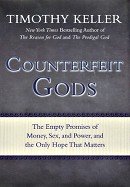
In his book Counterfeit Gods: The Empty Promises of Money, Sex, and Power and the Only Hope that Matters, author Tim Keller defines an idol as “anything more important to you than God, anything that absorbs your heart and imagination more than God, anything you seek to give you what only God can give.”

That includes even things normally thought of as good, like exercise.

While it’s easy to think about idols as statues in a temple somewhere, Keller, pastor of Redeemer Presbyterian in New York City, says idols are everywhere. “Anything can serve as a counterfeit god, especially the good things in life,” he says.

Keller defines a counterfeit god as “anything so central and essential to your life that, should you lose it, your life would feel hardly worth living.”

Pastor Mike Higgins of Redemption Fellowship, a conservative African-Amer-ican church in Fayette County, Ga., aligned with the Presbyterian Church in America, says he has dealt with idols of exercise and physical appearance many years.

The problem began for Higgins when he felt shame after failing an Army physical fitness test in the late 1970s. “I have been running ever since,” he wrote in a recent blog. He never failed another test and usually scored the maximum, but it never was good enough, and he never enjoyed it.

“A lot of my marathon training was motivated out of the fear of dropping out of a race, and so I found myself overdoing it and only by God’s grace not seriously injuring myself,” he said. “I still work out consistently; however, as a result of understanding how my heart functions, I am not controlled by physical fitness—although it is very tempting.”

M.S. Bhatia, a psychiatrist in India, says about 1 percent of the population suffers what he calls “exercise addiction.” Among athletes like elite runners, competitive weightlifters, endurance athletes and obsessive gym-goers, he believes the percentage is even higher.

In an article in the Delhi Psychiatry Journal, Bhatia described the compulsion as physical activity that “significantly interferes with important activities, occurs at inappropriate times or in inappropriate settings or when the individual continues to exercise despite injury or other medical complications.”

Scientific studies have shown that when taken to extremes, physical activity can develop into addictive-like behavior. Committed runners often report feelings of euphoria nicknamed “runner’s high.” Over time they increase the distance to achieve feelings of well-being, similar to increasing tolerance related to substance abuse. Like addiction, exercise compulsion can cause difficulties in social interaction and when suppressed, elicit feelings like depression, irritability and anxiety.

In a study published last August in the American Psychological Association journal Behavioral Neuroscience, Tufts University professor Robin Kanarek found similarities in rat studies between withdrawal from excessive running and morphine.

Doctors in recent years have recognized a new eating disorder called “exercise bulimia.” Bulimia nervosa is an illness where people binge by eating very large amounts of food and then use inappropriate means to rid their bodies of the food by vomiting, laxatives or water pills in order to prevent gaining weight.

“Individuals are overly concerned with weight and body image,” Debra Wood, a registered nurse with Baptist Health Systems in Jackson, Miss., said in an article on the group’s website. “In some, excessive exercise or fasting may replace or supplement purging.”

Experts say exercise bulimia particularly is threatening because it is so hard to diagnose.

“You can’t tell from the behavior necessarily whether this is an exercise bulimic or a regular exerciser,” Dr. Charles Murkofsky with the Program for Managing Eating Disorders told CNN in 1996. “You really need to know what a person is thinking and what is motivating them.”

One problem is that doctors constantly preach exercise is good, because it lowers the risk of certain diseases and improves cardiovascular health. “They’ve been told all their lives that exercise is good for them, and they’re doing a lot of it, so that must be even better,” nutritionist Sondra Kronberg told CNN.

Heidi Fingar, a former fitness instructor turned wellness and lifestyle coach in Hilton Head, S.C., describes her own struggle with exercise bulimia in a new book, God is in Your Full-Length Mirror.

In a recent story in the Beaufort Gazette, Fingar recalled binging on gallons of ice cream, and then exercising up to 15 hours a week to compensate. At the height of her addiction, she was up and running at 5 a.m., teaching two to three exercise classes a day and running triathlons and half marathons.

That was until she decided to turn her desire for a Hollywood figure over to God. By cutting back to moderate exercise and improving her diet, she says she is now smaller than when she constantly dieted, fasted and over-trained.

“My message is that God has the answers for every struggle that life throws us, including the struggle with food,” Fingar said of the book.

The key is getting into a relationship with God and learning what causes you to overeat, she said.

“If you don’t change a person’s attitudes and beliefs, you won’t change for good,” Fingar said. “The last thing we have got to triumph over in order to lead clean lives, to live before God, is overeating. I look at overeating as the final frontier.”