Faith Digest

Study says more link Christian faith to being American. As the United States has grown more diverse, more Americans believe being a Christian is a key aspect of being “truly American,” researchers say. Purdue University scholars found that between 1996 and 2004, Americans who saw Christian identity as a “very important” attribute of being American increased from 38 percent to 49 percent. Scholars said the findings, published in the journal Sociology of Religion, couldn’t definitively be tied to a particular event, but they suspect the 9/11 attacks and the wars in Iraq and Afghanistan could have played a role. The findings are based on an analysis of data from the General Social Survey, collected by the National Opinion Research Center, in which more than 1,000 respondents were queried in 1996 and 2004. In a separate survey, Public Religion Research Institute found 42 percent believe “America has always been and is currently a Christian nation.”

Most Protestant pastors nix Obama. Six out of every 10 Protestant pastors say they disapprove of President Obama’s job performance, a LifeWay Research survey found. Researchers said of the 61 percent who disapprove of Obama’s work, 47 percent disapprove strongly. The survey found 30 percent of pastors approve of the president’s performance, including 14 percent who strongly approve. Nine percent were undecided. When the Southern Baptist-affiliated research group surveyed Protestant pastors about their voting intentions just before the 2008 elections, 20 percent indicated they planned to vote for Obama, compared to 55 percent who planned to vote for GOP candidate John McCain. The new research was based on interviews with 1,000 Protestant clergy Oct. 7-14 and had an overall margin of error of plus or minus 3.2 percentage points. Researchers also found 84 percent of Protestant pastors disagreed with the idea of pastors endorsing political candidates from the pulpit.

Stem cell-funding agency apologizes for poem. The California agency that distributes public funds for stem cell research has apologized for honoring a poem that appropriated language from the Last Supper. The California Institute for Regenerative Medicine held a poetry contest to promote Stem Cell Awareness Day and draw attention to the complex and controversial field of medical research. When the two winners were announced, some Christian groups protested that one, “Stem C,” by Tyson Anderson, was blasphemous. The poem begins, “This is my body/which is given for you,” and concludes, “Take this/in remembrance of me,” words of Jesus during the Last Supper as recorded in the Gospels and memorialized at Christian worship services during Communion. The California institute, which helps distribute $3 billion in state funds for stem cell research, said it has removed the poem from its website. While many scientists say embryonic stem cell research holds great medical promise, some Christians call it a wanton destruction of human life because embryos must be destroyed in order to harvest the stem cells.

–Compiled from Religion News Service


Why do people leave churches?

NASHVILLE, Tenn. (ABP)—Many churches and denominations put a lot of effort into attracting new members only to lose many of them through a “back door”—a term used to describe people who regularly attended a church in the past but stopped.

“Churches have gone to great extreme effort to get people in the front door of the church,” Brad Waggoner of LifeWay Christian Resources said in a 2006 podcast. “There’s been some success numerically in that strategy, but very few people are talking about the back door of the church. That is: ‘Where do the people go that slip out of the life of the church?’

“The back door is just as important as the front door in determining the health of a local church.”

LifeWay President Thom Rainer described in an article on ChurchLeaders.com a meeting with more than 200 church leaders where nearly 90 percent indicated their churches had a problem with closing the back door.

“For years, the primary focus in many churches has been on the ‘front door’—people coming into the church,” Rainer said. “While such an emphasis remains the Great Commission priority, our research shows that churches and their leaders must not neglect the issue of the back door, commonly called assimilation.”

George Bullard of The Columbia Partnership, a Columbia, S.C.-based organization that helps churches pursue and sustain vital ministry, said churches face an “assimilation challenge” in the first year after new people begin attending to influence whether they become part of a community or slip through the back door.

“Church growth is a pretty simple concept,” Bullard said. “You get more people who have not been regular attendees and members to become regular attendees and members. You get more regular attendees and members to deepen their involvement in their church and its disciple-making activities. You get less-regular attendees and members to become bored, apathetic or offended and leave the church. If the second thing does not happen, the third thing is likely to happen.”

Mike James, discipleship and assimilation coordinator for the Kentucky Baptist Convention, said in a blog that assimilation is the difference between a church that is like Velcro—where people stick—or Teflon—where people join but stop attending.

Every church should have a strategy for getting first-time visitors to return and a follow-up plan to get them back a second time, James said. It begins by placing value on guests. “Scripture tells us to be warm and friendly to the people we meet,” he said.

James recommends treating every person like he or she is a guest. “Even your own members need a good welcome and a warm greeting,” he said.

The simplest and most effective way to attract guests is to invite them, James said. Polls show that between 75 percent and 90 percent attend church because a friend or relative invited them.

“Churches must be intentional in this process, or we become a revolving door with as many people going out the back door as we have coming through the front door,” James said.

Four things need to happen within the first year for people to assimilate into a new church, Bullard said.

Make attendance a habit.

First, he said, they must have established a pattern of regular attendance. By today’s standards, “in a culture that no longer sits around on Sundays,” Bullard said, regular attendance is between 39 and 42 Sundays a year.

Research indicates the American church went through a period of more than 10 years when churches significantly lowered their expectations of members and attendees, Rainer said. The result was an exodus of people from the church.


“Why would I want to be a part of something that expects nothing of me?” Rainer quoted a former active church member talking to the research team. Many churches now are attempting to remedy the problem with new-member classes, where expectations of service, stewardship and attendance are clearly established.

Common names for such classes are “Connections,” “Membership 101” or “Discovery,” James noted.

“Give it any name you desire, but by all means start one,” he said.

Get connected.

Second, Bullard said, they must have connected with some kind of teaching/learning experience such as a small group or Sunday school class.

“Churches that close the back door seek to get as many of their members as possible into small groups,” Waggoner said. “In some churches, these groups meet in homes. In other churches, the small group is a Sunday school class that meets at the church. The key issue, according to our research, is that the small group is an open group, meaning it has no predetermined termination date, and anyone can enter the group at any point.”

Develop deep relationships.

Third, Bullard said, they need to have developed friends “they call at 3 a.m.,” a reference to Hillary Clinton’s presidential campaign national-security ad featuring a ringing phone in the White House at 3 a.m. and posing a question to voters about who they want answering the phone.

Win Arn, a pioneer in church growth, showed years ago that if somebody can make five friends at a church, they are must less likely to drop out, Waggoner noted. “We need to create opportunities for people to build friendships and to get to know folks,” Waggoner said. “Just sitting in the pew is never God’s intention for any Christian.”

The more new members connect with longer-term members, the greater the opportunity for assimilation, Rainer said. One twist the research found, he said, is that most such relationships develop before the new member ever comes to church. In other words, members first developed relationships with people outside the walls of the church and then invited them after the relationship was established.

Go to work.

Finally, Bullard said, they need to get “some kind of job,” whether elected, appointed or as an ongoing volunteer.

“There’s no doubt about it that when you involve people in the ministries of the church, they are much more likely to give and much more likely to stay,” Waggoner agreed. “If they’re just pew sitters, they are more vulnerable to become disillusioned, and we’ll lose some of the people”

The earlier a new member or attendee can get involved in a church’s ministries, the higher the likelihood of effective assimilation, Waggoner said. “Churches that close the back door have a clear plan to get people involved and doing ministry as quickly as possible.”

“If people don’t do those four things, at the end of their first year, they are going to re-evaluate whether they want to stay in this church,” Bullard said.

While not a primary motivation for assimilating new people, Bullard added, an “unintended consequence” is that people who buy into the church with their time give five times more money than those who do not invest their time and energy.


American Shariah? That’s news to Muslims in U.S.

WASHINGTON (RNS)—Oklahoma state Rep. Rex Duncan expects his “Save Our State” referendum to keep Islamic law out of state courts to pass easily on Nov. 2. He’s less certain a similar measure could pass in Michigan.

The reason? Muslims have have established a foothold in and around Detroit, and they wield enough political power to stop it, he insists.

An estimated 3,500 Muslims gathered Sept. 25, 2009, at the foot of the U.S. Capitol for a first-ever Islam on Capitol Hill prayer rally. (RNS FILE PHOTO)

“I don’t believe anybody who would spend five minutes looking at the landscape and the political dynamics of Dearborn, Mich., would for one minute entertain the idea that they could pass a preemptive strike to keep Shariah law out of the courts,” Duncan said.

Duncan and other conservatives—including Tea Party favorite Sharron Angle in Nevada—ominously warn that Muslims are determined to impose Shariah law on the U.S. legal system.

When opponents of a proposed Islamic center near Ground Zero rallied at the site in September, many carried signs that depicted “SHARIA,” dripping in blood. Former House Speaker Newt Gingrich got a standing ovation at September’s Values Voter Summit when he called for “a federal law that says Shariah law cannot be recognized by any court in the United States.”

The odd thing is that no one in Oklahoma, Michigan or anywhere else is calling for Shariah—including and especially Muslims.

Instead, Muslim American leaders say Duncan’s referendum is a concrete example of fanning hyster-ia about the myth that they want to impose Shariah, which many Americans associate with misogyny, religious intolerance and cruel punishments.

“This is another right-wing fantasy that started on the hate blogs and worked its way into the mainstream media,” said Ibrahim Hooper of the Council of American-Islamic Relations in Washington, D.C. “Where is the evidence of the takeover?”

Perhaps the most frequently cited example comes from New Jersey, where a Moroccan Muslim immigrant who beat and raped his wife was acquitted by a local court that ruled the husband was acting according to his religious beliefs. An appellate court reversed the ruling, and many Muslim Americans say they found the initial New Jersey court ruling as absurd and cruel as non-Muslims.

What they do want, however, is protection for reasonable constitutionally protected acts, like wearing a headscarf or praying at work.

“Accommodating a Muslim employee’s request to wear a religious headscarf at work in no way imposes religious law on the workplace, any more than when employees wear a Latin cross or a Star of David,” said Daniel Mach, director of the ACLU’s Freedom of Religion and Belief program. “Somehow, basic religious exercise by Muslims is viewed as imposition by that group of its own faith on others.”

Frank Gaffney, president of the conservative Center for Security Policy in Washington, D.C., disagreed.

“The principle difference is that Shariah calls for the destruction of our country; Jewish law does not,” said Gaffney, whose institute released a 177-page report recently called “Shariah: The Threat to America.”

Examples of “creeping” Shariah infiltrating American society cited in the report include Muslims building mosques, using Islamic financing to buy homes, and depositing money in Islamic banks, which forbid interest and avoid investments in products like alcohol and tobacco.

“So when you’re talking about saying, ‘Well it’s just another religious court system that is operating kind of like the Jews do,’ it’s completely different; it’s sedition,” Gaffney said.

Muslims say such views reflect either bigotry or ignorance about Shariah, which means “path” in Arabic and is based on the Quran and the recorded teachings of Islam’s Prophet Muhammad.

Abdullahi Ahmed An-Na’im, an Islamic scholar at Emory University, argues in his 2008 book, Islam and the Secular State, that Shariah is meant to be followed as a personal religious code, not imposed as a public legal system covering all citizens in society.

“The moment the state imposes Shariah, it stops being Islamic,” An-Na’im said.

Other Muslims acknowledge some Islamic countries, such as Saudi Arabia and Iran, have legal systems based on strict interpretations of Shariah. That doesn’t mean, however, Muslims elsewhere desire the same thing. In fact, many condemn it.

“Assuming all Muslims follow medieval Islamic rules today is like assuming that all Catholics follow ninth-century canon law,” wrote Sumbul Ali-Karamali, a Muslim woman raised in California and author of The Muslim Next Door: The Quran, the Media and That Veil Thing, in a recent Huffington Post column.

Gaffney, whose report called Shariah the “preeminent totalitarian threat of our time,” dismissed alternative interpretations of Shariah as inauthentic. “There is only one interpretation of Shariah law,” Gaffney said.

Anti-Shariah legislation may never be introduced in Michigan, but Duncan believes other states will follow Oklahoma’s lead and pass similar legislation to ban Shariah.

“There are other states, I believe a dozen or so, maybe more, who are currently in discussions with me,” Duncan said, “and watching what we’re doing.”


Harvard scholar holds the threads to social fabric

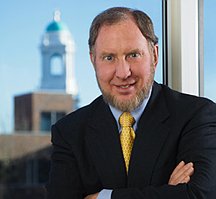
CAMBRIDGE, Mass. (RNS)—Harvard University scholar Robert Putnam has earned a reputation as an expert on the threads that hold America’s social fabric intact. His 2001 bestseller, Bowling Alone: The Collapse and Revival of American Community, drew national attention to an alarming decline in civic engagement.

His new book, American Grace: How Religion Divides and Unites Us, with co-author David Campbell, plumbs the apparent divide between religious and nonreligious Americans. Across 688 pages, the two argue that Americans honor their neighbors’ religious differences largely because they’ve cultivated personal ties across sectarian lines.

Harvard University political scientist Robert Putnam’s new book, American Grace,

As it turns out, Putnam lives by that same ethic, intentionally shortening distances between Jews and Christians, Americans and internationals, heartland believers and coastal skeptics.

It’s a long way from Putnam’s hometown of Port Clinton, Ohio, to the ivy-covered walls of Harvard, but friends and associates say the relationships he formed along the way continue to deeply inform his work.

“I’m talking to people in the grocery store; he’s talking to congressional leaders,” said Virginia Park, who’s known Putnam almost 50 years since their time together at Port Clinton’s Trinity Methodist Church.

“But he’s never lost touch. … He reaches back into the community and communicates with people,” especially during important times like reunions or a death in the family.

Putnam’s co-author, Campbell, said there’s still a lot of Port Clinton that shows up in Putnam’s approach to his work at Harvard’s Kennedy School of Government.

“It’s easy to caricature someone like Bob as just a pointed headed intellectual who lives in Cam-bridge,” said Campbell, a political scientist at the University of Notre Dame. “Bob is an intellectual, and he does live in Cambridge, … but he comes from a background that I think gives him a healthy perspective on the role of religion in American society.”

When research for American Grace brought Putnam from famously secular Cambridge to a conservative Missouri Synod Lutheran congregation in Texas, the evangelical terrain didn’t feel especially foreign to him.

“Actually, it wasn’t so strange,” he said. “We went to a church picnic up under the oaks on the grounds of the church, and it was wonderful. I didn’t feel like, ‘What am I doing here?’ I felt completely comfortable in that setting.”

Putnam is concerned, however, that many Americans don’t share his fluid comfort among believers and nonbelievers. Instead, they fear people unlike themselves, often out of ignorance.

“People who are really secular and don’t really know much about religious people at all … project their worst fears,” Putnam said.

“They imagine that all evangelicals are would-be theocrats, that they’re sort of Taliban-like and would like to get rid of all the non-Christians. Conversely, evangelicals (and) other deeply religious people know about secular people from what they see on TV and think, ‘These people are really godless. … They’re Satan personified.”’

When he started work on American Grace, he was confident “that they were both just wrong.”

Research for the book confirmed that hunch: on the whole, neither seculars nor religious people are as hostile or eager to undermine the other as they’re purported to be in popular media.

Putnam’s own religious journey mirrors many of the findings in his book. In 1963, he broke with contemporary norms by marrying a Jew from an intellectual Chicago family. Within a few years, he’d converted to Judaism.

Putnam isn’t one to debate theology. He says he’s “puzzled” on theological matters, though he declines to describe himself as agnostic or anything else. He notes that on high holy days, he attends services not as an academic observer but as someone “there to worship God.”

His rabbi at Temple Isaiah in Lexington, Mass., Howard Jaffe, said Putnam has helped him better appreciate the intrinsic value of tight-knit communities and improve his relationships with religious leaders in the area.

“My conversations with Bob always inspired me to be more open to and aware of what’s going on in other religious organizations,” Jaffe said. “Bob’s work on the importance of working together (with non-Jews) inspired me to be more involved in developing that kind of social fabric.”

Putnam brings his passion for well-formed communities to his professional life as well. The research team for American Grace included about 25 graduate students and other assistants, who were encouraged over meals to tell personal stories from their varied backgrounds as Catholics, evangelicals, Mormons and others.

So deep is Putnam’s commitment to learning from others that he keeps an easel upright in his living room at all times for spontaneous brainstorming sessions.

“He loves people, and he loves ideas,” said Sean McGraw, a former research assistant who’s now a Catholic priest and assistant professor of political science at Notre Dame. “Working in teams gives him the best of both.”


Christian band Bluetree on a mission to stand out

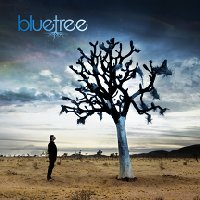
NASHVILLE, Tenn.—Just as the band’s name reflects its one-of-a-kind identity, the Irish modern worship band Bluetree desires to stand out and make a difference by leading worship in places seldom reached with the gospel because of political oppression.

Aaron Boyd, Conor McCrory and Pete Nickell of the Christian band Bluetree sing to children at a Burma refugee camp.

“Bluetree stands for standing out,” lead singer Aaron Boyd said. “The whole concept behind the name is that if you’re walking through a forest, everything you look at is pretty much going to be green. But if you saw this tree that was bright blue, it would stand out. You would look at it and take notice of it. As Christians, Jesus Christ has called us to be salt and light in this world and really make a difference.”

While on a mission trip to Pattaya, Thailand, the Belfast-based band was allowed to perform worship songs in the Climax Bar, a club which doubles as a brothel in the Red Light district. During this time, the band was inspired to write the worship song, “God of This City,” as a message of hope to the people of Pattaya.

The song gained international exposure when it was sung by American Idol winner Kris Allen and recorded by Chris Tomlin on the Passion: God of This City and Hello Love albums. The song has become a staple in contemporary worship services around the world.

Boyd has also written a book, God of This City: Greater Things Have Yet to Come, that provides an in-depth journey through the lyrics and story behind the song.

“We went to Pattaya to lead worship, help clean up the streets and help in orphanages,” Boyd said. “We wanted to see how bad the conditions were, so we could better know how to minister and let the people know that there’s so much more to life than how they’re living now. 

“Right in the middle of this horrific place, we were inspired to write ‘God of This City,’ as a desperate cry to proclaim the truth of who God is. The challenge in that song is for Christians to go into cities of this world, share Christ’s love and help people understand the truth of who God is. It’s been amazing to hear stories about how that song is impacting people around the world.”

Forever changed by witnessing the effects of the city’s harsh poverty, the band also was prompted to launch StandOut International, an organization devoted to rescuing children from prostitution and giving them a home, an education and skills to make a living on their own.

Bluetree is a Belfast-based band that takes seriously Jesus' call for believers "to be salt and light in this world and really make a difference.”

While desiring to make an impact around the globe, Bluetree recently went on another mission trip—entering Burma, where they led worship at a refugee camp. Despite the threat of persecution if they had been caught, Boyd said, they were grateful for the opportunity to spend a few hours worshipping with people who risk their lives every day for their faith in Christ.

“It’s horrific what is going on in Burma, the number of people who are living in fear for their lives every single day,” Boyd said. “It’s just not right, and we wanted to do our part to encourage Christians over there and let them know that they are loved and aren’t forgotten. As we were leaving, an 8-year-old girl came up and said, ‘Please don’t forget that we exist.’”

Boyd said this experience greatly affected the band and increased their desire to share the gospel around the world. 

“When you come to a night of worship with Bluetree, it’s not a spectator event or to be entertained,” Boyd said. “As a songwriter, I take what I learn from the Bible and translate it into songs that we can sing over our lives. Our heart is that people will come ready to worship and be engaged. We want people to walk away knowing that there’s so much more to a relationship with Christ than just having your sins forgiven.”


How many versions of the Bible do we really need?

WASHINGTON (RNS)—If you stacked all the Bibles sitting in American homes, the tower would rise 29 million feet, nearly 1,000 times the height of Mount Everest.

More than 90 percent of American households own a Bible, and the average family owns three, according to pollsters at the Barna Group.

The American Bible Society hands out 5 million copies of the Holy Bible each year; 1.5 billion Gideon Bibles wait in hotel rooms worldwide.

The average American family owns three Bibles, and the Good Book continuously tops the best-seller lists. But some theologians think the plethora of niche Bibles and different translations has become a distraction and just another marketing ploy. (RNS PHOTO/Kevin Eckstrom)

Scripture outsells the latest diet fads, murder mysteries and celebrity bios year after year. Evangelical publishers alone sold an estimated 20 million Bibles in recession-battered 2009, raking in about $500 million in sales, according to Michael Covington, information and education director of the Evangelical Christian Publishers Association.

Experts say it’s nearly impossible to calculate exactly how many Bibles are sold each year. But one thing is clear: The Good Book is great for business.

“Bibles are in many ways a cash cow,” said Phyllis Tickle, a former longtime religion editor at Publishers Weekly. “The Bible is the mainstay of many a publishing program.”

However, some Christian scholars wonder whether too much Good News sometimes can be a bad thing, as a major new translation and waves of books marking the 400th anniversary of the venerable King James Bible inundate the market this fall.

The assortment of translations and “niche Bibles” (such as The Holy Bible: Stock Car Racing Edition) sow confusion and division among Christians, invite ridicule from relativists, and risk reducing God’s word into just another personal-shopping preference, the scholars say.

“I think we are drifting more and more to a diverse Babel of translations,” said David Lyle Jeffrey, former provost of Baylor University and an expert on biblical translations. Jeffrey believes Americans need a “common Bible”—a role the King James Version played for centuries—to communicate the grandeur of Scripture without reducing it to “shopping-center-level” discourse.

“When we have so much diversity, we lose our common voice,” he said. “It is in effect moving away from a common membership in the body of Christ into disparate, confusing misrepresentations of the rich wisdom of Scripture, which ought to unify us.”

Leland Ryken, an English professor at Wheaton College, a leading evangelical school in Illinois, was more blunt.

“When there is wide divergence among Bible translations, readers have no way of knowing what the original text really says,” Ryken said. “It’s like being given four different scores for the same football game, or three contradictory directions for getting to a town in the middle of the state.”

Christian publishers, meanwhile, say they have an obligation—even a divine calling—to make Scripture ready and readable to as many people as possible.

Despite the Bible’s ubiquity, Americans are not necessarily reading or absorbing Scripture, said Paul Franklyn, associate publisher of the Common English Bible, a new translation sponsored by five mainline Protestant publishers.

For example, half of Christians cannot name the four Gospels; a third cannot identify Genesis as the Bible’s first book, according to a recent study conducted by the Pew Forum on Religion & Public Life.

The new Common English Bible aims to present an easy-to-read translation from the “theological center,” Franklyn said. Its New Testament debuts this fall; the entire Bible is due next year.

Despite the profitability of Bible publishing, penetrating the crowded and competitive market is a “big risk,” requiring equal parts scholarship and salesmanship, Franklyn said. The Common English Bible publishers spent $1 million on the translation and will spend another $3 million to get people to “pay attention” to it, he said.

Scholars estimate at least 200 English translations have been published since 1900—many of them revisions of earlier texts. The market can be so confusing and crowded that half of customers who visit Christian stores to buy a Bible leave without one, according to a study presented to Christian retailers in 2006.

“Heck, I’m overwhelmed, and I’m supposed to know what the hee-haw I’m doing,” said Tickle, author of The Great Emergence, a well-regarded book on the future of Christianity. “‘Bibliolatry’ is not a word I use very often, but we are probably veering very close to it.”

There’s even a cottage industry of experts—such as Paul Wegner, a professor at Phoenix Seminary in Arizona—to help people choose a Bible.

“People almost throw up their hands, there are so many Bibles out there,” he said. “Maybe they’ve created a market for me.”

To counter consumer confusion, publishers began marketing Bibles based on “felt needs,” or secular interests, said Andy Butcher, an editor at the journal Christian Retailing.

Christian publisher Zondervan’s 2010 catalog of Bibles (The Book of Good Books) runs 223 pages and includes Bibles tailored toward black children, students, spiritual seekers, women with cancer, busy dads, new moms, recovering addicts, surfers, grandmothers and camouflage enthusiasts.

Tim Jordan, a marketing manager at B&H Publishing Group, a leading Christian publisher that sells niche Bibles, compared them to conversation starters. “It’s just being smart about where people are at and trying to meet them there,” he said. “We need to engage people into the Bible.”

Ryken, however, suspects publishers’ motives may be more economic than spiritual. By definition, niche Bibles are designed to corner a market segment, he said. In the process, “the Bible loses its identity as the authoritative word of God and becomes something trivial, on par with shoes for hikers or luggage for the international set.”


‘Unchurched’ studies seek to understand why people leave

NASHVILLE, Tenn. (ABP)—Seeking to develop strategies to prevent formerly active members from leaving through the so-called “back door,” LifeWay Research has conducted surveys to better understand why people leave.

“I think we have a lot of strategies for getting people into the front door but not necessarily (for closing) the back door,” Brad Waggoner, currently vice president of the Broadman and Holman Publishing Group, said in a podcast.

Why do people leave churches?

In the summer of 2006, the research arm of LifeWay Christian Resources, conducted a survey of “formerly churched adults” who regularly attended a Protestant church as an adult in the past but stopped attending somewhere along the way.

Most (59 percent) cited “changes in life situation” as the reason they stopped attending church. Some of those changes came down to personal priorities. One in five (19 percent) said they were “simply too busy” to attend church or cited conflict with responsibilities related to family and home. About 17 percent said they moved too far from church, 15 percent cited work, and 12 percent said a divorce or separation caused them to drop out.

The second-most-common category or reason adults gave for leaving the church (37 percent) was “disenchantment” with the pastor of the church. Common reasons were that church members “seemed hypocritical” (17 percent) or that the church members “were judgmental of others” (17 percent) or “the church was run by a clique that discouraged involvement” (12 percent). Those adults said they felt like outsiders looking in, revealing that dynamics of leadership and relationships within a church can become obstacles to assimilating new members.

Just two of the top 10 reasons named for leaving the church had to do with spiritual causes. Nearly three in 10 said either “church was not helping me to develop spiritually” (14 percent) or they “stopped believing in organized religion” (14 percent).

About one-third of formerly churched adults said either that nobody contacted them after they left or nobody seemed to care.

Another LifeWay study looked at “church switchers,” Protestant Americans who have attended more than one church regularly as an adult.

“There are two types of people who slip out through the back door of the church,” Scott McConnell, associate director of LifeWay Research, said in a press release. “One group is probably leaving church permanently, and the other group is going to find a new church.”

Other than moving, researchers found that people change churches for one of two reasons—they are fleeing their former church or being drawn to another. The former most often is the case—58 percent said the greatest impact on their decision to move was “my need/desire to leave my previous church” compared to 42 percent who said they were attracted by a desire to join their current congregation.

The most common specific reason given was that the old church “was not helping me to develop spiritually”—cited by 28 percent of church switchers. Another 20 percent said they left because they “did not feel engaged or involved in meaningful church work.”

Other common reasons were disenchantment with church members or the pastor. Sixteen percent said they left because they were unhappy with changes like a new pastor or a different worship style.

Finally, LifeWay Research focused in 2007 on young adults ages 18-30. That research found more than two-thirds of young adults who attend church at least a year in high school stop attending church regularly for at least a year between ages 18 and 22.

The vast majority (97 percent) of reasons young adults gave for leaving church related to changes in life situation. The most frequent reason was self-imposed change: “I simply wanted a break from church” (27 percent). But just one in five said they planned in advance to take a break from church after they finished high school.

One-fourth said they stopped attending church when they moved to college, and nearly as many (23 percent) said they stopped going because of work responsibilities. About one in five (22 percent) said they moved too far away from the church to continue attending, and for whatever reason, they did not find a closer church.

Of the 30 percent of former teens who stayed in church as young adults, two-thirds described the church as “a vital part of my relationship with God.” Those most likely to remain active in church—by a margin of 63 percent to 42 percent—found their pastor’s sermons relevant to everyday life. Nearly half (46 percent) cited meaningful relationships with multiple adults, such as Sunday school teachers and volunteers, as a factor keeping them involved in church.


Study finds large churches can do better at retaining members

HARTFORD, Conn.—Large congregations are more likely than small churches to emphasize evangelism and recruitment of new members but significantly less likely to contact members who stop attending, according to a recent study.

A little more than half of surveyed congregations said they definitely would contact an active member who stopped attending to find out why, and another quarter said they probably would.

Why do people leave churches?

mong churches larger than 500 members, however, just 37 percent reported a practice of contacting members who stop attending.

Hartford Seminary’s David Roozen, author of the Faith Communities Today 2008 survey, said the finding “suggests a potentially simple way such congregations could enhance their growth prospects.”

The study, conducted by the Cooperative Congregational Studies Partnership, an interfaith coalition of denominations and faith groups formed 10 years ago, found that churches that strongly view themselves to be “spiritually vital and alive” are more intentional in their attentiveness to new attendees than less spiritually vital congregations.

Just as there are obstacles to attracting new members, Roozen said, there can be obstacles that make it difficult for people to participate regularly in their chosen congregation. Time—typically because of school- or sports-related activities or work schedules—rated significantly higher than location factors like driving distance, parking and fear of crime, the study found.

A frequently used indicator of organizational vitality is how easy or hard it is for congregations to find people to serve in their organizational structures, Roozen said.

“The good news is that only one in 10 congregations say they often can’t find enough people to serve,” he reported. “Less encouraging is that only three in 10 say they have no problem.”

For the remaining 60 percent, Roozen said, “finding people to serve is a challenge, but they typically succeed.”

“Somewhat counter-intuitively,” Roozen noted, is that churches with fewer committees are the most likely to struggle finding people to serve, regardless of the church size. Less surprising is that congregations with declining worship attendance also are most likely to struggle finding people to serve.

Congregations that struggle to find people to serve are more likely to have the same people serving over and over again—resulting in a lack of rotation among leaders—and less likely to have lay leaders who represent the diversity of the congregation’s participants in terms of age, race and gender.

Lay volunteers provide the primary “labor force” for the vast majority of congregations, Roozen said, making their “care and feeding” a critical issue. He found it surprising, therefore, that less than half of congregations publicly recognize and thank volunteers for their service on a regular basis. A quarter said they provided regular training sessions to new leaders, which compounds the problem of finding new leaders among people who may feel unqualified to serve.

Congregations that recognize and train volunteers, Roozen said, are more than twice as likely to rate themselves as spiritually vital.

Conflict also was a factor in people leaving the church. The study found leaving is the most likely response to serious conflict, especially when it involves leadership issues or worship. Withholding contributions is not as prevalent a response as researchers expected, but the study said withholding money is more popular among old-line Protestants, while membership mobility is the preferred response of evangelicals.

“A leader leaving is rare except, as one would expect, in conflicts about leadership,” Roozen noted.

Faith Communities Today is a series of national surveys of American congregations launched in 2000. Involving more than 14,000 local churches, synagogues, temples and mosques, it was the largest national survey of congregations ever conducted in the United States.

The study, described as “a public profile of the organizational backbone of religion in America—congregations—at the beginning of a new millennium,” will be replicated in 2010.


Faith Digest: Crystal Cathedral in trouble

Crystal Cathedral in financial trouble. The Crystal Cathedral, the gleaming Southern California megachurch known for its Hour of Power television broadcast, has filed for Chapter 11 bankruptcy protection from creditors. Senior Pastor Sheila Schuller Coleman said the decision came after some creditors chose to file lawsuits against the ministry. Church officials cited the economy as the main cause for its financial trouble. Revenue dropped 27 percent, to about $22 million, in 2009. In the last year, its staff was reduced by 140 and now totals about 200 people. The church owes creditors $7.5 million, said spokesman John Charles, including the vendor who provided camels, sheep and horses for its annual “Glory of Christmas” pageant. Also unpaid are expenses for television equipment and bills for airtime on some TV stations.

Some large religious charities fare better than other nonprofits. Several of the nation’s largest religious charities reported increases in private support as nonprofits overall saw decreases in donations last year, The Chronicle of Philanthropy reported. Feed the Children, which ranked fifth in the annual Philanthropy 400, had a 1.2 percent increase in private support, which totaled $1.19 billion. World Vision saw a 4.5 percent increase in its private support, which totaled $870 million, giving it the No. 9 rank on the list. Catholic Charities USA was ranked third, with a 66 percent increase from the previous year—a figure the social service organization has questioned. According to the publication, Catholic Charities’ private support totaled $1.28 billion. Overall, donations to the country’s largest charities dropped by 11 percent last year. The Salvation Army, which ranked second, saw a decrease of 8.4 percent in its private support, which totaled $1.7 billion. The publication bases its rankings on charities’ reports of cash and other gifts received from private sources.

Canadian judges will decide on veiled witnesses. Ontario’s highest court has ruled female witnesses may testify in court while wearing a face-covering burqa or niqab, but such decisions will be made on a case-by-case basis by the presiding judge. In a 3-0 ruling, the Ontario Court of Appeal ruled that witnesses’ right to freedom of religion must be balanced with the right of the accused to a fair trial and the right to face their accuser. The court effectively overturned a lower court’s order that required a Muslim woman to remove her niqab while testifying at the trial of two male relatives accused of sexually assaulting her. The high court said the woman should have been allowed to explain why her religious beliefs compel her to wear the niqab and to demonstrate the sincerity of those beliefs. But the court agreed the accused’s rights could be compromised if the woman’s facial expressions and demeanor could not be scrutinized while she gave evidence. The court stressed requests to have witnesses remove their veils must be considered on a case-by-case basis, because the subject does not lend itself to any clearly defined rules.

Compiled from Religion News Service


Who’s in Charge?

Baptist churches across the board agree—Jesus Christ is the head of the church.

But when it comes to ways Christians discern Christ’s will for their particular congregation, handle its day-to-day administrative chores and make decisions about budget and buildings, Baptist churches demonstrate remarkable diversity.

Both the 1963 and 2000 versions of the Baptist Faith & Message identify the local Baptist church as an autonomous body operating through democratic processes under the Lordship of Jesus Christ. In such a congregation, each member is responsible and accountable to Christ, the faith statements assert.

In his book The Baptist Identity: Four Fragile Freedoms, Walter B. Shurden of Mercer University linked the Baptist commitment to democratic church governance to the emphasis on the individual.

“Baptists practice democratic church polity not because it is more efficient or more reliable or even more biblical than other forms. They follow it because it accents the role of the individual within community, allowing the greatest freedom for the greatest number of people to have a say. Moreover, democratic church polity is a statement of the equality of all believers in determining the mind of Christ,” wrote Shurden, then-director of Mercer’s Center for Baptist Studies.

But how churches exercise their autonomy, carry out democratic processes and give members opportunities to carry out their responsibilities differ—particularly after their membership grows.

Some historians point to the thoroughly democratic practices of early Baptists in the Colonies as influencing early American democratic ideals and providing a model for the New England town hall meeting. Many small-membership congregations still hold similar monthly business meetings where member openly discuss and vote on every decision that affects the church.

However, allowing every person in a 50-member congregation an opportunity to speak publicly regarding an issue is one thing; allowing every person in a 500-member or 5,000-member church the same privilege is another.

So, some chur-ches have chosen to delegate certain authority to smaller groups, whether staff, deacons, elders or committees.

“I’ve come to believe the polity issue is usually resolved in Baptist churches of varying sizes by virtue of efficiency rather than theology,” said Gary Long, pastor of First Baptist Church in Gaithersburg, Md.

The way decisions are made and the number of people involved in that decision-making process tend to depend in part on the level of trust members have in leaders, he asserted.

“If trust is high, decisions are made more frequently in smaller groups and supported by the larger congregation. When trust is low and anxiety is high, there is more of a call from the congregation for a vote,” he said. “Good leaders seem to sense where decisions are along the scale of importance and weigh out when to act versus get congregational input.”

Polity also may be determined simply by how busy and involved members are at a particular point, Long added.

“The folk who are busy raising kids, coaching soccer, excelling at career and truly focusing on their own spirituality seem more interested in volunteering and serving than in leading and deciding,” he observed.

Long, former pastor of Willow Meadows Baptist Church in Houston, noted he has served in a congregation where decisions of various types explicitly are categorized, and the level of congregational input was determined by perceived importance.

“Hiring and firing ministers were A level, for example. Calendar decisions were C level and agreed upon by the staff. Plans for a yearly focus or a new ministry partner were B level and decided by committees in consultation with ministry staff,” he said.

Even so, some level of ambiguity remained.

“Of course there were times when I was left wondering, ‘Is this a B or a C level issue?’ Those were the times when I deferred to the next level up the chain, rather than guessing I had the authority to decide something on my own,” he said.

“It was slow, but I don’t recall ever getting criticized for counting on other church members to help with decisions.”

In some respects, First Baptist Church in Woodbridge, Va., follows a similar approach. The church votes on major decisions in a church meeting that requires 50 percent of active members for a quorum. Major decisions include budget, incurring debt, hiring a senior pastor and making changes to bylaws or constitution.

At a members’ meeting every other month, the church receives financial reports, grants transfer of membership and accepts new members, approves any mid-year budget changes and votes on hiring any staff other than the senior pastor.

However, the Woodbridge church adds a different approach in terms of day-to-day administration. Elders deal with matters of spiritual discipline and proper doctrine. An administrative ministry team—which includes an elder—manages the church’s resources. Deacons work in a servant role, alongside dozens of ministry teams.

Ray Bearden, who has been pastor of First Baptist Church in Woodbridge, 17 years led his congregation to institute the role of elder about seven years ago, but he emphasized the elders’ primary role is to provide spiritual leadership. Elders are selected on the basis of already exhibiting the gift of spiritual leadership and as being people to whom the congregation looks for wisdom, he explained.

“They are not ruling elders,” he stressed. “These are people who have spiritual influence already.”

Bearden led the church to install elders in part because was wanted the accountability to a group whom the congregation acknowledged as spiritual leaders. Also, he felt many deacons were operating outside their spiritual gifts. Deacons who clearly had the spiritual gift of service but lacked the gift of administration and leadership were devoting much of their time and energy to “administrative minutia,” he said.

According to the system the Woodbridge church instituted, the congregation has a minimum of five and maximum of seven elders, including the pastor, who is the only elder not subject to a term limit. Other elders are limited to two consecutive three-year terms.

“We meet every Tuesday night for two to three hours, with at least one hour spent in prayer,” Bearden said. “It’s a pretty heavy commitment.”

An elder-selection committee nominated the initial group of elders, and the congregation approved them. Subsequent nominees have been suggested by the congregation, considered and nominated by the elders and then affirmed by a vote of the congregation.

First Baptist Church in Marshall follows a more traditional Baptist approach to decision-making and day-to-day administration. The church makes significant decisions in general business meetings, and most of the recommendations come from committees.

“When the committee system works well, it provides a shared sense of being given ownership and being involved—that a particular project is not just staff-led or pastor-led,” Pastor Kevin Hall said.

Hall acknowledged some churches have moved toward granting most decision-making authority to a board of elders, to staff or even to the pastor alone, but he questioned the wisdom of that approach.

“It’s more Baptist to have as many of the people making the decisions as possible,” he said. “Granted, it’s more arduous. It slows things down.”

But allowing church members time to work through processes at their own pace also means providing time to build consensus. Objections can be addressed along the way, corrections can be made, and the church can benefit from the process.

A friend jokingly refers to lengthy processes as “traveling at the speed of church,” Hall noted.

“Moving at the speed of church may be slower, but it may be better.”



Author finds faith and fanaticism in devotion to college football

AUBURN, Ala. (RNS)—Chad Gibbs has been on a pigskin pilgrimage throughout the South, searching for spiritual truth in Tuscaloosa, Baton Rouge, Gainesville and Fayetteville.

He grew up a fan of the Alabama Crimson Tide and switched allegiance to his alma mater—and the University of Alabama’s archrival—Auburn University. For a while, Gibbs became so fanatical he wondered if football had replaced God as his god.

“I wondered about how much I could care about football before it starts to hinder my faith,” said Gibbs, a 2002 Auburn graduate who lives less than a mile from the school’s famed Jordan-Hare Stadium.

Chad Gibbs toured the Bible Belt and college football’s SEC schools for his book, God and Football: Faith and Fanaticism in the SEC. (PHOTO/RNS/Chad Gibbs)

Gibbs set out to find how other Christian football fans handled their dual obsessions. For 12 weeks he attended football games involving every Southeastern Conference football team.

That quest resulted in Gibbs’ new book, God and Football: Faith and Fanaticism in the SEC, which tracks college football’s near-religious following in the heart of the Bible Belt, where many fans worship their SEC teams on Saturdays and God on Sundays.

In the summer of 2009, he contacted churches and campus ministries in all 12 SEC university towns.

“I was looking for fanatical fans that were also Christians,” Gibbs said. “My idea was to go to the games and spend time with them and see how they balance the two.”

Among the many memorable people he met was a Catholic priest, Gerald Burns, pastor of St. Aloysius Catholic Church in Baton Rouge, La., who watches Louisiana State University games on his big-screen, high-definition TV. He once joined the LSU crowd in chanting, “Go to hell, Ole Miss!” while wearing his Roman collar. LSU won 61-17.

Gibbs soon realized he wasn’t the only one who got carried away with football, letting it become his religion.

“If you ask them point-blank, ‘Do you worship football?’ they’d say no,” Gibbs said. But for some, football clearly trumps God, he said.

Gibbs interviewed evangelist David Nasser, a football fan, who talked about how discussing football opens doors to sharing faith. Nasser added, however, that “football is a great hobby, but a horrible god.”

The statement struck a chord with Gibbs, and became the theme of his book.

“I was using football for my self-awareness and identity as a person,” Gibbs said. “I was trying to get too much out of football. On a Sunday morning after a loss, I was still pouting. … I was looking to get so much out of football that football really can’t give you. I learned you have to take it as what it is, as a game.”

People who look for the meaning of life and salvation from football always will be disappointed, he said.

“When you try to fill that void where you’re supposed to put God, if you try anything else, it doesn’t work,” Gibbs said.

“It’s not something to build your life around. Football’s certainly not worth being miserable about. When you start leaving games depressed, you may want to step back and take a critical look at things. I began to realize what about football had me so wrapped up. I was looking for more from football than I should be looking for from football. It’s hard to fit a football into the God-shaped hole in your heart.”

After Auburn’s win over Clemson this season, Auburn Coach Gene Chizik said, “It’s a God thing,” which stirred up a lot of commentary over how much God really cares about football.

“When I heard it, I did kind of cringe,” Gibbs said. “I know how it sounded. It sounded like God made Clemson miss a field goal.”

Gibbs thinks what the coach was getting at was turning a loss into a learning experience. And while Gibbs clearly thinks football shouldn’t be more important than spiritual issues, he doesn’t rule out that God cares about football.

“I don’t think God gets upset if we go to football games,” Gibbs said. “You can obviously take it too far. I think God’s big enough to hear prayers about Sudan and football at the same time.

“I don’t think God’s a fan of a particular team. If he is, right now he’s an Alabama fan.”


Greg Garrison writes for The Birmingham News in Birmingham, Ala.


A quiet faith lurks behind Colbert’s comedic bluster

WASHINGTON (RNS)—When comedian Stephen Colbert brought his act to Capitol Hill last month and stole the spotlight with his satirical shtick, no one was more surprised than lawmakers.

“You run your show,” House Judiciary Committee Chairman John Conyers scolded him. “We run the committee.”

When Colbert finally let his well-coiffed hair down and got serious about the “really, really hard work” done by migrant farmworkers, even more people were surprised when the funnyman gave a glimpse of his private faith.

Comedy Central’s Stephen Colbert has used his Colbert Report to make fun of religious institutions, even as he remains a man of deep and devout faith. (RNS PHOTO/Courtesy of Scott Gries/Comedy Central)

“And, you know, ‘whatsoever you do for the least of my brothers,’ and these seem like the least of our brothers right now,” Colbert said, quoting Jesus. “Migrant workers suffer and have no rights.”

It was a different kind of religious message than Colbert typically delivers on Comedy Central’s The Colbert Report, where he often pokes fun at religion—including his own Catholic Church—in pursuit of a laugh.

Yet it was the kind of serious faith that some of his fellow Christians say makes him a serious, covert and potent evangelist for their faith.

“Anytime you talk about Jesus or Christianity respectfully the way he does, it is evangelization,” said Jim Martin, the associate editor of the Jesuit magazine America, who has appeared on Colbert’s show four times. “He is preaching the gospel, but I think he is doing it in a very post-modern way.”

Colbert’s on-air persona is a bloviating holier-than-thou conservative whose orthodox Catholicism is part of what makes him funny. On air, Colbert has chided the pope as an “ecu-menace” for his outreach to other faiths, referred to non-Catholics as “heathens and the excommunicated” and calls those who believe in evolution “monkey men.”

Diane Houdek has tracked Colbert’s on-air references to Catholicism on her blog, Catholic Colbert. When he recites the Nicene Creed or Bible verses from memory, it shows how foundational his faith is, she said.

“He is moving in an extremely secular world. It is hard to get a lot more secular than Comedy Central,” Houdek said. “Yet I feel he is able to witness to his faith in a very subtle way, a very quiet way to an audience that has maybe never encountered this before.”

It’s particularly powerful to Catholics, Houdek said, when the lines blur between Colbert’s personal faith and that of his on-air alter ego.

She pointed to a 2007 segment in which his character reveled in Pope Benedict XVI’s statement that non-Catholic faiths were “defective.”

“Catholicism is clearly superior,” Colbert crowed beside a picture of the pope. “Don’t believe me? Name one Protestant denomination that can afford a $660 million sexual abuse settlement.”

It wasn’t just funny, Houdek said, but also powerful. “He really made a strong criticism of the church.”

Colbert’s personal opinions about Catholicism usually are not so clearly displayed, and his range of guests offers few clues. Guests have ranged from the theological left—openly gay Catholic writer Andrew Sullivan—to the conservative Catholic League President William Donohue.

Houdek regularly fields comments from readers who believe they’ve found a fellow traveler in Colbert.

“You can’t pin him down,” Houdek said. “He becomes kind of a Rorschach test for what the viewer’s beliefs are.”

David Gibson, a Catholic writer who covers religion for PoliticsDaily.com, said Colbert’s ability to present his character and himself at the same time is where his strength as a Christian role model lies.

“I think what he models most effectively is the talent for discernment,” Gibson said. “He shows what is important to the faith and what can genuinely be debated and disparaged.”

Kurt C. Wiesner, rector of All Saints Episcopal Church in Littleton, N.H., writes a blog about religion and popular culture. Watching Colbert’s congressional testimony, he saw something that reaches beyond Catholicism.

“He offered a human witness, without a doubt,” Wiesner said. “He gave witness to what Christians are often called to do, but the message isn’t be a Christian like him. It is that one’s faith calls us to be engaged with our fellow human beings.”