Tim Tebow memoir details blessed life rooted in faith

DENVER (RNS)—Tim Tebow is a 23-year-old second-year, second-string quarterback on a so-so NFL team. So, who’s going to buy his memoirs? What’s to remember?

Heisman-winning quarterback Tim Tebow, seen here playing for the University of Florida, has been one of the most outspoken Christian athletes to take the field.

• How his missionary dad, Bob, prayed for a son and promised God to raise him to preach.

• His birth—a miracle tale told in a Super Bowl commercial.

• High school gridiron statistics that made college recruiters pant. After all, he had 80 scholarship offers. An ESPN documentary called him “The Chosen One” when he was just 17.

• A Heisman trophy and college championships at the University of Florida, where Tebow already is immortalized in a bronze statue on campus.

• His selection in the first round of last year’s NFL draft by the Denver Broncos.

Woven throughout Tebow’s new memoir, Through My Eyes, is the bone-deep religious side of the evangelical young player who writes Bible verses beneath the play codes on his wristbands, just as he once inscribed them in his eye black for his college games.

The book, written with Nathan Whitaker, starts each chapter with a Bible verse and is laced as much with “glory to God” as it is with pages of grit-and-grunt details of Tebow’s trademark punishing workouts. He trains relentlessly, determined to confound everyone who has questioned whether he can make it as an NFL quarterback.

So, the book is for anyone who ever felt a sense of defiant determination in the face of skeptics. And, it’s aimed at anyone who finds Tebow’s story just a bit insufferable.

It’s the memoir of a no-drugs, no-drinks, no-arrests player whose idea of swearing is “Holy sweet cheese-and-crackers!” Even so, there are some smudges on Tebow’s Jockey-endorsed T-shirt.

He admits to crying so often he could compete with weepy House Speaker John Boehner in a Kleenex Bowl. During his college years, a Facebook page called “I saw Tim Tebow Cry and Loved it” had 23,000 fans.

He laughs off the anti-Tebow legions.

“If those people got to know who I really am as a person, we’d get along. Holier than thou? That’s not me. I’m a real person. I fail, and then I try to keep improving and enjoying life,” Tebow said in an interview. “I’m a people pleaser. I would love everyone to love me, but they’re not, and I’m just not going to worry about it.”

Tebow seems happy, excited, eager and upbeat as he talks about faith, football and a future he says he never worries about.

The NFL lockout that threatens the 2011 season? Beyond his control.

Questions of whether he’ll start for the Broncos in 2011? Keep training.

Romance? Ha! No one special—not yet anyway, he said, laughing.

Tebow’s agenda: Live pure. Work hard. Leave the rest to God.

Tebow’s father got the preacher he promised his Lord, and the son said football is “absolutely” his pulpit.

“As a player, especially as a quarterback, you are blessed with so many things you can do with that platform,” Tebow said. “You can help a lot of kids.”

In the off-season, he has raised funds for orphanages through his Tim Tebow Foundation, running a celebrity pro-am golf tournament and tithing from his $8.7 million Broncos contract to the foundation and other causes such as Wounded Warriors.

He supports his father’s efforts in the Philippines, where Tim was born after his mother Pam’s difficult pregnancy. She rejected doctor’s advice to abort their fifth child and toughed it out, as she recounts in a Focus on the Family-sponsored commercial that broke through the NFL’s ban on issue-oriented ads during the 2010 Super Bowl.

History doesn’t count for much in the NFL, where Tebow knows he’s just another young player expected to listen and follow, not lead. Tebow wants his teammates to see that improving his play, and getting to know them on and off the field is his top priority.

“I’m with veterans who have played 10 to 15 years,” he said. “But as quarterback, you have to have everyone looking at you. You have to earn respect. Show up first. Be last to leave. After that, they begin to like you and play for you. Ultimate goal is fellows who will lay it on the line for you.”


Rebecca St. James shines spotlight on Christ

LOS ANGELES, Calif.—At age 12, when most young girls are dreaming about what they would like to be when they grow up, Rebecca St. James already was asking God to use her talents and gifts for his glory.

Rebecca St. James

“I had given my heart to God when I was 8 years old and grew up in a wonderful Christian family,” St. James said. “When I was 12, I remember a specific prayer where I said: ‘God, I want to give you my gifts and talent. They are not mine, but yours. I hope you can use my life to make a difference and change the world.”

St. James grew up attending Thornleigh Community Baptist Church in Australia. Because her father was a Christian concert promoter, she became familiar with the Christian music industry at an early age.

As a teenager, St. James broke new ground in the contemporary Christian music industry as she paved the way for many other female artists to come.

“Music has always been a natural part of my life,” she said. “I moved to America with my family when I was 14, and I sang at different youth groups and churches. Some guys from a record label saw me sing when I was 15 and signed me to that label soon after that. So, it was one of those things that God definitely led me to do.”

Along the way, she has garnered multiple honors including a Grammy Award and Dove Awards from the Gospel Music Association.

{youtube}FGtEQ2tbxaU{/youtube}

Throughout her ministry, St. James has used her influence to shape teenagers’ attitudes about sexual purity and Christian commitment by speaking at a variety of events, writing books and appearing in film projects.

Recently, her leading role in the pro-life movie, Sarah’s Choice, prompted St. James to support the work of crisis pregnancy centers. In addition, St. James has continued to connect with teenage girls and their mothers by hosting events that meld music and ministry into an evening of encouragement and practical advice on living godly lives.

Over the past few years, St. James has taken time to reflect and renew her commitment to music and ministry while staying busy with a variety of projects.

St. James’ most recent album, I Will Praise You, marked her first full-length album in five years. Shortly after the album’s release, St. James married Jacob Fink, who proposed on Christmas Day.

For St. James, the songs on this album reflect personal seasons and themes of renewal, acceptance, surrender, hope, redemption, praise and the utter dependence on the vast and unfathomable love of God.

“When I think of my life today, I have a new appreciation of ministry, music and the new season of opportunities God has for me,” St. James said. “I realize the very threads that run through this album are all very poignant and personal to me through the journey of the last five years of my life.

“In this season of new music, God has been reminding me: ‘This is about Jesus. This is about praising him and inviting other people into that journey with you.’

 “My mission statement and focus is, ‘Get out of the way, Rebecca, and just let people see Jesus.’ It’s all about his glory.”


Study examines what families want from their church

WACO (ABP)—Conventional wisdom says “the family that prays together stays together.” But one study of 15 Baptist congregations found that what families want most from their church are opportunities to serve.

In 2004, Baylor University researchers polled more than 3,000 members of churches in 12 states affiliated with the Southern Baptist Convention, Cooperative Baptist Fellowship or both. While not statistically representative of all Baptists, researchers Diana Garland and Jo Edmonds said findings shed light on the struggles church families face at different stages of life.

Seventy percent of families in the survey were married couples with or without children, far higher than the general population. One in four of those were a second marriage. Fewer than 1 percent were unmarried or separated couples, far below the national norm, while widowed single adults were double the rate of society as a whole.

Researchers asked respondents to mark items from a list of 37 possible causes of family stress. Four of the top five reported stressors involved physical or mental health. A third reported serious illness or disability of a family member, close friend or relative had caused stress for their family in the previous year. About one in four mentioned death of a loved one, depression or other serious emotional problems or financial strain.

Some stressors varied by age. Teenagers felt the same stressors their families reported, like death, illness and depression, but others—such as school problems and parent-child conflict—were unique to their age.

Among families in their 20s, 61 percent reported financial strain. Thirty-eight percent cited problems balancing work and family. Three in 10 reported stress about moving from one home to another.

Financial strain was somewhat less common for families in their 30s, but a new issue emerged—30 percent reported difficulty on the job for a family member.

Families in their 40s continued to experience stress from balancing work and family and finances, about 40 percent each, while death of a family member, close friend or relative entered the top five most prevalent stressors, affecting 28 percent of families in the survey.

Respondents in their 50s carried the dominant stressors of younger groups, along with higher rates of worries related to physical or emotional health. Nearly half (46 percent) reported stress from serious illness or disability of a family member, close friend or relative, 38 percent from caring for a sick or disabled family member, and 36 percent because of a death. Financial strain remained a problem for more than a third (36 percent) of families in their 50s.

Financial strains decreased to 19 percent for families in their 60s and older, while health-related worries became more common. Nearly half (46 percent) cited stress from serious illness or disability of a loved one, 38 percent mentioned pressure of caring for a sick or disabled family member and 36 percent the death of someone close to them.

In terms of religious practice, daily Bible study and prayer historically have been considered important for Baptists, and 86 percent of individuals reported praying on a daily basis. Barely half, however, (55 percent) reported doing so as a family.

Fewer than one in four individuals said they studied their Bible daily. That rose to 62 percent on a weekly basis. Researchers said that probably is a result of Sunday school and weekly Bible studies, but daily Bible studies by families was reported by a scant 5 percent.

The most common religious activities engaged as families were caring for the created world (more than 50 percent weekly), caring for others in need and helping their community to be a better place.

“These examples suggest that families are more likely to be engaged in the world around them as expressions of their faith than to be engaged in studying the Bible together,” researchers surmised. A majority also mentioned forgiving and encouraging others and talking and listening to one another’s deepest thoughts at least once a week.

Respondents also marked up to six items in a list of 47 ways in which they would like to see their church help their families. The most common were:

• Serving others outside our family, 26.8 percent.

• Family prayer and devotional time, 21.8 percent.

• Communication skills, 20.6 percent.

• Developing a strong marriage, 19.6 percent.

• Developing healthy habits—eating, exercise, rest and recreation, 19 percent.

• Talking about our faith together, 18.5 percent.

“A majority of these families already is engaged in their communities—serving others in need, caring for the created world, offering hospitality, seeking more justice in the world and stronger communities—and still list help in these areas at the top of their requests from their congregation,” researchers reported.

Second, researchers said, families wanted more help in developing prayer and devotional time as families instead of as individuals.

“Perhaps the most interesting challenge for the church is to offer guidance and support for families in these needs of common areas of concern that are grounded in the beliefs and values of the Christian faith,” researchers noted.

“Families can go to schools and community centers for marriage or parent education or anger or money management, but only the church can ground these life issues in Christian values and practices.

“Similarly, families can go to any number of social service agencies seeking volunteers and find ample opportunities to serve their communities. There are a myriad of ‘walks’ for various causes, community cleanups and so on. These families are asking their churches to ground their service in Christian mission.”

“They not only want to offer charity, they want to strengthen their communities,” the study concluded.

“The data suggest that these families are seeking an integration of the life of service with the life of prayer and worship.”


Ministry seeks to make marriages divorce-proof

BETHESDA, Md. (ABP)—America’s divorce rate is the highest in the world, double that of Canada and triple either England or France, but most divorces don’t need to happen, marriage specialists Mike and Harriet McManus insist.

Married since 1965, the McManuses are co-founders of Marriage Savers, a ministry to help churches and communities make marriages that are “divorce proof.”

McManus, a syndicated newspaper columnist who was Time Magazine’s youngest correspondent in 1963, was out of a job in their 10th year of marriage and could find only temporary work in Washington, D.C. They lived in Connecticut, so he became a long-distance commuter, getting on a train at 2 a.m. on Monday, working all week and coming home for dinner at 11 p.m. Friday.

A friend told him about Marriage Encounter, a religious-based weekend program designed to help couples improve their marriage. McManus protested he already had a good marriage, but his friend said the experience would make it better.

After some hesitation, the McManuses went to a retreat where four couples talked about intimate details of struggles within their own marriage. After each talk, the couples were told to write a love letter to their spouse to be exchanged and discussed in private. In response to one question about what the spouse could not or did not share, McManus was shocked to learn his wife felt bruised and deserted by his work in Washington and thought that he loved his job more than her.

It was a turning point for the couple. They began a marriage ministry in their home church, Fourth Presbyterian Church of Bethesda, Md., in 1992. They pioneered the training of couples with healthy marriages to “mentor” younger couples.

In 1986, McManus gave a speech to local pastors in Modesto, Calif., in which he suggested how the city could cut its divorce rate in half. Modesto became the first of more than 200 cities across the United States to adopt a Community Marriage Policy, an agreement across denominational lines to make marriage such a priority in their churches that divorce rates would fall.

Marriage Savers claims divorce rates in those cities have fallen by an average of 17.5 percent and cohabitation by a third.

The ministry also establishes Marriage Savers Congregations, in which mentor couples are trained to help other couples prepare for lifelong marriages, strengthen existing ones and restore troubled marriages.

The strategy can virtually eliminate divorces in the local congregation, the McManuses claim.

The McManuses conduct marriage enrichment weekends at local churches. They also train “back from the brink” couples who once considered divorce to create a “Restoration Marriage Ministry” where they help other couples in crisis restore their relationship.

There has been one divorce for every two marriages since the 1970s, and McManus said churches are part of the problem. About 80 percent of marriages are performed by clergy, but divorce rates in the church are just as high as the rest of society.

The Community Marriage Policy seeks to crack down on “quickie” marriages, requiring any couple getting married to experience a rigorous four months of  preparation that includes taking a premarital inventory of strengths and areas where they need to grow. Answers are sent to the mentor couple, which meets with the prospective newlyweds to discuss relationship issues and teach skills of communication and resolving conflict.

In the McManuses’ church, 20 percent of couples decided during the rigorous process not to marry. Of the 230 who did marry, there were 16 divorces in 18 years, a 93 percent success rate that Marriage Savers touts as “virtual marriage insurance.”

Getting clergy to buy in community-wide prevents couples turned away by one minister from shopping around until they find a church that will perform their wedding.

McManus, a conservative columnist who has written “Ethics & Religion” since 1981, recently went after “no-fault” divorce laws that swept the nation starting with the 1970s.

Before no-fault divorce, a married person had to prove grounds for a divorce, such as adultery or physical abuse. If both partners wanted to get out of the marriage, they usually succeeded by claiming “irreconcilable differences.”

Under no-fault divorce, however, a single spouse  unilaterally can terminate a marriage entered mutually by both partners, even though divorce is opposed by the other spouse in four out of five marriages. McManus said other state laws also discourage marriage and encourage cohabitation.

In 2005, McManus sparked controversy when USA Today identified him as one of three newspaper columnists to receive funds from the Department of Health and Human Services for work in support of President George W. Bush’s effort to promote marriage.

The newspaper said Marriage Savers received $49,000 from a group that received HHS money to promote marriage to unwed couples who are having children, while McManus boosted the Bush marriage initiative in several columns.

McManus insisted receiving the money did not influence the opinions written in his columns. He later apologized, saying in retrospect he recognized there was a conflict of interest and he should have disclosed that his nonprofit ministry had received a consulting fee from the administration.


Faith Digest

Little change regarding belief in God. A new Gallup poll finds 92 percent of Americans say they believe in God, a figure that has dropped by only a few points since Gallup first asked the question in the 1940s. The percentage of Americans who respond that they believe in God now stands within six points of the all-time high in the 1950s and 1960s. About 12 percent of Americans say they believe in a universal spirit or higher power instead of “God” when given that option. The age group least likely to claim belief in God is 18-29-year-olds, at 84 percent, compared to 94 percent of older Americans.

No spits, no runs, no errors. Religious leaders hope to hit a home run in a campaign to get Major League Baseball players to ban tobacco use on fields and dugouts of the national pastime. Members of the Faith United Against Tobacco coalition wrote Michael Weiner, executive director of the Major League Baseball Players Association, focusing on the hazards of smokeless tobacco. Leaders of Christian, Jewish and Muslim organizations see baseball players’ role-model status as the biggest risk for young people. Commissioner Bud Selig has proposed smokeless tobacco be banned in the major league, just as it has been in the minor leagues. Weiner has said the issue would be part of collective bargaining talks this year, but he has called smokeless tobacco a legal substance that does not have the secondary health risks of cigarette smoke.

Most Americans OK with Mormon candidate. About two out of three Americans say it makes no difference to them if a presidential candidate is Mormon, according to a new Pew Research Center poll, although evangelicals are more cautious. The poll found 68 percent of respondents said a candidate’s Mormon faith would not matter, while one in four said they would be less likely to support a Mormon. White evangelicals were most likely to care about a candidate’s Mormon faith, with one-third saying they would be less likely to support a Mormon candidate, compared to 24 percent of the religiously unaffiliated and 19 percent of Catholics and white mainline Protestants. The survey, conducted May 25-30, is based on a national sample of 1,509 adults and has a margin of error of plus or minus 3.5 percentage points.

Clerics should give advice, not rule, Egyptians say. Four months after the fall of Egyptian President Hosni Mubarak, a new Gallup survey says most Egyptians want religious leaders to advise the nation’s officials, but they do not want a theocracy. About seven in 10 Egyptians said clerics should advise national leaders on legislation. In comparison, 14 percent said religious leaders should have full authority in creating laws, and 9 percent said they should have no authority. Even as they seek a limited advisory role for clergy, two-thirds of Egyptians (67 percent) want religious freedom as a provision in a new constitution. The findings are based on in-person interviews with about 1,000 people ages 15 and older in late March and early April, and have a margin of error of plus or minus 3.1 to 3.5 percentage points.


Father’s warnings twice saved Japanese family from nuclear bombs

NEW BERN, N.C. (ABP) — Rieko Suganami Evans remembers the sky glowing strangely red behind a huge cloud and one little airplane flying out of the cloud. It was Aug. 6, 1945, and the Japanese city of Hiroshima had just been vaporized in the world’s first use of atomic energy as a weapon.

Rieko had left Hiroshima the day before after a warning call from her father – formerly an attaché from the Japanese Imperial Army to Britain who lost favor with the emperor by continually urging him to surrender.

“Get out now!” he told them.

Rieko Suganami Evans upon her college graduation.

Grabbing their bags and hurrying to the train station, Rieko’s mother and children left behind the cousins they had come to visit and headed for a safer city — Nagasaki.

Two days later her father called again with the same message. They hurried away from Nagasaki the day before it was destroyed on Aug. 9, finally convincing the emperor to surrender and end the war – and rehabilitating her father’s honor.

Sixty-six years after those bombs demonstrated the horrific destructive force of nuclear weapons any reference to Hiroshima and Nagasaki still recalls that dramatic event. And their names sound a constant warning for vigilance to all nations to avoid nuclear conflict.

Rieko, 72, is a member of First Baptist Church in New Bern, N.C. Childhood events still burn brightly in her memory, although she was too young to understand the significance of Japan’s attack on Pearl Harbor, or her father’s expulsion from the emperor’s inner circle.

Her father, Maj. Gen. Ichiro Suganami, was an attaché in London before the war. He maintained his intelligence connections and knew America was developing a bomb with the capacity to eradicate an entire city in an instant. He urged the emperor to surrender to avoid that fate for Japan.

Instead, the emperor dismissed Suganami. But Evans is certain that friendships her father developed gained him an early warning by which he was able to make the fateful calls to his family.

Suganami failed to convince the emperor to surrender, but he gained appreciation from the Allies who evidently warned him about the pending bomb drop; and he avoided prison when General Douglas McArthur came to oversee the occupation of Japan.

Rieko’s sister married a McArthur aide, a Japanese-American.

While McArthur put the emperor’s inner circle and all the highly placed military leaders in prison, he did not imprison Suganami — a distinction that bothered his wife until she died at age 104. She felt it would have been more honorable and befitting his rank as a major general to have gone to prison.

Still, Suganami lost his high status and made a living basically as a private tutor until he died at age 66.  He already struggled for full inclusion into the inner circles because he was a Catholic Christian and did not see the emperor as a god as did the vast majority of his other subjects.

A graduate of Seijo University in Tokyo, Rieko is an American citizen, who came to Los Angeles under sponsorship of an American couple. She had court reporter training and was very independent — unusual for a Japanese woman. Most Japanese women who graduated from university in Japan and came to the United States to seek opportunities after the war returned to Japan to marry.

After five years in Los Angeles, Rieko passed her tests for citizenship. Even today she cheers when a Japanese airplane is shot down in WWII war movies, so confesses she must be “fully American.”

She retains a tremendous appreciation for America’s helping to rebuild the decimated cities after the war ended.

Her father’s advocacy for surrender is well known in Japanese history. But his position was not shared even by his brothers, and their disagreement is both part of Japanese history and part of discomfiting family lore.

Rieko married Joseph Evans — a “CIA master spy” who specialized during the Cold War in Soviet counterintelligence — at age 46 and moved to New Bern. Although she was young during the Second World War she retains several vivid period memories.

She remembers her father returning home from London with a suitcase full of milk chocolate bars. She also remembers that he shared them with neighbors, which she did not like one bit.

She remembers her mother and sister going into the fields and returning with an armful of potatoes; of the emperor announcing over the radio while they huddled in an underground bunker that Japan was surrendering. It was the first time most Japanese had ever heard his voice.

She remembers walking to church through the meadow with her father. Her mother and one sister never became Christian. Her father’s Bible is heavily marked and underlined.

She remembers that photographs of a man and woman together were prohibited during the war; likely to keep relationships from being used to weaken the resolve of a war captive. Her mother kept the children in the house during the anniversaries of the bombs dropping.

She remembers working in California and a customer refusing to be served by “a Japanese” person. She remembers being told so many times that an imperial military officer’s wife and children were not to cry that when her husband of 24 years died it was four months before sobs finally broke through her reserve.

In New Bern she attended the Catholic Church for many years but had friends at First Baptist. When her husband was ill she started attending First Baptist, where many others soon befriended her, including missionaries to Japan Herschel and Elizabeth Johnson.

The Johnsons were forced to retire from the Southern Baptist International Mission Board when they refused to sign their support of the Baptist Faith and Message. Rieko was baptized two years ago.

Tsunami pain

Rieko said the samurai spirit of Japan keeps them from seeking or appreciating outside help, even in times of direst need. But if Japan can rebuild from Hiroshima and Nagasaki, she is certain they can recover from the twin terrors of earthquake and tsunami that struck hard in March.

She tries to find out through personal connections how cousins and family friends are getting on after the disasters. She gets little feedback.

“They are not talking,” Rieko said. “That’s another Japanese trait. They don’t spill any bad news.”

One of Rieko’s best classmate’s sons is working near the crippled nuclear reactor. While other heroic workers volunteered for almost certainly suicidal turns to disarm the reactors and prevent holocaust, Rieko’s classmate says simply about her son, “He’s fine.”

She has visited the Pearl Harbor Memorial, where she felt “very awkward.”

While others may have noticed that she was Japanese, none could have known that her father tried his hardest to convince his emperor to surrender and avoid the nuclear holocaust that still haunts human history.

–Norman Jameson is reporting and coordinating special projects for ABP on an interim basis. He is former editor of the North Carolina Biblical Recorder


Civil War, Civil Rights

One hundred and fifty years after Confederate artillery fired on Fort Sumter, S.C., and the Civil War began, reminders of the conflict that divided a nation remain fresh.

Some see them any given Sunday morning when black Christians and white Christians gather for worship—most often separately.

In spite of the strides made since the Civil Rights Movements of the mid-20th century, historians and African-American Christians note the continuing legacy of the Civil War in American society—including religious life. (RNS FILE PHOTO/Courtesy Library of Congress)

Historians continue to debate causes of the Civil War—the conflict between an agrarian-based and industrial-based economy, strong central government versus the autonomy of states, and rapid growth as opposed to maintenance of an established way of life. But slavery topped the list, along with related issues such as expansion of slavery into new territories and growth of an abolitionist movement.

“Had it not been for the institution of slavery, there would not have been a Civil War,” said Pamela Smoot, who teaches history and African-American studies at Southern Illinois University.

Long after slavery ended, attitudes that allowed it to exist endured. The United States continues to feel the Civil War’s impact a century and a half after the first shots were fired because the nation in general, and Baptist Christians in particular, have failed to deal with racism, an African-American Texas Baptist leader said.

“Wars are always fought because of something else. The Civil War was symptomatic,” said Michael Bell, pastor of Greater St. Stephen First Baptist Church in Fort Worth and president of the African-American Fellowship of Texas. “Race is the lingering issue, and it has not been adequately addressed by the faith community.”

Bell served as president of the Baptist General Convention of Texas in 2005-2006, the first African-American to hold that post. Although he counts many white Baptists as good friends, Bell acknowledged some subjects remain off-limits in conversations across racial lines.

“Race lurks just beneath the surface of so much that we do, but we dance around it. We circumvent the issue rather than address it,” he said. “The faith community has the ability but not the will to deal with it.”

Smoot likewise noted how underlying attitudes about race still affect relationships among black and white Baptists.

“The ongoing effects of the Civil War on the way Baptists in the U.S. relate to each other are the issues of white paternalism, separatism and autonomy as individuals, with regard to congregations and on the denominational level,” she said. 

“Of course, race has been and will always be a factor in this relationship, because there are African-American and white Baptists who still have very deep-seated feelings of racial prejudice. While numerous whites are joining African-American Baptists churches particularly in the North, how many African-Americans are affiliating with southern white Baptist congregations?  Perhaps this could be another area of exploration.”   

Citing While We Run This Race by Nibs Stroupe and Inez Fleming, Bell noted two factors hinder honest communication between races—white Christians tend to deny racism, and African-American Christians often speak one way among themselves and another way around people of a different race.
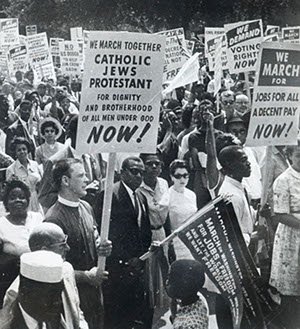
The 1963 March on Washington for civil rights featured blacks marching alongside Christians and Jews. But some social observers note the dream of the “beloved community” still is far from reality, and the legacy of the Civil War continues to shape American life. (RNS FILE PHOTO)

“Because of that, there is a superficiality about our conversations. We are not willing to talk honestly for fear it may undermine our relationships. As a result, it can never go to a deeper level. It is never a whole relationship,” he said.

“The larger issue of how we relate as human beings of different races lies just outside the scope of our personal relationships. And that prevents us from growing.”

Christians who historically have been divided by race need to move beyond painful pasts and look instead to the common purpose they share, said Mark Croston, who serves as first vice president both of the predominantly white Baptist General Association of Virginia and the historically African-American Virginia Baptist State Convention.

“As far as what happened in the past is concerned, I try not to let that have any impact on what I do or on the future,” said Croston, pastor of East End Baptist Church, an African-American congregation in Suffolk, Va.

Croston, who grew up in Philadelphia, has served in Virginia 23 years. Any institutions or systems designed to separate black and white Christians disappeared long ago, he observed.

While Christians of different races often tend to operate in different spheres, he attributed that primarily to a narrow focus on individual, time-consuming local ministries—not a narrowness of spirit.

“Race relations is just not on the minds of most people. So, we just keep on doing what we are doing,” Croston said.

“It doesn’t come up on our radar as an area in which we need to make progress.”

Smoot agrees—at least up to a point.

“At this particular point, I do not see any specific barriers to racial reconciliation in American religious life today that can be directly traced to the Civil War,” she said.

Regarding the continuing existence of churches and denominations organized largely along racial lines, Smoot believes several factors must be held in tension. It remains true, as Martin Luther King Jr. once observed, that 11 a.m. on Sunday is the most segregated hour of the week. But to a degree, that reflects differences in preference regarding worship style and a historic desire among African-Americans for autonomy.

“Black religious independence was extremely important to free African-Americans during the antebellum and from the Civil War to the present. It was about having the right to worship freely,” she said.

“Because African-Americans have successfully established their own churches, convention and foreign mission boards, their leadership skills are no longer subjected to the scrutiny of many white religious bodies and leaders who believed that African-Americans could not thrive without white supervision.”

If black Christians and white Christians would take the time and effort to get acquainted with each other at the personal level, the kingdom of God would benefit, Croston noted.

“When you get to know people, it breaks down the barriers that keep us apart,” he said.

Croston, a past president of the National African-American Fellowship of the Southern Baptist Convention, believes black Baptists and white Baptists can learn from the different facets of the gospel message each typically has emphasized.

“I love the Southern Baptist Convention’s unwavering focus on missions and evangelism. That has been the great strength of the convention,” he said.

African-American churches emphasize another aspect of Christ’s command—to love people and meet needs wherever they exist, he added.

“For us, it’s not an issue of other people, but rather an issue of all our people. There is something about having been left out, forced out and disenfranchised that makes you sensitive to hurting people anywhere in the world.”
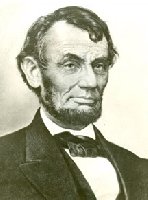
Abraham Lincoln

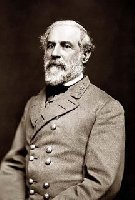
Confederate General Robert E. Lee

Race remains the prism through which black and white Americans—whether Christians or not—view reality. They tend to see any national crisis from different race-based perspectives, Bell asserted.

“We operate out of a hermeneutic of suspicion,” Bell said. “Our interests don’t converge. … Part of what in-forms our relationships is a lack of trust.”

While Bell does not see significant movement toward making race relations a front-burner issue in Baptist life, he remains cautiously hopeful, based on the interest the topic seems to generate. He noted that when he has lectured at Baptist colleges, students packed the sessions and listened eagerly when the topic turned to race.

“Among the ashes of our relationships, that’s the spark, the ember of hope,” he said. “There are some Christians among whom there is a ‘want to’ about improving race relations. There are Baptists who want somebody to start the conversation. But change is difficult.”

Smoot sees a good example of racial harmony dating back about 90 years, with black and white Baptist women leading the way. She points specifically to the Women’s Convention, an auxiliary to the National Baptist Convention U.S.A., Inc., and the Woman’s Missionary Union of the Southern Baptist Convention.

“They have attended and been speakers at each other’s conferences since the 1920s to reconcile past racist behaviors, shared Baptist literature, provided scholarships for girls, initiated fundraisers for various projects and planned joint activities related to the work of the Baptist denomination,” she said. “If these women were successful in their efforts at reconciliation decades ago, there is no doubt that racial reconciliation is possible.”

Even so, Christians often prefer vague platitudes about love and unity to the hard work of relationship building, Bell noted.

“Christ has the ability to change us. We know God shows no partiality. That’s what we preach. We know we are one in Christ. That’s what we say we believe,” Bell said.

“Too often, we are satisfied with the rhetoric, but the reality is different. We like the vision of oneness, but there is a hesitancy on our part to advocate for change and to move forward.”


Switchfoot challenges youth to make a difference

DALLAS—Members of the Christian rock band Switchfoot hope the release of their latest album encourages listeners to dive deeper into the Bible and stand strong during life’s trials.

The Grammy and Dove Award-winning Christian rock band Switchfoot will perform at Youth Evangelism Conference in Dallas June 24.

“Hello Hurricane acknowledges that storms will tear through our lives,” lead singer Jon Foreman said. “This album is an attempt to respond to those storms with an element of hope and trying to understand what it means to be hopeful in a world that keeps on spinning out of control.”

His brother, bass player Tim Foreman, agreed. “Because of Christ, we have a reason to have the faith to keep pressing on when the storms in life come. When the storms come, we have to be prepared to face them by having a solid foundation rooted in God’s word.”

Switchfoot has been a prominent force in Christian rock music more than a decade— selling more than 5 million records, touring around the world, winning a Grammy Award and multiple Dove Awards.

In addition to the Foreman brothers, the band is made up of Chad Butler, Jerome Fontamillas and Drew Shirley. The friends selected a group name based on their mutual interest in surfing.

“We grew up in California and loved to surf. So, it made sense to us that the band name would come from a surfing term,” Jon Foreman explained.

“To switch your feet means to take a new stance facing the opposite direction. It’s about change and movement—a different way of approaching life and music.”

{youtube}CO1n1mxcTXM{/youtube}

Through the years, Switchfoot gained national recognition with performances on television talk shows and having songs prominently featured in movies, such as A Walk to Remember and The Chronicles of Narnia: Prince Caspian

By taking their public platform and merging it with their heart for community, the band has worked with a number of relief efforts and humanitarian causes including the ONE Campaign, Habitat for Humanity, Invisible Children and To Write Love on Her Arms. They also founded the Switchfoot Bro-Am Surf Contest, a benefit contest and concert to help raise funds for various organizations serving at-risk and homeless youth in the band’s hometown of San Diego.

The band will perform at the Baptist General Convention of Texas’ Youth Evangelism Conference in Dallas June 24, and band members hope to provide students and young adults a life-changing encounter with God.

During their concerts, band members often share testimonies about how Christ has changed their lives. They also challenge young people to step out of their comfort zones and make a difference in the world.

“We really want our songs to be a vehicle to challenge people to think about what matters most in this world, encourage them to make an impact in big and small ways, and to lead people to Christ,” Tim Foreman said.

“The most important advice I can share with youth is for them to be aware of their limitations and the fact that they need a Savior. Time on this earth is so precious and short. Most of us don’t stop to comprehend what that really means. Most of the time, we end up taking people and situations in our lives for granted. But we need to be focusing on how we can make our lives count for what matters most.”


Race relations progress slow but steady

ATLANTA (ABP)—Two men who have been in the fray a long time believe race relations have improved in the United States 150 years after the start of the Civil War—at least enough to justify encouragement.

Integration actually came at the cost of community, Baltimore said, quoting an insight from Blowing the Trumpet in Open Court by Boykin Sanders. Black businesses lost customers when people could shop anywhere; black communities lost homeowners when banks no longer “red lined” suburban areas and black denominations lost churches when they were no longer the only option.

Baltimore sees bright spots in young people who “look through a different lens.” Like Baltimore, McCall sees “great hope” in young people. He teaches at Mercer University’s McAfee School of Theology and said his students laugh at issues their parents argued over.

McCall, 75, grew up where the biggest ethnic conflicts occurred between various European ethnic groups who lived in his Pennsylvania community.

He became embroiled in racial conflict as a student at the University of Louisville where, as the only black in the Baptist Student Union, local pastors asked BSU Director Fred Witty to exclude him. Witty refused, and students said they would “close the place down” if they were forced to exclude McCall.

Decades later, McCall sees formerly white churches in racially changing communities increasingly giving their property to black congregations who can minister in the community, rather than selling the property and giving proceeds to mission boards for ministry elsewhere.

It is “happening across the nation,” he said, which gives him cause for encouragement.


Christians shatter taboos around talking about money

BEVERLY, Mass. (RNS)—No sooner had 29-year-old Graham Messier joined a small group at his church than he found himself breaking an American taboo—talking about how much he earns and where it all goes.

Others in the group did likewise as they kicked off an eight-week program aimed at reconciling personal finances with Christian beliefs about economic justice.

It’s countercultural, they said, but it works.

Members of a Lazarus at the Gate discussion group talk about the ways they spend money and how simple choices at home can yield big differences abroad. (RNS PHOTO/Courtesy Boston Faith and Justice Network)

By the eighth meeting, Messier’s group had raised $1,800 for three nonprofits simply by cutting back on gourmet coffees, dining out and other nonessentials.

Talking about household budgets isn’t “the most comfortable thing in the world,” Messier acknowledged. “But talking as Christians about the reality of our money situations should be more of a focus than it is generally if we’re going to be real about loving, giving to the poor and taking care of our fellow man.”

Since inception in 2006, the Lazarus at the Gate curriculum has guided about 400 people in more than 30 groups to give away $200,000. Using the biblical story of poor Lazarus seeking help at a rich man’s gate, most participants learn ordinary Americans rank among the world’s richest 5 percent—and a few dollars go a lot farther in the developing world than they do at their local coffee shop.

What began as a Boston-based pilot has grown into an open-source curriculum. The ecumenical Boston Faith and Justice Network shares Lazarus materials on request with college student groups and churches.

The Boston group recently received funding from Episcopal City Mission and the Presbyterian Hunger Program to encourage the curriculum’s use in their denominations.

For small groups in American churches, intimate sharing is familiar terrain, but few go so far as to probe spending practices. This “special kind of discipleship” is rare, in part, because it entails true vulnerability, and people often don’t want to “disclose family secrets,” said Max Stackhouse, a retired Princeton Theological Seminary theologian and co-editor of the book, On Moral Business.

Talking about spending habits “really does cut to the depth of who you are,” said Craig Gay, a Regent College sociologist and author of Cash Values: Money and the Erosion of Meaning in Today’s Society.

“It really does lay you bare, and that’s threatening. Most of us don’t want to be that transparent with each other, (but) being less private and more accountable in this area is probably a good idea.”

Discomfort notwithstanding, Lazarus has proven a compelling challenge in various religious sectors, appealing to both evangelicals and mainline Prot-estants, said Ryan Scott McDonnell, executive director of the Boston Faith and Justice Network. College students seem especially interested.

“People are looking for a framework for social justice or something, and they have a hunger for it in their heart, and they don’t know how to articulate it or interpret it,” said Mako Nagasawa, co-author of the Lazarus curriculum and an adviser to the Asian Christian Fellowship group at Boston College.

“We want to say it comes from being made in the image of God and being redeemed by Jesus.”

As a Lazarus group gets started, participants share household budgets with the assurance that others won’t judge them or break confidentiality. Subsequent meetings place those budgets in larger contexts.

Participants explain how money was (or wasn’t) discussed at home during their childhoods. Together, they unpack biblical passages that address money and responsibilities. Presenters illustrate how poverty fuels social problems such as prostitution, human trafficking and environmental degradation.

Lazarus groups function as a kind of hybrid between secular giving circles and evangelical accountability groups. When members of Messier’s group convened at Christ Church of Hamilton and Wenham, Mass., participants would report their spending and saving over the previous week.

Even with group encouragement, efforts to cut back aren’t always successful.

Two artists in the Christ Church group, Matt Allard and Liana Hill, found visits from relatives and unpredictable cash flow prevented them from saving an extra $20 per week for charity. But they donated $140 anyway.

Lifting the veil on finances involves risk, Gay noted, and it requires vigilance to make sure no one suffers abuse. But when trust is warranted, he said, Lazarus groups might help people steer clear of secretive spending habits.

Simplicity for the sake of generosity is one the Lazarus goals, but exceptions are allowed. After seven weeks of vegetarian fare at the church, the final celebration dinner at one couple’s home featured flank steak and two desserts.

As the final meeting wound down, the group’s 13 members voted to divide their $1,800 equally among three organizations whose work includes microfinance, sustainable agriculture and rescuing prostitutes in Manila.

The group agreed to keep meeting monthly and making quarterly donations.

And they gave thanks for an experience that’s helped them learn to live more gratefully from day to day.


Faith Digest

Amnesty International chides Vatican. In its latest annual report, Amnesty International has criticized the Vatican for falling short of its commitments to protect children from sex abuse. This marks the first time the group has included the Vatican in its annual report, which assesses the state of human rights in 157 countries. That change follows a wave of scandals over sexually abusive Catholic priests in Europe and Latin America last year. Amnesty International said the Vatican failed in its obligations as a party to the United Nations’ Convention on the Rights of the Child by not removing alleged perpetrators from their posts pending proper investigations, not cooperating with judicial authorities to bring them to justice and not ensuring proper reparation to victims.

Crystal Cathedral for sale. The Crystal Cathedral has announced plans to sell its iconic glass-walled church in Southern California to pay back creditors and overcome bankruptcy. Senior Pastor Sheila Schuller Coleman, daughter of founder Robert H. Schuller, said the church will remain as a tenant and will have the option to buy back some of church’s campus in Garden Grove. The megachurch, known for its Hour of Power television broadcast, filed for Chapter 11 bankruptcy protection from its creditors last October. At the time, the church owed $7.5 million to creditors and has cut back staff, reduced airtime and halted its holiday pageants. Under the plan, the worship services and broadcasts are expected to continue without interruption, the church announced.

Same-sex relations receive record approval. Nearly two-thirds of Americans say gay or lesbian relations between consenting adults should be legal, the highest percentage ever recorded by the Gallup Poll. Researchers found 64 percent of American adults supported legal gay relations, which Gallup has included in surveys since 1977. Despite the high rate of support for gay relations, Americans are less likely—56 percent—to consider them “morally acceptable,” although that figure is the highest measured since Gallup first asked that question in 2001. The same poll found a majority of Americans (53 percent) supported gay marriage for the first time since Gallup started tracking the issue in 1996. The findings, based on telephone interviews of 1,018 adults, have a margin of error of plus or minus 4 percentage points.

Compiled from Religion News Service

Correction. The Faith Digest column in the May 23 issue carried an item titled, “Plans for interfaith school shelved.” In attribution to a quote, Lee Barker was identified incorrectly as president of Andover Newton Theological School. Barker is president of Meadville Lombard Theological School. Nancy Nienhuis, dean of students and vice president for strategic initiatives at Andover Newton Theological School added: “Andover Newton is moving ahead with its plans to create a multifaith model for seminary education; we just won’t be doing so with Meadville Lombard. Our current work with the Hebrew College Rabbinical School continues to be a part of this vision, as do new initiatives with other schools that will further broaden our multifaith focus.”


Bob Dylan’s religion— still tangled up in mystery

WASHINGTON (RNS)—In the 1960s, Bob Dylan was hailed as a prophet, first of folk music, then of rock ’n’ roll—at least by those who forgave him the heresy of having “gone electric.” But in the late 1970s, when rock’s best-known Jew famously declared Jesus to be the answer, many fans turned on him.

Author Michael J. Gilmour says it’s “hard to answer where (Dylan) is now” religiously. “He’s always going on first dates but never actually settles into a long-term relationship.”

For five decades, Robert Allen Zimmerman, who turned 70 May 24, has shocked, mystified, baffled and intrigued fans with songs rife with biblical references and no shortage of religious imagery.

For Michael J. Gilmour, an associate professor of New Testament and English literature at Providence College in Manitoba, Canada, and author of the book Gods and Guitars, Dylan proves an irresistible subject for theological analysis.

Some fans gladly embrace the idea of Dylan as a secular prophet, a term vague enough to permit “a semblance of religiosity that does not actually connect the singer to a faith tradition in any way,” Gilmour writes in his recent book, The Gospel According to Bob Dylan.

And while some might bristle at linking the word “gospel” to Dylan, Gilmour calls the famous songster a “serious religious thinker,” even a “musical theologian.”

Dylan often mentions God in his songs, “and though he rarely attempts to define what the term means, he still points us toward that vague Other,” Gilmour writes.

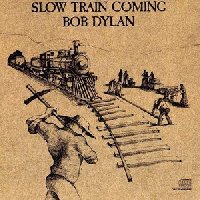
The author, 44, said he experienced something of a religious awak-ening at age 13 while attending a church camp, where he heard Dylan’s “Slow Train Coming,” a song born of the singer’s embrace of evangelical Christianity in 1979.

“It was the first time I listened to anything with sustained reflection on spiritual themes,” Gilmour said in an interview. “And the idea that a well-known celebrity actually took religion seriously struck me as rath-er important.”

Raised Jewish, Dylan had a bar mitzvah and, after a visit to Israel in 1971, even pronounced the late far-right Rabbi Meir Kahane “a really sincere guy.” Convalescing from a motorcycle accident and leading up to the 1967 album John Wesley Harding, he reportedly read the Bible extensively.

While former Beatle George Harrison embraced Hinduism without fuss and singer Cat Stevens became a pious Muslim, Dylan’s public and unexpected turn to Christianity was met with wide derision.

“What distinguished Dylan’s experience from Stevens’ and Harrison’s was the disdain generated by his turn to religion,” Gilmour writes.

Some conservative Christians latched onto Dylan’s fame as a way of raising their own profiles and further-ing their agendas, but his evangelicalism “turned a lot of people off.”

The singer reportedly has seemed to return to the Jewish fold. He has supported the ultra-Orthodox Chabad Lubavitch movement, even studying at one of its yeshivas, and had his sons, Samuel Isaac Abraham and Jakob Luke, bar mitzvahed.

However, Gilmour believes it’s “hard to answer where (Dylan) is now” religiously. “He’s always going on first dates but never actually settles into a long-term relationship.”

In any event, Dylan has recovered from that earlier disdain, Gilmour said.

“The impression I get from his concerts is that people cheer just as loudly for those (Christian gospel) songs as they do for the others,” he said.

From the time he broke onto the folk music scene in the early 1960s, some critics hailed Bob Dylan as a poet and prophet. But the biblical imagery that has infused so many of his lyrics has left some secular critics uneasy. (RNS PHOTO/Courtesy of Simon & Schuster)

Dylan treated Pope John Paul II to a stirring rendition of “Blowin’ in the Wind” and other standards at the 1997 World Eucharist Congress.

For Gilmour, Dylan’s papal show and his apparent return to Judaism show the musician “respects religion.”

Dylan has been truly mystified about the fuss over his spiritual messages, Gilmour writes, though he was “not above nurturing this mystique and indulging it occasionally (but) no doubt with a sense of irony (and) exaggerated self-description.”

In the end, the presence or absence of religious meaning in Dylan’s music is something that rests largely with the listener, Gilmour concedes.

“Some find Dylan merely using religious terms and imagery artistically but with no particular theological intent, whereas others find in his songs meaningful engagements with ultimate questions.

“The gospel according to Bob Dylan means something quite different from fan to fan.”

Gilmour confesses his answer always is the same when someone asks him about Dylan’s personal spiritual beliefs: “I do not know. Ultimately, it’s none of my business. All I can say with any confidence is that religious language is everywhere in his songs.”