Seeing the Big Picture

"Are we missing the big picture?"

That's the question some Christian leaders are asking as America's centuries-old denominational patterns unravel, while denominational distinctions seem as entrenched—and unbridgeable—as ever.

In a post-denominational society, can churches retain theological integrity and still find common ground with people who hold differing beliefs?

"Christians today are falling into the trap of tribalism," said Jonathan Merritt, creative director at Cross Pointe Church, a Southern Baptist congregation in suburban Atlanta. "Not only are we part of the Baptist tribe, but also the Southern Baptist Convention tribe, the Reformed and non-Reformed tribe, the traditional and contemporary tribe.

"I love my heritage, but ultimately I'm looking for ways to build the kingdom" of God, said Merritt, a 28-year-old activist who has led some Southern Baptists across denominational lines to address environmental issues. "Most young Christians want to be part of the Jesus tribe. That paradigm is shaping the way we should answer this question and the way a lot of young Christians answer this question."

Some Christians insist the question—and the answer—is broader and compels them to partner with other faith traditions.

"The world's brokenness means people of faith must collaborate, and we have learned that goodwill Baptists can work with other faiths and Christian traditions to advance the common good," said Robert Parham, executive director of the Baptist Center for Ethics in Nashville, Tenn.

"We readily work with others out of faithfulness to Jesus' great commandment to love our neighbor. Loving neighbors means seeking their welfare, advancing the common good. While we might disagree with other faith expressions over the divinity of Jesus, interpreting the Bible, the meaning of baptism and the practices of the church, we refuse to let those issues become stumbling blocks keeping us from loving our neighbor."

Worries that interdenominational and interfaith cooperation will dilute theological integrity aren't new. Some 19th-century Baptists insisted on the exclusive validity of Baptist churches.

But their 21st-century descendants find the questions less clear-cut and endlessly vexing: Can an evangelical Christian vote for a Mormon presidential candidate? Can Baptists join Muslims and Hindus at a worldwide Catholic-convened day of prayer for peace? Where are the boundaries—if any?

Social ministries and disaster relief

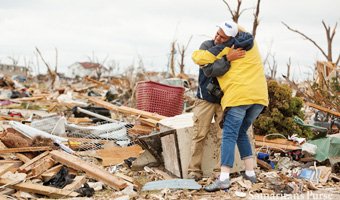
Partnering to meet human needs, especially following a natural disaster, presents the fewest dilemmas, some Christian relief workers insist.

"Disaster response and hunger relief are areas in which Baptists are involved where we can set aside differences to meet needs of victims and hurting people," said Dean Miller, who coordinates disaster relief for the Baptist General Association of Virginia.
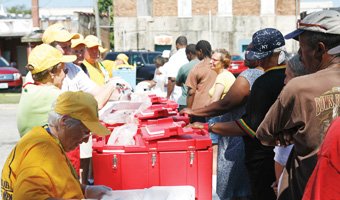
"When people are hungry or need a tree cut off the roof of their houses, nothing about translations of the Bible or the meaning of baptism comes into play at all. That's true not just among Baptists but among all religious groups and non-religious groups."

Miller could think of no circumstance that would prevent the BGAV from cooperating in disaster response with any group—and that includes a rival state convention, the Southern Baptist Conservatives of Virginia.

"We have a great relationship with the SBCV in disaster relief," said Miller—no small feat in the tortured post-conflict environment of Baptists in the American South.

When disasters occur in Texas, disaster relief units both from Texas Baptist Men and the Southern Baptists of Texas Convention may be on the scene. Likewise, after TBM begins to wrap up its work in providing emergency food service and other ministry as a first-responder, the Baptist General Convention of Texas offers ongoing disaster response to help with recovery and rebuilding.

Further complicating matters, TBM is affiliated with the BGCT and receives no financial support from the SBTC. However, some of its lay leaders are members of SBTC congregations, and their churches sometimes work closely with the men's missions organization.

By the early 1990s, years of theological disputes among Southern Baptist Convention churches had propelled many moderates and progressives out of the national denomination and into new organizations like the Cooperative Baptist Fellowship and the Alliance of Baptists.

Conflict eventually filtered into the SBC's state affiliates, sometimes with opposite results—in Texas and Virginia, ultra-conservatives left older, moderate state conventions to form new right-leaning ones. In Missouri, where conservatives prevailed, moderates formed an alternative network of churches. For Baptists in those states, overcoming bitter memories and continuing suspicions is nearly as challenging as setting aside doctrinal distinctions.

But at least in relief ministries, said Miller, focusing on "the big picture" has resulted in amiable collaboration.

"Since I've been state coordinator, the BGAV and the SBCV have shared responsibility in disaster relief in a variety of ways," he said, including following a spate of tornadoes in Southwest Virginia last spring and Hurricane Irene last August.

It's trickier, Miller concedes, when immediate responses transition into more explicitly evangelistic efforts.

"In a longer-term response that might include a strategy of church planting or evangelism, there's potential for conflict," he said. "If a (Christian relief) organization chose to bring its faith issues earlier in the process, it might cause us to re-evaluate how we work with them.

"That's not to say we aren't motivated by our faith from the outset of disaster responses. When we hand out food, we want to take opportunities to share Christ, but we don't staple a gospel tract on the food. If we were asked to do so, we'd say no."

Mission engagement

Cooperating across denominational boundaries in evangelism is more difficult, mission strategists insist, and some missionary-sending organizations carefully demarcate the frontiers.

Almost 5,000 overseas missionaries of the SBC's International Mission Board follow a policy of five "concentric circles" defining cooperation with other faith groups.

"IMB missionaries do not enter into strategic relationships randomly but with church-planting movement intentionality and in accord with the biblical principles of the 2000 Baptist Faith and Message," notes the policy adopted by IMB trustees.

"Because our relationships have this intentionality they have different guidelines depending on the purpose we are pursuing."

The Baptist Faith and Messageis the SBC's statement of faith, most recently revised in 2000.

From broadest to narrowest, the five levels:

• Aim to "gain a presence or access to a … population segment." At this level "creativity and flexibility are essential in associating with cultural programs, educational institutions, business forums or whatever can open the door to deeper levels of relationships."

• Seek to "minister to specific needs," including disaster relief and social development. This can be accomplished only with "organizations that have a Christian identity and are motivated by spiritual principles."

• Share the Christian gospel only in collaboration with those "whose commitment is to New Testament evangelism and who present personal repentance and faith in Jesus Christ as the only way to salvation."

• Start new congregations only with organizations whose definition of "church" is consistent with the Baptist Faith and Message, which calls it "an autonomous local congregation of baptized believers, associated by covenant in the faith and fellowship of the gospel; observing the two ordinances of Christ, governed by his laws, exercising the gifts, rights, and privileges invested in them by his word, and seeking to extend the gospel to the ends of the earth."

• Influence the "ongoing shape of Baptist work and identity, even after the missionary is no longer present, through theological education and ministerial training. Seldom, if ever, would we engage in strategic relationships … at this level."

The Cooperative Baptist Fellowship's 160-plus mission workers also draw distinctions in collaborative activities, but without a formal policy.

"We do not have official guidelines that we have established for partnerships with other religious groups," said Rob Nash, the CBF's coordinator of global missions.

"Generally, we make decisions about partnership based upon mutually shared goals and vision and upon relationships of trust that are built over time. We have a process in place for establishing full-fledged partnerships and/or memoranda of understanding that ensures that we have exit strategies and other mechanisms in place so that the nature of the relationship is clear."

The CBF partners with a variety of Baptists around the world, Nash said, but "we have never limited ourselves to these Baptist relationships. Our field personnel have partnered with organizations even beyond the Christian faith when global disasters and other kinds of social ministry have made it helpful to do so in order to meet the needs of a community."

"Obviously, with any partner we do our homework to ensure that the organization has a good reputation and that its approach to ministry and service is in harmony with our own basic mission and vision," he added. "This ensures that the partner is focused upon a sustainable assets-based approach to community development and that we do not sacrifice our own theological and missiological commitments."

Theological education
Although educating Baptist ministers remains largely denominationally focused, collaborative models are emerging in places. Baptist communities at Methodist-affiliated Duke Divinity School in Durham, N.C., and the Disciples of Christ's Brite Divinity School in Fort Worth maintain "theological and multicultural diversity of students and faculty to be an important context for coming to a clear understanding of individual faith and practice," according to administrators.

Wake Forest University's School of Divinity, while highlighting its Baptist heritage, is "intentionally ecumenical."

"The divinity school's roots in Baptist traditions are deep and strong, and these roots enable the divinity school to ground its present story in the lived experience of preceding generations who strived to be a sign of God's justice and hope in the world," said Gail O'Day, dean of the Winston-Salem, N.C., school, in a message on its webpage.

"The divinity school's mission to be an ecumenical learning community, in service to the ecumenical family of churches, means that students from a wide range of Christian traditions contribute fully to the rich fabric of our communal life."

By contrast, the six seminaries owned and operated by the SBC maintain a distinct Baptist identity, typically restricting faculty to members of Baptist churches.

"It depends on what type of education church leadership wants to pursue," said Merritt, who earned degrees from both Southeastern Baptist Theological Seminary in Wake Forest, N.C., and the Methodist-affiliated Candler School of Theology at Emory University in Atlanta.

"There's a confessional approach and a contextual ap-proach."

Although Merritt believes cooperative initiatives such as church planting should be limited to Christians whose views are compatible—"I don't see it as being exclusionary; it's just pragmatic"—varied views in seminary communities can be spiritually rewarding, he noted.

"I love, within the range of orthodox Christian belief, when there's room for a lot of viewpoints to be presented in theological education," he said.

"If we are confident that what we believe is true and right and biblical, then we shouldn't be afraid to have it presented alongside other views in a theological education setting."

Social justice

Religious disagreement is no obstacle to collaboration in efforts to achieve a just society, said Parham of the Baptist Center for Ethics, which has developed resources to assist Christians in the effort.

One of the BCE's documentaries "shows that each (Abrahamic) tradition sees its text as sacred and that each text calls readers to do justice," he said.

"Jews, Muslims and Christians will not prioritize the sacredness of another faith's primary text. But that disagreement does not negate the common agreement to seek justice, to care for the vulnerable, to protect orphans and the elderly."

An immigration documentary explores a shared belief among Baptists and Catholics—who "have a long, contentious history over matters of doctrine"—that "Jesus calls us to welcome the stranger," Parham said.

Merritt also advocates a Christian commitment to the "common good" that can cross denominational lines while retaining faith integrity.

"Christianity is not something you do but who you are," he said. "It's impossible to lay that aside to do a particular kind of work. Partnerships have to allow space for those who follow Jesus to conduct that work within that context."

But he detects a "shift in young people from culture-war Christianity to incarnational Christianity."

"As I rediscover the Jesus of the Bible, he didn't begin with a six-point platform but came to live among human beings and heal and weep. That's the model for us as we move forward."


Does Calvinism extol God’s glory or make him a moral monster?

Roger Olson, professor at Baylor University's Truett Theological Seminary, agreed to write a new book refuting Calvinism because he believes somebody needs to rescue God's reputation.

"I am against any Calvinism—and any theology—that impugns the goodness of God in favor of absolute sovereignty, leading to the conclusion that evil, sin and every horror of human history are planned and rendered certain by God," he writes.

Olson doesn't particularly like the title of the book, Against Calvinism, but Zondervan publishing insisted on it. He admires Calvinist colleagues and students, and he makes it clear he respects their Christian commitment. It's radical Calvinism—generally held by those who identify themselves as "young, restless and Reformed"—he feels the need to oppose.

Olson believes Calvinist theology crosses the line into radical territory when it "makes assertions about God that necessarily, logically imply that God is less than perfectly good in the highest sense of goodness found in the New Testament and especially in Jesus Christ, the fullest revelation of God for us."

So, when it comes to the TULIP of so-called five-point Calvinist doctrine—total depravity, unconditional election, limited atonement, irresistible grace and perseverance of saints—Olson seeks to mow down at least the U, L and I, leaving just two petals blooming.

"In spite of their best efforts to avoid it, the 'good and necessary consequence' of their soteriology (doctrine of salvation)—TULIP—is that God is morally ambiguous if not a moral monster," he asserts.

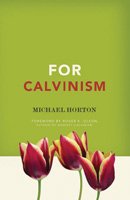
In the companion volume, For Calvinism, Michael Horton of Westminster Seminary prefers the terms "particular redemption" to limited atonement and "effectual grace" to irresistible grace. But otherwise, he mounts a spirited defense of the five points he and other Calvinists refer to as the "doctrines of grace."

"Chosen in Christ from all eternity, we are called effectually to Christ in time," Horton writes. "Through faith, which itself is God's gracious gift, we receive Christ and all of his benefits."

Rather than defaming God, Horton insists, Reformed theology acknowledges God's rightful place as sovereign and offers a biblical and accurate assessment of humanity's inability to attain salvation apart from God's initiative.

"It is impossible to read the Bible without recognizing God's freedom to choose some and not others—and the fact that he does in fact exercise that right," he writes.

Unconditional election should remind Christians "God is always on the giving end and sinners are on the receiving end of grace," he adds.

Books and sermons on "how to be born again" miss the point, Horton asserts. Sinners do not choose to follow God until God chooses to draw sinners to himself.

"The new birth is a mysterious work of the Spirit in his sovereign freedom, not an event that we ourselves can bring about any more than our natural birth," he writes.

Horton dismisses criticism that God's election of only some to salvation is unfair by insisting fairness would demand every sinner's eternal punishment.

"God is not arbitrarily choosing some and rejecting others," he writes. "Rather, he is choosing some of his enemies for salvation and leaving the rest to the destiny that all of us would have chosen for ourselves."

Olson doesn't accept that argument. "The issue is not fairness but love," he writes. "A God who could save everyone because he always saves unconditionally but chooses only some would not be a good or loving God."

Election rightly understood refers to the people of God in general—all those who freely respond to the invitation to be "in Christ"—not to specific individuals, he writes. Reprobation—the idea that God has predestined some people for hell—follows logically if one believes God is absolutely sovereign and has chosen only some individuals for salvation, Olson insists.

Radical Calvinists' belief in the absolute sovereignty of God amounts to divine determinism, and it makes God responsible for evil, he asserts.

"The one main reason Arminians and other non-Calvinists believe in free will is to preserve and protect God's goodness so as not to make him the author of sin and evil," Olson writes. "Calvinism makes it difficult to recognize the difference between God and the devil except that the devil wants everyone to go to hell and God wants many to go to hell."

Horton rejects that assessment of Reformed theology. However, he acknowledges the excesses of some zealous converts to the "New Calvinism" movement.

"We have to distinguish between a God-centered perspective and thinking that you have God on your side—which implies that he's against fellow brothers and sisters," he writes.

"Unfortunately, we can turn God into a mascot for our team while extolling his sovereignty, glory and grace. … For all sorts of reasons, we can be misguided in our approach, and we can do all sorts of nasty things 'for the glory of God.'"


Salem witch trials get another look in new documentary

SALEM, Mass. (RNS)—For centuries, scholars have wondered how a farming village in 1692 could have become so hysterically anxious that magistrates would order 20 executions for crimes of witchcraft.

Now a new documentary film about the infamous Salem witch trials is stirring fresh debate by heaping blame on the local minister, Samuel Parris.

An actor portrays Samuel Parris in Salem Witch Hunt: Examine the Evidence, a new film. (RNS PHOTO/Courtesy of Essex National Heritage Commission and Don Toothaker)

Scholars agree Parris played a central role, but they're divided on whether he deserves the villainous treatment he receives in the film, Salem Witch Hunt: Examine the Evidence.

The 35-minute film began showing four times daily last month at the Salem Maritime National Historic Site. Five leading scholars collaborated with the Essex National Heritage Commission, producer of the film, which draws heavily on a recent compendium of nearly 1,000 documents from the period.

"We finally have a chronology that tells us about how it all began," said Univer-sity of Virginia historian Benjamin Ray, one of four scholars who took questions after a recent screening. "Before we had documents, but we didn't have an orderly sequence. It's hard to give an account of history without a sequence."

In reviewing sermons, journals and court records, scholars began to see how various pieces fit together. Everywhere they looked, they seemed to find fingerprints—figuratively and literally—of Parris and his ally, Thomas Putnam, a wealthy landowner and church member.

The story begins with a community that feels under siege. Reeling from bloody Indian wars and wary of encroaching French Catholics, residents of rural Salem Village feared the Puritan experiment in America's colonies might be nearing a violent end. Into this tinderbox comes the newly ordained Parris, a 36-year-old Harvard dropout who'd been a serial failure in farming and business enterprises.

"This is really his last chance to succeed," said Salem State University historian Emerson "Tad" Baker in the film. "He can't fail at this, because if he does, he's really kind of failed at life."

Desperate for an accomplishment, Parris revives rigorous church standards in a bid to stoke a religious revival, according to the film. His fervor heightened tensions between church members and the "reprobate," or nonmembers. When he warns in sermons of an unfolding battle between good and evil, conditions ripen for accusations to fly.

Trouble begins in Parris' own family. After his niece and daughter start acting strangely, the girls cite two local women for cursing and tormenting them. Parris later pressures Tituba, his slave, to confess before the magistrates. Tituba warns them: Nine witches remain at large. The hunt intensifies across all levels of society. Even church members are accused.

Girls caught up in the fervor of the 1692 Salem witch trials are seen in Salem Witch Hunt: Examine the Evidence, a new film. (RNS PHOTO/Courtesy of Essex National Heritage Commission and Don Toothaker)

At various junctures, it seems, Parris could have called for cooler heads to prevail. But he had his own motives to continue the hunt, according to Cornell University historian Mary Beth Norton.

"He wanted to become like Cotton Mather," Norton said in the film, referring to the prominent Boston minister who had become known for describing children afflicted by alleged witchcraft.

Parris lets accusations and trials continue, with help from Putnam, who continually revises court records to make the accused seem guilty. Parris asks forgiveness within a few years of the last trials. He died in 1720, having never found the success he sought, according to the film.

Although scholars worked together on the film, not everyone likes how Parris comes across. One critique—the film could have shown more compassion and understanding for a struggling man who faced enormous, sometimes competing, pressures.

"I thought it was a little over the top the way the film portrayed him," said Richard Trask, a historian and archivist at the Danvers Archival Center, which preserves records from the witch trials. "Parris is much more than the bad guy."

Indeed, Salem residents still are trying to make sense of their region's infamous past and Parris' role in it.

"For years, I always had thought of him as fiercely intoxicated with power," said Peter Santos of Salem. "I now really believe that he was a tragic hero. He believed he was God's right-hand man, doing all within his power to protect his fellow Christians."

Parris' role isn't the only new insight from the film. Tituba's ethnic identity is revealed to be Native American (in other renderings, including Arthur Miller's 1952 play The Crucible, Tituba is African). Also, many of the 150 accused in the region during the 1690s came from nearby Andover, not Salem Village.

"They should really be known as the Andover Witch Trials," Baker said.

Scholars also are casting doubt on the popular idea that those executed in 1692 were principled heroes who refused to repent for a crime they didn't commit. In fact, the accused had no reason to believe a confession would save their lives, said Margo Burns, a linguist and expert on period documents at St. Paul's School in Concord, N.H.

What filmgoers are apt to remember, however, is the minister's prominent role. Whether they'll give him credit for repenting, or only for escalating hysteria, remains to be seen.


Faith Digest

Church health trends not looking good. American congregations have grown less healthy in the last decade, with fewer people in the pews and aging memberships, according to a new Hartford Seminary study. Median worship attendance at a typical congregation decreased from 130 to 108, according to the Faith Communities Today survey, based on responses from more than 11,000 Christian, Jewish and Muslim congregations in 2010 and more than 14,000 congregations in 2000. The percentage of congregations with average weekend worship attendance of 100 or fewer inched up from 42 percent to 49 percent over the decade. More than a quarter of congregations had 50 or fewer people attending in 2010. Across the board—among white evangelical, white mainline and racial/ethnic congregations—there was a decrease in attendance. In many cases, congregations not only are seeing fewer people but older ones in their pews. At least one-third of members in more than half of mainline Protestant congregations are 65 or older.

Most Americans don't know candidate's religion. Six out of 10 Americans don't know Republican presidential candidate Mitt Romney is a Mormon, a new survey shows. Just 42 percent identified the former Massachusetts governor as a Mormon, according to the Washington-based Public Religion Research Institute. That figure remains unchanged from July 2011, despite a flurry of media attention after a prominent supporter of Texas Gov. Rick Perry—Robert Jeffress, pastor of First Baptist Church in Dallas—called Romney's religion a "cult." The only group that showed an increased knowledge about Romney's religion was white evangelicals, whose knowledge of Romney's faith rose from 44 percent in July to 53 percent in mid-October. Researchers found Perry trails both Romney and rival Herman Cain among white evangelicals on measures of political affinity but is relatively even with Cain on measures of religious affinity. Just 8 percent of evangelical voters said Romney's beliefs are closest to their own. The poll is based on a random sample of 1,019 adults, with a margin of error of plus or minus 3 percentage points.

Supreme Court steers clear of roadside crosses. The Supreme Court announced it will not reopen a case in which a lower court ruled highway crosses memorializing Utah state troopers are unconstitutional. The Utah Highway Patrol Association had erected 12-foot white crosses to honor fallen officers since 1998. The American Atheists filed suit in 2005. The group lost its first legal challenge, but the 10th U.S. Circuit Court of Appeals ruled last year that the memorials "have the impermissible effect of conveying to the reasonable observer the message that the state prefers or otherwise endorses a certain religion." The conservative Alliance Defense Fund, which asked the Supreme Court to consider the case, was disappointed. "Justice is not well served when unhappy atheists can use the law to mow down memorial crosses and renew the suffering for the survivors," Alliance Defense Fund Senior Counsel Byron Babione said.

–Compiled from Religion News Service


Holy Smoke: Disrespect for the dead or a last blast for shooters?

WASHINGTON  (RNS)—When he dies, Clem Parnell expects his soul to ascend heavenward. But he wants his ashes loaded into a shotgun shell and blasted at a turkey.

"I will rest in peace knowing that the last thing that turkey will see is me screaming at him at about 900 feet per second," he said.

Parnell and his business partner, fellow Alabama state game warden Thad Holmes, believe other hunters have similar hankerings. This July, they launched Holy Smoke, which offers to load the cremains of customers into shotgun shells, rifle cartridges and bullets.

For about $850, a customer will receive 250 shotgun shells, 100 rifle cartridges or 250 pistol cartridges, all packed with the deceased's ashes. Discounts are available for the military, police and firemen.

After most funeral rites, scattered remains become trodden dirt, gravesites go unvisited, and ash-filled urns sit unnoticed, Holmes said. Loading up a loved one for one final duck hunt would be a more fitting send-off, he says, especially for avid outdoorsmen.

"We want to give people an alternative to celebrate a person's life," Holmes said.

Holy Smoke insists a team of five ATF-trained loaders handle all remains reverently. There is no commingling of ashes, and unused cremains are returned. Parnell, a Southern Baptist, said all seven Holy Smoke employees are "good Christians, with good moral values."

"Just because you're getting shot out of a gun doesn't make it irreverent," said Holmes.

But some Christian scholars say Holy Smoke is firing spiritual blanks.

"It's a terrible idea," said David W. Jones, a professor of Christian ethics at Southeastern Baptist Theological Seminary in Wake Forest, N.C.

"This idea of putting grandpa in a rifle shell or scattering his ashes on a baseball field goes against Christianity. We're supposed to show respect for ashes, not throw them to the wind," said Jones, who has written about cremation in the Journal of the Evangelical Theological Society.

For centuries, Christians shunned cremation as a heathen practice. Burying the dead, church fathers taught, continues the tradition of the Jewish patriarchs and honors bodies made in the image of God. More importantly, Christians believe in a bodily resurrection.

"The Christian tradition is unambiguous about burial being the norm," said Andrew Harvey, a professor of English at Grove City College in Pennsylvania who has written on the cremation trend. "Jesus' burial is a template for our own. But I don't think many people make that concrete connection anymore."

Instead, Harvey said, many Christians have adopted a modern form of Gnosticism, believing the soul shakes free from the body after death as a snake sheds its skin.

Church strictures against cremation have loosened in recent decades, and few consider it a mortal sin. But some caution that there are good theological reasons for burying bodies.

"If the end game is that we live in physical bodies on a physical earth no longer affected by sin and worship God forever, then maybe we need to show respect for our bodies when we die," said Jones.

Cremation accounted for 37 percent of all final dispositions in 2009, according to the National Funeral Directors Association, and it is expected to cross the 50 percent threshold this decade.

Meanwhile, more Americans are planning their funerals in advance, often with highly personalized send-offs. Surfers scatter their ashes over favorite swells. Califor-nians fill fireworks with their remains and shoot them over San Francisco Bay. Cremains can be inserted in coral reefs, fashioned as diamonds, or launched into space. Rolling Stones guitarist Keith Richards even snorted his father's ashes.

"There has been an ongoing proliferation of innovative forms of memorializing the dead and taking care of the human remains," said Gary Laderman, an expert on religion and American death rites at Emory University in Atlanta. "People want to do it themselves and make sure it fits with their personality and commitments."

In other words, instead of religious services focused on the afterlife, funerals are becoming a final act of self-expression, said Matthew Lee Anderson, author of Earthen Vessels, a book about Christianity and the body.

At the same time, more Americans find transcendence and meaning outside church walls, scholars note. Watching the sun rise through the trees while sitting in a hunting stand is about as sacred as life gets, Holmes said.

"You see the birds and animals and you say, 'Look at what God has wrought,'" he said. "It's a soul Band-Aid."


Face of poverty is often a child’s, charities report

OAKTOWN, Ind. (RNS)—Eleven-year-old Sarai Camacho of Donna, in South Texas, tears up when she tells why her mother let go the babysitter for her and her younger sister this summer. It's the same reason her father brought the family to Indiana so he could work the melon fields for a season.

Jeremy Everett, director of the Texas Hunger Initiative, announces the launch of the Texas No Kid Hungry campaign at a press conference at the Texas State Capitol. The Texas Hunger Initiative, a project of Baylor University's School of Social Work and the Texas Baptist Christian Life Commission, is leading the anti-hunger campaign with Share Our Strength to increase access and awareness of programs such as school breakfast and summer meals to ensure children are fed. Share Our Strength supports No Kid Hungry partnerships in 14 other states and will launch three more. (PHOTO/Courtesy of Share Our Strength)

"Last December, my mom didn't get paid for one month, and we started having problems," said Sarai, at Oaktown First Christian Church, which hosted free classes for children of migrant workers. "My mom said for us to come here (to the church) so she doesn't have to give money to the babysitter because we're running out of it."

For churches, it's become an all-too-familiar sight—working families who aren't able to make ends meet. As household resources get tapped out, churches often are the first to see the changing face of poverty—and it's often a young one.

"We're seeing younger families come in," said Ken Campbell, food coordinator for Lazarus House, a Christian ministry to help the needy in Lawrence, Mass. "They're coming forward because one member in the household got laid off or had their hours cut, and now they're just barely making it."

Across the United States, rising numbers of children are coping with the stressors of economic hardship:

• Child poverty rates reached 22 percent in 2010, up from 20.7 percent in 2009 and 16.2 percent in 2000, according to a September report from the U.S. Census Bureau. Between 2000 and 2009, the number of children living in poverty increased from 13.1 million to 15.5 million, according to the Annie E. Casey Foundation.

• The Casey Foundation also reported 4 percent of American children had been affected by home foreclosures since 2007, and 11 percent had at least one unemployed parent in 2010.

Catholic Charities USA, which serves about one in four Americans who live in poverty, served 2.7 million children in 2010, up from 2.4 million in 2006. The steepest increase came in food-related services, as Catholic Charities fed 56 percent more children (935,000) in 2010 than in 2006 (600,000).

As families cycle in and out of poverty, faith-based service programs tend to catch people who fall through the cracks of other safety nets, said Robert L. Fischer, co-director of the Center on Urban Poverty & Community Development at Case Western Reserve University.

When emergency needs arise, people often turn to churches first.

"Churches can provide information and reach families and children who wouldn't know about (public) services otherwise," said Taniesha Woods, senior research associate at the National Center for Children in Poverty at Columbia University.

On the front lines, religious workers see signs of growing desperation. Four years ago at Torrente De Cedron Pentecostal Church in Lynn, Mass., the weekly food pantry stayed open two hours as about 75 families came through for a few days' worth of groceries. Today, the line begins forming hours before the pantry opens, according to Senior Pastor Oscar Ovalles, as more than 200 families come from city neighborhoods and affluent suburbs alike. Even with smaller bags to stretch supplies, everything is gone within 30 minutes.

"Families are in crisis," Ovalles said. "What used to be saved for a rainy day is now the main course, because dad lost his job or mom is no longer working."

Similar signs of stress are visible in nearby Lawrence, Mass. The overnight shelter at Lazarus House always is filled to capacity, Campbell said, and needs for food continue to increase. In early 2010, the weekly pantry gave a few days' worth of groceries to about 300 individuals who were, in most cases, picking up for families with children. This fall, the weekly pantry is serving about 800 on average.

Many who now need help aren't used to receiving any sort of church-based assistance. Sarai's family, for example, until recently had lived stably on income from her mother's teaching job and her father's work in agriculture and food processing. Now they depend on the church's help with child care to make ends meet.

"Because of what we're going through right now with money, I would love to help my family," Sarai said. "I would love to go to college," she said, and earn enough afterward to support her parents.

Religious groups are trying to be resourceful despite slumping donations in uncertain economic times. Still, meeting needs in lean times remains an uphill challenge.

Torrente De Cedron used to run its pantry on $3,000 raised from parishioners' donations, but now the congregation can't afford the $10,000 that's needed to run the program. This fall, the church began hosting regular fundraisers, including an upcoming yard sale, to sustain the pantry.

"The food pantry is no longer just something that we want to do on a volunteer basis for the community," Ovalles said. "Now it's a mandatory thing that we have to have because of the need that we can see in these families and in these kids."


Faith Digest: Death penalty opposition up

Death penalty opposition at high level. More than one-third of Americans now oppose the death penalty—the highest level in nearly 40 years—according to a new Gallup Poll. Moreover, those who believe the death penalty is being applied fairly and those who say it isn't used often enough are at the lowest levels in a decade, underscoring significant changes in attitudes, USA Today reported. The Gallup Poll found 35 percent oppose the death penalty—the highest opposition since March 1972. That year, the Supreme Court ruled the death penalty was constitutional unless it was applied unfairly. By 1976, several states reinstituted capital punishment. Now 40 percent in the most-recent poll believe the death penalty isn't imposed often enough, the lowest level since 2001.

Protestant giving hits record low. Tithing to Protestant churches as a percentage of income is at its lowest level in at least 41 years, according to a new report, and churches are keeping a greater share of those donations for their own needs. Parishioners gave about 2.38 percent of their income to their churches, according to "The State of Church Giving through 2009," a new report by Empty Tomb, a Christian research agency in Champaign, Ill. Just over 2 percent of income went toward congregational finances, such as operating costs and building expenses. Only 0.34 percent of parishioner income went to charities and seminary training beyond the four walls of the church. Those are new lows, at least going back to the first report in 1968.

Bishops warn that church teaching is nonpartisan. With the 2012 campaign gearing up, U.S. Catholic bishops reminded Catholic voters they can't cherry-pick from church teachings to justify their own political preferences, and cautioned both sides not to edit the bishops' statements into voter guides to back one party or another. The bishops' warning came in a special introduction to "Forming Consciences for Faithful Citizenship," a 30-page document on the responsibilities of Catholic voters that has been issued before every presidential election cycle since 1976. But the biggest challenge for the bishops may be getting their message read by rank-and-file Catholics. A recent poll of U.S. Catholics showed just 16 percent have ever heard of the bishops' document on politics, and just 3 percent say they have read the statement in past election cycles.

Future English royal wedding for a Catholic? Future British kings and queens would be permitted to marry Catholics for the first time in more than three centuries under reforms proposed by British Prime Minister David Cameron. In a letter to his fellow heads of government in the British Commonwealth, Cameron outlined several proposed amendments to the 1701 Act of Settlement, which bars Catholics and the spouses of Catholics from the British throne. Cameron did not propose lifting the ban on a Catholic becoming the monarch, who also serves by law as the supreme governor of the Church of England. Approval of all 16 Commonwealth "realms" would be necessary for any changes in the law governing royal succession.

-Compiled from Religion News Service


Was Christopher Columbus really on a religious crusade?

WASHINGTON  (RNS)—Two recent books argue explorers Christopher Columbus and Vasco da Gama were more like Christian crusaders than greedy mercenaries or curious adventurers. Other historians, however, remain skeptical.

Christopher Columbus, seen here in "The Landing of Columbus" by John Vanderlyn in the Capitol Rotunda, is best known as an explorer, but a new book argues he may have been on a quest to find gold to finance another crusade against Muslim control of Jerusalem.

The books, released prior to Columbus Day, claim the reason the famous navigators sought a direct trade route to India was to undermine Islam.

"I think historians have known about this, but they haven't taken it seriously," said Carol Delaney, author of Columbus and the Quest for Jerusalem. Delaney, a retired anthropologist, is a research scholar at Brown University.

Delaney's book argues Columbus wanted to find gold to finance a new crusade to recapture Jerusalem from the Muslims, believing Jerusalem must be in Christian hands before Jesus' Second Coming.

"People don't usually look at Columbus in the religious context of his time, which was very powerful," said Delaney.

Nigel Cliff, the author of a new book on Columbus' Portuguese contemporary Vasco da Gama, agrees that seeing the explorers through a religious lens is "a change of emphasis." Historians in the 19th century tended to regard Columbus as a heroic figure who embarked on a "disinterested intellectual adventure," whereas those in the 20th century tended to "focus on economics, to the exclusion of much else," he said.

Mere economic advantage wasn't a medieval concept, Cliff asserted.

"Faith is the burning issue that impelled the great Portugal (exploration) campaign for 80 years," said Cliff, a British writer and amateur historian.

Da Gama became the first person to reach India directly from Europe by sailing around Africa in 1498, six years after Columbus discovered the Americas for the king and queen of Spain.

Cliff's book, Holy War, claims da Gama's arrival in the East marked a turning point from Muslim to Christian ascendancy in global trade against the backdrop of an ongoing "clash of civilizations."

But other historians say the new books' bold claims are backed by poor scholarship. Felipe Fernandez-Armesto, a historian at the University of Notre Dame who has written extensively on Columbus, harshly criticized the books in The Wall Street Journal.

In his view, Cliff and Delaney "assume the veracity and authenticity of sources of doubtful authorship and unreliable date" and make the mistake of taking Columbus at his word although he was notoriously disingenuous.

Sanjay Subrahmanyam, a historian at UCLA who has written on da Gama, said religion for da Gama was "significant, but not the sole motive." The explorer was more interested in "personal advancement," as well as ensuring trade routes would be controlled by the Portuguese nobility rather than the crown.

Fernandez-Armesto called Cliff's theory of a "clash of civilizations" between Christianity and Islam "a figment of contemporary imaginations." Subrahmanyam said it is "sensationalizing history by linking it with contemporary events."

Delaney points to the mysterious "Book of Prophecies," a gathering of mostly biblical pronouncements that seem to lend divine significance to Columbus' voyages. The book supposedly was compiled by Columbus himself.

Fernandez-Armesto also points out the Spanish court that commissioned Columbus' voyages long had been obsessed with the idea of Jerusalem.

However, "there is no evidence that Columbus was particularly religious until … he turned to God following the failure of his worldly ambitions," he said. Columbus died a disappointed man because he had not found the quantities of gold and the passage to India he had sought.

If nothing else, the debate surrounding the books illustrates Columbus remains a controversial figure, more than 500 years after he sailed the ocean blue.

"Everybody seems to have a vested interest in their version of Columbus," Delaney said.


Shreveport declares Maggie Lee for Good Day

An Internet-based community of people who prayed for her after the accident developed into Maggie Lee for Good—a movement to honor her memory by performing random acts of kindness on her birthday each year.

Her father, John, is an associate pastor at First Baptist Church in Shreveport and is a former pastor of First Baptist in Brownwood. Her mother, Jinny, is a Christian humorist.

“One day, one deed, one difference” sums up the essence of Maggie Lee for Good, Jinny Henson noted.

“Maggie Lee for Good Day on Oct. 29 is set apart as a day of caring where one deed can make a huge difference in another person’s life,” she said.

Shreveport organizations such as the NWLA Food Bank, Community Renewal International, VOA Lighthouse Program, Providence House, Veteran’s Transitional Housing, Life Share Blood Centers, the Shreveport-Bossier Rescue Mission, HUB Urban Ministries and Robinson’s Rescue have benefitted from Maggie Lee for Good Day.

Internationally, people in Caracas, Venezuela will take part in the event which has resulted in water wells being dug in Malawi, Africa, a house in Haiti for a family formerly living under a tarp and benefitted many thousands of others through World Vision, Heifer International and Samaritan’s Purse.

For more information, see www.maggieleeforgood.org . On Facebook, see   facebook.com/MaggieLeeforGood or on Twitter, follow @maggielee4good.


Faith Digest

Poll reveals why young people leave church. New research by the Barna Group finds young people view churches as judgmental, overprotective, exclusive and unfriendly towards doubters. They also consider congregations antagonistic to science and say their Christian experience has been shallow. The findings, the result of a five-year study, are featured in You Lost Me: Why Young Christians are Leaving Church and Rethinking Faith, a new book by Barna President David Kinnaman. The project included a study of 1,296 young adults who were current or former churchgoers. Researchers found almost three out of five young Christians leave church life either permanently or for an extended period of time after age 15. One in four 18- to 29-year-olds said, "Christians demonize everything outside of the church." One in three said, "Church is boring." One in six young Christians said they "have made mistakes and feel judged in church because of them."

Big money needed to repair National Cathedral. The Washington National Cathedral will need "tens of millions of dollars" over "numerous years" to repair extensive damage to the nation's second-largest church following an Aug. 23 earthquake, church officials announced. USA Today reported the landmark church requires $25 million "just to get to June 2012, for the first phase of work and to resume worship and programming. We know it will ultimately be much more," said Richard Weinberg, a spokesman for the cathedral. The Episcopal cathedral, which advertises itself as "a spiritual home for all," has been the setting for presidential funerals and other major national events. An estimated 35,000 worshippers and visitors arrive there every month. Its stone-upon-stone, handcrafted Gothic architecture took 83 years, from 1907 to 1990, to complete. In the earthquake, the central tower sustained damage on three of its four corner spires, and three capstones fell off. There are cracks on some of the upper floors and in some of the flying buttresses, a distinguishing feature of Gothic architecture, in the oldest portion of the building.

Brits identify as Christian, but don't worship. Despite growing immigration and competition from other faiths, a new study by the Office for National Statistics showed 69 percent of men and women in Britain professed to be Christian, even if they never or rarely saw the inside of a church. The survey showed 4.4 percent of respondents identified themselves as Muslim; 1.3 percent as Hindu; 0.7 percent as Sikh; 0.4 percent as Buddhist, 0.4 percent as Jewish and 1.1 percent as followers of other religions. Those numbers rarely seem to translate into filling pews. A 2007 survey of 7,000 Brits by the Christian charity Tearfund found only one in seven went to church once a month, and only one in 10 did so every week. An earlier church census, in 2005, put regular churchgoing at 3.16 million, still barely 6.3 percent of Britain's population. In a nation of 60 million people, weekly attendance at Church of England parishes had slumped to 1.14 million as recently as 2008.

Compiled from Religion News Service


Safe and secure from all alarm

By definition, a "sanctuary" should be a place of refuge and protection where people feel welcome and feel safe.

In practice, churches struggle with what it means to open their doors to everyone while providing a sense of security for people inside their walls.

And if that holds true when groups gather for worship, the tension mounts for personnel who work alone on weekdays in a church office.

Changing policy

Until a few months ago, First Baptist Church in Oklahoma City maintained an open-door policy during business hours. A person could walk into the church facility through any of several unlocked entrances.

"Our policy was to keep the outside doors open to give an air of invitation to anyone in need, while locking most inside doors to keep us secure," said Kristin Rogers, administrative associate and minister to children and families at the downtown Oklahoma City church.

"While this served us well for 98 percent of the people who entered, we did frequently have to clear the building of people who wandered in and stayed. This is an old building with many nooks and crannies in which to hide."

In time, the congregation realized the policy created a security risk.

"Our biggest struggle lay in the fact that we purposefully invite the working poor and homeless into our building to find resources, and we did not want to discourage them from getting much-needed help," Rogers said. "Yet the staff would meet a stranger in the bathroom bathing, or someone passing through a hall that should be empty, and feel very ill at ease."

The church assembled a security team that included police officers, firefighters and other first-responders to emergency situations. The group surveyed the situation and quickly recognized a problem.

"Every person in that group felt our church was too open during the week," Rogers said. "Still, the ministerial staff resisted locking the building."

The strongest opposition to changing the church's open-door policy came from the church secretary who typically arrives first at the building each weekday morning, she noted.

"She felt she could handle the situation and didn't like the impression it gave people who had to request being let in," Rogers recalled.

security cameraHowever, the Oklahoma City church finally changed its policy after robbers entered North Pointe Baptist Church in Arlington, killed 29-year-old Pastor Clint Dobson and beat his 67-year-old ministry assistant, Judy Elliot.

"This man had been a seminary friend (at Baylor University's Truett Theological Seminary) of some of our ministers," Rogers said. "It hit too close to home. We made the decision to lock the outside doors during business hours and use security cameras to buzz people in. The system is new, but we have successfully adapted. And the staff feels safer working in the building."

A weekday welcome center

South Main Baptist Churchin the midtown area of Houston balances the need for security with the desire to welcome everyone by keeping only one entrance to the church facility open Monday through Friday but making that point of entry a hospitable place.

"We direct everyone to the entrance at the main welcome center," explained Bill Pugh, facilities and properties manager at South Main Baptist.

The church employs security staff to provide for the security of weekday workers, as well as worshippers on Sunday and Wednesday. One security officer is on duty on weekdays, two on Wednesday evening and three each Sunday.

"They are the first to show up to open the building and are the last to leave and lock up," Pugh said.

Typically, a security officer is stationed at the welcome center on weekdays.

"We have a lot of people off the street who walk in, looking for assistance," Pugh explained. Anyone is welcome within the confines of the entryway, but access is limited beyond that point.

Typically, a security guard greets anyone who enters the church seeking assistance. He records the specific needs of the individual and then calls the appropriate minister on duty who comes to the welcome center to provide help.

In the unlikely event a person enters the church when a security officer is away from the welcome center, that individuals could follow signs to the church office and have access to the waiting area. However, the office area where ministerial assistants work is locked until the office manager grants access to visitors.

Limited access

Similarly, First Baptist Church in El Paso makes only one entrance accessible to the public during weekday office hours. Anyone seeking entry must use the intercom mounted there to request admission, and a security camera mounted at that entrance enables office personnel to monitor the door.

security officerPeople who stop by the church asking for help are allowed into the foyer where a minister greets them, records information about them and seeks to provide for needs or make appropriate referrals.

Ministers normally restrict access to the rest of the facility, particularly to ensure the safety of children in an onsite daycare program, Pastor David Lowrie noted.

Twice a month, First Baptist Church sponsors three-hour outreach ministry to ex-offenders from a local halfway house. Volunteers work with the men to help them secure state identification cards, as well as allowing them to select clothing for job interviews from a benevolence closet.

"On those mornings, we have additional men on hand to provide those services, as well as maintain a sense of security," Lowrie said.

Parking lot patrol

Whenever the church building is open after daylight—for committee meetings, Bible studies or other functions—paid personnel patrol the parking lots to grant, or occasionally deny, access to the building.

"We benefit from having security people in the parking lots who know the neighborhood, know the people here and are capable of exercising good judgment," Lowrie said.

Even though First Baptist Church is located within two miles of the international bridge to Juarez—the scene of violent killings related to drug cartels—the church has no special security policies directly related to it, he said.

The church has no armed security personnel on its campus. However, Lowrie noted, the congregation includes quite a few local and federal law enforcement personnel and Border Patrol agents, and it draws military personnel from Fort Bliss.

"So, if anything ever did happen during a service here, it would be interesting to see how many would be rushing in to respond, as opposed to rushing out," he said.

Backpack policy

One safeguard South Main Baptist in Houston has implemented and found effective deals with backpacks in the building, Pugh noted.

quarrels

Chester Quarles

"Particularly with the homeless, many of them carry their possessions in a backpack," he noted. As a safety precaution, no backpacks are allowed beyond the welcome center on weekdays or beyond any entrance when worshippers gather.

Anyone carrying a backpack is required to check it in and then is given the numbered stub to a two-part claim ticket—"like valet parking uses," Pugh explained. Before the visitor exits the facility, he or she can present the ticket and reclaim the backpack.

Security through friendliness

A warm, welcoming atmosphere actually makes churches more secure, said Chester L. Quarles, professor emeritus of criminal justice at the University of Mississippi. Quarles sees greeters who welcome worshippers at each entrance to the church facility as "components of an effective guardian program" for any congregation.

"Criminals don't want a welcoming. They don't want your greeter to look them in the eye or to shake their hand," said Quarles, coauthor of Crime Prevention for Houses of Worship. Criminals are looking for targets, not companionship.

"A cold-hearted church that does not recognize nor greet visitors—indeed, the members don't even speak to visitors—is like a magnet to the criminal," he said. "Warm-hearted, caring churches are crime-resistant by their very nature."

First Baptist Church in Oklahoma City already understands that principle.

"We are training deacons that the best defense is friendliness," Rogers said. "If they will make an effort to shake hands and greet each stranger, it can often deter someone with bad intentions."


Civil War changed Americans’ view of Providence, historian says

WACO—Americans in 1860s viewed the Civil War through the lens of God at work in human affairs—a lens left shattered by that bloody conflict, according to historian George Rable.

Rable, the Charles Summersell Chair in southern history at the University of Alabama and author of God's Almost Chosen Peoples, spoke at a symposium on the Civil War and religion sponsored by Baylor University's Institute for the Studies of Religion.

"As Abraham Lincoln stated in his second inaugural address on March 4, 1865, both sides prayed to the same God and read the same Bible. Indeed, religious language, imagery and ideas were pervasive during the Civil War era," Rable said.

Americans in the mid-19th century held "a strong belief that the story of America was a part of a larger story of human history, an unfolding of a providential design," he explained.

Consequently, Americans saw the hand of Providence at work in the events surrounding the Civil War. They just couldn't agree on how God was working.

"Sectional tensions of the 1850s and the secession crisis in the winter of 1861 were seen as providential—punishment for individual and collective sin," Rable said.

However, while abolitionists in the North saw the events as God's punishment for allowing slavery to exist, preachers in the South listed other transgressions, such as omission of God from the United States Constitution, in contrast to the Confederacy's governing documents that explicitly invoked God's favor.

"Religious voices, whether Union or Confederate, seldom expressed much doubt that God was on their side," Rable noted.

Throughout the war, ideas about Providence and God's judgment helped provide for some an explanation of both victory and defeat. For others, those notions raised questions—particularly as casualties grew and the tide of the war ebbed and flowed.

"As was typical after almost every battlefield loss, the defeated side attempted to figure out which sins had stirred up God's wrath," Rable said.

Civil War Prayer

Soldiers pray during the Civil War.

Debates about the role of slavery cut across all dividing lines.

"Throughout the war, denominations, churches and individuals—North and South—agonized and argued over the role of slavery in the war," he noted. "Christians of various stripes had long debated whether God opposed, sustained or was indifferent to slavery, and the war reshaped the discussion in both the North and the South."

On the battlefield, some soldiers—in both Union and Confederate armies—turned to God. By 1862, reports grew of religious revivals, particularly in the Confederate ranks.

When Richmond fell and a Union victory seemed assured, some people in the North immediately believed "the Lord had finally smiled on their cause," Rable said.

However, Lincoln shared neither the sense of certainty nor the joy some Union supporters felt.

"Throughout the war, he had refused to automatically equate the Union cause with God's larger purposes," Rable said. "Even as the Confederate armies appeared to be collapsing in the spring of 1865, he refused to yield to the temptation of triumphalism."

Lincoln noted neither side in the conflict expected the war to be so lengthy or so bloody. He concluded God had his own purposes, but Lincoln did not presume to know them.

"The Union victory and Confederate defeat left many hard questions about Providence and the role of God in human history unanswered, as Lincoln himself readily acknowledged," Rable said. "And of course, the whole idea of unanswered questions would deal a body blow to providential interpretations of history, and never again would an American war be interpreted in such openly religious terms."