Analysis: Mexican poverty creates climate for exploitation and trafficking

AUSTIN—Poverty in Mexico fuels the destructive cycle of human exploitation and trafficking that consumes many young lives, experts on both sides of the Rio Grande agree.

A volunteer at Cornerstone Children's Ranch in Quemado, less than two miles from the Texas/Mexico border, tells a familiar story.

"I've had parents offer their children to me when I go do ministry in Piedras Negras, in hopes that I can bring them back to the States to study and better themselves," he said.

Parents in extreme poverty offer their children to travelers, asking them to take those children to a place where they may lead a better life.

But what happens when the children end up in the wrong hands?

Although parents aspire for a better life for their children, many only can offer an inheritance of low skills and poverty. Often, circumstances force children to leave school at young ages to join the workforce, primarily in the fields alongside their parents. Lack of education makes children vulnerable and prone to exploitation. Some turn to crime to help their families survive.

Mexican businesses have a hard time making profits. Drug cartels have implemented taxes on them in the northern border cities and elsewhere in the nation.

Violence has driven entertainment-related businesses, hotels and restaurants from northern Mexico into the United States and countered Mexico's efforts to make economic progress.

"Violence is, without a doubt, the principal limit to economic development in Latin America," the Inter-American Development Bank reported.

With limited options, many impoverished families seek out coyotes—human smugglers —to help them and/or their children enter the United States.

Coyotes have established smuggling routes. And unfortunately for many women and children, so have transnational criminal cartels. The step from human smuggling to human trafficking is small.

Fraudulent employment op-portunities are common. Trafficking victims are subject to forced labor in agriculture, domestic service, construction and street begging, according to the Trafficking in Persons Report of 2011.

Drug cartels are no strangers to the arena of kidnappings, prostitution and the pornography industry.

"Children are sold for illegal adoptions within our borders and abroad. They are kidnapped for labor and sexual exploitation," said Maria Elena Solis, president of the Mexican Association for Missing and Kidnapped Children.

Sometimes a pimp may invite a young woman to run away with him to build an exciting future together, offering false promises of marriage and a pledge to treat her like a princess.

But soon, the fairy tale ends. The pimp needs her to work to make ends meet, and soon, she ends up subjected to sexual servitude. "Prince Charming" vanishes, and the nightmare begins. Through manipulation, threats and violence, victims are forced to remain silent.

Victims become modern-day slaves belonging to their traffickers. Unable to send money back home as they hoped, they wait for someone else to speak on their behalf.

These patterns have in-creased dramatically since 2000. During the administration of President Vicente Fox, Mexican organized crime experienced tremendous growth and gained momentum. As drug trafficking sales skyrocketed, kidnappings and extortion occurred around the country with little opposition.

The narcotics industry makes an estimated $600 billion, according to the United Nations Office on Drugs and Crime and the International Monetary Fund. Drug cartels' resources have made them powerful enough to buy out government officials at local, state and national levels and make deals to secure their trade routes.

Shortly after Felipe Calderon became Mexico's president in 2006, he declared war on el narcotrafico—drug trade and organized crime. Changes led to armed clashes with drug cartel members, and violence broke out across the nation—particularly along the Texas/Mexico border.

"Where crime and corruption reign and drug money perverts the economy, the state no longer has a monopoly on the use of force, and citizens no longer trust their leaders and public institutions," said Yury Fedotov, executive director of the U.N. Office on Drugs and Crime.

Whether through deception, inheritance or violence, the route to human trafficking remains a busy highway.

Bianca Dueñas is a graduate of the University of Texas at San Antonio. She is serving a public policy research internship jointly sponsored by the Christian Life Commission and the Baptist Standard, made possible by a grant from the Christ Is Our Salvation Foundation of Waco.



Analysis: Churches, ministries provide refuge to victims of human trafficking

Many Christians see the eradication of human trafficking in the United States as a complex and daunting problem. But that doesn't mean they are letting the enormity of the challenge scare them away.

During the last session of the Texas Legislature, Christians across denominations united to support bills in the Texas House and Senate that increase penalties for human traffickers and raise fines up to $10,000 if the victim of forced labor or forced sexual acts is a child.

Laws are being created, changed and implemented in efforts to rescue victims and punish traffickers and men who solicit women sold into prostitution.

However, many trafficked victims search in vain for a place of refuge. The current state budget in Texas does not fund the creation of safe houses.

Hope for a safe house depends on the private sector. Churches are stepping up to answer the call in Isaiah 1:17 "Learn to do right; seek justice. Defend the oppressed. Take up the cause of the fatherless; plead the case of the widow."

One East Texas congregation, First Baptist Church in Palestine, has plans in place to launch a place of refuge for trafficking victims within the next few months.

"The role of the church is about setting people free. That's what we do. We talk a lot of times about people being set free spiritually, but we also proclaim release of the captives, just like Jesus said. So we want to be a part of doing that," Pastor Jay Abernathy said.

Norma Millican and Missy Zivney, members of First Baptist Church in Palestine, founded Refuge of Light—an organization that focuses on restoring the lives of human trafficking victims. They plan to open a shelter for victims in the relatively near future.

"Our goal is to provide a safe environment for these victimized minor girls to heal and transition into a new life, equipped with the skills to allow them a successful future within society," Millican said.

While First Baptist Church in Palestine is focusing on aftercare, Lory Mercer, founder of Cornerstone Children's Ranch, is addressing the issue from the side of prevention. The ranch in Quemado, less than two miles from the Texas/Mexico border in Southwest Texas, got its start acting as a center for relief work in Mexico and missionaries across the border.

Due to the emerging situation along the Texas-Mexico border, the ranch expanded to develop its Children Caught in the Gap ministry. Specifically, Cornerstone seeks to reach out to U.S.-born children with undocumented parents who are at risk of falling into patterns of trafficking.

If their parents are deported, these children face an uncertain future, either in Mexico or the United States. In Mexico, foreign-born children must pay to continue their studies after sixth grade.

Mercer has seen the vulnerability of children who are "caught in the gap."

"There comes a time when parents can no longer financially sustain their children. So, they tell their children to come to the U.S. and find jobs because they are citizens. This is an open door to exploitation for these minor children," she said.

Parents end up entrusting their children to a coyote or smuggler, an even more uncertain move.

Children who successfully return to the United States generally end up with low-paying jobs or rely on the welfare system. In an effort to prevent children from becoming victims of child labor and/or trafficking, Cornerstone Chil-dren's Ranch is implementing a new sponsorship program.

The program has begun unofficially with three young girls under its care. Cornerstone is raising funds to expand its current lodging facilities and open the door for more children waiting to come under its guardianship.

The Children Caught in the Gap program serves these children by providing lodging, sending them to school and helping them set goals for themselves while instilling in them Christian values. The children can go back to visit their family members in Mexico during school holidays and vacations.

Investing up to 18 years in the lives of these children proves its worth when they, in return, grow up to be contributing citizens and Christian leaders who pay their taxes and give back to their country, Cornerstone officials noted.

The ministry hopes to expand to operate its own school and eventually serve as a boarding school instead of foster care for these children. Communication with their parents would be maintained.

"We are willing to care for these children and act as their guardian, until they finish school, in hopes that we grow and educate children that will be an asset to this the country of their birth," Mercer said.


Jefferson Bible gets a second look, on display at the Smithsonian

WASHINGTON (RNS)—How would you feel about taking a razor blade to a Bible? Thomas Jefferson, apparently, didn't have any qualms about it.

In his retirement, the nation's third president carried out a project he had contemplated for years. He cut and pasted passages from the four Gospels into one integrated narrative of Jesus' life—minus the miracles and supernatural events.

Thomas Jefferson cut and pasted portions of all four Gospels–”minus any miracles” –to create the "Jefferson Bible," currently on display at the Smithsonian's National Museum of American History. (RNS PHOTO/Hugh Talman/The Smithsonian Institution)

The result, he said, was "the most sublime and benevolent code of morals which has ever been offered to man." Judging by the wear and tear on the book, it appears Jefferson read it regularly.

Known as "The Jefferson Bible," the 84-page patchwork book is on display at the Smithsonian's National Museum of American History here through May 28. Smithsonian Books has released a commemorative full-color edition, and Tarcher/Penguin is publishing a pocket-sized version this month.

The exhibit marks the first time the book has been shown publicly since it underwent a meticulous conservation process. When the pages were removed from the binding for treatment, they also were photographed, so that the entire book now can be viewed in high-resolution digital images on the museum's website.

Curator Harry Rubenstein said the book can be controversial, but it depends on how you look at it.

"It's either a statement that strips out the divinity of Jesus … or it's a distillation of his moral philosophy," Ruben-stein said.

Jefferson cut passages from six Bibles, in French, English, Latin and Greek. He rejected any elements he could not support through reason or he considered later embellishments—including the Resurrection.

The politician in Jefferson well understood the scandal such a project could cause. He kept it secret until his death in 1826, although he confided his religious views to contemporaries such as John Adams and Benjamin Rush, a signer of Jefferson's Declaration of Independence.

A champion of religious freedom and the father of the American tradition of "separation of church and state," Jefferson was denounced as an anti-Christian and an atheist by political opponents throughout his career.

The accusations were unfounded, scholars say. In 1803, two years after taking office, Jefferson said, "I am a Christian, in the only sense in which he wished any one to be; sincerely attached to his doctrines, in preference to all others; ascribing to himself every human excellence, and believing he never claimed any other."

"Jefferson's basically a deist," said Joseph Ellis, a Pulitzer Prize-winning historian at Mount Holyoke College. "(He) thinks that Jesus is really a neat guy—like Socrates; we can learn a lot from him. But he's not the Son of God."

Ellis noted he has experienced a lot of resistance from those who don't wish to see one of the leading Founding Fathers as anything other than a devout Christian.

Ellis, who added a page on Jefferson's religious views to the Encyclopedia Britannica, said, "I can't tell you how many hits I've gotten. I've got thousands of people trying to kill me, you know?"

The reaction reflects a trend among politicians and pundits to try to draft Jefferson and the other Founding Fathers into contemporary culture wars.

For instance, last year conservative broadcaster Glenn Beck hosted historian David Barton to talk about the Founding Fathers. Barton is the founder of WallBuilders, a conservative group that aims "to educate the public concerning the periods in our country's history when its laws and policies were firmly rooted in biblical principles."

On the show, Barton argued most of the Founding Fathers were more devout than people tend to think they were. Jefferson, for example, signed his presidential documents with the words "in the year of our Lord Christ," he said, and in 1800 started holding church services in the U.S. Capitol.

On the other hand, atheists have recently tried to claim Jefferson as one of their own. In a park in Santa Monica, Calif., a display was set up this year alongside rival Nativity scenes that quotes Jefferson: "Religions are all alike—founded upon fables and mythologies."

Jefferson, like most of the Founding Fathers, was not a devout Christian, Ellis said. George Washington was "a lukewarm Episcopalian" and James Madison was "sort of like Jefferson," he said.

So which was he, Christian hero or skeptical heretic? Even Jefferson himself seemed to have trouble answering the question: "I am of a sect by myself," he once said, "as far as I know."


Faith Digest

Shariah ban unconstitutional. Oklahoma's referendum that would prohibit courts from considering Islamic law is unconstitutional, the 10th U.S. Circuit Court of Appeals ruled, upholding a lower court decision that had blocked the measure. The ruling could affect more than 20 other states where laws against Shariah are under consideration. The three-judge panel dismissed assertions by lawyers for Oklahoma that the law did not discriminate against Muslims, noting the amendment specifically mentions Shariah law. About 70 percent of Oklahoma voters approved the referendum in November 2010. Last year, a U.S. district court judge in Oklahoma City found the ban unconstitutional and issued a temporary injunction preventing it from taking effect. The case now returns to the district court in Oklahoma, which is expected to issue a permanent injunction against the law. If Oklahoma Attorney General Scott Pruitt decides to appeal that case, it would return to the appeals court and could eventually be heard by the Supreme Court.

Unbelief grows in Britain. Christians in England and Wales are losing ground about as fast as nonbelievers are gaining it, a new government-sponsored poll reveals. The British government's latest Citizenship Survey reports that in the five years leading up to 2010, the percentage of declared Christians in the region dropped by 7 percent, although they nonetheless held solid at 70 percent. Meanwhile, the total of those declaring no religion climbed by 6 percent, to 21 percent over the same period, the poll indicated. The survey found Christians were more than half as likely as Muslims, Sikhs and Hindus to practice their religion. But religious practice grew among Muslims, from 73 percent in 2005 to 79 percent in 2009-10. The latest poll was based on questionnaires answered by 10,000 men and women, including 5,000 Muslims and other minorities.

Judge rules against breakaway Episcopal parishes. Seven congregations that broke with the Episcopal Church in 2006 over its policies on homosexuality are not entitled to keep parish property estimated to be worth millions, a Virginia judge ruled. The ruling by Fairfax County Judge Randy Bellows reverses his 2008 decision and hands a major victory to the Episcopal Church and the Diocese of Virginia, which had fought to keep the property. In 2010, the Virginia Supreme Court ruled Bellows misapplied a state law that allows some breakaway congregations to keep parish property and sent the case back for reconsideration. The congregations said they will consider appealing. Since leaving the Episcopal Church, the seven congregations have joined the Anglican Church in North America, which is seeking recognition as an official branch of the worldwide Anglican Communion. Under Episcopal Church law, property owned by any member congregation, parish or mission is held in trust for the national denomination. Citing that provision, secular courts generally have ruled against breakaway parishes that have split from the Episcopal Church since it elected an openly gay bishop in 2003.

Compiled from Religion News Service


Bill Cosby brings his comedic touch to Bible stories

WASHINGTON (RNS)—Like many Americans, Bill Cosby owns multiple Bibles—eight, in fact. And, like many Americans, he doesn't read any of them regularly.

But for a half-century or more, Cosby's been looking for funny nuggets from the Bible, particularly the book of Genesis. He's had audiences roaring, imagining poor Noah struggling to build his ark with pairs of animals and cubits of wood.

For at least a half-century, comedian Bill Cosby has been mining the Bible for funny nuggets. (RNS PHOTO)

"Am I on 'Candid Camera'?" Cosby's Noah asked.

At 74, the iconic comedian has tackled the Bible again. In his new book, I Didn't Ask to Be Born (But I'm Glad I Was), Cosby devotes a lengthy chapter to what he calls "The Missing Pages" of the story of Adam and Eve.

"Why did God need a rib to make a woman?" he wonders.

And, he says, he can't figure out how the couple managed to use leaves to cover themselves once they realized they were naked in the Garden of Eden.

"There have to be some missing pages, because the writers don't say anything about where Eve got the needle and thread to sew the leaves together," Cosby writes.

The star of I Spy and The Cosby Show and creator of Fat Albert and the Cosby Kids will see his 1964 comedy album, I Started Out As A Child, entered into the Grammy Hall of Fame this year.

Although he takes comic looks at the Bible, he doesn't think it's generally a funny book.

"I don't see much comedy in the Bible, where people are writing about funny people," he said in a phone interview. "It's not there. This is not Mel Brooks and Carl Reiner."

But Cosby, who grew up in a Philadelphia housing project named for AME Church founder Richard Allen, appreciates the Bible's lessons on a range of human behavior.

Take the story of Naaman, an army commander from the book of 2 Kings, who didn't want to follow God's detailed instructions for being cured of leprosy.

"I know and I've met people like that, who you send them to do something, and it's for their benefit, and they come back, and they didn't do what you told them to do because they were impatient or whatever," Cosby said.

"That, to me, is a human behavior that I find hilarious."

He compared it to people who stop taking prescribed medicine when their symptoms go away rather than following doctor's orders. But biblical teachings are "better—I'm serious—than most psychologists or psychiatrists will give you," he said. "You read it, and you can see yourself."

For his part, Cosby identifies with both the Methodist and Baptist branches of his family tree and writes that he believes in and fears God. But when it comes to living out his faith, he calls himself more of an "absentee voter."

"There are times when I will regard and think consciously about it," he said. "And then there are times when I move without it."

Even though he has focused his attention most recently on characters from the Bible, Cosby also doesn't hesitate to critique and support modern-day Christians.

For instance, he continues to challenge black churches that he says could do more to combat drugs and crime in urban neighborhoods. It's quite clear, he said, "if you visit these neighborhoods and look, the thing that stands out with the black Muslims is no drugs, no alcohol."

On the other hand, football player Tim Tebow's openness about his Christianity on the gridiron is just fine with Cosby. "I have no problem with his outspokenness about his faith," Cosby said. "Let him speak about it."

But he has little patience with people like the man he recently met on the streets of Syracuse, N.Y., who offered Cosby a miniature Bible and repeatedly asked him, "Do you know that Christ loves you?" after the comedian already had assured him he did.

"It seems that you are more interested in conquering someone, and if you would read more about Jesus as he walked and talked and what he represented, you'll find that he is not what you are," Cosby told the man. "That's, as far as I'm concerned, not a model for the way Christ behaved."

He politely declined that man's Bible.

Then again, he had eight already.


Can Sunday School be saved?

NASHVILLE, Tenn.—Sunday school, a staple of Protestant church life in the United States in the 20th century, is in decline, prompting some scholars to question whether the institution has a future.

The Southern Baptist Convention has reported declines in Sunday school enrollment each year since 2004.

The Southern Baptist Convention has reported declines in Sunday school enrollment each year since 2004. That year's annual statistical survey by LifeWay Christian Resources reported Sunday school enrollment of more than 8.2 million. By 2010, it dropped to 7.6 million.

Other denominations report similar declines. Experts interested in reversing the trend cite factors ranging from the proliferation of youth activities that leave today's young people too busy for Sunday school to an increasingly secular society that puts less value on church activities.

One effect is what used to be common knowledge about Christianity is unknown to a large and growing share of Americans, especially young adults. Barna Group studies in 2010, for example, showed that while most people regard Easter as a religious holiday, only a minority of adults associate Easter with the resurrection of Jesus Christ.

Even seminary professors report occasional reminders from students who did not grow up studying the Bible and who don't always catch the meaning of phrases like "prodigal son" or "woman at the well."

A 2005 Barna study found 95 percent of Protestant churches offer "a Sunday school in which people receive some form of planned or systematic Bible instruction in a class setting."

While Sunday school remains one of the most widely embraced ministry programs, the study said, it is undergoing change.

Just 15 percent of senior pastors in 2005 considered Sunday school to be their church's highest priority, a significant drop from previous years.

Lenora Smoot, who teaches the beginner's Sunday school class at Emmanuel Baptist Church in Cleveland, leads Nakiah Thornton, 7, (left), and Jamir McCulley, 9, in prayer. (Religion News Service photo by Tracy Boulian/The Plain Dealer.)

More churches are dropping Sunday school programs for their youngest and oldest children. Three out of four churches offered programming for children under 2, down six percentage points from 1997. Churches were less likely to offer Sunday school for junior high (dropping from 93 percent to 86 percent) and high school students (moving from 86 percent to 80 percent.)

In a column last September, church historian Bill Leonard listed symptoms that reveal Sunday school's influence is waning in churches, both large and small:

• Declines in overall attendance by children and adults.

• Intermittent participation by some of the most regular participants.

• Multiple worship services that may affect traditional Sunday school schedules.

• Difficulty finding teachers whose calendars support consistent involvement.

• Decisions by some congregations to close Sunday school programs for certain age groups.

• Complex family calendars that require weekend travel, employment, caregiving or recreational responsibilities.

• Concerns about an increasing biblical illiteracy evident among a growing number of Protestants.

• Deterioration of fellowship and pastoral care offered through the community life of the class.

Amid such challenges, Leonard posed the question, "Can Sunday school remain an effective vehicle for addressing the escalating biblical illiteracy evident among American Protestants?"

Mike Harton, an educational consultant and coach in Richmond, Va., said there was a time when Sunday school was for Bible study, and teachers were trained and certified for the task. In Baptist life, he said, the focus of Bible study transitioned to outreach. Classes appointed outreach directors and kept lists of prospects.

"Today, Sunday school is largely about fellowship," Harton said. "It is the primary small group which attracts and holds new members." That is important, he said, because unless new members attach to a small group and create relationships, they won't stick around.

"In that regard, I continue to aver that 'Sunday school is the glue that makes people stick to a church,'" Harton said. "But it is not the Bible study, nor the outreach—it is the social opportunity."

Ken Meyers, minister of Christian formation and education at Knollwood Baptist Church in Winston-Salem, N.C., said the question is larger than the program of Sunday school.

"To make Christian education and spiritual formation offerings viable, we must understand our culture," Meyers said. Past approaches were based on a "propositional" methodology, where new members were expected to regurgitate church propositions before entry into the congregation, he added.

Today's approach to faith formation, Meyers said, must be founded on a "connectional" methodology that invites people "into conversations that connect their diverse stories with the common quest toward finding purposeful lives."

During a recent sabbatical, Meyers developed a new education project for the church titled "Stories from the Vineyard" integrating a "head-and-heart" approach for spiritual development of congregation members while opening up conversations with the larger community.

The culture of society is quite different than when the Sunday school movement reached its apex in the 1960s, Meyers said, but many churches continue to use old approaches that no longer are effective. The result is plateaued and declining churches.

"Our church culture assumes that people will come to us, that the church is central to society, and that our faith formation is about propositions," Meyers wrote in a church newsletter article introducing the plan.

The new approach would better position the congregation to be in conversation with the community at large, Meyers asserted.

"Such connections will spur not only our life stories, but they will elicit the stories of others seeking meaning and purpose in life," he said. "This approach allows for the postmodern or emerging church realities. Such connections of our human stories will inspire our approach to faith and, in turn, inspire the needed conversations with people beyond our membership walls."


How much ‘Tebowing’ is too much in athletic competition?

WASHINGTON (RNS)—Football always has been a religion to some. But now, thanks to Denver quarterback Tim Tebow, sports and religion have become the topic du jour.

Arguments over Tebow's path to the Hall of Fame can be waged, but he is surely the only proper noun—Tebow—that can become a verb—Tebowing—by dropping to one knee.

Tim Tebow

"Tim is who he is," said Brent High, the associate director of athletics for spiritual formation at Lipscomb University in Nashville, Tenn., who saw an event sell out when Tebow was a guest speaker there. "If you are a Christian, he is your absolute flag-bearer in the sports world. You cheer for him and you hurt for him when he takes the beating that he takes."

However, he adds: "If I am putting myself in the shoes of someone who is offended … and Tebow is getting down on one knee with all cameras trained on him, that's in my face. … So, I can see why it's like the fingernails on the chalkboard to those people."

Tebow's actions aren't new. Athletes have been thanking God longer than they have been thanking mom, and fans have pledged loyalty to a higher being in exchange for a touchdown, a first down or a fumble.

"We've had athletes being very vocal about their faith and using their status as athletes to promote their faith for a long time now," said Tom Krattenmaker, author of Onward Christian Athletes: Turning Ball-parks into Pulpits and Players into Preachers. "But Tebow seems to have taken it to an extra level of intensity."

So, why is a quarterback who has started barely a dozen games in his professional career the dividing line in how we like our religion and sports?

"People have a sense that he is shoving religion down our throats," said Patton Dodd, managing editor at Patheos, a website that is dedicated to religion and spirituality, and author of The Tebow Mystique.

Dodd, who believes "it is a little bit unfair" to criticize Tebow, said, "There developed a piety about his piety."

Not all religion and sports connections are controversial.

High used to work for the Nashville Sounds, a minor league baseball team, and was a co-creator of "Faith Nights" at minor league baseball parks where, he said, for those not interested, the only thing "you might have seen was a memo on the video board in the fourth inning."

High added an important note: God sells. A Faith Day event, which often features a postgame Christian concert, could mean between $250,000 to $500,000 to the bottom line, he said.

"Christians are a huge demographic," High said. "Eighty-eight percent of people in America will identify themselves as some type of Christian. If you are sitting in an executive seat for the Colorado Rockies or St. Louis Rams or a hockey team, you would be foolish not to pay attention to that demographic the same way you pay attention to real estate agents, schools and scouts."

But it is not 88 percent of the Christians that former Broncos quarterback Jake Plummer was referring to when he said of Tebow that "when he accepts the fact that we know that he loves Jesus Christ, then I think I'll like him a little bit better."

Tebow, of course, had an answer for Plummer: "Is it good enough to only say to your wife I love her the day you get married? Or should you tell her every single day when you wake up and every opportunity?"

Steven Waite, a football fan from Brandon, Miss., and Stuart James, an Alabama fan from Virginia, aren't bothered by Tebow's open professions of faith.

"We are a nation founded upon religious freedom and expression," Waite said. "We're a melting pot. But instead of respecting and embracing our differences we're be-coming more and more intolerant. To me, that's more egregious than anything Tim Tebow has done or will do. It's sad, really."

James added: "If him taking a knee and thanking God after a win offends your sensibilities or upsets you, you don't have to watch."

There is no debate that Tebow, the son of evangelical missionaries, is passionate and true about his beliefs. Krattenmaker and Dodd point to the "John 3:16" eye black Tebow wore as the star quarterback at the University of Florida as the tipping point.

"Athletes had been wearing their faith on their sleeve, quote, unquote," Krattenmaker said, "but he's a guy who had it right on his face."

In the end, perhaps it comes down less to whether Tebow is "the guy" and more to the fact that Tebow is "their guy."

"At times, if you are an evangelical Christian, it feels like the faith is being beat up on and marginalized," said Krattenmaker. "To see someone like Tebow to come along, that boosts them all and makes them feel kind of proud. He is a real champion for the faith and makes them want to defend him."


Online Sunday school class offers ‘easy-access Bible study’

RICHMOND, Va.—On a recent Sunday morning at First Baptist Church in Richmond, Va., conversation was lively as members of a Bible study class explored the day's Scripture passage from the Gospel of Luke.

But of the 15 people who responded to comments from the class's facilitator, only about half actually were in the room. The rest were scattered across the country, viewing a live stream on the Internet and offering opinions by e-mail.

David Powers, communications minister at First Baptist Church in Richmond, Va., checks the control panel before live streaming a Bible study class. (PHOTO/Religious Herald)

The 3-month-old webcast Sunday school class is the church's first foray into real-time, Internet-based Bible studies, although First Baptist has live streamed its two Sunday morning worship services more than three years.

"We recognize that some people are interested in exploring spiritual matters but will not or cannot come into this or any other church building," said David Powers, the church's associate pastor for communications. "So, a big part of what we're trying to do is provide an opportunity and channel for that. We want to provide an easy-access Bible study opportunity."

The class also offers a "nonthreatening" environment to engage Bible study, said Steve Booth, associate pastor of Christian formation at First Baptist.

"It's a safe place for people to receive and ask honest questions emerging from dialogue around a biblical text," Booth said. "With the guidance of a thoughtful and sensitive facilitator, the student is encouraged to question and reflect theologically on how one moves from awareness of God to belief in Christ to a living faith evidenced in behavior and choices."

On average, Powers said, about 20 people participate in the class via the Internet, while another eight attend in person, joining the facilitator in a studio equipped with cameras, microphones and computers.

"We've had folks from as far away as Tulsa (Okla.) and all around Richmond and in-between," said Mike Harton, a retired Christian educator who is one of the facilitators.

Harton and Phillis Rodgerson Pleasants, a former church history professor who also facilitates the class, craft each week's lesson from lectionary readings on which First Baptist Pastor Jim Somerville preaches the same Sunday. Harton and Rodgerson Pleasants—both members of First Baptist—enhance their teaching with an iPad, whose images are transmitted wirelessly to a wide screen for those in the studio and streamed to the Internet audience.

"What's excited me about this project is that First Baptist is going to where people are rather than only focusing on bringing people into the building," Rodgerson Pleasants said.

Class facilitators Phyllis Rodgerson Pleasants and Mike Harton review class notes before the live webcast begins. (PHOTO/Religious Herald)

First Baptist's Internet class is a natural evolution in the church's electronic media experience, Powers said. The congregation began broadcasting its worship services on a local television affiliate in 1986, began posting podcasts and video clips of sermons and music on its website in 2007 and started live streaming worship services in 2008.

About a year ago, Somerville initiated what he called "microchurch," encouraging people to form faith communities in homes and apartments using the televised and webcast worship services, as well as other resources posted on First Baptist's website.

"The Web class fits in well with the idea of microchurch," Harton said.

But despite extensive media experience, Powers acknowledged there's been a big learning curve for him and his crew of trained volunteers, all members of First Baptist.

"Part of the challenge is that we can't find anyone else who's doing this kind of thing, so we don't have anybody's technology or pedagogy to pattern," he said. "We've been working at it for three months and still have a long way to go. All of this is new—not only for the volunteers but also for us paid staff and for all the outside experts and vendors we've talked with.

"We're all trying to figure it out as we go along—and not only on the tech side but also the content side. We want to teach and lead in such a way that Web participants are engaged and actually learn something."

The next step—live audio/video interaction capability for Web participants, Powers said.

"It would work like a video chat or a Web-conference," he said. "We still have some technical issues to resolve, but we believe we can do it."


Documentary claims age-graded Sunday school harms families

A controversial new documentary movie contends age-graded Sunday school and youth ministry are doing more harm than good.

In Divided, young filmmaker Philip Leclerc sets out to discover why so many people of his generation are leaving the church. The answer, he says, is the "hipster Christianity" approach to youth ministry, centering on fun and games with Bible study tacked on, and the notion that youth pastors are more qualified to train children than their parents.

{youtube}ZaUR2aEknGM{/youtube}

Leclerc acknowledges grouping kids and age and developmental stages makes sense on the surface. In the Bible, however, parents are given the responsibility for religious instruction of their children.

The modern idea of age-graded Sunday school, youth ministry and children's church came from somewhere else. When it started in the 1800s, Sunday school was intended for poor children without Christian parents. In most American churches today, Leclerc insists, Christian fathers relinquish their leadership to programs based on secular educational theories instead of the teaching of Scripture.

"The issue is to start with we have to get man to respond to God," Voddie Baucham, a Southern Baptist pastor, author and conference speaker, says in the film. "That's our goal. Therefore whatever makes man respond is appropriate. That's the wrong starting point. …

"When it comes to being innovative and trying to reach the culture and doing things that are not found in the Scripture, trying to worship God in ways that God has not told us to worship him, then our innovation becomes dangerous."

Baucham advocates the "family-integrated" church, a model popular with families who home school. Instead of church programs that pull families apart with parents and kids arriving at church together then going their separate ways, the family-integrated church does not offer a separate Sunday school or children's church.

Families sit together in worship and fathers are exhorted and equipped to lead their families in daily worship and to train their children in the way of the Lord.

Baucham asserts there is a clear pattern in both the Old and New Testaments of young people being in corporate worship with their parents, and parents—especially fathers—have the responsibility of instructing their own children. Age-segregated programming used in most churches, he insists, goes against Scripture and does not work.

Divided doesn't claim the family-integrated model is for everyone, but it questions if statistics showing that 85 percent of students in a typical youth group fall away within three years of graduation might fulfill prophecy by early Sunday school opponents 200 years ago that the movement eventually would destroy the family.

"Parents are the only ones who have the proper tools," Baucham says in the movie. "For example, children need nurture, but they also need correction. That kind of biblical correction falls within the purview and responsibility of the parent. The church does not wield the rod in the child's life. Only the parent does. And the Bible says that that is a primary tool in the correction and shaping of children."

The film, produced in association with The National Center for Family-Integrated Churches, comes on the heels of a book by the center's director, Scott Brown, which describes modern youth ministry as a "50-year-old failed experiment" that is "destroying the younger generation, fragmenting the family and dividing the church."

Endorsements for A Weed in the Church include Paige Patterson, president of Southwestern Baptist Theological Seminary in Fort Worth.

"As I have watched what has happened in most of our churches, I have become convinced that Scott Brown is far more right than wrong on this matter," Patterson wrote.

"I, for one, am extraordinarily grateful that he has gone to the trouble to write this book and articulate the position. May God grant that many will listen to it before our families are totally lost and with them the churches also. Our families simply must have some time when they worship and study together."


Sunday school an evolving institution

Sunday school plays such an important role in Baptist life a typical churchgoer might be tempted to think it always has been around. In fact, it is a relatively modern and evolving invention.

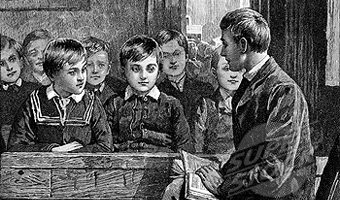
While some debate its origins, most credit a British printer named Robert Raikes as founder of the modern Sunday school movement. An Anglican layman, Raikes was concerned about children in slums he saw drifting into a life of crime. Since many children were forced to work in factories six days a week, he and a local pastor decided to open a school for them on Sunday in July 1780.

While Raikes' aim was to teach reading, writing and arithmetic, he used the Bible as a textbook, introducing a spiritual component to the curriculum. When Raikes died in 1811, an estimated 400,000 people attended Sunday schools in Great Britain. The schools served as a model for Britain's public school system. John Wesley described Raikes' Sunday schools as "one of the noblest specimens of charity … in England since William the Conqueror."

The idea spread to other nations. In 1785, a Sunday school was begun by William Elliott, a Methodist layman, in Accomac County, Va. In 1797, Second Baptist Church in Baltimore—now called Second and Fourth Baptist Church—began a Sunday school reported to be one of the first in the United States to use the Bible as its only textbook and all-volunteer teachers.

Like any innovation, the Sunday school movement had its detractors. In Virginia, organizers were criticized because they offered instruction to black slaves. In 1830, a Baptist association in Illinois passed a resolution declaring its lack of fellowship with Sunday schools, as well as foreign and domestic mission and Bible societies.

Opposition to missionary societies and Sunday schools prompted some Calvinist Baptists in the early 1800s to separate into their own Primitive Baptist tradition. Other denominations divided as well. But in time, most denominations came to embrace Sunday school.

Luther Rice, a primary force behind the founding of the General Missionary Convention of the Baptist Denomination in the United States for Foreign Missions—called the Triennial Convention because it met every three years—joined with others to form the Baptist General Tract Society in 1824. Today, the ministry is known as Judson Press, publishing arm of the 1.5 million-member American Baptist Churches USA.

After Baptists in the South separated from the Triennial Convention's missionary-sending program in 1845, many continued to use study materials from the northern American Baptist Publication Society. The Southern Baptist Convention formed its own Sunday School Board, now known as LifeWay Christian Resources, in 1891, completing the Northern/Southern Baptist schism.

In 1920, Arthur Flake was named head of the Sunday School Board's department of Sunday school administration. In 1923, he wrote the book Building a Standard Sunday School containing five points that came to be known as Flake's Formula. Flake's plan—"(1) know possibilities; (2) enlarge organization; (3) provide place; (4) train workers; and (5) go after them"—succeeded in growing Sunday school enrollment from around 1 million in 1920 to nearly 6 million when Flake died in 1952.

Sunday school's golden age lasted until the 1960s, when many denominations began to see enrollments decline. Today, LifeWay Christian Resources reports more than 2 million Sunday school classes in the United States.


Matthew West shares life stories through songs

NASHVILLE, Tenn.—For his album, The Story of Your Life, singer/songwriter Matthew West took an unusual approach to find inspiration. He posted a note on his website asking people to share their life stories and said a select few would be turned into songs.

For his album, The Story of Your Life, singer/songwriter Matthew West drew inspiration from the personal stories from more than 10,000 people around the world who shared their greatest joys and most heart-wrenching moments.

West never expected to receive more than 10,000 responses from people in 20 countries who provided detailed accounts of their greatest joys and most heart-wrenching moments.

"I've always been sort of a storyteller at heart," West said. "Up until now, I've written songs telling the story of my life and talking about what I've been through—my experiences, faith and family.

"As I was getting ready to work on a new album, I thought it might be interesting to see what would happen if I turned the microphone around and created songs based on other people's experiences. That was the initial plot behind it, but what wound up happening from that one little idea was an experience much bigger than I originally anticipated."

West was deeply affected by the responses and took the time to read each one. 

"The mountaintop experiences and the joys that we have, those are all defining moments in our lives," West said. "But the stories that were most often shared were the weakest moments. People shared the greatest trials they've ever faced—the illness that they suffered, the loved one that they lost, the desire to have a child, and many people shared about abuse or addictions they were dealing with.

"This project has changed me and challenged me to look at the world in a different way. These people were trusting me to be their messenger. I was up late into the night for several months just reading about people's lives, and I felt like I had been given a window into their world.

"These songs will now go on to hopefully encourage other people who might be going through similar struggles. My desire is that people will realize that their life is telling a story, and by allowing God to work and mend the broken pieces, it can be a beautiful story that impacts the world around them."

In addition to serving as the inspiration for the songs on the album, West also was able to create a devotional book, The Story of Your Life: Inspiring Stories of God at Work in People Just Like You

This month, West is releasing another book and companion DVD, What's Your Story?  This book and interactive guide further illustrate the impact of God's hope and redemption working throughout each life story.

"I want to encourage people to realize that God hasn't stopped working in their lives," West said. "I think a lot of times, we get so defeated in our lives—thinking we've made too many mistakes or that our lives are too bruised and broken that we can't have any impact in the world.

"The truth is that no matter how many mistakes you've made or trials you've faced, it's the brokenness of our lives that God uses to give us something to say to the world. I hope it's an empowering message that people can cling to during difficult times, when they realize that God has something to say to us and through us."


Some see Crystal Cathedral’s purchase by Catholic diocese as calculated risk

WASHINGTON (RNS)—Even by the depressed metrics of Southern California's real estate market, most observers believe the Roman Catholic Diocese of Orange negotiated a pretty sweet deal when it purchased the iconic Crystal Cathedral, the longtime pulpit of the Robert Schuller and backdrop to his popular Hour of Power television broadcasts.

Not only did Catholics get a national landmark designed by the renowned architect Philip Johnson, but Bishop Tod D. Brown wasn't even the highest bidder. Schuller and the board of the Protestant megachurch opted to take Brown's $57.5 million offer over a $59 million pitch from Chapman Univer-sity because the bishop would keep the campus as a place of worship.

The Roman Catholic Diocese of Orange, Calif., has purchased the iconic Crystal Cathedral for $57.5 million, but it faces a major challenge in retrofitting the building for use as a Catholic cathedral. (?RNS PHOTO/Arnold C. Buchanan-Hermit via Wikimedia Commons)

The diocese's top lawyer, Tim Busch, called the deal "a true miracle." But divine intervention—or at least "an exceptionally gifted architect," as one anxious churchman put it—now will be needed to transform this temple of suburban evangelicalism into a Catholic sanctuary that will make the cathedral a real bargain and not a liturgical white elephant.

That won't be an easy task, given the disparity between traditional Catholic worship requirements and modern Protestant sensibilities.

The challenge of redesigning the Crystal Cathedral's interior was central to the cost-benefit analysis driving the Orange diocese's calculations throughout the process, according to church officials familiar with the deal.

In fact, Brown initially was cool to the idea of buying the Crystal Cathedral, which was $50 million in debt when it filed for bankruptcy last year. Brown, who wanted to leave a new cathedral as part of his legacy, gradually was won over by aides and business advisers.

Some of the bishop's hesitation stemmed from the fact that while the 2,800-seat Crystal Cathedral was a relative bargain, the diocese does not have much cash on hand. The diocese will need to launch a major fund-raising effort that could total $100 million and would entail the sale of other property in order to cover the $57.5 million price tag, as well as several million more that will be needed for renovations and hefty maintenance costs.

But the opportunity was too good to ignore. For one thing, the Crystal Cathedral's price tag was a lot less than it would have cost to build a new cathedral from the ground up.

The Diocese of Orange—the 10th largest in the nation, with 1.2 million Catholics—was facing construction costs approaching $200 million on a lot half the size of the Crystal Cathedral's 31-acre campus.

And for those who may wince at the assertive modernism of the Crystal Cathedral's glass design, the reality is that any new cathedral likely would have followed a similar style. Just look up the coast to Oakland's glass-and-steel Cathedral of Christ the Light, which was dedicated in 2008.

Similarly, lingering concerns over the cost and size of the Cathedral of Our Lady of the Angels in Los Angeles—nicknamed the "Taj Mahony" after its visionary, retired Los Angeles Cardinal Roger Mahony—also played into the decision to make the Crystal Cathedral deal work.

"This was a no-brainer from a business perspective," said a churchman familiar with the purchase, who declined to be named as negotiations continued.

But even after the deal was sealed, there was another hurdle looming. The Vatican had to sign off on the deal, and it was far from a foregone conclusion.

Just as the deal was coming together, it was revealed Pope Benedict XVI was setting up a new Vatican office to vet the construction or purchase of major new churches around the world.

That posed a special challenge because the goal of the commission is to ensure that new cathedrals, unlike some recent designs, are not "buildings composed of cement cubes, glass boxes, crazy shapes and confused spaces (that) remind people of anything but the mystery and sacredness of a church," as Vatican watcher Andrea Tornielli put it in his story on the new body.

To some, the Crystal Cathedral, which was completed in 1980, would fit that unflattering description.

But after a series of exchanges with the Orange diocese, Rome finally gave its approval—two weeks after Brown had won the bidding war.

Now comes the hard part—transforming the Crystal Cathedral from a theater-like atrium complete with Jumbotron screens into a Catholic cathedral where priests will celebrate Mass with incense and reverence.

Brown already said he has "no intention to change the exterior" of the famous building, but he also conceded it would require "critical design upgrades" inside to make it "suitable for a Catholic place of worship."

In a blog post at U.S. Catholic magazine, journalist Megan Sweas questioned whether any renovation could sufficiently sever the cathedral's ties to Schuller's feel-good, made-for-television approach to ministry.

"The space could benefit from a sprucing up, but I hope the diocese goes further than that," Sweas wrote, adding: "How can the Catholic Church make the space its own while respecting what came before?"