Fulfilling the Great Commission

Churches composed primarily of first-generation immigrants to the United States often face obstacles—linguistic, financial and cultural—in terms of fitting into an Anglo-dominated society. But they may possess a strategic advantage in fulfilling Christ's Great Commission.

"God has put people next door to us who can reach back home with the gospel in ways we cannot," said Tom Billings, executive director of Union Baptist Association, serving the Houston area.

Expatriates have connections to their homelands and share a common culture, language and background that gives them a head start in building relationships and sharing the gospel, some pastors of non-Anglo congregations agreed.

"We don't have the same barriers to cross. It's easier to reach out to people," said Sanjay Purushotham, pastor of Asian Indian Baptist Fellowship in Carrollton.

The Carrollton church supports three mission pastors serving distinct ethnic groups in different parts of India. Each pastor served three to five years at Asian Indian Baptist Fellowship while studying at Dallas Baptist University.

Asian Indian Baptist Fellowship also supports the Kapaar Kachoung Orphanage and educational ministry in Manipur, India. Six staff members at the orphanage care for 40 children who lost their parents due to tribal, ethnic and religious conflicts or to diseases such as AIDS.

Strong ties to a homeland and a sense of stewardship motivate some first-generation American Christians to share the gospel with people in their country of origin.

"I am a beneficiary of the American missionary movement," said Ernest Howard Dagohoy, pastor of First Philippine Baptist Church in Houston.

He noted his parents were converted to Christianity through the efforts of American Baptist missionaries, and he was named in their honor.

Dagohoy noted many of his church members share his desire to "give back" by ministering in the country where they were born and where many still have family.

"We have a sense we have not just been sent here (to the United States) to seek greener pastures, but we have been sent here to be missionaries. It's payback time for us," he said.

John Nguyen agrees. Nguyen, pastor of Vietnamese Baptist Church in Garland, became a Christian in South Vietnam thanks to the witness of missionaries there.

He later reconnected with some of the same missionaries who discipled him in Vietnam during the two months he spent at a Fort Chaffee, Ark., refugee camp after he fled his homeland, and they helped him resettle in the United States.

Nguyen, president of the National Vietnamese Baptist Fellowship and the Vietnamese Baptist Fellowship of Texas, has led his congregation not only to become involved in missions locally and in Vietnam, but also in other cultures.

The church supports missions work in Vietnam, Cambodia, Malaysia and Taiwan, and every two years, church members participate in a mission trip. Last year, some church members served in Europe.

"We care about Vietnam because it is where we came from. But our concern for people outside the United States is not just limited to Vietnam. It's all over the world," Nguyen said.

Dagohoy voiced a similar sentiment. His congregation has sent small groups to Honduras and Brazil as part of a mission project spearheaded by a Christian radio station in Houston.

Every two years, the church sponsors a major mission trip to the Philippines. Last summer, about 40 members of First Philippine Baptist Church—one-third of the congregation—spent a week building houses in Manila and participating in a pastors' conference, treating 200 patients at a free medical clinic and feeding more than 100 impoverished children in Biga, in Cavite province.

The Baptist General Convention of Texas helped facilitate those efforts and similar ones through its Intercultural Strategic Partners Initiative. A seven-member board of intercultural pastors governs the program, which provides seed money to help ethnic churches develop international ministries using the connections and cultural expertise they have in regard to their homelands.

One recent recipient is Ideal Family Outreach, a ministry of African Evangelical Baptist Church in Grand Prairie. The church established Ideal Family Outreach in 2007 as a separately incorporated entity to strengthen local families and work particularly with adoptive and foster children in Texas.

Last year, Ideal Family Outreach entered into a partnership with the Society for Youth Development and Orphaned Children in Nigeria. So far, the program has provided school supplies to 30 orphaned and vulnerable children and launched a Kids' Club, monthly support for 10 widows, a grinding machine to help 10 women living with HIV/AIDS support themselves and their families, and equipment for a vocational training center.

"Through SYDOC, we want to meet the physical needs of people in order to reach them with the gospel of Jesus Christ," said Johnson Omoni, pastor of African Evangelical Baptist Church. "We have a responsibility for our own country back in Nigeria."



More Americans respond to religion by saying, ‘So what?’

WASHINGTON (RNS) —When Ben Helton signed up for an online dating service, under "religion" he called himself "spiritually apathetic." And on Sunday mornings, when Bill Dohm turns his eyes toward heaven, he's just checking the weather so he can fly his 1946 Aeronca Champ two-seater plane.

Helton, 28, and Dohm, 54, aren't atheists. They simply shrug off God, religion, heaven or the ever-trendy search-for-meaning and/or purpose. Their attitude could be summed up as "So what?"

"The real dirty little secret of religiosity in America is that there are so many people for whom spiritual interest, thinking about ultimate questions, is minimal," said Mark Silk, professor of religion and public life at Trinity College in Hartford, Conn.

Clergy and religion experts are dismayed, fearing for souls' salvation and for the common threads of faith snapping in society.

Others see no such dire consequences to a more openly secular America as people not only fess up to being faithless but admit they're skipping out on spirituality altogether.

Only now, however, are they turning up in the statistical stream. Researchers have begun asking the kind of nuanced questions that reveal just how big the "So What" set might be:

• 44 percent told the 2011 Baylor University Religion Survey they spend no time seeking "eternal wisdom," and 19 percent said, "It's useless to search for meaning."

• 46 percent told a 2011 survey by Nashville, Tenn.-based LifeWay Research that they never wonder whether they will go to heaven.

• 28 percent told LifeWay, "It's not a major priority in my life to find my deeper purpose." And 18 percent scoffed at the idea that God has a purpose or plan for everyone.

• 6.3 percent of Americans turned up on Pew Forum's 2007 Religious Landscape Survey as totally secular—unconnected to God or a higher power or any religious identity and willing to say religion is not important in their lives.

Hemant Mehta, who blogs as the Friendly Atheist, calls them the "apatheists," while Mariann Edgar Budde, the new Episcopal bishop of Washington, D.C., calls them honest.

"We live in a society today where it is acceptable now to say that they have no spiritual curiosity. At almost any other time in history, that would have been unacceptable," Budde said.

She finds this "very sad, because the whole purpose of faith is to be a source of guidance, strength and perspective in difficult times. To be human is to have a sense of purpose, an awareness that our life is an utterly unique expression of creation and we want to live it with meaning, grace and beauty."

But Helton, a high school band teacher in Chicago, insists he only goes to the Roman Catholic Church of his youth to hear his mother sing in the choir.

Study of psychology led him away. The more Helton read evolutionary psychology and neuropsychology, he said, the more it seemed to him: "We might as well be cars. That, to me, makes more sense than believing what you can't see."

Ashley Gerst, 27, a 3-D animator and filmmaker in New York, shifts between "leaning to the atheist and leaning toward apathy."

"I would just like to see more people admit they don't believe. The only thing I'm pushy about is I don't want to be pushed. I don't want to change others, and I don't want to debate my view," she said.

Most "So Whats" are like Gerst, said David Kinnaman, a Christian researcher and author of You Lost Me, a book on young adults drifting away from church.

They're uninterested in trying to talk a diverse set of friends into a shared viewpoint in a culture that celebrates an idea that all truths are equally valid, he said. Personal experience and personal authority matter most, and as a result, Scripture and tradition are quaint, irrelevant artifacts.

"'Spiritual' is the hipster way of saying they're concerned with social injustice. But if you strip away the hipster factor," said Kinnaman, "I'd estimate seven in 10 young adults would say they don't see much influence of God or religion in their lives at all."

The hot religion statistical trend of recent decades was the rise of the "Nones"—the people who checked "no religious identity" on the American Relig-ious Identification Survey—who leapt from 8 percent in 1990 to 15 percent in 2008.

The "So Whats" appear to be a growing secular subset. The Pew Forum on Religion & Public Life's Landscape Survey dug in to the Nones to discover nearly half said they believed "nothing in particular."

Neither raging atheist scientist Richard Dawkins, author of numerous best-sellers such as The God Delusion, nor religious broadcaster Pat Robertson would understand this fuzzy stance, said Barry Kosmin, co-author of the ARIS and director of the Institute for the Study of Secularism at Trinity College.

"But a lot of these people are concerned more with the tangible, the real stuff like mortgages or their favorite football team or the everyday world," Kosmin said.

When church historian Diana Butler Bass researched her upcoming book, Christianity After Religion, she found the "So Whats" are a growing category.

"We can't underestimate the power of the collapse of institutional religion in the first 10 years of this century," she said.

"It's freed so many people to say they don't really care. They don't miss rituals or traditions they may never have had anyway."


Songwriter Paul Simon’s meandering spiritual journey

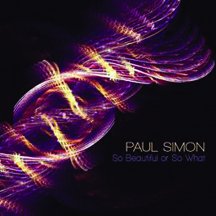
WASHINGTON (RNS)—Paul Simon says there's always been a spiritual dimension to his music. But the overt religious references in his most recent album, So Beautiful or So What, surprised even him. There are songs about God, angels, creation, pilgrimage, prayer and the afterlife.

Paul Simon's latest album, So Beautiful or So What, has been called one of last year's top Christian albums—even though Simon professes no certainty about religion.

Simon insists the religious themes were not intentional, and he does not describe himself as religious. But in an interview with the PBS program Religion & Ethics NewsWeekly, he said the spiritual realm fascinates him.

"I think it's a part of my thoughts on a fairly regular basis," he said. "I think of it more as spiritual feeling. It's something that I recognize in myself and that I enjoy, and I don't quite understand it."

Simon may not understand it, but he's been writing and singing a lot about it, and that has generated attention. One Irish blogger suggested So Beautiful or So What could be the best Christian album in the last year. Sojourners' Cathleen Falsani, an evangelical who writes frequently about religion and pop culture, called it "one of the most memorable collections of spiritual musical musings" in recent memory.

During a career that has spanned half a century, Simon has received numerous awards, including 12 Grammys. His first Grammy came in 1968 for best contemporary vocal duo, along with his musical partner Art Garfunkel. Their 1970 Gram-my-winning song, "Bridge Over Troubled Water," was influenced by gospel music.

Simon comes from a Jewish background. "I was raised to a degree enough to be bar mitzvahed and have that much Jewish education, although I had no interest—none," he said.

Now at 70, he said, he has many questions about God. In his song, "The Afterlife," he speculates about what happens after death.

"By the time you get up to speak to God, and you actually get there, there's no question that you could possibly have that could have any relevance," Simon said.

One of the most unusual songs on the album, "Getting Ready for Christmas Day," includes excerpts from a 1941 sermon by African-American pastor J.M. Gates. Simon heard the sermon on a set of old recordings and said he was drawn to the rhythms of Gates' "call and response" style of preaching.

The song "Love and Hard Times" begins with the line: "God and his only Son paid a courtesy call on Earth one Sunday morning."

Paul Simon's So Beautiful or So What CD

The song ends with a love story that Simon says is really about his wife and a repetition of the line, "Thank God I found you."

"When you're looking to be thankful at the highest level, you need a specific, and that specific is God. And that's what that song is about," he said.

Simon said the beauty of life and of the earth often leads him to thoughts about God.

"How was all of this created? If the answer to that question is God created everything, there was a creator, than I say: 'Great! What a great job,'" he said.

But he said he won't be troubled if it turns out there is no God. "Oh fine, so there's another answer. I don't know the answer," he said.

Either way, he added, "I'm just a speck of dust here for a nanosecond, and I'm very grateful."

Simon has sought input on his questions from some religious leaders. He once spent hours talking with British evangelical theologian John Stott, who died last year.

"I left there feeling that I had a greater understanding of where belief comes from when it doesn't have an agenda," he said.

Many of Simon's songs raise universal questions about things like destiny and the meaning of life.

"Quite often, people read or hear things in my songs that I think are more true than what I wrote," he said.

Falsani calls Simon a "God-chronicler by accident."

"He looks at the world and kind of wonders what the heck is going on, like many of us do. He asks good questions and seems to have his finger on the heartbeat spiritually of a culture," she said.

Simon said he's gratified—and somewhat mystified—that some people have told him they believe God has spoken to them through his music.

"Is it a profound truth? I don't know," he said. "I feel I'm like a vessel, and it passed through me, and I was the editor, and I'm glad."


Study portrays Mormons as outsiders in native land

WASHINGTON (RNS) —In some ways, Mormonism is the ultimate American religion. Born in America, it was unveiled by an American prophet who believed the U.S. Constitution was divinely inspired and the Garden of Eden bloomed in Independence, Mo.

Kody Brown (center) stars in TLC's show Sister Wives with (left to right) multiple wives Robyn, Christine, Meri and Janelle. (RNS FILE PHOTO/Courtesy TLC)

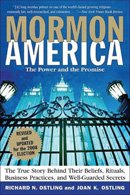
The Church of Jesus Christ of Latter-day Saints has grown from six members gathered around a charismatic New Yorker named Joseph Smith in 1830 to nearly 6 million believers in the United States alone. Richard Ostling, a religion expert and co-author of the book Mormon America, calls it "the most successful faith ever born on American soil."

But even as a devout Mormon leads the GOP field for the presidential nomination and the award-winning—if irreverent—musical Book of Mormon plays to overflow crowds on Broadway, a new survey portrays Mormons as strangers in their own land.

The vast majority of Mormons believe Americans do not embrace Mormonism as part of mainstream society, and most say Americans know little about their religion. More than half worry about discrimination, according to a survey by the Pew Forum on Religion & Public Life.

"Clearly, this is a population that sees itself as outsiders looking in," said Gregory Smith, a senior researcher at the Pew Forum.

The survey—called the first of its kind conducted by a non-Mormon or-ganization—interviewed 1,000 American Mormons by telephone and has a margin of error of plus or minus 5 percentage points.

"I wish the public could see us for our day-to-day doctrines, devotions and practices, which are just like other devout religions," said George Robinson, 63, a cardiovascular surgeon and local LDS leader in Gadsden, Ala.

"Instead, the public either hears pejoratives about us or focuses on differences, many of which are rarely brought up as part of our religion."

Still, Robinson and many other Mormons remain upbeat, saying American attitudes toward their faith are changing for the better.

Nearly nine in 10 Mormons say they are happy with their lives and judge their communities as excellent or good places to live. More than half say the country is ready for a Mormon president.

But most Mormons also say popular entertainment damages their public image. In recent years, a number of TV shows, such as HBO's Big Love and TLC's Sister Wives have featured polygamous families who belong to offshoots of Mormonism. According to the Pew survey, 86 percent of Mormons believe polygamy, which the LDS Church banned in 1890, is morally wrong.

Perceptions of anti-Mormon animus also may be fed by the presidential candidacy of former Massachusetts Gov. Mitt Romney, despite his front-runner status.

While three in four Mormon voters identify as Republican or lean conservative, less than 40 percent believe the GOP is friendly toward Mormons, the Pew survey found.

The hostility directed at Romney's Mormonism by some evangelicals—a key GOP constituency—reinforces that perception, Smith said.

Most evangelicals do not believe Mormonism falls within the Christian fold, according to a separate Pew poll, and some have been outspoken about opposing Romney's candidacy on those grounds.

Half of Mormons, according to the Pew survey, pick up an unfriendly vibe from evangelicals.

"It's frustrating that some people are trying to build a hedge of deceit around the church so that people won't decide to take a look for themselves and find out what our church is all about," Robinson said.

Most Mormons do not deny the differences between their faith and mainstream Christianity, the survey found.

While 97 percent of Mormons believe their faith to be a Christian religion, less than half say it is similar to Catholicism or evangelical Protestantism.

Still, Mormons remain firm in their religious commitments, even to practices and beliefs that set them apart from mainstream Christianity.

For example, 94 percent believe the president of the LDS Church is a prophet of God and ancient prophets wrote the Book of Mormon.

Nearly the same percentage believes families can be eternally bound in temple ceremonies, and that God the Father and Jesus are separate beings—not unified in a Trinity with the Holy Spirit.

Mormons are among the most committed religious groups in America, according to the Pew survey.

More than 8 in 10 say they pray daily; three-quarters attend weekly religious services; and 82 percent say religion is very important in their lives. Only Jehovah's Witnesses approach Mormons' religiosity, Smith said.


Pop singer Leigh Nash returns to gospel roots

NEW BRAUNFELS—As the lead singer of the platinum-selling and Dove Award-winning group Sixpence None the Richer, musician Leigh Nash grew accustomed to singing contemporary pop songs while performing concerts around the world. 

Leigh Nash

However, with the release of a solo project filled with traditional hymns, Nash is excited about the chance to return to her gospel roots.

While growing up at First Baptist Church in New Braunfels, Nash developed a love for music while singing hymns during worship services.

"I started singing when I was about 13 years old, and I think that I just fell in love with the melodies and the sound of all the people singing together," Nash said. "I really think that hymns inspired me to sing and to pursue music."

The songs selected for the Hymns & Sacred Songs album were some of Nash's favorites while growing up, including "Savior, Like a Shepherd Lead Us" and "Come Thou Fount of Every Blessing."

Although melodies and instrumentation have changed, the lyrics remain the same. By adding a modern approach and updated style, Nash hopes to attract young worshippers and help them find new meaning in traditional hymns.

"What a great thing this is to be able to infuse those old, beautiful and sacred words with freshness and new melodies," Nash said. "The original melodies were very simple but not always easy to sing. For me, these melodies make the words jump up off the page, which makes the words even more meaningful and clear.

"My prayer is that people will be encouraged through these songs. For people dealing with trials and turmoil, I hope that when they listen to these songs, they can reflect on the words and be reminded of our Savior who desires to direct their path while offering hope and assurance of his love and mercy."


Single-race churches miss the mark of Christian unity, Indian pastor insists

CARROLLTON—Racially homogenous churches fall short of the biblical ideal and leave evangelicals in the United States ill-equipped to deal with the reality of cultural pluralism and racial diversity, an Indian pastor in North Texas believes.

In his recently completed doctoral dissertation at Southwestern Baptist Theological Seminary, Sanjay Purushotham, pastor of Asian Indian Baptist Fellowship in Carrollton, explores factors that keep most congregations from becoming multiracial.

Purushotham looks critically at "polycentric" churches—congregations where a sponsoring church and a cluster of smaller ethnic churches operate separately on the same campus.

While that model represents "a significant step forward in recognizing diversity" compared to congregations that make no effort to reach beyond a single race or culture, "it falls short of the unity that Christ calls for," he writes.

Purushotham identifies three major influences that produce single-race churches in the United States—devotion to the church growth movement's teaching about the homogenous unit principle, a consumer-driven view of religion and a tendency to be driven by individualistic cultural preferences.

Purushotham examines the homogenous unit principle promoted by church growth guru Donald McGavran in the 1970s—the idea that people don't want to have to cross racial or ethnic barriers to worship, and churches grow best when they represent a single racial, ethnic or socio-economic group.

He critiques that approach as "anthropologically and sociologically based, having been birthed in a homogenous cultural context, in India, where a rigid caste system existed." He sees the homogenous unit principle as "void of substantial theological reflection" and not reflective of the New Testament ideal.

He believes the homogenous unit principle violates the focus of Christ's Great Commission. "The church growth movement has erroneously propagated methodology that continues to separate God's people on sociological and cultural grounds," he writes. "Jesus has not commissioned the discipling of separate homogenous units. Jesus' disciples are called to make disciples of all peoples everywhere."

Furthermore, Purushotham critiques the way marketing has become the guiding force for many churches, as they seek to compete for the attention of religious consumers.

"A consumer-driven ethos is increasingly overtaking both the membership and leadership in the marketplace of American religion," he writes.

Too many churches equate evangelism with gaining a sizeable market share, he writes. Consequent-ly, they develop strategies for capturing a segment of the market through racially and socially homogenous niche congregations.

"A consumer mentality, rather than a biblical theology, has become the starting point of church growth, leading once again to the formation of churches that are racially homogenous," he writes.

Purushotham also takes issue with the way many churches are shaped by culture and individual preferences, rather than by a vision of Christian unity.

"Many churches start with a parochial view that holds, 'Our way is the only way.' This model views immigrants as 'not really part of us,'" he writes. These churches "are open to people from other cultures to attend their churches as long as they are willing to accept the status quo. No willingness or attempt to reach out to people of other cultures exists. Rather, people from other cultures are expected to become like the dominant culture."

Other churches choose to be culture-specific—perhaps to provide a sense of refuge against the perceived negative influences in the dominant culture or to nurture and promote their own native culture.

Purushotham offers the multiracial model as closer to the spirit of the New Testament. He refers to Jesus' prayer for unity as recorded in John 17 as one biblical mandate for multiracial churches.

In a congregation that includes multiple races and ethnic groups, Christians learn from each other and grow as disciples of Christ, he asserted.

"Multiracial churches can become harbingers of peace and racial reconciliation in a racialized society, good stewards of God-given resources and authentic witnesses in a world which desperately needs the gospel," Purushotham concluded.


Effective global missions demands multicultural partnerships

Missions in the 21st century demands multicultural partnership, global missions researcher and author Patrick Johnstone insists. And pastors of some churches filled with first-generation immigrants agree.

"Like it or not, we have a multicultural missions force that must learn to work together," Johnstone, author of six editions of Operation World, a global missions prayer guide, and The Future of the Global Church, told a recent gathering at Dallas Baptist University.

Global missions researcher and author Patrick Johnstone told a group at Dallas Baptist University missions in the new millennium requires multicultural partnerships.

Evangelical growth in Asia, Latin America and Africa and decline in Europe mean former mission fields are becoming missions-sending forces, while historic bases of missions-sending activity need evangelization.

So, on a mission field in Europe, missionaries from the United States might find themselves working alongside missionaries from South Korea and Brazil.

A missions approach that represents only one ethnic, linguistic and cultural group often ends up exporting that culture and imposing it on other people groups, said Johnstone, missions researcher for WEC International, formerly World Evangelization Crusade.

A genuinely multicultural missions team that includes representatives of various racial and ethnic groups will face challenges in interpersonal relations and decision-making approaches, he noted. But while multicultural missions may require more effort and be less efficient in the short term, its benefits outweigh its drawbacks, Johnstone insisted. "The work is slower, but the results are better."

John Nguyen, pastor of Vietnamese Baptist Church in Garland, believes in the importance of cross-cultural missions experiences—both locally and globally.

Nguyen, president of the http://www.daihoibaptit.org/National Vietnamese Baptist Fellowship and the Vietnamese Baptist Fellowship of Texas, serves on the Baptist General Convention of Texas Executive Board and on the governing board for Intercultural Strategic Partners, a BGCT-related program that provides seed money for international, indigenous missions projects.

"I hope every Baptist church has some mission trips outside the United States. When people get outside the country, they see things differently. And I would like to see Anglo churches partnering with ethnic-language churches," he said.

Beyond the matter of including representatives from varied ethnic groups in a multichurch mission team, churches in the 21st century also need to examine their own cultural composition. Modern-day Christians should learn from the New Testament example, Johnstone said.

"The church at Antioch was multicultural," he said, pointing to the church in northern Syria described in Acts 11:19-26.

Nguyen hopes his church eventually will become truly multicultural. The church already has employed an Anglo pastor to serve its English-speaking service that draws second- and third-generation Vietnamese. The congregation also includes members from other ethnic groups—Filipino, Anglo and South American—and Nguyen hopes their numbers increase.

Asian Indian Baptist Fellowship in Carroll-ton long has drawn members from multiple language and ethnic groups within India. But in recent years, it also has included worshippers from Chad, Taiwan and the Ukraine, Pastor Sanjay Purushotham said.

"Over time, God has broadened our vision," he said. "What an exciting thing it is when the church begins reflecting the diversity of the world."

Purushotham delights in the increased advantages a truly multicultural church enjoys in terms of fulfilling Christ's Great Commission to make disciples of all nations and the Great Commandment—love for one's neighbor.

Furthermore, a multicultural, multiracial church more closely resembles the global body of Christ, and its members benefit from exposure to people from different backgrounds, he added.

"If we are segregated, there is no opportunity to learn from each other and appreciate each other," he said.

Patty Lane, director of intercultural ministries with the BGCT, agreed. Everyone involved benefits from multicultural missions experiences and intercultural relationships, she said.

In her 2002 book, A Beginner's Guide to Crossing Cultures, Lane wrote: "Observing with our differing cultural perspectives is like looking out of a ship's porthole. What is seen from one porthole, while accurate, is not the entire view. We need to be in conversation with our fellow shipmates to get a fuller picture."


Baptist agencies don’t recruit nationals for U.S. missionary service

RICHMOND, Va.—Baptist missionary-sending agencies currently do not actively seek missionaries from other countries to minister to unreached or least-reached people groups in the United States, nor are they likely to do so.

When the Southern Baptist Convention authorized its International Mission Board to work in North America, some Baptists may have assumed that move meant the IMB might appoint missionaries at home.

In New York City, a missionary (right) befriends a young man from the Wolof people group. Many members of the Wolof, a mostly Muslim people in West Africa, have moved to New York. Hundreds of unreached people groups can be found in the cities of North America. (IMB file photo)

Rather than appointing specific missionaries to work with stateside groups, the IMB will assist catalytic and coordinated efforts with the SBC's North American Mission Board.

"We will help train and equip churches as they engage in reaching the unreached and the least-reached, both in North America and globally in their task to fulfill the Great Commission," IMB spokesperson Wendy Norvelle explained.

"We will be working cooperatively with the North American Mission Board, state conventions, associations and churches in more of a catalytic role in cross-training and using the expertise the whole body of Christ has to benefit the world."

IMB missionaries on stateside assignment and retired missionaries can assist in strategic partnerships with churches that approach either mission board or the SBC and say, "We want to work with a particular group," Norvelle explained.

Missionaries who have served overseas have experience to share. They understand how to cross cultural barriers, understand a specific culture and speak another language. "Their knowledge could be helpful here to help a church that wants to focus on that particular group," Norvelle added.

One cooperative effort under way is the IMB/NAMB-sponsored "ethne-city" training events in New York, Houston and Vancouver as part of NAMB's Send North America outreach to urban centers.

The North American Baptist Fellowship, affiliated with the Baptist World Alliance, does not directly deal with internationals in the United States. Instead, it assists informally with member bodies that do.

NABF Executive Director George Bullard pointed to the North American Baptist Conference. The former German Baptist group has a keen interest in working with immigrant groups. Canadian Baptist Ministries, a partnership of four Baptist conventions, also is among several member bodies that specifically works with internationals.

Jim Smith, Cooperative Baptist Fellowship director of field ministries, acknowledged CBF also does not recruit missionaries or pastors from other countries, but it collaborates with partners, such as the Ghana Baptist Convention.


Ministry to new immigrants presents challenges, opportunities

A wave of immigrants entering the United States presents a particular challenge to Christians who seek to minister among them, the director of missions for a metropolitan association of churches noted.

"Immigration is changing the face of America. People are coming in droves, and they are coming from different places," said Tom Billings, executive director of the Houston-area Union Baptist Association.

Hispanics in the United States grew from 35.3 million in 2000 to about 50.5 million in 2010, accounting for more than half of the nation's population increase in that decade. Meanwhile, the U.S. Census Bureau reports the Asian population grew by 4.4 million in that same time.

"They come with different world views. That's significantly changing the face of metropolitan areas such as Houston," Billings said, noting no single ethnic or racial group holds a majority in the city.

The Census and American Community Survey reports more than 1.25 million foreign-born residents in the Houston metropolitan area. Houston's schools serve a population representing more than 315 ethnic groups speaking 220 languages and dialects. More than 40 percent of the students do not speak English in their homes.

For the most part, new immigrants want to preserve their ethnic and cultural heritage—not be assimilated totally into what has been a predominantly Anglo society, Billings said.

"The melting pot is cracked," he said. "There's an enclave mentality, not an assimilation model. The immigrants want to maintain their history, culture, heritage and language."

Historically, immigrants assimilated into the dominant culture of their new country because they were isolated from people back home. But advances in communication enable immigrants to remain in close contact with family and friends in their homelands, he noted.

"They even can watch TV and read the papers from back home on the Internet," he said.

Reaching the new immigrants—including some from unreached people groups and some who originate from countries closed to traditional missionary outreach—demands a change in the way churches think, Billings insisted.

"It requires a missions mentality rather than a church-growth mentality," he said. "We have to reach them relationally, incarnationally and in their heart language."

While statistical information that helps identify and quantify unreached people helps churches develop missions strategies, a more important step involves developing a missional mindset, Billings insists.

"We need to not see people as projects but as real people we build relationships with," he said. That means spending time with them, learning their culture and discovering real needs churches can help to meet.

"Good deeds precede the Good News a lot of the time," Billings said.


Growing number of evangelical missionaries heading from East to West

Western Christians often think in terms of West-to-East movement when missionaries go to other countries. But more and more frequently, evangelicals arrive from the East to evangelize the West.

According to Dale Irvin of New York Theological Seminary and Scott Temple of the Assemblies of God, evangelicals make up the majority of those missionaries, although some come from among Roman Catholics and mainline Protestant denominations.

Missionaries tend to come from the Global South, particularly from Africa, Asia and Latin America. Some also are branching out from Eastern Europe.

South Korea ranks second as a missionary-sending country, just behind the United States. The United States ranks eighth among the countries to which South Korean missionaries go, sociologist Rebecca Y. Kim said.

Why do missionaries come to the United States? Many minister to people from their homelands who have immigrated to America for a variety of reasons. Persian World Outreach, a Cooperative Baptist Fellowship partner, works worldwide to assist Iranian Christians and has helped plant several churches among Iranians in America and across the world.

Mich and Pat Tosan coordinate the effort, which also does a lot of translation work and assists those who feel they have been called to the ministry. Although started in California, Persian World Outreach now is based in New Jersey.

CBF also works with Robert Owusu of the Ghana Baptist Convention. In addition to serving as pastor of Amazing Grace Baptist Church in Atlanta, Ga., Owusu coordinates the convention's network in the United States.

The Ghana Baptist Convention sent Owusu as a church planter-facilitator specifically to plant churches that will affiliate with the convention, he said.

"The churches have, as their primary target groups, Ghanaians and (other) Africans, though we seek to expand our mission to other ethnic/racial groups in North America," he said. His church also reaches nationals from Nigeria, Liberia, Togo and The Gambia.

Owusu has started work in Houston, Oklahoma City and Atlanta. He locates a target group, finds one or two Ghanaians interested in helping and then enlists families. A CBF church is recruited to accommodate the group rent-free for at least a year.

Many others "develop" as missionaries after they encounter U.S. culture, Casely Essamuah told participants at an Evangelical Free Church of America conference last year. Most missionaries come as "economic migrants, and slowly their identity shifts toward that of a missionary," the deputy director of infectious health for the Maryland Department of Health and Mental Hygiene said.

Immigrants are shocked by what they perceive as a high degree of secularization in the United States, "especially when the people come from where Christianity is strong. They see the United States as a place of dry bones," Essamuah, who also is global missions pastor at Bay Area Community Church in Annapolis, explained.

Once immigrants recognize the disparity, they often take on a missionary role, first to other immigrants from their homeland and then to the rest of society, he added.

Most missionaries come to minister to people from their homelands because "what is most comfortable (for all people) is congregating with co-ethnics," Kim wrote for Faith and Leadership.

"Also, the majority of Asian, Latin and African immigrant congregations do not extend beyond fellow ethnic or immigrant communities; most adults who immigrate to the United States do not proselytize or worship with the 'natives,'" she wrote.

But not all missionaries target their countrymen, the author of God's New Whiz Kids? explained. Some Koreans come to the United States to evangelize whites, particularly college students. In fact, 77 percent of Korean missionaries focused on non-Korean "locals" in the countries where they ministered in 2006.

Korean evangelicals who try to minister to white Americans usually practice a "theology of sacrifice," Kim said. They give up their culture, including eating kimchi, a cabbage dish with lots of garlic, and usually speaking only English.


Boston trip helps participants embrace mission opportunities

ARLINGTON—Joyce Ridings never had spoken to a Hindu or Muslim. And the prospect of sharing her faith with them made her apprehensive.

She overcame that fear on a recent mission trip to Boston. First, she was trained in how to share her faith with people of Muslim and Hindu backgrounds. Then she participated in a multicultural dinner arranged by a Baptist reaching out to the diverse Boston population.

Joyce Ridings (3rd from right) joined a group from Woods Chapel Baptist Church in Arlington on a mission trip to Boston, where she had her first experience sharing a Christian witness with a person of another faith.

During the dinner, people took turns sharing their life stories, including some about their families and faith. Ridings visited with the people sitting around her and learned about their lives.

"I sat there listening for two hours," said Ridings, Woman's Missionary Union director at Woods Chapel Baptist Church in Arlington. "I could have sat another two hours. The multicultural event was the highlight of the trip."

The multicultural gathering helped Ridings gain insight into the lives of Hindus and Muslims, she said. Her apprehension was allayed as she started visiting with people, learning about their families and hearing stories about their children.

"To be part of it was really enlightening," she said. "It opened your eyes so you can pray better."

The Baptist General Convention of Texas is involved in a partnership with the Baptist Convention of New England and helped facilitate the trip through the Texas Partnerships office.

Susan Wood, a career missionary who helped lead the trip, was excited by seeing people's perspectives change and come to realizations that they can easily share their lives and their faith with people who follow other religions.

"As a missionary, it was like a dream come true," she said.

Sandra Wisdom-Martin, executive director-treasurer of Texas WMU, praised the WMU team for its commitment to carry out the Acts 1:8 missions mandate.

"The Boston mission team provided a great opportunity for WMU members to minister in their Samaria," she said.


Report shows global Christianity shifting to Africa

WASHINGTON (RNS)—With 2.18 billion adherents, Christianity has become a truly global religion over the past century, as rapid growth in developing nations offset declines in Christianity's traditional strongholds, according to a recently released report.

Billed as the most comprehensive and reliable study to date, the Pew Research Center's "Global Christianity" reports on self-identified Christian populations based on more than 2,400 sources of information, especially census and survey data.

Findings illustrate major shifts since 1910, when two-thirds of the world's Christians lived in Europe. Now only one in four Christians lives in Europe. Most of the rest are distributed across the Americas (37 percent), sub-Saharan Africa (24 percent) and the Asia-Pacific region (13 percent).

The report confirms Christianity's standing as the world's largest religion, with 32 percent of the global population. Islam is second, with about 23 percent, according to a 2009 Pew report.

A close look at the details reveals a few ironies:

• Although Christianity traces its beginnings to the Middle East and North Africa, only 4 percent of residents in these regions claim the Christian faith today.

• Meanwhile, the faith has grown exponentially in sub-Saharan Africa, from just 9 percent of the population in 1910 to 63 percent today. Nigeria, home to more than 80 million Christians, has more Protestants than Germany, where the Protestant Reformation began.

"As a result of historic missionary activity and indigenous Christian movements by Africans, there has been this change from about one in 10 (sub-Saharan Africans) identifying with Christianity in 1910 to about six in 10 doing so today," said Conrad Hackett, lead researcher on the Global Christianity report.

The report also sheds light on the difficult question of how many Chinese are Christians. Researchers have struggled to get reliable numbers, since China's policies on religion are thought to discourage Christians from self-identifying as such in official surveys.

Adjusting for such variables, Pew researchers believe Christianity has flourished despite a policy forbidding Christianity among Communist Party members. Researchers estimate the Christian community in China includes 5 percent of the population, or 67 million.