Singer seeks to combat human trafficking, share gospel

NASHVILLE, Tenn.—As the writer of praise songs such as "Better is One Day," "Blessed Be Your Name," "The Heart of Worship" and "You Never Let Go," Matt Redman's work is a staple of contemporary worship. With his newest song, "27 Million," Redman is calling worshippers to move from worship to action by combating human trafficking.

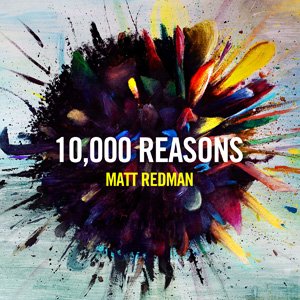
Through his music and message, Matt Redman hopes to connect people to the truth of the gospel while offering hope and healing to the needy. The songs on Redman's latest album, 10,000 Reasons, focus on God's faithfulness, glory, unending love for his children and the countless reasons he is worthy to be praised.

The idea for the song came from a conversation between Redman and his wife, Beth, who was shocked to discover that about 27 million people are trapped as modern-day slaves and only about 2 percent of victims are rescued. 

From there, the Redmans wrote "27 Million," based on the true story of a girl trafficked from Eastern Europe in London's sex trade.

Proceeds from sale of the song support the A21 Campaign , which is based primarily in Europe and focuses on abolishing injustice in the 21st Century. This nonprofit organization works closely with police, hospitals and government officials to seek justice for victims of human trafficking. It also provides shelter, medical care, psychological assessment, educational assistance, counseling and access to legal assistance to people who have been rescued.

"If public attention and opinion is focused on something, then those in positions of influence soon follow," Redman said. "Music has always had a great way of communicating, and we really hope this song will shine a light on this outrageous issue. How can it be that right now there are 27 million slaves on the earth? It's horrific."
Redman debuted the song in front of nearly 45,000 college students during Passion 2012, a four-day worship gathering held at the Georgia Dome in Atlanta, Ga. Throughout the conference, students from more than 1,700 campuses in 31 countries learned about the horrific realities faced by the 27 million people worldwide who are victims of human trafficking and modern-day slavery.

Further desiring to help increase awareness on this issue, Redman recently embarked on "The 27 Million Tour" throughout England.

Through his music and message, Redman hopes to connect people to the unshakable truth of the gospel while offering hope and healing to those in need. The songs on his latest album, 10,000 Reasons, focus on God's faithfulness, glory, unending love for his children and the countless reasons he is worthy to be praised.

"When people come to a concert or worship service, you never know what they might be dealing with," Redman said. "I really want to encourage people and let them know that when all around is sinking sand, God's faithfulness and his enduring love is the solid ground we can stand upon.

"I've heard thousands of stories about people struggling with different issues and dealing with brokenness in their lives. It gives me conviction to present the gospel each night while leading songs. So many people are searching for answers and wanting to know about the hope and security that can only be found by having a relationship with Christ."

{youtube}ZhUaqP-CQVY{/youtube}

Realizing the huge responsibility of crafting theologically sound worship songs, Redman spends a great deal of time reading the Bible and consulting with pastors about songwriting material. In addition to writing songs and leading worship at events, Redman has written several books that offer practical advice for worship leaders and praise teams.

"When I sit down to write songs, I think about the congregations singing the songs and try to help people voice their praise, prayer and adoration to God," Redman said. "I try to find a universal truth and then think of a unique way to present it to congregations. Often, the process starts with a phrase, word or Scripture that is a springboard to a new idea.

"For me, that's how the songwriting process works. It has to start with some kind of theme. In songwriting, I feel like the lyric is definitely the most important thing. If the lyric is based on the word of God, it can be enduring and can speak truth into people's lives, hearts and minds.

"One of my biggest quests is to try and somehow paint a bigger picture of Jesus in our worship. It seems like so much of society wants to shrink him down or kick him out of the equation altogether. But we know him as the majestic, magnificent one who has no equal and is completely off the charts of our comprehension. I hope these songs help point people higher.

"In this world, we see so many broken promises, but God never breaks his promises. He never turns or changes, never breaks the faith … yesterday, today, forever the same. Everything else in this world changes, but God stays the same. Therefore, his word and kingdom endure. My prayer is that these songs inject hope into people's lives and hearts, and that they are connected to the gospel truths."

Faith Digest

The Dalai Lama has been named recipient of the 2012 Templeton Prize.

Dalai Lama wins Templeton Prize. For his abiding interest in the intersection of science and religion, Tenzin Gyatso—the 14th Dalai Lama—has been named recipient of the 2012 Templeton Prize. The Tibetan Buddhist leader, who won the 1989 Nobel Peace Price, will receive the Templeton and its $1.7 million award at a May 14 ceremony at St. Paul's Cathedral in London. "With an increasing reliance on technological advances to solve the world's problems, humanity also seeks the reassurance that only a spiritual quest can answer," said John M. Templeton Jr., the president and chairman of the Pennsylvania-based John Templeton Foundation. "The Dalai Lama offers a universal voice of compassion underpinned by a love and respect for spiritually relevant scientific research that centers on every single human being." The Dalai Lama becomes the second person to receive both the Templeton Prize and the Nobel Peace Prize. Mother Teresa won the first Templeton in 1973 and received the Nobel six years later.

Survey shows mistrust for Muslims in Canada. A new poll shows more than half of all Canadians distrust Muslims. The nationwide survey indicates as many as 52 percent of Canadians feel Muslims can be trusted "a little" or "not trusted at all." The poll showed 48 percent of respondents said Muslims can be trusted "a lot" or "somewhat." What's more, 42 percent of Canadians said discrimination against Muslims is "mainly their fault." Muslims registered the lowest levels of trustworthiness of the religious groups asked about in the survey. Overall, about 70 percent of respondents expressed high levels of trust in Protestants, Catholics and Jews, while 64 percent trusted aboriginal Canadians, and 63 percent trusted immigrants. The online poll surveyed 1,522 Canadians on attitudes toward religions, multiculturalism and sources of racism. The survey was conducted for the Association for Canadian Studies in Montreal and the Toronto-based Canadian Race Relations Foundation as part of the International Day for the Elimination of Racial Discrimination. The online survey has a margin of error of plus or minus 2.9 percentage points.

Student paper under fire for Hitler spoof. A satirical student newspaper is under investigation by Rutgers University after publishing a column in praise of Adolf Hitler and attributing it to a Jewish student activist. An article titled "What about the good things Hitler did?" appeared in The Medium three days before Passover alongside Rutgers student Aaron Marcus' name and photo. A self-described Zionist, Marcus writes columns for the independent Rutgers student newspaper, The Daily Targum, which The Medium sought to spoof. Marcus told a local television station the article hurt him and his family, and noted some of his relatives died in the Holocaust. Rutgers President Richard McCormick called the article "extremely offensive and repugnant," adding, "No individual student should be subject to such a vicious and provocative and hurtful piece, regardless of whether the First Amendment protections apply to such expression." The university is investigating the column as a bias incident, he said.

Compiled from Religion News Service


Organizations step into role of religious curriculum publishers

Local congregations aren't alone in discovering that developing Christian education resources can meet a critical need. Other organizations have expanded their missions to include creating Bible study materials.

Susie Webb (left) and Lisa Mason review VBS material they wrote along with other women from First Baptist Church in Newport News, Va. Their material was edited and produced by the Cooperative Baptist Fellowship as "Finding Hope: A Field Trip of Faith."

Both the Baptist General Convention of Texas and the Nashville, Tenn.-based Baptist Center for Ethics began producing materials for Sunday school and other small group classes in about 2000. More recently, Baptists Today, a national newspaper published in Macon, Ga., began offering Bible study resources for churches.

Leaders at all three organizations agreed their initiatives were responses to new expectations from churches and their viability was increased by the rise of the Internet.

"There's been a proliferation of churches using a variety of Bible study sources, and from that churches have branched out to write their own," said Phil Miller, director of the BGCT Bible study/discipleship team.

That reality prompted the BGCT to create a publishing arm—BaptistWay Press—which develops undated, quarterly-based studies for preschool, children, youth, college students and adults.

"BaptistWay was created to be a supplement," said Miller. "We have for years been an advocate of churches using whatever material they feel is best for them. They'll always look at their context and the needs of their membership."

But he added that the number of churches using BaptistWay materials increases each year. The publishing arm provides free online resources—including study guides in languages other than English—and offers training to teachers.

The Baptist Center for Ethics, founded in 1991 to provide ethical resources for churches, began producing four-week undated study guides about 10 years later, through its EthicsDaily.com imprint.

"The success of those initiatives moved us down the road to producing more online, undated curriculum units," said Robert Parham, the center's executive director. "Our focus is not primarily on theology or church history, but is tightly in keeping with our mission statement of providing moral resources to churches. That makes us different from other curriculum providers."

A key component of each unit—currently aimed at adults—is making practical applications for students to apply, he said.

"If you look at the broad scope of our material, almost all of the units have related to the moral life or addressing implications of Christian faith or exploring what the Bible has to say about how we live our lives," Parham added.

The BCE is widening its online resources to include material available on smart phones and tablet computers.

Last June, Baptists Today, a monthly newsjournal founded in 1983, launched its Nurturing Faith Bible study curriculum for youth and adults with Scriptures based on the Revised Common Lectionary.

Though the newspaper long had published commentaries on the Formations series developed by Smyth & Helwys publishers, the new initiative was sparked by executive editor John Pierce's experience while serving as interim pastor.

"I noticed that Sunday school classes were using everything—Formations from Smyth & Helwys, LifeWay (publishing arm of Southern Baptist Convention), a lectionary Bible study from another denomination and the dreaded 'I-found-a-book-at-the-Christian-bookstore-can-you-order-18-copies.'"

A subsequent survey undertaken by Baptists Today confirmed that pattern existed among churches in general. When the paper redesigned its print publication, it decided to include Bible study materials as a new content component.

Collaboration with several partners—including FaithLab, a Macon-based church resourcing group; both the national Cooperative Baptist Fellowship and its North Carolina affiliate; and Tony Cartledge, a professor at Campbell University School of Divinity in Buies Creek, N.C., who is the primary curriculum writer—has resulted in both online and print resources for churches.

The initiative has resulted in about 3,200 additional readers for the news journal, Pierce said. Additional materials for children will be produced by the end of this year, he added, and will be part of an expansion of Nurturing Faith, which will be announced at a meeting of the paper's board of directors later this month.


When does it make sense for a church to produce its own material?

Producing study materials for a church is a huge undertaking that diverts staff time, energy and attention away from other assignments. Making that decision, then, should be made carefully. When does it make sense for a church to produce its own material?

When there is a compelling reason to do so. Jayne Davis, minster of spiritual formation at First Baptist Church in Wilmington, N.C., reflects that her church began to produce Sunday school material because they wanted to move through the four Gospels in six months and they wanted to use the same focal Scriptures for the sermons, daily devotionals and Sunday school lessons. Finding published material to do this was impossible.

FindingHope.jpg "Finding Hope: A Field Trip of Faith" is a children's resource originally developed by First Baptist Church in Newport News, Va., and later produced by the Cooperative Baptist Fellowship.

After the six-month study ended, however, they discovered another compelling reason to continue the practice. "It makes a big difference to folks that their fellow members write the material," she said. "It also has significant impact because it is aligned with the text being preached on.  Ideally, folks read the devotions and lesson material during the week, hear the text proclaimed in worship, and then talk about the implications of that for their life in Sunday school."

In the case of children's workers at First Baptist Church in Newport News, Va., the compelling reason to undertake writing Vacation Bible School curriculum was their concern that children were learning more about dude ranches and Polynesian island settings than about the Bible and missions. They wanted the Bible lessons and mission application to be central.

For other churches, however, the abundance of existing material on almost any church topic probably will suffice to meet their needs. Reinventing the wheel requires time and energy better spent, perhaps, in other ministry endeavors.

When your church has a specific purpose in mind. Material produced by the church can be tailored to meet specific challenges faced by that congregation or can be aimed at a specific goal of the church. Don Davidson, pastor of First Baptist Church in Alexandria, Va., for example, recognized evangelism was a need that had to be addressed with a specifically focused study written by church staff members.

Many other churches produce Advent materials that usually include daily devotional meditations written by people in the congregation. These materials not only accomplish the primary purpose of focusing the attention of church members on the themes of the season, but also enhance the fellowship as church members deepen their appreciation for one another by reading devotionals written by their fellow congregants.

"Know that it is a large undertaking if you are going to be in it for the long haul," Davis suggested. "You need to keep a freshness to the material and a level of quality. Know why you want to do it."

When your church has a pool of talent from which to draw. Almost every church will have a few good writers, but their expertise can quickly become exhausted unless the writer pool deepens and widens as more materials are produced.

"Well over 600 church members have written for Along the Way since we began" Davis said regarding the Sunday school material produce by First Baptist in Wilmington.

"About 40 people have written lessons and I go back to them regularly. But we made a commitment early on to invite as many new folks as possible to write devotions, that it might truly be a work of the people. Often, I will invite folks to write soon after they join the church. It helps foster a sense of belonging."

Publishing study material has never been easier thanks to advances in publishing software and computer technology. For many churches it makes sense to produce curricula designed to meet the specific needs they face. But the drawbacks need to be considered along with the benefits. It won't make sense for every church, but for those who find the benefits worth the cost, producing their own materials has much to commend it, church leaders who have done it agree.


First person: The ups and downs of curriculum writing

Writing the Nurturing Faith curriculum for Baptists Today has proven to be both a joy and a challenge.

Joy comes in the regular discipline of digging into the text, wrestling with the original language (which usually wins), and trying to get a good handle on what message the author hoped to get across in his (or her) own life and time.

Tony Cartledge

Proponents of new literary criticism and some post-structuralists argue that authorial intent is both unrecoverable and irrelevant, but I can't buy into that. The writer's personal identity, situation in life and sense of purpose all play into the intended meaning of the text.

Looking for appropriate bridges between the writer's world and our own also is a happy challenge. When helpful connections pop into place, satisfaction follows.

On the downside, the weekly aspect of curriculum writing can be a trial, as deadlines are annoyingly regular. I sometimes get so immersed in writing that I have to intentionally set the work aside so I can interact with people.

A final dynamic goes both ways. I write for people who are willing to think and to ask questions, and enjoy explaining critical insights commonly glossed over in other curricula. There's a delicate art, though, to providing information that's enlightening without also being threatening.

Producing a weekly Bible study is quite a charge, but the privilege of visiting with so many regular readers makes it well worthwhile.


Opinion divided on Jesus’ descent into hell

WASHINGTON (RNS)— Christians know Jesus was crucified on Good Friday and rose from the dead on Easter Sunday. But what did he do on Saturday?

That question has spurred centuries of debate, perplexed theologians as learned as St. Augustine and prodded some Protestants to advocate editing the Apostles' Creed, one of Christianity's oldest confessions of faith.

An altar reredos at Chapel in Oxford, England, depicts Jesus freeing the Jewish Patriarchs in hell. (RNS PHOTO/Courtesy Lawrence Lew)

Roman Catholic, Eastern Orthodox and most mainline Protestant churches teach Jesus descended to the realm of the dead on Holy Saturday to save righteous souls, such as the Hebrew patriarchs, who died before his crucifixion.

The Catechism of the Catholic Church calls the descent "the last phase of Jesus' messianic mission," during which he "opened heaven's gates for the just who had gone before him."

An ancient homily included in the Catholic readings for Holy Saturday says a "great silence" stilled the earth while Jesus searched for Adam, "our first father, as for a lost sheep."

Often called "the harrowing of hell," the dramatic image of Jesus breaking down the doors of Hades has proved almost irresistible to artists, from the painter Hieronymus Bosch to the poet Dante to countless Eastern Orthodox iconographers.

But some Protestants say there is scant scriptural evidence for the hellish detour, and they maintain Jesus' own words contradict it.

On Good Friday, Jesus told the repentant thief crucified alongside him that "today you will be with me in paradise," according to Luke's Gospel.

"That's the only clue we have as to what Jesus was doing between death and resurrection," John Piper, a prominent Calvinist author and pastor from Minnesota, has said. "I don't think the thief went to hell and that hell is called paradise."

First-century Jews generally believed that all souls went to a dreary and silent underworld called Sheol after death. To emphasize that Jesus had truly died, and his resurrection was no trick of the tomb, the apostles likely would have insisted that he, too, had sojourned in Sheol, said Robert Krieg, a theology professor at the University of Notre Dame.

"It helps bring home the point that Jesus' resurrection was not a resuscitation," Krieg said.

Belief in the descent was widespread in the early church, said Martin Connell, a theology professor at St. John's School of Theology-Seminary in Collegeville, Minn. But the Bible divulges little about the interlude between Jesus' death and resurrection. Churches that teach he descended to the realm of the dead most often cite 1 Peter 3:18-20.

"Christ was put to death as a human, but made alive by the Spirit," Peter writes. "And it was by the Spirit that he went to preach to the spirits in prison." The incarcerated souls, Peter cryptically adds, were those who were "disobedient" during the time of Noah, the ark-maker.

Augustine, one of the chief architects of Christian theology, argued that Peter's passage is more allegory than history. That is, Jesus spoke "in spirit" through Noah to the Hebrews, not directly to them in hell. But even Augustine said the question of whom, exactly, Jesus preached to after his death, "disturbs me profoundly."

The descent might not have become a doctrine if not for a fourth century bishop named Rufinus, who added that Jesus went "ad inferna"—to hell—in his commentary on the Apostles' Creed. The phrase stuck, and was officially added to the influential creed centuries later.

But changing conceptions of hell only complicated the questions. As layers of limbo and purgatory were added to the afterlife, theologians like Thomas Aquinas labored to understand which realm Jesus visited, and whom he saved.

Other Christian thinkers such as Martin Luther and John Calvin disagreed on whether Christ suffered in hell to fully atone for human sinfulness. That question, raised most recently by the late Swiss theologian Hans ur von Balthasar, stirred a fierce theological donnybrook in the Catholic journal First Things several years ago.

Wayne Grudem, a former president of the Evangelical Theological Society, says the confusion and arguments could be ended by correcting the Apostles' Creed "once and for all" and excising the line about the descent.

"The single argument in its favor seems to be that it has been around so long," Grudem, a professor at Phoenix Seminary in Arizona, writes in his Systematic Theology, a popular textbook in evangelical colleges. "But an old mistake is still a mistake."

Grudem, like Piper, has said that he skips the phrase about Jesus' descent when reciting the Apostles' Creed.

But the harrowing of hell remains a central tenet of Eastern Orthodox Christians, who place an icon depicting the descent at the front of their churches as Saturday night becomes Easter Sunday. It remains there, venerated and often kissed, for 40 days.

"The icon that represents Easter for us is not the empty cross or tomb," said Peter Bouteneff, a theology professor at St. Vladimir's Orthodox Theological Seminary in Crestwood, N.Y. "It's Christ's descent into Hades."


Where was Jesus buried? Bible scholars hold differing views

JERUSALEM (RNS)—During Holy Week, Christians remember the familiar story of Jesus' death and resurrection. But exactly where does that story take place? The Bible offers only a few clues.

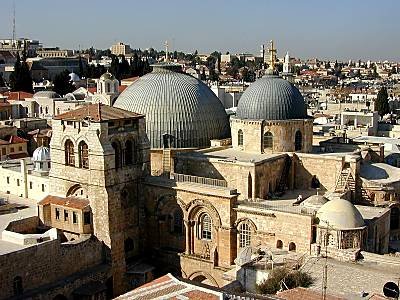
The Church of the Holy Sepulchre in Jerusalem, traditional site of Jesus' burial.

"The Gospels weren't really written to record a history," Mark Morozowich, acting dean of the School of Theology and Religious Studies at the Catholic University of America, told the PBS program Religion & Ethics NewsWeekly. "They were written to provide a testimony of faith."

According to the New Testament, Jesus was crucified at a spot outside Jerusalem called Golgotha, which in Aramaic means "place of the skull." The Latin word for skull is "calvaria," and in English, many Christians refer to the site of the crucifixion as Calvary.

The Gospel of John says there was a garden at Golgotha and a tomb that had never been used. Since the tomb was nearby, John says, that's where Jesus's body was placed. The Gospel writers say a prominent rich man, Joseph of Arimathea, owned the tomb. They describe it as hewn from rock, with a large stone that could be rolled in front of the entrance.

In the 4th Century, as Emperor Constantine was consolidating the Roman Empire under his newfound Christian faith, his mother, St. Helena, traveled to Jerusalem. According to tradition, she discovered relics of the cross upon which Jesus had been crucified. Early Christians had venerated the spot, and she concluded it was Golgotha. Constantine ordered the construction of a basilica on the spot, which became known as the Church of the Holy Sepulchre.

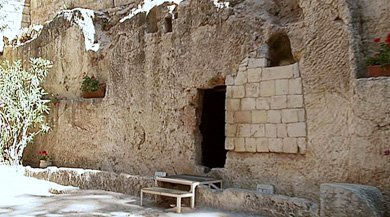
Some Bible scholars believe the Garden Tomb best fits the description in the Gospels of the place where Jesus was buried. (RNS PHOTO/Courtesy of Religion & Ethics News Weekly)

Over the centuries, the Church of the Holy Sepulchre was destroyed, rebuilt and renovated several times. There have been numerous power struggles over who should control it, and even today, sometimes violent squabbles can break out among the several Christian denominations that share jurisdiction.

Still, it's considered one of the holiest sites in Christianity, a massive place of pilgrimage and intense spiritual devotion. "What more of a moving place, to walk in Jerusalem, the place of the crucifixion, to meditate at Golgotha where Jesus Christ died, the place where he rose from the tomb," Morozowich said.

But despite the history and devotion, some Christians—including many Protestants—believe Jesus could have been crucified and buried at a different place in Jerusalem known as the Garden Tomb.

"The (Garden) Tomb was discovered in 1867. For hundreds of years before that, it had lain buried under rock and rubble and earth," said Steve Bridge, deputy director at the Garden Tomb, located just outside the Old City's Damascus Gate.

Charles Gordon, a British general, promoted the Garden Tomb in the late 19th century, Bridge said. The site includes a rock formation, with two large indentations, which resemble the eye sockets of a human skull. Gordon, and others, believed this could have been the "place of the skull" mentioned in the Bible.

The ancient garden below the rock formation has ruins of cisterns and a wine press, which Bridge said could indicate a wealthy person, perhaps Joseph of Arimathea, owned it. In the garden is a tomb, cut from the rock.

"The tomb itself is at least 2,000 years old. Many date it as older than that. But it's certainly not less than 2,000 years old," Bridge said. "It's a Jewish tomb. It's definitely a rolling-stone tomb. That means the entrance would be sealed by rolling a large stone across."

According to Bridge, the Garden Tomb is not trying to set up a competition with the Church of the Holy Sepulchre. "There's no doubt that historically, the Church of the Holy Sepulchre, has the evidence on its side," Bridge said. "What we say we have here is something that matches the Bible description."

And for him, Bridge said it ultimately doesn't matter where the actual place was, because he believes Jesus rose from the dead three days after the crucifixion.

Morozowich agreed. His faith teaches that during the Easter season, Christians should focus more on what Jesus did, rather than on where he may have done it.

"We know that Jesus is more than this historical figure that walked the earth. And in his resurrection, he transcends all of that so he is as real and present in Mishawaka (Ind.) and in Washington, D.C. as he is in Jerusalem," said Morozowich.

A version of this story was first broadcast on the PBS television program Religion & Ethics NewsWeekly www.pbs.org/religion


Transformation: From streets to shelter to self-sufficiency

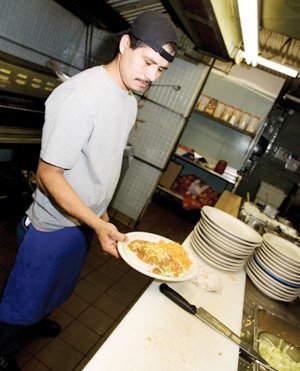
WACO—Michael DeLeon, 58, has a smile that will make anybody laugh. And he has a lot to smile about. He has emerged from the streets to a new life that overcame his own personal disappointments.

"I have never been a drunk or a drug user, but I had a disregard for financial responsibility," said DeLeon, a former photojournalist who has more than two years of college at the University of Texas.

Michael DeLeon

"I love electronic things and would waste each paycheck on things I did not need. I had no savings and couldn't pay my rent, ending up on the streets of Waco in March, 2011. If it wasn't for Mission Waco, I'd still be out there."

For the next several months, My Brother's Keeper—a homeless shelter operated by Mission Waco/Mission World—became his temporary home.

"I couldn't believe I was living in a shelter since I didn't consider myself as a homeless man," he said.

It was there that things began to change. He learned about Mission Waco's transitional program that allows residents of the shelter to stay in the same bed for six months while they get a job and commit to move responsibly toward permanent housing.

"They gave me the tools to succeed," he said. "I just had to find the desire to change and be productive."

And he did. Within three months, DeLeon found a job as dishwasher at the World Cup Cafe, started his savings account, and soon graduated from the transitional program earlier than anyone before him.

After several months of work, he saved enough to buy a bicycle so he would no longer have to walk everywhere. Within a few more weeks, he had enough money to move out of the shelter into his own apartment.

"It's not much, but it will certainly do for now," he said, adding he is saving money to buy a car. "I don't want to be a dishwasher the rest of my life, so I need to get an inexpensive way of getting out to look for better jobs. But for now, it is one step at a time."

After becoming a Christian at Church Under the Bridge in the midst of his struggles, DeLeon began attending Acts Christian Fellowship, where he worships weekly.

"Christians have loved me, showed me direction and stood with me throughout this transformation," he said.

Jimmy Dorrell, Mission Waco/Mission World


The poor among you

They gather at dawn at day-labor centers or designated parking lots where contractors hire workers. Some stop on their way to pick up a cheap breakfast taco at a convenience store, buying their meal from an employee earning minimum wage. At the store, they wait in line with members of a crew purchasing gas for the mowers and trimmers they will use to cut the grass of other people's lawns.

Men line up early on a brisk morning at a North Texas day labor center, hoping to be hired for a work crew. (PHOTO/Ken Camp)

They are the working poor—people who may work more hours a week than the average salaried employee, but they do it at a cobbled-together assortment of part-time jobs without benefits. Some find themselves trapped in the situation because they lack the education or technical skills to find a better job. Others lost salaried positions due to economic recession and are working part-time or temporary jobs to try to make ends meet.

Living in poverty

Ron Sider, founder of Evangelicals for Social Action, sees that situation—coupled with the United States' deficit and a growing gap between the rich and poor—as a justice crisis.

"Minimum wage doesn't get a person even close to the poverty level. People ought to be able to work their way out of poverty," Sider, professor at Palmer Theological Seminary in Wynnewood, Pa., said in an interview.

But more Americans live in poverty today than at any time in more than 50 years, according to the U.S. Census Bureau and the National Bureau of Economic Research.

"The richest nation in human history now has the highest poverty level of any Western industrialized nation," Sider writes in his new book, Fixing the Moral Deficit: A Balanced Way to Balance the Budget.

Difficult choices

Poverty forces some individuals and families into making tough decisions, said Jeremy Everett, director of the Texas Hunger Initiative, a program of the Baylor University School of Social Work in partnership with the Texas Baptist Christian Life Commission.

"Often, people find themselves having to choose between paying the rent, the light bill and the water bill or paying for groceries. For the elderly, it may be a choice between the mortgage and medication," Everett said.

Some even find themselves living on the streets, noted Jimmy Dorrell, founder and executive director of Mission Waco/Mission World, a Central Texas-based ministry focused on community transformation.

"We have folks in our shelter who had never been in one and never imagined themselves there," Dorrell said. "Minimum-wage jobs, especially 29-hours-a-week jobs without benefits, can't come close to paying the bills. The growing unskilled workforce has few living-wage job choices."

The poor among you

Underemployed or unemployed victims of recession, together with the ranks of the working poor who have been unable to rise above poverty, have forced growing numbers to rely on government welfare. Nearly 15 percent of all Americans—a record 45.7 million people—now participate in the Supplemental Nutrition Assistance Program, formerly known as food stamps.

"Many people who never thought they would have to rely on federal safety net programs to help make ends meet do now—and without these programs, many more Americans would have fallen into poverty and hunger in this last recession," said David Beckmann, president of Bread for the World, a Washington, D.C.-based Christian advocacy group.

"You also have to consider how low the federal poverty line is—$23,000 per year is too low for most two-person households to live comfortably in America, let alone a family of four."

Neither SNAP benefits nor refundable tax credits—like the Earned Income Tax Credit or Child Tax Credit—factor into poverty figures in the U.S. Census, he added.

"If they were, the data would show that these programs lifted 9.3 million people above the poverty line in 2010. These programs can mean the difference between getting by and going hungry for poor families—whether newly or generationally poor," Beckmann said.

What did Jesus say?

Some Christians fail to consider the plight of the poor because they don't recognize the emphasis Jesus placed on concern for one's neighbor and compassion for the vulnerable, Everett observed.

"Many Christians are not well-versed in what Jesus had to say about the poor," Everett said. "Caring for the poor is intrinsic to our calling as Christians. Every person is created in the image of God, and that means we are all interconnected."

Some reserve their compassion only for the few whom they consider worthy of assistance, he added.

"There's no such thing as the deserving poor and the undeserving poor. Jesus didn't say, 'Whatever you did for the least of these my brothers—when they deserved it—you did it to me,'" Everett said.

Rugged individualism

Others insist the poor simply should take more initiative and pull themselves up by their own bootstraps, Dorrell noted.

"Some continue to blame the poor for their own harsh realities and point to the rugged individualism of 'my grandpa, who brought himself up without any help,'" he said.

That attitude finds its most extreme expression in the libertarian views advanced by mid-20th century writer Ayn Rand, who believed each person should pursue his or her own self-interests, not sacrifice for others, Sider noted in an interview.

"It's astonishing to me that any Christian would embrace a philosophy that says we have no responsibility for our neighbors," he said.

Charity not enough

Other Christians take seriously biblical teachings about compassion for the poor and vulnerable. They operate food pantries, volunteer at homeless shelters, support free or reduced-price medical clinics and work on Habitat for Humanity projects to build homes for low-income families.

But for all their efforts, they hardly make a dent in the problem of poverty. Charities nationwide provide only about 6 percent of the assistance that government programs for the poor provide, Bread for the World reports.

Five federal programs—SNAP, Temporary Assistance for Needy Families, Earned Income Tax Credit, Supplemental Security Income for the disabled and Medicaid—cost about $485 million in 2010.

"If the 325,000 religious congregations in the United States wished to take over these programs, each congregation would need to add about $1.5 million to its annual budget," Sider writes in Fixing the Moral Deficit.

Christians should lead by example in meeting the needs of the poor, but they cannot do it by themselves, Everett noted.

"The church should lead the way, but the church cannot do it alone. Churches developed the hospital system to care for the sick. They led the way in creating hospitals. But if only churches ran hospitals today, we wouldn't have enough to care for everybody," Everett said.

"In terms of responding to poverty, the church should lead the way, but Christians should use their influence to get others involved—to bring government, the nonprofit sector and the private sector to the table."

From compassion to justice

Christians need to move from concern about the poor to hungering for biblical justice, Sider said. In Scripture, justice means more than procedural fairness in the courts; it also means fair access to society's productive resources so people can earn their own way, he said.

"Biblical justice rejects the Marxist idea of equal outcomes just as it rejects limiting justice to fair procedures. But it does demand equality of opportunity up to the point where everyone has access to productive capital so that, if they work responsibly, they can enjoy an adequate income and be dignified members of society," Sider writes.

Biblical justice also means protecting the interests of the vulnerable, he added. While Sider believes the current national deficit is "intergenerational injustice" and wants to see the government move toward a balanced budget, he warned against politicians who "want to balance the federal budget on the backs of the poor."

Beckmann agreed, noting that "cutting the amount of money dedicated to programs that help hungry and poor people make ends meet would not make as big a difference to the budget deficit as it would to low-income families."

Sider and Beckmann urged Christians to create a "circle of protection" around governmental programs that are vital to poor people and advocate for their interests.

"It is sometimes a challenge to understand the importance of advocacy when addressing these issues, but we need to change the politics of hunger if we want to create more widespread and lasting change," Beckmann said.

"With the stroke of a pen, decisions are made that affect millions of lives and redirect millions of dollars."


Long days, short pay for the working poor

SAN ANTONIO—Josie rises early to catch a 5:30 a.m. bus to the San Antonio Lighthouse for the Blind, where she has worked five days a week ever since she became visually impaired several years ago.

She returns home each evening about 6 p.m., spending the evening caring for her disabled husband.

Workers put together mechanical pencils and pens at the San Antonio Lighthouse for the Blind.

On weekends, she works at a part-time job at a fast-food chicken restaurant.

When Jeremy Everett, director of the Texas Hunger Initiative, thinks about the working poor, he visualizes Josie.

"She was our neighbor when we lived on the west side of San Antonio," Everett said. "She lived in extreme poverty, in the back side of a 1,000-square-foot house that had been divided into a duplex."

In spite of her meager lifestyle, she and her husband insisted on treating Everett and his family to a meal on holidays and other special occasions when they couldn't be with their own relatives who lived away.

"She reminds me of the story of the widow's mite," he said. "Just as generous as they come."

Ken Camp, managing editor


Film traces real-life story of abortion survivor

WASHINGTON (RNS)—A new movie confronts a controversial topic by highlighting two words that don't typically go together—"abortion" and "survivor."

The Erwin Brothers, Jon (left) and Andrew, produced and directed their feature film debut, October Baby.

"We didn't know there was such a thing," said Jon Erwin, who wrote and co-directed October Baby with his brother, Andrew.

The film, the latest in a recent string of Christian-themed movies, opened March 23 and broke into Hollywood despite rejection at first by many studios.

The movie tells the story of Hannah, a 19-year-old college student who finds out she not only is adopted, but also is a survivor of a failed abortion attempt, which explains why she has been suffering from health problems all her life.

Hannah, played by newcomer Rachel Hendrix, journeys to find her birth mother and explore her own identity as she learns the power of forgiveness and love.

The inspiration for the movie came when the Christian filmmakers heard an abortion survivor named Gianna Jessen speak at an event.

"We were just moved and inspired by her story. We knew we needed to do something," Erwin said.

The film, shot in four weeks on a tight budget in the producers' home state of Ala-bama, includes lessons of honor, sacrifice, love—and some humor, too, Erwin said.

"People respond to these virtues no matter what," he added. "They ultimately come from Jesus, but we display them for what they are, which we hope is appealing to people."

Erwin, who was raised in the anti-abortion movement, hopes the faith virtues built into the film do not "alienate anybody."

Since most Hollywood studios rejected the film, anti-abortion and Chris-tian organizations stepped in to fund it—something the director hopes "makes a loud statement and makes others notice."

Focus on the Family, the Colorado-based Christian ministry, is one of the film's supporters.

"The movie does a beautiful job of revealing two things—the dignity and value of every human life and the beauty of adoption," said Kelly Rosati, the group's vice president of community outreach. "We think it will be worthwhile to viewers."

{youtube}L52Lciaui4o{/youtube}
Trailer for October Baby.

The Erwin brothers started out their careers as cameramen for ESPN and the NFL and then switched to directing music videos and working with Christian artists such as Amy Grant, Switchfoot and Casting Crowns. They credit their motivation to produce October Baby to the Kendrick brothers, the pioneers of church-based filmmaking with Fireproof and Facing the Giants.

The brothers' movie was made "out of respect" and as a way to "honor" what the Kendricks have done in the industry, said the director.

"There's a way we can make movies representing what we believe that also have a mass appeal," Erwin added.

The movie, rated PG-13, also stars John Schneider from Dukes of Hazzard, Jasmine Guy from A Different World and Shari Rigby from The Young and the Restless.

"God's really on the move in Christian filmmaking," said Erwin.


No pews, no suits, no problem for churches in nontraditional settings

WASHINGTON (RNS) —Ron Williams is the pastor of Church at the Gym in Sanford, Fla. Its goal is to remove the "stained-glass barriers" for people who might not be comfortable in traditional church settings, Williams said.

Mindy Palmer, 33, of Flint, Mich., is a recovering alcoholic and drug addict and a member of The Bridge, a church in Flint, Mich. "It saved my life," she said. (RNS PHOTO/Mandi Wright/USA Today)

"I think all the trappings of traditional religion can make it difficult for people to start coming," he said. "You can invite someone, and they will say, 'I don't have any clothes to wear to church.'"

To make people feel more comfortable, Williams wears jeans. In the warm Florida climate, some members wear shorts. Other clothing types, from urban wear to biker gear, also are welcome.

Sanford native Sandy Adcox, 38, had not been to church in 18 years before she attended Church at the Gym last March. She hasn't missed a service since.

"I've never in my life felt more comfortable in a church," she said. "It's so warm and welcoming."

Comfortable is becoming common as churches take advantage of new, nontraditional spaces in movie theaters, skating rinks, strip malls and old warehouses, among others.

Aaron Coe, vice president for mobilization for the Southern Baptist Convention's North America Mission Board, cited several factors for the shift, including a move away from traditionalism and the economic advantages of leasing space instead of building a church.

"We've seen everything from art galleries to schools," he said. "Schools and movie theaters are probably the most common. There is definitely a trend, and I think it's one that's here to stay."

They may not have steeples or stained glass, but leaders of nontraditional churches say they find success tapping into a segment of society that may otherwise have been lost. At these churches, people in attendance often are greeted with coffee and doughnuts. Rather than organs, church music is more likely to be the tune of guitars.

The Bridge in Flint, Mich., set up in a strip mall anchored by a grocery store. "We do a lot of things that are really different," Pastor Steve Bentley said.

Perhaps the most different: The interdenominational church recently opened a tattoo parlor. "We want to be relevant to people's lives," Bentley said.

The church uses video clips to illustrate its messages on Sundays. "We break with tradition, but we don't break with Scripture," Bentley said. "It's all about presenting the information in a different way."

Church at the Gym is an outlet of Sanford's Palmetto Avenue Baptist Church, which Williams described as a contemporary service that appeals to the baby boomer generation.

Tattoo artist Drew Blaisdell, 46, tattoos Pastor Steve Bentley at Serentity Tattoo that is located in Bentley's church, The Bridge, in Flint Mich. (RNS PHOTO/Mandi Wright/USA Today)

The new church is an even more up-to-date interpretation—an experiment that aims to encourage attendance among the under-40 crowd, he said. "We realized we weren't reaching them," Williams said. "We were losing a generation."

A 2010 Gallup Poll found church attendance on a slight incline: 43.1 percent of Americans reported weekly or almost weekly attendance. Older people were the most likely to attend, while 18- to 29-year-olds were among the least active.

Coe's organization has partnered with Southern Baptist churches across the United States and Canada in forming churches in nontraditional spaces.

"As evangelicals, we don't believe the building is the church; the people are the church," Coe said.

"The building itself has taken on less importance."

Even outside the regular Sunday services, the churches find ways to engage people on friendly grounds. Church at the Gym holds its baptisms in members' pools—events that turn into big backyard barbecues.

"It's exciting," Williams said. "Everyone cheers like we're at a basketball game."

Chuck Culpepper leads St. Alexis Episcopal Church in an old warehouse in downtown Jackson, Miss. In 2006, St. Alexis became the first church opened by the Episcopal Church in Mississippi since the 1960s.

"It began with an idea our bishop had," Culpepper said, to appeal to "unchurched" young adults—those who have no church home and are unlikely to go to the more common big, old church.

The building they picked most recently housed a furniture store. The congregation renovated the structure, which was built in the 1920s, but the goal was to keep the industrial look—exposed brick, high ceilings.

"We didn't want for it to look like a church," Culpepper said.

St. Alexis parishioner Nic Torrence, 26, of Jackson said he came to the church with a friend a few years ago, not really knowing what to expect.

"It wasn't anything like the other churches I had known," he said. "What we do is different. It's informal in a lot of ways, and it's very welcoming."