



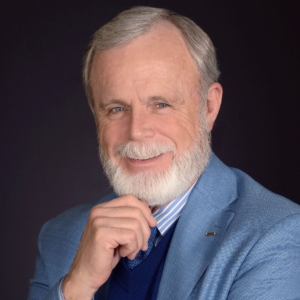
For Jim Spivey, the 25th anniversary of the Sept. 11, 2001, terrorist attacks bring back memories of an unexpected return to military service.
Spivey, who had retired in June 2001 as assistant chief of chaplains for the U.S. Army, was serving as a professor of church history at Southwestern Baptist Theological Seminary when the attacks occurred. He was recalled to active duty soon after.
His work following the attacks centered on caring for families of those killed when American Airlines Flight 77 struck the Pentagon.
A return to military service
The Pentagon had been undergoing a long-term renovation, with sections of employees temporarily relocated as work progressed. The Army Chief of Chaplains Office had been moved from the section of the Pentagon struck by the aircraft.
The relocation ultimately spared the lives of those working in the Chief of Chaplains Office, Spivey said.
“If they had moved us back in, everybody in the Chief of Chaplains Office would’ve been killed,” he said.
Following the attack, Spivey worked with Lt. Gen. John Van Alstyne to assist surviving families. A temporary operation was established at a Sheraton Hotel in Crystal City, Va., across the highway from the Pentagon.
For roughly two months, Spivey and others helped families with logistical and administrative needs while keeping them informed about recovery operations.
A total of 184 people, excluding the hijackers, died in the Pentagon attack, Spivey said.
Sign up for our weekly edition and get all our headlines in your inbox on Thursdays
After his temporary assignment ended, Spivey returned to teaching at Southwestern Seminary.
The experience also contributed to a lasting change at the Pentagon. Spivey said Army Chief of Chaplains G.T. Gunhus insisted a chapel be included in the rebuilding process. A chapel now exists at the Pentagon near the Army Chief of Chaplains Office.
The changing role of chaplains
Although Spivey said the fundamental ministry of military chaplains has remained largely unchanged, the environment in which they serve has become more demanding.
Military chaplains minister to people regardless of their religious affiliation—or whether they have a faith at all. They can preach, teach, disciple, and work with members of their own faith group while also serving as spiritual advisers and sources of support for an entire military unit.
“The chaplain is a pastor to everybody in the unit,” Spivey said.
That responsibility requires chaplains to maintain appropriate boundaries. They can preach and teach according to their faith perspective in voluntary religious settings, he said, while exercising caution in settings where participation is not voluntary.
Spivey also emphasized the constitutional role of military chaplains.
“The First Amendment protects both the free exercise of religion and against government establishment of religion,” Spivey said.
Chaplains help military personnel exercise their religious freedoms when they are deployed in places where civilian religious support may not be available.
“They serve on both sides of that constitutional issue,” Spivey said.
A more demanding deployment environment
Military deployments also have changed significantly during Spivey’s career.
He served during the first Gulf War and said the military increasingly moved from deploying large formations toward assembling smaller, specialized units.
That change created challenges for chaplain support because smaller units do not always have chaplains assigned directly to them.
Spivey said the Army responded in part by creating chaplain detachments within the Individual Ready Reserve, pairing a chaplain with a chaplain assistant who could deploy with smaller units.
The increased reliance on Reserve and National Guard forces also has changed expectations for chaplains.
Spivey said those considering chaplaincy in the Reserve or Guard should understand they may eventually face lengthy deployments.
“You will have to pick up and leave your job,” Spivey said.
The repeated deployments of the past 25 years have placed significant pressure on service members, chaplains, and families, he added.
Preparing chaplains for the future
Spivey continues to address those challenges through the Marsh Institute for Chaplains, an independent nonprofit organization focused on chaplaincy.
“At any given time, we would have 30 or 40 students that were planning to go in the military or chaplain work,” Spivey said.
The institute provides resources and curriculum for chaplains and educational institutions, conducts research into chaplaincy issues, and advocates for chaplains and their ministries.
The institute works across denominational lines and with different types of chaplaincy, including military, corporate, and correctional settings.
Spivey also remains involved in international chaplaincy development.
For Spivey, the work reflects a broader challenge facing chaplaincy: adapting its ministry to a changing and increasingly diverse world while maintaining the boundaries and constitutional protections surrounding religious ministry.
Twenty-five years after the attacks of Sept. 11, 2001, Spivey sees the need for chaplains as strong as ever.
“The ministry hasn’t changed, but the intensity has,” he said.










We seek to connect God’s story and God’s people around the world. To learn more about God’s story, click here.
Send comments and feedback to Eric Black, our editor. For comments to be published, please specify “letter to the editor.” Maximum length for publication is 300 words.