





The voices on the Aug. 11, 2009, audio recording of the Southern Baptist Convention’s Great Commission Resurgence Task Force exhibit enthusiasm and excitement as well as intrigue and concern.
The people behind the voices seemed to embrace the motivational messages that resulted in seven major components intended to turn Southern Baptists back into evangelistic powerhouses.
In the end, only two of the items were completed fully, but the process to get to the initial proposal of seven was no less intense.
The discussions highlighted the latest difficulties in helping autonomous churches cooperate within autonomous associations and autonomous state conventions—and how the national entities and seminaries fit into the mix.
‘Unprecedented moment’
Twenty of the 23 members serving on the 2009–2010 Great Commission Resurgence Task Force were present that opening day—a day task force chair and then-Arkansas pastor Ronnie Floyd described as the start of “an unprecedented moment.”
“We’ve got to seize this moment,” he told the group. “This is a moment in our history that is powerful.”
Items in the collection

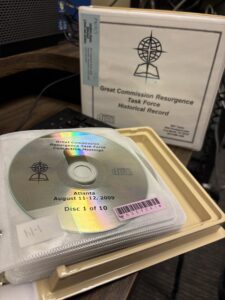
The audio files from the task force’s 10 months of work were sealed for 15 years, the agreed-upon time by the group.
Those files were unsealed and became available to the public at the Southern Baptist Historical Library and Archives beginning June 16, at 8 a.m.
Sign up for our weekly edition and get all our headlines in your inbox on Thursdays
The collection includes 57 compact disc recordings, one DVD recording, a few printed blog posts from the pray4gcr.com website (which is no longer functional) and the printed Great Commission Resurgence Task Force progress report from February 2010.
Leaders of the task force did not transfer any other paper documents or notebooks, even though, on the audio file, Floyd refers to a comprehensive manual and directory each member had received.
“No minutes, agendas, programs, notes, outlines or correspondence are included in the collection,” according to the collection summary document provided by the historical commission.
How it all started
According to the introductory remarks in the audio files, the resurgence concept related to the Great Commission started with Thom Rainer, then-president and CEO of Lifeway, a few years prior to Georgia pastor Johnny Hunt being elected president of the Southern Baptist Convention.
While Hunt ultimately ran with the idea, it was Danny Akin, president of Southeastern Seminary in Wake Forest, N.C., who served as the conduit between Rainer and Hunt.
Akin had been chatting with Rainer in the fall of 2008 about concerns they both saw within the SBC—membership and baptisms were down, and the SBC entity leaders seemed to be living in some type of “dysfunctional” relationship.
“Thom Rainer coined the term Great Commission resurgence. He said that’s what we need,” Akin shared with the task force members during that initial meeting in 2009.
“I said it was a great way to phrase it. He said, ‘Then run with it.’”
According to The Alabama Baptist newspaper, South Carolina pastor Frank Page also used the phrase “Great Commission resurgence” in his outgoing presidential address to SBC messengers in June 2008 in Indianapolis. Page urged Baptists to “fall in love with Christ all over again.”
‘Axioms of the Great Commission’
Still, it was Akin who developed, along with consultation from others, a chapel message known as “Axioms of the Great Commission” that ultimately became the foundational—and often controversial—mantra for those championing the cause.
“Brother Johnny asked for ownership, to work with folks to adjust it a bit, to post it on the website and see what happens,” Akin shared with the task force members to bring them up to speed on how the resurgence idea had developed.
For and against
The proposal—written and delivered by Al Mohler, president of Southern Seminary in Louisville, Ky.—called for creating a task force “to cast a compelling vision for Southern Baptists for the foreseeable future,” Akin said, adding it received 95 percent affirmation at the 2009 annual meeting in Louisville.
Of course, how can anyone vote against the Great Commission? Chuck Kelley, president emeritus of New Orleans Seminary, later asked.
Kelley has been outspoken about his concerns about the task force report through the years and has called out the branding as unfair and a way to prevent pushback.
His latest blog post also mentions a comparison of SBC stats between 2025 and 2010, when the Great Commission Resurgence Task Force recommendations were adopted.
“The downward trend is unmistakable,” Kelley writes. “Compare those same stats with the statistics from 1990, and the differences are even more stark.”
But in August 2009, Great Commission Resurgence Task Force leaders believed they could turn the declines around with the work they were doing.
‘End game’
Akin shared with the task force members: “My prayer is that … we will have a greater passion for the Lordship of Christ, a greater understanding of the gospel, a greater desire to love our neighbor as ourself, and to reprioritize our entire lives—from my life all the way up to our national entities—to really get after the fulfilling of the Great Commission. That’s my passion, that’s my heart, that’s the end game for me.”
Hunt also spent time describing his vision during that initial task force meeting.
“We flat need God to do something. … I prayed. I earnestly, earnestly, earnestly prayed. And Southern Baptists [have a desire] for someone to speak into their lives. If you study the Old Testament, … you’ll come on those occasions where the people were asking the prophets, ‘Is there a word from the Lord?’ People in times of desperation just want to know, ‘Is God still saying anything?’”
Hunt added he believed Crossover 2010 would have 10,000-plus volunteers (fewer than 2,000 showed up) and the 2010 annual meeting would see more than 18,000 messengers registered (a little more than 11,000 registered).
‘Guiding coalition’
As Floyd guided the task force through its opening agenda in August 2009, he noted: “We’ve got to rally people to a better future. That’s what we’ve got to do. That’s getting what we are doing down to a nutshell. We are going to rally people to a better future.
“We believe there’s a better future than where we presently are headed, and we are going to rally them to that future,” he said. “We’ve got to create it first, then we’ve got to rally them, and we’ve got to create this guiding coalition all the way to Orlando.”
Rainer’s message
Rainer’s role during the initial task force meeting was to share data points and define the reality of where the SBC was at that moment.
Following about 45 minutes of sharing research about a variety of declines in SBC life, Rainer wrapped on a final thought:
“Ultimately, any revitalization of any true Christian group has happened at the local congregation up and not on a task force down,” he said.
“So, the best thing that I would hope for anything that would happen is that we would remove the barriers so the local church can do its work. Almost any emphasis we’ve had in the SBC, even if it had initial success, has not lasted.”
2010 results
During the 2010 SBC annual meeting in Orlando, the task force’s recommendations were approved by messengers with one amendment by Pastor John Waters of First Baptist Church in Statesboro, Ga.
The amendment added language that says Southern Baptists will “continue to honor and affirm the Cooperative Program as the most effective means of mobilizing our churches and extending our outreach. We affirm that designated giving to special causes is to be given as a supplement to the Cooperative Program and not as a substitute for Cooperative Program giving.”
Those speaking against the recommendations included then-SBC Executive Committee president Morris Chapman, who retired in September 2010.
Task force members
Along with Floyd, Akin, Mohler and Page, the other task force members were Hunt as an ex-officio member; Tom Biles, then-executive director of Tampa Bay Association in Florida; Pennsylvania pastor John Cope; David Dockery, then-president of Union University in Jackson, Tenn. (now president of Southwestern Baptist Theological Seminary in Fort Worth); John Drummond, layman from Panama City, Florida; Donna Gaines, pastor’s wife and popular women’s speaker from Cordova, Tenn.; North Carolina pastor Al Gilbert; Georgia pastor Larry Grays; North Carolina pastor (and future SBC president) J.D. Greear; Texas evangelist Ruben Hernandez; Harry Lewis, then-senior strategist with the North American Mission Board; Kathy Ferguson Litton, pastor’s wife, church staff member and popular conference leader, who has served in several states; Florida pastor Mike Orr; Jim Richards, then-executive director of the Southern Baptists of Texas Convention; California pastor Roger Spradlin; Florida pastor Ted Traylor; Simon Tsoi, executive director of Chinese Baptist Fellowship of the U.S. and Canada; Bob White, then-executive director of the Georgia Baptist Mission Board; and Florida pastor Ken Whitten.
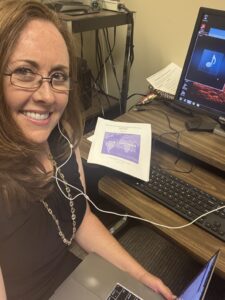
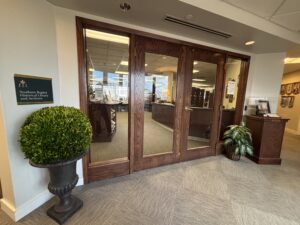
To schedule an appointment to listen to the Great Commission Resurgence Task Force audio files and review the collection items, call 615-244-0344. The Southern Baptist Historical Library and Archives is open from 8 a.m. to 4 p.m. Monday through Friday. Taffey Hall serves as director and archivist.







We seek to connect God’s story and God’s people around the world. To learn more about God’s story, click here.
Send comments and feedback to Eric Black, our editor. For comments to be published, please specify “letter to the editor.” Maximum length for publication is 300 words.