Rural churches struggle as resources flow to urban churches

JACKSONVILLE, Fla. (BNG)—It’s not easy being a small, rural church in America today. Denominations sometimes focus more resources on bigger, urban congregations. And luring a pastor to the boondocks is a major challenge.

church pews rural425In small country churches, pews evoke memories of members long-passed. (Creative Commons photo by E. I. Sanchez)“Many seminary graduates will not even consider taking a smaller church,” said Dennis Bickers, southeast area resource minister for the American Baptist Churches of Indiana and Kentucky. “So, finding pastoral leadership is becoming increasingly challenging.”

Worse still, country and small-town dwellers increasingly choose to move to larger cities.

“More and more people are moving from the rural area to urban settings,” Bickers said.

Those people represent potential members.

“Trying to reach new people is a challenge, because we are in a time where people take their consumer mentality to church with them, not just to Walmart,” he said.

More traditional, more challenges

But those trends run counter to statistical realities.

While large churches dominate headlines, congregations with more than 1,000 members account for only about 2 percent of U.S. houses of worship. About 90 percent of churches average less than 350 in attendance, and about 50 percent average less than 75. Many of the smaller churches are found in more rural settings than the flashy megachurches that steal attention away from typical congregations.

All of this leaves members at smaller churches feeling overlooked when denominational staff, often from larger congregations themselves, focus more on urban areas, said Bickers, author of The Healthy Small Church and The Art and Practice of Bivocational Ministry.

Intentionality, he said, is one of the key needs in denominational life when it comes to serving the needs of rural churches. Bickers described his American Baptist region as “very intentional about recognizing the importance of smaller churches, rural churches.”

One area they need assistance in is finding capable leadership. He said it’s a particularly challenging issue for congregations in need of bivocational ministers.

Additionally, he sees societal trends as adding to the struggles of rural churches.

“Smaller churches tend to be more traditional, so if people are not looking for that, it can be become difficult,” he said.
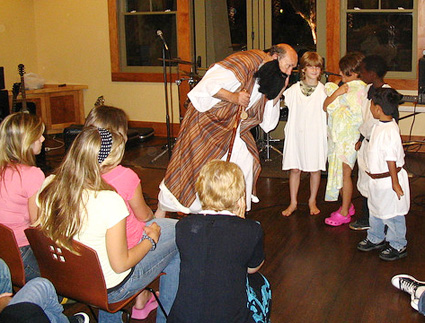
smaller churches425Smaller, rural congregations present many blessings, including an intimacy among members. (Creative Commons photo by Steven Perez)Ministering in rural contexts offers unique blessings despite the challenges, said Melody Pryor, pastor of First Baptist Church of Stanton, Mo., and board secretary for Churchnet.

Stanton, an unincorporated city with a population of just a few dozen, sits on Interstate 44 between St. Louis and Rolla.

She sees “familiarity” as one of “the biggest blessings.”

“Many of the families have lived in the community for generations,” she said. “When someone asks for prayer for another person, chances are the other church members know that person. Either they went to school with them, they were a neighbor or they are a family member or married to a family, etc. Farmers seem to have a tendency to know who owns the property next to theirs.”

Visitors

“Another blessing—unique to our location—is the visitors we receive,” Pryor added. “There is a KOA campground across the road from us and Meramec Caverns campground/motel just a couple miles down the road. We are also located on the famous Route 66 and on Interstate 44. We have had visitors from just about every state in the Union and from Canada, Australia and England.”

Bickers similarly sees special opportunities for rural churches.

“People in rural churches share common experiences,” he said. “That’s certainly a strength of these churches.”

“People are more important than programs,” he added. “You don’t have to audition to sing in the choir in most rural churches. Relationships are key. Everything in a small church, a rural church, revolves around relationships.”

And “people communicate quickly,” he said.

For instance, “if there’s a death, before the day’s done, details are worked out” like “who’s going to bring potato salad” and take care of other needs.

Rural poverty initiative

Mollie Palmer serves as the director of Together for Hope Arkansas, a Cooperative Baptist Fellowship regional initiative.

“Together for Hope on a national level is CBF’s rural poverty initiative,” Palmer explained.

Several programs the ministry undertakes are in Phillips County on the Mississippi River. They partner with local preschools, bring a “stories on wheels” school bus that has been refitted with bookshelves and work tables as a sort of traveling library and lead summer reading programs to stop “summer slide where people lose information over the summer because they are not engaged in reading,” Palmer said.

They also connect mentors with students who are reading below grade level. Leadership development is provided for youth through service projects, summer camp and a new college scholarship program, she said.

Challenges

But there are challenges, she added.

“People tend to focus their resources on urban areas, so you have to be a little more creative on how you focus your program” in rural areas, Palmer said.

“I never in a million years would have told you I would have ended up in a rural community,” she added, noting she grew up in a Little Rock suburb. “We, as a society, have kind of cast aside the rural community, and it’s not something that the cool kids do.”

Because the bulk of talent, resources and funds go to the urban centers, it leaves those who choose to live in rural areas going without, she said.

“You can make a big impact in a rural community,” she added. “Rural communities have a lot to offer.”

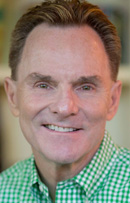



Baptist Briefs: ERLC honors civil rights leader

John Perkins, civil rights leader and community organizer, received the John Leland Religious Liberty Award from the Southern Baptist Convention’s Ethics & Religious Liberty Commission. ERLC President Russell Moore presented the award to Perkins at Mount Helm Baptist Church in Jackson, Miss. Perkins, 85, was a leader in the school desegregation movement in Mississippi. With his wife, Vera, he founded various ministries that focus on Christian community development, justice and reconciliation.

BWA women’s leader to retire. Patsy Davis, executive director of the Baptist World Alliance women’s department, will retire Dec. 31, 2015, after 17 years at that post. Previously, Davis was a Southern Baptist International Mission Board missionary 21 years, serving as general secretary of the National Woman’s Missionary Union of Venezuela. 


Baptist presidents lead racial unity event in Mississippi

JACKSON, Miss. (RNS)—In an effort to foster racial unity among Christians, leaders of America’s two largest Baptist groups—one mostly white and the other predominantly black—met with pastors in Mississippi Nov. 4 for a “Conversation on Race in America.”

Leaders of the Southern Baptist Convention and the National Baptist Convention, USA, expressed concern over racial tensions after the unrest in cities such as Ferguson, Mo., and Baltimore and the shooting deaths of members of Emanuel African Methodist Episcopal Church in Charleston, S.C.

Jerry Young, president of the National Baptist Convention, USA, said he anticipated the discussion in Jackson, Miss., would inspire specific steps for addressing racial reconciliation in the country.

Practical ways to move forward

“I hope that all of it in some way will result in some very practical ways in which the church can move forward with this issue and also help to influence the culture,” said Young, whose denomination claims 7.5 million members.

Young and SBC President Ronnie Floyd were joined by 10 pastors from their respective denominations for a conversation that preceded an annual luncheon of Mission Mississippi, a Christian organization that has worked for more than two decades to address racism, which its leaders believe hinders evangelism.

“I would hope ultimately that we’re not going to get in a room and rehash the past. That’s not what our goal is,” said Floyd, whose denomination claims 15.5 million members. “But it is to raise the church’s role in leading the way in racial unity and to try to find ways that we can help as the church in this crisis moment in our country relating to that.”

Fostering relationships

Neddie Winters, president of Mission Mississippi, hopes efforts in his state to foster relationships among Christians of different denominations and races—through picnics, prayer sessions and dialogues—can be replicated in other states.

“Learning how to do that and come together will certainly minimize and hopefully alleviate incidents like we’ve had in the past,” he said.

Floyd and Young met when they spoke briefly at an August worship service in Mississippi called “Stronger Together,” which brought together the choir of First Baptist Jackson and the Mississippi Mass Choir to demonstrate Christian and racial unity after the “Emanuel Nine” killings.

Young called it “an absolutely electrifying experience.” Floyd wrote that it was “an incredible night, one of my most memorable as president of the Southern Baptist Convention.”

Needs ‘intentional attention’

Church historian Bill Leonard of Wake Forest University Divinity School said the joint work of the two Baptist leaders is an indication of “a growing recognition that healing or moving beyond racial divisions needs continued and intentional attention. A concern for greater diversity and a recognition that they need each other may be strong incentives for moving in these directions.”

Although they are not yet certain what steps they will take, the leaders of the event said they hope to be able to move beyond existing racial tension and take action to reduce it.

“There are so many people who say, ‘What in the world can we do?’” Young said. “We’re hopeful and prayerful that God will use this not as an event but as a movement.”


Baptist Briefs: BJC leader blasts religious bigotry.

The head of a Baptist organization dedicated to upholding religious liberty for all Americans joined Christian, Jewish and Muslim leaders in a pledge signed Oct. 23 in Washington denouncing all forms of religious bigotry. Brent Walker, executive director of the Baptist Joint Committee for Religious Liberty, added his signature to a pledge to “uphold and defend the freedom of conscience and religion of all individuals by rejecting and speaking out, without reservation, against bigotry, discrimination, harassment and violence based on religion or belief.” Shoulder to Shoulder, a coalition of 31 religious denominations and organizations committed to ending anti-Muslim sentiment in the United States, sponsored the initiative.

Mission news pioneer Stanley dies. bob stanley130Bob StanleyBaptist missionary journalist Bob Stanley, 86, died Oct. 21 in Fort Smith, Ark., after an extended illness. Born in Denton, Stanley was a veteran news reporter—editor for the Dallas Times Herald and journalism professor at North Texas State University—when he became a Southern Baptist missionary to the Philippines in 1966. In the decades that followed, he used his experience and insight to train a generation of mission communicators. As director of news and information for the Foreign Mission Board from 1977 until his retirement in 1994, Stanley greatly expanded the agency’s scope of reporting and mission storytelling. He built and trained a staff of Richmond-based writers, and, working with colleague Robert O’Brien, created a network of missionary correspondents based around the world. Stanley is survived by his wife, Nora, two children and two grandchildren. 

Religious liberty agency sponsors essay contest. The Religious Liberty Council of the Baptist Joint Committee has announced the topic for its annual essay contest for high school juniors and seniors: “What happens when elected or appointed officials have religious objections to job duties?” Essays not only should examine the conflicts that arise when the personal religious beliefs of elected or government-appointed officials clash with their job duties, but also should propose a solution that addresses the rights of all parties. The contest offers a grand prize of $2,000 and a trip for two to Washington, D.C. Second prize is $1,000, and third prize is $250. Essays should be between 800 and 1,200 words. Entries must be postmarked by March 4, 2016. Essays will be judged on the depth of their content, mastery of the topic and the skill with which they are written. Students should develop a point of view on the issue and demonstrate critical thinking, using appropriate examples, arguments and other evidence to support their position. Winners will be announced by next summer, and the grand prizewinner will be recognized at the Baptist Joint Committee board meeting next October. For complete contest rules, call (202) 544-4226, email cwatson@BJConline.org or click here

Tennessee Baptists to relocate offices. The Tennessee Baptist Convention will move its offices from Brentwood to a 600-acre mixed-use development adjacent to Interstate 65 in south Franklin in 2017. The convention’s executive board signed closing documents Oct. 26 for 2.3 acres in the Berry Farms business development just north of State Route 840. The Nashville Tennessean reported the purchase price as about $1.15 million. Construction of the 32,000-square-foot building, less than half the size of the 88,000-square-foot building constructed in Brentwood in 1969, is scheduled to begin in March and be completed in a year. About 60 Tennessee Baptist Convention executive board employees have been working out of temporary space at LifePoint Health’s Hospital Support Center in Brentwood since the state convention’s 48-year home at Maryland Way and Franklin Road in Brentwood was sold in 2013 for about $8.75 million. Tennessee Baptist Executive Director Randy Davis expects construction of the new property to be completed debt free.


Missionary sent to revive Zimbabwe seminary

A Southern Seminary Ph.D. student and his family have moved to Zimbabwe with a mission to revive a seminary struggling since the firing of its former principal over doctrine in 2011.

Read it at Baptist News Global


Baptist Briefs: Court rejects settlement of Baptist home lawsuit

A federal appeals court threw out the 2013 settlement of a lawsuit challenging state funding of a Kentucky Baptist children’s ministry, saying a judge should decide if court-ordered monitoring of alleged violations of the separation of church and state by Sunrise Children’s Services is fair. A divided three-judge panel of the Sixth Circuit U.S. Court of Appeals ruled Oct. 6 that a lower court erred in allowing plaintiffs, including Baptist minister and former seminary professor Paul Simmons and the Commonwealth of Kentucky, to settle a dispute dating back to the 1998 firing of a lesbian employee by the Kentucky Baptist Convention entity then known as Kentucky Baptist Homes for Children. 

Baptist judge blocks Arkansas executions. An Arkansas judge who also is pastor of a Baptist church has halted the executions of eight death-row inmates, challenging a new law allowing the state to withhold information that could publicly identify the manufacturers and sellers of lethal-injection drugs. Pulaski County Circuit Judge Wendell Griffen issued a temporary restraining order Oct. 9 barring the state from carrying out eight executions scheduled recently by Gov. Asa Hutchinson, the first two set for Oct. 21. Griffen, pastor of New Millennium Church in Little Rock, Ark., said allowing the executions would cause “immediate and irreparable injury” to the inmates, who filed a lawsuit in June challenging both the Arkansas Act 1096 of 2015, the state’s new lethal-injection law, and the lethal-injection protocol adopted by the Arkansas Department of Corrections.


Ronnie Floyd asks if SBC should consider merging mission boards

KANSAS CITY, Mo. (BNG)—Southern Baptist Convention President Ronnie Floyd suggested merger of the convention’s two mission boards during a symposium on the denomination’s future at Midwestern Baptist Theological Seminary in Kansas City, Mo.

ronnie floyd130Ronnie Floyd“Structures and systems flow from the work of God,” Floyd, senior pastor of Cross Church in Northwest Arkansas, told denominational leaders at the first installment of a new series of meetings to be held once every three years. “They do not create the work of God.”

“If we hold on to our old structures and systems—more concerned about preserving them than seeing them conformed to what God is doing today—then we may lose both the work of God and this present generation of Baptists,” Floyd said three months into his second and final one-year presidential team.

Floyd, a pastor 39 years, said the stakes are high for the denomination’s future.

“In 1845, we were founded with a great purpose and vision to reach the world for Christ,” he said. “As we have grown in our organization, we have also grown in our complexity.”

“If this continues, our central focus will become the preservation of our structures and systems—the budget and the allocation of it to our ministries—rather than keeping our focus on our mission to reach the world,” he said.

‘Strategic reinvention’

Floyd, a member of two panels in the last 20 years to reorganize and reprioritize the nation’s second-largest faith group and chair of the “Great Commission Resurgence” task force that brought recommendations approved in 2010, said for the purposes of his assignment, he was presenting his observations about spiritual renewal and “strategic reinvention” of the SBC as questions, even though he has an opinion about most of them.

One question—“For the sake of gospel advancement, should the International Mission Board and the North American Mission Board become one mission board?”—prompted bloggers who attended to weigh in with both pros and cons.

In video of the message recently made available online, Floyd said the question is one the next generation of Southern Baptist leaders will address.

“This is not a new question at all,” he said. “Some of us who have been involved in shaping the future have asked this question and tried to answer it honestly. With our present matters at hand, this question is being asked more today than ever before.”

Floyd suggested three factors that previously prevented Southern Baptists from having just a single mission board:

• Unique roles of each mission board. “While this has been true before, is it still true within the global culture we experience daily and with the reality the ethnicities that live everywhere across this world?” he asked.

“Is this true when technology is helping shape the culture today and can assist us in our mission? Furthermore, with an undeniable global mindset in America today, is this still the right strategy?”

• Cooperative Program dollars would be held mostly by one board instead of two. At present, merger would mean 73 percent of the SBC portion of the Cooperative Program unified budget—more than $137 million—would be controlled by one board of trustees.

“Is this really problematic when the board of trustees is responsible to the convention for the fiduciary responsibilities of our entities?” Floyd asked. “Is this really a viable reason why this should remain as our strategy? I wonder what our churches think.”

• The timing never has been right. “Only God knows the time,” Floyd said. The real question about the future of the SBC’s two mission boards is “which decision will fast-forward the mission of our churches to advance the gospel of Jesus Christ to the ethnicities of the world.”

“This generation of Baptists will have to determine how to answer this question,” he said.

On another topic, whether there is a future for state conventions and local associations, Floyd said, if the SBC were being built from the ground up today, there would be a need for boots on the ground to help churches achieve their mission.

“If we operated from a clean slate today, perhaps it may look somewhat different, but the key reality for the future would be more their function than in the structure,” Floyd said.

State conventions and associations

For state conventions and associations to be relevant in the future, the key is to clarify their mission and simplify their responsibilities, he said.

“They do not need to duplicate and triplicate one another, nor do our national entities need to do that,” he said. “We must find a way to cease duplication and triplication locally, statewide and nationally.”

State and local Baptist groups must “be agile in their response to the churches,” Floyd said.

“Weighty, needless structure prohibits immediate response to the churches,” he said. “We need to rid anything in our state conventions, anything in our associations and even our national entities that slows down our responsiveness to the churches.”

In terms of sustaining themselves financially, Floyd said, any organization that cannot raise enough money to support itself should be questioned about whether it is truly needed.

For example, Floyd said, some state conventions and local associations might consider “merging for the greater cause of helping our churches more effectively.”


Baptist Briefs: Wiley Drake runs for president again

Wiley Drake, who initiated the 1996 Southern Baptist Convention boycott of the Walt Disney Corporation, announced he is running as an independent candidate for president, offering himself as an alternative to choosing “a lesser of two evils” between Democrats and Republicans. In 2008, Drake ran for vice president with the American Independent Party as running mate of Alan Keyes. Drake, 71-year old pastor of First Southern Baptist Church in Buena Park, Calif., was elected in 2006 as second vice president of the Southern Baptist Convention. During his year as an SBC vice president, Drake drew rebuke from convention leaders after endorsing a Republican candidate for U.S. Senate on letterhead he created for himself labeled “Southern Baptist Convention, Office of the 2nd Vice President.” The IRS investigated Drake in 2008 after he sent out a personal letter endorsing Arkansas Gov. Mike Huckabee’s presidential campaign written on church stationery. In 2009, Drake said on his radio program the murder of a doctor who provided late-term abortions was an answer to “imprecatory” prayer he had voiced against an enemy of God, and he told a talk-show host he also prayed imprecatory prayers against President Obama.

SBC tops budget projection for fiscal year. The Southern Baptist Convention ended its fiscal year $1.1 million over its 2014–2015 budgeted goal and $2.5 million over the previous year’s Cooperative Program allocation budget gifts. The SBC received $189,160,231.41 in Cooperative Program allocation gifts for the year. This amount is $2,592,620.78, or 1.39 percent, more than it received during the last fiscal year, and is $1,160,231.41, or 0.62 percent, more than its budgeted goal of $188 million. In designated giving, the fiscal year’s total of $195,013,412.58 is 0.17 percent above the previous year’s $194,678,166.09. Of this designated amount, $194,205,408.42 was disbursed to the International Mission Board and North American Mission Board through the seasonal missions offerings and Global Hunger Relief. The balance was designated for other SBC entities or the SBC operating budget. Combined designated gifts to SBC causes and Cooperative Program allocation budget gifts showed a 0.77 percent increase over the same time last year.


Ministers see how grace and forgiveness trump tragedy

COLUMBIA, S.C. (BNG)—A thousand things raced through Pastor Kevin Glenn’s mind the Sunday morning his Las Cruces, N.M., church was struck with an explosive device as worship was set to begin.

kevin glenn130Kevin GlennWorshippers had to be kept calm, law enforcement directions had to be followed, and the press and public had to be communicated with, Glenn told listeners on a Columbia Partnership conference call titled “Crisis and Civility in Congregations.”

Right at the top with those crucial actions was another—preventing members of Calvary Baptist Church from falling into a vengeful frame of mind about those responsible for the Aug. 2 attack, which also targeted nearby Catholic and Presbyterian churches.

So Glenn and his leadership team huddled to craft a simple but adamant message for church members and the public: “Calvary will extend prayer and forgiveness to the perpetrators, even while recognizing that, legally, justice must be served.”

“We want to offer help to these people” and remind the community and church that “they are not our enemy,” Glenn said.

A radical response

Glenn and others on the conference call acknowledged the Calvary response to the bombings, in which no one was hurt and arrests have yet to be made, is radical and countercultural in American society.

And that was one of the themes running through the hour-long call moderated by George Bullard and Ken Kessler of the Columbia Partnership.

jeffrey collins130Jeffrey CollinsAlong with Glenn they hosted Greg Hunt, the author of Leading Congregations through Crisis, and Jeffrey Collins, an Associated Press writer who covered the shootings at Emanuel AME Church in Charleston, S.C.

On June 17, a lone gunman walked into a Wednesday service and shot nine people to death, including the senior pastor at Emanuel AME Church. Much of the nation reacted in horror and anger.

But Collins witnessed something he considered totally amazing at a bond hearing for the suspect—family members of the slain expressing forgiveness and love for the white supremacist who had taken their loved ones.

Collins, a deacon at a Baptist church in Columbia, S.C., said he recognized the relatives’ expression as “a good Christian thing to do.” But he also saw how alien those words and sentiments were for some others in the media and society.

Because one of the purposes of the call was to provide church leaders with best practices during crises, Collins urged listeners to follow the Emanuel relatives’ examples if they ever find themselves in a similar situation.

‘A sliver of light’

By choosing and communicating forgiveness, they injected “a sliver of light” into an otherwise purely negative story, Collins said.

In addition to following Christ’s direction in the treatment of others, taking the route of forgiveness like Calvary Baptist and Emanuel AME did is a form of evangelism, Hunt said.

Exhibiting grace in that way enables Christians “to bear witness in a way that is counter-intuitive,” he said.

greg hunt130Greg HuntHunt also praised Glenn and his leadership for dealing honestly and accurately with the congregation after the bombing.

It’s a topic he knows all too much about.

In 2009, when he was pastor of First Baptist Church in Shreveport, La., a bus filled with church youth suffered a blown tire and rolled several times. Many were injured and three were killed.

It happened moments before Sunday worship, leaving Hunt and other ministers with a dilemma: Should they or shouldn’t they inform the congregation—especially when so little information was available at the moment.

Hunt decided to share what he knew, and from there a practice of transparency emerged that church members appreciated, he said.

But the experience led him to start research that culminated in his book—a collection of best practices on, among other things, how to responsibly communicate with church members and the press during times of crisis.

Such actions can bring calm and clarity and avoid inaccurate stories from spreading, he said.

Hunt added it was bracing for him to discover many churches that experience such catastrophic experiences never recover.

‘It brought us together’

Similarly, Glenn noted research for a book he wrote before the August bombing at his church helped him think through Calvary Baptist’s response.

The experience of writing Hand over Fist: An Invitation to Christ-Centered Civility, Glenn said, meant “right off the bat” he was directing the staff on “how we could respond rather than react.”

They developed a communication policy that specified who from the church was authorized to speak to media and law enforcement, he said. The policy also barred speculation by never speaking about topics that were the domain of law enforcement.

“Let’s be calm, (and) let’s be clear” about how scary the experience was but also how grateful the church is there were no injuries or deaths, he said.

Glenn acknowledged it was a strange way to begin his pastorate at Calvary Baptist. The bombing occurred on his first day as pastor.

“It’s not the way I would have written the script, but it brought us together very quickly,” he said.


Jesus—not therapy—can change LGBT lives, evangelical leaders say

LOUISVILLE, Ky. (RNS)—Evangelical leaders spoke out against reparative mental-health therapy for lesbian/gay/bisexual/transgender people but still called on them to change, saying only through faith in Jesus can they find “wholeness and holiness.”

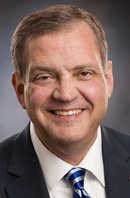
albert mohler130Al MohlerThe Association of Certified Biblical Counselors and the Council on Biblical Manhood and Womanhood, meeting at Southern Baptist Theological Seminary in Louisville, Ky., were under fire from LGBT activists for failing to condemn reparative therapy.

Oregon, California, New Jersey and the District of Columbia now prohibit licensed therapists from attempting to change the sexual orientation or gender identity of a minor. However, the Biblical Counselors group—as religious advisers—are not necessarily subject to those bans.

Dozens of activists from the Fairness Campaign, a Louisville LGBT advocacy group, demonstrated near the campus, saying reparative therapy increases the rate of depression and suicide in the LGBT community and objecting to religious calls to “change.”

In a joint press conference, Al Mohler, president of the seminary, and Heath Lambert, executive director of the Association of Certified Biblical Counselors, said psychological therapy, including reparative therapy, is a “superficial” response to the struggle people face in dealing with same-sex attraction and transgender identity. 

A joint statement released by Mohler and Lambert still used the language of “change” and “repair” for LGBT people who, Mohler said, can only find “wholeness and holiness” through faith in Jesus.

In an interview, Mohler insisted his view is not new: “I don’t think repair comes any way other than through redemption. I have been consistent through the years in saying reparative therapy is not the way to go.”

Change of position

However, columnist Jonathan Merritt pointed out, Mohler in 2004 lamented the American Psychological Association’s condemnation of reparative therapy and “transformational ministry.” Back then, he called the association’s push for others to accept science’s findings on sexual orientation a “final insult” to traditionalists.

“We are not saying homosexuality can’t change or shouldn’t change,” Mohler said Oct. 6. “This is not something that can be reduced to deciding or choosing an object of sexual attraction. That’s simplistic and a sin against those who are in the struggle” with sexual attraction and gender identity. 

Every person struggling with sin—whether pride or anger or sexual attraction—faces the same kind of battle, Mohler added. Only the gospel promises transformation, because it can “make us desire things we have never desired before, and it will give us progressively the ability to follow him in obedience.”

He dismissed the argument by LGBT activists that they, too, can be faithful Christians.

“The great divide,” Mohler said, is between those who think faithful Christianity conforms to the Bible and those who don’t. The latter, he said, “can never be faithful Christians.”

‘Moral sanity’

Lambert, associate professor of biblical counseling at Southern Seminary, said in the press statement the conference was intended to demonstrate for ministers and counselors Christian compassion for people struggling with homosexuality and gender identity.

“We’re in a culture where Christians are the only ones that can teach moral sanity in the midst of the moral craziness we’re in,” Lambert said in an interview prior to the conference.


Baptist Joint Committee’s Brent Walker sets retirement

WASHINGTON—Brent Walker, longtime executive director of the Baptist Joint Committee for Religious Liberty, a Washington, D.C.-based organization committed to upholding the historic Baptist principle of religious liberty for all people, will retire at the end of 2016.

Walker, the BJC’s executive director since 1999, announced his plans during the Baptist Joint Committee board of directors’ meeting Oct. 5. A search committee will be formed to recommend a candidate to lead the religious liberty agency.

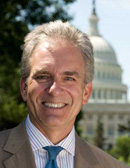
brent walker130Brent Walker“It has been a privilege to serve the cause of religious liberty through an organization as respected as the Baptist Joint Committee,” Walker said. “Just as I discerned an undeniable spiritual calling to perform this ministry, I sense that it is time to turn the reins over to someone else.”

Walker is an ordained minister and a member of the U.S. Supreme Court Bar. He joined the BJC staff in 1989 as associate general counsel. In 1993, he was named general counsel and succeeded previous Executive Director James Dunn in 1999. 

Walker has been the agency’s fifth executive director. He is the longest-serving staff member in BJC history. When he retires, he will have been with the organization 27 years.

Walker’s legacy at the BJC includes working to pass the landmark Religious Freedom Restoration Act in 1993 and the Religious Land Use and Institutionalized Persons Act in 2000. He stood against efforts to amend the First Amendment in the late 1990s, opposed government-sponsored displays of Ten Commandments monuments in the mid-2000s and spoke out against targeting individuals based on religion during heightened Islamophobia in the early 2010s. 

Walker speaks in churches, educational institutions and denominational gatherings, and provides commentary on church-state issues in the national media. 

His tenure also includes changing the agency’s name from Baptist Joint Committee on Public Affairs to Baptist Joint Committee for Religious Liberty in 2005. Under his tenure, the BJC has emphasized education as well as advocacy in the courts and Congress, and opened the Center for Religious Liberty on Capitol Hill in 2012. 

Before joining the BJC staff, Walker was a partner in the law firm of Carlton Fields in Tampa, Fla. He left in 1986 to enter Southern Baptist Theological Seminary in Louisville, Ky., where he earned a master of divinity degree in 1989 and was named the most outstanding graduate. Walker was pastor of Richland Baptist Church in Falmouth, Ky., while in seminary.

“With a clear mission, strong staff and needed voice in the public square, I am confident the BJC is poised to soar to new heights as it enters its ninth decade,” Walker said.


Baptists from varied perspectives gather to defend religious liberty

NEW ORLEANS (BNG)—Leaders from the Cooperative Baptist Fellowship, Baptist Joint Committee for Religious Liberty and Southern Baptist Convention joined to discuss the importance of religious liberty around the world.

During the event at New Orleans Baptist Theological Seminary, CBF Executive Coordinator Suzii Paynter described her jarring encounter in 1978 with famed atheist Madalyn Murray O’Hair when Paynter taught public school in Texas.

suzii paynter nobts425Suzii Paynter, Cooperative Baptist Fellowship Executive Coordinator. (Photos: New Orleans Baptist Theological Seminary)O’Hair’s adopted granddaughter was in Paynter’s class, and the elder O’Hair showed up on the first day of school and announced she intended to make problems for the school, vowing to expose the ways she believed the rights of her granddaughter were being violated.

That encounter with O’Hair, best known for her lawsuit that led to the Supreme Court’s landmark 1963 ruling outlawing state-sponsored Bible reading in public schools, caused Paynter to take religious liberty more seriously—despite her personal dislike of O’Hair, she acknowledged.

Religious liberty had little day-to-day usefulness to her prior to the encounter, Paynter said.

“Religious liberty was about the equivalent to an English china teacup in my life—respected as fine and valuable, but rarely thought of or used,” she said.

That teacup came off the shelf for daily use in 1978, she said.

“I had to come face to face with the words ‘freedom of conscience’ and know that that was not just for me,” Paynter said. “It is very hard to defend the most hated woman in America, but religious liberty is not sanitized and nice. … Thankfully, religious liberty is not as fragile as a teacup.”

Although she would like it if her beliefs were embraced everywhere, Paynter said, she never would request the government make it so.

“I will not ask for state support—direct or indirect,” she said. “Don’t shame me or try to remove my right to religious expression. My faith expression does not coerce you.”

Turning her presentation to the importance of global religious freedom, Paynter noted many churches and faith-based organizations have abdicated their support for freedom abroad over the years.

“If there is an area we have relegated to lawyers and experts, it is international religious liberty,” Paynter said, emphasizing CBF’s expanding partnership with the Baptist World Alliance to speak on behalf of global religious freedom in partnership with the worldwide fellowship of Baptists in 121 countries composed of 42 million members.

Focusing on global religious freedom will be a CBF focus for the foreseeable future, she said.

“It is a great privilege to serve a Lord and Savior whose freedom calls for our direct worship and the sacrifice of our lives to his calling to love one another that our joy may be full and, in this case, to be sure of our liberty and freedom in Christ by working toward that goal for all.”

russell moore425Russell Moore, president of the SBC’s Ethics & Religious Liberty CommissionBJC Executive Director Brent Walker offered an assessment of the state of religious freedom in the United States.

Walker applauded the Supreme Court’s 2012 Hosanna-Tabor ruling, which recognized churches and other religious groups are free to choose their leaders without government interference.

“I’m very optimistic about church autonomy,” he said. “Churches that do not want to solemnize same-sex marriages are not going to have to under this doctrine.”

Walker also noted many critics of the Affordable Care Act’s contraceptive mandate fail to mention churches have been exempt from the provision from its beginning out of a respect for the principle of church autonomy.

Recent Supreme Court decisions relating to the First Amendment’s Free Exercise Clause “suggest that we are doing very well,” Walker said. But in terms of the First Amendment’s Establishment Clause, “we’re doing terribly and losing ground.”

He cited the Supreme Court’s 5-4 Town of Greece decision that affirmed the small New York state town’s practice of beginning its municipal meetings with a sectarian prayer. Walker distinguished the town’s policy with that of prayers that open up sessions of the U.S. Congress.

“The chaplains’ prayer (before the Congress) is for the body of the legislators,” Walker explained. “That’s completely different than in the (Town of) Greece—and at most local city council meetings—where the public is there not to just watch up in the galleries but to participate, to testify before the council … to get a zoning variance or business license.”

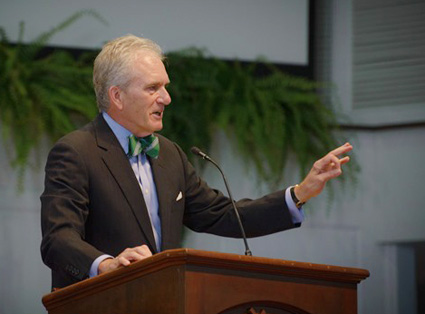
brent walker notbs425Brent Walker, Executive Director of the Baptist Joint Committee for Religious Liberty.“We took the position that—in that context—it was impermissibly coercive to require those folks to undergo or to experience and participate in a state-sponsored religious exercise as a ticket to exercise and perform their civic responsibilities.”

Referencing recent controversial comments from Republican presidential candidate Ben Carson suggesting a Muslim could not be president because of his or her faith, Walker said he was glad to see the candidate widely criticized by his conservative peers.

“I was heartened to see that several conservative commentators came out and roundly criticized Dr. Carson and his failure to (acknowledge) the importance of the ‘no religious test’ for public office,” Walker said.

While noting citizens are free to impose their own religious test on candidates, Walker said he thinks this is a bad idea.

Live by the spirit of ‘no religious test

“I think we ought to live by the spirit of ‘no religious test,’ as well as the letter of the law and allow that to inform our thinking about our voting patterns and how we engage the government as citizens,” Walker said. “Religion, of course, can be taken into account, and our public leaders don’t have to check their religion at the door.”

Russell Moore, president of the SBC’s Ethics & Religious Liberty Commission, told a story about his love for the late country singer Johnny Cash and his famous song “Folsom Prison Blues.”

For Baptists to be faithful to their commitment to religious liberty, they must remember their own prison roots and blues in the jailhouses of England, Virginia and Massachusetts during past centuries, he said.

“For us to be the people who maintain a witness to religious liberty, we have to remember what it means to be people of the jailhouse,” Moore said.

Giving up your rights for the gospel

Speaking from Acts 16 and the story of the imprisoned Paul and Silas, Moore said this New Testament scripture proposes Christians give up their rights.

“Paul and Silas stay (in prison), … and they stay because of the gospel and the advance of the mission,” he explained.

“We see in this (text) the personal nature of the gospel. … This is why Baptists have fundamentally been committed to religious liberty. It is not because of some political responsibility we have. It is because how we believe the gospel works,” Moore said.

“One cannot somehow coerce people into believing, one certainly cannot use the power of the state to turn people into Christians, because state power or economic power or community pressure can never make people Christians,” Moore added. “It can only make people pretend Christians. The gospel works with the Spirit convicting the heart and the heart crying out for deliverance and the heart crying out for mercy.”

What many conservative Christians in the United States believe to be persecution is not always persecution, Moore asserted.

Being offended vs. being persecuted

“Everything that offends us is not persecution,” he said. “We have not been promised life without offense. Often, what we can easily do as Christians is to turn into an interest group that lashes out at any group that offends us or disagrees with us.”

When companies and groups poke fun at Christians, that’s not persecution, Moore said.

Again, citing the Acts 16 story of the imprisoned Paul and Silas, Moore stressed the “gospel propels us at the same time to stand up for our rights.”

“When we simply say, ‘I am not willing to stand up for religious liberty,’ we are actually acting in ways that are profoundly selfish and profoundly anti-gospel. What that means is that we are going to be the people who, like the Apostle Paul and Silas, are contending for every legal protection for those areas the government ought not have supervisory oversight over.”

He pointed to examples of conservative Christians who have opposed efforts to build mosques and Muslim cemeteries in their communities, and he said the Christians who do so have “lost confidence in the gospel.”

“What happens when the power of the sword is used to shut down mosques for our Muslim neighbors, all that happens is that our mission field goes underground, and they realize that the Christians around me, hate me and want to see me invisible.”

Other presenters

Other presenters at the Sept. 29 event included William Brackney of Acadia Divinity College in Canada, Mike Edens of New Orleans Baptist Theological Seminary, Kenneth McDowell of Union Baptist and Theological Seminary in New Orleans and Gregory Komendant of Kiev Theological Seminary in the Ukraine.

The event, titled “Baptist Voices on Religious Liberty: Left, Right and Center,” was sponsored by the Institute for Faith and the Public Square and the Baptist Center for Theology and Ministry, as well as endorsed by the Baptist History & Heritage Society.