CBF Church Benefits seeks candidates for president

DECATUR, Ga.—The agency that manages retirement plans and other benefits for Cooperative Baptist Fellowship staff, field personnel and church staff members is seeking a new president.

CBF Benefits has developed a job profile and is soliciting names and resumes of potential candidates to replace Gary Skeen, the financial ministry’s founding president, who will retire next June.

Skeen has led Church Benefits the past 17 years and has a history with CBF spanning three decades.

In addition to handling benefits for national CBF personnel, CBF Church Benefits provides employee benefit services for ministers and church staff. They include retirement planning services, investment choices, and life and disability insurance coverage, as well as access to experts in health and medical coverage with whom churches may consult.

Assets under management have surpassed the $60 million mark in investments.

The job profile is available here. Applicants or individuals wanting to submit names for consideration may contact Anne F. Keating at (917) 207-1587 or email akeating@fraserkeating.com.


Sam Porter named national director for SBC disaster relief

ALPHARETTA, Ga. (BP)—The Southern Baptist Convention’s North American Mission Board named Sam Porter national director for disaster relief. He succeeds Mickey Caison, who will retire Aug. 31.

Porter, volunteer missions specialist for the Baptist General Convention of Oklahoma, was one of the first disaster relief leaders to respond after the 9-11 attacks in New York City. He made numerous trips to the area for two years and served as a chaplain in the morgue at Ground Zero.

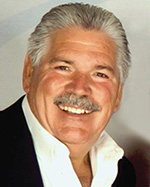
Sam Porter 150Sam Porter Porter also led more than 100 volunteer mission projects and more than 40 international relief missions. He headed recovery efforts for a year in Haiti following, 34 volunteer teams from Oklahoma in the wake of the devastating earthquake Jan. 12, 2010.

‘Proven to be a great leader’

“We’ve been praying and looking for Mickey’s replacement for about 18 months,” said David Melber, a NAMB vice president.  “Sam has been in the disaster relief world for a long time working around the nation and throughout Oklahoma.

“He’s proven to be a great leader. I’m excited to see how he’s going to continue unifying our state disaster relief leaders during crisis and how he will bring a new direction for disaster relief that’s going to further build its future.”

NAMB communicated news of Porter’s appointment to state disaster relief leaders during a July 11 conference call.

“We started looking for someone who was well-respected in the disaster relief world,” Melber said. “Sam had that respect because of his historical work in the disaster relief world. He’s highly regarded as a leader among state partners, and he truly understands how disaster relief works.”

Porter noted he is “thrilled to get to continue in the ministry I’ve already been doing 19-and-a-half years.” He called the network of Baptist state disaster relief directors “a fellowship of incredible men that help believers learn how to put themselves in the mission offering plate.”

“My prayer is that we can see every state convention have a strong disaster relief team to impact their part of the U.S.A. for the Lord by serving when individual’s lives are torn apart by disasters of various types,” he said.

Porter plans to retire from the Baptist General Convention of Oklahoma Aug. 15 and begin his role with NAMB in mid-September.

“I know of no one in the SBC who more exemplifies the ministry of disaster relief than Sam Porter,” said Anthony Jordan, state executive of the Baptist General Convention of Oklahoma.

“He has the respect of state and national leaders, as well as governmental leaders. He will be a bridge for building a solid and dynamic relationship between states and associational leaders with the North American Mission Board for disaster relief.”

Seek greater involvement by Millennials

Porter identified helping state conventions add to their volunteer force as one of his top priorities.

“We want to see every one of the 42 state conventions reach out to include collegiate students and many more Millennials,” he said, identifying the rising generation as “doers” with a “desire to be in hands-on ministry.”

“They are perfect to be (disaster relief) volunteers. We will seek to have more join their local state teams to serve across the nation,” he said.

Porter has served on the board of trustees at Golden Gate Seminary—now Gateway Seminary of the Southern Baptist Convention—and was chair of the board two years. He was a trustee of Oklahoma Baptist Homes for Children and vice president of the Oklahoma Pastors’ Conference. He also served as a men’s ministries specialist and was pastor for 20 years at several churches.

Porter has an undergraduate degree from Baylor University and holds a master of divinity degree from Southwestern Baptist Theological Seminary. He and his wife, Sheryl, have two adult sons, Aaron and Josh, and five grandchildren.


LifeWay may pull Peterson books from shelves over LGBT views

Editor’s Note: Eugene Peterson issued a clarification and retraction the day after the RNS interview appeared. Read the follow-up article by clicking here.

NASHVILLE—Customers who want to buy a copy of The Message version of the Bible soon may have to purchase it—or any other books by author Eugene Peterson—somewhere other than LifeWay Christian Stores.

LifeWay Christian Resources—the publishing arm of the Southern Baptist Convention—announced it would discontinue selling any books by Peterson if he confirms a published interview about same-sex relations accurately reflects his views.

In an interview with Religion News Service columnist Jonathan Merritt, Peterson voiced an accepting view of same-sex relationships and said he would be willing to perform a same-sex wedding ceremony. 

“I wouldn’t have said this 20 years ago, but now I know a lot of people who are gay and lesbian, and they seem to have as good a spiritual life as I do,” Peterson told Merritt. “I think that kind of debate about lesbians and gays might be over.

“People who approve of it, they’ll probably just go to another church. So, we’re in a transition, and I think it’s a transition for the best, for the good. I don’t think it’s something that you can parade, but it’s not a right or wrong thing as far as I’m concerned.”

When asked if he were in the pastorate today and a gay Christian couple asked him to perform their same-sex wedding ceremony, Peterson said he would do it, according to Merritt’s column.

LifeWay responds

Within a few hours after Merritt’s article appeared online, Baptist Press—information service of the Southern Baptist Convention’s Executive Committee—reported LifeWay Christian Resources no longer would sell any books by Peterson if he confirms “he does not hold to a biblical view of marriage.” 

“LifeWay only carries resources in our stores by authors who hold to the biblical view of marriage,” a prepared statement from LifeWay said. “We are attempting to confirm with Eugene Peterson or his representatives that his recent interview on same-sex marriage accurately reflects his views. If he confirms he does not hold to a biblical view of marriage, LifeWay will no longer sell any resources by him, including The Message.”

Peterson, pastor of Christ Our King Presbyterian Church in Bel Air, Md., for 29 years, is the author of 30-plus books, including The Message, which has sold more than 16 million copies worldwide.

First Hatmaker, now Peterson?

If LifeWay pulls Peterson’s books from its retail store shelves, it won’t be the first time it has excluded an author based on views about homosexuality.

Last October, LifeWay quit selling books by bestselling Bible study author Jen Hatmaker after she voiced approval for same-sex marriage—also in an RNS interview with Merritt.  

At the time, LifeWay announced it discontinued selling her resources because Hatmaker “voiced significant changes in her theology of human sexuality and the meaning and definition of marriage—changes which contradict LifeWay’s doctrinal guidelines.” 

Compiled from reports by Religion News Service and Baptist Press.


Lankford walks fine line as preacher and politician

OKLAHOMA CITY (RNS)—As music plays softly and the Quail Springs Baptist Church prepares to sing “Jesus is Tenderly Calling,” the guest speaker urges the crowd to bow and pray.

“Here’s my very simple invitation,” the fill-in preacher tells the congregation. “There’s a God who loves you and will walk with you through some very difficult things. Are you interested in coming to know him?”

It’s a traditional altar call—the kind offered in countless evangelical churches each Sunday. What makes this one unusual is the person behind the pulpit—U.S. Sen. James Lankford, R-Okla., a rising political star who mixes a boyish, Opie Taylor-like face with a booming, bass voice.

In the nation’s capital, Lankford’s weekdays consist of Senate Intelligence Committee hearings into Russian meddling in the U.S. presidential election and frequent cable news appearances to discuss policy questions ranging from national security to health care.

“He’s one of the most respected members of the Senate, even though he’s only been there two years,” said Sen. Angus King, a Maine independent who caucuses with the Democrats. “He’s deeply respected on both sides of the aisle.”

LANKFORD 350U.S. Sen. James Lankford, R-Okla., (center) and his wife, Cindy, (right) visit with constituents during the LibertyFest parade on the Fourth of July in Edmond, Okla. (RNS photo / Bobby Ross Jr.)But each weekend, the former youth pastor flies home to Oklahoma and worships with the Quail Springs church, a large Southern Baptist congregation in this Bible Belt state capital. Here, the senator insists, he’s not “The Honorable James Lankford.” He’s simply “James,” husband of Cindy and father of Hannah and Jordan.

When senior pastor Hance Dilbeck went on vacation this month, he asked Lankford to preach at all three morning services on two straight Sundays. Lankford didn’t hesitate to oblige.

Likewise, Lankford turned to his faith when a gunman opened fire June 14 on the Republican congressional baseball team: Lankford prayed on the Senate floor for House Majority Whip Steve Scalise, R-La., and three others who were wounded.

Despite Lankford’s increasing national prominence, the 49-year-old lawmaker says he remains more a pastor than a politician.

“This feels more like home,” Lankford says as familiar church members line up to greet him after the service, telling him they pray for him and encouraging him to remain strong.

A nudge from God

In 2010, Lankford—who earned a master of divinity degree from Southwestern Baptist Theological Seminary in Fort Worth—was a political neophyte. For 14 years, he had directed Falls Creek Youth Camp, a Bible camp that each summer draws more than 50,000 young people to southern Oklahoma.

But through months of Scripture reading and prayer, Lankford said, he and his wife felt God nudging them to “get ready.”

Get ready for what? He had no idea—until he read in the newspaper that then-Rep. Mary Fallin was giving up her U.S. House seat to run for governor.

“I just remember leaning back in my chair, and I had this overwhelming sense,” Lankford said of the spiritual clarity he felt.

Add his prowess at social media—Facebook, Twitter and YouTube—extensive connections with the state’s roughly 650,000 Southern Baptists and his willingness to do his homework and educate himself on the issues, and he created an unbeatable formula.

“All across Oklahoma, in all our Baptist churches, they all knew him,” said Anthony Jordan, executive director-treasurer of the Baptist General Convention of Oklahoma, a statewide association of 1,800 congregations. “While he is supported by far more than Baptists, he had a core group of people who encouraged and passionately worked for him.”

Supports Trump, not his tweets

After just four years in the House, Lankford was elected in 2014 to fill the final two years of former Sen. Tom Coburn’s unexpired term.

Then, in November 2016, Lankford breezed to a full six-year Senate term, receiving 68 percent of the vote, topping the 65 percent support President Trump got in the dark-red Sooner State.

But while Lankford and Trump both won Oklahoma big, their approaches to politics could not be more different.

Trump is brash and willing to spew venom on his political enemies. Lankford stresses the importance of treating everyone with dignity: “Every person is created in God’s image and has value and worth regardless of their political party.”

Nationally, white evangelical support for Trump surged even as some high-profile evangelicals, including Southern Baptist Russell Moore, railed against Trump’s behavior toward immigrants, women and other groups as un-Christian.

Lankford did not endorse a candidate in Oklahoma’s GOP presidential primary, won by Texas Sen. Ted Cruz. Later, Lankford cited Trump’s policy positions—limited government, anti-abortion, pro-religious freedom—as reasons for supporting his party’s nominee.

But Lankford’s emphasis on kindness and civility has kept him from fully embracing Trump or the anger-fueled movement that propelled him into the White House. In October 2016, Lankford told a Tulsa Regional Chamber luncheon that he would “go to bed grieved” on Election Night, regardless of which presidential candidate won.

“He’s definitely sincere about his faith, and it’s absolutely a guidepost in his public service,” said Sen. Kirsten Gillibrand, D-N.Y., a Roman Catholic who joins a weekly bipartisan Bible study with Lankford and other senators.

At a Fourth of July parade in the Oklahoma City suburb of Edmond, a gray-haired gentleman wearing a patriotic T-shirt and a steel-building company cap shook Lankford’s hand and commented on the media’s negative treatment of Trump.

“He can bring it on himself sometimes,” Lankford told the man. “He loves a scrap.”

Lankford characterizes himself as a supporter of Trump and the vast majority of the president’s policies. At the same time, the Oklahoma senator has not been shy about voicing objections, particularly on Trump’s use of Twitter.

That dual role—support for the Republican president and criticism of him—has been evident this summer.

In the wake of former FBI Director James Comey’s testimony before Congress, Lankford appeared to go easy on Trump. The senator told the media Trump’s request that Comey back off the investigation of former national security adviser Michael Flynn was “more like an inappropriate conversation than obstruction” of justice.

But after Trump tweeted June 29 about MSNBC “Morning Joe” co-host Mika Brzezinski “bleeding badly from a face-lift,” Lankford responded: “National and local leaders, including our President, should model civility, honor, and respect in our political rhetoric. The President’s tweets today don’t help our political or national discourse and do not provide a positive role model for our national dialogue.”

King—the Maine senator—said he and Lankford often disagree on issues, but he appreciates his friend’s thoughtful manner.

“There’s too much partisanship in the Senate, too much demonizing of one another,” said King, an Episcopalian who is a part of the weekly Bible study. “It really helps to get to know each other as people or Christians or Jews or whatever. One of my favorite sayings is, ‘You can’t hate someone if you know the names of their kids.’ And I’ve met James’ daughters and his wife; he’s met my wife. I consider him to be a very, very valued friend.”

No politics in this sermon

As Lankford sees it, politics don’t belong in the pulpit.

“When I preach, it is just the gospel and the truth of Scripture, and we’ll walk through that together,” he said.

Why then did Lankford—joined by Louisiana congressman Scalise—introduce a measure earlier this year to let houses of worship speak freely about electoral activity without running afoul of the Internal Revenue Service?

The senator said the Free Speech Fairness Act addresses the shortcomings of the Johnson Amendment, a 1954 law named for then-Texas Sen. Lyndon B. Johnson. Trump signed an executive order May 4 gutting enforcement of the law.

“The Johnson Amendment needs to go away because it’s unconstitutional,” Lankford said. “Now, there are people who say churches shouldn’t talk about politics. I completely agree with that. But it’s a different thing to say ‘should not’ as opposed to ‘could not.’ … We shouldn’t limit their speech or have anyone on the outside say this certain group can’t speak.”

In the pulpit at Quail Springs Baptist Church, Lankford avoids any hint of partisanship. However, he can’t help but relate his assigned sermon topic—stress—to his work in Washington.

“My wife can gauge my stress level by how pretty the backyard is this season,” he tells the church. “Because for me, when I come home back from D.C., I’m typically out in the backyard, pulling weeds, pruning, planting and puttering around. And if the yard looks really good—which, by the way, it looksreallygood this year—she’ll say, ‘How about your stress level right now?’”

Then he delivers the punch line: “The backyard is one of those places I can work for several hours and turn around and say, ‘Look, something actually got done!’”

The congregation laughs and applauds, as Lankford opens his Bible and—for the next 30 minutes—puts the focus on Jesus.

‘Chaplain of Bourbon Street’ dies at 89

NEW ORLEANS (BP)—Famed New Orleans evangelist Bob Harrington, known by many as “the Chaplain of Bourbon Street,” died of kidney failure July 4 in Stigler, Okla., where he had lived the last seven years with family. He was 89.

Harrington became a well-known evangelist during the 1960s and 1970s following his conversion to Christianity at age 30 in his hometown of Sweet Water, Ala.

He was a popular guest on national television shows including Phil Donahue, Merv Griffin and The Tonight Show due to his one-liners and unconventional religious wit.

In the 1970’s, Harrington met atheist Madalyn Murray O’Hair, and the unlikely duo toured 38 cities debating the existence of God.

“Yes, many may say Madalyn knows the Scriptures better than I do, but I know the author,” he said.

Missionary to ‘the nearest pocket of sin’

Harrington’s eight-day crusades, first held in tents and later high school stadiums and convention centers, produced thousands of converts.

In 1960, after only a few years of preaching throughout the South on flatbed trailers and in tents, Harrington moved to New Orleans Baptist Theological Seminary with his wife Joyce, and daughters, Rhonda and Mitzi.

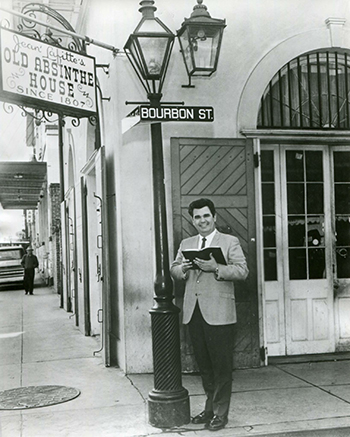
Bourbon Street 350Famed New Orleans evangelist Bob Harrington, known as “the Chaplain of Bourbon Street,” died July 4 in Stigler, Okla., where he had lived the last seven years with family. He was 89. (Photo courtesy of BP)During his time in seminary, Harrington served as assistant pastor of First Baptist Church of New Orleans with J.D. Grey and continued his ministry as an itinerant evangelist. In a seminary chapel service, President Leo Edleman said, “Wherever there is a pocket of sin, there is a mission field, and the nearest Christian to it is a missionary.”

“The nearest pocket of sin was Bourbon Street,” said Harrington, who immediately began a street ministry armed with a microphone and a Bible.

Preaching in bars and strip clubs

Several months later, deacons at First Baptist Church in New Orleans loaned him enough money for a few months’ rent to open a chapel on Bourbon Street in the heart of the French Quarter. Harrington began witnessing and preaching in the bars and strip clubs of Bourbon Street.

In 1962, Mayor Victor Schiro proclaimed him “The Chaplain of Bourbon Street.”

Harrington’s street ministry message was bold and simple: “God loves you just as you are. He knows you are a sinner and wants to save you. Don’t figure it out. Faith it out!”

In 1968, he held a revival at Castle Hills First Baptist Church in San Antonio. During the revival, the owners of a burlesque club attended an evening service and became Christians. Guy and Evelyn Linton immediately closed the club and posted a sign: “Closed forever. See you in church.”

National fame followed

Doubleday Printing published his story, The Chaplain of Bourbon Street, written by Harrington with Walter Wagner, in 1969. Harrington went on to publish seven more books and released more than 30 record albums.

The sermon album Laughter, Truth and Music was released in 1965, and it became a gold album with more than $1 million in sales worldwide. Later, Harrington earned a second gold album for Chaplain of Bourbon Street, a recording of his first television show.

His legacy includes invigorating the Christian community with his signature slogan, “It’s fun being saved.”

Derailed by personal issues

But in time, personal issues led to Harrington’s departure from ministry for a time. The “devil threw me a pass, and I caught it and ran for defeat,” he said regarding his years out of the ministry.

In the 2000 November issue of SBC LIFE, Harrington told about his past struggles in the article titled, “Chastened Chaplain: A forthright account of failure and renewal.” In the article, he referred to the “pass” Satan threw the evangelist during the height of his success as “pride, arrogance, self-centeredness and stubbornness.”

His first marriage ended, along with his ministry on Bourbon Street, in 1977. He married again and moved to Florida but later divorced. During the 1980s and 1990s, Harrington was a popular motivational speaker, primarily with car dealerships and real estate companies.

One evening in 1995 in his hotel room, he was robbed and nearly beaten to death.

Harrington had said at that time “the phone rang, and it was Rex Humbard (long-time pastor of the Cathedral of Tomorrow in Akron, Ohio, where Harrington had preached many times), my old friend. He said it was time for me to come back to the Lord, and I did.”

After divorce and bankruptcy, Harrington recalled being at the bottom, which he said “is right where God can use you!” Harrington began a restoration period and moved back to New Orleans.

In 1998, he married Rebecca Harris Birdwell and moved to Mansfield, where he continued preaching. His wife died of a heart attack in 2010.

That same year, he moved to be near his younger daughter Mitzi Woodson and her husband, Steve, in Stigler, Okla, where he regularly attended First Baptist Church in Stigler.

Harrington said many times: “I want my tombstone to read: ‘Born the first time—September 2, 1927 in Cox Heath, Ala. Born again—April 15, 1958. Died—He didn’t. Transferred to heaven.’”

Harrington is survived by two daughters: Rhonda Harrington Kelley (Chuck) of New Orleans and Mitzi Harrington Ramsey Woodson (Steve) of Stigler, Okla.; four grandsons; and two great grandchildren.

He was preceded in death by his wife, Rebecca Harris Harrington; one brother, Jerry Hill Harrington of Thomasville, Ala.; and one son, Robert Grey Harrington.


‘You’ve made the road by walking,’ McLaren tells Fellowship

ATLANTA—Stepping out in faith not knowing the destination is part of the story of the Cooperative Baptist Fellowship, popular author and theologian Brian McLaren told the 2017 CBF general assembly.

“Celebrate how far you’ve come,” McLaren said. “You have made the road by walking.”

McLaren emphasized that the Fellowship has blazed a trail since its founding in 1991, walking and creating an unknown road together.

“Without realizing what you were getting yourself into, you stepped out and had no idea how much change could happen in 25 years,” he said.

Create a different model

CBF decided in 1991 offer a different model of Christianity, McLaren said. At 25 years old, he added, what Executive Coordinator Suzii Paynter calls as “denomi-network” is still in the making and should not and will never be finished, he emphasized.

“You aren’t at the top of the slippery slope,” McLaren said, referencing those who criticized CBF in its founding era. “You are making progress on a long, upward journey. To have a woman (executive coordinator) is a pretty remarkable thing. To be a place where you are allowed to talk about the need for racial reconciliation, it is an important start. We have a way to go. … You have a long adventure ahead.”

“Keep celebrating,” he added, noting the Fellowship is positioned well as a graceful and gracious network.

Look to the future with hope

McLaren challenged the assembly to look ahead to its 50th anniversary. He expressed hope that there will be young leaders among the crowd—“30-year-old leaders who right now would be our 5-year-old children.”

“Trust them. Seize this moment by centering on the grand essentials. Center on the grand essentials of our faith,” he said, calling on the Fellowship to focus on the Good News, the Great Commandment and the Great Commission of Jesus.

Living in these essentials requires courage, challenging the status quo, loving neighbor, loving self, loving creation and forming disciples to be agents of transformation, he said.

“This is hard work,” McLaren said. “Instead of judging people, it is welcoming them to the table and washing their feet. Instead of conforming to the status quo, it’s about being an agent of transformation for the poor, oppressed and imprisoned. The Great Commission is saying, ‘I am involved in the healing of the world.’

“It’s about making disciples. It’s about forming lifelong disciples, people who follow a rabbi teacher, who imitate his example and teach others the art of living in his way.”


CBF project seeks to model unity in light of diverse views on sexuality

ATLANTA—Cooperative Baptists heard a progress report on an initiative to strengthen their unity in the face of differing beliefs and practices regarding human sexuality.

Charlie Fuller, chair of the Cooperative Baptist Fellowship’s Illumination Project committee, presented a one-year progress report to the CBF general assembly about an effort to seek ways to model unity through cooperation in the midst of cultural change.

The CBF governing board launched the Illumination Project last year to shed light on the qualities that have built unity in CBF. Participants hope to design and develop models of dialogue and decision-making by which the Fellowship can grow through cooperation.

Develop a ‘toolbox’ of ways to deal with contentious issues

“The overall objective of the Illumination Project is to develop a toolbox of possible methods that churches and organizations can use to deal with contentious issues,” said Fuller, executive pastor of First Baptist Church in Washington, D.C., and a CBF governing board member.

“While we develop these approaches, we are also exploring a specific question: How can Cooperative Baptists strengthen our unity in the face of differing beliefs and practices in matters of human sexuality? How will our continued cooperation impact our current CBF hiring policy? So we are, in effect, building an airplane even as we fly it.”

Across the last 12 months, the Illumination Project committee has hosted more than 15 conference calls and four in-person meetings, as well as given presentations to Cooperative Baptists in 30 cities. The committee also has conducted more than 30 two-hour structured interviews, “trying to hear deeply the powerful stories of our people.”

“We’re seeking to learn what the fellowship thinks about cooperation, about our shared mission, how we think about faith, and how that plays out when we consider our hiring policy,” Fuller noted.

“It’s been a series of absolutely holy moments as we’ve heard intimate stories of passion for Christ, his church, his Fellowship and those who so desperately need the loving presence of Christ.”

Value the priesthood of believers, autonomy of local churches

The committee is “seeking to be truly and genuinely Baptist in our process,” Fuller emphasized.

“First of all, we both celebrate and have informed our process by the priesthood of the believer,” he said. “As Baptists, we champion the Reformation value that all of Christ’s children have direct access to God and that each of us needs the guidance of fellow priest-believers in the work of discernment.

“Therefore, if we are to hear from Holy Spirit, we must work to hear from the people who sit in our pews, people who represent an incredible richness and diversity. These priest-believers all across our Fellowship are God’s voices speaking in all that richness and diversity. …

“Secondly, we are champions for the autonomy of the local church. CBF does not ordain clergy, and we do not place pastors in congregations. CBF doesn’t tell churches how they are to worship, what they are to study, how they must read the Bible. The autonomy of every church to listen to Holy Spirit for themselves as groups of priest-believers is a bedrock value of CBF.

“Because of this value, the Illumination Project will not be telling any church what they are to do or not to do regarding this matter or any other. Twenty-five years ago, we adopted this as a bedrock value of this Fellowship, and we will not depart from it now.”

Paul Baxley, Illumination Project committee member and senior minister of First Baptist Church in Athens, Ga., emphasized the biblical foundations that underpin the work of the committee, citing Acts 10 and the work of the early church in discernment in diversity. The early church remained united in spite of differences, he said.

“Our committee lives each day in hopeful waiting for the emergence of a more faithful path forward, and we stand before you today not in fear, but rather in the hopeful conviction that together we will see that still more excellent way when the Holy Spirit reveals it to us,” Baxley said. “We dare to believe that way will be a witness in and of itself, and a path to a new season of thriving for our Fellowship.”

Through embracing the approach of Integrative Thinking, the committee seeks to hear and feel the Spirit moving among the priesthood of all believers, Baxley said.

To view the report to the general assembly, click here

To read more information about the Illumination Project, click here


CBF surpasses $12 million fund-raising goal

ATLANTA—The Cooperative Baptist Fellowship surpassed its $12 million fund-raising goal for an endowment campaign the group launched last June.

CBF Executive Coordinator Suzii Paynter announced the achievement at the Fellowship’s 25th anniversary celebration dinner in Atlanta.

Total gifts and pledges for the campaign, which is focused on the long-term sustainability of CBF missions and ministries, has reached $12,103,062.98, she said.

Nearly 80 percent of the campaign goal will increase CBF’s endowments, which will help sustain CBF ministry the next 25 years. Additional funds will support block grants to the Fellowship’s 18 state and regional organizations for ministry in their areas.

On the state and regional level, the grants will support church starts and young leadership development, theological education, ministry to the nation’s poorest counties, clergy wellness, asset-based community development, and retreats and camps for clergy, laity and students.

Lead contributors included the Eula Mae and John Baugh Foundation, Christ is Our Salvation Foundation, Patricia and Robert Ayres, and John and Jeanette Cothran. CBF congregations, partner organizations, theological schools, foundations and many more individuals also contributed.

Of the $12 million, half will support CBF Global Missions. Specifically, that portion of the campaign will help sustain the long-term presence of field personnel ministering in 30 countries, reinstate a two-year mission apprenticeship program and impact the poorest counties in the United States through the Fellowship’s rural poverty initiative, Together for Hope.

At the 25th anniversary event, CBF named the mission apprenticeship program, called the CBF Global Service Corps, after Dick and Jesmarie Hurst of First Baptist Church in Tyler for their commitment to volunteer medical missions alongside CBF field personnel. Dick Hurst died in 2014, and an estate gift given by the Hursts formed the foundation of an endowment fund, the earnings of which will help fund the work of Global Service Corps missionaries.

CBF’s ministries that help form healthy congregations will receive $4 million from. The campaign will support an intentional congregational renewal process, advocacy work that assists others in finding their voice, church starting initiatives and financial literacy programs for congregations and pastoral leaders.

The campaign also will help equip and nurture young Baptists by adding $2 million in endowment support for theological education, scholarships, retreat experiences and church internships.

“Christ’s love is compelling us to greater ministry near and far to ‘unleash heaven’s kingdom here on earth,’” Paynter said, quoting from the Fellowship’s commissioned anniversary anthem called “Christ’s Love Compels Us.”

“Celebrating our 25th anniversary has been an opportunity to invest in the future of CBF. It has been opportunity to invest in missions, in ministry, in our identity and in our young Baptists. It has been an opportunity to partner with other people and with other churches in support of the great multiplication of God’s work in the world.”


Christ-likeness and excellence key, Paynter tells CBF board

ATLANTA—The Cooperative Baptist Fellowship is living into the same attributes its founders instilled more than 25 years ago, striving to be Christ-like, innovative, authentic, global, diverse and excellent, CBF Executive Coordinator Suzii Paynter told the organization’s governing board.

“I want to bring our attention back to our Fellowship’s attributes,” Paynter said. “We desire to raise the bar on excellence in an organization that strives to be Christ-like, innovative, authentic and global.

“In those categories, one of the things that we are focused on right now is this quality of excellence. How are we Christ-like and is there a more excellent way for us? How are we innovative? What about our authentic faith?”

Global in nature

These attributes are clear expressions of how the leaders of the Fellowship function, pointing to the global nature of CBF’s work within the last year, Paynter said.

“If there has ever been a year where I felt the pulse of being global, it was this one,” she said. “This stewardship of our global commitment and partnership is so beautiful, and I think is called for from every congregation. If there is one gift that CBF has to give back to every congregation, it is to be a global partner, and it is to be cognizant that God has called us into all the world.

“This global nature is reflected in our striving for excellence, as is the Fellowship’s ongoing commitment to being diverse—implementing initiatives to intentionally increase diversity and create space for the Latino and African-American communities,” Paynter said.

The Fellowship ecosystem

With the foundation of these attributes, Paynter pointed to the cyclical nature of CBF as an ecosystem.

“We are in a living cycle as a Fellowship. Things grow, and things flourish, and things decline, and things change,” Paynter said, citing the initiatives, programs, changes and strategies that have been points of focus the past year.

“If there is one thing for sure, we understand what it means to lead an organization that is alive,” she said. “We are nothing more than the people gathered together in congregations, congregations gathered together in a Fellowship. It is the call that brings us together in this living organism.”

Successes and challenges

CBF Moderator Doug Dortch reflected on successes and challenges in the life of the Fellowship since the 2016 General Assembly in Greensboro, N.C.

“These times are complicated, and there are many challenges that we are confronted with and have been confronted with,” said Dortch, who serves as senior minister of Mountain Brook Baptist Church in Birmingham, Ala. “As we come to this last meeting of the (fiscal) year, I am pleased to say it’s been a very productive year. We have accomplished much, we’ve been loving in the process, and we have walked in humility.”

Citing the success of the 25th Anniversary Endowment Campaign, the launch of Fellowship Southwest and the completion of restructuring efforts, Dortch emphasized CBF is positioned well for the future.

“The Fellowship is in a position where we can seize the future and look at it as a growth opportunity,” Dortch noted. “There are a host of partnerships that are coming online and other initiatives that will put us in a better place to fulfill the mission that God has for this community. This is a very exciting time, and I’m encouraged about the future of our Fellowship.”

Maria Monteiro, assistant professor of music at Baptist University of the Américas in San Antonio, was among the governing board nominees recognized at the board meeting. Other nominees, who were on June 30 during a business session of the CBF general assembly, were Carol McEntyre, senior minister at First Baptist Church in Columbia, Mo.; Stephen Cook, senior minister at Second Baptist Church in Memphis, Tenn.; and Bill Coates, senior pastor at First Baptist Church in Gainesville, Ga.

“Momentum is on our side,” Dortch told the new board members. “And it’s going to be a great journey for those of you who have the privilege to serve in this capacity.”

Other Business

The board adopted a motion to require covenant agreements with CBF’s 60-plus partners to be finalized by the 2019 general assembly.

The board also heard from Illumination Project committee chair Charlie Fuller, who reported the committee would provide an update on its ongoing work during the general assembly in Atlanta.

The board also heard reports on the work of the nominating committee, ministries council and missions council. Mark Wingfield, chair of the missions council’s sustainability committee, spoke to the board about ongoing efforts to promote and recruit advocates for the CBF Offering for Global Missions.

The governing board meeting concluded with remarks from CBF Moderator-Elect Shauw Chin Capps, who transitioned to the role of CBF moderator at the conclusion of the 2017 General Assembly.

“I feel honored and humbled to be able to serve with all of you,” Capps said. “I am appreciative of the friendships we’ve developed and what I have learned, and know I will continue to learn from all of you.”


Nonprofit leader and former executive nominated as CBF moderator-elect

DECATUR, Ga.—The Cooperative Baptist Fellowship nominating committee recommended Gary Dollar, a nationally recognized nonprofit leader and former executive, as the organization’s next moderator-elect.

Fellowship members will vote during the June 30 morning business session at the CBF general assembly on the moderator-elect, along with a slate of nominees for the organization’s governing board and various councils.

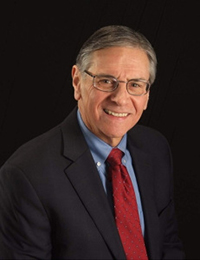
gary dollar 200Gary Dollar Dollar is a partner with St. Louis-based EMD Consulting, which assists nonprofit groups in fund-raising, leadership development and building organizational strength.

He retired in 2013 as CEO of the United Way of Greater St. Louis after leading the organization 12 years and building it into the nation’s fifth-largest United Way chapter. During Dollar’s tenure, the United Way of Greater St. Louis raised more than $1 billion and grew its annual revenue to more than $70 million.

Dollar is a graduate of North Central College in Naperville, Ill., and Southern Baptist Theological Seminary in Louisville, Ky. For more than 20 years, Dollar has served both as a full-time and bivocational pastor and associate pastor for CBF churches in the Midwest.

He has served on numerous boards of faith-based and other nonprofit organizations. Dollar is a former member of the CBF governing board and an adjunct professor at Washington University’s Brown School of Social Work in St. Louis, where he teaches a graduate course in marketing, resource development and community relations.

Dollar lives in Glen Carbon, Ill., with his wife, Gale, a CBF-endorsed chaplain serving at St. Luke’s Hospital in St. Louis. The Dollars are members of Dayspring Baptist Church in St. Louis, and have two adult sons—Jordan, a CBF-endorsed hospice chaplain, and Nathanael, an adjunct professor of anthropology—and two grandchildren, Callum, age 5, and Aidan, age 3.

‘Exhilarating, dynamic and challenging time’

Dollar expressed his excitement to begin his anticipated term as moderator-elect.

“This is an exhilarating, dynamic and challenging time for CBF as we seek how God will use our unique Baptist witness in the 21st century,” Dollar said. “CBF can be and should be a leading, clear voice as we share the broad and all-encompassing love of God with a diverse and rapidly changing world. I look forward to working with (Executive Coordinator) Suzii Paynter and her team. Suzii’s energy and passion offers the leadership CBF needs to move us forward in fulfilling our mission.”

The CBF governing board also is recommending Katie Sciba, a medical social worker in Stafford, to serve alongside CBF officers for a third one-year term as recorder.

At the conclusion of the June 26-30 annual general assembly, CBF Moderator-Elect Shauw Chin Capps will assume the role of moderator, the Fellowship’s highest-ranking office. Capps will succeed Dortch, who will transition to the position of past moderator and serve as an ex-officio member of the nominating committee in 2017-18.


African-American leader offers to help churches overcome racism

PHOENIX (BP)—Calling the Southern Baptist Convention’s resolution denouncing “alt-right white supremacy” the convention’s “strongest statement to date” condemning racism, the president of the SBC’s fellowship of African American pastors offered to help Baptists overcome the evil.

Byron Day 150Byron DayByron Day, president of the SBC National African American Fellowship of 4,000 churches, extended help to churches and other organizations just one day after the resolution passed by a near unanimous vote.

“NAAF stands ready to assist our churches and entities in pursuing the elimination of any remaining forms of intentional or unintentional racism among us,” said Day, senior pastor of Emmanuel Baptist Church in Laurel, Md. “I am confident by the grace of God that the Southern Baptist Convention will be a true picture of the kingdom of God that consists of every tribe and language and people and every nation.”

First step

Day expressed hope that the resolution was only a first step, “because words are just words without action that make those words reality,” he said.

The resolution was an amended version of a document submitted by Dwight McKissic, pastor of Cornerstone Baptist Church in Arlington, and was approved after two failed attempts June 13 to bring it to the convention floor. Following an outcry by some messengers and widespread publicity, the Resolutions Committee gained approval to submit the resolution June 14.

“The confusion in getting the resolution to a vote caused an uproar in the African-American community,” Day said. “The decision by the committee not to recommend the resolution in its original form was perceived by many that Southern Baptists did not value this important issue, not just for African Americans, but for all those who claim to be followers of Christ.

“Nevertheless, it was encouraging to see Southern Baptists demand a vote and pass overwhelmingly this strong statement against racism and those who advocate such ideologies,” Day said.

Complete statement

Here is Day’s complete statement:

“Today is a great day for all Southern Baptists. The resolution to denounce racism and white supremacy is in my view the strongest statement to date by the Southern Baptist Convention. Although there have been prior resolutions apologizing for the sins of the past, it was important for the convention to condemn the sins of the present. At a time when our country continues to see racial prejudice and injustice, I believe the body of Christ must lead the way for peace and unity.

“The passage of resolution #10 affirms that Southern Baptists are going to continue to move forward on the issue of racial reconciliation and sufficiently denounce any form of racism, particularly those like the alt-right white supremacy movement.

“The passage of this resolution also recognizes racism for what it is, a scheme of the devil to divide the church of Jesus Christ. But today Southern Baptists said that they will no longer allow the enemy to divide us and thus hinder the cause of Christ and the furtherance of the Gospel.

“The confusion in getting the resolution to a vote caused an uproar in the African American community. The decision by the committee not to recommend the resolution in its original form was perceived by many that Southern Baptists did not value this important issue, not just for African Americans but for all those who claim to be followers of Christ. Nevertheless, it was encouraging to see Southern Baptists demand a vote and pass overwhelmingly this strong statement against racism and those who advocate such ideologies.

“Today we celebrate a great victory, but I hope that it is only the beginning. Because words are just words without action that make those words reality.

“NAAF stands ready to assist our churches and entities in pursuing the elimination of any remaining forms of intentional or unintentional racism among us. I am confident by the grace of God that the Southern Baptist Convention will be a true picture of the Kingdom of God that consists of every tribe and language and people and every nation.”


WMU celebrates 20 years of Christian Women’s Job Corps

PHOENIX (BP)—Linda Cooper, president of national Woman’s Missionary Union, and Sandy Wisdom-Martin, WMU executive director, highlighted 20 years of ministry through Christian Women’s Job Corps during their report to the Southern Baptist Convention.

“Twenty years ago, WMU began a dream that has grown into a nationally recognized program for helping women in poverty become equipped for life and employment in a Christian context,” Cooper said June 14 in Phoenix.

CWJC “is about courageous women fighting for their families and their futures,” Cooper said. “It is about godly people sacrificing themselves to make a difference in someone’s life.”

Since CWJC started in 1997, 40,000 women have been touched through the program in nearly 200 sites, and 160,000 volunteers have served 200 million ministry hours, Cooper reported.

‘Came in broken and left whole’

Wisdom-Martin told of a woman named Flo who has served as a site coordinator of a CWJC site since 2005. Wisdom-Martin recounted that Flo said of CWJC: “Looking at the women who came in broken and left whole, I knew this was where I was meant to be. I fell in love with them and knew this was where I could make a difference.”

In 2004, WMU started Christian Men’s Job Corps, which operates in much the same way as its sister organization, in that each participant is paired with a mentor and is engaged in Bible study. In CWJC, women mentor women; in CMJC, men mentor men.

“It is our honor and privilege to be coworkers in the gospel with you, taking Jesus to the nations,” Cooper told messengers. “Our commitment is to help your church members learn about missions, pray for missions, support missions, do ministry, develop spiritually toward a missions lifestyle and support the work of your church and this denomination.”

Cooper, a member of Forest Park Baptist Church in Bowling Green, Ky., was re-elected to a third term as national WMU president at the organization’s missions celebration and annual meeting prior to the SBC annual meeting. Jackie Hardy of First Baptist Church in Social Circle, Ga., was elected as recording secretary.