Judge rules against Johnny Hunt in defamation suit

NASHVILLE (RNS)—A federal judge ruled against former Southern Baptist Convention President Johnny Hunt on March 31, rejecting his claims of defamation against Guidepost Solutions and nearly all the former megachurch pastor’s claims against the Southern Baptist Convention and its Executive Committee.

Judge William Campbell of the U.S. District Court for the Middle District of Tennessee issued an order granting summary judgment in the case, with a memorandum detailing the judge’s decision forthcoming.

“We are grateful for this decision and the forward progress in our legal process,” said Jeff Iorg, SBC Executive Committee president.

Hunt had sued Guidepost, an investigative firm, and SBC leaders for defamation and other damages after Guidepost published allegations of sexual assault against Hunt in a May 2022 report on an investigation into how SBC leaders had dealt with sexual abuse.

At issue was a 2010 incident in which Hunt allegedly kissed and fondled another pastor’s wife. Hunt, who had kept the incident secret for years, at first denied it occurred and then claimed it was consensual.

In their court filings, Hunt’s lawyers claimed Guidepost had ruined his reputation and claimed the pastor’s sins were no one else’s business.

Hunt, the former pastor of First Baptist Church in Woodstock, Ga., and a former vice president of the SBC’s North American Mission Board, claimed Guidepost and the SBC had cost him millions, and he sought more than $75 million in damages.

All counts of defamation, emotional distress and the public disclosure of embarrassing private facts were dismissed against the SBC and the Executive Committee.

However, one claim alleging a tweet about Hunt from Texas Baptist Pastor Bart Barber, who was SBC president from 2022 to 2024, was defamatory has not been dismissed.

Hunt served from 2008 to 2010 as SBC president and remained a popular speaker before the Guidepost report. Court-ordered mediation on the case failed last fall. A trial had been scheduled this summer.

The Executive Committee has spent more than $3.1 million in legal fees related to the Hunt lawsuit and a second lawsuit related to the Guidepost report.

Last month, the SBC’s Executive Committee decided to ask the denomination for an additional $3 million for the upcoming year to cover its legal bills, including those for the Hunt suit.

In his lawsuit, Hunt alleged Guidepost Solutions acted negligently during its investigation, ignoring evidence that would have cast doubt on the allegations against him, and that Guidepost and the SBC intentionally sought to paint him in the worst light possible. Hunt also said the woman who accused him of sexual assault, known in court filings as Jane Doe, was an unreliable witness.

But Campbell ruled Hunt had provided no evidence to support his claims, while Guidepost provided substantial evidence of the thoroughness of the investigation into the allegations.

Hunt’s attorneys did not respond to a request for comment. Guidepost Solutions declined to comment.

In a 74-page opinion, Judge Campbell examines Hunt’s claims at length and rejects them. He points out that investigators spoke with a counselor who had talked with Hunt about the alleged assault and three Southern Baptist pastors who had heard of the alleged sexual encounter as well to corroborate the allegations.

The judge also recounts Hunt first denied the incident had occurred or that he had kissed or fondled Doe, made no claims that Doe was unreliable at that time or that Doe had instigated the incident. Guidepost also gave Hunt an additional two days to provide any initial information to Guidepost.

Campbell ruled Guidepost could not have ignored or withheld any evidence about the encounter because Hunt had “squandered” the opportunity to provide evidence that countered Doe’s allegation. Hunt did not acknowledge the incident until after the Guidepost report was published and has since claimed the encounter was consensual and that Doe was unreliable. His arguments did not sway Campbell.

“Hunt ignores that much of Doe’s information was independently verified by other sources whose credibility he does not challenge,” Campbell wrote

Campbell also rejected the claim the Guidepost report had caused negligent emotional distress to Hunt.

“The Court has already determined that the record does not contain evidence that any defendant acted with negligence in connection with the Report,” Campbell wrote. “Moreover, Hunt has failed to point to evidence of mental and emotional injuries as a result of any of the statements which would disable a reasonable, normally constituted person from adequately coping with the alleged mental stress.”

Campbell also wrote that one of Hunt’s claims—the assertion former SBC president Bart Barber had defamed him in a tweet—could not be decided at this time. It was unclear, he wrote, whether or not Hunt could be considered a public figure at the time or whether or not Barber tweeted in his official capacity as SBC president or not.

“This determination is subject to reconsideration upon further development of evidence and argument concerning Hunt’s status at the time of the Tweet,” the judge wrote. “Hunt has presented evidence from which a jury could conclude that Barber’s Tweet was in his capacity as SBC president. Therefore, judgment cannot be granted in favor of the SBC or the Executive Committee on this basis.”

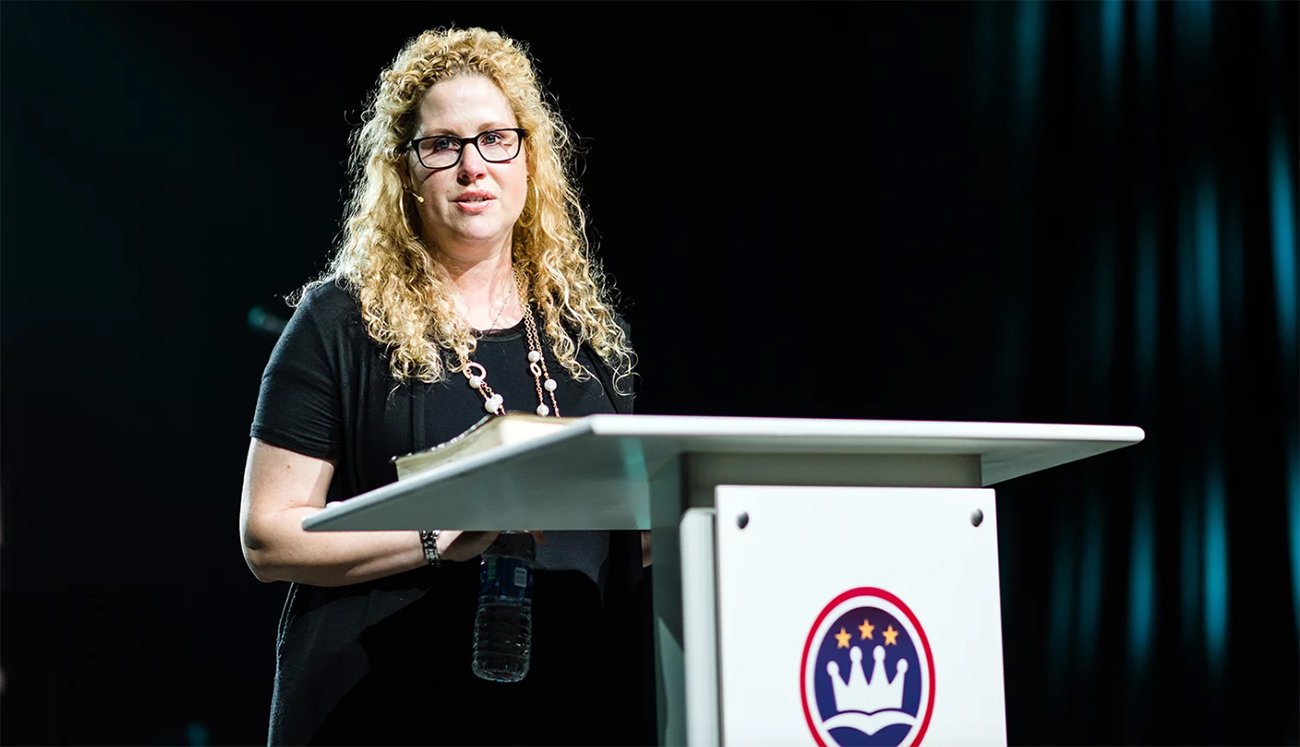
After Campbell’s ruling, Alisa Womack, who had been known as “Jane Doe,” issued a statement, saying the ruling helped lighten the burden she had carried for years.

“Justice peeked out from behind the dark clouds, shining light on my path and propelling me forward into freedom,” she told RNS in a statement.

Womack also detailed some of her experience of being interviewed for the Guidepost investigation and then being drawn into the Hunt lawsuit, including being subpoenaed and deposed.

“In 2022, I recounted painful details I would have preferred to forget to investigators with Guidepost Solutions. I also described the years of emotional, mental and spiritual weight in the journey toward healing. Silence gave way to voice, which finally had a true hearing,” she said. “In the year following the release of the report, I was dragged into a lawsuit, not of my own making or desire.”

Womack also said she tried to protect her family’s privacy during the legal process. And she said that process has made her understand why few abuse survivors come forward.

“The risk is obvious, the chance for justice obscure,” she said.

EDITOR’S NOTE: Eight paragraphs were added April 2, one day after the article originally was posted, after RNS distributed an updated version of the article that included the quotes from the judge’s legal opinion. Subsequently, another six paragraphs were added to include the statement from Alisa Womack, previously referred to in the lawsuit as “Jane Doe.”




Churches losing members as humanitarian parole ends

MIAMI (BP)—They are pastors, deacons and other clergy, actively working among the 500 Haitian churches in the Southern Baptist Convention—at least for another four weeks.

They are active ministers and members of the 3,500 Hispanic congregations—Nicaraguans, Venezuelans and Cubans—that have united with the SBC.

But they also are among an estimated 534,000 Haitians, Nicaraguans, Venezuelans and Cubans ordered to return to their home countries no later than April 24, the result of the United States ending the humanitarian parole program.

The program had granted the individuals safe refuge here while their home countries broil in gang violence, governmental upheaval, poverty, religious persecution and other ills.

John Voltaire, Florida Baptist Convention Haitian multicultural catalyst, tells of a young mother who greeted him at a Haitian congregation in Florida, where 72 percent of Haitian Southern Baptists live and worship.

“At first, it was the threat of ICE (U.S. Immigration and Customs Enforcement) agents coming to church and trying to arrest people and deport people,” Voltaire said. “But now, I have people contacting me directly, crying, asking, ‘What do we do?’” in light of the upcoming deadline.

Many stopped attending churches in January when the sensitive locations limitations were lifted on ICE arrests—impacting churches and schools. But the end of the humanitarian parole program, and the Temporary Protected Status (TPS) program in August, will together inflict a multilayered wound upon churches, families and gospel witness, Haitian and Hispanic leaders said.

Southern Baptists among those told to leave

“Nobody wants to have criminals running around, but in the process, we have people who are good neighbors, who are members of our churches, deacons and pastors, and we have a lot of clergy also,” Voltaire said. “They came through those programs. Now, they are actively working in our churches.”

Molina addresses pastors at Unity Honors God conference in Las Vegas. (Facebook photo)

Bruno Molina, executive director of the National Hispanic Baptist Network, said “very significant” numbers of those ordered to return to their home countries are members of Southern Baptist churches, but he didn’t have specific numbers.

“This is really impacting all SBC churches with immigrant populations,” said Molina, who recently transitioned to a fulltime role as executive director of the National Hispanic Baptist Network.

“It’s resulting in a decrease in attendance, giving and personal wellbeing. Churches will experience a decrease in membership, funding and certainly gospel collaboration. We’ll just have to continue to be light and salt and keep on keeping on.”

Some Hispanics impacted by the immigration terminations are active ministers, Molina said.

Generally, they have no choice but to obey the immigration orders, which are perhaps more dangerous than defying the orders and remaining in the United States illegally, leaders have told Baptist Press.

“It’s not like when they go back (to their home countries) the governments are waiting for them with open arms, looking to ensure their welfare,” Molina said.

“They’re going to return to the turmoil from which they fled, and many of them will suffer imprisonment, political persecution, violence and very difficult to impossible economic conditions. They’ll be seen as pariahs in their own countries, both by government, and by others who may resent the fact that they left.

“It should be noted also that those currently under the Temporary Protected Status, are people who’ve been vetted as suffering under extraordinary circumstances,” he said.

“They aren’t considered a security threat, and they even have financial sponsors. So, it’s not like they’re considered criminals or are a threat to their communities.”

About 864,000 individuals from 16 countries are enrolled in TPS in the United States, the National Immigration Forum said in a March 14 fact sheet, based on Sept. 23, 2024, numbers. That includes 344,335 Venezuelans, 200,005 Haitians and 180,375 El Salvadorans, as well as about 50,000 who fled the war in Ukraine, more than 8,000 from Afghanistan and others.

Dignity Act seen as a solution

Molina and Keny Felix, president of the Southern Baptist Convention National Haitian Fellowship and a vice president of the Haitian Christian Leaders Coalition, are among advocates for the revival of the Dignity Act—a bipartisan immigration bill its key sponsors say is aimed at stopping illegal immigration, providing a dignified solution for undocumented immigrants, strengthening the workforce and economy, and ensuring U.S. prosperity and competitiveness.

On behalf of the National Hispanic Baptist Network, Molina signed a proposal for congressional immigration reform by the National Hispanic Pastors Alliance that is based on the Dignity Act.

Felix, on a trip to Washington March 2, met with John Mark Kolb, the chief of staff of U.S. Rep. Maria Salazar (R-Fla.), chief sponsor of the Dignity Act alongside Veronica Escobar (D-Texas). Salazar planned to reintroduce the act in the coming months, Felix said.

Felix ranks the immigration emergency as more difficult than the crisis the church endured during the COVID-19 pandemic.

“The pandemic was pervasive, everyone exposed. This one is targeted,” Felix said. “These actions are going after seeming Black and Brown people, to put them back into life conditions that no one would ever want to experience.”

Felix doesn’t see the end of the humanitarian parole program as hinging on protecting the borders, because everyone enrolled in the program came legally. And he doesn’t believe it’s about protecting jobs, because of the federal government firings.

“It’s stripping them from the opportunity to live securely, surrounded by friends and loved ones, and being part of church communities,” said Felix, who pastors Bethel Evangelical Baptist Church in south Florida. “This will definitely impact the local church … across ethnicities.”

The first thing many of those enrolled in the parole program did was connect with a local church, Felix said, where they were able to grow in their faith.

“And they began to be active members of our churches,” he said. “And so, churches are about to lose a good portion within their membership. But it’s not only losing the people, but it’s also the connections that all these folks had as a result. It’s a loss that is multilevel.”

While the program was temporary, those enrolled had connected with families, schools and jobs, and were beginning new families. Felix questions why the program was ended so abruptly with “complete disregard for the lives of those that will be put at stake of danger in returning to these violent situations in their homelands.”

Leaders point to mercy, care, prayer and love in responding to the crisis as the church.

“I, of course, feel terrible for the people who are suffering under those circumstances,” Molina said. “And I think that one of the things we need to remember as Southern Baptists, is we are told to treat others as we would like to be treated.

“And so, this begs the question, ‘If you were forced to leave the U.S. and flee to a foreign country whose language and country are alien to you to protect yourself and your family from political and religious persecution and violence and possibly economic challenges, how would you like to be treated?’”

Felix prays the church will not lose what he terms as central to the Christian identity: “God’s love that leads us to be compassionate to others, especially our Southern Baptist brothers and sisters.

“The church needs to be the church for such a time as this—to do what is right.”


‘Divine appointment’ awaits volunteers in Missouri

POPLAR BLUFF, Mo.—Three Texans on Mission disaster relief leaders motored down a country road in southeast Missouri where a tornado had devastated homes and trees. Then they had what Paul Henry later called a “divine appointment.”

Jacob Moneybrake, Texans on Mission’s new associate director of disaster relief, was in the truck with Henry and Wendell Romans.

“I had never seen anything like it, the devastation,” Moneybrake said of the scene in southeastern Missouri. “The further we went, the worse it got. I thought, ‘We’re here to take trees off homes, but the houses were beyond saving.’”

Henry, the Texans on Mission incident commander, said: “As we neared the end of the damaged area, a man named Jake was sitting in his pickup truck by the side of the road next to a driveway and waved us down.

“He was curious about what we were doing in the area,” Henry said. After the Texans on Mission team explained, Jake “pointed and shared that his brother had been killed in his home, and his sister-in-law had crawled out of the rubble that was once their house.”

A tornado devastated homes and trees in southeast Missouri. (Texans on Mission Photo / Jacob Moneybrake)

No damaged trees threatened what structures remained, so Wendell Romans suggested the Texans on Mission team “follow Jake to his brother’s homesite and assess what he wanted us to do,” Henry said.

“As Jake explained the trees that needed to be cut and removed, he became visibly emotional.” Henry said. “Through it all, we were able to guide Jake to accept the Lord.”

Earlier in the day, the team had experienced various delays in getting to the scene of the worst damage.

“What made this experience even more profound for us was reflecting on how the events of the day had initially gone wrong, delaying our trip to Jake’s brother’s property. It was clearly a divine appointment.”

Moneybrake walked away from the others to retrieve mail from the mailbox for Jake. It had been a difficult morning for the team, and he had an “honest conversation with the Lord” as he walked.

Moneybrake was focused on the work that needed to be done but the challenges that day made it difficult to plan what work to do. When he got back to the others, Jake had made his profession of faith in Christ.

“Then I prayed: Lord, give me your heart for these survivors,” Moneybrake said. “It was a life-changing experience. … I went on a work trip and came home from a mission trip.”

After the team returned to the command center at Temple Baptist Church in Poplar Bluff, wind gusts reached 55 mph and “blew the back steps of the command center across the parking lot,” Henry said. “Later, another gust of wind caught one of the church’s double glass doors—the doors we use to access the building—slammed it open, and tore it off its hinges.

“I’m still trying to understand the deeper meaning behind these disturbances in the otherwise quiet tranquility of this disaster,” he said.

Moneybrake said he and Romans returned the next day to the property where Jake’s brother had died. “We went back to the valley of death. I watched the Lord, with our ministry, wrap arms around these people.”

As of Sunday, March 23, 59 Texans on Mission volunteers were working in the Poplar Bluff area, with multiple pieces of equipment from around Texas.


Greenville pastor Mann nominee for SBC 2nd VP

GREENVILLE (BP)—A Northeast Texas director of missions has announced his plans to nominate Greenville pastor Tommy Mann to serve as SBC second vice president at the 2025 SBC annual meeting this summer.

Hunt Baptist Association director of missions Jim Gatliff said Mann’s “refreshingly strong expository preaching, positive ‘can-do’ leadership style … (and) his amazing ability to cast compelling vision,” have helped Highland Terrace Baptist Church in Greenville in its revitalization process.

Mann is originally from Orlando, Fla., and has served churches in Georgia, South Carolina and Texas since 2004, according to the Highland Terrace website.

He holds a bachelor’s degree from Arlington Baptist University, a master’s degree from Southwestern Baptist Theological Seminary and a Th.D. and D.Min. from Covington Theological Seminary.

“Dr. Mann has a great passion for all aspects of the Southern Baptist Convention,” Gatliff told Baptist Press. “He is a strong biblical conservative and a man with a tremendous vision for the future of our convention.”

In its 2024 Annual Church Profile, Highland Terrace reported 28 baptisms and undesignated receipts of $1,599,789, of which $182,750 (11.42 percent) was given through the Cooperative Program.

The church also reported $64,218 given to the Lottie Moon Christmas Offering and $13,805 to the Annie Armstrong Easter Offering, as well as 467 people in average worship attendance.

Mann and his wife Alicia have two children.

“The Mann family in my estimation is a model of what a pastor’s family should be,” Gatliff said. “His kids are simply wonderful, and his wife is beloved by the congregation.”

Nominations for SBC offices may be received up until the time of voting at the 2025 SBC annual meeting in Dallas June 10-11 at the Kay Bailey Hutchison Convention Center.


BWA challenges Baptists globally to ‘Stand in the Gap’

The Baptist World Alliance issued an urgent call for Baptists globally to give, pray and “Stand in the Gap” in solidarity with suffering people at a time when humanitarian aid is being cut.

“Over the last 100 days, there has been a rapid deceleration of government-supported humanitarian assistance around the world,” BWA General Secretary Elijah Brown said in a video posted on the BWA website.

“Now, whether you think those decisions were right or wrong, what is undeniable is the impact on people on the ground as suddenly there are these massive gaps of care in communities just like yours.”

BWA has heard from Baptists in refugee camps along the Myanmar/Thailand border, in the Democratic Republic of Congo and in other places where political unrest and violence are creating a humanitarian crisis, he said.

While no Christian group can replace the millions of dollars of aid that have been cut, Baptists “cannot sit on the sidelines” when people are suffering, Brown said.

Stand in the Gap Solidarity Sunday set

So, BWA declared March 30 as Stand in the Gap Solidarity Sunday.

Churches are encouraged to set aside time that day—or another dedicated day of worship—to pray for suffering people around the world and give financially to enable BWA to provide food, water, health care, shelter and other basic needs.

BWA has produced a prayer guide that can be downloaded, duplicated and distributed for individual or congregational use.

The guide offers specific suggestions for intercession such as praying for peace with justice in areas of conflict, restored health care infrastructure, clean water and “strength and resilience for church leaders and humanitarian workers as they mobilize to support the displaced and impoverished.”

BWA also has slides, videos and social media resources that can be downloaded to increase awareness about the Stand in the Gap initiative.

“Together, we must hear the voice of Jesus calling us to stand in solidarity with the suffering,” BWA stated on its website. “The needs are overwhelming and the situations complex, but we must do everything we can to help.”


Water ministry is ‘not just about a hole in the ground’

GULU, Uganda—Doug and Cathy Hall made their first trip to Uganda this winter to learn more about Texans on Mission’s Water Impact work in the central African nation.

Access to clean water makes a tranformative difference in villages in northern Uganda. (Photo / Doug Hall / Texans on Mission)

Doug Hall summed up his experience by saying: “It’s not just about a hole in the ground that provides clean water. It is about comprehensive generational change in each one of those communities.”

The Halls, members of Community Life Church in Rockwall, visited three villages with wells drilled by Texans and Ugandans on Mission. At a fourth village, the Halls were present when the team hit water digging a new well.

“Our drillers sleep at the well site in tents,” Doug Hall said. “They live with the village people, and a community member cooks for them. … They live with the people, talk with them, eat meals with them.”

The Texans on Mission drillers do this because they actually are on mission with Christ to the villagers.

“Our head driller is an evangelist who drills water wells. He’s not a water well driller they’ve talked into preaching,” Hall said.

Godfrey (right), the “head driller” with Texans and Ugandans on Mission, is an evangelist and pastor. (Photo / Doug Hall / Texans on Mission)

The head driller’s name is Godfrey. He is a gifted speaker, and the Holy Spirit speaks through him, Hall said.

“I watched him challenge and comfort people. Anything that you would hope a pastor would do, he did it,” Hall said.

Godfrey, in fact, previously pastored a church in South Sudan, said Mitch Chapman, director of Texans on Mission Water Impact. “In 2017, Godfrey gave up his pastorate to escape from the war there.”

“He’s a great leader, and he loves to worship the Lord,” Chapman added. But Godfrey also “does a great job of getting the (drilling) crew going and moving forward, even to the point now that we’re looking at splitting into two drill teams.”

Cathy Hall said of the Texans on Mission ministry: “Organization of all of the details is mind-blowing. Our Ugandan mission-minded staff continues to work hard to make lives better for the villagers in the name of Christ providing access to both clean and living water.”

Texans and Ugandans on Mission start Bible studies in villages where they drill water wells, and some of those Bible studies grow into churches. (Photo / Doug Hall / Texans on Mission)

And the people in the villages left a deep impression. “The Ugandans are the most gentle and soft-spoken people,” she said. “They are generous and kind. Texans and Ugandans on Mission Water Impact ministry is making a huge positive impact one well at a time.”

Texans on Mission’s Uganda ministry starts Bible studies in every village, and some already have become churches.

As a result, Texans on Mission sponsored a Church Leaders Conference in February for pastors and other ministry leaders in the villages. Ninety-one leaders attended and received instruction in pastoral self-care, biblical interpretation, Bible study methods and children’s ministry.


Lawyers say Justice Department probe of SBC closed

NASHVILLE (RNS)—Lawyers for the Southern Baptist Convention said March 12 the U.S. Department of Justice has ended an investigation into the denomination’s response to allegations of sexual abuse committed by Southern Baptist pastors and institutional leaders.

That investigation was launched in 2022 after the release of the Guidepost report that demonstrated SBC executives had mistreated abuse survivors and sought to downplay the effects of abuse in the convention.

“Earlier today, the U.S. Attorney’s Office for the Southern District of New York informed us that the investigation into the Southern Baptist Convention and Executive Committee has officially concluded,” SBC attorneys Gene Besen and Scarlett Nokes told Baptist Press, an official SBC outlet.

Megan Lively speaks at the Caring Well conference in Grapevine on Oct. 3, 2019. (Photo / Karen Race Photography / Courtesy of SBC Ethics and Religious Liberty Commission)

Megan Lively, an abuse survivor and activist, said she was disappointed to hear from an FBI agent the investigation was over. She had hoped, she said, the investigation would move the SBC to take abuse reforms seriously.

“It’s just a mess,” she added.

A spokesman for the U.S. Attorney’s Office for the Southern District of New York declined to comment.

No abuse charges have been filed as a result of the Guidepost report. Matt Queen, a former Southwestern Baptist Theological Seminary professor and provost, pleaded guilty last fall to lying to the FBI, and recently was sentenced to six months of house arrest, a year of supervised release and a $2,000 fine.

But aside from Queen’s case, few details of the investigation have been made public. Given that national SBC leaders have no direct control over pastors or churches, it always was unclear what crimes SBC leaders might be charged with.

Leaders from Southwestern Baptist Theological Seminary, where Queen was once a professor as well as provost, stated: “For more than two years, Southwestern fully cooperated with the DOJ throughout the investigation and is pleased that there were no findings of wrongdoing against the institution or current employees. We remain committed to ensuring the safety of all members of the seminary community.”

This is the second time the SBC’s attorneys have announced an end to the Department of Justice investigation. Last March, those attorneys said the investigation into the Executive Committee, which oversees the denomination’s day-to-day operations, was over, but later clarified the investigation into the denomination as a whole continued.

‘Grateful we can close this chapter’

Southern Baptist leaders have spent more than $2 million on legal fees related to the investigation. Those fees, along with more than $3 million spent defending lawsuits filed by a pair of former SBC leaders named in the Guidepost report, and the cost of the Guidepost investigation itself, have drained the Executive Committee’s reserves and left it unable to pay its legal bills.

SBC Executive Committee President and CEO Jeff Iorg gives an address to Executive Committee members, Feb. 17. (BP Photo / Brandon Porter)

Jeff Iorg, president and CEO of the Executive Committee, gave thanks for the investigation’s end, saying, “We’re grateful that we can close this chapter in our legal proceedings and move forward.”

The SBC’s attempts to manage accusations of sexual abuse have occupied the leadership for more than a decade, and the convention’s governing body, the annual meeting of messengers from local churches, has demanded reform, forcing the Executive Committee to commission the Guidepost investigation in a floor vote in 2021.

But critics of the reform efforts point to the cost of the Guidepost investigation to claim it was a mistake. Abuse advocates worry those critics now will use the end of the Justice Department investigation to derail reforms.

The Guidepost report led Southern Baptists to pass a series of reforms intended to address abuse in churches, including more training and publishing a database of abusive pastors. Those reforms largely have stalled.

While the SBC has distributed training materials and hired a national staffer to help oversee reforms, the database has been tabled for now, with SBC leaders saying last month it is no longer a priority.

Abuse survivors now worry the end of the investigation and the tabling of the database signal abuse reforms have run out of steam.

“Everything seems to be falling apart,” Lively said.


Northeast only region for SBC growth, analysis shows

NASHVILLE (RNS)—Southern Baptists long have been known as a large branch of evangelical Christianity and a dominant force in the Southern states.

But an analysis of recent statistics supplied by congregations across the country revealed New England is the sole region where Southern Baptists gained congregants overall from 2018 to 2023.

Churches in Connecticut, Maine, Massachusetts, New Hampshire, Rhode Island and Vermont grew by 10 percent, a Lifeway Research analysis released March 11 said, based on data from the Southern Baptist Convention’s 2023 Annual Church Profile.

“Every other region saw declines in overall church membership,” the report stated.

Just 2 percent of Southern Baptist churches are in the Northeast region, compared with 78 percent located in the South.

The SBC annual report often is used to indicate the statistical state of the national denomination, which decreased to 12.9 million members according to the most recent profile in May 2024. That marked the lowest numbers since the late 1970s for a denomination that reached its peak at 16.3 million in 2006.

Analysis over five years offers wide view

But analyzing SBC’s results over time can give a wider view of where the growth and decline of Southern Baptists is occurring within the United States, as the Lifeway analysis over five years demonstrates.

“The growth in New England is driven by numerous years of church planting in the region and faithful reporting of continued growth in many of those churches,” Scott McConnell, executive director of Lifeway Research, told RNS via email.

Two Southern regions—one comprising Alabama, Kentucky, Mississippi and Tennessee, and the other including Arkansas, Louisiana, Oklahoma and Texas—saw the smallest drop in church membership in the five-year period at 8 percent.

“The rapid population growth in Texas is definitely driving the growth in the West South Central region of the U.S.,” McConnell said.

The five-year regional comparisons included only churches that reported non-zero data in both 2018 and 2023 for total membership, an executive summary noted. While 69 percent of Southern Baptist churches nationwide contributed to the 2023 Annual Church Profile, McConnell said 99 percent of SBC churches in New England contributed to that statistical census.

“The membership growth (in the Northeast) is not enough to cover losses in southern states, but it is still noteworthy,” McConnell added.

Older churches in the South have lost members

Outside of the South and New England, 11 percent of Southern Baptist churches are in the Midwest and 9 percent are in the West.

“Southern Baptists have the most churches in the South, and those older churches have lost many members over the last two decades,” McConnell said.

“Newer churches tend to reach more new people through baptism, though older churches still may have many baptisms as they reach the next generation of their existing families.”

The region with the largest drop in church membership was the Pacific region, with a decline of 18 percent.

Lifeway Research provided the caveat that Delaware, Minnesota, New Hampshire, Rhode Island, North Dakota, Wisconsin, Maine, Utah, Nebraska and South Dakota each had fewer than 30 churches to consider in calculations and, as such, their analysis needs “to be considered with caution.”


Iorg says abuser database delayed by legal hurdles

A Ministry Check database of Southern Baptist ministers convicted or credibly accused of sexual abuse is “not so much on the back burner” as it is derailed by legal hurdles, said Jeff Iorg, president of the Southern Baptist Convention Executive Committee.

Instead, the SBC will focus on educating churches about best practices and resources that already exist to prevent sexual abuse in churches, Iorg said in a 15-minute Zoom interview with the Baptist Standard on March 10.

At a news conference held during the most recent SBC Executive Board meeting, Iorg said about the Ministry Check database, “At this point, it’s not a focus for us.”

When asked what factors prompted Executive Committee leaders to place the Ministry Check database on the back burner, he said the question seemed to make assumptions he didn’t share.

“I would say, it’s not so much on the back burner as it is we want to teach churches how to access databases that already exist [and] how to do thorough background checks of people that they’re considering employing or using in volunteer positions with minors,” he said.

Additionally, he said SBC leaders will “continue to consider are there other ways that we can make information available to them that would help them to make the kinds of evaluations they need to make.”

“For us, it’s not a matter of not acknowledging databases or wanting to work with them. It’s a matter of how do we do this most effectively that gets the right information to the right churches in the right places at the right time. And that’s what we’re working on,” Iorg said.

“So, it’s not that we’re ignoring the issue. It’s that we’re trying to think how do we solve this issue the best way, and that’s what we’re working on now.”

Iorg explained the concerns about an SBC-generated database were related to “its legality and our capacity to insure it and to insure our convention in light of doing it. And those are hurdles we haven’t found a way over yet.”

So, going forward, the SBC Executive Committee’s plan is to magnify and emphasize databases already available and accessible, he said.

“Rather than one thing we’re not sure we can do, why not focus on the many things we know we can do?” he asked.

Control of the SBC Abuseprevention.com website, created by the Abuse Reform Implementation Task Force, has been in the process of being transferred to the Executive Committee for ongoing oversight.

Now that the transfer is complete, the Executive Committee has updates to the site underway and hopes to roll out the new resource, with state-by-state information on existing (criminal) databases, at the annual meeting in Dallas this June, Iorg said.

“We need it published, and we know that. We’ve got to get it out there,” he said.

Iorg clarified that while he might see differently what was mandated regarding an abuse database, “It’s a big issue. … We’re trying to figure out a way to do it the best way we can.”

Additional background on databases

In a follow-up interview with Jeff Dalrymple, director of abuse prevention and response within the SBC Executive Committee, he said the background screening industry is fairly complex and nuanced, and is “based on our judicial system, which is really at the county level.”

But all of those criminal databases are available to churches now and will be emphasized on the new online resource.

However, Dalrymple noted, it matters which resources are utilized. Some background checking services are more reliable than others, but even the best criminal reporting will have holes. So, relying on a “one-and-done” background check is not adequate to prevent abuse.

Dalrymple said the Professional Background Screening Association is a good place to begin in better understanding what goes into background screening.

Research indicates many churches still are underinformed about sex abuse prevention and so are underutilizing proven methods of preventing child sexual abuse, he explained.

Dalrymple said he wants to encourage ministries to do so much more “in screening, training and operations, and if we put so much emphasis on a database, there’s just so many holes and weaknesses with that as a solution.”

Having the right ratios of youth to workers, “to have a response plan, to understand mandatory reporter laws, and so forth,” all are proven methods of minimizing abuse risk, he emphasized.

Dalrymple said he thought when Southern Baptists decided to call for a database of “credibly accused” ministers, they didn’t understand the legal ramifications of what they were calling for.

Keeping a database of names that haven’t been adjudicated opens the denomination up to “massive financial liability” and more of the defamation lawsuits they’ve been dealing with the last few years, without a guarantee that having the nonadjudicated database actually would help keep kids safe, he said.

On the Law Amendment’s return

The Standard also asked Iorg about reports indicating Texas pastor Juan Sanchez intends to reintroduce the Law Amendment—which goes beyond the Baptist Faith & Message 2000 to exclude churches that accept women as pastors—at the annual meeting this summer in Dallas.

Last year, Iorg provided commentary supporting his position that the amendment should be rejected.

Iorg clarified the position paper published last year was his personal position on the Law Amendment, for which he took full responsibility, not a position the Executive Committee voted on or directed him to take.

“My main concern is that we take action that will bring more clarity to how to respond on this issue and not more confusion. And, I am still concerned that the wording that is currently proposed still doesn’t answer all of the questions that need to be clarified for the credentials committee to know how to respond,” he said.

“So, I hope to work over these next few months to try to help make sure that whatever is considered is the clearest possible solution to this issue. As I wrote in my position paper, I agree that the office of pastor is limited to men as qualified by Scripture.

“I’ve never wavered on that, nor have I ever taught differently or led differently, but where it begins to be complicated is how that is actually applied, when you have so many different churches with so many different models of ministry, of leadership structure in the congregations. And that’s where it begins to be challenging.

“And I would hope that we could adopt something that would give guidance but also recognize this difficulty of applying it in all of these different situations.”

On the Cooperative Program’s future

As the Cooperative Program marks its centennial anniversary and celebrates its past, Iorg said the main thing that gives him hope is his belief in “a rising generation of leaders who want to work together.”

He believes they’ll “facilitate the Cooperative Program being strong for another generation or two because they really will see it as the best way to work together to get so much done.”

Additionally, he noted, “anyone who takes an honest look at what the Cooperative Program has accomplished has to just stand back and awe at what God has done through it.

“And when you see that,” he said, “instead of focusing on some aspect of the negative that is a part of it, but instead focusing on as I said in my speech about ‘Southern Baptists are a force for good,’” individuals will be motivated to continue giving to the Cooperative Program, he believes.

However, Iorg noted “a rising tide of independence and sectarianism in American culture, not just in denominational life.” He is concerned “we’re letting the culture impact us more than we’re impacting the culture on this issue of how to work together.”

But, he believes Christians, finding strong motivation for working together in Scripture, “can look at the practicality of the Cooperative Program, [and see] how well it interfaces with our polity as Baptists and is a useful tool for us.”

Iorg also said Southern Baptists can look at what the Cooperative Program has accomplished and say: “Well, there’s not anything that’s done anything in American Christianity even close to this in the last hundred years. Why would we want to move away from this strategy?’”

Iorg has insisted on several occasions Southern Baptists are “a force for good.”

When asked how the SBC could become an even greater force for good in the world, he responded, “We can minimize some of the problems that we’re currently having by resolving them and then increasing the focus we have on our core mission, which is getting the gospel to the world.”

Iorg acknowledged: “There’s no question that we’re in a season here where we have to work on some legal and financial and strategic issues. But I believe those need to be worked through in the next two or three years, and then we move on, not ‘this is going to be our perpetual new reality.’ That’s at least my goal that I’m committed to.”


Alaska exec resigns after apologizing for earlier statement

ANCHORAGE, Alaska (BP)—Randy Covington has resigned as executive director and treasurer of the Alaska Baptist Resource Network after issuing a public apology Feb. 25.

He apologized for a statement he made when the church where he is a member was deemed not to be in friendly cooperation with the Southern Baptist Convention.

Alaska Baptist Resource Network Director of Missions and Church Planting Jae McKee told Baptist Press Covington submitted his resignation Feb. 27. An interim has not been named, McKee said.

Covington exited the post seven months ahead of his planned retirement, announced at the network’s 2024 annual meeting with an intended effective date in September.

At issue are comments Covington made Feb. 19 following the SBC Executive Committee’s decision regarding Rabbit Creek Church, where Covington is a member.

“I want to take this opportunity to sincerely apologize for a statement I made to Baptist Press. I deeply regret the impact it may have had on our community,” Covington wrote in the emailed apology addressed to “brothers and sisters in Christ.”

“I sincerely regret the statement, ‘They do not have egalitarian views,’ which was a personal opinion and should not have been made on behalf of the Alaska Baptist Resource Network. I allowed my frustration and emotional bias toward my church, Rabbit Creek Church, to cloud my better judgment.”

Covington was referencing the following statement made to BP the day after the Executive Committee’s decision to deem Rabbit Creek Church not in friendly cooperation with the SBC:

“I’m disappointed by this decision. My knowledge of this church and its pastors is extensive. They do not have egalitarian views. Their positive impact on the community of Anchorage cannot be overlooked,” Covington told Baptist Press in the Feb. 19 comment.

“Cooperation and unity are among the priority values of Rabbit Creek Church. Sadly, many within the SBC seek to divide us when we urgently need to come together to reach lost people with the Gospel.”

Covington did not respond to Baptist Press’ March 6 request for comment about his announced resignation. Covington and his wife Robin have been members of Rabbit Creek for eight years, he has told Baptist Press.

Additional context

The church was deemed not in friendly cooperation after its Senior Pastor Mark Goodman, his wife and four Rabbit Creek ministry leaders signed an Open Letter to Baptist Women, published by Baptist Women in Ministry defending women in church leadership and asserting, “Jesus did not place any limits on women’s roles.”

“Jesus did not make a mistake by calling the women present at the resurrection to preach the gospel, and he has not made a mistake in calling women to pastor, minister, and lead today,” the letter says.

“When anyone treats you as if you are not worthy to do God’s work, they are challenging Jesus’ own actions.”

In his apology, Covington said he does not agree with the Baptist Women in Ministry statement.

“It is important to clarify that I do not support the Baptist Women in Ministry platform or its vision, values, materials, or events. I am sure I can also speak for the ABRN in this regard,” Covington wrote in his apology.

“Please know my love for Alaska Baptist churches and their pastors is genuine and deep. As your Executive Director, I am a faithful steward of your trust and the resources under my responsibility,” he said in advance of his resignation.

“My desire is to promote cooperation and unity among our churches. I promise to be your greatest advocate and supporter of your local ministry. I will be loyal to Alaska Baptist churches and always have your back, because I deeply value and appreciate the work you do in your local communities.”

Rabbit Creek Church does not plan to appeal the decision at this year’s SBC annual meeting in Dallas, Goodman told Baptist Press Feb. 27.

Covington’s resignation ends more than 30 years of Southern Baptist work and leadership. He had served since 2016 as the Alaska network’s executive director and 22 years previously with the International Mission Board.

“It has been a great honor for me to serve in this leadership role with the Alaska Baptist Resource Network,” Covington said in October 2024 when he announced his planned retirement.

 “I have come to know some great leaders within the fellowship of state executive directors, and I have learned so much from them.

“The combined experience of these godly men has pushed me to heights of service that I never thought possible. All the glory belongs to our Lord and Savior, Jesus Christ.”


SBC leaders address lack of funds for legal bills

NASHVILLE (RNS)—In mid-February, Southern Baptist Convention leaders received grim news. The denomination’s Executive Committee essentially was broke.

Over the past four years, the committee has spent more than $13 million on legal fees and other costs related to a historic sexual abuse investigation by Guidepost Solutions, draining its reserves and leaving it unable to pay its bills for the following year.

Among those bills were $3 million in additional legal fees for the upcoming year, with more likely to come.

SBC Executive Committee President and CEO Jeff Iorg gives an address to Executive Committee members, Feb. 17. (BP Photo / Brandon Porter)

“Those bills are due,” Jeff Iorg, president of the SBC Executive Committee, said in his speech to SBC leaders meeting at a Nashville, Tenn., airport hotel in February. “And they must be paid.”

To deal with the financial crisis, the Executive Committee has put its Nashville headquarters up for sale, cut staff and applied for a $3 million loan. The committee also is seeking a $3 million “priority allocation” for legal fees from the denomination’s $190 million Cooperative Program budget, which is usually used for missions and ministries.

Iorg said the committee had avoided tapping those funds for years. Now, there are no other options.

“This is a controversial and difficult recommendation to make,” Iorg said. “No mission-centered Southern Baptist wants to take this action. I don’t, you don’t. No one does. But we have exhausted other definitive options.”

The SBC budget, including the legal allocation, must be approved during the denomination’s annual meeting in June. It’s unclear what will happen if the request fails.

What happened?

How did the nation’s largest Protestant denomination get in such financial trouble?

One reason is Johnny Hunt.

Johnny Hunt, a longtime megachurch pastor in Georgia, was named in the Guidepost Solutions report on sexual abuse in the SBC, which alleged Hunt had sexually assaulted another pastor’s wife in 2010. Guidepost, a third-party investigation firm, found the claims credible. (BP File Photo)

Hunt, a former Southern Baptist Convention president and megachurch pastor, sued the denomination in 2023, after allegations he had sexually assaulted another pastor’s wife were published in the Guidepost report. Hunt denied the allegations at first, then said the sexual conduct was consensual.

His lawyers have argued Hunt’s sins were nobody’s business but God’s and have sought tens of millions of dollars in damages.

As of fall 2024, the Executive Committee had spent more than $3.1 million on legal fees related to the Hunt lawsuit and a second suit filed by David Sills, a former seminary professor named in the report. Most of the costs were due to the Hunt lawsuit, which goes to trial in June.

The costs from Hunt’s lawsuit have also essentially doubled because the Executive Committee agreed to pay Guidepost’s legal fees in any lawsuit based on its investigation, a process known as indemnification.

Hunt also played a key role in the Great Commission Resurgence, a 2010 initiative that cut the Executive Committee’s funding to give more money to missions.

Hunt’s attorneys did not immediately respond to a request for comment.

Executive Committee leaders also spent $2 million on the Guidepost investigation and another $2 million on an ongoing investigation by the U.S. Department of Justice.

Inherent fragility

The longer answer to the fiscal woes is that the SBC is an inherently fragile organization. Though it boasts about 13 million members and more than 46,000 churches—which collect about $10 billion a year, most of which stays within those churches—the overarching SBC organization is held together by a volunteer committee, a tiny staff and a relatively minuscule budget.

In essence, SBC is a billion-dollar organization that spends almost no money on administration or oversight on a national level. Only about 3 percent of SBC funding goes to the Executive Committee, which runs the SBC in between its annual meetings, collects donations and handles the denomination’s legal affairs.

A combination of inflation, legal fees and the rising cost of putting on the growing annual meeting has strained the Executive Committee’s budget. In 2014, the meeting drew about 5,200 messengers, and last year’s drew nearly 11,000.

Most of the money donated to the SBC’s Cooperative Program goes to the SBC’s six seminaries and two major mission boards. Those entities hold hundreds of millions of dollars in reserves.

When Southern Baptists approved the Guidepost investigation, they also approved the idea of using Cooperative Program funds for dealing with abuse.

However, the messengers did not approve an official budget for the investigation, and attempts to tap those funds stalled in 2021.

‘They have to pay these expenses’

Iorg said there’s no way of knowing what future legal costs might be. However, he told SBC leaders he hopes the $3 million allocation and the eventual sale of the Executive Committee building will alleviate most of the current budget woes.

Marshall Blalock, pastor of First Baptist Church in Charleston, S.C., said the Executive Committee is in an “unenviable situation.” SBC leaders followed the will of the messengers, he said, and that came with a cost.

He backed the idea of a priority allocation to fund legal bills.

“They have to pay these expenses,” said Blalock, who served on the committee that oversaw the Guidepost investigation. “When the money runs out, it has to come from somewhere.”

Blalock said he’s heard critics blame the task force or past Executive Committees for the current budget shortfall. That’s misguided, he said.

“They are blaming the wrong people,” he said.

The budget shortfall, he said, was caused mainly by lawsuits from those named in the Guidepost report, and that’s where the blame should lie.

“The ideal solution would be for people to stop suing us,” he said, while not naming specific names.

Lawsuits slowed down abuse reforms

Blalock also said he worries the lawsuits have slowed abuse reforms in the SBC, such as a proposed database that would name abusive pastors.

Defending against lawsuits has dried up funds that could have been used for reforms—and made Baptist leaders wary of reforms, such as a database.

The Guidepost investigation was delayed in 2021 for weeks due to a heated debate over waiving attorney-client privilege—essentially giving investigators access to correspondence between SBC leaders and their lawyers. After a number of resignations, the committee waived privilege.

Some critics of waiving privilege claimed at the time that waiving privilege would lead to financial ruin for the SBC. Supporters of those critics now claim they were right. A spokesman for the Executive Committee said it was difficult to determine what one factor caused the rise in legal fees.

“The waiving of privilege was one of many critical decisions that have impacted the finances of the SBC Executive Committee,” Brandon Porter, the Executive Committee’s vice president for communications, said in an email.

“While not individually quantifiable, those combined decisions have led to substantial and continued costs.”

Tapping Cooperative Program funds could come with some unintended consequences. During the Executive Committee’s meeting in February, Dani Bryson, a committee member from Tennessee, said doing so could jeopardize funds the SBC has long sought to protect in the event it ever loses a lawsuit.

“If we’re going to be standing before a court trying to tell them that we don’t have access to all the Cooperative Program funds, this designation sure doesn’t make that look true,” she said during the meeting.

In an interview, Bryson said that if the proposal to tap Cooperative Program funds fails this summer, the committee will have to come up with a different approach.

Bruce Frank, the North Carolina megachurch pastor who chaired the abuse task force that oversaw the Guidepost investigation, said he’d back the plan to tap Cooperative Program funds and that paying the SBC’s legal bills is part of the cost of running a major denomination.

“We can’t talk about how large of an organization we are and how we’re the largest Protestant denomination, and then say we can’t afford the basic cost of running this,” he said.


Queen given 1-year supervised release, fined

NEW YORK (BP)—Former Southwestern Baptist Theological Seminary interim provost Matt Queen received a judgment of time served with one year of supervised release, six months of home confinement and a $2,000 fine related to a federal investigation of the Southern Baptist Convention regarding sexual abuse.

Queen, 50, must also immediately pay a $100 special assessment. The term of supervised release must include Queen’s participation in outpatient mental health treatment and continued usage of prescribed medications. New lines of credit may not be opened without the approval of a probation officer.

During home confinement, he must wear an electronic monitor and can only leave to obtain medical care for himself or his wife, and that only with written permission from a probation officer.

Queen’s attorney, Sam Schmidt, told BP his client faced a maximum of five years in prison.

The charges stemmed from a Department of Justice investigation into allegations of mishandled claims of sexual abuse in the SBC and falsified notes that Queen made in early 2023 over a reported case of sexual abuse at Southwestern.

Queen “is thankful that he will not serve time in prison and will seek to use his time under home confinement to help others,” Schmidt said.

Last month, Schmidt filed a document on Queen’s behalf containing letters from family and friends extolling the former pastor’s character and detailing the impact the investigation had taken on his physical, mental and emotional health.

Queen’s former employer released a statement upon news of the judge’s decision.

“Since November 2022, Southwestern Seminary has fully cooperated with the Department of Justice’s investigation into the Southern Baptist Convention’s response to sexual abuse,” it read.

“With the criminal justice process now complete regarding the charges against Matt Queen, we are hopeful that the investigation will soon reach its conclusion, allowing all parties to move forward. Our prayers for Matt Queen and his family as well as all others involved in this process continue.

“Southwestern Seminary remains steadfast in its commitment to ensuring the safety and well-being of all members of our community, taking every possible measure to prevent sexual abuse and harassment.”