DULUTH, Ga. (BP)—Evangelist Bailey Smith, former president of the Southern Baptist Convention, died Jan. 14 at his home in Duluth, Ga. He was 79.
Bailey Smith
Smith was elected SBC president in 1980, one year after Memphis pastor Adrian Rogers’ election signaled the beginning of what supporters called the “conservative resurgence” and critics called the “fundamentalist takeover” of the convention.
Gerald Harris, retired editor of Georgia Baptists’ Christian Index newsjournal, described Smith as “a powerful preacher, devoted pastor and faithful friend” in an obituary posted Jan. 15 on the Index’s website.
Harris wrote that Smith told him he had been diagnosed with pancreatic cancer in April 2017. “I was stunned and heartbroken, but he was calm and demonstrated an imperturbable peace at the threshold of the personal physical storm he was entering,” he wrote.
After receiving care from Atlanta-area cancer specialists, Smith went to the MD Anderson Cancer Center in Houston. Smith and his wife Sandy remained in a Houston hotel for months for further diagnosis, chemotherapy and observation. Doctors ultimately recommended a complicated cancer surgery known as the Whipple procedure that, as Harris described it, offered “a five-year survival rate of up to 25 percent. Although the skill of the surgeon and excellent care of the hospital was commendable, the surgery was not successful.”
Sparked national controversy
Smith’s two one-year terms as SBC president were marked by his resolute preaching and by national controversy, particularly his declaration at a Religious Right gathering in Dallas that “God Almighty does not hear the prayer of a Jew.”
Bailey Smith responds to reporters’ questions at the 1981 Southern Baptist Convention. (File Photo)
“For how in the world can God hear the prayer of a man who says that Jesus Christ is not the true Messiah? It is blasphemy. It may be politically expedient, but no one can pray unless he prays through the name of Jesus Christ,” Smith told the Religious Roundtable’s National Affairs Briefing, Aug. 22, 1980.
Smith was born in Dallas on Jan. 30, 1939, the son of Bailey E. and Frances Smith. He graduated from Ouachita Baptist University in Arkadelphia, Ark., in 1961 and from Southwestern Baptist Theological Seminary in Fort Worth in 1966.
Smith led churches in Texas, Arkansas and New Mexico before being called, at age 34, as pastor of First Southern Baptist Church in Del City, Okla., where he served 12 years. At the time of his election as SBC president, Smith was the youngest man ever to lead the convention.
Earlier, he had served as president of the Southern Baptist Convention Pastors’ Conference and the Baptist General Convention of Oklahoma simultaneously.
‘An inerrancy superstar’
Harris wrote that TIME magazine described Smith as “a formidable figure, a fiery, red-haired, old style prairie stemwinder.” Christianity Today referred to him as “an inerrancy superstar.”
In 1980, First Southern Baptist in Del City recorded 2,000 baptisms, Harris reported.
“In the 12 years Smith was the pastor … the membership grew from 6,600 to more than 20,000, and in a convention that was known for thriving on growth and soul-winning, Bailey Smith was known as a pacesetter,” he said.
Smith became a vocational evangelist in 1985. Bailey Smith Ministries conducted area-wide crusades, church revivals, Bible conferences, women’s retreats and overseas ministries.
Smith is survived by his wife of 55 years, Sandy, and three sons, Bailey Scott; Steven, pastor of Immanuel Baptist Church in Little Rock, Ark.; and Josh, pastor of Prince Avenue Baptist Church in Bogart, Ga.; and eight grandchildren.
Baxley unanimously elected to lead CBF
January 16, 2019
DECATUR, Ga.—The Cooperative Baptist Fellowship Governing Board voted unanimously Jan. 15 to elect Paul Baxley as the organization’s fourth executive coordinator.
Baxley, who has served since 2010 as senior minister of First Baptist Church, Athens, Ga., was selected based upon the unanimous recommendation of the 11-member executive coordinator search committee formed last July.
A native of Winston-Salem, N.C., Baxley has held pastorates and ministry positions in Georgia, North Carolina and Virginia and is a former member of the CBF Governing Board. He is the first CBF executive coordinator without ministry experience in Texas.
He succeeds Suzii Paynter, who became the third executive coordinator of CBF in March 2013 and announced in July 2018 plans to transition her leadership of the Fellowship. Other previous executive coordinators were Daniel Vestal, who served 1996-2012, and Cecil Sherman, who served 1992-96.
Experienced in life of CBF
During his two-terms on the CBF Governing Board, Baxley chaired the personnel committee as well as the global mission structure and staffing committee, an ad hoc body that worked for 18 months to develop a comprehensive plan for CBF Global Missions.
Baxley also provided leadership as member of the ad-hoc committee of the Illumination Project, an 18-month effort to seek ways to model unity through cooperation on matters of human sexuality in CBF.
Additionally, he served on the CBF Coordinating Council, the Fellowship’s earlier governance body, and chaired the Engaging Missionally Collaborative Team.
He has been a leader to two CBF state organizations as chair of the New Day Task Force of CBF of North Carolina and as a coordinating council member of CBF of Georgia,where he chaired the missions committee and was moderator.
Baxley is a graduate of Wake Forest University, Duke Divinity School and Baptist Theological Seminary at Richmond.
‘Deep faith and authenticity’
Jeff Roberts, chair of the executive coordinator search committee and senior pastor of Trinity Baptist Church in Raleigh, N.C., reflected on the search process.
“As part of this process, I have been able to spend time with very talented individuals who are devoted to following Jesus and committed to our CBF fellowship,” Roberts said. “Our committee quickly discovered that our love for CBF far outweighed any of our differences. We also were reminded of how many talented individuals there are in CBF life. We were impressed with our candidates and this gave us great confidence not only in this process but for the future of our Fellowship.
“I am grateful for this experience and am looking forward to what God is doing in our lives together. I celebrate that our committee is unanimous in our recommendation of Dr. Paul Baxley as our next executive coordinator.”
Search committee member Jackie Baugh Moore, vice president of the Eula Mae and John Baugh Foundation, cited Baxley’s hope, creativity, energy, spiritual resilience and strong faith.
“Paul’s wisdom, theological maturity and knowledge coupled with his desire to listen and love people will help him guide CBF through this next chapter in our narrative,” she said. “His leadership style reflects deep faith and authenticity. Paul is dedicated to equipping and strengthening theological education, mission work, the church, partner organizations and all of us involved in the life of CBF.”
CBF Moderator Gary Dollar congratulated the search committee and Governing Board on their selection of Baxley.
“Paul is a deeply committed Christian and a lifelong Baptist. He loves the church and the way it is expressed through the Cooperative Baptist Fellowship,” Dollar said. “I am convinced that Paul will lead all of us in CBF to new levels of service in the name of Christ.”
‘Not afraid’
In accepting the call to serve as CBF executive coordinator, Baxley expressed his optimism for the future of CBF and emphasized the central role of congregations in this future.
Paul Baxley
“I accept the call of the Governing Board and this calling from God, with the opportunities and challenges that I know they both hold,” Baxley said. “I’m aware of all the research about the state of congregations and denominations in the Western world. I’m aware that every day won’t be easy and that every question won’t be soft. But I’m not afraid.
“Instead, I’m confident because I have this conviction, the God who raised Jesus from the dead and who has carried his people through 2,000 years of challenge and adversity, much of it our own making, is still in the business of drawing the world to divine love through us.
“Congregations are at the center of the Cooperative Baptist Fellowship, and CBF exists to bless and serve churches. I’m eager to see what kind of powerful collaborations can emerge between CBF pastors, lay leaders, leaders of our partner ministries and our state and regional coordinators. Imagine the power that could come from the best kind of convening and collaboration, where we see that CBF’s future is not held by whoever is the executive coordinator, but our life, work and witness together. My experience as a pastor in CBF congregations has taught me that when we open ourselves to serve and lead together, God does incredible work.”
Outgoing CBF Executive Coordinator Suzii Paynter welcomed the selection of Baxley as her successor.
Cooperative Baptist Fellowship Executive Coordinator Suzii Paynter announced last July her plans to retire. (CBF Photo)
“Paul Baxley has already been an exemplary leader for CBF. I welcome him into the executive coordinator’s role with enthusiasm and certain hope for the future,” Paynter said. “God has shown faithfulness to CBF by preparing the way in every era and through each transition and so it is with Paul.
“As a pastor, he has the respect and admiration of generations across CBF life. His wisdom and energy are gifts that he generously contributes in every endeavor. Personally, he is a true friend and warmly regarded colleague. One keystone of his leadership is building consensus and participation by charting a purposeful course worthy of engagement. He has asked big questions and sought high callings. His love for the church, his Lord and the people of the world have equipped him with God’s gifts and God’s blessing to be the best-ever executive coordinator of CBF.”
Former CBF Executive Coordinator Daniel Vestal praised Baxley as “a person of impeccable integrity and deep Christian conviction.”
Baxley was ordained to gospel ministry in 1993 at his home church of First Baptist Church on Fifth in Winston-Salem, N.C. Baxley and his wife, Jennifer, a licensed physical therapist, have four children—Olivia, 17; Maria, 11; and twins Caroline and Matthew, 8.
Legacy of Chick-fil-A founder seen in daughter’s book
January 16, 2019
ATLANTA (BP)—Mountains fascinate Trudy Cathy White, from the mountaintop outside her childhood home where parents Jeannette and Truett Cathy of Chick-fil-A fame led family Bible studies to the rough spiritual mountains that have tried her faith.
White, a Christian entrepreneur, speaker and former missionary with the Southern Baptist Convention’s International Mission Board, offers wisdom from personal mountaintops in a new book, Climb Every Mountain: Finding God Faithful in the Journey of Life.
She and husband John built their home on that childhood mountaintop in suburban Atlanta, reared four children and completed a 10-year stint near Sugarloaf Mountain in Rio de Janeiro, Brazil, as IMB missionaries. Today, two gospel-centered ministries the couple co-founded, LifeShape and Impact 360 Institute, improve the lives of children and adults internationally.
Life’s struggles and pains have strengthened her relationship with God, whom she describes as a mountain of fortitude.
“I see mountains as symbols of God’s unchanging, resolute presence. He sits like a mighty mountain, unmoving and unaffected by the storms of life,” she writes in her book. “Second, mountains represent the many struggles, obstacles and challenges I’ve faced throughout my life. They mark where the road gets rough, where the climb seems too steep.”
‘Life is hard’
The advantages of growing up in a Christian home as the only daughter among the Cathy’s three children, having parents who modeled Christian principles personally and professionally, and managing her first Chick-fil-A franchise as a 19-year-old college freshman were not enough to shield White from pain.
“After all, God’s supposed to make our lives easy, right? Wrong,” White said. “Life is hard.”
White’s most difficult journey has been understanding her own identity, she said as she has always been introduced as the daughter of the founder of Chick-fil-A.
“I had seen my parents walk through so many challenges in life. Life is not defined by the things you have or who you’re connected with,” White said. “My identity is defined in who (God) is in my life.”
White’s husband has suffered two bouts of cancer. Her youngest son David, born in Brazil, couldn’t breathe on his own the first 30 minutes of his life and spent nearly a month in intensive care.
“The Lord is our shepherd; we shall not want,” John whispered Psalm 23 to her during the difficult birth, she said. Today, David is a 31-year-old husband and father, although he suffers from adult developmental amnesia.
A climb, but not a solitary journey
White views children as gifts from God accompanied by the rewarding challenge of parenting.
“We as parents need to be the best role model we can be for them,” she said. She encourages parents to look past the temptation to criticize children for their faults but to take opportunities to praise them.
The book flows from a lesson White learned from her father, that the greatest blessings in life stem from helping others. Each chapter of the book, available Feb. 12 in bookstores and on Amazon, uses Scripture and life experiences to help readers learn their identity in Christ, understand their spiritual gifts and godly calling, and leave a godly legacy for generations. White’s lessons encompass godly parenting, aging and grief.
“The One who made you also made mountains,” White encourages readers. “He knows every part of you, and he knows every part of the climb ahead of you. And although it may not feel like much of a blessing in the moment, he’s called you by name to climb it.
“But don’t worry. He’s there to climb it with you.”
Denominational leader Jimmy Allen dies at age 91
January 16, 2019
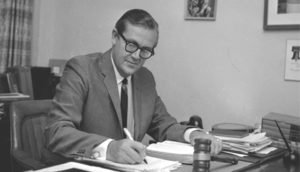
Jimmy R. Allen, former denominational executive and president of both the Baptist General Convention of Texas and the Southern Baptist Convention, died Jan. 8 in Brunswick, Ga. He was 91.
At different stages in his ministry, Allen led the Texas Baptist Christian Life Commission and the Southern Baptist Convention’s Radio & Television Commission, and he was instrumental in launching both the Cooperative Baptist Fellowship and the New Baptist Covenant.
Jimmy Allen
Born in Dallas as the son of a Texas Baptist pastor, Allen earned his undergraduate degree from Howard Payne University and his doctorate at Southwestern Baptist Theological Seminary, where he studied under pioneering Christian ethicist T.B. Maston.
Early in his ministry, he was a youth evangelist and student pastor, and he served two years as state director of the Royal Ambassadors missions organization in Texas.
‘Tackle thorny problems head on’
He was CLC director seven years, leading the Baptist General Convention of Texas’ moral concerns and ethics agency through the early and mid-1960s, focusing particularly on issues related to race relations. During the Johnson Administration, he was involved in the first White House Conference on Civil Rights.
William M. Pinson Jr., BGCT executive director emeritus, served on the CLC staff on a part-time basis during Allen’s time as director. Pinson recalled being “constantly amazed by his energy, visionary leadership and willingness to tackle thorny problems head on.”
“Those qualities stayed with him throughout his life,” Pinson said. “In those mid-century years, many Baptists believed that evangelism and Christian social action did not go together. Jimmy was living proof that they could.
“He was passionately evangelistic and unreservedly committed to applying the gospel to the injustices and wrongs in the world. That blending led him to deal with controversy after controversy.”
Allen was pastor of First Baptist Church in San Antonio from 1968 to 1980. The congregation grew to become the sixth-largest church in the SBC and a leader both in evangelism and community ministry.
During his tenure as pastor in San Antonio, the church launched a medical clinic, a counseling program, a program to combat hunger, three Spanish-language missions and a refugee resettlement ministry. At the same time, baptisms ranged from 225 to 558 a year.
Allen was elected BGCT president at the 1970 annual meeting in Austin and re-elected at the Houston annual meeting in 1971.
‘Visionary Baptist leader’
Suzii Paynter, former director of the Texas Baptist CLC and soon-to-retire executive coordinator of CBF, praised Allen as “a visionary Baptist leader” who “lived and spoke the truth of Christ in word, deed and creativity.”
“If you were blessed by his bigger-than-life service, you know that Jimmy revealed God’s unconditional love. He was a pastor who brought lifegiving ministry that transformed San Antonio and brought compassion to the street,” said Paynter, a San Antonio native who recently accepted a leadership role with Pastors for Texas Children.
“I have known, loved and respected Jimmy Allen all my life. My own steps in ministry have been forged by the footholds and stepping stones he laid in Texas and in the Cooperative Baptist Fellowship. I am so grateful for this pilgrim of faith.”
Allen served as SBC president in 1978 and 1979—the last president before the major shift in Southern Baptist life characterized by its supporters as a “conservative resurgence” and by its critics as a “fundamentalist takeover.”
As SBC president, he championed the Mission Service Corps volunteer initiative and Bold Mission Thrust, an ambitious plan to take the gospel to every person by 2000.
At the request of President Jimmy Carter, a fellow Baptist, Allen served as special consultant at the Camp David summit involving Israeli Prime Minister Menachem Begin and Egyptian President Anwar el-Sadat, and he traveled to Iran on a fact-finding mission during the hostage crisis at the U.S. Embassy in Tehran.
He left the pastorate in San Antonio to became president and chief executive officer of the Fort Worth-based SBC Radio & Television Commission, where he launched the American Cable Television System, better known as the ACTS Network.
During his decade at the Radio & Television Commission, Allen was host of a talk show, Life Today, and he received an Emmy Award in 1989 as producer of a documentary, China: Walls and Bridges.
Touched by tragedy
In the 1980s, Allen’s family suffered tragedy during the AIDS crisis. His daughter-in-law and two grandchildren died after contracting the virus from a tainted blood transfusion, and another grandson tested as HIV-positive. He wrote about his family’s experience in Burden of a Secret. The third grandson died at age 13 after the book was written.
In 1990, Allen organized the Consultation of Concerned Baptists, which drew about 3,000 participants who felt disenfranchised in SBC life. After that meeting in Atlanta, Allen formed a steering committee that planned the meeting where the CBF was created. Allen went on to serve on the inaugural CBF Coordinating Council and as co-chair of the Global Missions Ministry Group.
In 2008, Allen was program chair and coordinator for the New Baptist Covenant—a movement spearheaded by Jimmy Carter to promote racial unity and reconciliation. He later was executive director emeritus of the New Baptist Covenant.
In retirement, Allen also served more than a decade as chaplain of Big Canoe Chapel, a nondenominational chapel in the mountains of north Georgia, before relocating to St. Simons Island, Ga. At the time of his death, he was a member of First Baptist Church of St. Simons Island.
True Love Waits pioneer defends sexual purity movement
January 16, 2019
NASHVILLE (BP)—Amid new claims sexual abstinence pledges harm teen girls, an early leader in the evangelical purity movement said he does not second-guess its central message.
Richard Ross
“Inviting teenagers into a lifetime of sexual holiness and purity, if consistent with Scripture, is a beautiful thing,” Richard Ross, cofounder of the True Love Waits sexual purity movement, wrote in a December blog post. “I do not feel guilty, nor do I second-guess the rightness of the original message.”
True Love Waits launched in 1993, and since then has spread to at least 100 denominations and student organizations in 100 countries worldwide, with an estimated 3 million students making purity pledges.
Each February, the Southern Baptist Convention observes a True Love Waits emphasis on its denominational calendar. LifeWay Christian Resources continues to offer True Love Waits resources.
Critics assert purity movement shames girls
The latest in a 25-year stream of True Love Waits critics claim abstinence emphases by evangelical churches wrongly shame girls and cause them to view their bodies as threats.
Linda Kay Klein, author of Pure: Inside the Evangelical Movement That Shamed a Generation of Young Women and How I Broke Free, said she and other women who took purity pledges as evangelical teens experienced “fear and shame and anxiety” regarding their sexuality.
Sexual thoughts, feelings and choices have driven women in the evangelical subculture to nightmares, panic attacks and other physical symptoms that “mimicked classic PTSD” (post-traumatic stress disorder), Klein told National Public Radio.
The purity movement “was all about how (a woman) needed to be a good Christian by protecting (men) from the threat that is you—the threat that is your body” by wearing modest clothing and keeping mind and body free of sex until marriage, Klein said.
Another critic, Nadia Bolz-Weber, has asked women to send her their purity rings—which symbolize a commitment to sexual abstinence until marriage—so she can melt them down, The Huffington Post reported. In exchange for her purity ring, each woman will receive a silicone “impurity” ring and a “certificate of impurity.”
In her forthcoming book Shameless, Bolz-Weber claims evangelical teaching on sexual purity has shamed women, and women must reclaim their bodies.
Grieved by impact of ‘distorted messages’
Ross wrote on the Theological Matters blog that he is obligated to consider such criticism and ask whether “this movement harmed rather than blessed a young generation.”
“I grieve that distorted messages have harmed some teenagers. And I doubly grieve when I learn that some have carried pain into their adult years. But that grief does not cause me to doubt the beauty and rightness of the original True Love Waits message,” Ross wrote.
Seth Buckley, a South Carolina youth pastor who has used True Love Waits since its inception, agreed. He said teaching sexual purity the right way protects teens from harm and does not load them “with guilt if they make mistakes.”
True Love Waits “should never wane because our students are being bombarded with images and music and things on the internet,” said Buckley, minister to students at First Baptist Church in Spartanburg, S.C. “In many ways, it feels like we have an uphill battle. But we must continue to raise the standard of cherishing one another” and teach youth not to “sell out for sexual pleasure.”
Still, Buckley said critics of True Love Waits over the years have helped refine his presentation of biblical truth. Now, for instance, he tells young couples in premarital counseling to expect challenges in their sexual relationship even if they saved themselves for marriage. He also spends more time talking to youth about pornography and the “redemptive side” of True Love Waits, which emphasizes healing and forgiveness following sexual sin.
“I value criticism. (It) allows us to see another perspective,” he said.
Changing approach
Another minister to modify his teaching on sexuality and relationships is Joshua Harris, author of the 1997 bestseller I Kissed Dating Goodbye. Last year, he announced he had changed his mind about some key points in the book—like the wisdom of steering clear of the dating culture.
In December, Harris told NPR a sexual abuse scandal at the Washington-area church where he was pastor until 2015 made him start rethinking parts of his writings on sexuality. Harris was not implicated in the scandal.
“While I stand by my book’s call to sincerely love others, my thinking has changed significantly in the past 20years,” Harris said in a statement on his website. “I no longer agree with its central idea that dating should be avoided. I now think dating can be a healthy part of a person developing relationally and learning the qualities that matter most in a partner.”
Ross, professor of student ministry at Southwestern Baptist Theological Seminary, said tweaks to individual ministers’ presentations do not change the overall rightness of the purity message.
When “distortions” are stripped away, Ross wrote, True Love Waits still proclaims essential messages: “All sexual expression should take place only between a husband and wife in biblical marriage,” and “Christ’s death on the cross makes forgiveness for sexual sins possible.”
Many adults reported True Love Waits “was an important factor in their sidestepping sexual sin in their teenage years,” Ross wrote.
“Multitudes of single adults continue to embrace and live out that message. Multitudes of married adults report that the absence of scarring from their teenage years is a major factor contributing to the beauty and joy of their current sexual expressions. Christ be praised,” Ross wrote.
Former Baptist leader indicted for sexual assault
January 16, 2019
FORT WORTH, Texas (BP)—A former International Mission Board missionary and South Carolina Baptist Convention associate executive director was indicted Dec. 18 in Fort Worth for alleged sexual assault of a minor 21 years ago.
Mark Aderholt
Mark Aderholt, 47, was arrested in July in South Carolina under a warrant issued in Tarrant County and has been out of jail on bond since his arrest. The indictment by a Tarrant County grand jury includes four counts of sexual assault of a child under 17.
Aderholt has been accused of having a sexual relationship with a 16-year-old while he was a 25-year-old student at Southwestern Baptist Theological Seminary in Fort Worth.
Although the accuser’s name is redacted from a copy of the indictment obtained by reporters, author and speaker Anne Marie Miller identified herself online and in media reports as Aderholt’s accuser. Miller told the Fort Worth Star-Telegram she is “glad that truth is being heard and justice is being served.”
Aderholt’s indictment came the week after newly-elected IMB President Paul Chitwood promised to continue an independent study of the board’s handling of past allegations of abuse and harassment.
Southern Baptist Convention President J.D. Greear also is conducting an ongoing Sexual Abuse Advisory Study in partnership with the Ethics & Religious Liberty Commission, with plans to report to the SBC at its June 2019 annual meeting in Birmingham, Ala.
Interracial nativity brainchild of two Nashville Baptist pastors
January 16, 2019
NASHVILLE (BP)—One-month-old Luke Molette was the nativity centerpiece, an African-American baby portraying Jesus in the arms of his mother Mary as a white Joseph sat at their side, flocked by an interracial chorus.
The 2018 Christmas parade float was the latest collaboration between First Baptist Church in Nashville, a majority white congregation led by Senior Pastor Frank Lewis, and nearby First Baptist Church Capitol Hill, a majority black church led by Senior Pastor Kelly Miller Smith Jr. The longtime friends point to a shared church history predating the Civil War, when Nashville’s First Baptist Church established Capitol Hill as a mission congregation.
At a college dinner announcing two scholarships in honor of their leadership in racial unity, the pastors explained the Christmas float’s creation. Luke Molette is Smith’s grandson, born in November to Smith’s daughter Valerie Hayes, who portrayed Mary.
“Frank said, ‘Well, why don’t you just use that child to portray Jesus?’” Smith said. “But I also told Frank …, ‘Why don’t we have a white Joseph, as well?’”
Chuck Satterwhite, recruited to portray Joseph, is a member of Nashville First Baptist, a Southern Baptist congregation marking 200 years in 2020.
Frank Lewis (left), pastor of First Baptist Church in Nashville, and Kelly Miller Smith Jr., pastor of First Baptist Church Capitol Hill in Nashville, were honored for their racial unity leadership by Williamson College, which established two $10,000 scholarships in their names. (BP Photo / Diana Chandler)
The two pastors caught the eye of Williamson College, a small nonprofit, nondenominational Christian school in Franklin, Tenn., after an April 22 pulpit and choir swap. Williamson honored the pastors Dec. 6 at “Uncommon Leadership: One Race. One God” at Vanderbilt University Club, describing the two as catalysts for the college’s new curriculum on biblical unity. The school announced two $10,000 biblical unity scholarships, one in each pastor’s name, and honored both men with an Uncommon Leadership Award for their efforts to build greater trust and understanding.
The goal is longstanding for Lewis, who grew up in Birmingham, Ala., during the civil rights movement, and Smith, who grew up at the center of the struggle for racial equality in Nashville.
The two met while serving on the board of trustees of Belmont University when Smith was pastor of Mount Olive Baptist Church (East), a Southern Baptist congregation in Knoxville, Tenn. Today, Smith’s pastorate in Nashville is triply aligned with the Progressive National Baptist Convention, the American Baptist Churches USA and the National Baptist Convention USA, Inc.
Growing up in a racist culture
Lewis realized the inappropriateness of the derogatory terms for African-Americans when he heard the language as a second-grader in the 1960s segregated South, he said.
“I grew up in a culture that was very much opposed to racial reconciliation,” Lewis said. “I heard messages from my family and my church and in every other imaginable context that said I was better than others because of the color of my skin. … However, God was at work in the events of my life.”
During Lewis’ high school days in the 1970s, a black man quietly entered a revival service at Lewis’ home church, a small Baptist congregation in a Birmingham suburb. Lewis’ father was deacon chairman.
“He entered after the service began and left during the closing prayer quietly without making a sound,” Lewis recalled. “The next day, our phone rang off the wall as other deacons and church leaders called to say that they would be at revival services the next night with a gun if necessary to make sure that he would not be allowed to enter the church again.
“I made a commitment then that I would never pastor a church where a person was not welcomed, regardless of the color of his or her skin.”
Father encouraged racial reconciliation
Smith’s father was pastor of First Baptist Church Capitol Hill from 1951 until his death in 1984, with Smith beginning his pastorate there in 2010. Smith said his father encouraged racial reconciliation during the civil rights struggle, and his work is recorded in historical accounts.
“I was very much aware of the dynamics of what Nashville was going through in the ’60s and ’70s in terms of desegregation … and the mood of that time,” Smith said. “My father often sought for there to be help from across racial lines, without compromising the ultimate goal of providing access and opportunities for all people regardless of race.
“I don’t recall much about the role of First Baptist Church Nashville in this matter. … I do recall my father mentioning something about the possibility of there being some sharing between the congregations,” Smith said. “This current collaboration was born more from the idea that with our congregations having the same root, there should be some intentionality of our establishing fellowship and sharing the gospel in word and deed.”
The pastors’ April pulpit swap culminated with the evening celebration ‘Ev’ry Time I Feel the Spirit … A Night of Spirituals.” The churches celebrated First Baptist Capitol Hill’s sesquicentennial in 2015, with Lewis preaching an evening sermon there and members of both church choirs combining in worship music.
“We’re brothers and sisters in Christ, and it really matters what we do today,” Lewis said at the Dec. 6 dinner. “In the event that anything horrendous happens in the news, and we’ve seen events like that around our country, we want to be prepared in advance of that to say that as spiritual leaders, and as spiritual leaders represented by our churches that are here tonight, we want to be out in front of anything that might be negative.”
Intentionally building a relationship
Smith described their relationship as intentional.
First Baptist Capitol Hill emerged from a mission congregation Nashville First Baptist established in 1847. In 1853, First Baptist Nashville ordained Nelson Merry and appointed him as pastor of the First Baptist Colored Mission. Merry led the church until his death in 1884, successfully gaining the church’s independence from First Nashville in August 1865.
“If my understanding of history is correct, it was not that our group forced their way out of First Baptist. It was one that was done with understanding and with blessing of the larger congregation. Even though that was not necessary, that was appropriate to know that it happened,” he said.
“So we’ve had our connection, even over 150 years ago,” Smith said. “Our desire is to make sure that we do continue, and obviously not in the same context in which it was originally, but in the context of brothers and sisters on equal footing, sharing and spreading the gospel of Jesus Christ.”
Churches can spread gospel-based reconciliation by beginning with genuine hearts that encompass more than combined programs, Smith said.
“Understanding that people should be treated as human beings with dignity, decency and respect creates the right context for there to be an honest collaboration that blesses God,” Smith said. “If they were on the ‘wrong’ side of these matters, they should follow the Christian principles that include confession and repentance.
“Denial and ignoring are dishonest and … antithetical to what the Christian faith is all about,” he said.
Jesus affirmed the humanity of all people regardless of their station or situation in life, Smith said, and thus attracted people to himself.
“As we constantly seek to be Christ-like, that should be our aim and goal as well,” Smith said. “I think that is part of the foundation of our collaboration with First Baptist Church Nashville.”
Kentucky couple share God’s love from a diaper bag
January 16, 2019
JENKINS, Ky.—Bessie and Lester McPeek are known throughout eastern Kentucky as the Diaper Lady and the Diaper Man. They wouldn’t want it any other way.
The McPeeks, who have been married for 24 years, started a unique diaper distribution and parent education ministry in Jenkins, Ky., in 2001. Since then, they have given away more than 2 million diapers to single moms, unemployed families and others in the economically troubled region who are struggling to make ends meet.
As the area’s once-thriving coal mines have gone out of business over the years, many former miners have lost their cars, homes and families. Like many places in the country, the rise in unemployment has been accompanied by an increase in drug trafficking, especially meth, which further complicates the region’s woes.
The McPeeks’ ministry, God’s Love from a Diaper Bag, provides diapers, food, baby showers, parenting classes, Bible studies and other resources to help ease families’ day-to-day challenges. Perhaps more significantly, it also offers hope, acceptance and a sense of worth for program recipients.
Baby showers for women in need
Working with volunteers from near and far who help keep the ministry supplied with needed donations and manpower, Bessie McPeek said God’s Love from a Diaper Bag often hosts baby showers for 35 to 40 women at a time.
“There’s nothing that’s more important than doing this for these mothers,” she emphasized. “It’s made a tremendous impact.”
She worked for the Kentucky Department of Welfare for 13 years before co-founding the diaper ministry with her husband. She said her work with the welfare department “showed me what the mothers needed and what they had gone through,” including a young mother “who came in one day and said she had just sold her wedding ring to buy her baby clothes and diapers.”
The McPeeks’ ministry efforts “are hard sometimes,” she acknowledged, “but I feel fortunate and blessed to be able to help these mothers.”
God provides for needs
“We’ve been doing it for 18 years and it gets better each day,” she added. “We’ve had some ups and downs but God has always brought us through. Just at the time when we’ve needed something, he’s always supplied it.”
The ministry has “never been without a diaper since we started,” she said.
“We’d be without certain sizes, and in would come a trailer with the sizes we needed. We’ve had diapers come in on UPS, FedEx, the post office, a cattle truck, an airplane—all different ways that they have brought diapers to our ministry. God has truly blessed us,” she said.
In addition to the diaper ministry, she said, God has provided numerous other resources and ministry outlets, including a free dental clinic, a sewing ministry and a 24-bunk mission house to accommodate volunteer mission teams.
The McPeeks also have given away thousands of donated toothbrushes, started a shoe distribution ministry and provided Christmas gifts to 1,000 children throughout the region.
As volunteers prayed with each child who received a pair of shoes, Bessie McPeek recounted: “One little boy said, ‘I love them. This is the first pair of shoes I’ve ever had. I usually wear my grandmother’s shoes.’”
While most people typically take for granted such a basic necessity as shoes, she pointed out, “These children have nothing.”
“It’s so touching when a child gets what they need—not what they want but what they need. They’re so thankful,” she said.
Parenting education
Bessie and Lester McPeek, co-founders and directors of God’s Love from a Diaper Bag in Jenkins, Ky., hold the infant simulators they use to teach pregnant women and mothers about prenatal and infant care. (WMU photo by Pam Henderson)
Among the McPeeks’ newest ministry resources are a pair of high-tech infant simulators. One dramatically depicts the effects on babies who suffer from Shaken Baby Syndrome and the other one shows the multiple physical complications for infants whose mothers used drugs while pregnant. Bessie McPeek uses the donated dolls to help teach pregnant women and mothers how to take care of their babies and guard their safety and health.
As they make plans for future ministry projects, Bessie McPeek said their mission needs doctors, dentists, individuals with construction skills and others to volunteer their time to help meet pressing needs throughout the area. They currently are working with Baptist Nursing Fellowship, a ministry partner of National Woman’s Missionary Union, which will sponsor mission teams to serve at God’s Love from a Diaper Bag next May.
The McPeeks make sure ministry recipients “know that everything we give them comes from God,” she concluded. “We want God to shine in everything we do” as they faithfully share God’s love from a diaper bag and much more.
Churches, mission groups or individuals interested in volunteering with the McPeeks’ ministry may contact Lester and Bessie McPeek at (606) 213-6302 or diaperministry@gmail.com. Available projects range from leading Vacation Bible School and Bible studies to constructing handicapped ramps, home repairs and painting projects.
Report ties Southern Seminary founders to slaveholding
January 16, 2019
LOUISVILLE, Ky. (RNS)—Founders of one of the nation’s largest seminaries owned more than 50 slaves and said that slavery was morally correct.
But an internal investigation found no evidence the school was directly involved in the slave trade, according to the seminary’s president.
A 71-page report released Dec. 12 from Southern Baptist Theological Seminary, the Southern Baptist Convention’s flagship seminary, says its early trustees and faculty “defended the righteousness of slaveholding.”
“They argued first that slaveholding was righteous because the inferiority of blacks indicated God’s providential will for their enslavement, corroborated by Noah’s prophetic cursing of Ham,” the report reads. “They argued second that slaveholding was righteous because southern slaves accrued such remarkable material and spiritual benefits from it.”
The seminary was founded in 1859 in Greenville, S.C., but suspended operations in 1862 during the Civil War and reopened in Louisville in 1877.
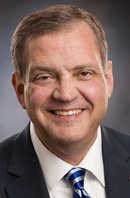
Al Mohler
The Southern Baptist Convention was founded in 1845 when its members defended the right of missionaries to own slaves. Southern Seminary President R. Albert Mohler Jr. said the investigation expanded the knowledge and truth of what that defense meant.
“What we did not know and should have known was the degree to which open expressions of white racial supremacy were a part of the defense of slavery even on the part of some of the founding faculty of this school,” he said.
The report demonstrates how interwoven Southern Seminary’s history has been with the wider racial and political history of the denomination and the nation. It follows a 1995 resolution passed by Southern Baptists on the 150th anniversary of the denomination in which they said “we lament and repudiate historic acts of evil such as slavery” and “we genuinely repent of racism of which we have been guilty.”
Brantley Gasaway, chair of Bucknell University’s religious studies department, said the report, like the earlier resolution, is “symbolically significant.” It shows that some Southern Baptist leaders have grown in their sensitivity to diversity and racial reconciliation, he said.
But he said it did not point to substantive policy or structural changes.
“The leaders of Southern Seminary confess and lament their racist heritage, but they pledge only to continue to welcome and celebrate racial diversity at their institution,” said Gasaway, whose research focuses on evangelicals. “Such an approach reflects most evangelicals’ view that racial reconciliation does not necessarily include any reparations or recompense for the injustices suffered by minorities.”
Mohler said his decision to call for a one-year investigation by a team of six faculty—three African-American and three white—was prompted by actions of other institutions of higher education, specifically Princeton University, which released a report last year on its ties to slavery, including the sale of slaves on its campus.
Southern Seminary was not found to be involved in the slave trade as an institution, Mohler said.
‘Institutional sorrow’ but no apology
Asked if the seminary will apologize for its founders’ stances, Mohler said he could offer “a very clear statement of institutional sorrow,” but it is not possible to apologize for the dead.
“We certainly want to make very clear that we are a very different institution than we were then,” he said, noting its more recent history of inviting Martin Luther King Jr. to the school in 1961. That visit prompted white Southern opponents in the Baptist denomination to withhold money from the school and the seminary’s president at the time to issue an apology.
Asked if the seminary is repenting for its ties to slavery, Mohler said “to the extent that repentance rightly applies, we surely repent.”
“The problem is theologically repenting for the dead,” he said. “We cannot repent for the dead.”
Mohler’s insistence that neither he nor the seminary can apologize nor repent for the founders “seems to run counter to celebrating the accomplishments of those men for bringing the seminary into existence and for shaping it and the larger Southern Baptist Convention,” Baptist Standard Editor Eric Black said.
“One might wonder how it is possible to separate from the past when called to apologize for predecessors while claiming connection to a rich heritage from the same past,” Black said.
In his written introduction, Mohler said he rejoices in the “new humanity” now demonstrated on his campus. He expressed appreciation for the school’s black students, alumni, trustees and faculty. In its 2017-18 academic year, the seminary had 228 blacks enrolled, comprising 4.26 percent of the total student body of 5,354.
“Right here, right now, we see students and faculty representing many races and nations and ethnicities,” he wrote. “Our commitment is to see this school, founded in a legacy of slavery, look every day more like the people born anew by the gospel of Jesus Christ, showing Christ’s glory in redeemed sinners drawn from every tongue and tribe and people and nation.”
Among other findings:
Seminary faculty sought to preserve slavery after the election of President Lincoln. James Boyce, the seminary’s first president, “believed that sudden secession would be disastrous, and that negotiation with the Republicans would produce guarantees of protection for slavery.” Boyce was the only one of the four founding professors who served in the Confederate Army, where he was a chaplain.
• John A. Broadus, another founding faculty member, presented resolutions at the 1863 meeting of the Southern Baptist Convention that pledged Southern Baptist support for the Confederacy. They were adopted unanimously. He later supported a possible move to a new location for the seminary that was “in a white man’s country.”
• Joseph E. Brown, whom the report described as “the seminary’s most important donor” and its trustee board chairman from 1883 to 1894, earned a substantial part of his fortune from the exploitation of mostly black convict-lease laborers. His iron furnaces and coal mines, once described as a possible “hell on earth,” used torture and other harsh punishments that were similar to those exercised by slave drivers. Brown gave a gift of $50,000 to the seminary that helped save it from financial collapse.
• In some instances, seminary faculty urged humane treatment of blacks. But before the 1940s, faculty members “construed the Old South as an idyllic place for both slaves and masters” and “claimed that the South went to war to uphold their honor rather than slavery.” They also supported black theological education as long as it was segregated.
• The support of white superiority, which was taught by seminary faculty, was exemplified in the writings of Edgar Y. Mullins, president of the seminary from 1899 to 1928: “It is immoral and wrong to demand that negro civilization should be placed on par with white. This is fundamentally the issue.”
• The seminary refused requests by blacks for admission for decades. When the seminary had its first black graduate, Garland Offutt, who earned a master’s of theology in 1944 (and later a doctorate in 1948), it did not permit him to participate in the regular commencement festivities. He instead was awarded his degree during the term’s final chapel service. Blacks first participated in graduation services in 1952.
The report concludes with a statement about the seminary’s eventual rejection of white supremacy.
“This report documents the contradictions and complexities of the experience of Southern Baptists and race in America,” it reads. “We have not overcome all the contradictions, but we are committed to doing so.”
Palm Beach Atlantic founder Jess Moody dies at 93
January 16, 2019
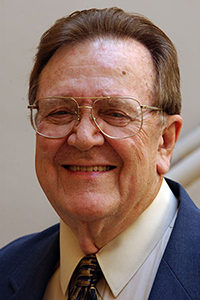
WEST PALM BEACH, Fla. (BP)—Jess Moody, a visionary evangelistic pastor who influenced the field of education and the entertainment industry, died Dec. 7 in West Palm Beach, Fla. He was 93.
Moody was the founder of Palm Beach Atlantic College (now University) in West Palm Beach in 1968 and later, in the Los Angeles area, a witness to Hollywood.
He also was one of three nominees for Southern Baptist Convention president in 1992. He served as the 1965 president of the SBC Pastors’ Conference and addressed its sessions in 1964 and 1972.
‘Visionary dreamer’
William M.B. Fleming Jr., Palm Beach Atlantic’s president, said in a Dec. 8 tribute to Moody on the school’s website, “As the university celebrates its 50th year, we give thanks for a giant of a Christian crusader, a Bible preacher, a visionary dreamer and our founding president.
Jess Moody led in the creation of Palm Beach Atlantic College while serving as pastor of First Baptist Church in West Palm Beach (now Family Church) from 1961 to1976. He concurrently served as the school’s president from 1968 to 1972. (Photo / Palm Beach Atlantic University)
“Dr. Moody’s mark is on every Palm Beach Atlantic graduate and student. His sweet love and unlimited devotion to young people is legendary. Stories will continue to be written and told about Dr. Jess Moody, a servant for all seasons and all mankind.”
Moody led in the school’s creation while serving as pastor of First Baptist Church in West Palm Beach (now Family Church) from 1961 to1976. He concurrently served as PBA president from 1968 to 1972.
The university, which was affiliated with the Florida Baptist Convention for an extended time, now has 3,706 students in undergraduate and graduate courses in West Palm Beach, at a campus in Orlando and online.
Moody and his wife Doris initiated the school’s “Workship” program requiring all 2,000-plus full-time undergraduate students to volunteer at least 45 hours annually at nonprofit agencies, schools or churches.
Pastor to Hollywood stars
Moody left West Palm Beach in 1976, turning his sights to California as pastor of the Los Angeles-area First Baptist Church in Van Nuys. He led the church into cooperation with the SBC “after considerable resistance,” as described by the Los Angeles Times in a 1997 article.
In the mid-1980s, Moody led the church to relocate to Porter Ranch, Calif., where it was renamed Shepherd of the Hills Church.
“Jocular and garrulous, Moody attracted a number of entertainment figures to his church,” the Times‘ 1997 article noted. “He performed the wedding of actor Burt Reynolds and actress Loni Anderson. The annual Passion Play at Shepherd of the Hills draws thousands every Easter.”
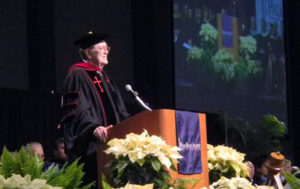
Jess Moody, founder of Palm Beach Atlantic University, spoke at a 2010 graduation ceremony. (Photo courtesy of Palm Beach Atlantic University)
He was a religious consultant for 20th Century Fox, an article in MissionsUSA of the SBC Home Mission Board reported in 1984.
The church created an Act I ministry in 1982 that grew to about 125 actors, directors, producers and others in the film industry, according to MissionsUSA. Act I’s meetings included presentations by such LA luminaries as producer-writers Harry and Linda Thomason, two-time Academy Award-winning composer Al Kasha and radio disc jockey Rick Dees.
Phil Boatwright, a veteran movie reviewer, was a member of the church from 1977 until Moody’s retirement in 1995. Boatwright described an example of Moody’s influence involving the re-filming of a major motion picture.
“In 1976, Hollywood had a hit with The Omen, about the coming of the Antichrist. As Hollywood is prone to do, they made several follow-ups,” Boatwright recounted. “The producer (or director, I can’t remember which) of the 1981 sequel The Omen II: The Final Conflict, concerning an adult Antichrist plotting to eliminate his future divine opponent, showed a rough-cut to Dr. Moody.
“Doc (as Boatwright called Moody) praised the production’s strengths but made it clear the sensationalized conclusion wasn’t scriptural. Due to Moody’s kindness and scriptural knowledge, the filmmaker said, ‘If you’ll rewrite the ending, I’ll film it.’ Doc did. The producer did. And to this day, I tell people, skip through the film to get to the ending. It’s spiritually rewarding. (I wouldn’t bother with the rest of the film.)
“Knowledge and kindness. That’s part of the armor we should all clothe ourselves in. Doc did.”
Boatwright also noted Moody’s “appreciation for every soul.”
“Like our beloved Billy Graham, Jess had a love for the lost and a great ability to make each person feel important. When these men said, ‘God loves you,’ you felt it—you believed it,” he said.
Nominee for SBC president
Moody ran for SBC president in 1992, seeking to be a unifier amid the conflict among Southern Baptists.
Ed Young, senior pastor of Second Baptist Church in Houston, received 62 percent of the messengers’ vote at the annual meeting in Indianapolis. Moody received nearly 22 percent while a third nominee, Nelson Price, pastor of Roswell Street Baptist Church in Marietta, Ga., received 16 percent.
Jess Moody
Moody was nominated by Mississippi comedian Jerry Clower, who said Moody loved people on both sides of the SBC controversy and that the witness of Southern Baptists would be helped by the election of a pastor who was not from the South.
Clower also said he constantly met laypeople in his travels who didn’t want a pastors’ fight, as he called it.
“There are 39,000 of y’all (pastors), but there are 15 million of us, and we want it stopped,” Clower said.
Moody had said prior to the annual meeting: “My feeling is if there is hope for reconciliation in our convention, then one last-ditch stand … ought to be done. I believe every word of the Bible. As far as the Bible goes, I am as conservative as you can get. I also believe in freedom. I love my denomination. I want to bring us together.”
Fermin Whittaker, retired executive director of the California Southern Baptist Convention, said Moody was “willing to listen to my storyline” as a native of Panama serving as the leader of the state’s Baptists.
“He was not the kind of leader who said, ‘I don’t have time for you.’ He was never negative. He was always encouraging and always a friend, sincere in his heart to reach the lost for Christ,” Whittaker said.
Moody also was among 11 nominees for SBC president in 1966, when messengers in Detroit elected Nashville pastor Franklin Paschall to the post.
Founding member of Youth for Christ
A native Texan, born in Paducah, Moody sensed a call to preach at age 17. As a student at Baylor University, he flew a Piper Cub airplane to lead evangelistic meetings across the Southwest and Midwest, leaving after class on Fridays and returning on Sunday nights.
As a founding member of Youth for Christ at age 22, Moody preached to thousands of students across the Southwest and, in 1946, led a YFC team to war-torn northern Europe while Billy Graham led a team to southern Europe.
After earning a Master of Divinity degree from Southern Baptist Theological Seminary in Louisville, Ky., in 1956, Moody was called as pastor of First Baptist Church in Owensboro, Ky., serving there nearly five years. In 1961, Moody was part of a Graham team in West Palm Beach when members of First Baptist were drawn to his preaching and called him as their pastor.
A movie was made of Moody’s life in 1967 by Gospel Films titled Riding the Pulpit. He was the author of several books, including 1999’s Club Sandwich: Goes Great with Chicken Soup in which he told a number of his favorite stories, some of which involved Burt Reynolds and Randy and Dennis Quaid.
Moody was preceded in death by his wife of 64 years. He is survived by a son, Patrick, and daughter, Martha; and three grandchildren.
Mudding and drinking truck thrives on new path
January 16, 2019
GORDO, Ala. (BP)—A couple of years ago, Terry Billings saw his old truck sitting in the field, weeds growing up through it. Then he heard God’s instruction—to take that old truck and make something new out of it.
“At that point, it was worthless,” Billings said.
A couple of years ago, pastor Terry Billings saw his old truck sitting in the field, weeds growing up through it. Then he heard God whisper that he could take that old truck and make something new out of it—and use it to help share the gospel. (Photo / The Alabama Baptist / Distributed by Baptist Press)
He had spent a lot of years in that truck going mudding and drinking out in the country. He’d lived a lot of his life far from the shadows of any church, except maybe to some weddings and funerals.
But when his son accepted Christ as Savior, the boy invited his dad to attend his baptism.
“I figured that was a good dad move to go see my son get baptized,” he said. “I went, and it was kind of nice to be there. But by 1 o’clock, I was drinking again.”
The next Sunday, his son invited him back, and Billings went.
“I’d kind of enjoyed getting dressed up that last Sunday,” he said.
A third Sunday rolled around, and Billings went to church again.
“I left after church that day, and my plan was to go back to the restaurant and chill out and drink for the rest of the day,” said Billings, who ran Billy’s BBQ in Gordo, Ala. “But boy, did God have something waiting for me—at Walmart.”
As he walked the aisles of the store, he said he felt the conviction of God press on his heart.
“All of a sudden, I felt so visible, like everything I’d ever done was so visible,” Billings said. “His eyes were on me. I tell everyone I had a Damascus Road experience that day, but it was a blue light special—I got saved right there in Walmart at 45 years old. And my life has never been the same.”
Traded mudding and drinking for preaching
He gets choked up talking about it. When God’s light broke through his darkness, he parked the old farm truck and traded his mudding and drinking for a pastorate.
Terry Billings’ “Heaven Bound Mud Bogger” turns heads wherever it goes. (Facebook Photo)
For six years now, he has served at Forest Baptist Church, Gordo, in Pickens Baptist Association—a church that’s been among some of the top in Alabama for baptisms in recent years.
God made something new out of him, Billings said. And as he looked at that old truck that day, he knew God had plans for it too.
“God gave me this vision to reach out to people who are getting ignored—the good ol’ boys. I’ve always been one of them,” Billings said. “I was an alcoholic, and God reached out and touched me. If he hadn’t and if people hadn’t, I wouldn’t have been saved. So there’s nowhere that’s too far for me to go to reach them.”
He towed that old truck out and began the process of rebuilding the whole thing, to be used for God’s glory and to help others meet Jesus. He recruited some friends to help. And as he stepped out on faith, God provided donations for the rebuild.
“Over two years, God provided $100,000,” he said. “When people heard what we wanted to do, they just kept writing us checks. People from California, Florida, Tennessee—they would stop in at the restaurant and leave us with a donation for the truck.”
(Facebook Photo)
And so the Heaven Bound Mud Bogger was born—a massive truck with a picture of a cross on the side and verses about finding eternal life in Jesus. On the tailgate it says, “Covered in mud, but washed in the blood.”
It turns heads everywhere it goes.
Once the truck had new life, Billings and his ministry partners formed a nonprofit ministry, and they take the truck to parades and events to share the gospel. They set up tents, share tracts and then connect with the local Baptist association so they can do follow up.
“We’re booked almost every weekend from now to Christmas,” he said.
But even if they weren’t, attracting people would be no problem.
“Every time I stop anywhere, everybody in the gas station or Dollar General unloads and goes out to look at it. Then I get to tell them my story and what Jesus did for me,” Billings said. “All it takes is a trip to Hardee’s, and we have church.”
Reaching a different segment of people
Sammy Gilbreath, director of the office of evangelism for the Alabama Baptist State Board of Missions, said Billings’ ministry is an “incredible way to reach a different segment of people.”
“Early on in our ministry in the evangelism office, we began to push event evangelism,” Gilbreath said. “People raised their eyebrows when they thought about motorcycle ministry.”
But now motorcycle ministry is huge, and later the same thing happened with horse whisperer events, he said.
“Mud bogging is a classic example. It becomes a great evangelistic tool reaching into a segment of our culture that is not being touched by any other phase of evangelism,” Gilbreath said. “I’m thrilled Terry is doing it. I think it will draw attention and spark ideas and creativity for other people too, and that can cause a domino effect.”
Billings said he’s grateful, but no one is more surprised than him at how God has directed his path.
“This old truck I had, it probably wasn’t worth $100,” he said. “But it’s amazing when you give something to God, what he can do. We’re just in awe.”
Baptist editor Bob Terry bids farewell after 50 years
January 16, 2019
BIRMINGHAM, Ala. (RNS)—When Bob Terry retires as editor of The Alabama Baptist at the end of this year, his peers may point to his 50 years of faithful service in denominational journalism. But Terry’s most lasting legacy in the hearts of Alabama Baptists likely may be the vulnerable honesty with which he shared his grief after the sudden death of his first wife in 1998.
Terry and his wife, Eleanor Foster Terry, then a professor and dean at Birmingham-Southern College, had been at a meeting of the Baptist World Alliance in South Africa when a car struck their taxi, knocking them from the vehicle.
Both were injured. Eleanor slipped into a coma before being airlifted back to Birmingham, where she died on July 20, 1998.
For the first three years after Eleanor’s death, Terry would visit her grave on the anniversary of her passing. Every year it rained.
More than once, Terry recalled later in a column, “I sat there praying that God would strike me with a lightning bolt.”
“The loneliness was almost unbearable,” he wrote.
Terry shared the anger, confusion and devastation that comes with such a loss with his readers, said Gary Fenton, a longtime friend, pastor of Terry’s home church and board member of The Alabama Baptist.
“Here he is, an ordained minister and editor of the Baptist paper—people thought he was going to come through with these marvelous clichés to make it all go away,” said Fenton. “Those were probably his best-received editorials. You saw his pain. He avoided the easy answers.”
Never meant to become a journalist
Terry never intended a career in denominational journalism. Instead, he wanted to be a pastor.
But he wanted to learn more about his denomination. So, he took a temporary break from doctoral studies at Southern Baptist Theological Seminary to work with the Kentucky Baptist Convention’s newspaper, the Western Recorder.
“By then, I’d been in seminary, but I still felt like an outsider looking in,” Terry said in an interview. “I thought taking the position would give me the opportunity to learn the inside workings of my denomination and to visit a lot of churches.”
That temporary break turned into 50 years of church journalism.
After seven years at the WesternRecorder, Terry was called to edit the Missouri statewide Baptist newspaper, Word & Way, where he spent two decades, navigating serious statewide church controversies before being called to Alabama in 1995.
“It worked. I learned my denomination,” Terry said. “I just didn’t use it as I had anticipated.”
Terry, who spent his childhood on a cotton farm in northwest Alabama, said he and his family were not regular churchgoers until they moved to Michigan in the 1960s for his father to work in the automotive industry.
There, when Terry was 12, the family joined a newly planted Southern Baptist congregation that had been established primarily as a mission to displaced Southerners. Terry’s leadership skills were quickly recognized and cultivated.
By 13, Terry was a messenger—an official voting representative from his congregation—to the organizational convention of the Michigan Baptist Convention. By 14, he knew he was called to the ministry.
By 21, he was ordained and finishing an undergraduate degree in history and communications in preparation for seminary. He also was beginning the first of what would be a lifetime of interim pastoral positions he would hold alongside his other work.
Fenton first met Terry when he sat on the search committee that called Terry to Missouri. At 32, Terry was the youngest person ever tasked with editing a statewide Baptist newspaper. His appointment came during some bitter internecine struggles among Missouri Baptists that preceded the national upheavals in the denomination beginning in the 1980s.
“Sometimes people got frustrated with him. Some people wished he would only report the good news or what the leaders wanted,” said Fenton. “But I distinguish Bob Terry from a lot of denominational editors in that he is a committed journalist. He didn’t allow the Word & Way or The Alabama Baptist to become merely a church newsletter.”
Terry frequently invokes a journalism adage, “Tell the truth and trust the people.” He says that’s good theology—and good journalism.
“Manipulating readers by withholding information has no place in a denomination committed to the priesthood of all believers,” Terry once wrote in an editorial. “The trustworthiness of Baptist influence is proven by sharing the difficult story.”
Focusing on what is really important
Terry tried to find a balance between reporting on denominational infighting and telling the stories of the work that ordinary church members were doing.
Bob Terry, the longtime editor of The Alabama Baptist, works from his office in Birmingham, Ala. (RNS Photo courtesy of The Alabama Baptist)
In 2000, when Terry reported on a controversial revision of the Southern Baptist Convention’s “Baptist Faith and Message,” which bars women from senior pastoral positions and advocates the submission of wives to husbands, he contrasted that story with a report from a concurrent meeting of the Women’s Missionary Union in which women rescued from the sex industry and drug addiction were introduced and given voice.
“Sometimes the most important information to relay is not the debate on the floor, but the difference Baptists are making in changing lives and affecting society,” Terry said. “We have to tell what happens on the convention floor, but what’s most important? What’s going to help our readers grow as disciples?”
Many of Terry’s columns remind Baptists of their own history and organizational pillars—including the historic leadership roles that women have filled. And many of his columns reminded Baptists that whatever their beliefs, they have real work to do in the world.
“We are to radiate the glory of God into all actions and situations,” Terry said. “If we limit God—banish God—to heaven, then we are doing what the secularists do: saying God is about belief, not about life. That’s heresy.”
In retirement, Terry, who remarried in 2002, hopes to finish a book about grief, aimed at helping others navigate tragedy. He expects to expand his blog, NowConsiderThis.com, and to remain active on the boards of Bread for the World and the Baptist World Alliance.
“This has been a very fulfilling life, a fulfilling ministry,” Terry said.
And he says he is leaving the paper in good hands. Terry will be succeeded as editor by longtime Alabama Baptist writer and editor Jennifer Davis Rash. She will be the first female editor of a statewide Baptist newspaper.
Terry leaves a legacy she expects to build on.
“Bob taught me how being part of the ministry changes how we tell the story. We have the responsibility to tell the truth but also to be part of the family,” Rash said. “We have to be able to come back tomorrow and have a conversation.”


 She and husband John built their home on that childhood mountaintop in suburban Atlanta, reared four children and completed a 10-year stint near Sugarloaf Mountain in Rio de Janeiro, Brazil, as IMB missionaries. Today, two gospel-centered ministries the couple co-founded, LifeShape and Impact 360 Institute, improve the lives of children and adults internationally.