Pandemic prompts churches to consider permanent changes

HENDERSONVILLE, Tenn. (BP)—Nearly every church has adjusted some aspects of its ministry since the onset of the COVID-19 global pandemic. But some congregations already are turning from the question of how to shift from the current moment toward changes for the long-term future.

Robby Gallaty, pastor of Long Hollow Baptist Church in Hendersonville, Tenn., said he views the impact of COVID-19 on ministry not as an interruption, but instead as a disruption to the way things typically have been done in the local church.

Long Hollow staff see changes that track with larger changes in culture and life as necessary for faithful stewardship of the ministry God has given them. The most immediate, tangible change, according to Gallaty is attendance at church gatherings. And that’s something he doesn’t anticipate turning around anytime soon.

Before the pandemic, Long Hollow’s in-person attendance was significantly larger than viewership for its online services. The church, among the largest in the Southern Baptist Convention, has resumed in-person meetings. But its online participation is now three times larger than in-person attendance.

Recognizing the new reality

The shift is not unique to Long Hollow. Some expect decreased in-person to be permanent.

In recognition of the new reality, Long Hollow has begun the process of creating an intentional, permanent online church ministry. That includes hiring an online-specific pastor, finding ways to facilitate membership remotely, as well as conducting the ordinances and small groups in cities hours or even states away.

“The churches that are predominantly dependent upon a building are going to have a hard time transitioning into the future,” Gallaty said. “People say, ‘I just want to go back to the way things were before COVID.’ But I really don’t think that we will ever get back to that, particularly in the area of numbers … as far as in-person attendance anytime soon.”

The online approach for Long Hollow is not just a livestream of the in-person worship gathering, according to Collin Wood, operations pastor at Long Hollow. Instead, in a general sense, it functions as its own “campus.” Wood said individuals and small groups of people are participating online from multiple cities as close as Chattanooga, Tenn., and as far as Portland, Ore.

Attempting to minister equally to those participating online as well as those who come in-person to the church’s physical campuses in Hendersonville or Gallatin, Tenn., is vital, Gallaty said, calling it a “both/and” approach.

“That’s the future of our church and if we say, ‘No, we’re not going to reach them online; they’re just going to have to come for in-person only,’ then I think we’re going to miss where people are,” Gallaty said.

Long Hollow’s philosophy of ministry has not changed, Wood added.

“Pastors and church staff are called to equip the people of God to do ministry … and with a church the size of Long Hollow, it would be impossible for church staff to do all the ministry and care anyways,” he said. “It has to be done by our people and so that’s why life groups and discipleship groups are so important.”

The emphasis of the church will still be local, with small groups forming in each city where there are Long Hollow members. Those local leaders, equipped by the church staff, will be tasked with ministering to members in every context Long Hollow reaches—likely far beyond Hendersonville.

Online emphasis grows in churches of all sizes

Transitioning to a greater online emphasis is a reality among churches of all sizes. Tony Watson, pastor of First Baptist Church of Palestine in East Texas, said his congregation’s livestream efforts have increased significantly during the pandemic.

The congregation of approximately 225 members now runs 180 in person, with the remainder primarily online. In order to reach more people, the church expanded its streaming to platforms other than Facebook and began using higher-quality production equipment.

Predominantly online giving is here to stay as well, according to Katelyn Western, active serve team member of Fellowship Baptist Church in Joplin, Mo. Western said with the shift online, giving has increased, putting them ahead of budget for the year.

“I see it being the future of our churches as technology ever increases and changes the way we live,” she said.

While answers for how to move forward in the middle of intense cultural changes are not always clear, Long Hollow’s Wood encouraged church leaders and members to start with what is in front of them, trusting God to take the ministry of the church forward.

Gallaty also noted Long Hollow staff has made an effort to be a resource to other churches looking to deepen their online campus approach. He said it’s a way to steward where God has led them thus far in church organization and modern ministry approach.

“You’ve got to give people options,” Gallaty said. “The way people learn about church today is through social media and online communities. If we don’t have a robust presence online … then we are missing front door access that people have to get into our church.”

Change is constant, Gallaty said. But as the body of Christ, he insisted, there must be a willingness to do what it takes to reach as many people as possible—even if it’s uncomfortable and different.


Louisiana Baptist pastor among Hurricane Laura fatalities

LAKE CHARLES, La. (BP)—A Louisiana Baptist pastor is among 18 deaths related to Hurricane Laura, and dozens of church buildings in the region were damaged due to the storm.

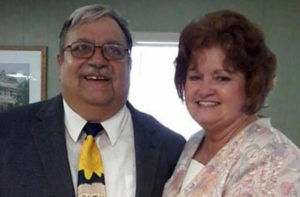
Pastor James Cart was killed when a tree fell on his roof during Hurricane Laura. His wife Dianne was at home in a different room at the time. (BP Photo)

James Vernon Cart Jr., pastor of First Baptist Church of Iota, La., in Acadia Parish, died early Aug. 27 when a tree fell on his home around 2 a.m. as he slept.

Bert Langley, director of missions with Acadia Baptist Association, said the 68-year-old Cart had gone to bed ahead of his wife, who remained in the living room with a grandchild who was visiting.

Bruce Baker, director of missions with the Carey Baptist Association in Lake Charles, said Hurricane Laura “severely damaged” about 10 church buildings, 15 to 20 have “moderate” damage, and a few others have minor damage, including churches in Lake Charles, Sulfur, Benton, Cameron, Hackberry, Moss Bluff and West Lake.

Water had not fully receded Aug. 31 in Cameron, a small coastal community that took Laura’s full impact.

“Cameron is still under three feet of water,” Baker said. “That will take a long time for that to recede.”

The floodwater, which is dangerously interspersed with downed power lines, is making damage assessments difficult there, said Charles Hugonin, pastor of First Baptist Church of Cameron. A deacon was headed to Cameron Monday morning, Aug. 31, to try to get a closer look at the church, which is located just a mile from the Gulf of Mexico, Hugonin noted.

“As far as we know right now, the front doors are blown off, and it’s flooded inside. Our Sunday school wing collapsed,” Hugonin said. “There’s power lines down. It’s still flooded. It’s dangerous as far as snakes and stuff.”

‘Just a lot of uncertainty’

Hugonin hasn’t been able to determine whether the church will remain. When Hurricane Rita destroyed its sanctuary in 2005, the church chose not to rebuild the structure but renovated its gym to include worship and education areas.

“Right now, there’s just a lot of uncertainty,” he said. “My members are without homes right now. Once we find out what the damages are, I have to see if my members are staying there, if they’re planning on rebuilding in Cameron or not.”

Many are suffering. Widespread power outages and the lack of clean water have displaced thousands in Laura’s strike zone, even those with no damage to their homes, Baker said.

“There are thousands of families, they can’t stay in their homes and they can’t afford a hotel,” Baker said. “No shelters were set up because of the COVID thing. So, we’ve got a lot of families that are really, really in dire circumstances. It’s a challenge now to figure out how to help them.”

Baker anticipates a long recovery, but said the area is not ready to receive volunteer disaster relief crews from other states because of the lack of shelter, food and water.

“Southern Baptists across the country have already been pouring out a lot of love, and we’re incredibly grateful for that. It’s one of the best things we do as a denomination. We send missionaries around the world and we send people to help when there’s a disaster,” he said.

Nearly 360,000 customers remained without power in Louisiana on Aug. 30, and it could take a month or more for all power to be restored due to catastrophic damage to the power grid. In the days after the storm, at least eight deaths were reported as a result of carbon monoxide poisoning from generators inside homes, according to news reports.

Baker noted Laura came ashore during low tide, which prevented the kind of catastrophic storm surge the National Hurricane Center had predicted. Instead of 20 feet, the storm surge was likely about 13 feet, Baker said.


LifeWay cuts budget, plans for ‘bridge year’ in 2021

NASHVILLE (BP)—Trustees of LifeWay Christian Resources unanimously approved a $210 million budget Aug. 25 for the 2020-21 fiscal year that includes reductions of 17 percent.

LifeWay projects missing its budgeted revenue for the 2019-20 fiscal year by $61 million, a net loss of $21.7 million, LifeWay President and CEO Ben Mandrell told trustees, whose meeting was conducted in a virtual format because of COVID-19 restrictions.

Mandrell attributed the loss to declining sales and loss of revenue related to cancellation of summer camps and women’s events. LifeWay is planning for the negative impact from COVID-19 to stretch into the first two quarters of the 2020-2021 fiscal year, he added.

“It is a wait-and-see situation, but this hasn’t stopped us from looking down the road and plotting the course for the future,” Mandrell said. “Jesus said that even the gates of hell could not hold back the advance of the local church. As long as LifeWay remains close to the body of Christ, adapting to her needs, there is a future for us.”

The approved budget includes a net loss of $8.6 million. LifeWay CFO Joe Walker told trustees they are budgeting 2021 as a “bridge year” to 2022 and will be monitoring expenses and revenue closely.

Implementing cost-saving measures

In April, LifeWay instituted spending reductions of about 10 percent, which included staff reductions, a freeze on all hiring and discretionary spending, and suspension of salary increases and matching 401K contributions for all employees. Beginning in May, members of the executive leadership team gave up one month’s salary.

Mandrell said those cost savings somewhat mitigated the impact to LifeWay’s bottom line, but said the organization would still end the year with a significant net loss. He told trustees LifeWay had been on a growth trajectory before the pandemic.

“We did not see this season coming, but we are responding as we should with cost-saving measures in place, with a close eye on our cash position, preserving the future of the company,” Mandrell said. “We’ve been serving the local church for 129 years, and we are making plans to be around at least 129 more.”

According to the report to trustees, LifeWay’s cash position remains strong and the organization has nearly completed paying off leases from stores.

Mandrell told trustees he sees a future that includes a revived church, an acceleration of online products and services from LifeWay, as well as a laser focus on the organization’s core customer —church leaders.

“We believe the local church is going to surge once again, and when it emerges from this season, there will be a renewed passion for ministry, a new joy in worship,” Mandrell said. “Churches are going to see their core return with fresh enthusiasm, ready to serve and to rebuild. Though it may take some time, we believe the church will recover, and we are getting organized to be ready.”

Digital product development a high priority

Mandrell told trustees the COVID-19 crisis had pushed churches to move online and use technology like never before.

“In the coming years, church leaders will conduct far more ministry online, unafraid to harness the technology that got us through a global pandemic,” Mandrell said.

“LifeWay must press the gas to the floor when it comes to developing digital products as well as creating a frictionless online experience. These discussions are top-priority for our team and now is the season to pour great energy into lifeway.com—improving the look, feel and functionality.”

Trustees elected Jamie Adams as senior vice president and chief information technology officer. Adams comes to LifeWay from Mspark in Birmingham, Ala., where she served as chief information officer since 2016. At Mspark, a national direct-mail, advertising company, Adams led a team responsible for both internal business technologies as well as customer-facing technologies. Prior to Mspark, she was chief information officer at The Cliffs, a private equity-backed hospitality and real estate company. She has experience in e-commerce, business intelligence and data analytics, and digital applications.

Adams has a bachelor’s in business administration/management information systems from the University of Georgia in Athens and a Master of Business Administration degree from the University of Alabama in Tuscaloosa.

“Jamie brings a wealth of IT leadership expertise that will be invaluable to LifeWay in this new season where much of our business is focused online,” Mandrell said. “Her proven experience in digital transformation and global leadership will be a huge asset to LifeWay.”

Three finalists for Ridgecrest sale

Mandrell told trustees LifeWay had identified three finalists for the potential sale of Ridgecrest Conference Centers and Camps.

In April, LifeWay’s trustees approved exploration of the sale of Ridgecrest. Mandrell told the trustees the entity had received several proposals from potential buyers and said the offers had been narrowed to three finalists. Each had stated an intent to build on the legacy of Ridgecrest, continuing the ministry.

“We are very grateful to God for bringing such wonderful groups to us,” Mandrell said. “We are more convinced than ever that this decision will result in a greater kingdom impact for both LifeWay and Ridgecrest.”

Mandrell also told trustees the executive leadership team is continuing a feasibility study on the future use of the corporate office building, but said a final decision had not been made. The study began in April.

“The future of work will likely mean a healthy blend of collaborative, in-person meetings as well as the flexibility of working from home,” Mandrell said, citing a study completed prior to COVID-19 that showed the organization was using its facility at about 60-percent occupancy on a daily basis.

“LifeWay has embraced the work-from-anywhere culture, allowing our team members to come on campus for strategic meetings and team gatherings, while also enjoying the flexibility of working at home or close to home as much as possible,” he added. “We believe this need for flexibility is only going to grow as the world changes post-COVID.”

Before a final decision to downsize is made, “much more study needs to be done,” Mandrell said. “I believe passionately the people we serve and the churches we supply must be the driving force for this decision.”

The next LifeWay trustee meeting is scheduled Jan. 25-26, 2021, in Nashville.


IMB clarifies earlier statement regarding Aderholt investigation

RICHMOND, Va. (BP)—The Southern Baptist Convention’s International Mission Board issued a statement on Aug. 21, which it says clarifies and corrects previous statements made by the IMB regarding an investigation of sex crimes committed by a former missionary.

Mark Aderholt

Previous statements were reported by Baptist Press in articles published July 16, 2018, and July 18, 2018, concerning sexual crimes committed by former IMB missionary Mark Aderholt against a teenager in 1996-97, before Aderholt joined the IMB.

Aderholt pleaded guilty in July 2019 to assault causing bodily injury crimes that occurred in 1996 against Anne Marie Miller, who was 16 at the time. She testified in court that she met Aderholt while searching the America Online website for help organizing a See You at the Pole event during her junior year in high school. Aderholt, then a 25-year-old Southwestern Baptist Theological Seminary student, responded to her online search.

Aderholt was employed by the IMB from 2000 to 2008. The IMB currently employs more than 3,600 personnel worldwide.

Aderholt later was a staff member at two Arkansas churches. He was arrested in the Miller case in 2018 in South Carolina, where he had served on staff at the South Carolina Baptist Convention.

In 2018, then-IMB President David Platt issued a public statement of apology to Miller. At that time, an IMB spokesperson said Platt also had spoken privately with Miller before releasing the statement. Platt also announced two independent investigations of IMB’s handling of any past sexual abuse allegations and its policy of zero tolerance for sexual abuse.

In May 2019, current IMB President Paul Chitwood reported he also apologized to any victims of sexual abuse perpetrated by “anyone associated with IMB” and said IMB is “committed to making the changes necessary to better prevent instances of child abuse and sexual harassment (including sexual assault) and to better care for victims while holding perpetrators accountable.”

On Aug. 21, the IMB issued the following statement:

“As the IMB further looked into the investigation regarding Mark Aderholt, we realize we did not do all we could do to support Mrs. Anne Marie Miller and take action to report, or encourage her to report, Mr. Aderholt’s sexual abuse to authorities so they could determine the next steps. We earlier stated that Mrs. Miller’s parents, her husband at the time, two trained clinical counselors, and several other friends knew ‘intimate details’ of the abuse and did not report it. In doing so, we made several assumptions that Mrs. Miller has since informed us were incorrect.

“Mrs. Miller has informed us that at the time of our 2007 investigation, no other people outside of the IMB knew of the specific details Miller disclosed to us. As such, we apologize for incorrectly communicating that others knew those details and did not act. We are sorry for causing any confusion or leading others to believe Mrs. Miller was not being fully truthful.

“Please note that following an independent examination, the IMB has adopted an expansive approach to reporting allegations of child abuse to government authorities that goes beyond legal reporting duties. In addition, IMB has reported every known incident of alleged child abuse by IMB personnel or others affiliated with IMB that was not previously reported.

“IMB encourages anyone who has been a victim of abuse by IMB personnel to report it to authorities. In addition, IMB invites any victims to contact us on a confidential hotline at (855) 420-0003 or email advocate@imb.org so we can provide compassionate care to that victim and take appropriate steps to ensure the safety of others.”


Seminary names Rebekah Naylor distinguished professor

FORT WORTH—Southwestern Baptist Theological Seminary named Rebekah Ann Naylor, longtime medical missionary to India, as distinguished professor of missions in its Roy J. Fish School of Evangelism and Missions.

Southwestern Baptist Theological Seminary named Rebekah Ann Naylor, longtime medical missionary to India, as distinguished professor of missions in its Roy J. Fish School of Evangelism and Missions.

She is the first female ever to hold such a position at the seminary.

“The late Robert E. Naylor, our fifth president, began the tradition of pronouncing upon new students and faculty the worthy name of ‘Southwesterner,’ and in my estimation there are few individuals more worthy to wear this distinctive appellation than his own daughter, Dr. Rebekah Ann Naylor,” said President Adam W. Greenway.

“Through her decades of service with our International Mission Board in medical missions, she has made tremendous contributions to the advancement of God’s kingdom. It is, therefore, more than fitting—and long past due—that Dr. Naylor receive the honor of being appointed distinguished professor of missions, the first female to have ever been so recognized by our seminary. Our students are blessed beyond measure to have the opportunity to study with her, a Southwesterner of first rank.”

Naylor made her profession of faith when she was 5 years old, and eight years later she accepted God’s call to become a medical missionary. After graduating from Baylor University with her undergraduate degree in chemistry in 1964, she then earned her Doctor of Medicine degree at Vanderbilt University School of Medicine in Nashville, Tenn., in 1968. She completed her surgical training in 1973, after which she was certified by the American Board of Surgery and became a fellow of the American College of Surgeons.

Veteran missionary surgeon

In 1973, Naylor was appointed to the Foreign Mission Board (now International Mission Board). Following a 13-week orientation that prepared her for the mission field and a semester of studies at Southwestern Seminary, Naylor was deployed to Bangalore, India, as a general surgeon, evangelist and church planter.

Naylor served at Bangalore Baptist Hospital from 1974 to 2002, during which time the hospital experienced significant growth. While Naylor’s initial appointment was as a clinical surgeon, she eventually assumed the positions of chief of medical staff, administrator and medical superintendent. Under her supervision, the hospital expanded patient care services and increased its capacity from 80 to 160 beds.
Naylor also supervised the construction in Bangalore of the Rebekah Ann Naylor School of Nursing in 1996. She later became its professor of anatomy and physiology and saw the first class graduate in August 1999.

Besides serving as a missionary surgeon and professor, Naylor also worked as a strategy coordinator and church planter for the International Mission Board in the state of Karnataka, India, from 1999 to 2009. During this time, she worked with the medical ministry and Indian pastors to help plant 900 churches in the state.

Upon her return to the United States, Naylor joined the faculty of the University of Texas Southwestern Medical School in Dallas and taught in the surgery department. She was promoted to associate clinical professor of surgery in 2007 and served in that capacity until her retirement in 2010. She then began serving as a global healthcare consultant for Baptist Global Response, mobilizing and training healthcare personnel to meet needs around the world.

She also helped found Mercy Clinic, a free medical clinic for the uninsured, low-income population of southern Fort Worth, and has previously taught at Southwestern Seminary as an adjunct professor of missions.

Her name ‘synonymous with medical missions’

Naylor became Southwestern Seminary’s permanent missionary-in-residence during Greenway’s administration, and now, as the first-ever female distinguished professor at Southwestern Seminary, “she will continue to impart her knowledge and years of experience to the next generation of God-called men and women, who can continue her legacy of reaching the nations for Christ,” Greenway said.

In commending her appointment, IMB President Paul Chitwood stated: “At the International Mission Board, Rebekah Naylor’s name is synonymous with medical missions. Not only is Dr. Naylor the leading voice in IMB’s current healthcare strategy, her advocacy is one of the primary reasons that the IMB has more medical professionals serving overseas today than at any time in our history.

“I look forward to seeing how God will use her in the role of distinguished professor of missions in the Roy J. Fish School of Evangelism and Missions at Southwestern Baptist Theological Seminary to call out the called for the sake of every nation, all tribes, peoples and languages. There is simply no better choice for this role.”

John D. Massey, dean of the Fish School, said he “could not be more excited” that Naylor has been appointed to the faculty, explaining that she “brings a wealth of missions experience from her 40-plus years as an IMB missionary in India and currently serving on special assignment with the IMB in the area of healthcare strategies and church planting.”

“In her lifetime,  she has created an unmatched legacy of service to the Lord through reaching the lost through serving as a medical doctor in India,” Massey said. “In a real sense, Dr. Naylor is coming home.”


SBC agency trustee meetings move online due to COVID-19

NASHVILLE (BP)—The Southern Baptist Convention Executive Committee meeting scheduled for Sept. 21-22 in Nashville has been canceled and replaced with a special called meeting, to be held online Sept. 22.

Chairman Rolland Slade said given the COVID-19 pandemic, meeting virtually was the best decision for the safety of SBC Executive Committee members, their families, congregations and others who might participate.

“Canceling the in-person meeting and moving to virtual, though not what we wanted to do, was and is the right thing to do for all concerned,” Slade said.

Because of restrictions in their local areas, some SBC Executive Committee members might have needed to self-quarantine up to 14 days in order to travel to or from Nashville, Slade noted. Others might have been unable to travel for health reasons. Also, there’s uncertainty as to what conditions and restrictions in Nashville and other parts of the country might be in September.

“There is the real possibility that we would come in from our various cities and with emergencies (or) flight cancellations not have a quorum,” Slade said. “Then we have wasted valuable time and resources.”

But Slade said the goals and reasons for the meeting still remain.

“My hope for the meeting is to bring us together to focus on the main things we need to focus on,” he said. “We need to focus our attention on what the Southern Baptist Convention cares about, reaching a lost world with the gospel of Jesus Christ.”

The special-called SBC Executive Committee meeting will be live-streamed for those wishing to watch online.

Other agencies move meetings online

In light of COVID-19 restrictions and safety precautions, several other SBC agencies also have moved board and trustee meetings online.

LifeWay Christian Resources will hold its trustee meeting Aug. 24-25 through video conference technology.

“While we will miss the in-person interaction and fellowship, we are working on making this virtual meeting informative and God-honoring, as we discuss how LifeWay is adapting to current church practices and continuing to serve churches in these extraordinary days,” LifeWay President and CEO Ben Mandrell said.

Guidestone Financial Resources trustees also moved their meeting, originally scheduled for July 27-28, to online in late September. President O.S. Hawkins said he looks forward to gathering in person when it is safe to do so.

“We were disappointed that we were not able to meet in person,” Hawkins said. “But are thankful that technology allows us to gather together with our trustees from the relative safety of their homes so that we may provide updates on our ministry and for our trustees to conduct their important work.”

The Ethics & Religious Liberty Commission has converted its Sept. 15 board meeting to a virtual format.

“While meeting virtually certainly presents unique challenges, we are thankful that modern technology affords us the opportunity to safely move ahead with the important business of our trustees,” said Brent Leatherwood, ERLC chief of staff.

“We’ve touched base with multiple entities to learn from their experiences with online board meetings, and we are planning to incorporate the best practices from each of them with our own meeting in September.”

Mission board make adjustments

Julie McGowan, associate vice president of communications at the International Mission Board, said the success of a virtual trustee meeting last May provided confidence the mission board could hold its Sept. 29-30 trustee meeting in the same format.

“We have an excellent internal audio, visual production and support team who served our trustees well in their May virtual meeting, and we’re looking forward to another good meeting in September,” McGowan said.

The North American Mission Board has shifted its Oct. 5-7 trustee meeting from Boston to Alpharetta, Ga., where NAMB is headquartered. The meeting will be a mixture of in-person and online components.

“We try to have our board meetings in our Send Cities so trustees can meet the missionaries and see the ministry firsthand,” said Mike Ebert, director of public relations at NAMB. “But due to all of the COVID-related restrictions we are moving the meeting to our building in Alpharetta, Ga., north of Atlanta. We will also have an online option for trustees who can’t make it for various reasons.”


National WMU announces voluntary retirement plan

BIRMINGHAM—In response to a decline in sales due to COVID-19, national Woman’s Missionary Union announced Aug. 5 it is offering staff a voluntary retirement plan.

“We have worked incredibly hard over the past several years to ‘right size’ our organization based on revenue projections,” said Sandy Wisdom-Martin, executive director of national WMU. “With two difficult back-to-back downsizings and budget cuts, our goal has been to simplify and put limited resources where they can make the most impact for the kingdom.”

Over the past four years, WMU has cut 34 percent from its budget, which will be $5.2 million beginning in October for 2020-21. Sales of curriculum for missions groups is WMU’s main source of revenue.

COVID-19 hit  ministry with devastating force

However, with so much uncertainty related to the pandemic, many churches are not ordering these resources, WMU officials said.

“This year we were strategically poised for growth, and then COVID-19 hit our vibrant ministry with a force unequal to anything we’ve seen in recent decades,” Wisdom-Martin said.

When churches suspended in-person services and many across the country were sheltering-at-home at the onset of the pandemic, WMU quickly responded by moving Girls in Action  and Royal Ambassador lessons for April and May online.

WMU also created free missions resources for families during the summer, providing free Bible studies and resources for pastors, and launched a new podcast with inspiring interviews.

While those efforts helped meet needs, they don’t replace income lost from decreased sales as churches grapple with not knowing how to plan for needed resources, WMU officials acknowledged.

Diminished revenue, uncertain recovery

With diminished revenue and uncertainty of when it may rebound, the missions organization found it necessary to contain costs and present a balanced budget for 2020-21.

“We value all of our employees,” Wisdom-Martin said. “Each and every one makes meaningful contributions, and we are seeking to be as gracious and generous as possible. After the consideration period for those eligible for the voluntary retirement offer closes on Sept. 21, we will determine how much of a deficit in the budget remains and how to proceed from there.”

With vision and proper perspective, a crisis can bring opportunity, she added. Although the pandemic has significantly impacted WMU’s ministry model and so many other realities, COVID-19 didn’t catch God by surprise, she observed.

“Even in the midst of these difficult days, we confess God as our sustainer and provider,” Wisdom-Martin said. “I believe he has a hope and a future for WMU. This crisis has negatively affected our bottom line, but it has positively amplified our mission.

“Changes in our culture and church community bring opportunities for us to explore missions engagement in new and different ways. People are open to gospel conversations like never before; this is not the time to shrink back, but to boldly proclaim Christ.”


Stone named Baptist Women in Ministry executive director

Baptist Women in Ministry named Meredith Stone, most recently professor and associate dean at Hardin-Simmons University’s Logsdon Seminary, as the organization’s executive director, effective Aug. 24.

Stone, who was associate dean for academics and assistant professor of Scripture and ministry at Logsdon, will succeed Pam Durso, who became Central Baptist Theological Seminary’s 11th president on June 1.

“Across its 37-year history, BWIM has changed the landscape of women’s leadership and involvement in our Baptist world. But that work isn’t done and is needed even more today,” Stone said.

“I am thrilled for the opportunity to lead BWIM in expanding its impact to more women, congregations, organizations, and partners, because when women are fully valued in the church, the work of God can be more fully realized in this world.”

Upon the recommendation of the search committee, BWIM’s leadership team voted to call Stone during an Aug. 3 virtual meeting.

“Meredith Stone is a strategic thinker who will invite us to dream new and even bigger dreams for the landscape of women in ministry across Baptist life,” said search committee Chair Courtney Allen Crump.

“Meredith’s deep wisdom, theological prowess, and life-long passion for this work are exactly what we need to build upon our rich history and expand the reach of Baptist Women in Ministry in the years to come.”

Stone previously served as an ordained minister in the roles of teaching pastor and interim pastor for emerging adults in Baptist churches in Texas, and as women in ministry specialist for Texas Baptists.

She earned her undergraduate degree and master’s degree from Hardin-Simmons University and earned a Doctor of Philosophy degree in biblical interpretation from Brite Divinity School at Texas Christian University.

Stone has been connected to BWIM and involved in advocacy for women in ministry throughout her career and served on the organization’s leadership team from 2010 to 2015. She is a Sunday school teacher at First Baptist Church in Abilene.

Stone and her husband James have two daughters.


Online conference includes focus on Sisters Who Care

NASHVILLE, Tenn.—Southern Baptists’ annual Black Church Leadership and Family Conference took on a significantly different look and feel this year, shifting from in-person to an online format due to the ongoing COVID-19 crisis.

But that didn’t deter Black church leaders, including Woman’s Missionary Union’s Sisters Who Care ministry, from producing interactive missions, ministry, discipleship and leadership training. The five-day online conference, held July 20-24, featured about 100 virtual breakout sessions, as well as daily livestreamed Bible exposition and evening worship services.

“I think we can all agree these are challenging days—the pandemic, racial tensions, unemployment, sickness, death and more,” said conference coordinator Mark Croston, national director of LifeWay Christian Resources’ Black Church Partnerships. “That’s why we did not want to cancel our 2020 Black Church Leadership and Family Conference.”

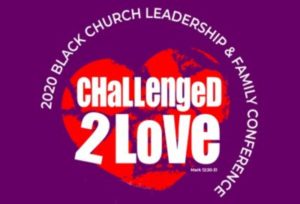
Noting that this year’s online conference was offered at no cost to participants, Croston added, “Our theme, ‘Challenged 2 Love,’ is right on time for this moment.” The theme is based on the words of Jesus in Mark 12:30-31 to “love the Lord your God with all your heart and with all your soul and with all your mind and with all your strength” and to “love your neighbor as yourself.”

Typically held at Ridgecrest Conference Center in North Carolina, the conference normally attracts about 1,200 people. This summer’s online event drew more than 4,500 registered participants.

A diverse lineup of workshops ranged from “Internet Preaching” and “Meritorious Marriage” to “Black Millennials and the Church” and “The Emotionally Healthy Pastor.” Amid heightened racial tensions across the nation, other breakout sessions addressed such issues as “The Church and the Racial Divide” and “Break the Power of Prejudice.”

Serving beyond the church walls

Sisters Who Care, which Valerie Carter Smith describes as “Women on Mission contextualized or customized for the African American church,” also was among featured conference tracks.

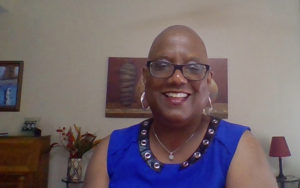
Valerie Carter Smith, executive director of Woman’s Missionary Union of Virginia, also serves as National WMU’s volunteer coordinator for Sisters Who Care. She describes Sisters Who Care as “Women on Mission contextualized or customized for the African American church.”

Carter Smith, executive director of Woman’s Missionary Union of Virginia, serves as National WMU’s volunteer coordinator for Sisters Who Care. She said the Sisters Who Care structure was designed “to get Black women to see that WMU is valuable, that there is a place for them in WMU, that there is a place for them to come to the table and to partner.”

“Historically, we as African American Christians have always been on mission,” Carter Smith said. That meshes well with WMU’s focus on “the Great Commission, and that’s why we do our work, and the Great Commandment of loving our neighbors—all of our neighbors—as we love ourselves and love God,” she added.

Leading a WMU overview session as well as a workshop on “Lead Like Jesus: Starting a Sisters Who Care Ministry,” Carter Smith said African American churches can support missions through WMU-related ministries such as Baptist Nursing Fellowship; Christian Women’s and Christian Men’s Job Corps; Pure Water, Pure Love water projects; WorldCrafts fair trade products; and the Lottie Moon Christmas Offering for International Missions and Annie Armstrong Easter Offering for North American Missions.

“I always suggest that we take a fresh look at how we’re living out missions in the life of the local church,” Carter Smith emphasized. “How are we getting out of the walls of the church and into the streets and into the community here and around the world?

“WMU ensures that people of all ages can be involved in hands-on missions and can be involved in mission groups from preschool to senior adults. WMU equips and mobilizes the church to be on mission. It’s as simple as that.”

Evaluating missions relevance

Michelle Fergus of DeSoto, a member of WMU of Texas’ African American Advisory Counsel for Sisters Who Care, led a breakout session titled “Missions Relevance Test: Are You Really on Mission?”

Fergus, who has a background in process improvement management, posed the question to church leaders: “Are you doing drive-by, statistics-driven missions, or are you creating relevance for those you’re ministering to?”

Encouraging churches to determine whether their mission efforts are producing long-term impact, she urged individuals, leaders and churches to evaluate what mission actions and strategies they should keep doing, stop doing and start doing.

“To me, the Missions Relevance Test is a moment of self-check for the individual but also for the church, because I think leaders have the tendency to sometimes become deeply entrenched in the way they think, in the way they operate, and in the way they lead people,” Fergus said.

“It is definitely a personal challenge to stop and think about what God has called us to do as individuals and then use that exercise to have a group discussion that will hopefully bring impact and change.”

Citing the Black Church Leadership and Family Conference’s transition to an online setting amid the coronavirus pandemic as a timely illustration, Fergus said: “I actually think our current situation is a great example of why we need continuing development. How do we pivot when things unexpectedly come up? How do we continue to reach people when there are technology barriers?

“My personal opinion is this pandemic was kind of a measurement tool to show how equipped we really are to deal with the unexpected. It’s just very telling of where we are versus where we need to be and you can’t get there without training.”

Connecting missions and ministry

Carolyn Fountain, president of Louisiana Baptist WMU, led an online workshop on “Connecting M & M Dots: Missions and Ministry in the Local Church.” Drawing from her experience serving with her husband in church planting, Fountain encouraged churches to consider combining WMU and women’s ministry groups to help maximize available leadership and resources.

“One of the things that I learned quickly was that both WMU and LifeWay Women had some marvelous resources and some great leadership training,” she said. “As we began our work as church planters, I also learned very quickly that we just didn’t have the capacity to have a WMU and a women’s ministry group. So, what I wanted to do was to equip the leadership that I did have to do it all. I wanted the best of both worlds.”

Citing her desire “to combine the missions and the ministry focus,” Fountain said, “It was just as important to grow in Christ, to be strong disciples and for that to pour over into missions service. Rather than dividing our workforce, I advocated for us coming around the table and figuring out how we could work together to be our best for Christ. To me, it was just a win-win to do both.”

Fountain said missions and ministry efforts typically overlap in such areas as having a heart for the lost, being grounded in Scripture, gaining strength through prayer, mobilizing for kingdom work and being empowered through unity.

“I don’t want to be educated just for the sake of education. I don’t want to be spiritually strong just for me,” she emphasized. “I want to be spiritually strong so that (God) can use me to help someone else, to help others to grow, to help others to see how he can use them in service.”

To view a related video, click here.   


Churches see success with online giving

MUNFORD, Ala. (BP)—A barbecue restaurant, a fast food place or two and a department store are about all the town of Munford has, according to Reese Gill, student pastor at Munford Baptist Church.

Before the COVID-19 pandemic, Gill and the other 250 or so people who attended Sunday morning worship services at Munford Baptist were accustomed to giving their tithes and offerings in physical form—checks and paper bills.

But due to restrictions that took church services online in the early days of the COVID-19 pandemic, Munford Baptist did what many other churches did—transitioned their giving to an online format.

“When our church services moved to online exclusively at the beginning of the pandemic, we had to do a lot of explaining and instruction for our people to understand how they could give online,” Gill said.

“Because of this we saw our average monthly giving go to about 85 percent online. I know for many of our faithful members it was so much easier to just give online rather than finding the opportunity to come by the church to drop off a check since we were no longer meeting in person.”

Gill explained that online giving has become normal for many members, and he anticipates that trend continuing into future years—not just at Munford, but at churches across the country.

“Now that we have been meeting in person again, people are still giving online mostly,” Gill said. “If online giving has been this successful in rural Alabama among many church members who are not the most tech-savvy people, I believe it is reasonable to expect the majority of churches to see their giving shift heavily to online.”

Streamlined process

Online giving can provide a more streamlined process of facilitating church finances, Gill noted. With less physical cash and checks to deposit at a bank, small congregations may find it easier to move most of their giving online.

Ryan Abernathy, pastor of West Metro Community Church in Yukon, Okla., said that while many in his congregation already were giving online, the pandemic increased those numbers. He estimates about 75 percent of members now give online in some way—50 percent through the church’s online portal and another 25 percent through automatic draft or bank checks.

“We had a couple of people comment that if they knew it was that easy, they would have switched years ago,” Abernathy said. “I think the future of church financial health will be largely a result of embracing this tech.”

Sam Rainer, pastor of West Bradenton Baptist in Bradenton, Fla., said the church’s leadership team asked members to switch to online giving. The two-campus church, with a pre-pandemic attendance of about 700 people, has seen online giving increase from 20 percent to 50 percent since the emphasis.

Rainer said in addition to the giving portal on the church’s website, the church will also be adding a text-to-give option in the next month.

Engage the rising generation in digital giving

“The future includes less institutional giving as the oldest generation passes,” Rainer said. “But there is much potential with the younger generation if churches will engage them with digital giving. Automatic, recurring digital gifts coupled with spontaneous text-to-give options will help fill the gap.”

Some individuals may simply forget to give or make excuses for not giving to their church. Abernathy said online giving helps mediate those issues by providing a simple, streamlined approach. But he added it’s important to keep in mind the learning curve for some members.

“I think we need more emphasis on helping churches, especially older more established churches, to make this shift if we want them to survive,” Abernathy said.

Rainer noted that because digital giving is here to stay, no church will be able to survive long-term without it.

“Paper money replaced gold. Checks replaced paper money. Now digital giving is replacing checks,” Rainer said. “Every church will be more stable as more people give digitally with automatic and recurring gifts.”


Alabama pastor resigns church after celebrating KKK leader

PRATTVILLE, Ala. (BP)— A bivocational Southern Baptist pastor resigned from his church July 29 after backlash resulting from his participation in an annual birthday celebration for Nathan Bedford Forrest, a general in the Confederate Army and the first Grand Wizard of the Ku Klux Klan.

Will Dismukes

Will Dismukes, who is also a first-term Republican state representative, resigned from his position at Pleasant Hill Baptist Church after a deacons’ meeting. Four days earlier, he gave the invocation July 25 at a birthday celebration for Forrest held in Selma, Ala., on the same day as ceremonies honoring the late U.S. Rep. John Lewis.

Lewis, a leader in the civil rights movement and an Alabama native, was a longtime member of Congress from Georgia. In 1965, during a march in Selma that became known as “Bloody Sunday,” Lewis suffered a fractured skull when he was beaten by Alabama state troopers.

In a July 26 Facebook post, Dismukes wrote: “Had a great time at Fort Dixie speaking and giving the invocation for Nathan Bedford Forrest annual birthday celebration. Always a great time and sure enough good eating!”

Alabama Baptists denounce racism

The post was later removed, but Dismukes’ actions drew sharp rebukes and calls to resign both as a pastor and a legislator. He had been pastor at the church, in a rural area near Prattville, since February 2019.

“We are saddened and grieved to learn of the recent Facebook post by state Rep. Will Dismukes,” said Rick Lance, the executive director of the Alabama Baptist State Board of Missions. “… In the wake of tremendous controversy, we reaffirm our opposition to any kind of racism.”

After Dismukes’ actions became known, officers of the Alabama Baptist State Convention and State Board of Missions affirmed a blog post by Lance—originally published in June and republished July 27—titled, “A Personal Credo Concerning Racism.”

In a statement accompanying the republished blog post, the officers said they were “saddened and grieved to learn of the recent Facebook post” by Dismukes, adding: “We reaffirm our opposition to any kind of racism.”

Mel Johnson, lead mission strategist for Autauga Baptist Association, of which Pleasant Hill Baptist is a member, participated in the deacons’ meeting Wednesday evening. Johnson had also met with Dismukes a day earlier.

“Scripture is clear that all people are created in God’s image and therefore equal in every way before Christ and our personal need of him as Savior and Lord,” Johnson said. “Immediate effort was made to connect with Will on behalf of our leadership with commitment toward a biblically based process to mitigate controversy surrounding this issue. He was open and receptive to our call and subsequent in-person meeting on Tuesday afternoon.”

Johnson said he was “grateful for the opportunity to have met with the church’s leadership for prayer and encouragement as many, through no fault of their own, have found themselves caught in the midst of this issue that has drawn national attention. I am also thankful that Autauga Baptist churches can move forward and remain focused toward Great Commission efforts to communicate the gospel and reach our world for Christ.”

Republicans distance themselves from Dismukes

The Facebook post included a photo showing Dismukes standing behind various Confederate flags. After initial criticism, he issued an apology.

According to the Montgomery Advertiser, he said in a statement that the post “was in no way related to disrespecting the passing of” Lewis.

“The post was in no way intended to seem as if I was glorifying the Klan or any party thereof,” Dismukes said in the statement. “The very atrocities and actions they committed are a disgrace to our country.”

But the apology, which did not address Dismukes’ participation in the event, was seen by many as insufficient. Terry Lathan, chairman of the Alabama Republican Party, said in a statement issued Tuesday that Dismukes “offered no explanation for why he participated in a birthday celebration of Nathan Bedford Forrest,” adding he found Dismukes’ “statement to be shallow in understanding why his activities are deeply offensive to so many Alabamians. His constituents will be the final decision-makers of his political future.

“It is one thing to honor one’s Southern heritage, however, it is completely another issue to specifically commemorate the leader of an organization with an indisputable history of unconscionable actions and atrocities toward African Americans.”

Alabama Sen. Clyde Chambliss, R-Prattville, was among prominent leaders in both political parties calling on Dismukes to resign.

“The post is bad enough, the timing is even worse, but the real problem is that an elected official in 2020 would attend a celebration of life of someone that led a group that terrorized and killed other human beings,” Chambliss wrote in a Facebook post, as reported by the Montgomery Advertiser.

Wade Perry, executive director of the Alabama Democratic Party, told the Montgomery Advertiser, “It’s 2020 and it’s time for racial extremists like Will Dismukes to go away.” Perry and the party had called in June for Dismukes’ resignation from the state legislature because of his “public support of the lost Confederate cause,” including his role as a chaplain for a local branch of the Sons of Confederate Veterans.


Coronavirus outbreak tied to revival at Alabama church

STRAWBERRY, Ala. (BP)—James Carson has watched the church he loves go through a lot in the past two years. When its building went up in flames in August 2018, he saw the smoke from his house across the cow pasture. It was a long process, but the church rebuilt.

And now he’s watching from home again as his beloved church family at Warrior Creek Baptist Church in Strawberry goes through another crisis—a COVID-19 outbreak.

More than 40 members, including Pastor Darryl Ross, contracted the virus after the church’s annual revival during the week of July 19.

“Right now, they say this area is a hotspot,” said Carson, a World War II vet. “That was sort of a shocker to us.”

Carson is in his 90s and—along with his wife Dot, who is also considered high-risk for severe effects from the virus—hasn’t attended church since April at his doctor’s recommendation. But he said the indoor services were guided by social distancing protocols.

The church, located in a rural community south of Huntsville, usually runs between 80 and 100 in services. It met for a while during the pandemic with drive-in services.

Weeklong summer revival cut short

In June, Warrior Creek Baptist was back to some normal gatherings. An annual weeklong revival started as usual—but this year, it only lasted until Thursday.

That was when Ross learned one of the men attending had tested positive, even though he had no symptoms. The church shut the revival down.

“By Friday night, I’ve got church members sick everywhere,” Ross told a reporter from Al.com.

Ross also tested positive, but he told the news outlet he had few symptoms.

Masks weren’t required for the revival, which Ross said many members skipped. Those who did attend practiced social distancing at the level they were comfortable with, he said.

Ross told the news outlet: “If you were comfortable shaking hands, you shook hands. If you didn’t, you didn’t.”

No one with COVID-19 has been hospitalized so far, but two of the cases were serious, according to Ross. He told The Alabama Baptist that even though the group has been pretty ill, they are “getting better.”