Former Southern Baptist Josh Buice quits G3 Conference

(RNS)—An influential Calvinist pastor who quit the Southern Baptist Convention after claiming it was too woke and liberal has been suspended by his church for causing controversy online, running fake social media accounts that criticized his church’s elders and other pastors from a conference he ran.

Josh Buice, founder of the G3 Conference and pastor of Pray’s Mill Baptist Church in Douglasville, Ga., was placed on indefinite leave last week after church leaders “uncovered irrefutable evidence that Dr. Buice has, for the past three years, operated at least four anonymous social media accounts, two anonymous email addresses, and two Substack platforms.”

“These accounts were used to publicly and anonymously slander numerous Christian leaders, including faithful pastors (some of whom have spoken at G3 conferences), several PMBC elders, and others,” according to a statement from the church.

“These actions were not only sinful in nature but deeply divisive, causing unnecessary suspicion and strife within the body of Christ, and particularly within the eldership of PMBC.”

Buice has also resigned as president of G3, which was founded in 2019 and brought in $2.3 million in revenue for the 2023 calendar year, according to its public IRS financial disclosures.

Annual GC3 Conference canceled

The group grew out of a conference Buice started in 2013. Its name stands for “Gospel, Grace, Glory.” The group claimed its annual conference drew 6,500 people in 2021, according to the G3 website.

The board of G3 has canceled the group’s annual conference, which had been planned for September, and promised full refunds. Organizers of the conference previously apologized for charging nearly $1,000 for a Legacy Pass to the conference, which would have allowed attendees to eat a meal with speakers and have special access.

Buice was an outspoken leader among the so-called “theobros”—a set of often-bearded Calvinist preachers and speakers known for their conservative beliefs, especially about the role of women in the church, and their criticism of other evangelicals whose faith is less strict.

He was one of the organizers of the 2018 “Statement on Social Justice,” which warned liberal ideas about race—in particular, critical race theory—and women’s leadership had infiltrated evangelical churches.

Critic of Russell Moore and Beth Moore

The statement was issued a few months after a number of high-profile evangelical leaders had gathered in Memphis to commemorate the 50th anniversary of the death of civil rights leader and pastor Martin Luther King Jr. and to denounce racism in the modern church.

Buice especially criticized former Southern Baptist ethicist Russell Moore and Bible teacher Beth Moore (not related) for allegedly promoting liberal ideas in the church, as well as former SBC President Ed Litton for alleged sermon plagiarism.

He also apparently had been running anonymous social media accounts that criticized other pastors from his own movement and elders at Pray’s Mill Church, according to the statement from the church. The church did not give any details about those accounts in their statement.

Buice previously had criticized such anonymous accounts.

“Dr. Buice had been asked on multiple occasions over the past two years whether he had any connection to these anonymous accounts. In each case, he denied any knowledge of them,” the church said in their statement.

Buice also initially denied, at a meeting on May 4, having anything to do with the anonymous accounts, according to the church statement, but then admitted his involvement.

“Since then, Josh has acknowledged his sin, expressed sorrow, and asked for forgiveness,” according to the church’s statement. “His desire is to personally ask forgiveness of every person he has slandered or lied to.”

Leaders of G3 said the ministry would continue to publish material on its website.

“As we look to the ministry’s future, we will prioritize the publication of helpful biblical content that strengthens the church and avoids the dangerous celebrity culture that has unfortunately come to characterize so much of modern evangelicalism.”



Suit alleges illegal power grab at Second Baptist Houston

HOUSTON (BP)—A lawsuit alleges Second Baptist Church in Houston unlawfully changed its governing documents to eliminate the congregation’s power to vote on virtually everything, including budgets and the selection of a senior pastor.

One reason for changing the church’s bylaws and articles of incorporation, the suit claims, was “to secure the ascendance” of Ben Young, son of longtime pastor Ed Young, to the senior pastorate.

Ed Young is a former SBC president, and Second Baptist is among the convention’s largest cooperating churches with more than 90,000 members across six campuses.

“The represented and ostensible purpose for these amendments was to clarify the church’s beliefs, and to reinforce its stance on social issues such as marriage and family, in response to the ‘woke agenda,’” states the suit, filed in a Harris County court by a group of current and former church members known as the Jeremiah Counsel Corporation.

“However, the true objective for the amendments was to radically alter Second Baptist’s long-observed democratic governance processes—and to eliminate the congregants’ voice in church matters in its entirety.”

Second Baptist sent the following statement to Baptist Press: “Our leadership and legal team are aware of the lawsuit and will respond appropriately.”

In line with a growing trend

The case aligns with a trend of congregationally-governed churches in various denominations “contemplating—and in many cases adopting through revised bylaws—structures that consolidate the decision-making power to fewer individuals, such as a group of elders or the board of directors,” according to an article by Erika Cole, a Washington-area attorney specializing in churches and faith-based organizations.

Shifting governance structures has led to “a corresponding increase in litigation,” Cole wrote for the website Church Law & Tax.

Among Southern Baptists, any move away from congregational church government could stir a discussion of biblical church polity. The SBC’s confession of faith, The Baptist Faith and Message, states in Article VI, “Each congregation operates under the Lordship of Christ through democratic processes.”

The suit against Second Baptist concedes that a vote was taken in May 2023 on the new bylaws. But it claims proper procedures were not followed leading up to the vote and that notice of the meeting where the vote occurred was “legally insufficient.”

Decisions now left to pastor and his appointees

Church committees did not conduct required reviews of the then-proposed bylaws before the vote, according to the suit, and “the purported notices advising recipients of the May 31 meeting were intentionally misleading by omitting material facts about the impact these radical changes would have on church governance.”

The lawsuit further alleges that notices of the meeting “were also deceptive in that they were intended to minimize the number of members who would become aware of the meeting.”

Most of the approximately 200 people attending the meeting allegedly “were never provided a copy of the proposed Amended Bylaws or the proposed Amendments to the Articles of Incorporation.”

At the meeting, attendees were told “that the purpose of the ‘updates’” was “not to effect any change in governance of the church,” the suit claims.

Second Baptist’s former bylaws called for church votes on various matters, including adoption of an annual budget and selection of a senior pastor.

Those and other decisions now are made by a Ministry Leadership Team comprising “the Senior Pastor, and those individuals appointed by the Senior Pastor,” the new bylaws state, adding, “Members are not entitled to vote in person, by proxy or otherwise.”

The changes were driven, the suit alleges, by church leaders’ “dual motives of controlling Pastor succession and seizing control of church finances.”

The suit asks a court to declare that the church must revert to the previous bylaws.

Cole told Baptist Press governance structures and leadership succession “comes up quite a bit” in legal cases and likely will arise increasingly in years to come.

“We know that the leadership of the church is an aging population,” she said. “There are fewer people going into ministry and more church leaders reaching a traditional retirement age. I expect that areas and challenges around succession will continue to increase.”

When changing governance structures, Cole said, churches should exercise caution and transparency. Rules for amendments stated in previous bylaws are not the only relevant standards for bylaw changes, she said. State laws, IRS requirements and state and federal case law may dictate that some types of bylaw changes are impermissible.

Though courts tend not to adjudicate spiritual or theological conflicts, they may rule against churches when bylaw changes are unlawful, Cole said. “We have many cases to point to showing courts may interpret whether the bylaws have been properly followed.”

The legal name of the case involving Second Baptist is Jeremiah Counsel Corporation v. Ben Young, Homer Edwin Young, et al.


Sena se jubila después de seis décadas sirviendo a la comunidad cristiana hispana de la SBC

“Estoy profundamente agradecido por la vida fiel de servicio del Dr. Sena. Desde la iglesia local hasta un seminario nacional, los bautistas hispanos han tenido la bendición de contar con su liderazgo, influencia e impacto en nuestra comunidad. Oramos para que Dios bendiga su nueva etapa”, dijo Jesse Rincones, director de la Convención Bautista Hispana de Texas y presidente de la junta directiva de la Red Nacional Bautista Hispana (RNBH). Rincones reconoció y le entregó a Sena el Premio de Siervo de Gary Cook en 2021.

El Dr. Bob Sena ha sido un pionero e innovador a lo largo de sus muchos años de ministerio. Sirvió como plantador de iglesias misioneras en Nuevo México, como pastor principal en Texas y Georgia, fue asociado de evangelismo hispano en la Convención General Bautista de Texas, consultor nacional de evangelismo multiétnico de la Junta de Misiones Nacionales, consultor de relaciones hispanas del Comité Ejecutivo de la Convención Bautista del Sur (SBC), copresidente del Consejo Asesor Hispano del Comité Ejecutivo y, más recientemente, profesor y director del programa de español del Seminario Teológico Bautista Midwestern (MBTS), a la vez que asesoraba a líderes hispanos en Estados Unidos y en el extranjero.

“Nos ha acompañado, nos ha formado y nos ha recordado que nuestro llamado a servir a Dios es valioso y urgente. El Dr. Sena ha sido clave en el camino que hemos recorrido como bautistas hispanos”, dijo Ramón Medina, exalumno de Sena, quien pastorea a más de 3,000 hispanos en Champion Forest en Español en Houston, Texas.

Líderes hispanos de América del Norte, América Central, América del Sur y el Caribe consideran a MBTS como su lugar educativo, debido a la influencia de Sena en ellos de obtener una educación cristiana en un seminario de los Bautistas del Sur.

“Ha sido, y sigue siendo, una voz clara y comprometida entre los bautistas hispanos de Estados Unidos. No solo ha trabajado incansablemente para llevar el evangelio a nuestra comunidad con claridad y poder, sino que también ha invertido profundamente en las nuevas generaciones; ha moldeado nuestras vidas con su ejemplo, su fe y su visión. Con pasión, amor y paciencia, nos ha animado a prepararnos, a crecer, a creer que podemos servir a Dios con excelencia y fidelidad. Nos ha desafiado en el pasado, nos anima en el presente y su influencia se proyecta poderosamente hacia el futuro —añadió Medina—.

Después de seis décadas de servicio a la comunidad hispana bautista del sur, el Dr. Sena se retiró de su puesto ministerial de tiempo completo como Director del Seminario Teológico Bautista del Medio Oeste (MBTS), y será sucedido por el Dr. Arnaldo Achucarro, quien también se desempeñará como decano asistente del programa.

Bobby y Priscilla Sena (Baptist Press Photo)

Achucarro, nacido en Paraguay, dijo: “El Dr. Sena ha sido un gran mentor para mí… Tuve el privilegio de trabajar con él en la Oficina de Estudios Hispanos de MBTS, y ahí fue donde obtuve el mejor aprendizaje y pude aprovechar al máximo su combinación de sabiduría y experiencia ministerial. Para mí, es un gran líder y educador, pero también un gran siervo de Dios y, personalmente, un excelente amigo”.

Sena continuará como profesor de Ministerio en MBTS y siendo vicepresidente de la Junta Directiva de la Red Nacional Bautista Hispana (NHBN). “Estoy muy agradecido por las décadas de fiel servicio del Dr. Sena a los bautistas del sur y a través de ellos. Su fecundidad como pastor, líder denominacional, profesor de seminario y director del Programa de Español en el Seminario Midwestern ha impactado la vida de muchas personas y lo continuará haciendo por muchas futuras generaciones”, dijo el Dr. Bruno Molina, director ejecutivo de la NHBN.

“¡Gracias a Dios por el Dr. Bob Sena y su liderazgo visionario! Su ministerio y sus contribuciones educativas han impactado a la comunidad hispana al igual que a futuras generaciones”, dijo Gus Reyes, Director de Asociaciones Hispanas de la Universidad Bautista de Dallas (DBU).

Reyes y Molina le entregaron a Sena el Premio de Liderazgo de la NHBN, patrocinado por DBU, por su largo tiempo de excelencia en liderazgo entre los hispanos bautistas del sur, durante la celebración anual de la NHBN en Indianápolis el junio pasado.

Emanuel Roque, Catalizador Multicultural Hispano de la Convención Bautista de Florida, compartió: “El Dr. Bobby Sena siempre ha sido un líder perseverante durante décadas, abriendo camino para la obra de los bautistas hispanos del sur en este país y más allá. Su entusiasmo y visión por el crecimiento del reino nos ayudan y nos animan a mantener una actitud de expectativa y fe en lo que Dios puede seguir haciendo cuando nos unimos en la misión”.

“El es un ejemplo de liderazgo servidor a través de todo el país, buscando continuamente conexiones que faciliten y emprendan a los hispanos bautistas dentro de la gran familia de los bautista del sur, como parte integral de la Misión que todos tenemos juntos”, agregó Roque.

Al Sena promover la educación para todos, la Dra. Clara Molina comentó: “Cuando estaba a punto de rendirme y abandonar mi doctorado por problemas de salud, negocios y otros cosas, el Dr. Sena me dijo: ‘Ya habrá tiempo para todo lo demás. Las mujeres hispanas también necesitan una educación superior. Tú puedes abrir el camino para que otras hagan lo mismo, y algún día alabarás a Dios por haberlo logrado”.

Sena atribuye su disponibilidad para servir a Dios y a la comunidad bautista del sur a su esposa Priscilla. “Ha sido una maravillosa esposa, compañera de ministerio, madre y abuela. Llevamos 59 años casados. Ella ha dedicado su vida a la familia y al ministerio”, dijo Sena. Priscilla trabajó y se jubiló en el Departamento de Programas Federales y Especiales de las Escuelas Públicas del Condado de Gwinnett, Georgia.

Expresó su gratitud al Dr. Daniel Sánchez, Distinguido Profesor Emérito de Misiones del Seminario Teológico Bautista del Southwestern, por su mentoría y amistad durante los últimos 50 años. Ambos colaboraron, al igual que el Dr. Rudy González el subdirector del programa de Ph.D en español en MBTS, en el desarrollo de la Educación Cristiana Hispana en Estados Unidos y en muchos países latinoamericanos, incluyendo Cuba.

Sena se graduó de la Universidad Bautista Wayland, obtuvo una Maestría en Educación Religiosa del Seminario Teológico Bautista Southwestern y un Doctorado en Ministerio del Seminario Gateway (anteriormente Seminario Golden Gate). También fue coautor del libro Alcanzando a los hispanos en Norteamérica, como recurso para la plantación de iglesias.


Hispanic Baptist ministry trailblazer Bobby Sena retires

(KANSAS CITY, Mo.)—Bobby Sena, a trailblazer in Hispanic ministry in the SBC, is retiring.

Sena’s many roles include missionary church planter in New Mexico, senior pastor in Texas and Georgia, Hispanic evangelism associate at the Baptist General Convention of Texas and national multi-ethnic evangelism consultant for the Home (now North American) Mission Board.

He also was Hispanic relations consultant to the Southern Baptist Convention Executive Committee, co-chair of the Hispanic Advisory Council for the SBC Executive Committee and, most recently, professor and director of the Spanish-language program at Midwestern Baptist Theological Seminary.

He held all these roles while mentoring Hispanic leaders in the United States and abroad.

“I am so grateful for Dr. Sena’s life of faithful service. From the local church to a national seminary, Hispanic Baptists have been blessed to have his leadership, influence and impact in our community,” said Jesse Rincones, director of the Convención Bautista Hispana de Texas and chairman of the board for the National Hispanic Baptist Network.

“We pray God’s great blessings on his new season.”

Ramon Medina is a former student of Sena’s who pastors more than 3,000 Hispanic believers at Champion Forest en Español in Houston.

“He has accompanied us, formed us and reminded us that our calling to serve God is valuable and urgent,” Medina said of Sena. “Dr. Sena has been a key part of the journey we have taken as Hispanic Baptists.”

Hispanic leaders across North America, Central America, South America and the Caribbean claim Midwestern Baptist Theological Seminary as their alma mater because of Sena’s mission to help people get a Christian education at a Southern Baptist seminary.

“He has been, and continues to be, a clear and committed voice among Hispanic Baptists in the United States,” Medina said. “Not only has he worked tirelessly to bring the gospel to our community with clarity and power, but he has also invested deeply in the new generations [and] shaped our lives with his example, his faith and his vision.

“With passion, love and patience, he has encouraged us to prepare, to grow, to believe that we can serve God with excellence and faithfulness. He has challenged us in the past, encourages us in the present, and his influence projects powerfully into the future.”

Six decades of service

After six decades of service to the Southern Baptist Hispanic community, Sena retired from his full-time ministry position at Midwestern Baptist Theological Seminary.

Bobby and Priscilla Sena (Baptist Press Photo)

He will be succeeded by Arnaldo Achucarro, who will also serve as assistant dean of the program.

Achucarro, born in Paraguay, said: “Dr. Sena has been a great mentor to me. … I had the privilege of working under him in the Spanish studies office at MBTS, and that’s where I learned the most from him, as I was able to make the most of his blend of wisdom and ministerial experience.

“For me, he’s a great leader and educator, but he’s also a great servant of God and, personally, an excellent friend.”

Sena will continue serving as professor of ministry at Midwestern Baptist Theological Seminary and as vice chairman of the board of directors for the National Hispanic Baptist Network.

Bruno Molina, executive director of the network, expressed his gratitude for Sena’s “decades of faithful service to and through Southern Baptists.”

“His fruitfulness as a pastor, denominational leader, seminary professor and director of the Spanish language program at Midwestern Seminary has impacted the lives of so many and will continue to do so for generations to come,” Molina said.

Molina, along with Gus Reyes, director of Hispanic Partnerships at Dallas Baptist University, presented Sena with the network’s Leadership Award, sponsored by DBU, for his longtime excellence in leadership among Hispanic Southern Baptists, during the network’s annual celebration in Indianapolis last June.

“Thank God for Dr. Bob Sena and his visionary leadership,” Reyes said. “Dr. Sena’s ministry and educational contributions impact the Hispanic community today as well as in future generations.”

Emanuel Roque, Hispanic multicultural catalyst for the Florida Baptist Convention, said Sena’s enthusiasm and vision were inspiring.

“He is an example of servant leadership across the country, continually seeking out connections that facilitate and empower Hispanic Baptists within the greater Southern Baptist family as an integral part of the mission we all share together,” Roque said.

Sena attributes his availability to serve God and the Southern Baptist community to his wife Priscilla.

“She has been a wonderful wife, ministry partner, mother and grandmother,” he said. “We have been married for 59 years. She has devoted her life to family and ministry.”

Priscilla is retired from the Department of Federal and Special Programs Gwinnett County Public Schools in Georgia.

Sena expressed gratitude to his ministry partners, including Daniel Sanchez at Southwestern Baptist Theological Seminary and Rudy Gonzales at Midwestern Seminary, who helped him develop Hispanic Christian education in the United States and in many Latin American countries, including Cuba.

Sena graduated with a bachelor’s degree from Wayland Baptist University, received a Master of Religious Education degree from Southwestern Seminary, and a Doctor of Ministry from Gateway Seminary (formerly Golden Gate Seminary).

He also coauthored the book Reaching Hispanics in North America as a church-planting resource, and he prepared MBTS Español to educate the next generation of Hispanic leaders.


SBC membership continues decline but baptisms rising

NASHVILLE (RNS)—The number of Southern Baptists in the United States is the lowest it has been in 50 years, but more of them seem to be showing up in church.

And the number of baptisms in the nation’s largest Protestant denomination continues to rebound from the lows of the COVID-19 pandemic.

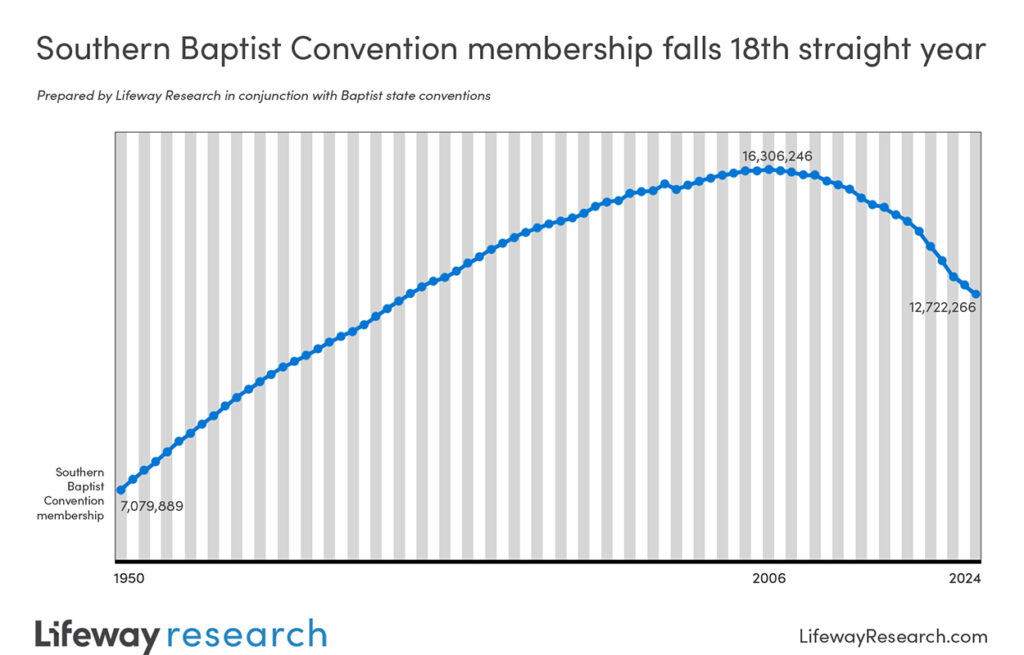
The Southern Baptist Convention lost 259,090 members in 2024, with its total membership now at 12.7 million, according to the denomination’s Annual Church Profile report, released April 30.

That’s a 50-year low. In 1975, the SBC reported 12.5 million members.

It’s also the 18th consecutive year of membership decline. In 2006, the SBC hit a peak membership of 16.3 million, and over the past two decades it has lost 3.6 million members.

But for Southern Baptists, there was some good news in the report.
About 4.3 million people attended SBC churches weekly nationwide in 2024, according to the report conducted by Lifeway Research. That means attendance is up more than a quarter-million from the previous year.

And more than 2.5 million showed up weekly for Sunday school and small-group Bible studies, up 5.7 percent from the previous year.

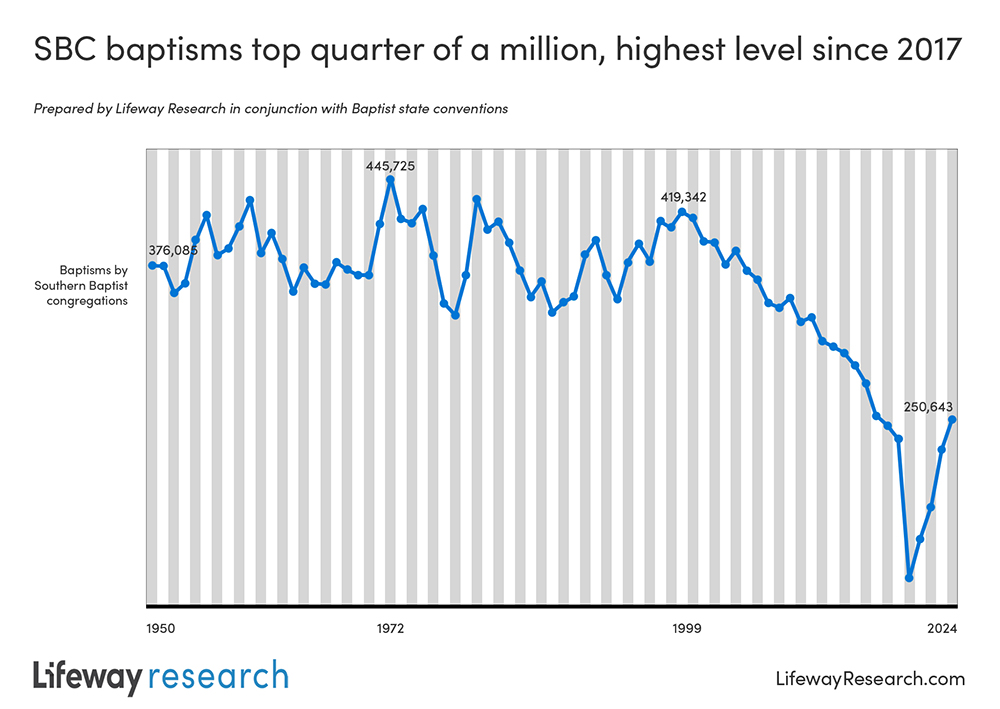
Total baptisms were up 10 percent, topping 250,000 for the first time since 2017.

“Southern Baptists love to focus on evangelism, and these ACP numbers back that up,” said Jeff Iorg, president and CEO of the SBC Executive Committee. “We rejoice that God is using Southern Baptist churches to reach people with the gospel.

“We celebrate the upward trends in baptisms that we haven’t seen in the past 30 years. These ACP results help us see that God is at work among Southern Baptists.”

The report is an annual statistical census of Southern Baptist congregations conducted by local associations and state conventions in conjunction with Lifeway. Around 7 in 10 Southern Baptist churches (69 percent) reported at least one item in the current report covering 2024, according to Lifeway.

Total reported giving to SBC churches was down about $500 million—from just over $10 billion in 2023, to $9.55 billion in 2024. Giving to missions dropped from $798 million in 2023 to $791 million in 2024, per the report.

Two-thirds of Southern Baptists 50 or older

Like most denominations in the United States, the SBC has seen declining membership in recent decades, as older churchgoing generations of Americans are replaced by younger generations that are less interested in organized religion.

The recent Pew Religious Landscape Study found two-thirds of adults who identify as Southern Baptists are 50 or older. Only 31 percent are under 50, and only 10 percent between the ages of 18 and 29. Overall, 4 percent of Americans identify as Southern Baptists, according to Pew’s study.

“The largest portion of membership declines come from churches acknowledging that certain members are gone for good and removing their names. Other drops come from churches that close or leave the convention,” said Scott McConnell, executive director of Lifeway Research.

“Newcomers to the entrances of churches definitely help, but membership will continue to decline as long as the exits remain active.”

Despite membership decline, the SBC remains a powerful institution, particularly in the South, where the denomination is known for its disaster relief work. Southern Baptists in North Carolina have repaired hundreds of homes damaged by Hurricane Helene last year and plan to continue rebuilding efforts for years.

The denomination’s seminaries also play an outsize role in theological education, with more than a quarter of seminarians in the U.S. attending the six SBC schools. The denomination’s Cooperative Program, which turns 100 this year, still raises hundreds of millions of dollars each year for missions and ministries.

Along with demographic decline, the SBC has experienced significant conflict over the past decade, with leadership turnover at several of its major agencies, feuds over politics and a sexual abuse scandal, which led to millions in legal costs and a series of reforms passed in 2022.

Those reforms, including a database listing abusive pastors, have stalled in recent years, with leaders saying, for now, the database no longer is a priority.


Mangieri named as CEO of Baptist publishing house

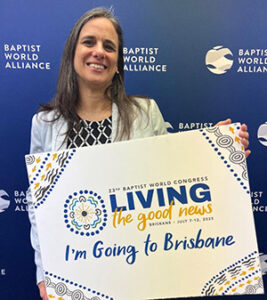
Carolina Carro de Mangieri, director of global events and fellowship for the Baptist World Alliance, has accepted the role of chief executive officer/publisher of Editorial Mundo Hispano/Casa Bautista de Publicaciones in El Paso.

Carolina Carro de Mangieri will conclude her time of service with the Baptist World Alliance following the upcoming 23rd Baptist World Congress in Brisbane, Australia, in July and assume her new role with Editorial Mundo Hispano in August.

Mangieri will conclude her time of service with the BWA following the upcoming 23rd Baptist World Congress in Brisbane, Australia, in July and assume her new role in August.

In addressing the publishing house’s board, Mangieri emphasized the importance of continuing the publishing house’s mission, adapting to technological and cultural changes without losing the essence that has characterized the organization throughout its history.

Editorial Mundo Hispano/Casa Bautista de Publicaciones was founded as the Baptist Spanish Publishing House in 1906 to provide Spanish-language Christian resources.

Mangieri will succeed Raquel Contreras-Smith, who has held the CEO position for the past 12 years.

“I have known Carolina for many years and I am confident that she is the right person to continue our tradition of publishing resources that communicate the message of Jesus Christ and that encourage and support the formation of his disciples,” Contreras said.

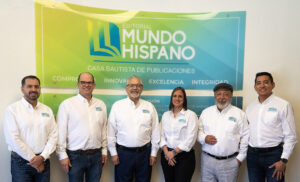
Carro de Mangieri (3rd from right) is pictured with Editorial Mundo Hispano board representatives (left to right) David Hernandez, Matt Ostertag, Gus Reyes, Carlos De La Barra and Walter Montes. Not pictured is Richard Serrano. (Photo courtesy of Editorial Mundo Hispano)

Gus Reyes, president of the publishing house’s board of directors, expressed his confidence God brought Mangieri to the position.

“We are very grateful to the Lord for having guided us to Sister Carolina Carro de Mangieri. We trust that she is the person God has provided to continue the mission of Casa Bautista de Publicaciones,” Reyes said.

Since joining the BWA in November 2004, Mangieri has helped shape the BWA’s global events strategy, strengthen member fellowship and advance the mission of BWA around the world.

“We are deeply grateful for Carolina’s faithful service and the creativity, excellence and passion she has brought to our work,” said Elijah M. Brown, BWA general secretary and CEO.

“Her leadership has fostered greater unity, richer fellowship and broader collaboration among our global Baptist family.”

Mangieri key in coordinating international gatherings

Mangieri was instrumental in coordinating numerous international gatherings over the course of her 20 years of service, including two Baptist World Youth Conferences, 15 BWA annual gatherings, four Baptist International Conferences on Theological Education and four Baptist World Congresses.

During the COVID-19 pandemic, she facilitated the transition of the 2020 Baptist World Congress—originally scheduled to take place in Rio de Janeiro, Brazil—to a fully virtual gathering in 2021.

As the most globally diverse gathering in the history of the BWA, the 22nd Baptist World Congress united more than 4,600 registrants from 146 countries across time zones and technology to experience more than 100 hours of worship, prayer, and training.

With a deep family legacy of involvement in the BWA, Mangieri first experienced a BWA gathering at age 10, observing her parents help lead the 1984 Baptist World Youth Conference in her native Argentina.

Eleven years later, she became an active participant in BWA’s global ministry herself, serving on the worship team at the 1995 Baptist World Congress in Buenos Aires.

During her tenure on the BWA staff, she has provided ministerial presence and leadership in 23 countries, assisted with the translation of BWA resources into Spanish, and represented the BWA at many conventions and conferences.

She has been supported throughout the years by her husband David and their three daughters.

“Over the past 20-plus years at the BWA, I have been profoundly blessed to serve and witness the growth and transformation of our global Baptist family,” Mangieri said. “The relationships and experiences I have gained will forever hold a special place in my heart.”

Brown asked Baptists globally to join in prayer for God’s continued blessings on her ministry.

“We celebrate Carolina’s legacy of impact and anticipate all God will continue to do through her new role with Casa Bautista de Publicaciones, a ministry that has been strengthening discipleship for 120 years,” said Brown.

“We look forward to collaborating together in the future as we live out our shared mission to impact the world for Christ.”

Compiled from news releases provided by the Baptist World Alliance and Editorial Mundo Hispano/Casa Bautista de Publicaciones.


Respond to emerging frontlines, Baptist leader challenges

ABILENE—New frontlines affecting Baptists are emerging around the world, Elijah Brown, general secretary of the Baptist World Alliance, asserted during his Pinson Lecture on Baptist distinctives at Hardin-Simmons University, April 23.

As Baptists enter the emerging frontlines to make disciples in the authority of Jesus—a reference to the earlier part of his lecture—Brown offered three ways they should proceed: with bold witness, prophetic courage and prioritizing suffering people.

Bold witness

Unreached people already number more than 3 billion, with 123,000 people born every day without access to a gospel witness.

“We are to live as missionary people,” Brown asserted, noting, “a BWA distinctive is that we believe every Baptist is a missionary.”

Brown encouraged each person to turn to a neighbor and say, “I am a missionary.”

Then, he told of a pastor in India who had pastored the church started by William Carey. The pastor burned out, resigned his position and moved across town. Having never had the option to sleep in on Sunday morning before, his daughter asked if they could try it just once.

He agreed but found himself pacing the room that Sunday morning, unsure of what to do with himself, when an elder woman knocked at his door.

Brown said she asked the pastor to pray for her, but he responded he was not presently a pastor.

“There is no other church,” she said, declaring, “As long as you live here, you will be my pastor.”

He invited her in and began a church in his living room.

The church now supports 22 missionaries across India and runs more than 2,500 in attendance.

“What if your church did that?” Brown asked.

Prophetic courage

 Prophetic courage is not the easy route, Brown said. It’s easier to “sit in silence or parrot the prevailing power.”

“But as we abide in the authority of Jesus, we can affirm that the kingdom of God is not built with nationalism,” he continued.

In 1923, the Baptist world adopted a resolution asserting Baptists throughout their history have been champions of religious liberty, Brown pointed out.

The resolution also said a union of church and state is inconsistent with religious freedom, which is based on the “spiritual principle of free choice, while the state rests upon law with an ultimate appeal to physical force.”

But, Brown asserted, “the kingdom of God is not built by nationalism, including Christian nationalism.”

The gospel isn’t advanced by demonizing or threatening those with different political views, he said. Neither is the church saved by those who “wield political power in the name of protecting the church.”

The mission of God isn’t advanced by lust of power, fear, promulgating dishonesty, state protections or “the idolatry of nationalism.

“These are not fruit of the Spirit,” Brown said.

So why do so many people of faith “christen” and “champion violence?” he asked.

Brown also asked why so many believers “bless the bullet, exalt the missile, extol nuclear arms, sanctify the invasion and if need be, pick up the sword and gun to participate themselves?”

Often, he answered, it’s not about religion, but power, arrogance or rising “xenophobic nationalism wrapped in the name of religion.”

In lament, he requested for “you and I as people of faith to work to build public peace guided by the disruptive power of the fruits of the Spirit.”

For 400 years, Brown emphasized, Baptists have held the antidote to nationalism is religious freedom for everyone, maintained by a separation of church and state.

“As we abide in the authority of Jesus, let us also affirm the kingdom of God is not built with ethno-centrism and racial identity,” Brown said.

He provided numerous examples of members of the Baptist family around the globe who have faced persecution and dehumanization from racist and ethnocentric practices.

But, “we must continue to live unapologetically for restorative racial justice as reconciled humanity … as a mark of the overflowing generosity of God’s creation,” he said.

“The antidote for racism is flourishing freedom that embraces restorative justice in God’s multiethnic church,” he said.

Prioritizing suffering people

“Jesus stands with the suffering,” Brown said. “And we long to be with Jesus.”

Jesus, the suffering servant, rose as the “Wounded Healer,” and his wounds are “deep enough to heal the wounds of the world,” Brown said.

He noted the rapid deceleration of humanitarian aid around the world in the past 100 days, noting the United States has led the effort, but other major givers have followed.

Yet, humanitarian needs around the world have accelerated with increasing violence and displacements. While many BWA congregations have stepped into the gaps to meet needs in their communities, they lack sufficient resources.

Brown pointed to the first church in Acts 2:45, who sold their property and possessions to give to anyone in need.

It was not “church needs first, other needs second,” Brown noted, but “radical hospitality.”

“Whether in our neighborhood or in the nations,” gospel generosity “was to prioritize people who are suffering,” he said.

“In a world of changing demographics, increasing urbanization, vulnerable democracies and vulnerable people, we are to go and make disciples with bold witness, prophetic courage and prioritizing suffering people,” Brown asserted.

“But the question remains: Will we live as if all authority is in Jesus?”


Live in the authority of Jesus, Baptist lecturer challenges

ABILENE—“Will you live as if all authority belongs to Jesus?” asked Elijah Brown, general secretary of the Baptist World Alliance, addressing participants of the Pinson Lectures on Baptist distinctives at Hardin-Simmons University, April 23.

Brown began his challenge to faculty, students, alumni and area pastors noting two key distinctives of Baptists.

First, he emphasized Baptists’ “commitment to read, study and follow the teachings of the Bible.”

Second, he noted Baptists’ particular passion for the final words of Jesus, the Great Commission, found in Matthew 28:18-20:

“Then Jesus came to them and said, ‘all authority in heaven and on earth has been given to me. Therefore, go and make disciples of all nations, baptizing them in the name of the Father and of the Son and of the Holy Spirit, teaching them to obey everything I have commanded you. And surely, I am with you always, to the very end of the age.”

Brown said, for months, “all authority in heaven and on earth is in Jesus” had been resonating with him.

“Power and influence are seductive” in this world, but they don’t last. Because all authority belongs to Jesus, neither churches nor individual believers need to worry about building power and authority here, Brown asserted.

Pandemics, disease, demons, sin, governments and the like exercise some authority, but these are “time-limited” authorities, he said.

“Let us not give in to the power of time-limited authorities. They are a smoke, a mask of emptiness,” he continued,noting no power, authority or doubt can overcome Jesus.

“There is no political party, no politician, no principality. There is no appeal to false protection, prestige or pleasure. There is no lie that can overcome the authority of Jesus Christ.”

Jesus alone must be the source of Christians’ authority, identity and being, he contended.

Besides, Brown asserted, the church has learned in 2,000 years the time will come, no matter how terrible a situation is in the moment, when “wars will end and politics will change.”

The church also has learned the time comes when every “political, cultural and social trajectory, even those that seem to benefit the church, will change.”

“The call to relationships of gospel witness and just peace supersedes political boundaries. Even when it is difficult, most especially when it is difficult, we must work to build relationships and give gospel witness,” because the seeds planted by that witness, through the Holy Spirit, will yield fruit in the proper time, he proclaimed.

Christ followers are not time-limited, but eternally bound, so “let us live by the time and authority of eternity.”

“All authority in heaven and earth has been given to Jesus,” he repeated.

The kingdoms of this world will crumble—including their economic exploitation, rampant militarism and ongoing oppressions, he said.

But, Brown admonished, let the church live, in the words of Scott McKnight, as “dissident disciples” whose politics are “a politics for others,” joy-filled, bearing “witness to the reality that all authority on heaven and earth is in Jesus,” Brown said.

“Therefore, go and make disciples.”

Looking toward “the nations,” and making disciples, Brown illuminated emerging frontlines.

Changing demographics

The Baptist family is shifting to outside of Europe and North America.

Baptists have declined by 1 percent in Europe and the Middle East and 5 percent in North American in the past 10 years, while seeing growth of 32 percent in the Asian Pacific, 13 percent in Latin America and 112 percent in Africa.

“Are we building toward a Baptist identity as a worldwide movement with worldwide concerns with our largest demographic base in Africa?” Brown asked.

Africa and India are where the greatest population increases also will be seen in the next 30 years, with growth of more than 1 billion people expected.

Increased urbanization

A first in history, 55 percent of the world lives in urban areas. By 2050, 68 percent of the world’s population will live in cities, including megacities with more than 10 million inhabitants, such as Lagos, Nigeria; Beijing, China; Mexico City, Mexico; and Los Angeles.

In 10 years, the number of megacities will grow from 33 to 39. Asia will be home to 20 of the 39 megacities. Twenty megacities will be in a country where fewer than 10 percent of the population claims any form of Christianity, and 16 of the megacities will be in countries with fewer than 25,000 Baptists in the entire country.

“The future is urbanization, and it will be disruptive,” because megacities will have an outsize influence on culture, economics and the extent to which the world lives in peace, Brown noted.

Vulnerable people and democracies

More people are on the move today than at any time in history, with more than 100 million forcibly displaced and 281 million international migrants.

One in every four Baptists faces persecution, war, violence and hunger—living and ministering in the most vulnerable contexts. Even with recent improvements, great gaps in resources remain.

The average GDP among Baptists per region in U.S. dollars is:

  • Africa—$1,482
  • Asia Pacific—$18,425
  • Caribbean—$9,267
  • Europe and the Middle East—$21,811
  • Latin America—$7,279
  • North America—$49,683

“The world is becoming increasingly vulnerable,” Brown noted. “And as a result, it will become increasingly violent. Dangerous undercurrents are at work, and some people of faith are allowing themselves to be either too complacent or too associated with one political party or the other.”

Brown offered three ways to respond to these emerging frontlines in the second half of his lecture.


Conservative seminary training gaining ground outside U.S.

Providing theological education and ministry training is a challenge for Baptists in many places around the world, but Global Leadership Development is making it easier.

Southern Philippines Baptist Theological Seminary is one example.

Southern Philippines Baptist Theological Seminary

Edgar Aungon, president of the seminary, reported on how Global Leadership Development has helped his school.

The seminary started as an idea in 1953, when Southern Baptist Convention Foreign Mission Board missionaries Elaine Crotwell and Clyde Jowers saw the need for a training program for pastors in the Philippines, Aungon said.

Edgar Aungon, president of Southern Philippines Baptist Theological Seminary, addressing attendees of the Global Leadership Development Pastor’s Consortium, April 14, 2025. (Photo: Eric Black)

“Jowers was appointed as the first director of the Davao Baptist Bible School” in 1955, Aungon added, noting Baker Cauthen was then-executive secretary of the Foreign Mission Board.

Between its founding and 1982, the Bible school developed into a seminary with the financial and personnel assistance of the Foreign Mission Board, later to be renamed the International Mission Board.

In 1996, the IMB changed its mission strategy and “withdrew their financial support and teaching personnel,” Aungon said. “My seminary was left to fend for itself.”

In an effort to earn enough income to continue providing the theological education needed in the Philippines, the seminary started offering general education as early as elementary and kindergarten. Unfortunately, general education became the focus, causing theological education to suffer.

Aungon said there are 1,800 Southern Baptist churches in the Visayas island group and on Mindanao. Of their pastors, 19 to 20 percent are trained, he added.

Global Leadership Development “helped the seminary … develop a Master of Theology degree and provided professors to teach the 36-hour degree,” David Mahfouz, pastor of First Baptist Church in Warren and a Global Leadership Development ambassador, explained in an email.

How Global Leadership Development helps

When asked how Global Leadership Development helps seminaries strengthen and grow, Mahfouz said the effort does so in several ways.

Global Leadership Development ambassador David Mahfouz, pastor of First Baptist Church in Warren, addressing attendees of the GLD Pastor’s Consortium at Southwestern Baptist Theological Seminary in Fort Worth, April 14, 2025. (Photo: Eric Black)

“We provide consortiums that they join. They agree to recognize each other’s academic credits and maintain parity among their degree offerings. Also, they can share faculty and syllabi, and we provide staff development,” Mahfouz said.

“We send visiting professors to teach classes. They go at their own cost. The seminary provides housing for them,” he continued.

“We provide digital resources through the deployment of our Alexandria Library, [which contains] 2 million books and journal articles.”

“We identify faculty … and help them gain access to further academic studies by raising scholarship funds. We also identify the top 2 percent of students at a seminary and recruit them to pursue higher academic degrees,” Mahfouz explained.

Much of this is facilitated with the support of Champion Churches. Mahfouz’s church became a Champion Church in partnership with Southwestern Baptist Theological Seminary and the Baptist seminary in Lisbon, Portugal, in 2016.

Growth of Global Leadership Development

In August 2021, Global Leadership Development counted 90 related seminaries with an estimated combined enrollment of 27,000 students. That same year, Mahfouz reported 354 Champion Churches partnering with Global Leadership Development.

Mahfouz reported by email the number of Champion Churches and partner ministries is now 250. Among those partners are Baptist associations in Texas such as Enon Baptist Association and Golden Triangle Network, along with International Evangelical Association, Kingdom First Ministries and Baptist Distinctives. The Association of Korean Southern Baptist Churches also is a partner.

Though the reported number of Champion Churches has decreased since 2021, the number of related seminaries has grown to 140, with an estimated combined enrollment of 42,000 students.

Theological perspectives

Representatives of the partners gathered April 14 for a meeting of the Global Leadership Development Pastor’s Consortium hosted by Southwestern Baptist Theological Seminary in Fort Worth.

Jimmy Draper, retired president of the Southern Baptist Convention Sunday School Board (now LifeWay Christian Resources), delivered the opening message of the Global Leadership Development Pastor’s Consortium at Southwestern Baptist Theological Seminary in Fort Worth, April 14, 2025. (Photo: Eric Black)

Jimmy Draper, former pastor of First Baptist Church in Euless and retired president of the SBC’s Sunday School Board (now LifeWay Christian Resources), addressed attendees by asking, “How are we going to fulfill the Great Commission?”

With an examination of Acts 16:6-10—the story of God forbidding Paul to preach in Bithynia—Draper concluded God doesn’t expect Christians to figure out how to fulfill the Great Commission, but to listen to God and obey what God tells them to do.

“God had a plan that included the whole world,” Draper said after suggesting Lydia, who became a follower of Jesus after Paul followed God’s call to Macedonia instead of Bithynia, was instrumental in evangelizing Asia through her salespeople.

Following Draper, Matthew Scott, global digital director for International Evangelical Association, showed an instructional video about disciple-making by Billie Hanks Jr., IEA’s founder and president.

Saying disciple-making is the weak link and the Achilles’ heel in completing the Great Commission, Hanks distinguished between discipleship and disciple-making. Discipleship happens in groups. Disciple-making is one-on-one. Additionally, disciple-making is “intentional, relational, highly specific.”

Along with other markers of disciple-making, Hanks noted women are to disciple women, and men are to disciple men for two reasons. One, men understand men’s spiritual needs better than women do, and vice versa. Two, men discipling men and women discipling women guards against temptation and inappropriate relationships.

Multiplication is a result of disciple-making done right, Hanks said.

Global Leadership Development started in 2012 as the Patterson Center for Global Theological Innovation, named for former Southwestern Seminary President Paige Patterson. A Christian Index article described it as “a Conservative Renaissance in seminaries around the world.”


Pressley nominee for second term as SBC president

ROCKWALL (BP)—North Carolina pastor Clint Pressley will be nominated for a second term as president of the Southern Baptist Convention, Rockwall pastor Michael Criner announced April 13.

“It is my honor to nominate Clint Pressley for a second term as president of the Southern Baptist Convention,” Criner, senior pastor of First Baptist Church of Rockwall, wrote in a statement to the Biblical Recorder announcing his intent to nominate Pressley during the 2025 SBC annual meeting June 10-11 in Dallas.

“While this renomination is no surprise, it is coming after sincere prayer and ongoing conversations with a wide number of SBC pastors.”

Pressley, who has served Hickory Grove Baptist Church in Charlotte as senior pastor since 2010, has emphasized Southern Baptists’ confession of faith and cooperative ministry model during his first term as SBC president.

Pressley plans to further emphasize confession and cooperation around the theme of “Hold Fast,” based upon Hebrews 10:23-24, at this summer’s SBC meeting. Both the Baptist Faith & Message and the Cooperative Program are celebrating their 100th anniversaries this year.

Criner added Pressley has represented Southern Baptists well in his first term, while emphasizing the SBC’s core tenets of confession and cooperation.

“During his first year, Clint Pressley has displayed clarity, conviction and courage,” Criner wrote. “One of the most admirable qualities of Clint is that in every environment where he has represented the SBC, he has joyfully pointed us to the very best of who we are and what we do: our confession and our cooperation for/towards the Great Commission.

“Clint has been a stabilizing voice and worked strategically with our leaders, but also lent his ear to the everyday pastor. I hope others will join me in voting for Clint Pressley this June in Dallas.”

According to Annual Church Profile data and Baptist State Convention of North Carolina records, Hickory Grove reported 77 baptisms and averaged 2,790 in worship attendance in 2024. The church reported $9,880,859 in total undesignated receipts in 2024, with $274,056 (2.77 percent) given through the Cooperative Program.

Hickory Grove also gave $259,963 to the Lottie Moon Christmas Offering for International Missions and $75,685 to the Annie Armstrong Easter Offering for North American Missions in 2024.

Pressley was elected the 65th president of the SBC in June 2024 at the annual meeting in Indianapolis.

A native of Charlotte, Pressley joined Hickory Grove as a teenager before earning a bachelor’s degree from Wofford College in Spartanburg, S.C., and a master of divinity from New Orleans Baptist Theological Seminary. He currently is pursuing a doctor of ministry from Southern Baptist Theological Seminary in Louisville, Ky.

Pressley pastored two churches in Mississippi before returning to Hickory Grove in 1999 as senior associate pastor of preaching. In 2004, he was called as senior pastor of Dauphin Way Baptist Church in Mobile, Ala. In 2010, Pressley returned to Hickory Grove as co-pastor and was installed as senior pastor in 2011.

Pressley also served in a variety of other leadership roles in Baptist life, including vice president of the SBC Pastors’ Conference in 2013, first vice president of the SBC from 2014 to 2015, and as a trustee of Southern Baptist Theological Seminary from 2015 to 2025, which included a stint as chairman. He currently serves on the board of directors for the Baptist State Convention of North Carolina.

He and his wife Connie, the daughter of a Southern Baptist pastor, have two sons.


Volunteers clean homesites, share faith in Oklahoma

STILLWATER, Okla.—Texans on Mission volunteers spent two weeks responding to needs after wildfires tore through Stillwater, affecting about 200 homes in the area and 74 campers at nearby Lake Carl Blackwell.

While Texans on Mission teams battled high winds and blowing ash as they helped survivors sift through the ashes for valuables, the final day was markedly different.

Texans on Mission used heavy equipment to clear homesites after wildfires swept through Stillwater, Okla, (Texans on Mission Photo / Taryn Johnson)

A series of stormfronts dumped rain on the volunteer crews, turning the ash into a fine mud that caked onto their protective suits as they worked.

Ernest McNabb was unit leader for the disaster relief team, working primarily with members of Paramount Baptist Church in Amarillo. He said his team was responding to a fire scene that was “really kind of crazy.”

“The fires that came through here in Oklahoma, in this area, they acted like a ball of fire that was just bouncing around from house to house,” he explained. “And it (the fire) would just land on a house and burn it down, and then it would move on to another house.”

McNabb said Texans on Mission teams had “been cleaning up the ash and getting the metal and stuff out of it. It’s just really a mess. These people, they lost everything.”

Volunteers worked “in the mud and in the ash and in the rain … just trying to salvage a little memento or two,” he said.

In addition to cleaning homesites, the team also cleared burned trees.

“In the week or so we’ve been here, we’ve probably cut down 120, 130 trees that have burned up,” McNabb said.“So, it’s a lot of cleaning up, getting them ready to rebuild, and a lot of tree trimming. And it’s really, really sad.”

‘Give them a little bit of hope’

When asked about the impact on survivors of the fires, Amarillo team member David Pinales, a retired firefighter, became emotional.

“Well, I heard about the fires, but I had no idea that it was to this extent,” he said. “This is my first full year of deployment … and this has been a real eye-opening. …”

He paused, choked with emotion, before continuing: “I can’t imagine what these people think, and I can’t imagine what the people living next door to all this devastation must feel. You know, all their neighbors and friends that quite possibly may not even move back.

“Lives have definitely been changed for a long time. And I’m just really happy that maybe through the little bit of work that we do that we can give them a little bit of hope. I’m really thankful that the Lord is able to use us to do that.

“And we may never say one word to them, but when they come and they see what we have done, we’re hoping that they see the love of Jesus through that work.”

‘My spirit’s been so blessed’

Working in Stillwater marked the first disaster relief deployment for Rhetta and R.J. Rogers of Lubbock.

“I was retiring, and I needed to find something to do,” he said.

A friend at church, Brad, operates a Texans on Mission skid steer. Brad recommended R.J. consider volunteering for disaster relief, and he signed up.

Then Rhetta retired the day before they departed for Oklahoma. She had been a hairstylist for 48 years and didn’t plan to retire.

“I thought I would do it until I was 100, because I loved it,” she said. “And so then he found this and I thought, ‘Oh, I could do that.’

“I retired on Thursday, and we deployed out on Friday, and I think it’s so cool to be deployed.”

She called the fire’s impact “amazing—how fires just jump around different houses. (Someone) was telling me a while ago that the family in this house said it was like a giant fireball, that it was just a ball that bounced from house to house.

“I feel so sorry for them and glad that we can be here to at least share our faith and spirit,” she said. “And my spirit’s been so blessed.”

McNabb called the volunteer response “our calling to help people in need, and it doesn’t make any difference where they are, what the situation is, we’re willing to be the hands and feet of Christ and come up and serve.

“As one of our chaplains told us the other day: ‘We’re also the voice of Christ.’ So, we get to talk to homeowners and witness to them and tell them … Christ still loves them and that things will be better.”


Baptists watch five religious liberty cases

NASHVILLE (BP)—Five cases addressing religious liberty ranging from parental rights to age verification on pornographic sites will be decided when the Supreme Court announces its decisions in the coming months.

The Ethics & Religious Liberty Commission of the Southern Baptist Convention has released explainers for all cases and their potential implications for the future. The entity also joined several amicus briefs, including one alongside both Baptist state conventions in Texas.

“The number of high-profile and important cases in this term speaks to the broad scope of the work done by the Ethics & Religious Liberty Commission,” said ERLC President Brent Leatherwood.

“In our legal strategy, we are continually looking for opportunities to advance the cause of life, advocate for religious freedom, and proclaim the goodness of God’s design for marriage and family.

“This year is no different. Whether it’s defending the ability of states to protect children from radical transgender interventions or supporting online age verification laws that put needed barriers between minors and harmful pornographic material or fighting for the ability of religious ministries to serve others consistent with their deeply held convictions, we consider it a privilege to communicate the principles of our convention of churches before the nation’s highest court.”

Free Speech Coalition, Inc. v. Paxton

Age verification is crucial in protecting minors from sexually explicit material online, argues a Texas state law from June 2023 that requires websites capable of distributing “sexual material harmful to minors” to include such a step.

NetChoice, LLC, a lobbying organization representing more than 35 tech companies, is leading the push against the law. The group’s argument is that such steps violate the companies’ free speech and instead the courts should apply “strict scrutiny” standards typically used by the federal government.

That standard, explained the ERLC, is the same one used to enforce federal laws as they relate to religious liberty. The thread attempting to be drawn is hardly accurate, according to the ERLC and others.

“As originally understood, the First Amendment existed primarily to protect political speech and speech on matters of public concern,” stated an amicus brief presented by the ERLC, the Baptist General Convention of Texas and the Southern Baptists of Texas Convention. “It was not originally understood to protect obscene expression, especially when such expression might be received by minors.”

U.S. v. Skrmetti

A Tennessee bill approved in March 2023 and going into effect that July prohibited all medical procedures intended to “affirm” gender identity for those under 18. “Necessary protection” came from the bill, said the ERLC Explainer, from procedures like hormone therapy, puberty blockers and surgery.

The Biden Administration’s Department of Justice joined the plaintiffs—three transgender individuals, their parents and the American Civil Liberties Union—and won an injunction that continued the allowance of hormone therapy and puberty blockers. A Tennessee appeal, though, placed the law back to full effect.

There are 27 states with laws in place prohibiting doctors from performing such surgeries and procedures on minors. Many of those are undergoing litigation, with the outcome of Skrmetti helping determine if they remain in place.

Medina v. Planned Parenthood

A 2018 executive order by South Carolina Governor Henry McMaster disqualified abortion providers from participating in the state’s Medicaid program under the position the state should not be forced to support such organizations even if funds didn’t go directly to abortions.

In effect, it defunded Planned Parenthood in that state. Several Medicaid beneficiaries objected and filed a lawsuit saying that federal law guaranteed their right to choose any qualified provider. Lower courts agreed with them, setting up the state’s appeal that is supported in a brief by several groups, including the ERLC.

The case could have far-reaching implications, explained the ERLC, on how states administer Medicaid as well as the general discussion of taxpayer-funded abortion.

“As we saw in the aftermath of Dobbs, some states are making laudable efforts to protect preborn children, provide legitimate health care for mothers and foster a culture of life. South Carolina’s efforts to exclude abortion providers from its Medicaid program reflect those efforts,” said Miles Mullin, ERLC vice president, in comments shortly after the case was argued before the Supreme Court.

Catholic Charities Bureau v. Wisconsin Labor & Industry Review Commission

In June 2023 the ERLC joined an amicus brief that included the Minnesota-Wisconsin Baptist Convention in support of religious liberty at the state’s Supreme Court.

Central is the work of the Catholic Charities Bureau and terminology as to it being “charitable” or “religious.”

Wisconsin offers an unemployment insurance program to provide relief for those out of work. Religious organizations can request tax exemptions for paying into the program. The Catholic Charities Bureau did this to provide funds for an alternative program not funded by taxpayers.

The organization was denied its request. An appeal to the Circuit Court of Douglas County, Wisc., ruled against the group, saying their work was not religious in nature since their ministry included non-Catholic and non-church members.

The Bureau argues that their charitable actions are an extension of their religious beliefs.

“By imposing the state’s view of what it means to be religious, based on organizational structure and the who and how of charitable service, the Commission and the appeals court are prescribing a single form of religious orthodoxy in the context of the state unemployment law,” said the brief. “That violates the U.S. Constitution’s Establishment and Free Exercise Clauses, together with the well-recognized ‘church autonomy doctrine’ that is grounded in both Clauses.”

Mahmoud v. Taylor

More than 300 parents across multiple faiths protested a decision by a Maryland school board. Their case will be heard in front of the Maryland Supreme Court on April 22.

In 2022, the Montgomery County Board of Education introduced a policy that required elementary schoolchildren to participate in instruction on gender and sexuality without parental notice or the ability to opt out over religious objections. After initially indicating such parental objections would be honored, the board reversed its position.

In an amicus brief filed last October, the ERLC and others highlighted the rights of parents in the upbringing and education of their children without being coerced to go against their religious beliefs.

Furthermore, schools should respect diverse religious beliefs and the Free Exercise Clause in protecting parents from government-compelled ideological indoctrination, the brief argues.