The 2021 Cooperative Baptist Fellowship general assembly will be held virtually for the second consecutive year, due to changes in the status of the originally planned venue in Washington, D.C.
Owners of the Washington Marriott Wardman Park Hotel in Washington, D.C., the previously announced venue, decided to close the hotel to make the site available for other uses.
At the same time, organizers are exploring in-person participation by local CBF congregations in partnership with CBF state and regional organizations. To provide better possibilities for in-person participation locally, the dates for the assembly are shifting from the week of July 4 to August 25-28.
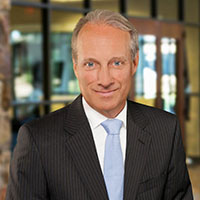
Paul Baxley
CBF Executive Coordinator Paul Baxley pledged the 2021 general assembly will offer “an even more comprehensive virtual experience than we offered last year, while also finding ways to provide in-person gatherings in congregations in partnership with CBF’s states and regions.”
“Because it is hard to predict now exactly what the (pandemic) conditions will be like in late August, we recognize that the levels of in-person opportunities will vary in different parts of our fellowship,” Baxley acknowledged.
Organizers are exploring whether local congregations can host in-person general assembly gatherings that fit their needs, capacity and COVID-19 safety protocols. These gatherings may be regional or joint meetings with other churches in the city or area.
CBF, in partnership with CBF state and regional organizations, will provide ideas, resources and training to help make these gatherings meaningful points of connection for all Cooperative Baptists, organizers said.
“Just as congregations across our Fellowship are discovering new ways of worship and study that includes both in-person and virtual opportunities, our general assembly will do the same this year,” Baxley said.
“In some ways I do grieve that a combination of circumstances means we cannot all be in one place for the second year in a row. I already look forward to our 2022 general assembly. But I also believe that this innovative approach will allow us to invite many people to experience the life of our fellowship, and along the way, we will discover new ways of gathering and strengthening one another.”
Appeals court rules in favor of Pressler accuser
March 2, 2021
HOUSTON (RNS)—A state appeals court ruled a sexual abuse lawsuit could go forward against Paul Pressler, a former judge and influential Southern Baptist who helped lead what supporters called a “conservative resurgence” in the denomination in the 1970s and 1980s.
Gareld Duane Rollins Jr., who met Pressler in a Bible study when he was 14, sued Pressler in 2017, accusing the Southern Baptist legend of sexually abusing him for years, including an alleged rape in 1980. The alleged abuse continued until Rollins was in his 30s, according to the lawsuit.
Rollins, who also served as an assistant to Pressler, has alleged that the abuse led to a lifetime of struggles with addictions and troubles with the law.
Pressler, 90, has denied any wrongdoing.
A lower court dismissed the sexual assault claims in Rollins’ suit three years ago, citing the statute of limitations, but Rollins’ lawyers argued the trauma from abuse prevented him from realizing the alleged sexual relationship had been non-consensual, according to the appeals court ruling.
The appeals court ruled Feb. 25 that Pressler and other defendants in the case “did not conclusively negate” the argument made by Rollins’ lawyers and sent the lawsuit back to a lower court.
Paul Pressler (right) is depicted in a stained glass window that has been removed from Southwestern Baptist Theological Seminary. (RNS Photo courtesy of Don Young Glass Studio)
In 2003, Rollins and Pressler had “an altercation in a Dallas hotel room,” according to court documents, leading Rollins to sue the Baptist leader for assault. That lawsuit was settled, with Pressler agreeing to pay Rollins $1,500 a month for 25 years while Rollins agreed to keep the settlement and the 2003 altercation confidential. Rollins credited the counseling he received in prison for helping him realize he had been a victim of abuse.
Pressler and Paige Patterson, who was fired as president from Southwestern Baptist Theological Seminary in 2018 for mishandling abuse claims, were key leaders in what is remembered by Southern Baptists as the “conservative resurgence.” The movement wrested power in the nation’s largest denomination from more moderate Baptists, who remember it as a “fundamentalist takeover.” The two were once among SBC leaders commemorated in a series of stained-glass windows at Southwestern Seminary.
Those windows were removed after Paige’s firing.
The appeals court also ruled that the Southern Baptist Convention, which is also being sued by Rollins, had failed to negate the “unsound mind tolling” argument case made by the defense.
“The convention was not involved or connected in any way with the harms that Mr. Rollins alleges,” said James P. Guenther, attorney for the Southern Baptist Convention. “Additionally, the convention did not have control over or any duty to control Mr. Pressler or any of the other defendants.
“So, none of the facts necessary to assert any valid claim against the convention is present. The convention is simply not responsible if another defendant in this case engaged in any wrongdoing. In any event, we continue to monitor the developments in the case.”
Task force to study SBC polity regarding trustee misconduct
March 2, 2021
NASHVILLE (BP)—A dispute about whether a Southern Baptist entity can suspend trustees for misconduct will be studied by a task force formed by the SBC Executive Committee’s committee on missions and ministry.
Rob Showers, chairman of the committee on missions and ministry, announced the task force’s formation Feb. 23 during a plenary session of the Executive Committee. He said more time was needed to study the issue, which had sparked a brief but spirited discussion during a committee meeting earlier in the day.
The disagreement arose last fall, when Southwestern Baptist Theological Seminary suspended trustees Charles Hott and Thomas Pulley while investigating allegations of misconduct. It had played out largely in letters between attorneys representing the Executive Committee and those representing Southwestern. Then it spilled into the Executive Committee’s February meeting, and now it will continue in the form of a task force.
Letters from attorneys
In a letter to Southwestern last November, Executive Committee attorneys wrote suspension was “equivalent to removing the trustees from office”—a right reserved solely for the SBC and exercised by messengers to annual meetings. According to the letter, the Executive Committee’s officers wanted Southwestern to rescind the suspensions or acknowledge “the action was null and void.”
In reply, attorneys representing Southwestern said the suspensions not only were allowed by the seminary’s bylaws, but also were necessary to allow the entity to govern itself, and accused the Executive Committee of overreach.
Adam Greenway
Southwestern President Adam W. Greenway told the Biblical Recorder the issue was “bigger than Southwestern,” and went “to the heart of historic Southern Baptist polity.”
After the task force was announced, Greenway told Baptist Press he was “hopeful for constructive engagement by this task force … with the key stakeholders related to clarifying and strengthening understandings of our polity, entity governance and trustee accountability in any and every way in which we can better serve our convention of churches.”
Showers, who will appoint members of the task force, said his desire is to get input from various entities. He said there wasn’t time to reach a decision during the two-day Executive Committee meeting.
“We needed to talk with seminary presidents, with [general counsels] of all the [entities] … and get everybody’s opinion,” Showers said. “It’s not a complicated question, but it has a lot of ramifications.”
Lawsuit settlement included resignations
Hott and Pulley were suspended after Southwestern and Baylor University filed suit against the Harold E. Riley Foundation, alleging they helped lead a “secret coup” to “seize control” of the charitable foundation—altering its purpose, stripping the schools of their rights and status as beneficiaries and misappropriating assets worth millions of dollars.
The Texas attorney general intervened in the case on behalf of the schools. The lawsuit was settled Feb. 8, after several days of testimony in a temporary injunction hearing. The settlement effectively returned control of the Riley Foundation to the schools.
Under terms of the settlement, the foundation’s trustees—including Hott and Pulley—resigned from those positions and agreed “not to seek or accept” future employment by or service to any SBC entity or Texas charity.
Fellow Riley Foundation trustees Mike Hughes, a former vice president at Southwestern who was the Riley Foundation’s president, and Augie Boto, former executive vice president of the SBC Executive Committee, agreed to the same terms.
Pulley already had resigned his position on the Southwestern board. As part of the settlement, Hott acknowledged that he was “no longer a trustee” of the seminary.
More correspondence
But even after the specific issue had been resolved, the dispute continued—including more memos and letters as the Executive Committee meetings approached.
In a letter sent Feb. 21, Southwestern’s attorneys wrote to Executive Committee members saying the school did not remove the trustees, and that the suspensions were allowed “in accordance with its governing documents and parliamentary procedure to address trustee misconduct.”
The suspensions, according to the letter, were “fully authorized by the Seminary’s Bylaws in connection with allegations of trustee misconduct,” and “were in no way contrary to any bylaws of the Southern Baptist Convention.”
But in a letter sent Feb. 19 to Executive Committee members in preparation for their meeting, the Executive Committee’s attorneys continued to assert that suspension equals removal. Showers, who is an attorney from Virginia, told Baptist Press he shares that opinion.
“Suspending with[out] voting rights, by any state law, I believe would be removal, and so do our attorneys,” Showers said.
The letter sent to Executive Committee members by Southwestern also claimed that last fall, the school “discovered that Mr. Boto was communicating with” the Executive Committee’s attorneys. It noted that despite Boto’s past employment history, he was “not a neutral actor in this case.”
Task force to seek a ‘clear path’ forward
In the Feb. 19 letter, the Executive Committee’s attorneys wrote they had been contacted last October by Hott, who said he had been given their contact information from Boto. Hott, they wrote, told them he and Pulley “were expecting to be excluded” from an upcoming meeting of Southwestern’s board of trustees.
According to Showers, the task force’s focus will be to determine a “clear path” forward.
“Where there is trustee misconduct,” he said, “we need to figure out: how do we balance the sole membership interest of the SBC with the ability of entities to manage their own affairs and deal with that specific (issue of trustee) misconduct.”
The task force would report to the committee on missions and ministry either at the next Executive Committee meeting or at a special called meeting.
“The question comes when discipline doesn’t work and you’ve got a really bad actor and you can’t wait for the [SBC annual meeting],” Showers said. “What do you do? And that’s really the question.”
SBC Executive Committee disfellowships four churches
March 2, 2021
NASHVILLE (BP)—The Southern Baptist Convention Executive Committee disfellowshipped four churches Feb. 23—two for their stance on homosexuality and two that employed sex offenders.
Towne View Baptist Church in Kennesaw, Ga., and St. Matthews Baptist Church, Louisville, Ky., were disfellowshipped for affirming homosexual behavior. Antioch Baptist Church in Sevierville, Tenn., was dropped for employing a pastor who confessed to two counts of statutory rape. West Side Baptist Church in Sharpsville, Pa., was disfellowshipped for employing as its pastor a registered sex offender.
The decisions came during an executive session following the recommendations of the SBC Credentials Committee. The decisions were announced in a plenary session at the close of the Executive Committee’s two-day meeting in Nashville.
The SBC empowered the Credentials Committee in 2019 to make inquiries and recommendations for action regarding instances of sexual abuse, racism or other issues that call into question a church’s relationship with the SBC.
“We take no pleasure in recommending that a church is not in friendly cooperation with the convention,” Credentials Committee Chairman Mike Lawson told Baptist Press. “We would like nothing more than for all our churches to be in harmony on such vital issues. But when the available information shows clearly that we are not, it is necessary to take action.
“We are grieved, but we believe it was the right decision to recommend and will continue to pray for all involved.”
The committee said both Towne View and St. Matthews have membership and leadership standards that “affirm homosexual behavior” and do not have a faith and practice that closely identify with the 2000 Baptist Faith and Message. The committee said Antioch and West Side do not behave “in a manner that is consistent with the convention’s beliefs regarding sexual abuse.”
Towne View Baptist
Towne View Pastor Jim Conrad told Baptist Press shortly after the vote that he regrets being disfellowshipped and will now evaluate the church’s relationship with the Georgia Baptist Mission Board and the Noonday Association.
“We have not been notified of (the Executive Committee’s) decision, but we regret it,” he said. “We are grateful for our relationship with the churches of the Southern Baptist Convention over the history of our church, and we remain committed to share God’s love in and through Jesus with everybody and to welcome anybody who can profess Jesus as Lord into the fellowship of our church.”
Earlier this month, Conrad told other news outlets Towne View had been notified the Credentials Committee would be recommending to the Executive Committee that it be disfellowshipped.
Towne View made the decision to accept a male homosexual couple with their three adopted sons who sought membership there in October 2019, Conrad has said, and at the time lost 30 percent of its membership. But he remains committed to his decision.
“We see them, as all of us, as children of God created in the image of God, and anyone who can profess Jesus as Lord should be welcomed into our church,” he said.
St. Matthews Baptist
The Kentucky Baptist Convention had disfellowshipped St. Matthews in 2018 over its support of the Cooperative Baptist Fellowship and its stance toward LGBT issues. The church had continued its affiliation with the SBC.
St. Matthews Pastor Greg Barr wasn’t available for comment today, but has previously described the decision by the KBC as “disheartening.”
“The Kentucky Baptist Convention had an opportunity to demonstrate to a divided nation that we do not have to agree on everything in order to love each other and partner together in carrying out the mission Jesus called us to. Unfortunately, the convention chose a different course,” Barr told the Louisville Courier-Journal. “Our church believes that unity and difference of opinion can co-exist in the service of our Lord.”
Antioch Baptist
Antioch Baptist employs as its pastor John Randy Leming Jr., who pleaded guilty to two counts of statutory rape for sex with a 16-year-old congregant when he pastored Shiloh Baptist Church in Sevier County. He pleaded guilty in 1998 to the offenses that occurred in May and June of 1994, when he was 31, and lost his appeal of the concurrent 18-month sentences he deemed harsh.
Leming has served at Antioch since March 2014, according to the SBC Annual Church Profile. He could not be reached for comment.
West Side Baptist
West Side Pastor David Pearson is listed on the National Sex Offender registry for his 1993 conviction of aggravated criminal sexual assault of a child in Denton. Contacted by Baptist Press regarding the Executive Committee’s action, Pearson said he had no comment.
West Side Baptist Church previously was disfellowshipped by the Baptist Resource Network of Pennsylvania/South Jersey but continued to affiliate with the SBC.
The SBC is in the process of amending its constitution to specify sexual abuse as a grounds for a church to be disfellowshipped, but the move already is allowed because of other SBC measures regarding sexual abuse.
Messengers to the SBC annual meeting approved the constitutional amendment in 2019, but constitutional amendments require approval in two successive annual meetings for adoption. The 2020 SBC Annual Meeting was canceled due to the COVID-19 pandemic. Messengers are expected to vote on the amendment for a second time at the 2021 SBC Annual Meeting in June in Nashville.
The proposed amendment on sexual abuse would add a section to Article III of the SBC Constitution defining a “cooperating church” as one that “has not been determined by the Executive Committee to have evidenced indifference in addressing sexual abuse that targets minors and other vulnerable persons and in caring for persons who have suffered because of sexual abuse.”
Greear: Political division distracting Southern Baptists
March 2, 2021
NASHVILLE, Tenn. (RNS)—Southern Baptist Convention President J.D. Greear called out fellow Baptists on Feb. 22 who he said were sowing dissension and lies in the denomination.
Greear, who pastors The Summit Church, a North Carolina megachurch, defended his three years as the denomination’s president and the convention’s growing diversity. But political divides were distracting the convention from its mission work, he said.
“We are not, at our core, a political activism group,” he said in an address to the SBC Executive Committee. “We love our country, but God has not called us to save America. He’s called us to build the church and spread the gospel, and that is our primary mission.”
In recent months, Southern Baptist leaders have been embroiled in a debate over critical race theory, an academic framework that seeks to explain systemic racism. Leaders of the denomination’s seminaries labeled critical race theory as incompatible with the SBC’s statement of faith.
That led several prominent Black Southern Baptist pastors and congregations to announce they were leaving the denomination.
The gospel demands diversity
Greear called Southern Baptists to focus on the gospel instead of things that divide them. And the gospel, he said, demands diversity.
“If we are going to be gospel-above-all people, it means that we will be a church that engages all of the peoples in America, not just one kind,” he said. “And that’s hard. Bringing together people of different backgrounds and cultures and ethnicities into the church creates challenges. Anybody that says it’s not hasn’t actually done it.”
While he said that he agreed with some of the concerns about critical race theory, he also lamented that criticism of it had alienated people of color, and he pledged to work harder on racial reconciliation.
Some Southern Baptist leaders, including Greear and ethicist Russell Moore, have been accused of leading the denomination in a “liberal direction” because of their openness to addressing issues of race and social justice. Others were criticized for not being supportive enough of Donald Trump.
Greear said COVID-19 has revealed fault lines in the denomination.
“The last year has revealed areas of weakness in our beloved convention of churches—fissures and fault lines and fleshly idolatries. COVID didn’t produce these crises, it only exposed them,” he said.
Southern Baptists always have come together to send out missionaries and to train leaders, he said, and the denomination spent years fighting what he called “liberal theology.”
But SBC culture, he said, has failed at times to reflect that theology and was more shaped by Southern or conservative culture than the gospel. That culture often has made life difficult for people of color while allowing racists to be at home.
“We should mourn when closet racists and neo-Confederates feel more at home in our churches than do many of our people of color,” he said. “The reality is that if we in the SBC had shown as much sorrow for the painful legacy that racism and discrimination has left in our country as we have passion to decry (critical race theory), we probably wouldn’t be in this mess.”
Lies told about leaders
Greear said he and other SBC leaders have been lied about, called liberal and accused of trying to destroy the convention.
He then outlined some of his conservative credentials—his church’s commitment to sending missionaries and baptizing new converts, his prayer at the U.S. Senate on the day that Supreme Court Justice Amy Coney Barrett was confirmed and his belief that homosexuality is sinful.
Greear also joked about rumors he had received funding from progressive philanthropist George Soros and flew around the country in a private plane paid for with Southern Baptist donations. The SBC president said he had seen neither a check from Soros nor an SBC-funded plane.
He labeled lies about SBC leaders and entities as “demonic” and said the SBC no longer could tolerate such sinful behavior from critics he compared to the Pharisees who opposed Jesus.
Southern Baptists fought against liberal theology in the past, he said. They should also oppose those who try to divide Baptists with lies.
“Brothers and sisters, in the 1980s, we repudiated the leaven of the liberals, a leaven that threatened to poison the gospel,” he said. “Are we now going to repudiate the leaven of the Pharisees, which can choke out the gospel just as easily?”
Those controversies, Greear said, distract from the denomination’s largest mission.
In the end, he said, Southern Baptists have to decide what is more important to them.
“Do we want to be a gospel people, or a Southern culture people? Which is the more important part of our name—Southern or Baptist?”
Stephen Reeves elected to lead Fellowship Southwest
March 2, 2021
Stephen Reeves, former director of public policy for the Texas Baptist Christian Life Commission, has been elected executive director of Fellowship Southwest.
Reeves will succeed Marv Knox, who founded the ecumenical network affiliated with the Cooperative Baptist Fellowship in 2017. Fellowship Southwest encompasses Arizona, New Mexico, Northern Mexico, Oklahoma, Southern California and Texas.
Reeves, an attorney, began working with CBF’s advocacy program in 2013 after serving with the Texas CLC in Austin. Previously, he was staff attorney for the Washington-based Baptist Joint Committee for Religious Liberty.
In addition to leading Fellowship Southwest, Reeves will continue to direct CBF advocacy. CBF will provide financial compensation to enable Fellowship Southwest to hire an associate coordinator.
The move will bring Reeves from the CBF headquarters in Georgia back to his home region, where he grew up, was educated and worked much of his career.
‘Take the movement to new heights’
Michael Mills, chair of the Fellowship Southwest search committee and pastor of Agape Baptist Church in Fort Worth, expressed confidence Reeves will “stand on the shoulders” of the organization’s founding executive director and “take the movement to new heights.”
“We began our search by looking for a candidate with a compassionate and enduring heart, an entrepreneurial and adaptive mind, a collaborative and ecumenical spirit, and the experience to boot. We have found all this and more in Stephen Reeves,” Mills said.
Reeves expressed excitement about the opportunity to lead Fellowship Southwest.
“I am thrilled and humbled that the search team and board are giving me the opportunity to lead Fellowship Southwest into the future,” he said. “I believe deeply in the power and potential of this ecumenical, multi-racial Christian witness in the Southwest committed to cooperative and compassionate missions and advocacy.”
Reeves said he considers it “an honor to build upon the strong foundation laid over the last four years.”
“I look forward to strengthening our congregational ties beyond our corner of the Baptist world as well as working with my CBF colleagues in the region,” he said. “And I’m proud of the progress we’ve made in CBF advocacy in the last seven years and delighted to continue providing leadership at a national level even as I bring more advocacy experience to Fellowship Southwest.”
Fellowship Southwest ‘at a critical juncture’
Meredith Stone, chair of the Fellowship Southwest board, affirmed the wisdom of naming Reeves to the leadership role at this point in the organization’s history.
“Fellowship Southwest is at a critical juncture as we are continuing our ministries in association with CBF Global while also taking steps and aspiring toward greater ecumenical partnerships within the Southwest,” said Stone, executive director of Baptist Women in Ministry. “Stephen Reeves is a proven leader in relationship building and ecumenical collaboration, which makes him an ideal choice to lead Fellowship Southwest into its next phase of ministry.
“Stephen’s experience, familiarity and connectedness within the Southwest region and his commitment to making the world a more just, equitable and compassionate place will serve Fellowship Southwest well in the years ahead.”
Marv Knox
Knox expressed delight with Fellowship Southwest’s choice for its next leader.
“Stephen knows and loves the Southwest, and his heart beats for our vast and varied region,” Knox said. “He’s already familiar with our network, and he understands the issues—such as immigration, education and church vitality—central to our ministry and to our future.
“Stephen’s extensive advocacy connections will enable Fellowship Southwest to more than fulfill our aspiration to be a vibrant ecumenical organization. And he shares our values, so he will keep us faithful, agile and kind.”
Reeves’ tenure will begin March 15. To ensure leadership continuity, the Eula Mae and John Baugh Foundation has provided a grant that will enable Reeves and Knox to work together until Knox’s retirement later this year.
CBF Executive Coordinator Paul Baxley praised Fellowship Southwest’s selection of Reeves.
“Fellowship Southwest has made a remarkable decision in calling Stephen Reeves to serve as executive director,” Baxley said. “He is uniquely suited to lead Fellowship Southwest’s continued growth in public witness, ecumenical ministry and shared mission in the Southwest.”
Back home again
Reeves, who grew up in Austin, is a graduate of the University of Texas at Austin and the Texas Tech University School of Law. He is proficient in Spanish and is a member of the State Bar of Texas.
He serves on the boards of the Baptist Joint Committee and Passport Camps, as well as the strategic advisory board of Good Faith Media and the Baptist World Alliance Commission on Racial, Gender and Economic Justice. He is co-chair of the Center for Responsible Lending’s Faith & Credit Roundtable. He is a former board member of Christians for Environmental Stewardship and Stop Predatory Gambling.
He also served in youth ministry positions for churches in Virginia and Texas.
Reeves’ wife, Deborah, is an ordained chaplain. They are the parents of three children—Kellyn, Garrett and Landry.
NAMB appeals to Supreme Court in McRaney case
March 2, 2021
WASHINGTON (BP)—The Southern Baptist Convention’s North American Mission board has filed a petition with the Supreme Court of the United States in its ongoing case involving a lawsuit against the board filed by a former Baptist state executive director.
Will McRaney
The lawsuit, originally filed in 2017 by Will McRaney, former executive director of the Baptist Convention of Maryland/Delaware, alleges NAMB intentionally defamed him and wrongfully influenced his 2015 termination by the regional convention after a dispute over collaborative missions efforts in the region.
NAMB legal counsel George McCallum called the allegations “unfounded” in a statement to Baptist Press in November of last year, adding NAMB “consistently denied” McRaney’s claims.
The lawsuit was dismissed by a lower court in April 2019 because of the judge’s concerns over the ecclesiastical abstention doctrine, which prevents the government from interfering in church or religious matters. But the 5th U.S. Circuit Court of Appeals overturned that decision in July 2020.
First Liberty Institute represents NAMB
In its appeal, NAMB is being represented pro bono by First Liberty Institute, a Plano-based organization dedicated exclusively to defending religious liberty claims.
Kelly Shackelford
“The U.S. Supreme Court has made it clear that the Constitution protects the independence of religious organizations to choose their own leaders,” Kelly Shackelford, president, CEO and chief counsel for First Liberty Institute said.
“Just as courts cannot tell the local church who it must hire to preach their beliefs, teach their faith, and carry out their mission, courts cannot influence those decisions when there are two groups working together. The First Amendment strikes that balance for us in favor of church autonomy.”
If the appeal is denied, the case would simply be remanded back to the U.S. District Court Northern District of Mississippi. However, if the appeal is granted by the Supreme Court, it would result in either a ruling or a hearing with the Court.
Dismissals and overturned decisions
Should the appeal be successful, it would uphold the original ruling, in which Senior Judge Glen Davidson dismissed the lawsuit, ruling the court could not consider McRaney’s claims because of the ecclesiastical abstention doctrine.
A three-judge panel from the 5th U.S. Circuit Court of Appeals overturned that decision but did not determine whether or not the ecclesiastical abstention doctrine applied, instead pointing to uncertainty of the facts surrounding the case.
The 5th Circuit’s decision stated “the relevant question is whether it appears certain that resolution of McRaney’s claims will require the court to address purely ecclesiastical questions. At this stage, the answer is no.”
It continued: “At this time, it is not certain that resolution of McRaney’s claims will require the court to interfere with matters of church government, matters of faith, or matters of doctrine. … If NAMB presents evidence of these reasons and the district court concludes that it cannot resolve McRaney’s claims without addressing these reasons, then there may be cause to dismiss.”
After an unsuccessful appeal for a hearing with the 5th Circuit, NAMB announced in December it would appeal to the Supreme Court.
Explore First Amendment protections
In a letter sent to Southern Baptist leaders, Danny de Armas, chairman of the NAMB board of trustees, wrote that the entity would appeal the decision to the Supreme Court and allow “the federal courts (to) fully explore the religious liberty protections afforded all churches and ministries by the First Amendment to the U.S. Constitution.”
Underscoring the importance of the religious liberty implications, de Armas said “this case is far bigger than NAMB or one person’s claims. It is about protecting our churches and pastors from intrusive government interference into our polity and practices. It’s about standing up for the religious freedoms we enjoy as Americans, as followers of Jesus, as Southern Baptists, and as pastors.”
Regarding the appeal filed with the Supreme Court, de Armas stated: “How religious organizations cooperate with local churches is a sacred right protected by the First Amendment. We just want to be able to freely share the Gospel and execute our ministry strategy without interference from the government.”
McRaney did not respond to a request for comment from Baptist Press.
The Supreme Court is not expected to determine whether to accept NAMB’s petition until later this year.
Ministries to refugees impact community and world for Christ
March 2, 2021
KNOXVILLE, Tenn.—The crisis surrounding an Iraqi refugee family’s house fire helped churches engage busy young women in hands-on missions.
Several congregations are working with such ministry groups such as Love World, Welcome House Knoxville and Knoxville Internationals Network.
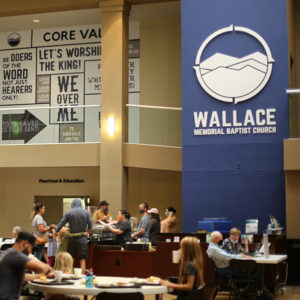
Wallace Memorial Baptist Church in Knoxville, Tennessee, is among area congregations seeking to encourage missions support and involvement at home and around the work. Wallace Memorial’s Love World missions group involves young women in a variety of hands-on missions projects with local ministries such as Welcome House Knoxville. (WMU photo by Pam Henderson)
Kimberly Poore is a member of the Love World team at Wallace Memorial Baptist Church in Knoxville. The missions group, which launched in 2019, is geared toward young women ages 25 to 40. She said the leadership team seeks “to educate and also provide mission opportunities for other Wallace women within our church.”
Love World’s missions focus includes ministering alongside Welcome House Knoxville, a nonprofit ministry that provides temporary housing for immigrant and refugee families in the Knoxville area.
The ministry’s primary aim is “building long-term relationships through short-term housing,” according to welcomehouseknoxville.org. Providing “safe and loving space for individuals and families in transition to permanent housing” allows volunteers “to share the love of Jesus through the ministries of hospitality and friendship.”
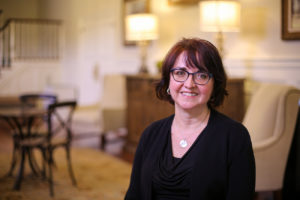
Cindy Hood, the founder and director of Welcome House Knoxville, noted that long-term housing often is difficult to find for many refugees. “We are a ministry that wants to show the love of Jesus through Christian hospitality,” she explained. “I feel like the best I can do is be the hands and feet of Christ in a very practical way. (WMU photo by Pam Henderson)
Cindy Hood, the founder and director of Welcome House, noted long-term housing often is difficult to find for many refugees, especially for larger families and single women with children.
After visiting a similar refugee ministry model while on a family vacation in North Carolina, Hood said she returned home with a burden to partner with Bridge Refugee Services, Knoxville’s local refugee resettlement agency.
Following discussion with leaders at Central Baptist Church of Bearden and Knoxville Internationals Network, she began working to establish Welcome House Knoxville as a nonprofit ministry.
Renting an unused missionary guest house from a local church, Welcome House officially opened in 2019 to provide short-term housing for refugees or other internationals. The ministry also recruited Sunny Ikojoh—who came to the United States as an international student—to serve as the minister of hospitality for guest families.
Meeting needs in times of crisis
Since opening Welcome House’s doors, the ministry has offered help to “several single moms, mostly from Africa, with toddlers,” Hood said. Most recently, they hosted the refugee family of seven from Iraq whose rental home was destroyed last summer in a house fire.
Welcome House Knoxville serves refugee families and other internationals in need to temporary housing. Director Cindy Hood noted that when guests move into Welcome House, “I want it to feel like you’re at a friend’s house and you can relax.” (Photo courtesy of Cindy Hood)
Volunteers from Welcome House, Love World and KIN all came together to help meet that family’s urgent need in the midst of crisis.
“At supper time, they were cooking. The mom stepped out of the kitchen and when she came back in, the kitchen was on fire,” Hood recounted. “It was too much for them to put out themselves. And so they just really escaped with what they were wearing. They had a few trash bags of just some things they grabbed, but most things they lost in the fire.”
After the family spent a sleepless night in a local business where the father works, KIN’s director put them in contact with Welcome House and “they were able to spend their second night at Welcome House,” Hood said.
“We put out on our Facebook page what their story was, and we had churches and individuals give through our website, and we were able to give them gift cards,” Hood said. “A volunteer took them shopping to buy clothing, shoes, personal necessities.”
The Iraqi father asked several times: “Is this safe? Will this be safe for my family?” she recalled.
“I assured him that yes, it was going to be very safe and that Sunny would be taking care of them—and he has,” she said.
“We are a ministry that wants to show the love of Jesus through Christian hospitality,” Hood emphasized. “However, we don’t require that someone is a Christian to live in the house. But we also are very willing to tell them why we’re helping them. … I feel like the best I can do is be the hands and feet of Christ in a very practical way.
“When I got the call about the Iraqi family, they needed to move in the next day,” Hood said. “So, I got in contact with Kimberly Poore. She made a couple of phone calls, and she and another woman were able to meet me and my family—my husband and daughter —and Sunny at the house, and we just went through and cleaned the house super quick.”
When refugees or other international guests move into Welcome House, “I want it to feel like you’re at a friend’s house and you can relax,” Hood said.
“There’s food in the refrigerator,” she said. “There’s clean towels, clean sheets. You don’t have to really think about taking care of yourself for a few hours or a few days. You can just exhale.”
Equip and educate volunteers
Jani Whaley, executive director of Knoxville Internationals Network, said her group’s goal is to serve internationals “by equipping and educating church members and small groups so that relationships can be built and the gospel message can be given.” Her organization often partners with Welcome House Knoxville to help match available volunteers with various ministry needs. (WMU photo by Pam Henderson)
Jani Whaley, executive director of Knoxville Internationals Network, said her group’s goal “is to reach the internationals through the churches by equipping and educating church members and small groups so that relationships can be built and the gospel message can be given.”
With a database of 300 volunteers, she said, KIN often helps “find volunteers for the Welcome House as far as cleaning and getting supplies.”
Recalling the night of the house fire, Whaley said, the Iraqi family had been living “just down the street from where I live personally.”
“I saw the fire trucks,” she recalled. “I saw the fire, and I didn’t even realize that there was a refugee family that lived in that house. It was just a few hours later I got a call stating a refugee’s house just burned down and there’s five children involved.”
As a former short-term missionary to the Middle East, Whaley said, “I have a heart for all internationals, but there’s something special about those Middle Eastern people that just really tugs at my heartstrings.”
After connecting with the family’s teenage daughter who speaks English, “I went over there within the hour and met the family and talked to the father and met all the children and developed a friendship right then and there,” Whaley said.
The next day, she went over to their house “and loaded them up in my car and just picked through the rubble of their house. We took them to the Welcome House and got them situated.”
‘Do life’ alongside refugee families
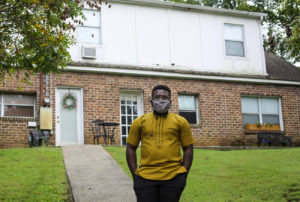
Sunny Ikojoh, who serves as minister of hospitality for Welcome House Knoxville, came to the U.S. from Nigeria in 2015 to attend seminary. The Welcome House facility is a former missionary guest house that the ministry rents from a local church to provide short-term housing for refugees. (WMU photo by Pam Henderson)
In his role as minister of hospitality, Ikojoh stepped in to assist the displaced family with day-to-day adjustments.
“When that incident happened, we saw the love of Christ,” he recalled. “We don’t get to choose where we shine the light. The light is meant for everywhere, taking away all darkness all around.”
Ikojoh, who grew up in Nigeria, came to the United States in 2015 to attend seminary. After working with refugee families during a volunteer mission trip, “I fell in love with that. I felt a deep sense that God was calling me into this ministry.
“I cannot fully understand what a refugee experiences. I can’t even fully understand what it means to be a refugee,” he acknowledged. “But being an international student, I can identify that truly they do go through a cultural shock.”
“When we intentionally engage our international neighbors and make them feel at home, then we have been the light of Christ,” Ikojoh said. “We just listen and pay attention and ask the Holy Spirit to guide us as we respond to these needs. I think the goal is to do life alongside these people.”
In her leadership role with Love World, Poore helps coordinate the group’s quarterly gatherings in members’ homes. Activities range from hosting missionary speakers to providing a monthly fellowship brunch for international moms.
When Cindy Hood shared about Welcome House at one of the gatherings, “I felt the Lord really just putting that on my heart to be involved,” Poore said.
While she and other Love World volunteers have served the Iraqi family and other refugees by helping clean Welcome House and provide other needed resources, Poore said she hasn’t personally met the house’s international guests.
But that doesn’t diminish her enthusiasm for her behind-the-scenes ministry opportunities.
“We know their story,” she pointed out. “So, we feel connected to them in that way.
“Being a part of this is important to me because God calls us to be disciples, make disciples of all nations. He also calls us to unite together, to bear one another’s burdens.”
That powerful truth is making a practical impact for refugee families who call Welcome House Knoxville their temporary home.
WASHINGTON (BP)—The decision to increase dramatically the number of refugees to be welcomed into the United States will provide Christians important opportunities for gospel witness and service to those fleeing oppression, some Baptist leaders said.
President Biden announced Feb. 4 he would raise the ceiling for refugees to 125,000 in the federal fiscal year that will begin in October and issued an executive order designed to rebuild the resettlement program.
The president, as well as agencies that help resettle refugees in this country, acknowledged the rebuilding process will take time. The new cap far surpasses the ceiling of 15,000 set by the Trump administration during its final year.
The church’s role: ‘Show the love of Christ’
“It’s the government’s role to determine the immigration and refugee resettlement policy for our nation,” said Bryant Wright, president of Send Relief. “It’s the church’s role to show the love of Christ in hopes that their hearts will be open to receiving the greatest expression of God’s love through salvation in Jesus Christ.”
Send Relief is the Southern Baptist Convention’s compassion ministry performed through the cooperative effort of the North American Mission Board and International Mission Board. Care for refugees is one of Send Relief’s focus areas.
“Jesus commanded the church to go and take the gospel to the nations,” said Wright, a former SBC president. “So, when the nations come to where we live in the United States, what an opportunity that God is giving the church to show Christ’s love.”
Through the work of indigenous church planters and in partnership with the Karen Baptist Convention and other regional Baptist groups, Greater Houston Burmese Christian Fellowship has continued its ministry to internally displaced people and refugees in Myanmar, even when COVID-19 prohibited international travel. (Photo courtesy of Greater Houston Burmese Christian Fellowship)
Russell Moore, president of the SBC Ethics & Religious Liberty Commission, said he prays Christians “will lead the revitalization of America’s commitment to be a beacon of freedom and safe harbor for the oppressed and persecuted.”
“Our advocacy for religious minorities in peril around the world, whether they be Uyghurs in China or Christians in Syria, is a priority of our work at the ERLC,” said Moore, who expressed his gratitude for Biden’s actions. “Now is the time to rebuild America’s refugee resettlement program. … I urge the administration to take the next step and officially raise the refugee ceiling.”
The newly announced refugee cap follows four years of record-low ceilings established by President Trump—from 45,000 in the 2018 fiscal year to 30,000 in 2019 to 18,000 in 2020 and 15,000 in the current year. In the 10 years prior, the United States welcomed an average of about 67,000 refugees each year, according to the Pew Research Center.
The number of admissions often is less than the ceiling. The record high for the cap and admissions is 232,000 and 207,000, respectively, in 1980, Pew reported.
Global increase in refugee population
The United States’ reduction in the ceiling has come at a time when strife in multiple countries has resulted in massive numbers of refugees. As of mid-2020, an estimated 26.3 million people were considered refugees, according to the U.N. High Commissioner for Refugees. More than 80 million people, including 30 to 34 million children, were forcibly displaced, the UN reported.
More than 60 percent of refugees—as well as Venezuelans who were displaced abroad—were from five countries. In addition to Venezuela (3.7 million people), they were the Syrian Arab Republic (6.6 million), Afghanistan (2.7 million), South Sudan (2.3 million) and Myanmar (1 million).
The United Nations has defined a refugee as “someone who is unable or unwilling to return to their country of origin owing to a well-founded fear of being persecuted for reasons of race, religion, nationality, membership of a particular social group, or political opinion,” according to its 1951 Refugee Convention.
Refugees must pass a stringent screening process that includes multiple biometric and biographic checks and an interview before being eligible to enter the United States, according to 2020 guidelines by the U.S. Citizenship and Immigration Services. The processing time before refugees enter this country averages 18 months to three years, the Christian humanitarian organization World Relief reported.
Baptists have history of ministry to refugees
The Southern Baptist history of ministering to people fleeing to the United States includes the sponsoring of nearly 15,000 refugees from 1975 to 1985, which resulted in the planting of more than 280 ethnic churches, according to a resolution approved by messengers to the 2016 SBC annual meeting.
The 2019 back-to-school event in Clarkston, Ga., is one example of the kinds of projects Send Relief carries out to serve refugee families. Caring for refugees is one of Send Relief’s focus areas for compassion ministry. (BP Photo)
Send Relief served 13,933 people in its work with refugees and internationals in North America in 2020. It mobilized more than 850 people to serve in refugee ministry. Those numbers do not include overseas work with refugees.
Southern Baptists in Montgomery, Ala., are among those who serve refugees. Montgomery Baptist Association collaborates with First Baptist Church in Montgomery to minister to 250 to 300 international families, including refugees, from 42 countries, said Susan West, director of the association’s conversational English ministry. More than 30 churches participate in the ministry, and others support the work financially.
During the 2019-20 school year, the ministry served 13 refugee households before the COVID-19 pandemic, West said. It has ministered to at least six refugee families this school year. The refugees during these two years have come from three continents, she said.
“As followers of Jesus, we are called to welcome the strangers among us,” West said in an email interview. “No passport is needed to do the Great Commission in our own neighborhoods. The world is here.”
The practical ministry to refugees and other internationals includes English classes, as well as preschool childcare and transportation to the classes for many families, West said. It also consists of a citizenship class, the opportunity to grow food in a community garden and trips to museums and other local sites. The volunteers also accompany families to medical appointments and parent conferences at school as requested. They cook and eat with the refugees and other internationals and otherwise spend time developing relationships, she said.
Each family is offered a Bible in its “heart language,” and each child receives a copy of the Jesus Storybook Bible. Their reading of the Bible prompts questions of the volunteers, West said.
Literacy ministries open doors
Lester Meriwether
Lester Meriwether, executive director of Literacy Connexus, agreed English-as-a-Second-Language classes and other literacy ministries help churches establish relationships that open doors to ministry and Christian witness.
While it will take refugee resettlement agencies time to rebuild the infrastructure lost in the past four years, churches can begin now to prepare for ministry to refugees in the months and years ahead, Meriwether asserted.
He suggested practical steps to take now:
Foster understanding. Issues related to immigrants, refugees and asylum seekers have become politicized in recent years, he observed. The political climate has made some pastors reluctant to support ministry to those groups because they are fearful of creating congregational division and conflict, he added. Focus on clear needs, such as reading readiness programs from preschool children from non-English-speaking families. “Trust the lay people,” Meriwether said. “When they see the needs, they will respond.”
Learn from other churches. Look at success stories. Some Texas Baptist churches have been involved for decades in ministry to internationals in general and new arrivals in particular. ESL classes often have been starting points for other ministries such as cooking classes, sewing circles, Bible studies and other programs. “Once a church reaches out to people with classes in English proficiency, ministry can go many different directions,” he said.
Train volunteers. Literacy Connexus typically trains about 300 volunteers a year in ESL instruction, but it had to suspend training events for the past year to the COVID-19 pandemic. However, plans are in place to resume in-person training—as well as teleconferences—in upcoming months.
With additional reporting by Managing Editor Ken Camp.
Church opens room for healing 100 years after race massacre
March 2, 2021
TULSA, Okla. (BP)—A hundred years after a race massacre, Deron Spoo hopes to set the foundation for a new narrative.
Spoo, senior pastor of First Baptist Church in Tulsa, Okla., has studied the 1921 Tulsa Race Massacre, in which as many as 300 African Americans were killed and 35 blocks of Black-owned homes and businesses were reduced to ashes over a two-day period.
First Baptist was among white congregations that helped house more than 10,000 displaced Black residents.
But in the Sundays following the 1921 Tulsa Race Massacre, comments from pastors of those same churches were not indicative of the aid extended.
“There were newspaper articles that share what those pastors said the following Sundays in their pulpits, and it was not good,” Spoo said. “It was offensive, it was racist, and those are a matter of public record.”
‘Pray for the healing of the wounds of racism’
His answer: creating the Tulsa Race Massacre Prayer Room for the church and community.
The Tulsa Race Massacre Prayer Room open February through June 1, will offer a space for 121 days of intensive prayer as the 1921 Tulsa Race Massacre Centennial Commission holds months of events in advance of the official June 1 centennial commemoration. (BP Photo submitted by First Baptist Tulsa)
“First Baptist Tulsa, we were located on the same spot 100 years ago. We opened a room for the healing of the refugees, those who were wounded and needed a place to stay. The church offered refuge,” Spoo said.
“It just kind of dawned on me and some of our leadership 100 years later, ‘Why don’t we open another room for healing, and why don’t we have a prayer room and pray for the healing of the wounds of racism that still exists in our world today?’”
The room, open February through June 1, will offer a space for 121 days of intensive prayer as the 1921 Tulsa Race Massacre Centennial Commission holds months of events in advance of the official June 1 centennial commemoration.
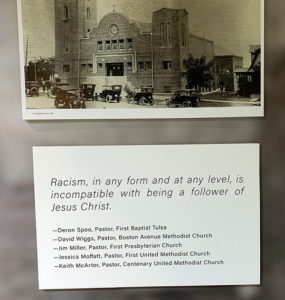
“I think it’s important for our church to be a part of this project to send a message into the future, but also for today, that racism doesn’t have a place in the heart of the church, nor in any follower of Jesus,” Spoo said.
Pastor LeRon West, who leads Gilcrease Hills Baptist Church, a predominantly Black congregation, thinks the prayer room could foster reconciliation in Tulsa, which he describes as still divided.
“To have a place where different people can come in and pray, and pray together … that goes a long way, because relationships happen as we’re in the proximity of one another and begin to see each other that way,” West said. “And the church has to lead out in that. If the church is divided, the world has no chance.”
The Greenwood community holds special prominence for West. His late grandfather bought a restaurant in the community in 1928 as African Americans rebuilt after the riots, and West worked in the restaurant as a youth.
The 35-block area of north Tulsa known as Black Wall Street rebounded through the 1950s, later suffered decline and, according to historian Hannibal Johnson, is experiencing a renaissance as a business, educational and cultural hub.
“It was extremely segregated,” West said. “Tulsa is still divided.”
God can change hearts
While Tulsa is discussing racial reconciliation as the centennial approaches, Spoo believes only God can change human hearts in a way that will unite the community.
“We can solve a lot of problems if we communicate together, but I think we can solve more problems if we communicate with God,” Spoo said. “So, while we’re talking about this, why don’t we include God in the conversation?”
(BP Photo)
First Baptist worked with the Tulsa Historical Society in establishing the prayer room Spoo describes as museum quality. Sections include historical accounts and images, newspaper reports, written prayers and prayer points, four prayer stations with audio guidance, and a joint anti-racism statement signed by Spoo and fellow pastors of downtown churches.
“I ask people to stop and pray against the spirit and sin of racism in our culture and against the spirit and sin of racism in the church, and in our particular church, and then the spirit and sin of racism in our lives,” Spoo said.
“The only person who can change the human heart is God. I might not be able to change the culture of Tulsa, but I sure am responsible for changing my heart and making sure it is right before God and loving toward other people.”
Spoo has enlisted at least one church member a day to pray in the room, preferably at 12:21 p.m., following a narrated self-guided tour that takes 20-30 minutes. Community members are also free to visit the room, and community groups are encouraged to tour.
At the end, participants are encouraged to learn about the massacre’s survivors, and to make a donation to the Greenwood Rising history center, with First Baptist Tulsa committed to matching up to $5,000 in contributions for a potential $10,000 gift. Names of supporting organizations will be preserved on bricks or plaques at the center.
“I just think it’s important for posterity to have First Baptist Tulsa’s name on that, to say we’re a part of this,” Spoo said. “We can’t change what happened in 1921, but we certainly do have a say in what happens in 2021.”
The community’s response has been overwhelmingly positive, Spoo said, although a small minority has decried the room and also disparaged the commemoration.
‘Enough is enough’
Spoo collaborated with Philip Armstrong, the centennial commission project manager and a minister at Metropolitan Baptist Church in Tulsa, a congregation affiliated with the National Baptist Convention USA. Armstrong narrated the guided prayer stations at First Baptist Church.
“At the heart of it all, we are God’s creation. And we are still dealing with this horrible sin called racism even 100 years later,” Armstrong said. “And it’s kind of like the cries of Blacks and whites, young and old over this past summer with George Floyd’s death, ‘Enough is enough.’
“Tulsa, because of its history, is now being the place where people are saying it’s ground zero—ground zero of race relations, ground zero of racial trauma—and a place where people can maybe find a way to get on this journey to reconciliation.”
Armstrong is readying for the June 2 dedication of the new multimillion-dollar Greenwood Rising history center at the entrance to the historic Greenwood community. He believes the prayer room is an important outreach for the church in the 121 days leading up to the dedication, as it can cause many to face historical facts.
“Especially for a largely white congregation and places and organizations … like that, it causes them to step back and say, ‘We can no longer continue to tell people: ‘Let’s not talk about that. It happened in the past. Let’s just move on,’” Armstrong said of the prayer room. “It makes people stop and face the fact that maybe because we’ve done that for so many years is why we’re still dealing with racial division. It’s because all we want to do is sweep it under the rug.”
‘Let’s not sit on the sidelines’
According to a historical marker to be dedicated in the Greenwood community, Black Tulsans went to the courthouse to protect a prisoner the white community planned to lynch on May 31, 1921. The prisoner, 19-year-old Dick Rowland, had been accused of assaulting a white woman on an elevator, although the charges later were dropped.
The marker cites reports of authorities providing firearms and ammunition to the mob of thousands of white men who fired upon Black men, forcing them to retreat towards Greenwood. The white mob followed and, joined by city-appointed deputies, began shooting African Americans and burning homes and businesses.
The Oklahoma National Guard arrived, and instead of stopping the violence, arrested hundreds of Black men. No one was ever held accountable for the destruction and death, the marker records.
Death counts are not certain, but they range from official accounts of 36 to eyewitness accounts of more than 300. All that remains of the original Greenwood, dubbed Black Wall Street, is under the foundation of Vernon African Methodist Episcopal Church, which was rebuilt after the massacre.
“You cannot move beyond the injury until that injury has been addressed,” Armstrong said. “We need people of faith to stand up and say this was wrong, it was horrific … but here we are 100 years later. Let’s not make that same mistake. Let’s not sit on the sidelines.”
West also has collaborated with Armstrong and fellow Tulsa pastors in planning faith-based events to mark the centennial, although he regrets having to commemorate a tragedy.
“It would be my hope that after this commemoration, that there are more relationships built across racial lines, across religious lines, across political lines, that we genuinely care about each other in a way that we need to,” West said. “In the times that we need each other, what does race matter?”
NAMB trustees affirm cooperation and missional strategy
March 2, 2021
ALPHARETTA, Ga. (BP)—North American Mission Board trustees unanimously passed a resolution on cooperation and missional strategy at their February 2021 board meeting.
The resolution came just days after the Southern Baptist Convention Executive Committee released a white paper titled “Cooperation Is the Way Forward.”
The document drafted by the Executive Committee advised NAMB and state conventions to walk in unity; to communicate honestly, clearly and consistently; to work in cooperation with one another; and to mobilize Southern Baptist churches to work together.
Within the resolution, NAMB trustees embraced and commended the Executive Committee document, saying the board “has received with gratitude the recommendations of the SBC Executive Committee in its communication titled ‘Cooperation is the Way Forward’…We are grateful for the investment of time the officers and executive leadership of the SBC Executive Committee have made to help NAMB and its ministry partners further efforts to seek cooperative solutions and alignment of our important ministry strategies.”
Six state execs voiced concerns
The advisory document from the Executive Committee came in response to a “request from six Baptist state convention leaders who were concerned about the Strategic Partnership Agreements sent to them by NAMB.”
A letter sent to Executive Committee President Ronnie Floyd and NAMB President Kevin Ezell in August 2020 outlined concerns the state executive directors had over funding changes as well as strategy changes related to the implementation by NAMB of SBC-approved recommendations from the Great Commission Task Force.
The six state convention leaders who signed the letter were Randy Adams (Northwest Baptist Convention), Bill Agee (California Southern Baptist Convention), Joseph Bunce (Baptist Convention of New Mexico), Randy Covington (Alaska Baptist Resource Network), Jack Kwok (State Convention of Baptists in Ohio) and Christopher Martin (Hawaii Pacific Baptist Convention). Kwok has since retired; Bunce will retire at the end of February.
NAMB: ‘We desire to cooperate’
Addressing the recommendations from the Great Commission Task Force, the resolution reiterated that NAMB trustees are “focused on ensuring that NAMB’s strategies, personnel, and funding are consistent with our ministry assignments and the missional mandate provided to NAMB by an overwhelming majority of SBC messengers at the 2010 SBC annual meeting. We desire to cooperate with all SBC churches, associations, and state conventions, and we steward NAMB’s funding and resources in a manner consistent with our strategies and ministry assignments.”
Trustee board Chair Danny de Armas echoed the board’s resolution.
“In the natural discussion of our NAMB trustees executive committee, some of our members requested the opportunity to affirm and demonstrate that they are aligned with our stated ministry assignment and our ongoing strategies,” said de Armas, senior associate pastor of First Baptist Church of Orlando.
“Several trustees related being frustrated by the notion that some are putting forth that the NAMB trustees are not doing our job and that we don’t know what is going on at NAMB. Not only do we know what is going on, in most cases we initiated and, in every case, we affirm the strategies and changes that are being implemented.
“NAMB is doing exactly what we’ve been assigned to do, and we are doing it with laser focus and with an incredibly high sense of stewardship for every penny that has been entrusted to NAMB.”
Report calls ERLC ‘impediment’ to Cooperative Program
March 2, 2021
NASHVILLE (BP)—A task force studying the effectiveness of the Ethics & Religious Liberty Commission issued its report Feb. 1, acknowledging support within the Southern Baptist Convention for the entity, but also citing evidence some see it as “a source of significant distraction from the Great Commission work of Southern Baptists.”
Commissioned in February 2020 by the SBC Executive Committee, the task force was charged with reviewing the activities of the ERLC, which is tasked with helping churches understand the moral demands of the gospel and public policy, as well as promoting religious liberty.
The Executive Committee instructed the task force to “assess whether the actions of the [ERLC] and its leadership are affecting Cooperative Program giving or the further advancement of the Cooperative Program.”
The task force report asserted “the current perception of the leadership and direction of the ERLC by many Southern Baptists is a substantial impediment to the growth of the Cooperative Program,” with “potential for a measurable decline in the near future and beyond” if there are not “quick and significant changes in that perception.”
Points of controversy
Under President Russell Moore, the ERLC has at times been a flashpoint of controversy among some Southern Baptists who objected to Moore’s criticism of Donald Trump during his initial presidential candidacy and during his presidency.
Southern Baptist Ethics & Religious Liberty Commission President Russell Moore (Karen Race Photography / BP File Photo)
More recently, the ERLC came under fire for submitting an amicus brief in a federal lawsuit filed in August 2020 in support of the North American Mission Board. The brief wrongly described the SBC as a hierarchy. In its report, the task force called the brief, as well as the ERLC’s response and subsequent handling of the brief, “unacceptable.”
The task force also said its findings showed “considerable conversation” continues in the SBC “as to the effectiveness and efficiency of the ERLC’s current structure in addressing public policy concerns.”
The report was released Feb. 1 to the full Executive Committee board, as well as to the chairman of the ERLC’s board of trustees and ERLC President Russell Moore. Its findings will be considered during the regularly scheduled Executive Committee meeting Feb. 22-23 in Nashville.
“The task force sought to find objective verifiable facts,” said Mike Stone, chairman of the task force and former Executive Committee chairman. “Based on the statistical information we received, the direction of the ERLC is a significant source of division and creates a very real challenge to reversing CP decline.”
Stone said the report “is not based on anecdotes or third-hand reports. It is based, almost exclusively, on documented facts received from the chief executive officers of various state conventions.”
‘Move on … and focus on our mission’
David Prince, chairman of the ERLC’s board of trustees, expressed hope that with release of the report, Southern Baptists could move forward.
“I think Southern Baptists can see this report for exactly what it is and are ready to move on from this moment and focus on our mission together,” Prince said in a statement to Baptist Press.
“The ERLC has served Southern Baptists faithfully during a time of political, cultural, and in some cases, denominational chaos. Much of this chaos remains with us, including widespread news of many of our black and brown brothers and sisters leaving the SBC. That should be alarming to all of us.
“Regardless, all this and more is why I am grateful the ERLC serves our churches with a vibrant and bold gospel witness day in and day out.”
The task force report cited feedback from a questionnaire sent to the SBC’s 41 state conventions; 15 responded. Without identifying them, the report described those state conventions as serving 60 percent of the SBC’s 47,000-plus churches and giving 74 percent of the total Cooperative Program funds received by the SBC Executive Committee.
Several of the state executives who responded “reported little to no negative effect from the ministry of the ERLC,” according to the report. But several others reported multiple instances of churches reducing giving or withdrawing from the state and/or national conventions. According to the state executives, those churches reported several reasons for their decisions, but often included concerns about the ERLC. Collectively, according to the report, the state executives reported the negative impact on Cooperative Program giving totaled millions of dollars.
(Photo/GWImages/Shutterstock.com)
The task force noted that it was challenged by the way Cooperative Program giving is reported. A drop in churches giving through Cooperative Program to the states, coupled with reports of increased national Cooperative Program gifts, has introduced “confusion” into the state of overall giving trends, the task force said.
The report notes that the downward trend in overall giving began many years before the current ERLC leadership.
The allocation forwarded by the states to the national convention has increased from an average of 37 percent in 2009 to 42 percent in 2018-19, the report said, but it added: “[T]otal dollars received by our state/regional convention partners has been in steady decline. Percentage giving by churches has fallen by more than half over the last three decades.”
Limited response from state executive directors
The state executives who responded to the task force’s questionnaire said they regularly heard a variety of concerns from pastors. Along with Moore’s opposition to Trump, the issues included: complaints that the ERLC is not responsive and that its leadership has been “disrespectful and condescending” to questions from Southern Baptists; frustration over an amicus brief filed in support of the building of a mosque in New Jersey in 2016; disappointment over perceived inaction on religious liberty issues during the COVID-19 pandemic; disagreement with the ERLC’s stance on immigration.
Also listed was the allegation that the ERLC received funding from an organization with ties to liberal financier George Soros—a charge that has been refuted but continues to circulate.
Although the task force’s report listed the concerns “without commentary,” it urged Southern Baptists to be “aware of the dubious nature of many claims on the internet.”
“Every person, including Dr. Moore, deserves the truth to be written or spoken about them,” the report said. “Discerning questions must come to mind every time we read a negative article on a fellow Southern Baptist: Who wrote this article? What else have they written? Is this a recycled story? Who is quoted and not quoted? Are the sources accurate and reliable?”
The report added: “In the present case, however, most of the concerns mentioned by our state convention partners are not caused by disagreement over the facts. Rather, they are caused by disagreement with the leadership and direction of the ERLC.”
But with several state conventions reporting “little to no negative effect of the ERLC on their state convention ministries,” the task force said the report reflects “the sharp differences of sentiment that exist across the SBC regarding the work of the ERLC.” The task force reported that social media indicates “both support and concern for the direction of the SBC,” with rumors and anecdotal reports abounding in both categories.
The task force report noted reaction in January from “multiple churches” in “some of our largest state conventions” to comments by Moore “related to the unlawful incident at the United States Capitol on Jan. 6,” saying the churches weren’t concerned by “Moore’s condemnation of the U.S. president or by the renunciation” of the incursion at the Capitol.
“Rather,” the report said, “the churches were troubled by Dr. Moore’s comments in light of the silence of the Ethics and Religious Liberty Commission” related to “violent and destructive protests” in the nation during summer 2020.
Task force offers recommendations
The task force offered six recommendations, including asking the full Executive Committee to request that the ERLC board of trustees “encourage the president and staff to refrain from opposing specific candidates for public office.” Among the task force’s other recommendations to the EC:
Provide greater clarity on convention-wide giving trends.
Request the ERLC’s trustee board encourage staff “to focus, where possible, on speaking where the SBC has already spoken through resolutions and the Baptist Faith and Message.”
Request the ERLC’s trustee board encourage staff to be more responsive to Southern Baptists’ questions about “certain news items.”
Request the ERLC’s trustee board to help its staff “develop an intentional plan to demonstrate a greater appreciation for how its positions, including social media usage, affect the spirit of cooperation among Southern Baptists.”
Request that the trustee boards of SBC entities institute a policy of submitting legal briefs on topics related to Southern Baptist polity for review by the SBC’s attorneys before being filed.
In February 2020, while discussing the formation of the task force, Stone said: “We are hearing from state leadership and other pastors across the country. We are making a statement about effectiveness.”
The task force was to report its findings to the Executive Committee “on or before its September 2020 meeting,” but the reporting process was hindered by the COVID-19 pandemic. The Executive Committee’s September meeting was canceled and replaced by a virtual meeting with limited business.
The Executive Committee created a similar task force in 2017; it reported impact on the Cooperative Program was “not as significant in fact as it is in perception.” At the 2018 SBC annual meeting, a motion to defund the ERLC was rejected by an overwhelming margin.
In their initial response last February, the ERLC’s trustee officers called formation of the task force “unwarranted, divisive, and disrespectful,” and cited both the 2017 review and the 2018 vote as evidence that another review was unnecessary.
In its report, the current task force wrote suggestions that the 2020 study was unnecessary or “usurped the will of the convention because a motion to defund the ERLC was overwhelmingly defeated at the 2018 annual meeting” were “erroneous because the task force was not formed to defund the ERLC.”
The report noted that neither the task force nor the larger Executive Committee has the authority to defund an entity. But the EC is authorized and commissioned to present a budget for the SBC at the 2021 SBC annual meeting, scheduled for June in Nashville, and to “recommend the amount of convention funds which may be allocated to each cause.”
Along with Stone, the task force members are: Rolland Slade (elected Executive Committee chairman last June), Hoyt Savage, Ron Hale, Mike Lawson, Monte Shinkle and Cheryl Samples.
Jonathan Howe, vice president for communications with the SBC Executive Committee, contributed to this report.
 Owners of the Washington Marriott Wardman Park Hotel in Washington, D.C., the previously announced venue, decided to close the hotel to make the site available for other uses.