NASHVILLE (BP)—Grant Gaines of Tennessee will nominate Houston pastor Ramón Medina for second vice president of the Southern Baptist Convention at the 2021 SBC annual meeting in Nashville in June.
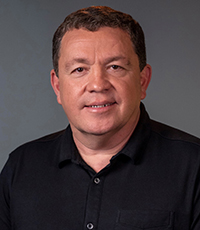
Ramón Medina
Medina has served since 2006 as lead pastor to the Spanish ministry at Champion Forest Baptist Church in Houston, a congregation uniquely aligned with the Southern Baptists of Texas Convention.
He began this year leading Champion Forest’s Hispanic church-planting residency program in cooperation with the North American Mission Board. Gaines credits Medina with helping plant eight churches in the United States, Latin America and Asia.
“I’m thrilled to announce my intention to nominate Pastor Ramón Medina for the position of second vice president of the SBC at our annual convention meeting this summer in Nashville,” said Gaines, senior pastor of Belle Aire Baptist Church in the Nashville suburb of Murfreesboro.
“Under Ramón’s leadership, since 2006, he has seen the Spanish congregation grow from 60 members to more than 3,000 each week, directly from the result of his passion for the lost, missions, evangelism, multicultural ministries and developing strong families rooted in the word of God.”
The SBC Annual Church Profile does not list attendance numbers for the Spanish ministry, but Champion Forest, under the leadership of senior pastor Jarrett Stephens, reported an average attendance of about 7,600 for its total congregation in 2019.
Champion Forest gave $587,500 to the Cooperative Program in 2020, amounting to 2.7 percent of its overall budget of $21,774,000, according to figures the church submitted to Baptist Press. The total amount of undesignated giving for 2020 was not available.
Gaines said Medina is active in SBC life, having served on committees at several SBC entities and groups including Lifeway Christian Resources and the Hispanic Pastoral Council. He is president of the SBC Hispanic Council, a group of Hispanic pastors working toward unity and cooperation in serving Hispanic Southern Baptists.
He also has been announced as the keynote speaker for Celebración Hispana, a gathering of Hispanic Southern Baptists to be held in conjunction with the SBC annual meeting.
Medina earned a bachelor’s degree in business administration from the University of ICESI in Cali, Colombia, and worked in the banking industry before beginning in ministry. The Baptist pastor’s son soon switched to theology and, after relocating to the states, studied theology at Southern Baptist Theological Seminary. He holds a Master of Arts in Missiology from Southwestern Baptist Theological Seminary, Gaines said, and is currently pursuing a Doctor of Ministry degree at Midwestern Baptist Theological Seminary.
He and Nhora, his wife of 23 years, live in Spring and are parents to two sons.
Florida WMU leader reflects on life lessons amid upheaval
March 29, 2021
ORLANDO, Fla.—Irma Moss vividly remembers five or six Communist soldiers invading her family’s home in Cuba and whisking her father off to jail in the wake of the Cuban Revolution more than 60 years ago.
Irma Moss (top right), her sister, Leisy Gonzalez, and their mother, Amelia Hernandez, pose for a family photo. Moss fondly remembers her mom as a dedicated prayer warrior who taught her about the power of prayer. (Photo courtesy of Irma Moss)
It was a traumatic, life-changing experience for the frightened 8-year-old girl, who grew up to become state Woman’s Missionary Union president for Florida Baptists.
Incredibly, the day after her father’s arrest, he was released from custody. He told his wife and two young daughters that they had less than 12 hours to leave their house, abandon most of their possessions and find shelter elsewhere.
Her father, a successful businessman in Cuba whose assets were immediately frozen by the Communist officials, made arrangements to immigrate to the United States and found work as a restaurant busboy.
Moss, her mother and sister took refuge in her aunt’s one-room apartment in Havana. Her family eventually reunited in Florida several months later.
Recounting their departure from Havana, Moss said flights to the United States were on the verge of being halted, and the plane they hoped to board was overbooked by 13 passengers.
Prayer changes things
“That was the beginning of the journey where my mom taught me that prayer changes things,” Moss recalled.
She said her mom began praying that they would be able to get on the flight.
“And 13 people did not show up. God saved the last three seats for my mom, my sister and me,” she said.
That also was the start of Moss’ new life in the United States. “
God was in control,” she said. “My mom and my dad always looked to do God’s will. The doors closed for us in Cuba, but the doors opened in America, and I bleed red, white and blue. I have lived the American dream.”
Irma Moss and her older sister, Leisy, during their early childhood days in Cuba. (Photo courtesy of Irma Moss)
After learning English and completing elementary school, middle school and high school in Orlando, Moss went on to college where she sensed God calling her to full-time Christian service. She earned her master’s degree at Southwestern Baptist Theological Seminary and was involved in education and youth ministry several years.
Along the way, she met and married her American husband, Tony, and they raised their son, Jonathan.
Moss said the Lord eventually led her to “the mission field of public education,” where she served as a teacher, principal and director of the English-as-a-Second-Language program for Orange County Public Schools.
“In the school system, God gave me the opportunity to share Jesus Christ by my witness and my life,” Moss noted. “That’s what missions is all about.”
‘Mama taught me to pray for everything’
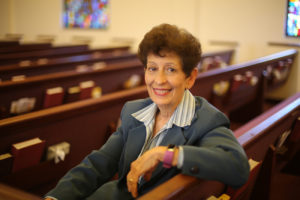
Irma Moss, president of Florida Woman’s Missionary Union, immigrated to the U.S. at age 8 with her family in the wake of the Cuban Revolution. “That was the beginning of the journey where my mom taught me that prayer changes things,” she recalled. (WMU photo by Pam Henderson)
Connecting that belief to her WMU involvement, she said: “That’s why I love WMU so much, because WMU is about prayer. My mama taught me to pray for everything, and God will answer your prayer.
“The other thing that I love about WMU is that we’re teaching people about the best answer in life and that’s Jesus Christ—that he is the way, the only way.”
Describing WMU as “the wonderful ministry that unites the church” amid today’s chaotic world, Moss said: “Missions will never grow old because missions is telling the story of Jesus. It’s telling the lost world that God loves them and that he died for them—and that the only hope that we have for our sin is Jesus.”
In her role as Florida WMU president, she added, “This is what the Lord was calling me to do, and I needed to do it and to do it enthusiastically and do it to the best of my ability to glorify him.”
Cindy Bradley, executive director of Florida WMU, admitted it is “difficult to sum up the impact of Irma’s leadership and friendship over these past few years.” She said words that come to mind when she thinks of Moss include faithful, enthusiastic, prayerful, humble and discerning.
“Her commitment to our God and to his kingdom is unswerving,” Bradley said. “She is a faithful student of God’s word and is a faithful prayer warrior. When you ask Irma to pray about something, you know she really will.”
That was a valuable life lesson Moss learned long ago from her mother at an airport in Cuba. It’s a lesson she still is practicing more than six decades later.
Black fellowship to seminary presidents: Help defuse tensions
March 29, 2021
FAIRFAX STATION, Va. (BP)—The National African American Fellowship of the Southern Baptist Convention issued a statement asking presidents of SBC seminaries to take steps to help defuse current racial tensions within the convention.
The March 24 statement encourages all Southern Baptists “to unite around the essentials of our faith, and in the nonessentials, maintain a spirit of charity,” focused on living out the Great Commandment in pursuit of the Great Commission.
Marshal Ausberry, who is the fellowship’s president and also first vice president of the SBC, said the fellowship is “trying to make a pathway forward that works for all of us.”
Ausberry, pastor of Antioch Baptist Church in Fairfax Station, Va., said the statement was a response to questions he and others have been asked by African American pastors since a meeting in January of a multi-ethnic group of Southern Baptist leaders.
During that meeting, held virtually, NAAF officers and the seminary presidents addressed turmoil resulting from several statements issued by SBC-affiliated groups concerning critical race theory and race relations.
“We felt we really needed a public comment that expressed where we are,” said Ausberry of Wednesday’s statement.
Critical race theory and seminary presidents
The conflict initially was sparked by a statement issued Nov. 30, 2020, by the Council of Seminary Presidents condemning “racism in any form,” but saying “affirmation of critical race theory, intersectionality and any version of critical theory is incompatible with the Baptist Faith & Message.”
On behalf of NAAF, Ausberry issued a response Dec. 11 affirming the Bible as supreme and sufficient, but recognizing “there are ideologies from a sociological and anthropological perspective when used appropriately, help us to better understand the inner workings of a fallen and sinful world.”
On March 24, Ausberry said: “We are not defending CRT, [that] has been misconstrued. We felt the seminary presidents’ statement went too far in dismissing CRT in all its forms.”
In its statement, the fellowship said “certain limited insights from CRT, not as an ideology or worldview, can be useful to identify and repudiate racial bias and systemic racism in organizations and institutions. We believe that discussions on systemic racism and racial injustice requires understanding, patience, and grace.”
Asking seminary presidents to act
With the goal of “bringing healing and a better understanding among Southern Baptists,” NAAF asked the seminary presidents to:
Cohost open forums with the fellowship on biblical approaches to addressing systemic racism.
Require in curriculum a course on the historical and theological understanding of race and racism in America.
Acknowledge that in their statement Nov. 30, the seminary presidents were “speaking for their seminaries and not for the SBC.”
The Dec. 11 statement by NAAF said ideologies do not supplant the supremacy of Scripture and “where such ideologies conflict with Scripture, it is Scripture that governs our worldview, our decisions, and our lives.”
Ausberry reiterated that commitment on March 24, but he said the seminary presidents’ November statement “had the effect of dismissing the lived experience of African Americans with racism in America.”
“We keep hearing that resoundingly throughout the pastors we’ve talked with,” Ausberry said, “that they have been disappointed—and their congregations, a number of pastors said their congregations are examining, because of the seminary presidents’ statement, whether they remain in the convention.”
Ausberry said the purpose of the latest statement by the fellowship was to “truly, from a heartfelt standpoint, to share sincerely and objectively where the African American pastors are coming from, and striving to be helpful and not hurtful.”
Expressed desire to work together
In a joint statement after the January meeting of SBC leaders, participants described “an honest and open conversation, hearts to hearts,” and committed to continuing conversations “to work together to serve the cause of and to further the work of the Southern Baptist Convention.” They also said they were “committed to listen to one another, speak honestly and to honor our common commitment to the inerrant Word of God and the Gospel of Jesus Christ.”
The issue of critical race theory and intersectionality has been percolating in the SBC since messengers to the 2019 SBC Annual Meeting passed Resolution 9, which affirmed the sufficiency and supremacy of Scripture and rejected the embrace of critical race theory as a worldview, while suggesting it “should only be employed as analytical tools subordinate to Scripture.”
Daniel Akin
In response to the March 24 statement by NAAF, Danny Akin, president of Southeastern Baptist Theological Seminary, said the seminary presidents “speak for ourselves and our seminaries alone,” and noted that in the November statement, the Council of Seminary Presidents was “seeking to speak clearly about the teachings on each of our campuses.”
“We do not speak for the Southern Baptist Convention, but we are accountable to it, to teach in accordance with and not contrary to the Baptist Faith and Message,” Akin said in a statement provided to Baptist Press. “It was in that spirit and in light of current conversations in our convention that we addressed the issues of both racism and CRT.”
Akin said the seminary presidents “remain committed to condemning and fighting racism in every form, personal and structural, in consistency with the 1995 SBC Resolution on Racial Reconciliation and the Baptist Faith and Message. We also want to move forward together and foster seminary campuses that make brothers and sisters from every tribe, tongue, people and nation welcome.”
Akin said SBC seminaries have implemented and attempted “a number of efforts to that end,” but said they “always welcome further recommendations and suggestions.”
“We know much work remains, and we will seek to be faithful to Christ as we all work together to proclaim the gospel, build the church and reach the nations,” Akin said.
In its March 24 statement, the fellowship echoed the sentiment and asked “all Great Commission-minded believers” to pray and seek unity in the Great Commandment—Jesus’ call for believers to love God “with all your heart and with all your soul and with all your mind,” and to “love your neighbor as yourself.”
“As we continue to work with the [seminary presidents] and SBC leaders,” NAAF wrote, “we call on all Southern Baptists to pray that the Spirit of Christ will enable us to demonstrate greater sensitivity in our actions with every tribe, language and peoples.”
New doubts over Southern Baptists’ limits on women’s roles
March 29, 2021
Emily Snook is the daughter of a Southern Baptist pastor. She met her husband, also a pastor, while they attended a Baptist university.
Yet the 39-year-old Oklahoma woman now finds herself wondering if it’s time to leave the nation’s largest Protestant denomination, in part because of practices and attitudes that limit women’s roles.
“Every day I ask that,” Snook said. “I don’t know what the right answer is.”
She’s not alone. Among the millions of women belonging to churches affiliated with the Southern Baptist Convention, there are many who have questioned the faith’s gender-role doctrine and more recently urged a stronger response to disclosures of sexual abuse perpetrated by SBC clergy.
Beth Moore a bellweather
For many Southern Baptist women, even those committed to staying, the topic of gender became more volatile this month when popular Bible teacher Beth Moore said she no longer considered herself Southern Baptist.
In this Thursday, Dec. 13, 2018, file photo, Beth Moore addresses a summit on sexual abuse and misconduct at Wheaton College in Wheaton, Ill. A Bible study teacher, Moore has been beloved among Southern Baptists for years, packing out stadiums and selling millions of books. But when she began to criticize Trump and call out sexism, racism, and abuse in the church, she became a pariah. In 2021, Moore left the nation’s largest Protestant denomination, saying she can no longer identify as Southern Baptist. (Emily McFarlan Miller/Religion News Service via AP)
Moore, perhaps the best-known evangelical woman in the world, drew the ire of some SBC conservatives for speaking out against Donald Trump in 2016 and suggesting the denomination had problems with sexism.
Karen Swallow Prior, a professor of English and Christianity and culture at Southeastern Baptist Theological Seminary, has belonged to a Southern Baptist megachurch and wrote a passionate article in February explaining why she remains Southern Baptist.
Yet she is among a number of Southern Baptist women publicly sharing their dismay about sex abuse and the vitriol directed at Moore.
“Beth has been scorned, mocked and slandered while doing exactly what the denomination has determined she could and should do: be a woman teaching other women,” Prior said via email.
“I cannot count the number of women who have reached out to me over the past few years, lamenting and grieving the way women have been and are being treated in some SBC churches and by some denominational leaders,” Prior added. “If these women leave, it won’t be because Beth left. It will be because the men the Baptist Faith and Message says are supposed to lead in Christ-like ways have failed to do so.”
Prior was referring to the statement of faith adopted by the SBC in 2000 that espouses male leadership in the home and the church and says a wife “is to submit herself graciously to the servant leadership of her husband.” It specifies that women cannot be pastors, citing the Apostle Paul’s biblical admonition: “I do not allow a woman to teach or to have authority over a man; instead, she is to remain quiet.”
Stay or go?
Snook, who lives in Norman, Okla., said she grew up being taught that men were leaders in the church and the home “to protect women, to lift them up.”
“Is it about protecting women—or is it really about protecting your power and covering up sexual abuse in the church?” she asked. “That’s caused a crisis of faith among a lot of women and men.”
Snook gained some attention—and criticism—in Southern Baptist circles when she posted an article in January on a blog called SBC Voices describing how she found herself admiring Vice President Kamala Harris despite her support for abortion rights. Now, Snook and others in her circle are pondering whether they have a future in the SBC.
“Do we stay and work for what we’re supposed to be?” she asked. “If we all leave, are we abandoning our responsibility?”
Katie McCoy, a professor of theology in women’s studies in the undergraduate branch of Southwestern Baptist Theological Seminary, tells her female students there are meaningful roles they can play in the SBC even if pastoring is off-limits. But she says many Southern Baptist women, including students of hers, were unsettled by the criticism of Moore.
“There are a lot of women who will never have the scope and reach of a Beth Moore but believed they had something to contribute because of her,” McCoy said. “It’s those women who look at the online vitriol and feel discouraged before they even begin, thinking, ‘If this is what they say about Beth Moore, what will they say about me?’”
Prescribed limits on areas of service
Melissa Edgington, who is married to a Southern Baptist pastor in Olney, and describes herself as a stay-at-home mom of three children, says she’s had lifelong devotion to her denomination. She also has been an admirer of Moore.
“I have lost count of the number of times I have seen evangelical men on social media repeating that awful command, ‘Go home,’ to Beth Moore,” she said via email. “I wonder if they realize when they say those two words with such glee, they are sending a message to all women that our giftings and opinions and ideas may not be all that welcome in our denomination.”
Julia Jeffress Sadler, director of a program called Next Generation which develops ministries for teens, college students, single young adults and young moms, speaks during the contemporary service at First Baptist Dallas in Dallas on Sunday, March 21, 2021. The outspoken conservative pastor, Robert Jeffress, has encouraged his daughter, Sadler, to be active in ministry, even though he cautioned her at age 11 that she couldn’t hold the title of pastor. (AP Photo/Richard W. Rodriguez)
Under certain circumstances, women can make professional strides in the SBC world—teaching at seminaries, working at SBC missionary organizations or, like Moore, carving out a niche as Bible teachers for a female clientele.
At First Baptist Church in Dallas, the outspoken conservative pastor, Robert Jeffress, has encouraged daughter Julia Jeffress Sadler to be active in ministry, even though he cautioned her at age 11 that she couldn’t hold the title of pastor.
“He explained to me: ‘Julia, you can’t be a head pastor for the same reason I can’t have babies. That’s not God’s design,’” Sadler said.
Sadler, 33, directs a program at her father’s megachurch called Next Generation that develops ministries for teens, college students, single young adults and young moms. She says there are about 1,500 participants, with a 60 percent-40 percent female-male split.
“A lot of times we focus on the one thing that the Bible says women aren’t supposed to do, which is be the head pastor, instead of looking at all the things we can do,” she said. “We’re going to miss out in churches, miss out in ministries, miss out in Christianity as a whole, whenever we take women out of the equation.”
Sadler said her husband, Ryan, who oversees some of the church’s education programs, “understands that women are called to ministry, and that some of us really hate cooking. We have other things we’d like to do.”
Denise McClain Massey, who earned three graduate degrees from Southern Baptist Theological Seminary, left the SBC after it formalized the no-women-pastors rule in 2000 and is now a professor of pastoral care and counseling at Mercer University School of Theology.
There are “painful, disorienting double-messages for women in the SBC,” she said. “You’re created in the image of God, but if you experience God leading you to be pastor, you get told there are limits to what you can do—sit down, go home, be quiet. There’s kind of a crisis where women feel shut down and dismissed and attacked.”
Christa Brown, a Colorado-based author and retired attorney who attended Southern Baptist churches from infancy until college and says she was sexually assaulted by a youth pastor as a teenager, has long been an outspoken critic of the SBC’s response to revelations of sex abuse by clergy.
Male leadership and abuse
Brown sees a link between the abuse and the doctrine that women should submit to male leadership.
“It sets up interpersonal and institutional dynamics that help to foster abuse and cover-ups,” she said. “The SBC’s pervasive misogyny inculcates attitudes that, at best, are limiting of female potential, and at worst, are disrespectful and dehumanizing.”
She expects most Southern Baptist women will stay loyal to their churches but hopes others will “stop graciously submitting and start graciously walking.”
In some cases, entire congregations have walked away. Joel Bowman, pastor at Temple of Faith Baptist Church in Louisville, Ky., recently abandoned plans to move the congregation into the SBC fold. Bowman, who is African American, had differences with SBC leaders on racism issues and also gender roles. His wife, Nannette, is an associate minster at the church.
Towne View Baptist Church in Kennesaw, Ga., is being expelled by the SBC for accepting LGBTQ people into its congregation. Its pastor, Jim Conrad, also opposes the SBC’s gender rules and is likely to affiliate with a Baptist denomination that allows female pastors.
“Tradition is fine,” said Cheryl McCree, a deacon at Towne View. “But when it comes to faith, we follow Christ. … We have to reach out to everybody.”
Associated Press religion coverage receives support from the Lilly Endowment through The Conversation U.S. The AP is solely responsible for this content.
WMU names Texas Baptists to National Acteens Panel
March 29, 2021
BIRMINGHAM, Ala.—Texas Baptists from Kingsville and Garland are among the three young women national Woman’s Missionary Union named to this year’s National Acteens Panel.
Hope Howard of Retama Park Baptist Church in Kingsville and Rana Seddik of Freeman Heights Baptist Church in Garland have been selected as National Acteens Panelists, along with Kayla Moore of Durham Baptist Church in Lewistown, Mo.
‘I feel compelled … to reach people for Christ’
Howard, a home-schooled junior, has been involved in Acteens five years. In that time, she said she’s realized missions is not only for missionaries, but for every person who makes a commitment to Christ.
“My heart hurts when I think about billions of people in the world who do not have the joy and hope that I have in my life, and not knowing that they will one day have everlasting life with their Savior,” Howard shared.
“Worse than that even, is the fact that they will spend eternity in never-ending punishment. As I have made many, many friends who are lost, the reality really hits on a completely different level when it is your best friend that is going to be permanently separated from Jesus. I feel compelled to do all I am physically able to reach people for Christ.”
Face mask project
Howard said one of the most meaningful things she has done in Acteens was learning to sew face masks last spring when COVID-19 restrictions began in the U.S.
“We knew of a missionary couple in Detroit who were still feeding the homeless, even though the wife suffered from severe respiratory problems,” she said. “This inspired my mom, who is also my Acteens leader, to sew masks.”
Howard said they held countless Zoom meetings with other girls in their Acteens group related to the project, which resulted in more than 100 masks sewn by Acteens, their mothers and older women in the church who wanted to be a part of the effort.
The pandemic “has shown me just how capable God is of working, no matter the circumstances,” Howard reflected.
“I’ve learned that I can’t let fear control me, whether it is fear of the coronavirus, or simply worrying about what kind of career path to choose, and what college to attend,” she said. “Doing this particular project with the masks also reminded me to reflect on the command to serve others. I was so touched to see the amount of loving hearts who volunteered their time to help those in need.”
‘My faith is a product of missions’
Seddik, a high school senior in her seventh year as an Acteen, said: “The main reason missions is important to me is because my faith is a product of missions. Through missions I was introduced to Christ. I was able to understand enough to accept him in my heart and continue growing in my faith.”
Seddik pointed to Audrey Gibbs, a Mission Service Corps missionary with the North American Mission Board, and Mary Lou Sinclair, her GA and Acteens leader, as two influential women in her life.
Through Gibbs’ apartment ministry, she helped Seddik with homework and projects while also sharing life lessons and the love of Jesus. As their relationship grew, Gibbs invited Seddik to church, where she met Sinclair and attended her first GA camp as a third grader and accepted Christ.
“These two women not only taught me about the Bible; they lived it,” Seddik said. “They were generous, joyful and, most of all, loving. They were so willing to go out of their way to help me understand. They were patient and caring and all the things one is supposed to be. Missions has changed the way I see the world around me and therefore I strive to live my life for Jesus.”
‘We need to live out our faith
A mission trip to New England was her most impactful experience in Acteens, Seddik said.
While on the trip, her team assisted a Brazilian congregation affiliated with the Baptist Convention of New England whose members spoke Portuguese and very little English.
“Even with this language barrier, I was able to make friendships with the others around me,” she noted. “We were able to connect over food or worship music, even when we couldn’t always understand each other. This showed me you don’t need to speak the same language in order to make connections. They showed so much hospitality. … I realized so much about how we need to live out our faith.”
Seddik said her trip to New England taught her how to live on mission better while at home.
“Living a missions lifestyle means consciously trying to find ways to connect with people everywhere you go,” she said. “It means that wherever I am and whatever I do or say reflects Christ. It is a commitment to investing in the lives of others, just as Christ calls us to do.”
Seddik’s faith and missions focus is also evident in her public school where she helps lead a weekly girls’ Bible study by preparing and leading the lesson and planning games and activities.
Lauren Peterson, a teacher and coach at Garland High School, said: “Rana’s love for the Lord shows through everything she does. Every action on the court, every interaction with her teammates, and every interaction with her coaches is completely faith-based. Before games, I would pray with Rana, and just hearing her passion for the game stemming from her relationship with the Lord was so inspiring to me, and helped me grow further in my faith.”
‘We are called to be … light’
As a member of Acteens for the past six years, Moore, a high school senior, has helped lead her Acteens group, Vacation Bible School, Girls in Action retreats, coed events, her youth group and during mission trips.
In summer of 2019, Moore went on a mission trip to Uganda with her Acteens leader and others. While there, they organized and conducted two Bible clubs, visited mothers of newborns, and arranged gifts to distribute among mothers at a hospital for premature babies. They also attended a local Sunday morning worship service and visited a nearby village where they had the opportunity to share testimonies and invite people to church.
“As Christians, we are called to dedicate our lives to please and live for Jesus,” Moore said. “Every day, we have opportunities to share the love of Jesus with whomever we meet. Missions is not just for missionaries; it is for me. I am a servant of God, doing his work and his mission. This is what Christians are supposed to do. We’re called to be his light.”
The three national Acteens panelists will be featured program guests during the WMU Missions Celebration and Annual Meeting in Nashville on June 13. They will serve through 2021, and each will receive a $1,000 scholarship from the WMU Foundation. They also may have speaking opportunities in their home states and will write blogs for Acteens at wmu.com/students.
Residential drug recovery program has Baptist support
March 29, 2021
CONWAY, Ark. (BP)—Pastor Larry White, a board member of Renewal Ranch, knows how important it is for the church to invest in drug abuse prevention and recovery programs.
“At one time I had two family members, my next-door neighbor and childhood friend were all residents at the ranch,” said White, senior pastor of Woodland Heights Baptist Church in Conway, a central Arkansas community not far from Little Rock.
“In three of those four, those men years later are walking in victory. I’ve seen God’s work in Renewal Ranch, and so I’ll do everything I can to help them, because I’ve seen it work.”
Woodland Heights is among several Southern Baptist churches supporting the free residential Christian rehabilitation facility for men that celebrates its 10th anniversary March 25. The program has a 60 percent long-term success rate among its 350 or so graduates, compared to about 4 or 5 percent among treatment centers that are not Bible-focused, according to Renewal Ranch Executive Director James Loy.
Making disciples
Loy helped found Renewal Ranch in 2011 after he was delivered from 23 years of addiction during a stay at a similar Bible-based program called John 3:16.
Enrollees of the Renewal Ranch substance abuse recovery center near Conway, Ark., at a recent visit to Woodland Heights Baptist Church in Conway. (Submitted photo via BP)
“In 2005, I was broken and just at the end of myself. I’d been to 13 different rehabs. Some of them I’d paid $50,000 for a 28-day stay in rehab three different times,” he said.
“We do what we do here at Renewal Ranch—myself, my staff—to make disciples that make disciples. And we believe that the fruit that’s coming forth from the ministry is attributed to the God that we serve.”
All of Renewal Ranch’s employees who work directly with the residents also are graduates of the one-year residential program at the 117-acre facility outside Conway. The program receives as many as 350 applications annually for its 31 beds, with applicants from many states outside Arkansas.
The program immerses the men in Scripture, education and discipleship, requires them to attend church Sundays and Wednesdays, and helps them reintegrate into society as responsible Christian men.
Church support for residential recovery
Senior Pastor Don Chandler of Central Baptist Church in Conway said his congregation began supporting Renewal Ranch shortly after the ranch was founded. The church was considering starting a ministry to help the many drug addicts and alcoholics it was constantly counseling.
Senior Pastor Don Chandler of Central Baptist Church said his congregation began supporting Renewal Ranch shortly after the ranch was founded. (Submitted photo via BP)
Central Baptist amended its budget to support the ministry annually, Chandler said, and with special offerings gives about $60,000 to $70,000 a year to the ranch. The church regularly hosts ranch residents at its Wednesday night services.
Chandler said perhaps 50 or more Central Baptist members contribute to the ministry by mentoring, teaching, cooking, serving on Renewal’s board of directors, participating in Saturday morning chapel and volunteering for community projects. Chandler served five years on the ranch’s pastoral advisory board.
“Unfortunately some of my members’ kids, sons, have ended up there,” Chandler said. “Alcoholism and drug abuse just destroys the individual that is addicted, but he is not the only victim by far. Moms and dads, wives, children, brothers and sisters, people all around him are adversely impacted to one degree or another.”
When a drug addict broke into the church and destroyed about $100,000 worth of property in 2019, Chandler advocated for the man’s entry into Renewal Ranch instead of prison, and baptized the man six months later. Chandler said the man is clean and has reconciled with his family.
Woodland Heights Baptist similarly supports Renewal Ranch, giving a portion of its funds and dedicating special offerings. Members teach, disciple and participate in work projects. White became a Renewal Ranch board member in January. His brother-in-law and nephew are among success stories, as is his neighbor, a Woodland Heights member who drives the church bus.
Substance abuse “impacts everybody,” White said. “The people we find at Renewal Ranch are from Christian homes. They’re the sons and daughters of doctors and lawyers and pastors. Everyone is impacted by this.”
‘It really showed me God’s love’
Program Director Chase Moser, a member of The Summit Church Conway, a Southern Baptist congregation, said the support of the church community has “meant a lot” to him personally and to the program’s success.
Since Chase Moser graduated from Renewal Ranch, he is now employed as the facility’s program director and is married to Carrie. (Submitted photo via BP)
“Coming from a life of addiction, you feel like you’re different than everyone else. You’re just kind of an outcast,” Moser said. “These churches, the members of these churches who loved us and supported us, and provided meals for us and prayed for us, and laughed with us and cried with us, it really showed me God’s love. God loves us through the people.”
Moser entered Renewal Ranch in 2017 after a 15-year addiction to prescription opioids and methamphetamine. He had gone through several treatment facilities before a friend introduced him to Renewal. He went through medical detoxification before entering the program, as detox is not a part of Renewal’s treatment plan.
After completing the program, the ranch approached Moser about remaining onsite as a bunkhouse leader. He’s pursuing a degree in leadership and ministry at Central Baptist College in Conway, which gives a 25 percent tuition discount to Renewal Ranch enrollees and graduates.
“What happened at Renewal Ranch was that God changed my heart, and through that process the desires of my heart changed,” Moser said. “It was then that I was free from drugs and alcohol. My life has been on a journey of restoration for a little over four years now.”
Testimonies of transformation
Loy said all of the ranch’s staff members have “incredible testimonies.”
Loy fell into addiction as an 18-year-old after watching his mother die of cancer when she was 40. At 7, Loy had seen his father die of cancer.
“That set me on quite a journey after losing my mother,” Loy said. “My addiction took me further than I wanted to go and kept me there a lot longer than I wanted to stay, and it certainly cost me a lot more than I wanted to pay.”
Early in his battle, he lost $700,000 in three years to cocaine addiction, and at one time was wanted in seven different Arkansas jurisdictions on criminal warrants. Loy counts 103 misdemeanor and 47 felony charges during his addiction. He received a full pardon during the governorship of Mike Beebe, and today has a clean record.
Recovered and restored, Loy was ordained to the gospel ministry in 2009 at Mount Zion Baptist Church in Batesville, Ark., and has a wife and two step-children.
He describes the fight against drug abuse as a frontline battle with eternal consequences that needs the support of the local church.
“There are so many churches that play an integral part in helping us on a monthly basis,” Loy said. “If you’re in the church and you’re not helping in some capacity in recovery and addiction, you’re missing the most wide-open field.”
Georgia church condemns ‘wicked’ actions of member
March 29, 2021
MILTON, Ga. (BP)—Elders at Crabapple First Baptist Church condemned both the “extreme and wicked” actions and the purported motives of a church member who allegedly killed eight people in a series of shootings, calling them a direct contradiction of his professed faith in Christ and the church’s teachings.
In a statement released March 19, the church expressed grief for the victims and their families during a time of “unimaginable pain and sorrow,” saying they were “absolutely devastated” by the killings March 16 at three massage parlors in the Atlanta area.
Robert Aaron Long, 21, has been charged with eight counts of murder and one count of aggravated assault. Six victims were women of Asian descent. Police said Long confessed to the killings after his capture, asserting he had a sex addiction and viewed the massage parlors where he had been a customer as “a temptation he needed to eliminate.”
“These unthinkable and egregious murders directly contradict his own confession of faith in Jesus and the gospel,” the statement from Crabapple First Baptist read. “We want to be clear that this extreme and wicked act is nothing less than rebellion against our Holy God and his word.
“Aaron’s actions are antithetical to everything that we believe and teach as a church. In the strongest possible terms, we condemn the actions of Aaron Long as well as his stated reasons for carrying out this wicked plan. The shootings were a total repudiation of our faith and practice, and such actions are completely unacceptable and contrary to the gospel.”
‘No blame can be placed on the victims’
The church rejected Long’s claim that he was trying to eliminate temptation, saying in the statement:
“No blame can be placed upon the victims. He alone is responsible for his evil actions and desires. The women that he solicited for sexual acts are not responsible for his perverse sexual desires nor do they bear any blame in these murders. These actions are the result of a sinful heart and depraved mind for which Aaron is completely responsible.”
The church has started the process of church discipline to remove Long from membership “since we can no longer affirm that he is truly a regenerate believer in Jesus Christ.” Crabapple First Baptist’s Statement of Faith and Church Covenant outlines its definition of what constitutes a church and membership.
Along with the statement released Friday, the statement of faith was posted again to the church’s website. The church had taken down its online platforms, which included personal information of church leaders, after the news of the killings Tuesday.
Church repudiates ‘misogyny and racism’
Although police said Long denied racial motivation for the killings, the church said in the statement it “repudiate[d] any and all forms of misogyny and racism” and “explicitly denounce[d] any and all forms of hatred or violence against Asians or Asian-Americans,” adding: “We deeply regret the fear and pain Asian-Americans are experiencing as a result of Aaron’s inexcusable actions.”
The church had issued a statement March 17 saying it was heartbroken for the victims and called for prayer for all involved. Shortly after security camera images of the then-unknown shooter were released to the public, Long’s parents contacted authorities over suspicions that it was their son and informed them of a tracking device on his phone. Authorities later credited the parents with potentially preventing further bloodshed.
Atlanta Mayor Keisha Lance Bottoms said at a news conference Long was heading to Florida, “perhaps to carry out additional shootings.”
The church said Friday it had “been in complete cooperation with law enforcement, and we pray for justice to be done. We pray for both earthly justice and divine justice.”
The Long family has been members for years at Crabapple First Baptist. Aaron, as he was known, grew up in the church’s ministry. The church said contrary to media reports, Long’s father never has been employed by the church.
The church asked Christians to “join us in praying for the families of the victims, the communities affected, the Long family, and the Crabapple Church family,” and expressed thankfulness “for the life, death, and resurrection of Jesus Christ that offers forgiveness and new life to all who truly repent of their sins and place their faith in Christ alone for salvation.”
Mississippi pastor Durbin nominee for SBC 2nd vice president
March 29, 2021
NASHVILLE (BP)—Dusty Durbin, pastor of Big Level Baptist Church in Wiggins, Miss., will be nominated for second vice president of the Southern Baptist Convention.
Jonathan Jenkins, pastor of First Baptist Church in Kinston, Ala., announced his intention to nominate Durbin at the 2021 SBC annual meeting, June 13-16 in Nashville.
Durbin originally was to be nominated at the 2020 SBC annual meeting in Orlando, which was cancelled due to the COVID-19 pandemic.
Jenkins characterized Durbin, 35, as having “a wise and cooperative spirit in the churches he’s led and the local and state cooperative works he has participated in. He not only participates but has led his church to give generously through the Cooperative Program and to the Annie Armstrong and Lottie Moon missions offerings.”
Always ‘ready, willing and able’ to serve
Dusty Durbin
Big Level Baptist Church contributed 10.3 percent of its undesignated receipts through the Cooperative Program in 2020. That’s $29,580 of $288,536 according to the SBC Annual Church Profile. The church also recorded $59,495 in total mission expenditures for 2020. Big Level reported 150 in average worship attendance for last year along with 559 total members.
“Over his 14 years in vocational ministry in average-sized churches, Dusty has shown himself to be a person that builds fruitful relationships, and that there is no service that he is not ready, willing and able to offer to those around him in need,” Jenkins said. “He serves in such a way that not only embraces the successful efforts of those who have gone before him but with an eye toward innovation and vision for the future of local church and kingdom ministry.
“Most importantly, Dusty has shown himself to be a person who walks faithfully in grace and truth in all that he does. He strives to be the embodiment of a love that is not self-seeking, but rejoices in truth, who only after much prayer and wise counsel allowed his name to be placed in nomination.”
‘Representative of untold pastors who serve’
Jenkins further described Durbin as “a tremendous servant of our convention who would not only serve well as an individual but as a representative of untold pastors who serve across our convention.”
In 15 years as a minister, he has served at Big Level Baptist Church since March 2018. Previously, he was pastor of Atlanta Baptist Church in Atlanta, La., for seven years, and he was youth and education pastor three years at Woodhaven Baptist Church in Tickfaw, La.
The Mississippi pastor cited three reasons for which he allowed himself to be nominated: a desire to be faithful and obedient to God’s calling, his commitment to the work of the SBC, and a desire to represent normative-size Southern Baptist churches like Big Level that “give generously and serve faithfully through the cooperative efforts of the Southern Baptist Convention.”
“I came to faith in Christ and surrendered to the gospel ministry in a Southern Baptist church,” he said. “I was trained in Southern Baptist schools and I have had the privilege of serving Southern Baptist churches in pastoral ministry since 2006. … My passion coincides with the reason the Southern Baptist Convention exists, the Great Commission.”
Durbin holds a Bachelor of Arts in Christian Ministry degree from Leavell College of New Orleans Baptist Theological Seminary, a Master of Arts in Pastoral Ministry degree from Louisiana College, and a Doctor of Ministry degree from North Greenville University. He and his wife Crystal have three children—Micah, Wyatt and Hallie.
Chicago pastor gets creative to change his community
March 29, 2021
CHICAGO—Corey Brooks plans to clean up Chicago, one neighborhood at a time, and he started in one of the worst—Woodlawn.
Creative thinking led to some notoriety for the Southern Baptist pastor, but it’s his innate acceptance of all people—the poor, the better-off, gang members and released felons—that has garnered Brooks a multi-faceted ministry.
“It was ingrained in me by my mom to be considerate and compassionate about the people around me,” Brooks said.
A seasoned Indiana pastor by 2000, Brooks wanted to make a change. He and his wife decided to start a church with a high view of Scripture that would “minister to those who needed Christ the most, in Chicago.”
Six years after the new church started, New Beginnings of Chicago bought a building the size they’d been praying for, with space for worship and ministry—a former skating rink and bowling alley in Woodlawn, one of the city’s most violent areas.
“Our church started growing real fast,” Brooks said. “We were sharing the gospel, working hard, but not making the difference in the community we needed to make.”
Camping on a rooftop
Part of the problem was the gone-to-seed hotel across the street, in what was a decaying commercial district surrounded by a sea of decaying high-rise housing blocks. After weeks of protests from the church and community, the hotel’s owners finally closed it down, but prostitutes, drug dealers and gang leaders found ways to infiltrate the property.
A concerted effort by the church and others in the community to clean up the area seemed to have no effect. So, about 5 a.m. one chilly November morning in 2011, Brooks propped a commercial ladder on the building and climbed to the top, hauling a tent, sleeping bag and his Bible.
He was going to stay on the roof until donors came up with $450,000 to pay for the building and another $100,000 to demolish it, he announced. Local news media spread the word nationwide, but he was on that roof 94 “freezing cold, wet, lonely” days before Hollywood producer Tyler Perry gave the final $98,000.
Asking gang members to surrender guns
That was Brooks’ second “15 minutes of fame.” Earlier that fall of 2011, Carlton Archer died as a result of gangland violence. He was 16 and a member of New Beginnings Church of Chicago, although he lived in another neighborhood.
Hundreds of youth from several gangs and enough law enforcement to quell any violence attended Archer’s funeral. As Brooks wrapped up the sermon, he felt the Holy Spirit tell him to “ask for the guns,” the pastor said, and when he did so, four were turned in, including one left under a pew.
“It was at that moment I made a vow to God that I was going to fight as hard as I possibly could to change the neighborhood and to help people change their lives,” Brooks said.
News media picked up on the story of the gunshot “church kid” and the number present at his funeral.
Long profitable walk
Then came the news reports of Brooks being on the roof of the building he wanted torn down. Five months after his time on the roof, Brooks set off from Times Square in New York City to walk with two of his sons to Los Angeles to raise $14 million for the construction of a 94,000-square-foot building on the bare land where the hotel had stood.
Brooks and his sons walked about 800 summer-hot miles across West Texas, New Mexico and Arizona in four months and raised about $500,000.
Since then Brooks and New Beginnings of Chicago have been raising the rest of the money to build and furnish the community center so it can take its place rebuilding the community one family at a time; rebuilding Chicago one neighborhood at a time; and eventually—by others catching the vision for their own community—rebuilding America one city at a time.
Redeem the community
Brooks said he wants to redeem his community from poverty and hopelessness to entrepreneurism and hope that is undergirded by God’s unconditional love and acceptance.
Providing food for hungry people is a mainstay of the ministry at New Beginnings Church in Chicago. (BP Photo)
In 2011, Brooks founded a nonprofit ministry, “Project H.O.O.D.”—Helping Others Obtain Destiny.
The community center will include training in carpentry, plumbing, electricity, heating and air conditioning, culinary skills, hospitality expertise, entrepreneurship and more.
“In our community one of the reasons we have so much crime is a lack of opportunity and lack of businesses,” Brooks said. “We’ll also have a trauma center to help people deal with what they’ve gone through. A lot of kids have had friends and family members killed, and they’ve never dealt with the trauma.”
Eighty percent of Woodlawn adults are single parents, the pastor said. The community center will minister in various ways to them and their children. Its counseling will promote adoption over abortion. There will be facilities for sports, fitness, music and the arts.
About $4 million has already come in for the community center construction from donors large and small, including the owner of the Chicago Cubs. A man from Wyoming, a friend of the Cubs owner, has pledged to double all donations, up to $100,000, that come in during March.
‘It takes a lot of prayer’
Ministry—starting with food—takes place continually in the church and in the community. Also on the menu: love, caring, acceptance, wise counsel and more.
“One of the things I’ve seen God do over the last 10 years is constantly sending us guys who had been incarcerated a lot of years, and giving us a chance to share the Gospel, mentor them and help them transform their lives, getting them established,” Brooks said. “That’s been one of the most blessed things I’ve witnessed.”
James Highsmith, who spent 20 years in prison, is director of the violence impact team. Jeff Boyd, who was incarcerated 30 years, deals with re-entry, helping men find homes, get a job and receive mentoring and counseling. Carolyn Freeman, whose brother was one gang’s king, works with women, getting young girls off the streets and helping women released from prison transform their lives.
“It takes lots of prayer,” Brooks said. “I would not be able to survive living in Chicago, in the community, in the work I do, without prayer.”
Pastor from the streets serves Set Free Church
March 29, 2021
SANGER, Calif. (BP)—Before the people at Set Free Church got involved in Bernice’s life, she didn’t have a bed. She also didn’t have chairs or much food at all. All she really had was a drug-addicted fiancé who wouldn’t let her visit the church, which was just across the street.
But then Jacob Zailian and his family and others at the church started coming to her instead. First, they took Bernice and her fiancé some food, then chairs. Next, the church gave them some air mattresses.
Before long, Bernice’s fiancé had changed his mind about the church, and she started attending. Then, she gave her life to Jesus and was radically changed.
A life transformed by Christ
That’s something Zailian can relate to. He knows the exact spot where his own life changed dramatically—in a cell on the fourth floor of D pod in Fresno County Jail.
He’d grown up Catholic, but after the trauma of finding his father dead, he didn’t want anything to do with God. That took him down a path of drug dealing and abuse that lasted a long, long time. Until the day came when his girlfriend visited him in jail and said she was leaving him and taking the kids with her.
Broken, Zailian went back to his cell and prayed.
“I was tired of living my life addicted to drugs and gave up and surrendered everything to Christ,” he said.
God worked a miracle, Zailian noted. He started reading his Bible and grew in his faith. Once he was out of prison, he reunited with his girlfriend Francine and married her. God also gave Zailian a heart to minister to the people he understood, those on the margins of society.
Ministry to drug addicts and gang members
Now the couple spend their days reaching the homeless, the drug addicts and the gang members of Sanger, people who “would scare people who go to most churches,” Zailian said.
In this impoverished community, much of his audience knows him already. He used to live on the streets, too. When he started inviting them to church, some would say, “I’ll come if you start one.”
Jacob Zailian spends his days reaching the homeless, the drug addicts and the gang members of his city. He’s able to reach them because they know him. Zailian used to live on the streets before Christ radically transformed his life. (NAMB Photo / Ben Rollins Photography)
So, in April 2019, Zailian did. With the support of a local church and the North American Mission Board, he became a church planter and started Set Free Church, which takes the gospel to the streets and tries to help addicts and the homeless find hope in Jesus.
“It’s pretty much the people that everybody looks at as a lost cause,” he said.
Along with members of the church, he, his wife and their children give out food and serve hot meals several times a week, including after every church service. During the pandemic, they set up tables in their driveway and put fruit, vegetables and bread out like a farmers market for people to pick up.
Zailian said those kinds of things are central to what they do. The community created through that act of compassion creates a bridge to talk to, pray and share Christ with them.
When they do share, it’s not always a dramatic conversion experience like the apostle Paul, or church neighbor Bernice or even Zailian. Sometimes, they aren’t able to get through to people.
The police recently called Zailian and asked him to come and pray with a family who had lost someone to a drug overdose. Zailian knew the man. He had been talking with him for quite some time about Jesus.
“We were trying to get him off the street, but he ended up dying,” Zailian said. Watching people struggle and sometimes not make it “hurts your heart,” he said.
Truth can change people
After Jacob Zailian came to Christ from a life of drug addiction, he started inviting people to church he knew from the streets. They said they would only start coming to church if he started one. (NAMB photo / Ben Rollins Photography)
But the truth does change people; he sees it happen all the time. And in the midst of COVID-19, they started having church in the park, which brought in more new people.
“We want to give them the truth of the gospel,” he said.
They want to give them a path to recovery, too. For those who meet Jesus and want a different life, Zailian helps connect them to a Christian recovery ministry. He often drives them there himself.
And after they’re out, Zailian is ready to help them keep growing. Set Free Church recently opened a residential program at a renovated house where men can spend a year being intensely discipled as they continue their addiction recovery.
“We look at it as a chance to equip them and train them to send them out,” he said.
Zailian’s prayer is that one day the church will have its own recovery center, too, called Set Free Ranch, a place where men can go to recover from addictions and get back on their feet.
All along Zailian’s journey, as the gospel goes forward, as lives are changed and as the ministry grows, all of it “is God,” Zailian said. God gave him a heart to help those struggling through the entire process of recovery “because I was there once myself,” he said.
Former abuser resigns after church ousted from SBC
March 29, 2021
WASHINGTON (RNS)—A Tennessee pastor who confessed two decades ago to statutory rape has resigned after his church was recently removed from the Southern Baptist Convention for hiring him.
Pastor Randy Leming Jr., who served at Antioch Baptist Church in Sevierville, announced his resignation on Feb. 28, the Baptist and Reflector reported on March 11.
The Baptist and Reflector, a publication of the Tennessee Baptist Convention, said Leming had been with the church since 2014.
The SBC Executive Committee, meeting in February, determined the church no longer was “in friendly cooperation” with the denomination because “the church knowingly employs as pastor a man convicted of statutory rape.”
The SBC voted in 2019 to amend its constitution to make sexual abuse one of the stated grounds for disfellowshipping a church.
Leming declined to provide a statement to the Baptist and Reflector, and Religion News Service could not immediately reach the church for comment.
According to a 1998 decision in a Tennessee appeals court, Leming was 31 and a pastor at Shiloh Baptist Church in Sevier County in 1994 when he sexually abused a 16-year-old victim on two occasions. Shiloh Baptist is within six miles of the Antioch church.
Leming appealed the two concurrent sentences of 18 months in prison he received, claiming the sentences were excessive. The judge in the case upheld the lower court decision, calling the committed offenses “especially shocking and reprehensible.”
The Tennessee Baptist Mission Board was not informed of the disfellowshipping of Antioch until after the Executive Committee decision had been reported in a state newspaper, the Baptist news journal said.
“Now that this has been brought to our attention, we will begin the process to better understand the circumstances surrounding Antioch Baptist Church’s situation,” said Randy C. Davis, president of the mission board.
“The SBC Executive Committee had a full year to work through its process and to better understand the situation. It is important that Tennessee Baptists also understand the complexities.”
Beth Moore: Southern Baptist no more
March 29, 2021
NASHVILLE, Tenn. (RNS)—For nearly three decades, Beth Moore was the model of a modern Southern Baptist woman.
She loves Jesus and the Bible and has dedicated her life to teaching others why they need both of them in their lives. Millions of evangelical Christian women have read her Bible studies and flocked to hear her speak at stadium-style events where Moore delves deeply into biblical passages.
Moore’s outsize influence and role in teaching the Bible always made some evangelical power brokers uneasy because of their belief only men should be allowed to preach.
But Moore was above reproach, supporting Southern Baptist teaching that limits the office of pastor to men alone and cheerleading for the missions and evangelistic work that the denomination holds dear.
“She has been a stalwart for the word of God, never compromising,” former Lifeway Christian Resources President Thom Rainer said in 2015, during a celebration at the Tennessee Performing Arts Center in Nashville that honored 20 years of partnership between the Southern Baptist publishing house and Moore. “And when all is said and done, the impact of Beth Moore can only be measured in eternity’s grasp.”
Then along came Donald Trump.
Moore’s criticism of the 45th president’s abusive behavior toward women and her advocacy for sexual abuse victims turned her from a beloved icon to a pariah in the denomination she loved all her life.
“Wake up, Sleepers, to what women have dealt with all along in environments of gross entitlement & power,” Moore once wrote about Trump, riffing on a passage from the New Testament Book of Ephesians.
Because of her opposition to Trump and her outspokenness in confronting sexism and nationalism in the evangelical world, Moore has been labeled as “liberal” and “woke” and even as being a heretic for daring to give a message during a Sunday morning church service.
‘No longer a Southern Baptist’
Finally, Moore had had enough. She told Religion News Service in a March 5 interview she is “no longer a Southern Baptist.”
Beth Moore, author and Bible teacher, spoke at Baylor University’s Truett Theological Seminary and signed copies of her new book.
“I am still a Baptist, but I can no longer identify with Southern Baptists,” Moore said in the phone interview. “I love so many Southern Baptist people, so many Southern Baptist churches, but I don’t identify with some of the things in our heritage that haven’t remained in the past.”
Moore told RNS that she recently ended her longtime publishing partnership with Nashville-based LifeWay Christian. While Lifeway will still distribute her books, it will no longer publish them or administer her live events.
Kate Bowler, a historian at Duke Divinity School who has studied evangelical women celebrities, said Moore’s departure is a significant loss for the Southern Baptist Convention.
Moore, she said, is one of the denomination’s few stand-alone women leaders, whose platform was based on her own “charisma, leadership and incredible work ethic” and not her marriage to a famed pastor. (Moore’s husband is a plumber by trade.) She also appealed to a wide audience outside her denomination.
“Ms. Moore is a deeply trusted voice across the liberal-conservative divide, and has always been able to communicate a deep faithfulness to her tradition without having to follow the Southern Baptist’s scramble to make Trump spiritually respectable,” Bowler said. “The Southern Baptists have lost a powerful champion in a time in which their public witness has already been significantly weakened.”
From a church aerobics class to stadium crowds
Moore may be one of the most unlikely celebrity Bible teachers in recent memory. In the 1980s, she began sharing devotionals during the aerobics classes she taught at First Baptist Church in Houston. She then began teaching a popular women’s Bible study at the church, which eventually attracted thousands each week.
In the early 1990s, she wrote a Bible study manuscript and sent it to Lifeway, then known as the Baptist Sunday School Board, where it was rejected. However, after a Lifeway staffer saw Moore teach a class in person, the publisher changed its mind.
Moore’s first study, A Woman’s Heart: God’s Dwelling Place, was published in 1995 and was a hit, leading to dozens of additional studies, all backed up by hundreds of hours of research and reflecting Moore’s relentless desire to know more about the Bible.
From 2001 to 2016, Moore’s Living Proof Ministries ran six-figure surpluses, building its assets from about a million dollars in 2001 to just under $15 million by April 2016, according to reports filed with the Internal Revenue Service. Her work as a Bible teacher has permeated down to small church Bible study groups and sold-out stadiums with her Living Proof Live events.
For Moore, the Southern Baptist Convention was her family, her tribe, her heritage. The Baptist church where she grew up in Arkadelphia, Ark., was a refuge from a troubled home where she experienced sexual abuse.
“My local church, growing up, saved my life,” she told RNS. “So many times, my home was my unsafe place. My church was my safe place.”
As an adult, she taught Sunday school and Bible study and then, with her Lifeway partnership, her life became deeply intertwined with the denomination. She believed in Jesus. And she also believed in the SBC.
‘The shock of my life’
In October 2016, Moore had what she called “the shock of my life,” when reading the transcripts of the “Access Hollywood” tapes, where Trump boasted of his sexual exploits with women.
“This wasn’t just immorality,” she said. “This smacked of sexual assault.”
She expected her fellow evangelicals, especially Southern Baptist leaders she trusted, to be outraged, especially given how they had reacted to Bill Clinton’s conduct in the 1990s. Instead, she said, they rallied around Trump.
“The disorientation of this was staggering,” she said. “Just staggering.”
Moore, who described herself as “pro-life from conception to grave,” said she had no illusions about why evangelicals supported Trump, who promised to deliver anti-abortion judges up and down the judicial system.
Still, she could not comprehend how he became a champion of the faith. “He became the banner, the poster child for the great white hope of evangelicalism, the salvation of the church in America,” she said. “Nothing could have prepared me for that.”
When Moore spoke out about Trump, the pushback was fierce. Book sales plummeted as did ticket sales to her events. Her criticism of Trump was seen as an act of betrayal. From fiscal 2017 to fiscal 2019, Living Proof lost more than $1.8 million.
Sexual abuse in the SBC
After allegations of abuse and misconduct began to surface among Southern Baptists in 2016, Moore also became increasingly concerned about her denomination’s tolerance for leaders who treated women with disrespect.
Bible teacher and sexual abuse survivor Beth Moore (left) participates in a panel discussion hosted by the Southern Baptist Convention Ethics & Religious Commission called “Sexual Abuse and the Southern Baptist Convention” at the Birmingham-Jefferson Convention Complex, the night before the start of the 2019 SBC annual meeting. (BP Photo / Van Payne)
In 2018, she wrote a “letter to my brothers” on her blog, outlining her concerns about the deference she was expected to show male leaders, going as far as wearing flats instead of heels when she was serving alongside a man who was shorter than she was.
She also began to speak out about her own experience of abuse, especially after a February 2019 report from the Houston Chronicle, her hometown newspaper, detailed more than 700 cases of sexual abuse among Southern Baptists over a 20-year period.
Her social media feeds, especially Twitter, where she has nearly a million followers, became filled with righteous anger and dismay over what she saw as a toxic mix of misogyny, nationalism and partisan politics taking over the evangelical world she loved—along with good-natured banter with friends and supporters to encourage them.
“I can get myself in so much trouble on Twitter because it’s kind of my jam,” she said. “My thing is to mess around with words and ideas.”
Then, in May 2019, Moore said, she did something that she now describes as “really dumb.” A friend and fellow writer named Vicki Courtney mentioned on Twitter that Courtney would be preaching in church on Mother’s Day.
“I’m doing Mother’s Day too! Vicki, let’s please don’t tell anyone this,” Moore replied.
Furor over women preaching
The tweet immediately sparked a national debate among Southern Baptists and other evangelical leaders over whether women should be allowed to preach in church.
Beth Moore preaching at the inaugural National Preaching Conference hosted by Baylor University’s Truett Theological Seminary (Photo by Eric Black)
“There’s just something about the order of creation that means that God intends for the preaching voice to be a male voice,” Albert Mohler Jr., president of Southern Baptist Theological Seminary, said on his podcast.
Georgia Baptist pastor Josh Buice urged the SBC and Lifeway to cancel Moore, labeling her as a liberal threat to the denomination.
Controversial California megachurch pastor John MacArthur summed up his thoughts in two words, telling Moore, “Go home.”
Moore, who said she would not become pastor of a Southern Baptist church “to save my life,” watched in amazement as her tweet began to dominate the conversation in the denomination, drowning out the concerns about abuse.
“We were in the middle of the biggest sexual abuse scandal that has ever hit our denomination,” she said. “And suddenly, the most important thing to talk about was whether or not a woman could stand at the pulpit and give a message.”
When Moore attended the SBC’s annual meeting in June 2019 and spoke on a panel about abuse, she felt she was no longer welcome.
From bad to worse
Things have only gotten worse since then, said Moore. The SBC has been roiled by debates over critical race theory, causing a number of high-profile Black pastors to leave the denomination. Politics and Christian nationalism have crowded out the gospel, she said.
While all this was going on, Moore was working on a new Bible study with her daughter Melissa on the New Testament’s letter to Galatians. As she studied that book, Moore was struck by a passage where the Apostle Paul, the letter’s author, describes a confrontation with Peter, another apostle and early church leader, saying that Peter’s conduct was “not in step with the gospel.”
That phrase, she said, resonated with her. It described what she and other concerned Southern Baptists were seeing as being wrong in their denomination.
“It was not in step with the gospel,” she said. “It felt like we had landed on Mars.”
Beth Allison Barr, a history professor and dean at Baylor University, said Moore’s departure will be a shock for Southern Baptist women.
Barr, the author of The Making of Biblical Womanhood, a forthcoming book on gender roles among evangelicals, grew up a Southern Baptist. Her mother was a huge fan of Moore, as were many women in her church.
“If she walks away, she’s going to carry a lot of these women with her,” said Barr.
Anthea Butler, associate professor at the University of Pennsylvania and author of a forthcoming book on evangelicals and racism, said that Moore could become a more conservative version of the late Rachel Held Evans, who rallied progressive Christians who had tired of evangelicalism but not of Christianity.
‘Far better off without them’
Critics of Moore will find it easier to dismiss her as “woke” or “liberal” than to deal with the substance of her critique, said Butler. But Moore’s concerns and the ongoing conflicts in the SBC about racism and sexism aren’t going away, Butler said.
Beth Moore (screen capture)
The religion professor believes Moore will be better off leaving the SBC, despite the pain of breaking away.
“I applaud this move and support her because I know how soul-crushing the SBC is for women,” Butler said. “She will be far better off without them, doing the ministry God calls her to do.”
Unwinding her life from the Southern Baptist Convention and from LifeWay was difficult. Moore and her husband have begun visiting a new church, one that is not tied as closely to the SBC but is still “gospel-driven.” She looked at joining another denomination, perhaps becoming a Lutheran or a Presbyterian, but in her heart, she remains Baptist.
She still loves the things that Southern Baptists believe, she said, and is determined to stay connected with a local church. Moore hopes that at some point, the public witness of Southern Baptists will return to those core values and away from the nationalism, sexism and racial divides that seem to define its public witness.
So far that has not happened.
“At the end of the day, there comes a time when you have to say, this is not who I am,” she said.
‘Serve whoever God puts in front of me’
Moore had formed long-term friendships with her editing and marketing team at LifeWay and saying goodbye was painful, though amicable. She’d hoped to spend 2020 on a kind of farewell tour but most of her events last year were canceled because of the COVID-19 pandemic. LifeWay does have a cruise featuring Moore still on its schedule.
“These are people that I love so dearly and they are beloved forever,” she said. “I just have not been able to regard many things in my adult ministry life as more of a manifestation of grace than that gift of partnership with Lifeway.”
Becky Loyd, director of LifeWay Women, spoke fondly about Moore.
“Our relationship with Beth is not over, we will continue to love, pray and support Beth for years to come,” she told RNS in an email. “Lifeway is so thankful to the Lord for allowing us to be a small part of how God has used Beth over many years to help women engage Scripture in deep and meaningful ways and help them grow in their relationship with Jesus Christ.”
LifeWay will still carry Moore’s books and promote some of her events.
Those events will likely be smaller, attracting a few hundred people rather than thousands, said Moore, at least in the beginning. And she is looking forward to beginning anew.
“I am going to serve whoever God puts in front of me,” she said.