David Platt’s dreams for McLean Bible Church sour

WASHINGTON (RNS)—David Platt, former president of the Southern Baptist Convention’s International Mission Board, had a dream for the future of McLean Bible Church.

The largely conservative northern Virginia church across the Potomac from Washington had grown from a group of five families in the 1960s to a congregation of more than 10,000 spread across several campuses, attracting politicians and business leaders to the church’s evangelical message and values.

Much of that growth had happened under former pastor Lon Solomon, a Jewish convert to Christianity known for his Bible preaching, zeal for evangelism and passion for serving children with special needs.

Platt, a bestselling author and speaker, recounted the church’s history in a sermon in the summer of 2019, about a year after he succeeded Solomon as pastor, in which he asked: “What if our best days as a church are ahead of us, not behind us?”

Platt went on to call the church to give up everything for the glory of God, echoing the message of his 2010 book, Radical, a bestseller that called Christians to give up the American dream in order to serve Jesus and transform the world.

But a series of controversies and the country’s growing political polarization have turned Platt’s dream into a nightmare.

Critics blast Platt as being ‘woke’

Critics say the church’s leadership has become “woke” and has substituted critical race theory and social justice for biblical teaching. Platt and other leaders, they say, have abused their power by violating the church’s constitution.

In response, Platt has claimed the church is trying to fight off a hostile takeover and that Satan is trying to divide the church.

The dispute at McLean may now end up in court. In a complaint filed July 15, five McLean members allege that Platt and other leaders illegally barred them from voting at a recent congregational meeting to approve new church leaders. The plaintiffs also claim a follow-up election at the church violated the church’s constitution.

“This is a breach of contract action seeking to remedy defendants’ illegal actions to deny plaintiffs their rights to cast a free and fair vote, to have those votes lawfully counted, and to enjoy their right to a secret ballot,” according to the complaint.

Elder election a flashpoint

The dispute at the church came to a head on June 30 at a congregational meeting held to approve three new elders to the small group that wields most of the authority at the church.

According to the church constitution, elders must be approved by a three-quarters majority, but that day the vote failed, a first in McLean history, according to a church email.

In response, Platt accused his critics in a sermon of spreading disinformation and stuffing the ballot box with votes from former members and “inactive” church members.

“I want you to listen closely to the words I am about to say,” he said in his sermon the following Sunday. “A small group of people, inside and outside this church, coordinated a divisive effort to use disinformation in order to persuade others to vote these men down as part of a broader effort to take control of this church.”

A follow-up election held this past Sunday was held under new rules. Church members were required to show identification, and ballots were labeled with members’ names. Any church member on McLean’s inactive list was given a provisional ballot.

Three new elders were approved by about 80 percent of active member votes. There were not enough provisional ballots to change the outcome, according to an email from church leaders.

Longtime member Bill Frazer, 69, believes Sunday’s election violated the church’s constitution, which states that any member who misses services eight weeks in a row can be designated as inactive. COVID-19, Frazer said, has made that rule unenforceable. With many active members participating in services online, especially those, like Frazer, who are not vaccinated, there is no way to tell who is attending. And the church has not tracked individual attendance regularly for years, he added.

Frazer also believes church leaders disqualified people who they thought would vote “the wrong way.” Since the ballots included church member names, he said, leaders would know how church staff and other members voted, opening them up to retaliation.

Lawsuit alleges church failed to follow rules

Plaintiffs in the lawsuit echo Frazer’s concerns, saying the ballots used by the church violated McLean’s constitution. “The heart of the complaint really comes down to truth, transparency, and a free, open, and uncoerced process,” said plaintiff’s attorney Rick Boyer.

Boyer said courts are often reluctant to get involved in church disputes. But he argued that Virginia law does require churches to follow rules outlined in their constitutions. Plaintiffs hope a court will declare Sunday’s election void and require the church to hold a new election.

Platt and other church leaders declined to respond to specific questions about the lawsuit and disputed church election.

“Because of the nature of a lawsuit, unfortunately, we cannot provide any further comment at this time,” the elders said in a statement. “We praise God for our church family’s affirmation of new elders, and we would deeply appreciate your prayers for all of McLean Bible Church as we move forward in our mission.”

Bart Barber, pastor of First Baptist Church in Farmersville, who is writing a book on congregational forms of church governance, said that church voting is aimed at finding consensus about what God wants the congregation to do. Doing that in a large church is difficult, Barber said, as McLean is discovering.

Barber pointed out that voting is usually done in a public way, by voice vote or raising hands, so there’s no historic expectation of privacy, but using a ballot with a church member’s name on it, especially for a leadership role, would be unprecedented, in his experience.

Political divisions a factor in dispute

Platt came to McLean in 2017, while he was still IMB president, and he became pastor the following year.

A beloved Bible teacher and speaker, Platt inspired younger Christians to pursue missions work or other ministries.

“Many Christians look at the Bible and then look at the picture of American Christianity around them and think: ‘This doesn’t add up. Something is wrong here,’” he told Religion News Service in a 2013 interview. “And so I think I simply put into words what many people were already sensing.”

In recent years, Platt, like other high-profile evangelical pastors, including former SBC President J.D. Greear and Texas megachurch pastor Matt Chandler, have been outspoken about racism and social justice issues, saying the Bible teaches them to address those issues.

That’s led to accusations that Platt and others have become “woke” and liberal. A dispute over critical race theory—which describes how systemic racism affects society—was one of the major topics of discussion at the recent SBC annual meeting in Nashville.

Platt was forced to defend himself in 2019, when then-President Donald Trump showed up on a Sunday morning at McLean Bible with little notice and asked Platt to pray for him.

“The fear of the Lord is the beginning of wisdom,” Platt said during the prayer, quoting the biblical Book of Proverbs with his arm around Trump’s back. “Fools despise wisdom and instruction. God give him wisdom.”

Platt later posted a letter on the church’s website, since removed, and on social media, saying that his decision to pray for the president had angered some church members.

Southern Baptist or not?

Platt has angered other members for maintaining the church’s reputed ties with the Southern Baptist Convention.

David Platt elected IMB president
David Platt, former president of the Southern Baptist International Mission Board, is seen interacting with schoolchildren in Indonesia in this file photo. (IMB Photo)

The church’s constitution describes it as an independent church that “shall not, and cannot, be affiliated with any denomination.” But in 2016, under Solomon, the church began to give money to SBC church planting programs, and it has donated about $100,000 a year as a cooperating church. When Platt began preaching at McLean, the church was identified as an SBC church in press accounts.

Current McLean leaders have denied the church is a member of the SBC and posted a letter from the SBC’s Executive Committee to support that claim. The letter describes McLean as a partner with the SBC but not “affiliated denominationally with the SBC.”

But a spokesman for the SBC, while saying “McLean Bible Church, like all Southern Baptist churches, is an independent and autonomous local church,” confirmed that McLean is considered an SBC church.

Frazer said the confusion over McLean’s relationship with the SBC—and the election controversy—reflect a bigger problem with the church.

“The key problem here is a lack of transparency. And that leadership is not listening,” he said.

Once the first vote for the elders failed, Frazer believes Platt and leaders should have stopped and listened to the congregation’s concerns. Church members are asked for their opinions on things like what color to paint the women’s bathroom, he said. Why not ask their opinion on more substantive matters such as critical race theory or joining the SBC?

Frazer, who is not a plaintiff, said the lawsuit and controversy at the church were “unfortunate,” and he hated to see the church’s dirty laundry aired in public.

Still, he is hopeful.

“I think we’re going to work through this,” he said.


Seldom a ‘typical’ day in the life of Sandy Wisdom-Martin

BIRMINGHAM, Ala.—As Sandy Wisdom-Martin approaches her fifth anniversary as executive director-treasurer of national Woman’s Missionary Union, she seldom experiences a “typical” day.

With extensive travel, speaking engagements, strategy meetings, writing projects and a host of other responsibilities, she frequently finds herself balancing big-picture goals and day-to-day details. Those who work closely with Wisdom-Martin know she takes it all in stride.

How does she pull that off amid competing projects, pressures and priorities?

“Who I am today is because of WMU women who’ve invested in me and poured their lives into mine,” she said. “I think of my Acteens leader who taught me so much in my little country church in southern Illinois. I think of WMU mentors who spent years shaping me into the person that I am today. And I just feel such a responsibility to the heritage, to the legacy that I’ve been given to help nurture that in others.

“At WMU, our mandate is to make disciples of Jesus who live on mission. People did that for me, and I want to pass that along to others. I see my role as being the biggest cheerleader I can be to help raise up another generation of women who will be involved in the mission of God.”

Following faithfully

Beyond that, she is committed deeply to her sense of call from God. “Why am I here today?” she reflected. “I’m the daughter of a foundry worker and a coal miner. I shouldn’t be in this place. And it’s not because of my skills or abilities. It’s because of what God did through others and what he asked me to do, and it’s just following him faithfully.”

Prior to being elected national WMU executive director in 2016, she was executive director-treasurer of Woman’s Missionary Union of Texas. Previously she held a similar position with Illinois WMU and served several years in an associate role with Arkansas WMU.

In her role as executive director of national WMU, Sandy Wisdom-Martin frequently begins her day in the office with a time of devotions and prayer. As she seeks God’s wisdom and guidance, she affirmed, “What God has for us is so much better than we can imagine on our own.” (WMU photo by Pam Henderson)

She hasn’t forgotten to focus on the basics. While “there really is no typical day in the life of an exec in WMU,” Wisdom-Martin said, “I like to come to the office and do my devotional time here before I start my work day.”

A day at the office “usually involves multiple meetings with staff in various configurations,” she said. “I do lots of emailing. I check the daily cash position because as treasurer, that’s one of my responsibilities.

“I love to do research in the library. I have a staff member assigned to ask me, anytime I say I’m headed to the library, ‘Are you sure you have time for that now?’ because I just love to research in the library.”

Wisdom-Martin noted she also does “lots and lots and lots of writing” as well as “lots of interviews with people.”

“One of the most wonderful things that I get to do is hear the stories of others, so to write about their stories or to interview them in a podcast. It doesn’t get any better than that,” she said.

“One of the most wonderful things that I get to do is hear the stories of others,” shared national WMU leader Sandy Wisdom-Martin, “so to write about their stories or to interview them in a podcast, it doesn’t get any better than that.” One of her recent “On the Journey Conversations” podcasts featured an interview with Morris and Derry Johnson, church planters at Integrity Baptist Church in Hueytown, Alabama. (WMU photo by Pam Henderson)

In fact, her podcast, “On the Journey Conversations,” debuted as a positive ministry outlet amid the height of the COVID pandemic.

Featuring informal conversations with WMU leaders, missionaries and other faith leaders, podcast topics range from “Build Each Other Up” and “Be a Visionary Leader” to “Finding Peace in the Midst of Chaos” and “A Christian Response to Racial Reconciliation.”

The podcast series is a testament to Wisdom-Martin’s commitment to creative, cutting-edge missions endeavors.

In her national leadership role with WMU, Sandy Wisdom-Martin frequently finds herself balancing big picture goals and day-to-day details. “By far, the favorite thing about serving in my role is the people that I get to work with,” she noted. “We collaborate together and we look for solutions and together we will find the future that God has for us.” (WMU photo by Pam Henderson)

“When we talk about making disciples of Jesus who live on mission, while that is our big mandate, we all have to find our place in that mandate,” she emphasized. “That’s what I want for every Christ follower—to be able to take their place in God’s plan. What God has for us is so much better than we can imagine on our own.”

Citing WMU’s team approach to pursuing God’s plan, Wisdom-Martin added: “By far, the favorite thing about serving in my role is the people that I get to work with—such a group of creative, committed Christ followers who show up every day and give it all they’ve got. We collaborate together, and we look for solutions, and together we will find the future that God has for us.

“Today, we’re looking at a day in my life, but we could be looking at a day in anyone’s life,” she concluded. “I think the goal is, no matter who you are, no matter what you do, to live surrendered wholeheartedly to the will of God.”

That’s typical in Sandy Wisdom-Martin’s life and leadership—every single day.

To view a related video, click here.   


Bob Roberts: Witness in a pluralistic world by loving

Christians who want to offer a public witness in a pluralistic world must learn how to love people the way God loves them, Texas Baptist pastor Bob Roberts told a Baptist World Congress seminar audience.

A “Bible-believing Baptist Christian should be the most loving, service-oriented person on the face of the earth,” said Roberts, senior pastor of Northwood Church in Keller and co-founder of Multi-faith Neighbors Network.

In Acts 19, when the Apostle Paul presented the gospel in Ephesus, the town clerk identified him as one who was neither sacrilegious nor a blasphemer of the goddess who was worshipped there, Roberts noted.

“In Paul’s message, he didn’t spend time trashing the goddess Diana. He spent time lifting up Jesus,” he told the online audience.

In counseling young ministers, Roberts said, he often tells them, “Never, never, never vilify another religion.”

“If the strength of your faith is merely that you tear down somebody else’s religion, do you really have much of a faith? A faith must have the ability to stand on its own feet because of the truth that it believes and the character that it exudes,” he said.

Roberts offered 10 recommendations for ministry in the public square:

  • “Be honest about who you are.” Rather than run away from being identified as a minister or as a Baptist, “be the best example of what we really are,” he suggested.
  • “We have to bring value beyond our faith.” For two and a half decades, Northwood Church has worked in Southeast Asia, helping develop educational curriculum and improve the lives of people there. Roberts has told leaders in the area: “We’re here to serve you. We’re not here to tell you what government you should have or what politics or policies. We’re here in the name of Jesus to be a blessing to your people.”
  • “We serve not to convert, but we serve because we are converted.” Jesus healed people who did not follow him and fed people who rejected him, Roberts noted. “If people feel like we’re trying to use the gospel or use human needs and suffering in order to convert people, they have a right to be suspicious,” he said.
  • “We have to learn to speak with one conversation.” Don’t speak one way around other Christians and another way when with non-Christians—including on social media. “Many of us speak one way when we’re with our tribe and another way when we’re outside our tribe. … You have an electronic digital footprint that you cannot escape from. You better realize the whole world is listening,” Roberts said.
  • “There has to be collaboration, working together for the good of the public good, not syncretism.” Multi-faith witness does not mean compromising theological convictions. It means working together in the public square for the good of all and loving each other.
  • “Practice public discourse with civility.” Disagreements are inevitable, but Christians don’t have to be mean and hateful. “A lot of times we think the public square is a place to take our placards and hit people over the head with our positions. It’s not,” Roberts said. “The public square is the place where we live and we speak for the benefit of all humanity. We do that in kind, gracious ways.”
  • “You have to be a learner.” Faith is strengthened when it is challenged, and growth occurs when people are open to learning. “I think it’s critical to understand that interacting in the public, we’re going to grow. We’re going to learn and experience things we wouldn’t otherwise,” Roberts said.
  • “We have to shift from tribalism to being global citizens.” Christians need to develop a “core global theology” that deeply draws from “the core essence of what it means to follow Jesus,” rather than majoring on speculative and secondary issues. When Christians focus on following Jesus and living as citizens of God’s kingdom, love becomes more expansive.
  • “You have to protect your minority.” Baptists at their best have been champions of religious liberty for all people, including religious minorities. “Every majority is a minority somewhere,” Roberts said.
  • “Love all of them. Love everybody.” Every individual is made in the image of God and is loved by God. “When it’s all said and done in the public square, you know what they need to say about us when we leave? ‘Ah, those are people that love. They love everybody,’” Roberts concluded.


Virtual Baptist World Congress issues call to work together

Speakers during the virtual Baptist World Congress called on the global Baptist community to work together in the midst of their diversity for the sake of the gospel.

Public health concerns related to COVID-19 and international travel restrictions forced BWA to postpone the Baptist World Congress last year and conduct the event this year virtually rather than in person.

Elijah Brown

However, BWA General Secretary Elijah Brown noted the July 7-10 online event allowed for greater and broader participation in the 2021 Baptist World Congress.

“This Congress is the most globally diverse gathering of Baptists in the 115-year history of the BWA, and it may—perhaps—be the most globally diverse gathering of Baptists in our 400-year history as a movement,” Brown said.

Christians in general and Baptists in particular need to stand together in diversity, Paul Msiza, a past president of the Baptist World Alliance, told the virtual Baptist World Congress.

The blood of Jesus has the power to remove every barrier that separates people and to draw believers together, said Msiza, senior pastor of Peniel Salem Baptist Church in Pretoria, South Africa.

‘Blood brothers and sisters in Christ’

“Yes, we have become blood brothers and sisters in Christ,” Msiza said. “In our diversity, we have been brought into one family.”

Baptists also are able to stand together in their diversity because they belong to one kingdom—God’s kingdom, he said.

“The kingdom transcends our government, transcends our tribes, transcends our clans, transcends every ethnic group and every kingdom of earth,” Msiza said.

The same Holy Spirit indwells and empowers every believer, he added.

“Without the blood of the Lamb that purchased us and brings us into the kingdom of God, without the power of the Holy Spirit, all that is left in us is tribalism, racism and sexism,” Msiza said.

Christians live in a world filled with pain, suffering and conflict, he observed. But they must not allow themselves to be used to contribute to division.

“We see politicians in many parts of the world continue to become instruments of division, causing frictions within their nations. These frictions are running so deep that they affect every person, including Christians. It is sad that in some parts of the world, even Christians are used as instruments to perpetuate these divisions,” Msiza said.

“May the Lord help us to know that we are special. We were bought at the most expensive price. We can never be used to be instruments of darkness. We belong to God.”

Together in bearing witness

John Kok, senior pastor of Kuala Lumpur Baptist Church in Malaysia, asked Baptists globally to consider, “How can we be a good witness if first of all we Baptists are not together?”

John Kok, senior pastor of Kuala Lumpur Baptist Church in Malaysia, asked Baptists globally to consider, “How can we be a good witness if first of all we Baptists are not together?” (Screengrab Image)

“We are not an island by ourselves. We Christians are not an island by ourselves. We Baptist Christians are not an island by ourselves,” Kok said. “We need one another. Therefore, we need to work together.”

Christ’s Great Commission compels Baptist Christians to bear witness of Jesus and the gospel message, he said.

“We lead with a passionate commitment to gospel witness in every context and people group. We foster multidirectional partnerships that connect individuals and churches and encourage global mission and evangelism,” Kok said.

“The unbelieving world needs to see the gospel’s transforming power and witness embodied in a local family of Christians who love God and serve each other in the most gracious and loving way.”

Together in pursuing justice

Karen Kirley, a pastor within the Jamaica Baptist Union for 19 years, challenged global Baptists to unite around the proclamation and pursuit of God’s justice.

Karen Kirley, a pastor within the Jamaica Baptist Union for 19 years, challenged global Baptists to unite around the proclamation and pursuit of God’s justice. (Screengrab Image)

“God’s creative activity in creation affirms God’s commitment to creation—that is, a commitment shaped by God’s self-giving love to transform the brokenness of creation generated by acts of injustice,” Kirley said. “God’s justice pays attention to the relationships between God, people and the rest of creation.

“It is about respecting the humanity of every person despite human diversity. It means bearing evidence of a commitment to shared life which nurtures a value system in which all people feel included and is the response to the work of inclusivity the Holy Spirit performs.

“It means standing in solidarity with all of creation by honoring its integrity. It also means bearing witness of God’s covenantal relationship with us—that relationship which fuels our declarations of God’s justice for all creation.”

The marginalized of the world are at the heart of the continuing struggle for justice, Kirley said.

“God in Jesus Christ shares in the actual situations of the marginalized—the migrants, refugees, landless, abused and poor—by entering into their toil, suffering and alienation or by being present in their displacement,” she said.

God’s incarnational ministry

The global Christian community—including the global Baptist fellowship—bears “faithful witness of God’s incarnational mission” by being involved in the lives of the vulnerable and marginalized, Kirley emphasized.

“Here is an opportunity to be bound to a partnership with those whom Jesus dared to welcome and those to whom he extended his hospitality,” she said. “The global Christian community is a Spirit-led advocate for those treated unjustly.”

Robert Smith Jr., professor of Christian preaching at Beeson Divinity School in Birmingham, Ala., delivered the closing sermon for the Baptist World Congress. (Screengrab Image)

Kirley specifically called on Christians to be involved in advocating for workplace equity and diversity; against predatory lending; against gender inequality and gender-based violence; against forced child labor; and for basic services and health care for migrants, refugees and the poor.

Until Christ returns, Christians live in a fallen and sinful world, laboring under an inherited debt, said Robert Smith Jr., professor of Christian preaching at Beeson Divinity School in Birmingham, Ala.

Smith pointed to the Hebrew Prophet Jeremiah’s words to God’s people during their exile in Babylon—the middle-aged and older generations who never would return to Jerusalem, as well as the young people who would go back to Judah to rebuild the temple.

“God has a plan for our lives,” Smith said, and Jesus was the One who made possible the fulfillment of the promises made long ago. God’s ultimate plan is to gather his people—believers “from every nation, tribe, people and language”—in the New Jerusalem, he concluded.


Litton names task force to oversee sex abuse review

SARALAND, Ala. (BP)—Southern Baptist Convention President Ed Litton has appointed a seven-member task force to oversee a third-party review into the handling of sexual abuse claims by the SBC Executive Committee.

Calling formation of the task force his “first priority,” Litton said the seven members of the task force “represent pastors, as well as professionals in law, counseling, and abuse advocacy.”

The task force will be chaired by Bruce Frank, lead pastor of Biltmore Baptist Church of Arden, N.C. The vice chairman is Marshall Blalock, pastor of First Baptist Church of Charleston, S.C.

Others on the task force are: John Damon, chief executive officer of Canopy Children’s Solutions, Jackson, Miss., and member of Broadmoor Baptist Church, Madison, Miss.; Liz Evan, judicial law clerk at Tennessee Court of Criminal Appeals, Nashville, and member of Hilldale Baptist Church, Clarksville, Tenn.; Heather Evans, director of Evans Counseling Services, Coopersburg, Pa.; Andrew Hébert, lead pastor of Paramount Baptist Church in Amarillo; and Bucas Sterling III, senior pastor of Kettering Baptist Church, Upper Marlboro, Md.

“I believe the members of this team are men and women who genuinely pursue God and seek the truth and desire for survivor voices to be heard,” Litton said. “I am grateful for their willingness to serve our Convention in this important role.”

Additionally, Litton announced two advisers to the task force with “expertise in handling sexual abuse dynamics”: Rachael Denhollander, an attorney and survivors’ advocate; and Chris Moles, a pastor, counselor and author. Denhollander and Moles previously served the SBC as members of a sexual abuse advisory group formed in 2018 by former SBC President J.D. Greear.

The Southern Baptist Convention Executive Committee building in Nashville, Tenn. (Baptist Press Photo)

In response to the announcement of the task force, the Executive Committee issued a statement saying it “looks forward to cooperating with the presidential task force in order to bring resolution to the matter and restore confidence with Southern Baptists.”

Messengers to the 2021 SBC Annual Meeting approved a motion calling on the new SBC president to appoint a task force composed of members of Southern Baptist churches and “experts in sexual abuse and the handling of sexual abuse-related dynamics.”

Under the terms of the motion, the task force’s purpose is to “ensure that the third-party review includes an investigation into any allegations of abuse, mishandling of abuse, mistreatment of victims, a pattern of intimidation of victims or advocates, and resistance to sexual abuse reform initiatives.”

The motion required Litton, who was elected SBC president June 15, to appoint the task force within 30 days. The task force will have the discretion to begin its own review or to oversee an independent review already initiated by the Executive Committee. It is required to make the findings public and present them to messengers to the 2022 SBC annual meeting with recommendations for action.

“The messengers of the 2021 SBC annual meeting spoke clearly and overwhelmingly regarding this important task,” said Frank, the task force’s chairman. “I appreciate the team Dr. Litton has assembled, and we will be getting to work immediately. Your prayers are greatly appreciated.”

Sought counsel from trusted advisers

Litton said in formation of the task force he “sought counsel and recommendations from experts in the field and from trusted advisers.” He said the task force includes “respected pastors” in the SBC “who are independent of the Executive Committee and who do not have a conflict of interest related to the review,” as well as laypersons “with professional expertise for this assignment.”

The motion was approved amid controversy over allegations made by former Ethics & Religious Liberty Commission President Russell Moore. Moore, who resigned from his post in May, charged in two letters leaked to news media that calls to address sexual abuse in the SBC had been “stonewall[ed]” by leaders. Audio clips from two meetings Moore described later were posted online by a former ERLC staff member.

Ronnie Floyd, president and CEO of the SBC Executive Committee, announced June 11 Guidepost Solutions had been hired to conduct an independent review of the Executive Committee’s handling of those issues.

The motion was offered by Grant Gaines, pastor of Belle Aire Baptist Church in Murfreesboro, Tenn., who said it was “the least we can do for abuse survivors.” Gaines told messengers the appointment of a task force was necessary “in order for this investigation to be truly external, independent and unbiased,” and that the Executive Committee “can’t be the ones to hold themselves accountable.”

Under terms of the motion, the independent review could span January 2000-June 2021 and could include any Executive Committee members and staff serving during that time. Executive Committee members and staff are asked to waive attorney-client privilege “in order to ensure full access to information and accuracy in the review.”

The task force is to receive a written report 30 days before the 2022 SBC Annual Meeting. The report is to be made public within a week, along with suggested actions for messengers.

“Southern Baptists, I urgently call you to pray for this process and to bear the burden alongside this task force as they pursue truth, identify issues, and move forward toward greater health in the area of response to abuse,” Litton said.


Global Baptist women called to extraordinary living

Christian women are meant to lead extraordinary lives of purpose, calling and courage, the president of Baptist World Alliance Women told the virtual Global Conference of Baptist Women.

“It’s never just about us. It’s bigger than that, and your life is meant to touch the lives of others. You were born for great things,” Karen Wilson, CEO of the Global Leadership Network Australia, told the July 7 conference, scheduled in conjunction with the online Baptist World Congress.

Living extraordinary lives means accepting the calling to “be Jesus to all those we meet,” Wilson told the conference.

“God doesn’t waste a moment when his extraordinary purposes are lived out through us,” she said.

Each person has a unique calling from God, and as God mobilizes his people for action, each individual must do her part, Wilson emphasized.

“You are just right,” she said. “Don’t discount your age, your race, your gender, your circumstances in life. … [God] needs you just the way you are.”

God wants each of his children to have an extraordinary heart of mercy, compassion, integrity, courage and faith, she stressed.

“With our hand in his, his heart is now our heart. We are called to step out and walk the journey of faith,” Wilson said. “No matter what we will face, he will be with us. And his Spirit is within us to give us life—and life abundant.”

Jesus offers restoration, revival and renewal

Jesus offers restoration, revival and renewal, Asha Sanchu of Nagaland, India, an advocate for sexually exploited women and children, told the online global conference.

Sanchu, executive director of the Miqlac Ministry of the Nagaland Baptist Church Council’s women’s department, pointed to Jesus’ encounter with the Samaritan woman as recorded in John 4.

Jesus offers restoration, revival and renewal, Asha Sanchu of Nagaland, India, an advocate for sexually exploited women and children, told the online Global Conference of Baptist Women. (Screencapture Image)

“Through the conversation, as the Samaritan woman opened herself to Jesus, the broken pieces of her life were knitted together one by one, even without her realizing it,” Sanchu said.

After Jesus spoke with the woman, offering the gift of Living Water, her life changed dramatically. A woman who had come to draw water from a well in the heat of the day to avoid contact with others ran into town, eager to invite people to meet Jesus, she noted.

“Her dignity was restored. She was no longer ashamed or afraid to meet people,” Sanchu said.

The Samaritan woman received the gift of new life in Christ, she said.

A woman who had been the “talk of the town, and who was trying to avoid being seen, became active, alive and joyful,” Sanchu said. “She was revived and became a new person. When she experienced this revival, she chose to share with others.”

Survivors of sexual exploitation who come to know Christ often feel burdened for their friends who still are on the streets, Sanchu said. They want to reach out to them, but they are fearful they won’t know how to share God’s word with them effectively.

“Just tell them what God has done in your life, and your life itself will be a testimony to them,” Sanchu counsels the women.

“When God revives, he uses every part of you to bless and encourage others.”

‘Fellow heirs of God’s promises’

Jesus came proclaiming “the reign of God and a theology of liberation,” Gina Stewart told participants in the virtual conference. And in God’s kingdom, any time is the right time to bring healing, deliverance and freedom, said Stewart, senior pastor of Christ Missionary Baptist Church in Memphis, Tenn.

In God’s kingdom, any time is the right time to bring healing, deliverance and freedom, said Gina Stewart, senior pastor of Christ Missionary Baptist Church in Memphis, Tenn. (Screencapture Image)

Stewart, who also is visiting professor of practical theology in the Samuel D. Proctor School of Theology at Virginia Union University and first vice president of the Lott Carey Foreign Mission Convention, preached from Luke 13:10-17.

The passage describes how Jesus healed a woman in the synagogue who had suffered with an infirmity for 18 years, drawing the scorn of the synagogue leader because Jesus healed on the Sabbath. Jesus denounced the hypocrisy of the religious leader and called the woman “a daughter of Abraham.”

“Everyone knew that women were not heirs of Abraham in the way that men were. But Jesus called this unnamed woman a daughter of Abraham,” Stewart said.

Jesus was delivering a revolutionary message about “how men and women ought to relate to each other as fellow heirs of God’s promises,” she said.

“To call her a daughter of Abraham is to make her a full-fledged member of the nation of Israel with equal standing before God, which bestows certain rights and privileges. What Jesus was really saying is that this woman who had been bent over for 18 years is entitled to be healed, delivered and set free because she is a daughter of Abraham,” Stewart said.

Like the woman who was healed on the Sabbath, every Christian woman finds her deliverance and freedom based on her status as a beloved child of God, she asserted.

“When Jesus called that woman a daughter of Abraham, he gave her an identity that was greater than her burdens. It’s that identity that gave her hope after those 18 years of suffering. It was the identity of being a child of her Father, … the identity of being the apple of God’s eye,” Stewart said.

“Our burdens do not have to define the limits of who we are. Our adversity is not our identity. Our condition is not our conclusion. Our situation is not our termination. And what we have been through is not necessarily who we are. We are children of God—daughters of Abraham empowered to stand up straight and live free to the glory of God.”


ERLC presidential search committee named

NASHVILLE (BP)—A search committee has been named to find a successor to Russell Moore as president of the Southern Baptist Ethics & Religious Liberty Commission.

On behalf of the ERLC Executive Committee, David Prince, chairman of the commission’s trustees, announced July 6 Todd Howard was selected as chair of the presidential search committee. Howard is the pastor of Watson Chapel Baptist Church in Pine Bluff, Ark.

The other trustees named to the committee are Lori Bova, founder of Veritas Classical Christian Academy, and a member of Taylor Memorial Baptist Church in Hobbs, N.M.; Traci Griggs, a communications/public policy specialist and radio show host, and a member of Fairview Baptist Church in Apex, N.C.; Christine Hoover, author and Bible teacher, and a member of Charlottesville Community Church in Charlottesville, Va.; Juan Sanchez, senior pastor of High Pointe Baptist Church in Austin, a congregation uniquely affiliated with the Southern Baptists of Texas Convention; and A.B. Vines, senior pastor of New Seasons Church in Spring Valley, Calif.

Prince, pastor of preaching and vision at Ashland Avenue Baptist Church in Lexington, Ky., and an at-large trustee, will be an ex-officio member of the committee.

The search committee is charged with bringing a candidate to the ERLC trustee board to recommend as a successor to Moore, whose resignation took effect June 1 after eight years as the commission’s president. Moore announced in mid-May his departure to become public theologian for Christianity Today and lead the evangelical magazine’s new Public Theology Project.

In an ERLC news release, Prince said the search committee members “come from diverse backgrounds and ministry contexts but share a deep and abiding commitment to the gospel and the need for faithful Christian witness in the public square.”

He expressed gratitude in advance for “the way in which I know this group will work diligently, methodically, and prayerfully to search for and recommend a candidate who can serve both the commission and our convention of churches with faithfulness, excellence, and skill.”

In written comments for Baptist Press, Prince called the ERLC “a crucial institution in Southern Baptist life.”

The ERLC staff has “continued to demonstrate this fact by moving forward with their important work saving lives, upholding human dignity, promoting religious liberty, and carrying the gospel forward into the public square,” Prince said. The commission’s next president “will be a leader who has a heart for all those aspects of the ERLC’s ministry assignment and a bold vision for accomplishing them,” he said.

The search committee will meet in the weeks ahead to create guidelines, a presidential profile and the process for submitting names for consideration, according to the ERLC news release. Information will then be released to assist those who would like to recommend a candidate.

As with other recent SBC entity searches, the election of a new ERLC president is expected to require “many months,” Prince said during the commission’s report to the 2021 SBC Annual Meeting June 15-16 in Nashville. He asked messengers to pray for the trustees’ search for a president and for the ERLC staff during the transition.


Florida pastor releases 2nd solo album of original music

JACKSONVILLE, Fla. (BP)—Years before H.B. Charles Jr. preached his first sermon, he sat at his mother’s side on the piano stool as a young boy at Mt. Sinai Metropolitan Church in Los Angeles, listening as his father expounded on the text.

Those early experiences instilled in Charles a love of Scripture-based worship music in line with the expository preaching—for which he is more widely known as senior pastor and teacher of the 5,000-member Shiloh Metropolitan Baptist Church in Jacksonville.

“I believe that good theology ought to lead to high doxology,” Charles said. “Truth and praise go together. … Colossians 3:16 says that songs, hymns and spiritual songs should be an extension of the word [of God] in the life of the church. It is a way to help the word dwell richly in the saints.

“Biblical worship is important not just for the pulpit, but also for the music.”

Charles released his second solo album June 11. The Lord Bless You is a CD of 11 original songs and melodies, the latest among many he has written over the past 10 years, often during his spiritual quiet times. His first solo album, Psalms, Hymns & Spiritual Songs, peaked at No. 6 on the Billboard Top 10 in November 2018.
“I don’t consider myself in any way a great singer, but I love to sing praise to God,” Charles said. “Most of the songs I’ve written over the last couple of years that are on this album, and the music, have been such a blessing to me personally and such a blessing to our church, that we just kind of felt a burden to share it, hoping that God would use it to be a blessing to others as well.”

Grammy-nominated singer and songwriter Joe Pace, Shiloh’s current executive pastor, produced the project under the Shiloh Worship Label.

“For this last project, his current project, all the materials are all Pastor Charles,” Pace said. “I just didn’t want to get in the way of his material. And hopefully a good producer pulls the best out of the artist, and that was solely my job, to not get in the way and to make sure that we were able to lift the heart of what he was writing off of the pages so that it could be heard in the music.”

Keep worship Bible-centered

Charles believes the pastor has a responsibility to keep church worship centered on the Bible.

“I believe prayer, preaching and music … are all three central to pastoral work. The public ministry of the pastor should really be teaching the church to understand the Scripture, to pray the Scriptures and to sing the Scriptures,” Charles said.

“In that regard, I do think that the primary teaching pastor in a local church should be considered the worship leader. That even if you can’t sing, there needs to be oversight over the music to make sure that we’re not just singing things that sound good but are not consistent with the Scriptures.”

Among songs on his latest project are selections he titled “Bless the Lord,” “Thank You For It All,” “Help My Unbelief,” “The Son of Man Came,” and a unique arrangement of “Great Is Thy Faithfulness,” featuring his daughter Natalie Marie Charles.

Charles and Pace created the Shiloh label to produce worship music that is not complex and is easily accessible and usable by churches of all skillsets. The first three releases on the label feature the Shiloh Church choir. Charles’ second solo album is the label’s fifth release.

“We had a heart for doing and producing music that was for the church,” Pace said. “There was a lot of great music out there, a lot of great gospel out there. But we wanted to do gospel-centered, Christlike music, Christlike lyrics, and so forth, for the church that the church could reproduce that fostered congregational singing. And we talked about it often and after listening to music, decided we needed to do it ourselves.”

The CD is available on various digital platforms. Shiloh will offer resources to help the church use the music in worship, including tracks, songbooks and lyric sheets.

Charles, a national bestselling author whose book On Preaching has been used as curriculum in seminaries, said his music has received a twofold response.

“First is a sense of shock and surprise from other pastors who know me by my pulpit ministry and don’t really know much about my music ministry at all,” he said. “And then, we’ve had a lot of encouraging feedback.”


African American fellowship president values legacy

NEW YORK (BP)—The faith of his mother Sophia and grandmother Elizabeth play prominently in the faith journey of New York Pastor Frank Williams, beginning in his childhood in small Dieppe Bay Town in St. Kitts, West Indies.

“From the time he was conceived, I prayed to God for him,” his mother Sophia Williams said. “I made a bargain with God. I said, ‘God if you give me a healthy baby I promise you, I will give him back to you.’”


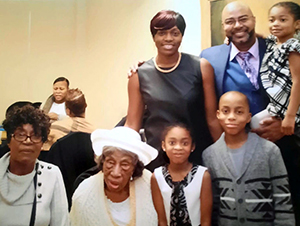
Sophia Williams and Elizabeth Glasford, the mother and grandmother of Frank Williams, respectively, are seated on the front row from left at Glasford’s 100th birthday celebration with Williams, his wife Tisha and their children. (Submitted photo)

A decade or so after they emigrated to the United States in the 1980s, she formed a prayer group at Wake Eden Community Baptist Church in the Bronx, N.Y.—one of two congregations Williams now serves as pastor—to pray solely for him, her only child.

Elizabeth Glasford, his grandmother, gave him a blue monogrammed Bible at about the same time, sensing he still loved the Lord, even as he suffered a brief season of declining interest in church. Two months later he surrendered to God.

“It was where his heart was,” said Glasford, who is now 104 years old and living in Poughkeepsie, N.Y. “It was leading towards the almighty God. And I wanted him to grow up a good young man.”

Frank Williams, now the senior pastor of both Wake Eden Community Baptist and Bronx Baptist Church, serves a group of more than 4,000 Black pastors as the new president of the National African American Fellowship of the Southern Baptist Convention.

Among women his mother enlisted to pray for him in his youth is Pauline Heslop, a medical doctor and women’s minister at Bronx Baptist Church, who would become his mother-in-law. Williams married her daughter Tisha in 2006. He and Tisha are parents to Timothy, Tiffany and Trinity.

Mentored by the ‘Bishop of the Bronx’

Williams was mentored by the late Samuel Simpson, a West Indian native who emigrated to the United States in the 1960s before founding the two congregations Williams now pastors. Simpson, who became known as the “Bishop of the Bronx,” is remembered in Southern Baptist life as a trailblazer in race relations who was also a leader in community outreach.

“He talked to me a lot about those experiences, the good and the bad, in terms of Southern Baptists, because when I joined the church, I didn’t know that it was Southern Baptist,” Williams said. “It was later, years later, that I would come to understand the history of Southern Baptists and that we were a part of this congregation with this history.”

He asked Simpson why he became Southern Baptist.

“He would talk to me about those years and some of the experiences he had, and how he navigated that,” Williams said. “Let me give you a specific example. He would intentionally show up to meetings and encourage other Black pastors to be intentional about filling up meetings and being a Black presence in the room.”

Simpson was among the top New York supporters of the Cooperative Program for funding Southern Baptist national and international work, and intentionally involved his church members in denominational activities.

‘Legacy of presence, influence and purpose’

In the 1970s and 1980s, “when he walked in with his church members, many white people got up and left because they wouldn’t want to pray with Blacks in the same room with them,” Williams said. “But there were plenty of others who didn’t—those who did greet them and did pray with them, and so forth.”

Simpson’s ministry of presence, Williams believes, helped mold him to lead NAAF at the current juncture of Southern Baptist life.

“It has helped me to understand that I am a part of a legacy of presence, influence and purpose within this denomination, that I’m not a Southern Baptist by chance,” Williams said. “There is a purpose for this, and God is using many churches to help his body, the body of Christ, to help within this denomination to grow out of the stigma of its racial past and the realities of the current racial bias that may still linger in some aspects of our denominational life.

“We are a part of the solution. That’s how I see that … those stories. And these are people who I still know who went through that.”

Williams referenced deacons who shared stories of purposefully seeking Southern Baptist churches while on family summer vacations in the South, and visiting them unannounced.

“And they would tell me that some churches would be warm and welcoming, but there were plenty of experiences over those years where ushers wouldn’t greet them, people wouldn’t say anything and they would feel unwelcome and ostracized, and they would know it’s because they’re Blacks,” Williams said. “They would be the only Black people in that congregation that Sunday morning.”

‘Positive force within the SBC’

Marshal Ausberry, pastor of Antioch Baptist Church in Fairfax Station, Va., and NAAF immediate past president, commends Williams as his successor at the national fellowship.

“Frank will work well fulfilling the mission of NAAF as he works with SBC leadership and entity leaders,” Ausberry said. “Frank is a dedicated, positive force within the SBC who works cooperatively to reach the lost, plant churches and show the world that we love one another through Jesus Christ.”

Williams has exercised leadership within NAAF formerly as treasurer and vice president.

“Frank is very insightful in diagnosing issues and always sees things through a biblical prism as he makes decisions that best represent Christ and live out the gospel,” Ausberry said.

Williams was ordained to the gospel ministry at Bronx Baptist Church in 2002, and has held both of his current pastorates since 2013. He was interim pastor at Wake Eden from April 2011 until March 2013, and assistant pastor at Bronx Baptist from February 2002 until June 2013.

He served 18 months as interim executive director of the Metropolitan New York Baptist Association, two years as chairperson of the group’s executive board, and participated in association prayer and youth ministry initiatives. He has served three terms on the Executive Board of the Baptist Convention of New York.

Involved in ministry and missions

Bronx Baptist and Wake Eden churches are active in ministry and missions including a Christian academy, a community enrichment center, food distributions, community housing development, economic development research for immigrants, prison ministry and nursing home outreaches.

Among church plants the two congregations have sponsored are Power Point Baptist Church and The Kenyan Fellowship in New Jersey, and A Better City Movement Church in the Bronx.

Williams serves New York as first vice president of the Clergy Coalition of the 47th Precinct, Inc. From 2005-2012 he was clergy liaison for the New York Police Department. The clergy coalition meets monthly with law enforcement to address community concerns, and has distributed more than $134,000 in scholarships to nearly 500 youth through the Martin Luther King Community Service Award.

Williams said clergy have a responsibility to serve the community.

“The pastors are the shepherds of the community, not just their congregation,” he often tells clergy coalition members. “Jesus was a part of the community life. He would attend community events. He would engage people on a community level. He would engage them in the synagogue. He would engage them at feasts. He would go to their homes.

“This is how Jesus did ministry. And so for me, ministry is not just in the synagogue, in the church building. It has to be at feasts. It has to be on the streets. It has to be in the life of the community.”


Challenges ahead as SBC grapples with sexual abuse

NASHVILLE (RNS)—At their recent annual meeting in Nashville, Southern Baptists spoke loud and clear about sexual abuse.

Messengers at the 2021 Southern Baptist Convention annual meeting directed the convention’s new president to set up a task force to address reports that Southern Baptist leaders have mistreated abuse victims and mishandled allegations of abuse.

Church messengers also approved a resolution stating that “any person in a position of trust or authority who has committed sexual abuse” should be permanently barred from being a pastor or church leader—a zero tolerance policy that is the standard in the scandal-weary Catholic Church.

Putting that nonbinding resolution in practice, however, will be difficult for the nation’s largest Protestant denomination. Every SBC church is autonomous and chooses its own leaders. And many rely on part-time staff or volunteers in leadership roles, often without much vetting.

Advocate points to registered sex offender

As if to punctuate the moves made at the annual meeting, an advocate for sex abuse survivors posted to a blog a week afterward that a registered sex offender has been preaching at a Dallas Southern Baptist church.

Adat Shalom Messianic Church, a Southern Baptist church, allowed Chad Michael Hutchins, a registered sex offender who was convicted for possession of child porn, to teach during services, Amy Smith, of the Watchkeep blog, had discovered.

In a recording of a phone call posted to the blog, Pastor Robin David Rose of Adat Shalom defended Hutchins, saying he had served prison time for his actions. He told Smith that Hutchins’ crime had involved pornography, not harming children, and Hutchins was not involved in children’s ministry. Rose also said God can change people’s hearts and that those who have committed crimes in the past can still serve in the church.

“People can change and people can commit themselves to lives that are … godly and good, and contribute to society,” he told Smith, according to the recording. “And they don’t need to be torn down by people for something that they’ve done years ago.”

Rose told RNS in an email, “Chad Hutchins is NOT a Pastor nor is he in any type of leadership position in our church, nor has he ever been.” He declined further comment.

Whether an occasional preacher is a church leader as was outlined in the resolution adopted by the SBC should not be debatable, said Smith.

“The hypocrisy of it is stunning given the praise that’s been heaped on the Southern Baptist Convention for just passing a motion to begin to appoint a task force,” said Smith. “What’s happening on the ground is situations like this.”

Not everyone on the same page

Despite the often emotional sessions about sex abuse at the annual meeting and a 2019 investigation by the Houston Chronicle that detailed hundreds of abuse cases in the SBC still haunting them, Southern Baptists may not be on the same page about how to deal with abusers or sex offenders.

“There is not 100 percent consensus on how to address this,” said Troy Bush, pastor of Rehoboth Baptist Church in Tucker, Ga. “A body of churches this large with the diversity in the midst of our conservative positions and understanding of Scripture, there is significant divergence on this issue.”

Bush, who has instituted new policies after learning several boys in his church were abused by a minister who served there several decades ago, said congregations need to learn from mental health experts and law enforcement about the challenges of dealing with sexual abusers.

“For many pastors, these are new experiences, and they’re processing what is the best way to handle this,” he said.

Bush favors a registry of people credibly accused of abuse, if not on the national level, then on a state level, though he acknowledges that won’t be enough.

SBC leaders long have resisted such a database, arguing churches should instead rely on government sex offender registries.

It took the Catholic Church in the United States decades to understand the complexity of sexual abuse. In the past, abuse was treated as primarily a sin rather than a crime. Later, the Catholic Church treated abusive priests as suffering from a psychological disorder: They were sent for treatment and often returned to churches where the abuse continued.

Slow to arrive at zero tolerance

Only in the past 20 years or so did the church settle on zero tolerance of any abuse of a minor.

Today, any priest alleged to have sexually abused a child is suspended immediately from ministry and investigated by a lay review board. If he is found to have credibly abused a minor, his case is sent to the Vatican, which will often defrock or laicize him.

That kind of policy is still emerging in Protestant churches, whose policies vary from strict zero tolerance to “endeavoring” to “create a climate of zero tolerance” to unspecified discipline for abuse.

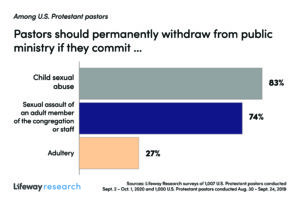
A recent survey of Protestant pastors from LifeWay Research found that 83 percent believe a pastor who sexually abuses children should “permanently withdraw from public ministry.”

According to the survey, 74 percent said a pastor who sexually assaults an adult in the church or a church staff should leave permanently and only 27 percent said that a pastor who commits adultery should withdraw from ministry permanently.

Some SBC leaders believe the actions of the convention to stem sexual abuse are overwrought.

“The courts of law work with the standard, “innocent till proven guilty,” but we seemed to have flipped that in our zeal to root out malefactors and shun the shameful,” wrote Mark Coppenger on his blog on June 23.

Coppenger, a former president of Midwestern Baptist Theological Seminary, now serves on the steering council of the Conservative Baptist Network, a group of SBC pastors and leaders who claim the convention has become liberal.

The convention went too far in calling for an inquiry into how SBC leaders handled allegations of abuse and mistreated victims, he insisted.

“The problem was being exaggerated and weaponized to attack the decency of good people and good institutions,” he said.

In 2019, the Executive Committee of the SBC declined an inquiry into seven of 10 churches suspected of employing sex abusers or allowing them to volunteer with children.

One of the seven was Trinity Baptist Church, where the same minister who abused children at Tony Bush’s Rehoboth Baptist Church back in the 1980s was now working. That minister has since been fired but has never been criminally charged. Many of his victims, now grown men, can no longer press charges because the statute of limitations in Georgia has expired.

Kathleen McChesney, a former FBI special agent and former executive director of the U.S. Council of Catholic Bishops’ Office of Child and Youth Protection, said it is important for churches to work together on preventing and dealing with abuse.

Anything that happens at one church affects all the churches in a denomination, she said. From the outside world’s perspective, all of those churches are connected.

“It’s really important that, on the issue of protecting the young and the vulnerable, everybody is on the same page, everybody agrees that we are going to protect people, we are going to respond appropriately if we hear a case—that we are going to engage an outside independent investigator, either law enforcement or professional investigators—on every allegation,” McChesney said.

McChesney disagreed with those who try to downplay how common abuse is. That argument is no comfort for abuse survivors and their families. Instead, she stresses the need for church leaders in local and national settings to focus on preventing abuse.

Even one case of abuse, she said, is too many.

“Your goal has to be no cases,” she said.


Litton, Greear say permission granted to borrow from sermon

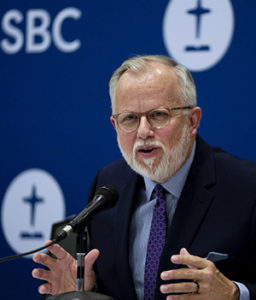
NASHVILLE (BP)—Following the release of a video showing similarities in a sermon, SBC President Ed Litton and his predecessor J.D. Greear said Litton had sought and received permission to use material from a sermon earlier preached by Greear.

The video, which was released June 24, contains six minutes, 57 seconds of interwoven clips from a sermon delivered by Greear in January 2019 and another by Litton in January 2020. Both messages, based in the book of Romans, addressed homosexuality. Greear’s sermon lasted 53 minutes, 31 seconds; Litton’s was 40 minutes, 45 seconds in length.

JD Greear 200In a statement released June 26, Litton, senior pastor of Redemption Church near Mobile, Ala., said although he had received permission, he apologized for not crediting Greear. Greear confirmed Litton’s account in a statement issued the same day, writing:
“I told him whatever bullets of mine worked in his gun, to use them!”

Litton was elected SBC president June 15 at the SBC annual meeting in Nashville, succeeding Greear. After the election, he described the SBC as “a family” that sometimes seems dysfunctional but said he hoped to build bridges during his tenure, and that Southern Baptists would “leave this place focused … with a direction—and I believe a better direction—for the future.”

In the statement, Litton described a sermon preparation process involving a preaching team of eight men from the Redemption congregation and staff who “meet weekly to discuss study insights, outlines, and approaches to the text” in addition to consulting commentaries as well as other books and individuals.

Permission obtained to use material

Ed Litton answers questions during a news conference following his election as Southern Baptist Convention president. (Photo / Adam Covington)

According to Litton, as the team met to plan a series on Romans, their process led them to Greear’s message on Romans 1, which Litton found “insightful, particularly his three points of application.”

Litton said along with permission to use that material, Redemption’s preaching team also secured permission from The Summit Church to use the chapter and verse breakdown.

“My own take on these kinds of things is usually shaped by the input of many godly men and women,” Greear wrote. “Ed and I have been friends for many years and we have talked often about these matters, and I was honored that he found my presentation useful.”

That particular sermon, Greear wrote, had “got[ten] a lot of traction, and clips and summaries of this message were shared on a number of blog and podcast sites.” He added that it was “one of the most widely distributed messages I’ve ever preached at The Summit Church.”

In his June 26 statement, Greear also responded to accusations that in the sermon, he had adapted a story from Paul David Tripp as his own. The account was about seeing the lostness on display while visiting a pagan temple—Greear in Southeast Asia and Tripp in northern India.

“I had had the same experience [as Tripp],” said Greear, who served in Southeast Asia with the International Mission Board. “In fact, almost every missionary I know has had this same moment of revelation. It’s a common insight among missionaries on the field, one that is shared often in prayer and support circles.”

Greear said he had related the experiences as his own because they had, indeed, happened to him and were common among missionaries. Litton, who has never lived in Asia, chose instead to relate the story in Tripp’s words.

In a statement released June 28, elders of Redemption Church addressed their reasoning in removing some sermons from the church’s YouTube channel and website.

“By the action of the leadership at Redemption Church we have taken down sermon series prior to 2020 because people were going through sermons in an attempt to discredit and malign our pastor,” the statement from the elders said. “It is our highest priority to care for and shepherd our church.”

Sermons from 2020 through the present are posted to Redemption’s YouTube channel. Sermons from 2021 are currently posted to the church’s website.

The video with clips from Greear’s and Litton’s sermons is hosted by an anonymous YouTube account, which was created June 24, the same day the video was published. The anonymous account has no other videos.

‘I should have given him credit’

In the statement issued Saturday, Litton said he should have publicly credited Greear at the time of his sermon.

“As any pastor who preaches regularly knows, we often rely on scholars and fellow pastors to help us think and communicate more clearly with the goal of faithfully preaching the truths of Scripture to our congregations,” Litton wrote. “But I am sorry for not mentioning J.D.’s generosity and ownership of these points. I should have given him credit as I shared these insights.”

Litton wrote that “out of a commitment to full transparency,” he had gone through all 46 sermons in the Romans series, finding “in some places similar illustrations, quotes or points of application.” He said one sermon shared a title with a Summit sermon, another a similar outline.

Addressing the matter, he wrote, is important “to provide the truth and to take responsibility for places where I should have been more careful.”

“I am committed to being a man of integrity and humility,” Litton wrote. “I will not waver from that as I lead Redemption Church to be Christ followers and the SBC to unite around her mission.”


Cientos de hispanos celebran la providencia de Dios a través 2020 antes de la reunión anual de la SBC

#NASHVILLE, Tenn. (BP) – Los bautistas hispanos se presentaron por centenares a la celebración hispana antes de la reunión anual de la Convención Bautista del Sur (SBC) celebrada en Nashville.

Los aproximadamente 800 líderes, pastores y familias hispanos que asistieron a la celebración de adoración representaron iglesias de todo Estados Unidos, incluido Puerto Rico.

Entre los sets de adoración dirigidos por The Florida Worship Band con una orquesta en vivo dirigida por el renombrado Camp Kirkland, una entrevista con el pastor y médico Miguel Nuñez, los saludos de Ronnie Floyd y un mensaje bíblico del pastor Ramon Medina, no hubo un momento aburrido o tranquilo esa noche.

Las iglesias hispanas, como otras, se apresuraron a encontrar nuevas formas de hacer iglesia cuando la pandemia cambió la vida como todos la conocían en marzo de 2020. Un poco más de un año después, las iglesias están comenzando a caminar cautelosamente hacia una forma de normalidad nuevamente pero con cierta incertidumbre.

Como pastor, Núñez comprende lo que muchos en esa sala se preguntaban y temían y, como médico, pudo ofrecerles algunas respuestas y consuelo. En una entrevista dirigida por Julio Arriola, director ejecutivo de relaciones y movilización hispana de la SBC EC, Núñez habló sobre la vacunación, la inmunidad, las nuevas variantes del virus y la prudencia mientras el mundo se abre nuevamente.

Cuando se trata de la vacuna, Núñez dijo que debe confiar en la ciencia que creó la vacuna y no dejar que las publicaciones en las redes sociales influyan en su decisión final de vacunarse. Pero, dijo, “no estemos divididos por una vacuna, sino unidos por el Evangelio”.

A medida que surgen nuevas variantes en el United Kingdom, África y China, Nuñez explica que las vacunas disponibles en Estados Unidos siguen siendo eficaces contra ellas.

“Estas no son cepas nuevas; son nuevas variantes. A medida que el virus se copia a sí mismo, comete errores y eso conduce a las nuevas variantes que estamos viendo, y nuestras vacunas siguen siendo eficaces para protegernos de ellas”. La esencia del virus, explicó, sigue siendo la misma.

Al leer de Hechos 16, Medina recordó a los pastores que los planes humanos, no importa cuán buenos y pensados ​​sean, nunca serán mejores que los de Dios y para entender el plan de Dios, los corazones de los creyentes deben ser humildes y estar listos para obedecer.

Como Pablo planeaba ir a Asia Menor a predicar el Evangelio, muchos pastores e iglesias tenían planes para 2020 y sus ministerios. Pablo y su equipo no pudieron evangelizar en Asia Menor al igual que muchas iglesias y pastores no pudieron llevar a cabo los planes para 2020.

Aún así, el plan de Dios era que Pablo y su equipo predicaran en Macedonia y una vez que Pablo reconoció y entendió esto, se preparó y salió. Así también, dijo Medina, los creyentes deben escuchar la voz de Dios y obedecer la tarea que él pone ante su pueblo.

El presidente y CEO del Comité Ejecutivo (EC) de la SBC, Ronnie Floyd, hizo una aparición sorpresa en la reunión hispana en la que animó apasionadamente a los hispanos a llegar a otros hispanos enviando más trabajadores al campo.

“Hay más de 60 millones de hispanos en Estados Unidos. Para el 2030, habrá 75 millones, para el 2040, 88 millones y para el 2060 probablemente habrá 111 millones… por eso ustedes son la mayor oportunidad de crecimiento dentro de la SBC”.

Floyd presentó un fragmento de Visión 2025 ante el grupo y los desafió a plantar 800-1000 iglesias hispanas para 2025 y a enviar más misioneros hispanos bilingües a grupos étnicos no alcanzados.

Durante los últimos diez años, se han plantado 130 iglesias hispanas cada año en América del Norte según la Junta de Misiones Norteamericana (NAMB).

Al final de la noche especial, Julio Arriola, director ejecutivo de relaciones y movilización hispana de la SBC EC, cantó “La Bendición” y la orquesta cerró la noche con una conmovedora interpretación de “Joyful, Joyful We Adore Thee”. Cuando los mensajeros hispanos dejaron el salón del Music City Center esa noche, muchos se sintieron animados, renovados y emocionados por lo que Dios tiene reservado para sus ministerios.