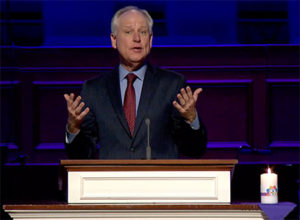
Lifeway dona 1.000 Biblias a niños en la frontera México-Estados Unidos
September 15, 2021
EL PASO (BP) – Los inmigrantes detenidos en la frontera México-Estados Unidos enfrentan muchas necesidades, la mayor de las cuales es quizá la esperanza. Lifeway Christian Resources recientemente pudo asociarse con una planta de iglesia de la Junta de Misiones Norteamericana (NAMB, por sus siglas en inglés) para enviar 1,000 Biblias en español a los niños desplazados en la frontera.
“Estoy muy agradecido de que Lifeway haya tenido la oportunidad de asociarse con nuestros amigos de NAMB para suministrar Biblias en español a los niños y familias en la frontera entre Estados Unidos y México”, dijo Ben Mandrell, presidente y director ejecutivo de Lifeway. “El Evangelio de Jesucristo es el mensaje de esperanza más poderoso que existe en el mundo, y sabemos que Su Palabra nunca vuelve vacía”.
Lifeway fue consciente de la necesidad de Biblias por Félix Cabrera, director principal de Send Network Español de la NAMB, que había estado en contacto con Brandon Hembree, pastor principal de Impact Church en Virginia. Impact Church tiene una iglesia hermana cerca de la frontera en El Paso, Texas, que regularmente ministra a inmigrantes en centros de detención.
“Tan pronto como supimos de la necesidad en la frontera, inmediatamente pensé en mis hermanos y hermanas de Lifeway para que juntos pudiéramos aprovechar esta oportunidad y regalar Biblias a estos niños”, dijo Cabrera. “Este es un trabajo colaborativo del reino que se alinea perfectamente con lo que estamos tratando de lograr en NAMB”.
Hembree señaló la forma en que Dios se mueve como el viento (Juan 3:8) al describir el camino inesperado que lo llevó a plantar una iglesia en el área de D.C. para llegar a las naciones, un paso que, a su vez, enviaría a uno de los miembros de la iglesia a la frontera sur para facilitar el alcance del Evangelio.
“Desde el fondo de mi corazón, gracias, Lifeway, por tu generosidad centrada en el Evangelio. Debido a su misión y amor por Cristo, pudimos proveer la Palabra de Dios a miles de personas desplazadas en nuestro propio vecindario”, dijo. “Nunca olvidaré la primera llamada telefónica que recibí de nuestro miembro que trabajaba en la frontera – la urgencia y la compasión en su voz – transmitiendo que todo lo que los niños seguían pidiendo eran Biblias.”
“Debido a nuestra asociación, los niños han sido consolados, los padres se han sentido amados y familias enteras han recibido la eterna e inmensa esperanza del evangelio de Jesucristo”.
Lifeway Global se encargó de organizar y facilitar la donación que consistió en 1.000 copias de Biblias RSV cubiertas de tela de B&H Publishing.
“Oportunidades como estas son raras y providenciales”, dijo Giancarlo Montemayor, director de publicación global. “Cuando recibí la llamada de NAMB preguntando si podíamos ayudar, mi corazón se llenó de alegría. Estas Biblias donadas no podrían haber terminado en mejores manos. Nuestra oración es que estos niños lleguen a conocer a Jesús a través de Su Palabra”.
César Custodio es director de ventas y marketing en español de Lifeway. “Dios ha bendecido nuestra línea editorial y gracias a nuestras diferentes asociaciones pudimos donar estas Biblias y satisfacer una necesidad”, dijo Custodio. “Sabemos que serán de gran bendición para aquellos que necesitan paz y guía a través de la Palabra”.
La IMB anuncia el Domingo de las misiones hispanas el 26 de septiembre
September 15, 2021
Como parte del Mes de la Herencia Hispana, que se celebra del 15 de septiembre al 15 de octubre, la IMB ha designado el domingo 26 de septiembre como Domingo de las misiones hispanas.
Oscar Tortolero (IMB Photo)
La IMB anima a las iglesias a reconocer los logros y las contribuciones de las iglesias hispanas y los misioneros hispanos de la IMB en llevar el evangelio a las naciones.
“La IMB tiene misioneros hispanos que sirven entre las etnias no alcanzadas de todo el mundo”, dice Oscar Tortolero, el movilizador estratégico hispano de la IMB.
Más de 60 millones de hispanos viven actualmente en los EE. UU. y Oscar informa que los Bautistas del Sur tienen más de 3,000 iglesias hispanas.
“Tenemos una gran oportunidad de movilizar a las iglesias hispanas para que oren, ofrenden, vayan y envíen”, dice Tortolero, refiriéndose al objetivo de la IMB de ver una relación más estrecha con las iglesias hispanas y los aliados misioneros globales de los países hispanos.
Floyd not committed to waiving attorney-client privilege
September 15, 2021
NASHVILLE, Tenn. (RNS)— Ronnie Floyd, president of the Southern Baptist Convention’s Executive Committee, wrote an essay a year ago describing the leadership structure of the nation’s largest Protestant denomination.
In the essay, he cited a cherished ideal held by Southern Baptist pastors: “The local church is the headquarters of our Southern Baptist Convention.”
“If we ever invert this order in our mindset and practice, then we will begin a downhill slide that may become irreversible,” wrote Floyd, whose agency oversees the work of the convention between the SBC’s annual meetings.
“Churches operate under the Lordship of Jesus Christ, not under Baptist bodies who exist to assist these churches in their work of the Great Commission.”
Now, an investigation into the Executive Committee’s handling of sexual abuse claims over the past two decades may test Floyd’s commitment to that ideal.
Abuse advocates called SBC leaders to account
Over the past two years, the SBC has been rocked by a sex abuse scandal, following an investigation by the Houston Chronicle that detailed hundreds of abuse cases in Southern Baptist churches.
That led SBC leaders to hold a service of lament and to launch a new denominational program to care for abuse survivors. The denomination also set up a system to cut loose any church that had covered up or mishandled abuse.
Earlier this year, the SBC Executive Committee ousted a pair of churches that employed pastors who had been abusers.
But abuse advocates claimed that SBC leaders themselves had to answer for mistreatment of abuse survivors and how they mishandled claims of abuse. Those claims were repeated in letters from former Baptist ethicist Russell Moore, which became public after his departure from the SBC’s Ethics and Religious Liberty Commission.
Local church messengers to the SBC’s annual meeting in Nashville, Tenn., in June rejected plans by the Executive Committee to hire an outside firm to review its handling of abuse claims and treatment of abuse survivors.
Instead, the messengers instructed SBC newly elected President Ed Litton, an Alabama pastor who holds a mostly ceremonial role, to appoint a task force to oversee an independent investigation of the Executive Committee.
Guidepost Solutions to conduct investigation
That committee, according to a motion approved by the messengers, is responsible for hiring an outside firm for the investigation and setting the boundaries of the investigation.
The Southern Baptist Convention Executive Committee building in Nashville, Tenn. (Baptist Press Photo)
The task force was also directed to agree to follow best practices suggested by the outside firm they hired, “including but not limited to the Executive Committee staff and members waiving attorney client privilege in order to ensure full access to information and accuracy in the review.”
On Sept. 9, the task force announced it had completed the first part of its mandate by hiring Guidepost Solutions, an international consulting firm, to carry out the investigation and waived its attorney-client privilege in all communications with Guidepost or the Executive Committee, according to a letter of agreement between the task force and Guidepost.
But in public statements and written communication to Executive Committee members, Floyd has not committed to waiving the committee’s attorney-client privilege in its contacts with Guidepost. Floyd also raised questions about whether doing so would violate SBC bylaws.
Floyd questions best practices outlined by Guidepost
Floyd did not respond to specific questions from Religion News Service, but according to a letter to the Executive Committee obtained by Religion News Service, Floyd said that statements by the task force should not be considered legal advice, adding that the committee had to decide whether or not to follow the best practices outlined by Guidepost.
“We should seek to understand these best practices before we decide which practices to apply,” he said. “For example, if we do this incorrectly, will we be as a nonprofit organization, denying our rights to effective counsel in the middle of litigation?”
Floyd also downplayed the role of the abuse task force, saying its only role was to hire an outside firm, wait for that firm to issue a report and then report back to the messengers.
The task force argues, however, that attorney-client privilege has been used in the past by other groups to hide important information from investigators and that claiming privilege would run counter to the will of SBC messengers.
“The messengers sent a clear message to members of the SBC Executive Committee by passing the motion and emphasizing that they expect an open and transparent investigation with waiver of privilege,” the task force stated in an update on its website. “Members of the SBC Executive Committee, who hold a position of trust within the SBC, have a duty to be open and forthright, and operate at the direction of the messengers.”
Waiving privilege essential, maker of motion says
Pastor Grant Gaines of Belle Aire Baptist Church in Murfreesboro, Tenn., presented a motion calling for a task force to oversee a third-party investigation into allegations of mishandled abuse claims at the SBC Executive Committee. (RNS Photo / Kit Doyle)
Grant Gaines, pastor of Belle Aire Baptist Church in Murfreesboro, Tenn., agrees. Gaines drafted the motion at the SBC’s June meeting calling for the independent investigation, and when action on the motion was delayed, he appealed to messengers to overrule that decision. That appeal was successful, and the motion passed by a wide margin.
He said that waiving privilege is essential to making sure that investigators have access to all the information they need. Gaines said he hopes the Executive Committee will abide by the will of the messengers.
“I expect the Executive Committee to vote to waive privilege when they meet in September,” Gaines said.
Failing to do that, Gaines said, would put the Executive Committee in conflict with the clear statement by church messengers.
Defying will of messengers the ‘nuclear option’
Floyd’s lack of commitment to waiving privilege or a refusal by the Executive Committee to follow the will of the messengers could lead to a crisis in the denomination, said Bart Barber, pastor of First Baptist Church in Farmersville, an expert on Southern Baptist governance.
Technically, said Barber, the Executive Committee is not obligated to heed the messengers on the question of waiving privilege. That decision is in the hands of Executive Committee members. But defying the will of the messengers was a “nuclear option,” Barber said, and could have significant consequences. The SBC’s entire governance model is built on “a rope of sand.”
“What makes that rope of sand work is trust,” he said.
Failing to follow the will of the trustees would be “a tremendous violation of trust” and undermines the claim that churches—not denominational leaders—run the convention, Barber added.
‘We have to do this the right way’
Pastor Rolland Slade of Meridian Baptist Church in El Cajon, Calif., is chair of the SBC Executive Committee. (Screen Capture)
Rolland Slade, senior pastor of Meridian Baptist Church in El Cajon, Calif., and chair of the Executive Committee said that he believes the committee is obligated to abide by the will of the messengers.
“We don’t have a choice,” he said.
During the Executive Committee’s upcoming meeting, to be held Sept. 20-21, in Nashville, Slade expects committee members to have in-depth conversations about how to comply with the will of the messengers.
“We have to do this the right way,” he said.
After the task force announcement about Guidepost became public, the Executive Committee issued a statement welcoming the news.
The Executive Committee’s statement also addressed the question of privilege, saying leaders were open to the idea of waiving privilege in a limited manner.
“We look forward to meeting again with Guidepost in order to expeditiously coordinate our activities in support of their important work. Also, in response to considerable and unhelpful speculation, we would like to make one additional point clear: the Executive Committee leadership is not opposed in principle to requests for the waiving of attorney-client privilege considerations when it is relevant, it is appropriate, and it is in consultation with the third party commissioned to conduct the inquiry,” the statement from the Executive Committee said. “Speculation to the contrary is internet rumor and untrue.”
Firm selected to conduct review of SBC Executive Committee
September 15, 2021
ASHEVILLE, N.C. (BP)—A task force appointed by Southern Baptist Convention President Ed Litton has selected Guidepost Solutions to oversee a third-party review of the SBC Executive Committee’s past handling of sexual abuse issues.
According to a statement released by the task force, Guidepost Solutions was selected in part due to its “extensive background in abuse, trauma, and abusive dynamics, with considerable background involving abuse in religious contexts, significant experience with corporate and legal dynamics which contribute to the mishandling of or proper responses to, sexual abuse, survivor care and abuse prevention.”
The task force also cited Guidepost Solutions’ “robust understanding of and focus on the impact of leadership, with significant skill assessing and reporting on cultural dynamics of an institution and their impact on abuse and abuse prevention.”
Guidepost’s “in-depth understanding of best-standards practices for investigations and assessments with the ability to provide clear guidance and input to the task force on best methods for pursuing transparency, accountability, and reform in the investigative process” was also commended in the task force release.
Mandated by SBC messengers
Messengers approved the formation of the task force at the 2021 SBC annual meeting in June, just five days after the Executive Committee had announced Guidepost would conduct a similar review at its own request. The Executive Committee-commissioned review was subsequently put on hold pending the actions of the task force.
In a statement released to Baptist Press, the SBC Executive Committee welcomed the announcement saying: “Now, nearly three months after the annual meeting, the Executive Committee welcomes the announcement that Guidepost Solutions has been chosen by the task force to conduct the third-party inquiry of the Executive Committee.”
Pastor Rolland Slade of Meridian Baptist Church in El Cajon, Calif., is chair of the SBC Executive Committee. (Screen Capture)
Rolland Slade, Executive Committee chairman, also affirmed the Guidepost selection, saying: “I thank the task force for their diligence in selecting Guidepost Solutions. Now that we know the firm, we can all move forward to the next steps. As I asked in June, please be patient with all of us as we walk this road together. We want to make sure we do things right.”
The task force previously had released a statement Sept. 3 posting answers to frequently asked questions regarding the task force and its work. Recommendations in the statement ranged from the scope of the independent review to methods of funding the probe.
Regarding funding for the review, the task force noted that the “Executive Committee is responsible for figuring out how” to fund the review but recommended the Executive Committee use its cash reserves to cover the associated costs, though the original motion stated that “the review shall be funded by allocations from the Cooperative Program.”
Probe does not include abuse at local-church level
The task force also clarified that while the time frame of the independent review goes back to Jan. 1, 2000, its scope should focus on the actions of the Executive Committee alone, saying the parameters of the third-party independent review “do not include any allegations of sexual abuse or mishandling of abuse at the local church level, except to the extent that those allegations against local church pastors impacted or were impacted by the words and actions of the Executive Committee.”
The group is also calling on members of the Executive Committee to waive attorney-client privilege, saying that “an overwhelming majority of SBC messengers has requested it.”
The task force said it believes waiving attorney-client privilege “is necessary for assessing any mishandling, for accurately making recommendations for reform, and for accountability and transparency. Waiver is absolutely critical to ensuring that the third-party firm has full access to relevant and material information.”
Regarding the questions related to attorney-client privilege, the Executive Committee statement said “the Executive Committee leadership is not opposed in principle to requests for the waiving of attorney-client privilege considerations when it is relevant, it is appropriate, and it is in consultation with the third-party commissioned to conduct the inquiry, Guidepost. Speculation to the contrary is internet rumor and untrue.
“Ultimately, these are decisions for the Executive Committee’s board of trustees, and we are working to provide information to the board of trustees so they can make informed decisions they deem appropriate within the confines of all legal (i.e. fiduciary) considerations as everyone seeks to appropriately implement the will of the messengers. We urge the public to leave this review now to Guidepost and the Executive Committee to be handled in an appropriate and professional manner on behalf of all Southern Baptists.”
Executive Committee meets next week
The SBC Executive Committee will meet Sept. 20-21 and is expected to address items related to the independent review at that time.
Task force members are Chair Bruce Frank, lead pastor of Biltmore Baptist Church of Arden, N.C.; Vice Chair Marshall Blalock, pastor of First Baptist Church of Charleston, S.C.;
John Damon, chief executive officer of Canopy Children’s Solutions, Jackson, Miss., and member of Broadmoor Baptist Church, Madison, Miss.; Liz Evan, judicial law clerk at Tennessee Court of Criminal Appeals, Nashville, and member of Hilldale Baptist Church, Clarksville, Tenn.; Heather Evans, director of Evans Counseling Services, Coopersburg, Pa., and member of Cornerstone Presbyterian Church in Center Valley, Pa.; Andrew Hébert, lead pastor of Paramount Baptist Church, Amarillo; and Bucas Sterling III, senior pastor of Kettering Baptist Church, Upper Marlboro, Md.
Rachael Denhollander, an attorney, advocate and educator from Louisville, Ky., and Chris Moles, an ordained minister from the Christian and Missionary Alliance and ACBC certified counselor, serve as advisers to the group.
According to the task force release, survivors, witnesses and other members of the public who wish to communicate with the Guidepost team can email ECCInvestigation@guidepostsolutions.com.
The task force also stated that “persons reporting information to this email address can do so anonymously. Names and other personally identifying information of survivors and witnesses who choose to report information to this email address will remain private so long as permitted by law. Only Guidepost will have access to the information submitted to this email address; it is not accessible to the task force or the SBC.”
IMB updates vaccination policy to maximize access
September 15, 2021
RICHMOND, Va. (BP)—Desiring to help its personnel maintain access to unreached peoples and places and remain healthy, the Southern Baptist Convention’s International Mission Board announced a policy Sept. 8 related to COVID-19 vaccinations.
This policy addresses the challenges of overseas life and travel requirements for IMB missionary personnel and staff members who travel overseas.
The policy requires IMB missionaries and their children ages 16 and older to be vaccinated against COVID-19 prior to attending field personnel orientation prior to their long-term field service.
IMB missionaries and their children ages 16 and older also are required to be vaccinated against COVID-19 prior to attending a stateside conference during their periodic return to the United States.
Attendance at the two conferences is mandatory for missionaries before initial entry or return to a country of service. The policy also requires staff members who must interact with field personnel at field personnel orientation and stateside conferences to obtain COVID-19 vaccination. The policy is effective immediately.
Volunteers serving with IMB field teams must follow the recommendations and requirements of the government of the hosting country for the volunteer trip. IMB does, however, recommend those who are not required to be vaccinated by the host country to consider being vaccinated, given the risks associated with travel.
The recommendation for volunteers is designed to protect not only the volunteer, but also the field personnel, national partners and ongoing field ministries.
Maintain access to unreached, protect health
“The International Mission Board exists to serve Southern Baptists in carrying out the Great Commission to make disciples of all nations—even to those people in the overpopulated urban cities, even to those in the hardest-to-reach jungles and plains,” said IMB President Paul Chitwood.
“And the IMB is pressing forward to share the gospel even in the midst of an ongoing global pandemic that is no respecter of geographical boundaries or human demographics.”
“We must make every wise decision, even when a decision is exceptionally difficult, that maintains our team members’ access to the growing number of unreached peoples and places around the world where vaccines are required for entry,” Chitwood added. “We also want to do all we can to undergird our team members’ spiritual and physical health to maximize our effectiveness as we serve Southern Baptists in our global gospel endeavors.”
A growing number of the countries in which IMB field personnel serve are requiring proof of a COVID-19 vaccine to enter, remain in or exit the country. Some field personnel have reported incidents in their countries of service where proof of vaccination must be shown for adults and older children to board a subway, enter a shopping mall, eat in a restaurant, or board an airplane for travel.
Vaccination requirements are not new for the IMB. Since the IMB implemented vaccine requirements for field personnel in the 1980s, the number of vaccine-preventable illnesses have significantly decreased among IMB field personnel and their families.
Adhering to WHO and CDC recommendations
The IMB requires certain vaccines for several reasons: Vaccines prevent unnecessary sickness, suffering, and even death for field personnel and their families; vaccines protect national partners and those who missionaries minister to from contracting illnesses from IMB personnel and their families; vaccines help ensure better health for field personnel so they can focus on the missionary task; and vaccines lower medical expenses, which fosters good stewardship of the funds that have been entrusted to IMB.
IMB’s medical team and senior leadership team are adhering to precautions recommended by the World Health Organization and the Centers for Disease Control and are following all local and federal regulations with the policy. As of Sept. 3, 2021, the Pfizer vaccination is available in the United States and is authorized for everyone age 16 and older. Personnel and staff received a list of additional approved vaccines that fulfill the policy for adults, as well as directives for those personnel who have a physician-documented medical exception.
Senior leaders acknowledge that the policy may result in some field personnel and staff members choosing not to join the IMB; to take a leave of absence; or to discontinue their employment with the IMB because of the requirement. Throughout the years, others have opted out of serving internationally with IMB due to other vaccine requirements.
“We take seriously our responsibility to make the best decisions we can for those serving with IMB,” said Todd Lafferty, IMB executive vice president. “The challenges of COVID-19 continue to deeply affect us all. Some have lost loved ones, others have dealt personally with terrible illness, and many remain in lockdown throughout the world. Just when it seems the pandemic may be loosening its grip, more information arrives, and we encounter new complications.”
“Praise the Lord that we all have hope and faith in Jesus Christ to carry us through these turbulent times,” Lafferty added. “We know exactly who is in control, and we cannot lose sight of how God is using us for his purpose and mission in our day. We are called to bring the hope of eternal life to those who have not yet had the opportunity to hear the gospel.”
Navigating difficult decisions
Chitwood said IMB’s senior leadership team and medical personnel continue to navigate many difficult decisions stemming from COVID-19 and the ways in which it affects various family situations and plans for IMB’s field personnel and staff. He said they continue to seek God’s wisdom as the organization navigates each difficult decision and as conditions continue to change.
Ultimately, he said, the IMB aims to remain on mission, unwavering in its work to advance the gospel.
“We’re praying that this will be a time of global awakening, that many would come to know the Lord as the fear of the global pandemic lingers,” Chitwood said. “We know that the Lord has given an ultimate cure.
“As humans, we’re afraid of death, but the believer doesn’t have to be afraid of death. Death has no sting, and the Lord’s given us his vision in Revelation 7:9—a great multitude from every nation, from all tribes, all peoples, all languages around the throne in heaven.
“We’re praying and trusting that some will be there because of the way God used this pandemic to foster a new openness to the gospel. We want to be on the field to take that good news to these souls.”
Beth Moore and Russell Moore share laughter, regrets
September 15, 2021
NASHVILLE (RNS)—Two of the best-known ex-Southern Baptist leaders in the country got together at a Nashville church on Sept. 9 for a night filled with Bible verses, banter and bittersweet memories.
The event, entitled “Lessons in Leaving (and Staying),” featured Bible teacher Beth Moore and ethicist Russell Moore—and was the first live event for a new Public Theology Project from Christianity Today magazine, where Russell Moore landed after leaving the Southern Baptist Convention’s Ethics and Religious Liberty Commission.
Beth Moore is founder of Living Proof Ministries in Houston. (Courtesy Photo)
The event, held at Immanuel Church, west of downtown Nashville, started with a mock confession from Beth Moore.
“I am Russell Moore’s mother,” she said, and then pointed to a pair of screens on the side of the stage, where a series of photos from a fake family scrapbook flashed, all with Russell Moore’s head pasted on each of them. In real life the two are not related, a fact often lost on their critics.
The joke set the tone for the night—which was filled with good-natured banter about the state of the evangelical church, as well as poignant reflections on what each lost in departing from the faith community that raised them.
Left SBC after controversy
Both of the Moores left the SBC earlier this year after months of ongoing controversy, most of it related to their public criticism of Donald Trump, their concerns over racism in the denomination and their advocacy for survivors of sexual abuse among evangelicals.
Leaving the Southern Baptist Convention was like a death of a close friend, said Beth Moore. The SBC had been her whole world, and her home church had helped save her while growing up in a troubled home.
Her faith in her fellow Baptists was rocked when many Baptist leaders rallied to support Trump after the release of Access Hollywood tapes that captured the then-presidential candidate making lewd comments about forcing himself on women.
Beth Moore, who has spent decades in women’s ministry, said she felt compelled to speak up after hearing the remarks, which she learned of while traveling home after spending time with Native American women in Arizona, where some of the women she spoke to had experienced abuse.
“What would you expect out of someone who lives their whole life serving women,” she asked the audience of about 250 people who gathered for the live taping of the newly launched “The Russell Moore Podcast.”
Then she added: “I expected Donald Trump to be Donald Trump. That was not a shock to me. I did not expect us to be us.”
Her 2016 criticism of Trump did not land well. Her ministry, Living Proof, lost millions in revenue, and she became a symbol of “liberalism” invading the SBC, according to her critics.
‘The pulpit had become a threat to women’
Things got worse, she said, after she joked about speaking in a church on Mother’s Day, leading to accusations that Baptist women were trying to take over the pulpits of Southern Baptist churches.
Nothing could be further from the truth, she said. Women are not a threat to the pulpit.
“No, no, no,” she said. “Forgive me. The pulpit had become a threat to women.”
The fallout from leaving the SBC has had moments of consolation, Beth Moore admitted. Many friends have reached out to commiserate with her, and she has found new allies along the way.
She does have one pet peeve. Many well-intentioned friends have reached out to say, “I am so sorry that so many people hate you.”
“There is nothing about that I find helpful,” she said to raucous laughter and applause.
Cost of staying at ERLC too high
For his part, Russell Moore—who recently joined Immanuel, which is not affiliated with the SBC—spoke about his public departure from the ERLC, which came after years of conflict and a pair of investigations into whether or not Moore’s public statements about Trump and issues like immigration and abuse had hurt the SBC.
Russell Moore is former president of the Southern Baptist Convention’s Ethics & Religious Liberty Commission (Photo/Amber Dion)
He said he could have stayed at the ERLC. But the cost would have been too high.
“I could have won the conflict that needed to be fought,” he said. “But I realized I would have to have a conflict. And I didn’t want to be the kind of person I would be on the other side of that.”
Russell Moore also noted his friendship with Beth Moore had come as a surprise. A proponent of complementarianism, a theology that prescribes different roles for men and women in the home and in the church and bars women from the pastorate, he had been critical of her leadership and ministry in the past.
With some chagrin, he pointed out that in 2006, he had called her teaching “a gateway drug to feminism,” a statement he now regrets.
When he was under fire, however, Beth Moore reached out with support, first by direct messages on Twitter, and later with texts. Russell Moore and his wife, Maria, eventually became friends and confidants with Beth Moore, supporting each other through the maelstrom that engulfed them both.
Russell Moore joked that many friends also supported him, some of them even offering to buy him a beer or share a shot with him, something that had not happened since he was a teenager.
Still called to ministry, committed to Jesus
Both of the Moores said that, while they have left the SBC, they have not lost their faith in Jesus. While both love the church, they urged the audience to put their faith in Jesus and trust God is at work.
“I couldn’t let myself ever think this doesn’t end well,” said Beth Moore. “Because that was unacceptable.”
Both of the Moores said they plan to stay in ministry, though Beth Moore admitted retreating from the public eye sounds appealing at times. But God called her to ministry, she said, and had not yet told her to stop.
She made that point while recalling an online controversy caused by outspoken California pastor John McArthur, a noted critic of women in ministry. During an event in 2019, McArthur said Moore should “go home” rather than teaching the Bible.
McArthur’s comment, which was referenced several times on Thursday as a punchline for jokes, never bothered her, Beth Moore said, since the pastor was not a Southern Baptist and she did not know him.
Then she turned to the audience and whispered, “I am not going home.”
“You can’t make me, because you are not my boss.”
Pastors in NY and NJ deal with flash flooding
September 15, 2021
NEW YORK (BP)—Pastor Daniel McGhee had just driven his daughter Emma Kate to college in Jersey City, N.J., and picked up daughter Ella from her downtown Manhattan job when the rain began to pour.
“She and I drove through, actually, some really deep water. We had to really make sure we didn’t get in some water that was too deep for my minivan,” McGhee, lead pastor of Connection Church in Astoria, Queens, said Sept. 3.
“And as we’re driving home, my wife (Kari) calls my daughter and tells her that the basement’s flooding. … She sent us pictures and our basement was flooding and it had about 6 inches of water in it.”
A few miles from McGhee’s Astoria home, Pastor Larry Mayfield was conducting a counseling session at his home in Woodside, Queens, when his church’s children’s director Candace Profit called for help. Dirty water mixed with sewage was flooding her basement apartment home.
New York pastor and church planter Larry Mayfield has begun the process of ripping ruined flooring and sheetrock from his flooded basement in Queens, but will be able to remain in his home.
As Mayfield and his wife Lindsey prepared to help Profit, they encountered their own flooded basement. Lindsey drove the mile to Profit’s home as Larry Mayfield tried to save his basement.
In the Mayfields’ Woodside community of about 85,000 people, a 2-year-old toddler and his parents were among those who died as floodwaters swamped basement apartments too quickly for families to flee.
‘Pulling together and helping one another’
After the remnants of Hurricane Ida moved to the northeast, flash flooding and tornadoes that killed more than 40 people in New York, New Jersey and neighboring states activated pastors to help those in need, Missionary Won Kwak said.
“Churches and planters throughout all five boroughs have been hit hard by the unexpected level of rainfall caused by Ida,” said Kwak, who serves as a non-staff pastor at Mission City Church, a church plant in Brooklyn. “Many are pulling together and helping one another and their neighbors bail out. … Northern New Jersey was also hit very hard.
“Parks and baseball fields and so many areas have become manmade lakes,” Kwak said.
None of the pastors Baptist Press talked to reported any loss of life among their congregations, but some families were displaced. In the congested metropolitan areas impacted, basements are heavily utilized as living spaces.
New York pastor and church planter Larry Mayfield has begun the process of ripping ruined flooring and sheetrock from his flooded basement in Queens, but he will be able to remain in his home. (Photo courtesy of BP)
McGhee’s basement took on as much as 8 inches of “really dirty water,” ruining electronics, photos, clothing and shoes. The family is saving what they can.
“All of my neighbors flooded. … This was aggressive. It was a lot of water that came in,” McGhee said. “What happens is the drainage system just can’t get rid of the water fast enough, and so it just starts to pool up. And as it pools up, it just comes through the doors of your home and just can’t go anywhere fast enough. It’s just overwhelming.”
McGhee’s basement will need to be gutted and renovated, and he’ll likely have to find a new place to live.
“We are still cleaning up, still trying to make sure our place is dried out,” he said. “We’re trying to find another place. … It’s very expensive. Whenever you move, in New York especially, you have to pay a broker fee. A broker fee’s going to cost you an extra month’s rent. So … $4,000 a month for an apartment, you have to pay first month’s rent, you have to pay a one-month’s deposit and a one-month’s broker fee. So you’re looking at $12,000. … We don’t have that kind of money sitting around.”
Connection Church meets in a Lutheran church building that didn’t flood, McGhee was happy to hear.
Mayfield helped McGhee plant Connection Church in 2012 before planting Queens Church Ministry in 2019, a congregation that has grown to 120 members.
‘Pray for our faith to be resilient’
“Most of our church people were good. The only two people that flooded were me and the children’s director,” Mayfield said. “It flooded from my backyard through the house. We’ve ripped up all the floors and taken out sheetrock and stuff. … And then our children’s director, Candace … she lives in a basement apartment, and it flooded about 6 inches.”
Profit, a single mom of four, is displaced and will need to find other housing. She lost most of her family’s clothing, some furniture and many possessions, Mayfield said. Queens Church Ministry rented a storage locker for the two families and others to store belongings at no cost as they clean their homes.
Christians know the biblical answers to such problems, McGhee said, but applying them when tragedy strikes can be more difficult.
“God’s working through all things for the good of those who love the Lord and that, even in the midst of trials, we know that God is with us. He has not abandoned us,” McGhee said. “We know those things foundationally are part of our faith, but functionally many times we don’t feel that in a moment sometimes.”
McGhee encouraged other Christians to pray for those in New York.
“Pray for our faith to be resilient in this time, and … just pray that we would be able to love and serve our neighbors in a way that would help them experience the love of God.”
More than 80 Louisiana Baptist churches damaged
September 15, 2021
ALEXANDRIA, La. (BP)—More than 80 Southern Baptist churches in South Louisiana suffered structural damage due to Hurricane Ida, Louisiana Baptist Convention Director of Missions John Hebert said.
“We have churches ranging from desperate to recovering, and the desperate ones need help. They’re below I-10. Insurance rates are out of this world. It’s going to be tough for them,” Hebert told Baptist Press on Sept. 1.
“But most of our churches will be OK in the long run. It’s just right now, we have a crisis at hand and we need all the help we can get.”
Churches in several communities in Terrebonne, Lafourche, St. John the Baptist and Jefferson parishes were damaged, including churches on the North Shore of Lake Pontchartrain and spanning more than 150 miles inland to Denham Springs. Ida killed at least eight people in the state.
“Devastation runs straight up 55, massively damaged all the way to Denham Springs,” said Hebert, who is assisting churches and pastors in recovery efforts as Southern Baptist disaster relief focuses on the larger community.
“Churches are just trying to get through the week right now,” he said. “We’re trying to just take care of the basic needs. … But they can’t think beyond getting the power back on right now.”
Louisiana deaths include four nursing home residents who died Sept. 2 and were among hundreds evacuated to Tangipahoa Parish ahead of the storm, nola.com reported. The bulk of the deaths from Hurricane Ida, at least 23, occurred in New York, New Jersey, Pennsylvania and Maryland as the remnants of the storm system caused massive flash flooding in the Northeast.
Damaged church serves as feeding site
In Louisiana, Southern Baptists have established about 10 mass feeding units in multiple locations.
“We need volunteers, we need money, we need relief supplies, and that’s what we’re focused on right now, is relief,” Hebert said. “The next phase of this is rebuild. You help them get stabilized, and then you can think about starting to rebuild and get it back the way it was. We need help getting these churches stabilized right now.”
First Baptist Church of Golden Meadow, which lost part of its roof in the storm, was preparing to serve as a feeding site on Sept. 3, according to its Facebook page. Water, tarps, diapers and wipes, hygiene products and cleaning supplies were made available to affected residents. The church is also setting up a shower trailer, but said it won’t be usable until water service is restored.
Grand Isle, the lone inhabited barrier island on Louisiana’s Gulf Coast, was decimated in the storm. First Baptist Church of Grand Isle, the only Southern Baptist congregation there, already had been without a pastor for months, said Nathan Stanford, the congregation’s previous pastor. No one associated with the church was available for comment.
“Grand Isle is wiped out. I’m understanding that the devastation’s like we’ve never seen in a storm,” Hebert said. About 80 miles north of Grand Isle, the more than 30 churches in Terrebonne and Lafourche parishes were also hard-hit.
“The churches there, almost all of them are damaged, and damaged pretty severely,” Hebert said. “Roofs are gone. Pastors that live there, their homes are affected. Probably everybody down there has to have a roof. Unless it’s a real heavy duty steel roof, it’s gone.”
The Louisiana Baptist Convention lists supply drop-off locations and needed supplies on its website, requesting gas cans, brooms, disposable masks, latex gloves and other items, and is collecting information from pastors regarding damage to churches and homes.
Electrical power remains out in the area, with perhaps 1 million residents lacking power across several parishes. Entergy New Orleans said it was still assessing damage and hopes to have an estimate this evening of when more power will be restored, nola.com reported. The utility provider restored power to about 11,500 customers in New Orleans on Sept. 1, focusing on critical services such as hospitals.
Nearly all of New Orleans remained in the dark, as well as about 220,000 customers in East Baton Rouge, Ascension and Livingston parishes, 200,000 in Baton Rouge, and all of Terrebonne and Lafourche parishes. Water also is turned off.
California Baptists partner to provide relief after wildfire
September 15, 2021
GREENVILLE, Calif. (BP)—Southern Baptists near the largest wildfire in California recorded history are working together to provide practical relief to their community.
The Dixie Fire started in mid-July and continues to burn throughout northern California. The Associated Press reports the fire has burned more than 783 square miles and destroyed more than 1,000 buildings.
The community of Greenville was particularly affected, and churches in Feather River Baptist Association have joined with California Baptist Disaster Relief volunteers, Send Relief and the Red Cross to bring help.
Living out faith
Jay Ballard, associational mission strategist for the Feather River Baptist Association, said half of the 20 churches in the association are in areas under either an evacuation mandate or an evacuation warning.
“We need to be in the midst of the fight, rather than standing on the outside throwing gospel bombs hoping it hits someone,” Ballard said. “People live out their theology on mission and ministry. When we give people an opportunity to serve, that’s when they live out the Jesus we keep teaching about.”
Due to the constantly changing status of evacuations, Ballard said relief effort locations have changed over time and have included local colleges and churches in the association.
Volunteers have provided hygiene supplies, clean water and even temporary housing for those who have had to evacuate. They also have prepared more than 1,000 meals, Ballard said, adding that hundreds of people indicated they were open to pastors in the association calling to follow up with them.
Meeting physical and spiritual needs
Daniel Hanna, pastor of Chester (Calif.) Baptist Church, echoed the importance of seeking to meet spiritual needs while serving physically. Chester Baptist Church is one of three congregations in Feather River Baptist Association providing relief and supplies to the community.
“Even if we could help people with every physical need that they have, they still have an eternal spiritual need that we need to be concerned about,” Hanna said. “Natural disasters make people think about eternity, and it’s clear that Jesus met people’s physical needs but also meet their ultimate spiritual needs.”
Daniel Hanna, pastor of Chester (Calif.) Baptist Church, spoke at Greenville Baptist Church when it held its first service since losing more than half of one of its buildings in the fire. He reminded the congregation the power of God is far greater than any physical disaster. (BP Photo
Hanna praised his church staff and volunteers, including Associate Pastor Luke Hall, who organized meal distribution with the Red Cross.
As other relief organizations eventually leave after immediate needs are meet in the wake of the disaster, Hanna emphasized local Southern Baptist churches and associations can have the “staying power” necessary to make a lasting impact. The association will need to stay involved in the lives of those they helped in the coming weeks and months.
Hanna spoke at Greenville Baptist Church when it held its first service since losing more than half of one of its buildings in the fire. He reminded the congregation the power of God is far greater than any physical disaster.
“The infinite glory of God is far greater than this fire,” Hanna said. “As I say that to brothers and sisters, I can see their eyes sparkle with being reminded the reality of that truth.”
Bill Leonard: Conversion crisis demands new approaches
September 15, 2021
In light of a “conversion crisis” in Baptist life, churches may need to consider changing the language they use to communicate to nonbelievers, a church historian told a teleconference audience.
Baptists began as a “believers church” that required an individual profession of faith in Christ and evidence of conversion by each member before baptism, said Bill Leonard, founding dean of the School of Divinity at Wake Forest University.
“In 2021, there is in a sense a conversion crisis among evangelicals in general in the U.S. and among Baptists in particular,” Leonard said. “Fewer and fewer people are attending church. Fewer and fewer persons are seeking baptism and professing faith.
“And passing on that faith is increasingly difficult, because fewer families bring their children to church at an early age to be nurtured.”
Leonard led a Zoom discussion titled, “A Sense of the Heart? Rethinking Religious Experience and Conversion 2021,” in conjunction with the Cooperative Baptist Fellowship’s virtual general assembly.
‘A direct encounter of the soul with God’
Baptists need to wrestle with important questions, he asserted: “How does the objective idea that God loves the world become subjective in the experiences of individuals? How does God find God’s way to me?”
Christianity always has faced the reality of personal religious experience that involves both God’s transcendence and God’s immanence and incarnation, he noted.
“In the early church, early Christian dogmatism was transformed by mysticism—from corpse-cold dogmatism to the standard definition of mysticism: a direct encounter of the soul with God,” Leonard said.
The Protestant Reformation moved many Christians from the idea that Christ comes to believers through the elements of the Eucharist to the position that Christ encounters individuals through faith alone, he noted.
Later awakenings led many Protestants from the Calvinistic view of a limited atonement for the elect to a “whosoever will may come to Christ” view, he continued.
“Revivalism evolved. It begins with heart-warming religion—with dramatic religious experiences in New England churches and in frontier camp meetings,” Leonard said.
“But over time, particularly as revivalism is institutionalized, … revival often moves from a heart-warming experience into a confessional transaction—pray a prayer, say these words, believe in your heart, and all is settled.”
‘How does our church tell the Jesus story?’
So, Leonard continued, each congregation today finds itself needing to answer the questions: “How does our church tell the Jesus story?”
Bill Leonard was founding dean of the Wake Forest University School of Divinity.
American churches—particularly Baptist congregations—need to ask why fewer individuals are responding to the gospel, as well as what trends in church and culture affect how the gospel message is told and how it is heard, he asserted.
Churches today make a mistake if they assume people who attend worship automatically “know and understand what it means to have a personal experience with Jesus,” Leonard said.
People in 2021 “hear multiple plans of salvation in multiple contexts,” and congregations need to be able to clearly communicate their understanding what a personal encounter with Christ means, he added.
Leonard suggested the atoning work of Christ on the cross that makes salvation possible and the teachings of Christ, particularly as capsulized in the Beatitudes, are inseparable.
“Both are to be taken seriously and lived out in the church, in the individual and in the world,” he said. “Fragmenting that story [of Jesus] into separate pieces is not helpful at all.”
Leonard recommended churches “cultivate multiple entry points into faith,” providing a variety of ways people may enter into the faith community and have a personal encounter with Christ—whether that involves a dramatic immediate transformation or a more gradual nurturing approach.
“As strange as it may seem to say, our culture needs the church right now,” he said. “It doesn’t always know that, and we’ve not been the best as the church in noting how we can respond to the culture and the needs there.”
‘Offer healing for brokenness’
Leonard suggested churches consider adopting the language of “brokenness” rather than speaking of “sin” initially in seeking to present the gospel to nonbelievers.
“We need to see the gospel as a response to human brokenness,” Leonard said.
Nonbelievers may not understand or relate to “the rhetoric of sin,” but “everyone in the culture, sooner or later, knows about brokenness,” he explained.
“That’s not judgmental. That’s not pejorative. That not self-righteous. It is a shared brokenness,” he said. “The church is the incarnate response to brokenness.”
The church also incarnates “the intentionality of grace,” Leonard continued. “The grace of God made known to us in Jesus Christ is the gift we really bring to the world.”
Rather than beginning with the story of Jesus’ encounter with Nicodemus in John 3 and what would be—to the larger culture—confusing language about being “born again,” Leonard encouraged churches to “begin with Jesus by the lakeshore” and his message that “God’s new day has come near.”
“That is an ever-present call, not simply in the first century but in every era,” Leonard said. “The motive is to offer healing for brokenness.”
Pastors reflect on preaching in pandemics
September 15, 2021
When COVID-19 hit Houston in March 2020, South Main Baptist Church had to make many adjustments quickly. But Pastor Steve Wells’ previously planned sermons on fear and anger gained new relevance.
Steve Wells, pastor of South Main Baptist Church in Houston, participated in an online workshop on “Preaching in Pandemics,” offering in conjunction with the Cooperative Baptist Fellowship general assembly. (Screen capture image)
“In the fall of 2019, I was pretty convinced that the fall of 2020 was going to be the most contentious period we have known in our city and as a nation,” Wells recalled during a Zoom teleconference offered in conjunction with the Cooperative Baptist Fellowship general assembly.
So, in early 2020, Wells already was helping to prepare his congregation for “really smart people [who] are spending all their time trying to work you into a frenzy” by appealing to fear and anger.
“That ended up not needing changing,” Wells said.
Ways to ‘reclaim some sense of power’
However, in direct response to the pandemic, he and his worship planning team developed a list of challenges members of the congregation likely would be experiencing. They identified issues such as anxiety, stress and depression.
Then he contacted a therapist and made appointments to spend 30 minutes each week with him.
In each session, Wells presented the biblical text for a sermon and the issue of the week, and he asked: “If someone came into your office and this was their presenting problem, what is the healthiest counsel you could give them to address that?”
“So then, every week, I was trying to offer both my best insights into the text and then say: ‘Here is sound psychological counsel if you’re feeling this. These are concrete steps you can take to reclaim some sense of power in your life and to move forward,’” Wells said.
After that sermon series, Wells said, he felt like his congregation “needed a great big dose of Jesus last year.” So, he began an extended series based on the Sermon on the Mount.
Wells and three other pastors offered their insights during a virtual workshop on “Preaching in the Pandemics,” which dealt not only with the challenges presented by COVID-19, but also political division and racial injustice.
‘Absolutely exposed to the elements’
Cheryl Anderson, pastor of Palmetto Missionary Baptist Church in Conway, S.C., acknowledged feeling overwhelmed as she addressed the challenges members of her predominantly Black congregation experienced.
“I found myself preaching from my own despair and anger, and that was a real challenge to my integrity,” she acknowledged.
Because the church shifted to a virtual worship format where “anybody could listen in,” Anderson said she felt particularly vulnerable.
“I had to be true to my calling and true to the reality of our life,” she said. “So, I addressed the challenge of being absolutely exposed to the elements. … I addressed it with an openness to the Holy Spirit, with the practicality of the gospel, and with a genuine reliance on truth as the foundation for my personal apologetics.
“I felt absolutely compelled to preach the whole truth and nothing but the truth, because I felt there was no more time on the clock.”
Christy McMillan-Goodwin, pastor of First Baptist Church in Front Royal, Va., described the challenge of “the uncertainty—week to week—of not knowing what was going to happen with the virus, the shutdown, masking and unrest in the community,” she said.
Preaching from the lectionary provided not only an appreciated structure in a time of change, but also a remarkable relevance, she noted.
“It’s interesting how connected the lectionary was to what was going on,” she said.
Identifying ‘felt needs and pain points’
Shaun King, senior pastor of Johns Creek Baptist Church in Alpharetta, Ga., spoke to the challenge of preaching in the COVID-19 environment—first to empty seats in all-virtual worship services and later to socially distanced and masked congregants.
He acknowledged an “interruption of the energies of the preaching moment” he felt in tangible and visceral way, missing the “energy swap” he was accustomed to experiencing.
King used surveys to identify the “felt needs and pain points” his congregation was experiencing, which he sought to address in sermons, including a series from the Old Testament book of Job.
Entering into 2021—particularly the Lenten season and Easter—King directed attention toward “trying to name and reframe the experience through the lens of resurrection.”
Need for self-care
King acknowledged ministering in the midst of the pandemic brought him almost to the point of “existential exhaustion.” He found help through therapy, an exercise routine at the gym, regularly scheduled meetings with friends who also are ministers and the practice of “centering” prayer each morning.
“If I don’t do that daily, to frame the day, I am an absolute train wreck,” he said. “When I routinely attend to that, I’m unflappable. And there really is no in-between.”
The other three pastors likewise emphasized the importance of connecting with small groups of friends, engaging in some form of exercise—preferably outdoors—and guarding their schedules to avoid constant demands on their time.
Wells mentioned the importance of ministers learning to recognize “how much gas is in the tank,” and saying “no with conviction” on occasion to be free to say “yes with abandon” at other times.
Moving forward, before he begins a series of messages based on the New Testament book of Galatians, Wells said he plans to preach several sermons about the importance of “claiming sabbath.”
CBF approves flat budget for 2022
September 15, 2021
Registered participants in the virtual Cooperative Baptist Fellowship general assembly approved a 2022 budget based on $14,575,891 in projected expenditures.
The approved budget is about $123,000 less than the total originally anticipated for 2021 but in line with spending and actual receipts for the year.
It is based on a conservative $14,595,606 in projected revenue, compared to $14,723,483 for the 2021 budget.
Global missions makes up the largest single area of expected expenditures at $6,226,453, based in part on a $3 million goal for the CBF Offering for Global Missions, and $421,804 for the expansion of Together for Hope initiatives in some of the nation’s poorest counties.
Ministries personnel and support—including state and regional fellowships, outreach and growth, racial justice and leadership, advocacy, church renewal, partnerships and chaplaincy—accounts for $3,958,218.
The 2022 budget includes $1,639,314 for advancement and communications, and $2,330,102 for administration.
Budgeted travel and in-person expenses—curtailed for most of the current fiscal year due to the COVID-19 pandemic—are restored in the 2022 budget. The budget includes a 1 percent across-the-board pay increase for staff and field personnel, and it includes funding for an anticipated increase in the cost of their health insurance.
Pastors recognized and affirmed
Rosalio Sosa, pastor of Iglesia Bautista Tierra de Oro in El Paso and founder of a migrant shelter network, was one of three pastors who received the Emmanuel McCall Racial Justice Trailblazer Award from CBF.
Others honored with the award this year are Preston Clegg of Second Baptist Church in Little Rock, Ark., and Cheryl Adamson of Palmetto Missionary Baptist Church in Conway, S.C.
Carol McEntyre, pastor of First Baptist Church in Columbia, Mo., told the general assembly she never anticipated her entire term as CBF moderator would be carried out within the context of a global pandemic.
At the same time, she affirmed ministers serving CBF churches around the country for the creativity and flexibility they exhibited throughout the ongoing COVID-19 pandemic and for the courage many demonstrated in a time of racial reckoning and a toxic political environment.
“You have done good work,” said McEntyre, a graduate of Baylor University’s Truett Theological Seminary and the Diana R. Garland School of Social Work.
She encouraged ministers to practice self-care while bearing “a heavy pastoral load.”
“Please, take care of yourself,” she urged. “Be a good pastor to yourself.”
Patricia Wilson, a professor at Baylor Law School, assumed the moderator’s role at the end of the 2021 general assembly, having served a year as moderator-elect.
Board and council members elected
General assembly participants affirmed Debbie McDaniel, a lay leader from First Baptist Church in Huntsville, Ala., as moderator-elect. McDaniel, a graduate of Stephen F. Austin State University in Nacogdoches, has served on the CBF Ministries Council for five years and is a past chair of the council.
As recommended by the Fellowship’s nominating committee, general assembly participants approved two Texans for the CBF Missions Council—Anyra Cano, youth minister at Iglesia Bautista Victoria en Cristo in Fort Worth and coordinator of Texas Baptist Women in Ministry; and Hannah Coe, senior pastor of Calvary Baptist Church in Waco.
Two Texans were elected to the nominating committee at the recommendation of the CBF Governing Board—Isa Torres, pastor of Cliff Temple en Español and pastor resident at Cliff Temple Baptist Church in Dallas; and Patty Villarreal, co-founder of the Christian Latina Leadership Institute and member of Woodland Baptist Church in San Antonio.
Chris Adcox, a certified public accountant and member of Wilshire Baptist Church in Dallas, was named to the CBF Church Benefits board.
CBF Executive Coordinator Paul Baxley addressed the virtual general assembly. (Screen capture image)
In his report to the general assembly, CBF Executive Coordinator Paul Baxley asked if—in the midst of a global pandemic, a divisive political environment and racial injustice—the Holy Spirit might bring about renewal among God’s people.
“We do not lose heart,” Baxley said, pointing to the “risk-taking sacrificial service” of CBF chaplains and pastoral counselors during a pandemic, field personnel offering hope and help in difficult places, and congregations responding with creativity and agility in changing times.
CBF Texas conducts business
During a virtual meeting of CBF Texas, participants elected Matt Walton from South Main Baptist Church as moderator-elect for the state organization and Amy Wilkins from Valley Ranch Baptist Church in Coppell as recorder.
Participants elected Israel Loachamin from First Baptist Church in Waco to a two-year term on the governing board and five individuals to three-year terms on the board—Carlos Valencia from Iglesia Bautista Victoria en Cristo in Fort Worth, Kan’Dace Brock from The Message Church in San Antonio, Christopher Mack from Trinity Baptist Church in San Antonio, Jake Maxwell from Second Baptist Church in Lubbock and Kevin Pranoto from Cliff Temple Baptist Church in Dallas.
CBF Texas participants approved a $251,760 budget for 2022 and also voted in favor of a bylaw change that shuts down CBF Texas regional teams and replaces them with ministry/mission affinity teams working through Fellowship Southwest.


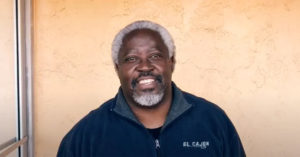

 “The International Mission Board exists to serve Southern Baptists in carrying out the Great Commission to make disciples of all nations—even to those people in the overpopulated urban cities, even to those in the hardest-to-reach jungles and plains,” said IMB President Paul Chitwood.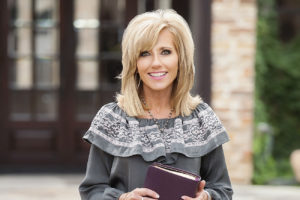


 “In 2021, there is in a sense a conversion crisis among evangelicals in general in the U.S. and among Baptists in particular,” Leonard said. “Fewer and fewer people are attending church. Fewer and fewer persons are seeking baptism and professing faith.