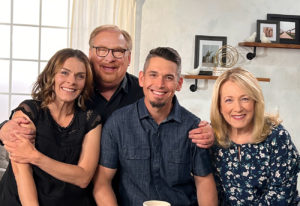
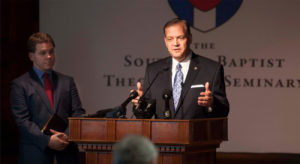
Generations bridge gap through interviews at church

GRAYSON, Ky. (BP)—An open forum discussion at First Baptist Church in Grayson, Ky., on a Wednesday night turned into an opportunity for young and older members to learn more about each other.

“I was teaching, and it was just a clunker,” Pastor Josh Schmidt said. “I said: ‘Let’s have an open forum discussion. What’s good and what’s not good at the church?’ One of the things the senior adults were concerned about was that they didn’t know anybody anymore.”

Schmidt said the church is growing, but it has been all from one demographic—under age 30. Many teachers and leaders from the high school attend church at Grayson and have invited students to come.

“The church has changed,” Schmidt said. “That (older) group is feeling left behind.”

Then came a suggestion from one of the senior adults: “What if we did like a speed-dating thing only with young people and old people?”

From that came the idea for one-on-one interviews between the under-25 and the over-25 age groups on a Wednesday night. It turned out to be so fruitful—with about 80 participating—they will continue doing it for the next six months, Schmidt said.

The groups gathered on a Wednesday night and “interviewed” each other. They had lists of questions to ask each other developed through the staff, the pastor said. Each person was to have three “interviews” with the other generation.

Getting to know you

Most of them were ice-breaker questions, but many of them went much deeper. One teenage girl accepted the Lord after meeting with an older woman in the church who held her hand during the entire interview.

“(Youth pastor) Cory (Jones) and I stayed until after 9 o’clock talking to the teenager,” Schmidt said. “We called that sweet older lady, and she was fired-up.”

Another teenager asked about baptism, and another revealed she was not a Christian but had questions. That was all unexpected fruit from the generational meeting, Schmidt said.

The pastor pumped up his senior adults to make sure they would be at the meeting, but the younger group was told what was going to happen after they arrived for a youth group meeting.

“People were kind of apprehensive at first—the teenagers more than the senior adults,” Schmidt said. “One of the things we were real intentional about was explaining why we were doing this. We both kind of started out our presentations the same way. Unless we do something tonight, the vast majority of these teens may never come back after graduating high school.”

Create intentional relationships

Schmidt said he read a report where 80 percent of teenagers never return to church after high school, but that number goes down drastically with intentional relationships, outside of parents.

He said the hope is to create some of those intentional relationships and before the start of school in the fall have a “spiritual adoption” where the senior adults “adopt” some of the teenagers and younger adults, within some guidelines (attending games, birthday parties, church events, etc.).

The pastor said the response was good from both groups after the first meeting. They will do one a month through the summer. Both sides reported talking about more than the suggested questions in their brief meetings with each other.

“The end game is to have both parties, older adults and younger adults, to rank their top five favorite interviews they did,” he said. “We would assign the younger people to older people, and hopefully they can have that meaningful relationship.”

Schmidt said mixing the age groups it is not a unique idea nor is it anything he came up with.

“This game organically from the church,” he said.

After posting on social media about what First Baptist Church in Grayson was doing, the response from other pastors and young church leaders was strong, with many asking Schmidt how to put it together.


Man rescued from burning car after crashing into church

MACCLESFIELD, N.C. (BP)—First responders and members of a North Carolina church are being hailed as heroes after they helped pull a man to safety from a burning vehicle after the car’s driver crashed through the front of the church building on Wednesday, March 8.

A vehicle slammed through the wall of a prayer room adjacent to the foyer at Webbs Chapel Baptist Church in Macclesfield, N.C. (BP Photo)

Witnesses say the driver apparently lost consciousness and barreled through a stop sign at a T-intersection in front of Webbs Chapel Baptist Church in Macclesfield at approximately 4 p.m.

The vehicle slammed through the wall of a prayer room adjacent to the church’s foyer. Moments later, the car caught fire inside the building with the driver trapped inside.

No one was at the church at the time of the incident, but a passerby who stopped to assist was soon joined by the church’s pastor and other members who live near the church as news of the accident quickly spread.

Those initial people on the scene worked frantically to rescue the driver trapped inside while waiting for first responders to arrive. Their rescue efforts were complicated, however, by limited access to the vehicle and smoke that filled the room where the car was lodged.

Firefighters used a brush truck to pull the vehicle from the building which allowed a member of the N.C. Highway Patrol to pull the driver to safety through the passenger side door. Fire crews were then able to extinguish the flames on the vehicle and inside the church building.

The driver of the vehicle was treated at the scene and transported to a local hospital, where he remains hospitalized but is expected to make a full recovery.

The highway patrol officer who responded to the incident and pulled the driver from the car is also a member of the church, according to Pastor Stephen Duncan.

“They did some heroic things to save him,” said longtime church member Joesy Harrell, who was among the first people to arrive at the scene along with Duncan.

‘Crashed into a place of hope’

Duncan said he was able to pray with the driver before he was transported to the hospital by ambulance. The pastor visited him in the hospital the day after the crash and said he plans to continue to visit and minister to him.

“I told him that he crashed into a place of hope,” Duncan said. “We’re praying hard for him.”

After the crash, church leaders shifted that evening’s scheduled activities to the church’s family life center, where members came together to pray and process the events of the day.

Duncan said he shared from Haggai 2:9 with those who gathered, which says, “‘The glory of this present house will be greater than the glory of the former house,’ says the LORD Almighty. ‘And in this place I will grant peace,’ declares the LORD Almighty.”

“We know that God is going to use this,” Duncan said. “We are going to move forward and still do ministry. The gospel hasn’t been prevented from going forward because of this incident. I’m excited to see how God is going to turn this for his glory.”

Webbs Chapel Baptist Church in Macclesfield, N.C., meet for worship in the church’s family life center. (BP Photo)

The church will conduct worship services in the family life center for the foreseeable future, Duncan said. The accident completely destroyed the prayer room and caused extensive fire and smoke damage to the sanctuary. Although initial damage assessments have begun, the full extent of the damage, along with the cost and timeline for repairs, won’t be known for several more days, he said.

Duncan said he has been encouraged by the show of support he has received from the community, other churches and ministry leaders. He asked for ongoing prayers for the driver of the crash and for the church as it moves forward.

“We know God is going to be faithful,” Duncan said. “We are going to move forward.”

Chad Austin writes for Baptist State Convention of North Carolina Communications.


McRaney/NAMB court date moved to August

OXFORD, Miss. (BP)—A U.S. District Court agreed with attorneys representing the North American Mission Board on March 3 that a continuance was necessary to complete the discovery process in a case brought against the entity by former state executive Will McRaney.

McRaney, former executive director of the Baptist Convention of Maryland/Delaware, originally filed the lawsuit in 2017. In it, McRaney stated NAMB wrongfully influenced his 2015 termination and furthermore intentionally defamed him over a dispute regarding collaborative missions efforts in the area.

Senior U.S. District Judge Glen H. Davidson signed the order moving the court date to Aug. 7 from the original June 5 date. March 3 was the previous discovery deadline.

NAMB attorneys filed the motion for continuance Feb. 24. Among their reasons for doing so was the addition of new witnesses and amended disclosures.

Barker asserts defamation by Ezell

An affidavit of one of those witnesses, former NAMB employee Bill Barker, was presented on Feb. 22. Barker described a pattern of behavior by NAMB President Kevin Ezell consistent with McRaney’s accusations.

“From personal experience and knowledge, I know that Kevin Ezell has used NABM’s funding and resources to control state conventions” and influence the hiring and firing of personnel, Barker said.

Neither Ezell nor NAMB has offered any public comment about Barker’s allegations.

Barker, who directed Appalachia Regional Ministry with NAMB from 2001 to 2017, alleges in his affidavit that Ezell “made statements that were false and bullying in nature.”

After Barker said he was “forced into early retirement” from NAMB, he continued to work with the renamed Appalachian Mountain Ministry through the Georgia Baptist Mission Board. However, Barker claimed Ezell continued to pressure the state convention to fire him.

Barker asserted Ron McCoy, a former NAMB trustee and past president of the West Virginia Convention of Southern Baptists, confirmed Barker was “the victim of an intentional smear campaign.”

“McCoy told me that Ezell was behind the campaign and then proceeded to name those at NAMB who carried out the smear campaign on Ezell’s behalf,” Barker said. McCoy died in December 2018.

NAMB’s legal team stated the Feb. 22 affidavit—filed a little over a week before the discovery deadline—made the continuance necessary. The judge agreed.

With additional reporting by Managing Editor Ken Camp.


Ridgecrest to host summer staff reunion in June

NASHVILLE (BP)—Decades of memories will be on the agenda for former summer staff of Ridgecrest Baptist Conference Center at the group’s annual alumni reunion June 1-4.

The decision to incorporate a Southern Baptist “assembly” in 1907 led to the purchase later that year of 1,100 acres near Black Mountain, N.C., by the North Carolina Baptist State Convention and SBC Sunday School Board (now Lifeway Christian Resources). The same engineering firm that developed the Biltmore Estate in nearby Asheville joined the effort.

By 1909, about 600 people took part in the first summer program of Ridgecrest Baptist Conference Center.

In 2020, Lifeway reached an agreement to sell the conference center and its summer camps, but the location has remained one of activity for Southern Baptists like the thousands who have worked on the summer staff.

Registration is $50 per person through June 1. Additional attendees age 6 to 18 will be $10 each with a paying adult. Those 5 years old and younger can attend for free.

On-site nightly accommodations are available at Pritchell ($70), Rhododendron ($89), Mountain Laurel West ($99) and Mountain Laurel East ($109). Individual meal plan options are also available.

Check-in will begin Thursday, June 1 with dinner following at 5:30. An opening session slide show at 7 will feature images from summers past, devotional/testimony and group ice breakers before an evening fellowship at the Nibble Nook.

Plenty of free time makes up the Friday and Saturday schedules, alongside volunteer opportunities, worship with current staff, devotionals and S’mores at the fire pit. Magician David Garrard will be the featured entertainment for the Friday night dinner.

The weekend will conclude Sunday, June 4, with worship and a slide show of the event.

For more information or to register, email RBCCsummeralumni@gmail.com. Summer staff alumni updates can be found by subscribing to the group’s newsletter or joining their Facebook page.


Ukrainians, Tennessee Baptists bond through online ESL

CHERNIHIV, Ukraine (BP)—As Russia declared war on Ukraine, Eunege and his wife Julia rushed to buy a car as their vehicle of escape from Chernihiv, ground zero of the onslaught.

Billy Hoffman, co-director of missions for First Baptist Church in Nashville, Tenn., reached Eunege on the phone. The two were conversation partners in a Ukraine-U.S. English-as-a-Second-Language group co-founded by Hoffman, a former International Mission Board executive.

“I just was feeling concerned one time, and I called them on What’s App, and they were actually getting in the car and leaving Chernihiv, at that moment,” Hoffman said a year later. “She was really panicked, being in the basement and everything,” Hoffman said of Julia, “and he was able to go buy a car and they left.”

Newlyweds, Eunege and Julia accepted Christ and were baptized together just four months before the war began. They have been discipled while honing their English through their relationships with members of First Baptist in Nashville who serve as conversation partners from afar.

Eunege was among about 12 members of the ESL group who met on Zoom on the war’s first anniversary, including members from Ukraine and members of First Baptist in Nashville. He has enlisted in the Ukrainian military and is stationed in western Ukraine, while Julia finds safety in Japan.

“I remember sometimes at night was so light like the day, because every bomb, as I understand, was dropped on our city,” Eunege told the group as they remembered the war’s beginning. “Yes, for me it was very dangerous, and especially for my wife.”

 Eunege had grown up near a military base and was better equipped to handle the sound of war, but his wife was very afraid, he told the group. It was too dangerous to leave with Russian troops patrolling the roads, but the couple escaped after a few weeks by intricately evading soldiers.

The ESL group had last met on Zoom Feb. 22, 2022, two days before the war began. The members were then scattered.

Shocked by war, grateful to United States

Ukrainian group members expressed shock at the war, but thanked the United States and other countries for their support.

Valeriy Ryakukha, who helped Hoffman found the ESL group before the COVID-19 pandemic, now is in Virginia after fleeing Odessa.

“Ukraine would be already dead” were it not for America’s support, Ryakukha said.

Hoffman met Ryakukha in 2010 when Ryakukha was enrolled in the one-year Hubert H. Humphrey Fellowship Program, a competitive international leadership program run by the U.S. State Department.

Ryakukha was developing a program he could use in Ukraine to help middle school students avoid drug abuse. Hoffman and his wife Ruth served as Ryakukha’s American friendship family, about five years before Hoffman retired as director of development at the International Mission Board.

“When I first met Valeriy, I started a conversation about faith and his comment was interesting. He said, ‘I have feelings but no knowledge,’” Hoffman said. “He was exploring faith through the year, but he did not confess Christ until he went back to Ukraine.”

Olga lived amid bombing and street fighting in Chernihiv for weeks before finding an opportunity and means to flee to Europe.

“A lot of bombs. We hear a lot of weapons above our heads,” Olga told the group. “I understand every kind of weapon I heard. … A lot of bombs killed a lot of people from Chernihiv. … All my relatives say, we are from Soviet Union. Russia is our brothers. This not happen; it’s not real.” Every second, she supposed it would stop. “But it continued and continued, this time.”

No chance to escape

Mykhailo Barabanov had no time to escape as the war began.

“Our village was captured the first day. Our village located the shortest way from Russian border, to Chernihiv Oblast then Kyiv,” he said. “I was shocked. I was scared. We did not have any chance to escape because all bridges were destroyed.

“We stayed in our village. Russian troops stayed in our village. They captured the center of village. Part of our village was completely blocked. We just thought how to survive these circumstances.”

Residents ate whatever food was not confiscated by Russian soldiers, Barabanov said, in the 36 days he remained before escaping.

“Russian troops robbed all shops. They captured small clinics in our village,” he said, although pharmacists were able to hide some medications to treat Ukrainians. “One man in our village was killed the first day, and then nobody was hurt, as [far as] I know.”

Anastasia lived with her son near the Russian boarder. She knew the war was possible, but was shocked when a friend called in the early morning hours to say it had begun.

She and her son each filled backpacks and piled in the car with friends to flee, first to Kyiv and then further west. They stayed in the car the two days it took to find lodging.

“It was our little home. We were exhausted. We wanted to sleep on the bed, but it wasn’t possible.”

She and her son stayed in another city a week before fleeing to Poland. She was worried for her mother, who remained in a village under attack in Chernihiv. Her mother lived in a wine cellar with neighbors, the Russian military not allowing them to flee. Her family home was destroyed in the war.

“I was terrified at the beginning of March (2022),” she said. “But I couldn’t do anything, because I was in Poland. … I’ve lost my childhood house and we lost everything.”

Anastasia lived with four others in a tiny room in Poland before finding a hosting family in the U.K., where she now resides.

Finding solace in prayer

Christina Bondarenko is the twin sister of Julia, Eunege’s wife. Bondarenko was in Germany when the war began. Afraid for her mother and sister in Ukraine, she tried to convince them to flee days ahead of the war. When the war began, Bondarenko said her sister cried daily.

“My sister, she called me on the 24th of February and said, ‘Christina, the war has begun, and we are hearing shooting.’ And I was absolutely shocked. I was so devastated. I could not believe it really happened and especially was angry with myself that maybe I wasn’t persistent enough,” she told the group. “I didn’t persuade them to come over to Germany, and now they had to hide themselves in a very cold food storage.”

First her sister and then her mother fled the war zone, sharing a tiny room before her sister made it to Japan. “At least it was better than hiding themselves in that cold food storage, underground.”

Prayer offered Bondarenko solace.

“There was only one thing left. Praying. And I was praying, my sister she was crying. She called me and we talked and she said, ‘You know Christina, I feel like God doesn’t love me.’ She said, ‘God loves you, but he doesn’t love me because I’m … in this war,’” Bondarenko told the group.

“I told her to don’t ever, ever think that God doesn’t love you, and there is a purpose for everything, and you must believe that. The enemy wants you to believe God doesn’t love you, because as soon as you believe in his lie, he will be able to manipulate you.”

Every day family is alive is a ‘good day for me’

Svetlana joined the Zoom reunion for a portion of the call. Her family is separated between Ukraine and Germany.

“Every day my family members, my relatives, my friends are alive, and their house exists, it is good day for me,” she said.

Hoffman’s friendship with Ryakukha gave him the idea ESL conversations could be used to help spread the gospel abroad. With Ryakukha, a licensed ESL teacher, the two launched the program in Ukraine.

The group first met in a public library with Hoffman participating on Zoom. He recruited members of First Baptist in Nashville as conversation partners. Hoffman continues to meet weekly with Eunege on Zoom, but others in the group are not always able to meet weekly.

Hoffman believes conversation partners could be used to spread the gospel in places where Southern Baptist missionaries are already active.

“If all of our missionaries around the world who are teaching ESL as a way to spread the gospel, if they would incorporate a way for Americans over here—since we can now technologically do that—to be conversation partners, that would just be another voice of sharing the gospel,” he said.

Training, education and safeguards could be incorporated into the program.

“I know there are literally hundreds of thousands of Christians in America that would be happy to engage in that conversation and be able to share their own testimony and God’s love,” Hoffman said.

“As far as being able to be a partner in 30 minutes a week, having a conversation with somebody and being able to share their story and hear (the other’s) story, and being able to be a friend to them, it’s amazing how your heart gets wrapped around.”


BJC acquires Center for Faith, Justice and Reconciliation

The Baptist Joint Committee for Religious Liberty has acquired the Center for Faith, Justice and Reconciliation, a Virginia-based entity that billed itself as “a theological think tank for building beloved community.”

The center grew out of the Baptist Theological Seminary in Richmond, Va., which opened in 1991 as an alternative to the six Southern Baptist Convention seminaries and closed in 2019.

The BJC—an 87-year-old coalition of 15 Baptist groups based in Washington, D.C.—is adding the center as the home for its Project for Race and Religious Freedom, launched in 2021.

The BJC Center for Faith, Justice and Reconciliation will host a new program called the Religious Freedom Immersion Experience, scheduled to launch in early 2024. The center also will continue its annual Religious Freedom Mobile Institute.

“Across the organization, BJC recognizes that religious freedom has been white too long,” BJC Executive Director Amanda Tyler said. “BJC acquiring the center deepens our commitment to working for racial justice as a critical part of our mission to ensure religious freedom for all.”

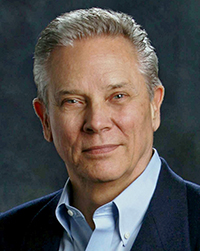
Sabrina Dent

Sabrina E. Dent, president of the center since January 2022 and cohost of the “Sister Act” podcast, will be director of the BJC Center for Faith, Justice and Reconciliation. Dent served on the BJC board of directors but resigned her board post to join the staff. She was a BJC fellow in 2015.

Dent worked previously as curator of education in Vanderbilt Divinity School’s Public Theology and Racial Justice Collaborative, as senior faith adviser with Americans United for Separation of Church and State, and in several roles with the Religious Freedom Center of the Freedom Forum Institute. She is a former president of the Interfaith Council of Greater Richmond.

“The BJC Center for Faith, Justice and Reconciliation will broaden the conversation about religious freedom,” Dent said. “For too long, we’ve had a narrow understanding of religious freedom that has shut too many people out of the conversation.

“Religious freedom impacts so many issues, including voting rights. How can we ensure religious freedom without equal access to the ballot box? Who benefits when religious freedom is ideologically boxed off from other issues? These are the types of questions we ask as this work continues into a new phase.”

Lynn Brinkley, chair of the BJC board of directors, said she was “thrilled” about the acquisition of the Center for Faith, Justice and Reconciliation.

“This gain will strengthen BJC’s mission, educational programming and influence by embracing a more inclusive understanding of religious freedom,” Brinkley said. “May this accomplishment lead to a more unified world that is just and reconciled.”

With information provided by Guthrie Graves-Fitzsimmons of BJC communications. 


GuideStone trustees affirm strategic plan

DALLAS (BP) – GuideStone trustees affirmed a new strategic plan during their regular meeting Feb. 27-28 in Plano.

“The strategy pursues stronger, more efficient and effective SBC ministry partnerships in order to expand our kingdom reach,” GuideStone President Hance Dilbeck told trustees.

Hance Dilbeck

“A year ago now, when [former president] O.S. Hawkins passed the baton to me, he reminded me that the chair of his search committee told him, ‘Take something great and make it greater.’ We’re placing this new strategic plan under the word, ‘Reach.’ That’s what the word ‘reach’ is about—taking something great and making it greater.

“We’re thankful for the foundation that we are building on so we can make an even greater impact for our members and ministry partners.”

The Reach Strategy flows from the GuideStone vision—“Every servant of Christ finishes well”— and its mission—“We enhance financial security and resilience for those who serve the Lord.”

 “The reason we say ‘enhance,’ is because we can’t do this for our members or ministry partners,” Dilbeck said. “We can lead, advocate and guide, but at the end of the day, they have decisions to make.

“Financial security is our lane. Our place in the kingdom is to help those who serve Christ with financial security. It means freedom from anxiety and freedom to pursue what God calls you to do.

“The reason we say ‘resilience’ is we want to help our churches and ministries connect financial security with that larger idea of wellness. Resilience is the capacity to bounce back, to endure unexpected hardship. Living with enough margin to get through the hard times.”

Dilbeck tied the mission and vision to 1 Timothy 4:16, which reads, “Pay close attention to your life and your teaching; persevere in these things, for in doing this you will save both yourself and your hearers.”

“Most pastors do a good job paying attention to their teaching, but we want to come alongside them and make sure they’re also paying attention to themselves and their households.” Dilbeck said.

Time of transition

Trustees reelected John Hoychick Jr. (La.) chairman and David Cox (Mich.) vice chairman.

With the retirement of longtime chief operating officer John R. Jones, the board elected Chu Soh to succeed Jones and Nadeena Kersey to serve as chief insurance officer.

Kersey joined the ministry last year, and Soh joined GuideStone as chief insurance officer in June 2020. Jones will serve the remainder of 2023 as special assistant to the executive office.

“2022 and 2023 are years that, if we had to sum them up with one word, that would be ‘transitions,’” Dilbeck said. “Transitions are a big deal, so we have approached these transitions —from O.S. Hawkins to me and from John Jones to Chu Soh—with humility, intentionality and bathed in prayer.”

Emergency Grant Fund named for Hawkins

Trustees recognized Hawkins, president emeritus of GuideStone, by renaming a special fund, the O.S. and Susie Hawkins Emergency Grant Fund. The Hawkins fund was established to provide the emergency needs of the financially poorest Mission:Dignity recipients. Those emergency needs could include hearing aids, eyeglasses, dentures, medical bills and home repairs. Today, Mission:Dignity recipients in this income level earn an average of $1,033 monthly.
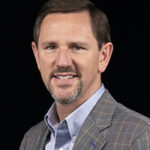
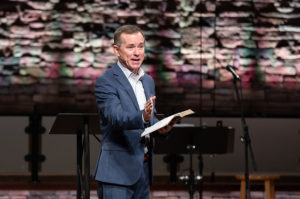
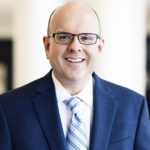
“One of the dear pastor widows we serve makes even less,” Aaron Meraz, director of Mission:Dignity, told trustees. “Her monthly income is less than $900, and recently she needed new eyeglasses that would cost her $550. We were able to come alongside her because of these grants and help ensure she could have the glasses she needs.”

Meraz told trustees the Hawkins Emergency Grant Fund is in addition to gifts given to continue to provide monthly grants to more than 2,800 retired pastors and their widows.

“Our history as the people of God brings both humility and hope,” Dilbeck said. “We didn’t get here without the Lord’s good hand on us. Since he’s been faithful to us in the past, we can trust he will continue to be faithful in the future. I believe our best days are very much in front of us.”


Guidepost Solutions rep discusses Ministry Check database

NASHVILLE (BP)—Samantha Kilpatrick of Guidepost Solutions answered questions about the organization’s new Faith-Based Solutions division and plans for the upcoming Ministry Check database.

In a video interview with Marshall Blalock, chairman of the Southern Baptist Convention’s Abuse Reform Implementation Task Force, released online March 1, Kilpatrick discusses her experience working with Guidepost.

Kilpatrick has a background in law, operating a private practice designed to advise, represent and consult abuse survivors navigating the criminal justice system.

She worked with Guidepost as a part of the organization’s investigation into alleged mishandling of sexual abuse claims by the SBC Executive Committee, and was recently named to lead the organization’s newly established faith-based division.

“I was familiar with Guidepost’s work and had followed some of the investigations that they had done in the past, was very impressed with their work,” Kilpatrick said.

“To just see the professionalism, see the care and concern for this area of practice, both for survivors and for churches and ministries to get this right. I just feel like God just prepared the way for me to do it. I’m greatly humbled by it. I’m excited about it. I’m very passionate about it.”

Understanding both polity and beliefs

Kilpatrick said Guidepost places a huge emphasis on the religious values of the client they’re working with.

“Guidepost has been doing this work for a while,” Kilpatrick said. “We do this work across all types of denominations and faith-based groups, but we’ve done a decent amount of work in the Orthodox and conservative evangelical communities.

“One of the things that we do, no matter where we’re working, is we try to really get in and understand both the polity of the system that we’re working in, but also the theological beliefs. How they work and how that may have implications in our work.”

The implementation task force announced during the latest SBC Executive Committee meeting its recommendation to the convention’s credentials committee to use Guidepost to establish and maintain a Ministry Check database for those in the convention who have been “credibly accused” of sexual abuse.

The credentials committee and Guidepost currently are in contract negotiations regarding the database.

The Ministry Check website was one of two approved recommendations the implementation task force was commissioned to accomplish by messengers to the 2022 SBC annual meeting in Anaheim, Calif.

‘Proper protections’ for survivors

In the interview, Kilpatrick talked with Blalock about the considerations that go into such a database.

“This is a big project, and it’s got a lot of different facets to it,” she said. “Some of those are just from a legal standard and a professional standard of just evaluating information that comes in, and creating a standard and a process for how that information gets categorized for inclusion.

“Also making sure that the proper protections are in place for survivors as we continue to receive reports through the hotline and what other avenues that might come in. Other experts at Guidepost are going to come alongside me with this piece of just the privacy and security piece of hosting an offender database on the internet. There’s a lot to do around that.

“And then also making it user friendly. Making it something that Southern Baptists can use. Making it something that Southern Baptists can actually gain good information from. What we want to do is we want to prevent abuse by preventing an offender from working somewhere else where they would have access to children.”

Also a part of the conversation was Heather Evans, director of a counseling practice in Pennsylvania, who served as a consultant on the previous Sexual Abuse Task Force.

Evans agreed to assist the implementation task force with its work, saying it is crucial to the mission of the local church.

“I’m here because I believe it’s worth it,” Evans said. “I believe it’s necessary. It’s worth it because the survivors are worth it. People made in the image of God are worth it. Truth and justice are worth it, because that’s really at the heart and mission of Jesus Christ.”


Southwestern Seminary agrees to Carroll Park sale

FORT WORTH (BP)—Southwestern Baptist Theological Seminary accepted a nonbinding agreement to sell 15 acres of its B.H. Carroll Park to the City of Fort Worth for $11 million.

The seminary accepted the offer from the Fort Worth Housing Finance Corporation, the city’s housing development arm, during the Fort Worth City Council meeting Feb. 28, Interim President David S. Dockery announced.

“This agreement with the City of Fort Worth to move forward with its purchase of 15 acres of the Carroll Park property is not only welcome news for Southwestern Seminary; it is the next chapter in a 115-year partnership between the seminary and the city we call home,” Dockery said.

Mayor Mattie Parker expressed gratitude “for the historic partnership between Southwestern Seminary and the City of Fort Worth.”

“The seminary’s commitment to serving our city has been made even more clear in the work it has taken to make this project possible,” Parker said.

The partnership includes the City of Fort Worth and two primary non-profit organizations who will manage the project—One Safe Place and Samaritan House. Other philanthropic organizations, including the Rainwater, Morris, Amon Carter, Sid Richardson and Paulos foundations will provide support.

The city plans to use the property to provide housing for 140 vulnerable families, including victims of domestic violence and homeless families.

“We are overjoyed that this property so many seminary families have called home over the decades can now be used to meet a critical need in our city—housing for the most vulnerable among us, including families experiencing homelessness,” Dockery said.

“We remain committed to ensuring a smooth transition for our students who are still living at Carroll Park as we work with the city and other partners to finalize this historic transaction.”

Dockery noted plans to sell the property, announced at the seminary’s October 2022 board of trustees meeting, have been under consideration several years. Other housing on the main campus can better accommodate the needs of the institution than the Carroll Park property, which is not contiguous with the campus, he added.

Since the trustees meeting, campus leaders met in town hall meetings with Carroll Park residents to address questions and provide information for student housing.

Parker called the project a “perfect example” of Fort Worth’s “commitment to families and ensuring every child has the support they need to be successful.”

“As we face a crisis of family homelessness across the country, we are fortunate in Fort Worth to have nonprofit and philanthropic partners that are committed to working alongside the city to ensure we are investing in the needed housing and services for our most vulnerable,” Parker said.


Who will pay for the SBC abuse reforms long-term?

WASHINGTON (RNS)—After years of delay, Southern Baptists passed a series of reforms in 2022 aimed at addressing abuse in the nation’s largest Protestant denomination.

Those reforms included setting up a Ministry Check database to track abusive pastors and training churches on how to prevent abuse and to care for abuse survivors.

The plan for reforms, however, did not address who would pay for them over the long haul.

Send Relief provides initial funding

Instead, Send Relief, a partnership between the Southern Baptist Convention’s International Mission Board and North American Mission Board that does compassion ministry, provided $4 million in initial funding. That will pay for setting up the Ministry Check website, which could cost as much as $2 million, according to Baptist Press.

Paul Chitwood

Paul Chitwood, president of the IMB, and Kevin Ezell, president of NAMB, told Religion News Service in an email they support the abuse reform. They stated Send Relief funding has been “more than adequate for the task force’s implementation expenses to date.”

“The IMB and NAMB continue to invest significant resources in doing all we can to ensure that we care for survivors of abuse and protect against abusers,” Chitwood and Ezell stated in an email.

“That isn’t going to change. We are confident Southern Baptists will continue this important work.”

‘Unsustainable’ drain on unrestricted assets

The question of how to pay for reforms long-term became an issue after the SBC’s Executive Committee announced it had lost $6 million over the past fiscal year, mainly due to the cost of responding to the sex abuse crisis.

The committee’s unrestricted assets, which had previously totaled just over $12.2 million, dropped by $6 million in the last fiscal year, according to a report during a committee meeting in Nashville, Tenn., last week. That kind of loss is “unsustainable,” according to the committee’s auditors.

A spokesman for the Executive Committee said most of the decline is due to short-term expenses, including the 2022 Guidepost sexual abuse investigation—which led to abuse reforms—and legal fees related to a subsequent Department of Justice investigation.

The Executive Committee also paid the cost of implementing some abuse reforms, including a hotline to report abusers. But the Executive Committee’s reserves cannot sustain those reforms, and there’s no current plan for funding abuse reforms long-term.

“The problem is the unknown,” Mike Bianchi, interim chief financial officer for the Executive Committee, told committee members during last week’s meeting.

When asked about the audit report, Bianchi gave more details about the auditor’s concerns.

“Unsustainable is the notion that the [Executive Committee] lost or used $6 million of liquidity this year, and that is not sustainable,” he told committee members.

Tapping Cooperative Program problematic

Most SBC ministries, such as missions and seminary education, are funded through the  Cooperative Program, which pools money from local churches. However, an initial plan to tap Cooperative Program funds to pay for abuse reforms ran into resistance last year. That plan was tabled after Send Relief stepped forward to help subsidize.

Tapping Cooperative Program funds for the reforms would be tricky.

In recent years, Southern Baptists have reduced the percentage of Cooperative Program funds that goes to state conventions and to the Executive Committee to send more money to missions. Local churches may be reluctant to approve of using funds meant for missions to pay for reforms.

In addition, some pastors already threatened to rethink their church’s Cooperative Program giving because of how the abuse reforms are being implemented.

Last week, the task force charged with implementing those reforms announced plans to contract with Guidepost Solutions, a consulting firm that previously completed a major SBC abuse investigation, to set up the Ministry Check website. That angered Guidepost critics, who were already suspicious of Guidepost because the firm supports LGBTQ rights.

After the Guidepost announcement, a pair of prominent Florida pastors—Willy Rice of Calvary Baptist Church in Clearwater and Heath Lambert of First Baptist Church in Jacksonville—publicly criticized the decision.

Rice, who dropped out of last year’s SBC presidential race after past abuse by one of his church’s deacons became public, said on Twitter that his church was one of the largest givers to the Cooperative Program in Florida. The church will likely reevaluate its giving if Guidepost is hired, Rice tweeted.

Pastor Mike Stone. (Photo by Brauda Studios, courtesy of Mike Stone)

Mike Stone, a Georgia pastor who narrowly lost the 2021 SBC presidential race, said hiring Guidepost “poses an existential threat to our cooperative efforts as a convention.”

This week, the abuse reform implementation task force posted an update on its website to answer questions that arose after the Guidepost announcement. That task force will also make a report to the 2023 SBC annual meeting this summer in New Orleans.

Dale Huntington, pastor of City Life Church in San Diego, said he would support using Cooperative Program funds to pay for abuse reforms.

“I would support it because Jesus calls us to welcome the children,” he said. “I’m not interested in having a great ministry and a millstone around my neck.”

Southern Baptists could also consider tapping other funding sources outside of the Cooperative Program to pay for abuse reforms. The denomination’s national entities, including the two mission boards and six seminaries, control about $1.1 billion in unrestricted funds, according to the 2022 SBC annual book of reports.

Many of those unrestricted assets are used to cover ministry expenses, such as covering health care for missionaries and care for retired missionaries. The SBC also requires the entities to hold several months of operating costs in reserves.

The cost of abuse reforms has been an ongoing controversy in the SBC. A group of former members of the denomination’s Executive Committee tried to limit the scope of the initial Guidepost abuse investigation in 2021. They also tried to control how much of the report became public out of fear that being transparent would open the SBC to lawsuits and cost millions.

When their side lost, more than a dozen committee members resigned, as did Executive Committee CEO Ronnie Floyd.


Maryland couple adopts Ukrainian daughter amid war

BRUNSWICK, Md. (BP)—Looking back on his family’s journey to adopt their 6-year-old special-needs daughter Bridget (“Brizzy”) from Ukraine last spring, Pastor Phil Graves described the journey as “improbable.”

Feb. 24 marked the one-year anniversary of Russia’s invasion of Ukraine, but the journey for the Graves family to adopt Brizzy goes back even farther.

‘Decided to move forward’

Graves, senior pastor of First Baptist Church in Brunswick, Md., said he and his wife Kristie thought their family was complete after finalizing the adoption for their daughter Elliana—who suffers from spina bifida and hydrocephalus—from Armenia in 2017.

“At the beginning of our relationship, we talked about wanting to adopt. And in 2015, my wife came to me and said, ‘If we were going to adopt, we should do it before we get too old,’” Graves said. “We had both agreed that four was enough, and we were done.

“My wife later told me one day, ‘I think God wants us to adopt another kid.’ She wanted me to tell her no and be done with it. But I didn’t, because I made a deal with God that any time he opens the door, I’ll walk through it.

“We were like, ‘If one of our friends tells us we’re crazy or our family tells us it’s crazy then it is crazy.’ But nobody said it was crazy. So, we decided to move forward.”

Complicated birth

Around this time, Bridget, who was born in February 2016, was a preschooler, staying in a children’s home in Zaporizhzhyia, Ukraine, under the close watch of a nurse who had cared for her since birth.

Brizzy’s would-be parents—the couple who commissioned her birth—are American, but she was born via a surrogate mother in Ukraine at 25 weeks.

Her premature birth resulted in severe developmental challenges, including cerebral palsy. Her twin died a few days after their birth.

Brizzy was the subject of much international media coverage related to the ethics of surrogacy programs in Ukraine. According to a report from Australian Broadcasting Corporation, her American parents sent a letter to the children’s home requesting she be taken off life support when she was a few months old and severely ill.

The child survived, and her parents sent a second letter consenting to her placement for adoption.

The Graveses came across her story via an adoption advocacy organization’s Facebook page.

Challenging timing

After completing the beginning steps of the adoption process with the agency and with Ukraine, Phil and Kristie Graves made plans to come see Brizzy in December 2021.

Tensions between Russia and Ukraine were already high.

“The Russians were preforming war exercises on the border, but they had not invaded,” Graves said. “Everyone was saying, ‘Oh, they will never invade.’”

After visiting, the Graveses were told to expect the process to take a few weeks before they would return to Ukraine in order to finalize the adoption.

Issues with Brizzy’s Ukrainian citizenship and a judge’s case of COVID-19 delayed their date until Feb. 25, but the Russian invasion the day before changed all of that.

“Our first response was shock, then worry, because the assumption was that the Russians were just going to come in and take over in a few days,” Graves said.

“We were worried they would come in and say ‘no adoptions,’ and we would be forever without her. I was basically told everything has been suspended until the war is over. Then we just committed it to prayer and asked our church and everyone we knew to pray.”

The nurse who had been caring for Bridget had met the Graveses during their visit two months prior. She was determined to see the child adopted and consistently called the court to ask about the case.

Perilous journey to Ukraine

The Graves family received a call from the nurse in April explaining the judge was willing to finalize the adoption if they could both appear in court in person.

There was no hesitation from the couple, who flew from Dulles Airport to Germany and then into Warsaw, Poland. They were met in Poland by a German reporter who had been in contact with them regarding writing a story about the adoption.

The reporter took them from the airport to the Ukrainian border, which they crossed by riding in a Red Cross vehicle delivering supplies. Once across the border, the couple’s adoption facilitator was waiting for them.

They took a night train ride to get to Zaporizhzhia. Russian missiles had recently hit a building half a kilometer away from the train location.

After arriving in Zaporizhzhia in the morning, the couple went to court to finalize the adoption. The judge waived the normal 30-day waiting period.

‘Running on adrenaline and prayer’

The Graveses went to pick up Brizzy from her orphanage and then took a long bus ride back to Warsaw. All the paperwork Graves had for Brizzy was her birth certificate and adoption paperwork, but no passport.

Officials at the Polish border let them across with that paperwork, and then the American Embassy in Warsaw granted an emergency travel document called a DS-232 to get her into the United States without a passport.

Despite all the difficult circumstances, the Graveses simply rested in what God had called them to do.

“Going through an adoption, when you see that child, there is a connection and you know that’s your child,” Graves said. “Especially after we’d met her, she was our child. You could imagine your child being caught in Ukraine in the war, you would do what you had to get your child.

“It was also obedience to God. … I don’t think we were ever really scared while we were there. We were running on adrenaline and prayer. God just kept propelling us forward.

“He had made it blatantly clear that he wanted us to adopt her. We knew that if God was calling us to adopt her that God would keep us safe to go get here. It’s not easy, but when God calls you to something, he equips you to do it.”

‘Like warm butter on hot bread’

Brizzy is now in kindergarten and beginning to pick up English well. She had surgery to repair clubbed feet and can now walk with assistance from a walker.

“She has folded into our family like warm butter on hot bread,” Graves said.

The Graveses oldest biological daughter is now a freshman in college, pursuing occupational therapy after being inspired by her adopted sisters.

Graves said there have been many spiritual lessons learned from the journey.

“We’ve learned to sacrifice our own wants and desires for the greater good, and I think our marriage is richer and deeper because of adoption,” he said.


How does a church get ousted from the SBC?

WASHINGTON (RNS)—Southern Baptists long have disagreed over many things—from the role of women in the church and which Bible translation is best to debates over Calvinism and whether people who were baptized in a non-Baptist church can join a Baptist congregation.

Despite disagreements, affiliating with the Southern Baptist Convention historically has been relatively easy for churches. And getting kicked out was difficult.

Adam Greenway

“In Southern Baptist life, basically you are deemed in until you have proven that you are out,” said Adam Greenway, former president of Southwestern Baptist Theological Seminary.

The issue of who gets to be a Southern Baptist made international headlines after the SBC Executive Committee voted to oust one of the nation’s largest and best-known churches for having a woman preaching pastor.

On Feb. 21, Saddleback Church in Lake Forest, Calif., was “deemed not to be in friendly cooperation” with the SBC for having Stacie Woods—wife of senior pastor Andy Woods—as a regular preacher.

Rick Warren (second from left) with (left to right) Stacie Wood, Andy Wood and Kay Warren. (Photo courtesy of A. Larry Ross)

Her role conflicts with a section of the denomination’s statement of faith, the 2000 version of the Baptist Faith and Message, which restricts the office of pastor to men. Saddleback previously had been reported to the SBC’s credentials committee, which reviews the status of churches, for ordaining several longtime women staffers in 2021.

Four other churches also were removed for having women pastors, including New Faith Mission Ministry in Griffin, Ga., whose pastor has since claimed the church was not part of the SBC.

Those congregations were the first to be expelled from the SBC on a national level for having women pastors since the ban on women pastors was instituted more than two decades ago.

More likely at state or associational level

Churches have been removed in the past from Baptist state conventions or local associations for having women pastors. In 2009, the Georgia Baptist Convention disfellowshipped First Baptist Church of Decatur for hiring a woman pastor, then followed up in 2010 by kicking out Druid Hills Baptist Church for the same reason.

In 2015, a Tennessee Baptist local association removed Greater Tabernacle Missionary Baptist Church in Lawrenceburg for having a woman pastor.

Greenway said disputes over the status of churches are more common at the local or state level, because people in those settings are more likely to know what other churches are doing. With more than 40,000 churches, that’s less likely at the national level of the SBC.

Local or regional groups often have different rules for how closely churches have to follow their doctrines. Some require churches to completely agree with the Baptist Faith and Message. Some use other statements of faith.

At the SBC level, the rules have been more flexible. Founded in 1845, the denomination didn’t have an official statement of faith until 1925. That same year, the SBC started the Cooperative Program, which pools money from churches to fund missions, seminaries and other ministries around the country.

Bart Barber

“That’s not an accident,” said Bart Barber, current SBC president and pastor of First Baptist Church in Farmersville, who has spent years studying SBC polity. Before 1925, local churches that identified as Baptist funded individual SBC institutions and causes.

Once they pooled their money, a more detailed statement of faith was needed.

“There needed to be more trust,” he said.

The disputes over churches often play out at annual meetings, when one church tries to block another from participating. And the issues involved have varied widely.

In 1977, the California state convention rejected messengers from a Fresno church that practiced alien immersion and “open Communion” and debated those issues for years. So did Baptists in Kentucky and Arkansas.

California Baptists also refused to recognize a church in Corona in 1980 after it dropped the word “Baptist” from its name and a church in 1993 that had a woman pastor.

Cutting ties at the SBC level picks up steam

Those state and local meetings were often smaller, making it easier for the question of kicking out a church to get on the agenda. That is harder at national SBC meetings, which have at times drawn tens of thousands of messengers.

By the 1990s, however, fights over kicking out churches had gone national, largely over the place of LGBTQ people in the church. In 1992, the Baptist Faith and Message was changed to bar churches that affirmed LGBTQ members and clergy. Those changes happened in the wake of the so-called Conservative Resurgence when more moderate Baptists began to leave.

Those changes led to a series of churches being removed for being affirming, beginning with Pullen Memorial Baptist Church and Olin T. Binkley Memorial Baptist in North Carolina. Both were voted out at the SBC’s annual meeting.

Though the language of having only male pastors was added to the Baptist Faith and Message in 2000, Southern Baptists repeatedly resisted calls to add language to the denomination’s constitution to bar churches with women pastors.

Changes in the SBC constitution

However, in 2014, the denomination’s constitution was amended to include only churches with “a faith and practice which closely identifies” with the Baptist Faith and Message. That 2014 rule change opened the door for more churches to be removed from the SBC, including for issues like racism and mishandling sexual abuse.

As part of additional rules passed in 2019 to name those issues, the credentials committee was given the job of deciding whether or not a church is in “friendly cooperation” with the denomination.

At the 2018 annual meeting, messengers expelled Raleigh White Baptist Church in Georgia for discriminating against a Black church that shared their building. Two years later, Ranchland Heights Baptist Church was disfellowshipped for employing a registered sex offender as pastor.

The push to disfellowship churches with women pastors—that have women preaching in them—gained momentum in 2019 after former Southern Baptist Bible teacher Beth Moore tweeted about speaking in a church on Mother’s Day.

Al Mohler, president of Southern Baptist Theological Seminary in Louisville, Ky., speaks with the press. (Photo / Emil Handke, courtesy of Southern Baptist Theological Seminary / Via RNS)

That led to outrage by SBC leaders like seminary President Al Mohler, who had helped draft the Baptist Faith and Message changes two decades earlier. The debate was intensified by the country’s increased polarization, which has eroded much of the trust that made the SBC’s work possible in the past.

Things came to a head in May 2021 after former Saddleback senior pastor and bestselling author Rick Warren announced that the church had ordained several women as pastors. Not long afterward, a messenger at the 2021 SBC meeting called for the church to be investigated.

Who is a pastor?

Kicking out Saddleback was not a simple matter.

Some Southern Baptists, like Mohler, say no woman can have the title of pastor. Others say that only the senior pastor role is limited to men alone, while other women on a church staff could be referred to as pastors.

This disagreement left the credentials committee in a pickle, since they did not know exactly how the beliefs about pastors should be applied. At the 2022 SBC meeting in Anaheim, Calif., Linda Cooper, chair of the credentials committee, asked messengers to form a study group to look at how local churches use the term “pastor.”

That request led to heated debate, with Mohler insisting Southern Baptists know exactly what the word “pastor” means, while Greenway supported the idea of a study group, saying it should be expanded to look at how closely churches need to follow the SBC statement of faith.

For example, Greenway, a former seminary president, said in a recent interview the Baptist Faith and Message states the Lord’s Supper should be limited to church members. But few churches, he said, follow that rule strictly.

“That might be the ‘most not observed’ article in the Baptist Faith and Message,” he said.

In an interview and on social media, Greenway disagreed with the Saddleback vote, saying it put too much power in one interpretation of the Baptist Faith and Message.

Giving churches a say in the matter

Barber said voting Saddleback out was the only way for local church messengers to have a say in the matter.

SBC rules allow two options for challenging a church’s status. If a messenger does so at an annual meeting, the credentials committee can either rule immediately or take time to look into the matter, Barber said. If they decide against an immediate ruling, then the committee makes a recommendation to the Executive Committee.

If anyone disagrees with the recommendation, they can start the process over again.

Now that the Executive Committee has voted out Saddleback, they or another of the other disfellowshipped churches can appeal to the upcoming annual meeting this June in New Orleans. Saddleback is expected to appeal, setting up a vote on the issue.

“In June, we will find out what the messengers feel about Saddleback having a woman pastor as part of the regular preaching team,” Barber said.