Groups brace for end of Title 42 immigration policy

TIJUANA, Mexico (BP)—The upcoming expiration of a COVID-era immigration policy has communities and groups such as ministry centers bracing for a surge in migrants.

Title 42, set to expire May 11, was instituted by the Trump administration in March 2020 as a strict immigration measure during the COVID-19 pandemic.

Though it has been extended in the past, a May 2 release from the Department of Homeland Security requested 2,500 military personnel from the Department of Defense to the Southwest border “due to an anticipated increase in migration.”

Maria Gonzalez (seated), along with her husband Juvenal, regularly hosts migrants at her home in Southern California, feeding them and helping them with paperwork. (Submitted photo)

Juvenal Gonzalez has been active in border ministry at Tijuana through the San Diego Baptist Association, particularly in overseeing a daily feeding station for migrants. He has not seen the crowds grow just yet, but he believes that will change.

“People seem to be more desperate,” said Gonzalez, a church planting missionary with the association who lives in Tijuana.

That desperation stems from things like a lack of internet connectivity for those attempting to cross before those crowds arrive. The stronger signal at a coffee shop has drawn groups of people eager to complete the application on their phones.

Gonzalez also noted an observation on recent migrants’ home countries.

“I’m seeing more from Russia and Afghanistan,” he said. “From Russia, there have been more young people. We are helping some, feeding them at our home and helping with the application process.”

The reason is connected to the war in Ukraine. Announcements for military conscription drove the group he is currently helping from Russia to his home.

“I think we’re going to see more people from there,” he said.

He is not convinced Title 42 will expire, but that is almost beside the point when it comes to his work. His team serves food to around 200 people daily.

El Paso declared a state of emergency May 1 in anticipation of thousands of migrants. Kelly Knott, director of the El Paso Migrant Center, heard the influx could be so large that up to 30,000 people could make their way as far as Midland, a 4 1/2-hour drive away.

The Migrant Center, a ministry of the El Paso Baptist Association, works with local authorities to help process migrants who have documentation in hand. The last time Title 42 was set to expire, in December, there was an average of 2,500 crossings a day, El Paso Baptist Association Executive Director Larry Floyd said.

While processing can take a few days, only about 24 hours is spent at the Migrant Center. There, people receive food, shelter, showers and hygiene supplies as well as a gospel witness.

“We become a place of refuge, peace, hope and love in Christ before they are directed to their next stop,” Knott said.

Other partnering shelters in the city are equipped for those requiring a longer stay.

Outside of preparing for large crowds, he said the end of Title 42 won’t change the mission.

“It will mean more opportunities to be the Good Samaritan, to share the gospel, mobilize the church and help others focus on mission,” he said. “It’s more opportunity to do ministry.”


Churches turn unused buildings into homes for refugees

WASHINGTON (RNS)—With the United States withdrawal from Afghanistan nearly two years ago, religious congregations across the country began extending an embrace to refugees.

Partnering with resettlement agencies, they helped families escaping war and political turmoil settle into homes, find jobs, learn English and acclimate to life in the United States.

Now, in a corner of North Carolina, a group of Baptist churches has begun to deepen that support by retrofitting vacant church-owned buildings for refugee housing.

Organized through the Cooperative Baptist Fellowship of North Carolina but open to any religious congregation, a new initiative encourages churches to refurbish church-owned parsonages, office buildings, youth clubhouses or single-family homes and make them available to refugees or humanitarian parolees for a nominal fee.

“It’s increasingly difficult to find affordable housing for refugees,” said Marc Wyatt, a missionary who founded the Welcome House Community Network.

“Churches have physical property and buildings that are underutilized. Rethinking the use of those buildings for housing is our vision.”

On April 29, the network held its first housing and hospitality summit with 210 congregational leaders—mostly from North Carolina—wanting to learn more about how to use vacant church properties to minister to refugees.

Texas churches join network

The conference made plain twin realities: A glut of underutilized church properties and a severe shortage of affordable housing for newly arrived refugees with few means.

So far, about a dozen churches in North Carolina’s Triangle region, anchored by Raleigh, Durham and Chapel Hill, have retrofitted ancillary buildings for use by refugees. In all, about 40, including churches in Virginia, Tennessee and Texas, have joined the Welcome House network.

They include First Baptist Church in Hillsborough, which is housing a seven-member Afghan family in its parsonage, and Temple Baptist Church in Durham, which owns a ranch-style home a few yards away from its sanctuary where an eight-member family from Congo is now staying.

Churches typically charge the families $10 a day to cover the cost of utilities and otherwise provide hospitality and connection.

“A lot of (church) folks like to clean and prep the house,” said Randy Carter, pastor of Temple Baptist. “Some people like to work in repairs or on the yard. A small group of folks are more engaged with the family itself.”

Until recently, many of these church-owned homes had been used by pastors or foreign missionaries on leave. Increasingly, they have stood vacant.

Urgent need for affordable housing

The surge of refugee and humanitarian parole programs under the Biden administration has made affordable housing an urgent need.

Since President Biden took office in January 2021, his administration has reversed Trump-era restrictions on immigration to the United States. The boost in refugee admissions includes some 300,000 Ukrainians who have arrived in the United States fleeing war with Russia, more than all the people from around the world admitted through the official U.S. refugee program in the last five years.

The Welcome House churches partner with one of 10 U.S. refugee resettlement agencies working to house the immigrants. Those agencies are often scrambling to provide affordable housing for refugees, most of whom come to the U.S. penniless or after years-long stays in refugee camps. The State Department typically provides only three months’ housing costs, and families must quickly find jobs to stay afloat.

“The rate of arrivals is faster than we can find long-term housing,” said Adam Clark, executive director of World Relief in Durham, one of the resettlement agencies working in North Carolina. “There has to be a temporary housing piece for this to work.”

Clark said some refugees are placed in an extended stay hotel or an Airbnb until housing is found. But those are expensive, and they quickly exhaust the government’s minimal housing subsidy.

In most cases, church-owned properties are used on a temporary basis—up to 90 days—at which point the resettlement agencies typically locate to more permanent housing.

To extend a welcome to strangers

But some churches, such as Hayes Barton Baptist Church in Raleigh, which owns three residential homes near its church building, are also renting out properties to refugees on a longer-term lease.

Two of those homes are now occupied by refugee families—one from Morocco and one from Afghanistan (a third house is being renovated). The families pay rent at below fair market value, typically no more than 30 percent of the family’s monthly income.

“We have assets that are sitting here and there are people coming into our community that need housing,” said Kristen Muse, senior associate pastor at Hayes Barton Baptist. “Our congregation is a generous congregation and when they see the needs, they want to reach out and use what we have for the glory of God.”

Both families staying at Hayes Barton’s church homes are Muslim and do not attend church services.  But that’s OK, Muse said. The program’s goal simply is to extend a welcome. One of the refugee children attends the church’s preschool, and the church keeps in touch and helps support the family as needs arise.

The initiative comes at a time when many older churches are rethinking how to repurpose unused buildings for the common good and at the same time cast a sustainable vision for the future.

Housing refugees is emerging as one solution—one that fits in with many churches’ larger mission of welcoming the stranger.

“How do we do what God wants us to do?” said Randall Austin, a member of First Baptist Church in Hillsborough, which started offering its parsonage to refugees nearly two years ago. “This is a tangible way.”


Executive Committee trustees reject nominee for president

Trustees of the Southern Baptist Convention Executive Committee overwhelmingly rejected a search committee’s nominee for president and CEO of the agency.

Jared Wellman, lead pastor of Tate Springs Baptist Church in Arlington, was chair of the SBC Executive Committee until mid-April.

Of the 81 votes cast at the special called meeting on May 1 at a hotel near Dallas-Fort Worth International Airport, Jared Wellman—pastor of Tate Springs Baptist Church in Arlington and, until two weeks ago, chair of the Executive Committee—received only 31.

Willie McLaurin, who has served as interim president of the Executive Committee since the abrupt resignation of Ronnie Floyd in October 2022, will continue to lead the agency in an interim capacity.

“Obviously, I’m disappointed about the outcome of today, but I’m hopeful for the future as a new committee begins their work,” said David Sons, new Executive Committee chair and a member of the previous search committee.

Baptist Press reported Wellman told the Executive Committee after the vote, “It’s been one of the greatest honors of my life to serve the Southern Baptist Convention through the Executive Committee.” Wellman told the group his “heart is with” the Executive Committee in the days ahead.

‘Not a rubber stamp’

SBC President Bart Barber, pastor of First Baptist Church in Farmersville, noted the Executive Committee was united in its assessment of Wellman as “a godly man, a good Southern Baptist and a strong leader.”

“Everyone can see now that the Executive Committee is not a rubber stamp,” Barber said. “It is a collection of people who take seriously our polity and who vote their conscience.”

In a statement he released to Baptist Press, former search committee Chair Adron Robinson said: “The committee worked hard to serve the Executive Committee by presenting the candidate that we felt was qualified to lead the Executive Committee in these turbulent times.

“We respect the decision of our brothers and sisters in Christ, and we commit to praying for the new search committee as they begin their work.”

In accordance with its bylaws, the Executive Committee elected a new search committee. Its members are Corey Cain of Tennessee, Neal Hughes of Alabama, Drew Landry of Virginia, Sarah Rogers of South Carolina, Nick Sandefur of Kentucky, Nancy Spradling of Michigan. Sons will serve as an ex-officio member of the search committee.

“The process essentially will start over,” as the new search committee meets to elect its chair, vice chair and secretary, Sons explained in a news conference after the Executive Committee meeting.

‘Process’ at the center of debate

While the Executive Committee met behind closed doors in executive session, based on what Sons said in the news conference, “process” seemed to be an operative word in its discussions.

Over the weekend prior to the board meeting, some Southern Baptists voiced concern about the process leading to Wellman’s nomination and the failure of Baptist Press to report Wellman’s resignation as chair until April 30.

In an open letter, A.B. Vines, pastor of New Seasons Church in San Diego, Calif., and former vice president of the SBC, asked how an ex-officio member of the search committee was granted an interview in a process he helped develop.

“Brothers, this does not pass the smell test,” Vines wrote.

Wellman recused himself from the search process on Jan. 26 after members of the committee asked him to consider allowing his nomination as a candidate, Sons said at the news conference after the Executive Committee meeting.

“He was invited into the process. He did not insert himself into the process,” Sons explained.

In particular, Vines and some other prominent Black Southern Baptist pastors questioned why McLaurin—who received two interviews for the permanent post as president and CEO of the SBC Executive Committee—was not selected. McLaurin would have become the first African American to head any SBC entity or institution.

“How come Southern Baptists always seem to have issues with hiring a person of color for a senior leadership position?” Vines asked.

Dwight McKissic

On Twitter, Dwight McKissic, pastor of Cornerstone Baptist Church in Arlington, praised Wellman as “a good man, [an] effective & competent leader, one who exudes character & courage, & whose heart is in the right place on matters that concern me most.”

However, he lamented the lost opportunity to name a person of color with a proven track record as the leader of an SBC agency or institution.

“David Dockery was interim president at SWBTS for a few months and was elected President. Willie McLaurin was interim president of the EC for 18 months, and was passed over for president. … The fear many of us have is this: if McLaurin doesn’t qualify to be an entity head, who will?” McKissic tweeted.

For his part, McLaurin called on Southern Baptists to pray for the newly elected search committee.

“Now is the time for Southern Baptists to unite around living out the Great Commandment and fulfilling the Great Commission,” he said.

The Executive Committee is scheduled to meet next on June 12 in New Orleans, just prior to the SBC annual meeting.


Wellman nominee for SBC Executive Committee president

UPDATE: The nomination of Jared Wellman as the next president of the Southern Baptist Convention Executive Committee failed on a 50-31 vote. The Executive Committee is naming a new search committee. A new story will be posted when additional information becomes available.

ARLINGTON—Texas pastor Jared Wellman, who recently stepped down as chair of the Southern Baptist Convention Executive Committee board of trustees, has been selected as the nominee for the next Executive Committee president and CEO.

Wellman, 39, serves as pastor of Tate Springs Baptist Church in Arlington, which is uniquely aligned with the Southern Baptists of Texas Convention.

At the end of the April 30 morning worship service, Wellman announced a “brief family church meeting” would be held following the service and asked the church family not to record the meeting. Live stream cameras turned off before the meeting began.

Selection process critiqued

While the full Executive Committee trustee board will review the nomination during a special called meeting May 1 in Dallas to vote, a growing number of voices across the convention are speaking out against the process that led to Wellman’s selection.

A.B. Vines, pastor of New Seasons Church in San Diego, Calif., recently wrote an open letter sharing the concerns he raised with the Executive Committee through an email he reports he sent to members March 10.

Vines, a former SBC first vice president and former president of the California Southern Baptist State Convention, also previously served as president of the National African American Fellowship of the SBC.

“We are facing a decision that could forever change our convention as we know it,” he wrote in the recent open letter to Executive Committee members.

Raising concerns about the search process leading to Wellman’s nomination for Executive Committee president, Vines asks Executive Committee members to question how a closed application portal was reopened privately but not publicly and how an ex-officio member of the committee gets an interview in the process he helped develop.

Other questions Vines noted revolve around whether staff members were involved in discussing the hiring of a new leader. “Who was feeding all these (alleged) staff issues to the committee? What was that person’s agenda in the first place when giving information to the committee?

“Why was the current interim expected to cast vision for the staff while serving in a temporary assignment?”

“These are just a few questions you should ask yourself while discussing this critical decision,” he stated. “How come Southern Baptists always seem to have issues with hiring a person of color for a senior leadership position?

“When God calls us to fulfill our assignment, we must be willing to do what he asks and go where he sends us, even if it means we must work under challenging situations where it is spiritually complex.

“Yes, we may encounter challenging situations that make it difficult to do our calling. But regardless, we must decide that, with God’s help, we will push through each distraction or problematic situation and refuse to be affected by what we see, hear or feel.

“Being a person of color in this convention has its highs and lows, but we keep pressing forward because of the assignment Christ has given us,” Vines continued. “Therefore, I’m calling on you to reject this nominee, develop a transparent process and call for a new search committee. If it is God’s will, then He will allow the newly appointed search committee to see the same person this committee has chosen, if the current nominee is God’s choice.”

Affirming Wellman but questioning process

Dwight McKissic, pastor of Cornerstone Baptist Church in Arlington has been an outspoken voice related to race issues in the SBC. He affirmed Wellman in an April 29 message via Twitter: “Jared Wellman is a friend of all those who are friends of God, through his Son, Jesus. No one in the SBC has a more stellar record of fighting for racial equality/representation, abuse victims and justice for them, and lovingly listening to opposing viewpoints, as does [Wellman].”

He also spoke highly of Wellman while affirming Vines’ letter April 27

“Jared Wellman’s church, Tate Springs Baptist Church, sponsored Cornerstone in our inception,” McKissic wrote on Twitter. “We are fellow pastors in Arlington. I’ve had nothing but positive interaction with Wellman. However, I affirm every single word in the attached probative letter from Rev. A.B. Vines.”

Others across the denomination have raised similar questions and many are calling it an integrity issue.

Voices speaking in favor of Wellman as the candidate began surfacing after the nomination became official, and even many of those opposing the move are concerned about the process, not specifically about Wellman.

Wellman declined to comment for TAB Media Group, which publishes The Baptist Paper and The Alabama Baptist, ahead of the public announcement but agreed to discuss the nomination at a later date. Neither Executive Committee Chair David Sons nor search committee Chair Adron Robinson returned email requests for comments prior to press time.

Robinson told Baptist Press, “[Wellman’s] humility, administrative skill and pastoral sensibilities made him a strong candidate for the search team.”

Wellman called for waiving privilege

Wellman became well-known among Southern Baptists during the September and October 2021 Executive Committee meetings for his motion to waive attorney-client privilege in the independent investigation of the Executive Committee’s handling of sexual abuse allegations within the denomination.

He has a Bachelor of Arts degree in biblical studies and a Master of Arts in philosophy from Criswell College in Dallas, as well as a Ph.D. in theology from South African Theological Seminary. He is currently working on a Ph.D. in apologetics at Southwestern Baptist Theological Seminary, where he also serves as an adjunct professor of apologetics.

Wellman and his wife, Amanda, have four children.

As far as his role as a trustee of the Executive Committee, Wellman is in his second and final term, having served since 2015, and in his first year as chair. His time as a trustee would have expired at the upcoming June SBC annual meeting, but he reportedly gave up his Executive Commitee seat about two weeks ago, Baptist Press reported.

If he is voted in as the new staff hire for president and CEO, he would have had to step down from the trustee role prior to officially taking the staff position. His trustee seat will remain vacant until new trustees are elected at the annual meeting in June.

The Baptist Paper confirmed vice chair Sons of South Carolina had stepped into the role of chair several days prior to the search team’s announcement.

The seven-member presidential search committee, which included Wellman as an ex-officio voting member because of his role as Executive Committee chair, announced a nominee had been selected in an April 3 news release from Executive Committee media relations director Jon Wilke.

Robinson of Illinois shared a few days prior to the regularly scheduled February Executive Committee meeting in Nashville and again during the meeting that the committee had hoped to present a candidate but was not ready.

“We had a desire to arrive at this place with a candidate, but that was not able to happen. We are meeting again (the afternoon of Feb. 21, after the Executive Committee meeting adjourns),” he reported during the Feb. 20 opening session. “Continue to pray for us so we can bring you a candidate as soon as possible.”

The search committee was named in February 2022 to fill the vacancy left by the resignation of Ronnie Floyd in October 2021.

Serving on the search committee with Robinson and Wellman are Sons, Mollie Duddleston of Arkansas, Jeremy Morton of Georgia, Philip Robertson of Louisiana and Mike Keahbone of Oklahoma.

In previous updates, the search committee reported 11 initial applicants who were narrowed down to seven and then eventually trimmed down again to those who were interviewed. The search committee did not share how many were in the last set being considered, but Robinson confirmed Willie McLaurin remained as one of the final candidates as of Feb. 21.

It was not clear if Wellman was among the initial applicants or if he became an option after the search team was unable to bring a candidate to the February meeting.

Sons told Baptist Press that Wellman recused himself from the search committee Jan. 26 and stepped down from his position on the Executive Committee confidentially April 17. The full board was apprised of the move April 19 but a public announcement was not made until Wellman could share the news with his congregation prior to the May 1 vote, according to the Baptist Press article.

McLaurin, who came to the Executive Committee from the Tennessee Baptist Mission Board in 2020, has been serving as interim president and CEO since February 2022. He previously served as TBMB special assistant to the executive director since 2005.

Following the February Executive Committee meeting in Nashville, speculation ramped up related to McLaurin not being the nominee since an announcement was not made at the meeting. A late-night Twitter post by McLaurin on Feb. 22 stated, “Thankful that Ash Wednesday reminds me that my hope is in Jesus and not in a job. Embracing this season of reflection, repentance and renewal.”

McLaurin reportedly has continued to lead and represent the Executive Committee with the same energy and commitment these past two months as he has all along. He recently told The Baptist Paper about his plan to ensure a smooth transition between his interim role and the newly elected president.

“I’m prioritizing the Great Commission and the Great Commandment and working to foster cooperation and collaboration,” he said. “While living life at the intersection of expectation and disappointment … I plan to continue to serve our convention and continue to advance the mission of the gospel.

“It’s not about the individual. … Our job is to be prayerful and faithful,” McLaurin added, noting Southern Baptists can pray for him to “keep being who God has called me to be and not allow this set of circumstances to define who I am and who I’m not.”




Mike Stone a candidate for SBC president again

Mike Stone, a Georgia pastor who serves on the steering council of the Conservative Baptist Network, will be nominated for president of the Southern Baptist Convention at the SBC annual meeting June 11-14 in New Orleans.

In February, Louisiana pastor Steven James announced he will nominate incumbent SBC President Bart Barber, pastor of First Baptist Church in Farmersville, for a second term.

Stone, pastor of Emmanuel Baptist Church in Blackshear, Ga., was a nominee for SBC president at the 2021 annual meeting in Nashville, Tenn. He lost that election in a runoff race against Ed Litton, pastor of Redeemer Church in Saraland, Ala. He was endorsed in 2021 by the Conservative Baptist Network.

After Stone lost the SBC presidential election in 2021, he filed a lawsuit against Russell Moore, former president of the SBC Ethics & Religious Liberty Commission. He claimed defamation and intentional infliction of emotional distress on the basis of two letters Moore sent to the SBC Executive Committee. Stone’s lawyers later voluntarily withdrew the complaint filed in federal court against Moore, and the case was dismissed.

Candidacy announced in online video

In an unusual move, Mac Brunson, pastor of Valleydale Baptist Church in Birmingham, Ala., made the announcement by posting a video on social media of Stone declaring his candidacy for SBC president again this year.

“Here is hope for the SBC. So grateful for my friend @PastorMikeStone,” Brunson tweeted.

In a news release Stone distributed, he quoted Brunson as saying, “While another dear brother will nominate Pastor Stone in New Orleans, I am honored to share this exciting and encouraging news with my Southern Baptist family.”

In the video, Stone said, “After hearing from Southern Baptists across the country, I have prayerfully agreed to accept the nomination for the presidency of the SBC.”

“While I have no desire to disparage anyone, there are also serious causes of grave concern,” Stone said, pointing specifically to two issues that made him willing to pursue the SBC presidency.

First, he cited the need for “a biblical approach to the horrific issue of sexual abuse” that would include “caring well” for victims of abuse and “embracing scriptural principles of due process and of handling and publishing accusations.”

When outside help is needed, Stone asserted, the SBC should work only with those “driven by facts and informed by the truth.”

Guidepost Solutions, an international consulting firm that produced a report investigating sexual abuse in the SBC, initially was selected to set up the convention’s Ministry Check database to track abusers.

However, Guidepost drew sharp criticism from some Southern Baptists after a pro-LGBTQ post appeared in support of Pride Month. As a result, the SBC sexual abuse implementation task force announced it will “consider alternative pathways,” possibly by dividing the Ministry Check database job among “smaller firms that share our values.”

Emphasizing the principle of local church autonomy, Stone insisted, the SBC role is to provide resources to help local churches deal with sexual abuse “biblically, legally and compassionately.”

‘Unsustainable should be unacceptable’

Stone asserted the latest audit from the SBC Executive Committee indicates the convention is on “an unsustainable financial trajectory.”

“We can address this issue wisely in a way that doesn’t lead us to financial ruin,” he stated. “For Southern Baptists, unsustainable should be unacceptable.”

Second, Stone called on Southern Baptists to unite around reaching the nation and the world with the gospel. He voiced support for a national evangelism strategy he called “Crossover America.”

“These two issues are not in conflict with one another,” he insisted. “We can deal rightly with the abuse issue while staying on mission for Christ.”

Stone is a former chair of the SBC Executive Committee. He is a former president of the Georgia Baptist Convention and served on the Georgia Baptist Mission Board.

He is a graduate of Valdosta State University. Stone has served Emmanuel Baptist Church as pastor since 1996.


Charles Stanley, presidente fundamental de la SBC y predicador televisivo, fallece a los 90 años

ATLANTA—Charles Stanley, ex presidente de la Convención Bautista del Sur y uno de los principales predicadores de radio y televisión del país, falleció en paz en su casa el martes 18 de abril, a la edad de 90 años.

Stanley presidió las dos mayores reuniones anuales de la historia de la SBC -45.531 mensajeros en 1985 en Dallas y 40.987 en 1986 en Atlanta- cuando los conservadores se enfrentaban a la oposición más aguda en contra de anclar la Convención en la autoridad bíblica.

Como pastor principal de la First Baptist Church de Atlanta, Stanley fue elegido en 1984, en el sexto año del avance conservador en las mayorías en los consejos de administración de los seminarios de la Convención y otras entidades. Los conservadores aceptaron el reto en 1985 y 1986, y Stanley recibió el 52,18% de los votos de los mensajeros en Dallas, frente a dos candidatos, y el 55,3% en Atlanta, frente a un único candidato.

Stanley pasó a ser pastor emérito en septiembre de 2020 a la edad de 87 años, después de haber dirigido First Baptist durante casi 50 años. Anthony George, pastor asociado principal desde 2012, sucedió a Stanley.

“Mi elección [en 1984 en Kansas City, Mo.] enfureció a la oposición”, escribió Stanley en su autobiografía de 2016, “Fe valiente”: “…y en última instancia reveló muchos de los problemas subyacentes que habían existido en la Convención durante mucho tiempo, pero que habían sido ignorados o negados. … Todas las fuerzas políticas liberales y moderadas de la Convención Bautista del Sur estaban en mi contra, lo que incluía a los presidentes de los seminarios y a los periódicos de las convenciones estatales”.

Aun así, “sabía que estaba en el centro de su voluntad, así que nunca me sentí ansioso o enfadado incluso cuando los conflictos estaban en su peor momento”.

Más allá de lo que se conoció como el Resurgimiento Conservador en la SBC, Stanley desarrolló una amplia audiencia televisiva y radiofónica a través de In Touch Ministries y fue incluido en el Salón de la Fama de los Locutores Religiosos Nacionales en 1988.

El ministerio de Stanley comenzó en 1972 como “The Chapel Hour” (La Hora de la Capilla) en dos cadenas de televisión y una emisora de radio de Atlanta, y posteriormente se amplió a TBS (Turner Broadcasting System) y a CBN (Christian Broadcasting Network). En 1977 rebautizó el ministerio de alcance evangelístico con el nombre de In Touch Ministries, movido por el título de un devocional que había en su despacho: “para poner en contacto al mayor número posible de personas con Jesucristo y su forma de vivir”.

En la actualidad, los mensajes In Touch de Stanley se emiten en multitud de emisoras de radio y televisión y redes por satélite, así como por onda corta, en más de 100 idiomas y en 150 países.

En 2007, el ministerio comenzó también a distribuir dispositivos de audio de bolsillo de In Touch Messenger, alimentados por energía solar, que contenían el Nuevo Testamento, Salmos, Proverbios y varias docenas de sermones de Stanley en varios idiomas. Además de distribuir cientos de miles de estas unidades a los soldados estadounidenses y a las misiones en todo el mundo, los dispositivos han sido adaptados para su colocación en campos de refugiados y en torres de agua en diversas partes del mundo para que poder ser escuchados por medio de un teléfono móvil.

Más que ningún otro presidente de la SBC, la vida personal de Stanley había estado a la vista del público, empezando cuando su esposa Anna solicitó el divorcio en 1993. Tras un período de reconciliación, se divorció en 2000, después de 44 años de matrimonio. Anna Stanley murió en 2014 de neumonía y otros problemas de salud a la edad de 83 años.

En la vida de la SBC antes de su presidencia, en 1984 Charles Stanley fue el presidente de la Conferencia de Pastores que precede a la reunión anual de la Convención, y en 1983 fue el presidente del Comité de Nominaciones (entonces llamado Comité de Juntas), que fue fundamental para el Resurgimiento Conservador en la nominación de fideicomisarios para los seminarios de la SBC, juntas misioneras y otras entidades.

Como presidente de la SBC, Stanley sirvió en el Comité de Paz de 22 miembros que fue establecido y nombrado por una moción aprobada en la reunión anual de 1985. Este Comité tenía la tarea de identificar “las fuentes de las controversias” dentro de la SBC y hacer recomendaciones para la reconciliación y la cooperación en “evangelismo, misiones, educación cristiana y otras causas… todo para la gloria de Dios”. En su informe de 6,450 palabras, publicado en 1987 tras 15 reuniones, el Comité de Paz afirmaba que “la gran mayoría de los Bautistas del Sur” creen que la Biblia “dice la verdad en todos los ámbitos de la realidad y en todos los campos del conocimiento”. La Biblia, cuando se interpreta correctamente, tiene autoridad para toda la vida”.

Además de su hijo, Stanley es sobrevivido por su hija Becky Stanley Brodersen, seis nietos, tres bisnietos y su media hermana Susie Cox.

Publicado el 23 de abril, 2023 en https://www.baptistpress.com/resource-library/espanol/charles-stanley-presidente-fundamental-de-la-sbc-y-predicador-televisivo-fallece-a-los-90-anos/


Patterson and seminary dismissed from Rollins abuse case

HOUSTON (BP)—Paige Patterson and Southwestern Baptist Theological Seminary have been dismissed from the abuse related case involving Paul Pressler.

Patterson and the seminary reportedly reached a settlement with Gerald Duane Rollins.

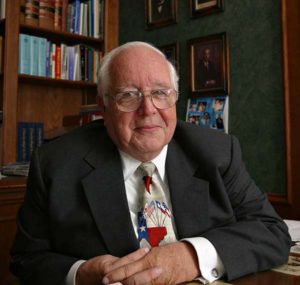
Former Judge Paul Pressler, who played a leading role in wresting control of the Southern Baptist Convention from moderates starting in 1979, poses for a photo in his home in Houston on May 30, 2004. (AP Photo /Michael Stravato / Distributed by RNS)

Pressler, a former SBC Executive Committee member, former SBC first vice president (in 2002 and 2003) and former Texas legislator and judge, is being sued by Gerald Duane Rollins.

In the suit originally filed in October 2017, Rollins alleges Pressler raped him in 1980, when Rollins was 14 years old and attending a Bible study at Pressler’s church. According to the affidavit, Pressler continued to rape Rollins, “over the course of the next 24 years or so” as Rollins progressed into his 30s.

The case had been dismissed in 2018 on grounds that the statute of limitations had expired, but the Appellate Court ruled in 2021 Rollins had suffered from post-traumatic stress disorder, thus modifying the statute of limitations for reporting the alleged abuse.

Rollins is seeking $1 million in damages.

The case also names Pressler’s wife Nancy, Jared Woodfill, Woodfill Law Firm, the Southern Baptist Convention and First Baptist Church in Houston as defendants.

The terms of the settlement were not disclosed.

“Dr. Patterson is grateful that he has been removed from a suit that he should never have been included,” J. Shelby Sharpe, Patterson’s attorney, said in a statement to The Tennessean in Nashville. “No money was paid on Dr. Patterson’s behalf or by him to have him non-suited.”

Southwestern Seminary declined to comment.

The case is scheduled to go to trial on May 15.


Oklahoma Baptist University severely damaged by tornado

SHAWNEE, Okla.—Oklahoma Baptist University sustained severe tornado damage to its campus, but university officials reported no injuries due to the April 19 storm.

“Buildings can be rebuilt. What I’m really happy to report is we have no reported injuries and no reported fatalities,” said Heath Thomas, OBU president, noting the campus experienced the worst damage in its 113-year history.

A tornado ripped the roof off of this building on OBU’s campus. (Screen capture from KOCO News video)

Raley Chapel, Shawnee Hall, some dormitories and other buildings on the OBU campus were seriously damaged. The university cancelled classes Thursday and Friday.

“It’s going to take time to rebuild,” Thomas told media. “But we’ve got an incredible alumni base, incredible partners [and] incredible friends who already expressed a desire to help.”

The National Weather Service determined the multiple tornadoes that swept through five Oklahoma counties likely included one EF-3, two EF-2s, one EF-1 and one EF-0. The tornado that hit Shawnee was 1.3 miles wide and was on the ground 27 minutes, traveling 15.5 miles and reaching wind speeds of up to 135 mph, the weather service reported.

Oklahoma Baptist disaster relief personnel were in Shawnee the morning following the tornado to assess damage and provide help.

“Our Oklahoma Baptist [disaster relief] trained volunteers will be part of a coordinated response to this tornado devastation in Shawnee and other areas,” said Jason Yarbrough, state director for Oklahoma Baptist disaster relief.

“We are heartbroken for our OBU family—and for our friends and neighbors who were affected across Oklahoma—we will be working to provide all the help and hope people need.”

Texas Baptist Men volunteers serve in Shawnee, Okla., after a tornado ripped through the city. (TBM Photo)

Oklahoma Baptist disaster relief crews provided meals on the OBU campus, and they removed downed trees and other debris. Chainsaw crews began to help homeowners by removing felled trees from roofs and installing tarps to cover damaged houses. Volunteer chaplains prayed with affected residents and offered spiritual counsel.

A Texas Baptist Men box unit arrived in Shawnee to help residents gather and store recovered items from damaged homes. All TBM chainsaw teams across the state were placed on standby to serve as needed.

“We want to share the love of Jesus and the gospel as we serve people at their point of need,” Yarbrough said.

Compiled from reports by the Oklahoma Baptist Messenger, The Baptist Paper and Texas Baptist Men.


Seminary alleges ‘imprudent’ and ‘unwise’ financial actions

FORT WORTH—Southwestern Baptist Theological Seminary trustees heard a report from a task force calling for “new financial guardrails” to guard against “imprudent” and “unwise” financial activities.

At the same April 19 meeting where the board approved a $35.9 million budget for the 2024 fiscal year and elected David S. Dockery as president, Chair Danny Roberts delivered a report from a trustee task force “that evaluated the former president’s expenses and financial management, following up on a request from trustees during their fall meeting.”

A Nov. 5, 2022, tweet from the seminary stated: “Update from Board Chairman Danny Roberts to our Southern Baptist Family: ‘We are in the process of an ongoing and detailed auditing into potential spending irregularities and past bidding processes that was demanded by the unanimous vote of the SWBTS Board of Trustees after hearing a financial report in a recent executive session at their October meeting. Please join us in praying for this process of transparency as it nears completion.’”

According to a report on the trustee meeting from the seminary’s office of communications, Roberts said the task force “was given unfettered access by the administration to all financial records of the institution.”

The task force found evidence of “imprudent” and “unwise” financial decisions, including “some activities contrary to institutional policies,” Roberts said.

However, he added, the group’s findings “did not rise to the level of requiring further action based on what is currently known.”

‘Need for greater accountability’

“The findings demonstrated a need for greater accountability and oversight for the institution,” Roberts said. “As a result, new financial guardrails will be implemented to provide for greater accountability to the trustees in order to prevent similar decision making in the future.”

The seminary news release did not provide any specific information about the “financial guardrails.”

Adam W. Greenway resigned as president of the seminary last September amid reports of a major budget deficit and significant turnover in faculty, staff and administration.

The following month, the seminary announced layoffs to avert a potential financial “crisis.” At that point, Dockery—acting as interim president—presented an organizational restructuring plan that cut operational and personnel costs by about $3.6 million.

Adam Greenway

On April 18, Greenway tweeted: “Many have asked what really happened re: me and @SWBTS. I have not commented publicly before now, and will not say much at this time, except to say that I fully expected an updated summary to be provided by the seminary some time ago. Why it has not, I do not know.”

When contacted by the Baptist Standard, Greenway reiterated his desire for Southwestern Seminary to provide a full accounting.

“I look forward to the seminary fulfilling its promise of transparency to Southern Baptists by releasing the full trustee investigative report, including all related findings, without edit or redaction,” Greenway said.

“I trust that all Southern Baptists will then be able to judge for themselves the veracity of the summary narrative presented in the seminary’s press release.”

When asked about a written report from the task force and the availability of such a report, James A. Smith, associate vice president for communications at the seminary responded: “The full board of trustees heard reports from members of the task force in executive session. Board members did not receive written reports.”

Southwestern Baptist Theological Seminary trustee chairman Kevin Ueckert (left) addresses trustees at a special called meeting at the Fort Worth campus. The board met to discuss the controversy surrounding Paige Patterson (right), then president of the seminary. (File Photo by Adam Covington/SWBTS via BP)

When he was elected as seminary president in 2019, Greenway had to deal with an already challenging situation. His predecessor, Paige Patterson, was fired by trustees in large part for his mishandling of sexual abuse complaints and his perceived disrespect for women.

During his time at Southwestern, Patterson expanded the faculty and led the seminary to take on several extensive—and expensive—construction projects during a period of significant enrollment decline.

In February, Southwestern Seminary accepted a nonbinding agreement to sell 15 acres of its B.H. Carroll Park to the City of Fort Worth for $11 million, and trustees affirmed the action by its business administration committee at their April 19 meeting. The city plans to use the property to provide housing for 140 homeless families and victims of domestic violence.

In other business, the board of trustees approved “Advance Southwestern: 2030,” an updated and expanded version of an academic plan adopted in 2021.

“Designed with the hope of bringing about institutional renewal and consensus, the plan serves as both an audit of our current situation and a pointer to the future, recognizing the vital need to bring much-needed unity and synergy to the Southwestern community,” the introduction to the 39-page plan states.

Trustees also granted the business administration committee authority to negotiate with Prestonwood Baptist Church in Plano to establish a Fort Worth branch of its pregnancy center on campus.

The board elected as officers for the 2023-24 academic year Jonathan Richard, pastor of First Baptist Church in Estancia, N.M., as chair; Robert Brown, executive director of Lakeway Christian Schools in Morristown, Tenn., as vice chair; and Angela Duncan, a homemaker from Granbury, as secretary.


Seminary names Dockery president, Hawkins chancellor

FORT WORTH—Southwestern Baptist Theological Seminary trustees announced they unanimously elected David S. Dockery as president and O.S. Hawkins as chancellor at their April 19 meeting.

In announcing Dockery’s election as the seminary’s 10th president, Trustee Chair Danny Roberts called him “God’s man for Southwestern Seminary at this time.”

A ‘critical juncture’ in the seminary’s history

“Our seminary’s at a critical juncture in this 115-year history,” Roberts said. “And in God’s providence, he has already provided the man to lead our seminary during this time.”

(Southwestern Baptist Theological Seminary Photo)

Dockery served as interim president and Hawkins as senior adviser and ambassador-at-large for the seminary since last September, following the resignation of Adam W. Greenway as president.

Initially, trustees had named Hawkins, former president of Guidestone Financial Services, as acting president immediately after they accepted Greenway’s resignation.

Five days later, the board met in executive session by video conference and announced Dockery and Hawkins would work “in tandem” to address what Hawkins called the “external and internal challenges facing the seminary.”

During Greenway’s time as president, the seminary experienced significant turnover in faculty, staff and administration, and it was running a major deficit.

Southwestern Baptist Theological Seminary accepted a nonbinding agreement to sell 15 acres of its B.H. Carroll Park to the City of Fort Worth for $11 million. (Southwestern Seminary Image)

Last October, Southwestern Seminary announced layoffs to avert a potential financial “crisis,” and Dockery presented trustees an organizational restructuring plan that cut operational and personnel costs by about $3.6 million.

In February, the seminary accepted a nonbinding agreement to sell 15 acres of its B.H. Carroll Park to the City of Fort Worth for $11 million. The city plans to use the property to provide housing for 140 homeless families and victims of domestic violence.

No need to ‘look further’ for president

Roberts said trustees did not need to “look further for our next president” based on Dockery’s “impressive performance as interim [president], providing stability and healing, his long track record of outstanding Christian leadership in higher education, with the current needs of the institution.”

David S. Dockery

Although a presidential search committee would be typical, “Southwestern’s current challenges are best faced with clarity in the office of the president as soon as possible and for the future,” he said.

Roberts noted it. is not the first time a president of Southwestern was elected without a search process, referring to the seminary’s second president, L.R. Scarborough.

“We have settled today who our leader is, and we may move forward as we continue to seek God’s favor on Seminary Hill, as we equip men and women of the next generation of ministers to the calling that God has given them,” he said.

‘Deeply humbled and genuinely grateful’

Dockery said he was “deeply humbled and genuinely grateful for the privilege and responsibility to serve” as Southwestern’s president.

“I am truly thankful for the overwhelming support from the board of trustees as well as for the faithful encouragement and prayerful support from the faculty, staff, colleagues and students,” Dockery said. “What an honor it will be to continue to serve side-by-side with O.S. Hawkins, a dear friend and person that I greatly admire and from whom I have learned much in recent months.

“We recognize that we stand on the shoulders of so many who’ve gone before us. I love this institution and the best aspects of its history. We will, with God’s help, seek to carry forward in the future the best of Southwestern’s heritage and the Southwestern spirit.”

Dockery said he trusts in the “Lord’s favor and blessings to rest on Southwestern Seminary and Texas Baptist College in the days to come.”

New role of chancellor

Roberts expressed gratitude for Hawkins’s willingness to accept the new role of chancellor in which he “will continue to offer his experience as statesman and influence in this seminary and in this community.”

“There are really few leaders in Southern Baptist Convention life who have the impeccable leadership credentials of Dr. Hawkins has with the sterling track record of 25 years as president of GuideStone Financial Resources, among other places of service,” Roberts said.

O.S. Hawkins

Hawkins would continue to serve as a volunteer and will report to Dockery by providing “counsel, offer support and guidance, develop contacts, raise funds and bring his influence, credibility, and good will and gravitas to our seminary community,” Roberts said.

“This change in title will greatly aid his efforts in supporting the seminary,” Roberts said. “And we are blessed that this Southwesterner is willing to serve our seminary at this strategic moment in our history.”

As a two-time graduate of Southwestern, Hawkins said his service to the seminary is in gratitude for what the institution has meant to him.

“I have loved Southwestern since the first day I attended classes in January 1970, and I feel a sense of indebtedness to all those who invested so much in my own journey to the M.Div. and Ph.D. degrees on this hill,” Hawkins said.

“While I will be serving alongside Dr. Dockery in the new role of chancellor, I will be volunteering my time and whatever gifts and talents God has given me to prayerfully advance the school into what we hope and prayerfully expect to be a brighter tomorrow. We are calling on all Southwesterners to join us on this journey.”

Experience as a scholar and administrator

Dockery, who earned the Master of Divinity degree from Southwestern Seminary in 1981, joined the seminary faculty in 2019 when he was named distinguished professor of theology and theologian-in-residence for the B.H. Carroll Center for Baptist Heritage and Mission.

He served as special consultant to the president, and from December 2020 to February 2022, he also served as interim provost at Southwestern. He is the inaugural director of the Dockery Center for Global Evangelical Theology, named in his honor by the board of trustees at their spring 2022 meeting.

After a lengthy career in Christian higher educational leadership at Trinity International University, Union University and Southern Baptist Theological Seminary, Dockery was invited in 2019 to assist with the founding of the International Alliance for Christian Education.

He also served as president of the Evangelical Theological Society and board chair of the Council for Christian Colleges and Universities, Christian College Consortium, and Consortium for Global Education.

In addition to his degree from Southwestern Seminary, Dockery holds an undergraduate degree from the University of Alabama at Birmingham, a Master of Divinity degree from Grace Theological Seminary, a Master of Arts degree from Texas Christian University and a Ph.D. from the University of Texas at Arlington.

He was named a distinguished alumnus by Southwestern Seminary in 2002.

Dockery has written, edited or contributed to nearly 100 books, and he served as the New Testament editor for the 40-volume New American Commentary Series. He was general editor of the 15-volume Reclaiming the Christian Intellectual Tradition Series and is co-editor of the multi-volume Theology for the People of God series. He is general editor of the forthcoming New English Translation Study Bible.

Dockery and his wife Lanese have been married more than 47 years, and they have three married sons and eight grandchildren.

Hawkins retired in March 2022 as the president and CEO of GuideStone after a quarter-century leading the SBC entity. He previously was pastor of First Baptist Church in Dallas and First Baptist Church in Fort Lauderdale, Fla.

He has written more than 40 books and received the distinguished alumni award from Southwestern Seminary in 2000.

He and his wife Susie have been married since 1970. They have two married daughters and six grandchildren.

Based on information provided by the Southwestern Baptist Theological Seminary communications office, with additional reporting by Managing Editor Ken Camp. 


TV preacher and SBC leader Charles Stanley dies

WASHINGTON (RNS)—Charles Stanley, a former Southern Baptist Convention president, Atlanta pastor and longtime religious broadcaster, died April 18. He was 90.

 “We are saddened to share that our beloved pastor, Dr. Charles Stanley, has passed away,” reads a statement on the website of In Touch Ministries. “We are forever indebted to him for his godly example, biblical teaching, and devotion to the gospel. Please join us in prayer for the Stanley family.”

Stanley, a native of Dry Fork, Va., felt called to ministry as a teenager and, after pastorates in North Carolina, Ohio and Florida, led First Baptist Church in Atlanta as its senior pastor for five decades.

Influential religious broadcaster

In 1972, he began his broadcast ministry with “The Chapel Hour,” a 30-minute program on two Atlanta television stations. It was renamed “In Touch With Dr. Charles Stanley” and became a nationwide broadcast on the Christian Broadcasting Network in 1978.

By the 1980s, “In Touch” reached more than 1 million households, his website said. At the time of Stanley’s death, his messages were heard in more than 127 languages on TV and radio, making him one of the longest-serving pastors with a continuous weekly broadcast program.

“Dr. Stanley leaves behind a lasting legacy as a torch-bearer and trailblazer of gospel ministry and Christian broadcasting,” said Troy A. Miller, president of National Religious Broadcasters.

“We were blessed to have such a faithful servant of the Lord as a veteran NRB member and a faithful supporter and encourager of the work of NRB. Our condolences and prayers are with Dr. Stanley’s family. Although we mourn his loss in this life, it is a joy to know that he is with his Lord and Savior.”

Stanley was inducted into the NRB Hall of Fame in 1988.

Presided over two mammoth SBC meetings

He served two consecutive one-year terms as SBC president, presiding over its largest meetings—the Dallas convention in 1985 that drew 45,531 messengers and the Atlanta meeting in 1986 that attracted 50,987 messengers—and helped lead the so-called conservative resurgence.

Charles Stanley preached to the Southern Baptist Convention at its annual meeting in Atlanta in 1986. (Photo courtesy of Southern Baptist Historical Collection and Archives)

Current SBC President Bart Barber, pastor of First Baptist Church in Farmersville tweeted about Stanley’s longtime influence.

“Condolences to the family of Charles Stanley, former SBC President, Conservative Resurgence leader, nationally-known preacher, and successful author,” Barber tweeted. “As a teenaged preacher, I was reading Charles Stanley resources.”

Evangelist Greg Laurie tweeted: “Charles Stanley went to Heaven today. He made his mark on this world for the Gospel and his incredible teaching of God’s Word. I like so many others was blessed by hearing his messages on the radio and TV and he was a trusted voice we have all been encouraged by.”

Younger and older Christian leaders weighed in about Stanley’s prominence, with evangelist Nick Hall calling him a “hero of the faith” and Focus on the Family founder James Dobson calling his colleague “an effective evangelist.”

“Stanley had a straightforward take on how to live the Christian life—trust Scripture and obey God,” Dobson added. “That simple mantra undergirds his legacy and no doubt is reflected in the faith of countless Christians who have been impacted by his ministry.”

The author of dozens of books was recognized by people in the grassroots as well as in the highest echelons of American society.

“I read every morning, the Bible and Scriptures and Charles Stanley devotionals,” President George W. Bush said in a 2003 interview with Ladies’ Home Journal. “It matters a lot to me personally.”

Difficult early life

Stanley’s rise in influence came after a difficult young life. When he was 9 months old, his father died. Young Stanley’s mother remarried when he was 9, but he said her new husband spurned him.

“And if somebody would have said, ‘Well, that didn’t bother you did it?’ I probably would have said ‘no,’” he told Religion News Service in a 2014 interview about his book Emotions: Confront the Lies. Conquer With Truth.

“But years later, I realized that those years of rejection as a kid really sunk deep into me. Finally, after a lot of praying and having some friends of mine speak with me about it, I was able to get over that rejection.”

In 2015, Stanley, whose views criticizing homosexuality and same-sex marriage mirrored that of many Southern Baptists, declined an award he had planned to accept from the Jewish National Fund in Atlanta.

After many Jews opposed him receiving the honor, Stanley chose to turn down the award, citing his love for Israel and the strife the award was causing in the Jewish community, according to the JNF.

As recently as 2010, Stanley ranked among the most influential preachers, behind evangelist Billy Graham and pastor and author Charles Swindoll. He and Rick Warren, then pastor of Saddleback Church, were each listed third in a Lifeway Research survey.

Strained family relations

Stanley’s wife Anna filed for divorce in 1993. After a period of reconciliation, the couple divorced in 2000, after 44 years of marriage.

Stanley, known as a spokesman for conservative family values, at one time had told his congregation he would resign if he divorced, but later he determined he’d continue to be its leader.

“The love you have shown me and the love I have for you have encouraged me to remain faithful to God’s call on my life,” Stanley told his congregants.

Gearl Spicer, administrative pastor for First Baptist Atlanta at the time, said, “It is my biblical, spiritual, and personal conviction that God has positioned Dr. Stanley in a place where his personal pain has validated his ability to minister to all of us.”

Anna Stanley died in 2014 of pneumonia and other health issues at age 83.

For a time, the divorce led to a ruptured relationship with son Andy Stanley, founding senior pastor of North Point Community Church in Atlanta, but the father and son later reconciled.  In addition to his son, Stanley is survived by daughter Becky Stanley Brodersen, six grandchildren, three great-grandchildren and half-sister Susie Cox.

No fear of death

Charles Stanley became First Baptist Atlanta’s pastor emeritus in 2020, after serving the megachurch for 50 years in its top role.

“As much as I love being your pastor, I know in my heart this season has come to an end,” the senior Stanley said at the time.

“I’ll continue to preach the gospel as long as God allows, and my goal remains the same: to get the truth of the gospel to as many people as possible as quickly as possible in the power of the Holy Spirit to the glory of God.”

When he spoke with RNS in 2014, Stanley said he did not fear death.

“No, I don’t, for the simple reason that God makes it clear in his word: ‘Absent from the body, present with the Lord,’ for those of us who know Christ as Savior,” he said, citing a verse from 2 Corinthians. “And the fact that Jesus died at Calvary, and his blood shed for us paid our sin debt in full, there is no reason to fear death. So, I don’t.”

With additional reporting from Baptist Press.


ERLC chief Leatherwood urges red flag law
 in Tennessee

WASHINGTON (RNS)—In late March, Brent Leatherwood got what he called “the most terrifying call a parent could imagine.”

There was a shooter at the Covenant School in Nashville, Tenn., where his three children attend.

His children survived the attack. Three of their schoolmates did not. Three of the staff at the school also were killed.

But Leatherwood’s personal connection to the school seems to have translated into a professional decision.

Letter to Tennessee lawmakers

Identifying himself as a Covenant parent, a gun owner and the current president of the Southern Baptist Convention’s Ethics and Religious Liberty Commission, Leatherwood—a former Tennessee Republican Party official—wrote to the state’s political leaders last week urging them to act to prevent gun violence.

In a letter addressed to Tennessee’s lieutenant governor, the speaker of its House of Representatives and every legislator, Leatherwood said God had given them the responsibility “to oppose evil and protect innocent lives.”

He urged them to act in support of a proposal from Tennessee Gov. Bill Lee to pass a “red flag” law to remove guns from people who are a danger to themselves or others.

“This proposal values life, both the life of the person in distress and anyone who may become a target in their anguish,” Leatherwood wrote.

“Removing their ability to inflict harm on themselves or others is in line with our state’s strong commitment to protecting the sanctity of life.”

‘Never an excuse for inaction’

Leatherwood, who declined an interview request, told legislators and other state leaders they could respect the Second Amendment and still protect children. He thanked legislators for a new law that allows private schools to hire police as school resource officers.

The governor signed that law days after the shooting. He also signed an executive order allowing more background checks on firearm sales.

In Leatherwood’s letter, he cited the Bible, specifically a passage from Genesis about every person being made in God’s image, and Jesus’ command to “love your neighbor as yourself.”

“Yes, it is true we live in a world tainted by terrible acts and deeds, but that is never an excuse for inaction,” he wrote.

“While it may not prevent every instance of this sort of violence, it will prevent some, and thereby save innocent lives. That should be more than enough reason to advance this proposal.”

‘Minimize the threat of gun violence’

Southern Baptists have passed resolutions in recent years calling for action on the pandemic of mass shootings in the United States. In 2018, they passed a resolution in the wake of a mass shooting at a Texas church in Sutherland Springs, calling on “federal, state, and local authorities to implement preventative measures that would reduce gun violence and mass shooting.”

A 2022 resolution, which Leatherwood quoted in his letter, also called for action.

“We earnestly pray for our local, state, and federal leaders to recognize the seriousness of the ongoing threat of mass shootings throughout our society and to take concrete steps, towards solutions that uphold the dignity and value of every human life, especially the most vulnerable among us, and to minimize the threat of gun violence throughout our society,” the resolution read.

Passing gun legislation in Tennessee, where evangelicals are one of the largest faith groups, is complicated. State leaders have worked for years to loosen gun regulations—including allowing people over 21 to carry concealed weapons without a permit.

The shooting at Covenant has led to large protests at the statehouse, by students and by faith groups calling for action on gun violence.