SBC legal expenses surpass $12M in three years

NASHVILLE (BP)—The Southern Baptist Convention Executive Committee reported it has spent more than $12.1 million on the 2021-2022 Guidepost Solutions investigation into its handling of sexual abuse claims and subsequent legal expenses dating back to 2021.

To cover expenses and operating costs moving forward, the Executive Committee voted in executive session at its September meeting to authorize President Jeff Iorg to execute a loan secured by the SBC Executive Committee building and place the Nashville building on the market.

The release of the detailed financial information was the result of a motion adopted by messengers at this summer’s SBC annual meeting.

Executive Committee Finance Committee Chair Adam Wyatt told Baptist Press the funds to cover legal expenses have been taken from the Executive Committee’s reserve funds to “protect Cooperative Program dollars” even though the original motion adopted by messengers at the 2021 SBC annual meeting approved the use of Cooperative Program dollars for the review.

The numbers show the Executive Committee has “done everything in our power to take the burden on ourselves to protect the Cooperative Program and the work of the convention and its entities,” Wyatt said. “And it is our effort of trying to just be as transparent and clear about where we really are.”

The expense breakdown given to the Executive Committee shows:

  • The total cost of the Guidepost Investigation was $3.1million.
  • $2 million was paid directly to Guidepost to conduct the investigation.
  • Legal and task force expenses totaled $1.1 million.
  • The Executive Committee has paid $3.1 million to indemnify Guidepost.
  • The cost of the abuse tipline hosted by Guidepost has been $861,000. This expense has been reimbursed by Send Relief.

Other legal expenses include:

  • Litigation and case management: $2.4 million
  • U.S. Department of Justice investigation: $2 million
  • General counsel: $571,000
  • Post investigation legal support: $131,000

Messengers to the 2021 SBC annual meeting in Nashville approved a motion calling for an independent, third-party investigation into alleged mishandling of sexual abuse claims by the Executive Committee over a period of 20 years.

The motion also called for the creation of a Sexual Abuse Task Force to oversee the third-party investigation and bring recommendations to the 2022 SBC annual meeting.

That task force retained Guidepost to conduct the investigation, and the contract signed included a clause indemnifying Guidepost of any legal expenses resulting from its investigation.

The report from the investigation was released in May 2022. An investigation of the SBC by the Department of Justice was announced in July 2022.

Two men named in the Guidepost report later sued both Guidepost and the SBC for defamation—former Georgia pastor and SBC president Johnny Hunt and former Southern Baptist Theological Seminary professor David Sills.

The Hunt suit in particular has made up the lion’s share of litigation expenditures thus far, Wyatt told Executive Committee members Tuesday.

One of the recommendations of the Sexual Abuse Task Force at the 2022 SBC annual meeting was the formation of the Abuse Response Implementation Task Force. The implementation task force functioned from September 2022 until the 2024 SBC annual meeting in Indianapolis.

In its final report to messengers this past June, the Abuse Response Implementation Task Force recommended the Executive Committee find a permanent home for sexual abuse response and prevention in the SBC.

The Executive Committee took first steps toward that end Sept. 17 by adopting a recommendation from its officers to form a new department within the Executive Committee.

Seeking to be ‘fully transparent’

SBC Executive Committee CFO Mike Bianchi told Baptist Press the Executive Committee is striving to be “fully transparent of how we got here, and we want to be equally transparent of where we’re going.”

“We want to bring all the partners, all the entirety of the SBC into that discussion of where we’re going,” Bianchi said.

Chairman Philip Robertson reported Executive Committee members acted during an executive session to help cover the entity’s expenses and operating costs.

The Southern Baptist Convention Executive Committee building in Nashville, Tenn. (Baptist Press Photo)

“To meet the EC’s operational and legal expenses, the Executive Committee has authorized the president to execute a loan secured by the building and place the SBC building on the market,” Robertson said.

The Executive Committee discussed the potential sale of the SBC building in Nashville during its September 2023 meeting.

At the 2017 SBC annual meeting, messengers authorized the Executive Committee to “continue studying the advisability of a sale of the SBC Building, and to sell the property upon such terms and conditions, and at such a time, if any, as the Executive Committee may hereafter approve.”

The building is home to the Executive Committee, the Ethics & Religious Liberty Commission, SBC Seminary Extension, the Southern Baptist Historical Library and Archives and the Southern Baptist Foundation.

Proceeds would be divided among them:

  • The Executive Committee holds a 56 percent interest.
  • The Ethics & Religious Liberty Commission holds a 14 percent interest.
  • The Council of Seminary Presidents holds a 26 percent interest. This is composed of a 10 percent interest for Seminary Extension Education and 16 percent for the Southern Baptist Historical Library and Archives.
  • The Southern Baptist Foundation holds a 4 percent interest.

The Executive Committee’s next scheduled meeting is Feb. 19-20, 2025, in Nashville.


SBC a cooperative ‘force for good,’ Jeff Iorg asserts

NASHVILLE (BP)—The Southern Baptist Convention is a diverse, cooperative “force for good” that is poised to move forward on mission, Jeff Iorg said at his installation as the eighth president of the SBC Executive Committee Sept. 16 in Nashville.

Whether in Christian youth education and discipleship, church planting and development, pastoral and ministerial preparation, evangelism, national and international missions, women’s ministry or financial giving, Southern Baptists have excelled through cooperation, Iorg said.

“Southern Baptists, cooperation around God’s mission is a convictional mindset worth preserving,” Iorg said. “My willingness to serve as president of the Executive Committee rests on God’s call, my gratitude to Southern Baptists and my bedrock conviction that Southern Baptists are a force for good.”

He described himself and his wife Ann as “a product of Southern Baptists at their best,” who accepted his leadership role at the Executive Committee in appreciation for all Southern Baptists have done for the two of them.

“Southern Baptists are a compassionate, devoted, sacrificial people who obey the Great Commission in the spirit of the Great Commandment. We are on mission to share the Gospel with every person and express God’s love in every context,” Iorg said at his installation at the September Executive Committee meeting.

“We believe the Bible is truth—and while we argue often over how to interpret the Bible, we are uncompromising in our commitment to it as our absolute authority.”

Iorg pointed to a Southern Baptist “force for good” that:

  • Operates the largest missions sending agency, with more than 3,500 international missionaries deployed.
  • Operates the largest domestic church planting movement with a network of nearly 47,000 churches.
  • Gave $10 billion in tithes and offerings in fiscal 2023, with more than $457 million of that forwarded to the Cooperative Program to support national and international missions.
  • Operates the largest seminary system in the United States with 22,000 students preparing for ministry leadership at six SBC seminaries and their five colleges.
  • Has 270,000 students enrolled in more than 50 Southern Baptist affiliated colleges and universities.
  • On a typical Sunday, has more than 4 million people gathered in churches for worship and 2.5 million for Bible study.
  • Celebrated more than 3,500 confessions of faith in Christ among 114,000 teenagers and children at Lifeway Christian Resources summer camps in 2024, with 1,500 of them expressing a call to ministry.

In 2023, Southern Baptists responded to disasters through the strength of 32,000 volunteers, and supported those in need globally by giving more than $43 million to Send Relief, the SBC’s international compassion ministry arm.

Through entities, state conventions and partners, Southern Baptists provide such services as residential care for children, adoption facilitation, collegiate ministries and financial aid to widows.

Work on shortcomings, pursue God’s mission

Iorg implored Southern Baptists to reject the “debilitating myth” that they must be perfect in order to persuasively spread the gospel, but must instead work on our shortcomings while pursuing God’s mission.

“Spiritual maturation and missional advance are parallel, not sequential, experiences,” he said. “Our gospel integrity rests on humbly and honestly acknowledging our sins, not eliminating them before we can share the gospel with others.

“Unbelievers are willing to receive a clear witness about Jesus from authentic, imperfect believers. When our attitude is right, unbelievers are far less judgmental of us than our critics claim.”

He defended cooperation as “the best way for thousands of autonomous churches to work toward the common good of sharing the gospel with the entire world,” despite the process “being under attack from both external critics and internal detractors.”

Continue to cooperate, he encouraged, because it works, because the Bible says we can do more collectively than by ourselves, because it expresses unity and because while our churches are autonomous, they are not independent.

“While other denominations strain to preserve loyalty through top-down control, experience doctrinal error when power is vested in a heretical few, demand financial support through assessments, and struggle to produce leaders loyal to their movement,” Iorg said, “our cooperative efforts have excelled and expanded for more than 175 years.

“We cooperate because cooperation works—producing supernatural spiritual results which reflect God’s grace, power and favor on our movement.”

Servanthood emphasized

Texas pastor Burtis Williams prays during the installation service of Jeff Iorg as president of the SBC Executive Committee Sept. 16, 2024 in Nashville. Williams led Iorg to faith in Jesus Christ at a county fair when Iorg was a teenager.(BP Photo)

Servanthood was the focus of the installation that included many who have been impactful in Iorg’s ministry, including Burtis Williams, who led Iorg to Christ at a county fair 50 years ago in Texas—and 25 years later led Iorg’s mother to Christ.

Victor Chayasirisobhon, associational missions strategist for the Orange County Baptist Association, spoke of Iorg’s commitment to service. David Johnson, executive director and state missionary of the Arizona Missionary Network of Southern Baptists, testified of Iorg’s commitment to partnerships.

Neal Hughes, who led the search committee that recommended Iorg as Executive Committee president, shared the selection committee’s journey to Iorg as the candidate for the post.


ERLC board affirms staff, seeks to ‘listen to churches’

The staff of the Southern Baptist Convention’s Ethics & Religious Liberty Commission heard an official word of affirmation Sept. 11 with the release of a statement approved by the agency’s board of trustees in a two-hour executive session the day before during the annual meeting in Nashville.

The statement affirms the work of ERLC president Brent Leatherwood and the 17 other staff members, noting the importance of “bringing light and hope to the public square.”

The statement also emphasizes how ERLC’s role is to keep the churches informed about the pressing moral issues and urges staff “to be cautious when addressing controversial political issues by allowing [Leatherwood’s advocacy assessment filter] to serve as the guide in choosing the wording of the response.”

Leatherwood explained during the Sept. 10 afternoon plenary session of the meeting how he and the team have used the framework outlined in the advocacy assessment since the beginning of his time in the president’s seat.

Both Leatherwood and interim trustee chair Tony Beam of South Carolina acknowledged the concern about ERLC being the focus of a vote for shutting down the entity during the SBC annual meeting in June.

While the motion failed to receive the mandated two-thirds vote of messengers for approval to then go before the 2025 messengers for the final confirmation vote, the fact that the motion was made has ERLC board and staff evaluating policies and procedures.

The board seeks “to support the team at the ERLC, as well as listen to our churches, as together we navigate a turbulent political climate,” Beam said in a statement. “We pray that the [public release of both the advocacy assessment and the affirmation and encouragement statement, which were] affirmed by the trustees, will assist and encourage the ERLC president and staff in speaking clearly and boldly to the issues of the day.

“[We also pray the statements] inform the churches in a transparent way, how the ERLC makes decisions about how they address the issues.”

In other business

During the Sept. 11 morning plenary session of the board meeting, a second executive session was held for roughly 45 minutes.

The result was two motions approved by trustees:

  • “The trustees acknowledge that Brent Leatherwood’s salary has been presented to the full board by the executive committee [of the ERLC] and reviewed by the trustees as stated in the bylaws.”
  • “That we affirm the ERLC’s existing conflict of interest policy and encourage trustees and staff to follow this policy. We also encourage trustees and staff to report violations of this policy. Trustees who violate the conflict of interest are subject to board censure and staff are subject to disciplinary action.”

No context was provided related to the conflict of interest motion, but some board members have been the subject of media reports and social media discussions in recent years related to allegedly “leaking” material and forcing discussions beyond the trustee board meetings. The conflict of interest/standard of conduct policy is in Article VII of the ERLC bylaws.

Trustees also elected new officers and subcommittee chairs: Scott Foshie of Illinois, chair; Amy Pettway of Florida, vice chair; and Anthony Cox of Arizona, secretary; Heather Sells of Virginia, communications chair; Matthew Morgan of Mississippi, administration and finance chair; and Mitch Kimbrell of Vermont, research and public policy chair.

Trustees approved two new temporary trustees to fill the vacancies on the board:

Jon Nelson, lead pastor of Soma Community Church in Jefferson City, Mo., will take the at-large seat left vacant with the resignation of Kevin Smith of Florida, who was serving as board chair until the July confusion related to Leatherwood’s position.

Todd Brooks, pastor of Smith Rock Community Church in Terrebonne, Ore., will take the Northwest seat left vacant by Michael Lerma, who needed to resign following the recent death of his wife.

Nelson, who previously served on the SBC’s Abuse Reform Implementation Task Force, and Brooks are allowed to serve until the next slate of new trustee nominations are presented to SBC messengers during the 2025 annual meeting.

In response to a motion referred to the ERLC from the SBC annual meeting, the board affirmed it will continue serving churches in the area of sexual abuse reform efforts.

“Sexual abuse is an affront to the cause of Christ, especially when it takes place within the church,” board members stated. “The ERLC will continue to serve churches regarding this issue and call on them and others to take this grave issue seriously as we care for victims of abuse and provide a witness to a watching world that the Lord calls us to this ministry of reconciliation.”

With the disbanding of the implementation task force in June, the $250,000 allotted for its work comes back to ERLC and will be used for future sexual abuse reform efforts conducted by the commission.


Greenway suit against seminary resolved without payment

Former Southwestern Baptist Theological Seminary President Adam W. Greenway dropped his defamation lawsuit against his former employer without any financial settlement.

Southwestern Seminary released a statement Sept. 9 announcing the matter was resolved.

“We are grateful to have this resolution between Southwestern Seminary and its ninth president, Dr. Adam W. Greenway.  No monetary consideration was paid as part of this resolution,” the joint statement from the seminary and Greenway said.

“The trustees and Dr. Greenway are looking forward to putting this matter behind us and moving on to focus our energies and efforts on following God’s plans for the next chapters of our respective lives and ministries. We pray that God will richly bless the Greenway family as well as Southwestern Seminary in the years ahead.”

In a separate statement, Southwestern Seminary said: “When Adam Greenway approached the seminary on the eve of his deposition and offered to drop his lawsuit with no monetary consideration in return, it was clear this was the best decision for Southwestern Seminary.

“We believe the manner of this resolution not only vindicates the seminary, it further demonstrates the allegations made in the lawsuit were without merit. Grateful for the favor God has bestowed on the seminary since the fall of 2022, we are now eager to re-focus our full energies and resources on carrying out the mission of Southwestern Seminary.”

The Baptist Standard contacted Greenway to ask for any additional comment in light of the separate statement from the seminary. Greenway initially said he was still considering the best way to respond publicly and was not yet prepared to do so on the record.

The next morning, he provided the following statement: “Late last week, I directed my legal counsel to extend an olive branch to legal counsel for Southwestern Seminary, motivated by my steadfast desire to achieve an amicable resolution to our ongoing dispute, whereby the Seminary would fulfill its original commitment to take responsibility for issuing a joint statement acknowledging our separation, with malice toward none and with charity toward all.

“While I am grateful that such a joint statement has now been issued, I disagree strongly with the Seminary’s characterizations of the motivations behind or the meaning of the settlement. Scripture counsels us that we are to ‘if possible, as far as it depends on you, live at peace with everyone’ (Romans 12:18, CSB). I am content to let the joint statement speak for itself. I look forward to putting this chapter of my life behind me and focusing on the hope and the future that our Lord has for me and my family.”

Lawsuit alleged ‘defamatory campaign’

Greenway, who was forced out as president of Southwestern Seminary in September 2022, filed suit against the seminary and the past chair of its trustee board in March 2024.

His lawsuit alleged the seminary administration and then-chairman Danny Roberts “began a defamatory campaign against Dr. Greenway that included both specific false statements, along with publication of a narrative that created a substantially false and defamatory impression.”

“The defamation of Dr. Greenway has been widely publicized, resulting in severe damage to his reputation and rendering him unemployable in the professional capacity for which he is qualified,” the lawsuit stated.

Most of the statements concerned alleged financial mismanagement and excessive spending by Greenway, particularly regarding the restoration of the on-campus president’s home.

Greenway’s suit asserted his predecessor—Paige Patterson—left the house “in a state of disrepair and unfit for habitation or use.” The suit said the Pattersons removed “the majority of furnishings and décor,” and that mold was visible growing on the home’s interior walls.

The suit called for a judgment awarding compensation for actual damages, exemplary damages, past and future economic loss, attorney fees, statutory and civil penalties and “all other proper relief.”

EDITOR’S NOTE: The article originally was posted on Sept. 9, and it noted an attempt to secure additional comments from Adam Greenway. That response was received the following morning and was added as the 8th and 9th paragraphs. The 7th paragraph was reworded slightly to reflect it.


National Baptists choose Boise Kimber as president

BALTIMORE (RNS)—After an unusual election that gave voters the choice on the ballot of a name or a “no,” members of the National Baptist Convention, USA, lined up behind a new president, Pastor Boise Kimber of First Calvary Baptist Church in New Haven, Conn.

Kimber, who ran unopposed but needed the approval of the historically Black denomination’s delegates, received 1,774 “yes” votes, or 69 percent of the votes cast, on Sept. 5, while 79 votes, or 31 percent, were cast as “no” votes.

“Oh, how marvelous God is,” said Kimber, after outgoing convention President Jerry Young invited him to greet those attending the final session of the annual meeting. “My brothers and sisters in Christ, I greet you in the name of him who orders our steps. What God has done no persons can put asunder.”

In the months ahead of the convention’s annual session, which concluded shortly after the election results were announced, officials determined Kimber had received the necessary 100 endorsements from member churches and other National Baptist entities to qualify to run for president.

Four other men who had hoped to be on the ballot were told they did not qualify: Pastor Tellis Chapman of Detroit, Pastor Claybon Lea of the San Francisco area, Pastor Alvin Love of the Chicago area and Pastor James B. Sampson of Florida.

Pastor Thomas Morris Sr., chairman of the convention’s election supervisory commission, said in an earlier interview many of the other candidates’ endorsements were voided, because they came from churches that have been unable to afford their required annual registration with the denomination due to lack of funds, consolidation or closure.

Disqualified candidates critiqued the election process

In May, the disqualified challengers released a video in which they urged supporters to help them “fight for the soul of our convention.” They hoped sufficient “no” votes would cause the election process to restart.

In August, Sampson wrote about his continuing concerns in a Facebook post that said, in part, “There is no way that any candidate selected under these circumstances can legitimately govern this august body.”

But shortly after the election results were announced, the latest posting on Sampson’s Facebook account seemed to offer a different tone: “God have spoken, let the National Baptist Convention USA inc, Constituency say Amen. Lord Bless and keep ‘President Boise Kimber.’”

Pastor Dwight McKissic of Cornerstone Baptist Church in Arlington preaches during worship services on June 7, 2020. (AP File Photo/LM Otero)

Pastor Dwight McKissic of Cornerstone Baptist Church in Arlington, whose congregation has been dually aligned with the Southern Baptist Convention, was a newly appointed officer along with Kimber in 2020.

The day before the election, McKissic expressed his support for a “no” voting, saying in a Facebook post that cited lyrics from the hymn “Great Is Thy Faithfulness”: “A ‘No’ vote immediately fuses ‘strength for today’ and ‘bright hope for tomorrow’ into the fabric and fellowship of our great convention.”

McKissic, who declined further comment, told RNS after the election that he sent Kimber a text with his congratulations.

“You prayed and worked hard for this,” he told Kimber. “God granted it to you. May God crown your time in office with phenomenal & Kingdom success. Blessings on you, and the National Baptist Convention.”

Support framed as generational change

On the day before the election, some attendees at the gathering voiced support for Kimber as a generational change.

Dwight and Derik Jones, senior pastor and pastor, respectively, of First Baptist Church of South Richmond, Va., expressed concern about how the convention will draw in more members of younger generations.

“We’re hopeful that this election will kind of be the dawn of a new day for the convention in terms of it being serious about meeting the needs of the church in 2024,” the younger pastor said.

“The church, particularly the post-pandemic church, is going through so many gyrations and changes that it needs a leadership that is able to adapt and to lead the convention,” added his father, who said he planned to vote for Kimber. “Many churches are dying, and if the church is dying, the convention can’t live.”

Both Young, the outgoing denominational president, and Pastor Breonus Mitchell Sr., board chair, said the denomination’s election processes need to be changed in the future.

Mitchell said the current bylaws contain “so much ambiguity,” pointing to one church that had joined and paid for its registration in 2023 but was not able to have voting delegates at the session.

Young, in his final address, acknowledged the “unusual” election but said its strangeness did not mean anyone had done wrong.

“There is absolutely no question that there are some problems with the process,” he said. “But hear me: You can’t get in the middle of the process and then decide it ought to change.”

After Thomas announced the election results on behalf of the elections commission, Young said the decision was final.

“Their report here tonight says clearly that the body has spoken,” he said, drawing some applause. “And when the body speaks, that settles the matter. Within the context of Baptist polity, there is no appellate system.”

Shortly before calling the meeting to a close, Young noted he hopes to achieve the transfer of authority over the denomination in less than the 30-day maximum stated in the convention’s constitution.

He also contrasted his plans for a “smooth transition” with the last national U.S. election.

“I can promise you this: There will be no insurrection on our part,” Young said, drawing some laughter and applause. “And you can bet on this: We’re not going to storm the headquarters.”


SBC Executive Committee staff reorganization announced

NASHVILLE (BP)—The Southern Baptist Convention Executive Committee announced a reorganization of executive-level leadership roles on Sept. 3, a little less than three months after Jeff Iorg became president and CEO.

While there were no staff reductions, Iorg made changes to the Executive Committee’s departmental structure.

Interim Chief Financial Officer Mike Bianchi was hired to fill that role on a permanent basis.

Jeff Iorg, president and CEO of the SBC Executive Committee. (BP photo)

“We are delighted Mike has agreed to continue with us—removing the interim title—and fulfill his new role as our chief financial officer,” Iorg told Baptist Press. “He understands our financial challenges and has the expertise to help us resolve them.”

Jonathan Howe was named vice president for convention administration.

“Jonathan served with distinction as our interim president,” Iorg said. “His new role capitalizes on his overall knowledge of the Executive Committee’s work and oversight of the annual convention meeting.”

Howe has served as the Executive Committee’s vice president for communications since November 2019. He served as the entity’s interim president from August 2023 through May of this year.

Charles Grant will remain as associate vice president of convention partnerships but will move to the president’s office to work closely with Iorg in maintaining relationships with affinity groups and partners.

“When multiple staff members who served various partner groups were laid off for financial reasons, Charles stepped up to maintain those partnerships,” Iorg said. The Executive Committee eliminated five full time staff positions in Sept. 2023.

“Moving him to the president’s office connects these partner relationships more directly to me as president. Despite the staff reductions, we want our partners to know we value their relationships and input,” Iorg said.

Brandon Porter has been named vice president for communications.

“Brandon Porter has been a vital leader in communications and Cooperative Program promotion on our team,” Iorg said. “His new role is a recognition of his gifts and commitment to our overall mission.”

Porter, former Executive Committee associate vice president for convention news, will manage the communications team, which includes Baptist Press, and oversee Cooperative Program promotions.

The SBC Executive Committee is set to meet Sept. 16-17 in Nashville.


Leadership questions continue for National Baptists

BALTIMORE (RNS)—As the annual session of the National Baptist Convention, USA, the historically Black denomination, opened Sept. 3, the biggest question that loomed is how the meeting will end. Will it have a new president or not?

In the months leading up to the gathering at the Baltimore Convention Center, members of the National Baptist Convention have witnessed a contentious battle over who will be next to lead the group that traces its roots to 1880.

Pastor Jerry Young of Jackson, Miss., presides over a session of the National Baptist Convention, USA, Inc. annual meeting in Baltimore. To his left are his wife, Helen Young, and Maryland Gov. Wes Moore. (RNS photo/Adelle M. Banks)

Pastor Jerry Young of New Hope Baptist Church in Jackson, Miss., has been president for two five-year terms and cannot run for a consecutive third term under the denomination’s bylaws.

Of the five candidates vying to replace Young, only one—Pastor Boise Kimber of First Calvary Baptist Church in New Haven, Conn.—was found to have received the necessary 100 endorsements from member churches and other convention entities to qualify to run for president.

Pastor Thomas Morris Sr. (Courtesy photo)

Pastor Thomas Morris Sr., chairman of the convention’s election supervisory commission, said while other candidates may have gotten a sufficient number of endorsements, some of the endorsements may have come from entities that had not met their financial obligations to the denomination in recent years and are not considered in good standing.

Morris said some churches have been unable to afford their annual registration with the denomination due to lack of funds, consolidation or closure.

“Many of them did not meet that 100-vote threshold,” said Morris, who also is a member of the convention’s board of directors. “Dr. Boise Kimber did.”

A new president is chosen by a simple-majority vote and is not elected by acclamation even if there is a sole candidate, said Morris, a Mississippi pastor.

“If no, then we go back to square one,” said Morris of the election set for Thursday. “But, if yes, then Dr. Kimber becomes the next president of the National Baptist Convention, USA, Incorporated.”

Praying for harmony

The election was briefly mentioned at the opening session in a prayer by Rodney McFarland Sr. of Louisiana, who sought divine intervention for harmony.

“God, we realize and recognize that we will elect a new leader,” he said. “Father, we know that you already have preordained this individual and we ask right now, God, whoever it might be that, God, that you will touch your people to follow leadership. Please have mercy. Keep our convention now as one.”

The opening session included welcome messages from Maryland Gov. Wes Moore and Baltimore Mayor Brandon Scott, both of whom quoted Scripture in their remarks.

Scott mentioned the other presidential election on many members’ minds and voiced his support for Vice President Kamala Harris.

“Black women have saved this country from itself time and time and time and time again and it’s high time that we elect one of them to lead us,” Scott said, drawing applause from some of the thousands in the convention center.

On his campaign website, Kimber lists his goals for the denomination, describing his vision as “A Convention where Everyone is loved, united, and committed to living out God’s Word through: global missions, evangelism, discipleship development, Christian Education, and social justice.”

Electoral process challenged

His opponents have mounted a unified campaign to challenge the process that eliminated them.

“Each of us as candidates in this presidential election cycle have united for a cause that surpasses our individual aspirations,” said Pastor Tellis Chapman of Detroit in a four-and-a-half-minute video produced in May by the disqualified challengers. “We stand together and ask to stand with us in this fight for the soul of our convention.”

Pastor Claybon Lea of San Francisco added, “We’re here because member churches have followed the membership process and are being denied the right to have their recommendation letters counted and the right to cast their vote in the upcoming election.”

Pastor James B. Sampson of Florida also participated in the video and continued to voice his concerns in an August Facebook post addressed to Young and convention members.

“There is no way that any candidate selected under these circumstances can legitimately govern this august body,” Sampson wrote. “How can we as a convention talk about politicians when we have lost our moral compass and spiritual high ground? How can we criticize or critique anything that any secular political party is doing when it comes to voter suppression?”

Pastor Alvin Love of Chicago, who also appeared in the video, told The Tennessean in August the turnout at the meeting would be a factor in the outcome of the vote.

“Our biggest challenge is not Boise Kimber. And at this point, it’s not even the shenanigans of the board,” Love told the paper. “Our challenge now is building up enough excitement among our people to even want to come to Baltimore.”

Asked to respond, Morris said: “People have different persuasions, different ways to reach a same point, and sometimes just don’t see eye to eye. And I think that’s just the way it is.”

Pastor Greggory Maddox, president of United Baptist Missionary Convention and Auxiliaries of the State of Maryland Inc., which is hosting the meeting, said in an interview the week before the gathering that he hopes it will begin and end peacefully.

“I think that the process is not flawed,” he said, speaking personally and not representing his organization.

“We want it to be a unified thing,” he added. “It may be of God’s timing and not of our timing.”


Texas Builders bring help to New Mexico mountain retreat

CLOUDCROFT, N.M.—Texas smolders in August. Aspendale Mountain Retreat Center does not. Texans on Mission Builders spent much of August in the cooler temperature of the Baptist camp, situated at about 9,000 feet elevation.

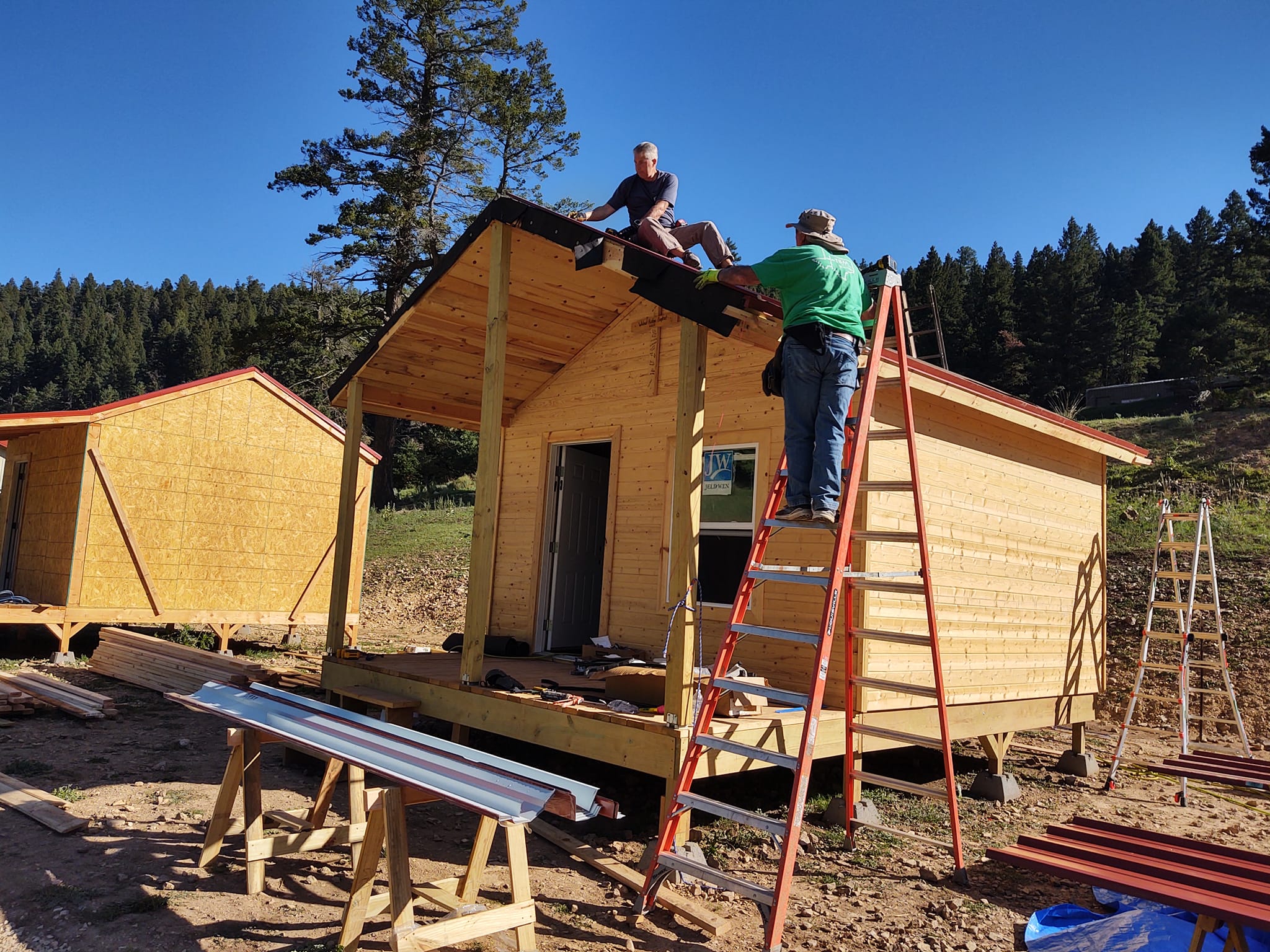
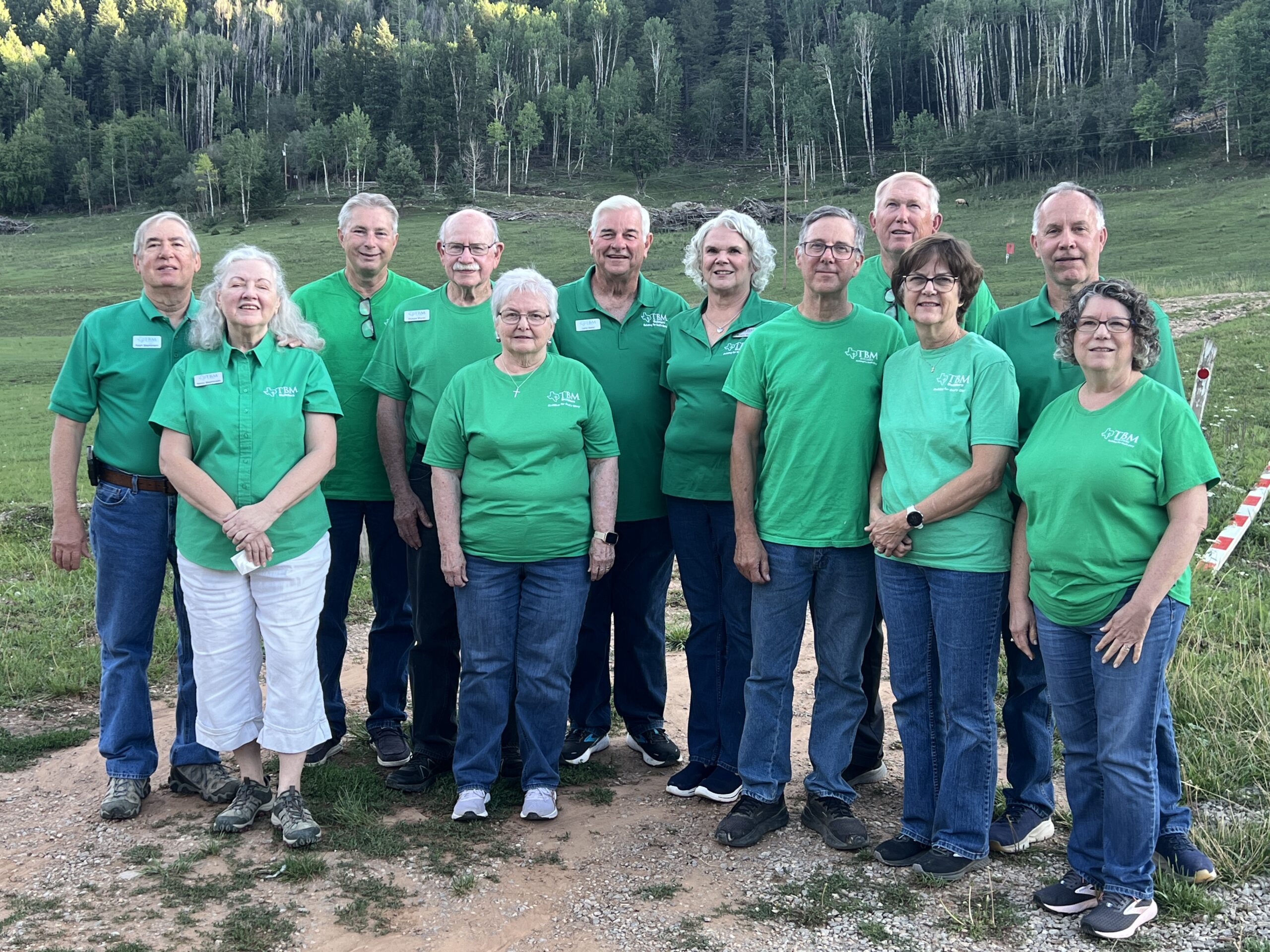
The eight-man, five-woman team built two cabins and repaired outdoor stairs on a dormitory facility, as well as making curtains and other items. They arrived in early August, just as summer camps wrapped up.

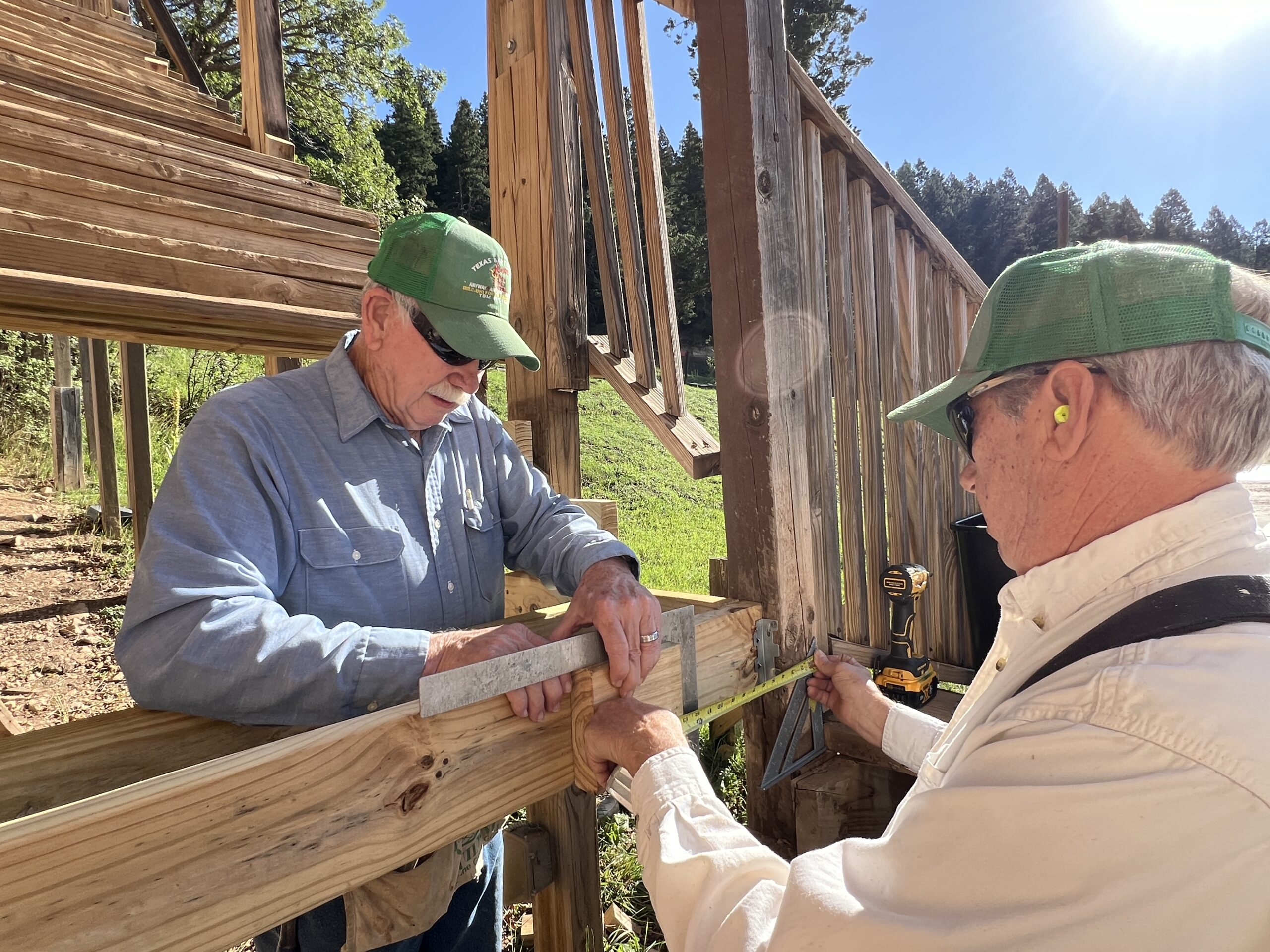
Richard Shaver (left) and Ralph Stephenson (right) construct dormitory stairs at Aspendale Mountain Retreat Center in Cloudcroft, N.M. (Texans on Mission Photo / Ferrell Foster)

“The timing was perfect,” said Jim Pettit, center director.

Walnut Ridge Baptist Church in Mansfield built the shell of the cabins in July. Then the Texans on Mission team finished the roof and interior.

Aspendale is in New Mexico, but it’s a camp associated with El Paso Baptist Association. It occupies a high valley with elk grazing during the morning and evening.

“You couldn’t pick a better place weather-wise,” with lows in the 40s and highs in the 70s, said Ralph Stephenson, coordinator of Texans on Mission Cabinet Builders. But the sun is “a little bit more intense with the altitude,” and breathing required some adjusting.

Larry Quinn, coordinator of Texans on Mission Camp Builders, called Aspendale the “westernmost camp that we have. Even though it’s in New Mexico, … we consider it one of our camps.”

Aspendale is a small camp serving the region around El Paso, which is “one of the poorer areas of Texas,” Pettit said. “We don’t have a lot of financial resources to fall back on.”

Impressive attitudes and skills

Texans on Mission Builders completed two cabins at Aspendale Mountain Retreat Center in Cloudcroft, N.M. (Texans on Mission Photo / Nancy Stephenson)

The cabins the Texans on Mission Builders worked on are 14 feet by 14 feet, providing a bathroom with a shower, kitchenette and sleeping area.

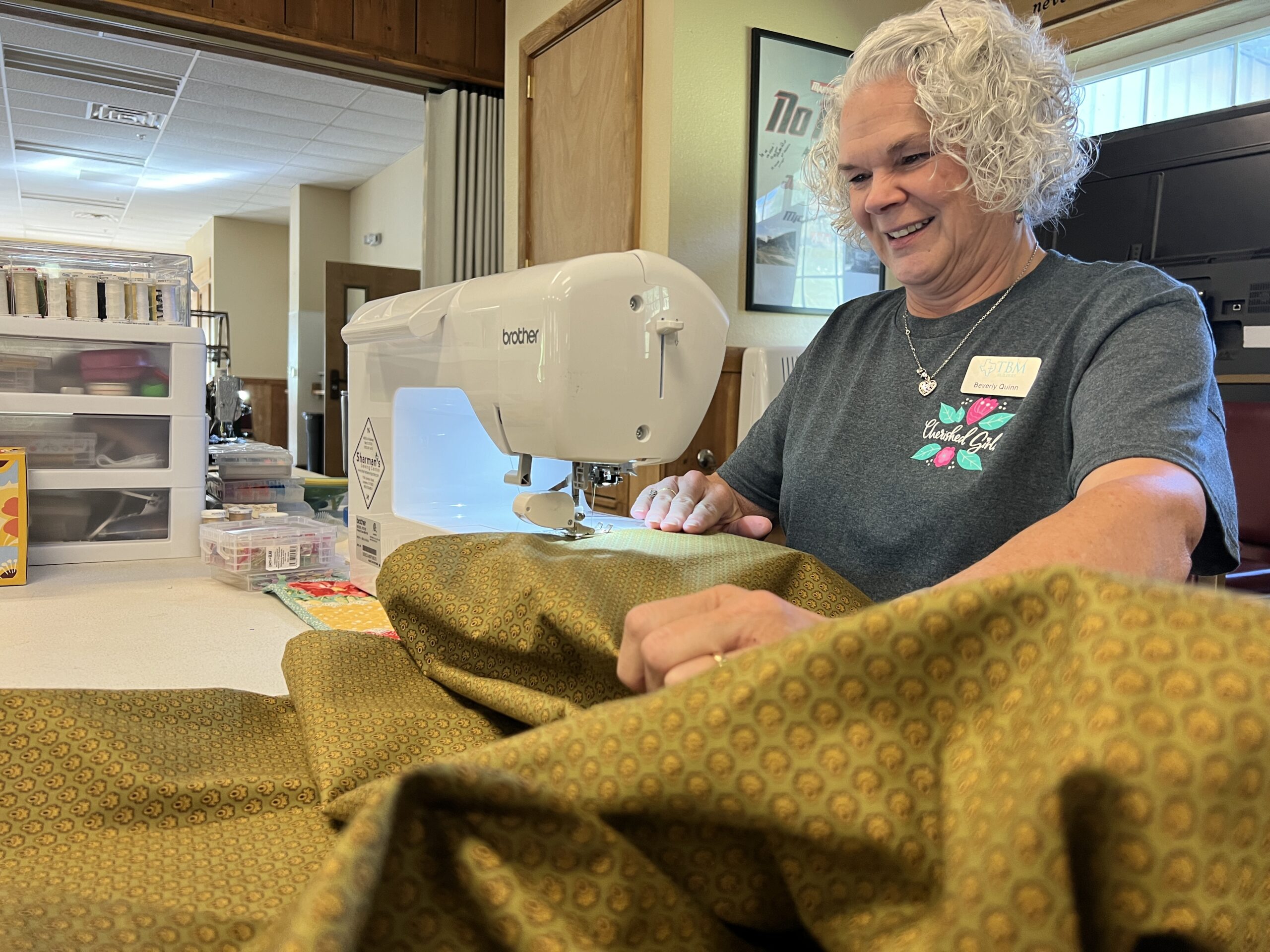
While Texans on Mission men built the cabins and reconstructed the outdoor stairs, the women sewed curtains for the cabins and made bags to be sold in the camp store.

Beverly Quinn said they also made blankets to be given away during Texans on Mission’s Christmas in the Valley program for families in the lower Rio Grande Valley.

The camp director’s introduction to Texans on Mission came last year.

“I was thoroughly impressed with the group that came last year and was excited that they had agreed to come back this year,” Pettit said.

“Everyone has been a blessing—great spirit, great attitude. You can tell there’s just the love to serve Christ in his kingdom work.”

Pettit also was “impressed with the professional work they perform” and with their concern for the finished product.

“I’ve just been totally impressed with the skills and the attitude of men and women that took time out of their schedule to come.”

Commitment to the work

Quinn has a deep spiritual commitment to supporting the work of camps.

“There’s about two places where children make major decisions for their life,” he said. “One of them is Vacation Bible School, and the other is camp.

“And I can’t tell you how many times I have heard from people that I used to know in my workaday world that say, ‘Oh, you’re at a camp that I went to,’ or ‘You’re at a camp where I accepted Jesus as my personal Savior.’”

Quinn said the Camp Builder volunteers “just feel obligated to continue that process. These camps really operate on shoestring budgets. So, it’s important that they have a little help from time to time, and the labor that we provide is free to them.”

Jerry and Ruth Kitts of Fruitvale have been working with Camp Builders for three years. “We were looking for some place to serve in retirement, and this fit our needs very well,” Jerry Kitts said.

“My wife and I serve together, and we want to be together,” he said. There are other ministries where he could work with tools and building, “but very few of them give the opportunity for the wife to participate, and Camp Builders is perfect.”

Texans on Mission Builders volunteers at Aspendale Mountain Retreat Center in Cloudcroft, N.M. (Texans on Mission Photo / Ferrell Foster)

Since Richard Shaver from Gainesville started working with Texans on Mission Builders in 2004, he has participated in almost 100 jobs.

He said the most rewarding part of the work are the friendships and “going to new parts of the state and the United States.”

He and his wife, Donna, have worked in four or five states other than Texas.

“We really enjoy just moving around with them, being with Christian friends,” he said.

“Everybody’s so friendly. They work with you. … When I started, I was not a builder.”

Others, however, gradually taught Shaver varied building skills. “You just get together, and it just seems like everybody fits.”

Why does he do it? “Well, I do this work to spread the word of our Lord and Savior.”

Willingness to learn

Quinn said some volunteers have construction skills when they begin, but others are new to building.

“Basically, what we ask for is people that are willing to learn, and they get mentored and taught on the job,” he said.

“As a matter of fact, I was one of the ones that didn’t have the opportunity to work in construction during my lifetime, and as a result I had to learn everything on the fly. But it’s a lot of fun, and the people and the guys are really great to do that with you.

Beverly Quinn sews curtains for the cabins at Aspendale Mountain Retreat Center in Cloudcroft, N.M. (Texans on Mission Photo / Ferrell Foster)

“The ladies do the same thing,” he continued. His wife, Beverly, kept telling the other women that she doesn’t sew. “Next thing I knew, I was buying her a sewing machine because she wanted to sew, too.”

Speaking to others who might want to be part of Camp Builders, Quinn said, “Just come pitch in and have a good time with us.”

Stephenson noted the varied Texans on Mission Builders groups “need more people, but whenever we come out, God always seems to bring the project to a successful conclusion, no matter how many people show up.”


Seminary hosts kickoff for the 2025 SBC annual meeting

FORT WORTH (BP)—Dozens of key Baptist leaders—including Julio Guarneri, executive director of the Baptist General Convention of Texas—gathered for a kickoff to begin preparations for the 2025 Southern Baptist Convention annual meeting in Dallas.

Leaders met at Southwestern Baptist Theological Seminary Aug. 22 to launch plans for the June 2025 event, which will feature a 100th anniversary celebration of the Cooperative Program and President Clint Pressley presiding over his first SBC annual meeting.

Pressley said during this year as president, he wants to remind Southern Baptists they are united around the Baptist Faith and Message and the Cooperative Program.

“We agree on those two things,” he said.

“I want us to hold fast to the confession that tells us who Christ is and why we’re on mission and our cooperating together to actually be on a mission,” said Pressley, senior pastor of Hickory Grove Baptist Church in Charlotte, N.C.

The annual meeting’s theme will be “Hold Fast,” based on Hebrews 10:23-24.

“We hold fast to the confession. We hold fast to stirring up one another to love … and to good works,” Pressley said. “That is the mission.”

Significant volunteer involvement

Around 700 volunteers are needed annually to ensure messengers and guests are served well at the annual meeting.

George Schroeder, pastor of First Baptist Church in Fairfield, is leading the coordination of the volunteers who will serve as greeters, ushers, tellers and more.

“This is Texas and we got to do this thing right. Right?” he asked the more than 200 guests.

“We get to tell people about barbecue, Dr Pepper, football and George Strait, and I suggest we do that,” said Schroeder, a former editor of Baptist Press who also worked for a time in the BGCT communications office.

“But we get to tell them about Jesus. We get to show them who we are.”

Between the two “strong state conventions” in Texas—the BGCT and the Southern Baptists of Texas Convention—Baptists in the state will be able to make a favorable impression on Southern Baptists, he said.

South Carolina pastor D.J. Horton, president of next year’s pastors’ conference and senior pastor of Church at The Mill in Spartanburg, S.C., told the group the 2025 theme will be “Worth Following,” and conference preachers will focus on 2 Timothy.

“Every pastor will be assigned an exposition in 2 Timothy, and if you attend all of it, you’ll hear 10 consecutive sermons laid through verse by verse of the book of 2 Timothy,” Horton said.

“One of the themes in 2 Timothy is that Paul says it’s not about being an innovator, a cultural specialist or social media kingdom,” Horton said. “It’s about following … the doctrines that have been given to us following the pattern of sound teaching.”

Horton said he also wants to model Paul’s intentional mentorship of Timothy and create a way for all willing pastors to be connected with a mentor. He said more details will be released closer to the meeting.

Emphasis on Cooperative Program centennial

The 100th anniversary of the Cooperative Program will be a prominent theme of the 2025 meeting.

Bruno Molina, Hispanic Baptist Network executive director, and Nathan Lorick, Southern Baptists of Texas Convention executive director, joined SBC Executive Committee President Jeff Iorg, Pressley and Guarneri for a panel discussion on the Cooperative Program.

The group gave firsthand accounts of the many ways funds given through the Cooperative Program have been a part of their ministries—from supplementing their seminary educations, to providing a way for their local churches to be involved in national and international missions to supporting state conventions and national entities.

“We’re celebrating what God has done for each one of us to make it possible for us to be not only supporters of but recipients from the Cooperative Program and what it’s meant in our lives,” said Iorg.

Crossover outreach events slated

Ryan Jespersen, Dallas Baptist Association executive director, will be at the helm of Crossover, a citywide outreach initiative, that will take place in the days leading up to the 2025 meeting. Hundreds of Southern Baptists joined together in Indianapolis this past June to carry out dozens of events across the city.

Jespersen believes the impact in Texas will be felt across all of the local associations that touch the Dallas area as efforts will be to mobilize churches in each association to lead in what he called harvest events.

“This year, the North American Mission Board has said we are going to do events that focus on church evangelism,” Jespersen said.

After the meeting, Jespersen told Baptist Press, “These Harvest events could be backyard Bible clubs, block parties, neighborhood canvassing, park outreaches, harvest Sundays with the availability of preachers from all over the country, or anything that the church feels led to do that will directly reach people with the gospel.”

He said “limited grants will be available for churches in Dallas, Denton, Collin, Tarrant, Kauf-Van, Southwest Metroplex, Ellis, and Hunt” Baptist associations.

Jespersen encourages Southern Baptists from across the country “to come and share the gospel with people in the greater DFW area.”

Kickoff participants spent time praying that God would not only lead during the gathering next June but prepare the way for Southern Baptists as they plan to impact Dallas with the gospel.

The prayer time was led by Ray Gentry, president of the Southern Baptist Conference of Associational Leaders; Eddie Lopez, SBC second vice president; and Marcus Hayes, pastor of Crossroads Baptist in The Woodlands.

Texas-based SBC leaders David Dockery and Hance Dilbeck shared their excitement for welcoming Southern Baptists to the “Big D” next summer. Dockery is president of Southwestern Seminary, and Dilbeck is president of GuideStone Financial Resources.

“Being in Dallas, where GuideStone is located, we will have the opportunity to deploy financial educators and advisors to the annual meeting to serve pastors in a great way,” Dilbeck said.

Dockery prayed for the work of the convention: “God, thank you for the privilege to work together in the cause of advancing the gospel. We pray that your hand of favor blessing might rest upon Southern Baptists this day and in days to come.”


Campus ministry leaders prepare at Collegiate Week

Days before the start of a new school year, more than 1,730 college students and leaders gathered at Falls Creek Conference Center in Oklahoma to learn how to live on mission and become passionate followers of Jesus.

Groups from across North America—including Alaska, Hawaii and Canada—met with International Mission Board and North American Mission Board personnel for the five-day event that included worship, teaching and fellowship.

State convention collegiate ministry leaders partnered to plan and produce the event, which saw its largest post-COVID attendance this year.

Pastor Arjay Gruspe of Pawa’a Community Church in Honolulu, who also is director of Next Generation Ministries for the Hawaii Pacific Baptist Convention, served on the event planning team.

This year he brought eight others from Hawaii, including four students, to “challenge them to be countercultural in the way they live and approach life on their campuses.”

He celebrated the report that more than 50 individuals prayed to receive Christ as Savior and more than 200 responded to a call to ministry during Collegiate Week.

“It was great to see so many campus and church-based campus ministries interacting and planning ways to partner and pray for one another this fall,” Gruspe said. “IMB always has a strong presence and did a great job in having students consider mission involvement.”

Gruspe added he was glad to see increased numbers of seminaries engaging with students this year.

‘College years are pivotal’

Collegiate Week partners with Southern Baptist seminaries, Woman’s Missionary Union, NAMB and IMB to introduce students and leaders to a wide spectrum of available missions, vocational and educational opportunities.

Registration Coordinator Carissa Jones of the Oklahoma Baptist Convention noted the event also seeks to help participants take their next steps in ministry leadership.

“The college years are pivotal. Students are often on their own for the first time and making decisions that will impact them for the rest of their lives,” Jones said. “The world is there waiting for them, and the body of Christ needs to be as well.”

H.B. Charles, Shane Pruitt and Tommy Woodard were featured speakers during the 2024 Collegiate Week, with worship sessions led by Cody Dunbar and Matt Roberson.

Participants recorded decisions and requested follow-up contact through a QR code, and others responded during worship services, which saw hundreds of participants gather throughout the altar area.

Denton minister brought 35 students

Jared Gregory, college pastor at First Baptist Church in Denton, has brought students from his church’s ministry to Collegiate Week since 2018 and has served in several planning capacities for the event over the years.

He characterized it as a time for students to “connect with God, each other, and our mission agencies” before the back-to-school rush sets in.

This year, Gregory brought 35 students from the University of North Texas, Texas Woman’s University and North Central Texas College.

“It’s such a good week to see students get right in their relationship with God before they start ministry to others,” Gregory said. “This year, we had a number of students come forward to confess sin in their lives that is holding them back from God, and three students declared a call to ministry.”

Stacy Murphree, campus minister at Austin Peay State University in Clarksville, Tenn., said the timing of Collegiate Week is a bonus, right before the beginning of fall semester. This year, she brought about 100 Baptist Collegiate Ministry students from six campuses, and she said student and leaders benefitted from networking and sharing ideas.

The experience also “jumpstarts” her leaders, who had about one week before campus ministries officially started, she added.

“I love that our students can hear about campuses in emerging areas. Maybe they could feel personally led to serve in those areas, but this also broadens their perspective of campus ministry that’s not just about what we do on our campuses,” Murphree said. “It’s about what God is doing throughout the United States.

“Nowhere else could they be with other students from other BCMs across the country and now be able to better pray for those campuses, too. This is such a valuable time.”


Health care paves the way for gospel in Indonesia

EAST JAVA, Indonesia (BP)—A health care triad—including a Baptist hospital, a rural clinic and a nursing college—in East Java is reaching far beyond the island’s, and even the country’s, borders.

The history of Southern Baptist work in Indonesia is long, dating back to 1951, when missionaries first went to the island nation. Medical work wasn’t far behind, and it soon became a key strategy for gospel access.

From its beginning in 1955, the Kediri Baptist Hospital has focused on excellent medical care with the vision of the Great Commission. (IMB Photo)

By 1955, nurses Ruth Ford and Everly Hayes and Dr. Kathleen Jones had started the Kediri Baptist Hospital. For decades medical doctors sent through the International Mission Board—formerly Foreign Mission Board—remained in leadership and service.

To provide trained nurses to serve at the hospital, IMB missionary nurse Virginia Miles founded Kediri Baptist Hospital Health College in 1961.

Today, the medical facilities are led by Indonesian medical professionals committed to the gospel and the vision to use health care to make the gospel known to all nations.

Indonesian Baptists work closely with the International Mission Board to maximize the reach of the gospel and lead other Christian health care professionals to meet physical and spiritual needs.

Emphasis on the Great Commission

IMB missionary Jacob Stanley serves as a liaison between the medical facilities in Kediri, Indonesian Baptists and health care professionals in the United States. He explained how an emphasis on the Great Commission was woven into the history of the medical work in this area.

“More than 60 churches, still in existence today, can trace their roots to the evangelistic work of the Kediri Baptist Hospital,” Stanley said. “Evangelism was part of the founding.”

On a typical day at the Kediri Baptist Hospital, all beds are full, and expectant mothers eagerly wait for their turn in the newly renovated maternity ward.

As is common in Indonesia, family members of patients wait at the hospital, sometimes days, resting on blankets laid out in hallways. Not all rooms are air conditioned, but the Indonesians do not seem bothered by the constant heat and humidity.

The hospital’s director, Dr. Iva Yuana, takes time to greet family members warmly, as she steps around them moving through the halls. She doesn’t stay in her office for long, because she continues to practice pediatric medicine.

Yuana considers the facility to be behind the times, according to world medical standards. Still, the hospital thrives as a trusted source for excellent health care.

Approximately 500 students attend the health college, all with a goal to receive a degree in nursing. The college is open to men and women and students of all faiths. Half of the students are Muslim. All students participate in Bible study and chapel services.

Safe place for spiritual inquiry

The college has become a safe place to ask questions and read the Bible, even for those who would be forbidden from these activities in their homes. Indonesia remains the country with the largest concentration of Muslims in the world.

The college is also intentional to train Christian nurses as missionaries, who will be presented with opportunities to practice medicine in unreached areas. The nursing college intentionally presents requests from other countries to students who are willing to be trained in evangelism, in addition to their medical training.

Six students who passed a Japanese-language course are preparing for work in Japan. They will serve in health care facilities and will also be connected with IMB missionaries and Japanese churches to increase the reach of the gospel in East Asia.

Opportunities to serve in countries closed to the gospel or missionary presence also are increasing, as health care needs around the world continue to grow.

Clinic meets needs in rural area

The most recent addition to Baptist health care facilities is the Eternal Peace Clinic. In 2020, the clinic opened its doors to rural community residents who can receive both medical and dental care. The clinic includes a pharmacy, so those without transportation or without the funds to travel to the city can get the care and the medicines they need.

Staff at Eternal Peace Clinic are trained to pray with patients and engage them in gospel conversations while they wait to see the doctor or stand in line for prescriptions to be filled. Home visits provide opportunities for follow-up to physical and spiritual conditions.

Stanley said he has great respect for the work of Indonesian leaders and wants to increase opportunities for health care professionals and churches in the United States to partner with the work being done through the facilities in Indonesia.

Walking through the facilities, Stanley points out equipment donated by churches, even a CPR dummy that he himself carried through immigration on a return trip from the United States. In fact, the Eternal Peace Clinic was built through contributions to IMB’s health care ministries.

Historically, this key work with the Indonesian Baptists has led to “churches planting churches that plant churches,” Stanley said. “We just need more people to join the vision of how health care strategies are reaching the lost with the gospel.”


BGCT and NAMB leaders discuss bridging gaps

Baptist General Convention of Texas and North American Mission Board representatives met at the Texas Baptists’ offices Aug. 15.

The meeting followed-up the exchange between Dustin Slaton, senior pastor of First Baptist Church in Round Rock, and North American Mission Board President Kevin Ezell at the Southern Baptist Convention meeting in Indianapolis.

At the June meeting, Slaton posed a question from the floor to Ezell regarding BGCT churches receiving NAMB funding for church starts in Texas.

In his answer, Ezell expressed a willingness to discuss the relationship between NAMB and the BGCT, while also stating an unwillingness to deviate from NAMB’s longstanding commitment to start churches in partnership with state conventions that affirm the 2000 Baptist Faith & Message.

The who

BGCT pastors who attended the meeting between the two entities included Slaton; Chad Edgington, pastor of First Baptist Church in Olney; Pete Pawelek, senior pastor of Cowboy Fellowship in Jourdanton; and Jeff Williams, senior pastor of First Baptist Church in Denton—who also are current BGCT Executive Board directors—and Dan Newburg, senior pastor of First Baptist Church in Devine.

BGCT Executive Director Julio Guarneri, Associate Executive Director Craig Christina and Treasurer/Chief Financial Officer Ward Hayes also participated, along with BGCT Executive Board Chair Bobby Contreras, pastor of Alamo Heights Baptist Church in San Antonio.

Ezell and Rusty Shuler, church relations mobilizer, represented the North American Mission Board. Williams, while not an official liaison, holds leadership roles with the BGCT and NAMB until he concludes BGCT executive board trustee duties in a few months.

Guarneri stated he “genuinely appreciate(s) Kevin’s willingness to come this way and meet with a handful of our Texas Baptists pastors, some of whom also serve with our BGCT Executive Board.

“These pastors have such a strong heart and passion for seeing God’s kingdom advanced in Texas and beyond. I am grateful for their time and attention in this matter. As I’ve said before, there is too much lostness for any one group to think they can do it alone. We all know we are better when we work and minister together.

“I look forward to the continuation of this dialogue as we seek to fill in the gaps and resource our Texas Baptists churches to live out the Great Commission.”

Ezell commented: “It was really a meeting that grew out of Dustin Slaton’s question to me from the floor of the [SBC] annual meeting. We talked by phone a few times and planned to get together in person and then more pastors wanted to join in.

“I appreciated Julio hosting us and being able to spend time with him and the pastors. We are grateful for the generosity of BGCT churches and look forward to continuing to serve them and partner with them,” Ezell said in an email.

Slaton echoed that sense of collegiality stating: “The conversation between those in the room was honest, cordial and hopeful for a good relationship between the BGCT and NAMB.”

The what

He explained when he asked his question at the SBC annual meeting, he hoped to initiate a dialogue that would improve the partnership between the BGCT and NAMB.

“Thursday’s conversation was a great step in that direction,” Slaton said.

Slaton stated he was “encouraged to find that BGCT churches do have access to NAMB resources, training, personnel and assistance through the church planting process.

“Basically, aside from funding, we have access to anything anyone else has access to, and the funding can possibly come through the $300,000 NAMB grants to the BGCT, annually.”

He said the meeting gave him hope “we may find ways in the future to see an increase in funding to the BGCT through a re-evaluation of the process.”

Counting giving through the Annie Armstrong Easter Offering and Cooperative Program contributions to the SBC, Texas Baptists estimate BGCT churches give about $5.5 million annually to NAMB.

Slaton hopes BGCT churches hear they have access to church planting tools and guidance from both BGCT and NAMB, should they wish to utilize either or both organizations’ resources.

Edgington credits Pawelek with connecting all the parties to ensure the meeting suggested in the Indianapolis exchange actually came to pass.

Pawelek demurred credit, deferring it instead to NAMB and BGCT leaders who made time to come together with concerned pastors. He wanted the meeting to “get some clarity” and make sure the history of cooperation between NAMB and BGCT continues, he said.

Edgington said everybody in the meeting was kind, and they heard and cleared up misconceptions about the relationship between NAMB and the BGCT, which is complicated by differing statements of faith.

Edgington said Ezell came to listen to the BGCT side, and it was good to hear everything “from the horses’ mouths” on both sides, in an atmosphere of cooperation.

He noted the tendency in Baptist life for the things that get “drummed up” to distract from recognizing what Baptists have in common.

The Why

“Sometimes it’s good to realize that we’re all on the same team,” he continued. “And that there’s massive agreement and a real desire to plant churches and reach people for the gospel on both sides.”

Williams noted in his role as pastor ambassador for the North American Mission Board, he’d had questions come his way from pastors about the relationship between NAMB and the BGCT.

So, he welcomed the opportunity the meeting provided to allay misconceptions about boundaries to cooperation between the two organizations.

Slaton said he expressed appreciation to both Guarneri and Ezell for firmly but graciously expressing the positions and concerns of their respective organizations.

He did not sense pressure to achieve certain changes from either of the represented organizations, stating: “If every issue between differing views and different groups was handled as well as this meeting, the SBC would be a much better environment. I was proud of both the BGCT and NAMB.”

As the intent of the meeting was dialogue, not action, no actions were taken, and no further conversations have been scheduled—though the pastors and organizational leaders expressed hope dialogue will continue.

Editor’s note: paragraph three was edited and paragraph 19 was added after the article initially was posted to provide clarification and additional information.