Texans on Mission: Christmas looks different in Uganda

Mission trips often reveal contrasts—differences between things at home and those far away. Mikey Osborne and his family saw Christmas differently on a recent trip to Uganda.
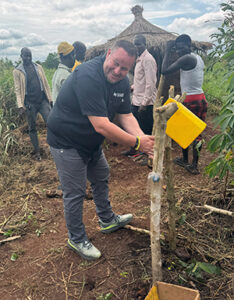
Mikey Osborne, coordinator of Texans on Mission’s discipleship and outreach, used a handwashing station in a village in Uganda. (Texans on Mission Photo)

“It was pretty humbling to see kids get excited over things I wouldn’t normally even buy,” Osborne said. “It’s an awakening to see a different perspective on gifts. It’s easy to think you’re going to Africa to fix things, but I feel like Africa was kind of fixing me.”

Osborne coordinates Texans on Mission’s discipleship and outreach efforts, which include writing materials for evangelism and personal Christian growth.

Some of those materials are used regularly in Uganda as part of Texans on Mission’s Water Impact ministry, but Osborne never had been there, and more materials were needed.

“Groups meet every week, and they’re using some older material that I think could be a little more strategic,” Osborne said. “Their teachers are brilliant and handle the materials well, but we need to put better materials in their hands.”

In Uganda, Texans on Mission works through its ministry partner, Texans and Ugandans on Mission, which has a number of employees focused on drilling water wells and strengthening communities. During Osborne’s trip, the ministry held a Christmas party for those employees and their families.

Mitch Chapman, director of Texans on Mission Water Impact, said he has been amazed at the quality of work and commitment to Christ exhibited by the workers.

“I had not, however, had the chance to interact much with their families,” he said. “The Christmas party gave us a chance to honor these workers before their families and to bless them in a way beyond their normal compensation.”

Simple requests for needs, not wants

The party lasted all day, with food being served throughout and gifts being given at the end of the day, Osborne said.

Angie Osborne said being part of the Christmas party was “one of the greatest blessings” of the trip.

On a recent Texans on Mission trip to Uganda, Mikey and Angie Osborne saw firsthand the impact access to clean water makes on rural villages. (Texans on Mission Photo)

“Seeing the requests some of these children had for Christmas—for needs rather than things for fun—was so touching, and it was amazing to see the joy they had when they received them.”

Mikey Osborne said the children “had been asked in advance what they would like for Christmas, but the most humbling thing was that multiple kids had asked for a goat or a pair of goats for their family.”

He found that strange until he learned a goat “actually gives the family another area for commerce. … Some of the kids specifically asked for a goat in hopes it would help them raise money to further their education.”

The Uganda ministry, supported by Texans on Mission, came through for the children, providing vouchers for the purchase of a number of goats.

The children also received other gifts.

“We gave out bicycles to almost every kid,” Osborne said. “The kids were overwhelmed.”

One of the fathers said his child “was so excited that he literally slept with their new bike, holding their new bike all night,” Osborne said. “And the bikes weren’t even new. They were used. Some of them were in good shape, but not great shape.”

The ministry also provided mattresses to families.

“I don’t remember how many mattresses we gave away, probably 35 to 40,” he said. “And the mattresses excited the kids because they didn’t have mattresses.”

Osborne contrasted this with his own Christmas shopping plans this year.

“I’m trying to figure out how to buy my son a new baseball bat, and he’s already got one, while the kids in Uganda want a mattress,” he said.

Access to clean water

Besides the Christmas gifts, Texans on Mission Water Impact is providing more substantial gifts for families—water wells, sanitation classes, micro-financing and, most importantly, spiritual nourishment.

“When we’re talking about Texans on Mission water ministry, we’re talking about total impact in a community,” Osborne said. “It’s everything from sanitation all the way to discipleship.

“You have to have water to survive, and these people haven’t had a good source of water at all.”
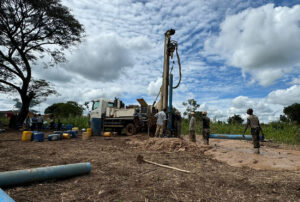
Texans and Ugandans on Mission put in more than 60 water wells in rural Ugandan villages this past year. (Texans on Mission Photo)

Angie Osborne noted the “most impactful part of the trip” for her came “when they took us to one village where a new well had just been installed.”

Leaders took the Osbornes to “the little creek” where the people had been getting their water before drilling of their new community well.

“It is a moment I will always remember and an image that will always stick in my mind,” Angie Osborne said.

“It was heart wrenching to think that people would walk over a mile to get water from this nasty source where animals also drink and do other things. It was then I realized how powerful and life-changing” Texans on Mission’s work is in Uganda.

“One well alone is providing clean water to over 400 people,” she said, adding Texans on Mission “put in over 60 wells this past year.”

“That is a huge impact, and thousands of people are being reached” because the Ugandan team does more than provide clean water, she noted.

Spreading the gopsel

“We witnessed the gospel being introduced at each well site to all these people who are flocking there for clean water,” she said. “A Bible study is led each morning while the well is being drilled for the local community, and then local people continue the Bible study weekly.

“Hundreds of people are now attending regular Bible study and have come to know Christ through the installation of these wells.”

The Texans on Mission-supported ministry does more than drill wells. Mikey Osborne said the work “goes well beyond giving people clean water, because not only are we giving people water, we’re teaching them sanitation.

“Not only are we teaching them sanitation, we’re teaching them how to save money,” he continued. “Not only are we teaching them how to save, we’re teaching them how to care for one another. Not only are we teaching them how to care for one another, we’re sharing the gospel of Jesus Christ, the living water, and teaching them how to raise up disciples in their own community among their own people.”

The recent trip will help Texans on Mission know how to produce more evangelism and discipleship resources. And Osborne was impressed with the ability of ministry leaders in Uganda. He talked about one leader, Moses.

“I got to see a guy named Moses, who, by the way, one of the best speakers I’ve seen,” he said. “He was unbelievably engaging. He spoke in the local language. The Spirit of God was on that man in such a way. He spoke with authority but also in an engaging manner. It was humbling to watch.

“Moses gave you the sense that he has been given the great responsibility of sharing the greatest gift in the world, and he was full of joy in getting to hand it out for you.”

The entire experience deeply moved the Osbornes.

“To say we were overwhelmed is an understatement,” Angie Osborne said. “We went to help change Uganda, but Uganda changed me.

“It is hard to wrap my mind around the fact that in 2024 people are still living in those conditions. It was eye-opening to see that there are thousands of people who live out in the middle of nowhere in little huts with no water, electricity, plumbing or any conveniences we have.

“We got to see the work that Texans on Mission is doing and were blown away.”



State conventions rethink Cooperative Program allocations

NASHVILLE (BP)—The Southern Baptist Convention’s Cooperative Program stands at a crossroads as its 100th birthday approaches.

Messengers to the Tennessee Baptist Convention’s Summit felt that reality this fall. They voted reluctantly to decrease the SBC percentage of the Tennessee convention’s Cooperative Program allocation from 47.5 percent to 45 percent and retain 55 percent for Tennessee ministries.

“When we started moving toward 50/50 distribution of Cooperative Program giving, that was overwhelmingly approved by our messengers,” said Randy Davis, president of the Tennessee Baptist Mission Board.

However, Cooperative Program giving “over the past decade has remained flat” in Tennessee, he noted.

“When you couple that with an inflation rate over the last decade of 24 percent, you can see the dilemma we’re in” to fund Tennessee ministries, Davis said.

Originally, the Tennessee Baptist Mission Board recommended allocating 40 percent of the 2025 Cooperative Program budget for SBC causes, 55 percent for Tennessee ministries and 5 percent directly to the International Mission Board.

The proposal was intended to funnel the same percentage of Cooperative Program dollars to the IMB that it would have received through a 50/50 split of receipts.

But Tennessee messengers amended the distribution to a straight 45/55 split, fearing a 5 percent gift directly to IMB would hurt other SBC entities by decreasing their allocations.

State conventions face funding dilemma

Tennessee isn’t the only state Baptist convention facing a funding dilemma. Multiple state and regional conventions this fall sought to cope with a stark reality. They cannot keep giving more to SBC causes when they are receiving less from churches.

“Giving to the Cooperative Program is impacted by many factors—including economic pressures on churches and conventions—as well as competing funding requests from many other Christian organizations,” said Jeff Iorg, president of the SBC Executive Committee.

“Southern Baptists still believe in cooperation, and a new generation must decide how to prioritize Cooperative Program giving to assure the long-term stability and fiscal health of our global efforts.”

(Photo/GWImages/Shutterstock.com)

The Cooperative Program is Southern Baptists’ unified mechanism for funding missions and ministries in North America and around the world. A local church gives through the Cooperative Program by sending money to its state Baptist convention. The state convention, in turn, decides a percentage of Cooperative Program receipts to use for in-state ministries and a percentage to forward to the Executive Committee for distribution among SBC causes.

All appears well with the Cooperative Program when considering funds forwarded from state conventions to the SBC. Twenty years ago, state conventions forwarded $175.5 million to SBC ministries. Ten years ago, the figure climbed to $183.4 million. For 2022-23, the most recent year for which complete statistics are available, it was $187.4 million.

No longer sustainable

But state conventions have been forwarding more money to the SBC even as they receive less from churches. Twenty years ago, churches gave a total of just over $501 million through the Cooperative Program.

It dropped to $482 million 10 years ago and $449 million last year. That means state conventions forwarded $12 million more to CP last year than they did two decades ago, even though they received $52 million less.

Southern Baptist leaders have wondered for years how long that trajectory can be sustained. For some state conventions, the answer is not any longer.

The California Southern Baptist Convention voted this fall to restructure its formula for distributing Cooperative Program funds. The convention adopted an in-state Cooperative Program budget of $3.85 million and a “CP gifts objective” of $5 million.

That means from the first $5 million given through the Cooperative Program next year, 2 percent will go to California Baptist University, 1 percent to the Baptist Foundation of California and $3.85 million will be used for budgeted California ministries. The rest will go to SBC causes. All Cooperative Program receipts over $5 million will go fully to SBC causes.

If California Cooperative Program receipts come in at $5 million, that would mean 20 percent forwarded to SBC causes. Cooperative Program receipts of $5.2 million would mean 25 percent to SBC causes, and $5.4 million in receipts would mean 30 percent to SBC causes. The California convention’s 2024 budget of $6 million allocated 35 percent to SBC causes.

As Cooperative Program receipts from churches decreased from $5.85 million in 2022 to a projected $5.1 million this year, “we have been doing budget cuts and cutting staff,” California Baptist convention executive director Pete Ramirez said.

“Our executive board had been discussing this new [Cooperative Program] formula for a couple of years. They finally said: ‘We don’t want you to continue to be cutting staff. We want you to be able to continue to do the ministry in California.’”

Leaders of SBC entities have been sympathetic about the California Baptists’ budget adjustment, Ramirez said, because everyone understands the real challenge of the Cooperative Program is inspiring churches to give more.

“We are at a crossroads where the Cooperative Program might not be what it was in the past,” Ramirez said. “The way this younger generation gives to missions is different than the previous generations. We’re going to have to figure out how do we do things different in our states to continue to do the great work we do as Southern Baptists.”

Six convention decreased CP percentage to SBC

California was one of six state and regional conventions this fall that decreased the percentage of Cooperative Program receipts allocated to SBC causes. Five state conventions increased their percentage to SBC causes, with the biggest jumps coming in at 1 percent in Indiana and the Baptist Resource Network of Pennsylvania-South Jersey. Twenty-seven conventions kept their SBC allocations the same.

The Baptist General Convention of Texas and the Baptist General Association of Virginia offer churches various giving plans for supporting out-of-state ministries, with the Cooperative Program among the options.

Ten years ago, the picture was different. In 2014, 23 state conventions increased their percentage of Cooperative Program receipts to SBC causes.

Nevada was among the states to reduce its SBC allocation this fall, going from 50 percent in 2024 to 25 percent in 2025. But Nevada Baptists have a plan to boost giving from local churches and money forwarded to SBC missions and ministries.

“We had a 10-year stint of being a 50/50 state and were proud of that,” said Damian Cirincione, executive director of the Nevada Baptist Convention. But when he assumed his current role three years ago, “we had already been operating in a deficit and pulling out of reserves.”

The 75/25 allocation adopted this year will both fund increased efforts to assist Nevada churches and facilitate the work of a task force to strengthen Cooperative Program giving.

About five years ago, transitions at the state convention and in local churches resulted in hundreds of thousands fewer dollars coming into Nevada’s Cooperative Program. Cirincione is optimistic giving can increase again.

“Though we’ve had to pivot slightly, we remain confident,” he said, noting Nevada Baptists continue to enjoy a warm relationship with all the SBC entities. “We are working with our churches to build out a strategy that will strengthen our giving in the coming days and our generosity in our contributions to CP as we engage and educate.”

For state convention leaders, the present state of Cooperative Program giving marks an opportunity rather than a discouragement. Over the past 20 years, undesignated giving to Southern Baptist churches has increased by nearly $3 billion, according to SBC Annuals. That’s a huge pool of potential money that could be given through CP.

“We must cast a vision for what’s needed and the difference 2 or 3 percent could make in Cooperative Program giving,” Davis said.

Iorg agrees. As he attended more than a dozen state convention annual meetings this fall, he witnessed an enthusiasm for Southern Baptist ministries that stands ready to be channeled into CP giving.

“My core message has been ‘Southern Baptists are a force for good,’” Iorg said. “And the response to that message has been very positive, including standing ovations in a few places, which was more about resonating with the message than applauding my presentation.”


Red Letter Christian Tony Campolo dead at age 89

(RNS)—Tony Campolo, an American Baptist minister and sociologist who spent decades trying to convince evangelicals and other Christians that their faith should motivate them to address social ills like poverty and racism, has died. He was 89.

Tony Campolo speaks at Wild Goose Festival 2019. (Video screen grab)

A native of Philadelphia, Campolo was known for his charismatic preaching and sense of humor, which made him a popular speaker at college campuses, churches and Christian conferences—and equally at home giving an altar call or social commentary.

“Putting religion and politics together is like mixing ice cream with horse manure,” he told the comedian and television host Stephen Colbert in 2006. “It doesn’t hurt the horse manure; it ruins the ice cream. And I think that this merger of church and state has done great harm to religion.”

The author of 35 books, Campolo held degrees from Eastern University, Palmer Theological Seminary and Temple University. He taught sociology first at the University of Pennsylvania and then for decades at Eastern Christian College, where he was named professor emeritus.

He also served as an associate pastor at Mount Carmel Baptist, a predominantly Black church in Philadelphia, and in 2019 was named a co-pastor of St. John’s Baptist.

Inspired young people to be world changers

Starting in the 1980s, with books such as It’s Friday but Sunday’s Comin’, A Reasonable Faith, Who Switched the Price Tags and The Kingdom of God Is a Party, Campolo showed a knack for reaching young people with the Christian gospel and then inspiring them to go out and work to change the world. In the process, he often challenged the religious right.

In 1985, he lost a speaking gig at Youth Congress, a national event in Washington, D.C., after critics complained his book A Reasonable Faith was heretical. A panel of evangelical theologians then “determined that Tony Campolo cannot rightly be called a heretic,” according to Christianity Today.

He eventually became a spiritual adviser to then-President Bill Clinton in the 1990s. Campolo also founded a nonprofit called the Evangelical Association for the Promotion of Education, which worked in several countries, including Haiti, from the early 1970s to 2014.

Ryan Burge, a former American Baptist pastor and an associate professor of political science at Eastern Illinois University, said Campolo carried forward the legacy of the social gospel.

“Tony Campolo was one of the most talented and sought-after preachers in the United States for several decades. He was able to speak to audiences from all corners of American Christianity—reminding them of the radical grace and forgiveness that is found in the gospel,” Burge said.

Passion for justice rooted in early family life

The child of Italian American immigrants, Campolo said his belief that Christianity could change lives in this world—as well as saving people’s souls—grew out of his childhood.

In a 2016 online interview, he told the story of how a Baptist mission changed the course of his family’s life.

“My father couldn’t find a job and they were totally impoverished, and a Baptist mission in South Philadelphia reached out to them, got my father a job, got them a place to stay, put their feet on solid ground and really saved them from despair and destitution,” he recalled.

“People often ask me: ‘Where did you get your social consciousness? Where did you get your commitment to the poor, before it was ever fashionable?’ My mother and father saw in the way they were treated by a group of Baptists that this is what Christianity is about. It’s not about getting a ticket to heaven, it’s about becoming an instrument of God to transform this world.”

In 2007, Campolo, along with author and activist Shane Claiborne, founded Red Letter Christians, a challenge to the conservative evangelical voting bloc. The name came from the practice of Bible publishers printing the words of Jesus in red ink and highlighted the social and ethical teachings of Jesus. In 2012, Campolo was given a lifetime award from the National Youth Workers Convention for his work inspiring young people.

“As a result of Tony’s life of ministry and leadership he has left a legacy of encouragement and hope to youth workers and students everywhere,” the award read, according to an official bio of Campolo.

Campolo suffered a stoke in 2020, which partially paralyzed his left side. He suffered a previous stroke in 2002.

“You’d be hard-pressed to find someone who has influenced evangelicalism more than Tony Campolo in the last 50 years,” Claiborne told RNS at the time.

Campolo is survived by his wife Peggy, son Bart and daughter Lisa.


Matt Queen resigns pastorate after guilty plea

GREENSBORO, N.C. (BP)—Three weeks after pleading guilty to a charge of making false statements to federal investigators as part of a sexual abuse investigation stemming from his time as a seminary administrator, Matt Queen has resigned as pastor of Friendly Avenue Baptist Church, the church announced Nov. 8.

In a press release, the church said: “Dr. Matthew Queen is stepping down from his role as Lead Pastor at Friendly Avenue Baptist Church, effective immediately. While this has been a challenging season, we continue to trust in God’s sovereignty and remain focused on our mission. As we move forward, we encourage our congregation and the wider community to stay focused on Jesus, the author and perfecter of our faith.”

Queen pleaded guilty to making false statements to federal investigators on Oct. 16 after he had previously pleaded not guilty to federal charges in May.

Sentencing for Queen is set for Feb. 26, 2025.

Church leaders placed Queen on administrative leave after his initial plea of not guilty in May. After Queen changed his plea in October, church leaders said in a statement that they were “reviewing these recent developments as it works to complete its investigation and submit a recommendation to the church membership concerning Dr. Queen’s status and relationship with Friendly Avenue Baptist Church, all in accordance with the church’s governing documents.”

Prior to being called as pastor of Friendly Avenue Baptist Church in February, Queen served as interim provost at Southwestern Baptist Theological Seminary.

During Queen’s tenure at Southwestern, the seminary was part of a broader investigation by the U.S. Department of Justice into allegations of sexual abuse and misconduct involving the Southern Baptist Convention and its entities.

The investigation included Southwestern Seminary’s handling of a report of an alleged sexual assault by a student. Investigators said Queen provided false information to them in the form of written notes in a notebook during the investigation.

Following Queen’s guilty plea in October, Southwestern issued a statement that said, in part: “From the beginning, Southwestern Seminary has fully cooperated with the Department of Justice in its investigation of sexual abuse in the Southern Baptist Convention. We remain resolute in our commitment to continue to do so.”

The statement said the seminary is praying for “victims of sexual abuse and remains committed to doing everything possible to protect all members of the seminary community from sexual abuse and harassment.”

The statement also offered prayers for “Matt Queen and his family, as well as for others who have been involved in this process.”


Popular 20th century Baptist radio programs accessible

NASHVILLE (BP)—Some Southern Baptists may have heard of M.E. Dodd, the father of the Cooperative Program, but how many actually have heard him? What about longtime Southern Baptist Theological Seminary President Duke McCall or W.A. Criswell, legendary pastor of First Baptist Church in Dallas?

Thanks to an ongoing project of the Southern Baptist Historical Library and Archives, listeners today can hear them all and many more.

For the past few years, members of the archives staff have been digitizing hundreds of recordings of Baptist radio programs, including the “Baptist Hour” and “Christian Home” series, both of which became popular during the latter part of what’s known as the “Golden Age of Radio.”

“This project captures the voices of distinguished Baptist preachers and leaders,” said Taffey Hall, director of the Southern Baptist Historical Library and Archives. “In the 1940s and ’50s, the ‘Christian Home,’ ‘Southern Baptist Evangelistic Hour’ and ‘Baptist Hour’ broadcasts allowed listeners to hear prominent, insightful Southern Baptist preachers and scholars through the radio in the comfort of their own homes.”

To access the digital audio-visual resources and other digitized collections of the Southern Baptist Historical Library and Archives, click here.

The Southern Baptist Historical Library and Archives took ownership of hundreds of recordings when the Baptist Radio and Television Commission was dissolved in the 1990s. They’ve been in storage in the archives in Nashville ever since.

A 16-inch vinyl record featuring George W. Truett on a Southern Baptist-produced radio program was distributed to radio stations in 1941. (Photo by Brandon Porter)

When the digitization project began in 2021, the first order of business was to find a way to play the recordings, which are on “transcription disks”—basically extra wide record albums.

Hall located a machine at Southern Baptist Theological Seminary, but it didn’t work.

A Southern Baptist Historical Library and Archives staffer made the two-hour trek north on I-65 to Louisville to get the machine and bring it to Nashville, where a Music City recording technician got it working.

“When people think about an archive, one of the first things that may come to mind is all the paper materials collected and preserved,” Hall said, adding that the historical library and archives has plenty of that.

“But in addition to those paper materials, we also have a lot of special formatted materials, items such as oversize photographs, glass plate negatives, motion picture films and these 16-inch transcription record disks, that need special storage and preservation.

“Our approach to digitization, and as was the case with this project, is for both preservation and access. Digitizing these early recordings of the Southern Baptist Radio Committee/Radio Commission was important from both the standpoint of long-term conservation of the physical items, and for making the material available to a wide audience of current listeners.”

Baptists on the air

Southern Baptists began discussing the use of radio in 1930. In 1934, Dodd, who was Southern Baptist Convention president at the time, was part of a three-man committee tasked with looking into the idea. In 1936, Southern Baptists adopted a resolution calling for “a joint study of radio opportunities for Baptists.”

Then in 1938, Southern Baptists formed a seven-member committee to look into the possibility of using radio to “broadcast our Baptist message,” as it was put in the motion adopted by messengers. By then, most U.S. homes had radios, and Americans had become accustomed to getting news and entertainment from the medium.

The next year, nine additional members were added to the committee, and the group was allotted $1,200 to promote Baptist broadcasts on powerful radio stations.

The “Baptist Hour” was launched in January of 1941 and proved popular immediately, eliciting 17,500 pieces of mail, according to that year’s SBC Annual.

Over the next few years, the committee’s success grew. It was responsible for getting Baptist content on radio stations covering about half of the United States. Southern Baptists appointed a full-time director of the committee in 1942.

At the 1946 annual meeting in Miami, the name of the group was changed to the Radio Commission, and it became an official agency of the SBC. By 1948, the “Baptist Hour” was aired on 120 radio stations from coast to coast.

The Baptist Hour radio program, produced by Southern Baptists beginning in the 1940s, was featured for decades on radio station across the United States. (Photo by Brandon Porter)

Episodes of “Baptist Hour” flow a bit like a worship service. In an episode from May 1945, Dodd preaches from John 3:16 and uses the word “gospel” as an acrostic for the verse: God Only Son Perish Everlasting Life.

The episode begins with choral music, “When I Survey the Wonderous Cross” and “Tell Me the Old, Old Story.”

Next, listeners hear a recorded testimony from a traveling salesman who was saved at a church while on business in Knoxville, Tenn. The man tells of hearing a radio broadcast while traveling. The next day, he happened to see the church where the broadcast he’d heard had originated—City Temple Baptist Church.

“Something told me I should go in,” the man says. “So, I went on in and asked for the pastor.” The pastor listened to him, read the Bible with him and led him to faith in Christ.

“Since then I have had a new life and joy of living,” the man says.

After the testimony is a prayer, another choral piece (this one based on John: 3:16), followed by Dodd’s sermon.

“John 3:16 is the greatest verse in the greatest book in the greatest volume on the greatest subject about the greatest Person or the greatest object in all the universe,” preaches Dodd, who was pastor of First Baptist Church of Shreveport, La.

And later: “God loves because the primary essence of His character is love.”

‘Christian Home’ focused on family topics

The “Christian Home” series featured practical messages on family topics as well as dramatizations of family life situations.

An episode from 1956 follows a father, mother and son through the son’s life from babyhood to young adulthood. It depicts the son taking after his father in the worst ways and the tension between mother and father.

Hall says the recordings are an example of Southern Baptists’ desire to stay relevant and to share the gospel by any means possible.

“Many of the sermon titles and broadcast series productions of these recordings addressed the concerns and issues facing Americans during that time period,” she said. “These were topics of everyday and contemporary importance to Southern Baptists—topics of marriage life, family life, home life as well as challenges of wartime.

“The ‘Christian Home’ series in particular captures an image of home life, what Southern Baptists wanted to present, in dealing with home issues, and documents a time of how Baptists viewed family, marriage and raising children. …

“On almost all of the programs, Southern Baptists talked about how the gospel can change people’s lives and make their lives more joyful.”


Hunt lawsuit delayed, Sills trial set for 2026

NASHVILLE (BP)—A defamation trial involving the Southern Baptist Convention that was supposed to begin next week has been delayed indefinitely, while another is set for 2026.

Johnny M. Hunt v. Southern Baptist Convention, et. al., has been ongoing since March 2023, when former SBC president Johnny Hunt sued the SBC, the SBC Executive Committee and Guidepost Solutions for defamation

Johnny Hunt, a longtime megachurch pastor in Georgia, was named in the Guidepost Solutions report on sexual abuse in the SBC, which alleged Hunt had sexually assaulted another pastor’s wife in 2010. Guidepost, a third-party investigation firm, found the claims credible. (BP File Photo)

Hunt claimed Guidepost and the other parties used him as a “scapegoat” in an investigation of alleged mishandling of sexual abuse claims by the SBC Executive Committee.

Parties failed to reach a settlement in September, and the case had been scheduled to go to trial Nov. 12.

But in a court-sponsored teleconference Oct. 31, the parties agreed to meet “after the beginning of May 2025” to “confer about trial dates.” At issue is a disagreement over whether to reopen discovery in the case.

The May 2022 report from Guidepost’s investigation included allegations from an unidentified woman who claims Hunt sexually abused her in 2010, shortly after his two-year stint as SBC president.

Hunt resigned from his position as senior vice president of evangelism at the North American Mission Board, a position he’d held since 2018, days before the Guidepost report became public.

The lawsuit has been a major contributor to the dire financial situation of the SBC Executive Committee, which has spent more than $12 million in three years on legal fees.

The contract governing Guidepost’s initial investigation stipulates Guidepost would have indemnity in any lawsuit resulting from the investigation, and the Executive Committee would foot its legal bills.

Sills suit set to go to jury in February 2026

The other trial—former Southern Baptist Theological Seminary professor David Sills’ defamation lawsuit against the SBC—will go before a jury Feb. 10, 2026, in Nashville.

David Sills

An order from Chief U.S. District Judge William L. Campbell Jr. announced that counsel for all parties will meet on Feb. 2, 2026, for a pretrial conference to discuss the case’s undisputed facts, expert witnesses, proposed testimony, jury instruction and other issues. Campbell is the same judge presiding over the lawsuit Hunt filed against the SBC.

Sills filed suit in November 2022 alleging “defamation, conspiracy, intentional infliction of emotional distress, negligence, and wantonness concerning untrue claims of sexual abuse.”

Sills carried on a long-term sexual relationship with a former student, Jennifer Lyell. Lyell alleges the relationship was abusive. Sills claims it was consensual.

Sills was named in a May 2022 report from Guidepost Solutions based on its investigation of alleged mishandling of sexual abuse claims by the SBC Executive Committee.

Guidepost is also named as a defendant in the suit, as are Lyell, Southern Baptist Theological Seminary and its president Al Mohler, former SBC presidents Ed Litton and Bart Barber, and former SBC Executive Committee representatives Willie McLaurin and Rolland Slade.


Registration open for Crossover Dallas outreach

DALLAS (BP)—Registration for next summer’s Crossover Dallas evangelistic outreach emphasis is open.

Crossover, which will run from June 2 to June 8, 2025, is the annual evangelistic emphasis preceding the Southern Baptist Convention annual meeting in the host city. Events such as block parties and personal witnessing opportunities have become ingrained in the outreach effort.

Churches and groups can register online through the Crossover website, which is also available in Spanish.

Participation happens two ways. The first is hosting a Crossover event. Churches in Dallas, Denton, Collin, Hunt, Rockwall, Kaufman, Ellis, Johnson and Tarrant counties are eligible to host, in an effort to make a mark on their community.

One option for hosting is partnering with students and faculty from Southern Baptist seminaries for door-to-door evangelism. Churches also can host a multi-day event such as Vacation Bible School or a block party outreach limited to one day. Another single-day event, Harvest Sunday, would take place June 8.

The second track for Crossover registrants is to serve at an event. Southern Baptists both in the target area and outside of it are welcome to serve with local churches.

The North American Mission Board will report the number of gospel conversations, salvations, volunteers and other figures to messengers at the annual meeting. More than 185 people responded to the gospel delivered by more than 1,400 volunteers during Crossover Indianapolis in June.

“We would like to encourage churches in that target area to host an event and individuals and groups, especially if you are already coming for the annual meeting, to serve alongside these host churches,” said JJ Washington, NAMB national director of personal evangelism, who is overseeing Crossover’s planning.

Benefits for host churches include learning evangelism best practices and using the event as a catalyst for establishing an evangelistic culture in the congregation. Volunteers will gain experience in starting an evangelism movement in their own church as well as the experience of partnering with other Southern Baptists.

A cooperative effort

Washington said NAMB is working with leaders from the Southern Baptists of Texas Convention and Baptist General Convention of Texas, as well as regional and state networks. Local Baptist associations also featured prominently in Crossover’s planning.

“This is truly cooperation at its finest,” he noted.

Luis Antonio Gonzalez, Spanish pastor for Lamar Baptist Church in Arlington, is helping mobilize other Spanish-speaking churches in the area.

“We are providing resources and encouraging them to participate,” he said. “Our prayer is to develop an evangelistic culture in the churches and bring a fire to fulfill the Great Commission.”

First Baptist Church in Garland, where Greg Ammons is pastor, will host a Harvest Sunday and door-to-door evangelism.

“We’re looking at having a block party as well,” said Ammons, who is also helping mobilize churches in the area. “JJ and [NAMB Vice President for Evangelism] Tim [Dowdy] led evangelism training last week. We had a good turnout and are now signing up churches for hosting.

“We’re hoping to see a lot of people come to Jesus, to plant a lot of seeds. We want to establish an evangelism culture.”


Florida hurricane relief: ‘You guys are such a blessing’

On a warm Florida day, Eunice eats lunch with her neighbor, Jackie. They laugh and smile as they tell jokes and stories, some going back 38 years to when Eunice first moved onto the block. The scene oozes joy.

It’s hard to believe Eunice had difficulty speaking a couple of weeks earlier because of shock in the aftermath of Hurricane Helene. The storm flooded the neighborhood, and she and Jackie escaped neck-deep water by climbing atop a rescue truck.

“You just don’t know what to do,” Eunice said. “You sit in shock for a couple of days with your mouth open, not knowing what to do. What do I do? Who do I call?

“Then you guys show up, with the goodness in your hearts and your service to God. And you get the process started. It’s a blessing. We’re so grateful you are here. Words cannot express.”

Volunteers from a St. Petersburg disaster relief site Texans on Mission is helping coordinate were in the middle of “mudding out” Eunice’s home—removing wet sheetrock, flooring and cabinets. When they finished, they went to work on Jackie’s house.

Cooperative efforts

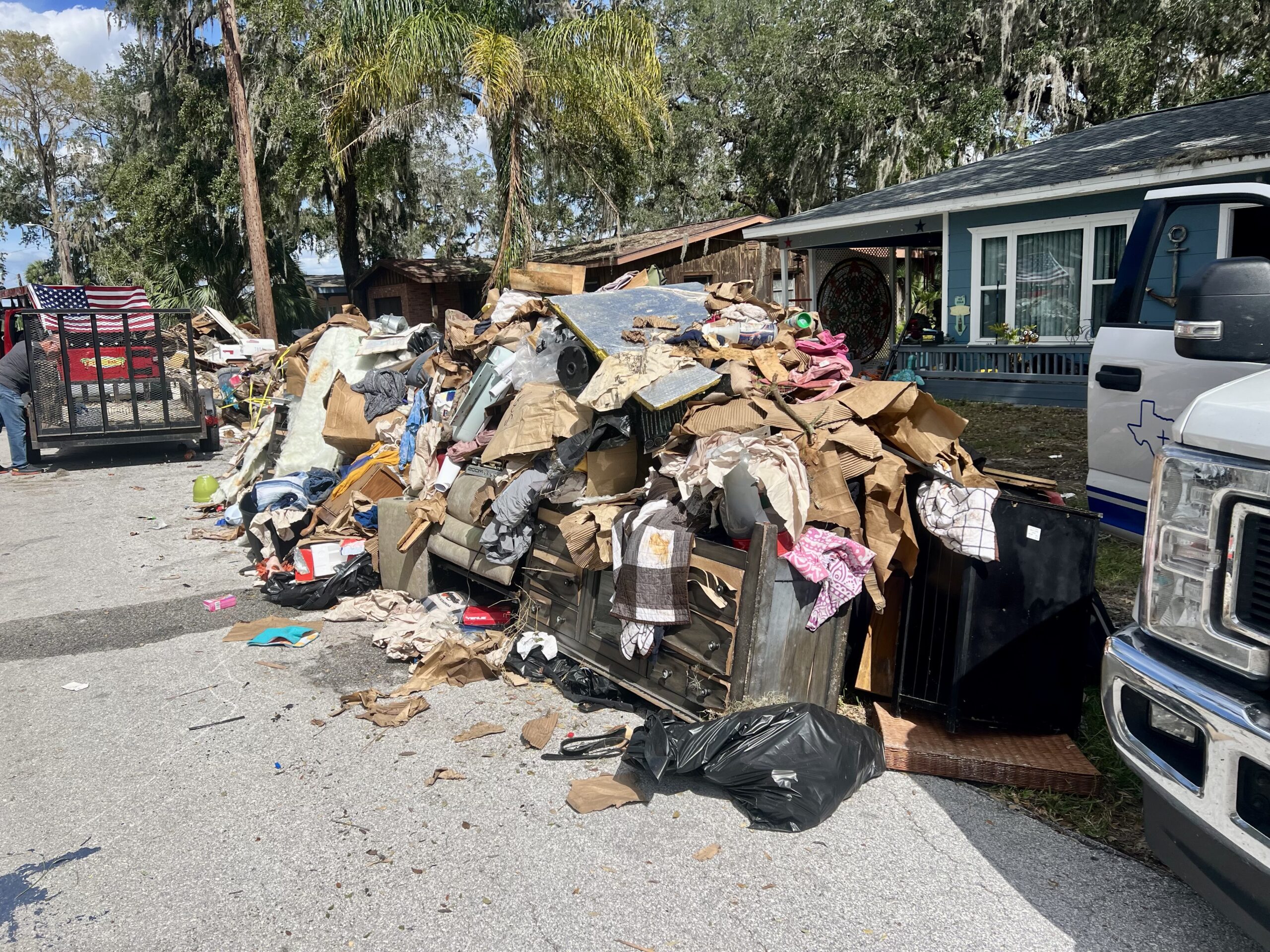
Volunteers worked to clear debris and “mud-out” homes after Hurricane Helene. (Texans on Mission Photo)

The On Mission Network site has brought Christians from across the country together to deliver help, hope and healing in Christ’s name. Teams from Ohio, Florida, Texas, Virginia, California, Maryland and Alaska are slated to minister in communities that have been overlooked since the storm. Charis Fellowship, Texans on Mission and Virginia Baptist Disaster Relief are working together on the site.

Piles upon piles of sheetrock and flooring line the streets where the teams are ministering. Working a home or two at a time, teams are catapulting people forward in their recovery since the hurricane.

“This is the body of Christ in action,” said Rupert Robbins, Texans on Mission disaster relief associate director who is coordinating the site.

“Our connection to Christ connects us to fellow believers and God’s call to minister to the hurting. The Bible tells us to love our neighbor, and that’s exactly what we are doing. We’re meeting needs. We’re sharing the gospel. We’re seeking to glorify God in all we do.”

Surveying damage and visiting with residents, it’s clear where the teams are working. Where they go, recovery goes with them. People’s spirits are high. They’re helping each other out. The community is pulling together.

Two disaster relief volunteers sit down to join Eunice and Jackie for lunch. Hugs go around a small patio table. Friends—new and old—come together.

“This has never happened before,” Jackie said. “When they say this storm is historic, it is historic. Our parents, our grandparents never experienced anything like this.”


Southern Baptist chief of Air Force chaplains retires

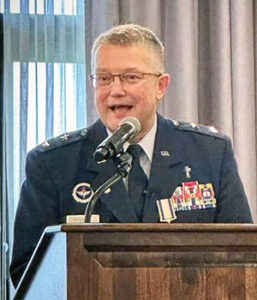
OXFORD, Fla. (BP)—As Chaplain Major General Randy Kitchens thinks back over more than 30 years of chaplaincy ministry in the U.S. Air Force, it’s the opportunities he had to share Jesus that stand out.

Chaplain Major General Randall Kitchens retired earlier this year after a 30-year career in the U.S. Air Force. The son of a Southern Baptist pastor, Kitchens served as the chief of chaplains for the U.S. Air Force, the highest-ranking chaplaincy role in the branch. (Photo provided by Chaplain Major General Randall Kitchens)

From combat zones to counseling sessions, Kitchens often found himself in moments where faith became an anchor for the airmen he served. One such moment came early in his career when a young woman walked into his office looking for answers.

Kitchens shared the love of Jesus with her, offering the gospel message he had heard his father proclaim over and over again as a bivocational Southern Baptist pastor. She turned her life over to Jesus on the spot. In a spontaneous act of celebration, Kitchens arranged to baptize her at the base fitness center later that day.

“My dad was a bivocational pastor, and I grew up thinking that was how every pastor served,” Kitchens said. “I thought they were following the Pauline model, having a vocation along with ministry.

“I watched my father, and he essentially taught me. He would take me on visitations, and I learned a lot about ministry from him. He modeled what lifestyle evangelism is really about—no matter where he was or what role he was in, he always found opportunities to share Christ or what Christ was doing in his life with others.”

That gospel message was the cornerstone of Kitchens’ 30-year ministry. He retired in August as the U.S. Air Force chief of chaplains, overseeing all spiritual and ethical matters in the branch.

Kitchens was pastor of Big Coppitt First Baptist Church in Key West, Fla., when God began to open his eyes to the possibilities of military chaplaincy. The church’s location near a large Navy base brought several Navy couples into the congregation, allowing him to see firsthand the distinct spiritual needs of those serving in the military.

Kitchens’ mother-in-law worked as a civilian at an Air Force base and suggested he consider becoming a chaplain. In the early 1990s, right after the first Gulf War, that transition seemed unlikely. The U.S. Defense Department was closing a number of military bases.

‘Lord, open the door, and we will follow’

In October 1990, he began serving as a reserve chaplain with the U.S. Air Force, but he was still praying for an opportunity to serve full-time in the Air Force.

During this time, Kitchens and his wife Sherri prayed, “Lord, open the door and we will follow.”

God answered that prayer in February 1993 when he became a chaplain at Loring Air Force Base in northeastern Maine. For the next three decades, Kitchens served in military bases and war zones worldwide before retiring as the Air Force’s highest-ranking chaplain.

One of his most memorable moments during this period came when he was deployed to Afghanistan. He vividly remembers a night when a young airman, terrified by ongoing attacks, reached out to him. Kitchens spent the next hour talking and praying with him.

“He was just petrified,” Kitchens said. “We talked about fear, we talked about faith, and we talked about God’s leading. Many times, as chaplains, we don’t always recognize the significant impact we have just by being there, listening and walking with people on their journey.”

‘God prepared me for this time’

In 2020, when Kitchens became the U.S. Air Force chief of chaplains, he also became the chief of chaplains for the newly created U.S. Space Force. While the position was new, Kitchens understood some of the uniqueness of the role. His experience at Patrick Air Force Base in Florida, where he witnessed satellite launches, and later at Peterson Air Force Base in Colorado, helped prepare him for the unique challenges of ministering to Space Force Guardians.

“I believe God prepared me for this time,” Kitchens said. “My second assignment was serving at a space wing, where they launched satellites into space. Understanding that mission helped me be ready for the role of Space Force chaplain.”

As the chief of chaplains, Kitchens not only oversaw more than 2,000 Air Force chaplains and religious affairs airmen, but also provided administrative oversight and served as a religious and ethical adviser to Air Force leadership.

“Throughout his military career as a Southern Baptist chaplain, Randy never lost his passion to preach the gospel, sharing unapologetically that faith in Jesus Christ was the key factor to maintaining the spiritual readiness and morale of our troops and their families,” said Doug Carver, executive director of chaplaincy at the North American Mission Board.

Kitchens and his wife, Sherri, have two children and five grandchildren. He retired near his family in Oxford, Fla., where he awaits his next ministry assignment.

“I’m just thankful that the Lord called me to chaplaincy and allowed me to serve,” Kitchens said. “I’m just praying that the Lord will now show me what’s next for the next chapter in my life.”


How a pastor became a farmer and climate activist

CONETOE, N.C. (RNS)—Congregants at Conetoe Chapel Missionary Baptist Church thought their pastor was crazy when he suggested his rural community take up farming as a way to improve their health and become more self-sufficient.

The small, predominantly Black community, about 80 miles east of Raleigh, is surrounded by vast, fertile farmland but has no grocery store for miles around. According to figures from the Census Bureau, 67 percent of the residents of Conetoe (pronounced Kuh-NEE-tuh) live below the poverty line.

It turned out, Pastor Richard Joyner was prophetic. The venture—which in 2007 was spun off into its own nonprofit, the Conetoe Family Life Center—now produces 1,500 boxes of vegetables a week on land it either bought or leases.

It partners with multiple outfits including public schools, hospitals, the North Carolina Food Bank and local churches to plant, grow, harvest and package the produce, some of which is sold, but most of which is donated.

Funerals—which Joyner used to conduct too many of—are less common, and the health and wellbeing of his congregants who partake of the vegetables, grown without any synthetic chemicals, has improved, he said.

God is not to blame

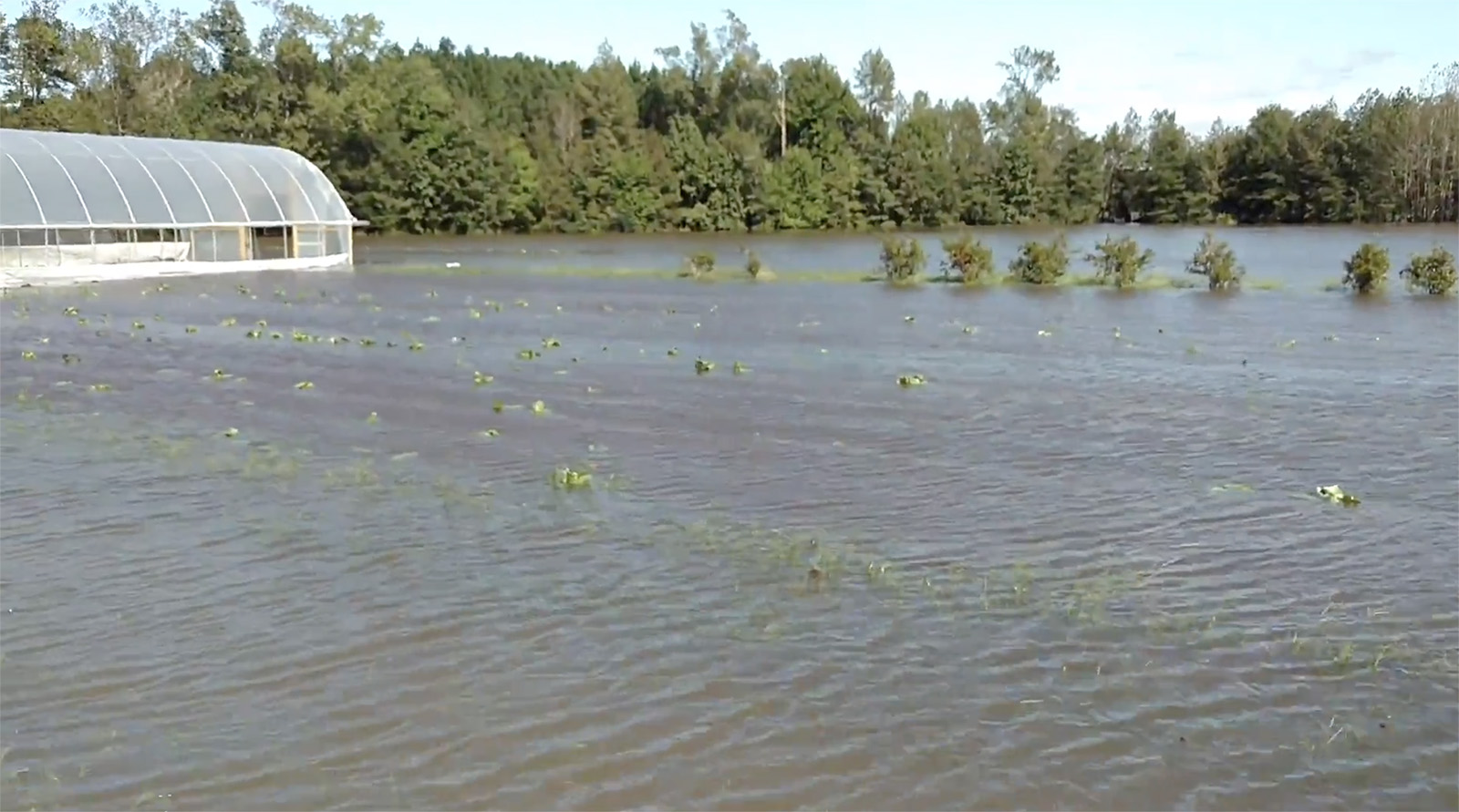
Floodwaters on Conetoe Family Life Center farmland on Sept. 28, in Conetoe, N.C. (Photo courtesy Later Is Too Late Campaign via RNS)

But now Joyner has another problem. Last month, Hurricane Helene flooded some of his fields, wiping out the late August plantings of salad greens, radishes and beets. The soil already was wet from weeks of rain when the hurricane blew in, dumping 17 inches of rain over a two-week period.

Back in 2016, Hurricane Matthew also flooded the nonprofit’s fields. Members of Joyner’s congregation, about 100 people, have suggested maybe God is trying to tell him something.

“We’re in the Bible Belt,” Joyner said. “When my farm floods, people go: ‘Well, God don’t want you to do that. That’s why he keeps flooding it, and you need to stop being hard-headed.’”

Joyner’s new rejoinder: “God is not flooding the land. Our behavior is destroying the environment. That’s what flooded the land.”

Over the last few years, the 71-year-old pastor has become not only a farmer but a climate change activist. Last month, he lent his name to a new group, Extreme Weather Survivors, which provides trauma-informed support for people harmed by natural disasters.

Some of the group’s members, including Joyner, participated in a Climate Week forum in New York City earlier this month intended to convey the message that extreme weather should not be labeled an “act of God” but an “act of man.”

Speakers such as Delta Merner, a scientist at the Union of Concerned Scientists, testified that in North Carolina, studies have shown climate change significantly has increased heavy rainfall.

In other spots, such as Arizona, she said, science can now show a connection between climate change and record-breaking heat waves, which have become more frequent and intense.

Merner, who studies “attribution science,” a field that aims to determine how much human-caused climate change has influenced extreme weather events directly, said researchers are able to trace climate change back to major fossil fuel producers and cement manufacturers.

Explaining this to church members has not always been easy, but Joyner now sees it as his calling.

Farming and environmentalism late-comer

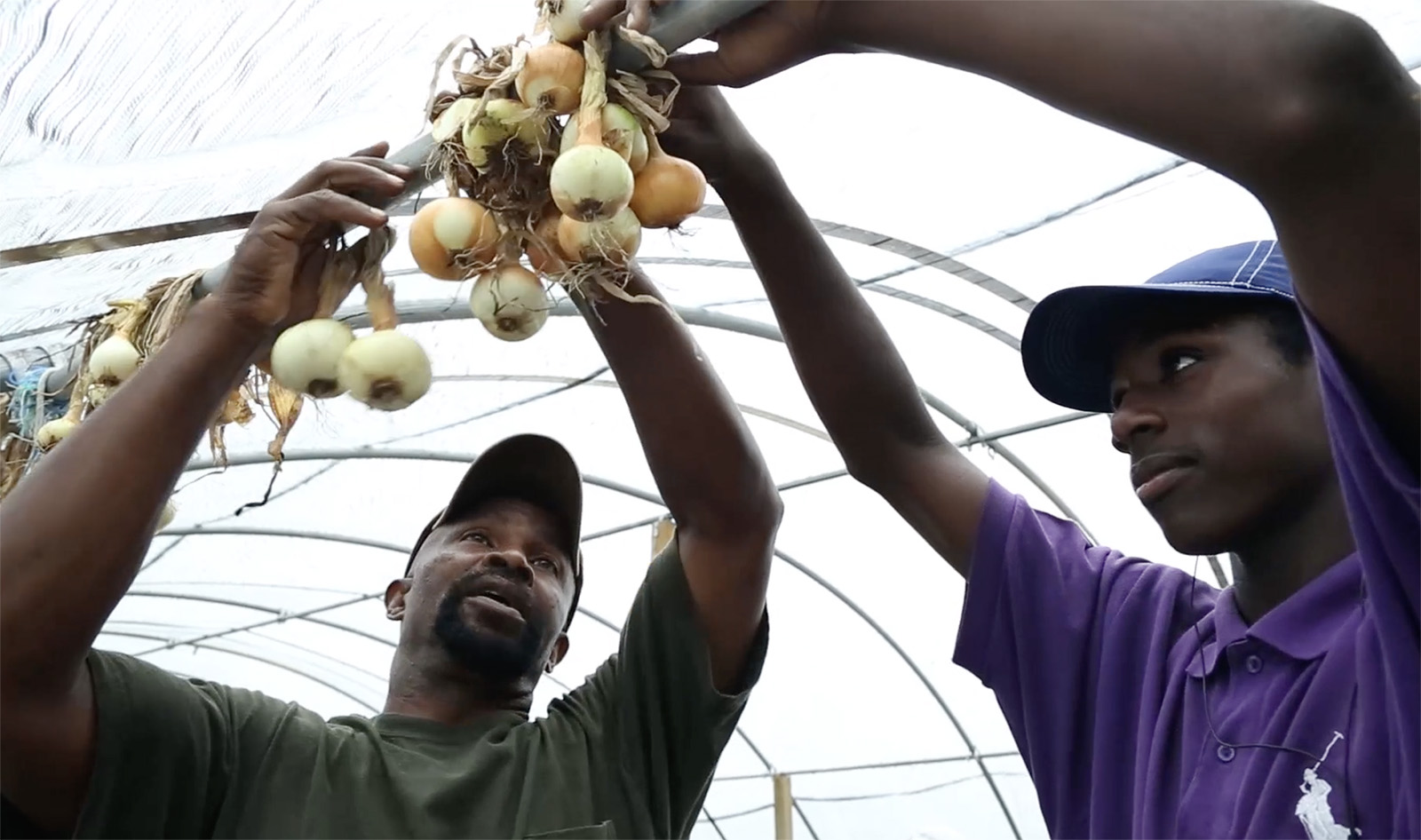
The Rev. Richard Joyner, left, sorts onions with a youth at Conetoe Family Life Center in Conetoe, N.C. (Video screen grab via RNS)

Joyner himself was a late convert to both farming and environmentalism. He grew up on the outskirts of Greenville, N.C., one of 13 children to parents who worked as sharecroppers.

His father, who always kept a garden and some livestock, loved to farm and was especially good at it. But the landowners always cheated him of his earnings, and that soured Joyner on farming.

When he finished high school, Joyner joined the U.S. Army and later the National Guard. He studied chaplaincy at Shaw University and started working as a chaplain at WakeMed in Raleigh and at Nash General Hospital in Rocky Mount.

He initially worked with patients who had HIV, the AIDS virus, and later with mothers in labor and delivery. Finally, he worked as a hospice chaplain, and that’s where he said his own sense of spirituality was cultivated.

In 2004, he became the pastor of Conetoe Chapel Missionary Baptist Church at the prodding of his mentor, who in his dying days transferred the leadership of the small church to Joyner.

Many of the church’s members were suffering from preventable diseases, including diabetes and high blood pressure.

At the time, Joyner still was working in hospice care, while he watched their slow demise and later presided over their funerals.

Convincing members to change their diets and begin exercising was not easy. He said he came to it reluctantly after learning there was no chance a major grocery chain would locate in such a small town, population 671, a classic example of a food desert.

In 2005, Joyner found three property owners willing to let him use their land for a community garden. The first garden was on two acres located a quarter mile from the church.

Resistance turns to advocacy

Church members resisted the idea. Those with painful personal memories of the legacy of Black exploitation working the land were especially suspicious of farming.

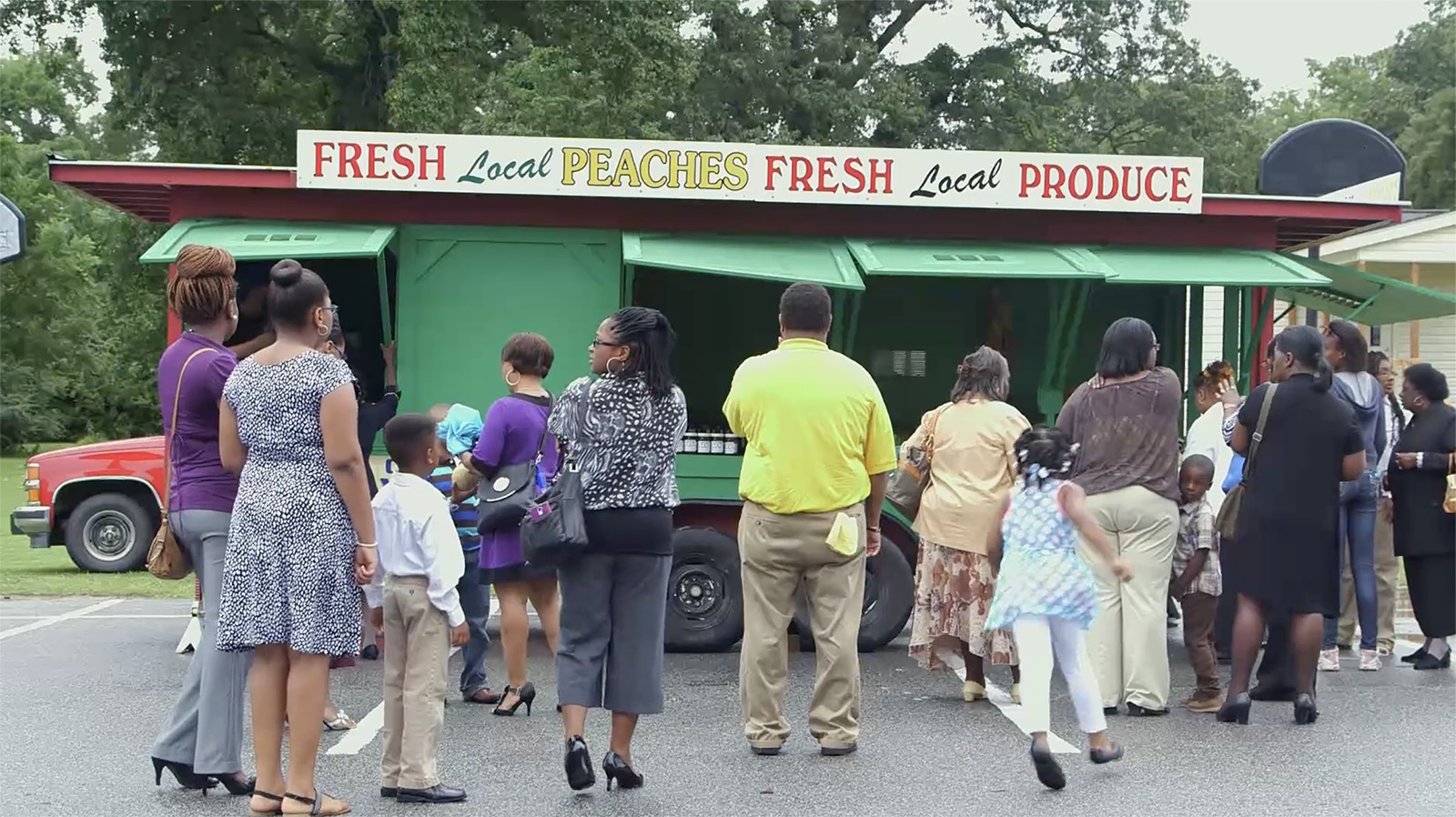
People line up as a Conetoe Family Life Center produce stand opens in Conetoe, N.C. (Video screen grab via RNS)

But he was able to win over the children and eventually the adults, too. The gardens grew to encompass a wide range of crops, in addition to 30 beehives, whose honey is sold locally.

Joyner won several awards for his burgeoning community farm, including a 2014 Purpose Prize, which recognizes social innovators older than 60.

The farm partnered with several universities to study whether food-as-medicine interventions work on people with chronic diseases. It also started a health kiosk on the farm where people can contact health providers online.

CNN did a feature story about the enterprising pastor and his community farm. More recently, the Conetoe Family Life Center built a kitchen on the farm where people can learn to prepare plant-based nutritious meals, and church members caught on.

Now, Joyner is studying how to change farm practices in a time of climate change.

He’s now considering different ways of farming. He recently learned tractors can compact soil and increase the risk of flooding by making the soil less porous. He also knows high tunnels—unheated, plastic-covered hoop-house structures—can provide some protection from rain and include some anti-flooding drainage systems.

One such high tunnel on the farm saved rows of peppers—banana peppers and habaneros—from being ruined. He now wants to build more.

Floodwaters cover Conetoe Family Life Center farmland on Sept. 28, in Conetoe, N.C. (Photo courtesy Later Is Too Late Campaign via RNS)

But finally, there’s the job of advocacy—getting people to understand they live in relationship with creation and if they abuse and manipulate that relationship, there will be consequences.

Living in relationship to the earth and to other human beings and sharing that bounty is now the core of his spiritual journey.

“I’ve been in Christianity all my life,” Joyner said. “But, these fields have become the most powerful place of worship I’ve ever been on.”

It’s a lesson his parents and grandparents knew and one he hopes more people can recover.

“My grandma would always say, ‘This is God’s beautiful earth, and you have one responsibility—to leave it better than when you got here,’” Joyner said. “I take that seriously.”


Former seminary professor pleads guilty to lying to FBI

(RNS)—A former professor at Southwestern Baptist Theological Seminary pleaded guilty Oct. 16 to lying to the FBI during an investigation into sexual abuse.

Matt Queen, the pastor of Friendly Avenue Baptist Church in Greensboro, N.C., had pleaded not guilty earlier this year when charged with obstruction of justice for actions taken when he was a professor and interim provost at Southwestern Seminary in Fort Worth

Southwestern Baptist Theological Seminary in Fort Worth (BP File Photo)

As part of an investigation into the Southern Baptist Convention and its entities, federal officials have been looking into alleged sexual abuse that occurred in 2022 at the seminary. School officials were required to turn over any documents related to abuse to the Department of Justice.

However, an unnamed seminary official, known as “Employee-2,” allegedly ordered that a report on the 2022 abuse case—which detailed that the seminary had known about the alleged abuse but failed to act on it—be destroyed.

According to federal officials, Queen heard Employee-2 order “Employee-1,” the staffer who wrote the report, to destroy it and then allegedly lied to federal officials about it. Queen was also accused of creating fake notes about the conversation surrounding the report.

Queen’s story changed under oath.

“On or about June 21, 2023, MATTHEW QUEEN, the defendant, testified under oath that on January 26, 2023, he had in fact heard Employee-2 instruct Employee-1 to make the Document ‘go away,’” according to a court filing.

Matt Queen in a video for Southwestern Baptist Theological Seminary in November 2022. (Video screen grab via RNS)

On Oct. 16, the U.S. attorney for the Southern District of New York filed court documents charging Queen with falsification of records and providing false information to law enforcement. As part of an arrangement with federal officials, Queen pleaded guilty to the second charge.

“I understand that if my plea is accepted, my sentencing will take place before the United States District Judge who is assigned, or who is to be assigned,” Queen said in a court filing.

A trial on the earlier charges had been scheduled for November.

Queen’s attorney said that the guideline for this offense is zero to six months and hopes Queen will not be incarcerated. Sentencing currently is set for February.

Sam Schmidt said prosecutors approached Queen about a plea deal and said his client admitted to making a false statement.

“And for the past year and a half, he has regretted, repented and tried to make himself a better person for making that mistake,” he said.

Since 2022, the Department of Justice has been investigating the SBC and its entities, in response to the Guidepost report that year, which found SBC had long mistreated abuse survivors and downplayed the issue of abuse in the nation’s largest Protestant denomination.

But aside from the charges filed against Queen, few details about the investigation have been made public.

The SBC admitted the investigation—along with other lawsuits filed in the wake of the Guidepost report—has led to a fiscal crisis for the SBC’s Nashville-based Executive Committee. That committee recently announced plans to put its office building on the market in part because of its strained finances.

The identity of the seminary official who ordered the report destroyed has not been made public. However, Terri Stovall, the seminary’s dean of women, has come forward as the person who wrote the initial report on the 2022 abuse case. Stovall, according to school officials, refused to destroy the report.

“I am grateful for the diligence of the Office of the U.S. Attorney for the Southern District of New York for holding Queen accountable for his criminal actions while serving as interim provost at Southwestern,” Stovall said in a statement.

“My hope is that the full truth and extent of his actions—and the actions of others who are no longer employed at Southwestern—will one day come to light.”

Southwestern officials said they will continue to cooperate with the DOJ investigation.

“We pray for victims of sexual abuse. Southwestern Seminary remains committed to doing everything possible to protect all members of the seminary community from sexual abuse and harassment,” the seminary said in a statement.

“Our prayers continue for Matt Queen and his family, as well as for others who have been involved in this process.”

After he was charged this past spring, Queen was placed on leave by Friendly Avenue Baptist Church. Church leaders currently are working on a response to his guilty plea, according to a statement on the congregation’s Facebook page.

“We stand firmly against any behavior that undermines trust and integrity,” the church said in its statement, which noted that Queen, who has been on leave since May, had admitted to a “serious crime.”

“Our church leadership is reviewing these recent developments as it works to complete its investigation and submit a recommendation to the church membership concerning Dr. Queen’s status and relationship with Friendly Avenue Baptist Church, all in accordance with the church’s governing documents.”


Texas disaster relief teams provide ‘breath of fresh air’

ELIZABETHTON, Tenn.—More than two weeks after Hurricane Helene hit northeastern Tennessee, life slowed to a crawl. The floodwaters are gone, but destruction remains.

At least that was the case until Texans on Mission volunteer flood recovery teams began cleaning out homes affected by the storm.

Local residents viewed them as an injection of energy, help and hope across the region.

“I haven’t been happy since the flood—until today,” one homeowner told a Texans on Mission team as they worked on her home.

More than 25 Texans on Mission teams—supplemented by local volunteers and out-of-state church mission teams—have focused on meeting needs in parts of Florida, Tennessee and North Carolina after Hurricane Helene and Hurricane Milton.

These include chainsaw teams, flood recovery teams, mass feeding teams, heavy machinery, shower/laundry units, chaplains and more.

In all, Texans on Mission volunteers have served more than 9,000 hours. They have provided more than 30,000 meals. And they continue ministering today in Christ’s name.

Ray Gann, who is leading the feeding team in Port Charlotte, Fla., said volunteers are working together like a family. They help each other out. They focus on meeting needs and helping others.

It’s encouraging to see the body of Christ working together, he said.

“I’ve met many of my friends that I’ve worked with before,” he said. “I’ve met new friends. It’s the camaraderie that’s great. We minister together.”

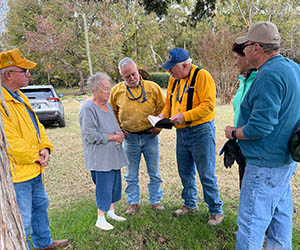
Team leader Gene Walker and a Texans on Mission chainsaw crew present a Bible to a homeowner in North Carolina. (Texans on Mission Photo)

The presence of Texans on Mission chainsaw teams is being felt across Rutherford County, N.C. One homeowner described the teams as being “like a breath of fresh air” after the oppressive storms.

“I prayed with three homeowners today,” David Wells, Texans on Mission disaster relief director said. “They’re so grateful we’re there. People are waving at us everywhere we go. They’re excited we’re here.”

Local volunteers and mission teams from churches have been a vital part in Texans on Mission ministry after the hurricanes. Local congregations are feeding the Texans and people from all over have jumped in to be part of the volunteer teams. New faces and new energy abound in this relief effort.

“It’s cool to see that spirit,” Wells said.