Baptist Briefs: Louisiana College elects president

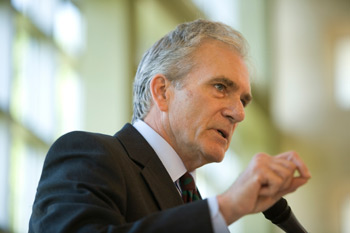
Louisiana College has chosen an official from a Baptist school in South Carolina as president. Trustees of the Louisiana Baptist Convention-related college unanimously elected Rick Brewer, vice president of student affairs and athletics at Charleston Southern University in Charleston, S.C., as Louisiana College’s 11th president. Brewer, an ordained Baptist minister in his 28th year of service to South Carolina Baptist Convention-affiliated Charleston Southern, takes office in Pineville, La., April 7. He succeeds Joe Aguillard, who resigned last year amid controversy and was named the school’s chancellor. Argile Smith, associate dean of the college’s Caskey School of Divinity, filled in as interim president. Part of Brewer’s resume includes service as an evaluator for the Southern Association of Colleges and Schools. Last June, the SACS Commission on Colleges put Louisiana College on probation over leadership issues, including external influence by the Louisiana Baptist Convention, which chooses the college’s board of trustees and provides $3.2 million in annual funding.

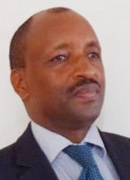
Rwandan Baptist honored with human rights award. Corneille Gato Munyamasoko, general secretary of the Association of Baptist Churches in Rwanda, is the recipient of the 2015 Baptist World Alliance Congress Quinquennial Human Rights Award. The award will be presented in July in Durban, South Africa, at the 21st Baptist World Congress. corneill munyamasoko130Corneille Gato MunyamasokoMunyamasoko has dedicated his life to peace and reconciliation and fighting the stigma associated with HIV and AIDS. He was born in exile in what was then Zaire, now the Democratic Republic of the Congo, to refugee parents who fled Rwanda in 1959 when outbreaks of ethnic violence shook regions of the country. Munyamasoko moved to Rwanda after the 1994 genocide to participate in the country’s reconstruction and foster reconcilation. Munyamasoko and his wife, Anne-Marie, opened their home to accept genocide orphans as their own children. As an educator, he launched peace and reconciliation clubs in each of the secondary schools under his jurisdiction and appointed school chaplains. He also developed regional initiatives that helped Hutu and Tutsi participants understand the causes of the genocide, seek and extend forgiveness, and build relationships based on the principles of justice, mercy and faith.
American Baptist College criticized for inviting lesbian preacher. Baptist groups squared off to criticize or support a historically African-American college in Nashville, Tenn., for inviting a lesbian minister who is married to another woman to speak on campus. The National Baptist Fellowship of Concerned Pastors, identified as “an informal fellowship of pastors with an affinity to the National Baptist Convention, USA, Inc.” issued a press release objecting to Yvette Flunder, founder of the San Francisco-based City of Refuge United Church of Christ, being invited to speak at American Baptist College during the 58th Garnett-Nabrit Lecture Series. The group called on American Baptist College President Forrest Harris to rescind the invitation and for Jerry Young, the new president of the National Baptist Convention, to release a statement clarifying his views on the subject. Two Texans—Dwight McKissic, pastor of Cornerstone Baptist Church in Arlington, and Randy Vaughn, pastor of Mount Sinai Missionary Baptist Church in Port Arthur—are co-coordinators of the Fellowship of Concerned Pastors. In response, Baptist leaders from congregations and national groups including the Alliance of Baptists, Association of Welcoming and Affirming Baptists, Baptist Peace Fellowship of North America and American Baptist Home Mission Societies issued a statement of support for the president and board of trustees at American Baptist College.

Liberian seminary re-opens after Ebola crisis. The Liberia Baptist Theological Seminary reopened after six months of closure prompted by the Ebola crisis in West Africa. Richard Wilson, a Mercer University professor named in 2013 as president of the seminary associated with the Liberia Baptist Missionary and Educational Convention, made an unplanned return to the United States after Liberian President Ellen Johnson Sirleaf closed the nation’s schools in a state of emergency declared Aug. 6. Sirleaf lifted the state of emergency in November, citing successes in keeping the spread of the virus at bay. Before closing the campus, seminary administrators announced the launch of Care for One Hundred, a project to provide basic needs for about 100 people living on campus suddenly out of work and largely isolated due to travel restrictions during the Ebola scare. The effort raised nearly $60,000, Wilson said, providing one basic meal a day for more than 1,000 people a month in four counties and seven compounds, including two orphanages. Wilson hopes to continue the program for at least six more months, while shifting his fund-raising efforts toward getting back to his original task of rebuilding infrastructure at the seminary opened in 1976 under auspices of the Southern Baptist Convention.

Theology students report own lives transformed by teaching inmates

ATLANTA (BNG)—It’s been hard for some to fathom how a condemned prisoner earned a certificate in theology on Georgia’s death row.

Even one of Kelly Gissendaner’s teachers noted it’s amazing she could write papers and participate in discussions, given all the challenges prison—and an impending execution—can bring.

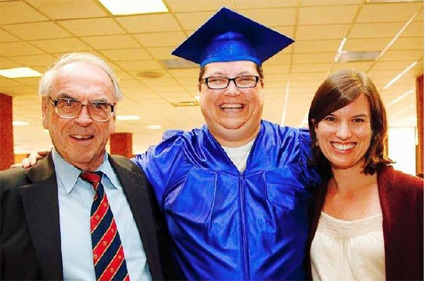
kelly graduation425Kelly Gissendaner, death row inmate, celebrates her graduation from a prison theology program in 2011.“Trying to reconcile the enormity of the death sentence with the fact we are having a conversation on theology and pastoral care and reading books we read in seminary—it’s a lot to wrap your head around,” said Marion Hughes, a former student at Mercer University’s McAfee School of Theology.

Hughes was a student instructor in the theology certificate program run by McAfee and other Atlanta seminaries at the Metro State Prison for Women, where she met Gissendaner in 2010.

Hughes, who taught pastoral care courses in the prison, described Gissendaner as a talented student who overcame the frustration of around-the-clock isolation in part through the theology program.

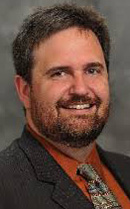
david garber130David Garber“I know she grabbed ahold of the redemptive nature of the cross, and I know that was probably a lifeline for her,” she said.

Gissendaner and the other inmates also gave back, Hughes said. “It will always be a part of the fiber of who I am.”

Gissendaner’s involvement inspired students and faculty at the seminaries who participate in the theology certificate program, one McAfee professor said.

They, in turn, were motivated to act on Gissendaner’s behalf as her scheduled March 2 death by lethal injection neared. While the execution was postponed due to questions about the drugs to be used, the activism continues.

“There is a personal connection there which has raised awareness and a level of urgency around the issue,” said David Garber, associate professor of Old Testament and Hebrew and the faculty adviser for the Certificate in Theological Studies for women now at the Arrendale State Prison.

“Many students have written eloquent papers on capital punishment and on restorative justice” during the run-up and aftermath to Gissendale’s scheduled execution, he said. “It has heightened awareness of the (certificate) program. The McAfee culture is really aware of what we are doing through the association.”

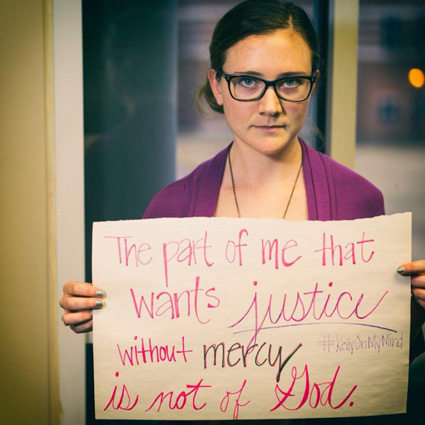
justice mercy425McAfee student Jordan Yeager has become an anti-death penalty activist since the Kelly Gissendaner case. (Photo by David Garber)Reaching out to Gissendaner and other inmates is both ministry and academics, Garber said.

“I see it as a part of Christ’s calling to visit those who are in prison,” he said. “I don’t see it as an opportunity to proselytize.”

It is about tending to the image of God in the inmates who often lack access to those who care about their wellbeing, he said. It’s also about helping them either cope with a life behind bars or, if ever released, callings to ministry.

Emory University’s Candler School of Theology, Columbia Theological Seminary, McAfee and the Interdenominational Theological Center jointly sponsor the program, working under the auspices of the Atlanta Theological Association.

The schools provide about 15 student teachers per year, with McAfee offering two to seven depending on need and interest, Garber said.

Launched in 2009 with funding from the association, the program now operates on a four-year grant from the Arthur Vining Davis Foundation, Garber said.

The certificate program is a one-year course broken into 12-week quarters. Inmates spend the first quarter in a biblical foundations course, the second quarter studying theological foundations, and the remaining quarters pursuing electives.

Those who complete the courses earn a certificate, not a degree, Garber said.

“It’s not an accredited program,” he said. “It’s sponsored by ATA. We don’t have authority to give degrees.”

The benefits of the program depend on the individual. Some who have been released go on to seminary.

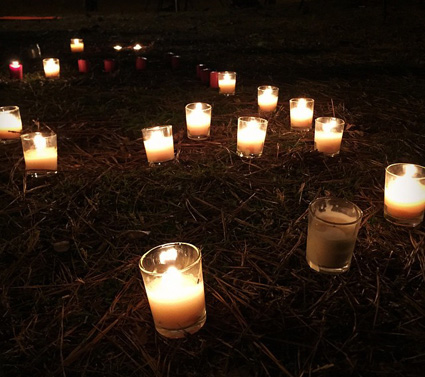
candlelight jordan yeager425Candles light a March 2 vigil for Kelly Gissendaner. (Facebook photo by Jordan Yeager)“This program has inspired them to that or inspired them to think how they would like to pursue ministry,” Garber said.

The schools offer an advanced certificate program for those who want to pursue further studies.

“The certificate for most symbolizes a sense of accomplishment,” Garber said.

The program is not restricted to Protestants or even Christians, he added.

“We have Buddhist students, various Catholic and Protestants, mainline and evangelical, some atheists and agnostics and others,” he said. 

Their motivations for participation are as varied as those of Christian students, he said.

“For some of them, it’s a spiritual journey. For some of them, it is an educational journey. For some, it may be a journey of personal enrichment.”

The student teachers also are attracted to the program for a variety of reasons. Many study counseling and are interested in ministry to those who are incarcerated. Some feel called to visit those who are in prison. Those with academic aspirations see the program as a way to gain teaching experience while expressing their faith, Garber said.

Whatever their motivation, every student teacher has told Garber they cherished the experience.

“They learn what mass incarceration is like, and they learn about the struggles the women face in terms of isolation or access to resources, or in terms of coming to terms with what they have done” to be sent to prison, Garber said.

Gissendaner’s case helped the program’s student teachers and many at their seminaries do some soul searching, too. Her scheduled March 2 execution date spawned a corps of activists among the student teachers, their friends and professors. They blanketed media outlets with emails and waged a social media blitz to pressure the governor and other state officials to cancel the execution.

Jordan Yeager is one of those activists. Before teaching in the certificate program, and before Gissendaner, capital punishment wasn’t really on her radar.

“It’s helped me get out of my bubble,” said Yeager, who has taught other women at the prison but not met the condemned prisoner. “It reflects the gospel in unexpected ways.”

moltmann gissendaner mcbride425Theologian Jurgen Moltmann, Professor Emeritus of Systematic Theology at the University of Tübingen, and Jenny McBride, assistant professor of religion at Emory University’s Candler School of Theology, congratulate Kelly Gissendaner as she receives her certificate of theological studies in 2011.Yeager is in her second year at McAfee, where she’s studying Christian social ethics. Taking that topic into Arrandale transformed Yeager’s understanding of issues like abortion, stem cell research and access to health care.

“These women see all these issues through a lens of suffering,” Yeager said.

Gissendaner’s situation inspired Yeager and other student instructors from the area divinity schools to embrace activism for prisoners on death row. Yeager has taken to posting “death watch” messages on Facebook, alerting friends to other impending executions around the nation.

“This has brought the (seminary) communities, and Atlanta, together,” she said. “Where there’s pain, you go and see what you can do.”

The prison teaching experience and working for the commutation of Gissendaner’s death sentence may have added a new dimension to Yeager’s career plans.

“I want to do health care ethics and work for a hospital,” she said. “But this prison thing won’t leave me alone.”


WorldCrafts adds artisan groups and products

BIRMINGHAM, Ala.—WorldCrafts, the fair-trade initiative of Woman’s Missionary Union, has added to its worldwide network of partners artisan groups from Rwanda and South Bronx to offer more than 150 products this year.

More than Sparrows, an wmu morethansparrows300artisan group in Kigali, Rwanda, uses a holistic approach to break impoverished women from the bonds of sex trafficking by addressing their social, economic, physical and spiritual needs. 

More Than Sparrows provides an opportunity for women to earn income by making craft items and help them leave a life of prostitution. In addition to craft training, the women meet weekly to participate in lessons about spiritual matters, literacy, small-business planning, parenting and health. 

Graffiti 2 Works in the South Bronx area of New York City coaches adults in developing physical, mental, emotional, social and spiritual skills. Program components include life skills, career connections and job incentives. 

wmu graffiti2 425Graffiti 2 Works in the South Bronx of New York has four artisans who are taking classes with the goal of receiving their GED.“Graffiti 2’s artisan group is very different from typical WorldCrafts artisan groups,” explained Kerri Johnson, a missionary appointed by the North American Mission Board and president of New York WMU. 

“Our group started with WorldCrafts to help create jobs for participants in our Christian Women’s Job Corps/Christian Men’s Job Corps and also in our community. This not only teaches them a vocation but supplies them with income and helps build their self-esteem.”

Johnson recalled one example of how WorldCrafts opened a door for a mother of a child in Graffiti 2’s afterschool program.  

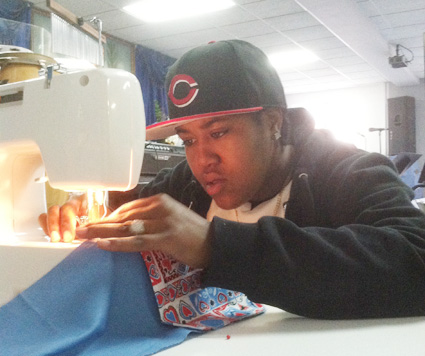
“She already had great sewing skills and was in need of a job,” she said. “I was in need of a great leader in the sewing room. God supplied a great partnership for us. As we are able to make more products for WorldCrafts and even sell items in other venues, she will be able to move toward more of a supervisory position.”

To order a free catalog of WorldCrafts products, call (800) 968-7301 or visit WorldCrafts.org.


As Ebola crisis subsides, WMU grants will help Liberian schools re-open

BIRMINGHAM, Ala.—Grants totaling $44,000 from national Woman’s Missionary Union and the WMU Foundation will help re-open Liberian schools closed since the Ebola crisis.

olu menjay174Olu Menjay“Schools have been shut down for seven months. This gift ignites renewed hope in a seemingly hopeless situation,” said Olu Menjay, principal of Ricks Institute, a Baptist school in Liberia that serves more than 600 children in kindergarten through high school.

Ricks Institute will receive $35,000 to provide meals for its boarding-school students. Since about $5 per day will feed a student at Ricks, the grant will cover meals for the first month school is in session, Menjay explained.

The Marla Corts School and the Dellanna O’Brien School, both located in rural Liberian villages, will receive $9,000 to help them comply with new safety protocols designed to control the spread of disease. All schools will be required to use chlorinatedwater and soap, monitor temperatures and wear uniforms that leave less skin exposed.

The number of Ebola cases has declined significantly in recent weeks, leading the Liberian government to re-open schools. More than 3,500 Liberians have died from Ebola since the outbreak began last year. Many families faced unemployment and a desperate hunger crisis. 

“Although returning to school is a great sign of improvement, many Liberians have been unemployed for months,” said David George, president of the WMU Foundation. “There will be a number of financial needs, and these grants will help meet some of those needs.”

At the height of the Ebola crisis last fall, the WMU Foundation partnered with LIBA—Liberians in Birmingham Alabama—to pack a shipping container with rice, beans and other dry goods to send to Liberia. The food arrived in Monrovia in December, and an emergency response team from the Liberia Baptist Missionary and Educational Convention began distributing the food to families in need.

“We opened our hearts and our arms to our friends in Liberia. We want to send our prayers but also provide something tangible,” said Judith Edwards, a WMU Foundation board member.

The WMU Foundation will continue to collect funds to provide food for children at Ricks Institute. Gifts to help feed students at Ricks Institute can be made online at wmufoundation.com or mailed to the WMU Foundation, 100 Missionary Ridge, Birmingham, AL 35242.

“We’ve had a great partnership with Liberian Baptists for many years, and we remain committed to helping in meaningful ways,” George said. 


SBC leaders urge Obama to defend ‘the least of these’ against ISIS

WASHINGTON (RNS)—Southern Baptist Convention President Ronnie Floyd and former SBC leaders called on President Obama to defend “the least of these” against the Islamic State, the militant Islamist group that’s also known as ISIS or ISIL.

ronnie floyd130Ronnie Floyd“Since ISIS is a continuing threat to world peace in a way unknown to us since the Nazis of World War II, we humbly call upon you to use the influence and power of your distinguished office to take the necessary actions now in this urgent hour to bring an end to these human atrocities,” Floyd and his predecessors wrote in an open letter to Obama.

“The abuse, brutalization and murder of children, women and men that is occurring before the world calls our country to lead forward to bring this to an end.”

Floyd, pastor of Cross Church in northwest Arkansas, was joined by 16 former SBC presidents in the “urgent appeal” that came after recent reports the Islamic State was responsible for beheadings 21 Egyptian Coptic Christians in Libya and kidnapping more than 200 Assyrian Christians.

The letter also was released just before the Jewish holiday of Purim, which recalls the deliverance of Persian Jews by Queen Esther. The Baptist leaders told Obama he had a similar mandate to save an imperiled population from extinction.

“We believe you also ‘have come to the kingdom for such a time as this,’” they wrote as Congress weighs whether to give Obama official authorization to use military force against the Islamic State. “You have been given an historical moment to lead in protecting the people and the principle of religious freedom in the world.”

The rare joint statement by Southern Baptist leaders, who are known for their autonomy, assures Obama they are praying for him “to have wisdom and courage in this hour” and that he has the “unequivocal support of the vast majority” of members of the denomination in taking the fight to the Islamic State.

“The world will applaud your courage and compassion as you defend those that Scripture calls ‘the least of these,’” they wrote.


Baptist Briefs: Fired Atlanta fire chief sues city

Former Atlanta fire chief Kelvin Cochran filed a federal lawsuit against the city claiming he was fired because of his religious beliefs. Cochran, a member and deacon at Elizabeth Baptist Church, a congregation affiliated with the Southern Baptist Convention, was fired Jan. 6 after a month-long suspension to investigate concerns about a devotional book he wrote for Christian men that included passages condemning homosexuality. Atlanta Mayor Kasim Reed said views expressed in the book and comments he made to church groups during his suspension raised questions about the chief’s ability to lead a diverse fire department workforce. Cochran’s lawsuit, filed in U.S. District Court in Atlanta by attorneys with the national conservative advocacy group Alliance Defending Freedom, claims Cochran followed proper procedure in notifying his superiors about his plans to write a book on his free time about ideas developed after leading a men’s Bible study at his church. The lawsuit accuses Atlanta officials of violating Cochran’s First Amendment rights to free speech, free exercise of religion and freedom of association, along with the 14th Amendment guarantee of equal protection under the law. It seeks his reinstatement, plus monetary compensation for “lost wages, costs associated with Cochran finding new employment, and humiliation, emotional distress, inconvenience and loss of reputation.”

LifeWay letter of intent narrows potential buyers. LifeWay Christian Resources, continuing to move toward selling its 14.5-acre downtown Nashville complex, signed a letter of intent Feb. 23 with a firm that represents a group of local and national developers. Marty King, director of corporate communications for LifeWay, noted talks are ongoing, “so it would be premature for us to discuss any elements of the negotiations or the businesses and individuals involved.” LifeWay, the publishing arm of the Southern Baptist Convention, has analyzed more than a dozen offers to purchase its property and eliminated several of the offers during the week of Feb. 17, King said. LifeWay anticipates a final decision in a few weeks, he added. LifeWay’s downtown Nashville campus includes nine buildings with more than 1 million square feet of office, warehouse and parking space. 

Baptist college reinstates fired VP. Brewton-Parker College Interim President Charlie Bass reinstated a vice president fired Feb. 2 after refusing to sign a nondisclosure agreement about Ergun Caner’s Jan. 20 resignation. C.B. Scott was reinstated as vice president of alumni, advancement and church relations at the Baptist-affiliated school in Mount Vernon, Ga. In his first comments to faculty and staff, Bass, who returned to campus as interim president 18 months after resigning as vice president of student services, acknowledged the school’s image has been “tarnished” by events of recent years, including nearly losing accreditation by the Southern Association of Colleges and Schools Commission on Colleges, but he still believes God has “big plans” for the school.

SBC to vote on NAMB ministry amendment. Chaplain-led ministry near overseas military bases someday may become part of the North American Mission Board’s church-planting outreach if a proposed ministry amendment is approved during the June 16-17 annual meeting of the Southern Baptist Convention. The SBC Executive Committee approved a recommendation to be presented to messengers in Columbus, Ohio, to enable NAMB to “provide specialized, defined and agreed-upon assistance to the International Mission Board in assisting churches to plant churches for specific groups outside the United States and Canada.” Executive Committee leaders cited the possibility of military chaplains facing religious liberty constraints as a key factor for the recommendation, although the wording allows for other contingencies that may prompt NAMB-IMB overseas. “There might come a day to where our chaplains can’t really preach the gospel,” Executive Committee Chair Mike Routt said. “How are you going to minister to these military bases overseas, to these military personnel if you can’t preach? So these chaplains, on their own, not paid by the government but on their own, would plant a church close to that base so that they could have a Bible-believing, Bible-preaching church that our soldiers and their families could go to.”



Concern for children, not ill will, prompts activism, religious groups insist

ST. LOUIS (BNG)—Religious opposition to same-sex marriage isn’t anti-gay but rather based on religious beliefs and practical experience that children do best when they grow up in a stable home environment with both a mother and a father, faith groups including the Southern Baptist Convention argued in a legal brief.

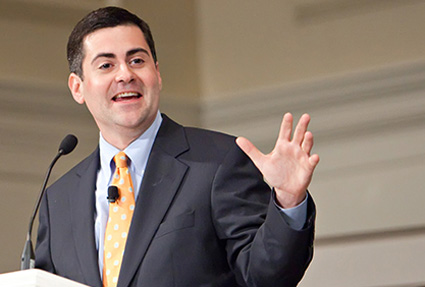
russell moore podium425Russell Moore, president, SBC Ethics & Religious Liberty Commission.The SBC Ethics & Religious Liberty Commission joined the U.S. Conference of Catholic Bishops, National Association of Evangelicals, Church of Jesus Christ of Latter-day Saints and Lutheran Church-Missouri Synod in a Feb. 23 filing asking the 8th U.S. Circuit Court of Appeals to overturn a lower court’s decision finding Missouri’s ban on same-sex marriage unconstitutional.

“In this brief, we are standing together for a truth as old as human civilization itself,” said Russell Moore, Southern Baptists’ top spokesman for moral, ethical and religious-liberty concerns. “The state did not create the family and cannot re-create it. We appeal to the court to recognize and to stay within the limits of its authority.”

Marriage “is about more than registering relationships at a courthouse,” Moore said.

Marriage points to Christ and his church

“Marriage is about the common good and flourishing of society,” he said. “And, as a Christian, I believe with Jesus and the apostles that marriage points beyond creation to the gospel union of Christ and his church.”

U.S. District Court Judge Ortrie D. Smith in Kansas City ruled Nov. 7 that both a 1996 statute and voter-approved amendment to the state constitution in 2004 violate the 14th Amendment to the U.S. Constitution, which entitles all citizens to due process and equal protection under the law.

After the ruling, Missouri Attorney General Chris Koster filed an appeal of the decision to the 8th Circuit. The appeals court announced Feb. 3 it was combining the appeal with other gay-marriage cases from Arkansas and South Dakota, with oral arguments set during the week of May 11-15 in Omaha, Neb.

While the district court did not address allegations in the lawsuit that Missouri’s same-sex marriage ban is rooted in “animus” against homosexuals, the faith groups said in their brief they anticipate the argument will resurface during the appeals process.

‘Animus’ charge false

The faith groups said the accusation they are motivated by “anti-gay animus” is “false and offensive” and intended to “suppress rational dialogue and civil conversation” and “to win by insult and intimidation rather than by persuasion, experience and fact.”

While different, they say, their theological perspectives agree on a critical point—“that marriage between a man and a woman is vital to the welfare of children, families and society.”

“Our practical experience in this area is unequaled,” the brief contends. “In millions of ministry settings each day, we see the benefits that married mother-father parenting brings to children. And we deal daily with the devastating effects of out-of-wedlock births, failed marriages and the general decline of the marriage institution.”

The faith groups all attach “spiritual significance,” to the institution of marriage, the brief says.

“Our respective religious doctrines hold that marriage between a man and a woman is sanctioned by God as the right and best setting for conceiving, bearing and raising children,” they said. “We believe that children, families, society and our nation thrive best when husband-wife marriage is sustained and strengthened as a cherished, primary social institution. The lives of millions of Americans are ordered around the family and derive meaning and stability from that institution. We make no apologies for these sincerely held religious beliefs.”

Lawson v. Missouri

The ACLU filed the lawsuit, Lawson v. Missouri, last June on behalf of two gay couples denied a marriage license in Kansas City due to the state’s same-sex marriage ban.

The lawsuit claims that barring same-sex couples from marrying “denies loving, committed, same-sex couples the dignity and status that only marriage can confer on their relationships and their families.”

It also deprives LGBT couples rights and privileges available to married couples, such as visiting a spouse in a nursing home, making medical decisions if a spouse is incapacitated and obtaining a death certificate if a spouse dies. If one of them is killed, the surviving gay spouse cannot sue for a partner’s wrongful death, because they are not legally married.

Surviving different-sex spouses are entitled to continued coverage under their spouse’s health, dental, vision or prescription-drug insurance plans. Same-sex spouses are not, the lawsuit alleges, “for no other reasons than their sexual orientation and their sex.”

Suit says same-sex couples stigmatized

The suit says same-sex couples and their children “are stigmatized and relegated to a second-class status” by being barred from the right to wed. “The exclusion tells same-sex couples, and all the world, that their relationships are unworthy of recognition.”

The lawsuit claims that refusing to issue marriage licenses to same-sex couples “does not rationally further any legitimate government interest” but instead “serves only to disparage and injure same-sex couples and their families.”

The brief by the religious organizations insists their position on marriage is separate from their views on the morality of homosexuality.

Defining marriage as gender-neutral, they say, changes its message and function to celebrating adult relationships rather than protecting children.

“Sober reflection suggests that transforming marriage into a relationship primarily directed at affirming the life choices of adults will deepen the devastating effects America has suffered over the last half-century with the devaluing of marriage as a child-centered institution,” the brief argues.


Southern Baptists try to diversify churches, but will it work?

NASHVILLE, Tenn. (RNS)—How tough is it to create a racially diverse denomination? Consider a recent luncheon organized by the Southern Baptist Convention’s Ethics & Religious Liberty Commission

erlc leadership racial300About 100 Nashville-area evangelical leaders accepted invitations to the lunch. On the agenda—a pitch for a spring summit and a short discussion by ERLC President Russell Moore about the need for churches to become more racially diverse.
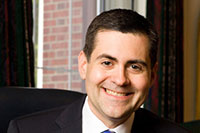
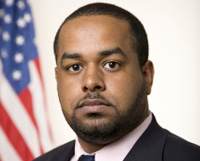
How many African-Americans showed up for the lunch? Four—two of them denominational employees.

ERLC leaders originally planned a summit on bioethics. They quickly shifted gears after grand juries in November and December failed to indict police officers for the deaths of young unarmed black men. Moore’s social media remarks condemning the New York City jury’s decision not to indict the officer who killed Eric Garner prompted an angry backlash, some from people filling Southern Baptist pews and pulpits.

Black church leaders are greeting news of the summit with reactions ranging from polite skepticism to hopeful support.

It can’t come soon enough for Erskin Anavitarte, a Southern Baptist pastor-turned-musician who attended the luncheon. Anavitarte, an African-American, said he finds resistance to even the suggestion white privilege exists.

“People who talk about Ferguson (Mo.) and say that justice was served—most of them don’t even have a grid to make those statements they’re making,” he said. “They don’t even have friends who are African-American.”

russell mooreRussell MooreThe Southern Baptist Convention was birthed in 1845 when it insisted its members had the right to own slaves, and the group didn’t formally apologize for its stand on slavery until 1995. Four years ago, the SBC considered a name change to move past that split and increase opportunities for expansion outside the South.

Moore, a Mississippi native, opposed the rebranding. Earlier sin needs to be kept out front, he said, lest members forget it. One of his earliest Sunday school memories convinced him of that.

“We had a substitute teacher, and I put a quarter in my mouth,” he said. “She said, ‘Don’t put a quarter in your mouth, because a colored person might have touched that.”’

Moore said the teacher probably never examined her own belief system around race.

But his proposed solution—diversifying worship spaces—will take some work. Of 50,500 Southern Baptist congregations, 3,502, about 7 percent, identify as predominantly African-American, a 2013 denominational report shows.

dubois joshua200Joshua DuBoisBroaching the issue is important, said Joshua DuBois, former chief of the Obama administration’s faith-based initiatives and author of “The President’s Devotional.”

“Where the Southern Baptist Convention leads, a whole lot of white conservatives around the nation follow,” said DuBois, who is African-American and attends Assemblies of God-affiliated National Community Church in Washington, D.C. “One of the most exciting things is the possibility of churches connecting at the grassroots level to do more together to create interracial churches.

“Right now, 11 a.m. on Sunday morning is the most segregated hour in America,” he said, echoing the words of Martin Luther King Jr. across five decades.

An example of attempts to bridge that chasm was the recent merger of predominantly white Ridgewood Baptist Church into predominantly black Shiloh Metropolitan Baptist Church in Jacksonville, Fla., prompted by the white church’s financial struggles, DuBois said.

hb charlesH.B Charles Jr.Shiloh Pastor H.B Charles Jr.—who will speak at the upcoming summit—became primary teaching pastor of the combined flock and told The Huffington Post he hoped the merger served as an example of racial reconciliation.

Races worshipping together will increase understanding, said Miguel De La Torre, a professor at United Methodist-related Iliff School of Theology who studies the intersection of race and religion. For example, anyone worshipping at a diverse church wouldn’t be surprised grand juries didn’t indict the police officers who killed Michael Brown and Eric Garner, he said.

One reason most churches are segregated is racial reconciliation has meant whites expecting African-Americans and Latinos to worship with them, De La Torre said, perhaps throwing in a “Taco Tuesday” as an attraction.

“For me to worship at an Anglo church, I must accept white theology, pray in a white manner, sing white German songs and eat meatloaf at the potluck,” he said.

It’s far more useful for whites to come to African-American and Latino churches, hear the reflections of religious thinkers from those cultures and take those lessons home, De La Torre insisted.

anthony evans200Anthony EvansWhatever whites choose to do, black church leaders worry about other issues, said Anthony Evans, president of the Washington, D.C.-based National Black Church Initiative, an interdenominational coalition of 34,000 African-American and Latino churches.

They’re more concerned about fallout from the approval of same-sex marriage, attracting young members, meeting demands of churchgoers in African-American neighborhoods and maintaining financial viability, he said.

It’s good the Southern Baptists are talking about race, he said. But he has a lot of questions, and he insisted he will have more interest when he sees a long-term, strategic plan and a financial commitment to implementing it.

“There were no discussions within the universal Christian faith—I certainly didn’t get a call—about what should be the vision going forward,” Evans said. “I’m not sure the motivation of their actions, but it’s a small beginning.”

The Gospel and Racial Reconciliation Summit will be held March 26-27 in Nashville. Speakers include Fred Luter Jr., senior pastor of Franklin Avenue Baptist Church in New Orleans and the Southern Baptist Convention’s first African-American president; John Perkins, a civil rights leader and founder of the Christian Community Development Association; and Juan Sanchez, preaching pastor at High Pointe Baptist Church in Austin. 


Baptist Briefs: Churches burned in Niger

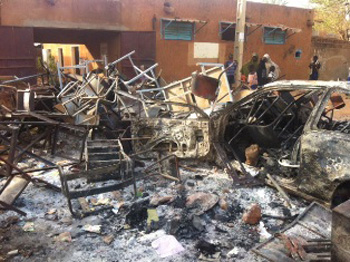
At least 68 churches, two of them Baptist, have been burned in the West African country of Niger. Panlieba Tchalieni, president of the Union of Evangelical Baptist Churches of Niger, reported the church burnings, carried out by Muslim fundamentalist group celpa church rubble350Rubble after the fire at Celpa Church in Naimey, Niger, one of 68 churches burned by Boko Haram. (Photo: Serving In Mission)Boko Haram, occurred in the Zinder region and Niamey. Thousands of civilians fled their homes in the southeastern Niger town of Diffa. The area already was under stress, providing refuge to some 150,000 people who crossed the border to escape the violence in northern Nigeria. Niger, which shares much of its southern border with Nigeria, declared a 15-day state of emergency in Diffa after a spate of attacks by Boko Haram. Kojo Amo of Ghana, chairman of the western region of the All Africa Baptist Fellowship, appealed for prayer and support for the Christian church in Niger. 

Alabama Baptist church faces ouster from association. A local association of Southern Baptist churches is poised to expel an Alabama church after a member of the congregation who is an ordained minister received media attention for performing a gay marriage. Representatives of Madison Baptist Association met Feb. 17 with David Freeman, pastor of Weatherly Heights Baptist Church in Huntsville, Ala., seeking clarification about his views on homosexuality and same-sex marriage. Freeman, in a statement to church members, described the meeting as “cordial” and respectful, but in the end the leaders said they will recommend to the association’s executive committee that Weatherly Heights be “disfellowshipped” for positions outside beliefs embraced by the 91-church association. Weatherly Heights drew international attention when a minister who performed one of the state’s first legal same-sex marriages was identified in media reports as its minister to the community. Ellin Jimmerson later clarified she was ordained by the church but not a paid member of the staff, and she used the “minister to the community” title with reporters to connect her documentary film The Second Cooler to her volunteer advocacy work with immigrants as a member of the church. 


Watchman on the wall: Brent Walker reflects on 25 years in D.C.

WASHINGTON (BNG)—For 25 years, Brent Walker has observed the religious-liberty landscape from a perch at the Baptist Joint Committee for Religious Liberty, just blocks from the U.S. Capitol and Supreme Court. 

walker cutout web425Brent Walker, executive director of the Baptist Joint Committee for Religious Liberty.Walker began service with the Baptist Joint Committee in 1989 as associate general counsel, then he became general counsel in 1993 and executive director in 1999. 

Baptist News Global asked him to look back over his quarter-century on the “serpentine wall” of church-state separation.

Q—Twenty-five years is a long time in national public policy life. How is the religious-liberty landscape different than it was 25 years ago?

A—The religious-liberty landscape is definitely different. In some ways, religious liberty is in rockier territory than it was when I started. In other ways, it’s on more fertile soil. 

I think we have lost ground when it comes to constitutional protection against the establishment of religion, such as state-sponsored religious exercises and government-funded church ministries and religious education. We have been up and down concerning protections for the free exercise of religion, losing ground as a matter of constitutional interpretation but gaining through legislation supported by the BJC, such as the Religious Freedom Restoration Act in 1993 and the Religious Land Use and Institutionalized Persons Act in 2000.

We continue to be very solid when it comes to the so-called “church autonomy doctrine,” designed to keep government from meddling in the internal affairs of houses of worship and courts from adjudicating internal property and employment controversies. This was reinforced by the U.S. Supreme Court’s unanimous decision in the Hosanna-Tabor case in 2012, approving the “ministerial exception” to the enforcement of anti-discrimination laws. We are growing in our acceptance of the constitutional principle (in Article VI) barring religious tests for public office, both in terms of the letter and spirit of the ban.

Internationally, religious persecution and disrespect for the rights of conscience have grown worse, especially with regard to Christians.

Q—Of all the religious-liberty issues the BJC has addressed in those years, which do you think was the most significant? And—maybe not the same thing—on which did the BJC have the greatest impact?

A—The Baptist Joint Committee’s most significant contribution over the past 25 years is the two federal statutes—RFRA and RLUIPA—I just mentioned. The BJC was instrumental in leading and creating broad coalitions to seek restoration of a high level of protection for the free exercise of religion for everyone through RFRA in 1993, and further protections for the rights of prisoners, institutionalized persons and religious organizations seeking relief from unreasonable zoning and land use regulations through RLUIPA in 2000.

brent-walker-speaking(Photo: Ferrell Foster)In addition, the BJC has been instrumental in figuring out the proper balance of dealing with religion in the public schools—saying “no” to state-sponsored religion and religious exercise and “yes” to voluntary student-initiated religious speech and practice, as well as “yes” to objectively teaching about religion in appropriate places in the curriculum.

Q—Who have been some of the inspirations for you during the past 25 years—the ones you’d cite as models of religious-liberty advocacy?

A—First and foremost, James Dunn (former BJC executive director). After stepping into his very large shoes, I quickly determined that James’ style was inimitable. But I learned a lot from him about how to express complicated issues simply, and I certainly shared his passion. 

Buzz Thomas, my predecessor as general counsel, taught me most of everything I learned early on about constitutional law and public policy advocacy on the Hill. 

I was also inspired by U.S. Representative Chet Edwards from Texas who was the pre-eminent champion of religious liberty in Congress and, unfortunately, lost his seat in part because of it. 

Q—You earned degrees in both law and theology. On balance, which has been most useful in navigating religious-liberty issues? Forced to choose, which would you advise your (eventual) successor to focus on?

A—Both my law degree (and 10 years of practice) and my master of divinity degree from Southern Seminary have been invaluable. It’s a near-perfect combination of pedigree that informs exactly what I do day-in and day-out. Our understanding of religious liberty is theologically grounded—a gift from God at creation—but protections for it come through applying and enforcing constitutional principles—the First Amendment’s religion clauses and Article VI.

walker keep425(Photo: Baptist Joint Committee)That said, I think one could do well with either, or neither, a law degree or seminary training. A lifetime in good Baptist Sunday school classes and a lot of reading about the history and interpretation of the first 16 words in the Bill of Rights can put an intelligent and dedicated person in good stead to perform this job. 

It is mostly about the passion with which one performs it, rather than the academic tickets he or she has punched.

Q—Protecting religious liberty is a challenge for every generation. But do you find it easier or harder than in the past to make the case for religious liberty? And do you see it becoming easier or more difficult in the future?

A—I think it has gotten harder. The rise of the religious right over the past quarter-century and their well-funded advocacy groups sometimes make it difficult to enforce strong Establishment Clause values. But the more recent rise in the strength of the secular left and their perhaps not-quite-so-well-funded advocacy groups can sometimes make fighting for the free exercise of religion more difficult. 

Establishment Clause issues have always divided us. Free Exercise issues—once a rallying point for some agreement—have become more divisive now, too. Sorry to say, I think these trends will continue to be so in the foreseeable future.

Q—Recently you joined the Southern Baptist Convention’s Ethics and Religious Liberty Commission and other groups in protesting action by Houston’s mayor to subpoena pastors’ sermons. Does that signal a diminishing of the theological distinctions among church-state watchdogs?

A—ERLC President Russell Moore and I have a good working relationship. That does not mean we always—or even often—agree on theological propositions or on the proper interpretation and application of the religion clauses. But when we do, such as the no-brainer in Houston, we are happy to work together to amplify our voices.

As foundational as religious liberty is in this country, there have been occasions in its history when other values have trumped it—laws criminalizing polygamy or withholding tax-exempt status for religious schools that practice racial discrimination come to mind.

Q—Are there any current religious-liberty issues you think might be impacted by other strongly held social values?

A—Yes, that is true. Sometimes, government’s accommodations of the exercise of religion visit no harm on others. These are the easy accommodations to make. More difficult are cases where the rights and well-being of third parties, or society generally, are detrimentally affected by the religious accommodation.

Here’s where the courts have to do a balancing act between the free exercise rights of the religious claimant with the rights of those—or of society generally—harmed thereby. Traditionally, we have said that the free-exercise rights must prevail unless government can demonstrate a compelling interest in the health, safety or welfare of others. Then, the balance is struck on the side of the government, but only to the extent that it pursues its compelling interest in the most narrowly tailored fashion.

Perhaps the most visible and contentious current issue related to this balance involves the Hobby Lobby case—whether the religious rights of the shareholders can be imputed to a privately held corporation and whether those rights can then trump the ability of employees to avail themselves to generally available contraception coverage at no cost.

Other issues arise in connection with the tension between religious-freedom rights and anti-discrimination laws, particularly with reference to same-sex marriage. Under the “church autonomy doctrine,” houses of worship will not be required to perform marriages with which they disagree. But businesses engaged in commerce on the periphery of the issue (for instance, florists, bakers, photographers, tuxedo providers) who object to same-sex marriages will require the courts to perform this balancing act.

Q—Looking down the pike, what issues do you think will require some close attention by advocates of religious liberty?

A—The issues I just mentioned will certainly be front-burner issues on the free exercise side of things. With respect to Establishment Clause issues, the Supreme Court is closely divided (5 to 4 or 6 to 3) concerning both religious speech or endorsement cases and government funding of religion cases. The retirement of justices currently in their early 80s and late 70s and the politics that surround their replacement nominees may well tip the balance one way or another. 


Baptist Briefs: Alabama convention warns against gay weddings

Churches of Southern Baptist ministers who conduct marriage ceremonies for same-sex couples in Alabama risk losing their standing with the Alabama Baptist Convention, according to a statement on the convention website. rick lance130Rick LanceRick Lance, executive director of the Alabama Baptist State Board of Missions, and Alabama Baptist State Convention President Travis Coleman Jr., senior minister at First Baptist Church in Prattville, issued a joint plea to “stand strong for biblical marriage” in the wake of Alabama becoming the 37th state in the nation to permit gay marriage. Any church that allows staff members to officiate at same-sex ceremonies “is clearly outside biblical teachings about marriage and human sexuality, and they demonstrate that they are not in like-minded fellowship or friendly cooperation with Alabama Baptists and Southern Baptists,” Lance and Coleman said in the joint statement.

Russian Baptist leader concerned about U.S. assistance to Ukraine. A Russian Baptist leader has voiced concern about recent legislation by Congress authorizing $350 million in lethal and nonlethal military assistance to Ukraine and expanding the president’s authority to impose sanctions on Russian energy and defense firms. vitaly vlasenko101Vitaly VlasenkoVitaly Vlasenko, director the department for external church affairs for the Russian Union of Evangelical Christians-Baptists, said in a published letter Russian Baptists “are deeply concerned” about intensifying conflict in the Ukraine. His letter, addressed primarily to Christians in North America, called on “brothers and sisters in the West and in Ukraine to call for a negotiated, diplomatic settlement to the conflict in Eastern Ukraine.” Leaders of the European Baptist Federation responded to Vlasenko’s letter that Russian Baptists are “understandably concerned” about statements from the U.S. government “that seem to suggest support for an escalation of the militarization of the conflict.” At the same time, European Baptist leaders said, “We also hear the concerns and cries coming from our Ukrainian Baptist family which is suffering so much together with their entire country and who are seeing their country partitioned and then devastated by a war they did not want and did not start.” Instead of taking sides, EBF leaders said they would like to see Baptist leaders in both Russia and Ukraine come together like they did last November in “a joint statement calling for peace, acknowledging their differences but seeking to see beyond them to find a way to encourage their two nations to find a way to live at peace with one another.”

LifeWay president announces reorganization. LifeWay Christian Resources President Thom Rainer outlined for trustees a vision for the entity’s future that includes a reorganization and leadership changes. Rainer announced the merger of two divisions—Church Resources and B&H Publishing—into LifeWay Resources Division led by current vice president Eric Geiger. Selma Wilson, former vice president of B&H, will direct LifeWay’s new organizational development division that will focus on people strategies, culture development and change management. Trustees also elected Cossy Pachares, a 14-year LifeWay employee, as vice president of the retail division, filling the post vacated by Tim Vineyard, who retired in January. 


LifeWay trustees authorize sale of headquarters

NASHVILLE (BNG)—Trustees of LifeWay Christian Resources have authorized the administration to sell all or part of the Southern Baptist Convention publisher’s campus in Nashville, Tenn., for what a broker determines to be a fair market value.

The vote came during a two-day meeting of the trustee board in Nashville. The motion stipulated the sale “would allow LifeWay to build a new facility designed specifically for its ministries now and in the future.”

In January, LifeWay President Thom Rainer informed employees offers were being accepted on the downtown campus composed of nine buildings and more than 1 million square feet of office, warehouse and parking space on nearly 15 acres.

The property includes the LifeWay Christian Store at Broadway and Tenth Avenue but not the Southern Baptist Convention’s five-story denominational headquarters at the corner of Ninth Avenue and Commerce Street dedicated in 1985, which LifeWay does not own.

Rainer told trustees multiple offers to buy the property are being reviewed, clarified and analyzed.

“We are in the middle of negotiations to get what is best for LifeWay’s future,” Rainer said. “We need to move forward in a way that is the best stewardship of what God has given to us.”

If LifeWay sells the property, Rainer said, he prefers the new location remain in downtown Nashville.

LifeWay, founded as the Baptist Sunday School Board in 1891, established its permanent office in downtown Nashville in 1913 in what eventually became known as the Frost Building. Named after the ministry’s founder, J.M. Frost, the building still stands and is listed on the National Register of Historic Places.

An 11-story Art Deco-style building known as the Sullivan Tower at 127 Ninth Avenue, North, was completed in 1953. Centennial Tower was added in 1990, followed by another expansion, including a new chapel in 2000, which according to the Nashville Post was “expected to meet LifeWay’s needs through the year 2015.”

LifeWay needs less than a third of its current space, Rainer noted. 

“We need a workplace designed to support the technologies, collaboration and culture needed for today’s and tomorrow’s successful national and international ministry,” Rainer said in a letter to employees quoted by the Tennessean.