SBC asks Supreme Court to rule against gay marriage

COLUMBUS, Ohio (BNG)—The Southern Baptist Convention called on the U.S. Supreme Court to leave it up to the states to decide whether or not to permit gay marriage in a resolution adopted at the SBC annual meeting in Columbus, Ohio.

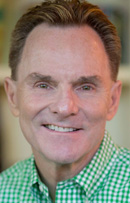
ronnie floyd130SBC President Ronnie FloydWith a landmark ruling expected any day now on whether there is a constitutional right for same-sex couples to wed, Southern Baptists asked the high court “to uphold the right of the citizens to define marriage as exclusively the union of one man and one woman.”

“Southern Baptists recognize that no governing institution has the authority to negate or usurp God’s definition of marriage,” the statement said. “No matter how the Supreme Court rules, the Southern Baptist Convention reaffirms its unwavering commitment to its doctrinal and public beliefs concerning marriage.”

In his address to messengers, SBC President Ronnie Floyd said a ruling in favor of same-sex marriage “could be a watershed moment” in American history, changing the nation’s moral trajectory unlike anything since the 1973 Roe v. Wade decision establishing a woman’s right to abortion.

“I want to say to all evangelicals today, you can count on Southern Baptists,” said Floyd, senior pastor of Cross Church in northwest Arkansas. “We will contend for the faith that was delivered to the saints once and for all.”

The resolution, titled a “call to public witness on marriage,” said the religious liberty of individual citizens or institutions “should not be infringed as a result of believing or living according to the biblical definition of marriage.” It called on Southern Baptists and all Christians “to stand firm on the Bible’s witness on the purposes of marriage, among which are to unite man and woman as one flesh and to secure the basis for the flourishing of human civilization.”

The Bible, not the Supreme Court or culture, is God’s final authority concerning marriage, Floyd insisted.

“As for me—and I also believe for thousands of pastors in this nation, but you are going to have to speak for yourself—but as for me, I declare to everyone today, as a minister of the gospel, I will not officiate over any same-sex unions or same-sex marriage ceremonies. I completely refuse,” he said.

Other resolutions passed by messengers called for greater ethnic diversity in SBC churches and leadership roles, opposed abortion and pornography and denounced religious persecution around the world, with special attention to North Korea.


Baptist Briefs: Moore joins board of Hispanic evangelical group

Southern Baptist Convention leader Russell Moore has been added to the organizational board of the National Hispanic Christian Leadership Conference. Founded in 2001 by Samuel Rodriguez, an Assemblies of God minister who serves as senior pastor of New Season Christian Worship Center in Sacramento, Calif., the conference now includes more than 40,000 churches and calls itself the nation’s largest Hispanic Christian organization. Moore, president of the SBC Ethics and Religious Liberty Commission, has worked with Rodriguez on various issues and was a keynote speaker at the Hispanic conference’s annual meeting in April, along with GOP presidential hopefuls Mike Huckabee and Jeb Bush.

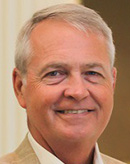
Doug Fagerstrom to lead Marketplace Ministries. Douglas Fagerstrom has been named executive president and CEO of Marketplace Ministries, the workplace chaplaincy organization founded by Gil Stricklin, former youth evangelism consultant with the Baptist General Convention of Texas. doug fagerstrom130Douglas FagerstromFagerstrom, senior vice president of Converge Worldwide in Orlando, Fla., will oversee Marketplace Chaplains USA, Marketplace Chaplains International and Railroad Chaplains, effective Aug. 1. He will work closely with Board Chairman Will Thomas, who served as Marketplace Ministries’ interim CEO, and with Stricklin, who chairs the Marketplace Ministries Foundation. Fagerstrom previously was president of Grand Rapids Theological Seminary and executive pastor of Calvary Church in Grand Rapids, Mich. He received a doctor of ministries degree from Northern Baptist Theological Seminary in Chicago, along with a master of arts in religious education from Bethel Seminary in St. Paul, Minn., and an undergraduate degree from Cornerstone University in Grand Rapids. Mich.


Tony Campolo calls for full acceptance of same-sex couples

PHILADELPHIA (BNG)—Tony Campolo, a leader of the evangelical left who for years has disagreed publicly with his wife about homosexuality, announced he now supports the full acceptance of Christian gay couples into the church.

“It has taken countless hours of prayer, study, conversation and emotional turmoil to bring me to the place where I am finally ready to call for the full acceptance of Christian gay couples into the church,” he said.

gaymarriage cake300Campolo, 80, a professor emeritus at American Baptist-affiliated Eastern University in St. Davids, Pa., has appeared many times in programs alongside his wife, Peggy, who advocated full acceptance of homosexuals, to model for Christians how to discuss differences over lesbian/gay/bisexual/transgender issues calmly and with respect. 

Campolo, a popular author and speaker at events including the New Baptist Covenant Celebration in 2008 and Cooperative Baptist Fellowship General Assembly in 2003, said one thing that changed his mind is Christian gay couples he met through his wife “whose relationships work in much the same way as our own.”

Friendships with gay couples

“Our friendships with these couples have helped me understand how important it is for the exclusion and disapproval of their unions by the Christian community to end,” Campolo said on his blog. 

“We in the church should actively support such families. Furthermore, we should be doing all we can to reach, comfort and include all those precious children of God who have been wrongly led to believe that they are mistakes or just not good enough for God, simply because they are not straight.”

As a Christian sociologist, Campolo said, he has heard every kind of biblical argument against gay marriage, and in some cases, he has made them.

“Obviously, people of goodwill can and do read the Scriptures very differently when it comes to controversial issues, and I am painfully aware that there are ways I could be wrong about this one,” he said.

“However, I am old enough to remember when we in the church made strong biblical cases for keeping women out of teaching roles in the church, and when divorced and remarried people often were excluded from fellowship altogether on the basis of Scripture,” he continued. 

“Not long before that, some Christians even made biblical cases supporting slavery. Many of those people were sincere believers, but most of us now agree that they were wrong. I am afraid we are making the same kind of mistake again, which is why I am speaking out.”

Was ‘deeply uncertain about what was right’

Campolo noted in the past he thought he could best help gay Christians by “serving as a bridge person, encouraging the rest of the church to reach out in love and truly get to know them.” His other reason for staying on the sidelines, he said, is “like so many other Christians, I was deeply uncertain about what was right.”

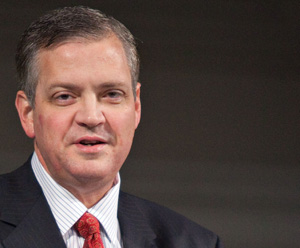
al mohler300Al MohlerCampolo added he hopes his announcement “will help my fellow Christians to lovingly welcome all of our gay and lesbian brothers and sisters into the church.”

In a podcast the day after Campolo released his statement, Al Mohler, president of Southern Baptist Theological Seminary in Louisville, Ky., said given the trajectory of Campolo’s thinking across the years, the surprise is not the conclusion he reached but that it took him so long. The difference between his new statement and previous views, Mohler said, is the lack of “any serious engagement” with the Bible.

Mohler cited articles from 1999 where Campolo said he believes the Apostle Paul’s writing in the first chapter of Romans rules out moral acceptance of same-sex eroticism.

“I believe that the Bible does not allow for same-gender sexual intercourse or marriage,” Campolo said in Sojourners Magazine in May 1999.

“We can argue over this interpretation or that interpretation, but we must take the church very seriously,” Campolo said. “The fellowship of believers called the church of Jesus Christ has stood from the time of Christ to the present day, and I believe it speaks with authority. For almost 2,000 years, the church has read Romans 1 in a particular way. People who knew the Apostle Paul personally have written about what Paul meant when he wrote those verses.”

By comparison, Mohler said, Campolo’s explanation of why he changed his mind “has no serious engagement with Scripture at all.”

Mohler says ‘he’s wrong’

“To put the matter bluntly, Tony Campolo was right then, and he’s wrong now,” Mohler said. “But he speaks very differently about Scripture now. He doesn’t say that he believes Scripture to be very clear in authorizing same-sex marriage. Rather, whereas in 1999 he said that Romans 1 very clearly says that all homosexual sexual acts are sin, and that same-sex marriage would not then be legitimate in the eyes of the church, in the year 2015 he says that the Scripture can be interpreted in different ways.”

Mohler said he does not doubt that Campolo believes his new statement on homosexuality is an act of compassion.

“This is where biblical Christians who are committed to the inerrancy of Scripture and are committed to that steadfast moral tradition based upon that Scripture must understand that compassion will never actually take the form of denying anything that Scripture clearly says,” Mohler said.

 “It will never take the form of in any way subverting what Scripture reveals, and in this case we have to be very clear—as in every case—that even though something may be claimed to be compassion, if it confuses the gospel and if it confuses sin, if it confuses the Bible, then it isn’t really compassion.”


Saddleback Church pledges $71 million over three years

ANAHEIM, Calif. (BNG)—Members of Saddleback Church have pledged to give $71 million over the next three years in the most ambitious fund-raising campaign in the Southern Baptist megachurch’s 35-year history.

rick warren200Rick WarrenRick Warren, who started the Southern California congregation after graduating from Southwestern Baptist Theological Seminary while in his 20s, closed a recent 11-week sermon series on “Daring Faith,” with a prop of “light cubes” representing $1 million each stacked on top of one another to illustrate the size the commitment.

Warren kicked off the Daring Faith campaign in March at Saddleback’s 35th anniversary celebration. Saddleback held the event at Angel Stadium in Anaheim, a venue large enough to combine 10 Southern California campuses averaging 27,000 weekly worshipers and 7,500 small groups meeting in homes.

Campaign goals include increasing weekly weekend attendance to 40,000 by 2020—the church’s 40th anniversary—aiding 250,000 needy people, implementing new communications technology, leadership training for a quarter of church members and introducing the gospel to the last 3,000 unreached people groups though the congregation’s global PEACE Plan—an acronym that stands for plant churches, equip servant leaders, assist the poor, care for the sick and educate the next generation.  

It is the eighth major “generosity campaign” since Saddleback held its first public service on Palm Sunday, March 30, 1980, attended by 40 people at the Laguna Hills High School theater. A week later, on Easter Sunday, 240 attended.

Developing a church-growth philosophy of knowing the community, finding a need and filling it, Warren used nontraditional strategies like direct mail to make Saddleback one of the nation’s fastest-growing churches. The congregation met in 79 rented facilities and did not build its first permanent building until it had 10,000 weekly attenders.

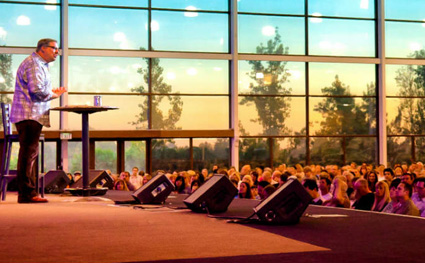
warren stands on stage425Rick Warren preaches at Saddleback Church.Saddleback’s first fund-raising campaign raised $1.2 million between 1983 and 1985 to start a savings fund to purchase property. For several years, the congregation met for worship under a 2,300-seat plastic tent at the current Lake Forest campus, purchased in the early 1990s. 

Saddleback members gave $12 million over three years to build the first 3,500-seat worship center in 1995. The sixth campaign—which included launch of the Global PEACE plan starting with Rwanda and expansion to multiple locations—raised $48 million. The “Decade of Destiny” campaign, 2011-2013, raised $35 million.

“We always set goals that we can’t do on our own,” Warren said in a video message introducing the Daring Faith campaign. “You haven’t really trusted God until you’ve attempted something that can’t be done in the power of the flesh.”

“That’s what Daring Faith is all about,” Warren said. “It’s about doing something you cannot do on your own. The goals we’ve set are so big, so audacious, there’s no way we can do this unless God bails us out.”

According to a brochure, more than 42,000 people have been baptized at Saddleback. Over 9,000 small groups meet weekly in homes and businesses around the globe, and there are 500 service ministries. The church family worships each weekend at 15 campuses on four continents.

saddleback 35anniv425Saddleback celebrated its 35th anniversary in March at Angel Stadium in Anaheim, Calif., a venue large enough to combine its 10 Southern California campuses averaging 27,000 weekly worshipers and 7,500 small groups meeting in homes.Warren’s 2002 book, The Purpose Driven Life, has sold more than 32 million copies and is the second-most translated book in the world after the Bible. Thousands of church leaders around the world have been trained in the “purpose driven” church growth strategy.

“Are we going to rest on our past successes, which are many, and believe there are no more goals worthy of sacrificing our time and money for?” Warren asked in the video. “Or will we use our history of God’s miracles and God’s blessing and God’s showing up in our lives and in our church as the foundation to do even more?”

“I’m not ready to pull back into comfortable, boring safety,” he said. “You know what, knowing you, I know that you aren’t either.”


SBC reports more churches serving fewer people

NASHVILLE—Southern Baptists are adding more churches but serving fewer members who are giving fewer dollars, 2014 data compiled by LifeWay Christian Resources shows.

The number of cooperating churches within the Southern Baptist Convention rose for the 15th consecutive year, but the churches lost more than 200,000 members, the biggest one-year decline since 1881, according to the Annual Church Profile compiled by LifeWay in cooperation with Baptist state conventions. Average attendance, baptisms and giving also declined.

sbc 2014 summary150Click to see full-size SBC 2014 Annual Church Profile report.The profile is an annual statistical report churches voluntarily provide to their local Baptist associational organizations or their state conventions, which relay the data to LifeWay.

The number of churches in the convention grew by 374 to 46,499, up 0.81 percent from the previous year. SBC churches also reported 4,595 church-type missions last year, down 194 from 2013. However, some state conventions no longer use the designation of church-type mission, which affected that total.

One of the biggest declines last year was Southern Baptist church membership, which fell 1.5 percent to 15.5 million—still the largest Protestant denomination, but at the lowest level since 1993. Weekly worship attendance declined 2.75 percent to 5.67 million Sunday worshippers.

Baptisms down

Baptisms declined for the third year in a row, although the rate held steady with one baptism for every 51 members. Churches recorded 5,067 fewer baptisms, a decrease of 1.63 percent to 305,301. Reported baptisms have fallen eight of the last 10 years, with last year’s total the lowest since 1947.

The declining picture painted by the Annual Church Profile data comes at a pivotal time in Southern Baptist life as the convention prepares for its June 16-17 annual meeting in Columbus, Ohio.

sbc 2014 states150Click to see full-size 2014 SBC state-by-state breakdown.“It breaks my heart that the trend of our denomination is mostly one of decline,” said Thom Rainer, president of LifeWay. “This new data confirms SBC President Ronnie Floyd’s call for (the SBC annual meeting) to focus on prayer for a great awakening. Programs and meetings are not going to revive our people—only prayer and repentance will lead our people to revival.”

Frank Page, president of the SBC Executive Committee, said he is saddened to hear the recent statistics, though not surprised.

“This is the lowest baptisms that we have seen since we crossed the 300,000 mark in the late 1940s,” Page said. “While we might complain about the many churches who are not reporting their baptisms, and we can, the reality is that we are simply not sharing our faith like once we did.

“In this year’s Southern Baptist Convention, I will be making a call for Southern Baptists to be involved in evangelism and stewardship like never before. The truth is, we have less people in our churches who are giving less money because we are winning less people to Christ, and we are not training them in the spiritual disciplines of our Lord.

“May God help us to be as serious about sharing our faith and discipleship as were the first-century Christians.” 

Receipts declined

Total and undesignated church receipts according to the ACP data also declined last year, 0.49 percent and 0.24 percent respectively.

Total missions expenditures decreased 4.98 percent to $1.2 billion, but the report shows three Baptist state conventions did not report this data—California, Georgia and Oklahoma. While Great Commission Giving, which reports total denominational giving, increased in 2013, it was down 18 percent in 2014 to $637 million, with four state conventions—Alabama, Arkansas, Missouri and Oklahoma—not asking churches for that data.

Giving through Southern Baptists’ Cooperative Program missions initiative is not included in the Annual Church Profile report. Instead, totals are reported by the SBC Executive Committee, which facilitates the missions gifts to the SBC’s national and international missions and ministries.

Cooperative Program gifts forwarded from state conventions to SBC causes in fiscal year 2014 were 0.76 percent below the previous year. However, year-to-date contributions for 2015 are 2.09 percent ahead of the same period the year before and 2.57 percent above the year-to-date budget projections.

Statistics for the national Annual Church Profile are reported by individual churches to their local association and/or state convention, and national totals are compiled and released when all cooperating state conventions have reported.


Baptist Briefs: Campaign launched to provide Bibles for China

A new partnership involving LifeWay Christian Stores and Tyndale House Publishers allows individuals and churches to purchase Bibles for people in China. From now until June 20, customers at any of LifeWay’s 185 stores can purchase a Bible for $5 that will be printed in China and distributed to someone there who lacks access to Scripture. This is the fourth international Bible distribution project for LifeWay Stores. Most recently, LifeWay partnered with B&H Publishing and Southern Baptists’ International Mission Board for The Thomas Project, which resulted in more than 340,000 copies of Scripture distributed in South Asia. For more information about the Gospel for China project, or to purchase Bibles online to send, click here

CBF committee nominates leaders. The Cooperative Baptist Fellowship nominating committee selected Doug Dortch, senior pastor of Mountain Brook Baptist Church in Birmingham, Ala., as the CBF’s next moderator-elect. doug dortch130Doug DortchDortch has served churches in Kentucky, Florida and Alabama. Valerie Burton, minister of Christian formation at Baptist Church of the Covenant in Birmingham, Ala., and chair of the nominating committee, also announced additional nominees to serve on CBF’s governing board and missions council, who will be presented for approval at the CBF general assembly in Dallas June 19. Texas nominees include Brent Beasley, senior pastor of Broadway Baptist Church in Fort Worth, to the governing board, and Jackie Baugh Moore, vice president of the Eula Mae and John Baugh Foundation in San Antonio, and Mark Wingfield, associate pastor of Wilshire Baptist Church in Dallas, to the missions council. The governing board recommended Katie Sciba, a medical social worker in Stafford, to serve as recorder; Christopher Mack, minister of young adults at Trinity Baptist Church in San Antonio, and Jenny Howell, a doctoral candidate and adjunct faculty in the religion department at Baylor University, to the nominating committee; and Pat Ayers, professional in ranching, business and investment from Austin, Os Chrisman, judge and attorney in Dallas, and George Cowden, attorney in San Antonio, to the CBF Foundation.


Baptist Briefs: Horne resigns at Ouachita Baptist University

Rex Horne, President Bill Clinton’s former pastor, is stepping down after nine years as president of Ouachita Baptist University. Horne, who arrived at the Arkansas Baptist State Convention-affiliated school in Arkadelphia, Ark., in 2006 after 16 years as senior pastor of Immanuel Baptist Church in Little Rock, resigned effective this summer to become president of Arkansas’ Independent Colleges & Universities. In his new job, Horne will support scholarships, governmental affairs and public affairs on behalf of 11 independent institutions of higher education throughout the state. Horne became Ouachita’s 15th president at age 52, succeeding Andy Westmoreland, who resigned to become president of Samford University in Birmingham, Ala.

Churches urged to support needy retired pastors and widows. Mission: Dignity, a ministry of GuideStone Financial Resources of the Southern Baptist Convention, assists nearly 2,000 retired Southern Baptist pastors, their spouses or widows. The ministry, fully supported by gifts from individuals, Sunday school classes and churches, provides monthly grants to retired Southern Baptist workers in critical financial need. mission dignity logoThe neediest couples can receive up to $600 each month in assistance. Mission: Dignity Sunday, held the fourth Sunday in June, is set aside for churches to collect a special offering to support the ministry. Sixty percent of Mission: Dignity recipients are widows; one out of every four recipients is a pastor’s widow age 85 or older. Mission: Dignity receives no Cooperative Program funding. To help churches mark Mission: Dignity Sunday, GuideStone has created videos, bulletin inserts, posters, a PowerPoint slide and sermons. Materials are undated, so churches can use the materials at a time convenient to their schedule. Churches can order materials now through June 22 for delivery in time for Mission: Dignity by clicking here. Churches also can request information by calling 888-98-GUIDE (888-984-8433). For more information on Mission: Dignity, click here


IMB streamlines missionary appointment, drops ban on ‘private prayer language’

LOUISVILLE, Ky. (BNG)—The Southern Baptist Convention’s International Mission Board has dropped a controversial ban on missionaries who use a “private prayer language.”

IMB trustees meeting May 12-13 in Louisville, Ky., approved streamlined guidelines for missionary appointment as part of a strategy being developed by new IMB President David Platt.

Platt, a former Alabama pastor elected as the IMB president last August, said the IMB aims to provide “multiple pathways” for service that include both traditional missionaries and people in the pews who work overseas.

‘Baptized member of a Southern Baptist Church’

The new policy requires that missionary candidates be “currently a baptized member of a Southern Baptist church” and demonstrate a “commitment to and identification with Southern Baptists.”

Doctrinal requirements are “expressed in the current Baptist Faith & Message statement of the Southern Baptist Convention.”

Gone are criteria narrower than the official SBC confession of faith last revised in 2000, which were put in place to ensure that people representing Southern Baptists overseas are planting churches that comport with Southern Baptist faith and practice.

In November 2005, IMB trustees adopted guidelines requiring missionary candidates to be baptized in a Southern Baptist church and banning the use of a “private prayer language” by missionaries on the field.

The action followed a 2003 white paper by a missions professor voicing concern about IMB cooperation with other “Great Commission Christians” around the globe and dropping a requirement that missionaries have a seminary degree.

Controversy

Keith Eitel, then at Southeastern Baptist Theological Seminary and now at Southwestern Baptist Theological Seminary, warned that then-IMB President Jerry Rankin’s strategy lacked safeguards against “unbiblical practices,” like women holding authority over men, creeping into new churches being started overseas.

Wade Burleson, at the time an IMB trustee from Oklahoma, criticized the policy change, adding his observations about political inner workings of the board of trustees, in a blog titled “Crusading Conservatives vs. Cooperating Conservatives: The War for the Future of the Southern Baptist Convention.”

The board responded by censuring Burleson for “slander” and “gossip,” which the pastor of Emmanuel Baptist Church in Enid, Okla., defended as “principled dissent.

In August 2006, Dwight McKissic, the only African-American trustee of Southwestern Baptist Theological Seminary, said in seminary chapel that he disagreed with the ban on private prayer language. McKissic, pastor of Cornerstone Baptist Church in Arlington, said he personally had the experience while attending the school in Fort Worth as a student. The chapel service was webcast live but not archived with similar messages, prompting bloggers to accuse the seminary president of censorship.

Blog activity about denominational politics coincided with the surprise election of Frank Page as SBC president in 2006.

‘Simple, clear statement’

The simplified guideline is intended to “give Southern Baptists a simple, clear statement of qualifications that unifies not only the missionaries serving on one of those teams on the field, but unifies the IMB with the whole of the SBC,” Platt said.

“To be as clear as possible, this is no lowering of the bar for potential IMB missionaries,” Platt said in an IMB news release. “This is a raising of the bar in all the areas that matter most. … We will continue to train our missionaries and work as missionaries in ways that faithfully represent Southern Baptist churches and Southern Baptist conviction.”


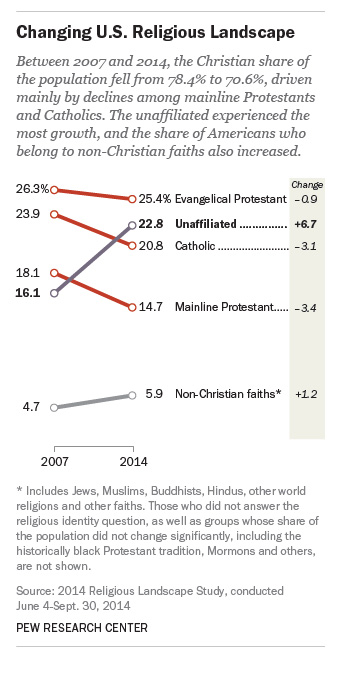
Baptists losing their market share, Pew study shows

NASHVILLE, Tenn. (BNG)—For every American who joins a Baptist church, two others who were raised Baptists are leaving the denomination, according to a new Pew Center Report.

pew landscape survey341The report, America’s Changing Religious Landscape, found nearly one in five—19.2 percent—U.S. adults describe their childhood religion as Baptist. One in 12—8.4 percent of all Americans—say they no longer are Baptist, compared to 4.5 percent who entered the denomination from a different tradition or no faith.

Since 2007, the share of evangelical Protestants who identify with Baptist denominations has shrunk from 41 percent to 36 percent, the report says. Meanwhile, the share of evangelicals identifying with nondenominational churches has grown from 13 percent to 19 percent.

“Baptist” is one of a few denominational labels diverse enough to span all three major Protestant traditions. The Southern Baptist Convention, the nation’s second-largest faith group behind Roman Catholics, belongs to the evangelical tradition. American Baptist Churches USA is counted as part of the mainline tradition, while others like the National Baptist Convention USA, Inc., are part of the historically black Protestant tradition.

More than six in 10 people in the historically black Protestant tradition identify with Baptist denominations, including 22 percent who identify with the National Baptist Convention, the largest denomination within the historically black Protestant tradition.

SBC down, American Baptists up

One in 20 U.S. adults—5.3 percent—identify with the Southern Baptist Convention, down from 6.7 percent in 2007.

American Baptist Churches USA, meanwhile, gained a market share from 1.2 percent of the population in 2007 to 1.5 percent in 2014.

Six in 10 U.S. Baptists identify with the evangelical tradition, 14 percent as mainline Protestant and 26 percent with the historically black Protestant traditions. One in three U.S. Protestants belongs to a Baptist tradition.

Nearly six in 10 who were raised Baptist still identify with their childhood denominational family, while 23 percent now identify with a different Protestant group. Two percent of former Baptists are now Catholic, 4 percent have joined another faith and 15 percent now identify as religiously unaffiliated.


Southern Baptist military chaplains may plant churches overseas

NASHVILLE, Tenn. (BNG)—Southern Baptist military chaplains would be authorized to plant churches overseas under a recommendation headed toward the Southern Baptist Convention annual meeting June 16-17 in Columbus, Ohio.

In February, the SBC Executive Committee approved a recommendation enabling the North American Mission Board to “provide specialized, defined and agreed upon assistance to the International Mission Board in assisting churches to plant churches for specific groups outside the United States and Canada.”

Kevin EzellIn an email to SBC entity heads and state convention executives, NAMB President Kevin Ezell said the request is being driven in part by a climate in the United States that is “more hostile toward religious liberties.”

The agency wants to be positioned to “take proactive steps should large numbers of our military chaplains decide they can no longer serve the military in good conscience,” Ezell said.

“If that becomes the case, we would like the freedom to plant churches adjacent to military bases outside the United States with the specific purpose of serving the U.S. military population.” 

The new assignment would be a good fit for NAMB, the endorsing entity for Southern Baptist chaplains serving in the U.S. military, Ezell said. According to a 2013 article in SBC Life, Southern Baptists have 1,440 endorsed chaplains serving in the U.S. military, more than any other denomination or faith group. Christianity Today recently reported new Department of Defense statistics showing Southern Baptists make up about 1 percent of the nation’s current military force and are outnumbered by atheists.

SBC-endorsed chaplains have served in all major U.S. conflicts for the last 150 years. 

Future in jeopardy?

Recent changes in the military—including the repeal of Don’t-Ask-Don’t-Tell and reprimands for proselytizing—have caused some SBC leaders to wonder about the future of military chaplaincy in the denomination.

Former Arkansas Gov. Mike Huckabee, a Republican presidential hopeful and Southern Baptist minister, recently suggested young Americans should hold off enlisting in the military until after President Obama leaves office because of the administration’s “open hostility toward the Christian faith.”

Al Mohler, president of Southern Baptist Theological Seminary, said in a 2013 blog, “Southern Baptist chaplains cannot surrender their commitment to Christ in order to maintain their commitment to ministry within the Armed Services.”

Ezell and Russell Moore, head of the SBC Ethics & Religious Liberty Commission, released a joint statement in 2013 about religious liberty in the U.S. military.

New guidelines

NAMB later issued new guidelines clarifying SBC chaplains will not participate in or attend wedding ceremonies for gay members of the military.

“Southern Baptists love and pray for our chaplains,” Ezell told Baptist Press at the time. “That being said, we only want to endorse chaplains who can support Baptist doctrine and belief without reservation.

“When it comes to what our chaplains believe and practice, we do ask and we do expect them to tell.”

A chaplain questioned by NAMB leaders for attending but not participating in a same-sex wedding switched his endorsing agency from Southern Baptists to the Cooperative Baptist Fellowship.

Other Baptist groups recognized as endorsing agents by the military include the Alliance of Baptists, American Baptist Churches USA and the Baptist General Convention of Texas.

According to the pre-convention issue of SBC Life, David Platt, president of the International Mission Board, supports expanding NAMB’s portfolio. In addition to planting military churches overseas, the change would enable the two agencies to cooperate in evangelizing unreached people groups with populations both in the United States and abroad.

Other proposals

Other proposals to be considered at the upcoming SBC meeting include changing governing documents to allow for possible electronic voting at convention gatherings and renaming Golden Gate Baptist Theological Seminary as Gateway Seminary of the Southern Baptist Convention, in light of the seminary’s recent move from the San Francisco area to Southern California.

A pre-convention meeting of the SBC Executive Committee June 15 includes an agenda item on the convention’s relationship with Weatherly Heights Baptist Church in Huntsville, Ala. The Madison Baptist Association kicked out the church in March over the pastor’s support for same-sex marriage.


Baptist Briefs: Julie Pennington-Russell resigns from pastorate

Julie Pennington-Russell, a pioneer among Southern Baptist women in ministry and early supporter of the Cooperative Baptist Fellowship, is stepping down as pastor of First Baptist Church in Decatur, Ga. She announced April 29 in an open letter to church members that May 31 will be her final Sunday at the congregation. Pennington-Russell, 54, who was called as the first female pastor of the historic church located in the Atlanta suburb in 2007, cited “persistent tensions and divisions within our fellowship” for leading her to what she termed “a difficult decision.” She is a native of Orlando, Fla., and graduate of Golden Gate Baptist Theological Seminary, who pursued doctoral studies at Baylor University’s Truett Theological Seminary. She first attracted national attention in 1993. After Nineteenth Avenue Baptist Church in San Francisco called her as pastor, the California Southern Baptist Convention refused to seat messengers from the congregation because it was led by a woman. In 1998, she became senior pastor of Calvary Baptist Church in Waco, prompting protestors to picket the church’s Sunday morning worship service. In 2009, the Georgia Baptist Convention ended its 148-year relationship with First Baptist Church of Decatur, finding the decision two years earlier to call a woman as pastor outside the parameters of the Baptist Faith & Message statement adopted by the Southern Baptist Convention in 2000.

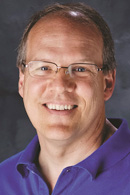
Pastor named editor of New Mexico Baptist state paper. The Baptist Convention of New Mexico Executive Board unanimously elected Kevin Parker as the 15th editor of the Baptist New Mexican, effective May 19. kevin parker130Kevin ParkerHe succeeds John Loudat, whose April 30 retirement after 21 years of service caps the longest tenure in the newsjournal’s history. Parker, 49, has been pastor of First Baptist Church in Aztec, N.M., the past 10 years. He also will serve as the state Baptist convention’s director of media services, encompassing social media and video production. Parker holds a doctor of ministry degree from Golden Gate Baptist Theological Seminary in California, a master of divinity degree from Southwestern Baptist Theological Seminary in Texas and an undergraduate degree in radio/television/film from the University of Texas. He was licensed to the ministry by Windsor Park Baptist Church in Austin in 1988 and ordained by First Baptist Church in San Angelo in 1992. He and his family moved to New Mexico in 2005 from Big Spring, where he had served as senior pastor of Hillcrest Baptist Church.


CommonCall: Former fishing guide now fisher of men

WATER VALLEY, Ky. (BP)—Jimmy Brown trusts God whenever he goes fishing, whether the fishing hole is filled with lake water or the silt of an undredged life.

“I had never realized the similarities between fishing, soul-winning and pastoring,” said Brown, a former professional fishing guide on Kentucky Lake who has been pastor of Pilot Oak Baptist Church in western Kentucky since 2007.
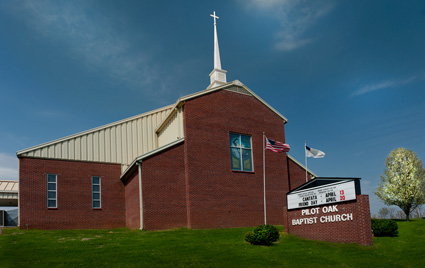
pilotoakbaptistchurch425Pilot Oak Baptist Church, a small rural congregation in western Kentucky, baptized 13 people in 2013 and 18 the year before that.Fishing may be fun, but it’s also “hard work … work you have to be persistent at,” he said.

Brown, who often speaks on fishing at outdoorsmen’s events and pastors’ conferences, sees numerous parallels between fishing for fish and fishing for people.

Pilot Oak, a rural church that averages about 100 in Sunday morning worship, baptized 13 people in 2013 and 18 the year before that, although the baptism total for 2014 was a bit lower.

“We have to take time to disciple those we win,” Brown said. “A lot of people like to fish but don’t want to clean them. 

“If I reach people but don’t disciple them, what have I accomplished? … When we win someone to the Lord, that’s when the hard work begins. We need to get them established in the faith so they become productive, reproducing Christians.”

Expanding missions vision

Brown also challenged Graves County Baptist Association, of which Pilot Oak Baptist is a part, to greater missions efforts. Since Brown became captain of the association’s missions and ministry team last year, they’ve gone on the first associational mission trip that he’s aware of.

“I began to talk it up, and last year we went to Muskogee, Okla.,” Brown said. “We did construction and a Vacation Bible School at the Murrow Children’s Home, led a backyard Bible club, surveyed for one church and painted for another church.” 

The team also cleaned and performed organizational work at Bacone College, a liberal arts school established by the American Baptist Home Mission Society in 1880 to provide Christian education for Native Americans.

“The more involved we get in doing missions, the stronger our churches here will become,” Brown said.

jimmy brown fish250Pastor Jimmy Brown, a former professional fishing guide, sees numerous parallels between fishing for fish and fishing for people. “We have to take time to disciple those we win,” Brown said. “A lot of people like to fish but don’t want to clean them.” (Photo: SBC Life)For several years prior to his arrival, Pilot Oak had reduced its missions giving through Southern Baptists’ Cooperative Program unified budget to $1,000 per year. Brown began reminding the church the Cooperative Program is how Southern Baptist churches work together to fulfill the Great Commission through their state conventions, across North America and around the world. The money they give to missions through the Cooperative Program, he noted, extends Pilot Oak’s reach far beyond what the church could do on its own.

“The first meeting I had with the finance committee, I asked them if they thought people should tithe, and they all said yes,” Brown recounted. “Then I asked them, ‘Do you not think your church should tithe?’”

As the church prepared its 2009 budget, Brown led them to dedicate 3 percent of their undesignated offerings through the Cooperative Program, 2 percent to the Graves County Baptist Association and 5 percent for local benevolence “to minister to people in our community whether they’re members or not,” Brown said.

The Cooperative Program percentage increased a bit each year. Pilot Oak gave $1,000 in 2008. Five years later, it gave $13,744 through the Cooperative Program and $22,257 in total missions giving, according the church’s Annual Church Profile report. Brown said the church gave 19.5 percent of its income to some type of cooperative ministry in 2014 and has raised its 2015 Cooperative Progam budget projection to 5.5 percent of undesignated receipts.

Giving to missions offerings

Members also began giving generously to seasonal missions offerings. Last year the church was the top per-capita giving congregation in the Southern Baptist Convention for the Annie Armstrong Easter Offering for North American Missions.

 “I told the church, ‘You are to be commended, but don’t stop,’” Brown said. “They’re beginning to catch on about being kingdom-focused.”

Last year, Pilot Oak bought a tool trailer for construction missions. It has become known in its community as “the church that cares” because of its commitment to meeting local needs—whether it involves an unpaid electric bill, the need for a handicap ramp into someone’s house or some other pressing concern.

By identifying with the residents of its rural farming community and being ready to help, members of Pilot Oak have become alert to seeing where God is at work and joining him, Brown said, citing a principle from Henry Blackaby’s Experiencing God.

‘Takes time, effort, energy’

“You’ve got to be willing to do whatever it takes to earn the right to tell them about Jesus,” Brown said. Just like in fishing, “it takes time, effort, energy … but when you do it like the Lord wants you to do it, it’s not hard.”

“You’ve got to go out with the intention that we’re going to have fun. We’re going to fish all day, and at some time during the day, we’re going to catch fish. So just relax, fish and enjoy it. God is going to give you fruits for your labor.”

For similar articles, see the May edition of CommonCall magazine, devoted to the theme “recreation.” CommonCall features inspiring stories about Christians living out their faith and informative articles about ministries that actually work. An annual subscription is only $24 and comes with two complementary subscriptions to the Baptist Standard. To subscribe to CommonCall, click here.