McCallâs personal papers trace Southern Baptist race relations
NASHVILLE, Tenn. (BP)—An extensive collection of personal records from one of the Southern Baptist Convention’s most influential black leaders now is open to researchers at the Southern Baptist Historical Library and Archives in Nashville, Tenn.
Emmanuel McCall, a member of the Home Mission Board staff from 1968 to 1991 and developer of Southern Baptist Theological Seminary’s black studies program, has donated his personal papers to the library and archives, including more than 30 boxes of correspondence, audio-visual resources, sermons and other items.
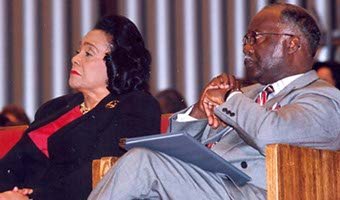
Emmanuel McCall, shown here with the late Coretta Scott King, was a prominent Southern Baptist denominational worker who was instrumental in addressing the denomination’s racial issues. (BP FILE PHOTO)
|
The collection helps document the SBC’s transition in the 20th century from harboring notorious racial prejudice to becoming one of the most ethnically diverse denominations in America.
McCall, author of five books, said he hopes his papers will provide researchers with “materials that will help them to understand how the Lord worked” in the SBC. “And the Lord did do a mighty work in what happened across the years,” McCall added.
Although three institutions asked for McCall’s papers, he said he decided on the Southern Baptist Historical Library and Archives because his files hold more value for Southern Baptists than any other group.
Director Bill Sumners of the library and archives noted: “Dr. McCall and others of his generation, both black and white, encouraged and pushed Southern Baptists to do the right thing as it related to inclusiveness for all races into the Southern Baptist family. In today’s setting we take this for granted, but in 1968 or 1970 that wasn’t the case. His papers document much of that struggle. It is a story that should not be allowed to be forgotten.”
The collection lacks McCall’s official HMB records, which may have been lost or destroyed. But Sumners said he has not given up on finding them.
Within the existing files are records of McCall’s encounters with some of the SBC’s key leaders in the advance of racial justice—men like Mississippi layman and former SBC President Owen Cooper.
“The first SBC meeting that I attended was the Houston meeting in ’68,” McCall said. “There were about 30 editors and various denominational persons who were trying to push the Statement Concerning the Crisis in our Nation (a document denouncing racial prejudice), and Cooper led a four-hour fight against passing that statement. And I had a rather negative attitude towards him without realizing that his attitude would change that next December.”
The change came when Cooper’s daughter brought home a black friend from college and challenged her father’s prejudice, McCall said. So, he let the friend stay in their house and later called the HMB to request a meeting with McCall and a colleague.
“He just opened up,” McCall said. “He had had sort of a revelation and change. And later that next year, he initiated an interracial laymen’s retreat and then became a leader among the laypeople in the Southern Baptist movement toward reconciliation.”
Among the other personalities referenced in McCall’s files are Jimmy Carter, Billy Graham, Martin Luther King Jr. and longtime National Baptist leader Joseph H. Jackson.
Sumners expressed thanks for McCall’s donation and said it contains a wealth of material for students of history.
“This collection does tell the story of an individual’s life and how God used him in a special way to influence an entire denomination and agency,” Sumners said.
More information on the Emmanuel McCall papers is available at www.sbhla.org .