Jesse Jackson, civil rights leader, dies at 84

EDITOR’S NOTE: This article has been edited for length.

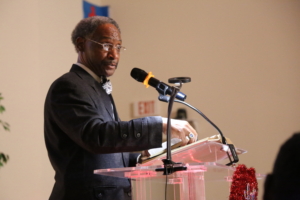
(RNS)—The Rev. Jesse Jackson Sr., a longtime civil rights activist who twice vied for the Democratic presidential nomination in the 1980s, died Feb. 17 at age 84.

A protégé of the Rev. Martin Luther King Jr., Jackson was the founder of the Rainbow PUSH Coalition, a social justice organization, but he intertwined his advocacy with politics and diplomacy, serving as a special envoy to Africa for the Clinton administration and as a shadow senator representing Washington, D.C., in the 1990s.

Before ill health prevented him, Jackson continued to appear on the front lines of causes for which he was long an advocate. In the summer of 2021, he was arrested twice outside the U.S. Senate at rallies urging passage of voting rights legislation, led by the Poor People’s Campaign, a revival of King’s anti-poverty movement.

As he had for decades, Jackson led the protesters in chanting one of his trademark phrases: “I am! Somebody! I may be poor! But I am! Somebody! I may be unemployed! But I am! Somebody! I may not have health care! But I am! Somebody! Respect me! Protect me! Elect me! I am! God’s child!”

Jackson had long lived with Parkinson’s disease, but it had been announced in November that he had suffered from progressive supranuclear palsy, a rare neurodegenerative condition, for more than a decade.

Jackson as mentor

At the time of Jackson’s November hospitalization, the Rev. Al Sharpton, president of the National Action Network, called Jackson “a mentor, a friend, and a brother for more than 55 years.”

In a statement to The Associated Press released Feb. 17, Sharpton wrote that Jackson “taught me that protest must have purpose, that faith must have feet, and that justice is not seasonal, it is daily work,” adding Jackson taught “trying is as important as triumph. That you do not wait for the dream to come true; you work to make it real.”

In 2023, Jackson announced he was stepping down from the Rainbow PUSH Coalition, which he had led for more than 50 years. He was briefly succeeded by Dallas pastor Rev. Frederick D. Haynes III, but Haynes resigned the position within months.

Yusef Jackson, one of Jackson’s sons, currently serves as chief operating officer of Rainbow PUSH, which is known for its work on social justice, peace, and creating more equitable educational and economic opportunities.

In Keeping Hope Alive, a 2020 collection of his sermons and speeches, Jackson said he was inspired to start using the “somebody” phrase after reading theologian Howard Thurman’s Jesus and the Disinherited.

Jackson recalled the book as he sought to lift the spirits of demonstrators camping out on Washington’s National Mall in rainy conditions during the original Poor People’s Campaign shortly after King’s assassination.

“I’ve been all around the world, and it resonates as much as it did 50 years ago; all around, in every language, people struggle for a sense of somebodiness—marginalized people struggling to find some hope for oxygen, something that helps you to breathe,” he wrote. “It never grows old.”

Hopeful social activism

Though many may have thought of Jackson as more of a politician than a minister, the Rev. Valerie Bridgeman, dean of the Methodist Theological School in Ohio, said he was both. “I don’t think Jesse Jackson saw his political life as something different from his call from God as a preacher,” she told Religion News Service in a 2021 interview.

That dual calling was exemplified by phrases he used as miniature sermons. “‘Keep hope alive’ certainly is an encapsulation of the gospel,” said Bridgeman, who also is a scholar of homiletics, or the art of preaching. “So is ‘I am somebody.’”

CNN anchor Abby Phillip, author of the 2025 book A Dream Deferred: Jesse Jackson and the Fight for Black Political Power, described Jackson’s rhetorical prowess as embodying a sense of “moral grounding” during his runs for president.

“One of the things that made Jesse Jackson such a powerful speaker was not just that he used rhymes and alliteration,” she said at The Texas Tribune Festival in Austin on Nov. 15. “He spoke through religious texts and spoke about a moral premise for his candidacy.”

Over the last dozen years, Jackson continued his activism, speaking out against police killings of Black people, joining the centennial commemoration of the Tulsa race massacre, and marching for peace in a Chicago community wracked by gun violence.

In a Feb. 17 statement, Rev. William Barber II of the Poor People’s Campaign, who met Jackson as a college student, said: “Jesse Jackson was a gift from God and a witness that God exists in the ways he cared for and lifted all people, the way he called forth a rainbow coalition of people to challenge economic and social inequality from the pulpit to a historic presidential run, the way he dared to keep hope alive whenever the nation struggled with being who she says she is and yet ought to be.”

Early days in activism

Jackson, a native of Greenville, S.C., first made headlines in the summer of 1960 as one of the “Greenville Eight,” a group of Black students who sought to desegregate the town’s public library on the advice of a minister and executive of the state NAACP.

Entering the library after being told to leave, the students were arrested and released on $30 bond, according to American Libraries magazine.

After graduating from North Carolina A&T State University, he interrupted his studies at Chicago Theological Seminary in 1965 to start working with King in the Civil Rights Movement.

Ordained a Baptist minister in 1968, Jackson earned his Master of Divinity degree from Chicago Theological Seminary decades later.

In 1966, Jackson was appointed by King to lead the Chicago expansion of Operation Breadbasket, an economic development program of King’s Southern Christian Leadership Conference that increased job opportunities for African Americans. Jackson was appointed its national director the next year.

Jackson founded the economic empowerment organization Operation PUSH—People United to Serve Humanity—in 1971 in Chicago and a Washington-based social justice group, National Rainbow Coalition, in 1984. The two merged in 1996 as the Rainbow PUSH Coalition.

Jackson in politics

When he ran for the Democratic Party’s presidential nomination in 1984, in a pioneering grassroots campaign bolstered by the support of Black churches, he drew 3.3 million votes, which he more than doubled in his 1988 run. But some of his positions, including his advocacy for an independent state for Palestinians, were out of step with the Democratic establishment.

He ignited controversy in his first campaign when he was caught on a microphone referring to New York City as “Hymietown,” and though he later apologized, the remark strained relations with Jews.

In the 2000s, Jackson’s diplomacy extended to the Baptist world. He was a prominent participant in a historic meeting of four Black Baptist denominations: the Progressive National Baptist Convention, National Baptist Convention of America, National Missionary Baptist Convention of America and National Baptist Convention, USA.

Over 60 years of activism, Jackson was nearly ubiquitous at times, sometimes bringing prayer into settings that were primarily secular.

In 2000, then-President Bill Clinton awarded Jackson the Presidential Medal of Freedom, the nation’s highest civilian honor.

Controversy and hope

The next year, Jackson made headlines for a more controversial reason. In a statement asking for forgiveness and prayers, he admitted to an extramarital affair that led to the birth of a daughter. “I fully accept responsibility, and I am truly sorry for my actions,” he said.

As he concluded a speech to the annual conference of his Rainbow PUSH Coalition in 2002, Jackson recalled King, his mentor who was a proponent of faith in action, as he urged continuing work on equal access to voting, education, and wealth.

“We need to have the full assurance that God did not bring us this far to leave us now,” he said in the speech included in Keeping Hope Alive. “So, we march for healing and hope. God will forgive our sins and heal our land. Keep hope alive.”



Millennial/Gen Z Network is ‘revolutionary’

Sam Bunnell, senior pastor at First Baptist Church in Henrietta, first connected with the Millennial/Gen Z Network, also known as The Pastor’s Common, in August 2024, by attending a Preaching Lab advertised on Texas Baptists’ social media. 

“I did not know what The Pastor’s Common was [at the time], but I saw a post on social media and I thought: ‘Oh, Texas Baptists is putting on a preaching lab, and it’s in Dallas, that’s not too far [from Henrietta]. I can get down there and go see it,” Bunnell explained. 

While there, Bunnell learned a new technique for how to tell stories in sermons, and met The Pastor’s Common leaders David Miranda and David Foster, director of Millennial/Gen Z Network at Texas Baptists, and “just hit it off with those guys.” 

The next month, Bunnell attended a retreat hosted by The Pastor’s Common at First Baptist Church in Richardson, where he met Joseph Adams, pastor of First Baptist Church in Mount Pleasant and now Texas Baptists first vice president. He said they bonded over doing small-town ministry. 

“I was like, ‘Wow, I have actually made a genuine friend here today!’” Bunnell said. “[The Pastor’s Common] just became life-giving to me.” 

Bunnell said he “fell in love with [The Pastor’s Common] pretty fast.” 

“I’m a pastor’s kid, and I’ve been in ministry my whole life, and been around all different types of Baptist life and all this stuff and never found the community and the help [I’ve found with The Pastor’s Common],” Bunnell said. 

The Pastor’s Common is a Texas Baptists ministry dedicated to providing opportunities for emerging ministry leaders to be heard, resourced, and find community, launched in 2019 by then-Texas Baptists staff member David Miranda in collaboration with pastors David Foster, Jordan Villanueva, and Abraham Quiñones. 

Foster stepped into the director role for the Millennial/Gen Z Network in March 2025. He said leading The Pastor’s Common has shown him “the future of pastoral leadership in Texas Baptists is not brittle, but thoughtful, resilient, and quietly hopeful.” 

“These leaders are humble, collaborative, and deeply rooted in the local church. They value cooperation, learning from one another, and staying present in their communities rather than opting out when ministry gets hard,” Foster said. 

Bunnell said The Pastor’s Common has become very meaningful in his ministry: “Those guys have become friends. They’re guys I call or text when I’m having a bad day. They’re guys I’ve asked to pray for me, and they asked me to pray for them. It is a true family.”

Refreshed by The Pastor’s Common retreats 

The genesis of involvement with The Pastor’s Common for Izzy Mendez, co-pastor at Alamo Community Church in downtown San Antonio, was at a gathering at the 2021 Texas Baptists annual meeting in Galveston. 

“I’ve been involved in Texas Baptists’ life for, I want to say, 15 years now … [and] I’m a product of Texas Baptists, but finding places for younger ministers outside of Baptist Student Ministry is kind of hard to do. So, when I heard about this network for Millennial and Gen Z pastors, I was like: ‘How do I get involved? What can I do to help?’” Mendez explained.

Mendez said having “intentionally carved out time for hanging out and spending time together,” and hearing from “seasoned pastors or ministry leaders” at The Pastor’s Common retreats has been refreshing. 

“That carved-out time where we have two days or so, somewhere else, where we’re getting poured into, and then we’re also pouring into one another and getting to spend time together … I think those [times] have been really refreshing,” Mendez said. 

Mendez explained how he was most impacted by a retreat hosted by The Pastor’s Common that emphasized prayer, where he was challenged to “anchor your ministry in prayer.” 

“That reminder from seasoned pastors and ministry leaders caused me to think about: ‘How do I think about this in my own day-to-day life and ministry? What does it look like for me just to abide in God’s presence? What are some practical tools that I can use to do that?’” Mendez said. 

He said anchoring his ministry in prayer has not only impacted him, but also his congregation: “I encourage my church to operate in this way as well: ‘What areas of my life have I just been focusing on prayer as a means to get something rather than just enjoying God’s presence?’” 

“It’s one of those things you know intrinsically, but to hear them again and to be reminded with a group of peers was really beneficial at that time. It still is today. I [still] use some of those practices now … even two years later.”

Finding renewed strength and meaningful community

Israel Villalobos, groups shepherd at Fielder Church in Arlington, said he has also been impacted by The Pastor’s Common retreats. He said attending the Sabbath Retreat in October 2024 “refreshed me just by hearing [about Sabbath].” 

“About a year and a half ago, Jason Parades from Fielder Church was speaking on Sabbath, and I remember that workshop refreshed me just by hearing him [and] how he helped us understand Sabbath,” Villalobos said. 

“It really enriched my soul. It just blessed me, my wife, my family, and whenever I’m needing a refreshment, I go back to those notes.”

Villalobos said The Pastor’s Common has “proven to be a timely and dependable network for a new generation of pastors” by “providing much-needed fellowship through authentic relationships … steady encouragement [and] practical resources, particularly valuable for young Texas Baptists pastors.” 

“What’s being done [through] The Pastor’s Common is revolutionary,” Villalobos said. “This network stands as a genuinely unifying space where pastors can find renewed strength and meaningful community.”

Mendez said The Pastor’s Common leadership has “done a great job of highlighting and celebrating the diversity among Texas Baptists, particularly in Millennials [and] Gen Z.” 

“It matters a lot to walk into a room and say: ‘Is there anybody that looks like me? Sounds like me? Is thinking like me? Or on the other side of that, who thinks differently?”  Mendez continued. 

“[To ask], ‘How do we combine our resources and things to help one another out?’ I think that’s been one of the things I’ve celebrated a lot and benefited from seeing in our Texas Baptist life. I think it’s worth celebrating.” 

Foster said the most encouraging thing about working with the pastors and leaders in The Pastor’s Common is “their desire for faithfulness over flash.” 

“[These leaders] aren’t chasing platforms or shortcuts. They’re asking hard, honest questions about preaching the gospel well, loving their people faithfully, and leading with integrity in complicated moments in our culture,” Foster said. 

To learn more about The Pastor’s Common, visit thepastorscommon.com.   


Around the State: UMHB announces plans for new science lab

Interior rendering of the new science lab at University of Mary-Hardin Baylor. (Photo/UMHB)

The University of Mary Hardin-Baylor is excited to announce plans to build a new 56,032-square-foot science lab facility located on the corner of Martin Luther King Jr. Avenue and College Street. Construction could begin as early as summer 2026 with the goal of opening in January 2028. A generous anonymous donor has offered a $1 million gift plus a $4 million challenge grant to help fund the construction of this new state-of-the-art science lab facility. The challenge specifies, to receive the grant, the university must raise an additional $5 million in new gifts for the project by the end of 2026. Together with the resources already secured, a successful challenge would make it possible for the $50 million facility to be fully funded. “Praise God for His continued blessings on UMHB and for this generous donor,” UMHB President Randy O’Rear exclaimed, also expressing gratitude for the board of trustees’ vision and the contributions of faculty and staff in planning the project. The new three-story science facility will feature 13 science labs, along with conference rooms and a student gathering space. The first floor, totaling 20,259 square feet, will include a student lounge and study rooms, as well as conference rooms and administrative offices. The second floor, encompassing 16,275 square feet, will be dedicated to biology laboratories with flexible, modern lab spaces. The third floor, spanning 19,498 square feet, will primarily house chemistry laboratories, along with dedicated research and collaborative areas. The facility will also include approximately 40 new offices for faculty and staff. “I am excited to see how God will continue to use the facilities, programs, and people of UMHB to impact the lives of college students for years to come,” O’Rear said.

The T.B. Maston Foundation will honor a defender of democracy and a Baptist couple with more than 60 years of ministry leadership, Feb. 26, at First Baptist Church in Arlington. Tickets for the event may be purchased here. Rosemary and Charles Wade will receive the first T.B. Maston Legacy Award for their decades of shared ministry to churches in Texas, Oklahoma, and Germany. After 23 years as pastor of First Baptist Church in Arlington, Charles was the executive director of the Baptist General Convention of Texas from 2000 to 2008. He continues to serve as pastor emeritus of First Baptist Arlington and has been an interim pastor and adjunct professor at Dallas Baptist University. Skye L. Perryman, president and CEO of Democracy Forward, will receive the 2026 T.B. Maston Award for Christian Ethics. Time Magazine named Perryman one of the 100 most influential people in the world in 2025. Perryman grew up in Waco and has an undergraduate degree from Baylor University and a law degree from Georgetown University Law Center. Democracy Forward is a nonpartisan organization that promotes democracy through litigation, regulatory engagement, and policy education, and research. Chartered in 1986, the Maston Foundation perpetuates the teaching and legacy of T.B. Maston, a professor of Christian ethics and Baptist advocate for racial justice in the 20th century. In addition to presenting awards, the foundation provides scholarships to graduate students majoring in Christian ethics and hosts retreats, including an annual undergraduate gathering known as Young Maston Scholars.

East Texas Baptist University was awarded a $5,000 Shutdown Relief Grant in November from the Texas Baptist Hunger Offering, through the Texas Baptists Christian Life Commission, to support community members experiencing financial hardship. ETBU designated the full grant award to Mission Marshall, a local nonprofit ministry dedicated to addressing food insecurity and meeting essential needs in the Marshall community. Mission Marshall serves thousands of individuals each year through its food pantry, mobile outreach, and community assistance programs. The Shutdown Relief Grant was created through the Texas Baptist Hunger Offering to help Texas Baptist ministries respond to challenges facing families who may experience interruptions in government pay or benefits. Mission Marshall experienced a 6 percent increase in November and December 2025 compared to 2024. The ministry was able to provide vital assistance during the fourth-quarter 2025 federal government shutdown, including food supplies, prepared meals, grocery and fuel gift cards, hygiene products, and limited utility support. The Shutdown Relief Grant funds served 562 people, with 232 being children and senior citizens, and 280 households. Mission Marshall also distributed 1,956 pairs of socks, 300 hygiene kits, and 908 Christmas food boxes in addition to their regular pantry service.

David Favela joins Wayland Baptist University as associate dean of the School of Humanities and Leadership and assistant professor of leadership. Favela comes to Wayland from previous roles at West Texas A&M University and Texas Tech University. He will be based at the Plainview campus, where he will administer and teach in the Doctor of Strategic Leadership program. The program is in its second year and allows students to tailor concentrations to their professional goals. The program emphasizes ethical leadership, strategic decision-making, applied research, team building, and organizational change within a Christ-centered academic framework.

Nancy Jo Humfeld of Brownwood has been selected to receive the 2026 Yellow Rose Award from the Howard Payne University Women’s Club. Humfeld will be recognized at the club’s annual Yellow Rose Scholarship Luncheon on Thursday, Apr. 23, in the Beadel Dining Hall of HPU’s Mabee University Center. Table sponsorships are available. The deadline is April 1. The Yellow Rose Award honors an individual who demonstrates leadership and influence while supporting the mission and vision of HPU. Humfeld is co-founder and artistic director of the Lyric Performing Arts Company, serving in that role since the organization’s inception. She retired as HPU’s Department of Theatre head and director of theatre, holding the title of professor emerita.


Churches burned in 2006 mark 20 years of God’s blessings

More than 100 people from Alabama and Mississippi gathered recently at Galilee Missionary Baptist Church in Panola to mark the 20th anniversary of what Pastor Bob Little calls “a blessing in the blaze.”

Four churches in Pickens County, Miss.—including Galilee—were burned the night of Feb. 7, 2006, a few days after five churches were torched in Bibb County, Ala.

Nine churches targeted

Three college-aged students confessed to burning the Bibb County churches, and then two of the three also targeted the Pickens County churches. All three were convicted and served time in federal prison.

Marvin W. Wiggins, Bibb County Circuit Judge, who presided over some of the trials and hearings related to the case, served as guest

Bibb County Circuit Judge Marvin W. Wiggins serves as guest speaker for the banquet. (Photo/ Jennifer Davis Rash)

speaker for the 20th anniversary event.

“It was a remarkable moment 20 years ago when the church burners went around the Black Belt,” he said. “Several were burned to the ground.”

Preaching from the book of Job, Wiggins said, “Sometimes God uses tragedy to transform our lives … sometimes tragedy builds us up.

“God had us in place to be in a position to talk to pastors, to talk to the families and talk to the kids’ parents about what should happen. All I could think about was what if it had been one of our (kids)?” Wiggins said.

Grace and forgiveness

In the end, the pastors and church leaders chose grace and forgiveness. The young men were granted concurrent prison sentences instead of the sentences being added up into a lifetime in prison. They were released while still in their 20s with an opportunity to rebuild their lives.

“God wanted to see what we were going to do,” Wiggins noted. “Are y’all going to be like them? Or are y’all going to remember my goodness?”

And he wanted others to see his goodness too, Wiggins added. “A church once sitting out here in the middle of nowhere is now on the road where people can see it.”

The new building has plenty of space with the opportunity to grow and is active with a variety of ministries taking place, including multiple roles being filled by youth and young adults.

Little, who has served as pastor of Galilee for more than 25 years, agreed the way God has moved and worked since the fire has been nothing short of a miracle. “I just praise him,” Little said. “He has brought ministry out of a match, and we are grateful.”

Others in Pickens County

The other three churches burned in Pickens County, Miss., were:

  • Dancy First Baptist Church near Aliceville: The congregation got back into its building in July 2006, thanks to volunteer teams from Baptist churches around Mississippi that gutted and renovated the interior of the church.
  • Morning Star Missionary Baptist Church near Boligee: A new building was constructed by volunteers. The new building has a library room open to the community that was initially furnished with 1,000 books collected by Pickens Baptist Association.
  • Spring Valley Baptist Church near Emelle suffered smoke damage and was able to get back into its building at the end of summer 2006.

Bibb County churches

The five churches damaged in Bibb County, Ala., were:

  • Rehobeth Baptist Church in Randolph was reduced to rubble but was rebuilt to continue being a strong ministry presence in the community.
  • Ashby Baptist Church in Brierfield met in mobile chapels for several years after the fire, continuing to grow even before it moved into its new building.
  • Pleasant Sabine Baptist Church in Centreville was rebuilt by Carpenters for Christ volunteers.
  • Antioch Baptist Church in Centreville only suffered minor damage and made repairs fairly quickly.
  • Old Union Baptist Church in Randolph also only suffered minor damage and was able to be functioning as normal in a short amount of time.


Fewer Latin Americans claim religion but still pray and believe

The number of Latin Americans who say they are not affiliated with a religion has long been steadily increasing.

And over the past decade, according to a 2024 Pew Research Center survey, the percentage of those known as “nones” roughly doubled in Argentina (to 24 percent in 2024), Brazil (15 percent) and Chile (33 percent); tripled in Mexico (20 percent) and Peru (12 percent); and almost quadrupled in Colombia (23 percent).

But for many, that label doesn’t mean a rejection of faith. Across Brazil, Colombia, and beyond, people continue to pray, meditate, and participate in rituals drawing from Christian, Indigenous, African, and Eastern traditions in deeply personal ways, so-called nones told RNS. 

Their beliefs and practices may reveal a blind spot of such surveys in how they rely on Christian and Western frameworks to define what counts as religion. 

Mixed religious practice

For Camile Coutinho, a 28-year-old dietitian who lives near Rio de Janeiro, a typical week involves attending a Sunday service at a Baptist church, taking part in ritual baths and cowrie-shell divination with an Umbanda priestess, and going to Deeksha meditation gatherings. 

She recites the Hail Mary and Our Father Catholic prayers and uses Japamala prayer beads. She keeps incense and crystals in her home to attempt to cleanse negative energy. However, she identifies as religiously unaffiliated.

“I believe in the Bible, in Christianity,” she said, “but today I also believe in spiritism and in Umbanda. I’ve been studying these traditions a lot.”

Coutinho grew up in a typical Catholic Latin American religious environment. Her parents were Catholic—“though not very practicing,” she said. But when she fell ill, her mother would often take her to see a traditional folk healer who prayed over people, known in Brazil as a rezadeira.

In her teenage years, Coutinho converted to evangelical Christianity, and her family followed. In more recent years, however, she began to distance herself from her church as political polarization intensified in the country. 

The church’s support for right-wing politics—especially its alignment with former President Jair Bolsonaro—along with witnessing increasingly homophobic discourse there, pushed her away, even as her parents chose to stay, she said. 

Coutinho fits into a category of nones encompassing far more than only atheists or agnostics, and which is especially prevalent in Latin America. 

Her experiences also echo a broader pattern in many traditional cultures, including Latin American Indigenous ones, where spiritual beliefs are inseparable from everyday life, social organization, and community practices, said Gustavo Morello, a sociologist of religion at Boston College in Massachusetts.

Less institutional spirituality

After Catholicism was introduced to Latin America by European colonizers, many regions did not have enough priests to sustain it on an institutional level. While colonial-era cities such as Rio de Janeiro, Mexico City, and Lima had a regular clerical presence, vast rural areas did not, and religious life was maintained by the communities, Morello said. 

This opened space for practices that diverged from official Catholic orthodoxy and incorporated Afro-descendant and Indigenous spiritualities. As a result, many people came to describe their faith in personal terms, often combining multiple spiritual traditions while still identifying as Catholic.

“For the last 100 years, 9 in 10 Latin Americans believe in something,” Morello said. “The idea that you are only one religion is very North Atlantic.” 

In surveys, this complexity is rarely visible. And until well into the 20th century, Morello said, one was typically either Catholic or outside the cultural mainstream altogether.

In Brazil and Colombia, more religiously unaffiliated people say they believe in God, pray daily, and consider religion very important in their lives than do those who identify as Christians in European countries such as Spain, the United Kingdom, and France, according to Pew.

“Europe represents a practice grounded in doctrine, in belief and formal religious practice, whereas here [in Latin America] we have an effervescence of religious experiences that goes far beyond a purely rational adherence to religious content,” said Flavio Senra, a religious studies professor at Pontifical Catholic University of Minas Gerais in Brazil. 

That could be because the region’s culture emphasizes believing in something beyond the material world, Morello said. “People in Latin America do believe in this enchanted reality—that there is a dimension in life we cannot explain with what we see only,” he continued.  

Both scholars said rather than thinking of the trend toward religious disaffiliation as secularization, in which religious beliefs diminish within the culture, the shift is better viewed as a change in how people approach belief.

“The idea of enchanted modernity explains better what we see in Latin America,” Morello said, “because we are looking at a vibrant spiritual and religious society that does things to engage with this other world.”

Freedom from commitment

At the same time, the number of atheists and agnostics is not growing in the region and remains a small percentage of the population, both scholars explained. That also suggests the growth of the nones category instead reflects weaker ties to religious institutions and greater freedom today to shop across the religious market.

“A context of greater religious, political, and cultural plurality creates an environment of greater freedom for people to express their beliefs without being judged as harshly as they were in the past,” Senra said.

Juan Guevara, a 35-year-old high school philosophy teacher from Bogotá, was raised in an observant Catholic household. However, as a teenager, he began encountering other belief systems, particularly Buddhism, and started questioning his family’s religion, he told RNS. 

The discovery planted a lasting doubt: If there were many ways of understanding the world, why should one claim exclusive truth?

Class differences and injustice also weighed on his decision. “It started to bother me a great deal to see that the people who were particularly devout—those who professed their beliefs with special fervor—did not strike me as good people,” he said.

Guevara’s academic training in philosophy pushed him toward broader intellectual and spiritual exploration, but Buddhism remained a recurring reference point. He participated in Soto Zen and Vipassana meditation retreats and was drawn in by what he described as their internal coherence and lack of institutional demands. 

“There was a lot of consistency there,” he said. “No one was asking me for a sacrament or a promise I would stay forever.”

He also took part in ceremonies involving ayahuasca, often organized by or in dialogue with Indigenous groups in Colombia. These experiences carried religious elements and were also deeply ethical, cultural, and communal, he said. But the freedom to engage without lifelong commitment was, for him, essential. 

An imperfect mix

Coutinho’s experience is similar in that way. She consults with a mãe de santo priestess in the Umbanda tradition and attends rituals but deliberately avoids formal initiation. “I don’t want to go through the initiation process,” she said. 

“I know that being part of Umbanda, for example, demands a much greater devotion than I’m willing to give. Even so, I feel close to the practices.”

But she described moments of confusion, too. “Sometimes I get confused trying to understand where the stories fit,” she said. “Where is Jesus in the stories of the Orixás (divine spirits)?”

Still, she continues to engage with various traditions: “I find a lot of beauty and strength in these stories, so I keep believing and studying.”

In experiencing different faith practices, this growing group of believers often gathers traces and memories, taking what they believe is good from each faith and leaving aside what does not resonate. 

“The religion may not be the religiosity that Catholic leaders expect, nor the one Pentecostal pastors want,” Morello said. “But it is what the people do. It’s mixed, it’s not pure, it’s imperfect, it’s not orthodox—but it is what people are practicing.” 


Celebrating Churches: Martin celebrates 10 years at FBC Ropesville

Donovan Martin is celebrating 10 years as senior pastor of First Baptist Church, Ropes in Ropesville. Martin was called to the church in February 2016. Previously, he served as an intentional interim pastor in the Lubbock area and a student pastor for 23 years prior to that. He also served as a sergeant in the United States Air Force. Martin and his wife Kristi have three daughters.

Dustin Slaton is celebrating five years as senior pastor of First Baptist Church of Round Rock. Slaton began pastoring First Baptist Church of Round Rock in January 2021. Slaton earned his doctorate in church revitalization from Southwestern Baptist Theological Seminary in Fort Worth. Slaton and his wife Melody have four children.

CORRECTION: Donovan Martin’s entry was corrected to clarify ministry positions.  


On the Move: Holmes, Minatrea, Owens, Washer

Brad and Suzanne Holmes to Mandarin Baptist Church in Jacksonville, Fla., from First Baptist Church in Amarillo, where he was minister to young adults and she was associate minister to young adults and connections. Brad was called to serve Mandarin Baptist Church as pastor.

Milfred Minatrea to retire from Grandview Baptist Church in Mesquite, where he was senior pastor.

Wade Owens to First Woodway Baptist Church in Woodway as lead pastor, from The Church at Nolensville in Nolensville, Tenn., where he was campus and teaching pastor.

Jordan Washer to First Baptist Church in Amarillo, where she has been an active member, as associate minister to senior adults, starting March 1.

On the Move

Update us with your staff changes


White Christian support for Trump falls 

A new report from Pew Research found white Christians, who played a key role in returning Donald Trump to the White House, are losing confidence in President Trump’s policies.

Just over half (58 percent) of white evangelicals said they support most or all of Trump’s policies, down from 66 percent when he took office in 2025. 

Similar declines were seen among white Catholics, who dropped from 51 percent last year to 46 percent this year, and white Protestants who are not evangelical, who dropped from 46 percent to 33 percent, according to the report, released Feb. 9.

Based on a survey of 8,512 Americans conducted Jan. 20-26, the report also found white Christians are less confident Trump acts ethically in office than they were a year ago. 

Less than half (40 percent) of white evangelicals have confidence Trump acts ethically, down from 55 percent in 2025. White Catholic confidence in Trump’s ethics dropped from 39 percent to 34 percent, while white nonevangelical Protestants’ confidence dropped from 38 percent to 26 percent.

White Christians in all three groups are still more likely to support Trump’s policies than Americans overall (27 percent). They also have more confidence in his ethics than Americans overall (21 percent). 

Hispanic Catholics (18 percent), the religiously unaffiliated (13 percent), and Black Protestants (6 percent) were least likely to support Trump’s policies. Those groups were also least likely to have confidence in Trump’s ethics.

Because of their presence in swing states, white Catholics and white non-evangelical Protestants played a key role in the 2024 presidential election. More than half (58 percent) of white nonevangelical Protestants voted for Trump, as did 62 percent of white Catholics and 81 percent of white evangelicals, according to Pew Research data.

Pew’s most recent report found white Christians remain strong supporters of Trump, though support has declined. Sixty-nine percent of white evangelicals said they approve of how Trump is handling his job, down from 78 percent last year. 

Just over half (52 percent) of white Catholics approve of Trump’s job performance, down from 59 percent last year, while 46 percent of nonevangelical white Protestants approved, down from 57 percent. The unaffiliated (24 percent), Hispanic Catholics (23 percent), and Black Protestants (12 percent) are least likely to approve of Trump’s job performance.

Overall, 37 percent of Americans approve of how Trump is handling his job.

The difference among faith groups reflects the partisan divide among American Christians, with white Protestants and white Catholics more likely to side with the GOP, while Christians of color, the unaffiliated, and people of other faiths are more likely to side with Democrats.


Wiley Drake, SBC provocateur, dies at 82

BUENA PARK, Calif. (BP)—Wiley Drake, a self-proclaimed “champion of the little guy” known for his perennial presence at Southern Baptist Convention annual meeting microphones, died Jan. 27. He was 82.

Over the past three decades Drake spoke more than 70 times from the SBC annual meeting floor, becoming a legend among convention insiders and occasionally drawing cheers from messengers as soon as he announced his name and church.

He helped launch the convention’s boycott of the Walt Disney Corporation in 1997 and served as SBC second vice president in 2006–2007.

“Wiley Drake is the SBC,” Texas pastor Bart Barber posted on social media a few years ago. “He’s the guy who isn’t the president, and isn’t going to become the president, who is passionate about the convention and wants it to be the very best that it can be. So, instead of carping and complaining, he gets involved.”

Pastor and advocate in southern California

Pastor of First Southern Baptist Church in Buena Park, Calif., for more than 25 years, Drake was known in his Southern California community as a friend to the needy.

He engaged in a years-long legal battle with local authorities over his desire to use the church building as a homeless shelter.

In 1997, he was convicted of violating building and property codes with a ministry that housed up to 70 people per night and distributed 30,000 pounds of food monthly.

“As long as I am pastor, we will provide shelter, food, and love to the homeless,” he told The New York Times at the time. In 2017, the city condemned his church’s shelter.

Drake told The Dallas Morning News in 2007 he was a “champion of the little guy.”

At times, Drake sparked controversy with his public comments on an array of topics. He received a cease-and-desist letter from the SBC Executive Committee in 2006 after endorsing a U.S. Senate candidate on letterhead identifying Drake as SBC second vice president.

He claimed to be among founders of the so-called “birther” movement and filed a 2008 lawsuit claiming Barack Obama was ineligible to serve as president because he was not a natural-born U.S. citizen. Drake also said he prayed imprecatory prayers against Obama.

At SBC annual meetings, messengers wondered what Drake would propose at the next introduction of new business.

He set his sights on Disney in the mid-1990s as the family entertainment giant promoted homosexuality and other unbiblical lifestyles.

In 1996, he successfully amended a resolution urging “prayerful consideration” before purchasing Disney products to add warning of a boycott if Disney continued its “anti-Christian and antifamily trend.”

The next year, Drake submitted a resolution to the SBC Resolutions Committee that eventuated in the official Disney boycott.

Leadership and SBC service

Following an unsuccessful run for second vice president in 2005, he was nominated again the following year and won on the first ballot over three other candidates, including future SBC president J.D. Greear.

In nominating Drake, Kentucky pastor Bill Dodson called him “a foot soldier” in the SBC’s return to theological conservatism who “represents those like you and me.”

As pastor of a church with fewer than 100 active members, Drake fought to enable other small church leaders to pursue SBC offices. During the annual meeting concluding his vice-presidential service, Drake moved that the convention cover “reasonable” travel expenses for SBC officers.

He told The Dallas Morning News the expense of attending SBC events played a role in his decision not to seek a second term since his church couldn’t afford to help him travel.

The following year, the SBC Executive Committee responded to his motion by agreeing to pay travel expenses for future officers whose churches didn’t have funds for convention-related travel.

Twice Drake was nominated for the SBC presidency—once by himself—though he never won the office.

He ventured into secular politics in 2008, running for vice president of the United States with American Independent Party presidential candidate Alan Keyes.

He ran for president in 2012 and 2016 as an Independent, saying, “It’s time we got back to our history of ministers of the Gospel running for office without a party.”

But for many Southern Baptists, Drake’s most memorable venture into presidential politics came in 2015, when he made a motion at the SBC annual meeting requesting that then-convention president Ronnie Floyd run for president of the United States.

The motion was ruled out of order.

A native of Arkansas, Drake dropped out of school in the ninth grade to enter the circus and rodeo, he told Baptist Press in 2008. Sidelined by a bull-riding injury, he worked on a crew building missile silos before he joined the U.S. Navy.

During a tour of duty in Vietnam, he accepted Christ as Savior. Drake attended Southwestern Baptist Theological Seminary among other schools.

He was preceded in death by his wife Barbara. He is survived by five siblings, four adult children, 12 grandchildren and eight great-grandchildren with one on the way.


Why pastors are leaving the pulpit

A 2025 Lifeway Research article indicated while only 1 percent of protestant pastors on average decide to step down from ministry each year, the reasons for them stepping down are dynamic, with pastors facing many unique challenges and uncertainties. 

The research highlighted a change in calling as the primary reason pastors step down from the pulpit, with 40 percent of pastors across four denominations citing this in connection with leaving the ministry. 

Among other leading causes are burnout (16 percent), family issues (10 percent), and finances (10 percent). A separate study based on 2022 post-pandemic Barna research recognized burnout and overwhelming stress as a major factor driving pastors to quit ministry. 

Burnout, stress, and isolation

Fifty-six percent of study respondents cited burnout and stress as their primary reason for stepping down. The study also linked increased burnout in 2022 to shifting church structures resulting from the pandemic, such as navigating the growing use of social media and complex organizational dynamics. 

Beyond an increasingly digital, on-demand cultural context, pastors are routinely subject to stress resulting from the nature of their positions. In an interview with Baptist Standard, David Bowman, executive director of Tarrant Baptist Association in Fort Worth, described this issue. 

“[Pastors] are overwhelmed with all the work they have to do. It never ends. You take care of details all day at the office, … you come home and you’re having dinner with your family [when] the phone rings and somebody is either seriously ill or there’s been a death,” Bowman said. 

Bowman described the pastor’s role as a leader and the toll it takes: “There are [many] leadership demands on a pastor. If a church is in a building program or relocation or something, … that requires extra time and energy you never get back.” 

Pastors, who are expected to balance the demands of spiritual leadership within their communities, suffer as a result of isolation and loneliness associated with bearing the weight of a congregation’s needs. A 2024 Barna study claimed nearly 1 in 5 U.S. pastors contemplated self-harm or suicide within the past year. 

“One of our adversary’s favorite schemes is to isolate us,” Bowman said. “Pastors often feel like they’re the only one carrying that load. … They’re not really good at sharing [it.] They don’t trust that other people can help them. … So, they get isolated.”

Physical, emotional, and mental health among pastors was recorded as lower than the general population, with researchers observing a strong link between a pastor’s reduced conviction in their vocational calling and a drop in their overall well-being. 

The significance of sabbatical rest

The National Association of Evangelicals conducted a survey on pastor sabbaticals, concluding 63 percent of evangelical pastors have a church sabbatical policy, but many churches do not prioritize sabbaticals. Church policies surrounding sabbaticals vary significantly.

Larry Floyd, executive director of missions for El Paso Baptist Association, explained many pastors do not use sabbatical leave for necessary rest, resulting in burnout: “As directors of missions, we are to promote the health of the pastor. Otherwise, we won’t [have] a pastor.”

“Sabbaticals should be more often and for rest,” Floyd said. “Six weeks off every five years, not including vacation. Too many times, it isn’t really a sabbatical since many pastors [continue] to work on their Ph.D. or still entertain phone calls.” 

A 2022 Lifeway Research article connected an increase in pastor burnout to a lack of proper sabbatical rest. Sabbaticals were highlighted as a valuable time of reset for pastors, providing them with renewed energy and vision during a season of ministry burnout.

Age is an additional factor

A 2022 Barna research survey noted finding younger pastors is becoming a challenge. As of 2022, only 16 percent of Protestant senior pastors are 40 years old or younger, and the average age of pastors is 52. 

Younger pastors also suffer from higher rates of burnout than their older colleagues, compounding the age issue, the research found. 

Floyd emphasized age as a major factor influencing pastor’s decisions to step down: “Too many older pastors stay way too long in their retirement years out of necessity or obligation. This creates a dying church and a church who doesn’t have a succession plan.”

Research suggests the age issue could result in a succession crisis, with many churches unprepared for the transition. Four in five pastors (79 percent) agree churches are not taking initiative to raise up the next generation of pastors. 

Polarization in the modern church era 

In the 2025 Lifeway research study, 18 percent of Protestant pastors linked church conflict to their decision to leave ministry. Roughly 27 percent of this conflict revolved around national or local politics or doctrinal differences. 

Amid growing fears of ICE, many churches are locking their doors or holding online services to avoid potential detainment of congregants with or without legal status. 

Following the disrupted church service at Cities Church in St. Paul, Minn., by anti-immigration protesters, faith leaders called for the urgent protection of worshipers and compassion for migrants, with some churches posting notices on their doors saying no ICE or U.S. Border Patrol agents are allowed inside

When asked about polarization in recent ministry, Bowman discussed the growing significance of immigration-related issues and the division it has caused within churches.

“I write a daily devotional for a small mailing list. Anytime I talk about immigrant issues and how God loves immigrants as much as he loves me, I lose readers,” he said. 

Growing tensions in evangelical churches have left many churches divided on immigration reform, resulting in political and cultural polarization among congregations. 

“If a pastor stands up and says, ‘Jesus loves everybody, and so should we,’ including [people] you want to deport, … he’s going to have some conflict [come] from that,” Bowman said. 

“If a pastor is trying to preach the truth in love, … [trying] to talk about hot button issues from a place that’s not aligned with either political party, but aligned with what God tells us, that pastor [will] stay in trouble,” Bowman continued. 

“People just have strong opinions about certain issues, and they’re going to let their pastor know about it.” 

Help the church help the pastor

When asked how churches can serve pastors in need, Bowman prioritized the power of prayer: “One of the best things we ever did in the last church I served was called Pastor’s Prayer Partners. We had a hundred people every day who were praying for the church.

“They were praying for the staff. They were praying for our ministries, those kinds of things. That is huge. And, you know, people need to befriend their pastors and their families,” Bowman continued. 

Bowman expressed how hope for the future of ministry is vested in God’s love for the world: “God really does love this world. He’s given us the church to bring people to salvation, to continuing growth and development in their relationship with our Father.”

“There are seasons where the church seems like it’s the adversary of everything, … but the church is God’s plan for the world to know him, experience him, and enter into the deep and abiding walk he wants for [every believer.] God will continue raising up those leaders necessary to do the work and to help folks learn how to do their own work,” Bowman continued. 

“He is going to renew [people] serving in the churches right now, who are feeling the pressures of our age, the pains and problems we have, and when he renews them, that will contribute to the renewal of the church.” 


Around the State: Buckner celebrates 25th anniversary in Kenya

Buckner International is celebrating the 25th anniversary of its ministry in Kenya. Buckner International leaders noted the ministry’s start with support and involvement from Park Cities Baptist Church, Hardin-Simmons University, and Baptist World Alliance. The ministry launched in collaboration with Park Cities Baptist Church, the Kenya Baptist Convention, and missionaries with the Southern Baptist Convention’s International Mission Board when Buckner was asked to assume operations of the Baptist Children’s Centre in Nairobi. Participating in the cake-cutting ceremony were Teresa Wamalwa, Nairobi Family Hope Center manager; Lynet Aoko, Nairobi Family Hope Center school deputy headteacher; Dickson Masindano, Buckner Kenya country director; Albert Reyes, Buckner International president; Jane Mwangi, Buckner Kenya board chairperson; Tim Lancaster, Buckner International board chairman; and Shem Nyakutu, secretary to the directorate of children services.

The national Woman’s Missionary Union has selected four young women to serve on the 2026 National Acteens Panel. Alexis Andrade of Freeman Heights Baptist Church in Garland; Hannah Cooke of Harp’s Crossing Baptist Church in Fayetteville, Ga.; Abigail Howard of Casey First Baptist Church in Casey, Ill.; and Jamila Toya of Jemez Valley Baptist Church in Jemez Pueblo, N.M., were chosen for the panel, which focuses on missions discipleship and leadership development for teen girls.

Wayland Baptist University held its commencement, Feb. 6, in San Antonio, marking a milestone as the university celebrates the first graduates of its new International Program. Ten students were in the inaugural graduating class. The International Program currently offers master of science degrees in business analytics and management information systems with a new STEM-designated MBA launching this fall. A new enterprise systems specialization within the doctoral program is scheduled to begin in fall 2026.

The University of Mary Hardin-Baylor is excited to announce plans to build a new 56,032-square-foot science lab facility located on the corner of Martin Luther King Jr. Avenue and College Street. Construction could begin as early as summer 2026 with the goal of opening in January 2028.

Houston Christian University’s Archie W. Dunham College of Business has earned accreditation from the Accreditation Council for Business Schools and Programs following a rigorous three-year review process. The accreditation marks a significant milestone for the college and affirms its commitment to teaching excellence, student learning outcomes and faith-informed leadership. Robert Sloan, HCU president, noted the achievement reflects years of thoughtful work by faculty, staff, and administrators who evaluated programs honestly, aligned their efforts with the university’s mission, and continually asked how the institution could better serve students and society.

Baylor University was named one of the nation’s top 10 producers of Fulbright U.S. students, the Fulbright Program announced Feb. 5, after a record 24 students and recent alumni earned the award to study, conduct research, and teach English abroad during the 2025-2026 academic year.

East Texas Baptist University will present the Good Samaritan Award to Rush Harris, executive director of Marshall Economic Development, during the Good Samaritan Award and ETBU scholarship dinner on Tuesday, Feb. 24, 2026, at 6 p.m. in the Great Commission Center. ETBU invites community members to join in celebrating.


Litzler issues challenge to uphold religious freedom

John Litzler challenged Howard Payne University students to recognize and defend the Christian’s historic and ongoing role in protecting religious liberty.

Litzler was the featured speaker at the 18th annual Currie-Strickland Distinguished Lectures in Christian Ethics hosted by HPU.

Litzler, director for public policy at Texas Baptists’ Christian Life Commission and general counsel for Texas Baptists, addressed students during HPU’s chapel service on Wednesday, Feb. 4, and those who attended the lecture series Thursday evening, Feb. 5.

Campus challenge

Speaking from the theme, “The Modern Challenge of Religious Liberty: Protecting a Baptist Distinction from Extinction,” Litzler urged students to understand how Christian convictions have shaped religious liberty and to engage thoughtfully in public policy and advocacy.

“For the rest of this week—for the next couple of days—would you wrestle with the concept of religious liberty? Will you challenge

John Litzler, director for public policy at Texas Baptists’ Christian Life Commission and general counsel for Texas Baptists, speaks during chapel at HPU. (Photo/Kendall Lyons)

yourself on this topic in some way?” Litzler asked, speaking to students, faculty, and staff during chapel.

“That might mean finding one of your friends from another country—maybe an international student—and asking them what it’s like to live under different laws and the tension between following their country’s laws and God’s law,” Litzler continued.

“Or it might be spending time in prayer and reflection, asking yourself some challenging, introspective questions, like, ‘Would my views on religious liberty be different if I were part of a minority faith instead of a majority faith?’” Litzler added.

Litzler made a reference to Matthew 22:15, in which religious leaders attempted to trap Jesus by asking whether it was lawful to pay taxes to Caesar.

He explained the question was designed to force Jesus to choose between Roman law and God’s law, illustrating the tension believers can face between earthly governments and divine authority.

Litzler described Jesus’ response as a framework for navigating dual citizenship in earthly kingdoms and the kingdom of God, arguing it highlights the importance of distinguishing between government authority and God’s authority.

Evening lecture

During the Thursday evening lecture, Litzler walked visitors and guests through the First Amendment to the U.S. Constitution, focusing on religious liberty.

Religious liberty, a historic Baptist distinctive, is being weakened when political leaders create carve-outs that limit how faith-based beliefs can be expressed in public life, Litzler contended.

“When people become deeply committed to a particular cause, religious liberty can quickly be treated as an obstacle,” Litzler said.

He said the First Amendment’s free exercise and establishment clauses were designed to protect all faiths and nonreligious beliefs, not only Christianity.

Litzler pointed to recent federal and state debates as evidence that both Democrats and Republicans have attempted to weaken religious liberty protections when they conflict with political priorities, including efforts to limit how religious freedom laws apply to issues such as same-sex marriage and abortion.

Litzler also cautioned Christians not to confuse the loss of cultural privilege with genuine religious persecution, noting Christians in other parts of the world face far more severe restrictions.