Review: Listening to Scripture

Listening to Scripture: An Introduction to Interpreting the Bible

By Craig G. Bartholomew (Baker Academics)

Most hermeneutics textbooks could carry the same subtitle as this one. Few honestly could carry its main title, “Listening to Scripture,” but this book earns it.

Craig Bartholomew believes both the scholarly academic examination of Scripture and the devotional reading of the Bible are valuable, and he rejects any suggestion the two approaches are mutually exclusive.

Bartholomew adopts an approach similar to N.T. Wright’s in terms of viewing the Bible as a grand narrative drama in multiple acts—and that’s a commendation, not a criticism. While he acknowledges the merits of various types of biblical criticism, Bartholomew essentially urges readers not to focus so singularly on the leaf of a single tree that they lose sight of the majestic forest. Any encounter with Scripture should lead the audience to hear what God is saying, he insists.

While all of Listening to Scripture offers rich insights, perhaps its most beneficial content appears at the end of each chapter. In addition to discussion questions and a suggested bibliography for further reading, the author concludes each chapter with an exercise in lectio divina—an ancient practice of reading the Bible meditatively, savoring each word and engaging the imagination.

Baker Academics undoubtedly envisioned this book as a textbook or supplementary reading for university or seminary classes. No doubt, it will serve well in that role. However, any serious lay student of Scripture who is willing to engage both head and heart in reading the Bible also would benefit from Listening to Scripture—and listening to God.

Ken Camp, managing editor

Baptist Standard
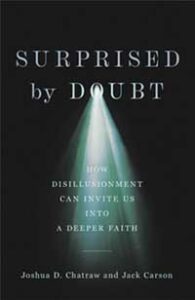


Review: Surprised by Doubt

Surprised by Doubt: How Disillusionment Can Invite Us into a Deeper Faith

By Joshua D. Chatraw and Jack Carson (Brazos Press)

Authors Joshua Chatraw and Jack Carson have written a Christian apologetics book for people who typically don’t like books about apologetics—of which I am one. They begin by acknowledging deconstruction—critically looking at inherited faith and asking hard questions about it—is not necessarily a bad thing. In fact, it can lead a person out of the narrow confines of parochialism and into the open air of historic Christian belief.

Chatraw and Carson use the metaphor of a house to describe Christianity. C.S. Lewis and others have used the same word-picture to talk about Christianity as a single house with many rooms—divided by walls of specific practices or denominational emphases but united under the same roof by a common set of basic beliefs. But Chatraw and Carson acknowledge many who feel the need to deconstruct their faith grew up not in a room, but in the cramped space of the attic, where questioning the walls is perceived as calling into doubt the reality of the house itself.

The authors urge those who are rebelling against “attic Christianity” to resist the temptation to jump out a window and find another house. Instead, they encourage those who have lived stooped over in the attic, believing it was the whole house, to move into the broad expanse of the main floor. They urge seekers to examine the historic foundation and load-bearing walls of the house that has Jesus Christ at its center. They challenge doubters to explore the central doctrines that historically have characterized the Christian faith.

As a starting point for those who are new to the mystery of spiritual experience, they suggest participation in holy moments such as holding a newborn baby, celebrating a wedding and attending a funeral. For those who struggle to find their own words to pray, they prescribe praying the Psalms. They encourage seekers to “practice” their way through doubt, allowing God’s Spirit room to work.

Surprised by Doubt is written in a conversational tone that is neither condescending nor pedantic. It is a remarkably helpful book that treats honest doubt as a potential step toward faith, not necessarily a retreat from faith.

Ken Camp, managing editor

Baptist Standard


Review: All My Knotted-Up Life: A Memoir

All My Knotted-Up Life: A Memoir

By Beth Moore (Tyndale House)

Memoirs may be the most challenging of all literary genres. Although autobiographical, memoirs don’t cover a whole life but use stories to share a life theme. Still, the author faces temptations to embellish, revise history, gloss over frailties and tell less than the truth.

In All My Knotted-Up Life: A Memoir, Beth Moore’s honesty springs from deep commitments to her heavenly Father and her family. Although she waited until her parents were gone, the best-selling author sought the blessing of her husband, daughters, and siblings before recounting their intertwined stories that evoke a host of emotions but demonstrate God’s abiding faithfulness.

The book begins with a road trip as 6-year-old Beth describes the adventures of her mom, dad, maternal grandmother and all five Green children—Sandra, Wayne, Gay, Beth and Tony—in their Volkswagen van headed from Arkansas to Florida.  Amid their humorous camping attempt, Beth adds observations from adulthood as she does throughout the stories.

Often in chronological order, the author shares pieces of her life in rich descriptions of people, places and feelings as she invites readers to experience her laughter, tears, joy, pain and forgiveness. Glimpses show Beth’s baptism and love for Arkadelphia’s First Baptist Church, unspeakable things no dad should do, her mother’s depression, and Gay’s phone confrontation of their father’s “friend” after finding a hidden letter in his movie theatre office.

Relocation to Houston left Beth with deep loss, not just of home but of her two best Arkadelphia friends who died in an accident moments after she told them good-bye. The teen couldn’t stand to give up church. So, when her parents ceased attending, the high school student found her own.

Scholarships made college possible at Southwest Texas State University (now Texas State) where Beth thrived academically and socially. The summer after her freshman year, her church needed someone to take the 6th grade girls to GA camp. The coed volunteered, and there while brushing her teeth, she clearly “sensed the Lord’s presence.” She immediately knew “nothing at all was different … but everything had changed.” God had called the 18-year-old to a lifetime of ministry and hunger for his word.

At Southwest Texas, Beth fell in love with Keith Moore, who brought his own tragedies to their marriage. The memoir details their ups and downs, the births of their daughters, and her spiritual growth with mentors like Marge Caldwell and John Bisagno, who took the former college dance team member from exercise/Bible study instructor to Bible teacher, partnership with Lifeway, Living Proof Ministries, Keith’s near-fatal fishing accident and years-long recovery, and finally, agonizing censure and heart-wrenching departure from the denomination she loved from birth.

As she began the memoir, so Beth Green Moore ends with a road trip, one that brings full circle God’s faithfulness in unknotting Keith’s knotted-up life and Beth’s as well.

Consider purchasing both audio and print copies of All My Knotted-Up Life. Beth Moore’s voice on the audio expresses feelings as only the writer can. But don’t miss the 8 pages of photographs in the print version. Either way, you’ll gain insights into God and the Bible teacher’s heart.

Kathy Robinson Hillman, former president

Texas WMU and Baptist General Convention of Texas

Waco


Review: Can You Just Sit With Me?

Can You Just Sit With Me?

By Natasha Smith (InterVarsity Press)

Books about grief fill library and bookstore shelves. Some are sentimental and superficial. Some are cold and technical. Some are hammered out in the crucible of personal experience and offer helpful suggestions to others who are grieving. Natasha Smith’s book fits into the latter category.

The title—Can You Just Sit With Me?—is a three-fold invitation.

First, it is the author’s invitation to the reader to sit by her as she shares insights from her own experiences. Natasha Smith’s early acquaintance with grief came when she became pregnant as a teenager and made the unselfish—but deeply painful—choice to give up the baby for adoption. Later, she experienced the loss of two sisters, Angie at age 32 and Sharon at 42. She went through the unspeakable heartache of delivering a stillborn baby. She lost her father to cancer and a 28-year-old nephew to a gunshot wound. Smith transparently reveals her own faith-informed journey of grief.

The title also is God’s invitation to all who are going through grief. God does not intend for anyone to suffer alone. We worship a God who is big enough to handle the full range of a grieving person’s honest emotions. We worship a Father who knows what it is to experience the death of a beloved Son. We worship a Savior who showed us it is all right to weep when a friend dies, and who even knows what it’s like to feel abandoned by God. We worship a God who gives his Holy Spirit to us as the Comforter.

Finally, the title is an instructive invitation to readers to come alongside a person who is grieving and offer the gift of presence. Sit and listen attentively—not judging, not offering advice, and not trying to “fix” the person experiencing grief. Just sit and be fully present.

Each chapter ends with a suggested healing exercise for a person who is experiencing grief, along with an appropriate Bible verse and a prayer. This is the kind of book a pastor, deacon or care-group leader could offer to a grieving individual. InterVarsity Press will release it Sept. 26. It’s not too early to order a copy in advance.

Ken Camp, managing editor

Baptist Standard


Review: King: A Life

King: A Life

By Jonathan Eig (Farrar, Straus & Giroux)

Readers who think they already know everything about Martin Luther King Jr. will discover new insights about one of the most influential figures of the 20th century in this comprehensive new biography. Jonathan Eig paints a richly textured portrait of a complicated and conflicted man who answered a divine calling that eventually led to his death by assassination.

In the most complete biography of King to emerge in the past three and a half decades, Eig begins at the beginning—with his family of origin, childhood and adolescence. Without falling into the trap of armchair psychoanalysis, he presents enough evidence to let readers draw their own conclusions about the lasting influence—positive and negative—the formidable figure of “Daddy King” had on his son’s life and ministry.

Some King biographers have focused almost exclusively on the personal, political or religious aspects of their subject. Eig skillfully weaves together the sometimes-contradictory threads of King’s life into a magnificent tapestry.

He gives overdue attention to Coretta Scott King and her own contributions to the Civil Rights Movement. He explores King’s complex relationship with President Lyndon Johnson, from their close partnership in passing key civil rights legislation to their sharp differences over the war in Vietnam.

He also grants due regard to theologians who helped shape the ministry and personal faith of his subject—particularly Rauschenbusch, Tillich and Niebuhr—while noting the points at which King differed from each in his understanding and application of the gospel.

Eig deals honestly with the high points and low points of King’s life. The list of individuals Eig interviewed fills three and half pages, and his documentation includes not only published materials, but also newly discovered archival sources. With access to previously classified FBI files and other documents, Eig frankly acknowledges King’s moral failures, notably in terms of marital infidelity, while also pointing to the burden of guilt King carried for his shortcomings.

Above all, Eig points to King’s deep faith in a personal God revealed in Jesus Christ, his unswerving commitment to nonviolence as taught in the Sermon on the Mount, his convictions about the transforming power of unconditional love, and his clear sense of God’s calling on his life.

Ken Camp, managing editor

Baptist Standard


Review:  The Evangelical Imagination

The Evangelical Imagination: How Stories, Images & Metaphors Created a Culture in Crisis

By Karen Swallow Prior (Brazos Press)

Stories shape us. Images influence us. Metaphors matter. And when it comes to evangelicals, they not only affect how we view and understand the culture around us, but also how we make an impact on it—for better or worse.

Karen Swallow Prior—an evangelical Christian, a scholar specializing in Victorian literature and an astute societal observer—explores the cultural trappings of evangelicalism. From Warner Sallman’s ubiquitous Head of Christ to the nostalgic prints of Thomas Kinkade, “Painter of Light,” she points out how much of evangelicals’ penchant for sentimentality and domesticity find their roots in the Victorian era. In fact, she concludes much of what evangelicals assume to be biblical truth actually is Victorian culture.

The Evangelical Imagination piercingly notes how evangelicalism often has elevated empire-building as exemplary—whether national expansionism or the growth of an individual entrepreneur’s wealth and influence. After all, evangelicals easily rationalize greater influence and expansion means greater opportunity for evangelism. Revivalists and missionaries in the 19th century, evangelicals in the 20th century and their Christian nationalist offspring in the 21st century quite willingly answered Rudyard Kipling’s invitation to “Take up the White Man’s burden.”

Horatio Alger’s rags-to-riches stories about the virtues of hard work and diligence continue to shape the evangelical consciousness. Beginning with the Puritan work ethic and its tendency to view material success as evidence of election by God, Prior connects the dots to consumer-oriented churches and a prosperity gospel that considers financial success as a blessing God owes to the faithful. So, evangelical heroes tend to be entrepreneurial megachurch pastors, wealthy televangelists and prominent leaders of parachurch organizations—along with “born again” celebrities and pandering politicians who seek evangelical approval.

The Evangelical Imagination challenges many of the underlying and unspoken assumptions of evangelical Christianity. Prior challenges readers to measure their faith by Scripture and to follow Christ, rather than conform to the expectations of an evangelical subculture.

Ken Camp, managing editor

Baptist Standard


Review: Joyful Sorrow

Joyful Sorrow: Breaking Through the Darkness of Mental Illness

 By Julie Busler (Iron Stream Media)

According to the latest statistics from the Centers for Disease Control and Prevention, suicide ranks as the 11th leading cause of death in the United States but 2nd for those ages 10 to 14 and 20 to 34. Annually, more than 48,000 individuals—one person every 11 minutes—commit suicide. Another 1.7 million attempt to take their own lives, and an estimated 12.3 million seriously contemplate the action.

Christians are not immune. Julie Busler, Oklahoma Woman’s Missionary Union president, well understands those statistics. She lived them, as she details in Joyful Sorrow: Breaking Through the Darkness of Mental Illness.
On the outside, Busler’s world seemed filled with flawless light. She and her husband Ryan served as international workers in Turkey, having previously lived in Canada, Mexico and Germany. Their marriage, their children, her home and her ministry appeared picture-perfect. Her mother-in-law posted glowing social media compliments after a visit, but the 30-something mother of four lived secretly “entrenched in darkness.” Her mother, who had been diagnosed with cancer when the girl was 8, died a “graphic” death when she was 19. Her father subsequently committed suicide.

Eventually, Busler’s mental breakdown led to a Turkish psychiatric hospital and a diagnosis of severe depression and post-traumatic stress disorder. The family returned to Oklahoma, where Busler grew to believe she had become a “burden to her family” and felt suicide was the “courageous choice.” Hospitalization, science, counseling and the light of Scripture, particularly Psalms 88 and 23, and the prayers of Jesus and Nehemiah, subsequently led her to stability and light, although her journey isn’t always smooth.

Secrecy and stigma continue to plague individuals suffering with mental illness, particularly Christians and those in ministry. As Busler pondered the short, sad letter she nearly left behind with her attempted suicide, God interrupted her thoughts. “I could either write a short note of despair or a whole book of hope.”

Joyful Sorrow is the author’s message of hope, bringing joy to others from her sorrow. Read it. Learn from it. Share it. You’ll be thankful you did.

Kathy Robinson Hillman, former president
Texas WMU and Baptist General Convention of Texas
Waco


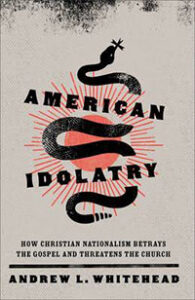
Review: American Idolatry: How Christian Nationalism Betrays the Gospel and Threatens the Church

American Idolatry: How Christian Nationalism Betrays the Gospel and Threatens the Church

By Andrew L Whitehead (Brazos Press)

Plenty of political pundits view Christian nationalism as a threat to American democracy. Author Andrew Whitehead doesn’t disagree with that opinion, but he sees it as an even greater threat to the church and its witness. As one who grew up in Midwestern evangelicalism and earned his Ph.D. from Baylor University, he understands conservative Christians. Because he cares about the gospel, he wants fellow believers to recognize the danger Christian nationalism poses to the faith he loves.

As a trained sociologist, Whitehead recognizes power, fear and violence as tools Christian nationalism uses to maintain privilege, gain greater influence and oppress the marginalized “other.” As a Christian committed to the radical gospel message of Jesus, he sees power, fear and violence as idols—false gods that demand an allegiance and command obedience rightly due only to God. And he recognizes how contrary Christian nationalism is to the example Jesus set.
Whitehead routinely refers to Christian nationalism as “white Christian nationalism” for good reason. He points to empirical data that demonstrates the link between Christian nationalist ideology and xenophobic racism. Moreover, he quotes Scripture to illustrate how the methodology and approach of Christian nationalism—along with many of its goals—are antithetical to biblical teachings about loving one’s neighbor, caring for the vulnerable and welcoming the stranger.

A discussion regarding religious liberty should be of particular interest to Baptists. The Christian nationalist quest for power, control and domination are at odds with true religious freedom for all—and totally opposite of the Golden Rule.

Whitehead not only diagnoses the problem; he also prescribes remedies. Pay attention to what the Bible really emphasizes. Seek the common good, not selfish interests. Embrace political activity but reject any attempt to equate partisan identity and Christian faith. Listen to the voices of those who are at the margins, because that’s where God usually is at work.

Brazos Press will release American Idolatry in August. Reserve your copy today.

Ken Camp, managing editor

Baptist Standard


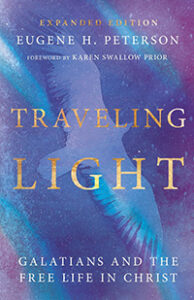
Review: Traveling Light: Galatians and the Free Life in Christ

Traveling Light: Galatians and the Free Life in Christ

By Eugene H. Peterson (InterVarsity Press)

In Traveling Light, Eugene Peterson makes a compelling case for Christian freedom, in contrast either to legalism or libertinism. Peterson walks readers through the Apostle Paul’s letter to the Galatians, providing a wide-ranging and soul-liberating look at 15 aspects of freedom the Christian life offers.

With the grace of a poet, the heart of a pastor and the disciplined mind of a New Testament scholar, Peterson paints a lovely picture of life unencumbered by fear because it is grounded in God. He offers a clear distinction between the self-centered kind of freedom the world offers and the self-giving freedom to which Christ calls his followers.

Initially published 35 years ago, Traveling Light will be available from InterVarsity Press in an expanded edition Aug. 15. The book is abidingly relevant—perhaps even more so today than when it first was published.

Anything Eugene Peterson wrote is worth reading and rereading. This is no exception.

Ken Camp, managing editor

Baptist Standard


Review: Anything But Ordinary

Anything But Ordinary: Finding Faith That Works When Life Doesn’t

By Stephanie Morales-Beaulieu (Word Alive Press)

God has a way of making the ordinary extraordinary. In Stephanie Morales-Beaulieu’s Anything But Ordinary, she pens an autobiographical biography of her father and her family Finding Faith That Works When Life Doesn’t.

The story begins at the end with a funeral on Aug. 24, 2009. In flashforwards and flashbacks, readers experience Stephanie’s mother Kathy’s surprising journey to faith, her Filipino father Jesse’s astonishing turn to Christ, their unlikely call to ministry, and finally 60-year-old Pastor Jesse Morales’ heartbreaking 15-month losing battle to ALS.

Kathy’s life had been plagued by poor choices, especially after her family moved to the Philippines and later at the University of British Columbia, where she admittedly majored in partying. She married Jesse Morales, a mechanic and Filipino immigrant, but her emptiness continued until a divine encounter in August 1984 changed her life for the better but her marriage for the worse. In 1986, after Kathy quit trying to save Jesse, the father of three came to Christ in another God-orchestrated event.

As with everything in Jesse’s life, he was “all in” and began leading others to salvation. Henry Blackaby, the family’s interim pastor, offered to mentor Jesse and wasn’t surprised when God called him to seminary. By 1994, he was Pastor Jesse and, with Kathy, he led and planted churches, shared the gospel and worked as a mechanic.

In 86 brief, raw, honest chapters that each begin with a date and a Scripture, Stephanie details how God continually worked in her parents’ lives and in those of their four daughters. When the terminal ALS diagnoses came, Jesse clearly heard his Lord say: “You do your part. I’ll do mine.” His part was trusting and sharing Jesus to the end.

Ultimately however, the story isn’t about Stephanie’s earthly father but about the heavenly Father. It’s about how faith shaped and continues to shape her family and her life as a speaker and church planter, and indeed, all of us.

Kathy Robinson Hillman, former president

Texas WMU and Baptist General Convention of Texas

Waco


Review: The Love Stories of the Bible Speak

The Love Stories of the Bible Speak: Biblical Lessons on Romance, Friendship, and Faith

By Shannon Bream (Fox News Books)

God fills the Bible with love stories of all kinds—joyous and joyless, functional and flawed, fleeting and eternal. In The Love Stories of the Bible Speak: Biblical Lessons on Romance, Friendship, and Faith, media personality and attorney Shannon Bream uses those narratives to offer a biblical view of romantic love and abiding friendship with happy or not-so-happy endings.

Some might consider the volume a Bible study while others will read it as a series of short stories or use the 12 chapters in monthly devotionals. Regardless, the New York Times best-selling author divides the accounts into two themes. “Romantic Love” explores the relationships of Solomon and his Song of Solomon bride, Samson and Delilah and Samson’s parents, Adam and Eve, Joseph and Mary, Esther and Xerxes, Ruth and Boaz, and David and Abigail. David naturally bridges to “Friendship Love” with David and Jonathan; Shadrach, Meshach and Abednego; The Friendships of Paul; Job and His Friends; and Jesus and John. The ending emphasizes God’s unconditional love for us, and a broad index augments the volume.

The writer generously quotes Scripture passages in their entirety with Bible references, which makes the title easy to read on-the-go or as an audiobook performed by the author with clear expression and gentle nuance. Bream also shares pertinent personal anecdotes and offers glimpses of her own heart and life.

Although Bream’s earlier best-sellers, The Women of the Bible Speak and The Mothers and Daughters of the Bible Speak, express distinctively feminine points-of-view, Love Stories appeals to both men and women. However, Bream hasn’t lost her ability to draw lessons applicable to today while remaining true to biblical context. The Love Stories of the Bible Speak would make an excellent wedding, anniversary, birthday or just-because friendship gift, but beware of the honest passion displayed in scriptural accounts of romantic relationships.

Kathy Robinson Hillman, former president

Texas WMU and Baptist General Convention of Texas

Waco


Review: Baptists Worldwide: Origins, Expansions, Emerging Realities

Baptists Worldwide: Origins, Expansions, Emerging Realities

Edited by Erich Geldbach (Cascade Books)

How do you cover more than 400 years of Baptist history all over the world? One bite at a time. That’s the scale of the task contributors to Baptists Worldwide undertook in a survey spanning more than 400 pages and the global reach of the Baptist World Alliance.

Four parts comprise the first third of the book: “Origins and Development of the Baptist Movement,” “Baptist Missionary Endeavors,” “Baptist Teachings” and “Baptist Women.” The chapters in each provide treetop surveys of their respective content, complete with bibliographies for further reading.

As a further resource, readers can communicate directly with contributors via email using the addresses provided in the list of contributors immediately following the table of contents.

“Freedom of Religion and Conscience” by Massimo Rubboli is a good representative chapter. Rubboli deftly and succinctly relates the development and defense of one of Baptists’ most important core values.

“Baptists on All Continents” is the largest part of the book—covering the latter two thirds. Among the many Baptist histories and books about Baptist principles, this fifth part sets Baptists Worldwide apart.

The chapter on the Baptist World Alliance focuses on the core principles and activities of the global collective, giving the sparest update to the earlier history of BWA—Baptists Together in Christ: 1905–2005 by Faith Bowers.

The remainder of “Baptists on All Continents” is given to one section each for the six regional bodies of BWA (in order by section): North American Baptist Fellowship, All Africa Baptist Fellowship, European Baptist Federation, Union of Baptists in Latin America, Caribbean Baptist Fellowship and Asia Pacific Baptist Federation.

These chapters open a much-needed window on the history of Baptists in places that tend to receive little attention from Western Christians. For example, an account of Baptists in Nigeria calls autonomy of the local church a “syndrome in the United States … imposed on the people without necessary contextualization” (p. 260). As the Baptist center moves evermore south and east from North America, insights like these are invaluable. They ought to be read and considered.

Eric Black, executive director/publisher/editor
Baptist Standard