Review: Untangling Critical Race Theory

Untangling Critical Race Theory: What Christians Need to Know and Why it Matters

By Ed Uszynski (IVP)

If you can read only one book on critical race theory—if you will read only one book on critical race theory—this is the one.

Ed Uszynski approaches CRT from a conservative and evangelical perspective. He holds to the infallibility of Scripture and calls for being discipled by the Bible, not sociology or politics. He doesn’t mince words, and he doesn’t take sides … politically. He says if you don’t have time or aren’t going to read about CRT, then, please, read your Bible.

CRT is a lightning rod. That’s why we need to understand it, Uszynski contends. And our understanding needs to go deeper than caricatures.

He sees a more important reason to understand CRT, though. One of conservative evangelicalism’s foundational authorities, Carl F.H. Henry, believed the conservative Christian emphasis on spirit over body left evangelicals without adequate language to address things the Bible talks about, allowing secular systems such as Marxism and Critical Theory—ancestors of CRT—to fill the linguistic vacuum.

Uszynski is not ignorant of Marxism’s, Critical Theory’s and many critical race theorists’ atheism. Nor does he commend their proposed solutions to the problems each diagnose, but he does advocate listening.

Marxism and Critical Theory ask incisive questions that reveal inroads and effects of sin in a way Christians steeped in capitalism and conservatism may miss. These questions are worth a thoroughly biblical response. Christians, then, ought to lead with Scripture and theology, not with politics, in responding to Marxism, Critical Theory and CRT.

Uszynski believes their critiques are the reaction of people in pain. Instead of listening for the pain and bringing the gospel to it, however, he sees conservative Christians leaning into politicization, changing Christianity from a religion that cares into a religion that strikes back.

Christians, being citizens of a heavenly kingdom and free from the capitalism/Marxism dichotomy, can engage CRT’s critique of race from a Scripture-informed stance. They can provide productive and God-honoring responses even in the face of CRT’s excesses and weaponization by both the political left and right.

Untangling Critical Race Theory is a challenging book, not because it’s hard to understand, but because its message is clear. CRT isn’t nearly as big a problem as is our sin and our penchant to bless it.

Untangling Critical Race Theory is scheduled to release June 25.

Eric Black, executive director/publisher/editor
Baptist Standard
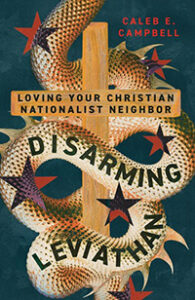


Review: Disarming Leviathan: Loving Your Christian Nationalist Neighbor

Disarming Leviathan: Loving Your Christian Nationalist Neighbor

By Caleb E. Campbell (InterVarsity Press)

Make no mistake: Caleb Campbell sees Christian nationalism as dangerous. He believes it distorts the gospel. It ruptures families and divides churches. Like the symbolic Leviathan in Scripture, Christian nationalism is an evil, powerful and chaotic force that purposefully instills fear.

However, Christian nationalists are not the enemy. Some are family members. Many are devoutly committed to God, although they have been fed a distorted picture of what the Lord requires—and it’s not doing justice, loving mercy and walking humbly. All are neighbors whom we are called to love.

So, Campbell views his role as a missionary to Christian nationalists. That is not to say he views all who identify as Christian nationalists to be hopeless heretics or unsaved heathens. However, he believes they have been duped by leaders who have persuaded them to accept ideals contrary to the teachings of Jesus. And many have accepted Christian nationalism as a “tribal identity” that offers them a sense of belonging and reinforces their prejudices, without any genuine commitment to Christ. Some Christian nationalists need to be led gently back to the gospel, while others need to be introduced to it.

Campbell helps readers understand not only what Christian nationalism teaches, but also why its adherents find that message appealing. He explores the fears and anxieties that draw many to Christian nationalism. He encourages readers to listen to their Christian nationalist neighbors and extend hospitality to them.

One of the most helpful sections of the book is a “field guide” for responding to American Christian nationalists. The guide is not designed to equip readers to win debates. Rather, it is intended to help them engage in meaningful, heartfelt conversations with neighbors who espouse some of the most commonly repeated statements of Christian nationalism. By listening attentively, asking clarifying questions, affirming any shared values and avoiding red flags, missionaries to Christian nationalists can ask gently probing questions that invite their neighbors to think more deeply and consider what the Bible has to say.

In contentious times, Campbell addresses a controversial subject in a compassionate, pastoral and missional manner.

Ken Camp, managing editor

Baptist Standard


Review: The Wood Between the Worlds

The Wood Between the Worlds: A Poetic Theology of the Cross

By Brian Zahnd (IVP)

Poetry brings out strong feelings in people. For some, poetry is obscure and indiscernible, off-putting and oblique in every way.

For others, like me, it’s the vehicle by which the sacredness of life in this world can be captured most specifically—in a brief set of intentional words, which illuminate beauty, meaning and value in even the most mundane moments.

Though I dwell in a home filled with four vibrant reasons to celebrate the sacral nature of living, I am alone in my house in my appreciation of poetry. If you find yourself more in the pragmatic company of my husband and my children, believing poetry just isn’t for you, please do not discount this book.

Zahnd appeals to the growing renaissance of interest in spiritual imagination that seems to be taking shape among younger, emerging practitioners of our faith—regardless of whether they have Catholic, Orthodox or evangelical backgrounds. However, he does not go all in on poetry to the point where readers must wade through so much flowery language, they forget they came hunting for meat.

Rather, he gives all the meat they can stomach.

Zahnd presents the centrality of the cross to the gospel. But reacquainting readers with pre-historical-critical approaches to scriptural interpretation, he describes multiple ways to understand the crucifixion.

Zahnd draws on history, literature, art and film, in addition to Scripture. And, he includes a full-color spread of religious art and iconography of the cross through history to illustrate his discussion.

As God is the author of our faith, we do well to consider, and reconsider, his most beautiful work of poetry, the Word made flesh—the incarnation, crucifixion and resurrection of Jesus. The Wood Between the Worlds spurs readers to contemplate deeply the theopoetic scandal at the heart of our faith and mission and to examine anew the remarkable work God did there.

Calli Keener, news writer
Baptist Standard


Review: Brown Faces, White Spaces

Brown Faces, White Spaces: Confronting Systemic Racism to Bring Healing & Restoration

By Latasha Morrison (WaterBrook)

Systemic racism is real, pervasive and corrosive in the United States. It also is not inevitable, and the fabric of American society can be healed from it in practical ways. Brown Faces, White Spaces makes this case clearly and compellingly.

Centered on a three-part framework of preparation, dedication and liberation, the book systematically addresses systemic racism and how its threads can be unwoven.
Preparation involves learning about and confessing the racist underpinnings of society’s systems. Dedication involves committing to bring about redemptive change in those systems, and actually working to bring about those changes constitutes liberation.

“Liberation” may be a disconcerting term to some readers. Morrison does not mean liberation in the Marxist sense, but in the sense of Exodus and Jesus’ proclamation that he came to bring good news and freedom from captivity (Luke 4:18-19).

Morrison, acknowledging she can speak only for herself and the experiences of African Americans, includes personal stories throughout. BIPOC—Black, Indigenous and people of color—stories also are included.

The book also contains concrete examples of systemic racism and its influence in each of nine spheres—education, health care, the justice system, the marketplace, military, property ownership, entertainment, sports and the church. The spheres are considered through the lens of Scripture and the life and teaching of Jesus.

Brown Faces, White Spaces—due out May 21, 2024—is a good conversation starter. This does not mean the book is gentle. Morrison states more than once the content will be uncomfortable. It means readers are encouraged to take stock of the way things have been and the way they things are, then decide how things can be and begin working toward a different future.

Eric Black, executive director/publisher/editor
Baptist Standard


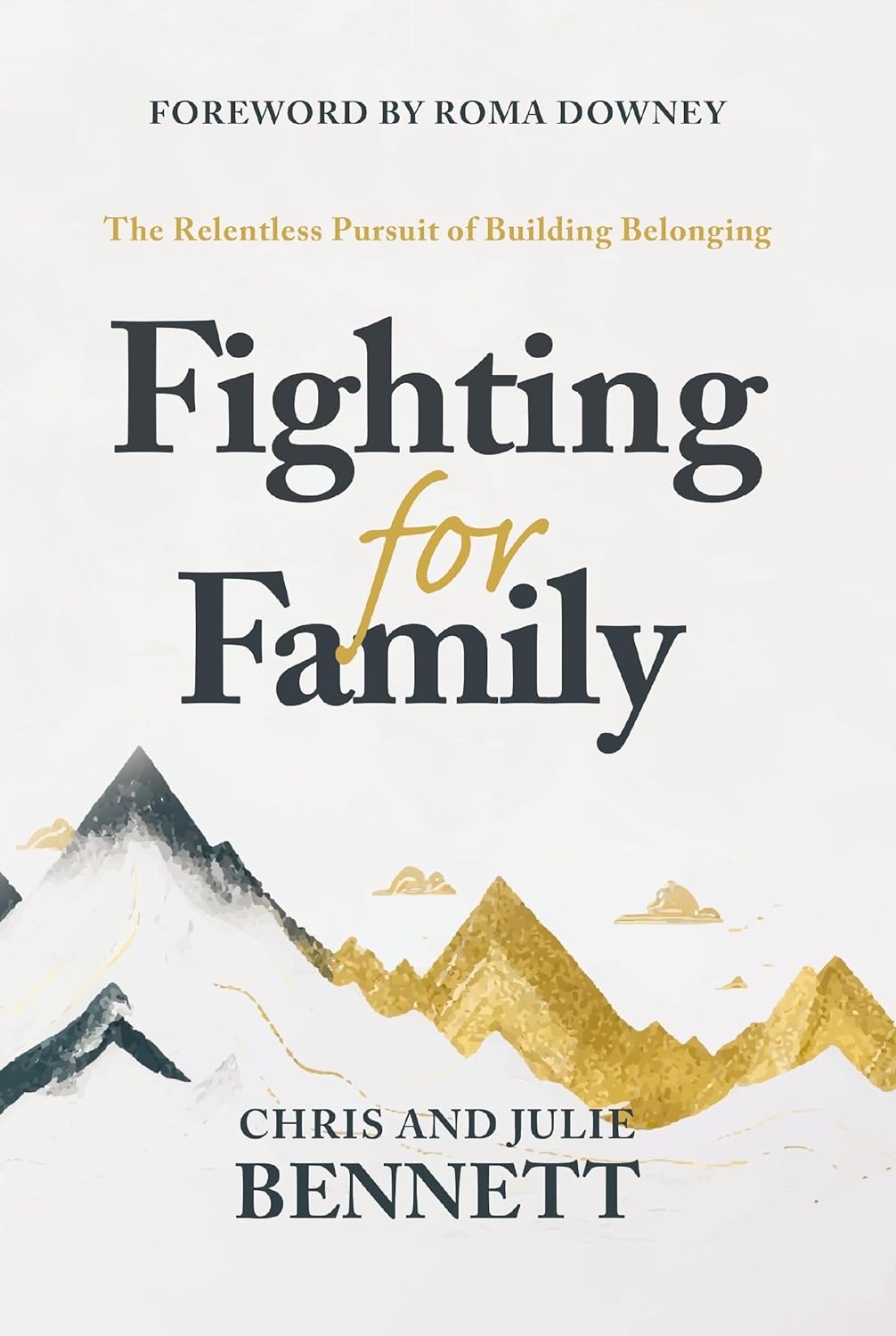
Review: Fighting for Family

Fighting for Family: The Relentless Pursuit of Building Belonging

By Chris and Julie Bennett (Harper Horizon)

In Fighting for Family, Baylor University graduates Chris and Julie Bennett draw on their experiences in the course of more than 20 years of ministry and marriage to present a practical handbook on developing healthy, thriving families and friendships.

In 2018, the Bennetts moved their family of six from Oklahoma, where Chris was a minister, to California, hoping to create an entertainment company related to “all things family,” only to be hit by an unexpected cancer diagnosis.
In the midst of adjusting to their new home with no existing support network, the Bennetts quickly learned the importance of accepting care and establishing new bonds.

In Fighting for Family, the Bennetts discuss their failures and successes in relating to people, both within their personal family and in the “family” they have established through friendships.

At times, in an attempt to appeal to an audience beyond evangelicals, the book can read as stereotypical middle-aged “cool” ministers trying to grow an audience for their new media company through overly-relevant language hoping to show they’re not stuffy or uncool.

But, don’t judge too quickly.

There is a good bit of helpful content, in particular a caution for extroverts in ministry—who might be inclined to welcome all in as “family”—to set appropriate boundaries for the good of all involved.

By the end, I found myself rooting for this family, who chose to be open about both their successes and failures in relationships so that others might grow. And, I found applications to my own life and ministry. I bet you will, too.

Calli Keener, news writer

Baptist Standard


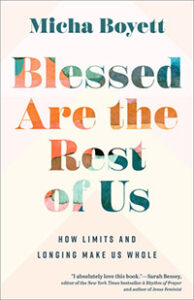
Review: Blessed Are the Rest of Us

Blessed Are the Rest of Us: How Limits and Longing Make Us Whole

By Micha Boyett (Brazos Press)

Blessed Are the Rest of Us offers a fresh reading of the Beatitudes through the eyes of a mom of a nonverbal autistic child with Down syndrome.

Jesus challenged his followers to exercise their spiritual imaginations, envisioning a way of living that prioritizes the vulnerable with all their vulnerabilities. Micha Boyett challenges readers to reconsider human flourishing—blessedness—as based on innate worth rather than achievement. She provides a painfully beautiful and honest look at life as it is, with more than occasional glimpses of life lived according to “God’s dream” for humanity.

Boyett invites readers inside her home, transparently displaying her family’s strengths and struggles. She describes how she and her husband Chris dealt with the prenatal tests that revealed their third child, Ace, would be born with an extra chromosome and all its accompanying physical and developmental challenges. She describes painfully enduring the loss of an imagined child who never existed and joyfully embracing the reality of Ace as he is. She tells how a God-given hunger for justice led her and her husband to advocate for their son in the school system.

Some readers may be tempted to dismiss Blessed Are the Rest of Us when they get to the chapter on peacemaking, but that would be a mistake. Boyett describes how her church’s pastor and its board of elders—of which she was part—led their congregation to reconsider its traditional views about sexual orientation and gender identity. She acknowledges mistakes in how the discussion surrounding LGBTQ inclusion was handled by church leaders—herself included—while continuing to defend their decision.

But the real heroes of the chapter are Leah and Jared—a couple in their church who were the Boyetts’ closest friends and whose son shared a birthday with Ace. Leah and Jared continue to hold to a traditional understanding of what the Bible teaches regarding sexuality and gender, but they refuse to quit loving Micha and Chris Boyett when they end up on different sides of a divisive issue.

Blessed Are the Rest of Us steers clear of easy answers and sentimental platitudes. Instead, it reframes the blessed life and offers an honest-to-God look at grace-filled living.

Ken Camp, managing editor

Baptist Standard


Review: The Lazy Approach to Evangelism

The Lazy Approach to Evangelism: A Simple Guide for Conversing with Nonbelievers

By Eric Hernandez (GC2 Press)

Don’t let the title fool you. A lazy person will have a hard time getting through this 348-page book on apologetics. However, the lazy approach to The Lazy Approach is to start on p. 127, “Chapter 11: The Lazy Approach.”

But first, Hernandez argues for the necessity of apologetics from the vantage point of spiritual warfare. He uses the word “stronghold” from 2 Corinthians 10:4, defining the term with verse 5: “arguments and every pretension that sets itself up against the knowledge of God.”

He then examines atheism, agnosticism and skepticism, postmodernism, scientism and naturalism, identifying the latter three as the more prominent strongholds in American culture that exert influence even in the church.

Knowing where a person is situated among these six “isms” gives clues to where a conversation with that person is likely to go.

The so-called “lazy approach” is Socratic—based on asking questions that allow one’s conversation partner to identify his or her own position. These questions are few and fairly simple, and they do not require a person to be a subject-matter expert on all things. Once a person’s position is known, the questioner can engage the other person through further questions.

Hernandez is keenly interested in the strategy of evangelism, likening it to chess. Along this line, he explains how to “maneuver a conversation” and offers five “tactical tools” to that end. Following the chapter describing “the lazy approach,” Hernandez uses the tactical questions to respond to skepticism, postmodernism, scientism and naturalism.

The remainder of The Lazy Approach is typical of other apologetics books by examining a standard set of arguments for the existence of God and the resurrection of Jesus.

One benefit of the book is Hernandez’s inclusion of sample conversations. He doesn’t just describe the approach, but he also shows how he uses it.

Eric Black, executive director/publisher/editor
Baptist Standard


Review: How Ableism Fuels Racism

How Ableism Fuels Racism: Dismantling the Hierarchy of Bodies in the Church

By Lamar Hardwick (Brazos Press)

Reading this book, the second published by “The Autism Pastor” Lamar Hardwick, might take longer than it normally would for a book of under 200 pages. Not because it isn’t well written or thoughtfully presented, but precisely because it is both. 

In How Ableism Fuels Racism: Dismantling the Hierarchy of Bodies in the Church, Hardwick, who has quickly established himself as a leading voice in disability theology, does an exceptional job of demonstrating and challenging the way the American (white) church has allowed bias to inform its theology. 

Hardwick walks through American Christian history and demonstrates, rather convincingly, the initial sin, as he calls it, of American Christianity is ableism—the ranking of human bodies—that gives birth to racial bias.

In addition to historical discussion, Hardwick shares personal experiences of living in a Black disabled body, including grappling with stage 4 colon cancer in a medical landscape that continues to hold bias against Black bodies—bias that reduces quality of care and increases mortality for Black patients.

Participants in the American (white) church, get ready to have some idols torn down. The critiques Hardwick presents are pointed directly at you, at me. But his rebuke is gentle, biblical and convicting. 

Reading this book was an exercise in repentance—an exercise that I needed. So does the rest of the American (white) church. And in repenting, we then can take actions to become dismantlers of the hierarchy of bodies in the church.

Calli Keener, news writer

Baptist Standard


Review: Soul Culture

Soul Culture: Stewarding the Five Ingredients of Our Common Life

By Matt Snowden & Joshua Hays (Smyth & Helwys)

Every preacher likes a good metaphor. Soul Culture doesn’t disappoint. But being a pastor is more than preaching—much more. It involves the rest of Soul Culture, the Stewarding the Five Ingredients of Our Common Life part.

Forming the culture of a church is like preparing pizza dough. At least, that’s how Matt Snowden and Joshua Hays describe it, with inspiration from J.B. Gambrell, a Southern Baptist and Texas Baptist leader at the turn of the 20th century. Just as dough requires a set of ingredients worked and kneaded together, so does the culture of a church.

Dough is a combination of basic ingredients worked together in a deliberate way. Snowden and Hays say the same of the church. Beliefs are as foundational to a church’s culture as flour is to dough. Water, salt, soda and yeast are the other basic ingredients of dough—like attitudes, values, goals and practices together form church culture.

Each of the five ingredients of church culture gets its own chapter, each one a worthy study all its own. These and the other chapters of Soul Culture conclude with questions for individual and group reflection.

The ingredients are essential but not sufficient to make good dough. They also require the right technique, temperature and time. These are explained in the last chapter.

In the last chapter, Snowden and Hays finish Soul Culture in conversation with three pastors demonstrating their own soul culture work within their respective congregations—Steve Bezner at Houston Northwest Baptist Church, Maddie Rarick at Meadow Oaks Baptist Church in Temple and Ralph West at The Church Without Walls in Houston.

Pastors can chew on Soul Culture together with the authors, Bezner, Rarick and West during the Truett Pastors Conference at First Baptist Church in Waco, April 18-19, 2024.

Ministry resources often fall into one of two categories—practical or smart. Here is one that is practical and smart. And refreshing. Wit, wisdom and humor are scattered throughout like chocolate chips in cookie dough. Perhaps chocolate chip cookies will be the metaphor guiding Snowden’s and Hays’ next book.

Eric Black, executive director/publisher/editor
Baptist Standard


Review: Tommy Bowman: Answering the Call

Tommy Bowman: Answering the Call

By Chad S. Conine (Big Bear Books /Baylor University Press)

The cover of Tommy Bowman: Answering the Call contains a black and white action photo of a tall Black player in mid-jump shot surrounded by a sea of white faces on the court and off. The picture could have been taken at many colleges in the late 1960s. Only the green and gold title hints at the place where fans from 1966-1970 found Bowman answering the call as Baylor’s first Black scholarship athlete.

Chad Conine’s biography records the facts, but the real story is Bowman’s profound faith, deep friendships and sacrificial service. Basketball simply provides the backdrop and the era the context.

The tale begins “once upon a time” when only God could orchestrate a chance conversation between Baylor’s assistant basketball coach Carroll Dawson and a gas station attendant in Athens. Granville Crayton informed the recruiter the best high school player in Texas lived in Athens—Tommy Bowman. Dawson’s copious files held no such name, not a surprise since the star played at Fisher until Athens High integrated his senior year.

A divine urge led the young coach to drive to Tommy’s house, where he shelled peas with the boy’s mom waiting for him to come home. SMU and TCU had both signed their first Black athletes—Jerry LeVias in football for the Mustangs and basketball player James Cash for the Horned Frogs. Although John Westbrook had walked onto the football team, Baylor was ready to sign its first Black scholarship athlete. Dawson quickly knew it should be Bowman in basketball. Head coach Bill Menefee agreed.

Life at Baylor wasn’t easy for any freshman from a small East Texas town, especially one who didn’t see faces like his in class. However, Tommy held his own on the court, and he, along with others on the freshman team, answered God’s call to lifelong friendships. At home, Bowman went to church with his grandmother whenever the doors were open. He amazed his teammates by attending services every Sunday and displaying unwavering faith. One of those Sundays, he met his future wife, Jackie.

Conine intersperses anecdotes, accounts from newspaper articles, quotes from interviews and photographs. Also included are game-by-game tables and facts from Bowman’s four years playing for the Bears—the first as a freshman before freshmen could play varsity—when the “Cubs” won the Southwest Conference. Sophomore of the Year, First Team All-Conference and an Honorable Mention followed in an era when two second and one third-place finish in the Southwest Conference meant no post-season play. The athlete earned his business degree in 1971. Later, he entered both the Baylor and Southwest Conference Halls of Fame.

Not only did Tommy Bowman answer God’s call to integrate Baylor basketball. The Lord also called him to a life of faith and service in his profession, in the community and in his church. He spent most of his career with two companies, treating others with dignity and respect. Bowman held positions on numerous boards and committees and served nine years as a Baylor regent but always found time for Jackie, Tommy II and Krystal. Known widely as Deacon Bowman, he continues to chair the deacons at Toliver Chapel Missionary Baptist Church where his prayers are legendary.

Chad Conine’s Tommy Bowman: Answering the Call is a great read for anyone of any age—sports fan or not. The only thing better is meeting Tommy Bowman in person. At a recent book-signing, Chad commented that every conversation with “the Deacon” returns to God. That evening Bowman told the audience: “You know, God has a perfect plan for each and every one of you. And I’ve been comfortable, very comfortable walking according to his plan for my life ’cause he knows what’s best for me.” Amen.

Kathy Robinson Hillman, former president

Texas WMU and Baptist General Convention of Texas

Waco


Review: Fire in Her Bones

Fire in Her Bones: A Biblical Defense of Women as Preachers and Pastors

By Ellis Orozco (Austin Brothers Publishing)

I move “that the BGCT ‘uphold the autonomy of the local church to affirm a cooperating church’s authority to call women to congregational and vocational ministry as they, under the lordship of Jesus Christ and the guidance of sacred Scripture, deem fit.’”

When Ellis Orozco made this motion during the 2023 Baptist General Convention of Texas annual meeting, he did so from a studied and measured position. What most didn’t know was he was about to publish a book on the subject of women in ministry—a book bound to become a defining contribution to the discussion.

Into the heated debate over whether women can serve as pastors and be called “pastor,” Orozco brings a calm and studied voice of reason. His presence at the microphone that day is the same as his presence in Fire in Her Bones—calm, considerate, deliberate, direct and committed to his fellow Baptists.
There’s no hidden agenda, no bait-and-switch, in this book. Orozco advocates for the egalitarian position, and does so using a conservative hermeneutic.

Orozco was a mechanical engineer before becoming a pastor, and he brings that same precision and thoroughness to his analysis of the Bible’s teachings on women in leadership. He begins with the creation accounts in Genesis, examining the nature of woman and her relationship to man, and responding to six arguments made in opposition to egalitarianism.

He devotes a chapter to women in the Old Testament, a chapter to women in the New Testament, and five chapters to Paul’s writings. Paul’s statements and how to interpret them are at the center of the debate about women in ministry. Orozco rightly focuses his energies on these passages—Romans 16; 1 Corinthians 11:2-16 and 14:34-37; 1 Timothy 2:11-15; and Galatians 3:28.

From the start and throughout his examination, Orozco tells his readers exactly where he is going and how he will get there. He engages key scholars and voices opposed to egalitarianism with respect and civility, acknowledging when their positions make a certain amount of sense, however incorrect he deems them to be.

Fire in Her Bones is not exhaustive, but it is complete. Orozco’s style leans academic, while remaining accessible to a more general audience. Whether a person is a proponent for or opponent of egalitarianism—or undecided—this is a book to have read or have at the ready when questions arise about women in ministry.

Eric Black, executive director/publisher/editor
Baptist Standard


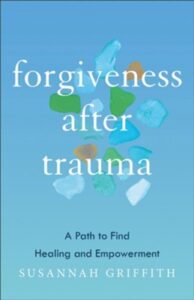
Review: Forgiveness after Trauma

Forgiveness after Trauma: A Path to Find Healing and Empowerment

By Suzannah Griffith (BrazosPress)

In her upcoming book Forgiveness after Trauma, Suzannah Griffith handles this painful topic with honesty and grace. She recounts the abuse she experienced in her marriage with enough detail for the reader to understand her story without becoming immersed in it.

Her domestic violence story is not the point of the book. Rather, it provides a reference to challenge the way forgiveness often is taught and applied within the church.

Using sound Bible scholarship, Griffith builds a more trauma-informed interpretation of forgiveness than she found in the Mennonite church where she served as a pastor during the worst of her abuse. She shows a clear love for Scripture as she effectively weaves passages on anger, lament and accountability into her own journey toward forgiveness and empowerment.

Griffith’s study of forgiveness began at the suggestion of two friends who stood by her and her husband during the abuse. When Christians regularly handle care for abuse victims poorly, this positive example of support is encouraging and a key takeaway from the book.

While I would stop short of calling this book a must read, Griffith does provide a survivor’s view on a timely topic. It is a useful read for pastors and laypeople alike. We are all tasked to minister to the hurting. Forgiveness after Trauma will help us do just that.

Calli Keener, news writer
Baptist Standard