




And There Was Light: Abraham Lincoln and the American Struggle
By Jon Meacham (Random House)
In recent weeks, I’ve lost count of how many times I’ve heard someone say, “Our country has never been so divided before,” or “We’ve never experienced violence like this.” Since I was reading this masterful biography of Abraham Lincoln at that point, I kept saying to myself, “Um, not so fast. …”
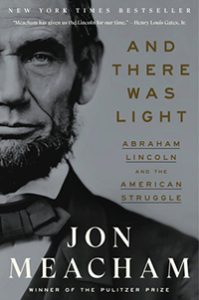 Pulitzer Prize-winning historian and presidential biographer Jon Meacham provides a much-needed corrective both to Christian nationalists who paint all respected American figures of the past as sterling evangelical believers and to secularists who deny any Christian influence on American history.
Meacham gives focused attention to the complex, evolving and sometimes contradictory faith of Lincoln. He notes Lincoln’s early upbringing in anti-slavery Baptist churches in Kentucky and Indiana. Young Abe Lincoln never professed the faith of his father Thomas or submitted to baptism—perhaps in part because of his strained relationship with his parents and undoubtedly in part because of his difficulty accepting some stern Primitive Baptist doctrines. Even so, as a child, he preached to his playmates—reciting from memory the sermons he heard on Sunday.
As Meacham notes, Lincoln continued to maintain a conflicted and somewhat-distant relationship with organized religion for much of his life. He obviously read the King James Version of the Bible regularly, and he drew deeply from its poetic phrases in his speeches.
However, Meacham points out Lincoln also read a wide variety of theological and philosophical works that helped shape his views. In particular, Lincoln was influenced by abolitionist minister Theodore Parker, whose sermons about a “moral universe” whose arc “bends toward justice” not only made an impression on Lincoln, but also—a century later—on Martin Luther King Jr.
During the Civil War years, Lincoln’s resistance to joining a church continued, but particularly after the death of his son Willie, he attended church services on a much more frequent basis and prayed regularly. He also sought the wise counsel of ministers he respected as he struggled with the burden of guiding the nation through a bloody war.
One of the most insightful sections of And There Was Light is Meacham’s treatment of Lincoln’s Gettysburg Address. He provides an almost line-by-line exposition of the text—not only mentioning its numerous scriptural allusions, but also providing the rich biblical background for the references.
For much of his life, Lincoln’s relationship with Christianity was of a man “feeling his way through the twilight.” While the precise contours of Lincoln’s faith remain a mystery, Meacham makes a strong case for the depth of his faith.
Ken Camp, managing editor
Sign up for our weekly edition and get all our headlines in your inbox on Thursdays
Baptist Standard






We seek to connect God’s story and God’s people around the world. To learn more about God’s story, click here.
Send comments and feedback to Eric Black, our editor. For comments to be published, please specify “letter to the editor.” Maximum length for publication is 300 words.