Connect360: The Truth About Light
- Lesson 2 in the Connect360 unit “The reMARKable Journey Continues: The Gospel of Urgency” focuses on Mark 4:21-25, 33-34.
In this parable, which inspired the children’s song “This Little Light of Mine,” Jesus answered the question: “Why do you teach in parables?” Jesus used a traditional rabbi’s skill in asking the question in a way to elicit a negative response. So, Jesus basically asked: “You don’t light a lamp in a dark room so you can hide the light from shining, do you?” The answer is, “Of course not!” By forcefully leading the listeners to dismiss the alternate possibility, Jesus then led them to the purpose of lighting a lamp.
Think of a time when the power went off, and you entered an unfamiliar, totally dark room. Your first task was to locate a source of light, be it matches, a candle or even your cell phone’s flashlight. You need light to function in the darkness.
So, do you find the source of light, then block it so you can’t see? No. Why not? Because you need light. When you’re in the dark, you don’t purposely extinguish the light to sit in darkness again.
There is some question as to why the Greek wording of the Mark 4:21 text says, “The lamp comes into the room.” Inanimate lamps do not walk around. Lamps don’t come in; they are brought in. Lamp here has a definite article, which usually means “the definitive lamp, the best or qualitatively superior lamp.”
This leads some interpreters to say that the lamp is Jesus in this verse. Of course, this is true, for Jesus said of himself in John 8:12: “I am the light of the world; the one who follows me will not walk in the darkness, but will have the light of life.” But it is also true in John 8:12 and other passages that state we as his disciples are to be God’s light shining in the darkness (Matthew 5:14), a city on a hill that gives light to the world.
However, in the immediate context, Jesus is explaining why he uses parables to communicate spiritual truth. So “light a lamp” in this verse probably refers to his parables as being a lamp to reveal the truth of God and his ways. God is alive in the other words in the Bible, too. The previous parable spoke of the life being in the seeds sown. Parables therefore are living truth that interacts with serious listeners, enlightening our minds, lighting the path, revealing Jesus and giving us perspective on living for God.
To learn more about GC2 Press and the Connect360 Bible study series, or to order materials, click here.
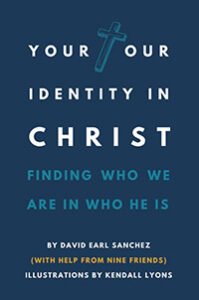 With a title like Your/Our Identity during a time when controversies over sexual, gender, ethnic and other identities are swirling, readers might expect the book to begin, end and focus on those issues. But they barely make an appearance. Instead, they place a distant second, third or even fourth to the primacy of Christ as the source of our identity.
 The Gospels present Mary Magdalene both as one whom Jesus delivered from demonic oppression, and also as one who supported Jesus’ ministry financially and was numbered among his followers. However, that is not the image most Christians have of her.
 Lundgren begins by defining a host of terms and concepts related to safety. He then offers an extended examination of human conceptions of danger in the premodern, early-modern and late-modern eras. Premodern people viewed danger in relation to a world filled with gods and spirits. The disenchanted world of the early-modern era understood danger as a natural feature of the material world. For the late-modern world, danger resides within us.