Review: The Message: Mankind’s Final Destiny
The Message: Mankind’s Final Destiny
By Don English (Xulon Press)
If you seek to understand and teach the book of Revelation, Don English’s new The Message: Mankind’s Final Destiny could be a key resource for you. In fact, I wish I had this book in college and seminary when my study of Revelation began.
 God’s message to us in Revelation—which English advises should be read in one sitting—touches on everything we know about ourselves: our gift of free will, our sin and the limited influence of Satan, our work subduing the earth, our business dealings, warfare, power struggles with other nations, famine and pestilence, death and final judgement.
We are shown the mess in our world as God sees it, and we see how the evil of man leads God to pour out wrath on the world. Yet, we also see God’s mercy.
There is much to glean from English, but standing out strongly is his use of Old Testament Scripture—such as prophecies in Daniel—rather than teaching from commentaries to explain difficult or veiled concepts in Revelation.
There are no timelines, catchy labels or curious theories here. There are no human constructs that force Christians into categories or opposing camps.
Calling God, “Alpha Omega Alpha”—the beginning, the end, and the “beginning again” with the new heaven and new earth—English leaves the reader thinking of all God has created that yet is unknown.
English also speaks to current events, such as corrupt business practices and politics that have caused the collapse of governments and led to immigration. Natural disasters have driven multitudes to new lands. He points out Jesus taught us to love our neighbor, even in times when we struggle to survive.
English seems to see crisis events as patterns that can exist for a long period of time. Only God knows when the end will come, not because of man’s deeds, but because of God’s choosing. He also believes the Bible tends to give us general outlines and directions for coping. We are to look for conditions in the world, rather than specific times and places.
English believes the church will be taken at some point during the tribulation, but not at the beginning. He believes persecution will go on for a significant length of time, but will involve some people, not all believers.
His book has great strength in its pictures of God’s glory, his throne, Jesus’s victory and Jesus’s prominence in all things. He warns to be ready for the coming of the Lord and for our own death, when our fate will be decided.
English believes as long as Christians come forward to spread the gospel, God allows time for the people of the world to come to him. He also recognizes symbolism, yet teaches with logic and less obscurity than most. He notes whenever God gives a truth in Revelation, he gives a picture.
English writes with sincere concern for the reader. His study of Revelation both could comfort and fire up your church. God is in control of all, Satan is defeated, and heaven is prepared for the church.
Ruth Cook
Carrollton, Texas
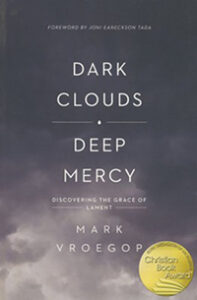 Dark Clouds, Deep Mercy holds a timeless offering, demonstrating “how you live between the poles of a hard life and trusting in God’s sovereignty” (p.36) and showing the real grace found in lament.
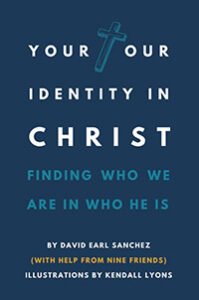 With a title like Your/Our Identity during a time when controversies over sexual, gender, ethnic and other identities are swirling, readers might expect the book to begin, end and focus on those issues. But they barely make an appearance. Instead, they place a distant second, third or even fourth to the primacy of Christ as the source of our identity.
 The Gospels present Mary Magdalene both as one whom Jesus delivered from demonic oppression, and also as one who supported Jesus’ ministry financially and was numbered among his followers. However, that is not the image most Christians have of her.