Review: Dark Clouds, Deep Mercy
Dark Clouds, Deep Mercy: Discovering the Grace of Lament
By Mark Vroegop (Crossway)
What better time than Advent to practice lament? Yes, Advent marks a time of hope, joy, peace and love, worshipping who God is, all he has done, and waiting expectantly for all he will do. But for many, this time can often magnify brokenness, bringing a deep sense of longing that rightly leads to lament.
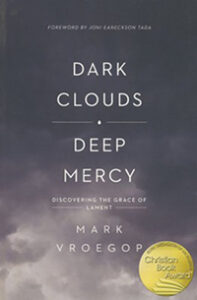 Dark Clouds, Deep Mercy holds a timeless offering, demonstrating “how you live between the poles of a hard life and trusting in God’s sovereignty” (p.36) and showing the real grace found in lament.
Author and pastor Mark Vroegop reveals a personal experience that ushered him into lament—the late-term loss of his daughter, Sylvia. He describes lament as the life raft that buoyed him amidst overwhelming grief. Further, he postures lament as the often-overlooked gift for all Christians. The book brings two contrasting concepts into surprising harmony to illustrate lament, finding deep mercy in dark clouds (Lamentations 2:1; 3:22).
Vroegop proves a trusty guide, gently leading the reader through steps he traveled firsthand, aptly named in his book sections: learning to lament, learning from lament, and living with lament. Noting one third of the psalms contain laments, he advocates for the routine incorporation of lament for individuals and the church. He asserts praise historically includes both celebration and lament.
Beyond historical applications, Vroegop brings present-day importance to the forefront, tying lament into belief. He points out that through lament, “Christians affirm that the world is broken, God is powerful, and he will be faithful” (p.26).
Dark Clouds, Deep Mercy gives a memorable model to learn to lament, with key words: turn, complain, ask and trust. Vroegop shows the importance in moving through each step, with biblical examples of lament from Psalms. He warns against the propensity to get stuck on one step. With a teacher’s heart, he uses David as an example of this necessary movement, “His complaints are not cul-de-sacs of sorrow but bridges that lead him to God’s character” (p.59).
Vroegop illustrates how we can learn from lament, helping us remember God’s grand story. Using the book of Lamentations, he explains how the truths within help us profess hope, discover idols, and ultimately see God’s grace.
Finally, he gets practical on how to live with lament. He stresses lament as a gift for all, with individual, community and pastoral applications. He brings forth varied reasons to lament, from big tragedies to small nuisances, on behalf of oneself or others, and even if lament results from one’s own sin.
This book holds diverse application for individuals, home groups and the church. It provides end-of-chapter reflection questions and an appendix full of resources to adequately prepare and encourage the reader to begin the practice of lament. Dark Clouds, Deep Mercy provides a better understanding of lament, bringing a fresh perspective, even excitement, for something needed in the life of all Christians.
Amy Salzwedel, student
Dallas Theological Seminary
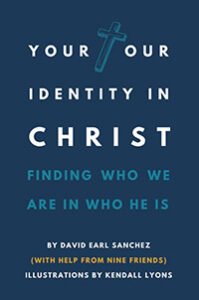 With a title like Your/Our Identity during a time when controversies over sexual, gender, ethnic and other identities are swirling, readers might expect the book to begin, end and focus on those issues. But they barely make an appearance. Instead, they place a distant second, third or even fourth to the primacy of Christ as the source of our identity.
 The Gospels present Mary Magdalene both as one whom Jesus delivered from demonic oppression, and also as one who supported Jesus’ ministry financially and was numbered among his followers. However, that is not the image most Christians have of her.