Connect360: When Jesus Is in Your Boat
- Lesson 4 in the Connect360 unit “The reMARKable Journey Continues: The Gospel of Urgency” focuses on Mark 4:35-41.
The major point in this miracle is that Jesus, by speaking two simple commands, transformed ferociously violent winds and waves into a state of instant calm and stillness. The dramatic and instant change revealed the miracle. If the storm just coincidentally subsided, the wind would diminish slowly. The waves would not have become glassy smooth water in an instant.
Jesus spoke a command to the storm: “Hush!” (Silence!) and to the waves “Be still!” (Be muzzled!).
The change was instantaneous. It is kind of like the man in the TV advertisement for pain medicine, when he took it and said: “The pain is gone.” His wife said, “I am glad it helped.” He responded: “No you don’t understand. The pain is gone.” After Jesus commanded cessation and calm, the wind and sea became totally still, calm and quiet. “It became perfectly calm” (4:39).
Once Jesus dealt with the storm, he made a teaching point by asking the disciples two self-evaluation questions in Mark 4:40: “Why are you afraid? Do you still have no faith?” They had faith to believe Jesus could solve the problem, or they would not have awakened him.
They believed he was capable of doing more than they imagined, but they—like most of us—had a tough time trusting God that he would protect them. Their faith was informational but was not relational. They believed Jesus would know how to solve the dilemma. But they never dreamed that with two words the winds and the waves would instantly become peaceful and calm.
The disciples who feared a storm, became more fearful of standing in the presence of God, who alone can calm waves and storms (see Psalm 107:23–30). They grasped Jesus was not a mere rabbi or mere prophet. He was God, who has instant power over the forces and powers of nature. This revelation shook them to their core, and they were in awe of Jesus, realizing he was God himself (4:41). They looked at each other, saying: “Who, then, is this, that even the wind and the sea obey him?”
To learn more about GC2 Press and the Connect360 Bible study series, or to order materials, click here.
 Mary Magdalene is depicted early in the story as a licentious and demon-possessed daughter of a tax collector. Her life before Jesus freed her of demons is difficult to read. Mercifully, her emancipation happens early in the story.
 God’s message to us in Revelation—which English advises should be read in one sitting—touches on everything we know about ourselves: our gift of free will, our sin and the limited influence of Satan, our work subduing the earth, our business dealings, warfare, power struggles with other nations, famine and pestilence, death and final judgement.
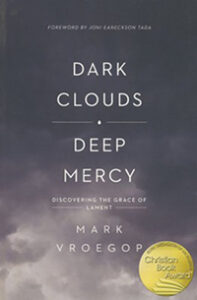 Dark Clouds, Deep Mercy holds a timeless offering, demonstrating “how you live between the poles of a hard life and trusting in God’s sovereignty” (p.36) and showing the real grace found in lament.
 With a title like Your/Our Identity during a time when controversies over sexual, gender, ethnic and other identities are swirling, readers might expect the book to begin, end and focus on those issues. But they barely make an appearance. Instead, they place a distant second, third or even fourth to the primacy of Christ as the source of our identity.