Review: The Marriage Challenge

The Marriage Challenge: A Finance Guide For Married Couples

By Art Rainer (B&H Publishing Group)

Author Art Rainer does an excellent job in quickly grabbing the attention of readers with his intriguing title to the introductory chapter, “Palm Trees and Arguments.”

The action takes place at a fancy resort and spa, and the story unfolds as a young couple celebrating their honeymoon gets into a fight over money. An aging doorman overhears the argument and befriends the young couple.

Through the interactions of this young couple and the doorman, Rainer masterfully weaves simple money milestones—giving, the importance of saving for minor emergencies, the benefits of maxing your 401k account, reducing debt, a major emergency fund, retirement, saving for children’s college or reducing mortgage debt, and living generously.

His character development is excellent, and his creative style of sharing biblical principles for marriage and money keeps readers engaged from cover to cover.

The book is a must read for young married couples, as the importance of oneness within marriage and finances are clearly expressed. Readers experience God’s design for money and marriage and are challenged at the end of each chapter with questions.

The Marriage Challenge is such a refreshing book with important financial information presented in such an entertaining format. This is a book to have on your bookshelf.

Bobbie Bomar Brown
Estes Park, Colo.


Review: March

March

Written by John Lewis and Andrew Aydin

Illustrated by Nate Powell (Top Shelf Productions)

Readers unfamiliar with graphic novels might consider the March trilogy overgrown comic books. If so, they should realize the superheroes whose stories they tell—the champions of the civil rights movement—don’t wear capes and cowls or battle evildoers with their fists. Instead, most wear suits and ties, and they practice nonviolent resistance. In fact, at their best, they kneel and pray for those who curse them, spit on them and beat them.

Congressman John Lewis and his aide Andrew Aydin teamed up with artist Nate Powell to create a three-volume graphic novel to tell the story of the civil rights movement through a medium accessible to the rising generation. Even so, March is not kid stuff. At least, it is not aimed at elementary school children, although it deservedly has become required reading in some middle schools and high schools.

Lewis and his collaborators pull no punches in recounting the brutality and degrading language peaceful protesters endured. Told from Lewis’ point of view as a leader of the Student Nonviolent Coordinating Committee, the graphic novel in three parts unflinchingly portrays his experiences and the horrific violence civil rights activists faced—from the early days of lunch counter sit-ins to Bloody Sunday and the march from Selma to Montgomery, Ala.

March also transparently presents the strong personalities whose competing visions ultimately divided the civil rights movement. Lewis, Aydin and Powell respectfully and honestly portray the Christian roots out of which the movement grew, without presenting any of the characters involved as sinless saints. Leaders of the movement were on the side of the angels, but they were human.

Winner of the National Book Award and multiple other honors, March tells an important story in an engaging manner.

Ken Camp, managing editor
Baptist Standard


Review: Every Step an Arrival

Every Step an Arrival

A 90-Day Devotional for Exploring God’s Word

By Eugene Peterson (Waterbrook)

In this forthcoming book scheduled for release in October, insights from Eugene Peterson’s sermons illuminate passages from the Old Testament. Each devotion is short, readable in just a couple of minutes, and concludes with a moment for personal application.

The devotions and the Scriptures they accompany do not proceed in a straight line, although the Old Testament passages do appear in canonical order. Rather, they are offered as self-contained morsels. The reader is expected to taste each one, consider it, meditate on it and apply it. With this expectation, Every Step an Arrival may remind readers of Peterson’s earlier books A Long Obedience and Eat This Book.

Peterson warms and inspires in some places while calling us to account in others. In one devotion on begging for idols, we are reminded of our penchant to abandon God only to be chastened back by the One who will not abandon us. Elsewhere, we are asked if we will accept God’s rule or rebel against it. In treating Isaiah, Peterson reminds us the wrongs of this world are temporary, for God intends to make all things right.

I only wish the compilers included more entries from the minor prophets. Surely, Peterson has profound things to teach us about the warnings and hope found in those little, out-of-the-way books. I suppose the publisher worried readers wouldn’t stay longer than 90 days. Perhaps the publisher need not worry. Good food is hard to resist.

Eric Black, executive director, editor and publisher
Baptist Standard


Explore the Bible: True Gospel

  • The Explore the Bible lesson for Sept. 2 focuses on Galatians 1:1-10.

When we read the Apostle Paul’s letters, we know he had an agenda. All of his writings had a purpose, and being the well-educated citizen that he was, his structure and arguments were no less purposeful. As we study his letter to the Galatians together, we will realize why his argument is so urgent.

To Paul, the gospel of Jesus Christ itself was at stake for this community of believers. Like today, there was a threat of people negatively influencing the clear good news of salvation. Paul’s intention was to bring clarity and correction.

Ask your group: How do we see the gospel threatened today? In parts of the world, there is literal persecution; in other parts, philosophies and cultural ideas dilute the “true gospel.” Why do you think we still have this problem of outside forces combating the good news of Jesus Christ?

Appointed by God (Galatians 1:1-2)

Paul usually opened his letters as he does here—aiming to defend his authority for writing the letter. Depending on the people and his influence, he spent the necessary effort giving his defense. From what you read here, do you think his influence was in question? Why or why not?

It is clear he is doing what some call “pulling the Jesus card,” which means he is making the conversation more serious by attesting to divine involvement in his call. His authority was God-given. So, he was speaking on behalf of not just himself, but also God and other believers.

When we have something important to say, how do we try to prove our authority? Why would we want to let listeners know that we speak on behalf of others also? For the apostle, it was to point to himself as the messenger from God to deliver the truth of the gospel. This was no small matter, and he was no small voice.

Through His Grace (Galatians 1:3-5)

Something to appreciate is that even though this letter contains a good deal of correction, Paul offers a “blessing” at both the opening and closing. This was both respectful and honoring, and it likely allowed the Galatians’ ears to be more open. Ask your group: What affect does a “blessing” from someone have on you?

Can you hear the strong sense of salvation language in his blessing? Since the gospel itself hinges on the reality of grace, it is no coincidence Paul offers “grace and peace.” Consider discussing what grace is (offering a clear definition), and why Paul needed to offer “grace” to these people first and foremost.

“Rescue” is another word for salvation. If someone is struggling to swim to the surface of the water, the one who helps that person is literally their “savior” or “rescuer.” Here, Paul points to Jesus as the lifeguard who gave himself to save those drowning in sin. Only his saving can result in both grace and peace.

Distorted by Some (Galatians 1:6-10)

With the greeting concluded, it is time to get to the important business. Taking the “lifeguard” imagery mentioned above, the issue is that after being “saved,” these rescued ones were taking their eyes off the one who saved them. Essentially, they were abandoning the lifeguard who saved their life!

Notice how Paul pointed out that false teachers were presenting “a different gospel—which is really no gospel at all.” While there are many types of good news, there is still only one overall Good News of salvation. To differ from this leads us to issues that discredit faith and lead us back into the roaring waves.

When standing against “other gospels,” what challenges do we face? Believing in one way to salvation is seen as narrow-minded, yet that is what Jesus declared about himself. Ask your group: What do we risk for believing Jesus is the only way to salvation? What do we risk for discrediting Jesus as the only way?

Conclusion

In verse 10, Paul points to his ambitions by declaring he is more concerned with pleasing God than people. Living for God means we live to follow and please him. This means our “fear” of others should be overwhelmed by our desire to be true disciples. But this is more easily said than done.

Consider summarizing the remainder of the chapter. It is important to see how Paul recognized he was once a strict Jew who opposed this faith that he now espoused. Just as he would not return to the grace-less way of life, he would encourage the Galatians to follow his lead.

To combat the issues we face today with the true gospel being diluted, it would be good to identify cultural ideas that oppose our view. Why do these counter-gospel ideas gain strong followings? What do we need to do to remain true to the only gospel of Jesus Christ?

Heath A. Kirkwood is lead pastor of First Baptist Church in Lorena.


Explore the Bible: Disciplined

  • The Explore the Bible lesson for Aug. 26 focuses on 2 Samuel 24:10-25.

Of all the ways to wrap up a book of the Bible and story of a king, this certainly is one of the most curious. As your group tries to digest the text for this lesson, be sure to only hold to what is clear rather than endlessly stir through what is vague.

Clearly, God’s anger was aimed at Israel, so he “incited” David against Israel by telling him to take a census. To prepare for launching into verse 10, be sure to read the dialogue of verses 1-9. Also keep in mind that this account is anticipated to be more in connection with 2 Samuel 21:1-14 (Robert B. Chisholm Jr., 1 & 2 Samuel, 306), which we studied two lessons ago.

For some reason, this action comes off as a “testing” of David. God told him to do something Joab questioned and later David would feel grief for doing. Evidently, David agreed to do what he never should have agreed to do. His guilty conscience met God’s wrath, and from this, there is an important lesson to learn—repentance should follow consequence.

Confession (2 Samuel 24:10)

If we compare David’s response here to his response in chapter 21, we see a clear resolve in David to make right what is wrong. His pride was not so great that it stood in the way any longer. The key is that David confessed his wrong; he did not defend himself for pride’s sake.

Ask your group: How well do we do at automatically confessing when we are wrong? We humans are defensive creatures who at a knee-jerk moment will defend ourselves, whether right or wrong. To do the opposite goes beyond our nature. Why is this?

The act of confession is not limited to the Roman Catholic understanding of a priest and congregant speaking through a latticed window. It is a healthy beginning to the forgiveness of sins. As a group, consider reading Psalm 32, and notice verse 5 in particular. Ask your group: What would help us have a healthier practice of confession?

Consequences (2 Samuel 24:11-15)

Since we are on the sideline as spectators of the story, it is only natural for us to want to “boo” God for his three options of punishment. None of these are “good” options, and we want to think confession should negate punishment. But that is not how justice works. Consequences are inevitable.

Rather than being discouraged beyond belief, notice how David responds in verse 14. Even in the hands of a wrathful God (whose mercy is great), the king felt more safe than in the hands of humans. Is God’s mercy so good that we would feel safe when he is angry with us?

Compassion (2 Samuel 24:16-17)

Ask your group: Have you ever watched someone else have to pay the price for your decision? One of the tragedies of leadership is having to see the cost of life because of one’s command. This reality should humble any good leader, as it was in the case with David.

God’s compassion was led by how grieved he was at the results of his order for justice, and David’s compassion was led by his despair over the innocent “sheep” whom he—the shepherd— could not rescue. David would offer himself that day, and God would offer himself through Jesus on another day. We cannot miss this heartfelt view of God for his people.

If there is time, consider having everyone close their eyes while one person reads verses 15-17. Having people imagine this scene can be a helpful approach to grasping the reality of this situation. Even better, we could always use a mental image of how mercy and judgment collide.

Contrition (2 Samuel 24:18-25)

This scene of the aftermath is one of the most striking scenes in the Bible, and it should remind us the cost of sacrifice. When we give, we should “feel” it. An empty sacrifice is no sacrifice at all, with which the prophet Malachi will take issue. David knew this altar and sacrifice needed to be a deep reminder of both a painful memory and a positive change.

So, do not miss his response to Araunah’s generous offer: “I will not sacrifice to the Lord my God burnt offerings that cost me nothing” (2 Samuel 24:24). We should not settle for less than giving our best to God.

How do we treat our giving to God? If God does not withhold his best from us, why would we even consider offering less than our best to him? This goes far beyond the passing of plates in a modern church; it speaks to every bit of how we need to be generous with our whole selves.

Conclusion

To David, the cost of his sin was great, but the gain of confession and being restored was worth every single sacrifice. We are told that “the Lord answered prayer in behalf of the land” (2 Samuel 24:25). The confession put David and Israel in the right motion to be restored to God.

Perhaps this is why the account of 2 Samuel concludes in such an awkward and seemingly negative way. The writer concludes with the most important lesson: anything and everything is worth giving to be restored to God. Following David’s life, we see this to be true.

Conclude this lesson with a time of silent prayer. Encourage everyone to pray silently for a moment, encouraging them to confess and seek restoration with God. Then, pray a blessing that will encourage them to make a priority of doing all that it takes to be right with God.

Heath A. Kirkwood is lead pastor of First Baptist Church in Lorena.


Review: Last Call for Liberty

Last Call for Liberty

How America’s Genius for Freedom has become its Greatest Threat

By Os Guinness (InterVarsity)

In his forthcoming book scheduled for release in October, Os Guinness analyzes the paradox of freedom and how the United States is caught between two versions of it expressed in the revolutions of 1776 and 1789.

The American revolution of 1776 rose from the ideals of classic liberal freedom, while the French revolution of 1789 championed what Guinness calls left/liberal freedom. The former freedom is rooted in covenant and responsibility; the latter is grounded in throwing off any restraint of the self. The former can maintain society, although it is difficult itself to maintain, because it is concerned with “the other,” while the latter tends to destroy societies because it is primarily concerned with “the self.”

Lest one be unsure what freedom is best, Guinness proffers ten questions to guide the reader in carefully distinguishing the two forms of freedom. His hope is to equip readers to save America from what seems its headlong rush toward demise.

Guinness’ chilling analysis is not for the faint of heart, reading as warmly as Robert Bork’s Slouching Toward Gomorrah, which is to say the reader can be forgiven for feeling less-than-hopeful. Readers must also have a long attention span and be able to think deeply and clearly about Guinness’ message as Last Call for Liberty is not a light read.

Eric Black, executive director, publisher and editor
Baptist Standard


Review: What we lose when hymnbooks disappear

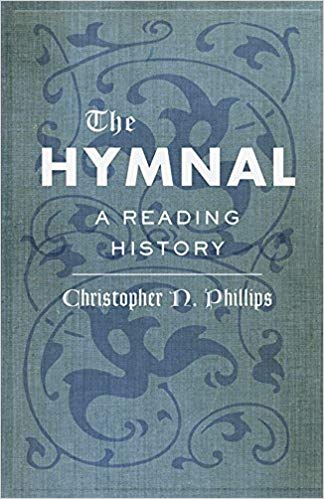
The Hymnal: A Reading History

By Christopher N. Phillips (Johns Hopkins University Press)

When I was in Sunday school in third grade, my teacher seemed ancient. Each Sunday, with hair a bit askew, he’d pump our hands as we walked in the door because he was so glad to see us. We’d earn full-size Snickers bars for Bible memorization, and he’d take us on a fishing trip at the end of the year. His wife would sit down next to a tinny classroom piano, and we’d sing hymns at the close of each class.

But the crowning glory of that year was receiving a hymnal of our very own, with gold embossed lettering, to continue our Christian education at home. It became a coveted object, one valued for its history. It signified our growing belonging to the church. Yet once in my possession, it simply sat atop the piano only my mother could play.

We are formed by the hymns and songs we sing. We are (perhaps more than we realize) formed, too, by the tangible objects of our faith. We are people of the book—not just people of the Word of God, but also people who have been corporately, theologically, devotionally, and socially formed by hymnbooks.

It is this history that Christopher N. Phillips artfully articulates in The Hymnal: A Reading History. This book is the only large-scale history and literary reading of hymnals, those “small companion[s]” that traveled with parishioners from church, home, and school. Phillips leads us like an artful detective through the early reading practices and religious life of the 18th and 19th centuries, in America and across the Atlantic.

From our modern vantage point, perhaps we might see hymnals as outdated accessories of a worship service. But hymnbooks have served (and still may serve) a larger purpose. These books were the way children learned to read, the way illiterate congregants were able to apply a sermon, the way families instructed their children (and paved the way for children’s literature), the way poetic careers began, and the way that disparate individuals became the worshiping people of God.

Hymnbooks helped to bind the people of God together. Because “readers can be both individual and corporate,” writes Phillips, hymnbooks in worship nurtured the “achievement of corporate personhood.” For new religious groups or fringe groups (the ones Phillips examines are African Methodists, Reform Jews, and Latter-day Saints), hymnbooks were one of the first acts of creating a visible identity. For denominations, too, hymnbooks were used to wage war or create peace by what was included, what was excluded, and how the books were published and circulated.

Phillips traces the history of the genre and its use in three sacred spaces: the church, school, and home.

Continue reading this review on Christianity Today.


Explore the Bible: Thankful

  • The Explore the Bible lesson for August 19 focuses on 2 Samuel 22:26-36, 50-51.

“God is worthy of our praise and thanksgiving for his provisions in this life.” This is such a simple truth, yet it is very much worth our attention as we try to summarize this poetic passage. Consider this: If we know we have many things to be thankful for each day, why do we not treat each day as Thanksgiving?

After being delivered, David launched into this song, revealing his poetic side we are much more familiar with when we read the book of Psalms. While David had much to be thankful for, it is clear being pursued by his enemies brought a much-needed time to praise God.

Ask your group: What makes you stop and thank God? What specific instances in your life have caused you to pause for praise more than at other times?

Holy (2 Samuel 22:26-29)

Here is where we easily can see the justice of God. He is justified in how he responds to people, and he responds by rewarding or punishing behaviors, which birth from the person’s heart. God also is equal in how he responds, responding in ways that are due the person.

Think of these verses from a parenting context: How do we reward or punish behaviors of children? Honestly, we tend to do a quid pro quo where there is an equal return for what took place. A child who completes a homework assignment to the standard gets an equal return of a positive grade. A child who does not do so gets the opposite.

Is this how God responds to us? God does show himself in a positive light, but he goes beyond our expectations. David said, “You are my lamp, O Lord.” In darkness, none of us deserves a light, yet God is light to those who are willing to follow him away from darkness.

Shield (2 Samuel 22:30-36)

In the previous verses, we see how holy and set apart God is. His standard is beyond our standard. Yet, he does not stand at a distance, being the judge; he defends those who follow him because only he is capable of rescue.

For example, only a mother hen is able to be the mother hen to her baby chicks. Only she can do for her babies what they need, in nurturing and in protecting. Jesus later would say over Jerusalem that he “longed” to gather her people together “as a hen gathers her chicks under her wings” (Matthew 23:37). When a child or a baby chick refuses the rescue of the only one who can rescue, there is no other option.

We need to see exactly what David saw and knew with real experience: Only God can rescue. Ask your group: How have you tried to rescue yourself, and how did that work out? When we seek rescue from anyone else, we will be disappointed. Perhaps consider reading Psalm 18, as you will notice some significant similarities between it and today’s text.

Eternal (2 Samuel 22:50-51)

These closing verses sum up the eternal nature of God’s protection and promises. To those who are his followers, God will be both the provider and protector forever and always. Again, we likely hear this often, yet with David’s experiences, we can even more attest to its truth.

Even more eternal is David’s promise by God that his dynasty would continue. If he was not fully removed from his God-given role as king, then God still must be faithful to the promise given to him by his covenant love. It is after enduring such world-shaking difficulties that we can become more aware of how forever God’s promises are.

This should cause us to become aware of how well we do or do not rely on God for his care. David proves to us that even though he messed up terribly, God was able to be the just judge who would not go back on his promises. This should be a word of comfort to us. Even when we mess up terribly, God will be our just judge and will not go back on his promises. Our only requirement is to be obedient followers.

Conclusion

What is most striking about this lengthy psalm is that David did not lose his song. With the terrible things he endured – although they were God’s just judgments—he easily could have turned his back on God. Yet, David was known to write psalms because of his challenges, not only because things were going well. He did not lose his poetic voice.

How do we tend to “lose” our song when things get tough? Do we stop singing such praises to God when things are bad, and only sing praises to God when things are well? We should never lose our song of praise to God. Singing songs of praise are not only our response to God, because they can also help us endure difficulties.

Consider these lyrics in closing: “Every day is a song, one endless melody all day long. Love is the lyric and freedom is the message that it brings to me. Every day is a song, Jesus is telling me I belong to him forever, and endless melody” (Eugene McCammon, “Every Day Is A Song”).

Heath A. Kirkwood is lead pastor of First Baptist Church in Lorena.


Review: One in Christ

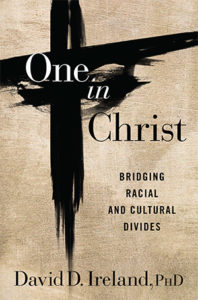
One in Christ: Bridging Racial and Cultural Divides

By David D. Ireland (Regnery Faith)

The United States is multicultural. Are you?

If you are not multicultural, what will it take for you to become so? David Ireland provides his own research, life experience and practical suggestions to help followers of Christ become multicultural in order to fulfill their mandate to make disciples among all people. He writes to a wide audience—individuals, churches and leaders.

The church at Antioch (Acts 11) serves as a biblical prototype for Ireland and appears regularly as a model.

As a result of past wrongs, remedial work must be undertaken for cross-cultural relationships to form and grow. Followers of Christ must take personal ownership and must engage in repentance and reconciliation.

Chapter Six is the heart of the book. Ireland briefly explains a set of attitudes and actions anyone can employ to improve cross-cultural relationships.

Readers may find Ireland’s chapter on the distinction between tolerance and accommodation troubling if they do not keep the two terms within the context of race relations.

The real jewels of the book are the stories sprinkled throughout One in Christ. Ireland’s stories move the narrative beyond simple instruction and lodge in the reader’s heart the richness of multicultural possibilities.

Eric Black, executive director, publisher and editor
Baptist Standard


Explore the Bible: Resolved

  • The Explore the Bible lesson for August 12 focuses on 2 Samuel 21:1-6, 10-14

Now that we are—for the most part—used to the working out of consequences in David’s story, we turn to a different type of trial. The revolts against David subsided, although he would endure difficulties to the end of his days. But now he would have to deal with the consequences of his predecessor.

Keep in mind the famine being endured was not due to David’s sin, but Saul’s. Yet, here David stood as king, having to deal with the effects, ultimately trying to resolve the problem. How do we tend to deal with the consequences of our predecessors?

Because of our own egos and human pride, our usual tactic when put in such a situation is to play the “blame game”, making it abundantly clear: “It is not our (my) fault.” This can be seen in scenarios ranging from the playground to the political setting. With this in mind, we look on admirably as David offered a more meaningful response to what was happening.

The Cause (2 Samuel 21:1-3)

David’s response was simple: he sought God’s face. This brings to mind Rodney Griffin’s powerful lyrics: “We have come to seek your face, Lamb of God, Giver of grace. You’re worthy of our highest praise, so we have come to seek your face.” This approach was the first step toward the rightful solution.

Even when we are forced to reckon with circumstances beyond our control, God’s solution is the best and only solution, which means we must approach him and seek his plan. It is through this approach that David became aware of the root issue: God’s justice would need to be satisfied for Saul’s misdirected zeal against the Gibeonites.

Again, rather than write off the issue, David pursued resolve. What should we make of David’s fervor for try to making things as they should be? While being relieved of the drought undoubtedly was a significant perk for making things right, there also is room to see the significance of making things right for the innocent victims of the previous regime.

The Request (2 Samuel 21:4-6)

Making atonement or amends for such wrongs left the gate of opportunity open for this people group, and it is surprising they were not interested in achieving more than they asked for. This may be because God’s desire for justice is for what is “enough,” not extravagance.

For the Gibeonites, who nearly were annihilated by Saul, the direct recompense would be to cripple Saul’s lineage, choosing his hometown to make the statement. For the Gibeonites, this meant righting a wrong; for God and Israel, this meant reopening the channel for blessing.

Notice how David’s acquiescence to their request is similar to the wise woman’s action in our previous story. In both of these cases, justice was required, and wisdom said “yes” through the human voice. Ask your group: What are you willing to do to see justice satisfied? What is justice worth to God and humanity?

The Resolution (2 Samuel 21:10-14)

Here, the narrator turns to the heartstrings of both the audience and David. As Robert Chisholm noted, “Why does the narrator inform us of Rizpah’s actions? He probably wants to honor her and her memory… . It is likely that he also wants to remind his audience of the tragic consequences of Saul’s sinful actions” (Robert B. Chisholm, Jr., 1 & 2 Samuel, 288).

The sackcloth, often associated with mourning, was in this case used to cover the dead and decaying. Sadly, with no eternal promise for Saul, the physical remains were all that was left to try to preserve. Maybe this was hopeless, yet David responded with compassion.

The compassionate side of David shines as we notice not only his care for Saul’s family’s remains, but also his sparing Mephibosheth (with whom David had a covenant). After all of this, God responded positively. How does this resolution make us feel about God? Since this scenario challenges our 21st century context, ask: What is most applicable from this story to us today?

Conclusion

Even for Christians, there is no question that devastating circumstances will happen, and there is little doubt that trials will include bearing problems initiated by others. In spite of whatever is faced, David reminds us to seek God’s face first and foremost. If we are wise, we will follow suit and await his leading, which should lead to ultimate resolve.

While this may sound like a simple formula, it is not necessarily easy. Ask your group: How have you usually responded to the face of trials and troubles? David’s story has led us through many reasons to write off his wisdom, yet his response here shows an example for us to emulate.

A challenge for this story is that our culture might side with the Dalai Lama who once said, “The best way to resolve any problem in the human world is for all sides to sit down and talk.” Nevertheless, it is God’s measure of justice that brings the ultimate resolve. So, we begin the conversation with him so that his plan will be revealed.

Heath A. Kirkwood is lead pastor of First Baptist Church in Lorena.



Review: Walk as Jesus Walked

Walk as Jesus Walked

By James E. Hassell (Smyth & Helwys)

What can 21st century believers learn from a Christian ethicist born in the late 19th century who spent much of his career throughout the mid-20th century teaching in a Fort Worth seminary classroom? Plenty, if the teacher in question is T.B. Maston.

One of Maston’s favorite phrases to describe the ethical teachings of Scripture was “abidingly relevant,” and James Hassell finds Maston’s model for Christian decision-making similarly applicable. Hassell, until recently pastor of First Baptist Church in San Angelo, explores Maston’s “both-and framework,” which eschews the “either-or” choice of inflexible fundamentalism or relativistic liberalism. Instead, Maston’s approach to decision-making is built on the dynamics of biblical authority, God’s will and Christian spiritual maturity. Rather than looking to the Bible as a comprehensive rulebook that covers every decision a Christian faces, Maston emphasized timeless principles that must be applied within the context of relationships and the reality of any given day. Using a rubber band to illustrate his point, Maston frequently spoke about the tension created by the space between law and grace, freedom and responsibility, and God’s perfect will and God’s permissive will. Hassell examines how Maston applied his decision-making framework to the most pressing issue of his time—race relations. He also challenges readers to make the application to their own lives and ministries.

One of Maston’s many gifts was his ability to present complex ideas in simple language any layman could understand. Hassell does not always demonstrate that same ability, and some readers may get bogged down in his complicated—but insightful—examination of the influence of W.T. Conner and H. Richard Niebuhr on Maston. Put in the effort needed to plow through a few difficult passages. The overall message of this important book is worth it.

Ken Camp, managing editor

Baptist Standard


Explore the Bible: Averted

  • The Explore the Bible lesson for August 5 focuses on 2 Samuel 20:1-2, 14-21.

We would hope that after the previous saga of battle and personal pain, David might be able to gain a sense of normalcy. With punishment and consequences, we easily come to the point where “enough is enough.” However, we are not the deciders of what “enough” is.

In the latter half of 2 Samuel 19, we see a heartwarming story between David and Barzillai that results in the latter receiving a well-earned blessing. Yet the simple act of crossing the Jordan River triggered division between the tribe of Judah and the other tribes of Israel. The quarrel was due to jealousy over who was “closer” to the king.

How have we seen divisions and quarrels rise up over simple circumstances? Division always is looking for an opportunity, and here it finds Israel and Judah splitting, a precursor to what would happen not much after David’s reign. In the “harsh” words of chapter 19, the opportunity would be taken advantage of, launching us into witnessing another struggle.

Division (2 Samuel 20:1-2)

Sheba (whose name could mean “seven” or “oath”) is a “troublemaker.” As Robert Chisholm points out, this unsympathetic label is the same expression Abigail (David’s wife) used to describe her first husband Nabal (1 Samuel 25:25); David was also accused as such by Shimei in 2 Samuel 16:7 (Robert B. Chisholm Jr., 1 & 2 Samuel, 279).

Sheba was also a Benjamite (the same tribe as Saul), and so the rivalry continues to tear at David’s kingship. While we should pay attention to what Sheba will do as an opportunistic divider, we should not consider him as much more than a necessary evil to this story. He will only be known as a “troublemaker” who sparked further trouble.

Ask your group: What influence can a troublemaker have? Here, Sheba made a statement many Israelites were sure to be thinking, and so they followed his lead. Trouble follows troublemakers. How should we respond to those whose only role is to bring trouble?

Civil War (2 Samuel 20:14-16)

David’s statement in verse 6 is true: “Now Sheba son of Bicri will do us more harm than Absalom did.” With this in mind, the king sent his warriors to battle to conquer this troublemaker and did so with ruthless intent. They completely surrounded Sheba and his growing group of followers.

This was a true civil war of greater proportions than the battle that Absalom led. Chaos was ensuing, and much carnage was inevitable as Joab was ready to annihilate the uprising. One might recall the visual of the gathering of armies in “The Hobbit: The Battle of the Five Armies” and how astounding and terrifying it appeared. Perhaps this was as astounding and terrifying, though not likely on the same graphic scale.

This is when something amazing happens—the single voice of a nameless woman pressed the pause button by calling out, “Listen! Listen!” This brings to mind Solomon’s words: “Out in the open wisdom calls aloud, she raises her voice in the public square; on top of the wall she cries out, at the city gate she makes her speech” (Proverbs 1:20-21).

Wisdom Conquers (2 Samuel 20:17-21)

Within what seemed to be an inevitable crisis, we now see the significance of wisdom, especially when wisdom falls on listening ears. Joab, who was certainly guilty of making some gruff decisions, showed himself to be of wise ears. How does this conversation between the woman and Joab strike you? What is it about this woman’s words that pierced through the near-battle scenario?

The “peaceful and faithful” reputation of the city Abel Beth Maacah would have been vanquished with the defeated should the battle have taken place. Thankfully, bloodshed was minimal, and wisdom won, bringing peace in more ways than one. Truly, the reputation of peace was worth saving. This makes us ask: Are we willing to listen so that peace can be possible?

The situation of this potential civil war makes the late President Abraham Lincoln’s words vibrate all the more from his second inaugural address: “Fondly do we hope—fervently do we pray—that this mighty scourge of war may speedily pass away.” War should not be enjoyed by anyone, but peace is worthwhile and should be afforded to all.

Conclusion

We cannot miss the negotiating skill and tactics that were used here. The “wise woman” spoke in such a way that both sides listened, resulting in peace and the squelching of Sheba’s uprising. It really is something that the troublemaker was disposed of, because we see little or no defense from those who came to the city supporting his uprising.

Ask your group: Do we believe that trouble will eventually run its course and will not be able to go on? Again, we hope that “enough is enough” when it comes to trouble, pain and consequences. In the case of Sheba, we see his troublemaking come to an end. In the case of wisdom, we see its power in every book of the Bible.

Perhaps the most telling phrase of the story is that “his (Sheba’s) men dispersed from the city, each returning to his home” (2 Samuel 20:22b). All seemed to be moving towards the peace that was hoped for. Is peace something we can hope for and believe to be possible? From what we see here, it would seem so.

Heath A. Kirkwood is lead pastor of First Baptist Church in Lorena.