Connect360: Family First: The Context of Discipleship
- Lesson Eight in the Connect360 unit “DiscipleMaking: Patterns of Discipleship and Evangelism for the Contemporary Church” focuses on Ephesians 5:21-6:4; Matthew 12:46-50; 19:27-30.
Discipleship is a lifelong journey that ideally begins in biological families and concludes with spiritual families. These two environments are not mutually exclusive, but interdependent, working together to shape the spiritual formation of believers.
The family—both biological and spiritual—plays an essential role in the faith development of individuals, especially as they seek to follow Christ.
Family dynamics dramatically impact our self-perception and our worldview. In the context of family we embrace values, clarify roles and responsibilities, and navigate life from childhood to adulthood.
Earthly and spiritual families provide the foundation for faith formation and contribute to spiritual growth throughout a believer’s life.
The importance of family in faith development is highlighted in Scripture, beginning with the commands given to Israel in the Old Testament.
In Deuteronomy 6:1–9, the Israelites are instructed to love the Lord with all their heart, soul and strength, and to teach God’s commands diligently to their children.
This directive underscores the family’s role in the spiritual formation of the next generation. Parents are entrustedwith the responsibility of passing on faith to their children by modeling it in their lives and teaching it in everyday moments.
The command to love and serve God is not just a personal pursuit but a communal and generational one, with faithpassed from parent to child, fostering spiritual growth from an early age.
In the New Testament, the concept of family expands to include the spiritual family of the church.
In Ephesians 5:21–6:4, Paul offered instructions to both husbands and wives, and parents and children, regarding their roles within the household.
The familial relationship is presented as a model of mutual submission and love, reflecting the relationship between Christ and the church.
This passage emphasizes the role of parents in nurturing their children in the Lord and highlights the importance of honoring one’s parents as a means of spiritual growth (Ephesians 6:1–3).
While earthly families play a crucial role in the initial stages of faith formation, it is important to recognize that all families are imperfect, and not all children are raised in homes where spiritual guidance is provided.
This is where the spiritual family, the church, becomes crucial for continued faith development.
To learn more about GC2 Press and the Connect360 Bible study series, or to order materials, click here.
 How do missionaries weather not only the day-to-day challenges of language and culture, but also massive storms of medical emergencies, a global pandemic and spiritual warfare? Missionary Veronica Stone shares her story and those of her husband Ron and children Anna and Abe in What Joy! How to Stay and Not Flee.
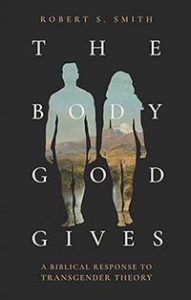 Smith has published two previous books addressing gender identity at a more popular level. His third book on the topic, The Body God Gives, is a much more in-depth study aimed at a scholarly audience.
 York’s book beautifully illuminates the musician’s contributions to the changing landscape of sacred music in the 20th century while balancing the nuances of his musical genius, spiritual grounding, and commitment to the church and authentic worship with the business of contemporary Christian music.
 Lee Spitzer is historian for the Baptist World Alliance and retired general secretary of the American Baptist Churches USA. Good News for the World represents a years-long labor of his love for Baptists, compiling for the first time in one volume the 422 resolutions, official statements and messages adopted during BWA’s history from 1905 to 2023.
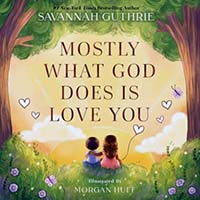 Outstanding picture book illustrators bring an author’s words to life in connected two-page spreads. Morgan Huff’s art and Savannah Guthrie’s copy perfectly complement each other. The delightful images of children and adults feature differing shapes, sizes, ages, colors and a few added glasses, broken bones or wheel chairs. And clearly, mostly what God does is love them.