Connect360: Dynamic Doctrines

  • Lesson Ten in the Connect360 unit “DiscipleMaking: Patterns of Discipleship and Evangelism for the Contemporary Church” focuses on 2 Thessalonians 2:13-17; Hebrews 5:11-13; Romans 16:17-18.

In 2 Thessalonians 2:13–17, the apostle Paul underscored the importance of foundational doctrines in the life of abeliever.

Paul wrote that “God chose you as the firstfruits to be saved through the sanctifying work of the Spirit and through belief in the truth” (2:13).

The truth of the gospel is central to salvation and sanctification. Believers are called to stand firm and hold fast tothe teachings they have received (2:15).

Teaching provides the foundation for spiritual growth. Through greater knowledge of God via sound doctrine, believers are sanctified, grow in holiness and are conformed to the image of Christ

In Hebrews 5:11–13, the author addressed the lack of spiritual maturity in the recipients of the letter.

The author lamented they should have progressed beyond basic teachings to deeper truths but were still in need ofelementary doctrine.

The author explained that “anyone who lives on milk, being still an infant, is not acquainted with the teaching aboutrighteousness” (5:13).

This highlights the necessity of progressing from foundational doctrines to more advanced understanding, which iscrucial for spiritual growth. To know God fully, believers must not only receive the basic tenets of the faith, but alsomature in their understanding of God’s will as revealed in Scripture.

Romans 16:17–18 warns believers against those who promote division and teach contrary to the doctrine that has been handed down.

The apostle Paul exhorted Christians to “watch out for those who cause divisions and put obstacles in your way that are contrary to the teaching you have learned” (16:17).

False teachers distort the gospel, and their influence can hinder spiritual growth.

It is essential believers be grounded in sound doctrine, so they can identify and reject teachings that are not in line with the truth of Scripture.

To learn more about GC2 Press and the Connect360 Bible study series, or to order materials, click here.



Connect360: Get in the Habit! Spiritual Disciplines and Practices

  • Lesson Nine in the Connect360 unit “DiscipleMaking: Patterns of Discipleship and Evangelism for the Contemporary Church” focuses on John 15:6-10; Hebrews 12:10; Acts 13:2-3; Colossians 4:2-4.

Foundational Habits of Discipleship

Bible study serves as the bedrock of spiritual growth. Engaging with Scripture not only deepens one’sunderstanding of God’s nature, but also fosters a personal relationship with him.

Regular study of the Bible equips individuals with knowledge and wisdom, enabling them to navigate life’s challenges. Systematic study methods encourage believers to observe, interpret and apply biblical texts actively.

This practice cultivates critical thinking and allows individuals to discover personal insights, which can lead totransformative experiences in their spiritual lives.

Prayer is another foundational habit that profoundly influences spiritual development. It is through prayer thatindividuals communicate with God, express their thoughts and feelings, and seek guidance.

Philippians 4:6 states: “Do not be anxious about anything, but in every situation, by prayer and petition, withthanksgiving, present your requests to God.”

Moreover, various forms of prayer—such as intercessory prayer, contemplative prayer and corporate prayer—enhance spiritual growth by encouraging individuals to engage with God and the community.

These practices not only strengthen one’s faith, but also foster a sense of belonging within the body of believers.

Worship is integral to spiritual disciplines, as it focuses on honoring and glorifying God. Engaging in corporate worship, as emphasized in Hebrews 10:24–25, encourages believers to “spur one another on toward love and good deeds, not giving up meeting together.”

Worship creates a communal atmosphere where individuals can experience God’s presence collectively, reinforcing their faith. Personal worship through music, art or nature can lead to profound spiritual experiences.

Engaging in worship helps believers express gratitude, reflect on God’s goodness and realign their priorities,thereby facilitating deeper spiritual growth.

Serving others embodies the principle of love and is a crucial aspect of spiritual development. Jesus exemplifiedthis through his life, teaching that “whoever wants to become great among you must be your servant” (Matthew 20:26).

By serving, individuals not only obey Christ’s command, but also experience the joy of putting others beforethemselves. Acts of service can take many forms, from leading in the congregation to volunteering in local communities to participating in global missions.

Engaging in service cultivates empathy, humility and a sense of purpose, all of which are vital components ofspiritual maturity.

To learn more about GC2 Press and the Connect360 Bible study series, or to order materials, click here.


Connect360: Family First: The Context of Discipleship

  • Lesson Eight in the Connect360 unit “DiscipleMaking: Patterns of Discipleship and Evangelism for the Contemporary Church” focuses on Ephesians 5:21-6:4; Matthew 12:46-50; 19:27-30.

Discipleship is a lifelong journey that ideally begins in biological families and concludes with spiritual families. These two environments are not mutually exclusive, but interdependent, working together to shape the spiritual formation of believers.

The family—both biological and spiritual—plays an essential role in the faith development of individuals, especially as they seek to follow Christ.

Family dynamics dramatically impact our self-perception and our worldview. In the context of family we embrace values, clarify roles and responsibilities, and navigate life from childhood to adulthood.

Earthly and spiritual families provide the foundation for faith formation and contribute to spiritual growth throughout a believer’s life.

The importance of family in faith development is highlighted in Scripture, beginning with the commands given to Israel in the Old Testament.

In Deuteronomy 6:1–9, the Israelites are instructed to love the Lord with all their heart, soul and strength, and to teach God’s commands diligently to their children.

This directive underscores the family’s role in the spiritual formation of the next generation. Parents are entrustedwith the responsibility of passing on faith to their children by modeling it in their lives and teaching it in everyday moments.

The command to love and serve God is not just a personal pursuit but a communal and generational one, with faithpassed from parent to child, fostering spiritual growth from an early age.

In the New Testament, the concept of family expands to include the spiritual family of the church.

In Ephesians 5:21–6:4, Paul offered instructions to both husbands and wives, and parents and children, regarding their roles within the household.

The familial relationship is presented as a model of mutual submission and love, reflecting the relationship between Christ and the church.

This passage emphasizes the role of parents in nurturing their children in the Lord and highlights the importance of honoring one’s parents as a means of spiritual growth (Ephesians 6:1–3).

While earthly families play a crucial role in the initial stages of faith formation, it is important to recognize that all families are imperfect, and not all children are raised in homes where spiritual guidance is provided.

This is where the spiritual family, the church, becomes crucial for continued faith development.

To learn more about GC2 Press and the Connect360 Bible study series, or to order materials, click here


Connect360: The Path to Spiritual Maturity

  • Lesson Seven in the Connect360 unit “DiscipleMaking: Patterns of Discipleship and Evangelism for the Contemporary Church” focuses on Colossians 1:9-11; 28b-29; 4:2-4; Ephesians 4:11-16; James 1:2-4

Preparation for spiritual growth is addressed specifically in Ephesians 4:11–13, which highlights the notation thatleaders with a variety of roles are gifts to the church.

And, they are “to equip his people for works of service, so that the body of Christ may be built up until we all reach unity in the faith and in the knowledge of the Son of God and become mature, attaining to the whole measure of the fullness of Christ.”

This Scripture underscores the importance of members of the church being equipped for service and understandingone’s place of significant service within the body of Christ.

“Every member a minister” is more than a motto, it is a truism.

The task of the leaders is to equip individual members of the body to know and assume their position of service in thechurch.

The unique callings to specific ministry areas can be discerned by discovering spiritual gifts, areas of concern,previous experiences or supernatural desires.

Leaders should seek out followers and guide them to explore and embrace their “works of service.”

Followers should submit themselves for training and placement. Preparation encompasses both formal teaching, such as biblical or doctrinal studies, and informal learning through life experiences and mentoring.

Notice three outcomes of effective preparation: unity in the faith, knowledge of the Son of God and maturity in Christ.

Believers are built up and the church is strengthened when all are contributing to the kingdom enterprise of disciple making.

Serving one another provides opportunities for believers to develop their gifts, demonstrate love and grow in humility. In serving others, believers are shaped more into the likeness of Christ, who came to serve and not to be served (Mark 10:45).

Ministry also fosters a sense of accountability within the church community, which is essential for spiritual maturity.

Spiritual growth is a dynamic and multifaceted process influenced by a variety of experiences and environments.

While the ultimate source of growth is the Holy Spirit, certain experiences such as prayer, the hearing of the word,participation in ministry, and enduring trials all contribute to a believer’s maturation.

Similarly, the church community and obedience to the leadership of the Holy Spirit provide environments in whichbelievers can grow in faith and continue to pursue maturity in our walk with him.

To learn more about GC2 Press and the Connect360 Bible study series, or to order materials, click here.


Review: What Joy! How to Stay and Not Flee

What Joy! How to Stay and Not Flee

By Veronica Stone (Woman’s Missionary Union)

What freezes someone with fear?  What causes that fear to take flight? A Chinese drug dog’s sniffs and a tiny room for questioning? Infertility followed by a problem pregnancy where there’s no advanced care? Financial betrayal by “trusted” church members/business partners? A spitting cobra in the living room?

How do missionaries weather not only the day-to-day challenges of language and culture, but also massive storms of medical emergencies, a global pandemic and spiritual warfare? Missionary Veronica Stone shares her story and those of her husband Ron and children Anna and Abe in What Joy! How to Stay and Not Flee.
The saga begins when Veronica discovers a one-year teaching job in Korea online when filling out applications and goes for it. The Christian school eventually hires Ron as well, and the newlyweds begin what would become their entrée into international missions.

Taking a detour on their return home, they arrange to spend 10 days “sharing the gospel alongside two missionaries who worked with unreached people.” They arrive in the United States with a new call, and after several years of seminary and preparation, they leave for international mission service in the marketplace.

Veronica’s experiences evoke laughter as she discusses packing for that first term, suffers a horrendous haircut because of language misunderstanding, and becomes a regular wedding crasher with her husband to get to know people and begin conversations. Other accounts bring tears, including saying good-bye to her beloved dog, enduring obtrusive personal questions, and almost dying from an allergic reaction after she receives medication at a local hospital.

Yet, God remains faithful as he times perfectly the births of Anna and Abe, provides a Christian “Auntie Cora” as mentor and friend, guides the family through “unexpected turbulence,” and provides a support system of family, friends and volunteers near and far.

Joy comes in service, in seeing God move in the hearts of the lost, in watching him speak to their children, and even sometimes in suffering but never suffering alone.

Not only does the missionary help readers step into her shoes, but she also offers subtle ideas of how to support missionaries—from adopting their dog when they leave for the field to sending snapshots from home to simply listening and encouraging—usually by email—without trying to offer advice or fix things.

At fewer than 120 pages, Veronica Stone’s What Joy! How to Stay and Not Flee is a quick, sometimes funny, and always inspiring read that provides lessons for anyone desiring to live on mission.

Kathy Robinson Hillman, former president

Texas WMU and Baptist General Convention of Texas

Waco


Connect360: Grow Up! Becoming Mature in Christ

  • Lesson Six in the Connect360 unit “DiscipleMaking: Patterns of Discipleship and Evangelism for the Contemporary Church” focuses on 2 Thessalonians 1:3; 1 Peter 2:2; 2 Peter 3:18.

Spiritual growth is a natural and essential part of the Christian journey. From the moment a person is reborn in the Spirit, a supernatural process begins, leading the believer from spiritual infancy to full maturity in Christ.

This journey involves stages of growth—infancy, childhood and adulthood—shaped by the believer’s commitment to God, their surrounding environment, and their willingness to surrender to the process.

The consequences of stunted growth are significant, both for the individual and the body of Christ. Therefore,believers are called to grow in the grace and knowledge of Jesus Christ, continually striving toward maturity in him.

By understanding the stages of spiritual growth, the influence of external factors, and the need for intentionalsurrender, believers can cultivate the spiritual growth necessary to fulfill their calling in Christ and contribute to the flourishing of the church.

The goal of Christian ministry is to present every believer mature and complete in Christ, a transformation that takes place through the work of the Holy Spirit and the believer’s cooperation.

Spiritual maturity involves becoming more like Christ, reflecting his character, adopting his mindset, and engaging in his work of reconciliation. The destiny of every believer is to be conformed to the image of Christ, and this process requires intentional growth, learning and service.

As the church continues to fulfill its calling, the goal remains clear: to help each believer grow into their God-given purpose, reflecting the fullness of Christ in their lives.

While spiritual growth is a supernatural process, it is not without external influences.

The environment in which a believer grows plays a significant role in either nurturing or hindering theirdevelopment. The church community, mentors, spiritual leaders and even cultural influences all impact spiritualgrowth.

In the initial stages of spiritual growth, believers need strong spiritual leadership and sound teaching to help them navigate the stages of faith.

As 2 Thessalonians 1:3 suggests, faith and love grew in the Thessalonian church and was cultivated through constant prayer, encouragement and mutual support.

Similarly, the presence of a supportive Christian community can accelerate a believer’s growth, providing a safespace for questioning, learning and practicing the faith.

To learn more about GC2 Press and the Connect360 Bible study series, or to order materials, click here.


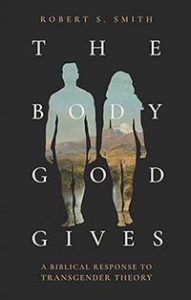
Review: The Body God Gives

The Body God Gives: A Biblical Response to Transgender Theory

By Robert S. Smith (Lexham Academic)

Gender identity is a hot and divisive topic at present—in politics, education and throughout society—frequently referenced by the word “transgender” or “trans.” Christian leaders and thinkers have been responding to this topic for many years, though their work has not always been widely known among Christians. Robert Smith is one such author.

Smith has published two previous books addressing gender identity at a more popular level. His third book on the topic, The Body God Gives, is a much more in-depth study aimed at a scholarly audience.

One clue is the publisher—Lexham Academic. Another is the word “theory” in the subtitle, which indicates Smith is not dealing with street-level gender identity discussions. Rather, he is evaluating the subterranean foundations of those discussions—and that’s the reason this book deserves attention. Every hot topic is built on a preceding foundation not always known or understood by the larger public.

Smith begins with an introduction to the current state of gender identity discussions, a survey of Christian authors who have addressed gender identity, an explanation of his own method, and a description of the history and philosophy of transgender theory, the latter not being for the casual reader.

He argues, in essence, transgender theory is predicated on the separation of biological sex from gender, that gender is not biologically but psychologically determined and thus fluid. Acknowledging there is a difference between sex and gender, “[Biological] sex … is the foundation; gender is the construction that rests on (and can only rest on) that foundation,” Smith contends (p. 167).

Smith’s approach in The Body God Gives is philosophical, theological, analytical and evangelical. He spends three chapters thoroughly analyzing the text of Genesis 1 and 2—with specific focus on biological sex, gender and marriage—and two further chapters examining the treatment of sex and gender identity through the rest of Scripture. As with his philosophical examination, his scriptural analysis is not for the casual reader, delving into the original Hebrew and Greek and more technical theological discussion.

Smith’s conclusions, already noted above, are as one would expect given his starting place. His conclusions do not, he admits, include pastoral counsel for those struggling with gender dysphoria or other gender identity questions. Those can be found in other books, some he includes in his survey of literature near the front of this book.

For those who want to dive as deep into biblical/theological/philosophical study of gender identity as perhaps they have with sexuality—whatever presuppositions the reader brings or conclusions the reader draws—The Body God Givesis up to the task.

Eric Black, executive director/publisher/editor
Baptist Standard


Review: Kurt Kaiser: Icon and Conscience of Contemporary Christian Music

Kurt Kaiser: Icon and Conscience of Contemporary Christian Music

By Terry W. York (Big Bear Books)

Terry York, retired professor of Christian ministry and church music at Baylor University’s Truett Theological Seminary, hits all the right notes in his biography, Kurt Kaiser: Icon and Conscience of Contemporary Christian Music.

York’s book beautifully illuminates the musician’s contributions to the changing landscape of sacred music in the 20th century while balancing the nuances of his musical genius, spiritual grounding, and commitment to the church and authentic worship with the business of contemporary Christian music.

Well-researched and documented through personal and family archives, oral histories, interviews, recordings, and both published and unpublished sources, York paints a portrait of an extraordinarily gifted man God used to touch hearts and connect church worship and culture in fresh ways.

The story began Dec. 17, 1934, in Chicago with Kurt’s birth to Otto and Elisabeth Kaiser, the middle of their five children. Eight years earlier, Otto had immigrated from Germany with 32 members of his family, although he had lost an older brother in World War I. Elisabeth joined him after accepting his marriage proposal by letter.

God, music and family filled their home. They attended a Plymouth Brethren Church, read the Bible, prayed and sang hymns each evening.

Kurt, who lived with health issues throughout his life, picked out his first tune on the piano at age 4 or 5, demonstrating his perfect pitch. The children took lessons from Frau Liesch, who had studied with a student of Franz Liszt. When his high school orchestra needed a cellist, Kurt taught himself.

God never wasted a moment preparing the extraordinary musician for his call. At age 9 or 10, Kurt accompanied kids on a radio program and a couple of years later regularly improvised background story music for a cowboy radio serial.

From there, he played for Youth for Christ rallies and spent his junior year in Montana with Montana Gospel Crusades where he met missionary Jim Elliott, who deeply affected him, and Patricia Anderson whom he married in 1956. Countless encounters with individuals whose names read like a religious and musical “Who’s Who” impacted his future, as did two music degrees from Northwestern University.

York weaves in details of the talented musician’s move to Waco to work with Jarrell McCracken and Word Records, where he recruited, arranged, occasionally accompanied and produced albums for a host of artists. In a town with “a Baptist church on every corner,” the Kaisers put down roots at Seventh and James Baptist Church, where they raised their four children.

Kaiser graciously worked with the Baylor Religious Hour Choir that performed on NBC television his best-known composition, the musical Tell It Like It Is (1969) written with Ralph Carmichael.

His song “Pass It On” from the musical and his later “Oh, How He Loves You and Me” (1975) continue to appear in hymnals, be performed in worship and sung around campfires. With music and musicals, he sought to bring youth to Christ and church and keep them there.

York takes the reader through the sale of Word and the company’s move to Nashville, the parting of ways, the decision to remain in Waco, the formation of Kurt Kaiser Music and a myriad of awards, including Doves, honorary doctorates and induction into the Gospel Music Hall of Fame.

Yet, “fame never came home to live,” because Kaiser saw his music as a prayer and lived with an attitude of “look what God can do.” A music minister at heart, he was generous, consistent, authentic, principled, gifted, discerning, inspiring, insightful, warm, humble and demanded high standards with grace.

Kurt Kaiser’s earthly life ended at age 83 on Nov. 12, 2018, but his music lives not only in the notes he wrote and the lyrics he penned, but also in the lives of those who heard God’s whisper through his music, responded and continue to “Pass It On.” Thank you, Terry York, for passing on Kurt Kaiser’s legacy in a biography that can teach us all.

Kathy Robinson Hillman, former president

Texas WMU and Baptist General Convention of Texas

Waco


Connect360: Baptism: The Spiritual Catalyst

  • Lesson Five in the Connect360 unit “DiscipleMaking: Patterns of Discipleship and Evangelism for the Contemporary Church” focuses on Mark 1:4-5, 9-11; Acts 8:9-13; 34-39.

Baptism is an act of obedience central to the believer’s identity as a follower of Jesus Christ.

In Matthew 28:19–20, Jesus commissions his disciples to “go and make disciples of all nations, baptizing them inthe name of the Father and of the Son and of the Holy Spirit.”

Baptism, then, becomes the first step in discipleship, a public declaration of one’s allegiance to Christ and a sign of submission to his authority.

This obedience to the command of baptism signifies the believer’s decision to live according to God’s will and purpose.

As Paul wrote in Romans 6:3–4: “Or don’t you know that all of us who were baptized into Christ Jesus were baptizedinto his death?

“We were therefore buried with him through baptism into death in order that, just as Christ was raised from the dead through the glory of the Father, we too may live a new life.”

Baptism is the believer’s declaration of having died to the old self and been raised to new life in Christ.

It is the first step in the journey of obedience to God, which includes living according to his word, bearing fruit of theSpirit, and engaging in ministry. Through baptism, believers publicly declare their allegiance to Jesus and their intention to follow him in all aspects of their lives.

A 73-year-old man recently was baptized. When asked about his decision to follow Christ and be baptized hereplied: “I was sprinkled as a child, received Jesus as my Savior at age 21, and been disobedient until now. I need to beobedient.”

Choosing to fully follow Christ in believer’s baptism was a significant moment in his life. What a day of celebrationit was for him and his family.

Just a word of caution on this point. An axiom of faith life is “disobedience leads to doubt.” When followers of Jesus fail to act obediently in the area of baptism, doubt in other areas can creep into their life.

Jesus’ emphasis on baptism as a marker of discipleship is not accidental, it is intentional. Guiding believers intobaptism contributes to greater confidence in their faith and followship.

Disciple makers should and must make baptism a priority.

To learn more about GC2 Press and the Connect360 Bible study series, or to order materials, click here.


Review: Good News for the World: Baptist World Alliance Resolutions and Statements, 1905–2023

Good News for the World: Baptist World Alliance Resolutions and Statements, 1905–2023

Edited by Lee Spitzer (Baylor University Press)

Good News for the World is a must-have for every student and scholar of Baptist history. This encyclopedic work was released ahead of Baptists from around the world gathering in Brisbane, Australia, for the 23rd Baptist World Alliance World Congress this July.

Lee Spitzer is historian for the Baptist World Alliance and retired general secretary of the American Baptist Churches USA. Good News for the World represents a years-long labor of his love for Baptists, compiling for the first time in one volume the 422 resolutions, official statements and messages adopted during BWA’s history from 1905 to 2023.

BWA has spoken to numerous issues throughout those many years. In response to many of the most-pressing issues facing Baptists and their communities at any given time, BWA passed resolutions and other statements addressing all manner of injustice, war, hunger, moral matters, religious liberty and other faith matters, gender equality, racism and much more.

One of their most important resolutions directly confronted Nazi Germany in 1934. A more recent resolution adopted in Birmingham, Ala., in 2022 condemned the Russian invasion of Ukraine, called for just peace and pledged solidarity with Baptists in Ukraine.

Among the resources in this large reference work are a reader’s guide, a chronological listing of resolutions by BWA World Congresses, by General Councils and by Executive Committees, as well as BWA-affiliated declarations and statements; a thematic table of resolutions; and an extensive set of indices listing BWA officers and other individuals, countries and territories, and topics cited in resolutions; and a thorough source bibliography.

Just before the indices and bibliography, Spitzer includes a set of tables providing a numeric depiction of resolution types and years adopted. Altogether, this back matter accounts for more than 80 pages of this 793-page book—which accounts for the 74 pages of front matter.

The only reason Good News for the World is incomplete is it stops with 2023—by necessity; it had to be published sometime—and doesn’t include the resolutions adopted in Lagos, Nigeria, in 2024. But that’s what second volumes are for.

Eric Black, executive director/publisher/editor
Baptist Standard


Connect360: You Must Be Born Again

  • Lesson Four in the Connect360 unit “DiscipleMaking: Patterns of Discipleship and Evangelism for the Contemporary Church” focuses on John 3:1-9.

In verse 3, Jesus stated, “Very truly I tell you, no one can see the kingdom of God unless they are born again.”

The Greek word for “born again” (γεννᾶσθαι ἄνωθεν, genēsthai anōthen) can be translated as “born from above” or “born anew.”

It indicates a radical, supernatural transformation that occurs when the Holy Spirit works in the heart or spirit of an individual. This birth is not of human origin but is a divine work initiated by God, making it distinct from physical birth.

The question “Have I been born again?” is one that many believers must ask themselves as they seek assurance of their faith.

The Bible provides ways to discern whether someone has experienced spiritual rebirth. Just as physical birth is evidenced by a living, breathing child, spiritual birth is evidenced by a transformed life.

Jesus implied the evidence of being born again is the ability to see and enter the kingdom of God (John 3:3, 5). But what does this look like in practical terms? How can one know whether they truly have been born again?

John offered great assurance and an explanation in his letter. First John 5:13 says, “I write these things to you whobelieve in the name of the Son of God so that you may know that you have eternal life.”

Confidence in personally “knowing” our condition is critical for freedom to live in and for Jesus.

Historically, several Nigerian tribes would carve family insignias into their cheeks. The markings were distinct designs shaped by lacerating the face of young children.

The practice has multiple purposes. Some consider the markings a sign of position within the tribe or a form ofbeautification.

But most importantly, the markings identify the children as part of a particular family. The permanent markings connected the children to their tribe of origin.

What an interesting illustration or metaphor to explain the birthmarks of believers born into the family of God.

When we are reborn the Spirit “carves” at least four marks into our life that make us visibly identifiable as his childand part of his family.

John, in his first letter, provides further clarity on the evidence of spiritual birth.

To learn more about GC2 Press and the Connect360 Bible study series, or to order materials, click here.


Connect360: Converts, Believers and Disciples

  • Lesson 3 in the Connect360 unit “DiscipleMaking: Patterns of Discipleship and Evangelism for the Contemporary Church focuses on 1 Corinthians 16:15-18 and Acts 18:1-8; 11:22-26.

While all disciples are believers, not all believers fully mature into disciples. A disciple is someone who not only believes in Christ but also follows him in daily life, seeks to grow in spiritual maturity, and participates actively inChrist’s mission.

The Greek word for disciple, mathētēs, means “learner” or “student.” Discipleship is about learning to become more like Jesus in character and mission.

First Corinthians 16:15–18 gives us a glimpse of what discipleship looks like in action. Paul mentioned thehousehold of Stephanas, who were among the first converts in Achaia, and says, “They have devoted themselves to theservice of the Lord’s people” (1 Corinthians 16:15). Stephanas and his household had moved beyond conversion andwere actively serving others in the body of Christ.

This devotion is a hallmark of discipleship—putting one’s faith into practice through love, service, and mission. Theword Paul used to describe the household of Stephanas is significant: they “devoted” themselves to the service of thesaints. Discipleship is not passive; it requires intentionality, commitment and action. Disciples are those who devotethemselves to the teachings of Christ, to the well-being of the church, and to the spread of the gospel.

In Acts 11:26, we see that it was in Antioch where the disciples first were called “Christians.” This is significant,because it shows discipleship is not just about personal spiritual growth but about identifying with Christ in such a waythat others recognize it. Discipleship means our lives are so aligned with Christ that we bear his name—not just in title, but in character and purpose.

Discipleship involves a process of growth, transformation and multiplication. Jesus’ final command to his followers was to “go and make disciples of all nations” (Matthew 28:19). This command highlights the responsibility of disciplesnot only to grow in their own faith, but also to help others grow in their own faith. Discipleship is not complete until it has been passed to others, forming a cycle of spiritual multiplication that expands the kingdom of God.

To learn more about GC2 Press and the Connect360 Bible study series, or to order materials, click here