Connect360: Taming the Tongue

  • Lesson 6 in the Connect360 unit “The Making of Authentic Faith: Wisdom that Works” focuses on James 3:1-12.

Pastors and teachers are messengers from Christ and ambassadors for students to learn. Teachers of the gospel of Jesus Christ are held accountable and given a higher responsibility from God to speak sound doctrine and watch how and what they teach. Many spiritual lives and souls are at stake. A preacher can say something wrong, and the followers can hear and take the wrong advice marking their thinking for a long time. A teacher, likewise, must make sure that what is taught or said is correct.

James warned that many should not become teachers. He talked about them being judged severely like pastors. When I was teaching in education, one of my principals talked about a subject he had taught and how badly he taught the student. He shared with the teachers, as he was giving them warnings about teaching incorrect information. He taught the students poorly on a subject he did not know well. The principal said he looked for these students years later to apologize for teaching them so poorly on that subject. The principal recognized, unfortunately for the students at the time, that he had been a disservice to them by teaching them wrongly. He had used his mouth to give incorrect information.

Small things are powerful

The imagery James uses in chapter 3 of bits being put into mouths of horses to guide them and large ships guided by the small rudders staying intact during strong winds is impactful. He paints the picture of how forest fires can be started by a spark. We often see that happening with the many forest fires we experience in our country. We know firsthand how the fires have caused enormous devastation to many. Through these examples, we see how small things are powerful. They can be helpful too, but small things can also bring devastation and hurt to others like the spark.

We have seen during this past century how false information about different races has been transferred from generation to generation causing disaster and hurt to others. Unfortunately, hate in the mind that is transferred to the tongue causes devastation. False words and information can cause radical behavior. It becomes that spark in a forest that reaches so many, causing so much damage before it is smothered out. The loss and hurt could be avoided if others would speak truthfully and kindly.

Compiled by Stan Granberry, marketing coordinator for GC2 Press, formerly known as BaptistWay Press.

To learn more about GC2 Press and the Connect360 Bible study series, or to order materials, click here.  
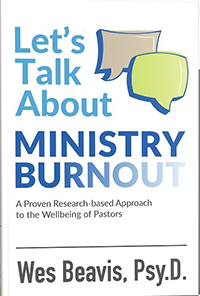


Review: Let’s Talk About Ministry Burnout

Let’s Talk About Ministry Burnout: A Proven Research-based Approach to the Wellbeing of Pastors

Wes Beavis (Powerborn)

Let’s Talk About Ministry Burnout is written primarily to and for pastors. However, anyone in ministry or who cares for someone in ministry can benefit from the book.

Beavis writes candidly, relatably and practically. Most important, he writes from his own experience. He served on the staff of at least one large church and also struggled to pastor a small church plant as it launched. Following his own burnout, he studied the phenomenon as the basis of his doctorate in clinical psychology. Let’s Talk About Ministry Burnout is the marriage of his experience and expertise.
Ideally, the book should be read before burnout, but readers already at the short end of the wick will find stories from fellow sufferers, explanations of common thoughts and feelings associated with burnout, and a companion in the dark days of burnout.

Beavis begins with an outline of six stages of burnout, moves into several chapters on factors leading to burnout—such as the vocation itself, a minister’s personality, family stresses, financial strain, disappointment and exhaustion, among others—and finishes with a few chapters on acknowledging resistance and obstacles to recovery.

An uplifting chapter toward the end calls the reader to remember why he or she got into ministry in the first place. The ember of the call can reignite a burned-out minister enough to begin the hard and individual work of recovery.

Let’s Talk About Ministry Burnout isn’t a how-to book with a concrete checklist of fixes. Rather, Beavis comes alongside the reader, offering awareness, compassion and understanding. Indeed, a pastor reading this book will feel known and understood—a rare gift for a pastor.

The book is available through Wes Beavis’ website.

Eric Black, executive director/publisher/editor
Baptist Standard


Connect360: Making Faith Real

  • Lesson 5 in the Connect360 unit “The Making of Authentic Faith: Wisdom that Works” focuses on James 2:14-26

In this lesson, James described an opportunity for us to make faith become real. He told us a faith that does not concern itself with others and their needs is dead.

Faith can be defined as complete trust or confidence in something or someone. But most important for this lesson, we see it as a strong belief in God’s existence rather than proof. Faith is a living thing. It is something internal and expressed by one’s actions. Hebrews 11:1-32 reveals how “by faith” many believed, were saved and/or prospered.

We learned earlier in James 1:3 that the “testing of your faith produces perseverance.” In Romans 5:3-4, we are told suffering produces perseverance, character and hope. Your faith keeps you going for the duration, it builds character in you. That is why we must continue believing and walking in the faith that God’s Word is true. Sometimes the walk is not easy, but our reward is waiting on us.

Action required

James talked about how you must have something else along with faith—deeds (works). There is action required. James also discussed how your deeds do not work alone, you must have faith, too. The Holy Spirit uses the body, and then it is left up to us to put our bodies to work. Faith without works is dead.

Hebrews 11:7 says: “By faith Noah, when warned about things not yet seen, in holy fear built an ark to save his family. By his faith he condemned the world and became heir of the righteousness that is in keeping with faith.”

Noah’s simple act of faith was not just believing, but he put it in action by building the ark. He could have easily believed God and did nothing, but we are reminded God’s divine plan would have not been completely fulfilled without the action of Noah’s work. In turn, he saved our future, as well as himself.

Compiled by Stan Granberry, marketing coordinator for GC2 Press, formerly known as BaptistWay Press.

To learn more about GC2 Press and the Connect360 Bible study series, or to order materials, click here


Explore the Bible: Joy and Contentment

• The Explore the Bible lesson for Oct. 10 focuses on Philippians 4:10-20.

“No Reserves. No Retreats. No Regrets.” The quotation from William Borden, heir to the Borden family fortune, sums up the life of a rich young man. Borden’s desire to become a missionary was decided at an early age during a trip through Asia, the Middle East, and Europe.

While studying at Yale University, he began to fulfill the purpose for his life by sharing Christ through prayer and Bible study with the students at Yale. William’s ministry went beyond Yale when he founded the Yale Hope Mission, a ministry outreach to widows, orphans and the disabled. It was reported that William would be seen in the lower part of the city rescuing and feeding drunkards. Above all, he shared the gospel of Jesus Christ on the streets of New Haven.

After graduating from Yale, William attended Princeton Seminary in New Jersey determined to accept the missionary call to the Muslim Kansu people in China. After seminary, William traveled to Egypt to study Arabic. Regretfully, he contracted spinal meningitis before his arrival to China and died at age 25. Did William underestimate God’s call to become a missionary?

In the lesson, Paul shares his heart about giving and receiving. “For where your treasure is, there your heart will be also” (Matthew 6:21).

Power in Contentment (Philippians 4:10-14)

All of us are involved in earthly life. As believers, we become ambassadors for Christ, and we must continue to model the life of Christ in our daily living. Although Paul was experiencing the transition of being in prison and not being able to visit the church at Philippi, he continued to demonstrate his love for Christ and the believers. Paul rejoiced in the Lord greatly, because the Philippian believers cared and was concerned about him (vs. 10). More than thankful for the gift sent by the church through the hands of Epaphroditus, Paul understood their sacrificial giving.

The widow’s mite is an excellent example of sacrificial giving. Jesus watched how those in the Temple place their offering into the treasury. The wealthy threw their offering in, but the poor widow put her coins in the treasury. The widow’s act of giving pleased Jesus (Mark 12:41-44).

Paul expresses his thankfulness for the church’s offering while expressing his contentment in all circumstances. Contentment, as Paul states, is learned through sufferings, hardships and successes. Paul knew how to make do with a little and a lot (vs. 12).

Many Christians will agree with Paul’s secret of being content, knowing the strength comes from Christ who strengthens (vs. 13). Believers who experience hardships caused by hurricanes and tornadoes can be devastating, because of the loss of material things as of the result of rain, wind and flood or the loss of life. Trusting in Christ, who gives strength, is the secret the believer learns through the losses. After the hurricane or tornado brings disaster, the process of cleaning up and rebuilding begins in the community as the people partner with each other.

Giving and Receiving (Philippians 4:15-18)

In the final message to the Philippians, Paul once again conveys his thankfulness to the church for the gifts the church sent, more than once (vs. 15). Paul’s deepest desire was not receiving money from the church, but to see the result of spiritual fruit. His desire is for them to remain together and fight the good fight of faith. Money could not help Paul while in prison. However, the caring and love the church exhibited filled him with comfort. Is it possible for us to love the church like Paul? Paul loved the church with his affection and well as his acts of service. Are you sacrificially donating time and resources to the church?

 Even though it becomes difficult to serve and love church people, remember when we serve people, we serve God. Our love begins to grow more and more as we serve sacrificially. For example, give others your time and resources, invite the lost or unchurched to church, and share your personal story concerning Christ. These examples of some acts which produce fruit. “He told, them, the harvest is plentiful, but the workers are few. Ask the Lord of harvest, therefore, to send out workers in his harvest field” (Luke 10:2).

Paul understood the grace of God in his life, and he used every advantage to preach the gospel of Jesus Christ to everyone who would listen. Shared in Luke 4:16-19, Jesus was tempted in the wilderness by Satan, and afterwards went to the synagogue in Nazareth and read the scroll of Isaiah. His mission was to proclaim good news to the poor, freedom for the prisoners, sight for the blind, set the oppressed free, and proclaim the year of the Lord’s favor (Luke 4:16-19).

Paul followed his deepest desire to know Christ, know the power of his resurrection and participate in his suffering, becoming like him in his death (Philippians 3:10).

Margie Clayton is minister of education at Berean Tabernacle Baptist Church in Liberty, Texas. 


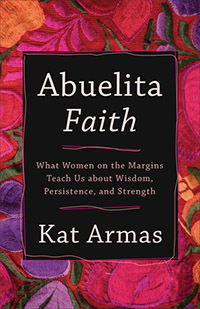
Review: Abuelita Faith

Abuelita Faith: What Women on the Margins Teach Us About Wisdom, Persistence, and Strength

Kat Armas (Brazos Press)

Abuelita Faith is part memoir, part biblical exegesis, part call for justice. All three grow out of Kat Armas’ Cuban heritage and the story of her grandmother’s life in Cuba and the United States. She weaves all three aspects back and forth throughout each chapter.

Armas approaches Scripture from the perspective and embodied wisdom of women, particularly oppressed, marginalized and nameless women. Some readers may struggle to get past her social and cultural references, particularly as they are integral to Armas’ understanding of Scripture. Others will be uncomfortable with Armas’ designation of the Holy Spirit as female. Still others will reject some of the theologians she cites whose presuppositions and positions differ from conservative evangelical stances. However, those who follow the narrative long enough to encounter Armas’ examinations of women in the Bible will be rewarded with deeper insight into the background of biblical stories. Readers also will gain cultural insight through the stories Armas tells about her family and Cuban culture in Miami, and in Spanish terms and phrases sprinkled throughout the book.

Armas considers the following women from the Old Testament: the wise woman of Tekoa, Shiprah and Puah, Jochebed, Tamar, Rizpah, Huldah the prophet, Hannah, Ruth, Naomi and Orpah, Achsah, and the daughters of Zelophehad—Mahlah, Noah, Hoglah, Milcah and Tirzah. From the New Testament, she examines: the Canaanite woman, Joanna, Tabitha, Lydia, Mary, and Lois and Eunice—Timothy’s forebears praised by Paul. Each woman seems overshadowed by the male characters in their stories until one understands the ways in which these women exhibited agency—knowing full well what they were doing—and became protagonists in their stories. Armas also illuminates the wisdom, cunning, subversiveness, survival instincts, resourcefulness and tenacity of these women, pointing out each was blessed by God or Jesus despite—and sometimes for—behaving in ways modern evangelical Christianity frequently castigates.

Armas presents the Bible as a living book, the lives of biblical women repeated in the lives of modern women in Armas’ family and culture. The takeaway: Just as subjugated, ignored, despised, unnamed women found favor with God and Jesus then, they do now.

Eric Black, executive director/publisher/editor
Baptist Standard


Connect360: Playing Favorites

  • Lesson 4 in the Connect360 unit “The Making of Authentic Faith: Wisdom that Works” focuses on James 2:1-13.

The wisdom of God is foolishness to man. What God prioritizes and uplifts often does not make sense to human wisdom. Human wisdom says to trust and follow the wealthy because they must be doing something right to be wealthy and powerful. Alternatively, according to human wisdom, the poor should not be trusted and should not hold positions of authority.

But in God’s kingdom, things are different. God prioritizes the downtrodden, the poor and the vulnerable. God has chosen the ones the world has deemed unworthy to be rich in faith and to be the ones to inherit his kingdom (2:5).

This closely follows the teaching of Jesus in Luke: “Blessed are you who are poor, for yours is the kingdom of God. Blessed are you who hunger now, for you will be satisfied. Blessed are you who weep now, for you will laugh” (Luke 6:20-21). God has chosen the poor of this world to pour out His love. This does not mean the rich do not also receive God’s love and salvation, but the point is that God’s priorities are different from the world.

Poverty alone does not mean you will be rich in faith, but the experiences of poverty allow for a particular kind of growth that has the potential to lead to rich faith in God. A wealthy person may be tempted toward self-reliance, to trust their wealth for salvation and not God, to think (pridefully) more of themselves than they are. The poor do not have the same temptations. Their life circumstances allow them to put their faith and hope in Christ more readily. They are rich in faith and have much to teach their fellow brothers and sisters in Christ.

Radical equality

There is division and separation in the world, but before the foot of the cross, all are equal. The church, God’s representative kingdom on earth, should reflect the radical equality of God’s kingdom.

Love is the new standard. To love others as ourselves, we must totally reject any system or belief that allows for preferential treatment of God’s children. The sins of racism, elitism and any other belief that elevates one group above another have no place in the Body of Christ.

As believers follow God’s commands, we must always be aware that all stumble at various times. Believers show mercy because they are keenly aware that they, too, are recipients of God’s mercy. God is pleased when we show mercy. God’s children show love as they freely demonstrate mercy and treat their fellow brothers and sisters as equals.

Compiled by Stan Granberry, marketing coordinator for GC2 Press, formerly known as BaptistWay Press.

To learn more about GC2 Press and the Connect360 Bible study series, or to order materials, click here


Explore the Bible: Joy Through Peace

  • The Explore the Bible lesson for Oct. 3 focuses on Philippians 4:1-9.

C.S. Lewis wrote that just as a car is made to run on gasoline, God is “the fuel our spirits were designed to burn, or the food our spirits were designed to feed on. There is no other. That is why it is just not good asking God to make us happy in our own way without bothering about religion. God cannot give us a happiness and peace apart from himself, because it is not there. There is no such thing” (Mere Christianity, p. 50).

In the same manner, Jesus warns, “Do not store up for yourselves treasures on earth, where moths and vermin destroy, and where thieves break in and steal. But store up for yourselves treasures in heaven, where moths and vermin do not destroy, and where thieves do not break in and steal.  For where your treasure is, there your heart will be also” (Matthew 6:19-21).

The Christian’s happiness is not determined by obtaining material possessions. Society considers one successful when graduation occurs or when a person lands the perfect job, opens a business, or buys cars, houses, yachts and property. These are just temporal things. “But seek first his kingdom and his righteousness, and all these things will be given to you as well (Matthew 6:33).

A survey was conducted in January 2019 in the United States and more than 10 other countries, to determine if religion makes people happier. The findings revealed that in the United States, 36 percent of the actively religious describe themselves as “very happy,” compared with 25 percent of the inactively religious and 25 percent of the unaffiliated.

People will decide to form their own opinion about the survey, but I believe something, or someone is driving the actively religious to describe themselves as “very happy,” and that someone is the God of peace. We can find satisfaction in having material things, but only God can give us the kind of satisfaction in knowing that he is the giver of all good gifts.

One Accord (Philippians 4:1-6)

The disagreements between two women in the Philippian congregation caused chaos and division. Paul urges Euodia and Syntyche to agree in the Lord (v. 2). Disagreements have been part of the church life for centuries as noted in this lesson. Christians who once worked closely and diligently together to further advance the kingdom somehow allowed the enemy to destroy the work. “The thief comes only to steal and kill and destroy; I have come that they may have life and have it to the full” (John 10:10).

It is unsettling to know when Christians are challenged with making the best decisions regarding troublemakers in the church, most times they make decisions based upon relationships and emotions. It becomes important to have strong believers who can settle divisive matters of the church quickly, but gently.

In addition to strong leadership, prayer is the key to solving major problems and restoring fellowship. Through my experience as a preacher’s wife, I have seen God move mightily in the lives of the members when trouble and confusion arose. Fervent prayers, without wrong motive, were offered to God with thanksgiving (v. 6). Although some members left, God strengthened those who remained. Because of the grace of God, the gospel of Jesus Christ is preached, leadership and congregation are more aware of the enemy’s tactics, and many have matured in the faith.

God of Peace (Philippians 4:7-9)

How is it possible to have peace in the midst of the storm? Believers may not have all of the answers and understand the ways and mind of God. However, it is assuring that the God of peace will give us his peace and will guard our hearts and mind in Christ Jesus (v. 7).

We all love the story about when Jesus was asleep in the lower part of the boat and a storm arose. The frightened disciples proceeded to wake Jesus: “Lord, save us! We’re going to drown!” Jesus answered with these words, “You of little faith, why are you so afraid?” Then he got up and rebuked the winds and the waves and it was completely calm (Matthew 6:23-26). Baffled about the power of God, the disciples began to wonder what kind of man is in their presence (v. 27).

Paul loves the Philippians enough to instruct them in moral virtues. In order for Christ to guard the hearts and minds of believers, they must meditate on whatever is true, honorable, just, pure, lovely and commendable, as well as dwell on moral excellence and anything praiseworthy (v. 8). These virtues are necessary to transform the Christian to be more like Christ.

If we want to experience the peace of God, there has to be an observable change in our lives. Paul modeled the virtues and desired to pass it on to the Philippian believers so that the God of peace will be with them (v. 9).

Margie Clayton is minister of education at Berean Tabernacle Baptist Church in Liberty, Texas. 


Review: All That Is Secret

All That Is Secret: An Annalee Spain Mystery

By Patricia Raybon (Tyndale)

“The Colored Professor,” a 24-year-old Black professor at a Bible college in Chicago, is prompted by a young white boy to return home to Denver to solve the mystery of her father’s death. At too late an hour for couriers, the boy shows up at Annalee Spain’s door with a message she can’t ignore.

Someone doesn’t want her to follow the message, or maybe they do. Either way, it means trouble—for Annalee, for a young white boy, for just about everyone.

The Ku Klux Klan marches proudly through Denver in the 1920s and counts among its members nearly every prominent citizen or authority in the city. Annalee’s father was connected to some of those prominent citizens. At least one of them had national aspirations dependent upon the KKK’s blessing.

Back home in Denver, Annalee takes on the detective instincts of her favorite sleuth, Sherlock Holmes. She quickly becomes entangled with the person whose message she couldn’t refuse, opening the door to a different kind of mystery. The romance between her and Jack Blake, a pastor, threatens to distract from the detective work, pulling Annalee away at odd moments.

As a theology professor, Annalee feigns confidence in her subject—God and prayer—but she is inwardly conflicted. Her relationship with God has grown silent, but the how and the why of prayer come back to Annalee without much difficulty once she’s surrounded by a tangled web of suspects in the small world of 1920s Denver.

The narrative isn’t just fast paced; it propels the reader forward with staccato sentences, questions, single words.

Patricia Raybon is a long-established nonfiction writer, journalist and essayist published in NewsweekUSA Today and other national outlets. All That is Secret is her first novel, and it is due for release in October. She ends it with a note on the history of Denver, a city with which she is very familiar.

Eric Black, executive director/publisher/editor
Baptist Standard


Connect360: Just Do It

  • Lesson 3 in the Connect360 unit “The Making of Authentic Faith: Wisdom that Works” focuses on James 1:19-27.

Not only are we to receive God’s word in humility, but we are also to do what it says. It is not enough to know the word of God forward and backward. Plenty of people know in their head what is right and wrong, but it does not make them godly.

Imagine someone staring at themselves in the mirror: they go on and on about how attractive they are and how nice they look. Imagine that person walking away from the mirror and immediately forgetting what they look like. That would seem utterly ridiculous to most people.

For James, a person who only retains “head knowledge” of God’s word without allowing it to transform their life is like a person who looks in the mirror but cannot remember their own reflection. The mirror is a true reflection, and they see that reflection looking back at them. Still, the moment they walk away, they immediately forget what they look like.

True reflection

God’s word is like the mirror. Believers have the opportunity to look within it for a true reflection of the world and God’s commands. A person who merely hears Scripture without obeying God’s commands is like someone who looks in a mirror but can never remember who they are. God’s word tells us who we are. The person who not only hears God’s word but obeys it and allows it to transform them, experiences the blessings and growth that accompany a life pleasing to the Lord.

There is a direct correlation between receiving the gifts of God and following the will of God as revealed in his word. God delights in blessing those who live in faithful relationship with him, hearing and obeying his word.

Compiled by Stan Granberry, marketing coordinator for GC2 Press, formerly known as BaptistWay Press.

To learn more about GC2 Press and the Connect360 Bible study series, or to order materials, click here


Explore the Bible: Joy In Knowing Jesus

  • The Explore the Bible lesson for Sept. 26 focuses on Philippians 3:8-21.

The classic Aesop Fable of “The Tortoise and the Hare” is taught by educators, both secular and Christian, to teach an important moral lesson. The story begins by introducing the hare’s characteristic as boastful, pointing to how he could outrun everyone. The hare constantly teased the tortoise about his slowness and continuously challenged him to run a race. Finally, the tortoise agreed. With excitement, every animal in the forest attended the race, in hopes that the tortoise would win.

At the start of the race, the hare quickly ran far ahead of the tortoise. Being confident that he would win the race, the hare decided to take a break and eat a bit. Afterwards, he decided to nap. When the hare finally opened his eyes from a deep sleep, the tortoise was at the finish line basking in the cheers from all the animals. The moral of the lesson is slow and steady wins the race.

In the Bible lesson, Paul comes to the point of counting everything a loss because knowing Christ Jesus and gaining Christ becomes his top priority. Although King Solomon was the wisest of all and sought to follow the wisdom of God as much as possible, he allowed his wives and concubines to lead him into idol worship (Ecclesiastes 9:11). Sadly, the king battled with fleshly desires which contributed to the downfall of the kingdom (1 Kings 11-16). What a great loss to the kingdom.

To Know Christ (Philippians 3:8-14)

God revealed himself to Abraham, Isaac and Jacob through a perfect plan especially for the three who faced enemies to and in the Promised Land. To Moses, God’s name was “I Am” because everything Moses needed for the journey was already provided. To the father of many nations, Abraham, God was the God of covenant and promise. To Isaac, God sent a ram to save his life. To Jacob, his name was changed to Israel who fathered the 12 tribes.

Paul warned the Christians to beware of those who call themselves righteous, but instead, their evil works exposes the plan to guide them away from God. Paul, no doubt studied the life of the patriarchs and understood fully what it meant to uphold the Law. However, he put his Jewish faith aside to live for Christ and was determined to lay aside his childhood upbringing in order to know the true and living God. Worldly possessions no longer ruled his life, but living a righteous life was Paul’s utmost desire “to know him and the power of his resurrection” (vs. 10).

Paul sought a right relationship with Christ. Being in right relationship means to allow Christ into your day-to-day experience. When there is a need, Christ is there to provide. When sickness and death happens, Christ is there to comfort us.

Paul also longed to know Jesus in his suffering and death (vs. 10). In our suffering, Jesus is with us, embracing us. and calling us into a deeper relationship with him. Paul took the necessary steps to know him more and more. Paul is in pursuit of the goal, forgetting what is behind, reaching for what is ahead (vs. 13). Do you not know that in a race all the runners run, but only one gets the prize? Run in such a way as to get the prize. Everyone who competes in the games goes into strict training. They do it to get a crown that will not last, but we do it to get a crown that will last forever” (1 Corinthians 9:24).

Will you share with the group your experiences with Christ?

Truth in Christ (Philippians 3: 15-21)

Upon graduation from high school, our youngest son was adamant about joining the military.  About two weeks into basic training, I received a panic call from our son stating that he was ready to come home, because he felt the training was too hard. Besides complaining about being hard, his major complaint was that the sergeant treated the whole group like animals. Unknown to me, my husband was listening to our conversation, asked for the phone, and reminded the young man that it was time for him to grow up and be a man. Considering the words from his father, our son chose to serve his country for 10 years with two tours to Korea, (demilitarized zone), and rendered special services in Iraq as first sergeant. Overall, the suffering, discipline and hard work contributed to his maturity. He realized that being true to his dream and trusting God to protect him paid off with great rewards.

Paul instructed the Philippians to mature and live up to the truth that is only in Christ (vs. 15, 16). Jesus is the only truth for a Christian, “Then you will know the truth, and the truth will set you free” (John 8:32). Paul lived the life of a Christian, and his desire was that his brothers and sisters imitate him (vs. 17) and not the enemies of the cross of Christ (vs. 18).

What steps should we take to make it our priority to know Christ, regardless of what we may face in the future? 

Margie Clayton is minister of education at Berean Tabernacle Baptist Church in Liberty, Texas.


Review: Where the Light Fell

Where the Light Fell: A Memoir

Philip Yancey (Convergent Books)

We’ve known for years Philip Yancey carries a well of sorrow. Books like Where is God When it Hurts? and Disappointment with God—among others—have made that clear. Now we know where the well is, and how deep.

In Where the Light Fell, Yancey opens the door wide into his heart and soul. Opening with the story of his father’s death and its outflow in his family’s life sets the hook.

Recounting his childhood, Yancey writes of concrete thinking, having more questions than answers, and being raised in a stridently conservative—if not fundamentalist—Christian home. His effortless switching between past and present tense creates the illusion he is living his childhood now. And maybe he is.

Yancey recounts the difficulty of growing up forever in the shadow of childhood tragedy that played a significant role in propelling his family into perpetual poverty. Growing up in and around Atlanta, Ga., in the 1960s, he also drank deep the narrative of the Lost Cause and the Curse of Ham. What he was taught—and believed—about the world and the people in it, particularly Black people, was brought up short by a jarring experience at the CDC during a summer fellowship in high school.

Those who also came of age during the 1960s will identify with the anxiety over the civil rights movement, Communism, sex and drugs. Those who came of age watching the TV show “The Wonder Years” will hear echoes of their parents, even if their parents didn’t share with them the same stories Yancey now does.

During those turbulent and formative years, Yancey and his brother experienced their own crises of faith while attending a Bible college. Their crises were a culmination of a lifetime of familial and religious traumas—what Yancey might term “toxicity”—each brother responding in his own and enduring way.

Trauma casts a long shadow, a very long shadow. The reader will look for where the light finally falls, perhaps not realizing it’s all around and always just a step away.

Where the Light Fell is expected to release in October 2021.

Eric Black, executive director/publisher/editor
Baptist Standard


Review: Eternal Fruit

Eternal Fruit

By Sam Cannata and Ginny Cannata (Xulon)

Many Baptists remember hearing missionaries Ginny and Sam Cannata speak or recall reading their autobiographical Truth on Trial or praying when they were arrested in Ethiopia and “Dr. Sam” lost sight in one eye. After political upheaval caused them to flee three different African countries, the two heard God’s whisper, “What did you leave there that was eternal?” Realizing they “were only scattering seeds,” they asked, “Lord, how do we plant seeds?” The Cannatas answer that question in Eternal Fruit.

In the book, the veteran missionaries, originally appointed in 1957, explain how they dedicated their last 24 years in Africa to discipleship—an approach now known as mentorship. The story begins in March 1980, as the Cannatas’ journey to the remote Murle village of Pibor, Sudan. Sam mostly narrates with Ginny adding her insights and writing the epilogue after Sam’s death in 2017.

The pages overflow with compelling stories of learning the language and customs, facing soldiers and gunfire, praying through fear and indecision, living with snakes and natural peril, exploring ways to make disciples, raising chickens, discovering the joy of Ginny’s literacy classes, gaining medical wisdom in Sam’s clinics and surgery, mentoring in large and small ways, and finally, saying sweetly sad good-byes after two short years.

Did the Cannatas’ work in Pibor ultimately bear eternal fruit? One of Ginny’s students became a great literacy teacher and itinerant evangelist. Others in her classes took literacy and Bible teaching to annual cattle camps. Idris, whom Sam taught and discipled, continues to preach, pastor and teach others in spite of persecution. The Cannatas helped with a Murle New Testament translation, and 20 years later, one of Ginny’s students is on the Murle Old Testament team. What an incredible story, but the best part is that it’s true. Eternal Fruit bears eternal fruit.

Kathy Robinson Hillman, former president

Texas WMU and Baptist General Convention of Texas

Waco