Connect360: Wonders of the Word
- Lesson Five in the Connect360 unit “Find Us Faithful: Standing Firm in Our Faith” focuses on 2 Peter 1:16-21
Divine inspiration is the most important doctrine regarding the Bible. Without it, nothing else matters.
If the Bible is not God’s word, and only man’s creation, then it has no lasting authority and no inherent power.
The Bible, however, is clear: it is God’s divinely inspired word.
Paul said the same to young Timothy, “All Scripture is breathed out by God and profitable for teaching, for reproof, for correction and for training in righteousness” (2 Timothy 3:16).
But what is “divine inspiration?” Some think that means the Holy Spirit literally told the men every word to write. “For” (for) “God” (God) “so” (so) “loved” (loved). …” They view the writers like robots, merely following the dictate of the Spirit. Yet, Peter gave a different picture.
In verse 21 of today’s passage he said, “Men spoke from God as they were carried along by the Holy Spirit.”
The Greek implies the co-laboring of the two parties to advance and produce fruit.
The fact that it is divine, inspired by the Spirit of God, also means it is without error.
The God of truth will not reveal error to his chosen writers.
Psalm 119:160 says, “The entirety of your word is truth” (CSB), and Jesus himself prayed, “Sanctify them in the truth; your word is truth” (John 17:17).
God’s word stands above all others as the foundation of truth, yet it also stands above all others in internal and external credibility.
We believe by faith, but thankfully, God has given us proof to reinforce our faith foundation.
We can allow these to strengthen our reliance on God’s word and our conviction to base our decisions on its authority. They should most definitely not be taken for granted.
To learn more about GC2 Press and the Connect360 Bible study series, or to order materials, click here.
 Author Michael W. Goheen believes followers of Jesus are called to live out the gospel for the world’s sake. However, they need a spiritual formation and discipleship process to equip them for that task.
 In Book 3, Dangerous Dilemmas, David, Solomon and Daniel pull 11-year-old Patrick from Psalms to Malachi. Liz and Jack Hagler combine Jack’s imaginative melding of fiction and fact with Liz’s engaging black-and-white illustrations to create a hilarious and poignant graphic novel in the form of Patrick’s illustrated journal describing his adventures as a kid and a time traveler.
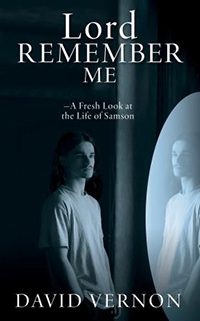 Samson’s prayer for the Lord to “remember me” is highlighted with the author’s commentary on Samson’s legacy, his appearance in the hall of faith, and the struggles of everyday life.
 She begins by distinguishing calling and vocation from work and passion. Work has inherent value, in addition to providing income and—perhaps—a sense of fulfillment, but calling has a higher purpose. Passion can provide the fuel to help us achieve some great purpose, but many individuals labor in jobs totally unrelated to their passions. They may be called to something far greater than what could be a fleeting passion.