Connect360: The Return of Christ

  • Lesson Eleven in the Connect360 unit “Find Us Faithful: Standing Firm in Our Faith” focuses on 2 Peter 3:1-7

In college, I took a class in logic where we studied syllogisms.

The class taught deductive reasoning, where general principles were used to form a logical conclusion.

The scoffers in 2 Peter would have benefited from such a class.

Our author reminds the church God created the heavens and the earth when the Spirit of God hovered over the waters (Genesis 1:1–2).

In doing so, he separated the dry land from the sea (Genesis 1:9–10.)

However, the same world God created when separating land and water, God also destroyed with water in the days of Noah.

My logic class continues to come to the forefront in my thinking when reading 2 Peter 3.

God acts in and out of history to fulfill his purposes, and it only makes sense that God will do it in the future.

God has done it in the past through creation and the flood … and many were eating and drinking and going on with their daily business without giving it any thought (Matthew 24:38–39).

God worked in history when he chose to put on flesh and blood in the person of Jesus.

Prophet after prophet spoke of the day the Messiah would arrive, and almost all in Bethlehem missed it that night.

God defeated death when Christ died on the cross, and it was a Centurian guard who declared Jesus was the Son of God (Mark 15:39).

One day in the future, God will act again.

Our present world will give way for God to create a new heaven and new earth (Revelation 21:1).

By closely examining history and how God has worked in his world in the past, the only logical conclusion for any human being is to prepare oneself for Christ’s second coming.

As Noah and his family prepared for the flood years before it took place, the church must be preparing for Christ’s return.

As Mary was ready to respond when the angel Gabriel arrived in Nazareth, a Christian never asks, “Will Christ come again?”

The question is always: “Will you be prepared and ready when Christ does come again?”

To learn more about GC2 Press and the Connect360 Bible study series, or to order materials, click here.



Connect360: Sick Dogs and Slimy Hogs

  • Lesson Ten in the Connect360 unit “Find Us Faithful: Standing Firm in Our Faith” focuses on 2 Peter 2:17-22

Peter’s focus in these verses stays with the fake Christians but is mainly pointing out the fake leaders in the Christian church.

These fake Christian leaders are like springs without water, or wells without water as some translations say.

Back in that time, most people traveled on foot, and in the heat of the day they would look for wells or springs where they could stop and get water.

Dry springs or wells were disheartening. They would lead people in only to show they had no substance to give back.

The promises they gave for healing and refreshment always were broken, for no water was available for the weary traveler.

False leaders are no different than dry wells.

They make empty promises to people. They pull earnest Christians in who believe what they are saying is true.

But when those promises are examined up close, they are as empty as a dry well.

What they are doing will not go unnoticed by God.

He will not let their sin of leading his own astray go without punishment.

The last part of verse 17 speaks to their end: “blackest darkness is reserved for them.”

God has reserved a special place in hell for those who willingly lead his children astray.

God will not spare them for their sin.

The way they lead people astray is not much different today than it was in Peter’s time.

These fake leaders are smooth talkers, and they know exactly what to say to make people want to follow them.

They promise fame, wealth, sex and almost anything they need to promise to get people to follow them.

Once people are brought in, they realize too late they will never get anything they were promised.

Leaders in churches today can learn from wolves.

They need to know when and where they can best serve the church body.

Service is never self-service like a fake leader would do. It is always service to the benefit of the body.

There will be times that a good leader leads the church from the front, giving direction and showing a clear vision.

There will be times the leader leads from the back, looking over the church, identifying those who need help, and those who could be potential leaders.

Then there are those times when the leader will come up and lead from the middle, encouraging the church, and lifting them up when spirits are low.

Good leaders lead from every direction, not for themselves, but for the benefit of the church body.

To learn more about GC2 Press and the Connect360 Bible study series, or to order materials, click here.


Connect360: All That Glitters Isn’t Gold

  • Lesson Nine in the Connect360 unit “Find Us Faithful: Standing Firm in Our Faith” focuses on 2 Peter 2:10-16

Verses 13 and 14 are a stern warning to all fake Christians; their behavior and lifestyle will not go unpunished.

They are living their lives without shame; their deeds are carried out in daylight.

This means they are not worried about hiding their sins under a blanket of darkness. Instead, they choose to flaunt their sinful lives in front of everyone they meet.

They will cheat and rob others to build their own wealth. They do it in Jesus’ name, but they do not know Jesus.

These fake Christians end up on the evening news as the fallen church leaders who stole from the church, had affairs outside of their marriage, or ended up with a drug problem.

Be careful and keep a vigilant watch for these fake Christians, because they will take you down with them, seek to destroy everything you have and feel no guilt while they do it.

This verse calls them what they are, blots and blemishes in our church body.

But remember that all the harm they bring about will be brought back on them by God himself.

I was part of a church where a staff member stole money from the church. They would come in early Monday morning and take cash from the offering the day before. They also had access to church credit cards and stole money.

When we discovered the problem, they had stolen close to $100,000 from the credit cards, and there was no way to know how much cash they had taken.

They ended up in jail.

The temporary pleasures gained by taking this money were short lived, but the shame and pain of being in jail, I am sure, were horrible.

Sin will catch up to you. It may be sooner, or it may be later. But when it does, there will be a high price to pay.

There is only one way to God.

People may try to tell you that many roads lead to God—the roads may all come from different directions and different religions. But in the end, all the roads will end at the same God—They are wrong.

Verse 15 refers to the straight path, the right path. Once you stray from that path, you have moved away from where God has directed you to go.

Fake Christians have no idea where God’s path leads. They have no direction; they have no roadmap to follow.

As children of God, we have several things to show us God’s direction along the path—the Bible, the Holy Spirit, and fellow believers—they all serve a way to help keep us on the straight path.

Not so for fake Christians.

To learn more about GC2 Press and the Connect360 Bible study series, or to order materials, click here.


Connect360: Search & Rescue

  • Lesson Eight in the Connect360 unit “Find Us Faithful: Standing Firm in Our Faith” focuses on 2 Peter 2:4-9

At 9:02 a.m. on April 19, 1995, our nation was shaken.

A truck with a homemade bomb was parked outside of the Alfred P. Murrah Federal Building in Oklahoma City and detonated killing 187 men, women and children.

I was living in Arlington at that time, serving in my first church, and many in my family were living just a few miles north of where the bomb detonated.

When I heard on the news what had happened, I began calling my family first and then friends I went to college with to make sure everyone was OK.

Two days after the bombing, I drove up to Edmond, Okla., to see my parents, and the next day my mom and I drove down to the bombing site.

We had to park 10 blocks away and then walk in. As we got about five blocks out, we saw broken windows on buildings, and as we got within a block from the site, we saw buildings in the area had been severely damaged.

When we walked up to the site, what we saw was beyond anything we ever thought we would see in this great country of ours.

The building looked like something from a Third World, war-torn country. Rescuers were swarming over the rubble desperately looking for anyone that might have survived the explosion and lived through the last 72 hours under the rubble of the building.

These men and women worked around the clock to save as many people as they could, and when they knew there was no one left alive, they refused to leave until they had recovered every last victim so their families could have some closure.

The rescuers knew nothing about the victims. They didn’t know if they were good or bad people. They had no idea if they deserved the effort of being saved.

All these men and women knew was there were people who need to be saved, and they did everything they could to save them.

God feels the same way about us; except he knows everything about us.

He knows we are not good people. He knows we sin, often.

He knows how we treat others. He knows we are selfish and self-serving and still he sees us worthy of being saved. He moved heaven and earth to provide a way to save us. He sent his one and only Son to die in our place so we could have an eternal relationship with him.

To learn more about GC2 Press and the Connect360 Bible study series, or to order materials, click here.


Review: Silent No More: Bible Women Speak Up, A Poetic Meditation

Silent No More: Bible Women Speak Up, A Poetic Meditation

By Christine Kohler (Resource Publications)

This brief book (only 59 pages) offers a collection of poems written from the perspectives of female Bible characters of varying fame from across the Old and New Testaments.

As the subtitle suggests, each poem invites the reader to take in a character’s perspective deliberately and contemplatively.
The book offers a welcome invitation to pause and think about these women. Their stories often seem to serve as asides, included in the biblical narrative or in sermons merely as supports for the “main characters” we’re really supposed to learn from in the Bible—the males.

Only a handful of women in the Bible could be classified as having “main character energy,” as my Gen Z kids would say. Few of those biblical women who could be described as having “main character energy” are praised.

Reading these poems the way Kohler intended them to be enjoyed—as meditations—I cannot help but conclude, we sorely have missed out by not spending more time considering the human experiences of these remarkable women.

Their place in God’s supernatural story made the women of each poem important enough to appear in Scripture. Even so, I feel like I’m meeting them for the first time in Kohler’s poems.

Silent No More is a beautiful book, well worth spending time to contemplate. Seeing biblical women with fresh eyes evokes a surprising depth of emotion, perhaps because Kohler and her poems accomplish something many women need, in Baptist life and ministry especially —a sense of community.

Hearing the once silent voices of the women of the Bible, I not only understood them better, but also felt, in a new way, the great cloud of witnesses to be found in Yahweh’s daughters before me.

Dare I say, in seeing and hearing the once silent women of the Bible, I, too, felt more heard and seen?

I’d gift this book to my sisters in the faith who are struggling or to my own sons in the hope it might help them be more attuned to voices that often go unheard.

I am certain I will come back often to the poems in Silent No More, anytime I need a reminder of God’s care for the quiet ones, the ones who didn’t assert “main character energy,” but who God saw as essential in telling his story.

Calli Keener

Amherst, N.H.


Connect360: Find Us Faithful

  • Lesson Seven in the Connect360 unit “Find Us Faithful: Standing Firm in Our Faith” focuses on 2 Peter 2:1-3

Sometimes false teachings, called heresies, are obvious because they deny basic principles of orthodox Christianity such as the virgin birth of Christ or salvation by grace alone through faith alone in Jesus Christ.

Whole religious systems have been built upon these false teachings, and many still claim to be “Christian.”

Other false teachings in the church are more subtle, because they maintain the essential aspects of the gospel but skew the Bible’s teaching on second- or third-tier beliefs.

These may not be salvation issues, but they are still doctrinal issues.

In Galatians, Paul warned against false teachers who taught holiness through keeping a set of rules after salvation was attained.

This false teaching of legalism leads to Christians feeling like failures because our own effort never was meant to be our standard of holiness.

Even after our salvation, our holiness is a work of God’s grace and power through Jesus Christ (Philippians 3:3–4).

This legalism is a foundational problem of the prosperity gospel.

This false teaching teaches God will bless you physically, relationally and monetarily if you simply have enough faith and do the right things (often including giving financially to the false teacher’s ministry).

This sets up people to expect earthly blessings the Bible never promises.

And, when someone doesn’t receive the blessing they expect, the fault falls to them for not having enough faith or performing well enough.

It’s first century legalism wrapped in modern-day packaging.

Like the false teachers Peter was writing about, these false teachers are subtle, “secretly introducing destructive heresies.”

In fact, the Greek word (pareisagō) translated “bring-in” means “smuggle.”

It shows clearly an intentional secretive undermining of the body.

Therefore, Christians today must be diligent to study the Scriptures so they can know the truth and recognize the lies.

Truth is our greatest weapon as Paul wrote in Titus 1:9: “[We] must hold firmly to the trustworthy message as it has been taught, so that [we] can encourage others by sound doctrine and refute those who oppose it.”

To learn more about GC2 Press and the Connect360 Bible study series, or to order materials, click here.


Connect360: Wonders of the Word: Part Two

  • Lesson Six in the Connect360 unit “Find Us Faithful: Standing Firm in Our Faith” focuses on 2 Peter 1:16-21

Can you imagine making a declaration of fact about events that haven’t happened yet?

That’s exactly what the Old Testament prophets did. For doing so, many of them suffered and were rejected by their own people.

Yet, they obediently declared a message from God that would be proven years or even centuries later.

In fact, the only way to know if a prophecy is true is to wait and see if it happens (Deuteronomy 18:21–22).

Thankfully, the prophecies we see in the Old Testament do, in fact, come true. Why is this important?

It is internal proof the Bible is true. Let’s look at two specific examples.

First, in Daniel 7, Daniel received and wrote down a prophetic vision that reveals “the most comprehensive and details prophecy of future events to be found anywhere in the Old Testament.”

He described in detail the rise and fall of four great empires from around 600 B.C. to around A.D. 500: Babylon, Medo-Persia, Greece and Rome, plus a fifth which represents the ultimately victorious kingdom of God in Jesus Christ.

This vision parallels Nebuchadnezzar’s dream of the giant statue from Daniel 2.

Daniel 11 spoke with such specific detail about a 200-year section of this history that some secular historians claimed it was a forgery, written years after the events occurred.

However, the style of writing and other internal clues prove it was written during the time of Daniel and the incredible accuracy of the prophecies are nothing short of miraculous.

A second example of prophetic validation comes from Psalm 22.

In this Messianic Psalm, David described things clearly present at the cross of Jesus: disjointed bones, dry mouth and tongue, pierced hands and feet, emaciated body and divided garments won by casting lots.

David wrote these words nearly 600 years before crucifixion was invented. And look at the specificity with which he mentioned them dividing up and casting lots for Jesus’ clothing.

Remarkably, these specific things happened as Jesus hung on the cross.

I point out these two prophecies for a couple of reasons.

First, the things prophesied in them happened centuries later.

We have existing manuscripts containing the prophecies dated before the events occurred, meaning the prophecies could not have been written in hindsight.

Second, these are actions outside the control of those who might want the prophecy to be fulfilled.

The disciples could not orchestrate the events of Jesus’ crucifixion to happen as they did, even if they had wanted to.

It was divinely orchestrated.

In today’s passage, Peter spoke about the prophetic word he had experienced and that his readers can experience as well.

He encourages them to “pay attention” (1:9) and look for the day when things foretold begin to come about. He uses the prophetic nature of God’s word to encourage them to trust in it and to recognize its validity for their lives.

To learn more about GC2 Press and the Connect360 Bible study series, or to order materials, click here.


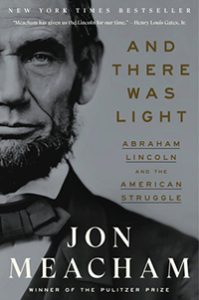
Review: And There Was Light: Abraham Lincoln and the American Struggle

And There Was Light: Abraham Lincoln and the American Struggle

By Jon Meacham (Random House)

In recent weeks, I’ve lost count of how many times I’ve heard someone say, “Our country has never been so divided before,” or “We’ve never experienced violence like this.” Since I was reading this masterful biography of Abraham Lincoln at that point, I kept saying to myself, “Um, not so fast. …”

Pulitzer Prize-winning historian and presidential biographer Jon Meacham provides a much-needed corrective both to Christian nationalists who paint all respected American figures of the past as sterling evangelical believers and to secularists who deny any Christian influence on American history.

Meacham gives focused attention to the complex, evolving and sometimes contradictory faith of Lincoln. He notes Lincoln’s early upbringing in anti-slavery Baptist churches in Kentucky and Indiana. Young Abe Lincoln never professed the faith of his father Thomas or submitted to baptism—perhaps in part because of his strained relationship with his parents and undoubtedly in part because of his difficulty accepting some stern Primitive Baptist doctrines. Even so, as a child, he preached to his playmates—reciting from memory the sermons he heard on Sunday.

As Meacham notes, Lincoln continued to maintain a conflicted and somewhat-distant relationship with organized religion for much of his life. He obviously read the King James Version of the Bible regularly, and he drew deeply from its poetic phrases in his speeches.

However, Meacham points out Lincoln also read a wide variety of theological and philosophical works that helped shape his views. In particular, Lincoln was influenced by abolitionist minister Theodore Parker, whose sermons about a “moral universe” whose arc “bends toward justice” not only made an impression on Lincoln, but also—a century later—on Martin Luther King Jr.

During the Civil War years, Lincoln’s resistance to joining a church continued, but particularly after the death of his son Willie, he attended church services on a much more frequent basis and prayed regularly. He also sought the wise counsel of ministers he respected as he struggled with the burden of guiding the nation through a bloody war.

One of the most insightful sections of And There Was Light is Meacham’s treatment of Lincoln’s Gettysburg Address. He provides an almost line-by-line exposition of the text—not only mentioning its numerous scriptural allusions, but also providing the rich biblical background for the references.

For much of his life, Lincoln’s relationship with Christianity was of a man “feeling his way through the twilight.” While the precise contours of Lincoln’s faith remain a mystery, Meacham makes a strong case for the depth of his faith.

Ken Camp, managing editor

Baptist Standard 


Review: Serving God Under Siege

Serving God Under Siege: How War Transformed a Ukrainian Community

By Valentyn Syniy (William B. Eerdmans)

Valentyn Syniy and his family, his colleagues—everyone he knew in Kherson, Ukraine, had plans. Some of their plans were about what to do if the Russians invaded. Many of their plans were for better days.

On Feb. 24, 2022, better days were set aside.

Tavrisky Christian Institute, where Syniy is president, was readying to celebrate its 25th anniversary later in 2022. Instead, Russian occupying forces commandeered the school on the west bank of the Dnipro River, looting everything from it, destroying the institute’s extensive library and severely damaging buildings.

Fortunately, Syniy and others had made plans for such an occasion. Their plans enabled them to relocate themselves and the institute to Ivano-Frankivsk in western Ukraine.

Serving God Under Siege tells the story of their evacuation, relocation and months of learning to live in a new place where everything seemed different—the food, the culture, the customs—even among fellow Christians. Eerdmans has scheduled Serving God Under Siege for release Oct. 9.

War consumes … everything, and Syniy portrays war’s consumption with haunting clarity. War consumes patience, reflective thinking, confidence, time, resources. But it also magnifies values and the importance of friendships and partnerships, especially those broad relationships developed over years. Syniy expresses gratitude to the many who lightened the burdens carried by Ukrainian refugees inside and outside Ukraine.

He relays the heartbreak and horror of war with a skillful balance of honesty and propriety. He ranges through the full spectrum of human emotion brought on by war, enabling the engaged reader to feel some of the trauma and tragedy, such as when families and friends go their separate ways, not because they want to, but because an invading army forces decisions.

The trauma isn’t just carried in a person’s thoughts and feelings. It’s also carried in their voices and bodies, in their posture and the way they walk, even down a safe street in western Ukraine, as though trying to make themselves as small a target as possible.

Remarkably, Syniy and his compatriots kept working amid the turmoil of war. They turned their attention to gathering and delivering humanitarian aid, to strengthening partnerships, and to continuing theological education and pastoral ministry—these latter two out of necessity. They made the best lives they could in new places, in part by celebrating life events that happened there, even in the earliest months of the war.

War memoirs often are written after the truce or surrender. Though Syniy wrote after the Ukrainian forces pushed Russian occupiers out of Kherson, there has been no truce or surrender in this war. The war still is raging, giving Syniy’s account the sense of reading unfolding action, because the story he tells hasn’t ended yet outside the book.

Serving God Under Siege has much to teach those who want to learn about Ukrainian culture, the psychology of war, putting one’s theology and faith into practice, the effects of humanitarian aid and what it means to be a refugee.

Eric Black, executive director/publisher/editor
Baptist Standard


Connect360: Wonders of the Word

  • Lesson Five in the Connect360 unit “Find Us Faithful: Standing Firm in Our Faith” focuses on 2 Peter 1:16-21

Divine inspiration is the most important doctrine regarding the Bible. Without it, nothing else matters.

If the Bible is not God’s word, and only man’s creation, then it has no lasting authority and no inherent power.

The Bible, however, is clear: it is God’s divinely inspired word.

Paul said the same to young Timothy, “All Scripture is breathed out by God and profitable for teaching, for reproof, for correction and for training in righteousness” (2 Timothy 3:16).

But what is “divine inspiration?” Some think that means the Holy Spirit literally told the men every word to write. “For” (for) “God” (God) “so” (so) “loved” (loved). …” They view the writers like robots, merely following the dictate of the Spirit. Yet, Peter gave a different picture.

In verse 21 of today’s passage he said, “Men spoke from God as they were carried along by the Holy Spirit.”

The Greek implies the co-laboring of the two parties to advance and produce fruit.

The fact that it is divine, inspired by the Spirit of God, also means it is without error.

The God of truth will not reveal error to his chosen writers.

Psalm 119:160 says, “The entirety of your word is truth” (CSB), and Jesus himself prayed, “Sanctify them in the truth; your word is truth” (John 17:17).

God’s word stands above all others as the foundation of truth, yet it also stands above all others in internal and external credibility.

We believe by faith, but thankfully, God has given us proof to reinforce our faith foundation.

We can allow these to strengthen our reliance on God’s word and our conviction to base our decisions on its authority. They should most definitely not be taken for granted.

To learn more about GC2 Press and the Connect360 Bible study series, or to order materials, click here.


Connect360: In-Tents Living

  • Lesson Four in the Connect360 unit “Find Us Faithful: Standing Firm in Our Faith” focuses on 2 Peter 1:12-15

Although Peter’s readers believed and trusted in God, they still needed to be reminded to live in the Spirit.

Since the things of this world are visible, audible and tangible, they often distract us from the invisible, spiritual and immaterial things of God.

As humans, we see clearer with our eyes than we perceive in our spirits. We hear louder with our ears than in our thoughts. We feel more concretely with our hands than in our hearts. We walk better with our feet than in his will.

But we are not without spiritual discernment.

These bodies are just tents that house our spirits. It may take more intentionality and awareness to perceive, understand and sense the spiritual things of God while we are living in this world, but they are the only things that will last.

Second Corinthians 4:18 says, “We look not at the things which are seen, but at the things which are not seen; for the things which are seen are temporal, but the things which are not seen are eternal.”

So, we cannot let ourselves get complacent or idle regarding spiritual things.

No matter how great our relationships and lives on this earth seem, there will never be a more important relationship than the one that will last forever.

We will never have a more fulfilling or longer-lasting relationship than the one with our Creator, Father, Lord and Savior.

Mark 12:30 says, “And you shall love the Lord your God with all your heart, and with all your soul, and with all your mind and with all your strength.”

Only God can love and care for us perfectly. So, we should feed and nurture our relationship with him more than any other and strive to grow closer to him every day.

James 4:8a says, “Come close to God and he will come close to you.”

We can see, hear and know him better by doing several different things. By reading God’s word, we gain knowledge and understanding of who he is and how to walk with him.

We should be like Job, who said, “I have not failed the command of his lips; I have treasured the words of his mouth more than my necessary food” (Job 23:12).

Then, by praying, we learn to communicate with him, rely on him and hear his voice.

Colossians 4:2 says, “Devote yourselves to prayer, keeping alert in it with an attitude of thanksgiving.”

But even when we are not sitting down to read the Bible or directly talking with the Lord, he is with us as we go about our day.

So, by being aware of his presence, we will see what he is trying to show us and recognize him as he works in our lives.

Psalm 105:4 (ESV) says, “Seek the Lord and his strength; seek his presence continually!”

To learn more about GC2 Press and the Connect360 Bible study series, or to order materials, click here.


Connect360: God’s Calling

  • Lesson Three in the Connect360 unit “Find Us Faithful: Standing Firm in Our Faith” focuses on 2 Peter 1:8-11

Two words in this verse, calling and choice, are the subject of a great deal of discussion, debate and even dissension among Baptists and Protestants in general.

That being the case, we must look at verse 10 within the original purpose of Peter’s writing— to counter false teachers and to bring understanding regarding the coming of Christ.

Believers in that day, as well as our day, need to verify their claim that they are indeed called and chosen.

But notice what this verse doesn’t say. The early believers were not instructed to observe the people around them and try to separate them into the saved and the unsaved (sheep and goats).

That could be a tempting adventure, especially considering the number of false teachers within their midst.

Yet, these brothers are to be “all the more diligent to make certain about his calling and choosing you!”

The verse begins in a plural sense (brothers) but quickly becomes personal (you). When she was only 4 years old, my granddaughter had a cap with the initials TCOYMYOB on the front.

I could not figure out what they stood for, so she finally told me. Take care of yourself, mind your own business!

While the Christian life is certainly not intended to be lived solo, making sure of your relationship to God is both personal and primary.

Our calling and choosing comes from God. Then we must respond, and further, walk in a manner worthy of that calling (Ephesians 4:1).

A real estate transaction requires carefully prepared documents to ensure that all the particulars are correct and that all parties receive a fair and just settlement.

Realtors, closing agents, and even attorneys read each word to verify the accuracy of the transaction before the contract is executed. The I’s are dotted, and the T’s are crossed with care.

Peter challenged his readers to have this same kind of diligence in knowing their relationship with Christ is settled and secure. One preacher exclaimed, “Be sure you know who you know so you can know that you know!”

When you fly with a commercial airline, you receive instructions from the flight attendant to put your oxygen mask on first in case of emergency. Then you are ready to help your children and loved ones with you on the plane.

Likewise, once we are assured of our calling and choosing, then we are ready to support others as they endeavor to walk in a worthy manner. We must be assured of our relationship with God—that is paramount!

Notice the promise for the faithful practice of godly virtues. You will never stumble.

While the useless and unfruitful block the path, your steps will be counted, measured, steady and sure.

You will not fall behind as you march with God’s army. You will not be tripped up by false teachers or those who want to see you fail.

The encouragement of your inward assurance leads you to the fruitful practice of blessing others.

To learn more about GC2 Press and the Connect360 Bible study series, or to order materials, click here.