BaptistWay Bible Series for June 1: Receive God’s gifts with unbounded joy

• John 3

In “The Sound of Music,” the Von Trapp children are taught to sing by Maria, their live-in nanny. She sings that the very beginning is a very fine place to start. It is not surprising that we have gone to the beginning as we begin the series on “Growing Together in Christ.”

Our focal passage this week contains perhaps the most familiar passage in the entirety of Scripture—John 3:16. The conversation leading to this pivotal point of Christian theology is the beginning point for any who want to consider following Christ.

Nicodemus comes to Jesus by night (some say for timidity, others for convenience) to find out what is going on. There is something happening in his world that he cannot quite classify. His opening question to Jesus indicates both a spiritual foundation and a spiritual awareness. He knows God has been said to act. He knows that the activity surrounding Jesus’ ministry seems to point to something he has heard about.

But Jesus zeroes in on the heart of the matter. “no one can see the kingdom of God unless he is born again” (John 3:3). The word translated “again” can also be translated “from above.” Jesus looks into the earthly qualifications Nicodemus has accumulated and declares them lacking. If this teacher and leader of the Jewish people really had God’s kingdom in mind, Jesus showed him what was lacking: a fresh birth that found its origin in the very kingdom the Jews were seeking—a birth from above that was predicated upon sacrifice and required a faith-response from all who would partake.

Nicodemus sought to understand the intricacies of this radical way of looking at things. Look at his exclamation in verse 9: “How can this be?”

Jesus offered him a familiar word picture from the collection of stories from the Old Testament. The bronze serpent was crafted as an object to bring healing—“Make a snake and put it up on a pole; anyone who is bitten can look at it and live” (Numbers 21:8). The peril is real (snakes vs. sin). The punishment is death (venom vs. wrath). The remedy lies in faith (look to the snake vs. look to the Son). Neither earthly qualifications, education, nor positions of influence will get a person closer to the kingdom of God. It must be entered in by the path of faith: Trusting God to do what he promised (v. 17).

My children bring me a great deal of joy (and frustration). I enjoy watching them make sense of the world around them. Birthday parties are one of those occasions when I take pleasure in observing human nature kick in.

Who doesn’t like to receive a present? My youngest child celebrated her fifth birthday last month. As the guests brought the gifts in brightly colored wrapping paper, it struck me how quickly we lose the innocence of receiving.

My daughter was not concerned about the cost of the gifts. She did not seem the least bit bothered by those gifts that were more “practical” than others. She didn’t even object at duplications. She was enjoying her party to the full. She was gratefully receiving what had been offered by those who loved her.

We should learn a lesson from a 5-year-old. God comes offering the perfect gift to us. It’s just our size. We don’t have one already. It is precisely what we need. It never will wear out. It never will go out of style. We always will be able to use it.

God offers us the gift of “life abundantly” (John 10:10). Our responsibility is to receive it with gladness. To respond in faith. To be “born from above” and enter in to a love relationship with Almighty God.


Bible Studies for Life Series for May 25: Be ready to forgive

• Ephesians 4:22-32; Philemon 8-10,15-18

Forgiveness is the hallmark of the Christian faith. It is modeled for us, and we know instinctively it is a key to unlocking our best relationships. Yet we struggle to forgive. Why?

In this week’s lesson, we’re going to examine how relating to others in Christ like ways—including seeking reconciliation with those we’ve wronged and being ready to forgive—builds the relationships God intends us to have.

Through this week’s study, we’ll work to evaluate the status of fractured relationships and discern steps to take at renewing and restoring that relationship.


Remember, you’re a new person (Ephesians 4:22-24)

The first and best step we can take when we recognize a fractured relationship is to remember who we are. As the father of three, I probably over-lecture on their identity as members of our family and what our values are. Thus, when they leave home for a date, a sleep over or some social event, I say to them “Remember who you are!” They are known by their last name, but they are also to be known by the values we share as a family.

Paul taught the Ephesians the same lesson—that through Christ’s redemption, God created them into new people who are to live a totally new way of life. Their very identity was to be framed by the new person they’d become because of Christ’s work on the cross and in their lives.

Paul teaches in this section that Christianity demands a radical and total break from the past way of life and calls believers to a different direction. The reason for this should be obvious from our experiences in trying to forgive others.

Simply put, it is not naturally in human nature to be forgiving. The new people that have come to be because of Christ are capable of living forgiveness because are both recipients of said forgiveness and have seen our hero—Jesus—model that for us.

Because we recognize that we must be forgiven repeatedly for our failings as humans, we also can see that others will need our forgiveness. At each step along life’s journey, believers experience renewal of their innermost core. Basic conversion to Christ must be followed by daily renewal of life, and as this shapes our identity, only then can we begin to grow our capacity for forgiveness.


Relate to others unselfishly (Ephesians 4:25-31)

Paul continued to exhort the Ephesian believers to be done with the old and adopt the new. In doing so, he gave commands relating to contrasts between the old life without Christ and the new life in Christ. This becomes the basis for relating to others in less and less selfish ways as we mature in our identity as Jesus follower. As this identity grows, our capacity for forgiveness grows in tandem with our declining selfishness.

Evidence of salvation in a believer’s life is not only a past experience of trusting Christ but a present life of reflecting Christ. This matters in how we handle our anger. Paul says rightly that anger that goes without being dealt with gives the Evil One a foothold in our lives. Not only do we act unkindly to others, we find that anger festers inside us and eats away at our souls, leaving a bitter shell of a person in untended long enough.

Paul continues his ethics exhortation for the believers in Ephesus. Stop unwholesome talk (a huge barrier to forgiveness!), put off falsehood, speak truthfully to your neighbor, work hard and build each other up in community. Paul urges them to rid themselves of brawling (at church?!!?), slander, bitterness, rage and malice.

But it is the final sentence that slams home this week’s lesson—forgive each other, just as Christ forgave you. What does that look like practically? To forgive as God in Christ forgave believers is to forgive freely, wholeheartedly, eagerly and spontaneously.

The sins referred to in this passage break fellowship and destroy relationship. The Christ-like act of forgiveness brings the destructive power of those sins to a grinding halt, even when it may not restore fully fellowship between disgruntled folk.


Resolve to forgive (Ephesians 4:32)

Paul reminded the Ephesians that because God in Christ reconciled them to himself, they too should restore fractured relationships by forgiving others. Christ shines brightest in believers’ lives when they forgive, and the decision to forgive is simply that—a decision.

Too often Christians make forgiveness about penance. We say “I’ll forgive him when he makes the situation right.” But that’s not the model of forgiveness shown us in Christ. This passage is a good reminder that we must work at forgiving others.

This is a great time in the lesson to ask your students to silently reflect on their relationships, to consider the ones most fractured. What an opportunity this coming week holds for them to evaluate that relationship and make a move toward reconciliation and forgiveness.

Why not take a few minutes at this juncture to pray for your learners and offer a guided prayer they can join in on to determine if giving our accepting forgiveness is needed in their fractured relationships.


Restoration or revenge? A case study (Philemon 8-10,15-18)

Paul appealed to Philemon to accept and restore to his household Onesimus, Philemon’s runaway slave whom Paul had met while in prison and led to faith in Christ. Be careful to note that reconciling with others does not mean we minimize what was done wrong, nor do we pretend to overlook it. Forgiveness does not mean an immediate return to normal or just as it was before the sin. Instead, what we need to consider is a process of restoration, depending on the severity of the fractured relationship.

The bottom line is that wrongdoers can have a change of heart but still need help finding a path to wholeness and reconciliation with others. It is only through God’s gracious dealings with us and with others that we can find the motivation to forgive and the power to continue sharing life together. The idea is not to “forgive and forget” as the old cliché goes, but to rather “forgive and learn to live with it.”

The bottom line is that holding grudges is inappropriate for God’s people. Paul’s desire for restoration between Philemon and Onesimus was so deep he was willing to pay the debt Onesimus owed to Philemon in order that his act might reflect Christ’s greater work of reconciling sinners to God by his death on the cross (2 Corinthians 5:18-19, 21).


Bonus teaching aids

1. For a secular view of forgiveness, take a look at the website for the “Campaign for Forgiveness Research” at www.forgiving.org. They monitor the research behind the benefits of forgiving others, as well as the social good gained by forgiving others. Some heady stuff, but also a few interesting tidbits like why forgiving others is good for your own physical health.

2. A currently popular song that illustrates the inability to forgive and the pain that unforgiving attitudes bring is found in the Timbaland song “Too Late to Apologize.” You can hear the song for free at www.youtube.com.


3. An older song that will be popular with your learners who like The Eagles is Don Henley’s “The Heart of the Matter.” It portrays the strong disappointment of a love gone bad, but that the “heart of the matter” for the singer is forgiveness, even if the other person doesn’t love him anymore. You can find a concert version of this at www.youtube.com.

Meet our lesson writers



Explore the Bible Series for May 25: Remain faithful

• Genesis 48:3-6; 49:8-10; 50:15-21

The life of faith is not always the easy life. Indeed, it often can seem the more we try to faithfully serve God, the more obstacles seem to arise unexpectedly. We may commit to following God down a certain path only to be quickly sidetracked by circumstances and to find ourselves in a place we never anticipated and would not have otherwise chosen.

There are several different ways people might respond. Some may become focused on the unfulfilled expectations and become unproductive. Others might refuse to accept their situation and seek to force a change. Either of these reactions could lead the person to become angry with God and to ignore God’s direction.

The biblical stories of Abraham’s family provide us with numerous examples of this. From the initial barrenness of the wives to acts of extreme sibling rivalry to the effects of a famine, the path which successive generations of this family followed God down was certainly not always easy. It often was difficult to see how their circumstances would lead to the fulfillment of God’s promises of a great nation occupying the Promised Land through which God would bless the world.

Yet as we read these stories, we can see both the process and benefit of remaining faithful to God’s leading. The concluding chapters of Genesis once again show us how God desires his people to remain faithful to their calling regardless of our situation.


Reflect on God’s promises (Genesis 48:3-6)

One of the interesting (though often overlooked) aspects of the stories of Israel’s patriarchs is that while God personally appeared to Abraham, Isaac and Jacob in order to repeat his promises and reaffirm his covenant, there is no record that God ever appeared to Joseph.

According to the book of Genesis, it was Jacob who conveyed the words of God’s covenant to Joseph and only after their reunion in Egypt. Jacob always had known about God’s promises to Abraham, but for years he had wondered how they would be realized since his favored son, Joseph, had been taken from him.

Now, as he was reunited with Joseph, he could see how God was at work fulfilling his word. Jacob had thought he had lost a son, but now he had gained two grandsons. Through Ephraim and Manasseh, God will bless Joseph. Sensing his life is near an end, Jacob adopts Joseph’s sons as his own. This will ensure Joseph’s descendents receive a double portion of the covenant inheritance. The descendents of Ephraim and Manasseh will each occupy their own share of the Promised Land.

Often the difficulties we face in following God can lead us to question the path we are on or to wonder if God still is working to fulfill his promises to us. The story of Jacob teaches us that when those times come, reflecting on God’s promises and the ways God works can help us to always remain faithful.


Serve with confidence (Genesis 49:8-10)

Having been reassured of God’s continuing efforts to fulfill his promises, Jacob called his sons together to pronounce a blessing on their descendents. Within their tradition, such a pronouncement was seen as a guarantee of blessing on future generations. Jacob had been the recipient (even if through deception) of Isaac’s blessing, and now he was passing it on to his sons.

As they received this blessing, they could be assured of their individual place within the fulfillment of God’s promises to their ancestor Abraham. They could know that regardless of their circumstances at any given time, God was working to bring about the realization of his plans for Abraham’s posterity. Armed with that knowledge and assurance, each of them could focus on serving God with confidence.

God wants his children today to have the same confidence. For many who serve faithfully without seeing what they perceive as significant results, doubts and questions can lead to discouragement and the temptation to give up. Yet God never asks us to produce results. He merely asks that we continue to serve and leave the results up to him. As we rest in the knowledge that God always is at work fulfilling his word, we can boldly serve with confidence and thereby remain faithful to God’s call.


Act with compassion (Genesis 50:15-21)

Jacob eventually died, and with his death, Joseph’s brothers feared Joseph would seek revenge for their earlier treatment of him. Yet Joseph had learned their treatment of him had actually contributed to the fulfillment of God’s plans. God had used what they had done not only to humble Joseph, but to move him into a position through which he could save the lives of many people including his family.

Joseph had long before given up any negative feelings toward his brothers and assured them that rather than harm them, he would always make sure they were taken care of. Joseph understood the fulfillment of God’s promises was not limited to him, but included all of Abraham’s descendents.

Today, we may see others as obstacles to the fulfillment of God’s call on our life. Perhaps that promotion we expected goes to someone else. The temptation is there to see that person as well as the superiors as enemies. Yet as Joseph teaches us, often those situations we see as negative work into God’s plan, and God’s desire is that we always seek to demonstrate compassion and live at peace with others. Only by doing so can we claim to truly remain faithful to God.

Meet our lesson writers


BaptistWay Bible Series for May 25: There but for the grace of God …

• 2 Kings 23:31-32, 36-37; 24:8-9, 18-20; 25:8-21

I remember the first time I read a tale by the American poet, Edgar Allan Poe. The short story tells of the revenge Montressor exacts over his fellow nobleman, Fortunato.

We were assigned to read it in English class. As I reached the end of the tale, I was shocked to learn Montressor was cold and calculating enought to actually seal up a wall with a man inside. The unexpected twist caused me some alarm. Then I regained my composure and reassured myself, it’s just a story—it’s not true.

As we look through the final chapters of 2 Kings, we have no such reassurances. This is not a piece of fiction. This is a recording of what happened to God’s chosen people after they continued to disregard warnings of judgment. Perhaps most unsettling to me is the thought that there but for the grace of God go I.

This lesson on the history of the kingdom of Judah continues after the death of Josiah. The last of the God-fearing kings, his sons apparently learned nothing of the value of walking in the ways of the Lord. The focal passages look briefly at Jehoahaz (three months); Jehoiakim (11 years); Jehoiachin (three months); and Zedekiah (11 years).

The summary of their lives is found in the repeated statement, “He did evil in the eyes of the Lord, just as his fathers had done.” The tragedy of this recurring phrase is that Josiah had been a king who was conscious of the impending judgment that had been pronounced on the Southern kingdom. He had called the people to repentance and righteous living. It seems unfathomable his sons would not have heeded the call as well.

The book of Jeremiah has some valuable insights into this time period. If you never have seriously considered the weeping prophet, spend some time with him now. Chapters 22, 46 and 52 are of particular relevance. The prophet warned, cried, prayed and preached to ears that did not hear. The writings of Jeremiah help fill in some of the blanks 2 Kings is not concerned with. It points to the growing apostasy of the people and the dereliction of duty that each successive king was guilty of.

In the small town where I pastored my first church, there were three church structures built in the 1920s and 1930s (the town’s heyday). They were very similar in concept—each had  a half basement with the main sanctuary above that. To reach the sanctuary, it was necessary to climb up a flight of stairs. As the congregations aged, this became a larger issue.

As I visited with one of the older members of the church, she reminisced about the constructing of the church buildings, and then her thoughts turned to the physical problems facing her generation. “I don’t know why we didn’t think about the stairs being a problem” she mused. “I guess none of us ever figured we would get old.”

In the final generations of the southern kingdom, perhaps we could paraphrase their attitude in light of my friend: “I guess none of us ever figured God would really bring judgment.” 

Why did this happen? How could the chosen nation of God’s people of promise come to such a debilitating end? The writer of Kings echoes the word proclaimed in Jeremiah’s writings. 2 Kings 24:20 states clearly, “It was because of the Lord’s anger that all this happened to Jerusalem and Judah, and in the end he thrust them from his presence.”

Jeremiah 22:8-9 points to the reason behind God’s anger: “People from many nations will pass by this city and will ask one another, ‘Why has the Lord done such a thing to this great city?’ And the answer will be: ‘Because they have forsaken the covenant of the Lord their God and have worshiped and served other gods.’”

The message is clear—this is no coincidental series of unfortunate events. This is God’s judgment on a rebellious people who are reaping what they have sown.

John Grisham, author of novels such as The Firm, The Client and The Pelican Brief, made an interesting observation in a Newsweek interview: “One of my best friends in college died when he was 25, just a few years after we graduated from Mississippi State University. I was in law school, and he called me one day and wanted to get together. So we had lunch, and he told me he had cancer. I couldn’t believe it.

“‘What do you do when you realize you are about to die?’ I asked.

“‘It’s real simple,’ he said. ‘You get things right with God, and you spend as much time with those you love as you can. Then you settle up with everybody else.’

“Finally he said, ‘You know, really, you ought to live every day like you have only a few more days to live’” (www.preachingtoday.com).

It is tragic that the people of the southern kingdom didn’t see it that way. They continued to ignore God’s pleas for repentance. They continued to resist the messages from his prophets. They continued to try to do things their way. The end result was predictable, and noted simply in 2 Kings 25:21 “So Judah went into captivity, away from her land.”

Meet our lesson writers


Cartoon: Daniel and duct tape


Books: Organizing for Life

Organizing for Life by Sandra Felton (Revell Books)

Sandra Felton, the “organizer lady,” teaches more than just a few quick tips for cleaning out the closet. Although Organizing for Life explains ways to improve home cleanliness, its main purpose is to help uncover the deeper problems that make “messies.”

Organizing for Life gets to the heart of what it is that turns some people into packrats, as well as what makes some people love clutter and struggle with time management. Felton explains how messiness can be more significant than just a lifestyle choice. It may stem from something deeper.

This book is not just a quick-fix manual for a messy problem. It provides a chance to understand how messiness may be the effect of some other cause, perhaps even biological. Felton offers a glimpse into several possibilities, enabling readers to decide for themselves whether they think further help is necessary. This realization helps pave the way to making permanent changes.

books

Felton also supplies tips on keeping a clean kitchen and putting on makeup the right way. She has created “Messies Annonymous” groups around the country, so people with this problem can get together to share stories and encouragement.

Rebekah Hardage

Waco

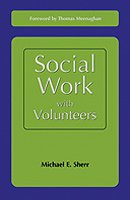
Social Work with Volunteers by Michael E. Sherr (Lyceum Books)

No caption submitted

Thousands of social work professionals and students will read Social Work with Volunteers in the coming years. But every minister of education—and add to that just about anyone who recruits and works with volunteers in a congregation—should read it, too.

Michael Sherr, assistant professor at the Baylor University School of Social Work, is a social worker steeped in church life. Although the middle section of his new book focuses on professional social work, the beginning and ending sections read like a manual for staffing and operating well-run church programs.

Sherr first focuses on the act of volunteerism. He’s particularly helpful at explaining why people volunteer and keep on volunteering. And he offers a fascinating examination of the motivations behind volunteering, which provides not only practical applications for soliciting volunteers, but also for keeping them trained, focused, energized and effective.

In his last section, Sherr explains “context-specific optimal partnership.” That’s an uncharacteristically jargon-ish phrase for describing how to organize and deploy volunteers to solve problems and accomplish goals. And that’s important in every church.

Marv Knox, editor

Baptist Standard

Dallas

Now and Not Yet: Making Sense of Single Life in the Twenty-First Century by Jennifer A. Marshall (Multnomah Books)

Jennifer Marshall poses a compelling question for single women: “What if in 10 years you were still single? What is your response?”


For most women Marshall surveyed, the response was disappointment and resentment, but it also was followed by a desire to walk in God’s will.

Now and Not Yet is about the “gap between expectations and reality” when it comes to being a single woman.

Marshall contrasts women today with those in their grandparents’ or even parents’ young-adult eras. In earlier generations, marriage was expected, and it was expected early. Women followed a path that led them through high school, maybe college and straight into marriage. But today, more women are starting families later in life. They are graduating from college and starting down a path that leads toward a career and not a family.

Marshall also presents surveys and stories of single women along with a plan to help women find comfort during their period of singleness. She offers advice for women on how to live life for today and understand “singleness is not a holding pattern.”

Jessica Dooley

Waco


Cartoon: Kid’s etiquette saves the day


Book Reviews: Questions To All Your Answers

Questions To All Your Answers: The Journey From Folk Religion to Examined Faith by Roger Olson (Zondervan)

Too many Christians live, breathe and have their being in a world of simplistic slogans, worn-out clichés and bumper-sticker theology. But in one of his latest books, Truett Seminary professor Roger Olson is out to change that.

Believing many evangelical Christians have succumbed to the sloppy thinking of “folk religion,” Olson challenges his fellow believers to heed the guidance of the Apostle Paul, who praised the Bereans for examining his own message through the lens of Scripture.

In 10 chapters, Olson raises questions about 10 popular answers—simplistic sayings that ring true to many people. These supposed answers often resist scrutiny and cut off further thought on the subject.

For example, one chapter examines the idea that “all sins are equal.” But can this be true? Is reusing a stamp really on par with murder? Common sense tells us no, and courts of law agree. Olson’s book pushes us to reconsider such easy answers and offers compelling reasons why having a reflective faith is so crucial. The study questions at the end of each chapter will help guide the lively discussions this book is bound to create in group settings.

Kevin Collison, pastor

First Baptist Church, Eagle Lake

Why Jesus Makes Me Nervous: Ten Alarming Words of Faith by Joy Jordan-Lake (Paraclete Press)

Joy Jordan-Lake, former Baptist chaplain of Harvard University, shares personal stories of warmth and pain, drawing out deep observations of spiritual significance.

Each of the 10 chapters comments on an important biblical word such as “resurrection,” “community,” “blessedness” and “forgiveness”—concepts taught in seminary classrooms but more meaningfully understood as they have moved from antiseptic abstractions to vivid reality through the “refining fires of real life” experience and encounters with people. Whether describing what it’s like to be a transplanted southerner in Boston or directing a feeding ministry for the homeless, Jordan-Lake’s writing is sprinkled with humor and profound hope.

In the book’s foreword, Tony Campolo reminds us of the importance of story in the Old and New Testaments. God speaks and acts through stories—history. Campolo states, “In the end, all theologies are simply commentaries on the stories.” With this in mind, Jordan-Lake’s personal stories serve as earthy, modern-day reflections on strong theological words that express the grand story of God who continues to encounter us, leaving us a little unsettled, but hopeful.

Greg Bowman, minister to students

First Baptist Church, Duncanville

Connecting Women: A Relational Guide for Leaders in Womens Ministry by Linda Lesniewski (Baker Books)

The title, Connecting Women, can be read two ways. “Connecting” describes women who themselves serve as connectors in women’s ministries. But “connecting” as a verb expresses the sense of women’s ministry—connecting women with God, the church, other women and the world. Linda Lesniewski, women’s minister at Green Acres Baptist Church in Tyler, does both by offering practical advice for exploring, expanding and extending women’s ministry in the church.

Lesniewski divides her step-by-step guide into four multi-chapter sections: “Sharing God’s Vision for Women,” “Heading Forward in Faith,” “Enjoying Fruitful Leadership” and “Proclaiming His Message.” Each chapter begins with an appropriate Scripture and the description of a woman, moves through several pages of practical guidance and closes with reflection. The book also contains nearly 40 pages of helpful appendices, reference notes and an extensive bibliography.

Whether beginning a women’s ministry, building on traditional missions organizations, or breathing freshness into an already successful operation, Connecting Women provides thoughtful assistance born of experience.

Kathy Robinson Hillman, former president

Woman’s Missionary Union of Texas, Waco


Scholars cast critical eye on Graham’s legacy

WASHINGTON (RNS)—Ecumenist, prophet, peacemaker. Friend of presidents and queens. Evangelical powerbroker who was sometimes too closely tied to politicians. Each description applies to Billy Graham.

An official 1991 biography by William Martin called America’s foremost evangelist a Prophet With Honor. The editors of a new book largely agree, but not without casting a more critical eye on Graham’s remarkable career.

There are many reasons to appreciate Graham, say the authors of The Legacy of Billy Graham without granting him iconic status.

The book examines Graham’s political influence, his relationships with Richard Nixon and other American presidents, his views on women, sexual ethics and poverty, and the content and style of his preaching.

And while it notes the moderation that came with age, the book’s 14 essays nonetheless ask critical questions about whether Graham could have done more to harness the power of his popularity to address public concerns.

“Graham’s admirers frequently speak of his moral integrity, and they are right to note his efforts to lead a ministry without Elmer Gantry lurking in the background,” says Michael G. Long, editor of Legacy and an assistant professor of religious studies at Elizabethtown College in Pennsylvania.

“But if we’re honest about his legacy, we’ll also recognize that Graham was shockingly deceptive when he told us that his relationship with Richard Nixon was primarily spiritual.”

Like some others who have listened to the Nixon tapes, Long concludes Graham rarely discussed spiritual matters with Nixon in the Oval Office. Indeed, Graham apologized in 2002 for telling Nixon that Jews held a “stranglehold” on the country.

Graham, now 89 and in failing health, has retired to his home in his beloved mountains of western North Carolina. His public ministry has been taken up by his son, Franklin, who displays some of the edgy fire of his father’s early years.

J. Philip Wogaman, the former pastor to President Bill Clinton and now a professor at Wesley Theological Seminary in Washington, noted the opportunities facing Graham as the man who “has spoken directly, in person, to more people than anybody else in human history”—an estimated 110 million around the world.

“Could he not have said more? Could he not have created more sympathy for the marginalized and stigmatized and thus effected more lasting change?” asks Wogaman.

The essayists noted the simplicity of Graham’s message. Time and again, listeners at his crusades were shown a world on the brink of disaster, a world that might only be saved by each person committing his or her life to Christ.

“Starting as a raw-boned fundamentalist, Graham ma-tured and broadened and soon became much more than the icon of evangelicals,” writes Harvey Cox of Harvard University. “Polls showed him to be the most respected religious leader in the country. Still as he shook off his early shell, his actions took a prophetic turn.”

“He has maintained for six decades the same message, the same seemingly untroubled convictions, the same unblemished ethical record. In an age of anxiety, he calms the national soul.”
–Thomas G. Long, Professor at Emory’s Candler School of Theology

That turn included cooperating with more liberal Christian denominations in many crusades. And though he neither joined demonstrations nor went to jail over civil rights, Graham insisted his crusades—even in the South—would not be segregated. Later, he called for the abolition of all nuclear weapons after visiting behind the Iron Curtain.

Thomas G. Long, a professor at Emory University’s Candler School of Theology, noted Graham’s enduring popularity—and power—in a changing world.

“In a windstorm of changing values and shifting circumstances, Graham is the still point in the American moral universe,” Long says. “He has maintained for six decades the same message, the same seemingly untroubled convictions, the same unblemished ethical record. In an age of anxiety, he calms the national soul.”

The breadth of Graham’s legacy can be seen in both the emerging Christian left, with its hope of alleviating poverty, and the Christian right, with its push for a socially conservative public agenda. Both could evoke Graham as spiritual forebear, Long says.

“Graham is worth studying and remembering because he is the face of American noninstitutionalized religiosity,” says Long. “When Americans are in their private chapels, or none, they believe very different things, but when they come together in the public square, they believe essentially a version of what Billy preaches.”


Cartoon: Eutychus’ problem


Books: The Problem with Evangelical Theology

The Problem with Evangelical Theology by Ben Witherington III (Baylor University Press)

Ben Witherington, professor of New Testament at Asbury Theological Seminary, contends that evangelicals are, in general, biblically illiterate and tend to embrace theology that would be unknown to the early church fathers prior to St. Augustine. Instead, they often cling to their respective denominational doctrines without thoroughly examining the scriptural texts, often unwilling to do the hard work of learning the original languages and deeply studying the contexts of the writings.

Witherington illustrates by critiquing the interpretive foundations of Calvinism, Dispensationalism and Wesleyanism (his own background). This Bible study commentary makes up the main body of the book and definitely should be read with one’s own open copy of the Scriptures in hand.

Even though Christians approach God’s word with their own experiences and points of view, “when one speaks about interpreting the biblical text according to a certain tradition, one has already made certain assumptions about what should have priority in interpretation—namely, the tradition rather than the Scripture itself,” Witherington insists.

We would do well to clothe ourselves with humility, seek the Holy Spirit for guidance, and take a cue from the spirit of the Reformers to be continually on a journey of reforming our theology.

Greg Bowman, minister to students

First Baptist Church

Duncanville

The Reason for God: Belief in an Age of Skepticism by Timothy Keller (Dutton Books)


Timothy Keller’s The Reason for God: Belief in an Age of Skepticism has turned me into a cheerleader, megaphone in hand, shouting: “Buy this book! Buy this book!”

Why the enthusiasm? Allow me to list as many reasons as I can until my allotted space runs out:

Keller, pastor of Redeemer Presbyterian Church in New York City, treats skeptics seriously and charitably—something many Christian apologists fail to do. He addresses the major doubts that plague both Christians and agnostics—God and suffering, the challenge of other religions, reconciling faith and science, un-Christlike Christians, and several others. In the process, Keller convincingly demonstrates that skepticism leans on its own “faith statements.” Beyond addressing doubts, Keller also provides deep clues for seeing how a Christian view of the world is credible, helpful and ultimately hopeful.

This book will refresh your theology, introduce you to key thinkers and writers, and model a way to share your faith that is intellectually credible, and not manipulative or abrasive.

I’ll say it again: “Buy this book!”

Larry Parsley, pastor

Valley Ranch Baptist Church

Coppell

Beyond Creation Science: New Covenant Creation from Genesis to Revelation by Timothy P. Martin and Jeffrey L. Vaughn (Covenant Community Church)


Christians who like serious writing that most of us without Ph.D.s can grasp should investigate this labor of love by Timothy P. Martin, an elder in a Reformational church in Montana, and Jeffrey L. Vaughn, a Christian who also is a scientist.

The title gives it away: Martin and Vaughn are convinced young-earth creationism is in error. But—and this is significant—they go to great pains to communicate why not all old-earth creationists are telling the biblical story right, either. They want you to weigh the Bible on its own terms. The only fair-minded way to do that is to take a careful examination of the comparative uses of biblical language.

Martin and Vaughn imply intelligent design is promising, and they reject “atheistic evolution.” They do not do the best job possible of distinguishing between evolution, as defined by many people who are devout Christians, and atheistic evolution.

What they do right, however, is provide a comprehensive theological defense of why it is both incorrect and harmful to Christian credibility to inappropriately apply global phrases to planet Earth. They build their case that Christian theology will come to grips with the divisive issues of the age of the earth and the riddles of Bible prophecy together, not apart. The same rules of language demand the same conclusions.

Paul Richard Strange

Shiloh Cumberland Presbyterian Church

Midlothian