Review: When I Am Afraid

When I Am Afraid: Discover4Yourself, Inductive Bible Studies for Kids

By Kay Arthur and Janna Arndt (Harvest House Publishers)

If getting young people involved in Bible study proves no easy task, finding a topic that meets a deep need in all children—and adults—proves even more arduous. But we would expect nothing less from the writing duo of the late Kay Arthur and Janna Arndt.

In one of Arthur’s final offerings, When I Am Afraid uncovers a deep need in everyone and directs readers to explore for themselves God’s answers and directions regarding fear.

Through Bible-based games and activities, 8- to 12-year-olds will dig into God’s word for themselves. They will peruse short passages, fill in blanks, and provide thoughtful, written responses to questions about fear.

The young Bible student explores “Camp Braveheart”—symbolizing time spent in the biblically based, kid-approved vacation of God’s word. The wisdom of seeing fear and insecurity from God’s perspective plays out in a summer camp theme.

Each of the six chapters consists of a unique, week-long Bible study. Key passages direct older children and preteens to take courage in the realization of Jesus’s presence. They are encouraged to cry out to him, as he holds all power and authority.

Conversely, Chapter Four points to the fear of the Lord as the beginning of wisdom. A definition of what that fear looks like, as well as why God deserves such fear crystalizes. The fact that we ought to fear God and not man turns up here. But rather than merely reading about this, the student’s own age-appropriate Bible investigation reveals the fact.

The learning, comfort and fun of each chapter revolves around activities particularly appealing to children. This includes the presentation of the gospel for young readers who do not know the Lord. Whatever the child’s spiritual state, crossword puzzles, fill-in-the-blanks, and an occasional drawing compel the individual to draw deeper into the text, soothing the fearful soul with the balm of God’s word.

Weekly studies direct young people to consider their reasons for fear. Then each reason—attached to a passage of Scripture—leads to biblical exploration in God’s word. Scriptural guidance unfurls, as the comforting canvas of the Bible raises like a tent over the young Bible camper. Strength and courage emerge as the character qualities that replace fear. Scripture outlining and games direct each hiker to that end.

Parents who enjoy Precept-Upon-Precept’s solid Bible studies and wish the same for their children will find just that with Kay Arthur’s Inductive Bible Studies for Kids. Oh, that we could all say with the apostles: “I have no greater joy than to know that my children walk in truth” (3 John 4, KJV), and “that from childhood [they] have known the sacred Scriptures” (2 Timothy 3:15, HCSB). When I Am Afraid furthers this goal.

Bethany A. Noland

Rockwall


Connect360: Jesus’ Birth and Ancestry

  • Christmas Lesson in the Connect360 unit “God Fulfills His Promises” focuses on Luke 2:4-7; 3:23, 31-34, 38.

Bethlehem is the place where God came to us.

It is a place of mystery and wonder—far removed from the 21st century world we live in.

It is also a place so ordinary it can seem close to everyone.

Angels appear to ordinary people—shepherds. A government gives orders and sets up laws that must be obeyed. A mother and father marvel at the gift of their first-born, a son.

Mary and Joseph got to Bethlehem as a family going about ordinary life.

The magi in Matthew’s gospel got to Bethlehem by a special knowledge and learning about the stars and planets.

The shepherds got to Bethlehem by way of a dramatic heavenly visit.

Whatever path we take to Bethlehem, the child of the manger invites us all. Consider again this incredible story and allow the Spirit of God to herald the good news in your own life.

The incarnation of Christ at Christmas—the Creator becoming one of the created.

No other world religion can make this claim.

Due to their flawed belief systems, other religions teach ways for humanity to get to God or to appease God. We know all our good works, piled one on top of the other, could never get anywhere near God or what he requires of humanity.

So, God had to come to us. Jesus is not a person in whom humanity can take any pride or credit. Jesus is the person to whom we owe everything, and when we offer him everything, we find we lose nothing.

This God-becoming-human talk can be difficult. The early church struggled with what the incarnation meant.

Even today, this truth of our faith remains a mystery we cannot escape. Nevertheless, the incarnation is a core part of our identity as Christians. We must come to terms with and be able to communicate this truth as clearly as possible.

In the fourth and fifth centuries, the church, through ecumenical councils, penned beliefs about the Trinity and about Christ that have become the foundational pillars of our understanding about God and his relationship with people.

The Council of Chalcedon in A.D. 451 had the primary purpose of combating the turmoil and controversy rampant in the church relating to the person of Jesus Christ.

Fast forwarding 1,560 years since the Council of Chalcedon, people today still struggle with who Jesus was and how it all worked together.

Historians and people today never seem to argue or doubt Christ’s humanity or existence; just his nature seems open for debate.

What came out of the Council of Chalcedon in A.D. 451 continues to be the way we believe and talk about the incarnation of Christ.

The word the bishops, monks, and church leaders used to describe Jesus from then on is a hypostatic union.

Union refers to the joining of the two natures—hypostatic refers to the Son of God, the logos, who became human through the work of the Holy Spirit in Mary.

Therefore, we have a perfect union between human and divine—one integral, eternal, divine person. The incarnation is just that simple and complex at the same time.

Nevertheless, this is what the world unknowingly longs for.

Jesus the incarnate Son of God is who we must accept to be Christians.

To learn more about GC2 Press and the Connect360 Bible study series, or to order materials, click here.


Review: In the Low: Honest Prayers for Dark Seasons

In the Low: Honest Prayers for Dark Seasons

By Justin McRoberts & Scott Erickson (Baker Books)

Depression. Anxiety. These are common maladies. No one wants to talk about them. No one wants to experience them.

But what if finding God, finding ourselves, flowering and flourishing as God’s beloved creation could come through depression and anxiety? That still isn’t enough—or shouldn’t be—to make a person want to experience depression or anxiety, but knowing those dark places can be redeemed or even redemptive is a gift of grace.

It’s also a gift of grace to know it makes perfect sense to experience depression or anxiety as a result of being in a world at odds with its Creator. This is how depression and anxiety point to healing. When we are depressed, we are not broken but are responding to what is broken.

Justin McRoberts and Scott Erickson hold open this possibility, McRoberts through his prose and poetic prayers, Erickson through his symbolic art.

In the Low really is as the subtitle states: honest. It also is vulnerable and deep as depression, but far from hopeless or morose. Its many meditative prayers surprise with hope and redemption.

McRoberts shares his own struggle with church hurt and confesses to hurting others as much as others hurt him. He is open about having tried to cope through alcohol. Through his own struggle with what he calls “the Low,” McRoberts suggests it’s not something to be avoided as much as it is an opportunity to see oneself, the world and one’s place in it through God’s eyes.

In the Low is McRoberts’ and Erickson’s third collaborative book on prayer. Prayer: Forty Days of Practice and May It Be So: Forty Days with the Lord’s Prayer were their prior collaborations.

As with their previous books on prayer, McRoberts is a gracious companion in his prose, leading readers into a fresh understanding and appreciation of prayer and God’s desire to communicate and connect with us. Likewise, his prayers paired with Erickson’s symbolic depictions encourage contemplation and evoke a desire to draw close to God.

The book closes with a plea to those ready to throw in the towel: “Please stay.”

Yes, if you are in the Low, please stay. Keep reaching out until you find someone who will listen, who will cry with you, who will pray with you, who will go to God with you. Read this book. And keep reading it.

Eric Black, executive director/publisher/editor
Baptist Standard


Connect360: The Prophet Who Will Prepare the Way

  • Lesson Three in the Connect360 unit “God Fulfills His Promises” focuses on Luke 1:57-80.

It was now Zechariah’s turn to be filled with the Holy Spirit—Mary and Elizabeth had been the primary ones impacted by the Spirit of the living God—to be empowered to give a beautiful prophetic psalm.

He had learned his nine month lesson from doubting God. Then the baby came, and Zechariah was still mute.

Eight more days … perhaps the longest wait of all, before his name was given and Zechariah got his voice back.

Have you ever been on a silent retreat?

I have talked with fellow ministers who have described going away for silent reflection and listening to God.

Most extroverts like me might believe it is impossible to be silent for any period of time.

Years ago, I had a friend give me a journal he told me was a listening journal.

When I would do my daily quiet time, I would try to write something each day I felt God was saying. The result was an intentional practice to allow God to speak into the silence.

By writing down the lessons learned, it allowed me not to only review what the Lord was saying to me, but also gave me the opportunity to share with those around me who needed to hear from the Lord as well.

For Zechariah, nine months of listening to God resulted in the Benedictus.

After Zechariah confirmed his son was to be named John, he could speak again. The people in their village marveled at this and asked, “What then is this child going to be?” (1:66).

Zechariah told us as he began with the faithfulness of God.

God is the one with all the verbs in the passage.

His plan is being put into action. Salvation will come from no one else.

Luke reiterated this in his second volume, Acts, when Peter declared before the Jewish leaders, “Salvation is found in no one else, for there is no other name under heaven given to mankind by which we must be saved” (Acts 4:12).

Like the Exodus generations ago, God had come again to his people to bring salvation.

The song continued that God’s plan began long ago. While Zechariah seemed to be focusing on the restoration of the kingdom of Israel, we hear him reveal God’s goal is not just for a nation, but for a nation of priests that will serve the Lord in holiness and righteousness as he intended with the Israelites (Exodus 19:6).

In the New Testament, we find God offered this calling to the church: “But you are a chosen people, a royal priesthood, a holy nation, God’s special possession, that you may declare the praises of him who called you out of darkness into his wonderful light” (1 Peter 2:9).

To learn more about GC2 Press and the Connect360 Bible study series, or to order materials, click here.


Review: Light in the Shadow of the Valley of Death: Stories of Ukrainian Christians During the War

Light in the Valley of the Shadow of Death: Stories of Ukrainian Christians During the War

Edited by Roman Soloviy (Langham Global Library)

Twelve Ukrainian Christians hold onto light amid a profoundly dark time. The news is not full of updates from the front like it was in the first months of the war between Russia and Ukraine. Even if it was, it wouldn’t carry the light these 12 writers bear in their contributions to a much-needed perspective on what it means to be a Christian during war.

The 12 writers of Light in the Valley of the Shadow of Death: Stories of Ukrainian Christians During the War include a seminary rector, a pregnant mother, theologians, military chaplains, a widow and a pastor.
Their stories begin before Russia’s full-scale invasion on Feb. 24, 2022, and carry through the following days, weeks, months and now years. They are harrowing, raw, heavy and vulnerable. They do not shy away from expressing anger, fear, guilt or shame.

Some fled Ukraine. Some stayed. Some joined the Ukrainian military. For most or all, comfort and security were stripped away, leaving concern only for bare necessities and for family.

Theirs are not thoughts after the conclusion of hostilities or during days of official peace. Nor are they calls from the sidelines or Monday morning quarterbacking. These are reflections from within the crucible.

These 12 testimonies are active, ongoing, in-the-moment questions and experiences without knowing the outcomes. They are written and lived amid hope, not amid hope realized.

The writers do not soft-pedal their questions of God or their pain. In so doing, they challenge comfortable and safe Christianity. They also reveal how strikingly the Ukrainian people continue to do theology, philosophy, biblical study and reflection, ministry and art—even amid war, sharpened and focused by the war.

Some, like Kseniia Trofymchuk, discovered what it means to be a refugee. This experience taught Kseniia: “A person is always more than a checklist of needs” (p. 90). Refugees do have needs, but they are people who are more than their needs.

Pavlo Horbunov, crediting deception as the starting place of war, points out: “There is no sense in saying that everyone has their own truth. No! Everyone may have their own interests, but there is only one truth” (p. 102). War can focus the mind.

Denis Gorenkov’s contribution is a literary jewel that should be read and read again—a parable structured on the Genesis 1 creation narrative.

Tucked within the stories are lessons all can learn from, such as the three things that helped Yevhen Yazvinskyy overcome fear as he served on the front line.

I don’t know how these 12 individuals had the capacity amid their circumstances to write such profound testimonies. Since they did, we owe it to them to read, to reflect on and to grow from their stories.

Eric Black, executive director/publisher/editor
Baptist Standard


Connect360: God Will Send His Son

  • Lesson Two in the Connect360 unit “God Fulfills His Promises” focuses on Luke 1:26-38.

Although the divine announcement to Mary came from the same angel who gave Zechariah a similar message, this message came to a different location and to a very different set of circumstances.

Zechariah was in fervent prayer for a child. Having children at this point in Mary’s life was out of the question.

Zechariah was in the Holy Place in the Temple in Jerusalem. Mary was in her hometown of Nazareth, a small obscure village in Galilee.

Zechariah was a priest, and his wife Elizabeth was from the line of Aaron. Mary was betrothed to Joseph of the house of David.

Then we get to the heart of the miracle. For Zechariah and Elizabeth, the birth of John was a remarkable answer to decades of prayer, waiting, ostracism and shame.

For Mary, Jesus’ birth was truly miraculous.

While there was Old Testament precedent for elderly, barren couples having a child in their old age, a virgin birth was completely unheard of.

Mary’s description as a virgin who was betrothed is mentioned twice prior to her name being revealed.

There was no question in Luke’s mind or ours, this miracle birth was solely God’s doing.

Jesus would be born into history, not out of it. Luke was not condemning normal family relationships or saying Mary was a pure, holy vessel for God to use.

In Mary’s eyes, her virginity was an obstacle for God.

For us, we see the second Adam did not have a father like everyone else either (1 Corinthians 15:45–49).

A new work was taking place that was just as astonishing as creation itself.

The Creator was becoming the creation.

While Jesus did not have a dad like you or I do, he did have a mom—and even Jesus would learn from and need his mom throughout his earthly life and ministry.

Gabriel’s greeting announced the favor God bestowed upon her and gave her a promise.

Like Moses who needed assurance of what God said would happen (Exodus 3:12), the promise of God’s presence with Mary came at the very beginning of her conversation with God’s messenger.

Gabriel’s message was not a wish for God to be with Mary, as we would say “The Lord be with you.”

He gave a statement of fact, brimming with confidence in God’s true nature.

The promise was also not given with any qualification. God made the commitment to Mary, just like Mary already made a commitment to Joseph.

To learn more about GC2 Press and the Connect360 Bible study series, or to order materials, click here.


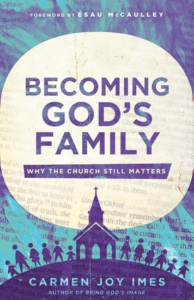
Review: Becoming God’s Family: Why the Church Still Matters

Author Carmen Joy Imes takes readers on a theological journey to show the church is still a necessity in today’s culture.

In Becoming God’s Family, Imes doesn’t shy away from controversial and polarizing issues impacting the church as she encourages lament, repentance and the desire not to break fellowship with others among local, global and intergenerational Christians.

Rather than focusing on differences and seeing church as a social club, Imes encourages the reader to consider what the church could be when everyone surrenders themselves under the lordship of Jesus Christ.

Imes starts with giving the Christian reader a firm grip of their identity with God, reminding us “every human being is the image of God.”

She continues her discussion on family by focusing on families and God’s involvement with Abraham, Moses and others throughout the Bible.

“God’s promises are not aimed at helping us reach our personal goals. Instead, God’s promises transcend our personal lives and stretch wide to encompass others we will never even meet,” Imes said.

Imes emphasizes we need each other, and we are not meant to be by ourselves.

She also addresses the dysfunction, division and trauma within the Old and New Testament and ways the church can learn from what God already is showing his people through Scripture.

Imes pulls readers to the teachings of Paul as she highlights the work of Jesus making us one as a community full of people who otherwise had nothing much in common.

Becoming God’s Family is a deep dive into what a solid, theological view from Scripture can do for readers looking to understand what it means to be the body of Christ.

Kendall Lyons, news reporter

Baptist Standard


Review: It Became to Me a Joy

It Became to Me a Joy: When God Shines Brightly through the Broken Places

By Connie Dixon (Woman’s Missionary Union)

This time of year, bubble wrap flies off shelves as we pack precious gifts for tucking under the tree or dispatching safely to faraway places. Sometimes we just wish God would bubble-wrap us and those we love to keep us from heartbreak and brokenness, but he does not.

In It Became to Me a Joy, national Woman’s Missionary Union President Connie Dixon highlights times “when God shines brightly through the broken places” in her life, in those of others and in Scripture.
Beautifully written and brutally honest in 12 chapters that each start with a Scripture and quote, the author begins with defining joy and the overarching question, “Is it possible to have joy and to struggle?”

Dixon likens life’s storms to sudden wind and sand in her native New Mexico that blow stacks of tumbleweeds that impede movement. She tells of a struggle with her and her husband’s fuel business in tiny Elida and the biblical Anna’s struggle and response to her widowhood, noting in both cases sometimes joy seems delayed.

The ensuing chapters address individual, family and corporate issues and tragedies from perfectionism and comparison to guilt and shame, health, her own eating disorder, suffering physically and emotionally, and the universal question, “Why me?”

The stories evoke a variety of emotions from laughing at a 1973 toilet paper crisis to smiling over Connie’s 5’10” frame and size 11½ cowboy boots that look like skis.

Others lead to compassion and tears, such as her pregnant friend Debbie who delayed cancerous brain surgery to deliver a healthy baby girl she mothered just a few months or to weeping for her sister-in-law whose parents were cruelly murdered by their nephew.

Bible examples follow each story—some familiar like Saul in Acts 22, and other more obscure such as Rizpah in 2 Samuel 21.

Using an easy conversational style, the Wayland Baptist University graduate adds sound advice. She notes sometimes God delivers us from the fire, at times through the fire and occasionally by the fire.

When dealing with comparison, she advises from Exodus: “Follow the cloud … not the crowd.” She offers words to the church in tragedy: “Rejoice together, mourn together and support one another,” remembering “God is our lifeboat.”

She urges choosing courage over fear, giving control to God and developing a personal relationship with him as she clearly outlines the way to salvation in the volume’s closing chapter.

It Became to Me a Joy echoes the Vacation Bible School/camp song “I’ve Got that Joy, Joy, Joy, Joy Down in My Heart” and the assurance deep, everlasting joy shines from the light of Jesus for those who love and trust him.

Connie Dixon’s stories clearly illustrate the availability of that inner joy through struggles, tragedy and weariness as well as in times of peace, ease, progress and success. Her words and suggestions in “Food for Thought” and “Dig a Little Deeper” help lead the reader along that path.

A quick read, the book makes a great gift for yourself and those in need of abundant and abiding joy.

Kathy Robinson Hillman, former president

Texas WMU and Baptist General Convention of Texas

Waco


Connect 360: The Promised Birth of a Prophet

  • Lesson One in the Connect360 unit “God Fulfills His Promises” focuses on Luke 1:5-17

Throughout Scripture, angelic beings function as a bridge between God and his people on earth.

Angels bring messages of calling, of warning and of comfort.

At almost all recorded angelic encounters, we find the first response by the one receiving the message is fear.

Even with Zechariah, a priest in the temple, husband to a daughter of Aaron, living an upright and holy life, the encounter with the angel of the Lord, Gabriel, terrified him.

Why would Zechariah be surprised? He was performing his priestly duty in the sanctuary of God.

Did he not expect God to send an answer to his prayer?

Had he prayed for so long all hope was lost for a response from the Lord?

God often will speak to us from the midst of everyday moments in life.

We should always be ready to hear from the Lord.

Can even Sunday worship in our sanctuaries and worship centers become so mundane and routine that we don’t look for the Lord?

Zechariah was in the right place and at the right time. Gabriel came to deliver his message.

As we further examine the angel’s words, we can identify several multifaceted themes including both an identity for the child and a call of vocation, who he will be and what he will do for Israel, for his family, and for the Lord.

First, Gabriel declared a child was coming. Not just any child, but a son.

This was a special child, and his name would point to his special calling. The name John means “YHWH is gracious.”

And God has indeed shown his great favor on Zechariah and Elizabeth and on all of Israel, as John’s coming would signal the great end of all the waiting and hoping that God would give decisive action to redeem his people.

John would be a joy and a delight to both his parents and all of Israel.

He would be “great in the sight of the Lord.”

Even the Lord Jesus, John’s cousin, affirmed this greatness in Matthew 11:11.

John’s greatness was not a greatness of status, but of calling and purpose from the Lord.

Gabriel continued that John must not drink alcohol or any intoxicating drink.

His message was reminiscent of a Nazarite vow (Numbers 6); however, no other requirements were mentioned.

Knowing the child would be filled with the Spirit even before birth prepares Luke’s readers for the response of Elizabeth when Mary came to visit.

Like the coming of the Holy Spirit in the first of Acts, Luke would highlight the role of the Spirit at each step of the beginning of his gospel as well.

To learn more about GC2 Press and the Connect360 Bible study series, or to order materials, click here.


Connect360: More Like Jesus

  • Lesson Thirteen in the Connect360 unit “Find Us Faithful: Standing Firm in Our Faith” focuses on 2 Peter 3:10-18

I played basketball in high school and had a teammate named Johnny.

Johnny had great athletic talent but lived in the coach’s doghouse.

He was late to practice. He was not eligible to play for several weeks due to poor grades.

Every time Johnny found trouble, his teammates would warn him that the coach would eventually kick him off the team.

Johnny just smiled as he showed off his basketball skills to the rest of us.

One day, we arrived at practice and did not see Johnny. Coach walked in and informed us that Johnny was no longer on our team.

One of my teammates said, “I wish he would have listened to us.”

Even though Christ’s return might be delayed due to God’s love, patience and hope that every person will repent and come to have a saving relationship through Christ, God’s patience will not last forever.

Jesus Christ will return as a thief in the night, suddenly and without warning.

There will be a day when it will be too late to come to Christ, a day where the only comment one might make is, “I wish he/she would have listened to God when the Spirit of the Lord was knocking at the door of his/her soul.”

On more than one occasion, I have told the congregation that we can trust God with our present because we can see God in our past.

Peter proclaims that the opposite is true, too.

We trust God with our present (no matter the questions, no matter the hurt, no matter the pain) because we know what is true for our future.

Knowing and expecting Christ’s return stimulates Christ’s followers to live holy lives.

There ought to be a connection between belief and behavior.

The great truth of Christ’s return gives the church its purpose and passion.

People who believe there is nothing after this life or that God is distant and not active in his creation can live with no sense of mission.

There are three likely conclusions for a life lived in this manner.

A person can seek pleasure, be indifferent, or live in depression. However, the good news of Christianity is history is moving in a certain direction.

God, Creator of all, has not only come into his world once but promises to come again, and this changes everything.

There will be a new heaven, a new earth and a new home for those in Christ.

To learn more about GC2 Press and the Connect360 Bible study series, or to order materials, click here.


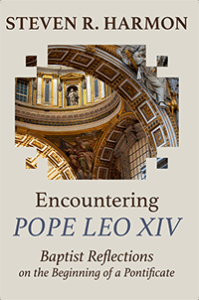
Review: Encountering Pope Leo XIV

Encountering Pope Leo XIV: Baptist Reflections on the Beginning of a Pontificate

By Steven R. Harmon (Nurturing Faith)

Be honest. Even the least liturgical Baptist among us must confess to a certain curiosity about the College of Cardinals and fascination with the process of selecting a new pope.

Steven Harmon, a historical theologian with Texas Baptist roots, helps unpack that process for non-Catholics and pull back the curtain—at least a little bit—on the Conclave. In the process, he offers insights into the first American-born pontiff, Pope Leo XIV.

Harmon, who has represented the Baptist World Alliance in dialogue with both the Catholic Church and the Anglican Communion, journeyed to Rome to report and reflect on the election of a successor to Pope Francis.

In an engaging and accessible style, Harmon offers a day-by-day recounting of his time at the Holy See Press Office. Along the way, he provides non-Catholics a useful introduction to relatively unfamiliar concepts such as synodality—a major emphasis introduced by Pope Francis on listening to God’s voice by hearing all voices within the church. On a practical level, he also helps identify the various religious orders and decipher the abbreviations that identify them.

In dramatic fashion, Harmon recalls the second day of the Conclave, when puffs of white smoke rising from the chimney atop the Sistine Chapel signaled to onlookers the College of Cardinals had reached a decision. Cardinal Robert Prevost—a dual citizen of the United States and Peru—was the choice, and he assumed the title Pope Leo XIV.

Harmon explains the likely historical significance of the title the new pope selected, given the role of Pope Leo XIII as originator of modern Catholic social teaching. He provides first impressions of Pope Leo XIV, along with reflections on the pope’s early public addresses and admiration for his talent as a communicator. As a sign of the times, he also notes the fake memes that proliferated on social media, attributing spurious quotes to the new pope—usually along political lines.

Encountering Pope Leo XIV builds bridges of understanding. In divisive days, Baptist and other non-Catholic readers would benefit from the insights it offers.

Ken Camp, managing editor

Baptist Standard


Connect360: The Attributes of God

  • Lesson Twelve in the Connect360 unit “Find Us Faithful: Standing Firm in Our Faith” focuses on 2 Peter 3:8-9

Every time I agree to officiate a wedding, I ask the couple to fill out an assessment and to meet with me a couple of times.

The assessment asks both the potential bride and groom about their family history, their expectations and the way each of them envisions this upcoming marriage relationship.

Together, the three of us spend time looking at the unique characteristics about each of them.

Every time I meet with a couple, I tell them, “Don’t forget these things about each other, for this is who God made you to be.”

As Peter continued his letter, he urged the church not to forget specific attributes of their God.

In 2 Peter 3:8, Peter continued to argue against the scoffers who claim God is not active in the world since Christ has not returned.

However, Peter asserted time is not the same for God as it is for a human.

God is eternal.

Peter’s words about a day being like a thousand years are a reference to Psalm 90:4. Some have interpreted this verse to mean there will be a literal 1,000-year reign of God at the end of time.

However, there are two reasons why this is not the best way to interpret this text.

First, Peter did not say one day equals a thousand years, but it is like a thousand years.

Secondly, it ignores the context of Peter’s entire message in the chapter.

Peter was not giving a human timeline of events at the end of time, but is telling us something about God’s character, God’s personality.

God is infinite.

Time is not the same for God as it is for humans.

What man and woman consider a very long time is a mere breath for God, the Creator, who stands outside of time and is sovereign over time.

Therefore, those Peter addresses should realize Christ’s coming is not being delayed. God just does not have the same perspective of time as we do.

Moreover, God not only views time with a different perspective than a human, but God also sees time with a different potency.

If one day with the Lord is like a thousand years, men and women ought to live their lives like any day might be the day Christ returns.

For Christ himself told his disciples: “But about that day or hour no one knows, not even the angels in heaven, nor the Son, but only the Father. Be on guard! Be alert! You do not know when that time will come” (Mark 13:32–33).

To learn more about GC2 Press and the Connect360 Bible study series, or to order materials, click here.