Book Reviews: The World of Jesus

The World of Jesus by William H. Marty (Bethany House Publishers)
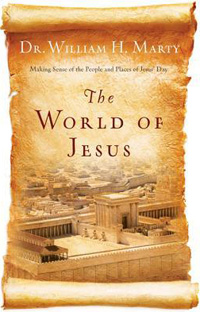
book marty200What happened during the misnamed “400 silent years” between the Old Testament and New Testament that paved the way for the arrival of Jesus Christ on the earth? Why did most Jews dislike the Samaritans? What impact did Alexander the Great have on the biblical world? What are the origins of Hanukkah? What is the difference between a Pharisee, Sadducee and an Essene? Who were the Herodian kings, and what part did they play in the story of Jesus and the early church?

Marty’s brief volume is a less-than-200-page survey of the history between the Testaments that helps set the stage for the entrance of Jesus Christ and the New Testament era. If one can keep up with the real-life cast of characters—mostly rulers and rebels—this book is a gem for the beginning student of biblical history and for the Bible study teacher investigating the backdrop of Jesus’ life and teaching.

Greg Bowman, minister to students

First Baptist Church

Duncanville

The White Umbrella by Mary Frances Bowley (Moody Publishers)
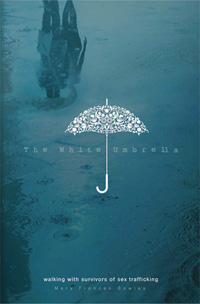
book bowley200Mary Frances Bowley understands most Americans remain unaware of sexual slave trade, or at most consider it a remote Third World problem. Twenty years ago, she similarly enjoyed a comfortable life sheltered from the reality of sexual exploitation in the United States. However, contact with one young woman in a desperate situation gave her a desire to shelter others in similar straits—offer a “white umbrella” to provide cover for sexually abused women and help them recover their purity and innocence.

That led her to found Wellspring Living, a temporary home for adult survivors of childhood sexual abuse and ministry to child survivors of forced prostitution and sex trafficking. Wellspring served as the inspiration and model for Refuge of Light, a ministry in East Texas that plans to provide a similar shelter.

The White Umbrella tells the heartbreaking stories of these women, whom Bowley typically refers to as “girls” regardless of their age, because they typically are emotionally stuck at the age when they were exploited sexually.

It also includes stories of volunteers who commit to making a difference in the lives of victimized young women like 16-year-old Jessica, whose nightmare of abuse began at age 10. But through the influence of loving volunteers at Wellspring, she made a discovery and a pledge: “I realized that even when I don’t know God, he knows me. … I’m determined that my life is going to be different. The end is not going to be like the beginning.”

Bowley presents a compelling challenge to Christians to step outside the “comfortable bubble” of willful ignorance about sexual exploitation and respond with God’s love to hurting young women.

Ken Camp, managing editor

Baptist Standard

Plano

Nicodemus’ Quest: Is Jesus the Messiah? by Bill Kincaid (CreateSpace)

book kincaid200Two leaders of the Jewish Sanhedrin defied both conventional wisdom and political expediency to remove Jesus’ body from the cross. Nicodemus and Joseph of Arimathea were prominent members of the high court that sentenced Jesus to death. Why would they risk their careers—and possibly their necks—to provide Jesus a decent burial, when even his closest followers scattered and hid? That question drives Bill Kincaid’s moving novel.

By the way, don’t get hung up on the word “novel.” Extensive biblical, historical, geographical, archaeological and linguistic research exudes from each page. Kincaid selected this novel approach—quite literally—as a creative-yet-solid mechanism for reporting key events in Jesus’ ministry, as well as his death/burial/resurrection and the launch of the church.

Kincaid has created a compelling and inventive apologetic for the Christ event. It provides a splendid opportunity to share the gospel with unbelievers who love a great story but won’t sit still for a Bible study.

Marv Knox, editor & publisher

Baptist Standard Publishing

Plano


Explore: What’s the Answer?

• The Explore the Bible lesson for Aug. 25 focuses on Ecclesiastes 11:1-5, 9-10; 12:13-14.

This final section of Ecclesiastes pulls everything together in an attempt to give closure, though not necessarily simply. Instead, Qoheleth, the author of Ecclesiastes, is concerned with how to move forward in life, even if air-tight answers are not available.

The first part of this section involves our actions. Often, we want to know the “bottom line,” or “where the rubber meets the road.” In other words, we want to know what we should do about the circumstances that confront us. Ecclesiastes gives us something of an answer: “Invest in seven ventures, yes, in eight; you do not know what disaster may come upon the land” (11:2).

This sounds like the old proverb, “Don’t put all your eggs into one basket.” Certainly there is wisdom in this statement, but there is also more to be said. Qoheleth’s emphasis on diversifying one’s efforts is not aimed at having the best overall growth in one’s investment portfolio. Instead, no one knows what course life will take: “As you do not know the path of the wind, or how the body is formed in a mother’s womb, so you cannot understand the work of God, the Maker of all things” (v. 5).

The instabilityof existence

The instability of human existence is not for human beings to understand, yet when we do experience its twists and turns, we must remember God is somewhere behind it. While the world is plagued by sin, this does not remove God’s good governance from the equation. So what should be done? We should move forward with the risk-taking that is part and parcel of living as human beings, even if some of those risks ultimately fail.

For this reason, Ecclesiastes sees tremendous advantage to being young, and young people are advised to “be happy while you are young, and let your heart give you joy in the days of your youth” (v. 9). Since life involves taking risks—whether through financial investments, education for a specific career, marriage, child-raising or employment relocation—young people are in a better spot since they can take more risks and have more time to see what results emerge.

At the same time, young people often do not have the experience to know the best decision. Nonetheless, these actions will be judged by God, so they should be taken with care and consideration. So, no matter our age, Ecclesiastes gestures towards enjoying life to the fullest under God’s care.

All is meaningless

The latter half of this passage brings Ecclesiastes full circle and serves as the conclusion for the entire book. Throughout Ecclesiastes, Qoheleth has emphasized the meaninglessness of virtually all human activity and values. Pleasure is meaningless. Wealth is meaningless. Even godliness and righteousness are meaningless with regard to delaying death.

While he has hinted wisdom still is a better path, he declares it much more firmly here: “Fear God and keep the commandments, for this is the duty of all mankind. For God will bring every deed into judgment, including every hidden thing, whether good or evil” (12:13-14).

Some readers of Ecclesiastes see this as a simple blanket that covers the turmoil we observed in earlier chapters. Instead, we should see these concluding words as in tension with what one commentator calls Qoheleth’s “troubled restlessness.” This may in fact move us closer to answering life’s great questions, not by giving us neat and tidy responses, but by opening up the possibility to move on with life in faithfulness to God—fearing/respecting God and keeping the commandments.

Love God, love neighbor

For Christians, this reference to commandments should remind us that all the Old Testament law is summed up by love of God and love of neighbor. Thus, whenever we sense that life’s circumstances are pressing us down, we know what to do and how to live—in Christ-like love of God and service to others.

In conclusion, Ecclesiastes as a whole draws from the depth of the wisdom tradition in advising readers to “fear God,” a phrase that also appears in Job and Proverbs. As has been mentioned in earlier passages, wisdom is not simply concerned about living, but living well in the midst of good times and bad. Let Qoheleth’s words encourage us along this path.


Life: God completes the story

 • The Bible Studies for Life lesson for Aug. 25 focuses on John 14:1-3; Revelation 21:1-4; 22:1-5, 12-14.

In the beginning, God created the heavens and the earth. He placed two trees in the garden: The Tree of the Knowledge of Good and Evil and the Tree of Life. God told Adam and Eve to stay away from the Tree of the Knowledge of Good and Evil, but they were free to eat from the Tree of Life and every other tree. Adam and Eve walked and talked with God in the garden. They had communion with him, and all was well.

But then they decided to disobey God. The decision to eat from the Tree of the Knowledge of Good and Evil led to utter separation and brokenness. Fellowship with God was severed, and humanity was exiled from the garden. Scripture says God sent them out of the garden so they would not eat from the Tree of Life and live forever. Sin brought waves of consequences, including disease, fractured relationships, emptiness and ultimately death.

Death was a gift

If Adam and Eve reached the Tree of Life and ate from its branches, humanity would live forever in absolute brokenness. God showed incredible love and grace by ushering us out of the garden, so hope would remain. Death was a gift.

Throughout the pages of Scripture, we see God paving the way for a relationship with humankind again. He made a covenant with Abraham, Moses and David. He gave us the law so we would have a picture of how life ought to be lived. He guided the building of the temple so his Spirit could dwell here on Earth. He set up the sacrificial system so sins could be forgiven and fellowship could be restored.

Ultimately, he sent his son, Jesus. God in the flesh stepped down from heaven to walk with us. He lived a perfect life, took on the sins of the world and made the final payment for our disobedience. Jesus was beaten for our rebellion and crucified for our crimes. He was raised from the dead on the third day and went to prepare a place for us to spend eternity. This eternal home will be beautiful, filled with the presence of God, and there will be no more tears or brokenness (Revelation 21:1-4).

The Genesis signpost

N.T. Wright put it this way: “The glorious world of Genesis 1 was the beginning of something rather than an end in itself. It was itself a great signpost, pointing to the world that God always intended to make out of it.”

When all things are made new and everything broken is put back together, we once again will dwell with God and the Tree of Life. Garden life will be ours once again. Revelation 22:2 says the tree will heal the nations with its leaves. God will make all things new and will live with us in the way he always intended.

The Tree of the Knowledge of Good and Evil already has been devoured. We have chosen sin and have tasted the fruit of bitterness, pain and disease for many days. But the Tree of Life is before us. When Jesus returns, he will make all things new, and we will live forever with him (Revelation 1:5).

Today, we must live life between the two trees. We must navigate our struggles with the end in mind. We must face sin with the promise of forgiveness. We must endure pain, knowing healing is in our future. We must pray his will be done on this earth, just as it is in heaven. This is not the end of the story.

Scaffolding designed to come down

N.T. Wright used this example: “Earlier today, I came upon some workmen who were putting scaffolding up around an old stone building. Scaffolding is normally extremely functional: It’s made to do a job, not to look pretty. But supposing a builder decided to construct a beautiful shell of scaffolding? Supposing he made it so stunning that people came to admire the scaffolding itself, without even realizing that there was something far, far more impressive being built inside it? When the building was finished, some might be sad at the thought that this wonderful sight was to be taken away. But the builder would, of course, insist on removing the scaffolding, however splendid it was. That was the point of it in the first place, to do its job and then be dismantled for the ultimate reality, the real new building, could be seen in all its glory.”

The scaffolding will come down, and God’s eternal home will be filled with people of all colors, races, backgrounds and economic groups. We will be reunited with our God fully. And he will complete the story he started so long ago.


BaptistWay: The highest point of human life


• The BaptistWay lesson for Aug. 25 focuses on 1 Corinthians 15:3-20, 35-44, 50-57.


We recently watched the movie Warm Bodies—yes, we are behind the times and wait for movies to come out on Netflix. If you don’t know the movie, it’s about zombies. Yes, another zombie movie. But this one is different. Really! It’s a romance and a story about hope.

Spoiler alert: In the movie, a zombie who calls himself R falls in love with a human named Julie. He rescues her from the other zombies, and they begin an awkward relationship. A turning point in the film comes when Julie and R are confronted by R’s fellow zombies and some super zombies—“bonies”—bent on destroying everyone. Julie holds R’s hand, and when the fellow zombies see this, it sparks hope inside them. This hope gradually gives both R and the other zombies the impetus to transform into living beings again.

Resurrected bodies

When Paul wrote his first letter to the Corinthians, he had to address numerous issues that came up within the church. One of those issues was the question of resurrection. Paul, like many of the early Christians, believed Jesus would come back in his lifetime. But when fellow believers started dying, questions arose about what would happen to those who died before Christ returned. If bodies were resurrected, would these dead arise in bloated, decayed, flesh-shredded bodies? Would there be a New Testament zombie apocalypse? Such a horrible thought apparently caused some believers to reject the idea of resurrection entirely (v. 12).

So, Paul wrote a treatise on the resurrection, beginning with the good news that many witnessed Jesus in his resurrected form (vv. 1-8). Since Jesus was resurrected, why would anyone suggest there was no resurrection of the dead (v. 12)? Paul emphasized how crucial this doctrine of the resurrection was. Indeed, it was central to the Christian faith (vv. 13-18). Using a typology of Adam (the man of dust) and Christ (the man of heaven), Paul emphasized that although death came through Adam, life came through Christ (vv. 45-49).

A dying seed

Using several analogies (vv. 37-41), Paul argued the earthly body was like a seed—perishable when it is sown. But the seed “dies” and then arises into new life as a plant (vv. 37-38). In a similar way, the human body is perishable. It is “sown in weakness but raised in power. It is sown a physical body, it is raised a spiritual body” (vv. 43-44).

Thus, Paul apparently believed in a sort of synthesis between the Jewish belief in bodily resurrection and the Greek view of a spiritual resurrection. For Paul, the physical body was replaced by a spiritual body that would be imperishable. This is the body that would be resurrected (vv. 50-54).

With this Paul burst into a hymn: “Death has been swallowed up in victory, ‘Where, O death, is your victory? Where, O death is your string?’” (vv. 54-55). In Christ, the victory over death already is won. That is the hope Paul wanted to convey.

The passage concludes, however, not with the resurrection but with the here and now. The whole point of Paul’s treatise was to encourage the Corinthians to live their lives steadfastly, immovably and excellently, because they could be assured their work was not in vain. In other words, the hope of resurrection was what gave them the impetus to live.

How to live

I doubt Paul wanted the Corinthians to fixate on what happened after death, even though the questions they had about the resurrection were legitimate. Rather, Paul wanted them to focus on how to live. That is what the book of 1 Corinthians is really all about—living the Christian life and living it with hope.

And that is what this entire series of lessons has been about—living life. We’ve considered the stories of many heroes and heroines at different life stages and in various life situations. In each case, we’ve discovered something about how to live.

Jesus did not speak much about the afterlife. Instead, he emphasized the kingdom of heaven was among the people now (Matthew 10:7). He taught his disciples they were to create heaven on earth by living lives that went above and beyond the law (Matthew 5:1-7:29). They were to focus on loving God and loving neighbor (Matthew 22:34-40). And that is why I believe Jesus commanded them—and us—to pray, “Thy kingdom come, thy will be done, on earth as it is in heaven” (Matthew 6:10).

As believers, we have the hope of the resurrection. But this hope should be the impetus for us to live lives that create heaven on earth now by feeding the hungry, giving water to the thirsty, visiting the imprisoned and loving the unloved.

It is how we live that matters most.


Life: Jesus commissions his church


• The Bible Studies for Life lesson for Aug. 18 focuses on Luke 22:44-49; Acts 1:6-8; 2:41-47.


The church is God’s plan of hope for the world. After Jesus died and was resurrected, he left the church to do what he had been doing in the world. He commissioned the church to heal, feed and love as he had. We are to be Christ, in the flesh, on this earth. Our task is to make disciples in our cities, countries and throughout the world.

Many churches today struggle just to stay alive. They change things up to stay relevant but still find no success. Jesus told his followers they would be able to do nothing apart from him (John 15). Jesus knew our weaknesses and our struggles firsthand, and he knew his power would be required for us to do anything of eternal value.

Jesus told his disciples to wait for his spirit in order to move forward in the task ahead (Luke 24:44-49). The church, both individually and collectively, must be empowered by the Holy Spirit in order to be effective in our world for Christ.

Presence of the Holy Spirit

Many of us can recall our overwhelming feeling when we first came to know Jesus. Some call it a “spiritual high,” others describe it as “full joy.” The Holy Spirit’s presence in that moment is unmistakable. But as we journey with Christ, at times we doubt the Spirit’s power in our lives.

We wonder what it means to really walk in the Spirit or to be guided by the Holy Spirit. The topic has been researched and discussed by numerous authors and pastors, and we still do not understand fully the Holy Spirit.

Jack Levison, a professor of New Testament at Seattle Pacific University, we describes five common misunderstandings surrounding the work and nature of the Holy Spirit. These misconceptions can hinder our relationship with Christ and our ability to carry out the tasks he has called us to.

First, the Holy Spirit works in spurts. This is not true. Every breath we breathe is another opportunity for the Spirit to work in and through us. The actual Greek word for “spirit” means “breath” or “wind.” We would not survive if we only took breaths in spurts. We constantly must have air in order to keep living. We also need the Spirit every moment of every day. We must seek him with every single breath.

The Spirit’s spectacular work

Second, the Spirit’s work is spectacular. Many of us are standing around waiting for a mountain-top experience. We want something quick and noteworthy to happen in our lives. But we know from Scripture, many times, the Spirit works over a long period of time. Daniel refused to do what was popular in order to gain status. Instead, he opted for a simple obedience through his diet and focused on studying. The Spirit worked in him in unbelievable ways because he was committed to simplicity over a long period of time.

Third, the Spirit is spontaneous. Sure, God has the power to act in any way he sees fit and at any time. But we see the Holy Spirit emerging when people have prepared diligently. If you look at the church in Antioch, in the book of Acts, you will see they grew rapidly. Many of us desire the same sort of growth in our churches today.

The church of Antioch did not have a crazy outreach scheme with fancy videos and brochures. Rather, they studied Scripture under Paul and Barnabas for a year. They were generous with their finances. They lived life together—sharing meals, developing disciplines and praying together. They did these things faithfully, and then the Holy Spirit moved in incredible ways. The Holy Spirit works where the climate has been cultivated.

Commanding ad authoritative

Fourth, the Spirit is commanding and authoritative. Elijah met God, not in the wind of the storm and not in the shattering noise of the earthquake, not in the roar of the fire, but in the sound of a gentle blowing. The Holy Spirit has a still, small voice. In order to hear God’s spirit, we must hush and wait patiently for his voice.

Fifth, the Spirit is safe and gentle. Nothing is safe about the path and life God called his followers to live. In Mark 1:12, the Holy Spirit drove Jesus out into the wilderness just like Jesus drove demons out of the possessed. The Holy Spirit moves with power and moves us to places and opportunities we cannot handle on our own. The Holy Spirit knows we learn best against the odds, and his own power is perfected in our weakness.

If you are expecting God’s Spirit to work in your life in a specific formula or at a specific time, you may be looking in the wrong place and at the wrong time. Levison says: “If you think the Holy Spirit’s work moves suddenly and spontaneously, that it always appears in glamorous and authoritative displays—think again. The Spirit of God is steady—always present and always at work, whether in spectacular or simple ways.”

May our churches be marked by the presence and power of the Holy Spirit, not only during times of revival or big events, but in the daily workings and relationships. He is faithful to equip and empower us for the task to which he has called us. He is constant.


Explore: Is There Any Hope?

• The Explore the Bible lesson for Aug. 18 focuses on Ecclesiastes 9:3-12, 15-18.

This section of Ecclesiastes is perhaps the most pessimistic of the entire book, even though the themes explored here are not new. Nonetheless, don’t be surprised to find yourself feeling down when you read Qoheleth’s words.

The first part of this passage returns to an idea seen earlier: Death is the universal fate of all creatures. “All share a common destiny—the righteous and the wicked, the good and the bad, the clean and the unclean, those who offer sacrifices and those who do not” (v. 2).

In our world, this is an odd thing to speak about so boldly. In fact, we often search for ways to avoid discussing and facing death, even at funerals. There are two things to notice here. First, death is a reality of life—not an enemy of life, but an integral part of it. Even Qoheleth wants to delay death as much as possible because “a live dog is better off than a dead lion” (v. 4). If life is better than death, then Qoheleth advises life should be enjoyed, because things may change in an instant.

Time and chance happen to all

The insecurity that comes from success and virtue also is seen in shifting life circumstances: “The race is not to the swift or the battle to the strong, nor does food come to the wise or wealth to the brilliant or favor to the learned; but time and chance happen to them all. … As fish are caught in a cruel net, or birds are taken in a snare, so people are trapped by evil times that fall unexpectedly upon them” (vv. 11-12).

Like other portions of Ecclesiastes, we can identify with the point being made. In the current economic situation in the United States, many good and honest people have suffered, and not because of their own choices. As quickly as life was easy, the situation changed, and many people experienced hardship. In other words, having wealth or even possessing wisdom will not guarantee a comfortable life.

There is a determinism to Ecclesiastes that might make readers throw up their hands and leave their faith behind. Clearly, texts like these run against the grain of American slogans proclaiming anyone can do anything as long as they try hard enough. Pure willpower is not sufficient to change one’s situation; you have to have luck as well. Ecclesiastes’ perspective is in fact a long-held one.

It might help us to remember that, for ancient and medieval philosophers—including the Christian philosopher Boethius—the “wheel of fortune” was described as a large round stone wheel set on its side, moving as it wished with no predictability. Some people, those who stand atop the wheel as it rolls, gain significant benefits; others, those who fall underneath the weight of the wheel, are subject to the cruel fate of fortune. Thus, despite the overt pessimism of Ecclesiastes, we should remember Qoheleth is saying something true: Wisdom is to be desired, but it does not necessarily make life any easier.

Importance and limits of wisdom

The latter section of this passage discusses the importance and limits of wisdom. Verses 15-16 mention a poor wise man who saves a city through his wisdom, but he is not remembered, nor his wisdom heeded, because of this poverty. This is an interesting point that Qoheleth, who is by all accounts a very wealthy person, is making: Wealth and wisdom are better than wisdom without wealth. While there may be some merit to this idea, it is important to keep in mind that wealth also has the capability to corrupt one’s character. This danger is discussed in the final verses of this chapter, where even “one sinner destroys much good” (v. 18).

Numerous times a prominent Christian leader has done a great deal of good in the world, only to see this lost because of one misstep. Certainly no one is perfect, and there is forgiveness to be received. Nonetheless, Qoheleth wants us to realize the importance of strong moral character. One commentator writes, “A little of a bad thing (folly) can spoil quite a lot of a good thing (wisdom).”


BaptistWay: Moses dying well


• The BaptistWay Bible study lesson for Aug. 18 focuses on Deuteronomy 34.


The hardest thing I’ve ever had to write was my mom’s obituary. A few weeks before she died, she looked at me and said, “Susan, you need to write my obituary.”

“Now?” I asked, mortified.

“Yes. Because I want to read it and make sure it says what I want it to say.”

So, I headed to the back bedroom where her computer was and stared at the blinking cursor feeling like vultures were landing on my shoulders. How do you write someone’s obituary before they die?

I finally decided to start with what I hoped would be true, “Mary Kay Day died peacefully at her home on (date) surrounded by her family and friends.” I continued writing about my mom’s growing up years and her marriage to my father—all the usual things one includes in an obituary.

I don’t know how long it took me. But, finally, I printed it out and took it to her. She began reading and immediately said, “No!”

“No, what?” I asked, panicked. She’d read the first line and I had already screwed something up!

I’m not going peacefully!

“Take out ‘peacefully.’ I’m not going peacefully.”

And she spoke truly. My mom did not go peacefully to her death. She fought it every step of the way. I think I know why. She felt cheated. She wanted to see her two grandchildren grow up. She did not want death to take that from her, so she fought death with everything she had. But ultimately, death won, and she had to surrender to it.

How does one die well? The question has been plaguing me ever since I started thinking about this lesson. At first, I thought: “Oh, Moses. He goes to the top of a mountain, sees the Promised Land, and dies. Good job, Moses.” But, as with all death, it’s more complicated than that.

Deuteronomy 32:48-52 briefly explains the reason Moses would die alone at the top of a mountain rather than lead the Israelites victoriously into the Promised Land. God told him it was because he “broke faith” in the Desert of Zin and “did not uphold my holiness among the Israelites,” Moses would die and not enter the land he had dreamed of since leaving Egypt.

Moses left out

The original story is found in Numbers 20:1-13. It is a story that has troubled readers for generations, and rightly so. After all Moses did for Israel and for God, he hits a rock, and it’s all over for him. He has to lead the people to the brink of the Promised Land, but he himself cannot enter. “What’s up with that?” as many of my students ask.

Interpreters offer several reasons why Moses was punished so harshly: He berated the people; he claimed he (not God) would bring water from the rock; he struck the rock instead of speaking to it. Regardless, the key is that, whatever Moses did, he did not trust God. Back in Numbers 13-14, the reason the first generation of Israel could not enter the Promised Land was the same: They did not trust God. So, God punished Moses the exact same way God punished the first generation. If you fail to trust God, you will not enter.

But emotionally the story of Moses’ punishment and subsequent death seems so unfair. Moses put up with all the Israelites’ whining and complaining 40 years. Moses interceded for them time and again. Couldn’t God cut Moses some slack? Didn’t Moses deserve the reward of the Promised Land?

I find Deuteronomy 34:1-12 even more unsettling. In verses 1-4, Moses climbed the mountain, and God showed him the entire Promised Land. Then God said: “This is the land I promised on oath to Abraham, Isaac and Jacob when I said, ‘I will give it to your descendants.’ I have let you see it with your eyes, but you will not cross over into it.”

Seeing the Promised Land


So, God brought Moses up the mountain to show him what he could not possess right before he died. Yes. He got to see it. And maybe this was a tender moment during which God allowed Moses at least that. But to me, it is bittersweet and heartbreaking that God would show Moses the land and then deny it to him. Then, verse 5 says Moses died at the Lord’s command. Moses wasn’t sick or on the brink of death. He was still full of vigor (v. 7), which means God put him to death.

Is this dying well? To be honest, I’m not sure.

What redeems Moses’ death for me is the obituary that follows in verses 10-12: “Since then, no prophet has risen in Israel like Moses, whom the Lord knew face to face, who did all those signs and wonders the Lord sent him to do in Egypt—to Pharaoh and to all his officials and to his whole land. For no one has ever shown the mighty power or performed the awesome deeds that Moses did in the sight of all Israel.”

Not how you died, but how you live

The important thing is not how or why Moses died, but how Moses lived. And isn’t that true for all of us?

Did my mom die well? She suffered. She was in pain. She fought death until the very end. But ultimately, she could not choose how or when to die, only how she would live. Death is the ultimate surrender. One does not get a report on the death certificate stamped “Died well” or “Died poorly.” My mom lived well, and that is what is important.

Death is death. All of us will face it. For some, it will come suddenly and unexpectedly. For others, it will happen slowly and painfully. Some will simply fall asleep. Others will suffer. Some will take their own lives; some will have their lives taken violently from them; some will give their lives to save others.

But in the end, the question is not, “Did he or she die well?” The question is, “Did he or she live well?”


Book Reviews: What Every Christian Needs to Know About the Qur’an

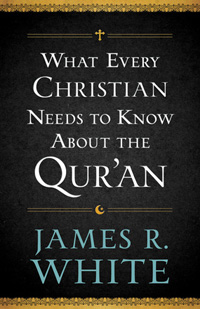
What Every Christian Needs to Know About the Qur’an by James R. White (Bethany House)

book white200Even as the Bible provides the basis for doctrine and beliefs in the truth of Christianity, the Quran is the single uniting book for the Muslim faith. In contemporary society, Christians should become more informed about the beliefs and practices of Islam, especially about Muslims’ concept of Allah as God and his prophet/messenger Mohammad.

This book offers an excellent introduction for Christians who want to be more informed about Islam than what they can learn from news reports and the Internet. James White, a well-known debater of Muslim apologists for three decades, discusses what the Quran teaches about the Torah, the Gospels, the historical Jesus, salvation, the crucifixion, the Trinity, the afterlife and translations of Scripture, as well as transmission of their sacred text and other crucial issues.

Dealing not only with historical facts but also deep theological and prophetic questions, the book is valuable for all Christians who want to communicate intelligently with their Muslim friends and neighbors. It contains a helpful glossary of terms and even a schedule for reading the Quran, since it was written over a period of 20 years but not in chronological order. Certain words are kept with Arabic spelling to help ensure Muslims know one is well-informed of their beliefs. This treatment of the Quran is a welcome resource for American Christians today.

Ed Spann, retired dean

College of Fine Arts

Dallas Baptist University
 

Finding God in the Dark by Ted Kluck & Ronnie Martin (Bethany House)

book kluck200In the author’s note, Ted Kluck observes, “Everybody hurts.” Kluck and recording artist Ronnie Martin wrote Finding God in the Dark to help those who, because of their circumstances, wonder where God is. Kluck and Martin alternate writing chapters, which Martin calls “everyday stories.” Kluck insists that even when life is falling apart, “You gotta have faith.”

This work runs the gamut from the loss of a loved one, to questioning God, to personal demons such as the lack of humility, to creating God in our image by having our own “personal Jesus.” The authors advocate prayer through times of unbelief. Martin closes the book by using Genesis 3:1-15 and other examples in Scripture to remind us God still is with us.

Finding God in the Dark will appeal to admirers of Philip Yancey’s Where is God When it Hurts? Readers who are struggling spiritually or have friends or family who are will find this resource helpful.

Skip Holman, minister of discipleship

Northeast Baptist Church

San Antonio


Explore: Can I Keep on Going?

 • The Explore the Bible lesson for August 11 focuses on Ecclesiastes 7:11-14, 15-18; 8:10-12, 16-17.

This passage gives great insight into the ways of wisdom and God’s working in the world. This does not mean, however, these verses give human beings a manner of comprehending God. Ecclesiastes is very clear that this is impossible.

The opening section discusses wisdom by comparing it with an inheritance and a shelter (7:1-12). This should not be taken to mean everyone who is wise has money or vice-versa. It does likely mean, though, Qoheleth (the author of Ecclesiastes) had a great deal of both wisdom and wealth.

For our purposes, however, wisdom as an inheritance and shelter indicates that wisdom makes certain aspects of life easier. We might think, for instance, of those people who were fortunate enough to grow up in a solid stable home environment. They are certainly disposed to live well later in life, although not necessarily destined to do so.

By contrast, people who grow up in less- stable home environments are not destined for foolishness and sin, even though their path to wisdom and righteousness likely will be more difficult.

Circumstances affect behavior

One’s circumstances do affect one’s behavior, even if they are not the sole determining factor. This is Qoheleth’s other major point about wisdom: “It preserves those who have it” (7:12). Wealth is fleeting and can vanish in a surprise catastrophe, such as a market crash. Moreover, increased wealth also can accelerate one’s demise through bad decisions. Wisdom, however, remains and can preserve life.

The next two verses (7:13-14) seem tailor-made to perplex readers. Opening with the phrase, “Consider what God has done,” Qoheleth mentions apparent crooked things in the world as made by God (7:13), thereby critiquing human judgments about what is crooked and what is straight. A common saying, “The Lord works in mysterious ways,” is apt here.

According to Ecclesiastes, because God is in control of all of these situations, human beings should restrain any evaluation of present circumstances. This obviously is frustrating, as Qoheleth voices by stating, “Therefore, no one can discover anything about their future” (7:14).

The nature off wisdom

In the next section, Qoheleth discusses the nature of wisdom and righteousness. At first, because he has observed righteousness leading to the death of the righteous and wickedness prolonging the life of the wicked, he offers a path of moderation between the two: “Do not be overrighteous, / neither be overwise – / why destroy yourself? / Do not be overwicked, / and do not be a fool – / why die before your time?” (7:16-17).

In truth, he thinks that true wisdom lies between the two extremes: “Whoever fears God will avoid all extremes” (7:18). In many ways, he, like Thomas Aquinas and much of the moral thinking of the Christian tradition, presents virtuous living as the mean between two excessive positions. For instance, courage is the mean between foolhardiness, on the one hand, and cowardice, on the other. Moderation becomes the key for genuine wise living.

Qoheleth directly addresses concerns about injustice in the following section. These situations should seem familiar to us as well—the righteous (or the innocent) accused, tried and convicted for crimes they did not commit, and the wicked (or the guilty) allowed to go free despite the fact they are guilty, even “receiv(ing) praise in the city where they did this.”

Indeed, we read news stories like this all-too-often, sometimes with destructive consequences. These circumstances can even spur on more bad activity, giving people a sense the legal system is defective or perhaps even a joke. 

Delayed justice

Even delaying the execution of justice can cause societal problems (8:11), since the watching public does not see a crime called what it is. In Hebrew, the word for “righteousness” is closely related to that for “justice,” and they often appear together in the Old Testament.

Here, we find Qoheleth saying that when one vanishes, the other follows suit. Therefore, despite the apparent benefits of indulging in wickedness, whether personal sin or criminal behavior, Ecclesiastes reiterates that it is better “with those who fear God, who are reverent before him” (8:12).

Qoheleth expresses confidence that everything will work out, although he does not give much immediate assurance to human observers: “No one can comprehend what goes on under the sun. Despite their efforts to search it out, no one can discover its meaning. Even if the wise claim they know, they cannot really comprehend it” (8:17).

As we have seen already, God does not work according to human logic. There is a mystery to divine providence that cannot be fully understood. This should not lead us to despair, but it does leave open many questions about our present circumstances.


Life: Jesus is crucified and raised

• The Bible Studies for Life lesson for August 11 focuses on Mark 15:33-39; 16:1-7; 1 Corinthians 15:17-19

God is holy. We are not. Sin has separated us from him since the first disobedient act in the garden and created an insurmountable chasm. To have a relationship with God, we must be sinless. But humans choose sin time and again. S

o, we are separated from our Creator, our Father. Scripture tells us God is merciful and just. He gives us grace, but at the same time, he brings about justice. God loves his people with a deep, enduring love and provided a way. He set up a system of sacrifice enabling people to experience forgiveness. In this sacrificial system, sin was covered or paid for by the blood of an animal.

The Sin sacrifices

The sin sacrifices took place first in the tabernacle and later the temple. The sinner brought an animal to the sanctuary. He placed his hands on the animal to signify it was being sacrificed on his behalf. Next, he took a knife and slaughtered the animal. After the animal was dead, the priest spread the blood on the altar and then burned or disposed of the remains.

The animal’s blood was spilled on behalf of the sinner. The animal’s death took the place of the sinner who deserved death. The animal was slain because humans should be put to death for our sins. Romans 6:23 says, “For the wages of sin is death.”

This system was harsh, and the acts were gruesome. The temple was filled with blood and the stench of death. But the sacrifices were necessary because of the sin of the people. The terrible act was terribly beautiful as their sins were forgiven.

The cycle of sacrifice and sin continued for years and years. Sin remained a problem, and the sacrifices continued to be necessary to pay the price and provide a way to God. As horrific, gruesome and terrible as the sacrificial system was, over time it became routine.

When worship becomes routine

The sinful people were desperate for a way to connect with the holy God, but their hearts stopped feeling the desperation after the sacrifices became the normal routine. The ache and the need were replaced with regular repetition, and God was not pleased. God wanted more.

After David’s terrible choice to sleep with Bathsheba, we hear his repentant cry: “You do not delight in sacrifice, or I would bring it; you do not take pleasure in burnt offerings. My sacrifice, O God, is a broken spirit; a broken and contrite heart you, God, will not despise” (Psalm 51:16-17). God wants broken, aching hearts in response to sin.

God loves his people with such a deep, enduring love, he provided yet another way: “For God so loved the world that he gave his one and only son, that whoever believes in him shall not perish but have eternal life” (John 3:16). A sacrifice still is necessary to pay the debt of our sin, but this time, the sacrifice is different. Christ’s sacrifice was once and for all.

The altar of the cross

The death and resurrection of Jesus was sufficient for the redemption of all humankind throughout all history and future. His death was gruesome, horrific and terrible. His blood was poured out on the altar of the cross, and his body was broken for you and for me. Just as in the Old Covenant, we must “place our hands on Jesus” to signify he is sacrificed on our behalf.

We must have a relationship with him that begins with our admitting we sin and ends with our surrender to his leadership and authority over our lives. His life and his death are sufficient and necessary to redeem us. His death was terrible and terribly beautiful, because it provided the ultimate way to our Holy God.

As horrific, gruesome and terrible as his death was, we begin to take it for granted, just like the people in the Old Covenant. The cross is necessary for our very life, yet we start to view it as routine. Our hearts that once were desperate for his forgiveness and restoration start to feel numb and go through the motions.

We often come to church, to worship and act as though his gift to us is expected or routine. May we never forget his death is necessary and a gift. May we never forget his sacrifice came at great price. May we never lose the ache for him, and may we never overlook our incredible need for our Savior. Jesus’ death was extreme, heart-wrenching and beautiful. Because of his willingness to walk the road to death, we are able to know real love and real life.


BaptistWay: Samuel transitioning from leadership

• The BaptistWay lesson for August 11 focuses on 1 Samuel 8:1-10; 12:1-5.

The mother of one of my friends recently lost her job. She had worked as the church secretary many years. A new pastor arrived, and about a year and a half after his debut, he called her into his office and fired her. Regardless of the reasons he gave (and I don’t really know what they were), my friend’s mother was deeply wounded. She loved her job. She loved her church. And all of the sudden, she had been betrayed by both and was devastated.

Transition happens all the time in our lives. We find jobs; we lose jobs. We get in shape; we lose our health. We get married; we get divorced. We get promoted; we retire. But it’s the negative transitions that are hardest to recover from, especially when we feel wronged or misunderstood.

Long service to Israel

Samuel served Israel many years. As a young boy, he demonstrated honesty and integrity, in contrast to Eli’s sons, who were despicable priests (1 Sam. 2:22—3:18). As a young man, he judged Israel and served as priest and prophet (3:19-21), leading Israel to victory against the Philistines (7:3-14).

But in 1 Samuel 8:1, we learn Samuel was old and had taken it upon himself to appoint his two sons, Joel and Abijah, as judges in Beersheba (8:1-2). He apparently intended for them to take over leadership upon his death. But Samuel’s solution was problematic. First, judges were not appointed by their fathers; they were appointed by God (see the book of Judges).

Samuel was attempting to establish a dynastic judgeship, which definitely was not the way judgeship had worked in the past. Second, Samuel’s sons were horrible judges. They did not follow in Samuel’s ways but instead went after money, took bribes and perverted justice (8:3). Joel and Abijah were not worthy successors to Samuel’s leadership.

Fired by the elders

So, the elders of Israel approached Samuel in his hometown of Ramah and, in essence, fired him. They stated their case succinctly: “You are old; your sons are scoundrels, so appoint a king to govern us like the other nations” (8:4-5).

As you can imagine, Samuel was deeply wounded. The Hebrew literally says, “The thing was evil in Samuel’s eyes” (8:6). He felt that what the elders of Israel were demanding was evil—towards him. So, Samuel prayed (which, of course, is good), but I suspect he expected God to side with him. Surely God would agree that the elders were wrong to reject Samuel’s leadership.

But Samuel got an unanticipated answer from God: “Obey the people. Do everything they say” (8:7). This was not what Samuel wanted to hear. But God interrupted any protest Samuel might have attempted by saying, “They are not rejecting you; they are rejecting me from being king over them” (8:7-9). What Samuel took personally, God saw from a much broader perspective. By asking for a king, Israel had rejected God, and this rejection would have dire consequences.

God told Samuel to go back to the elders and tell them they could have their king. But Samuel was to warn them about the ways of the king—how he would tax them and conscript their sons into his army and use their daughters as his “perfumers” and require portions of their crops (8:11-18). In spite of Samuel’s warnings, the people said, “No, we want a king!” (8:19-20).

Israel’s first king

In 1 Samuel 9-11, Samuel anointed Israel’s first king, Saul, first in a private ceremony (9:1-10:16), then in a public one (10:17-26). Initially some did not accept Saul’s leadership (10:27), but after Saul won a battle against the Ammonites, he was finally acknowledged as king (10:27b-11:15).

Subsequently, in 1 Samuel 12, Samuel gave his retirement speech. And it was not a gracious one. Samuel stated he did exactly what Israel asked him to do: He set a king over them (12:1). He reminded them how he led them from his youth, and, in what may be a subtle jab at their rejection of his sons, he stated Joel and Abijah were still with them (12:2). In v. 3, Samuel demanded the people show him where he went wrong. Did he steal anything from them? Had he oppressed anyone? Did he bribe them? “Testify against me!” he cried. And the people affirmed Samuel did nothing wrong (12:4-5).

Revisionist history

In the remainder of the chapter, Samuel engages in a little revisionist history (12:6-12; see especially v. 12). He berated the people for their disobedience, once again chastising them for choosing a king over God (12:13-16). He told them choosing a king was evil and called for thunder and rain from heaven as a sign he was right, terrifying the people (12:17-18). At the end of the speech he offered hope if the people should repent but disaster if they did not (12:19-25). Thus, Samuel went out in a blaze of righteous (?) anger, stunning the people into silence and setting kingship on precarious pillars. Bitter, much, Samuel?

Samuel did not exactly transition from leadership gracefully. He was angry. He was jealous. He felt rejected and unwanted. But, in the end, he did step down. And, in spite of his warnings about kingship (which were spot on), he was given the solemn—and, perhaps in his mind, unsavory—task of anointing the first two kings. He died after David gained solid control of the throne (1 Sam. 25:1) but makes a haunting reappearance in 1 Samuel 28.

The story of Samuel’s demise raises interesting questions about transitions and how we handle them. Samuel was dealing with a transition brought on because of his age. This, of course, is an issue many people in the church are facing or have faced. If you teach a class of senior adults, this might be a good opportunity to let them tell their stories. How did they deal with retirement? What was it like to have to move to a retirement community? Have they been asked to give up their driver’s license? What transitions have been the most difficult?

For younger adults, Samuel’s story still is relevant. They may not be facing forced retirement or other issues of aging just yet, but hard transitions still occur. Ask the class to discuss any difficult transitions they have encountered and how they handled them.

Transitions are a part of life. The challenge is whether we will handle them with grace or bitterness.


Book Reviews: Troubled Minds

Troubled Minds: Mental Illness and the Church’s Mission by Amy Simpson (InterVarsity Press)

book amysimpson200A startling statistic might grab a church leader’s serious attention—about 25 percent of any community suffers from mental illness. Amy Simpson writes a powerful book from her personal experience, her study of the meaning of mental illness, and her belief churches need to rethink their care or lack of care to the mentally ill and their families.
More than one in four adults in our communities suffer with a diagnosable mental illness in a given year, according to the National Institute of Mental Health. Simpson goes on to identify not only the person who is suffering, but also the family that must provide care, support and interventions when appropriate.

In America, mental illness covers rather a broad set of diagnoses. Simpson gives her readers a helpful, readable digest of mental illnesses. Well-researched and written in layman’s terms without oversimplifying, she helps bring readers up to speed about the topic and the issues.

Simpson not only is willing to share her story of growing up in a pastor’s home with a mother who was mentally ill, but also weaves into her narrative the struggles and experiences of others who are people of faith and some who are not. She provides examples of churches that could serve as models. These churches have decided to take up ministry to the mentally ill and their caregivers with the same compassion and love Christians pride themselves in giving to people whose lives are turned upside-down by tragedy or death.

Her book is insightful, compassionate and timely. It is a must read for leaders of churches.

Michael R. Chancellor, licensed professional counselor

Livingston
 

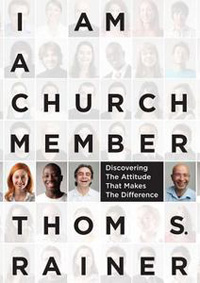
I Am a Church Member: Discovering the Attitude that Makes the Difference by Thom S. Rainer (B&H Publishing)

book rainer200The president and chief executive officer of Lifeway Christian Resources has written a concise, succinct and helpful book—six chapters and 79 pages—on the value of being a church member.

Rainer asks the reader to be a functioning church member and a unifying church member. He further asks readers not to be members who want their own personal preferences and desires, but who will pray for their church leaders and lead their families to be healthy church members. Basing church membership on 1 Corinthians 12, Rainer ends each chapter with study questions and a pledge to sign.

The book concludes with the statement that the universal and local church are not mutually exclusive. Rainer notes many of the New Testament books were written to local churches. He urges readers to consider their church membership as a gift. This book is an easy read but valuable for every church member and church leader. It would be a good resource to give to each family who become members of your church.

Skip Holman, minister of discipleship

Northeast Baptist Church

San Antonio