Connect360: Dignity and Disability
- Lesson 8 in the Connect360 unit “Sacred Life: God’s Plan for Us” focuses on John 9:1-3.
Throughout the biblical story, God intentionally chose to show his power through the limitations, or disability, of his children. Jacob had a limp his entire adult life (Genesis 32). God selected Moses to speak on his behalf despite Moses describing himself as “slow of speech and tongue” (Exodus 4:10). And consider how many of Jesus’ miracles were connected to someone with a disability.
It is not an exaggeration to say God clearly has a plan and purpose when it comes to human disabilities. Yet time and time again, we tend to have a very negative and pessimistic view when it comes to disability. In the story of the healing of the blind man, notice right away one of the first questions posed to Jesus approached disability from a negative point of view.
Essentially, the disciples wanted to know what went wrong. They had internalized the idea that to be disabled, someone had to have sinned or messed up.
This mindset of thinking is not isolated from first-century life, either. Ask mothers who have given birth to children who have a disability how frequently they were asked something like, “What did you do?” or “What happened to them?” Or ask a person with a disability how frequently they are asked something like, “What’s wrong with you?” as if something is innately faulty with them simply because of a disability.
Much like Jesus’ disciples, we still find ourselves often trying to make sense of the reality of disability, and our minds default to the notion that disability is inherently bad. However, Jesus’ reaction to the disciple’s question challenges us to reframe our understanding and starting point when broaching the oftentimes painful and sensitive topic of disability.
Jesus did not cast shame on the blind man or his parents. “‘Neither this man nor his parents sinned,’ said Jesus, ‘but this happened so that the works of God might be displayed in him’” (John 9:3).
Rather than framing the man’s blindness as an innate default, Jesus reoriented the entire conversation into the positive. This man’s disability was not a punishment but a positive—that the works of God might be displayed in him. The phrase “might be displayed” could also be translated “be made manifest.” Through this man’s disability, the work of God would be fully manifested and displayed.
God chose to reveal and manifest his power through a disability, not despite it. This profound truth offers a transformative perspective on disability. It suggests disabilities are not necessarily the result of individual sin or divine punishment but can be occasions for the manifestation of God’s power and glory.
In the case of the blind man, his healing displayed Jesus’ miraculous power and illuminated spiritual truths, challenging societal assumptions and religious misconceptions about sin and suffering.
This narrative reflects God’s view of disability as not diminishing a person’s value or potential for contributing to his purposes. Instead, it shows that God can use all circumstances, including those the world might see as limitations, as platforms for his glory.
By Katie Frugé, director for the Center for Cultural Engagement and the Christian Life Commission of Texas Baptists.
To learn more about GC2 Press and the Connect360 Bible study series, or to order materials, click here.
 Over My Head, Book 1 (Genesis-Deuteronomy) in Patrick Wigglesworth’s Bizarre Bible Adventure series by Liz and Jack Hagler seeks to answer those questions and many more in a kid-friendly, graphic novel format. Similar to comic books, graphic novels use sequential art, in this case black and white drawings by Liz Hagler, to tell a stand-alone story that can be fiction or nonfiction.
 Basham writes in an easily accessible style. She frankly admits she does not qualify as a theologian, nor does she make many attempts at describing the theological ramifications of her claims. She sees her task as reporting the facts—a task she executes through both anecdotal narratives and hardline receipts.
 The most practical readers will want to begin in the appendices with the cost comparisons of natural burial, conventional burial and cremation. The accountants among us may not need any more than those two pages.
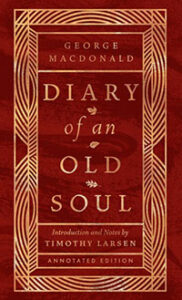 Inquire about George MacDonald, and some individuals well-versed in the Inklings would remember the Scottish minister and author as a pioneer of modern fantasy and the “Grandfather of the Inklings” although he died in 1905 when Lewis and Tolkien were children.
 Part of the series’ appeal is each book is short—about 100 pages a piece. Each book also is almost small enough to fit in a pocket and focused on one leadership challenge. With large font and often-funny illustrations throughout, they’re meant for on-the-go.
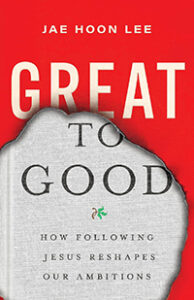 In the vein of Dietrich Bonhoeffer’s Cost of Discipleship—except without the single Scripture passage as the framework—or Thomas à Kempis’ Imitation of Christ, Lee offers 50 devotions divided into five parts. Devotions range in length from two to five pages.